Police suspect a parked car struck by a train near Wollongong this morning was deliberately left on the tracks to cause damage.
Four people were injured at 4.20am today when a train travelling through a Kembla Grange level crossing at high speed hit the empty parked car and derailed.
Three passengers and a train guard were taken to hospital as a result of the crash, with authorities saying they were "very lucky" to have escaped with just minor injuries.
READ MORE: Parents of missing WA girl Cleo Smith's emotional plea
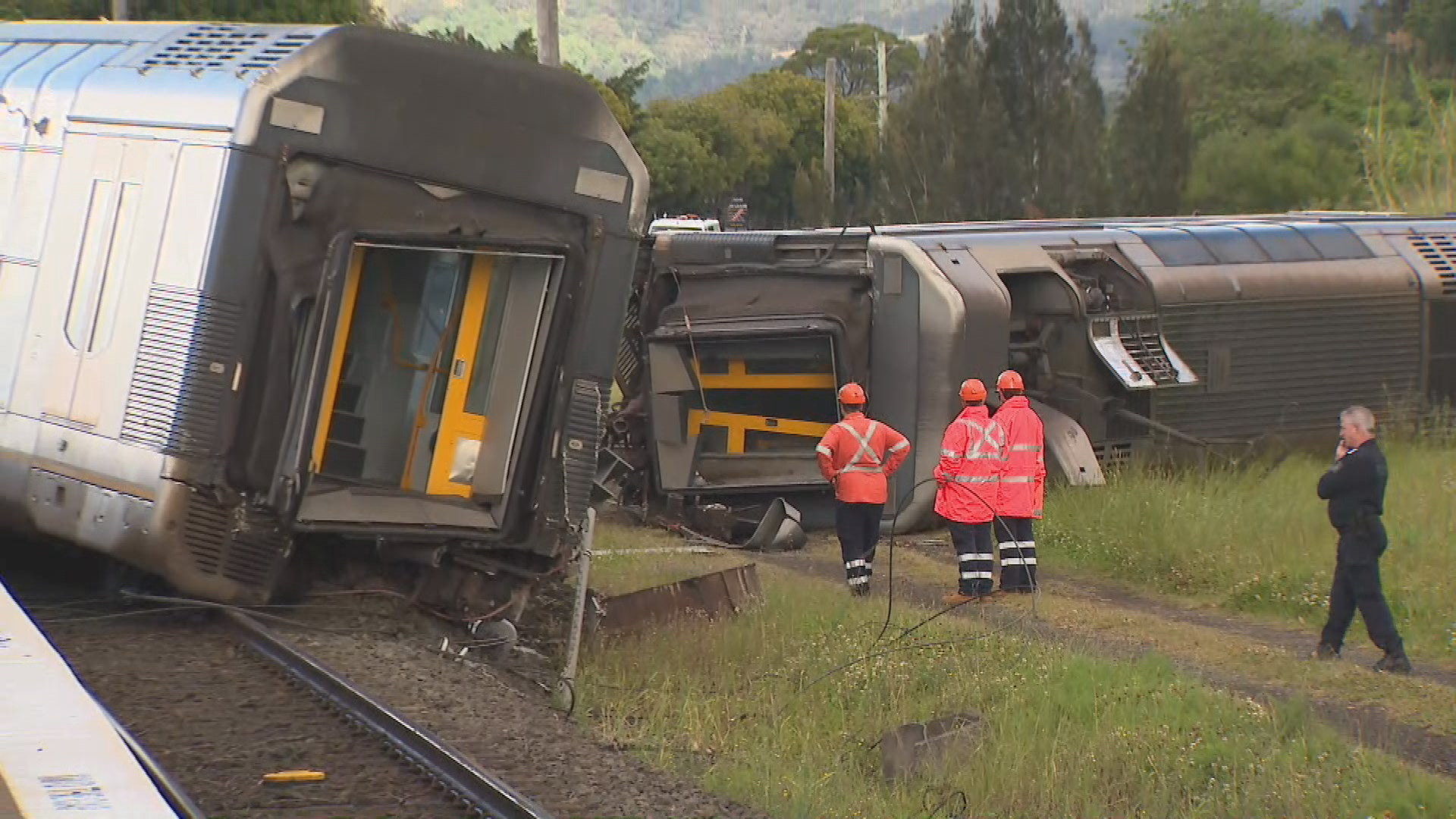
"I was speaking to some of the railway workers on site, and when they see a train in that position, they immediately expect fatalities," Superintendent Craig Ireland said.
One of the passengers said the collision was like "being on a trampoline".
"It was just bouncing up and down, then really rough, then came to a halt."
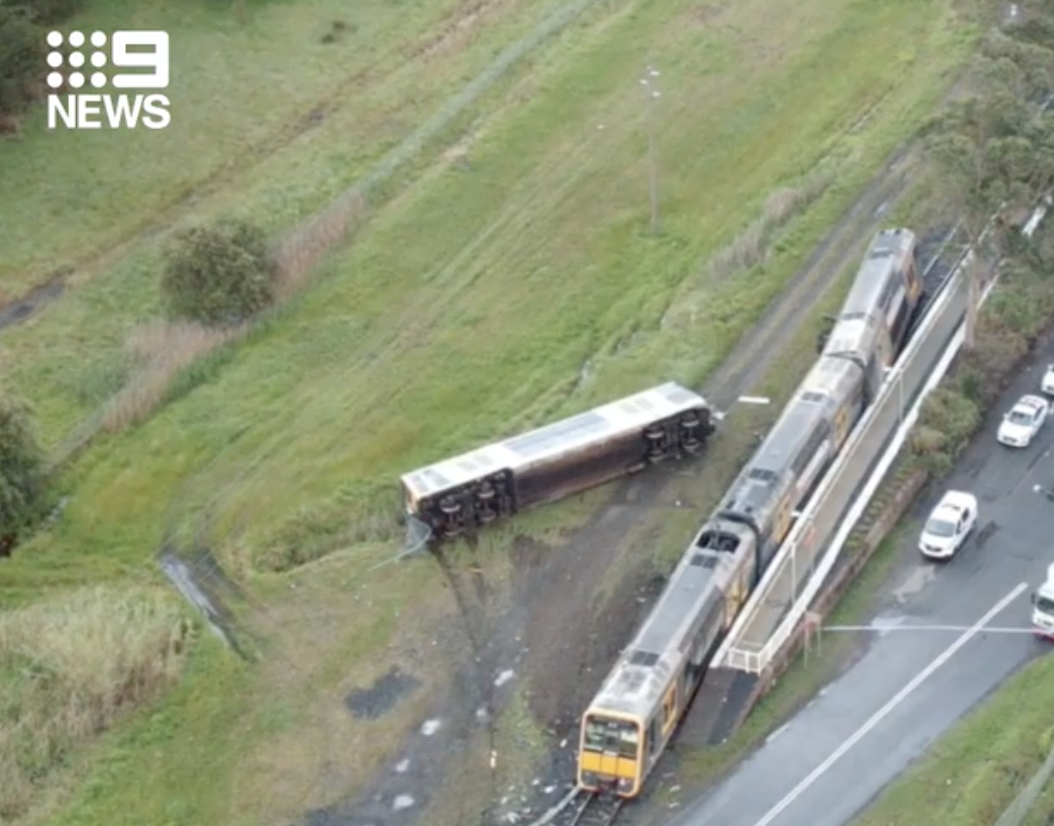
The front carriage of the Tangara class train became detached and flipped onto its side, rolling off the tracks completely.
"The point of the impact of the collision suggests that the car was actually driven onto the tracks," Superintendent Ireland said.
"So, it's been driven in an area normally reserved for trains.
"It's not a case of this car breaking down in that position or stalling or anything, it has been driven between 40 to 50 metres up the tracks from the level crossing."
Police believe the car was stolen from a home at Flinders.
Witnesses told police a male was seen running from the area just prior to the crash.
Mr Ireland said that the incident could have been "a lot worse" and police will be examining the circumstances very closely.
"The driver would be in shock and he said he's got some physical injuries so we have to make sure his back is okay," he said.
"The rest of the passengers, they'd be shocked but somewhat relieved that it could have been a whole lot worse."
The surrounding infrastructure, including powerlines, were also brought down during the crash.
"This will be a massive recovery operation and it's going to cause some disruptions," Superintendent Ireland said.
READ MORE: No way home for stranded Aussies with unrecognised vaccines
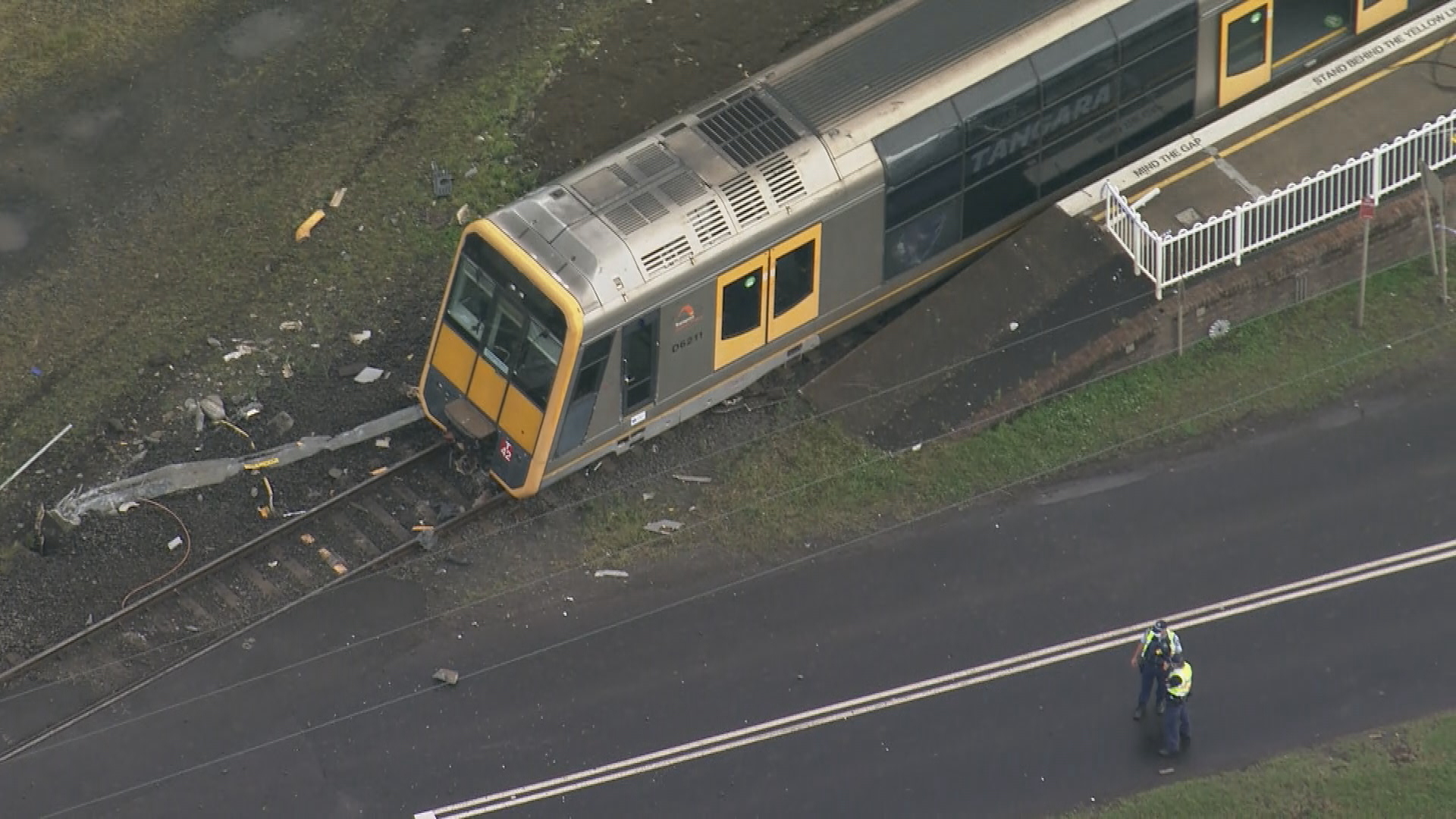
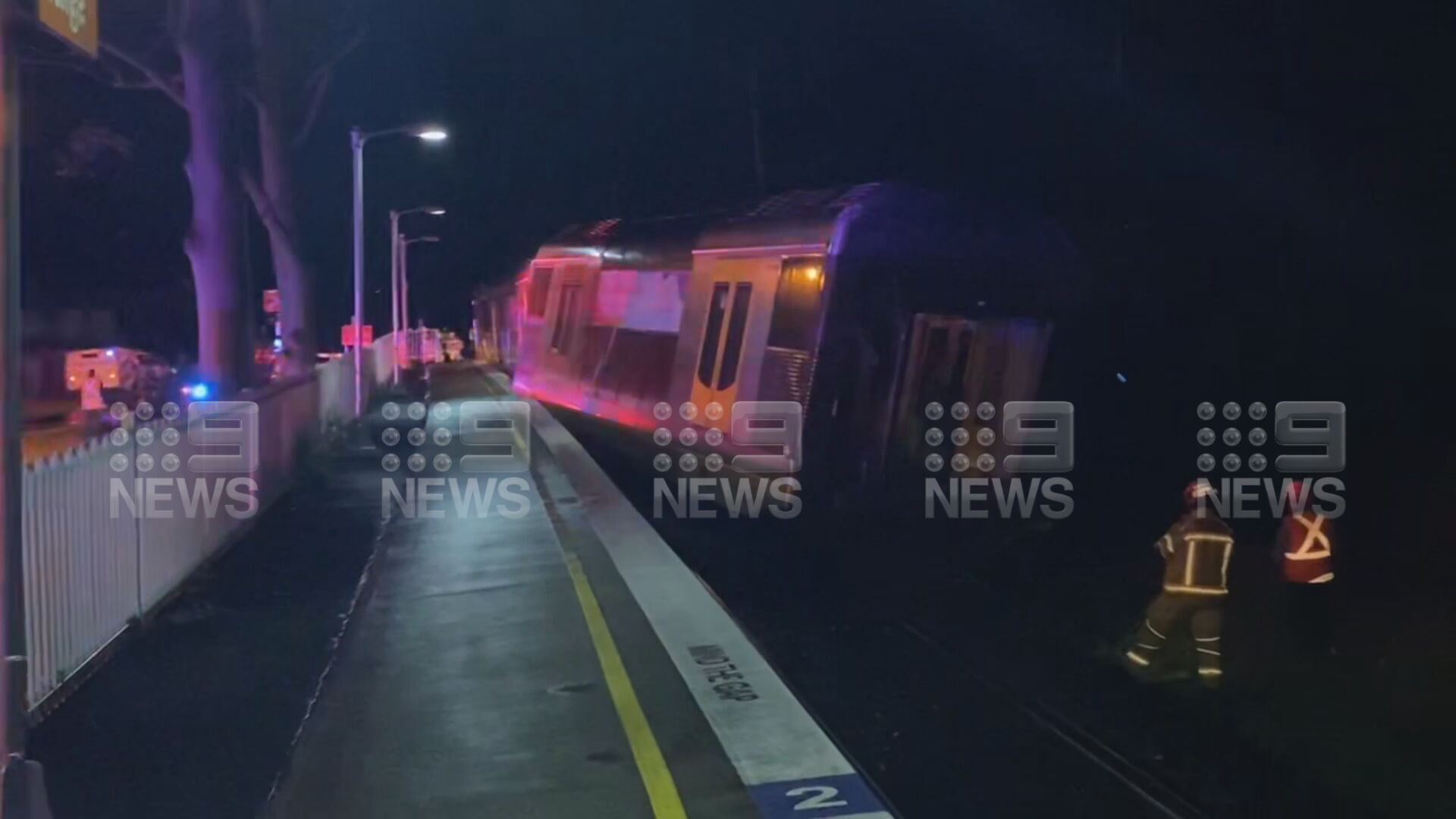
The driver was briefly trapped but was eventually able to be freed by paramedics.
There were 11 people on board at the time of the derailment – nine passengers together with a driver and guard.
Inspector Norm Rees from NSW Ambulance said accidents involving trains are usually very severe.
"When you hear train derailment your first thought is whether it's a freight train or passenger train and when it was reported to be a passenger train, you immediately start to think worst-case scenario," he said.
"It was a chaotic scene when emergency services first arrived with the front carriage completely off the tracks and on its side and the second tilting.
"The train had brought down power lines which were draped over the carriages and when you see all that, it's lucky there weren't more serious injuries to those on board.
"With the first car on its side the driver was trapped by confinement but paramedics worked hand in hand with NSW Fire and Rescue and NSW Police to get him out and treated."
READ MORE: Price of groceries set to increase amid global container shortage
https://twitter.com/WesternWilson9/status/1450535802606276608?ref_src=twsrc%5Etfw
Commuters in the area have been told to expect delays.
"Buses are replacing trains between Wollongong and Albion Park on the South Coast Line due to a train and a car incident at Kembla Grange level crossing," a spokesperson for the Transport Management Centre said.
READ MORE: Phone scammers find new ways to trick Aussies
https://twitter.com/TrainLinkSouth/status/1450556516981829632?ref_src=twsrc%5Etfw
"Trains will continue to operate between Albion Park and Kiama and between Wollongong and Waterfall.
"Passengers may need to change at Wollongong or Albion Park to continue their journey.
"Passengers are also advised to allow plenty of extra travel time, listen to announcements and check information displays for service updates."