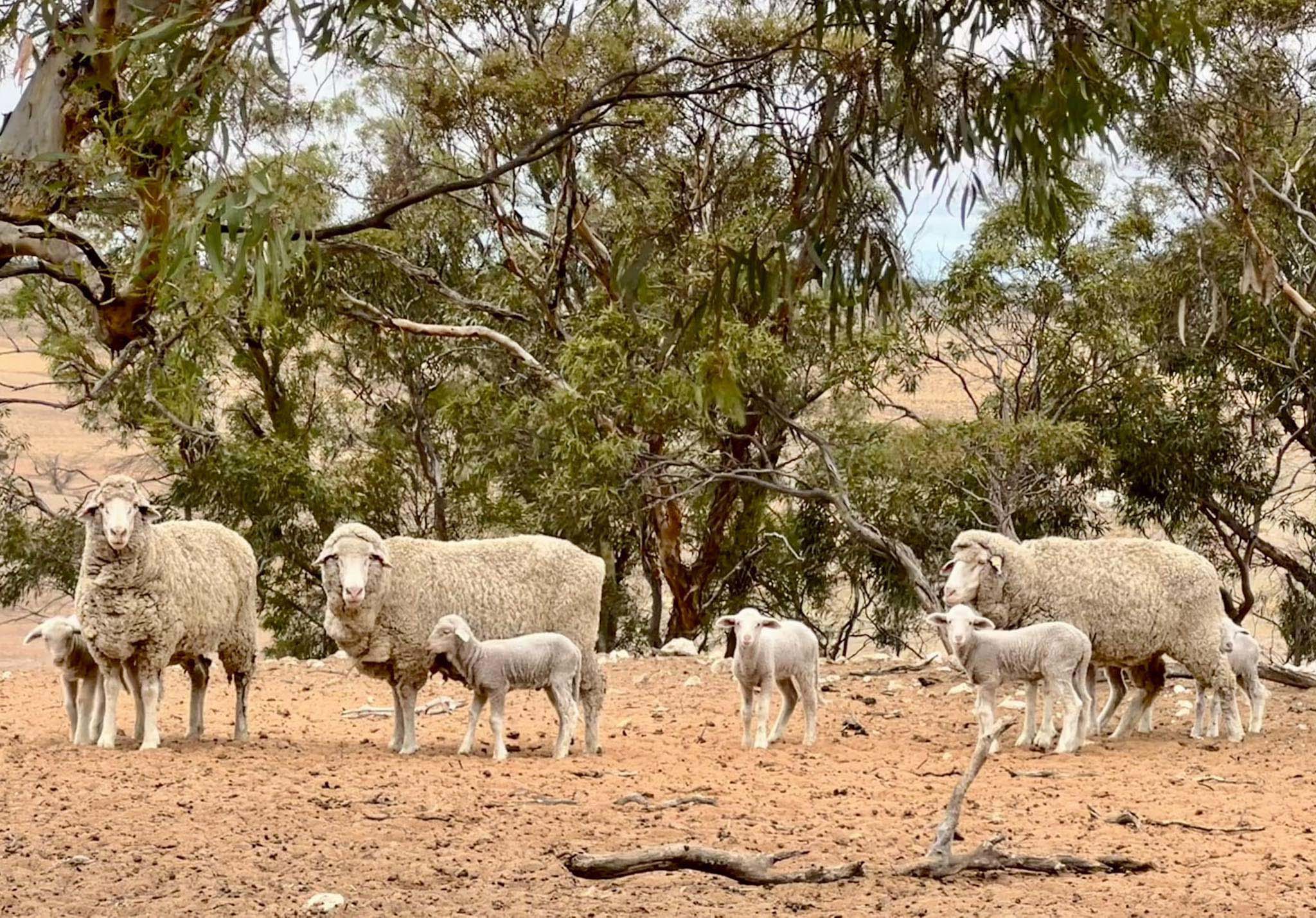
Full-length fleece is now about $5.20 per kg, up $1.25 on early 2025.
Tag Archives: oceania
John Major Meihana jailed for drug-driving causing death of Philipa Ann Beech in Tararua district
John Meihana had both methamphetamine and a high level of cannabis in his system.
Has Trump really ended eight wars? Fact-checking the president’s claim
If there is anything Donald Trump covets more than anything else, it's the Nobel Peace Prize.
The president has repeatedly spoken of how much he deserved it, and raged in public and private at the country of Norway, which he believes is responsible for not giving it to him.
At the centre of his claim for the prize is the boast that he has ended eight wars in a year.
READ MORE: Trump rants at Norway over Nobel Prize
But has he?
"The short answer is no. And in fact, the short answer is not even close," Monash University senior lecturer in international relations Ben Zala told nine.com.au.
"Two and a half, or, let's be generous and say three, are factually correct."
So what are the eight wars he's claimed to have ended, and what's the situation?
Israel and Hamas
This claim is at least partially true.
The United States did help to broker a ceasefire which has seen a reduction of violence in Gaza.
But the United Nations estimates that since the ceasefire was agreed upon, 300 people have been killed.
"That's hardly a war that's ended," Zala said.
"That kind of feels like the war is still going on, but that still doesn't take away the fact that the US chose to go out of its way to help to broker a ceasefire."
READ MORE: Trump threatens to seize Greenland, Canada, Venezuela and Cuba
Armenia and Azerbaijan
The two former Soviet countries have been in a territorial dispute for decades which turned violent.
At the centre of the conflict is a province that Armenia considers part of its territory but is entirely within Azerbaijani borders.
But on August 8 last year, Armenian Prime Minister Nikol Pashinyan and Azerbaijani President Ilham Aliyev signed a peace agreement in the White House.
"The US hosted a signing ceremony, but the peace had already been agreed almost six months earlier," Zala said.
"So I don't really think that one counts."
Rwanda and the Democratic Republic of Congo
These two countries in central Africa have been in an armed conflict for several years that has resulted in thousands of deaths.
The US did officially broker a peace agreement between the two countries last year.
But it's a fragile agreement, Zala said.
"The claim that he's ended the war – well, not really," he said.
"People are literally dying still."
READ MORE: Macron warns Trump that EU could use 'trade bazooka'
Cambodia and Thailand
This claim is the most solid of the eight.
Several dozen soldiers had been killed in the border dispute between the south-east Asian countries.
"It does seem like the president himself was the key actor there by getting on the phone, and effectively he threatened to end trade talks with both of them," Zala said.
"So it was a pretty smart use of US economic power."
But Zala noted the conflict was "probably edging towards a conclusion".
READ MORE: JD Vance and wife Usha announce they are having fourth baby
Israel and Iran
Israel and Iran have been in a cold war for years, which led to both sides exchanging missiles on June 13 last year.
But the claim that Trump ended a war between Israel and Iran is "absurd", Zala said.
"The US didn't broker a peace agreement because there is no peace agreement.
"Both sides just ran out of steam.
"And the US actually joined the war. The US bombed Iran."
India and Pakistan
Tensions have existed between the two countries for as long as both of them have existed.
But when a ceasefire was agreed to last year, Pakistan credited Trump, and India didn't.
"The talks regarding cessation of military action were held directly between India and Pakistan under the existing channels established between both militaries," Indian Foreign Secretary Vikram Misri said.
READ MORE: Greenland is nowhere near as big as it looks. Here's why
Trump's involvement seemed like an exaggeration from the White House, Australian National University's Wesley Widmaier said.
"What India and Pakistan do has much more to do with India and Pakistan than the US," he told nine.com.au.
"That is not to slight the US – it's just that they are major powers and reach their own conclusions."
Egypt and Ethiopia
The president's claim to have ended a war between Egypt and Ethiopia is a bizarre one.
These two African countries were not at war.
There were tensions between the two over an Ethiopian dam that inhibited water flow into the Nile.
"There was no war. Conflict hadn't broken out. And so to say that he's brought a war to an end is just sort of absurd," Zala said.
Serbia and Kosovo
The same goes between these two Balkan nations.
Despite a long history of violence, Kosovo and Serbia have not been in an armed conflict.
"There have been tensions, but there hasn't been war," Zala said.
"Actually, the EU is a much, much more important player in that dispute than the US is."
DOWNLOAD THE 9NEWS APP: Stay across all the latest in breaking news, sport, politics and the weather via our news app and get notifications sent straight to your smartphone. Available on the Apple App Store and Google Play.
Heatwave to return this week for large parts of south-eastern Australia
Parts of south-eastern Australia are set to swelter this weekend and into early next week.
Inland areas could experience the most extreme heat and temperatures could reach as high as 47 degrees in some locations, according to Weatherzone.
Large parts of inland South Australia, NSW, southern Queensland, northern Victoria and the far south-east corner of the Northern Territory will be impacted from tomorrow or Friday through to Tuesday next week.
READ MORE: Australia experiences warmest year on record for ocean temperatures
Oodnadatta in South Australia's north east pastoral forecast district could see a maximum temperature of 47 degrees, while temperatures in Mildura in Victoria's north-west corner could reach a high of 46 degrees.
Bourke in the NSW upper western forecast district could experience temperatures up to 47 degrees and Birdsville in Queensland's Channel Country could see a six-day run of 44 to 45 degree days from tomorrow to Tuesday.
Alice Springs will see maximum temperatures of 42 and 43 degrees from Friday to Sunday.
READ MORE: Why the risk of a bull shark bite is so high at the moment
Weatherzone meteorologist Yoska Hernandez said the heatwave was driven by a slow-moving weather pattern over southern Australia.
"With minimal change expected in the overall circulation, hot air continues to spread across south-eastern parts of the country, allowing the extreme heat to persist," Hernandez said.
As temperatures rise across Australia, meteorologists will also keep their eyes on a tropical system off the coast.
"At the same time, a tropical low in the eastern Indian Ocean is forecast to strengthen, with a possible tropical cyclone approaching the Kimberley coast late this week.
"This tropical system is influencing large-scale atmospheric circulation, helping sustain upper-level ridging and reinforcing the pattern that is keeping extreme heat entrenched across south-eastern Australia."
DOWNLOAD THE 9NEWS APP: Stay across all the latest in breaking news, sport, politics and the weather via our news app and get notifications sent straight to your smartphone. Available on the Apple App Store and Google Play.
‘Rare sight’ as night sky phenomenon spans right across Australia
Australians witnessed a rare sight after an unusually widespread aurora australis took over the sky last night.
The phenomenon was seen from Tasmania to central Queensland and from Western Australia to NSW, which Swinburne University's astrophysicist Rebecca Davies said was quite rare.
"Usually, this is a phenomenon that you're lucky to see in the very southern tip of Victoria and Tasmania, because it is usually concentrated at the South Pole," she said.
READ MORE: Father pays tribute to 'beautiful daughter' found dead and mauled by dingoes
"So for it to be that intense and that widespread is a sign that the sun is still in the maximum of its solar cycle, where we see higher frequency of these more intense events."
At a lighthouse in the northern NSW town of Byron Bay, Sarah Archibald captured the most vivid aurora australis she has ever seen about 9pm.
"I was super excited as it's such a rare sight in the Byron Shire and this far north," she said.
Further south in Dubbo, Peter Starr waited hours for the clouds to clear before he could witness the event from his observatory about 11.45pm.
"It was good to see that and see those perfectly blue streamers. I have only seen them once before this way, so that was good," he said.
READ MORE: Humanity is running out of water and it could mean war, UN warns
Starr said the aurora's visibility was quite rare for his town, but he has seen six in the past 18 months.
Davies said this was due to the sun's extended active phase, which typically occurs every 11 years.
"That is something we're very much still trying to understand," she said.
"Early in 2025, late 2024 was meant to be the reported peak maximum. So the fact that we're even into early 2026 and still seeing really quite a lot of activity would say that it's more of an extended period."
During this active solar period, geomagnetic storms are more common.
Geomagnetic storms are caused by a solar flare that releases energy and charged particles that collide with the Earth's atmosphere and interact with the magnetic field.
That interaction can create the captivating display we know as aurora australis.
The Bureau of Meteorology's Australian Space Weather Forecasting System had issued an alert over a severe geomagnetic storm last night.
READ MORE: Mystery man caught red-handed in disturbing act
While the intensity of the storm is now over, solar flare activity is continuing and a lower-level storm has been observed today.
"We anticipate a steady stream of activity probably over the next night or so, but then again, we could see another more energetic eruption, dragging it out even further," Davies said.
"To see this kind of extended activity is also quite rare, because it wasn't just a single large burst, but we're seeing multiple bursts."
The Bureau of Meteorology said weaker lights could be viewed in southern parts of the country tonight.
"It is likely to be weaker than last night, meaning it won't be visible as far north as yesterday, but people in Victoria, Tasmania and southern Western Australia may still have a chance to capture the lights on the southern horizon," the bureau said.
DOWNLOAD THE 9NEWS APP: Stay across all the latest in breaking news, sport, politics and the weather via our news app and get notifications sent straight to your smartphone. Available on the Apple App Store and Google Play.
Call for cull after spate of shark attacks ‘misinformed’, expert says
The surge in shark attacks along the NSW coast has renewed controversial calls to introduce shark culling measures, a suggestion that has sparked fierce opposition from marine experts.
While NSW Premier Chris Minns has ruled out culling sharks in Sydney after four shark attacks in just 48 hours, former prime minister Tony Abbott waded into the debate and denied the incidents were due to bad weather – despite scientists pointing to the impact of recent rainfall – and claiming the state should "reintroduce the shark fishery".
However, marine advocates are vocal opponents of the practice and argue there is no scientific evidence to prove culling works.
READ MORE: Four attacks in 48 hours: Why the risk of a bull shark bite is so high at the moment
Marine scientist Vanessa Pirotta said shark attacks can be better avoided through improved water safety habits.
"I personally, as a marine scientist, do not support a cull," Pirotta told Today.
"What I do support is investment into scientific research to help us as Australians make informed decision-making."
Culling involves lethal control of sharks by deliberately killing them to reduce the population and mitigate the risk of shark attacks or bites in the water.
It is usually done using baited drumlines or nets.
Shark nets are installed at some beaches in NSW and Queensland.
Pirotta called for calm and advised against a knee-jerk reaction, and said the dangerous cocktail of bad weather and summertime swimming is the key reason for the spike in shark attacks.
She also rejected the suggestion that bull sharks – thought to be responsible for some of the incidents – are aggressive.
"We need more education around this," she said.
"We've known for years, through research done by NSW Department of Primary Industries, that bull sharks are present in Sydney Harbour at this time of year.
"That to me as a scientist is not shocking, but we need to all be aware of this so that we can be more informed to make good decisions."
Other advocates have suggested non-lethal measures to protect swimmers from sharks on Australian beaches.
SharkSafe Barrier Australia Director Neill Laurenson told the Sydney Morning Herald that magnets can be safely used to stop sharks from entering shallow water.
The technology, which is attached to the seabed, uses magnets to interfere with the receptors on a shark's head.
"It creates an overwhelming sense for them, so they just don't go through it," Laurenson said.
"It's like sort of tear gas for sharks. It doesn't hurt them, it's just uncomfortable."
The magnets have been used in trials in South Africa, the Bahamas and on Reunion Island in the Indian Ocean.
READ MORE: Council move could cost Missy up to $15,000 per year in fight to save family farm
READ MORE: Trump's Greenland threats spark outrage and defiance from EU, testing long-time NATO alliances
The debate over shark attack prevention has gained steam as two people fight for their lives in hospital – including a 12-year-old boy – following multiple attacks in Sydney.
"It's a terrible situation, but it's also a time where we just need to just stop and take a breather to digest the information," Pirotta said.
"We all need to be informed, to think about this in the most appropriate way, and think about the word culling.
"That's just probably, in my opinion, a misinformed comment."
The ocean expert said better messaging around shark safety could help lower the rate of attacks.
"You're probably going to check the UV index before going to the beach. You'll check you go between the flags," Pirotta added.
"Perhaps we need to have some sort of environmental communication around [sharks] going forward."
DOWNLOAD THE 9NEWS APP: Stay across all the latest in breaking news, sport, politics and the weather via our news app and get notifications sent straight to your smartphone. Available on the Apple App Store and Google Play.
Mystery man caught red-handed in disturbing act
Four kittens have been dumped in an after-hours library chute for the third time as authorities investigate the man responsible.
CCTV showed a man dressed in a navy vest dropping the six-week-old kittens at the Greenacres Library in Adelaide about 10.25pm on Saturday, January 10.
The kittens remained inside the chute until a staff member discovered them the following Monday.
READ MORE: Staggering number of Aussies starting the year lumped with debt
The kittens appeared unharmed and were taken to the Animal Welfare League in Wingfield for assessment.
They have since been rehomed in new foster families.
It was the third time kittens had been dumped in that same chute.
A Port Adelaide Enfield Council spokesperson said they were shocked to discover the kittens had been abandoned.
"Placing animals in places like library return chutes is dangerous and poses significant risks as they may be harmed from heavy books being dropped in the chute," the spokesperson said.
READ MORE: Teen went for early swim before her body was found mauled by dingoes
"The matter was referred to the RSPCA for investigation, with CCTV footage supplied."
RSPCA prosecutes animal cruelty offences in South Australia.
The organisation called on the community to help identify the man in the CCTV, urging anyone with information to contact its cruelty line.
The maximum penalty for abandoning an animal is up to two years' imprisonment or a $20,000 fine.
DOWNLOAD THE 9NEWS APP: Stay across all the latest in breaking news, sport, politics and the weather via our news app and get notifications sent straight to your smartphone. Available on the Apple App Store and Google Play.
Two new pictures reveal where Trump wants to target next
President Donald Trump has hinted at annexing Greenland, Canada, Cuba and Venezuela and turning them into US territories in a series of doctored images shared online, sparking swift condemnation from world leaders.
The US president appeared to signal his next move with two AI-generated images posted to Truth Social, including a picture of a US flag planted on Greenland soil and a revised map of the USA.
In the first doctored image, posted without a caption or comment, Trump is seen in a room with other world leaders, while an altered map in the background shows Canada, Greenland, Venezuela and Cuba as US territories.
READ MORE: Four attacks in 48 hours: Why the risk of a bull shark bite is so high at the moment
READ MORE: New hate crimes bill and gun control laws both pass parliament
The original image was from an August meeting in the Oval Office with a host of European leaders, including UK Prime Minister Keir Starmer, Italy's Giorgia Meloni and French President Emmanuel Macron.
The second altered photo shows Trump holding a US flag alongside Vice President JD Vance and Secretary of State Marco Rubio.
A sign on the ground reads: "Greenland. US territory since 2026."
In response, Venezuela's government called on its citizens to share official maps of the country online as a form of "symbolic action".
"In light of this situation, the Venezuelan State calls on all citizens to take symbolic action in unity, with the aim of defending territorial integrity and countering misinformation," Venezuela's government said in a statement.
Greenland's Prime Minister Jens-Frederik Nielsen said he was aware of social media posts that showed a US takeover.
"We have seen the different things that are being said on social media, it is not respectful," Nielsen said at a press conference in Nuuk.
"What we prioritise from Greenland's side is that we should not have dialogue through social media, we should do that in the right channels."
Canadian Prime Minister Mark Carney told the World Economic Forum in Davos that the world should quickly adapt to the "rupture" caused by "great powers" in a veiled reference to Trump's threats.
"We know the old order is not coming back. We shouldn't mourn it," Carney said.
"Nostalgia is not a strategy."
The Truth Social posts were shared as Trump doubles down on his demand to acquire Greenland.
The president offered an ominous response to reporters at the White House who asked how far he would go to seize Greenland.
"You'll find out," Trump replied.
READ MORE: 'Worst possible outcome': Grave fears for boy mauled by shark in Sydney
Trump said he was confident an agreement would be reached over the status of Greenland during a meeting in Davos, Switzerland.
He also claimed Greenlanders would be excited to join the US, despite polls consistently showing locals oppose his plans to claim the island.
"I haven't spoken to them. When I speak to them, I'm sure they'll be thrilled," Trump said.
"Something is going to happen which will be very good for everybody.
"We will work out something out where NATO will be very happy and we will be very happy."
Trump added that the US "needs Greenland for national security and even world security".
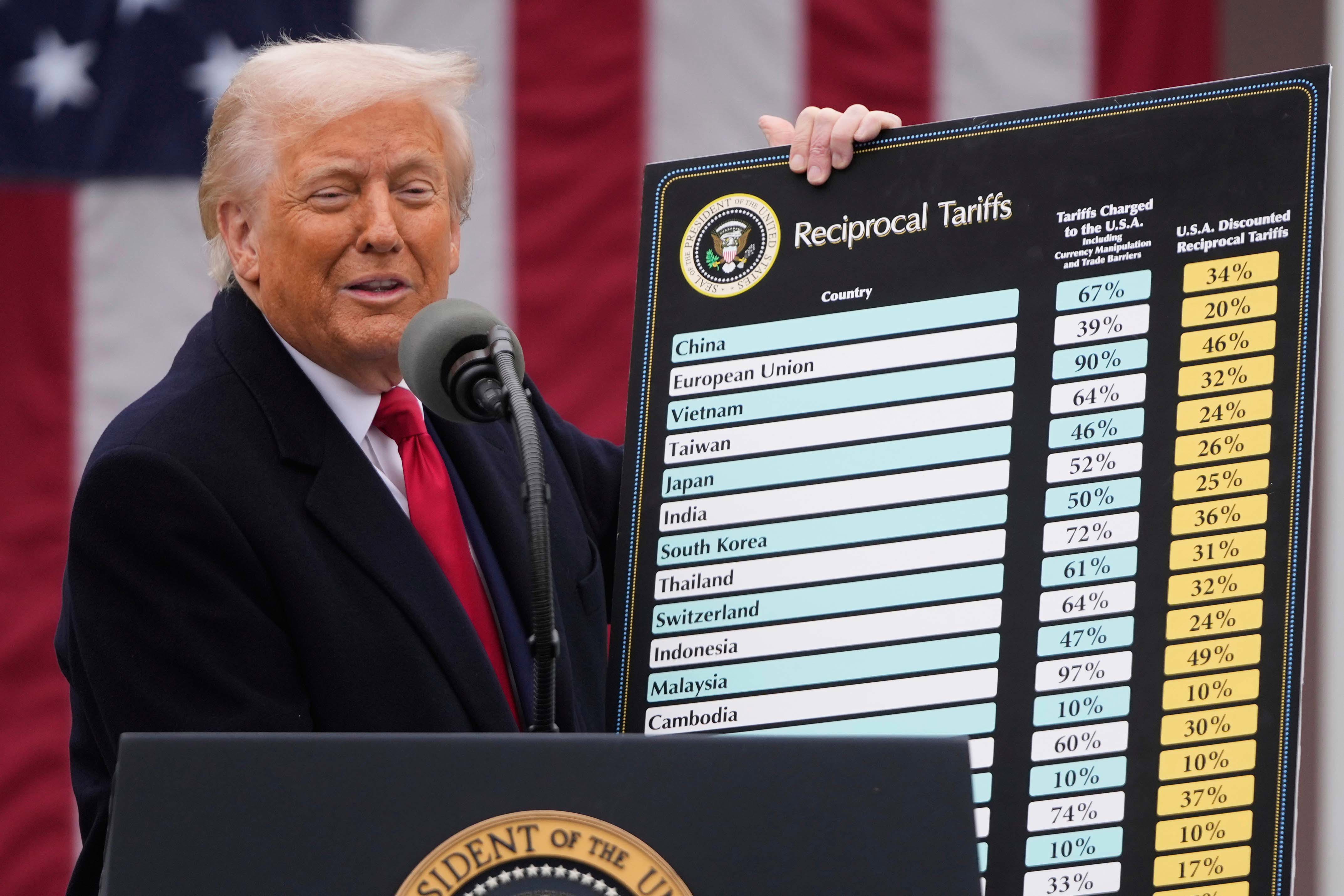
Over the weekend, Trump placed additional tariffs on eight European countries that opposed his plans to annex Greenland.
The ten per cent tariffs were placed on Denmark, Norway, Sweden, France, Germany, the United Kingdom, the Netherlands and Finland.
Denmark and some other European allies responded to the president's threats by sending more troops to Greenland.
DOWNLOAD THE 9NEWS APP: Stay across all the latest in breaking news, sport, politics and the weather via our news app and get notifications sent straight to your smartphone. Available on the Apple App Store and Google Play.
Council scheme could cost Missy up to $15,000 per year
Missy Duckworth grew up picking strawberries on the family farm, dreaming of the day she'd run it.
Now her dream has turned into a nightmare.
Duckworth's local council is considering a proposal that would result in almost half of Farleigh Farms being rezoned from rural to residential, at a cost of up to $15,000 in extra rates.
READ MORE: Man charged with murder over a year after 60-year-old found dead on NSW South Coast
Duckworth said Sunshine Coast Council did not tell her that part of the 52-acre family farm she managed would be in the firing line of the rezoning project.
She said she only found out when her father Don Hungerford, who started Farleigh Farm in the 1960s, suggested she check the council website.
"We didn't get any notification or communication or anything from council, they just did it," she told 9news.com.au.
"Our council rates are going to skyrocket because we'll be paying rates for farmland that's zoned as residential, even though we're not connected to sewerage or water."
Have you got a story? Contact reporter Maddison Leach at Google Play.
Macron warns Trump that EU could use ‘trade bazooka’ over Greenland tariff threat
US President Donald Trump's pledges to provoke a sweeping tariff fight with Europe to get his way in taking control of Greenland has left many of America's closest allies warning of a rupture with Washington that would shatter the NATO alliance that had once seemed unshakable.
The European Union's top official on Tuesday called Trump's planned new tariffs over Greenland a "mistake" and questioned Trump's trustworthiness.
French President Emmanuel Macron said the EU could retaliate against its long-standing ally by deploying one of its most powerful economic tools, known colloquially as a trade "bazooka".
Trump prides himself on ratcheting up pressure to try and negotiate through a position of strength. He is slated to leave on Tuesday — the anniversary of his inauguration — for the World Economic Forum in Davos, Switzerland, a venue that could give him the chance to defuse tensions as quickly as he has sought to stir them up.
READ MORE: Greenland is nowhere near as big as it looks. Here's why
But European leaders — digging in and vowing to defend Denmark and its semiautonomous control over Greenland — may be seeking just as hard to meet an extraordinary moment with their own demonstration of fierce resolve.
That could hurt the chances of Trump finding a quick way to turn around the crisis. And, even as the furor over Trump's escalating calls for U.S. control of the vast Arctic island seems ready to engulf the elite annual meeting in Switzerland, Greenland's leader insisted on respect for its territorial integrity and said recognition of international law is "not a game."
European Commission President Ursula von der Leyen pushed back against Trump's announcement that, starting February, a 10 per cent import tax will be imposed on goods from eight European nations that have rallied around NATO ally Denmark. Greenland is a semiautonomous territory of Denmark.
"The European Union and the United States have agreed to a trade deal last July," von der Leyen said at the World Economic Forum in Davos, Switzerland.
"And in politics as in business – a deal is a deal. And when friends shake hands, it must mean something."
"We consider the people of the United States not just our allies, but our friends. And plunging us into a downward spiral would only aid the very adversaries we are both so committed to keeping out of the strategic landscape," she added.
She vowed that the EU's response "will be unflinching, united and proportional."
The harder stance seemed to defy the approach that many European leaders have taken since Trump returned to office, which mostly had been to say nice things about Trump to try to stay in his good graces, while working furiously through other avenues to find compromise.
The president's continued insistence in recent weeks, however, that nothing short of the US somehow owning Greenland being unacceptable, is testing the limits of the softer approach.
Trump says the US needs the territory to deter possible threats from China and Russia. Set to speak in Davos on Wednesday, Trump said on social media that he had agreed to "a meeting of the various parties" there.
US Treasury Secretary Scott Bessent insisted, meanwhile, that America's relations with Europe "have never been closer" and urged trading partners to "take a deep breath."
But Danish Prime Minister Mette Frederiksen, speaking in the Danish parliament, said that "the worst may still be ahead of us." She said that "we have never sought conflict. We have consistently sought cooperation."
'Not a game'
Greenland's Prime Minister Jens-Frederik Nielsen insisted at a news conference in the island's capital, Nuuk, that "we need to have respect for international law and territorial integrity." He said those principles should unite Western democratic countries, and said he was grateful for support from EU allies.
"International law, it's not a game," he said. "We have been a close and loyal ally to the United States, to NATO, through many, many, many years. We can do lots more in that framework. We are willing to cooperate much more, but of course in mutual respect, and if we cannot see that, it will be very difficult to have a good and reliable partnership."
Trump's threats have sparked outrage and a flurry of diplomatic activity across Europe, as leaders consider possible countermeasures, including retaliatory tariffs and the first-ever use of the European Union's anti-coercion instrument.
Unofficially known as the "trade bazooka," the anti-coercion instrument could sanction individuals or institutions found to be putting undue pressure on the EU. The EU has two other major economic tools it could use to pressure Washington: new tariffs, or a suspension of the US-EU trade deal.
Macron warned in Davos that the additional tariffs could force the EU to use its anti-coercion mechanism for the first time against the United States.
"Can you imagine that?" he said, arguing that allied countries should be focusing instead on bringing peace to Ukraine. "This is crazy."
In general, he said, the mechanism "is a powerful instrument and we should not hesitate to deploy it in today's tough environment."
Trump earlier posted a text message from Macron in which the French president suggested a meeting of members of the Group of Seven industrialised democracies in Paris after the Davos gathering.
An official close to Macron, who spoke anonymously in line with the French presidency's customary practices, confirmed the message shared by Trump is genuine.
In his latest threat of tariffs, Trump indicated that the import taxes would be retaliation for last week's deployment of symbolic numbers of troops from the European countries to Greenland — though he also suggested that he was using the tariffs as leverage to negotiate with Denmark.
Newsom urges Europe to show 'backbone'
Speaking on the sidelines of Davos, California Gov. Gavin Newsom slammed Europe's response to Trump's tariff threats as "pathetic" and "embarrassing," and urged European leaders to unite and stand up to the United States.
"It is time to get serious, and stop being complicit," Newsom told reporters. "It's time to stand tall and firm, have a backbone."
On Monday night, Greenland's European backers looked at establishing a more permanent military presence to help guarantee security in the Arctic region, a key demand of the United States, Swedish Defence Minister Pål Jonson said.
Jonson said after talks with his counterparts from Denmark, Greenland and Norway that European members of NATO are currently "doing what's called a reconnaissance tour in order to identify what kind of needs there are when it comes to infrastructure and exercises and so forth."
In Moscow, Russian Foreign Minister Sergey Lavrov strongly denied any intention by Russia and China to threaten Greenland, while also describing Greenland as a "colonial gain" for Denmark. At a news conference, he said that "in principle, Greenland isn't a natural part of Denmark."
US-UK tensions over Chagos Islands
In another sign of tension between allies, the British government on Tuesday defended its decision to hand sovereignty of the Chagos Islands to Mauritius after Trump attacked the plan, which his administration previously supported.
Trump said that relinquishing the remote Indian Ocean archipelago, home to a strategically important American naval and bomber base, was an act of stupidity that shows why he needs to take over Greenland.
In a speech to lawmakers at Britain's Parliament on Tuesday, US House of Representatives Speaker Mike Johnson said he hoped to "calm the waters" as Trump roils the trans-Atlantic relationship with his desire to take over Greenland.
Johnson said the US and the UK "have always been able to work through our differences calmly, as friends. We will continue to do that."
DOWNLOAD THE 9NEWS APP: Stay across all the latest in breaking news, sport, politics and the weather via our news app and get notifications sent straight to your smartphone. Available on the Apple App Store and Google Play.