Emergency services are at the site of a serious crash in Linton. A police spokesperson says it appears there are serious injuries but specific details are yet to be confirmed. They were called to the crash on State Highway 57…
Tag Archives: oceania
Covid 19 Delta outbreak: Christchurch essential workers asked to rebook second dose
Essential workers who received their first Covid vaccination at a drive-through clinic in Christchurch are having to rebook their second dose.The drive-through at Christchurch Arena was set up to fast-track vaccinations for customer-facing…
How much does a pre-departure Covid test cost in New Zealand?
How much should a pre-departure test cost? It’s likely we’re all a bit rusty on budgeting for foreign holidays but post-pandemic travel may have a range of new costs to factor in. It turns out these may vary wildly as to where…
Police apprehend armed man in Auckland suburb of Grey Lynn
A man is in Auckland Hospital and expected to face charges after an armed incident in the Auckland suburb of Grey Lynn today.Auckland City District Commander Superintendent Karyn Malthus said the incident was resolved after the…
Covid 19 Delta outbreak: Prisoner whose positive test resulted in Waikato lockdown returns to court
A newly convicted shoplifter whose in-person appearance at Manukau District Court last Friday resulted in a Covid-19 lockdown for part of Waikato returned to court today – this time via audio-video link. The man, from Whakatīwai…
Australian not-for-profit rescues orphans from Afghanistan
An Australian not-for-profit has rescued 17 at-risk people from Afghanistan, including 10 orphans.
The children were being cared for in orphanages run by Australia-based Mahboba's Promise in Afghanistan.
Also on the flight out were one female staff member and a male staff member and his family.
LIVE UPDATES: Easing of mask rule for Queensland

Staff helped get the children to safety past Taliban blockades in what the organisation said was an act of "immense heroism".
Mahboba's Promise acting general manager Nawid Cina, also known as Sourosh Cina, said the group's work was only beginning as he thanked the Australian government, along with women's rights activist Susan Hutchinson, for helping with the evacuation.
"This is a first step, our whole attention remains on those who remain in Afghanistan," he said.
"This has been an incredible community effort with people from multiple countries working around the clock to save these 17 lives.
READ MORE: Afghan women can go to uni – with caveats

"The situation in Kabul has been extremely volatile, dangerous, and seemingly insurmountable obstacles needed to be overcome to get this to happen.
"It would not have been possible without the support of the community and the government. There is an endless list of names to thank."
The group will now undergo two weeks of quarantine.
Mahboba's Promise said it was working with the appropriate resettlement agencies to welcome them into the community.
It is raising funds to provide for their short, medium and long-term needs, including clothing, care and shelter.
READ MORE: How life has changed for women living in Kabul
Mahboba's Promise founder Mahboba Rawi said there was more to do.
"Our work for orphans, women and young girls remains more important now than ever," she said.
"This is a win, we all desperately needed this, but our work on the ground for Afghanistan's most vulnerable has to continue."
Mahboba's Promise is based in Australia and operates four orphanages in Afghanistan.
These footprints may shed light on an ancient mystery
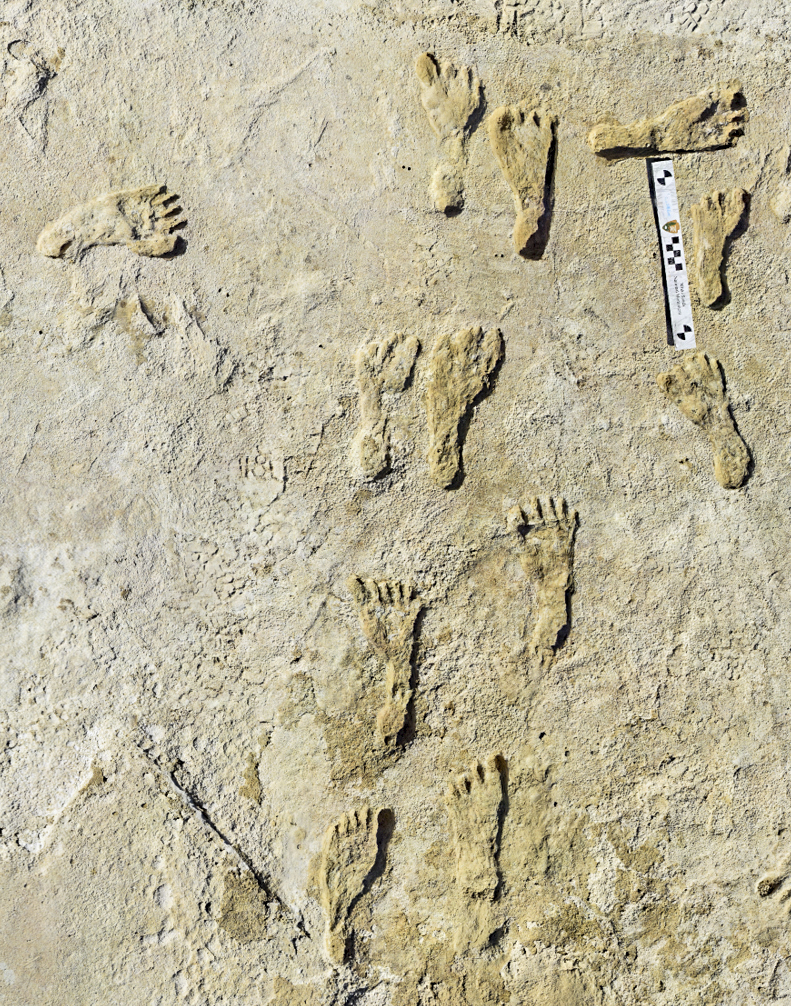
Fossilised footprints discovered in New Mexico indicate that early humans were walking across North America around 23,000 years ago, researchers say.
The first footprints were found in a dry lake bed in White Sands National Park in 2009.
Scientists at the US Geological Survey recently analysed seeds stuck in the footprints to determine their approximate age, ranging from around 22,800 and 21,130 years ago.
READ MORE: Professor recognises 'missing' 17th century masterpiece in church
The findings may shed light on a mystery that has long intrigued scientists: When did people first arrive in the Americas, after dispersing from Africa and Asia?
Most scientists believe ancient migration came by way of a now-submerged land bridge that connected Asia to Alaska.
Based on various evidence — including stone tools, fossil bones and genetic analysis — other researchers have offered a range of possible dates for human arrival in the Americas, from 13,000 to 26,000 years ago or more.
The current study provides a more solid baseline for when humans definitely were in North America, although they could have arrived even earlier, the authors say.
Fossil footprints are more indisputable and direct evidence than “cultural artifacts, modified bones, or other more conventional fossils,” they wrote in the journal Science, which published the study today.
READ MORE: History of Australia's most destructive earthquakes
“What we present here is evidence of a firm time and location,” they said.
Based on the size of the footprints, researchers believe that at least some were made by children and teenagers who lived during the last ice age.
David Bustos, the park's resource program manager, spotted the first footprints in ancient wetlands in 2009. He and others found more in the park over the years.
“We knew they were old, but we had no way to date the prints before we discovered some with (seeds) on top,” he said Thursday.
Made of fine silt and clay, the footprints are fragile, so the researchers had to work quickly to gather samples, Mr Bustos said.
“The only way we can save them is to record them — to take a lot of photos and make 3D models,” he said.
Earlier excavations in White Sands National Park have uncovered fossilised tracks left by a sabre-toothed cat, dire wolf, Columbian mammoth and other ice age animals.
Mt Albert tragedy: Police charge man with murder, sexual violation in Lena Zhang Harrap killing
The family of Lena Zhang Harrap have expressed their gratitude for the outpouring of support and love for them and their daughter but asked that people’s generosity be directed to two charities that supported her.”With the outpouring…
Psychologist who assessed man as likely child sex offender, without meeting him, can now be named
A psychologist who provided an “unprofessional” opinion implying a man had sexually abused his daughter can now be named as Dr Heather Adele Heron-Speirs. A decision made last month, published today, orders Heron-Speirs to be censured,…
Person dies after becoming trapped under tree in Windwhistle paddock
A person has died following an incident in Canterbury’s Selwyn District.Emergency services responded following a report of a person trapped under afallen tree in a paddock off Windwhistle Road about 11.30am.Sadly, the person…