An Auckland man who bragged about breaking lockdown rules and going over the regional border to get McDonald’s has been charged with failing to comply with an order under the Covid-19 Public Health Response Act 2020.The man uploaded…
Tag Archives: oceania
Conversion therapy ban bill: Submitters call for stronger law, clearer definitions
By Russell Palmer of RNZ The proposed law banning conversion therapy practices is not strong enough, some submitters have argued, and needs work to ensure it will do what it aims to.Consultation closed on September 8, with more…
Missing family: Police release images of missing father and his three children
Police have released images of the missing Otorohanga family and are now asking anyone who was at Marokopa or Kiritehere Beach over the weekend to come forward. Tom, 34, and his three children Jayda Jin, 8, Maverick Callum-Phillips,…
Herald Afternoon quiz: September 16
Test your brains with the Herald’s afternoon quiz. Be sure to check back on nzherald.co.nz for the morning quiz tomorrow. To challenge yourself with more quizzes, CLICK HERE.
PM hails nuclear sub deal with stark warning of 'new era' for region
Prime Minister Scott Morrison has issued a stark warning about the challenges Australia faces, after the announcement of the historic AUKUS alliance this morning.
"The relatively benign security environment we have enjoyed for many decades in our region is behind us," he said today, hours after the morning announcement alongside US President Joe Biden and UK Prime Minister Boris Johnson.
"We have entered, no doubt, a new era with new challenges for Australia and for our partners and friends and countries right across our region."
LIVE UPDATES: Sydney man who allegedly breached COVID-19 travel ban tested positive
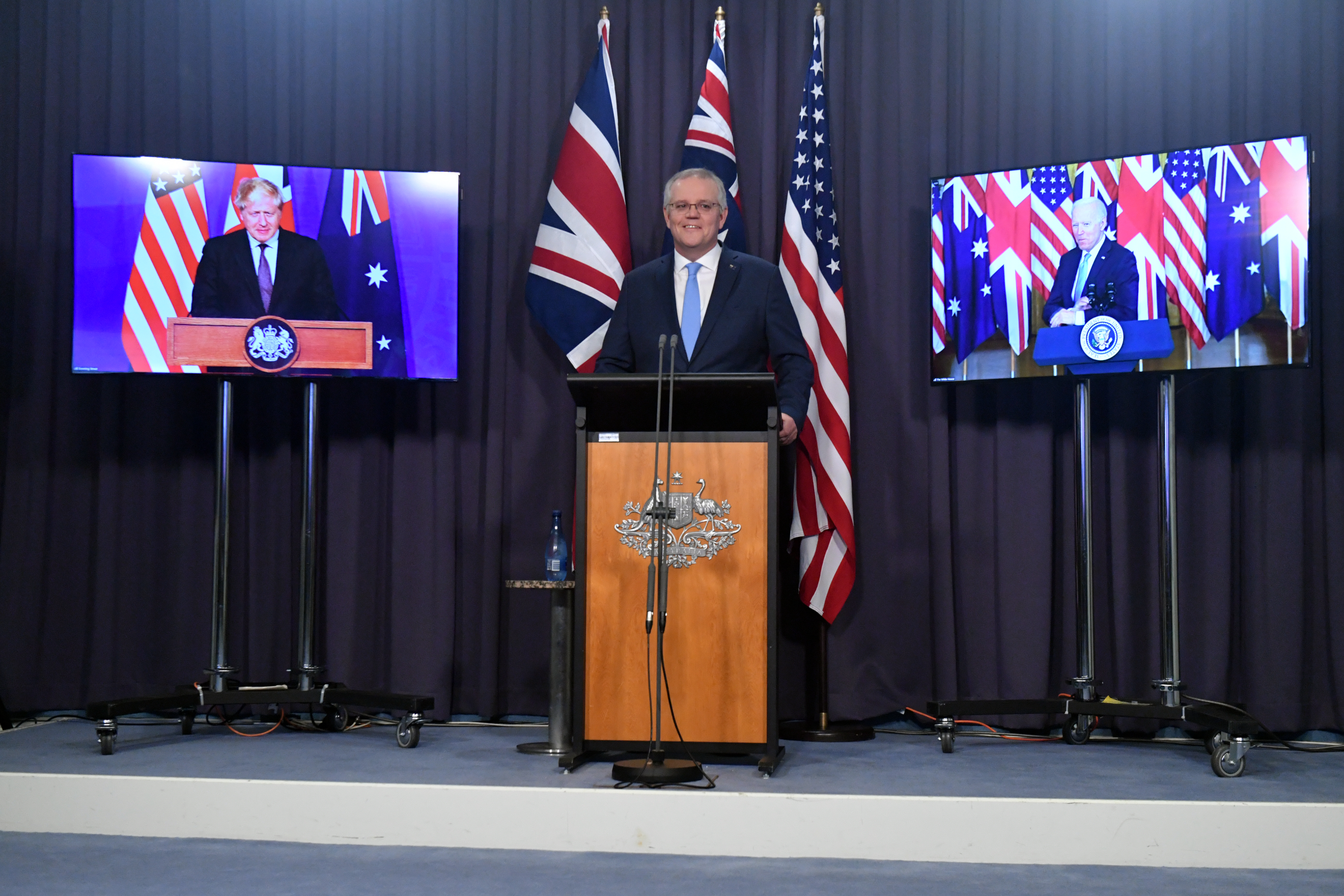
Mr Morrison said the trilateral alliance was the most significant pact Australia had entered since the ANZUS treaty with the US and New Zealand.
The pact will also see Australia acquire its first fleet of nuclear-powered submarines and scrap a $90 billion deal with French submarine maker Naval Group struck in 2016.
Mr Morrison said the landmark production of the submarines in Australia would begin in the next decade.
The fleet will be built in Adelaide, with the new AUKUS partnership to determine the way forward in the next 18 months.
READ MORE: Nuclear submarines offer key military edge for Australia
"Nuclear-powered (submarines) have clear advantages. Greater endurance, they're faster, they have greater power, greater stealth, more carrying capacity," he said.
"These make nuclear submarines the desired substantial capability enhancement that Australia has needed.
"It helps us to build regional resilience as part of this first initiative."
'One-off' chance to access technology
Mr Morrison said it was the first time the technology had ever been made available to Australia.
"Indeed only one other country has been given access to this technology back in the late 1950s – the United Kingdom, from the United States," he said.
"This is a one-off, as the President in Washington has made very clear."
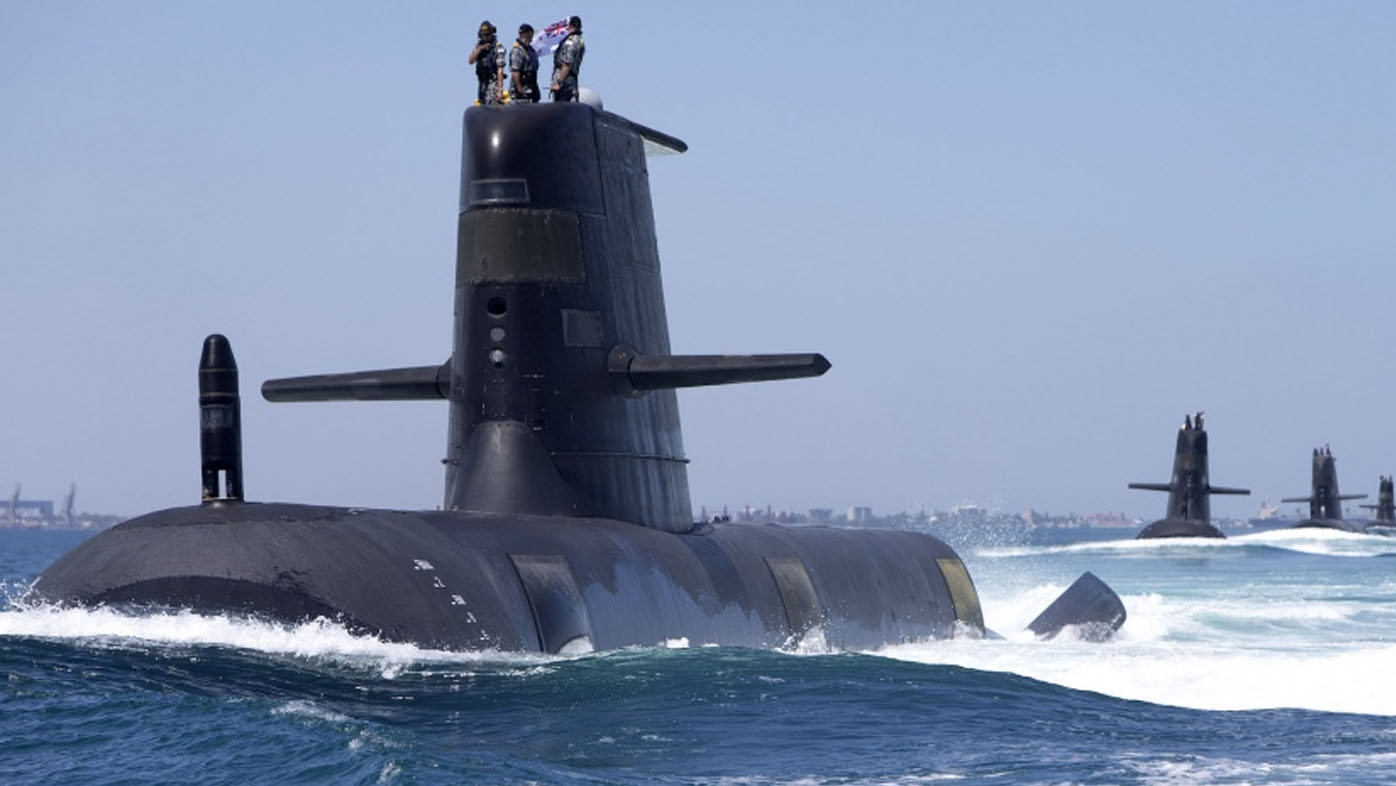
Mr Morrison said when Australia had made its last submarine deal in 2016, it had not been in a position to build and operate a nuclear-powered submarine.
"It wasn't on the table for a range of reasons, so the decision we have made to not continue with the Attack-class submarine and to go down this path is not a change of mind, it's a change of need," he said.
"The goal has remained the same."
Mr Morrison said developments since 2016 had not only made a nuclear-powered submarine fleet feasible for Australia, but also a strategic necessity.
"Next-generation nuclear-powered submarines will use reactors that do not need refuelling during the life of the boat," he said.
"A civil nuclear power capability here in Australia is not required to pursue this new capability. These are game-changing differences in the technology and the opportunity that Australia has.
"But there have also been game-changing developments in the strategic circumstances of our region, which continue to accelerate at a pace even not envisaged as little as five years ago."
Nuclear weapons 'not on the agenda'
Mr Morrison emphasised Australia was not seeking to acquire nuclear weapons.
"Australia has no interest in that. No plans for it, no policy for it, no contemplation of it. It's not on our agenda," he said.
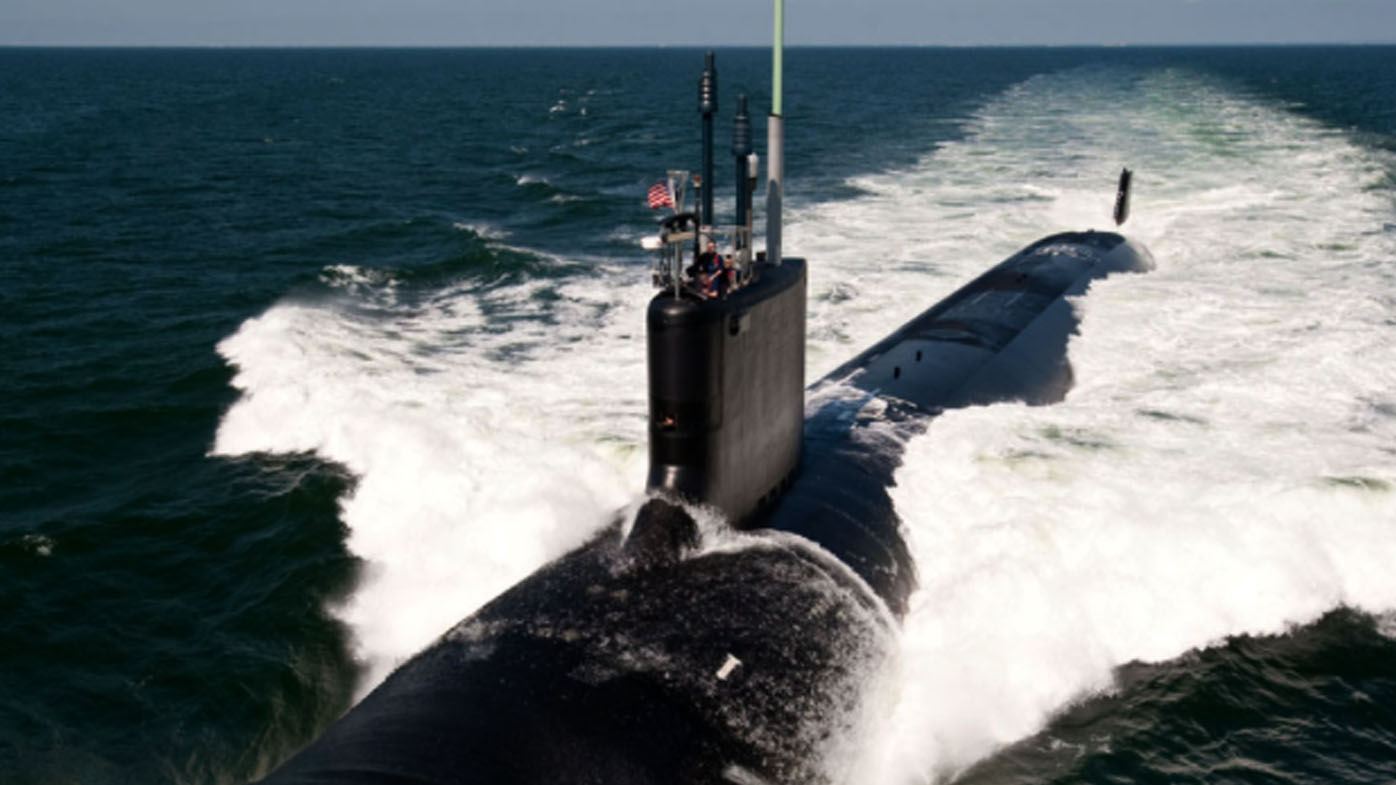
Mr Morrison said the government would also commit to enhancing its long-range strike capability, including Tomahawk cruise missiles for Australian Hobart-class destroyers, and extended air-to-surface ranges for Australia's jets.
"We have increased our defence spending as a share of our economy to over two per cent ahead of time, and we will have to keep pressing forward," he said.
He said Australia's Collins-class submarines remained among the most high-functioning "conventional" vessels in the world.
French Attack-class deal scrapped
Mr Morrison said he had informed French defence contractor Naval Group and President of France Emmanuel Macron of the decision to discontinue the Attack-class program in Adelaide.
"I want to stress that France remains an incredibly important partner in the Pacific," he said.
"We share a deep passion for our Pacific family and a deep commitment to them, and I look forward and I hope to see us continue once we move past what is obviously a very difficult and disappointing decision for France. I understand that. I respect it.
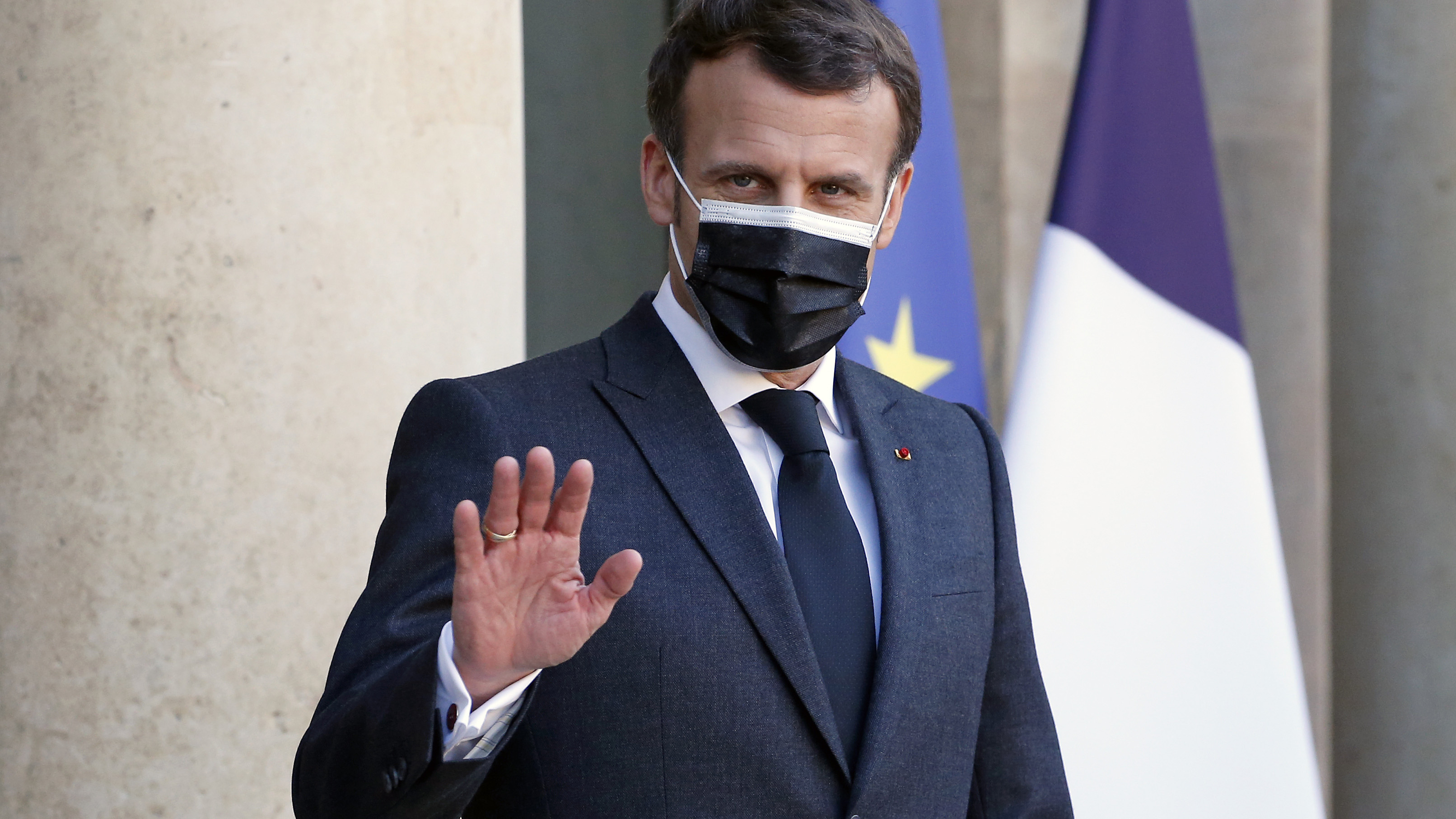
"But as a Prime Minister I must make decisions that are in Australia's national security, and I know that France would do the same. And I know ultimately that will be understood.
"And we'll be able to continue to work together for our many shared goals and aims because fundamentally we share the same values, we share the same vision."
READ MORE: Kim Jong Un's sister warns of 'destruction'
Mr Morrison has reassured workers involved with the junked Attack-class submarine program that they would still be needed.
"Your skills are in unprecedented demand because of the commitments the government has made to embark on the largest regeneration of the Royal Australian Navy since World War II," he said.
"We need you. We needed you. And we will still need you and we will continue to enlist you in this great national effort to ensure the skills that have been developed are kept with this great national enterprise."
https://twitter.com/ScottMorrisonMP/status/1438270815166889984
Australia's Defence Secretary Greg Moriarty has hailed the announcement of AUKUS.
"I'm particularly looking forward to engaging with US and UK counterparts around the cutting-edge technologies, not just the nuclear-powered submarine, but the other opportunities that are made available to us through the AUKUS arrangement," he said.
"Quantum, AI, cyber, undersea capabilities that we will be able to look to in future.
"The sort of weapons systems that will continue to give the ADF a potent capability advantage in the decades ahead because the threat environment is changing."
Chief of Defence General Angus Campbell also warned of what lies ahead.
"Our strategic environment has deteriorated," he said.
"Our key strategic documents speak of this. That challenging environment is becoming more challenging and is set to do so into the future at an accelerated pace.
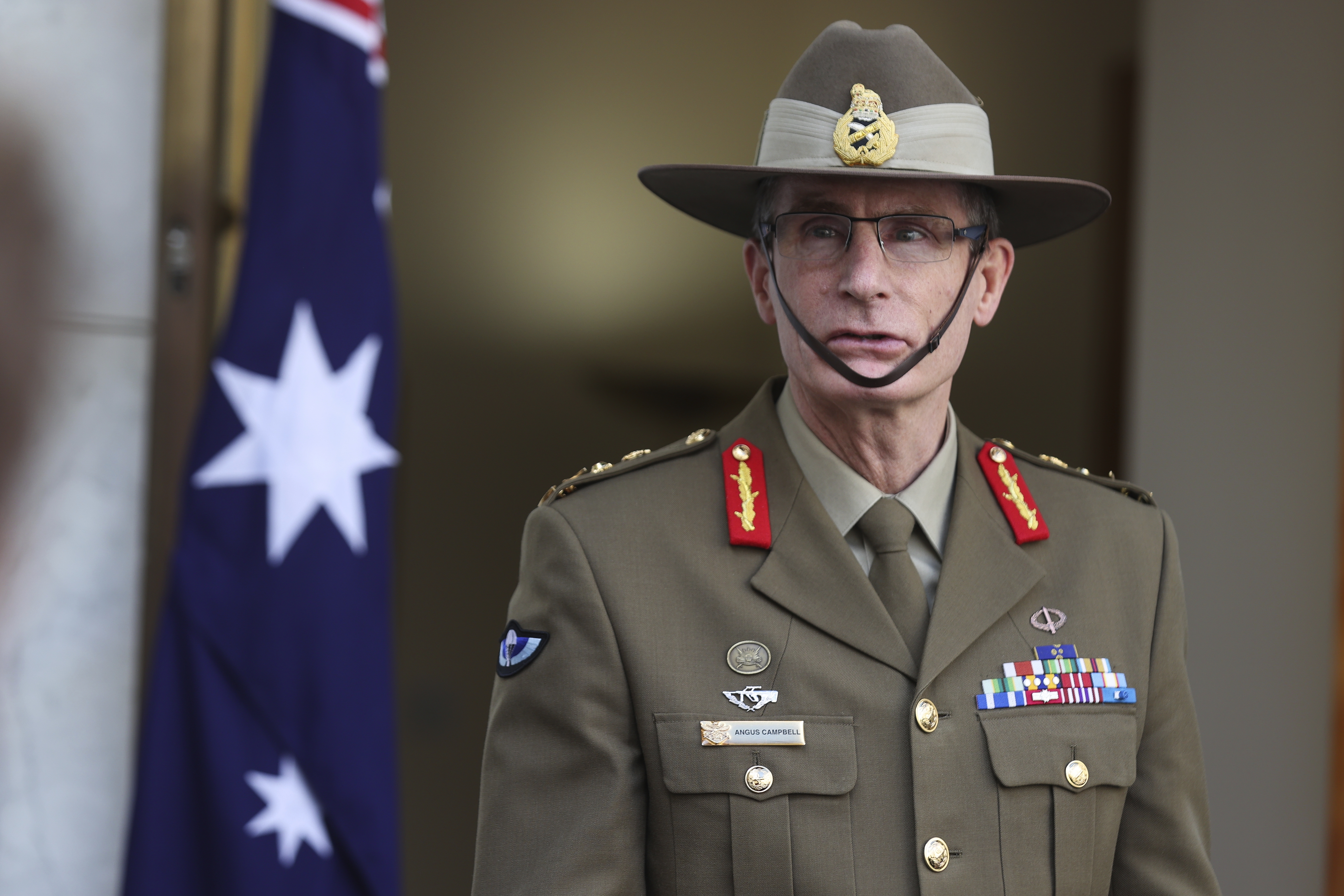
"This decision is very welcome in terms of the development of the Australian Defence Force, for its structure and its forced posture."
Mr Morrison said there was no need for a NATO-style treaty for Australia that would compel all signatories to aid one another if one came under attack.
"We are very pleased with the arrangements we have the United States and our many other partners in the region and, no, we are not pursuing those types of arrangements," he said.
"The ANZUS alliance and other partnerships and agreements we believe suit our security interests and have served us very well. AUKUS takes that to a whole new level."
'Increasingly complex' Indo-Pacific
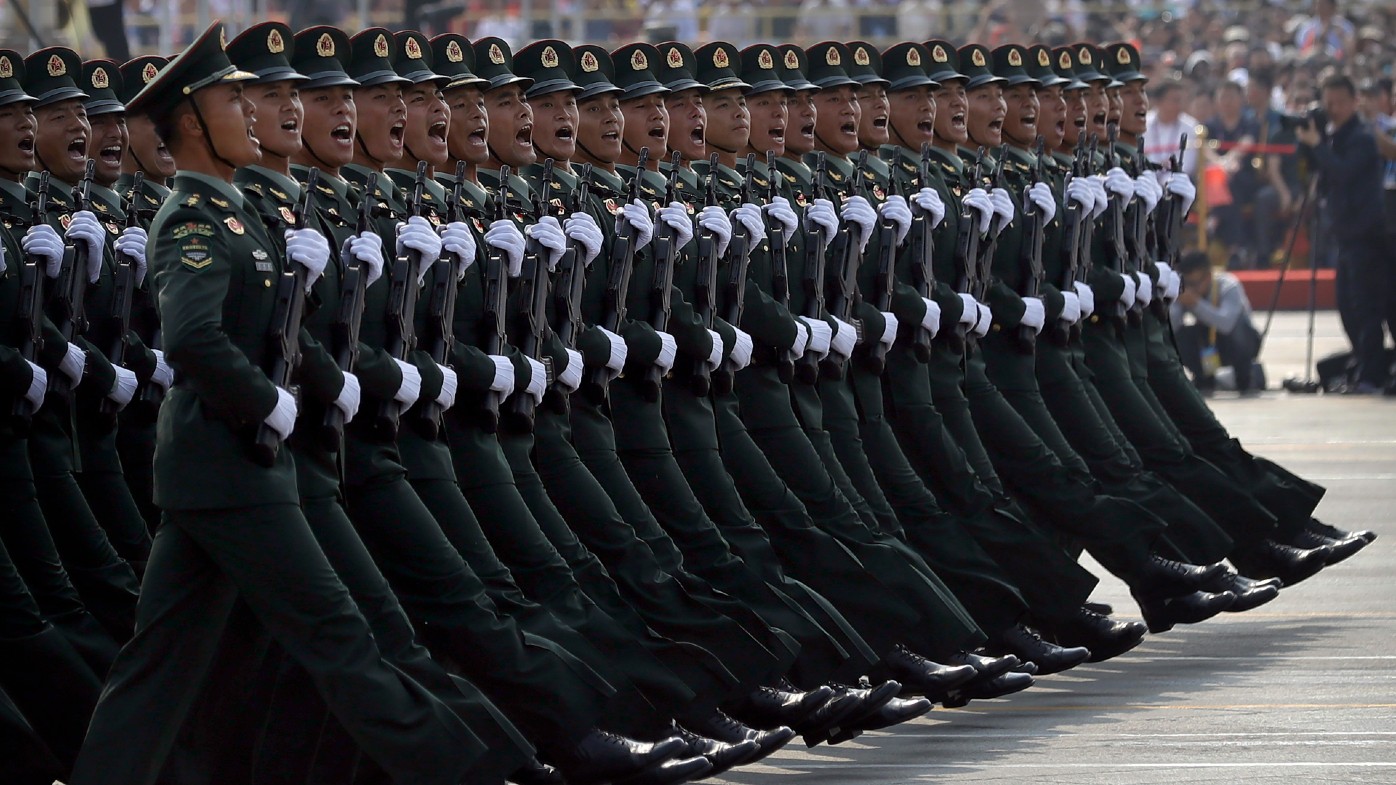
Mr Morrison said Australia had engaged with China and other countries in the Indo-Pacific to discuss the new AUKUS alliance.
"I spoke to (India Prime Minister) Narendra Modi and (Japanese Prime Minister) Yoshihide Suga last night," he said.
"There's an open invitation for (Chinese President Xi Jinping) to discuss other matters. That has always been there.
READ MORE: Top US officer feared Trump could order China strike, book suggests
"Australia is open to discuss issues important to the Indo-Pacific.
"I believe and hope we share the same objective of a peaceful Indo-Pacific where the sovereignty and independence of nations is understood and respected and enables their citizens to flourish."
Mr Morrison rebuffed suggestions the AUKUS alliance could be seen as a provocative move by the Chinese government.
"It is not an uncommon thing for countries to take decisions in their own strategic interests and build up their defence capabilities," he said.
"China makes the same decisions, as do other countries within our region."
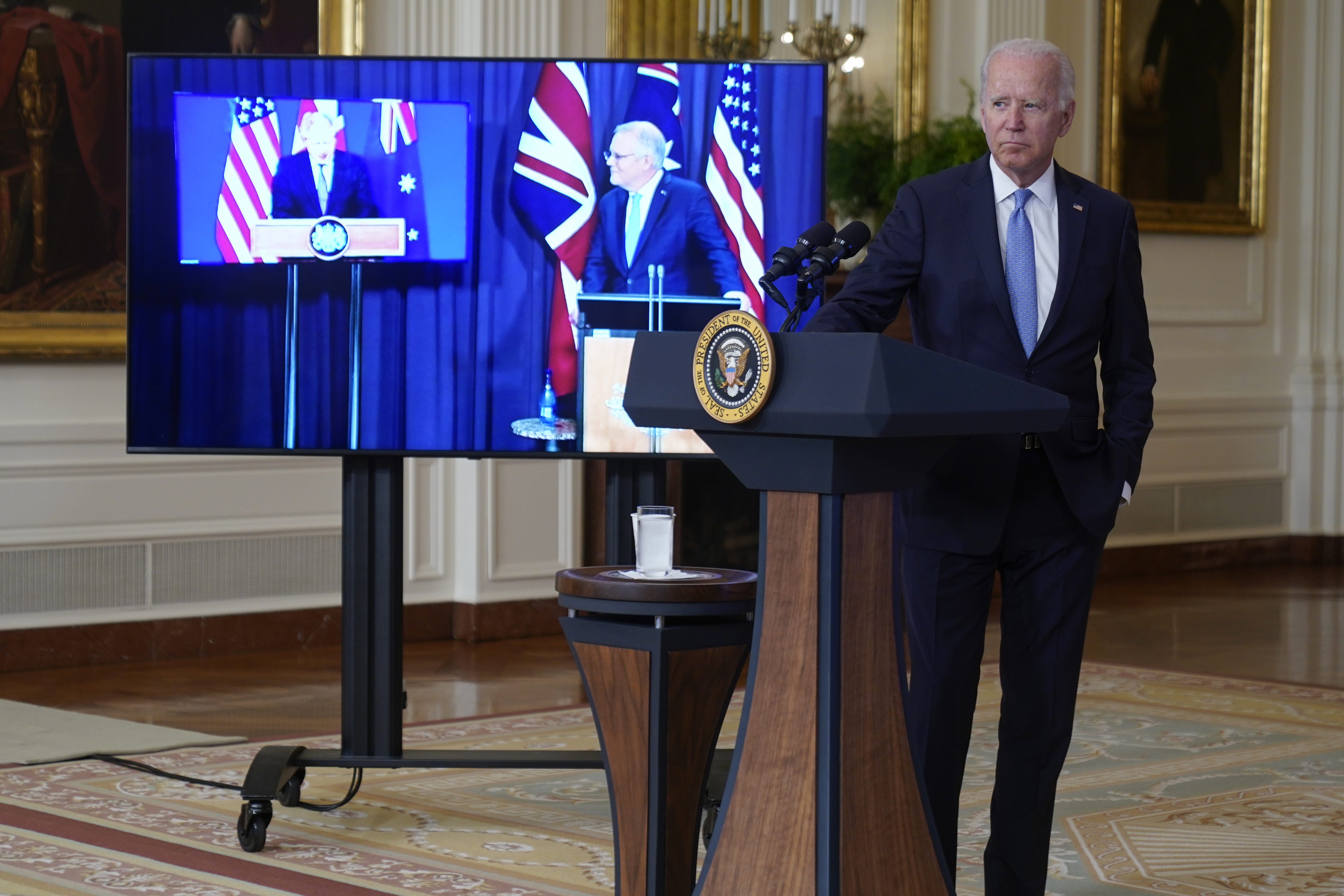
Earlier, as he confirmed the partnership in a joint virtual media conference with Mr Biden and Mr Johnson, Mr Morrison said AUKUS was a response to an increasingly "complex" Indo-Pacific.
"This affects us all," he said.
"The future of the Indo-Pacific will impact all our futures.
"To meet these challenges, to help deliver the security and stability our region needs, we must now take our partnership to a new level."
READ MORE: 'No doubt we will be hearing from China and no doubt China will be outraged'
Mr Morrison did not directly mention the Chinese government in his comments.
"This will be one of the most complex and technically demanding projects in the world," Mr Johnson said.
"Lasting for decades and requiring the most advanced technology."
Mr Johnson said Australia was a "kindred nation" to the UK.
He said the decision to acquire nuclear submarines, which only a handful of countries possessed, was a "momentous decision".
All three leaders hailed the strength of the Australia-US-UK alliance.
Mr Morrison said the three nations saw the world through a "similar lens"
"We have always believed in a world that favours freedom, that respects human dignity, the rule of law, the independence of sovereign states and the peaceful fellowship of nations," he said.
"And while we've always looked to each other to do what we believe is right, we have never left each other."
READ MORE: North Korea says it fired new long-range cruise missiles
He labelled Mr Johnson and Mr Biden "great friends of freedom".
Mr Johnson said AUKUS was a "new chapter" of the countries' existing friendship.
"The UK, Australia and the US will be joined even more closely together, reflecting the measure of trust between us, the depths of our friendship and the enduring strength of our shared values of freedom and democracy," he said.
"Australia is one of our oldest friends, a kindred nation and a fellow democracy and a natural partner in this enterprise."
Mr Biden said the three nations had fought together for "more than a century".
"This is about investing in our greatest source of strength, our alliances, and updating them and to better meet the threats of today and tomorrow," he said.
"It's about connecting America's existing allies and partners in new ways and amplifying our ability to collaborate, recognising there is no reasonable divide separating the interests of our Atlantic and Pacific partners."
New Zealand Prime Minister Jacinda Ardern said she discussed the new arrangement with Mr Morrison last night.
"This arrangement in no way changes our security and intelligence ties with these three countries, as well as Canada," she said in a statement.
"We welcome the increased engagement of the UK and US in the region and reiterate our collective objective needs to be the delivery of peace and stability and the preservation of the international rules based system."
She said New Zealand's prohibition of nuclear-powered vessels in its waters would remain unchanged.
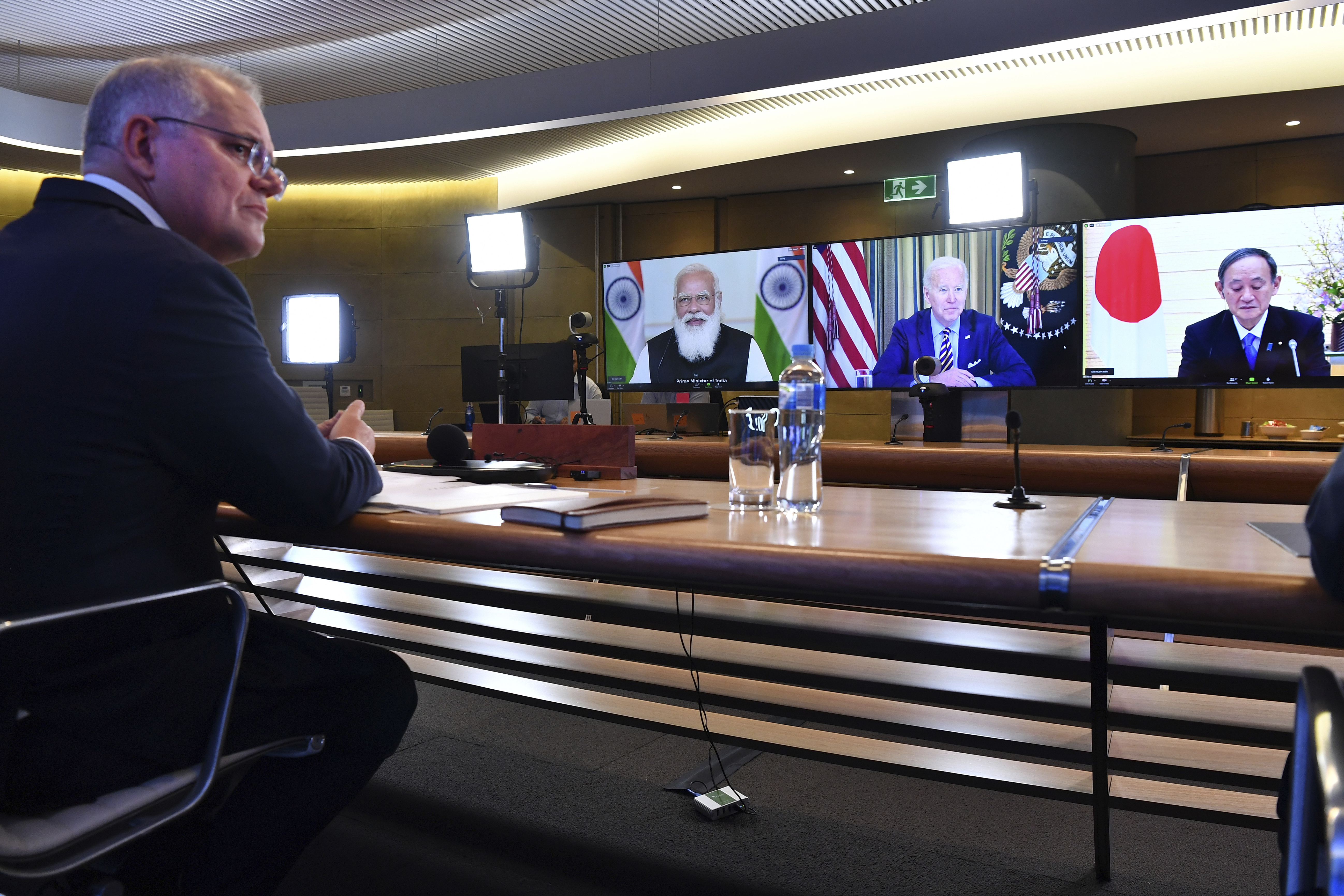
Mr Morrison is due to travel to Washington, DC, next week to meet with Mr Biden, Prime Minister Narendra Modi of India and Prime Minister Yoshihide Suga of Japan as part of the Quad partnership.
Security in the South China Sea was a key topic when the Quad leaders held their first virtual meeting in March.
READ MORE: Murder conviction overturned for US cop who killed Australian woman
FULL STATEMENT FROM JOINT LEADERS
As leaders of Australia, the United Kingdom, and the United States, guided by our enduring ideals and shared commitment to the international rules-based order, we resolve to deepen diplomatic, security, and defense cooperation in the Indo-Pacific region, including by working with partners, to meet the challenges of the twenty-first century. As part of this effort, we are announcing the creation of an enhanced trilateral security partnership called "AUKUS" — Australia, the United Kingdom, and the United States.
Through AUKUS, our governments will strengthen the ability of each to support our security and defense interests, building on our longstanding and ongoing bilateral ties. We will promote deeper information and technology sharing. We will foster deeper integration of security and defense-related science, technology, industrial bases, and supply chains. And in particular, we will significantly deepen cooperation on a range of security and defense capabilities.
As the first initiative under AUKUS, recognizing our common tradition as maritime democracies, we commit to a shared ambition to support Australia in acquiring nuclear-powered submarines for the Royal Australian Navy. Today, we embark on a trilateral effort of 18 months to seek an optimal pathway to deliver this capability. We will leverage expertise from the United States and the United Kingdom, building on the two countries' submarine programs to bring an Australian capability into service at the earliest achievable date.
The development of Australia's nuclear-powered submarines would be a joint endeavour between the three nations, with a focus on interoperability, commonality, and mutual benefit. Australia is committed to adhering to the highest standards for safeguards, transparency, verification, and accountancy measures to ensure the non-proliferation, safety, and security of nuclear material and technology. Australia remains committed to fulfilling all of its obligations as a non-nuclear weapons state, including with the International Atomic Energy Agency. Our three nations are deeply committed to upholding our leadership on global non-proliferation.
Recognizing our deep defense ties, built over decades, today we also embark on further trilateral collaboration under AUKUS to enhance our joint capabilities and interoperability. These initial efforts will focus on cyber capabilities, artificial intelligence, quantum technologies, and additional undersea capabilities.
The endeavour we launch today will help sustain peace and stability in the Indo-Pacific region. For more than 70 years, Australia, the United Kingdom, and the United States, have worked together, along with other important allies and partners, to protect our shared values and promote security and prosperity. Today, with the formation of AUKUS, we recommit ourselves to this vision.
Covid-19 Delta outbreak: New ED patient infection exposure case at Middlemore Hospital
South Auckland’s Middlemore Hospital is once again at the centre of a Covid-19 infection exposure event after a person seeking treatment at the emergency department tested positive. Director general of health Dr Ashley Bloomfield…
'Eighth wonder of the world' still missing after dive to Nazi ship
The location of the legendary Amber Room – ornate Russian treasure looted by the Nazis – remains a mystery after divers investigated a World War II shipwreck.
This week the Baltictech dive-team completed an expedition to the sunken German steamer the Karlsruhe in waters off Poland.
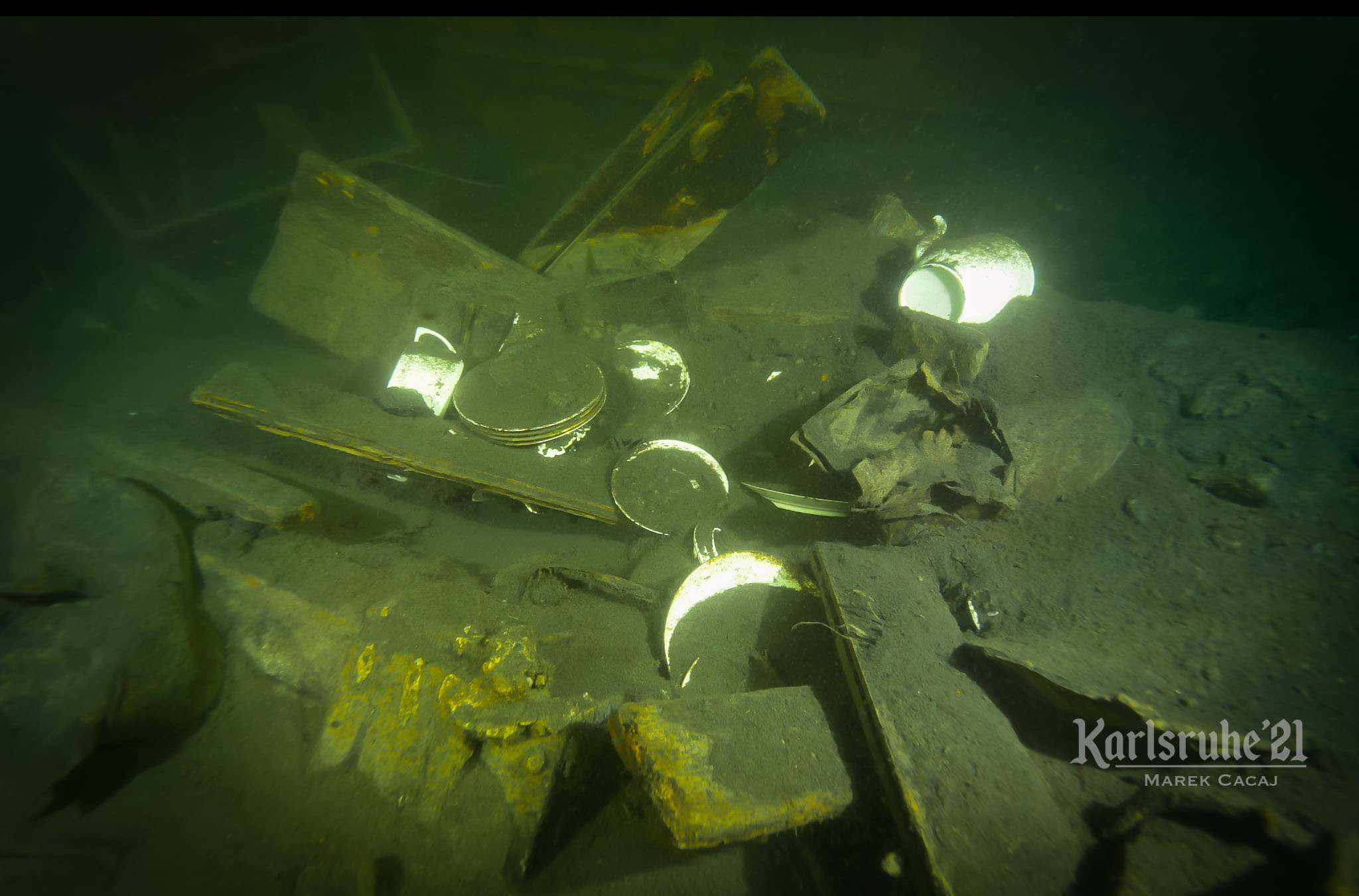
After they discovered the wreck last October, the technical divers returned to investigate mysterious crates scattered near the wreck 90 metres below the Baltic Sea.
READ MORE: Rookie detectorist finds huge Iron Age gold hoard in Denmark
READ MORE: How meth gave Nazis the edge in the first years of WWII
The vessel left Koenigsberg – which is today the Russian enclave of Kaliningrad – in May 1945 before it was sunk by Soviet warplanes.
The ship had been taking part in the sea evacuation in history of more than one million German troops and civilians from East Prussia at the end of World War Two.
Historical records suggest the vessel was carrying a heavy cargo of about 300 tonnes and more than 1000 people.
The Baltictech divers believed the crates could have contained the missing gold-leaf and mirror-decorated Amber Room wall-panels, looted by the Germans in 1941 after they invaded Russia.
READ MORE: Alligator found with 6000-year-old artefact in stomach
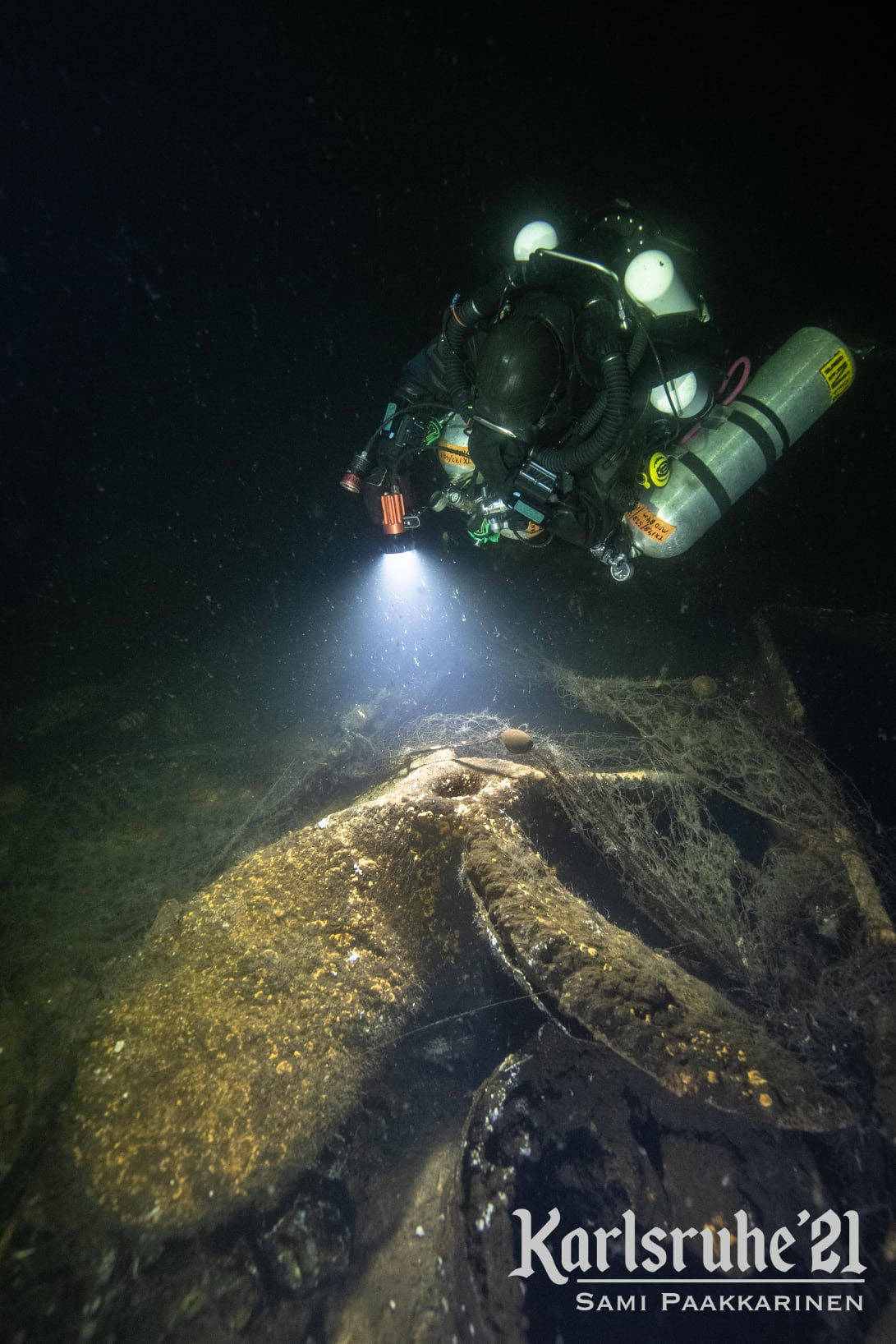
But at the end of the expedition, the divers said they had found no sign of lost artwork or treasures, the fate of which remains unknown.
"All the open and damaged chests contained military equipment and the smaller ones were simply private suitcases of refugees from East Prussia," Baltitech posted on social media.
'We didn't touch them, of course, but they made a huge impression nonetheless.
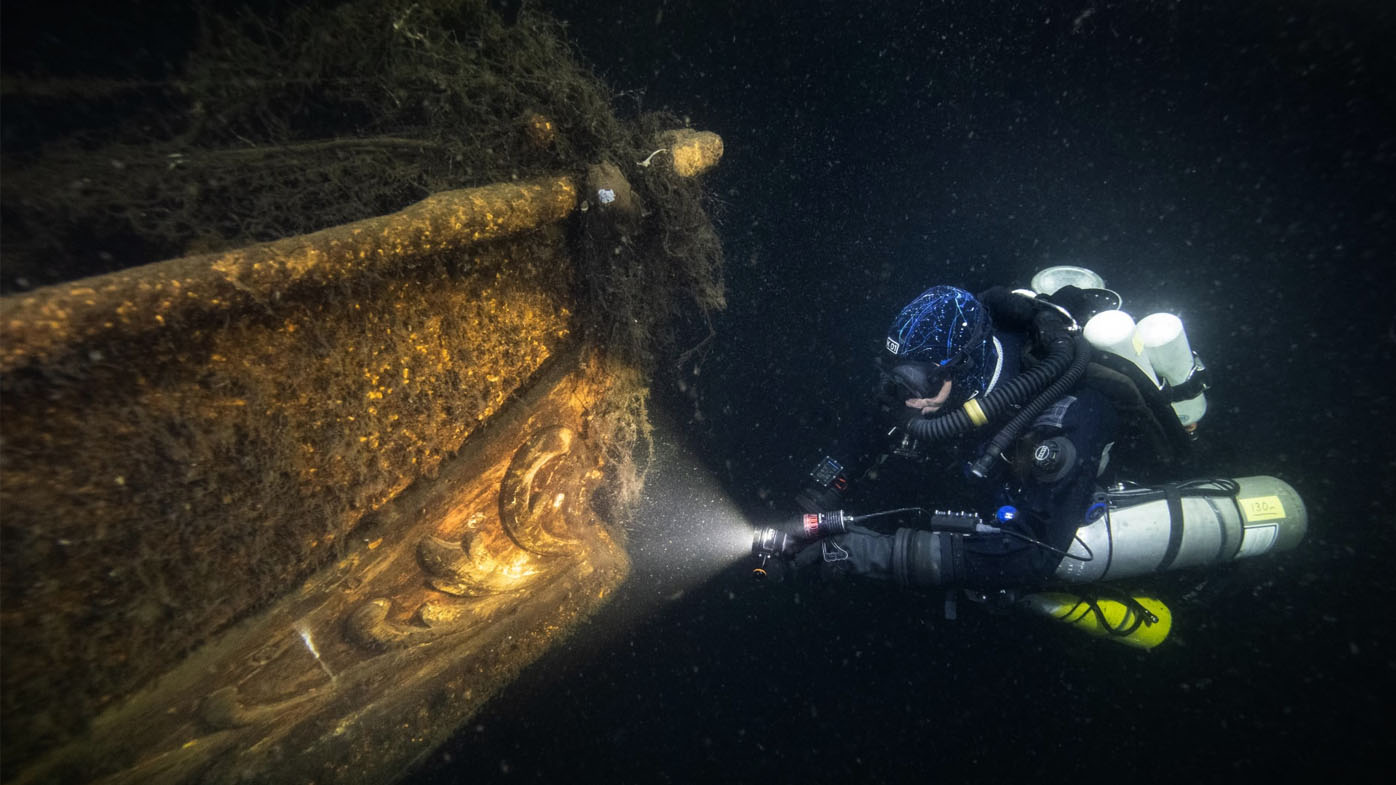
"Everywhere, scattered shoes, belts and private luggage reminded us that nearly 1000 people died on the wreck of Karlsruhe."
The Amber Room – frequently described as the eighth wonder of the world – was built in Prussia and then given to the Russian royal family in 1716 as a gift.
It was last seen in 1945 during the final months of World War II in a Nazi-controlled Baltic port city.

Following World War II, Russian experts constructed a replica Amber Room in the Catherine Palace in St Petersburg.
Taranaki man admits drug driving causing best mate's death
A Taranaki man will keep his name secret for a few more months after admitting driving under the influence of drugs, killing his best mate.The 23-year-old today entered guilty pleas to charges of driving under the influence of a…
Ashburton councillors blame 'entitled young people' for labour shortage
Some Ashburton councillors have had a crack at “entitled young people” in response to the district’s labour shortage headaches.The offensive was sparked by a reported swell in the number of people on employment support in Mid Canterbury,…
Australia's unemployment rate falls, but no cause for celebration
Australia's unemployment rate has fallen to 4.5 per cent, but statisticians are warning that now is not the time to celebrate.
New data from the Australian Bureau of Statistics (ABS) today revealed the unemployment rate fell 0.1 percentage point in August 2021, while the participation rate fell to 62.2 per cent.
The underemployment rate has increased to 9.3 per cent and monthly hours worked decreased by 66 million hours.
READ MORE: Australia to acquire nuclear-powered submarines
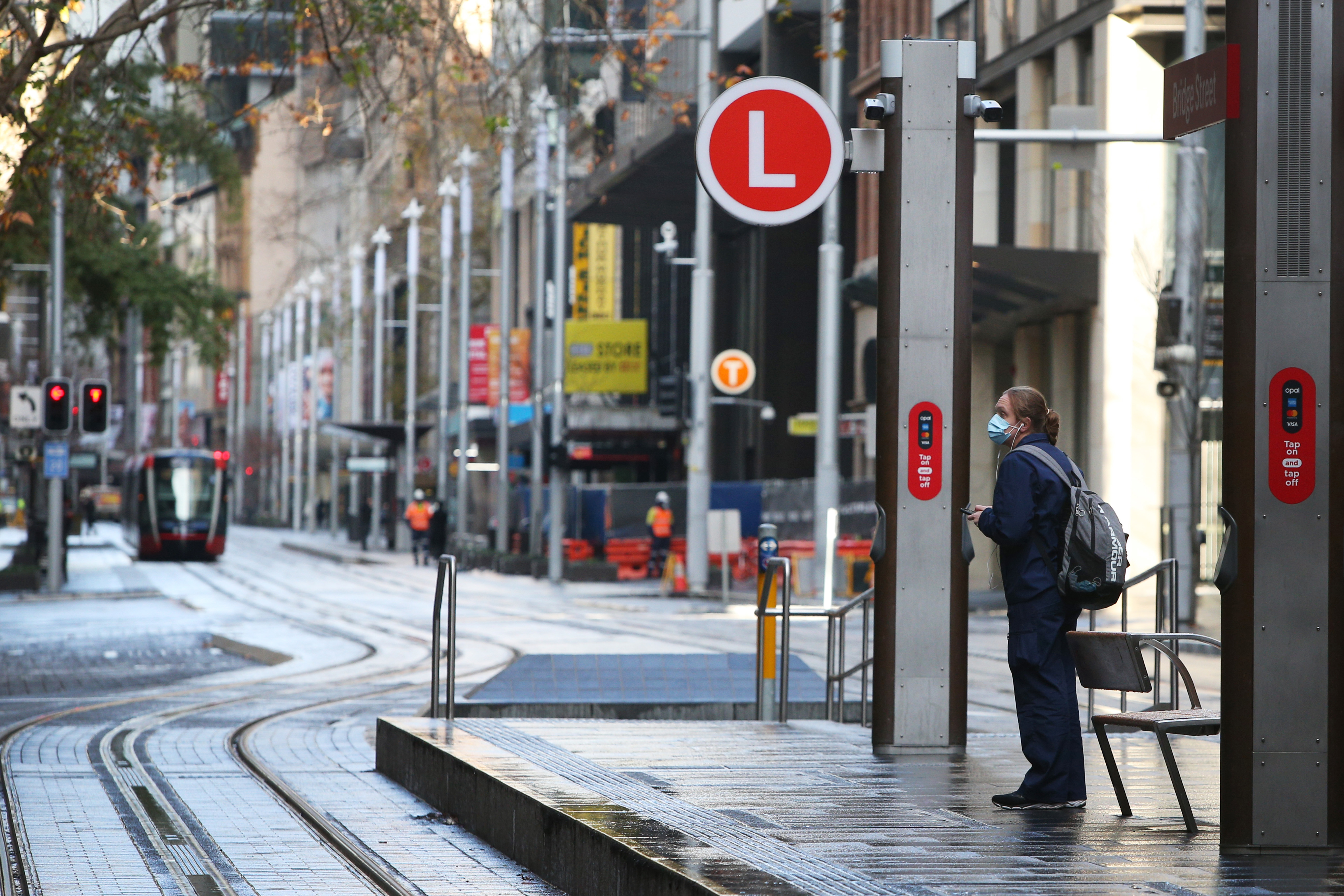
While a falling unemployment rate is usually celebrated, ABS statisticians have said the plummeting measure is a result of less Australians applying for jobs or participating in the workforce in any measure.
"The fall in the unemployment rate reflects a large fall in participation during the recent lockdowns, rather than a strengthening in labour market conditions," Bjorn Jarvis, head of labour statistics at the ABS, said.
"Throughout the pandemic we have seen large falls in participation during lockdowns — a pattern repeated over the past few months.
"Beyond people losing their jobs, we have seen unemployed people drop out of the labour force, given how difficult it is to actively look for work and be available for work during lockdowns.
"This has also coincided with a temporary pause in mutual obligations for jobseekers living in lockdown areas."
READ MORE: Murder conviction overturned for US cop who killed Australian woman
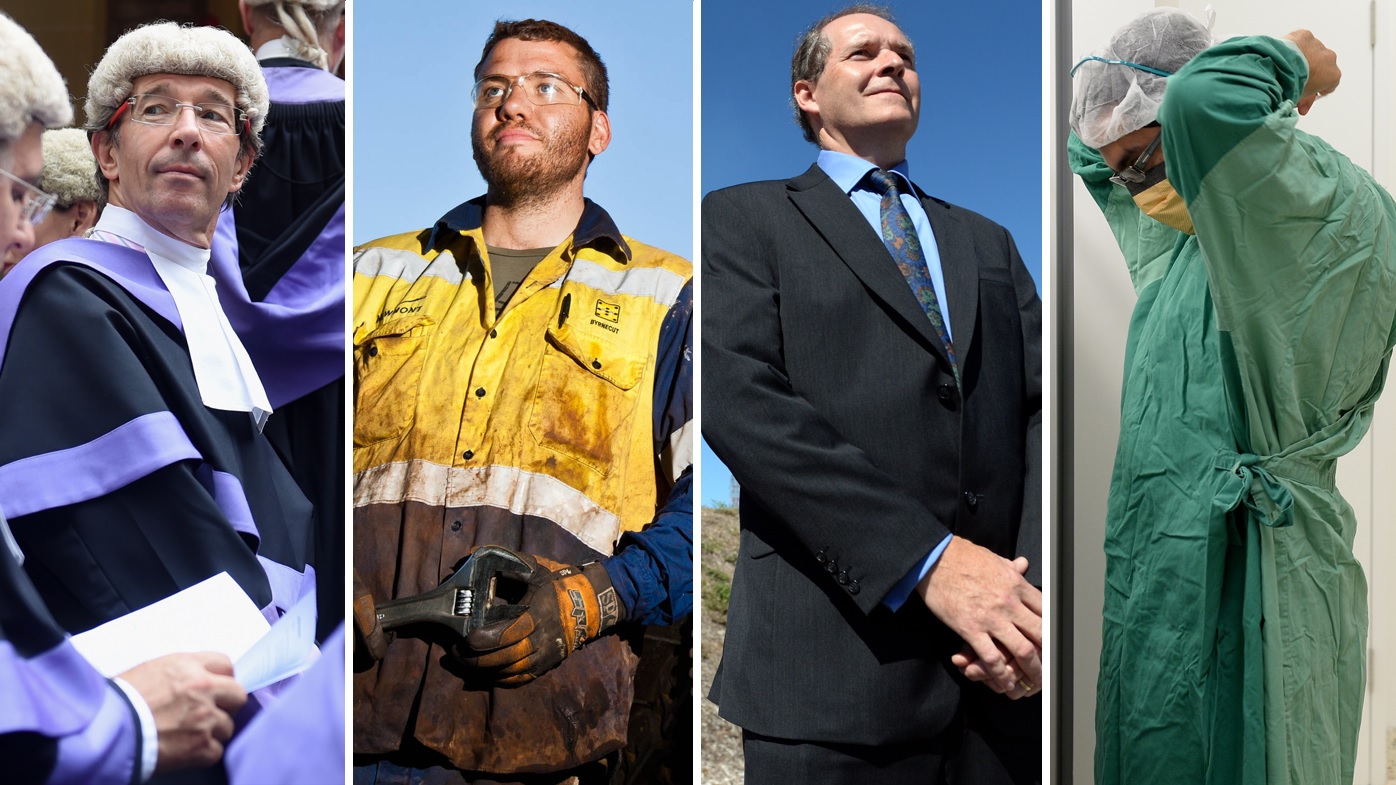
The data showed less Australians working overall, even if they weren't fired or left their current job.
Nationally, hours worked decreased by 3.7 per cent in August, considerably more than the 1.1 per cent fall in employment.
This highlights the extent to which people who experienced new or continuing lockdowns had reduced hours or no work, without necessarily losing their jobs.
"Hours worked data continues to provide the best indicator of the extent of labour market impacts and recovery from lockdowns," Mr Jarvis said.
"It shows that hours in New South Wales fell sharply over the lockdown, down by 13.0 per cent between June and August.
"The data for Victoria also shows how quickly hours can recover, coming out of a lockdown."
READ MORE: Kim Jong Un's sister warns of 'destruction'
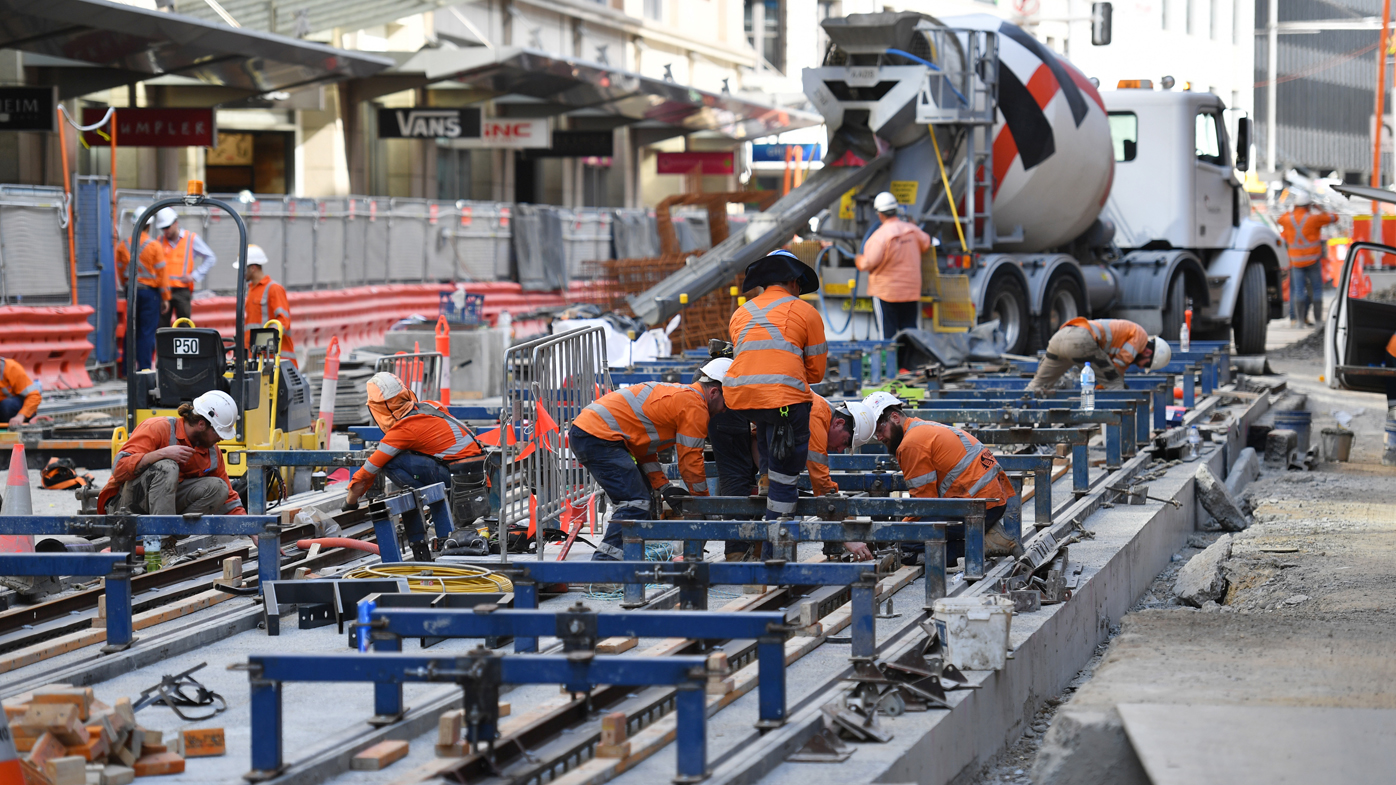
Mr Jarvis said the continued lockdowns in NSW were having profound impacts on the national figures.
"Labour market changes in New South Wales continued to have a large influence on the national employment and hours worked figures. In August, there were big falls in New South Wales in both employment (-173,000) and hours worked (-6.5 per cent)," he said.
"The large falls in employment and hours in New South Wales in August followed falls in July (37,000 and 7.0 per cent), with employment and hours down by 210,000 people and 13.0 per cent since the beginning of the lockdown in late June."