It’s almost like a scene from a Road Runner cartoon – one of New Zealand’s top golf courses has hit a hole-in-one with a “Wile E” idea to scare off Canadian geese that invaded the course.Clearwater Golf Course in Christchurch has…
Tag Archives: oceania
Covid 19 Delta outbreak: Government will review economic support package after outbreak passes
Finance Minister Grant Robertson has said a review of the economic response to the latest outbreak of Covid-19 will be “considered” when the current phase of the outbreak is over. Robertson had already received advice on the latest…
How one man escaped from top of World Trade Center
Exclusive: When two hijacked planes hit the twin towers of the World Trade Center like a pair of missiles on September 11, those caught above the point of impact appeared almost certain as doomed to die, especially anyone fatefully trapped in the North Tower.
Yet some people in the highest reaches of the South Tower made it out. For many, their journey down the last intact stairwell was fraught with unfathomable danger and nightmarish terror.
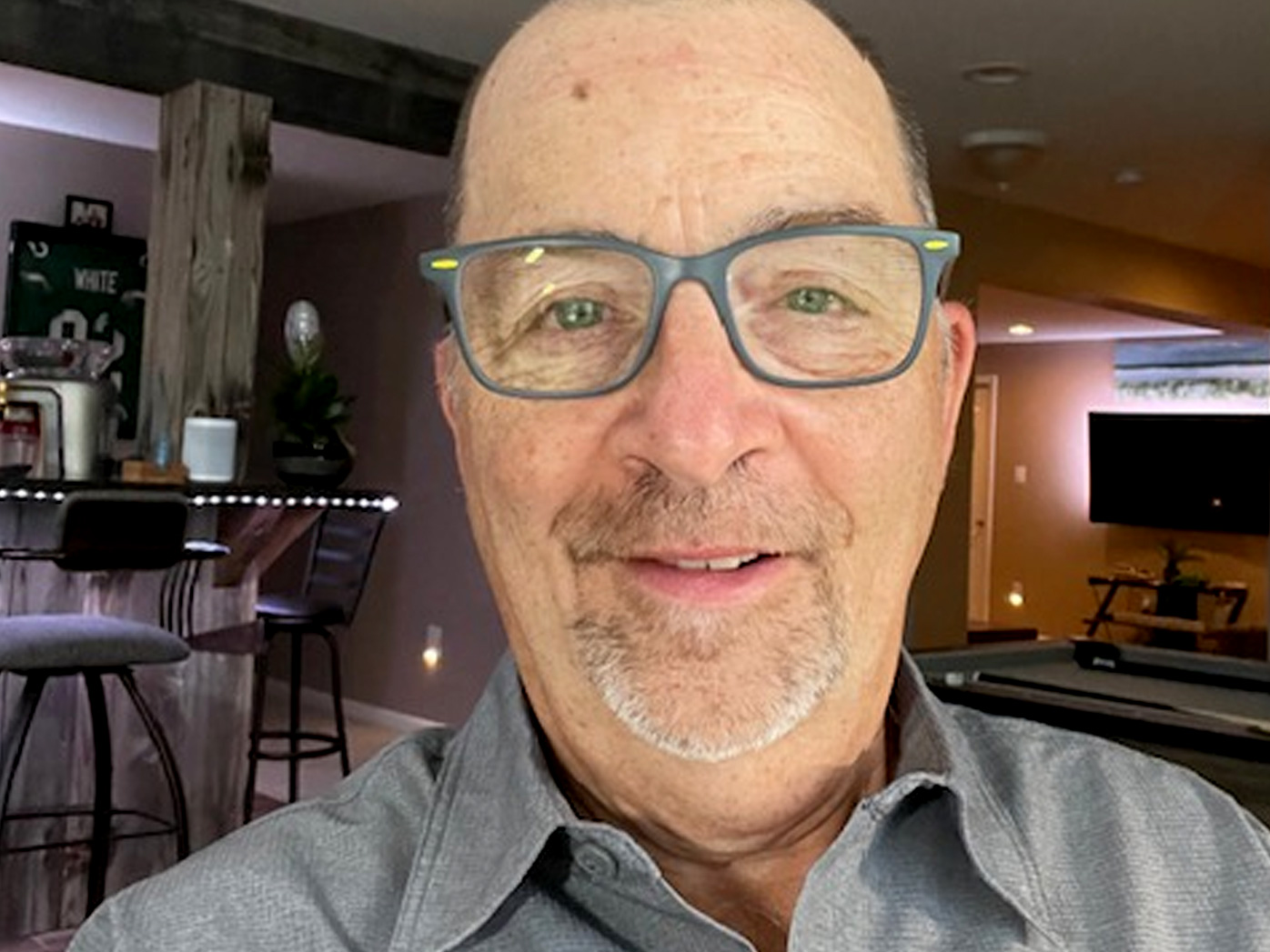
One man who escaped was Joe Dittmar, a father-of-four at the top of the South Tower on a morning when Al Qaeda launched their attack in dreamy blue New York skies.
He says his incredible escape, 20 years ago, still feels like yesterday. Here is his story.
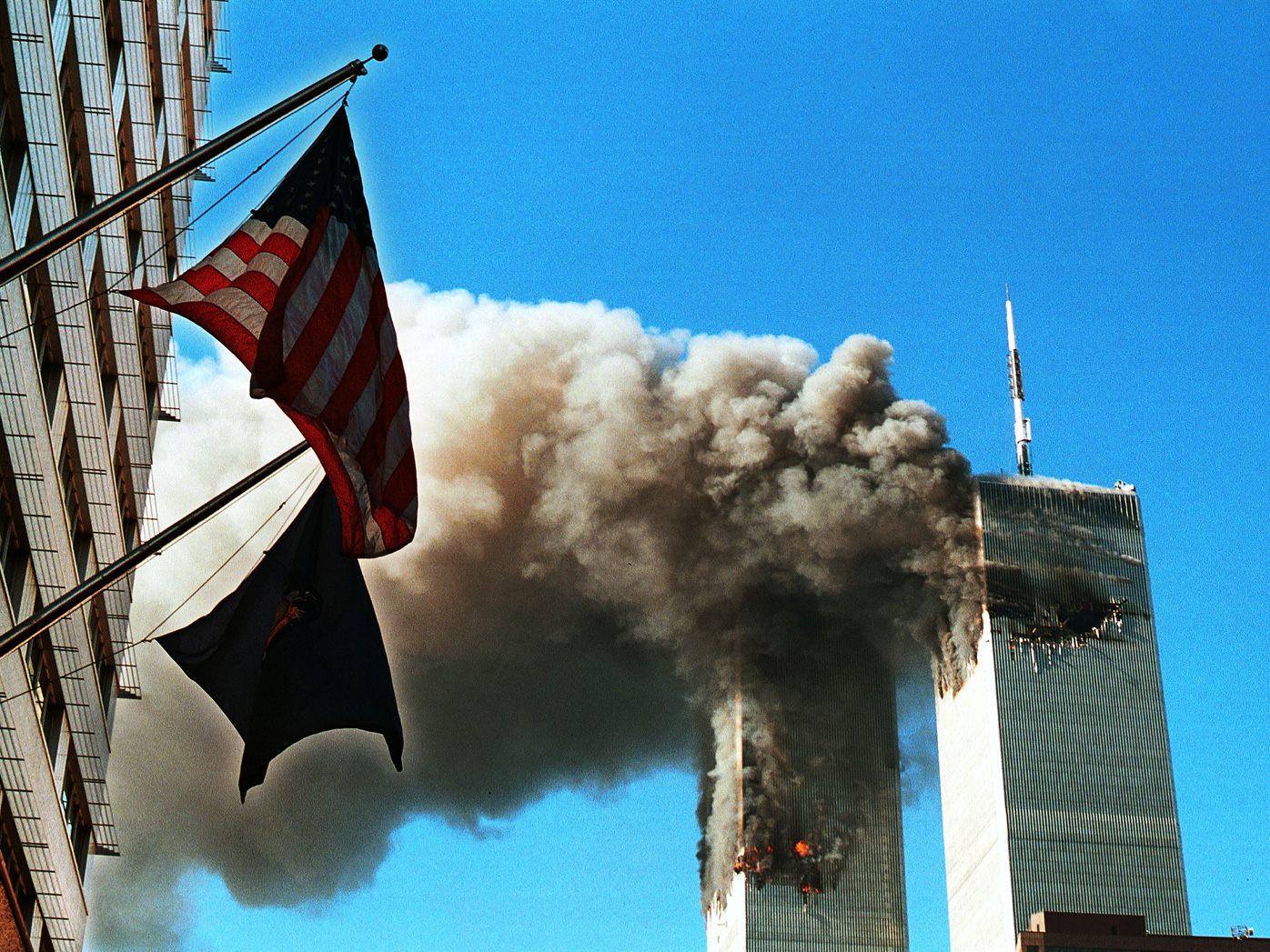
Warning: This article may cause distress to some readers
Harrowing moments on his long descent from the 105th floor, just five floors below the very top of the South Tower, still haunt Joe Dittmar and likely always will.
On the 90th floor, Dittmar "experienced the worst 30 or 40 seconds of my life" when he and others who had been ordered to evacuate the building – but without being told why – had stopped and regathered, after walking 15 blind flights down the stairwell.
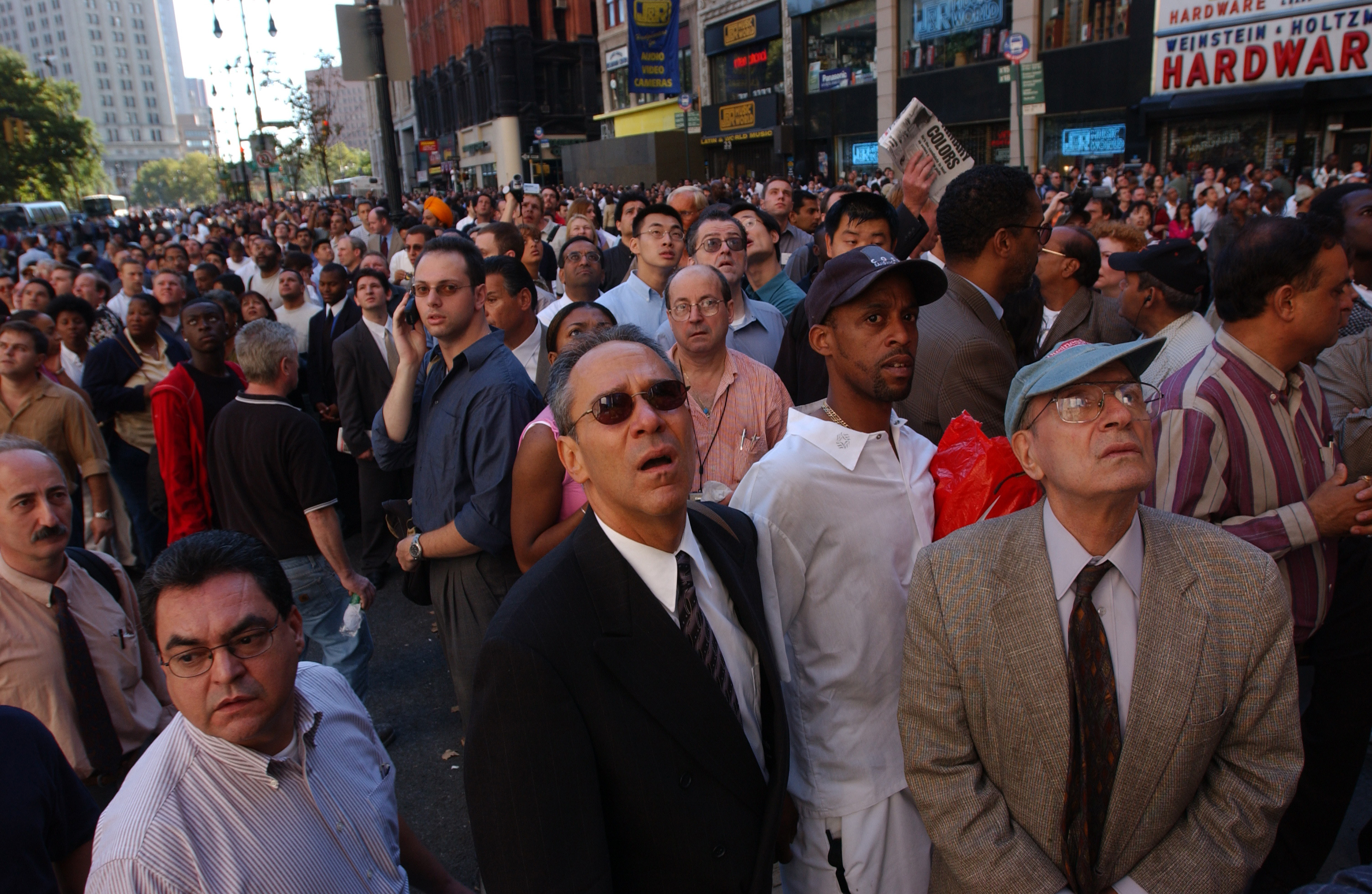
"That's the chance we had for the first time to look out the windows to the north and to see this unbelievable sight," Dittmar recalled, describing the mind-scrambling view of the North Tower which now confronted him, "an awesome, gruesome sight".
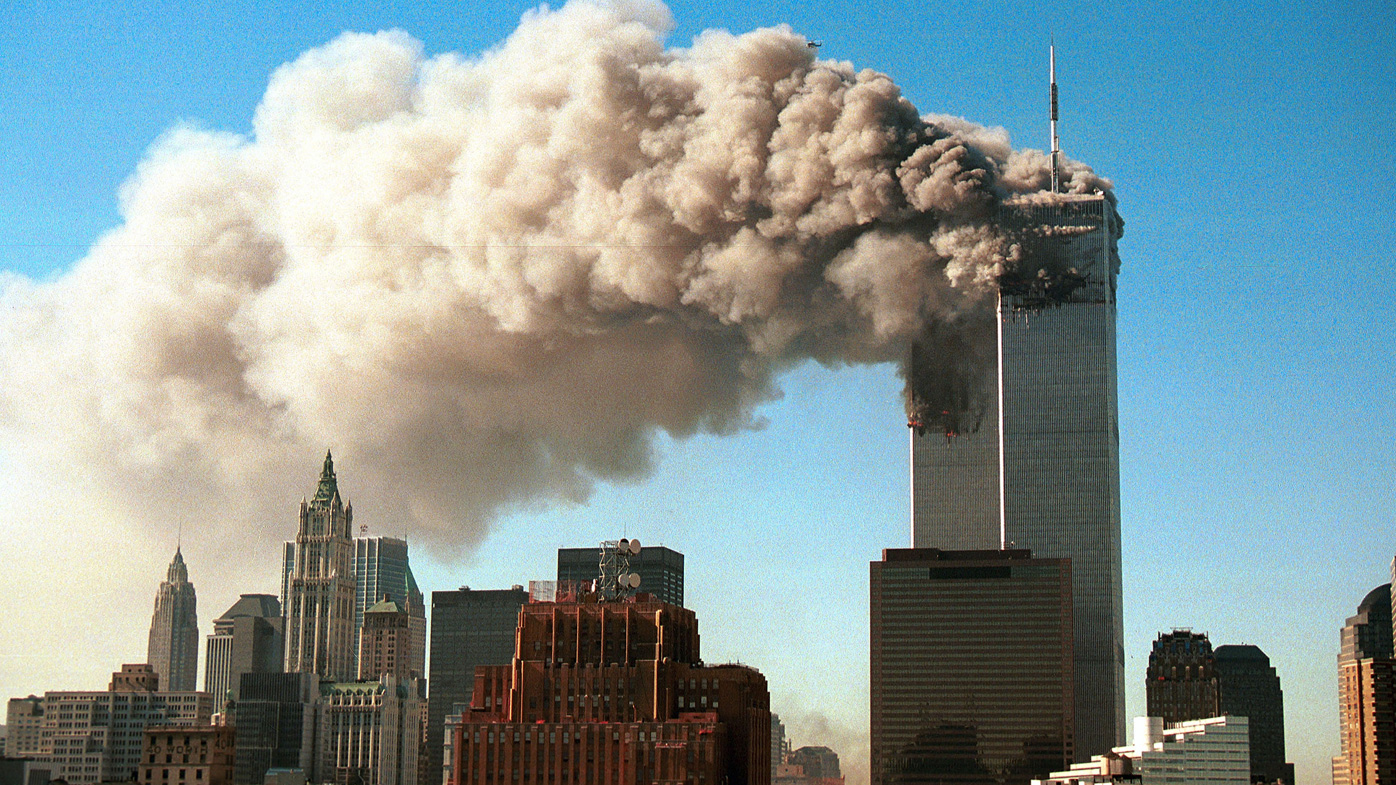
Minutes earlier, American Airlines Flight 11, a Boeing 767 jet carrying 76 passengers, 11 crew and five hijackers, had hit the north face of the North Tower, between floors 93 and 99.
'The sound of hundreds, thousands, maybe tens of thousands of people, on the streets in New York all screaming the same bloodcurdling scream all at the same time. It's the first thing I hear in the morning, it's the last thing I hear at night, every day. It doesn't go away.'
"Huge black holes" had been punched through the North Tower, Dittmar said, and "red flames, redder than any red I've ever seen before," licked up the side of the building and beyond the top level.
"I remember being able to see through that smoke, through that fire, into the huge black holes in the building and seeing pieces of the fuselage of a large plane, a large plane lodged inside the building. And I remember, my God, I'm thinking to myself, 'How did the pilot not see that building? How did he miss the building?'"
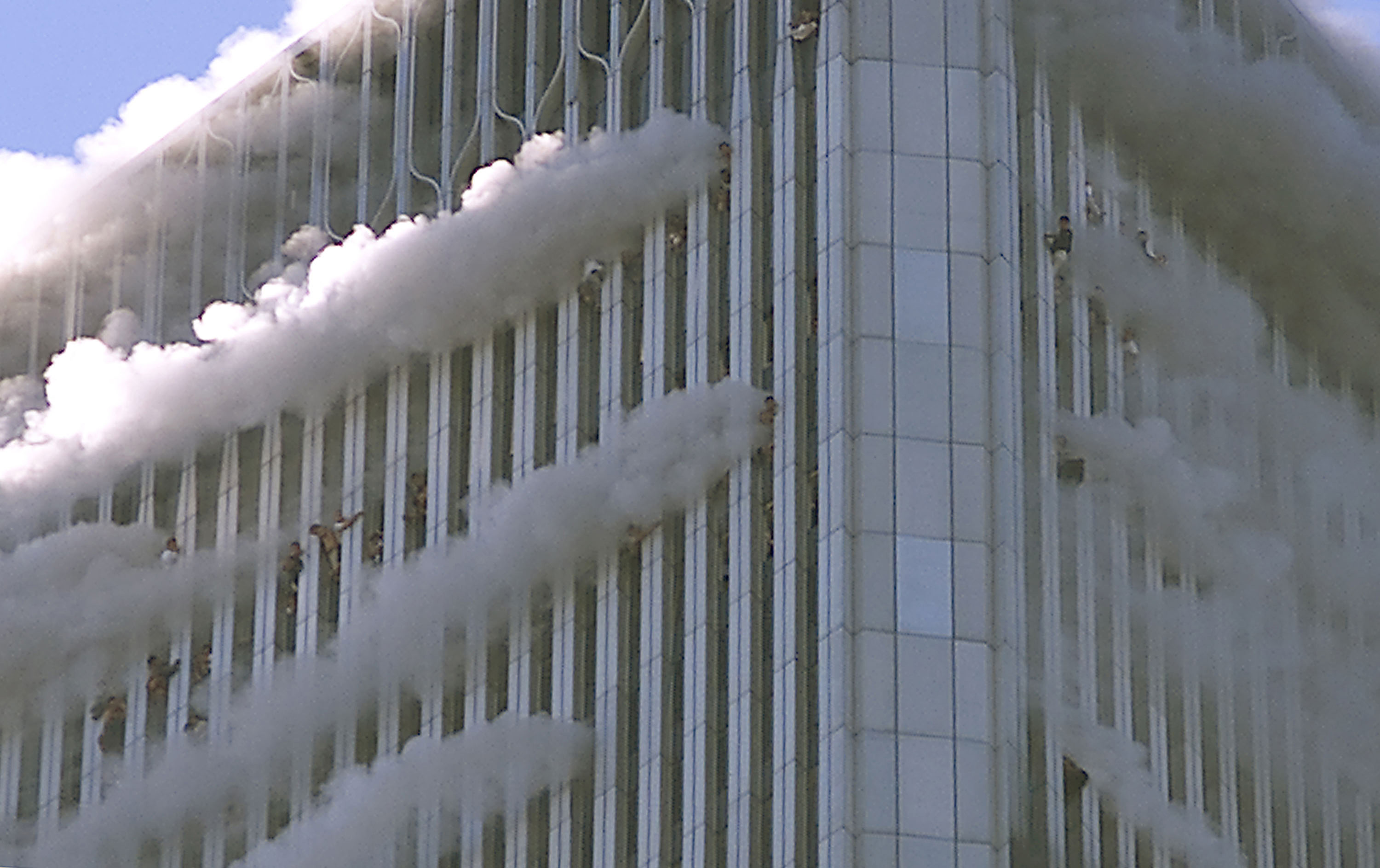
In horror, Dittmar watched as paper, office furniture and people were sucked out the tower against their will.
"I was so afraid, so afraid."
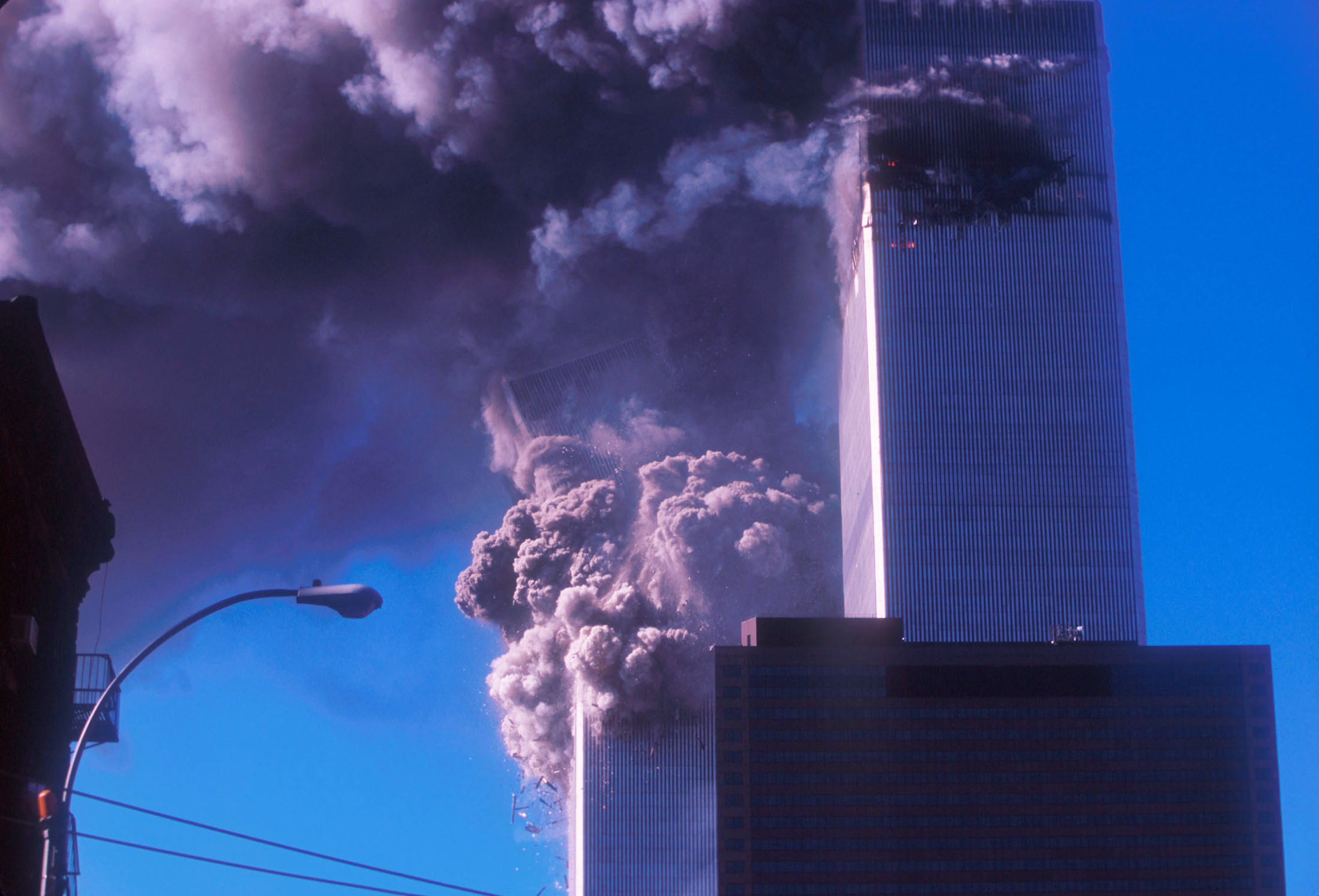
Then there was another moment, with Dittmar further down the stairwell, around the 73rd floor, and United Airlines Flight 175 smashed into the South Tower, a mere half-dozen floors above him.
The catastrophic violence of the impact caused the handrails to break off the wall, concrete to "start spidering" and the steps beneath him to roll "like waves in the ocean".
A smothering "heat ball" blew past him and down the stairwell. And he could smell something strange. Jet fuel.
READ MORE: New Yorkers were told Ground Zero air was safe. It wasn't
Flickering lights first sign of trouble
Dittmar, then 44, was only in New York City to attend a business meeting on September 11, 2001. The father of four had travelled east from his home in Aurora, a Chicago suburb, and he stayed the night of September 10 at his parent's home in Philadelphia.
In the morning, he jumped on an Amtrak train for Manhattan.
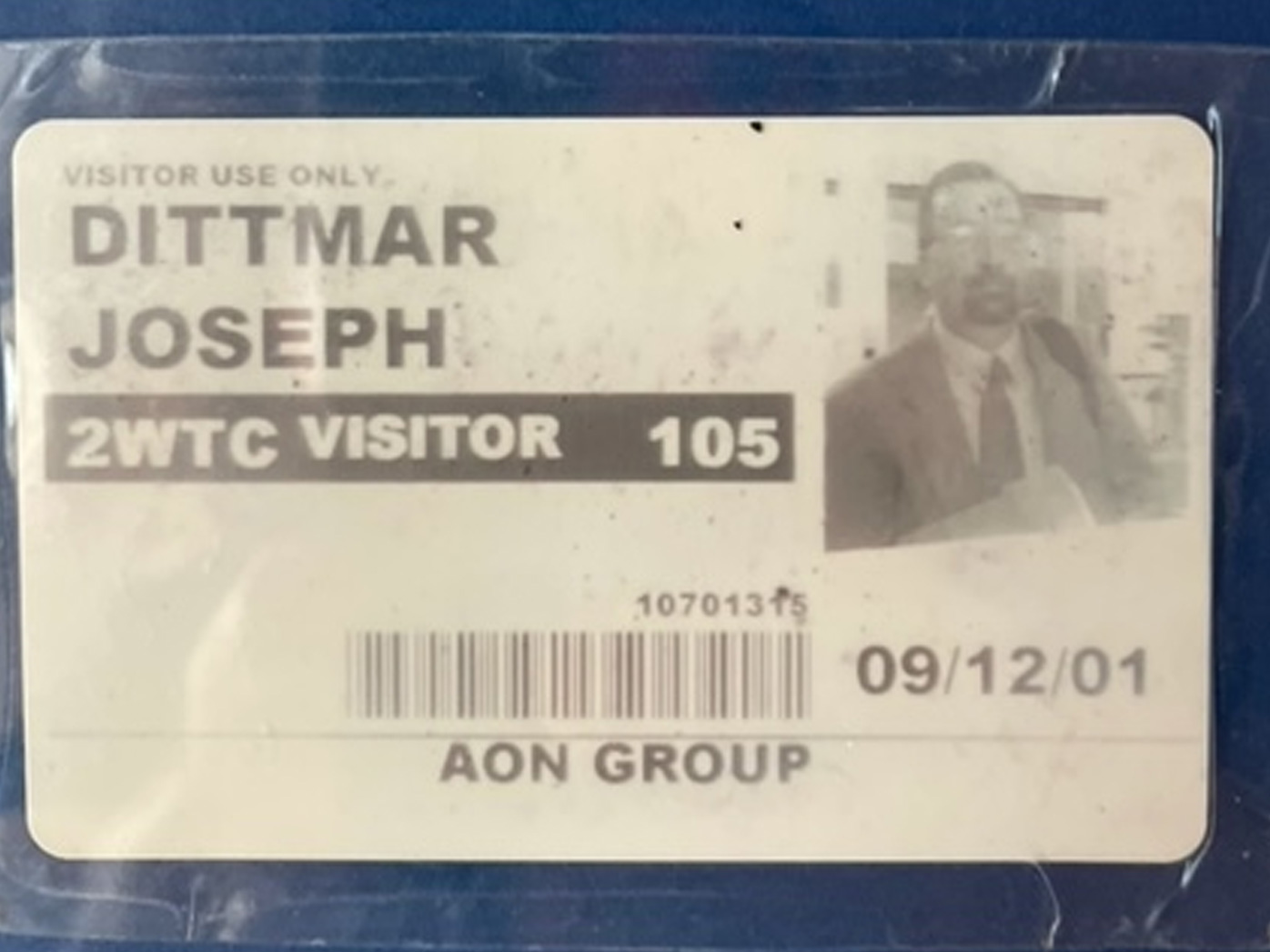
The meeting was scheduled for 8.30am in a windowless conference room on the 105th floor of the South Tower. Dittmar, who worked in the insurance sector, was one of 54 people in the meeting. Only seven would make it out alive.
The meeting started late, Dittmar recalled, and then around 8:46am something strange happened.
"We noticed the lights were flickering."
"We were in an internal conference room, so there were four walls with no windows and one door. So we didn't see anything. We didn't feel anything. We didn't hear anything. We just saw this flicker of lights."
An AON insurance employee knocked on the door and entered the room. He was the appointed fire marshal for floors 103, 104 and 105. Calmly, he told everyone they needed to evacuate.
He led the group of 54 to the emergency fire stairwell and delivered news nobody wanted to hear. They'd have to walk 105 flights of stairs to the ground level. There were audible groans.
"Everybody … pretty much had the same reaction," Dittmar said.
People reached for their cellphones, "to call somebody to moan and groan about the fact that we couldn't have our meeting."
But they encountered the same problem.
"Every screen said 'no service.'"
The cell tower servicing that part of Manhattan sat atop the North Tower, and had been knocked out by Flight 11.
Images of the twin towers would soon be beamed live around the world, but Dittmar and others had no idea of the nightmare manifesting around them.
So they entered the stairwell.
"We didn't have a clue, not a clue. You're now starting to walk down and you're wondering, 'What's going on?'"
There was a revelation on the 90th floor, when the group encountered a fire door that should have automatically closed and locked tight, but instead had been propped ajar by someone.
READ MORE: Where people died inside World Trade Center
'Simple decision' cost man his life
"I see all these people hauling butt out of the fire stairwell (onto the 90th floor). I followed everybody," Dittmar said. "I know I experienced the worst 30 or 40 seconds of my life there."
"That's the chance we had for the first time to look out the windows to the north and to see this unbelievable sight, huge black holes through the sides of that building."
Thick and ugly grey and black smoke billowed into the sky. Multiple floors were alight, engulfed by an inferno.
"It was a crystal-clear day that day in New York City," Dittmar said, "and I remember being able to see through that smoke, through that fire, into the huge black holes in the building and seeing pieces of the fuselage of a large plane."
He could also see people trapped in the North Tower.
Dittmar turned for the stairwell and bumped into a large associate who had been with him in the morning meeting.
"He put his big hands on my shoulders and he said, 'Where are you going to go, man?' I said, 'I'm getting the heck out of here. What are you going to do?'"
The man agreed but indicated first towards a bathroom sign.
"That simple decision to use the restroom – that two-and-a-half minute or so delay in his exiting – cost him his life that day," Dittmar said.
When Dittmar reached the stairwell, he said an announcement came over the building's PA system, saying the South Tower was safe, that people should return to their desks but if they wanted to evacuate then they should do so safely and without panic.
"A lot of people sometimes go, 'My God, how could they have said something like that?' But actually, if you think about the circumstance, it made a lot of sense.
"There were as many as 25,000 people in each of those buildings. It's raining concrete, steel and bodies outside. Where are you going to put 25,000 people?"
Investigators later estimated about 17,400 tenants and visitors were in the twin towers at the time of the attack, which killed 2,977 people. In the North Tower, at least 1356 people killed were at or above the impact zone. In the South Tower, the National Institute of Standards and Technology estimated at least 618 victims were at or above the point the second plane hit.
Dittmar kept moving and reached a sky lobby on the 78th floor. Because of its immense size and the inability to run an elevator from top to bottom, the tower had two sky lobbies – one on 78, the other on 44 – where workers would transfer into higher reaching elevators.
A woman from the 8.30am meeting was screaming at Dittmar to get into a lift. He politely waved and continued down the stairwell.
"Best decision I've made in what is still my life," he said.
READ MORE: 'Have you seen my daughter?' The hellish aftermath of Ground Zero
'Never felt anything like that in my life'
Continuing on, Dittmar soon found himself "just a few short storeys below the strike zone".
Above him, Flight 175 screamed into the South Tower, between floors 77 and 85. Parts of the Boeing 767, including an engine, ploughed through the building, falling to the ground six blocks away.
"I have never felt anything like that in my life," Dittmar said.
"This fire stairwell, this concrete bunker that you're inside of, it starts to shake so violently – back and forth, back and forth – in ways that it shouldn't be shaking.
"And (then) the concrete starts spidering out and the handrails are breaking away from the wall and the steps are like waves in the ocean undulating underneath your feet.
"We feel this heat ball blowing by us, we smell this jet fuel and this thing keeps rocking back and forth … it felt like forever. Maybe it was seconds, maybe a minute and then it finally settles.
"You kind of think there would be this craziness, this massive pandemonium in that stairwell," he said. "Nothing but a stunned silence."
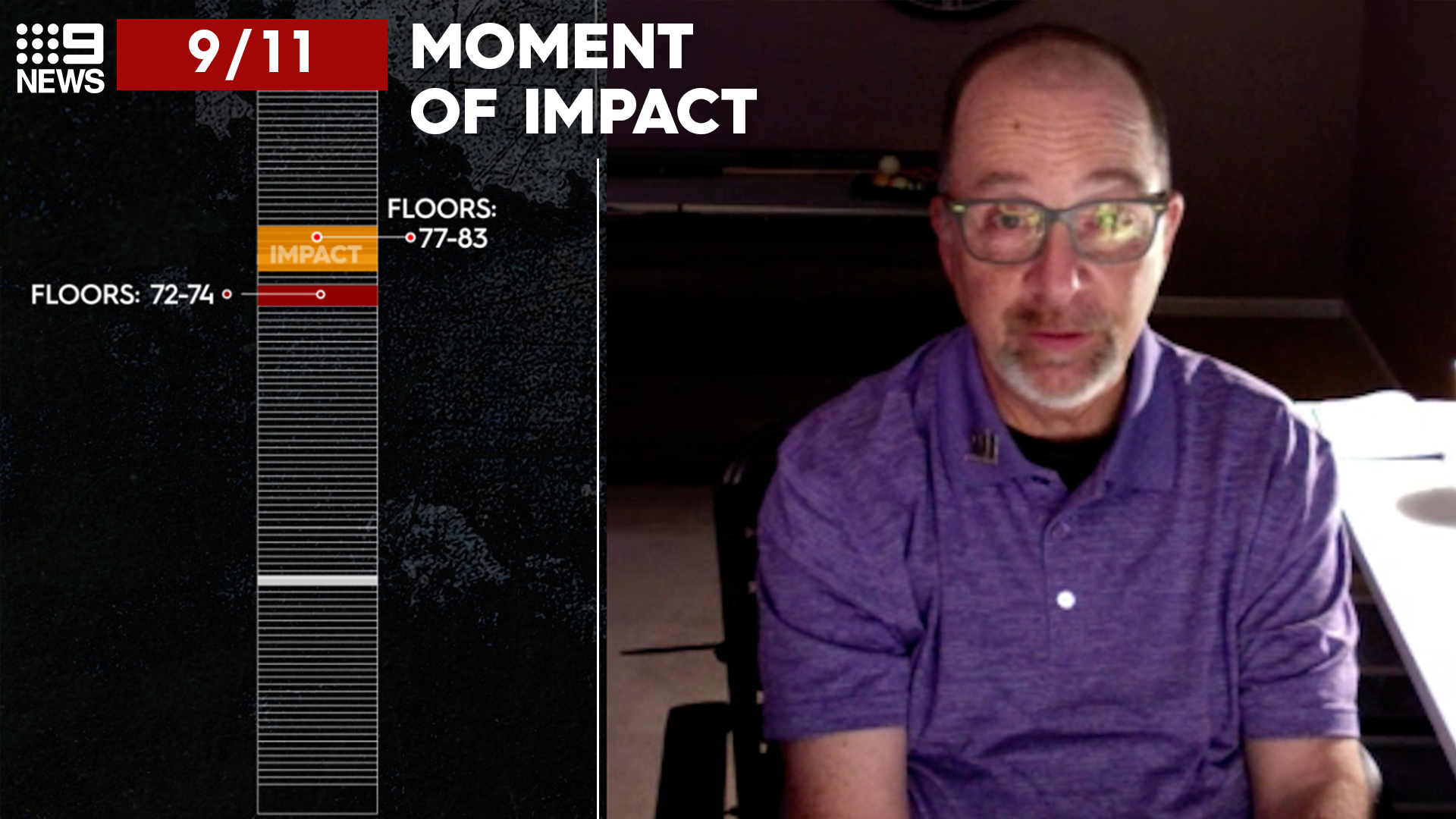
WATCH: Joe Dittmar describe how it felt when the second plane hit the South Tower, just a few floors above him
The phones were still dead. No-one knew what was happening.
As people moved on, they swapped theories. They'd seen the plane in the North Tower. Had a fuel cell of some kind exploded in their building? The reality was inconceivable.
"Ignorance was bliss that day, truly," Dittmar said.
"'It was a blessing (phones) weren't working because what we didn't know couldn't hurt us.
"So you really just began concentrating on one thing, getting out."
'And they knew, they knew that they were going up those steps to fight a fire that they couldn't beat, knew that they were going up those steps to save lives that they couldn't save'
As he began to hit the lower reaches of the tower, Dittmar encountered bravery and "human nature at its finest" as workers fled the building, helping one another, emotionally and physically.
Cast aside in the stairwell were scores of abandoned high heels, bags and laptops.
"A lot of barefooted women that day in the tower," Dittmar said.
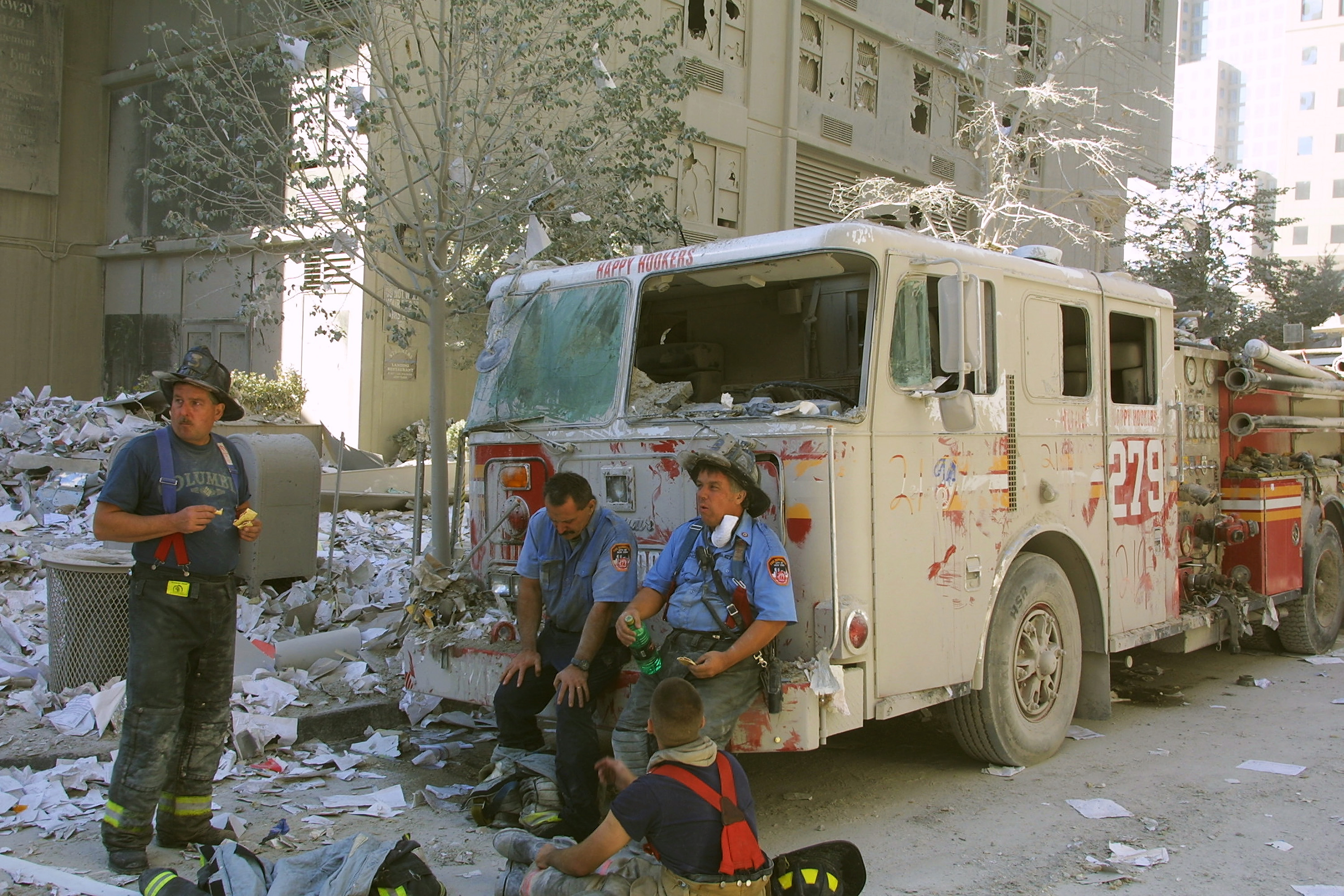
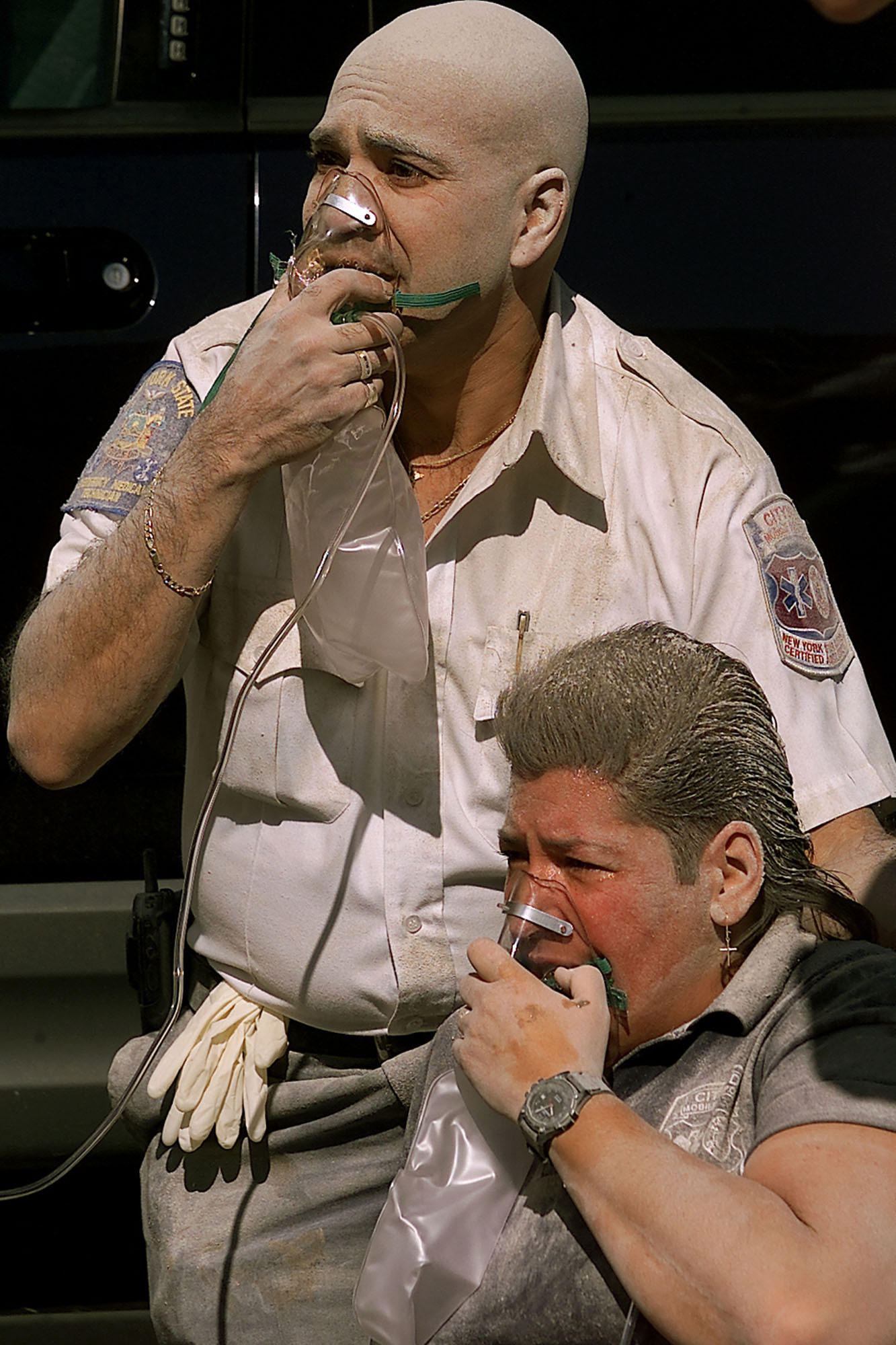
At the 35th floor, a striking juxtaposition. Heroic first responders – New York City's police, firefighters and paramedics – going up, began to pass Dittmar and others going down.
"It was one of those moments," Dittmar said, "just the looks in their eyes told the story, no words, just the looks on their faces and the looks, that deep look in their eyes.
"And they knew, they knew that they were going up those steps to fight a fire that they couldn't beat, knew that they were going up those steps to save lives that they couldn't save.
"I don't know how you can be that brave."
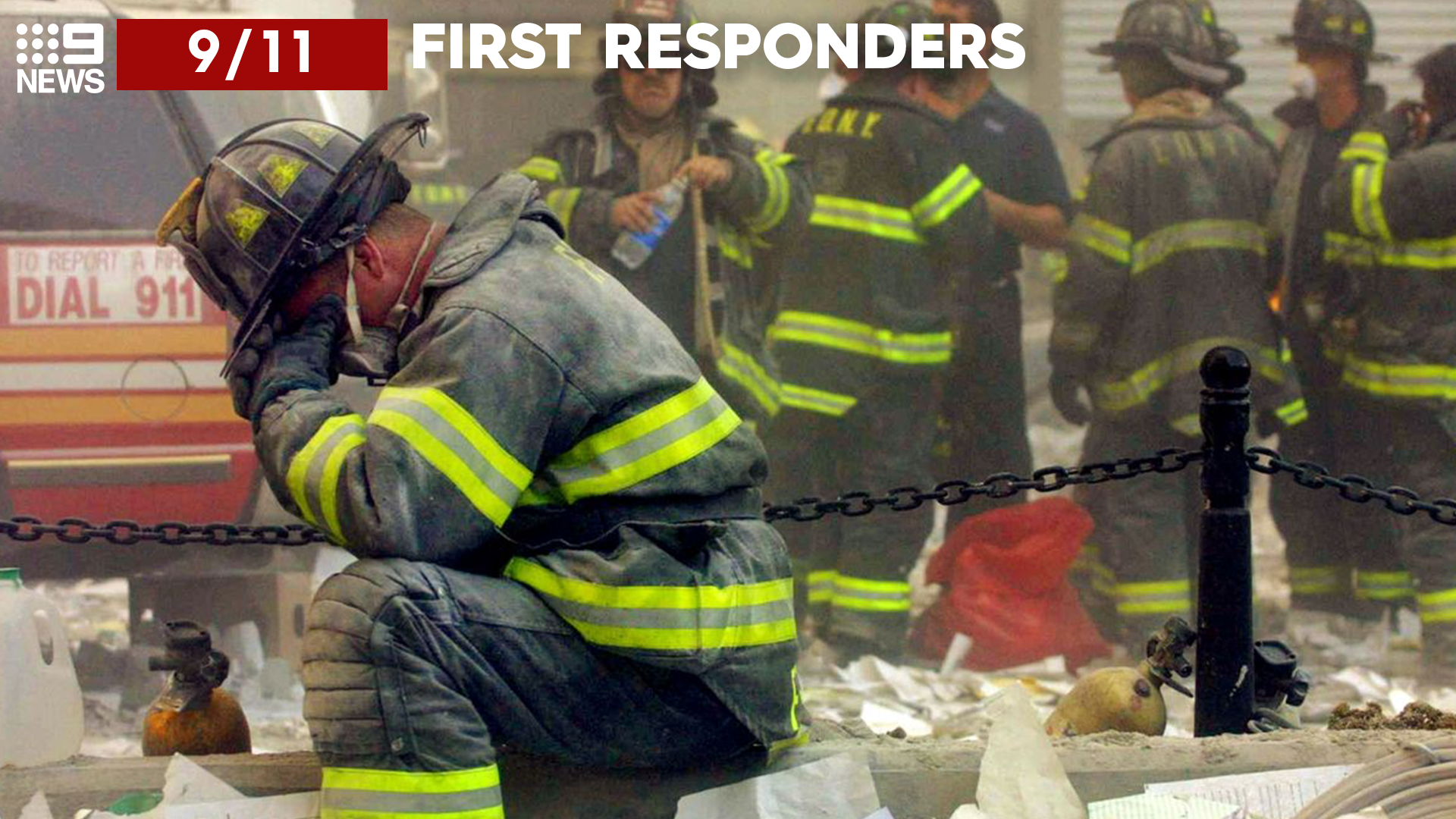
WATCH Joe Dittmar describe the emotional moment he began to pass first responders who were heading up the tower
Finally, Dittmar reached the ground floor lobby, but no-one was allowed out. Debris was cascading and falling from both towers, it was too dangerous. People too, were jumping.
First responders ushered escapees into the subterranean concourse under the World Trade Center, a warren of retail laneways which funneled out into the blocks and exit points away from the twin towers.
'The same bloodcurdling scream'
Underground, Dittmar bumped into an old friend he knew who worked on a lower South Tower floor and lived in the city's Upper West Side.
As the clock edged towards 9.59am, when the South Tower would crumble and fall, Dittmar and his friend finally climbed an escalator and rose above ground. Police yelled at them to get moving and not look back.
They passed a small laundromat, where a radio news report was saying something about a terrorist attack.
About eight short blocks away from the towers, Dittmar suddenly heard a terrible noise.
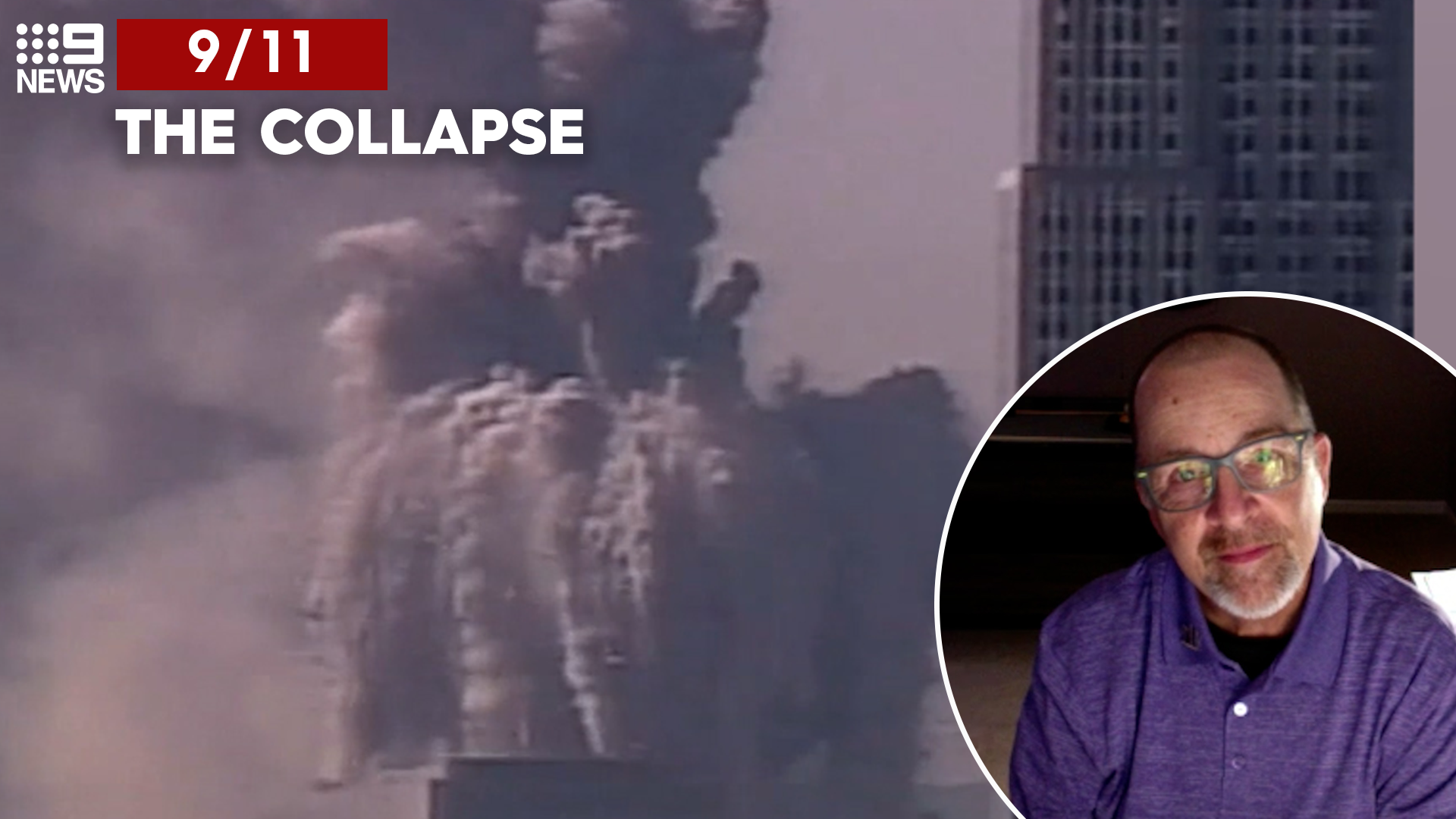
WATCH as Joe Dittmar describes the unforgettable sound of the South Tower collapsing, and untold New Yorkers screaming
"The sound of hundreds, thousands, maybe tens of thousands of people, on the streets in New York all screaming the same bloodcurdling scream all at the same time.
"It's the first thing I hear in the morning, it's the last thing I hear at night, every day. It doesn't go away."
In the maelstrom of both towers coming down, they sought shelter in someone's Tribeca apartment, watching the television and piecing everything together.
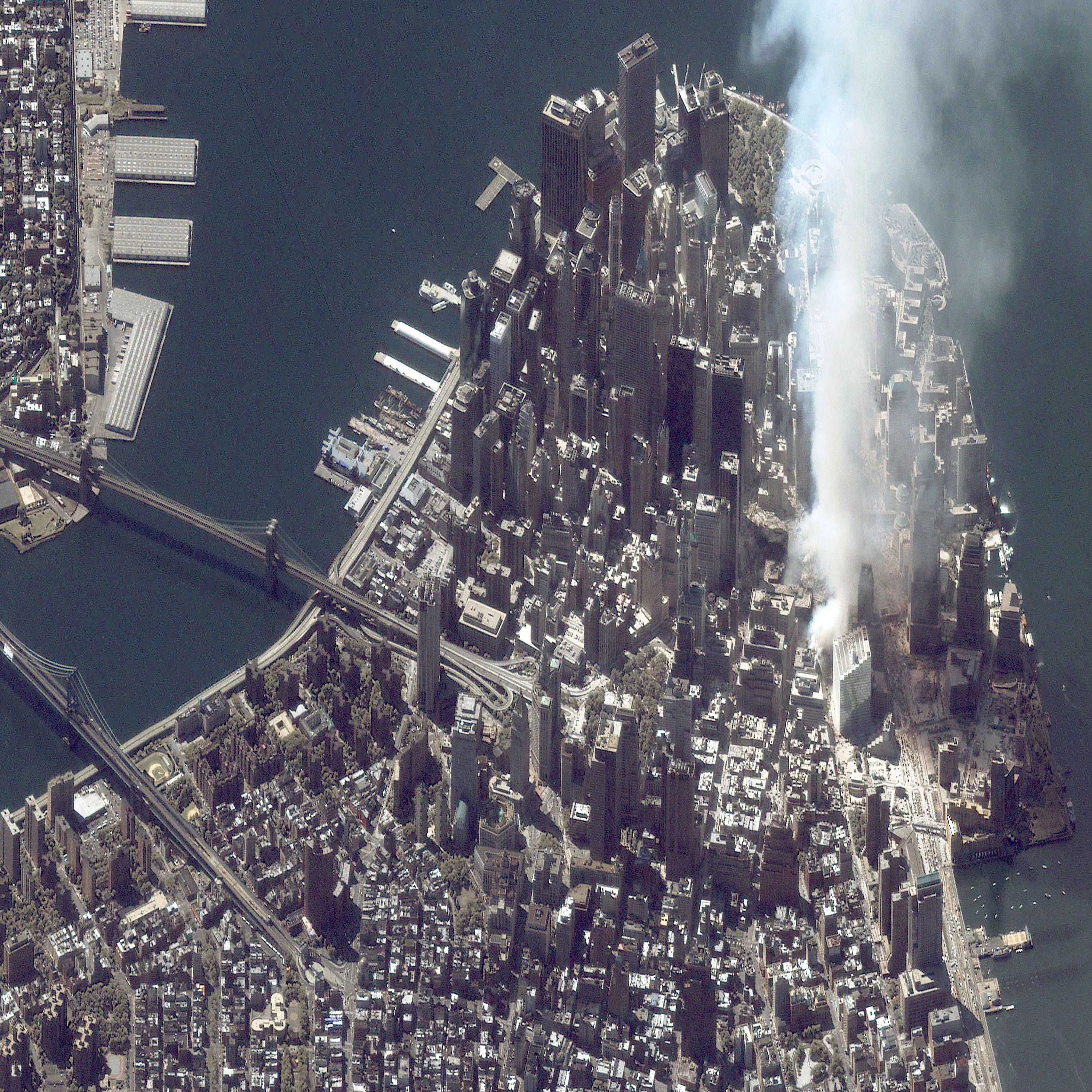
They learned American Airlines Flight 77 had struck the Pentagon, and United Flight 93 had gone down in a field near Shanksville in western Pennsylvania.
Six excruciating hours after the lights had flickered in that morning meeting, Dittmar was finally able to phone his family and tell them he'd escaped.
He was alive.
Words: Mark Saunokonoko
Video and graphics: Tara Blancato

Covid 19 Delta outbreak: 13 new cases in community – Jacinda Ardern and Ashley Bloomfield
Spain is sending 250,000 Covid jabs to New Zealand – enabling this country to keep up record levels of vaccinations, Prime Minister Jacinda Ardern said. “There are now enough vaccines to vaccinate everyone who wants to be at pace….
Lyttelton, Canterbury tragedy narrowly avoided after bulk carrier Rose Harmony collides with fishing vessel Leila Jo
A giant ship nearly two rugby fields long collided with a 23m fishing boat in a terrifying night-time crash that miraculously avoided any deaths. The 179m-long bulk carrier Rose Harmony was leaving Christchurch’s Lyttelton port…
Crash on SH1 south of Timaru
One person has been seriously injured after a three-vehicle crash south of Timaru.The crash happened on the Waimate Highway (SH1) at about midday on Thursday. Read More Two people in critical condition following serious crash…
'I'm here today because a mate noticed': Tradie's R U OK? Day plea
It wasn't just one chat about how he was doing that probably saved 48-year old dad-of-two Justin Geange's life.
It was the fact that his mate – in this case his boss at his plumbing job – didn't give up when he lied that he was fine the first time he was asked.
The pal knew that he wasn't, and eventually, the Queensland man admitted it too.
READ MORE: Aussies urged to ask people if they 'really are ok'
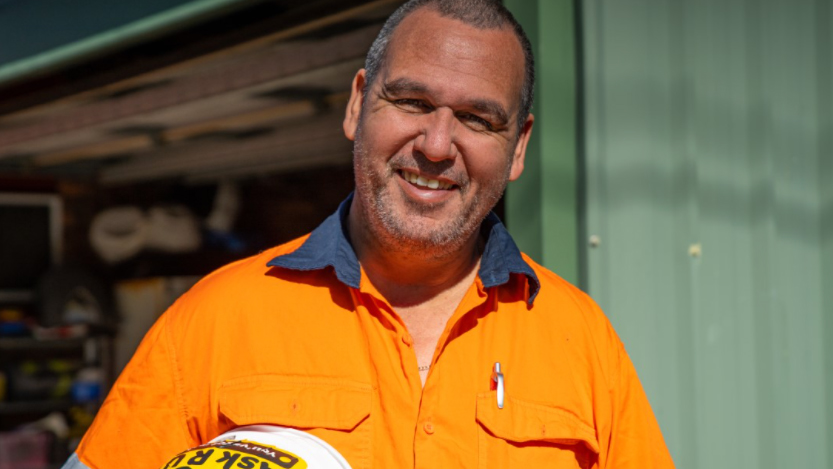
"I was doing it tough and my boss started to notice," Mr Geange said.
"I was like a typical bloke, 'yeah I'm all right'… I wasn't.
"He kept nudging.
"Finally I said 'I'm struggling. I'm not OK.'
READ MORE: How to take care of your mental health in COVID-19 lockdown
"He said, 'how about we make a phone call – the key word was we'."
That call was to his GP and he was eventually admitted to hospital where he was given the diagnosis of mental illness, bipolar and began treatment.
And while he didn't get back to work for a couple of years, Mr Geange now helps others in a similar position at suicide prevention charity, Mates in Construction, as well as working with R U OK?
He pleaded with people that as well enquiring about the mental health of those around them today, to be brave enough to admit if they do need help.
"Let's be okay with being honest with our response," he said.
"I'm here today largely because a mate noticed."
People with bipolar disorder can have extreme moods of feeling really high- 'mania' – or very low.
According to the Black Dog Institute one in 50 Australians experience the illness every year.
Message after loss of husband
Mother-of-two Joanne Fullerton desperately tried to help her husband who had also been diagnosed with bipolar, but sadly, she wasn't able to save him.
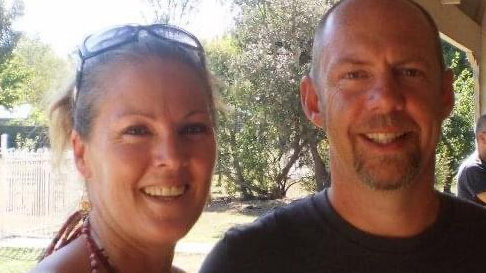
It was when her boss told her to get into her car one morning and started driving her towards her home, the 49-year-old said she immediately knew what she was about to face.
Her husband of 17 years, Jason, had been becoming increasingly unwell, which saw the couple, from Victoria's Mornington Peninsula, live apart.
And as she had feared, that day in 2018, he had taken his life.
"I knew that week leading up to he wasn't good," she told nine.com.au.
"The way he was talking to me on the phone, I said to my mum, 'I think he is going to do something really bad."
READ MORE: Spike in children suffering mental health issues in Victoria
Mrs Fullerton, who now lives in Perth, wants to use what she has been though to help other families dealing with mental illness.
Mrs Fullerton said while her husband had always suffered from anxiety, he coped well and had even given others tips to help.
But a year before his death he developed a much more severe illness.
"He woke up one day a different person," she said.
READ MORE: Victorians more concerned about mental health impacts of lockdown than virus
Mrs Fullerton said eventually, his aggression and manic behaviour, followed by 'crashing' destroyed many relationships – including their own.
Things became so bad he lost his job as an operations manager.
The week before he died, Mrs Fullerton had called an emergency mental health team for her husband.
But he convinced them he didn't need to go to hospital and promised he would get treatment at home.
Sadly, just days later, he died aged 48.
Three quarters of the around 3000 Australians who take their life every year are men.
Mrs Fullerton, who remembers her husband as 'very happy, very caring' before his illness, urged people trying to help friends or family members with mental illnesses not to give up.
"Just don't give up on getting them the help – no matter what their response is to you," she said.
She said the RU OK website is a good place to start looking for advice on what to do.
READ MORE: Lifeline's three busiest days on record have all been this month
R U OK? Day
R U OK? CEO, Katherine Newton said today is about asking people how they really are, especially amid the pandemic.
"The ups and downs of life can affect each of us differently. Sometimes it won't be obvious that someone is struggling, but having the support of family, friends and close colleagues can help us better navigate the challenges that come our way," she said.
https://twitter.com/ruokday/status/1435717098194538496?ref_src=twsrc%5Etfw
"Don't wait until someone is visibly distressed or in crisis before you ask.
"If you ask them in a genuine way, your support can make a difference whatever they are facing.
"In a time when so many of us are feeling fatigued by the pandemic, we want to remind and reassure Australians that there is something we can all do to support those in our world, and as those closest to them we are often in a position to do so."
For help contact: RU OK, Lifeline: 13 11 14. Beyond Blue: 1300 22 4636
If you are concerned for your safety or the safety of others, seek immediate assistance by calling Triple Zero (000).
Covid 19 Delta outbreak: Hospitality group asks for more 'targeted financial support' for its survival
The hospitality industry is set to meet Government ministers tomorrow to discuss its request for “targeted financial support” amid threats to stop paying GST as lockdowns hit hard.Lobby group Hospitality New Zealand has set up a…
The good news we need to be reminded of on this R U OK? Day
From rescued koalas getting a fresh chance at life to our sporting heroes to family reunions across closed borders, these are the happy news stories we all need to be reminded of.
Northland man Sam Pou jailed for 17 years minimum for murder of Bridget Simmonds
A man who murdered his girlfriend with more than 100 hard punches in 90 minutes has been jailed for life with a minimum non parole period of 17 yearsSamuel Pou, was found guilty of murder at the High Court in Whangārei in June…