Concerned academics are calling on the Government to urgently tighten privacy laws to ensure personal information collected through contact tracing is not misused. The letter, which has been signed by nearly 100 academics and representatives…
Tag Archives: oceania
Covid 19 coronavirus Delta outbreak: Auckland businessman says being a close contact is 'a shambles'
An Auckland businessman has raised concerns about close contacts slipping between the cracks after he says his experience with the health system was “a shambles”. “I’m worried that people won’t persevere with the process,” he told…
Spike in children suffering mental health issues in Victoria
Victorian parents are being urged to speak to their children about how they are coping with lockdown as hospitals experience a spike in adolescents presenting with mental health issues.
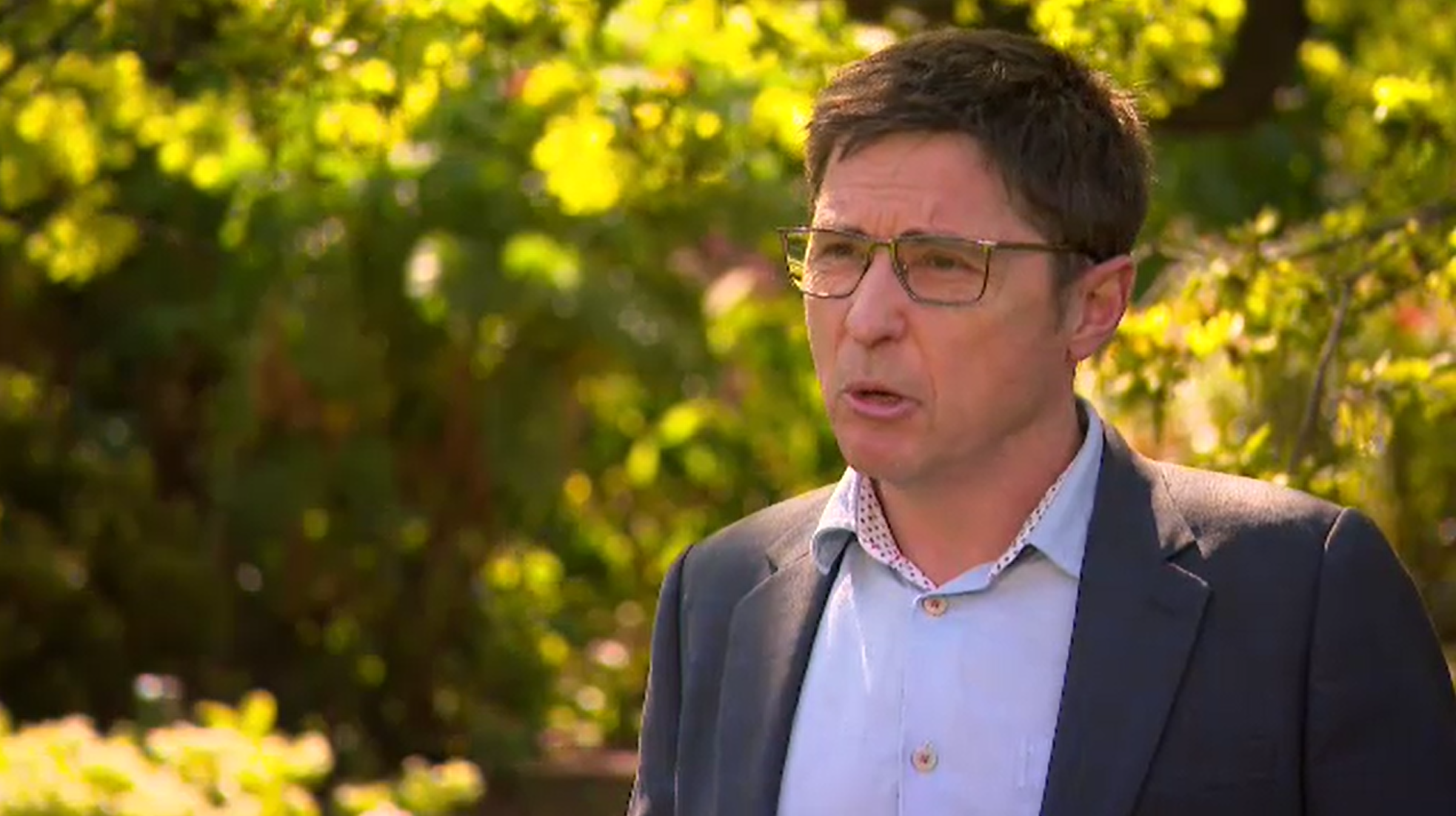
The Royal Children's Hospital has witnessed a surge in admissions of children with mental health difficulties, according to mental health director Dr Ric Haslam.
"The sorts of conditions that we're seeing in the Royal Children's Hospital are anxiety, depression, self-harm, suicidal behaviours and eating disorders," he said.
"We've also seen an increase in young people presenting with aggression, both verbal and physical.
READ MORE: Victoria records 176 new cases of COVID-19
"And often these are children who might have developmental difficulties such as autism spectrum disorders."
The surge comes as Victorian Premier Daniel Andrews announced yesterday Melbourne is set to remain in lockdown for weeks longer, with Melbourne schools to stay closed until at least Term Four.
Victoria's Chief Psychiatrist Dr Neil Coventry offered advice today for individuals and families battling lockdown.
"It's a very uncertain situation that we find ourselves living within," he said.
"I want to make sure that we actually think about the impact that this is having.
"I also want to stress that there are a few simple things that parents can do to try and help their kids in the recovery."
Dr Coventry advised families to maintain normal routines, particularly families that are doing homeschooling.
EXPLAINED: Full list of restrictions easing in Victoria, pathway out of lockdown
READ MORE: How to take care of your mental health in COVID-19 lockdown

"Get that balance between study, relaxing downtime, chill-out times, certainly exercise and meal plans," he said.
"But also more importantly, around sleep patterns, particularly for our vulnerable teenagers."
The psychiatrist said the most important thing he wanted to stress was for people to talk to kids about how they are coping and have honest conversations.
"Please reach out to your kids. Don't be anxious and afraid to have the conversations about how your kids are coping," Dr Coventry said.
READ MORE: Victorians more concerned about mental health impacts of lockdown than virus
"How are they feeling at the moment? What are their challenges and their confusions about what's going on?
"I would really stress this is a series of conversations – it is not a one-off, intense conversation.
"Choose your opportunities as a parent when you might be doing an activity with your child you can have some of those conversations."
For mental health support, contact Lifeline on 13 11 14 or Beyond Blue on 1300 22 4636.
Auckland Council again delays CV revaluation due to Covid
Aucklanders are set to wait even longer to find out their home’s new council valuation after the local government body again delayed citywide revaluations because of Covid-19.A source of fascination to property-mad Kiwis, Auckland…
Covid 19 coronavirus Delta outbreak: St Margaret's Hospital and Rest Home faces new infection scare
A staff member at a West Auckland rest home where at least three elderly residents died during last year’s virus outbreak has returned a positive test.CHT St Margaret’s Hospital and Rest Home in Te Atatu is today testing all residents…
Lockdown another blow to already stretched eating disorder support in New Zealand
With wait lists already devastatingly long, eating disorder support services are concerned the lockdown will make it harder for those who are already struggling. Eating Disorder Association (EDANZ) chairperson Nicki Wilson told…
Big court bill for cops in 'proceeds of crime' case against business owner convicted over health and safety fatality
Police have been told to pay $126,000 in court and legal costs to the employer accused of profiting from health and safety breaches after an early skirmish in the landmark case.In a significant High Court loss, police were told…
Why skunks do handstands
At first whiff, you might think all skunks are the same. Not so.
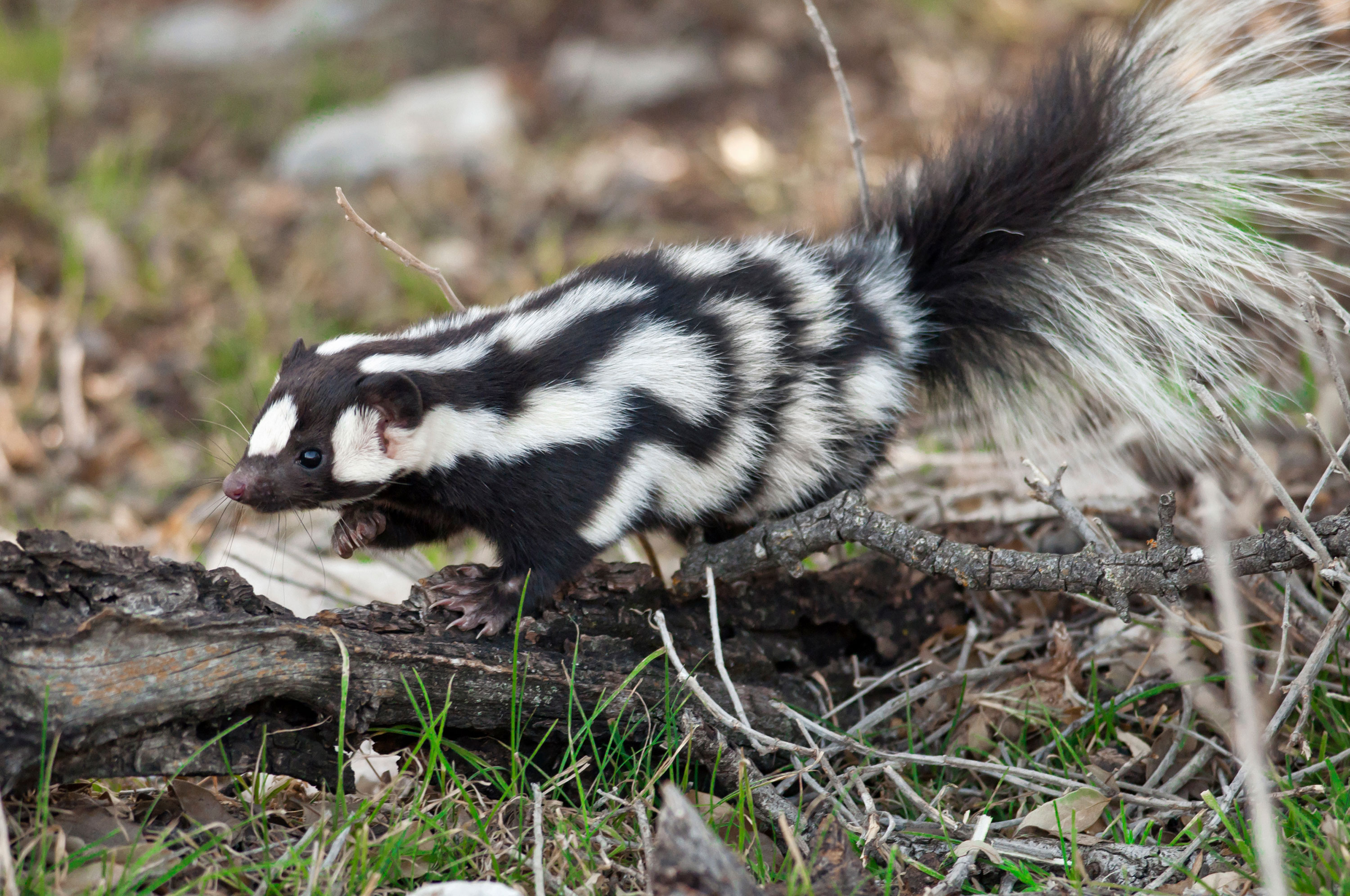
Meet spotted skunks, "the acrobats of the skunk world." Scientists have discovered that there are more of these species than they thought, according to new research.
More recently, the agreed-upon number was four. But a new study published Wednesday in Molecular Phylogenetics and Evolution said there are seven spotted skunk species.
READ MORE: 'Naughty' koala found stuck on top of roof in Sydney
"North America is one of the most-studied continents in terms of mammals, and carnivores are one of the most-studied groups," said study author Adam Ferguson, Negaunee collections manager of mammals at the Field Museum in Chicago.
"Everyone thinks we know everything about mammalian carnivore systematics, so being able to redraw the skunk family tree is very exciting."
Spotted skunks are the smaller relatives of the common striped skunk.
About the size of a squirrel, these elusive carnivores live across North America. And when the time comes to scare off a predator, these little guys perform a handstand and kick out their back legs.
"When they're stressed, they bounce up onto their forelimbs and then kick out their hind limbs, puff their tail up, and they actually can walk towards the predator, like basically making them look bigger and scarier," Mr Ferguson said.
The skunks typically drop back down to all fours in order to take deadly aim and control their vile-smelling spray. Their small stature doesn't cause these creatures to back down from a fight, either.
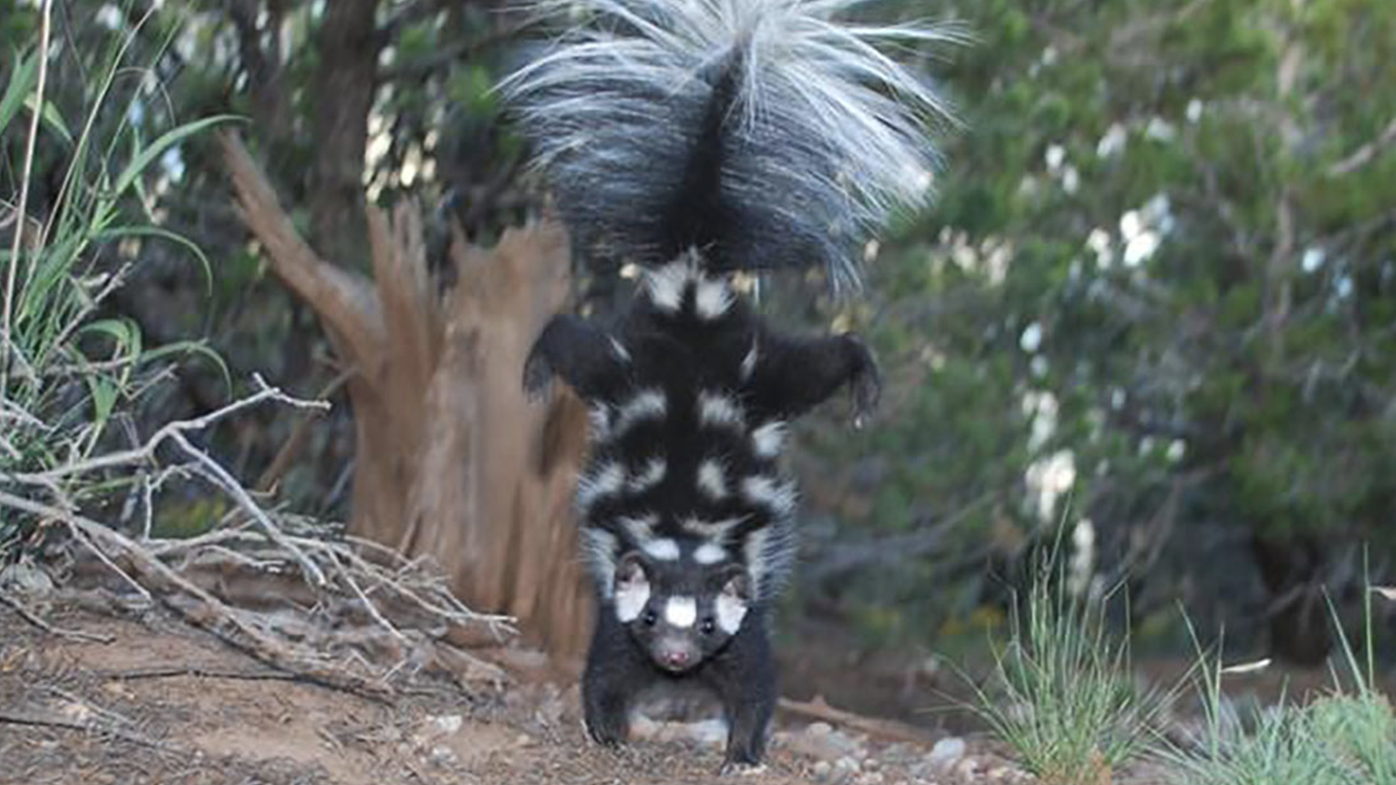
A study released in 2013 included a video of a Western spotted skunk handstanding and facing off with a mountain lion over a deer carcass. For reference, spotted skunks typically weigh less than 0.9 kilogram.
It's just another example of their boldness, something he admires about skunks in general, Mr Ferguson said.
While the common striped skunk has made its presence known in urban areas, as well as its natural habitats, striped skunks haven't made the same inroads and so largely remain out of sight. These "ecologically cryptic" creatures live in dense environments and remote areas and seem less adaptable to urbanisation than their larger, striped counterparts, Mr Ferguson said.
Given their agility, spotted skunks are great climbers, and they are a lot more carnivorous than other skunks, feasting on bird eggs, lizards, snakes and rodents. Great horned owls are their main predator.
The fact that spotted skunks are so good at keeping a low profile makes them harder to study. Since the discovery of the first spotted skunk in 1758, scientists have questioned just how many species exist. Over the years, the differences observed between some spotted skunks led researchers to believe there were as few as two species and as many as 14.
Making the determination that there are seven species came down to analysing genetic data from spotted skunks. But first, Mr Ferguson needed specimens to study. Trapping skunks isn't the easiest job — Mr Ferguson and his colleagues made six trips to Mexico while researching spotted skunks and never caught one. And if you do trap one, you're bound to be sprayed.
"We call it the smell of success because it means we've actually encountered one, which is the goal ultimate goal," Mr Ferguson said.
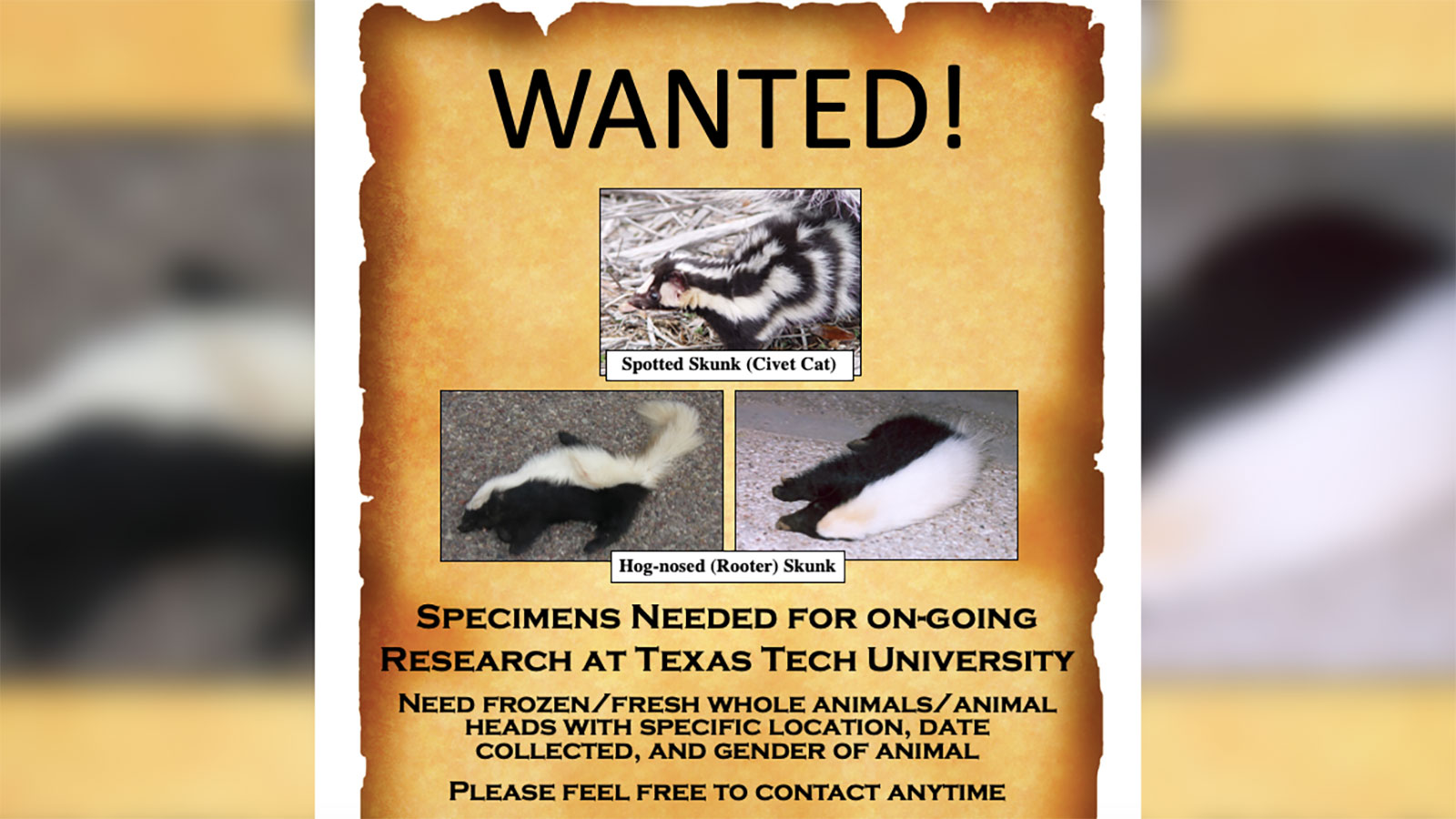
Mr Ferguson was inspired to make "wanted" posters and distribute them across central Texas in feed stores and areas where ranchers and trappers operate. The posters described the need for any spotted skunks that may have been trapped or found as roadkill and showed photos of the creatures. The researchers offered to come pick up the skunk specimens and store them in a designated "skunk freezer."
The researchers also relied on specimens in museum collections, which included spotted skunks found in Central America and the Yucatan. In the end, they had 203 spotted skunk specimens to use for the study and extract DNA. The genetic data revealed that some of the skunks, once considered to be the same species, were in fact very different.
"I was able to extract DNA from century-old museum samples, and it was really exciting to see who those individuals were related to. It turns out that one of those was a currently unrecognised, endemic species in the Yucatan,'' said study author Molly McDonough, a biology professor at Chicago State University and research associate at the Field Museum, in a statement.
One of the new species from the study is the Yucatan spotted skunk, which is about the size of a squirrel and only found in the Yucatan Peninsula. The scientists also describe the Plains spotted skunk, whose population has been declining over the last century and has been suggested as an endangered species.
"The study wouldn't have been possible without the museum specimens we had," Mr Ferguson said. "The only reason we were able to get sequences from the Yucatan were museum specimens that were collected 60 or 70 years ago."
Understanding individual species of skunks can help scientists learn more about something unique to these creatures: their reproductive biology. Spotted skunks may breed in the fall, but they don't give birth until the spring. In other words, their reproductive system purposefully delays implanting the egg inside the uterus.
"It just sits in suspension for a while," Mr Ferguson said. "We want to know why some species have delayed implantation and others don't, and figuring out how these different species of skunks evolved can help us do that."
Skunks have come a long way since they first appeared in the fossil record 25 million years ago, evolving and splitting into different species by responding to the climate change caused by the ice age.
Knowing more about spotted skunks can also help conservation efforts to protect these animals. Skunks have their own role to play within the ecosystem, consuming fruit and defecating seeds that help with the dispersal of plants, as well as preying on crop pests and rodents, Ferguson said.
PM's department to refuse bid to access car park scandal documents
The Prime Minister's Department plans to refuse a bid for access to documents related to the $660 million commuter car park scandal, arguing it would "substantially and unreasonably interfere" with Scott Morrison's job.
9News asked for correspondence over 2018 and 2019 between the Prime Minister's office and the office of then-Infrastructure Minister Alan Tudge about the car parks program and the $4 billion Urban Congestion Fund.
The Department of Prime Minister and Cabinet advised it intends to refuse the request, citing the two-year timeframe.
READ MORE: Role of PM's office in car park saga could go before inquiry
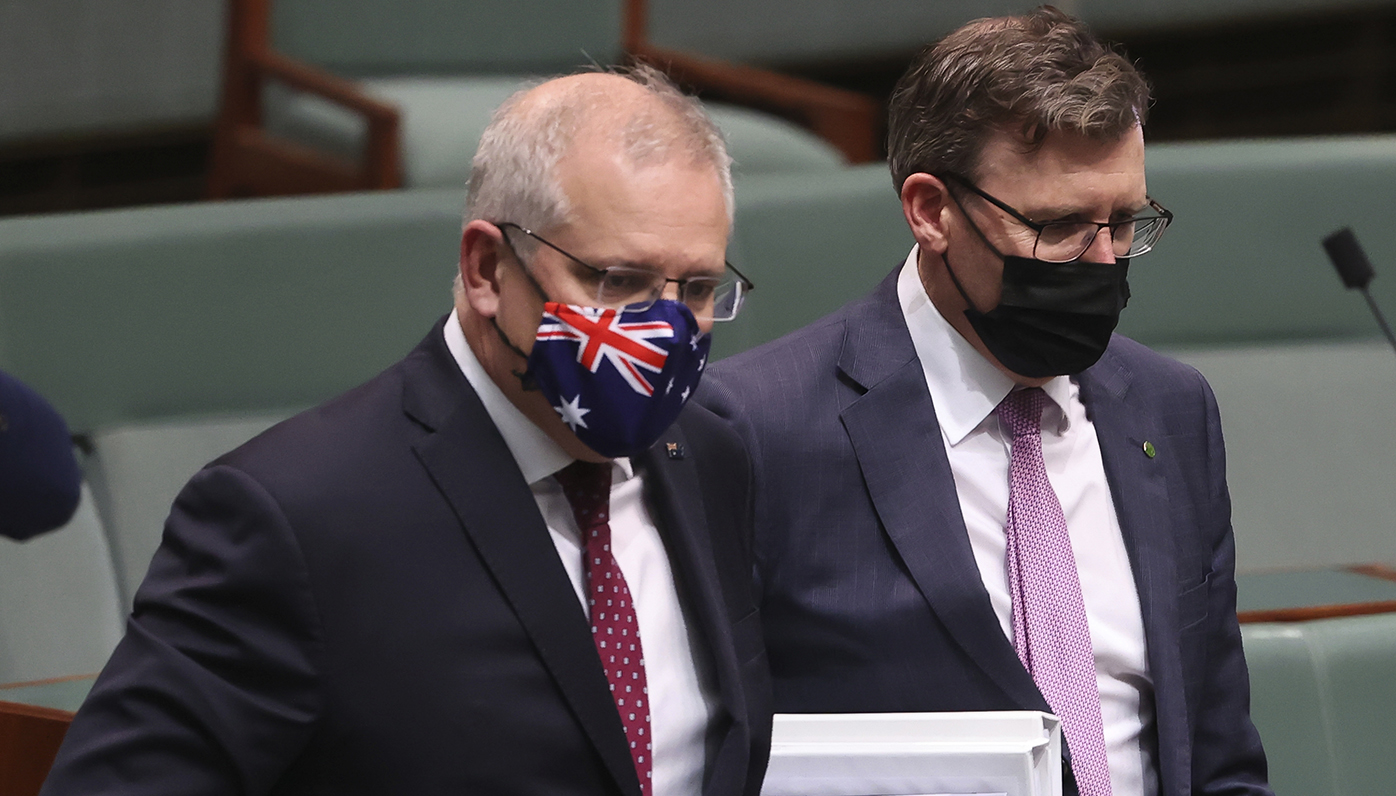
"The Prime Minister is the head of the National Government and your request presents a significant challenge to the day-to-day execution of his duties," the department said.
The letter sent to 9News claims the "work of both the Prime Minister and his staff will be delayed" if they were to process the Freedom of Information request.
In its report into the car parks program, the Auditor-General was scathing, showing that taxpayer money was used to target projects in Coalition-held seats, mostly in Melbourne.
The report said:
- The scheme, which was boosted in the lead-up to the 2019 election was not "merit-based"
- "There was not appropriate engagement"
- "Project distribution reflected the political profile of those given the opportunity to identify candidate projects for funding consideration"
- 77 per cent of projects were in Coalition-held seats, a further 10 per cent in ones they wanted to win
- The cost of a single car space was more than $211,000
- The Prime Minister "effected" 38 projects in written agreement with ministers
Parliamentary hearings have heard claims a list of marginals was drawn up to use in discussions.
"It started being initially termed as being 'top 20 marginals' … to touch base with the top 20 marginal — either the member of the House of Representatives, the duty senator, or (their offices) – to ask them, 'what projects in your electorate are worthy of being put through this program?'" the Australian National Audit Office's Brian Boyd told a hearing.
"In some cases, the evidence shows the local member or duty senator was actually engaging with the (Prime Minister's Office), who would then pass it onto the minister's office."
Mr Tudge has denied knowledge of the list.
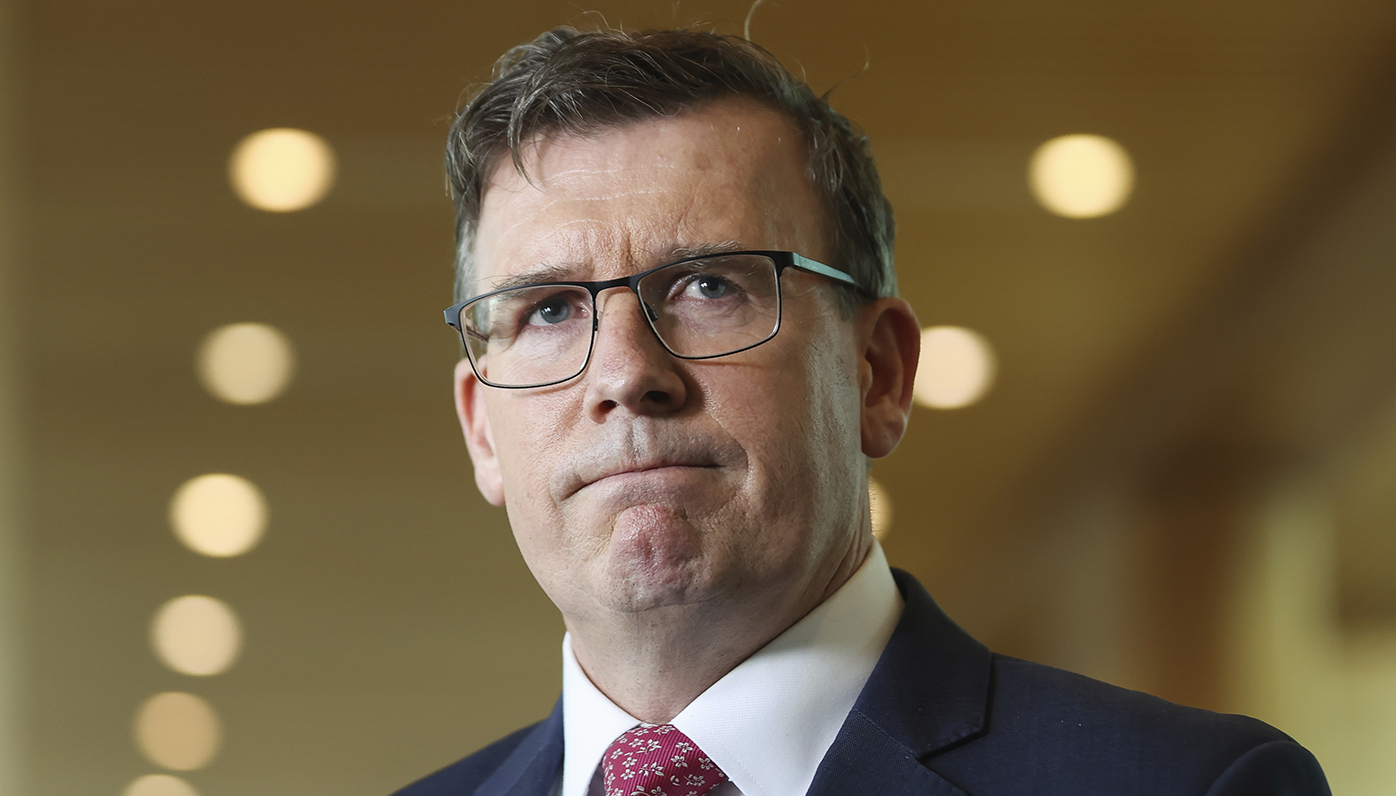
Last month, Mr Morrison was pressed on what involvement he had in the program.
"The Ministers made the decisions on these programs", he said.
Mr Morrison would not answer if he had seen the list.
"What Australians are getting are more car parks," he said.
"Australians are the winners."
That's despite just three of more than 40 projects being built since they were promised more than two years ago.
In its plan to reject Nine's Freedom of Information request, the Prime Minister's department said: "I consider processing your request, in its current terms, would substantially and unreasonably interfere with the performance of the Prime Minister's functions, considering the other responsibilities of the Prime Minister and the demands on his time, and that of his office.
"There is a risk of inappropriate or inadvertent disclosure of sensitive information about the Prime Minister's activities, discussions or meetings, with any of a large range of people or on a range of issues."
Nine plans to continue its fight for access to these documents.
Covid 19 coronavirus Delta outbreak: 49 community cases today, Northland to move to level 3 tonight
Associate Health Minister Ayesha Verrall has revealed a man with Covid-19 was able to evade a perimeter patrol, CCTV cameras and two fences to flee a new Auckland MIQ facility overnight.He was last seen at 1am this morning and was…