One person has been charged for a lockdown breach in the Wellington District under alert level 4 restrictions, out of more than 1000 breach notifications received by police. A police spokesperson said as at 5pm on August 26, on…
Tag Archives: oceania
New urgency to airlift from Kabul after blasts kill dozens
Evacuation flights from Afghanistan resumed with new urgency on Friday, a day after two suicide bombings targeted the thousands of people desperately fleeing a Taliban takeover and killed dozens.
The US warned more attacks could come ahead of next week's end to America's longest war.
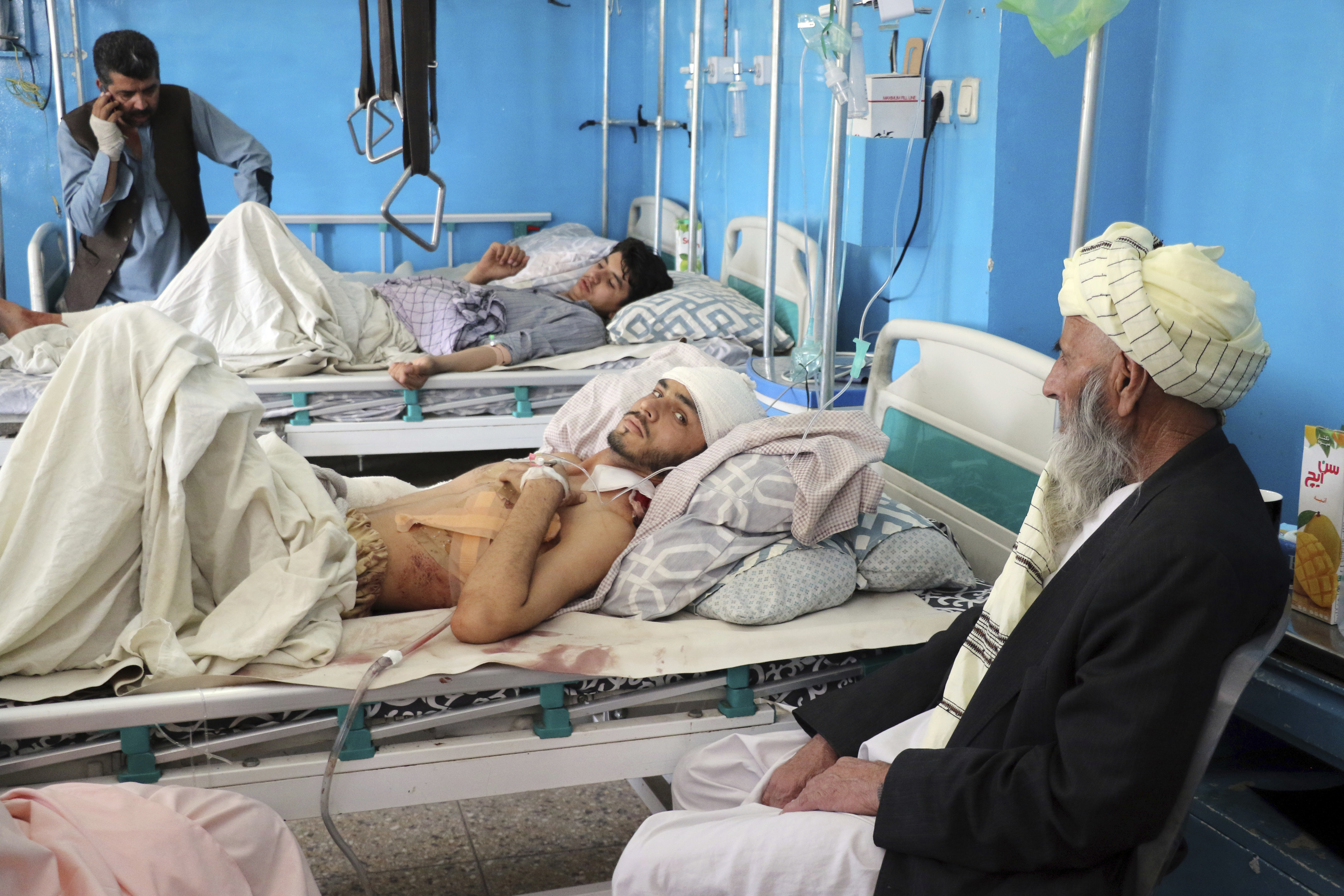
Two officials said 169 Afghans died, but a final count might take time amid confusion, with many bodies dismembered or not yet identified. Scores more were wounded in the blasts. The officials spoke on condition of anonymity because they were not authorised to speak to the media. The US said 13 troops were killed in the deadliest day for American forces in Afghanistan since August 2011.
READ MORE: Deadly attack exposes Afghanistan power grab
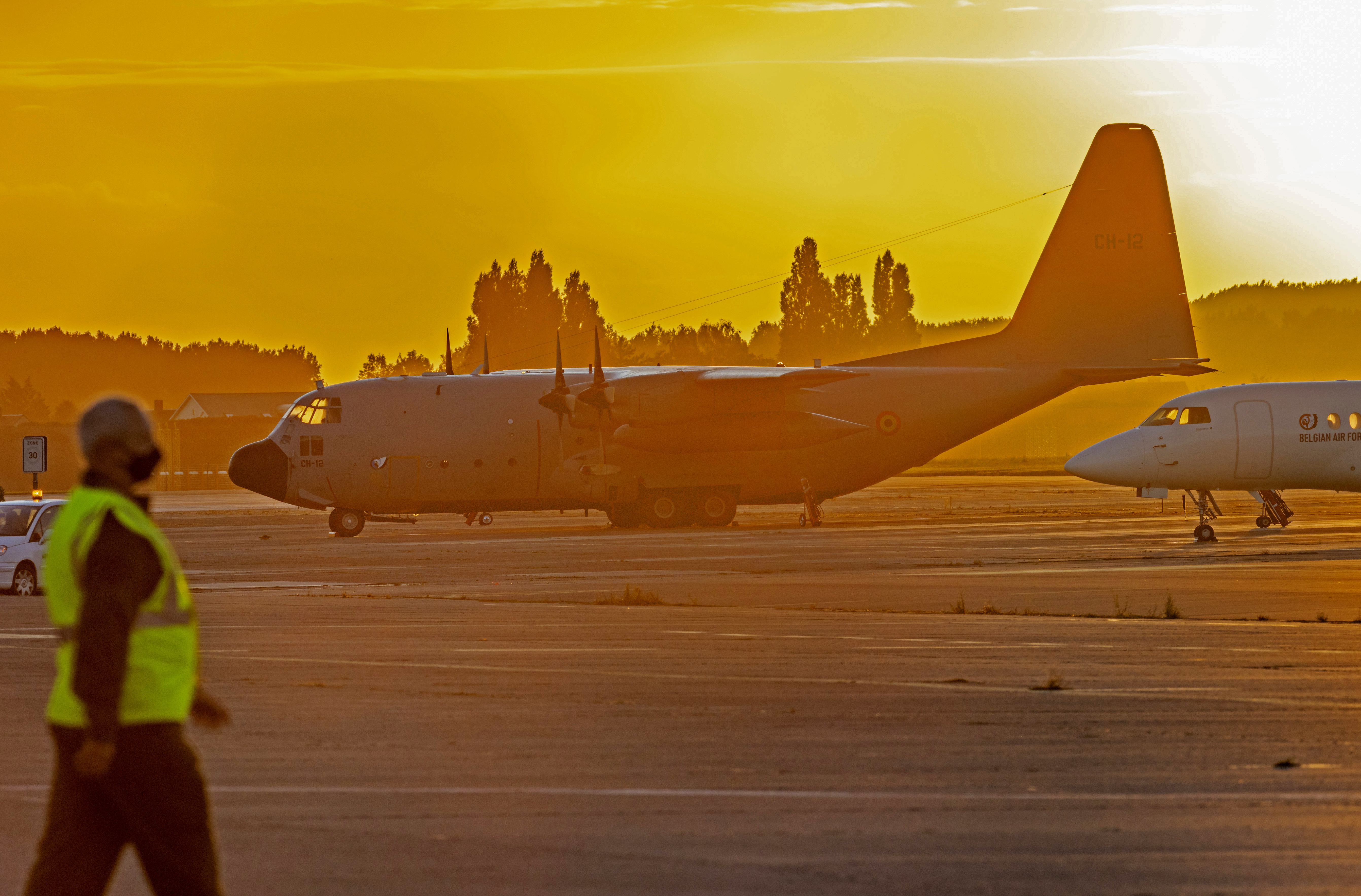
More than 200 people were injured in Thursday's attack, an official with Afghanistan's Ministry of Health told CNN on Friday.
The UK government said Friday that two British adults and the child of another British national were among those killed in the attack.
"We're still planning on ending this mission at the end of the month," spokesperson John Kirby said at a Pentagon briefing.
"As we get closer and we are getting closer, you're going see us begin to make those muscle movements to pull out our troops and some of our equipment, as appropriate with any retrograde," he said, adding they want to "preserve as much capability for as long as we can, both in terms of the security footprint" and ability to evacuate people.
The Pentagon clarified there was only one explosion at the Abbey gate at Hamid Karzai International airport on Thursday, after originally saying there was a second explosion outside the Baron hotel in their initial statements.
RELATED: What is ISIS-K? Behind the group suspected of Kabul attack
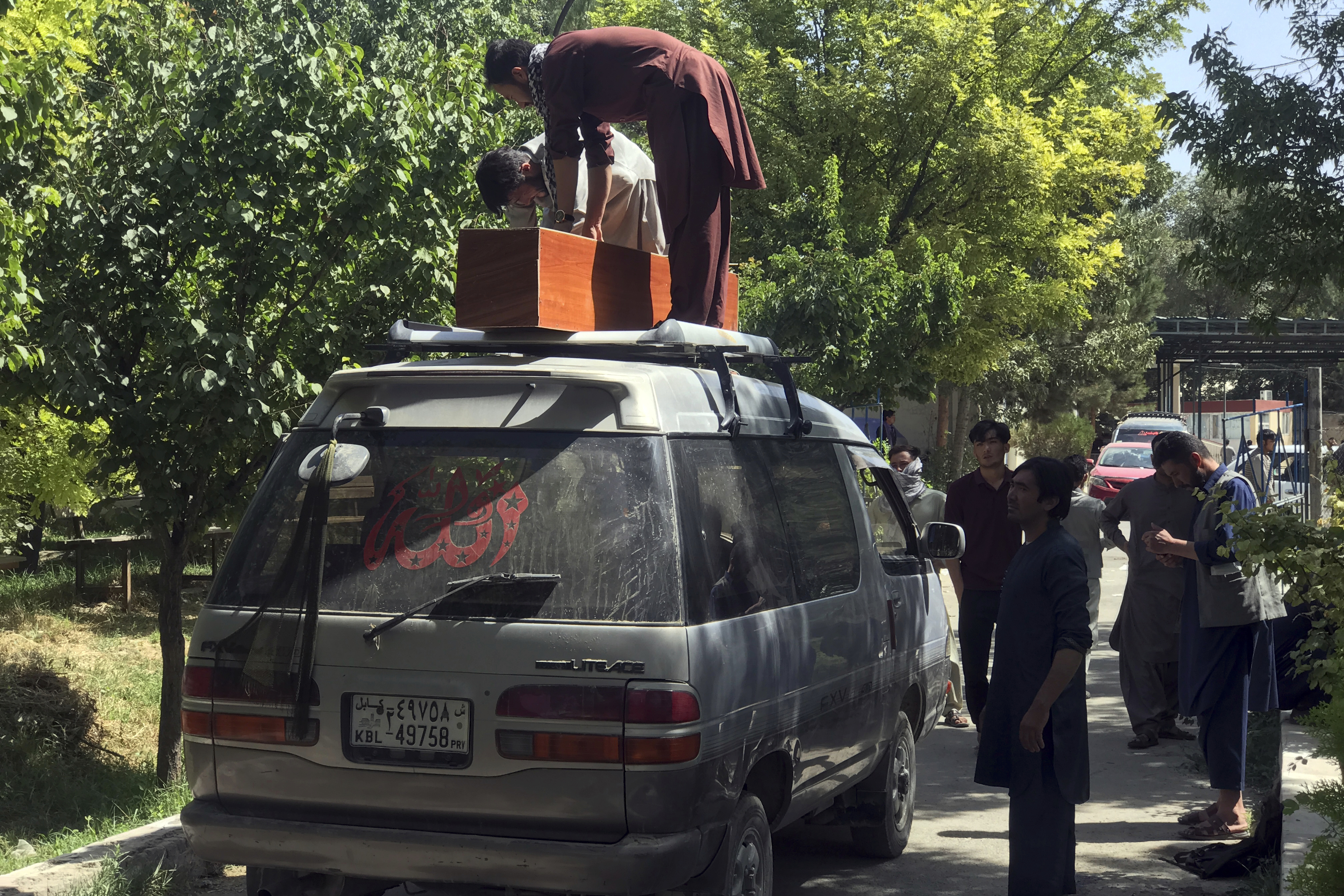
As Afghan officials struggled to deal with the dead, at least 10 bodies lay on the grounds outside Wazir Akbar Khan Hospital, where relatives said the mortuary could take no more.
As the call to prayer echoed Friday through Kabul along with the roar of departing planes, the anxious crowds outside the city's airport appeared as large as ever despite the risks. They are acutely aware that the window is closing to board a flight before the airlift ends and Western troops withdraw.
In an emotional speech Thursday night, President Joe Biden blamed the Islamic State group's Afghanistan affiliate, which is far more radical than the Taliban fighters who seized power less than two weeks ago in a lightning blitz across the country.
"We will rescue the Americans; we will get our Afghan allies out, and our mission will go on," Biden said. But despite intense pressure to extend Tuesday's deadline and his vow to hunt down those responsible, he has cited the threat of more terrorist attacks as a reason to keep to his plan — as the Taliban have repeatedly insisted he must.
The Taliban have wrested back control of Afghanistan two decades after they were ousted in a US-led invasion following the 9/11 attacks, which were orchestrated by al-Qaida extremists being harboured in the country.
Their return to power has terrified many Afghans, who fear they will reimpose the kind of repressive rule they did when they were last in control. Thousands have rushed to flee the country ahead of the American withdrawal as a result.
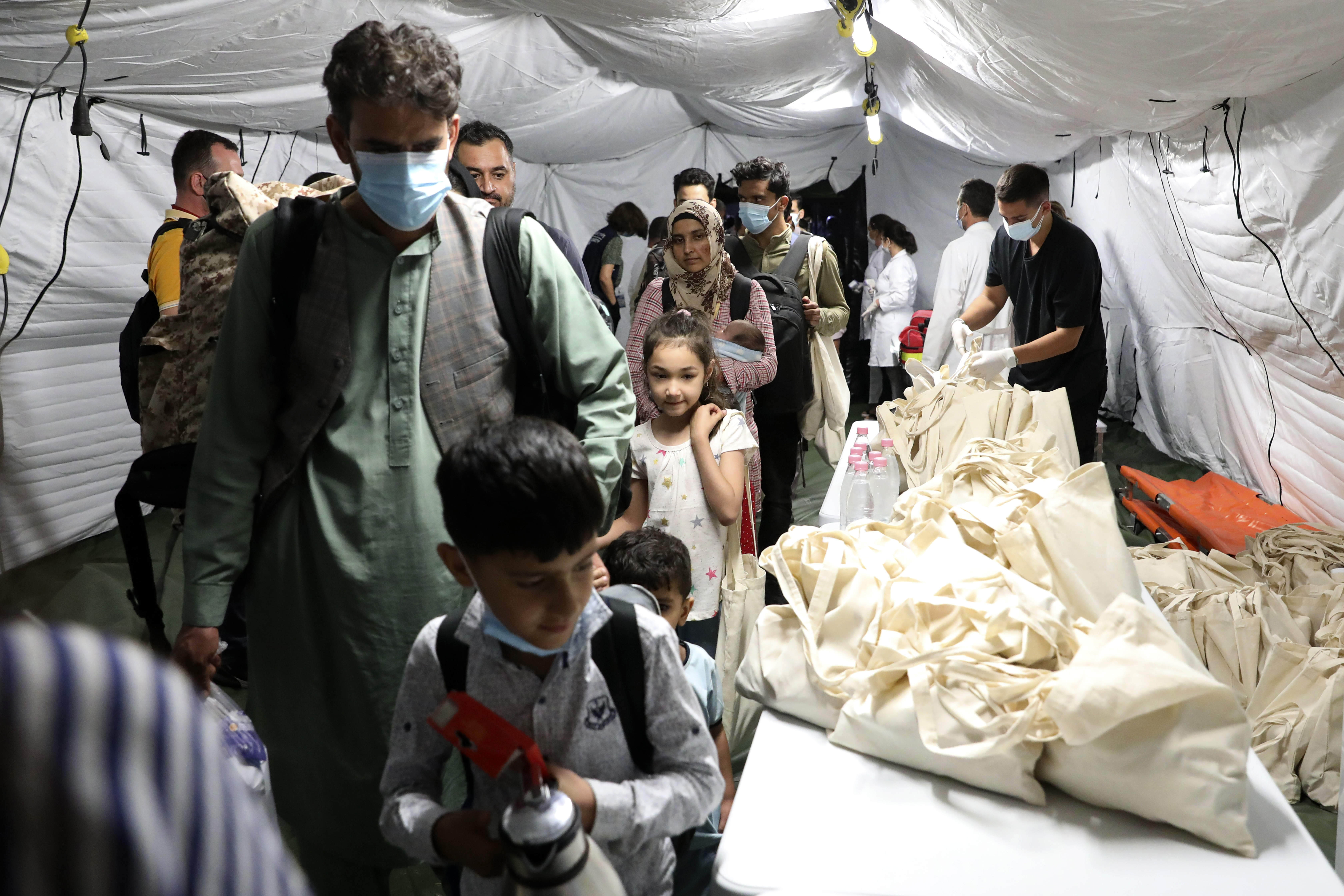
The US said more than 100,000 people have been safely evacuated from Kabul, but thousands more are struggling to leave in one of history's largest airlifts. The White House said Friday morning that 8,500 evacuees were flown out aboard US military aircraft in the previous 24 hours, along with about 4,000 people on coalition flights. That is about the same total as the day before the attacks.
More people hoping to flee arrived Friday at the airport, though in one area Taliban fighters set up a cordon about 500 meters away.
The attacks led Jamshad to head there in the morning with his wife and three small children, clutching an invitation to a Western country he didn't want to name. This was his first attempt to leave.
"After the explosion I decided I would try because I am afraid now there will be more attacks, and I think now I have to leave," said Jamshad, who like many Afghans uses only one name.
Others acknowledged that going to the airport was risky — but said they had few choices.
"Believe me, I think that an explosion will happen any second or minute, God is my witness, but we have lots of challenges in our lives, that is why we take the risk to come here and we overcome fear," said Ahmadullah Herawi.
Many others will try to escape over land borders. The United Nations refugee agency said a half-million people or more could flee in a "worse-case scenario" in the coming months.
In the wake of the attacks, Gen. Frank McKenzie, the U.S. Central Command chief overseeing the evacuation, warned that more were possible, and American commanders were working with the Taliban to prevent them. Sweden's foreign minister also said there was a threat, but offered no details.
Scenes of chaos, desperation and horror from the airport have transfixed the world. Images of people standing knee-deep in sewage and families thrusting documents and even young children toward U.S. troops behind razor wire have come to symbolise both the disarray of the last days of the American presence in the country and the fears Afghans have for their future.
But chances to help those hoping to join the evacuation are fading fast. Many American allies have already ended their efforts, in part to give the US time to wrap up its own operations before getting 5,000 of its troops out by Tuesday.
Britain said Friday its evacuations from Afghanistan will end within hours, and the main British processing centre for eligible Afghans has been closed. Defence Secretary Ben Wallace told Sky News there would be "eight or nine" evacuation flights on Friday. British troops will leave over the next few days.
Italy's foreign minister confirmed that its last military flight evacuating people would depart later on Friday. And the French European affairs minister, Clement Beaune, said on Europe 1 radio that the country will end its operation "soon" but may extend it until after Friday night.
The Taliban have said they'll allow Afghans to leave via commercial flights after the US withdrawal, but it remains unclear which airlines would return to an airport controlled by the militants.
They have asked Turkey to operate Kabul airport, but a decision will be made "after the administration (in Afghanistan) is clear," Turkish President Recep Tayyip Erdogan said Friday. Taliban leaders have been holding talks with former Afghan leaders.
Untold numbers of Afghans, especially ones who had worked with the US and other Western countries, are now in hiding, fearing retaliation despite the group's offer of full amnesty. The new rulers have sought to project an image of moderation in recent weeks — a sharp contrast to the harsh rule they imposed from 1996 to 2001, when they required women to be accompanied by a male relative when they left home, banned television and music, and held public executions.
Despite the promises, Afghans in Kabul and elsewhere have reported that some Taliban members are barring girls from attending school and going door to door in search of people who worked with Western forces.
The bombings also raise questions about the Taliban's vows to bring security to Afghanistan. No one knows how effective they will be at combating the Sunni extremists of IS, who have carried out a series of brutal attacks in Afghanistan, mainly targeting its Shiite Muslim minority.
– Reported with CNN
China has administered 2 billion COVID-19 vaccine shots
China's coronavirus vaccination drive has surpassed 2 billion doses, authorities announced Friday, but heavy-handed tactics intended to boost inoculation rates are triggering backlash in some areas.
As of Thursday, more than 889 million people had been fully vaccinated, with more than two billion shots of domestically-produced COVID-19 vaccine administered in total, an official at the National Health Commission said at a press conference Friday.
That puts China on par with the United Kingdom and ahead of the United States in terms of the percentage of its population that is now fully vaccinated.
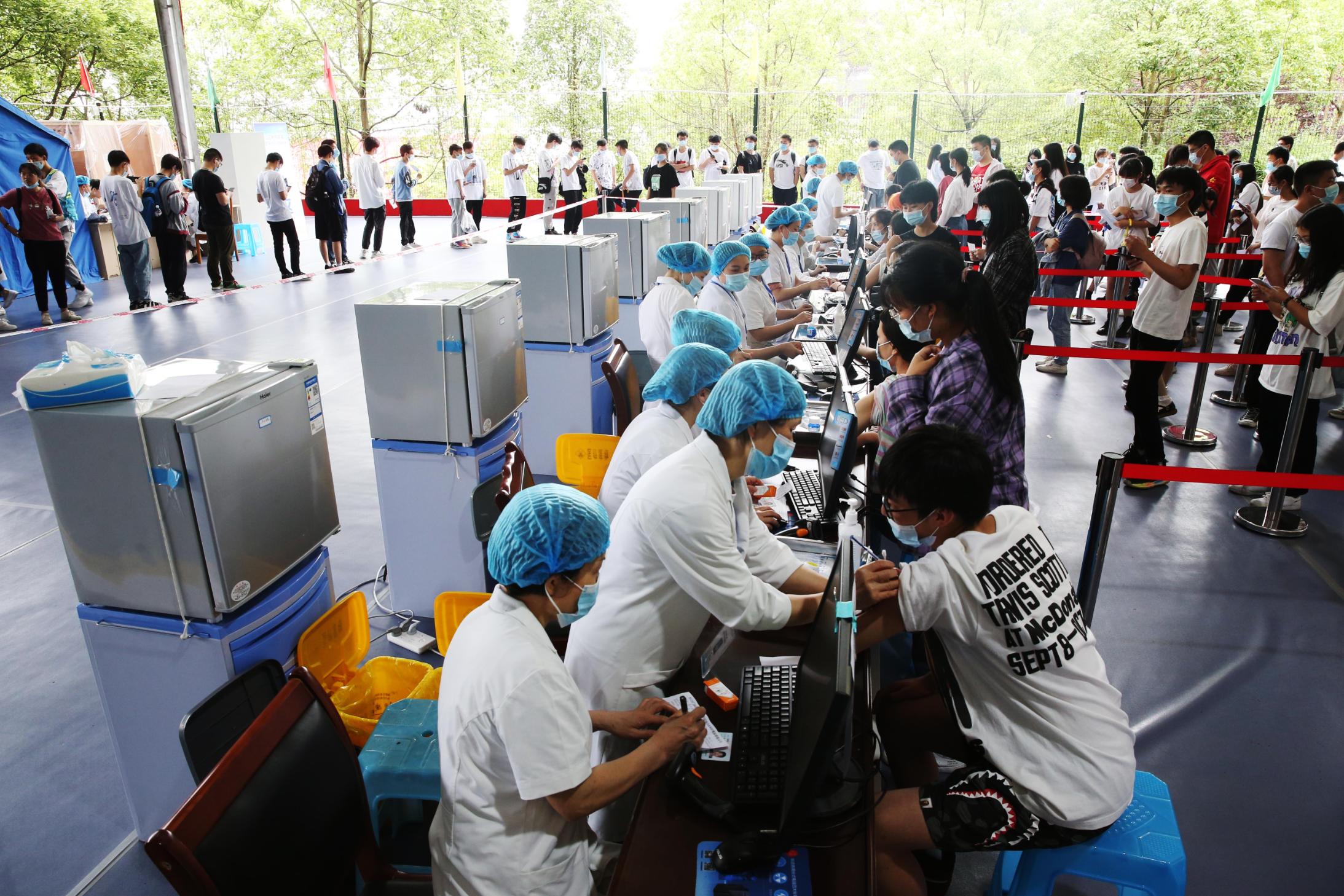
The 2 billion milestone came just 10 weeks after the country passed its first billion mark in June, with China now accounting for around 40 per cent of the approximately 5 billion shots given globally.
RELATED: China may have controlled major Delta outbreak in world-first
China's push to boost vaccination rates has accelerated since July, when the highly contagious Delta variant sent infections rising across the country. On Friday, health officials announced that the outbreak had been "effectively brought under control," with case numbers decreasing for 11 straight days since August 16, but the inoculation drive has continued to gather pace.
Speaking at a health conference last Friday, China's top respiratory expert Zhong Nanshan said the country is aiming to fully vaccinate 80 per cent of its 1.4 billion population by the end of the year.
China's latest inoculation campaign has targeted the elderly, minors and residents in the country's vast rural areas — hard to reach groups that had not been covered in earlier vaccination rounds.
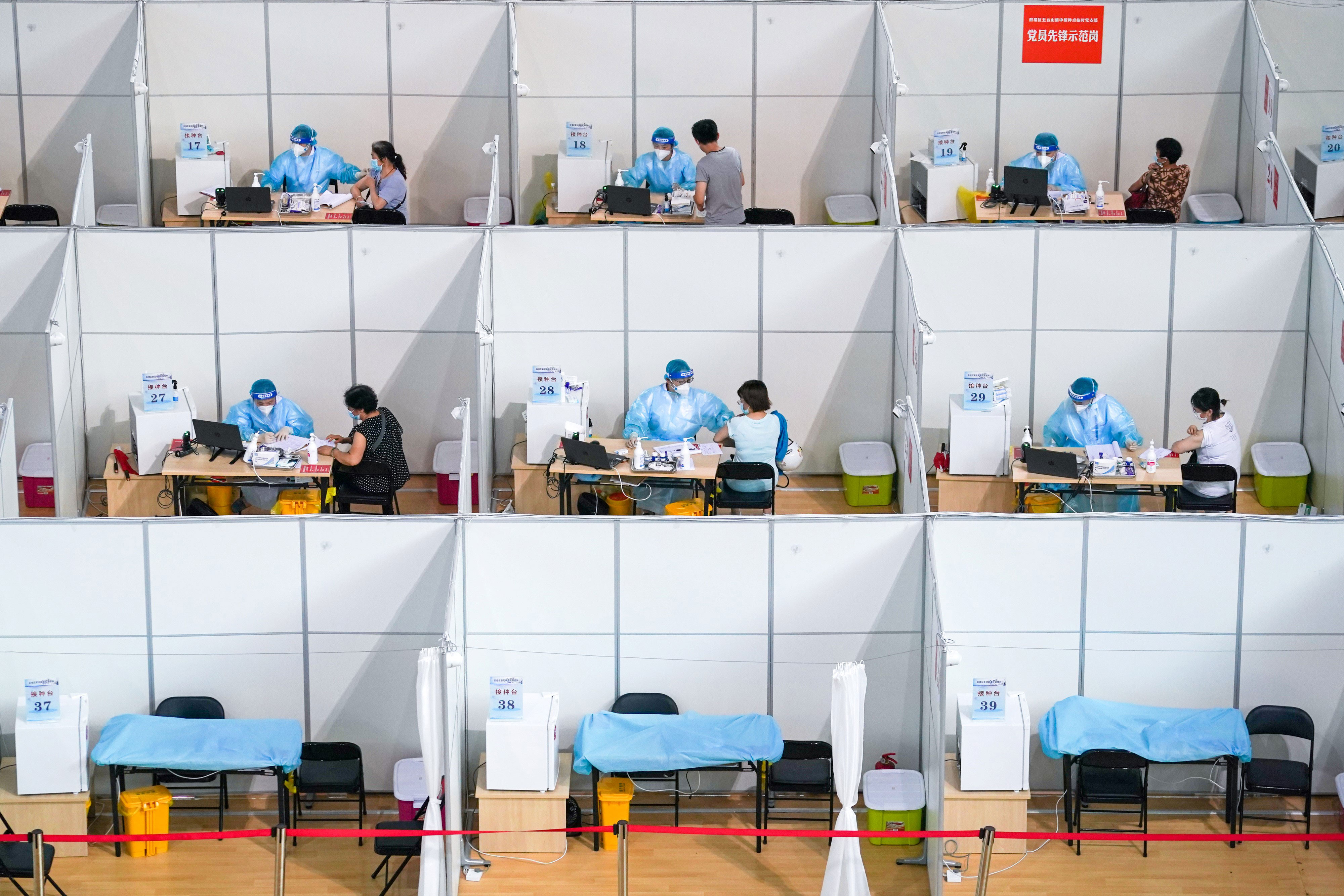
In the southern province of Guangdong, a 111-year-old villager rolled up his sleeve last week to receive a coronavirus vaccine shot. In some remote areas, officials arranged home pickups and bussed in residents to vaccination sites.
The NHC has repeatedly stressed that vaccinations should be voluntary. But under pressure to get more shots into arms, local authorities are increasingly turning to coercive measures to ensure compliance.
Across the country, a growing number of localities have banned unvaccinated residents from accessing public services, including hospitals, schools and public transport.
In the southwestern metropolis of Chongqing, district governments announced that residents who refused to be vaccinated without a legitimate reason would impact their social credit — a controversial nationwide system that uses big data to incentivise certain behaviours.
And in Qinghai province, a residential community issued a notice this week, warning residents their pensions, medical insurance and social allowances would be suspended if a member of their immediate family failed to get vaccinated. An official said the notice was meant to "scare" people into getting inoculated, because the community had not met its vaccination target, state-run news reported.
These measures have drawn wide criticism and anger on Chinese social media, with many users accusing local authorities of violating the central government's policy and making the voluntary vaccination drive de facto mandatory.
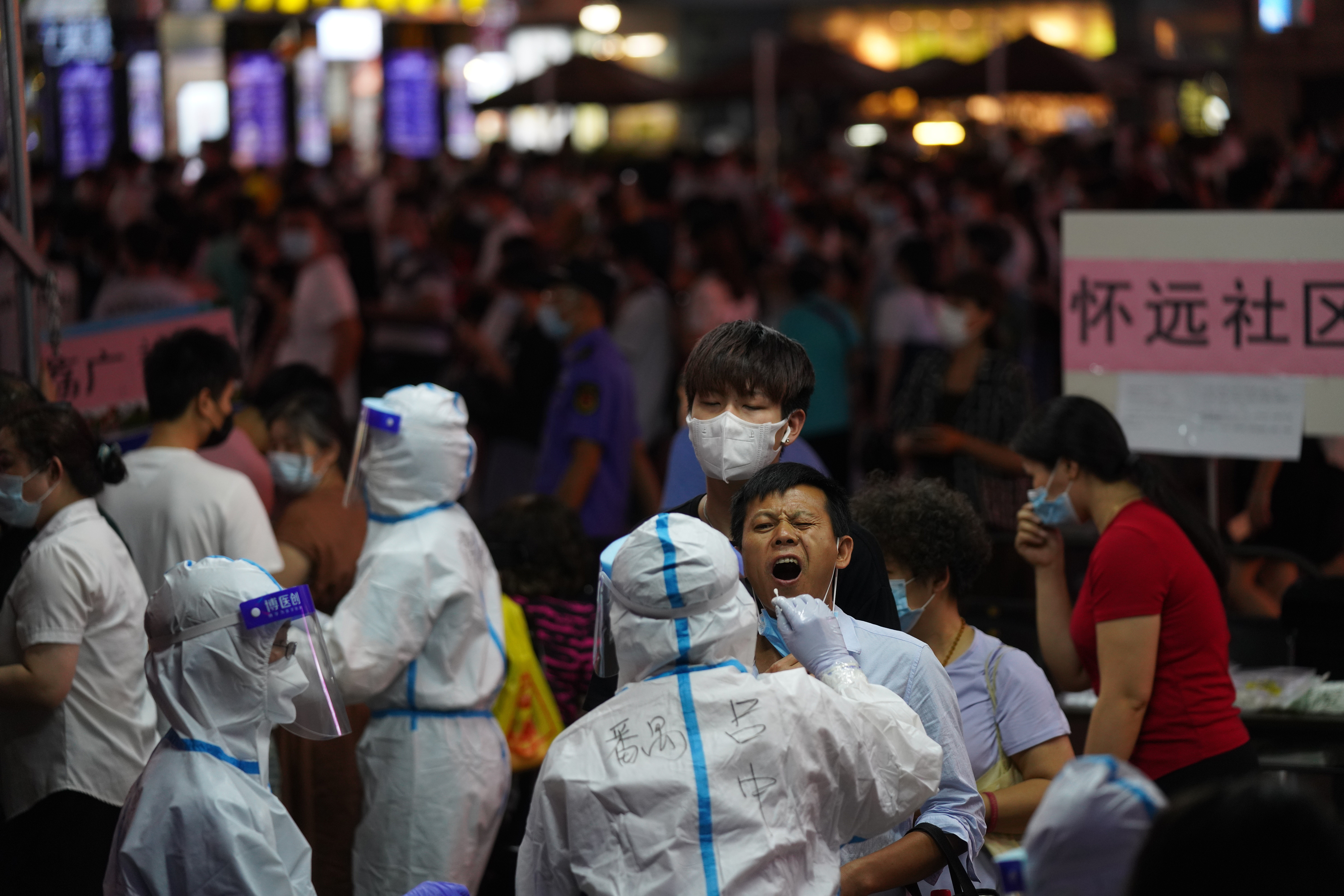
Yanzhong Huang, a senior fellow for global health at the Council on Foreign Relations, said the discrepancy between central government policy and its local implementation is a typical occurrence in China's top down political system, where provincial officials are placed under tremendous pressure to meet policy targets set by Beijing.
"Failure to fullfil these targets will lead to penalisation, creating this incentive for local government officials to undertake heavy-handed measures to get things done," he said.
In a sign of the mounting pressure, multiple municipal governments have warned local officials they would be "seriously held accountable" if infections broke out among the unvaccinated. Some local authorities have complained that residents have been lured across borders to inoculation sites in neighbouring towns by cash rewards — as officials compete to meet vaccination targets.
Despite the growing vaccination rates, there are no signs that China is preparing to relax its strict zero-COVID approach, or open up its borders anytime soon.
Zhong, the top respiratory expert, said China could establish "effective herd immunity" when the vaccination rate hits 80 per cent.
But Huang with the Council on Foreign Relations said he remained sceptical, given the lower efficacy rates of Chinese vaccines and the surge of Delta variant breakthrough infections across the world.
In Israel, where 78 per cent of those 12 and older have been fully vaccinated (mostly with the Pfizer/BioNTech vaccine), daily cases have surged in recent weeks, and authorities have started to offer booster shots to older citizens.
At the press conference Friday, Zheng Zhongwei, an official at the NHC, said experts at the agency recommend high-risk groups, such as workers at customs, airports and quarantine sites, to be given a booster shot six months after they've been fully vaccinated.
On Monday, state broadcaster CCTV warned the pandemic has not ended and that people shouldn't become careless in epidemic prevention.
'Like a bad dream': Rare personal insight on dementia
A Sydney grandmother has given a rare and personal insight into a disease that robs people of their thinking and their memories.
Theresa Flavin has dementia, and her story is at the heart of a new campaign to break stereotypes and better educate people about what's needed most.

"Living with dementia is like a bad dream," Ms Flavin said.
"You're like who am I, where am I, you have to re-orientate all over again every day.
"It's actually repulsive to live with your brain not functioning properly."
The 55-year-old, who used to work for financial watchdog APRA, has been living with dementia for a decade.
She is the face of the new awareness campaign to help people in health and aged care understand the internal struggles.
"Your brain is a bit broken and there's a disconnect between what you feel and what you express it can come out as anger, frustration, short temper," Ms Flavin said.
"I might throw something. But I'm not angry at people. I'm angry with me."

This insight comes after disturbing revelations at the aged care royal commission on the widespread use of chemical restraints such as anti-psychotics and sedatives…to "calm" dementia patients instead of resolving their expressions of pain, discomfort or fear.
"Medication is probably the most cruel thing you can do that person," Ms Falvin said.
"It makes you feel more frightened because your mind is scrambled, it feels like there's a flock a seagulls going around your head and someone is saying hey here, let's pop more seagulls on, let's make you more confused.
"Sometimes we can't talk at all, just please be patient and look for clues."
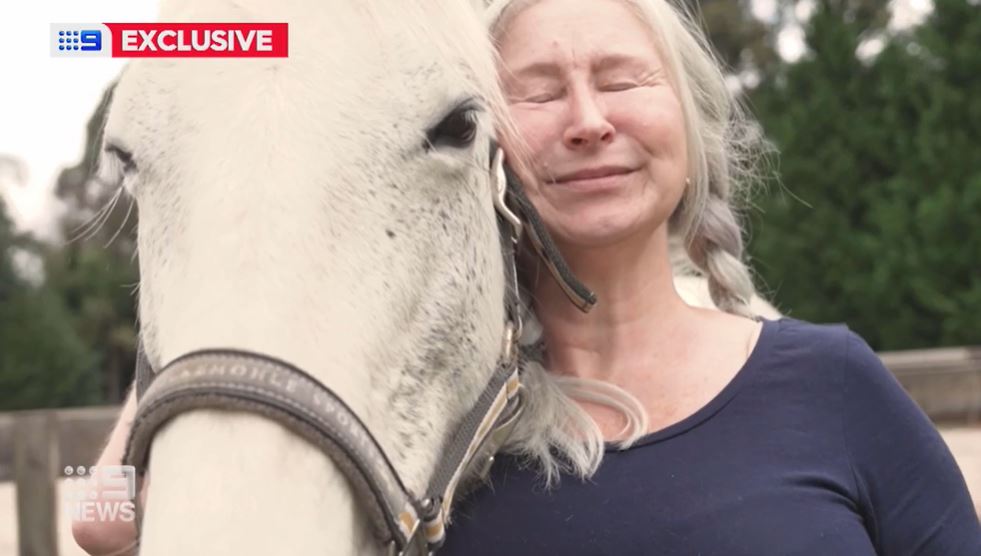
The grandmother's story has been posted to the NPS Medicinewise website, a non-for-profit in the health sector.
"I really think the video is a lesson in empathy," clinical lead Kara Joyce said.
"I honestly don't think the program would've been complete without her. We often don't get to hear the voice of someone with dementia."
Educators have already reached out to more than 1,000 aged care facilities.
Truck drivers from NSW test positive to COVID-19 in WA
Two truck drivers from NSW tested positive for COVID-19 in Western Australia this morning.
WA Premier Mark McGowan said he has been briefed on the emerging situation while he was in today's National Cabinet meeting.
The 29-year-old and 23-year-old were tested in NSW on August 25 as a part of regular testing for interstate drivers.
READ MORE: NSW border strengthens as Queensland restrictions ease
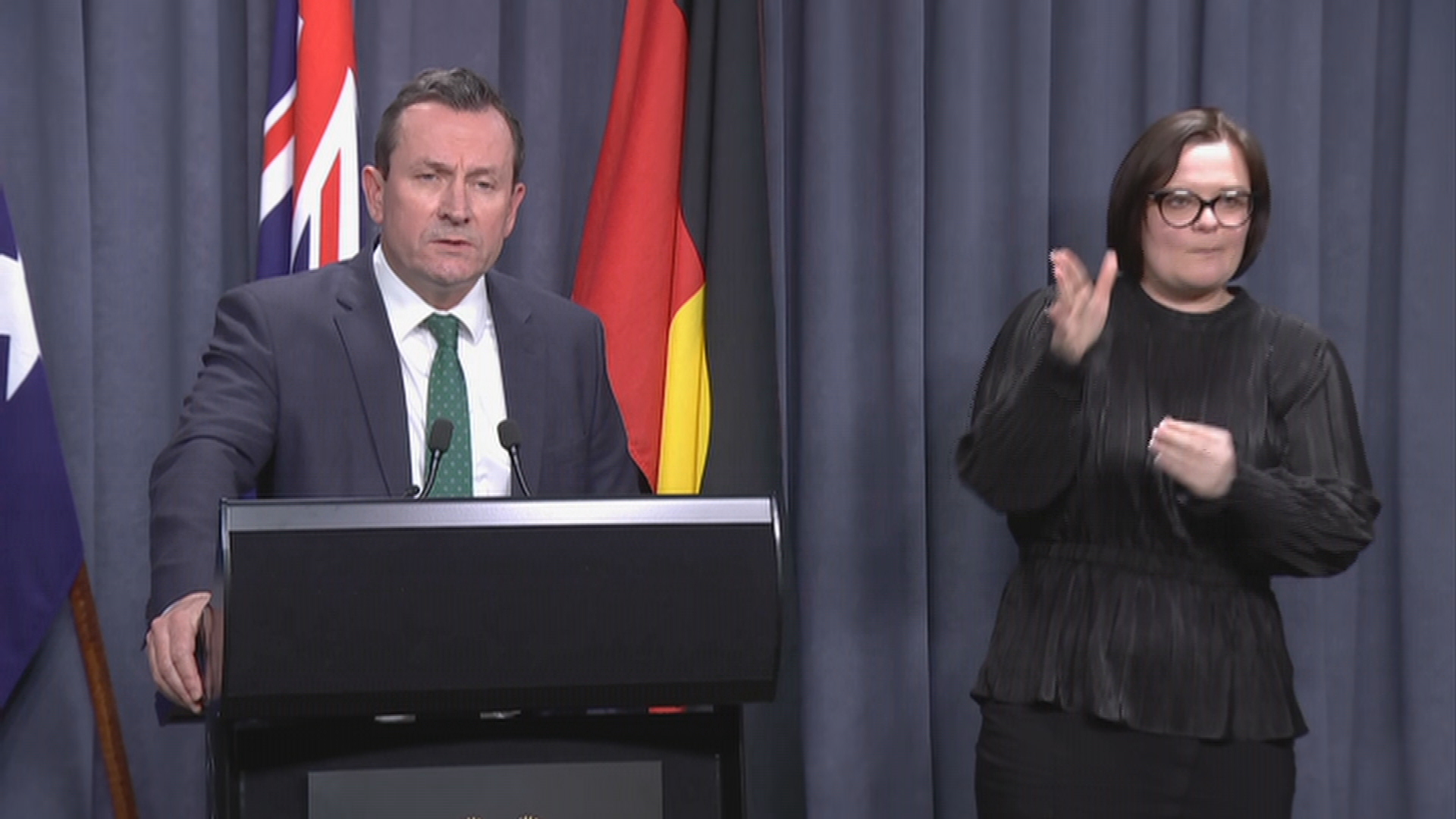
Both had received their first dose of the Pfizer vaccine and wore masks.
They travelled by truck via Victoria and South Australia and arrived in WA yesterday.
Mr McGowan said the pair slept in their own trucks, wore masks and had minimal contact with others.
He said there are some exposure sites.
Boy, 12, thrown from moving car in Perth's north
A 12-year-old boy has suffered serious head injuries after falling from a car allegedly being driven by an unlicensed teen in Perth's north.
Police say a 16-year-old boy was behind the wheel of a red Volkswagon Golf hatchback, driving down Cobbler Road, Mirrabooka with two passengers in the car just after 10pm.
As the car approached Northwood Drive, police say one of the passengers, a 12-year-old boy, was thrown from the vehicle.
The boy received serious head injuries and was taken to Perth Children's Hospital by ambulance officers who attended the scene.
Police are now investigating the incident to determine how the boy came to exit the moving vehicle and get injured.
Investigators are urging anyone with dashcam or CCTV footage which may have captured the incident to contact CrimeStoppers on 1800 333 444.
Why you should start your Christmas shopping now
Although it's four months away, it may be time to start thinking about doing your Christmas shopping.
The retail supply chain has been significantly impacted by the pandemic, due to ports being closed, fewer freight flights, and delays caused by extended lockdowns.
Last week one of China's busiest ports was forced to shut down, which will undoubtedly have flow-on effects.
READ MORE: Thousands of truck drivers around Australia to strike for 24 hours

"There is no doubt the global pandemic has had a massive disruption on supply," CEO of the Australian Retailers Association Paul Zahra told 9News.
"The capping of incoming flights has meant that a lot of products coming into the country have had to be shipped in which is causing all sorts of delays."
Woolworths boss Brad Banducci is also concerned about shortages come Christmas time.
"All of us need to make sure we get our products for Christmas into Australia as soon as possible," he said.
It is a worrying sign in the lead up to Christmas, but for retail giant Wesfarmers, profits have so far been strong.
Its stores Bunnings, Kmart and Officeworks recorded bumper sales to June 30 despite navigating lockdowns around the country.
Wesfarmers' full-year results show profits are up by 16 per cent and online sales increased by 57 percent to 2.4 billion dollars.
But the overall impact of COVID-19 on the NSW retail sector hard, and saw a 8.9 per cent drop in sales during July.
"We are concerned about those small businesses being able to come out of the lockdowns and be able to operate," Mr Zahra said.
Evacuation flights resume after deadly Kabul terror attack
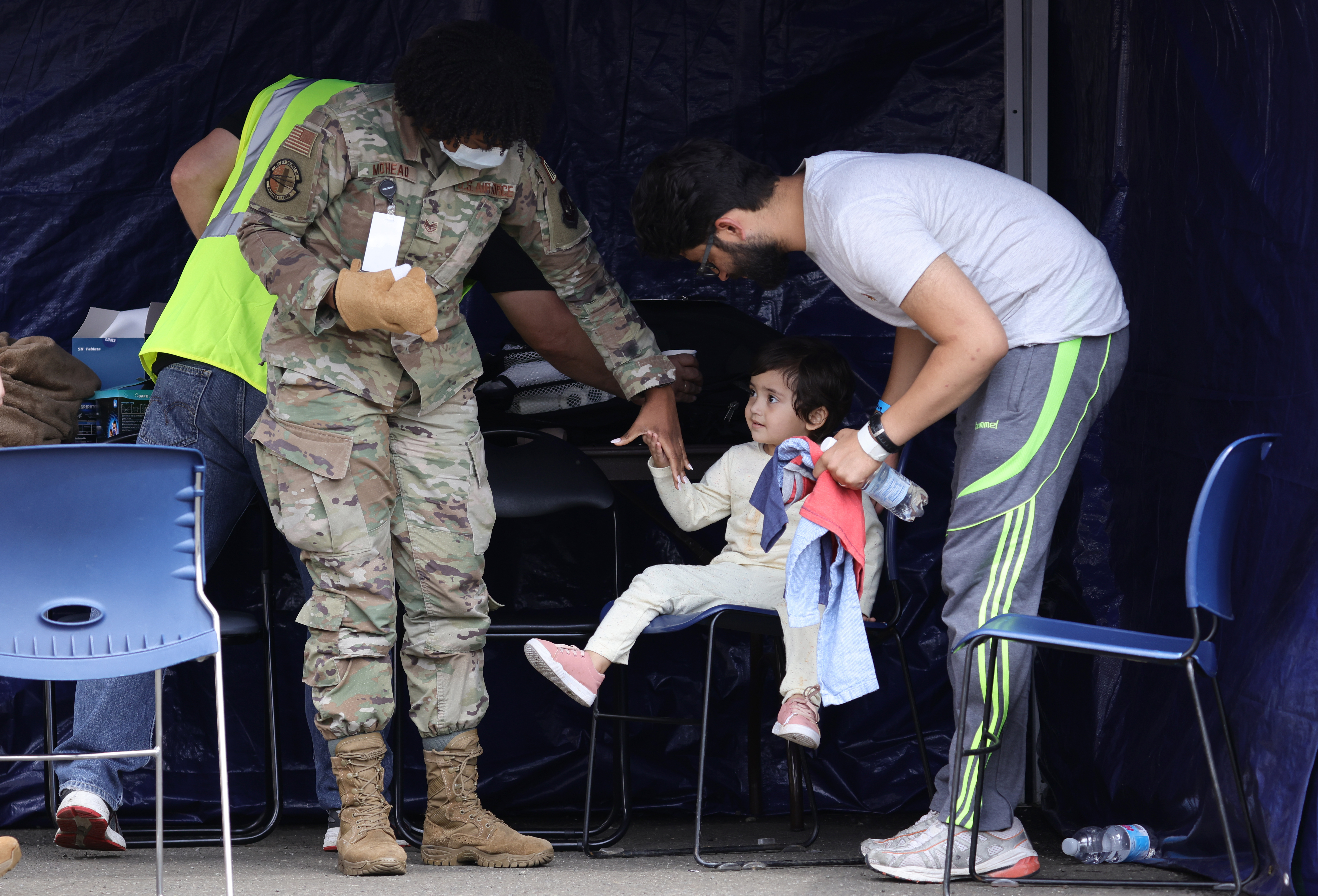
Evacuation flights from Afghanistan have resumed with new urgency after two suicide bombings targeted the thousands of desperate people fleeing the Taliban takeover.
The US says further attempted attacks are expected ahead of the Tuesday deadline for foreign troops to leave, ending America's longest war.
Kabul residents said several flights took off Friday morning, while footage shared by a local Tolo TV correspondent showed the anxious crowd outside the airport as large as ever.
READ MORE: Deadly attack exposes Afghanistan power grab
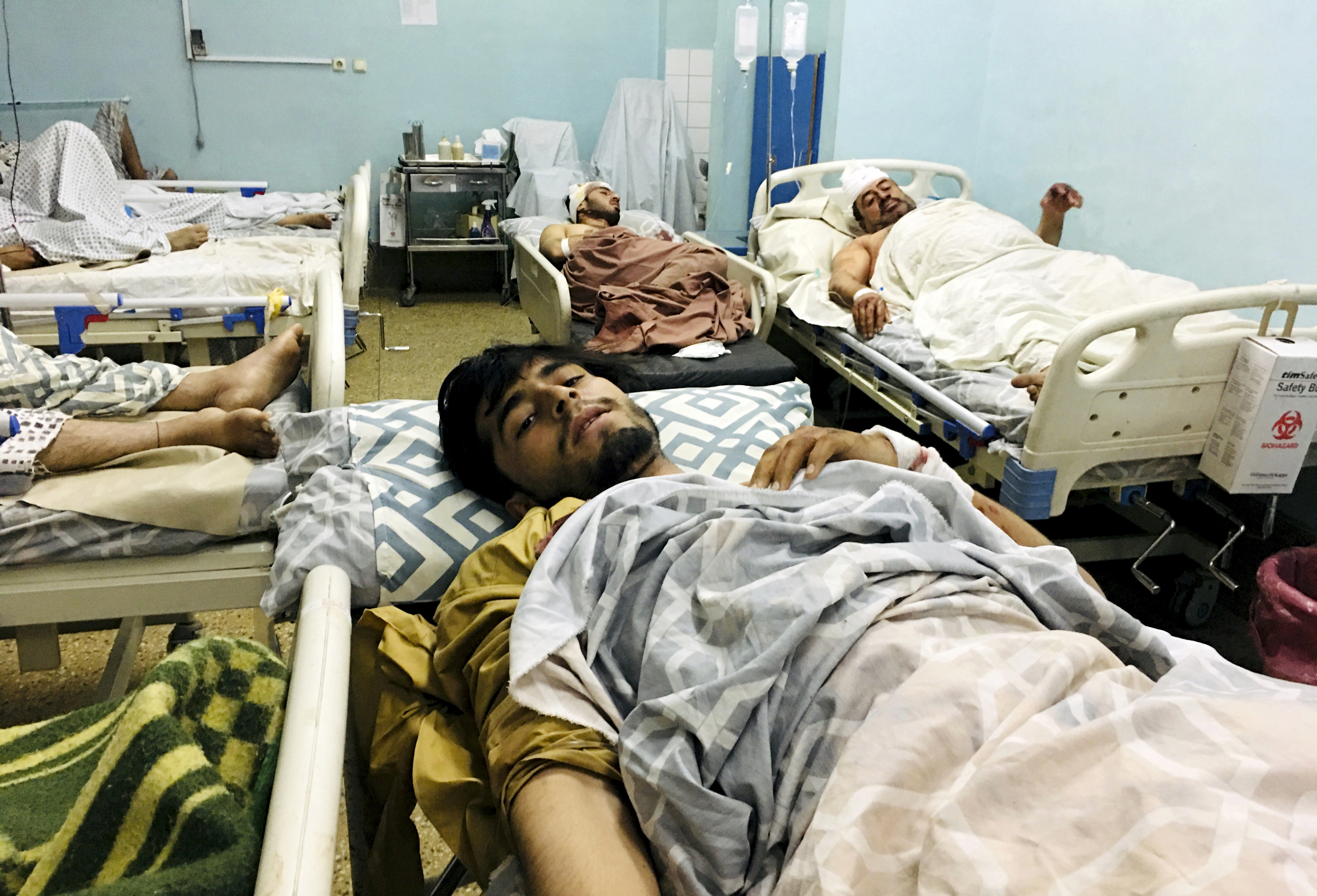
Bombings overnight near Kabul's international airport killed at least 60 Afghans and 13 US troops, Afghan and US officials said, in the deadliest day for US forces in Afghanistan since August 2011.
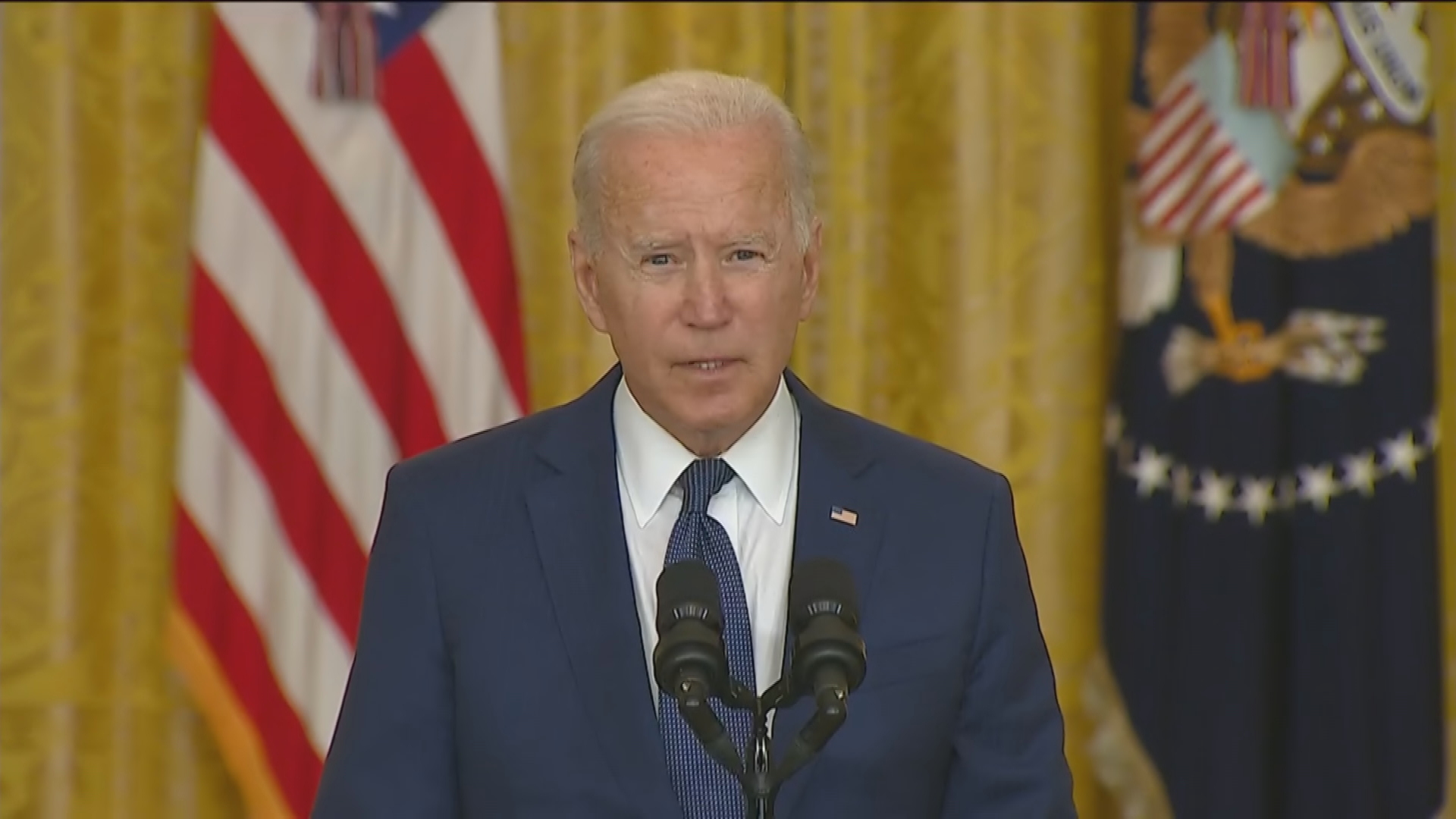
In an emotional speech, President Joe Biden blamed the Islamic State group's Afghanistan affiliate, far more radical than the Taliban militants who seized power less than two weeks ago.
"We will rescue the Americans; we will get our Afghan allies out, and our mission will go on," Mr Biden said.
But despite intense pressure to extend Tuesday's deadline, he has cited the threat of terrorist attacks as a reason to keep to his plan.
READ MORE: US will continue evacuations despite deadly terror attack in Kabul
The Taliban, back in control of Afghanistan two decades after they were ousted in a US-led invasion following the 9/11 attacks, insist on the deadline.
The Trump administration in February 2020 struck an agreement with the Taliban that called for it to halt attacks on Americans in exchange for the removal of all US troops and contractors by May; Mr Biden announced in April he would have them out by September.
While the US on Thursday said more than 100,000 people have been safely evacuated from Kabul, as many as 1000 Americans and tens of thousands more Afghans are struggling to leave in one of history's largest airlifts.
General Frank McKenzie, the US Central Command chief overseeing the evacuation, today said about 5000 people were awaiting flights on the airfield.
READ MORE: PM condemns Kabul bombing attacks as 'evil, calculated and inhuman'
The scenes at the airport, with people standing knee-deep in sewage and families thrusting documents and even young children toward US troops behind razor wire, have horrified many around the world as far-flung efforts continue to help people escape.
But those chances are fading fast for many. Some US allies, including Australia, have said they are ending evacuation efforts, in part to give the US time to wrap up its evacuation work before getting 5000 of its troops out by Tuesday.
Britain has said its evacuations from Afghanistan will end within hours, and the main British processing center for eligible Afghans has been closed. Defense Secretary Ben Wallace told Sky News there would be "eight or nine" more evacuation flights, and they will be the last. British troops will leave over the next few days.
The Spanish government said it has ended its evacuation operation.
Untold thousands of Afghans, especially ones who had worked with the US and other Western countries, are now in hiding from the Taliban, fearing retaliation despite the group's offer of full amnesty.
The militant group has claimed it has become more moderate since its harsh rule from 1996 to 2001, when it largely confined women to their homes, banned television and music and held public executions.
But Afghans in Kabul and elsewhere have reported that some Taliban members are barring girls from attending school and going door to door in search of people who had worked with Western forces.
No one knows how effective the Taliban will be at combating the Sunni extremists of IS, who have links to the group's more well-known affiliate in Syria and Iraq and have carried out a series of brutal attacks in Afghanistan, mainly targeting its Shiite Muslim minority.
Eating a hot dog could take 36 minutes off your life, study says
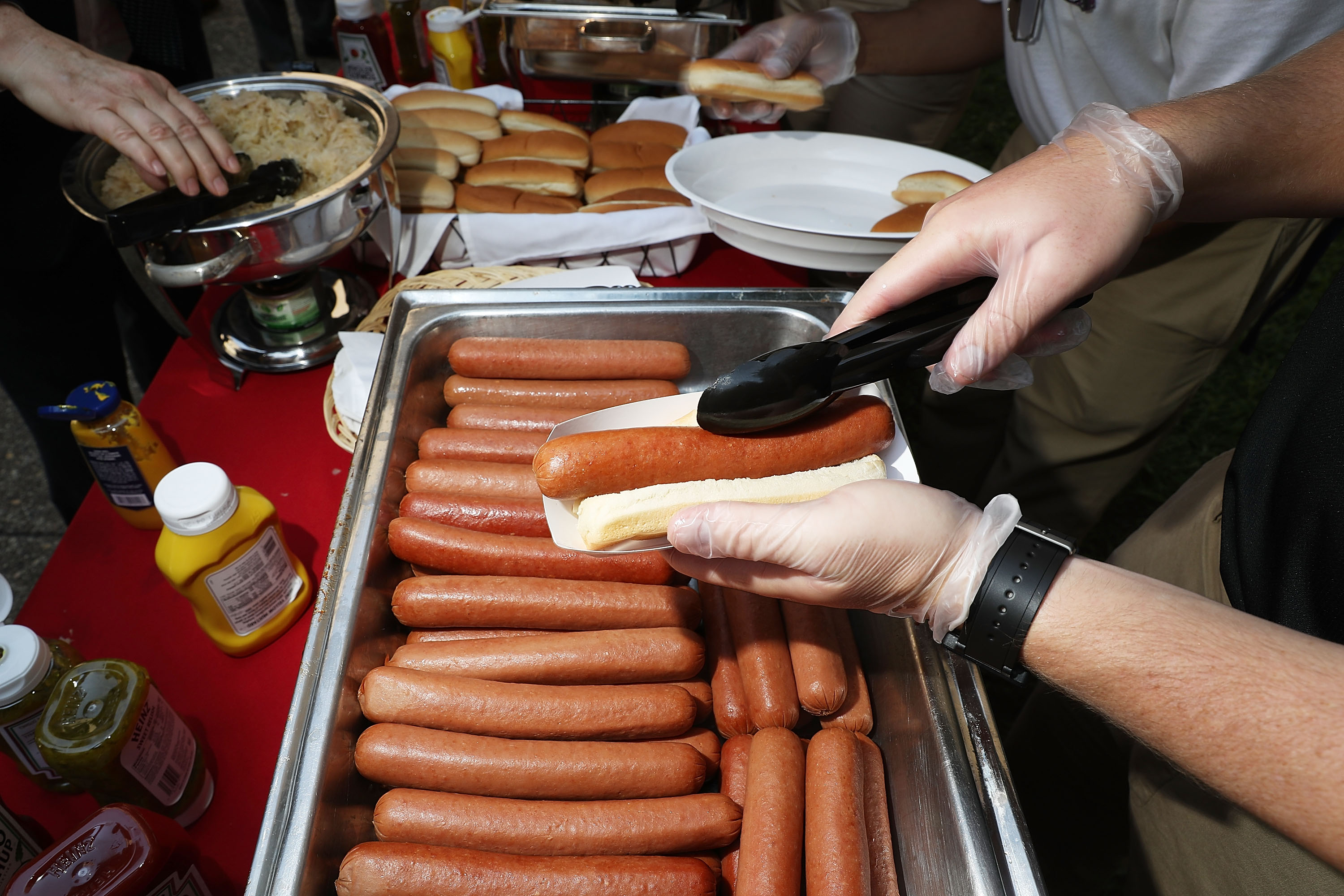
You may want to skip the toppings on your next hot dog, or skip it altogether: Health researchers at the University of Michigan in the US have found that eating a single hot dog could take 36 minutes off your life.
In their study, published this month in the journal Nature Food, researchers looked at 5853 foods in the US diet and measured their effects in minutes of healthy life gained or lost.
"We wanted to make a health-based evaluation of the beneficial and detrimental impacts of the food in the entire diet," Olivier Jolliet, professor of environmental health sciences at the university and senior author of the paper, told CNN.
READ MORE: Al Capone's favorite gun, personal items head to auction

The team came up with an index that calculates the net beneficial or detrimental health burden in minutes of healthy life associated with a serving of food.
It's based on a study called the Global Burden of Disease, which measures morbidity associated with a person's food choices.
"For example, 0.45 minutes are lost per gram of processed meat, or 0.1 minutes are gained per gram of fruit. We then look at the composition of each food and then multiplied this number by the corresponding food profiles that we previously developed," Mr Jolliet said.
One of the foods researchers measured was a standard beef hot dog on a bun.
READ MORE: Travel expert quashes hopes of flying overseas by Christmas
Its 61 grams of processed meat resulted in the loss of 27 minutes of healthy life, Mr Jolliet said — but when ingredients like sodium and trans fatty acids were factored in, the final value was 36 minutes lost.
Consumption of foods such as nuts, legumes, seafood, fruits and non-starchy vegetables, on the other hand, have positive effects on health, the study found.
The index looks at foods that increase or decrease life expectancy, but it's not as easy as trying to cancel out detrimental food choices with more beneficial ones, Mr Jolliet said.
"The index is primarily there to help aid in selecting and using calories consumed on a daily basis to tweak a minimum of habits and make the minimum of change to obtain a maximum benefit for health and the environment from our food experience," Mr Jolliet said.
READ MORE: New Zealand records 70 new COVID-19 cases
The point is to choose better foods, not to spend time doing the math, he said.
"Is it the ultimate metric that will tell you exactly what to eat tomorrow and entirely determine your life expectancy? No," he said.
"It is a useful metric that can help you make more informed choices and makes it simpler to identify and make adequate small changes in our diet."
READ MORE: New Zealand lockdown extended as Ardern calls for country to 'hold course'
It's also not as easy as calculating what food to eat in order to live to be 100, said Marion Nestle, a professor of nutrition and public health at New York University.
She told CNN the numbers may not be entirely reliable.
"Changing a diet to include or exclude any one food is unlikely to make much difference — it's dietary (and lifestyle) patterns that count," she said.
"I suppose you could argue that the minutes add up, but that gets into further untested and untestable assumptions."
Cancer survivor's hopeful message for aspiring mums
A Melbourne woman who has become a mum after fighting cancer twice wants others to know there is still hope for having a family after cancer treatment.
Melissa Seach, a 43-year-old Acting Sergeant with Victoria Police, was diagnosed with Hodgkin Lymphoma in 2005.
She undertook a six month stint of fortnightly chemotherapy to beat it.
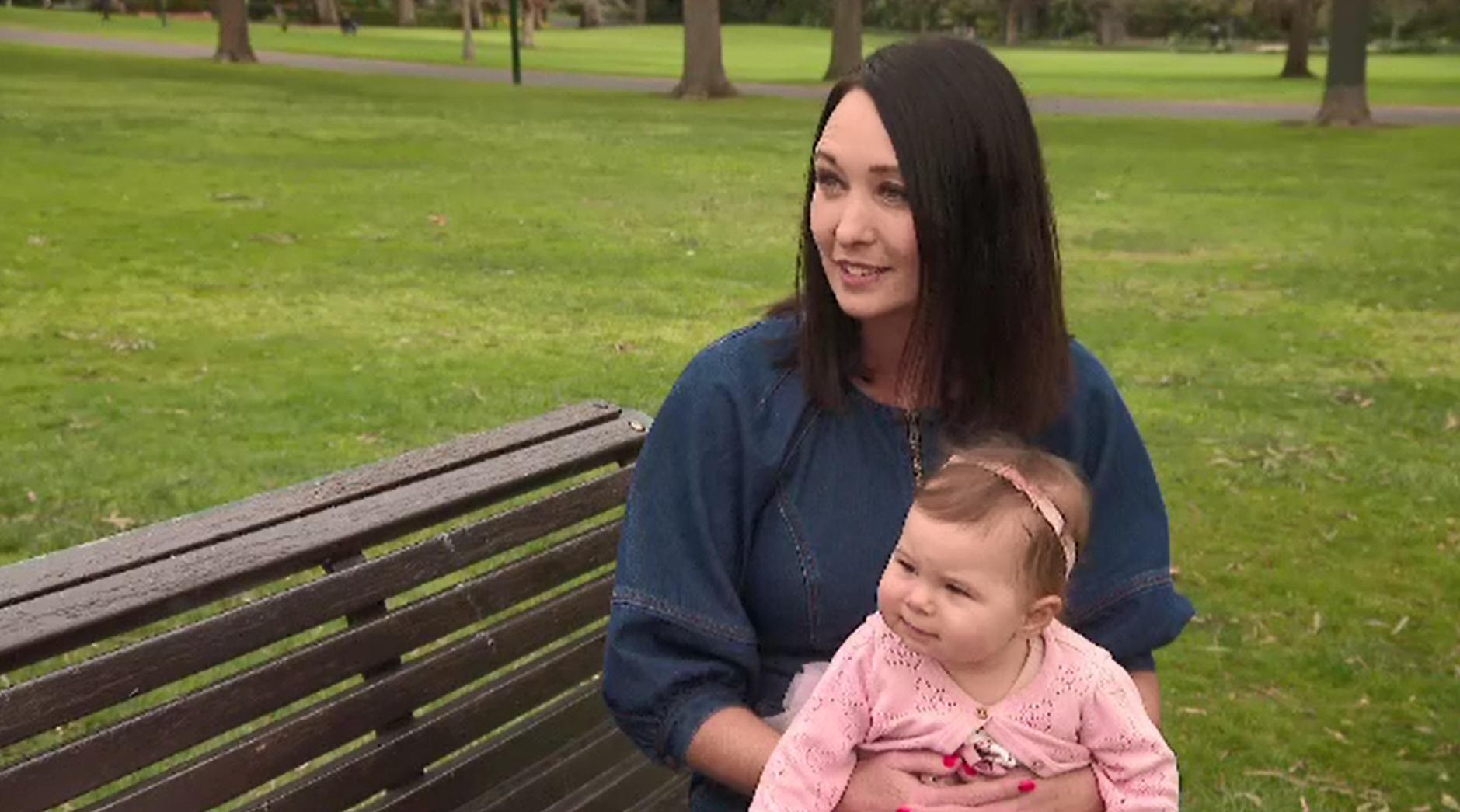
But Ms Seach was then two weeks away from marking five years in remission when the cancer returned.
Before having more intense chemotherapy, doctors suggested she try having her ovarian tissue removed for fertility preservation.
The harsh cancer treatment she then underwent fought off the cancer, but sent her body into menopause.
Doctors then attempted a rare procedure on Ms Seach, grafting the ovary they had earlier removed back into her body, and were able to help her conceive a baby with her own eggs and a sperm donor.
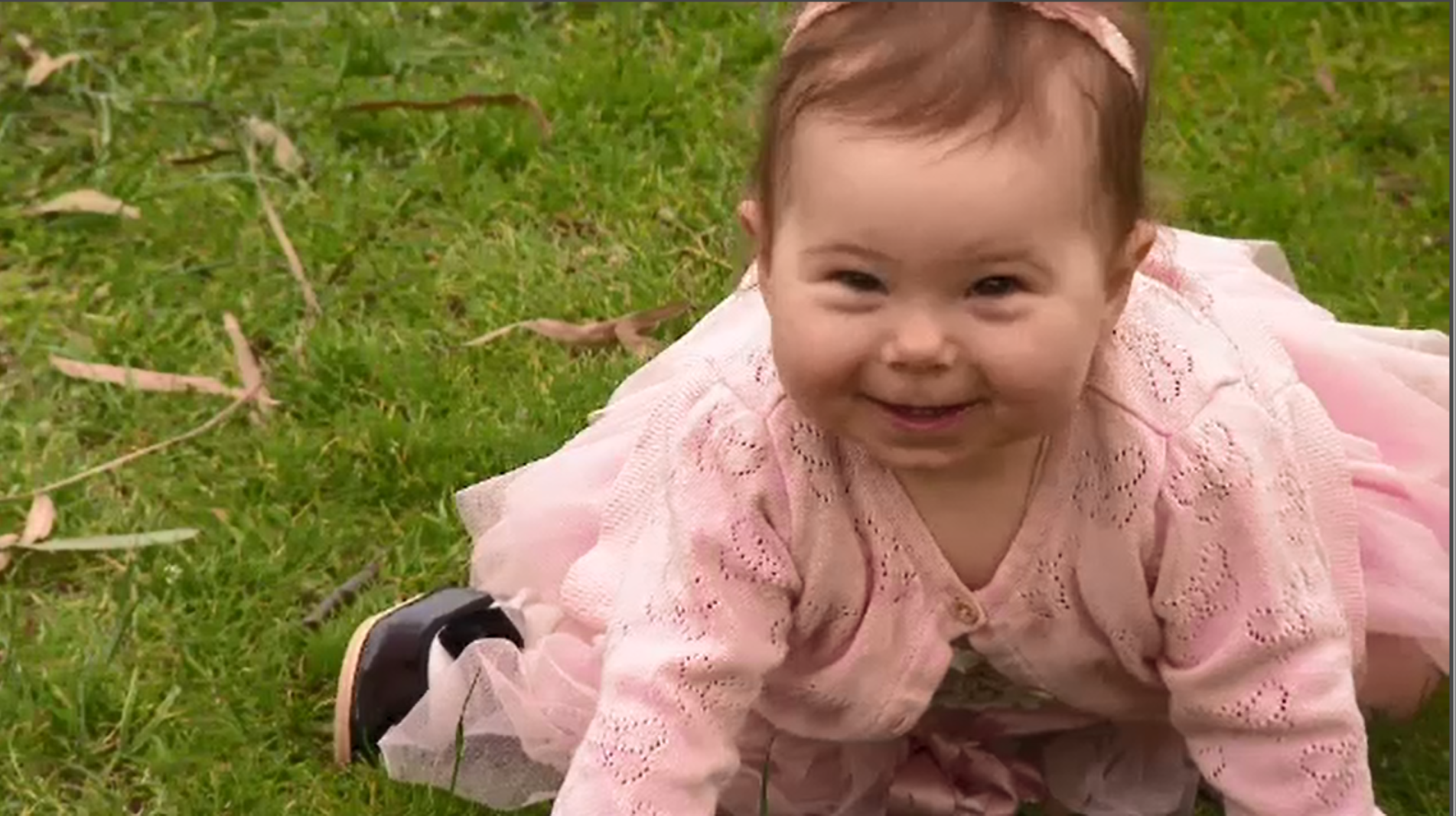
Ms Seach is now the proud mum of Millie, whose first birthday falls today – on Daffodil Day.
Daffodil Day Day is the Cancer Council's annual campaign that raises life-saving funds for cancer research.
Millie is one of only around 180 babies born in the world using the procedure.
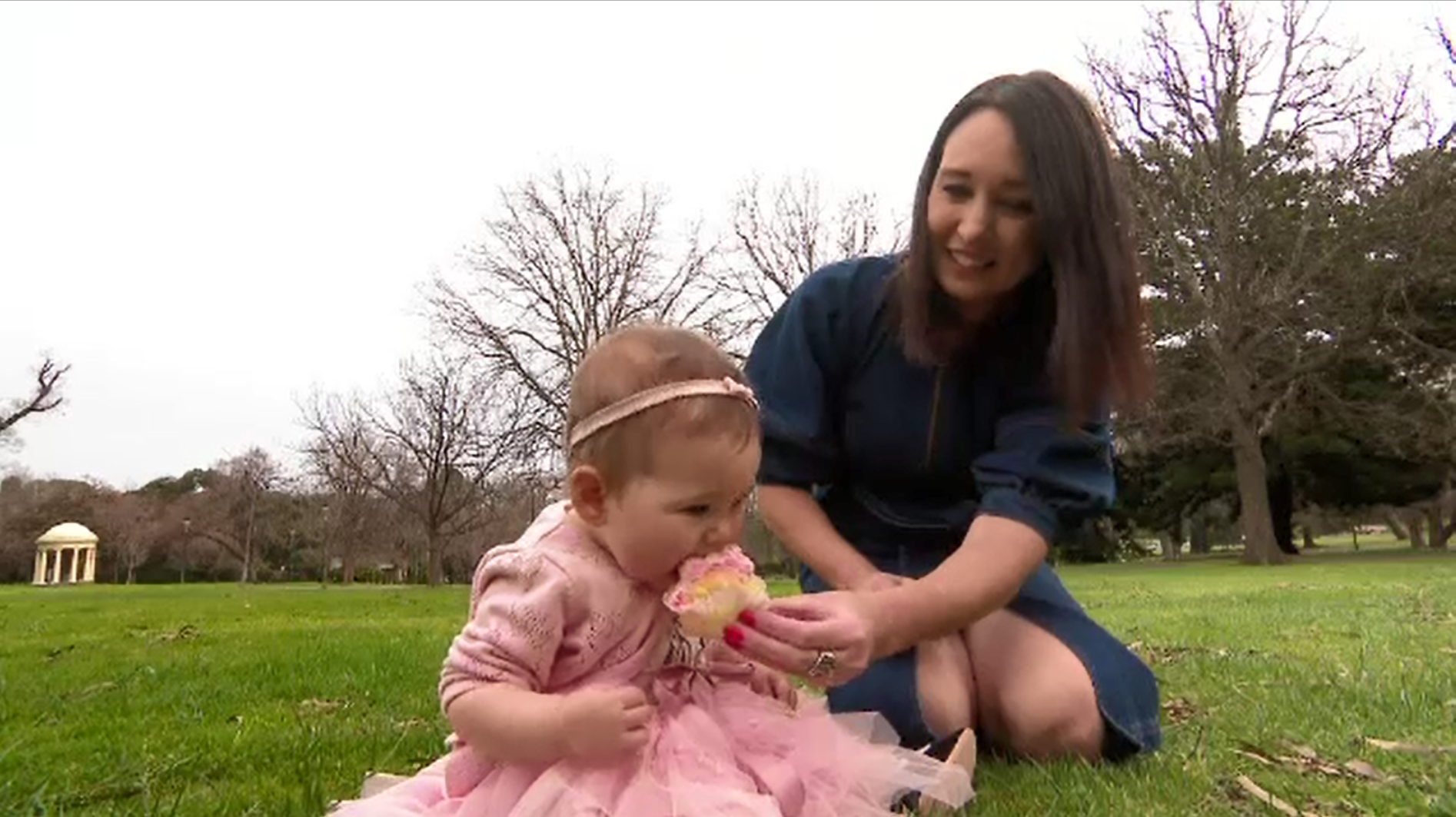
Ms Seach is sharing her story to give other cancer battlers hope of creating their own family and to highlight the importance of exploring options around fertility before cancer treatment.
"My body has been smashed with cancer treatment," she said.
"It's just amazing how now I've been able to have a baby."

"There's hope that after going through such harsh cancer treatment that one day you'll be able to create your own family and have your own baby."
"We really didn't know what the future would hold and I had no idea that this would ever come true," she said.
Around 145,000 Victorians are diagnosed with cancer every year.