Tag Archives: oceania

New study links fires to increased COVID-19 risk

As the coronavirus surges again in the US, scientists have found another disaster is playing a key role in the number of people who contract severe COVID-19 cases and how many die: wildfires.

A new study published in the journal Science Advances found that increases in fine particulate matter from wildfire smoke in 2020 led to a surge in COVID-19 cases and deaths in California, Oregon and Washington.

"Fine particulate matter air pollution can be an additional vehicle for spreading the virus even faster," Francesca Dominici, co-author of the study and professor of biostatistics, population and data science at Harvard TH Chan School of Public Health, told CNN.
READ MORE: Coronavirus traces detected in Broken Hill sewage as more Dubbo exposure sites listed

"Considering that we are seeing an increased risk of cases from the Delta [variant] and we already have the wildfires, that's going to be concerning."

Fine particulate matter, or PM 2.5, is among tiniest yet also the most dangerous pollutants. When inhaled, it travels deep into lung tissue where it can enter the bloodstream.

PM2.5 comes from other sources like fossil fuel plants, cars and agriculture, and is linked to a number of health complications: asthma, heart disease, chronic bronchitis, and other respiratory illnesses — all underlying conditions that make people vulnerable to severe outcomes from COVID-19.

Dr Albert Rizzo, chief medical officer at the American Lung Association, who was not involved in the new study, said that air pollution from wildfire smoke is likely causing inflammation in the lungs.

READ MORE: Victoria's bold vaccine plan to get 'a million jabs into a million arms'

"The particulate matter is what leads the airways to be a very fertile ground for uninvited infection like the COVID virus to get into our airway," Dr Rizzo told CNN.

"The immune system is only geared up to try to fight the effects of a particulate matter and now it has a virus that it has to trigger against as well."

It's a dangerous combination, Professor Dominici said.

"Right now, considering that we are seeing an increase in risks and cases due to the Delta variant, and we're already getting wildfires, that's going to be concerning," she said.

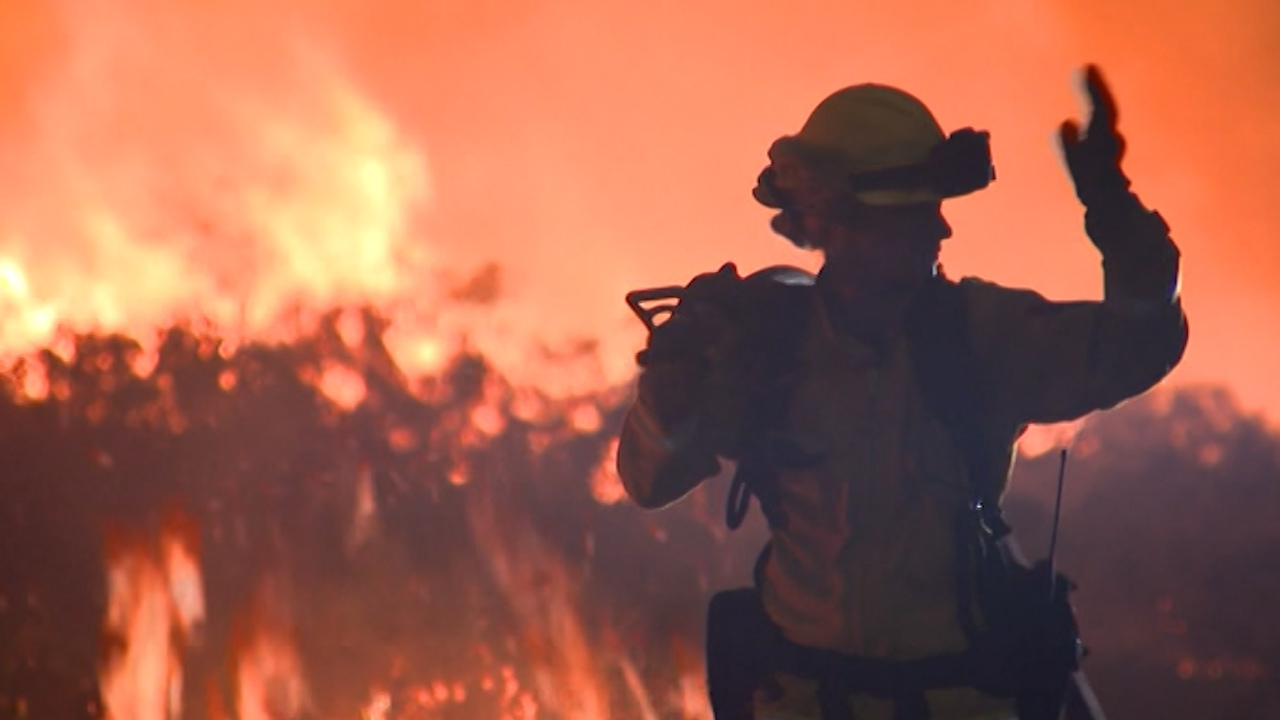
2020 was a historic wildfire season, scorching more than 10 million acres across the Western states of the US.

While the direct death toll from the fires was at least 43, researchers at Stanford University in September estimated roughly 1200 to 3000 excess deaths in California from inhaling wildfire smoke, or PM 2.5.

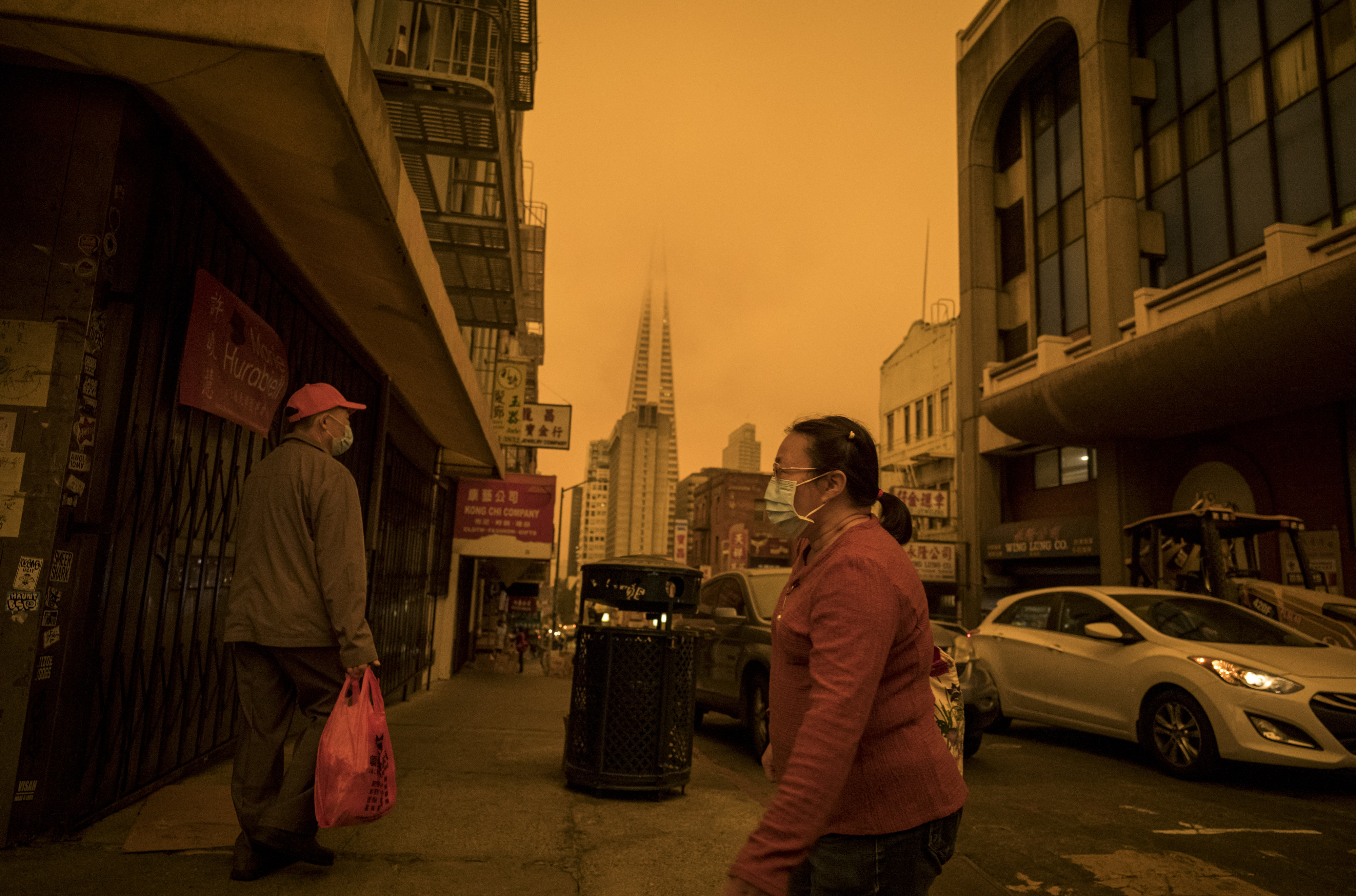
The effects of the 2021 Western wildfires have become so far-reaching that not only did the smoke drift and became visible across the country as far as New York, but the fires have been exhibiting extreme fire behavior, such as rotational patterns within the fire, or producing rare, towering clouds.

The Harvard study looked at 92 counties in California, Oregon, and Washington impacted by wildfire in 2020.

READ MORE: Expectant Melbourne couple plead to be able to return from US

Using satellite images for the fires and public data on COVID-19 cases and deaths in the three Western states, researchers found that in the majority of the counties they studied, there was strong evidence that the more smoke and soot there was, the more there were cases and deaths from COVID-19.

If PM 2.5 levels stayed higher for 28 days in a row, cases rose by nearly 12 percent and deaths by more than eight percent.

"This is a very important study," Donghai Liang, professor of environmental health at Emory University, who was not involved in the study, told CNN.

"This is among those first studies that really report the link between particulate matter coming out of the 2020 wildfires in the United States and how they contribute to the exacerbation on COVID-19 cases and deaths."
As the climate crisis accelerates, Professor Liang said public health risks associated with wildfires may worsen. According to the landmark UN report published Monday, climate change-fueled drought and heat now make wildfire seasons longer and result in more destructive fires.

"Even without COVID, we've been concerned that climate change that leads to hotter environments, and droughts, is fodder for wildfires to occur," Dr Rizzo said.

"Then you add the wildfire ash and soot to the air quality, it does make respiratory issues much more likely to occur."

Tarik Benmarhnia, a climate change epidemiologist at Scripps Institution of Oceanography, told CNN the "repeat nature" of more-frequent wildfires could exacerbate long-term public health impacts.

Several studies have shown that short-term PM 2.5 exposure from wildfire smoke has led to increase in emergency department visits and hospitalizations.

"When you have a [wildfire] episode, we will see a huge increase in hospitalization for respiratory conditions or cardiovascular conditions – and that's mostly the smoke, which is constituted mostly by PM 2.5," Dr Benmarhnia said.

Certain communities are also at higher risk from exposure to wildfire smoke, including people with heart or lung disease, the elderly, the houseless, children and babies.

In a separate study published in April, Dr Benmarhnia and his colleagues found that wildfire smoke is sending children ages 19 and younger to emergency rooms with respiratory problems at higher rates than ever before.

"Kids inhale way more air than us, and their respiratory system is still being developed," he said.

"So they're way more vulnerable than adults and it could be a very dangerous situation."

It's not just the toxicity of wildfire smoke, but also what the fire burns. Once the fire reaches a community and chars houses, it burns materials such as plastic that contain hazardous chemicals.

But unlike the smoke, Dr Benmarhnia said, the toxic emissions are not transported as far away, making it a problem for local communities.

As wildfires intensify, Professor Dominici says she hopes that the study will push more people to act on environmental justice for communities most impacted and also the climate crisis at large.

"I hope that by showing how catastrophic the combination of wildfires and COVID-19 is, this will be an additional piece of evidence for increasing the emergency of combating climate change," Professor Dominici said.
Struggling businesses yet to see a cent of government financial support

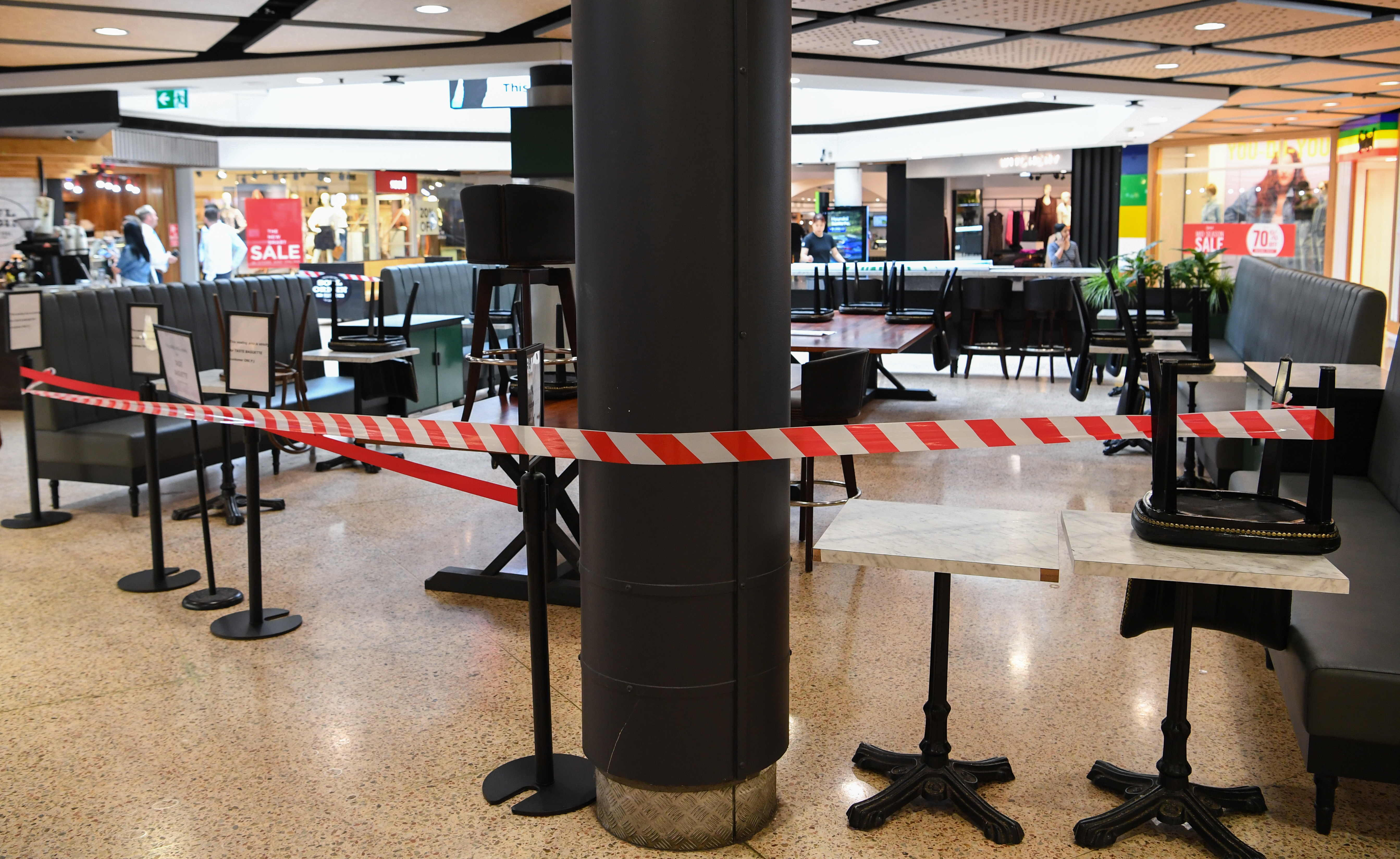
After more than two months in lockdown, NSW businesses are scraping by with many still waiting to see a single dollar from government-promised support funding.

People like Phillip Joel, who runs a Kwik Copy printing business in Sydney's CBD, say they are fed up and they feel let down by Premier Gladys Berejiklian and the Federal Government.

"I challenge every single government minister to not draw a salary until every single grant has been paid," a frustrated Mr Joel told 9News.

READ MORE: Lockdown exemptions for vaccinated 'stands to reason'

"Then we will see how serious they are about getting money out to us all."

After a month of trying to access the financial assistance promised to struggling businesses, Mr Joel says he is just one of thousands who are in the same boat.

Brighton-le-Sands restauranteur Bill Mougios says he is getting on average just three hours sleep each night, wondering how much longer he will be able to keep his multiple businesses afloat without help as the bills continue to pile up.

A 35-year veteran of Sydney's hospitality industry, Mr Mougios owns six restaurants and a reception centre in Brighton-le-Sands and Parramatta.

"If this continues for a long time, I might have to put my house up for sale to stay alive," he said.

While Ms Berejiklian has commended Service NSW for clearing a backlog of assistance applications, there are an estimated 78,000 worth a staggering $888 million still left unpaid.

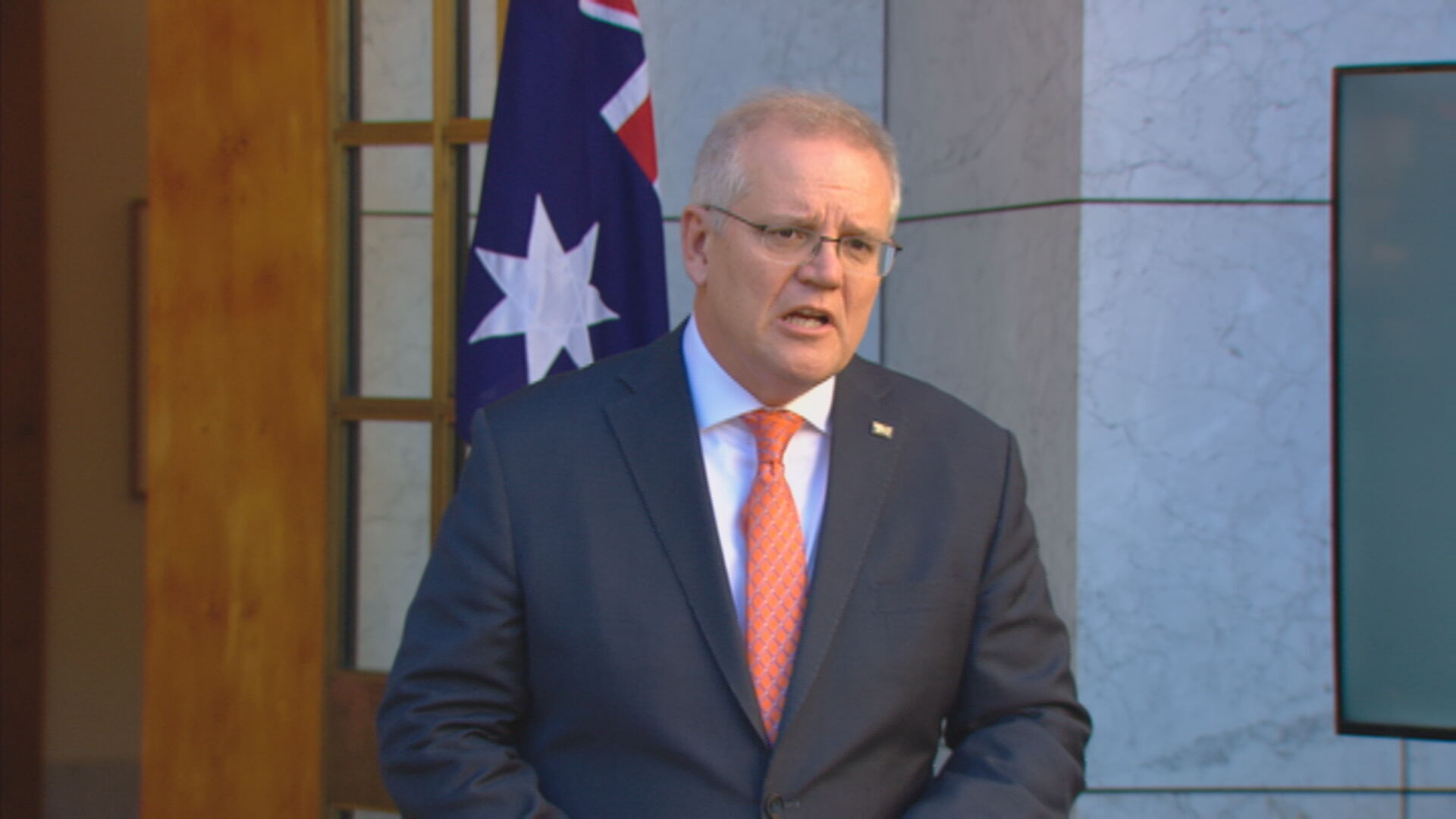
Prime Minister Scott Morrison has called on states to ensure business support payments are made "promptly" after reports some in NSW had still not received anything. 

The payments for business support, while partially funded by the Commonwealth, are distributed by states and territories under current arrangements. 

Earlier this week, Ms Berejiklian apologised for delays in payments to businesses. 

"Different states have a different success rate in making those payments, and they should be made promptly, as it was outlined to them that they would be," Mr Morrison said.

READ MORE: One in four Australian adults now fully vaccinated 

Mr Morrison also said the federal government had so far paid $2.256 billion in direct income support to individuals who had lost hours of work during the lockdowns. 

"In NSW, that figure is $1.9 billion and that has been paid to 762,000 people," he said. 

"In Victoria, some $260 million has been paid to 252,843 people. In Queensland, $98.7 million has been paid to 140,735 people and in South Australia, $45 million was paid to 80,000 people." 

The Prime Minister has called on states and territories to put in place protections for businesses that fear lawsuits from employees who contract COVID-19 in the workplace. 

Mr Morrison said some businesses were worried that not mandating vaccines for employees could leave them open to legal action should an employee contract the virus. 

"I was able to advise that the advice I have received is that workplace health and safety regulators in the states can provide a statement of regulation intent, that a business that does not mandate is not in breach of workplace health and safety rules," he said.  

"So protection can be provided to businesses through that process, that may be concerned that by not putting in a mandatory requirement, that they might otherwise be liable for any action that might be brought against them." 

Calls to release Australian journalist Cheng Le from Chinese detention

Renewed pleas have been issued to release Australian journalist Cheng Lei from detention in China.

Today marks one year since the journalist was detained and arrested by Chinese authorities on charges relating to suspicion of illegally supplying state secrets overseas.

The Australian Government today said it remained "seriously concerned" about Ms Cheng's detention and welfare.

Foreign Affairs Minister Marise Payne in a statement said the government had "regularly raised these issues at senior levels".

READ MORE: A quarter of Australians fully vaccinated against COVID-19

Cheng Lei is a high-profile Australian television anchor for the Chinese Government's English news channel, CGTN

"We are particularly concerned that one year into her detention, there remains a lack of transparency about the reasons for Ms Cheng's detention," she said.

"We expect basic standards of justice, procedural fairness and humane treatment to be met, in accordance with international norms."

Australia's media union – the Media, Entertainment & Arts Alliance (MEAA) – released an open letter today calling for the journalist's immediate release from detention.

The letter, signed by more than 50 journalists, described Ms Cheng as a "highly regarded journalist with an excellent reputation".

READ MORE: Melbourne dad who lost job during lockdown wins $80m Powerball

Cheng Lei (Getty)

"We are confident she has done nothing wrong and hold grave concerns for her health, safety and care during her ongoing detention," the letter read.

"Her arrest, her detention and the accusations against her have never been explained.

"No evidence has been presented. After 12 months, there has been nothing to suggest she has done anything wrong."

Ms Payne said the Australian Government was providing consular assistance to Ms Cheng and her family.

"Our officials have visited her regularly, most recently on 26 July," she said.

"Our thoughts remain with Ms Cheng and her family during this difficult period."

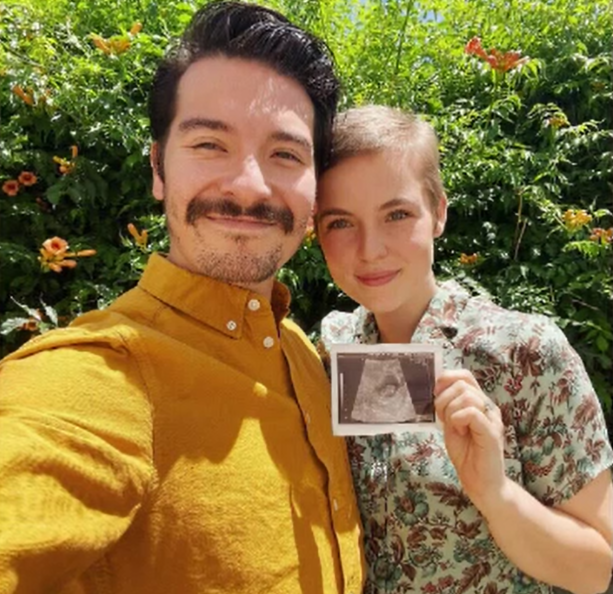
Expectant Melbourne couple plead to be able to return from US

An expectant Victorian couple stranded in the US are pleading to be able to come home before her pregnancy renders them unable to fly.

Dylan-Lee and Emilio Polanco, who are among the more than 40,000 Australians still stranded overseas, are desperate to be reunited with their families before their first child is born.

The fully vaccinated couple have been living in the US for the last seven years for work and family reasons, but are now stranded there.

LIVE UPDATES: Four mysteries among 15 new Victorian COVID-19 cases

They paid $2500 each for a United Airlines flight home yesterday, but were bumped off it.

"You just have to realise like, there's nothing we can do, like we literally, we can't control any aspect of this," Mr Polanco said.

They fear Australian travellers who pay more for their flights are being prioritised above them.

Ms Polanco is experiencing a high-risk pregnancy and can't fly once she's 28 weeks pregnant, which is just over a month away.

READ MORE: Melbourne mum in intensive care with COVID-19 while pregnant with twins

Ms Polanco said it was very important for her to be reunited with her mum before she had her first child.

"We got married in Australia knowing, you know, that Australia's our home – it's always been our home," she said.

Mr Polanco said it was "incredibly heartbreaking" to think they may not be able to enjoy the coming milestone with their families in Bachus Marsh and Ballan.

The federal government has cut the number of international arrivals by 50 per cent in the fight against the current COVID-19 outbreak, capping it at just over 3000 return travellers every week.

The Polancos said they had registered their needs with the Department of Foreign Affairs but are yet to get a response.