Resident says they complained at least four times about roaming dogs in the area.
Tag Archives: oceania
One dead, two fighting for life after ‘random’ stabbing in Sydney mini mart
A man is in custody after one person was killed and two others critically injured in what police believe was a random stabbing attack at a busy shopping strip in western Sydney.
The alleged attack began inside a Nepalese mini mart on Merrylands Road in Merrylands about 10am, where two people were attacked, then spilled out onto the footpath, where a third person was stabbed and died.
The three victims are not believed to be known to one another and police are treating the attack as "random", Superintendent Simon Glasser confirmed.
READ MORE: Restrictions on protests introduced in wake of Bondi terror attack lifted
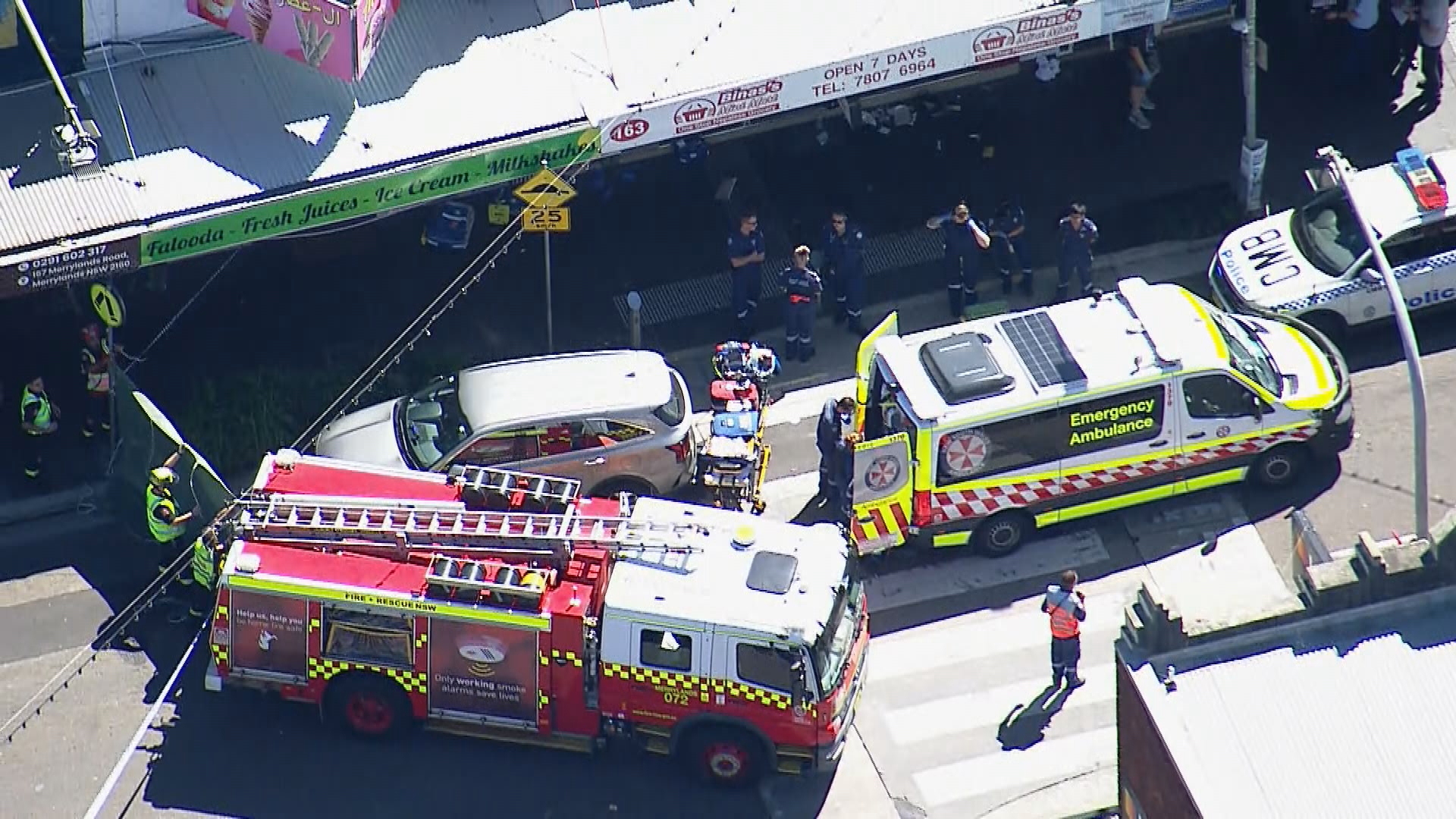
"It's a horrible offence to have taken place in Merrylands just prior to lunch time – there were lots of people around," Glasser said.
"It was obviously very confronting for anyone who was in the area."
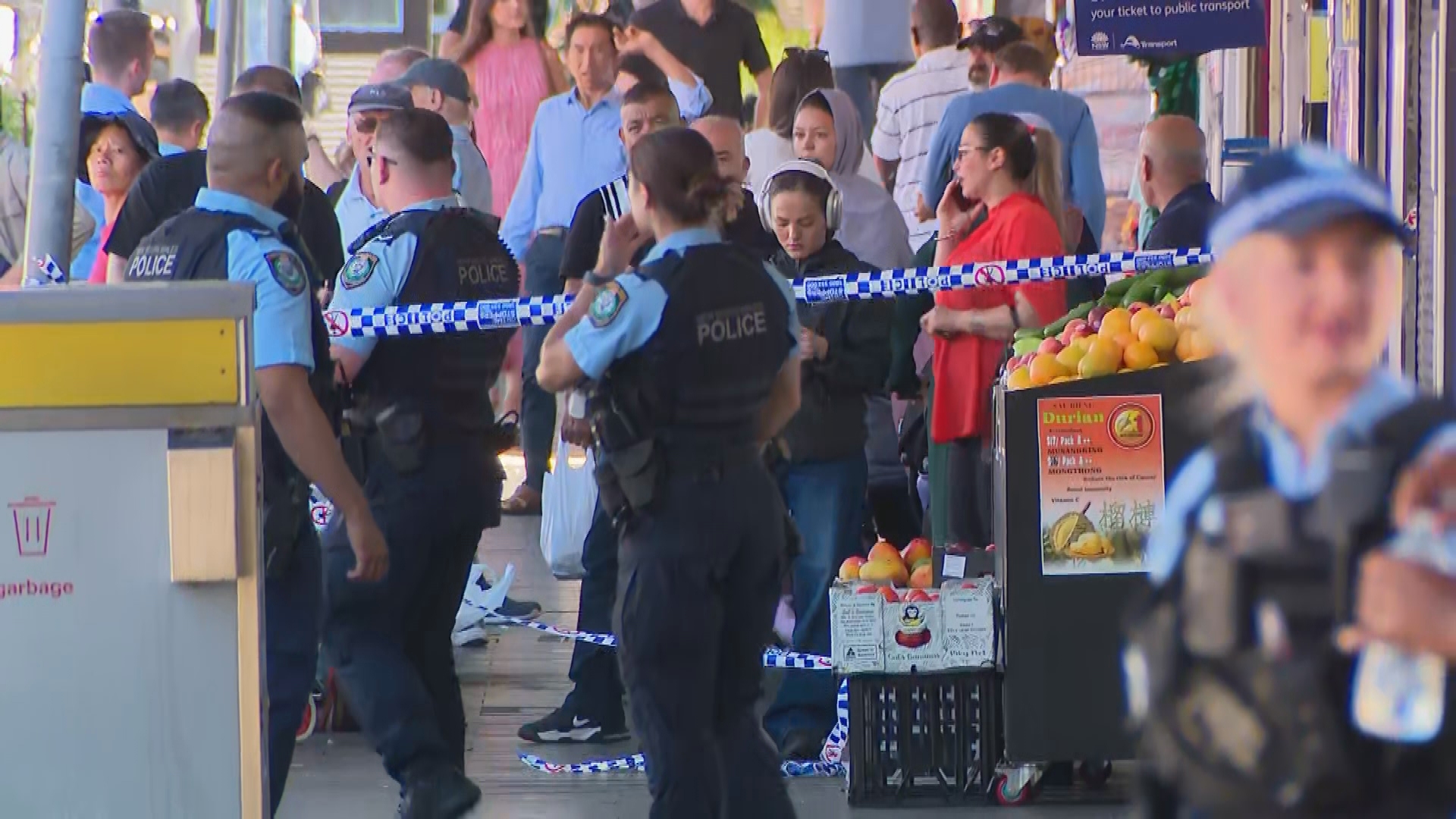
Glasser said police were at the scene "within a minute or two" of the attack and began locking down the street.
They have since established a crime scene spanning 50 metres along the street.
The alleged attacker was found in the backyard of a property on nearby Smythe Street, where he was arrested.
Police and paramedics treated three people, but one man, aged in his 30s, was pronounced dead at the scene.
READ MORE: US increases military pressure on Iran ahead of key talks
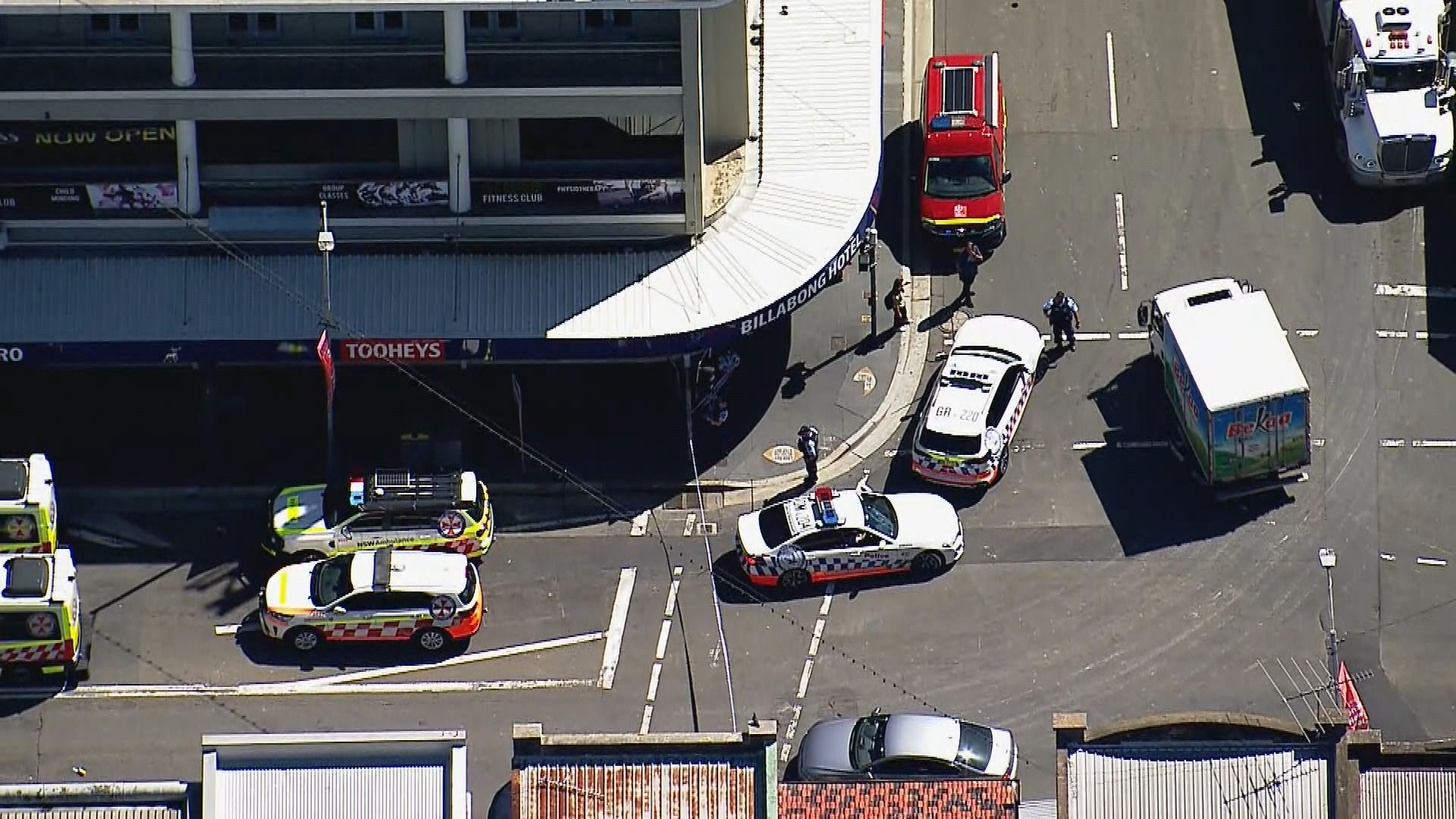
Two others – a 22-year-old man and a 47-year-old woman – were taken to Westmead Hospital in a critical condition.
9News understands the man was stabbed in the neck and is now in a serious condition, while the woman was stabbed in the chest and abdomen and is still in a critical condition.
The person who died is yet to be formally identified.
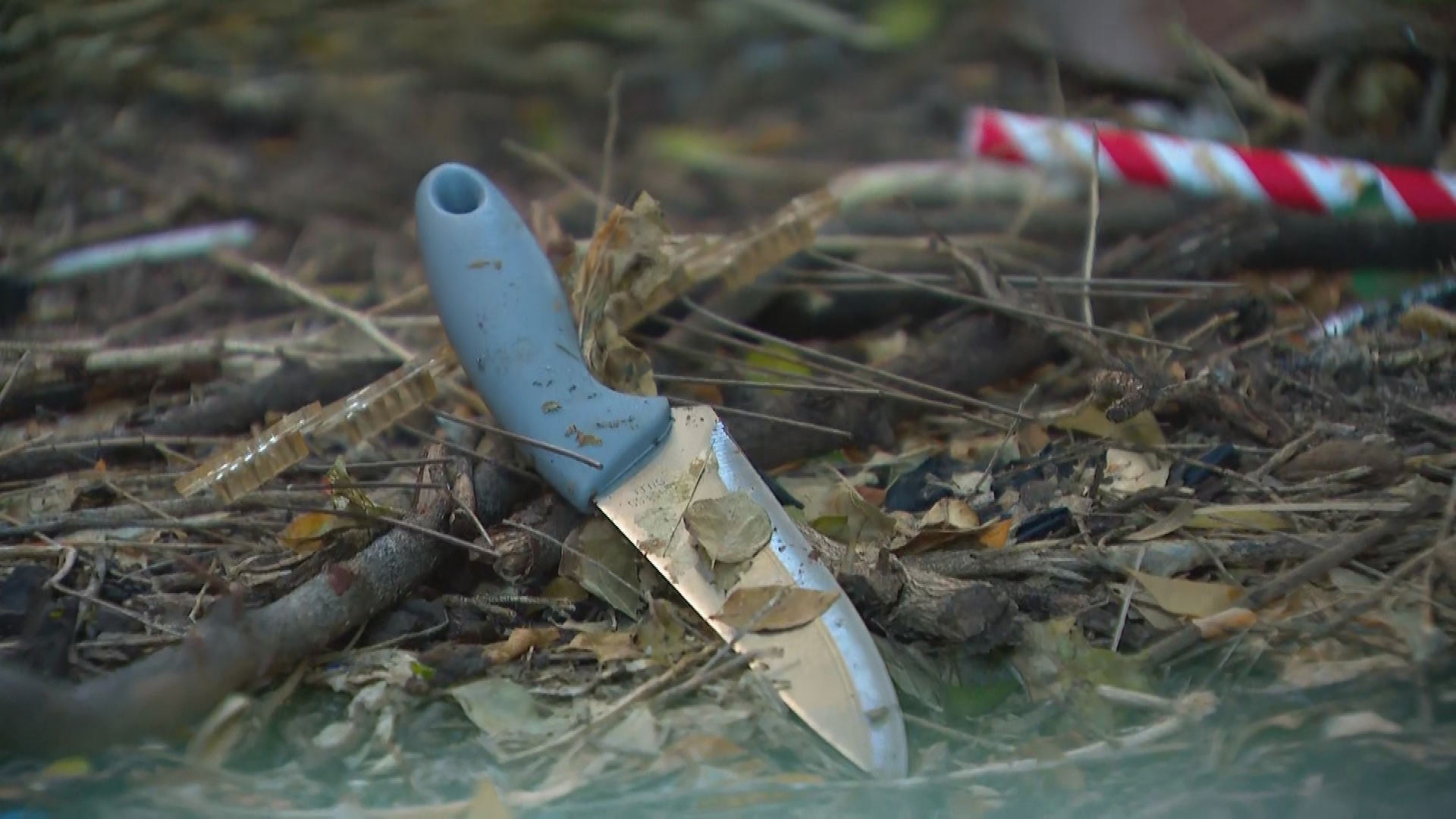
Police have been searching the front yard and driveway of a home.
Glasser said police had found a knife "similar to a kitchen knife, approximately 20 to 30cm in length" but it had not been confirmed that this was the weapon used.
The 25-year-old suspect was taken to Granville Police Station and is expected to appear in court later today.
The Merrylands local is known to police for petty crime and a number of mental health incidents.
If you or someone you know is in need of support contact Lifeline on 13 11 14 or Beyond Blue. In the event of an emergency dial Triple Zero (000).
NEVER MISS A STORY: Get your breaking news and exclusive stories first by following us across all platforms.
- Download the 9NEWS App here via Apple and Google Play
- Make 9News your preferred source on Google by ticking this box here
- Sign up to our breaking newsletter here
Auckland woman appears in court over alleged romance scam that went on for 18 years
Police allege the Dunedin victim sent over $517,000 across 18 years.
Dog walker attacked in Pakūranga, East Auckland park – police hunting for 3 people
The assault happened near Ti Rakau Park between 8.30pm and 9.15pm on Sunday.
Thomas Coughlan: Infrastructure Commission asks Labour and National to do something unpopular
OPINION: The commission has told some uncomfortable truths about funding new projects.
Coles tells court shoppers care about ‘fair dinkum’ discounts
Coles has defended its "down down" discount campaign, saying grocery shoppers understand they represent "fair dinkum" price reductions.
The retail giant today told the Federal Court the public would accept the promotions as price drops, accusing the consumer watchdog of attributing "sophisticated thought processes" to ordinary customers.
In the second day of a high-profile trial, Coles lawyers said its "down down" prices were genuine discounts offered to shoppers after an increase in wholesale costs charged by suppliers during a post-COVID inflation surge in 2022 and 2023.
READ MORE: Nancy Guthrie's family cleared as suspects amid 'cruel' speculation
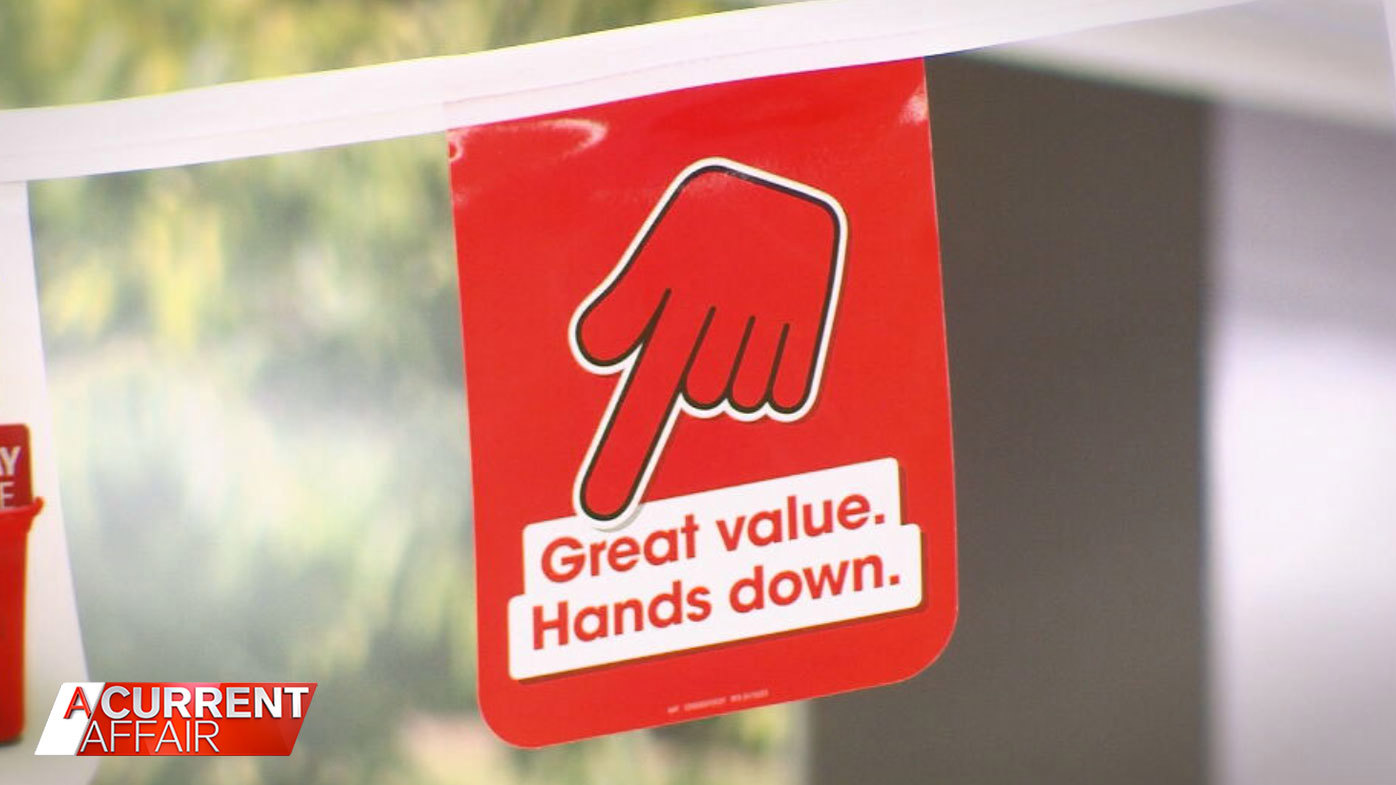
Coles is fighting claims by the Australian Competition and Consumer Commission that it misled customers by artificially increasing prices before reducing them and claiming shoppers were getting a discount.
The grocery chain's barrister, John Sheahan KC, said there were two critical questions in the case: what the price tickets conveyed to consumers and were they misleading.
"The ordinary, reasonable consumer would not be concerned with the relative duration of the 'was' price in the past," he said.
"What they would be concerned with when they're walking down the aisle trying to work out what to buy today for their shopping is whether the claimed discount was … fair dinkum.
"So long as the 'was' price is a genuine price, not contrived or ephemeral, then the consumer's interest is appropriately satisfied."
Sheahan accepted Justice Michael O'Bryan's proposition that an ordinary consumer would consider the "down down" campaign to be a promotion.
"I think I can take this as general knowledge, that as you walk down an aisle in a supermarket, and you see different coloured labels, and the fact that a label hangs out lower … it's a discount of some kind," Justice O'Bryan said.
READ MORE: 'They made a choice': Government won't help Australians with alleged IS ties
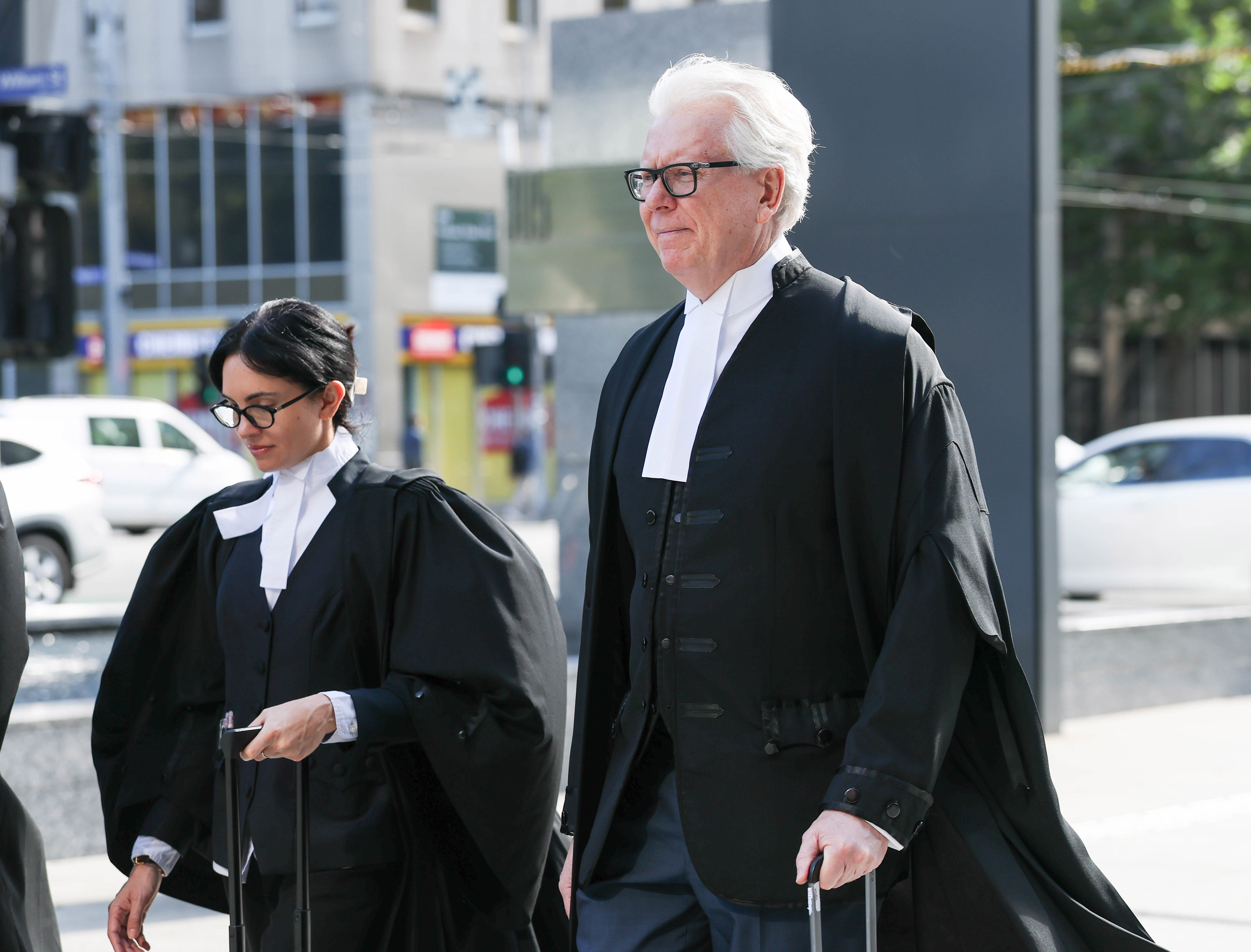
Sheahan said the ACCC's case was "too complex to credibly attribute to an ordinary, reasonable consumer walking down an aisle of Coles".
It was a genuinely unusual feature of the case that the regulator was attributing "sophisticated thought processes to the ordinary, reasonable consumer", he added.
"Normally, it's the advertiser says, 'oh, well, you know, the consumer could see through that, they take this into account, they'd understand.' But this is the other way around.
"There are layers and layers of indeterminacy in what they attribute to the ordinary, reasonable consumers' understanding of this very simple ticket."
Justice O'Bryan said it seemed the task for the court was to simply to conclude what was conveyed and if it was misleading.
Sheahan said grocery prices often fluctuated, particularly during periods of high inflation, such as 2022 and 2023.
"In the end all prices are temporary – nothing lasts forever," he said.
The case continues.
NEVER MISS A STORY: Get your breaking news and exclusive stories first by following us across all platforms.
- Download the 9NEWS App here via Apple and Google Play
- Make 9News your preferred source on Google by ticking this box here
- Sign up to our breaking newsletter here
Mother on trial in Nelson court over alleged ‘medical child abuse’
The mother has denied all charges in the ‘complex medical case’.
Man accused of Invasion Day bombing attempt identified
A magistrate has lifted a suppression order on the identity of a man accused of throwing a homemade bomb into an Invasion Day rally crowd in a terror act.
Liam Alexander Hall, 31, has been charged with engaging in a terrorist act over the incident in Perth on January 26.
Thousands of people were evacuated from Forrest Place in Perth's city centre after police found an object containing volatile chemicals, nails and metal ball bearings.
READ MORE: Oscar-winning screen legend Robert Duvall dead at 95
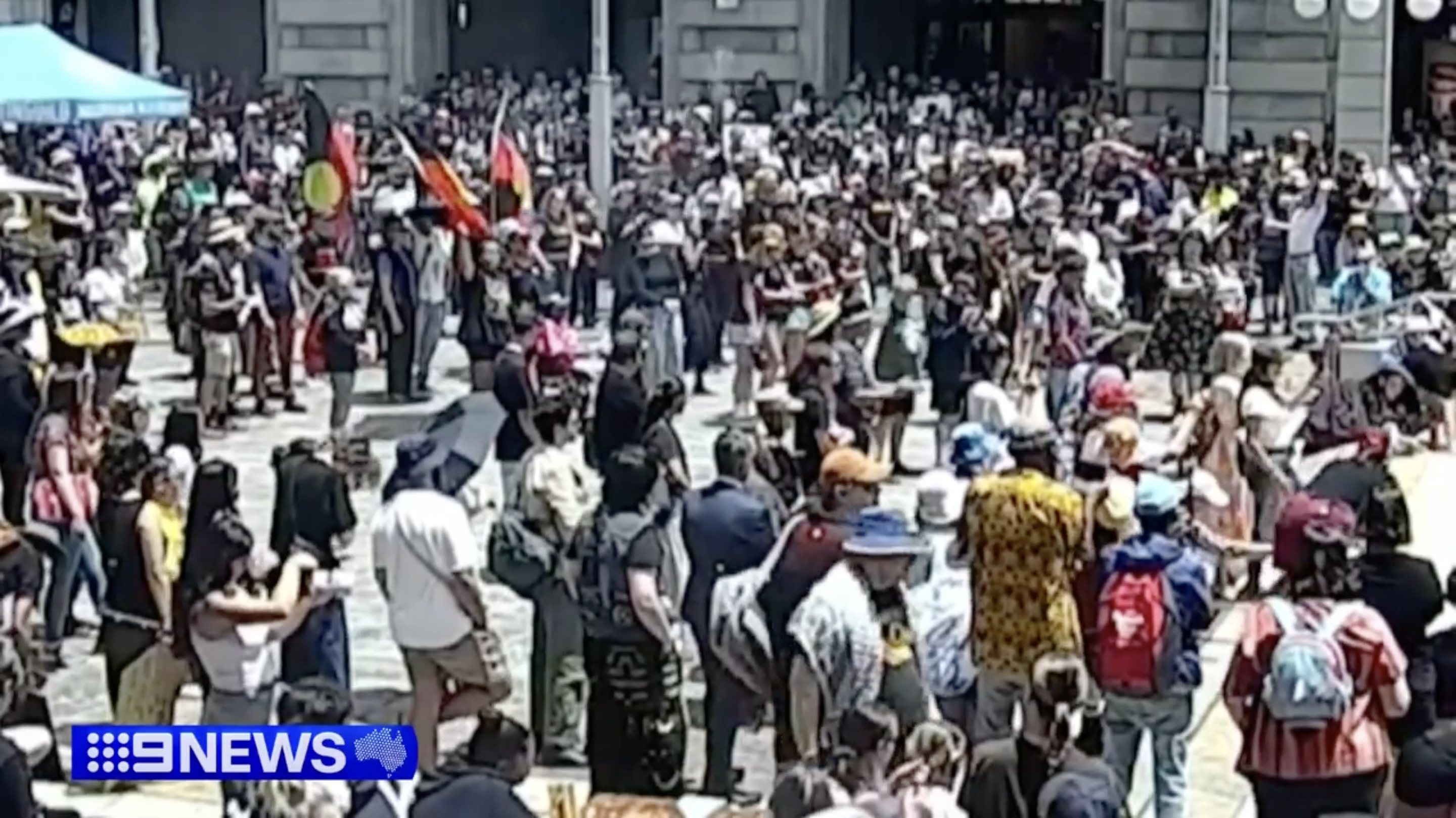
Police allege Hall threw the explosive device from a walkway above the crowd of Indigenous people, families and supporters.
The device did not detonate despite a fuse allegedly being lit.
The incident has been declared an act of terror – the first in Western Australia's history – with the case returning to court today.
Hall did not appear and the matter was adjourned to March 31 after a Commonwealth charge of engaging in a terrorist act was added to two state charges.
Magistrate Lynette Dias later lifted a suppression order on Hall's identity after hearing submissions from a commonwealth prosecutor and lawyers for various media outlets.
If Hall is found guilty of the terrorism offence, he faces life behind bars.
READ MORE: Psychedelic drug relieved severe depression for months, study finds
He is yet to enter pleas to any of the charges, which also include an unlawful act or omission with intent to harm and making or possessing explosives under suspicious circumstances.
Police will allege the incident was a nationalist and racially motivated attack targeting First Nations people at the protest.
The man was self-radicalised and acted alone, police previously said.
He had allegedly accessed "bomb making instructions" and "pro-white male" material online, and was "accessing and participating in the ideology".
The incident has left First Nations Australians fearful and angry, as they come to terms with the allegedly targeted attack.
Indigenous groups have criticised authorities for not immediately declaring it a terrorist act amid cries of double standards and racism.
Police defended the nine-day delay, saying investigators needed to gather evidence on the alleged bomber's motivation and ideology so it could be legally proved in court.
For 24/7 crisis support run by Aboriginal and Torres Strait Islander people, contact 13YARN (13 92 76).
NEVER MISS A STORY: Get your breaking news and exclusive stories first by following us across all platforms.
- Download the 9NEWS App here via Apple and Google Play
- Make 9News your preferred source on Google by ticking this box here
- Sign up to our breaking newsletter here
Police inspect outhouse, tank at nearby sheep station in search for Gus
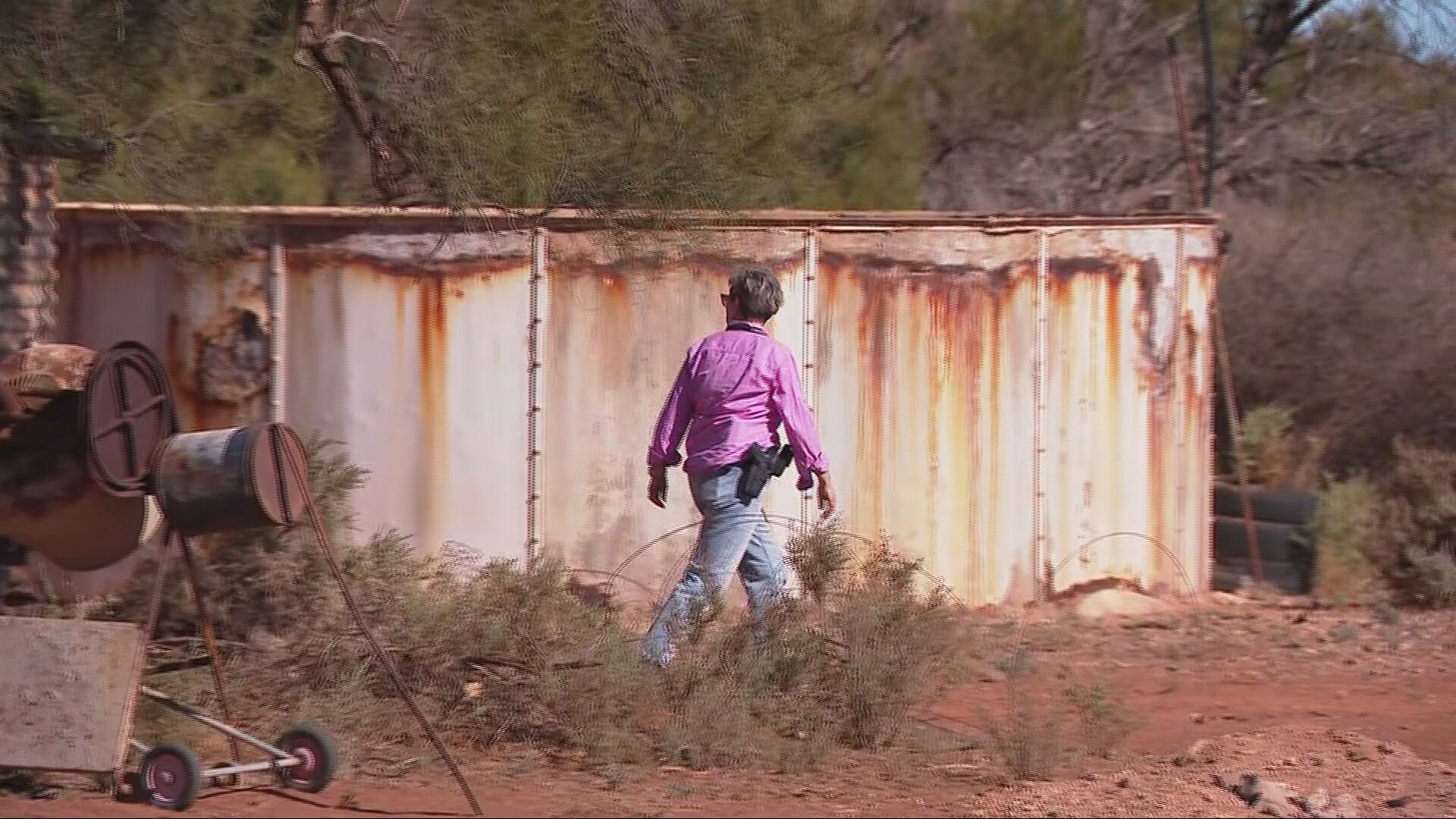
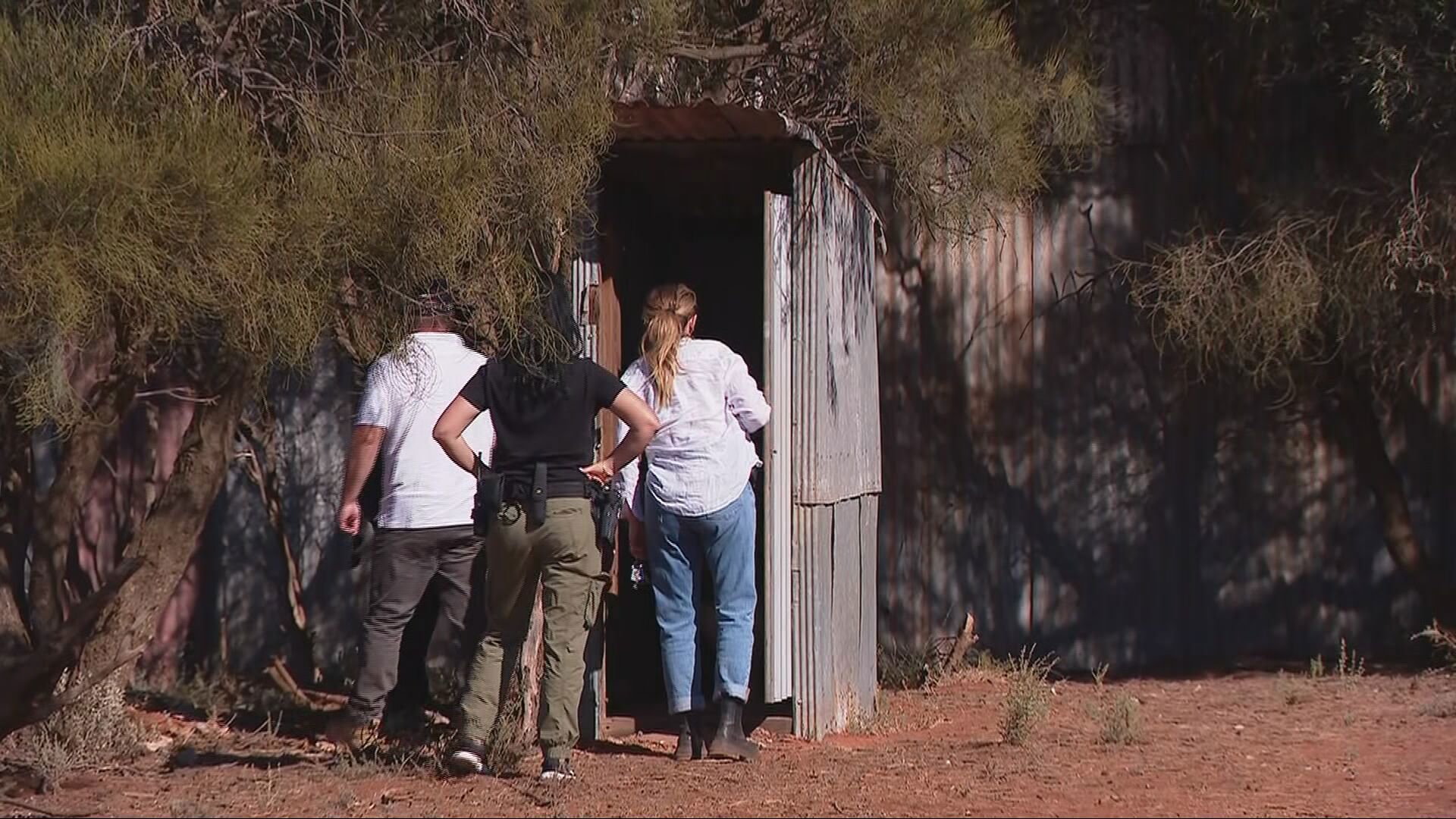
Police have inspected a tank and an outhouse at a property in rural South Australia in a renewed search for missing four-year-old Gus Lamont.
Major crime detectives were today seen looking at a water tank and an outdoor shed at a sheep station also owned by Gus' family located about 30 kilometres west of Oak Park Station.
Gus was last seen playing on a mound of dirt at the family home, located about 43 kilometres south of Yunta, at 5pm on September 27.
READ MORE: David sold his home for $2 after 'traumatic' new rule forced him out

CLIMATE: Signs Australia could be facing hot, dry El Nino in 2026
A cadaver dog was brought in from NSW to assist search efforts.
The dog was taken into a shearing shed and to an area that police said had been laid with freshly-poured concrete in the months following Gus' disappearance.
Helicopters were also used to drop officers at specific locations, including mine shafts which had been identified using artificial intelligence (AI) mapping.
Task Force Horizon detectives returned to the home yesterday as part of a fresh two-day search for evidence.
The search is expected to end today.
No evidence of Gus has been uncovered at any of the search sites.
There is no suggestion the sheep station is linked to Gus' disappearance.
A full-scale ground and air search of the property and the surrounding area was launched after Gus went missing.
Police have returned to the area multiple times.
Today's search comes after police yesterday charged Gus' 75-year-old grandparent Josie Murray with firearms offences but have maintained the charges are not linked to the toddler's disappearance.
Murray was bailed to appear in the Peterborough Magistrates Court on May 6.
LATEST: NRL premiership winner identified as victim in Sydney drive-by shooting
Detective Inspector Andrew Macrae said the firearms charges were not related to the disappearance of Gus or a previous incident at Oak Park Station in October involving media attending the property.
Police earlier this month confirmed a person with close ties to the household, who is not one of Gus' parents, had been speaking with detectives but then allegedly "withdrew cooperation" and has since been identified as a suspect.
Gus' disappearance is now being considered a major crime.
Josie Murray and Gus' other grandparent Shannon Murray released a statement through their lawyers, saying they were "absolutely devastated" by SA Police's statement on February 6.
"We are absolutely devastated by the media release of SAPOL Major Crime," the statement read.
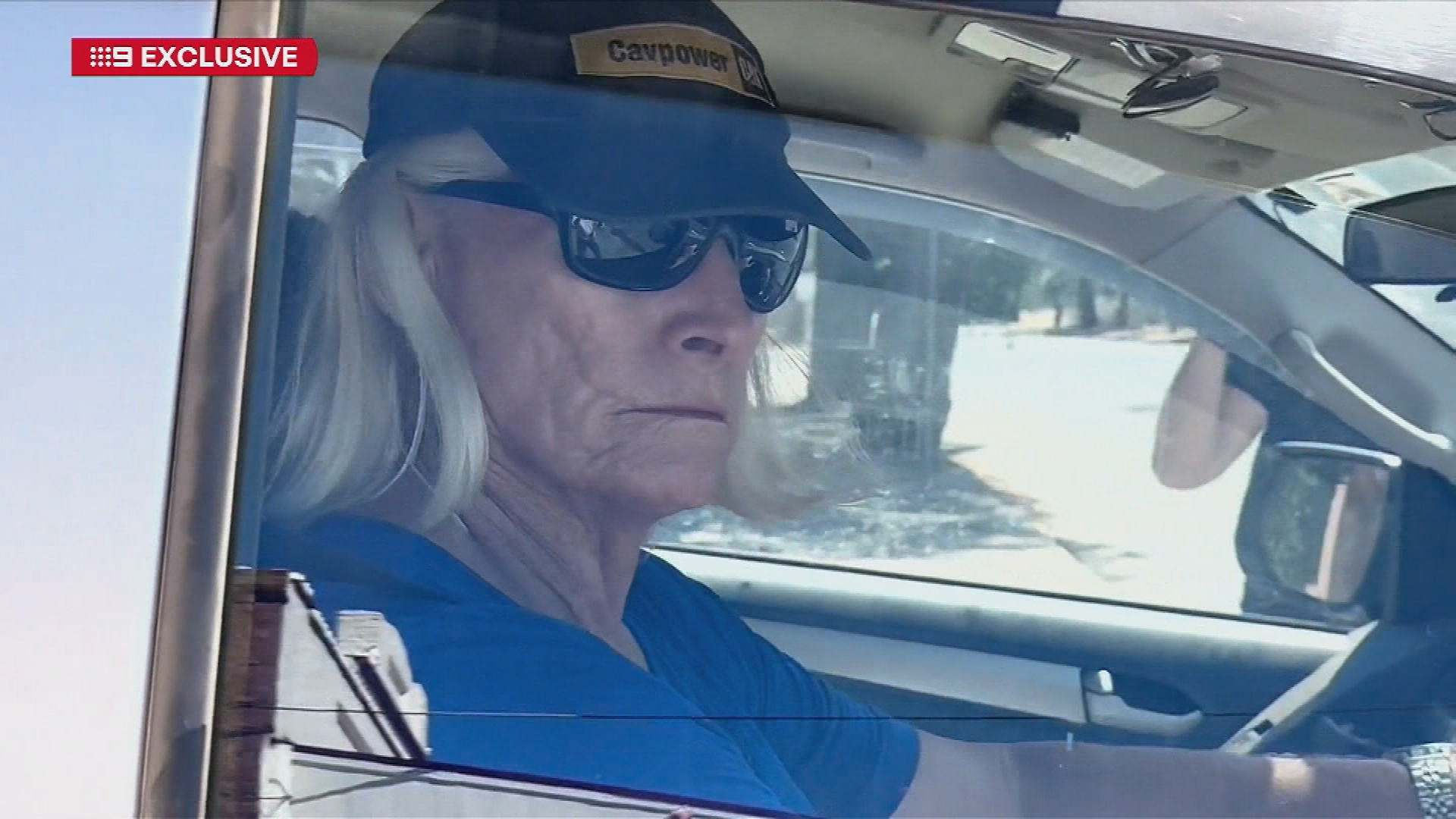
WORLD: Australians with alleged IS ties turned back after leaving Syrian camp
"The family has cooperated fully with the investigation and want nothing more than to find Gus and reunite him with his mum and dad."
The lawyers also indicated they will not be making any further comments.
There is no suggestion Josie or Shannon Murray are involved in the disappearance of Gus and it is not unusual for anyone linked to an investigation to seek out legal advice.
NEVER MISS A STORY: Get your breaking news and exclusive stories first by following us across all platforms.
- Download the 9NEWS App here via Apple and Google Play
- Make 9News your preferred source on Google by ticking this box here
- Sign up to our breaking newsletter here
Is Australia finally about to get a high-speed rail announcement?
Prime Minister Anthony Albanese has teased an announcement on the nation's first high-speed rail line within weeks, saying the move "absolutely makes sense".
Governments have been floating the idea of a high-speed rail network for decades, but Albanese today signalled he is ready to invest in better connecting some of the major cities.
"It won't be open while I'm prime minister. But we'll have an announcement in a couple of weeks' time," he told ABC radio this morning.
READ MORE: Barnaby Joyce opens the door to a massive U-turn

Albanese told the broadcaster he supported high-speed rail lines across the east coast.
"I think that it absolutely makes sense. We have a small population for a relatively big nation, an island continent," he said.
"We are the only inhabited continent on Earth that doesn't have high-speed rail.
"And certainly Newcastle to Sydney to Canberra to Melbourne makes absolute sense. It's where most of our population is, along that corridor. What makes it financially viable is the economic development along the route as well."
READ MORE: TGA issues warning after undeclared drug found in collagen tablets
While there has been some support for a high-speed rail network, some think tanks and experts, including the Grattan Institute, believe such a project is not suitable for Australia.
Albanese used his first term as prime minister to establish the High Speed Rail Authority to plan to build a network connecting Brisbane, Sydney, Canberra and Melbourne, as well as Newcastle and Central Coast regional lines.
An evaluated business case has proposed construction start by 2027 and completion by 2042.
READ MORE: Government won't help Australians with alleged IS ties
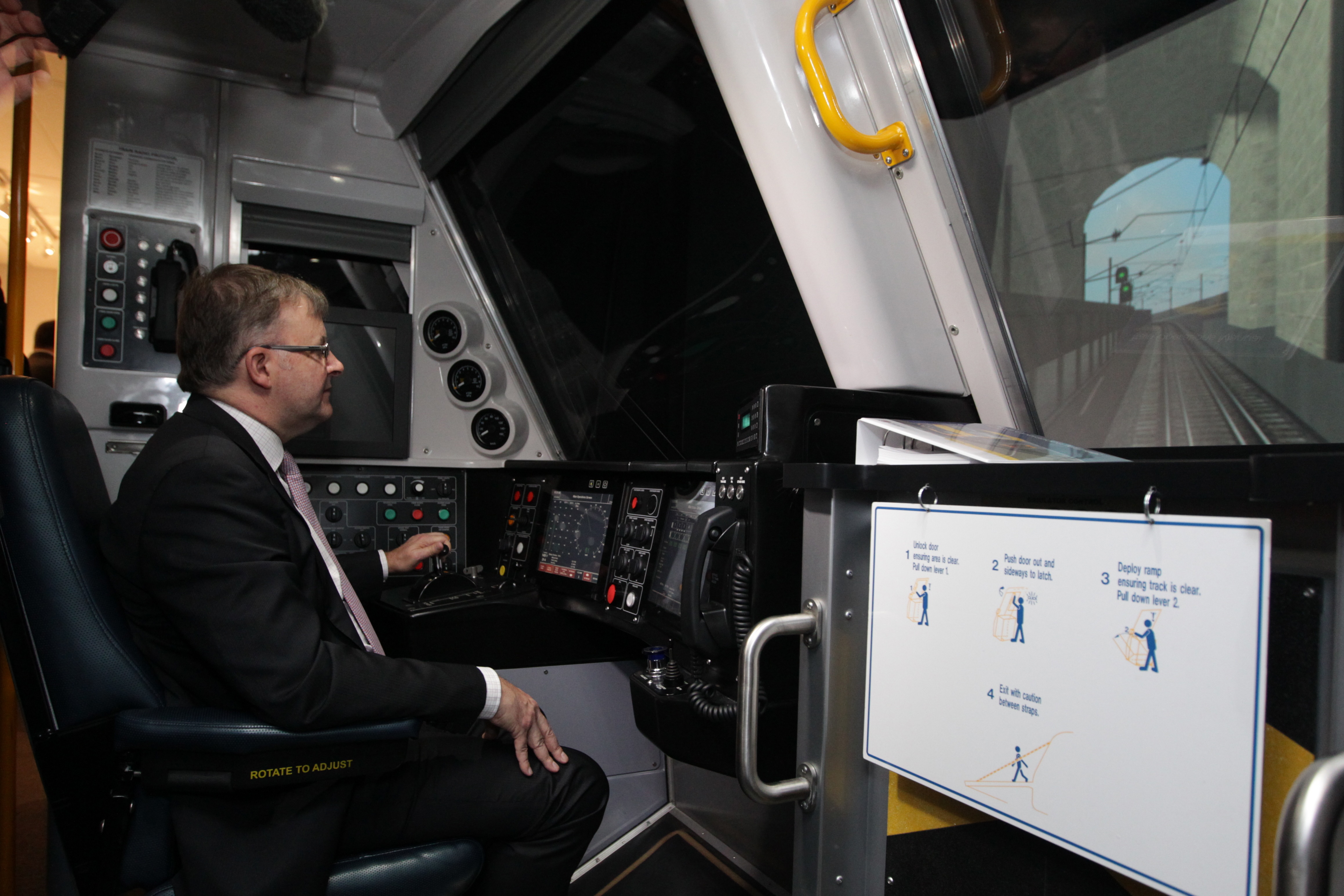
It has proposed the first stage of the project should be the 194km Newcastle to Sydney line, which includes six stations at Newcastle, Lake Macquarie, Central Coast, Sydney Central, Parramatta and Western Sydney International Airport.
According to the business case, the train would reach maximum speeds of up to 320km/h outside tunnelled sections and 200km/h inside the tunnelled sections.
Stages two and three would connect the network with the remaining east coast capital cities and regions.
Now that the business case has been evaluated, the next stage is the actual project delivery.
NEVER MISS A STORY: Get your breaking news and exclusive stories first by following us across all platforms.
- Download the 9NEWS App here via Apple and Google Play
- Make 9News your preferred source on Google by ticking this box here
- Sign up to our breaking newsletter here