A contractor has been seriously injured after suffering an electric shock while doing maintenance at Devonport Naval Base this afternoon.Emergency services were alerted at 2.49pm and an ambulance and a rapid response unit were sent…
Tag Archives: oceania
Sex-charge athlete's bid for judge to step aside after TV comments is thrown out
An athlete’s bid to have his sex charge trial judge step aside over a TV interview and her links to prosecutors has been rejected.The sportsman wanted Judge Kirsten Lummis to recuse herself from the trial, for reasons including…
Aussie wine producers still feeling China tariff hit
Australian winemakers have increased exports to new and current markets but have been unable to offset a major decline in sales to mainland China, a report says.
The trade dispute between Canberra and Beijing was the main driver behind a 10 per cent drop in Australia's total wine exports to $2.56 billion during the 2020 to 2021 financial year, data by industry body Wine Australia shows.
The total value of exports to mainland China fell by 33 per cent over the past 12 months.
READ MORE: Australia taking China to trade watchdog over wine tariffs
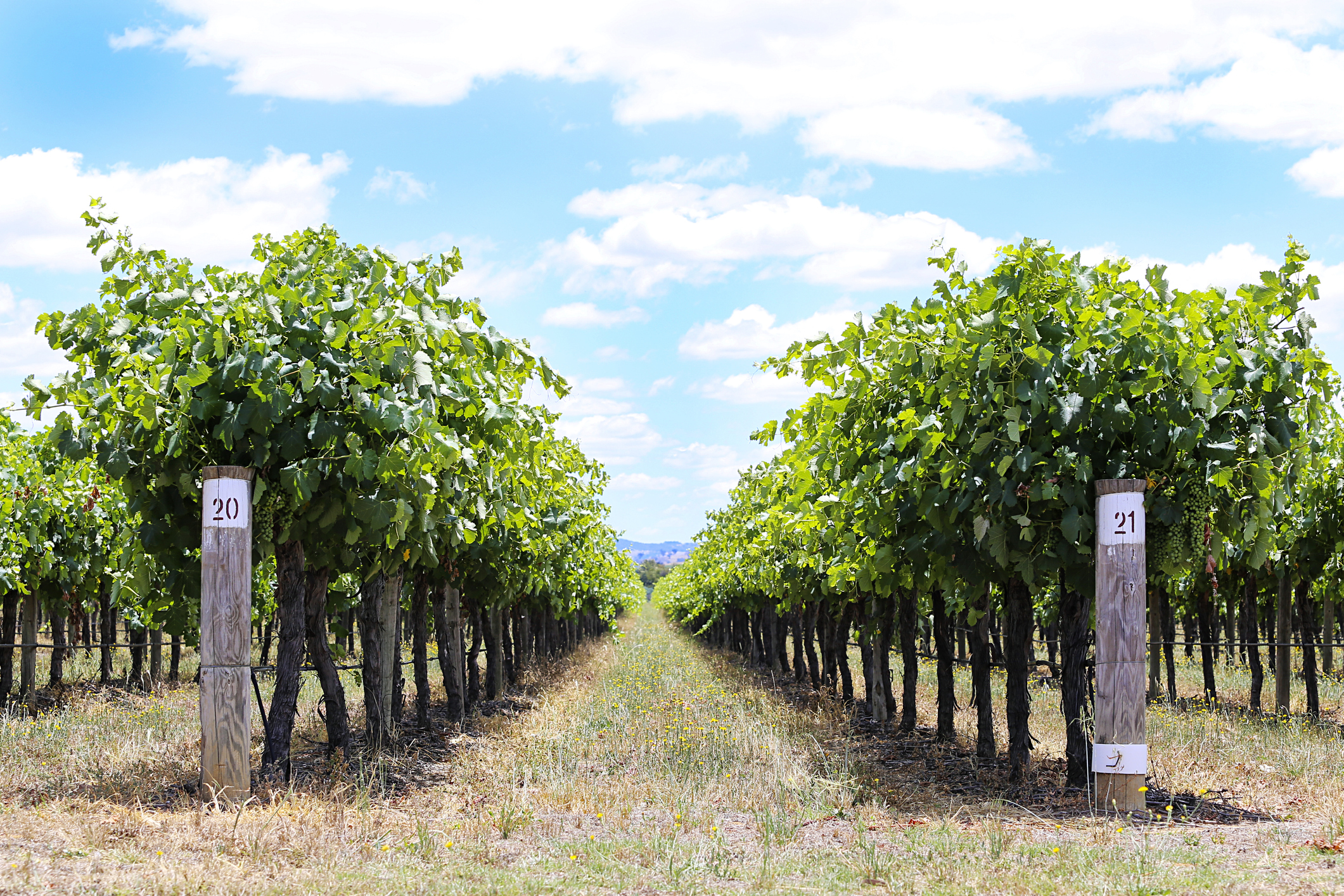
Australian wine exports to China were hit with tariffs of more than 200 per cent earlier this year.
While Chinese trade sanctions hit Australian wine exporters hard, a shortage in wine available for export also accounted for the declining trade.
But exports to other nations rose dramatically. Excluding mainland China, they increased by 12 per cent in value to $1.96 billion.
Australian wine exports to the UK reached their highest level in a decade in 2021, climbing by 21 per cent over the past 12 months.
"There was a surge in wine sales in the off-premises because of the COVID-19-related shutdowns of restaurants and bars as well as some exporters sending wine to market ahead of Brexit because they were concerned about the red tape they might endure after Brexit," Rachel Triggs, Wine Australia's general manager for corporate affairs and regulation, said.
Ms Triggs said that several markets in Southeast Asia were performing above expectations and showing double-digit growth, including Hong Kong, Singapore, Malaysia and Thailand.
READ MORE: Why China's infamous '14 grievances' list was a 'massive own goal'

Australian wine exports to the US fell during the past financial year. They declined by 7 per cent in value, to $400 million.
Last month the Federal Government confirmed it is taking China to the World Trade Organisation over the anti-dumping duties it has imposed on Australian wine.
Relations between Beijing and Canberra plummeted last year after Australia called for an international inquiry into the origins of the COVID-19 pandemic and introduced foreign interference legislation.
It triggered trade reprisals from China targeting Australian exports such as wine, coal, barley, timber and seafood.
Increased wine shipments to new and existing markets were not able to offset the 45 per cent decline in sales to mainland China in the financial year that ended in June, industry group Wine Australia's latest export report shows.
Fake collar bomber apologises to Sydney school girl he terrorised
Fake collar bomber Paul Douglas Peters has delivered a "deep founded apology" to the schoolgirl he terrorised as he fights for parole.
The 60-year-old appeared via video link from Cooma Correctional Centre for his public hearing today.
The appearance came ten years after he broke into the Mosman home of Madeleine Pulver and placed a device around her neck.
READ MORE: Fake collar bomber could soon be released on parole

LIVE UPDATES: Sydney's Delta outbreak spiralling out of control
He also put a lanyard around her neck which held an extortion note, asked her to count to 200 and left.
The year 12 student contacted her parents who alerted police and after 10 hours they worked out it was an elaborate hoax.
The Serious Offenders Review Council found parole was appropriate because Peters had been assessed as a low risk of re-offending and had suitable post-release plans.
Today a lawyer acting for the State argued the case should be adjourned to obtain a further psychiatric report.
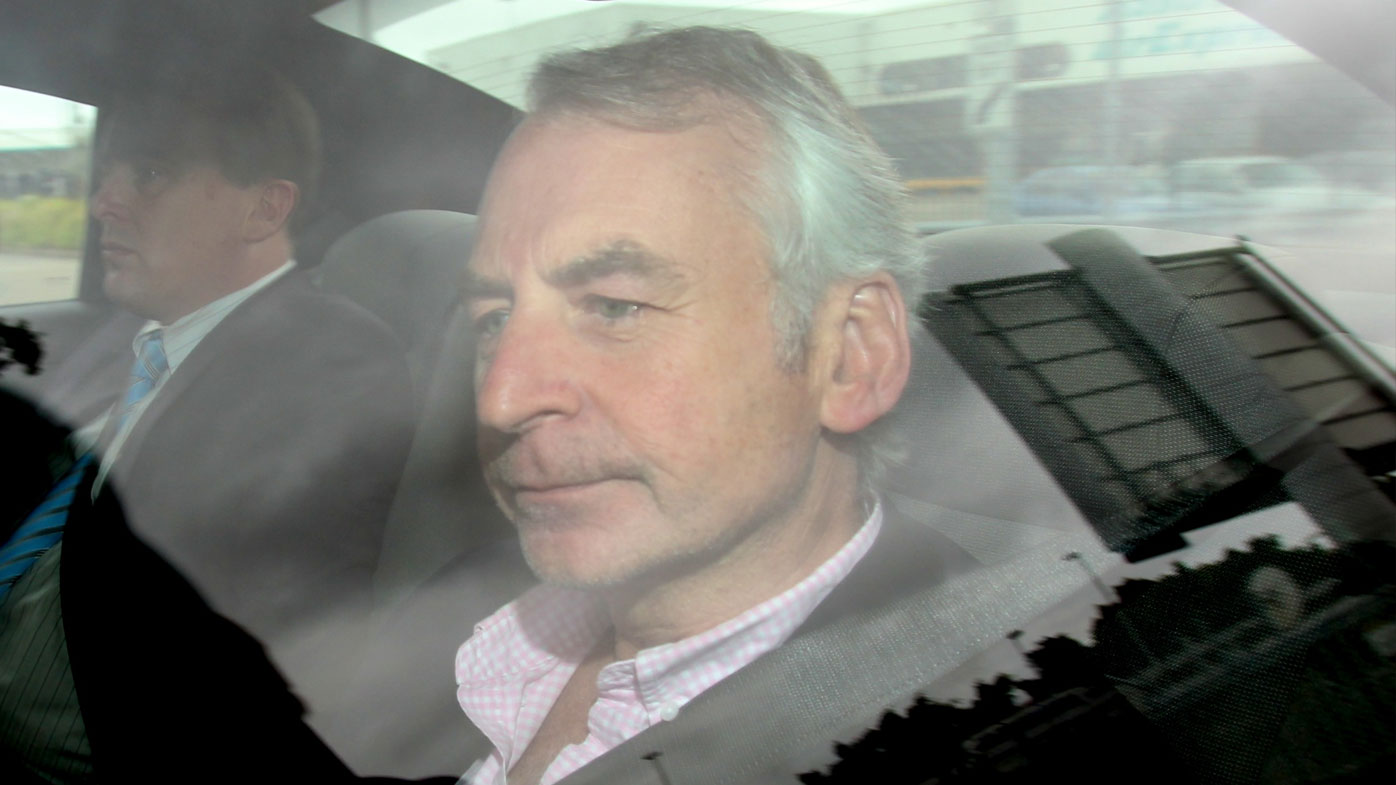
But the chair of the State Parole Authority repeatedly asked why that was necessary given the sentencing Judge did not believe his mental health condition caused him to offend.
"It was to make money, that's what His Honour found" Judge Mark Marien said today.
He said a decision would be made before August 14 at which point Peters interrupted proceedings.
"If there's one thing I may say, if you don't mind, I've never had an opportunity to say in public," Peters said.
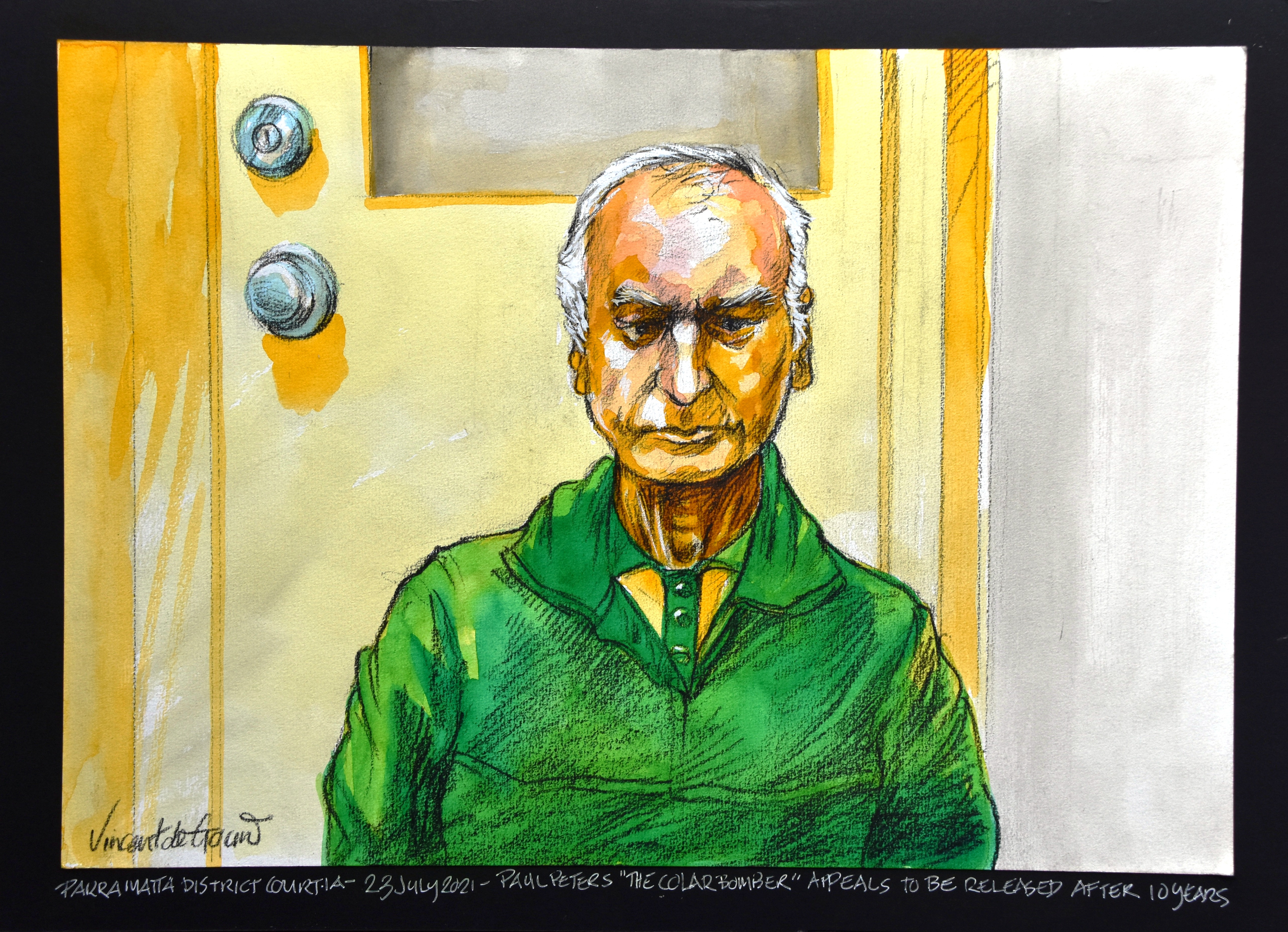
The Judge interjected but allowed him a brief response.
"It was merely a deep founded apology to Madeleine Pulver, that's all."
It's the first time Peters has been considered for parole, with his maximum 13 and a half year sentence not due to expire until 2025.
Families demand CTP overhaul after being forced to 'prove their grief'
Leanne Shanahan didn't know what to expect when she sat down with NRMA on the day her daughter's CTP green slip insurance claim was to be settled.
It wasn't the 200-page dossier presented to her, which documented her daughter's every move on social media.
The hefty file took in Mikayla's Facebook, Tik Tok, Trip Advisor and YouTube use. It analysed her posts, her hairstyles, weight, an overseas holiday and the addition of a tattoo.
It concluded Mikayla should be denied her damages claim for pain and suffering, otherwise known as whole person impairment, over her brother's fatal car accident.
In its final assessment, NRMA found that her brother's untimely death, when Mikayla was 16 years old – and the mental health issues that she suffered because of it – only amounted to her being impaired by 6 per cent.
For a CTP damages claim to be accepted by insurers, a person must be judged to have an impairment of more than 10 per cent.
READ MORE: Good Samaritan truck driver says CTP system is broken
That meeting was in December last year.
It had been five years since Ms Shanahan lost Luke, 21, and Mikayla lost her brother, in the most tragic of circumstances.
Luke was killed in August 2015 when an 18-year-old P-plate driver of the car he was a passenger in fell asleep at the wheel.
The group had been coming back to Freshwater in Sydney's north east from a Lithgow music festival. The Mitsubishi Outlander the P-plater was driving ploughed into an oncoming Subaru.
Luke and two other young men in the backseat died on impact.
The day and months after the crash passed by in a haze of shattered grief for Ms Shanahan, but she says she managed to take the advice given to her by another victim's family and lodge a CTP claim for both her and her daughter within three months of the accident.
NSW drivers pay hundreds of dollars a year into CTP to ensure victims of accidents are compensated for injuries, treatment, and time off work.
This includes the family members of accident victims who often need extensive time off work, or are in some cases unable to return to their jobs, due to the psychological impact of their grief.
An overhaul of the Motor Accident Injuries Act by the state government in 2017 made it easier for victims to claim immediate costs for medical appointments and temporary benefits for time off work under the CTP scheme.
However, families say claims for lump sum damages can, and usually do, drag out for years under the current system.
Relatives of victims have recently started to speak out about the trauma involved in having to prove the mental health damage caused by their grief to insurance companies, often through multiple assessments with psychologists.

An online petition started by Sydney mother Kay Dagli, who lost her daughter in a car accident in 2019, calling for the 10 percent impairment rule to be changed, has so far attracted more than 7000 signatures.
For Ms Shanahan, who is a single mother, her claim took three years to complete; her daughter's stretched on for more than five years.
"The process is horrific," Ms Shanahan said.
"It forces you to prove that you are impaired at 11 percent, which makes no sense, because everyone knows that when you lose a child or a loved one in a horrific car accident you are impaired by 99.9 percent."
"You walk into all these appointments with psychologists, and they judge you by how you look, whether your nails have been done or your hair has been washed.
"For anyone who has been in this situation, we just want to be in a foetal position in bed."
A few months after the crash, Ms Shanahan tried to go back to her job as a business manager.
"I just couldn't do it, I just started to get the shakes. My head was not in the space for multitasking
"I just kept on going to the doctors and breaking down. I couldn't stop crying and they put me on antidepressants."
Her position was made redundant and Ms Shanahan now works part-time in a child-care centre.
Ms Shanahan said when her claim for damages was originally assessed by NRMA, she was deemed to be impaired by less than 10 percent.
After her lawyer appealed the decision, she was required to sit before a panel of psychologists for another assessment.
"I had to sit in a board room with three psychologists and they are the ones that said I was 18 percent impaired. That's why my claim was finally approved," she said.
Ms Shanahan said her daughter was also struggling to cope with her brother's death and had to drop out of her university course.
Nobody, whether they were teens or adults, presented the true picture of their lives on social media and Mikayla was no exception, her mother said.
"My daughter was diagnosed with persistent depressive disorder with anxious distress and they assessed her with an impairment of six percent with that, it is just ridiculous," she said.
'I don't want other families to endure this'
Ms Dagli, who started the Change.org petition, says she had also been left traumatised by her CTP claim with NRMA, which is still ongoing.
She has been diagnosed with PTSD and spent three months in a mental health clinic after her 19-year-old daughter Shalaney was killed while travelling in the backseat of a car with her friend in April 2019.
"I miss her every minute of every day. We were very close, she always used to say she was my best friend. Not having her here is killing me," she said.

Ms Dagli, who worked full time to help children with disabilities before her daughter's death, said she had so far been to five assessments with psychologists as part of her insurance claim.
At one she fainted and in the others she broke down and was inconsolable.
"It is just ridiculous that I have to keep on explaining my grief," she said.
"I can't do it anymore. Why do I have to keep proving that we have all died inside?
"This has been going on and on because they want me to stop, to leave them alone and walk away like nothing happened."
This year, a Road Trauma Support Group NSW was set up by NSW Police for the families of car crash victims.
Group member Duncan Wakes-Millar said one of the issues high on the agenda for the group was to advocate for reforms to the CTP insurance scheme.
Many grieving family members in the group had shared their traumatic experiences of dealing with insurance companies, he said.
"Road trauma is a significant mental health issue for families and friends of loved ones killed by a criminal act of another, the CTP system in its current form falls woefully short of providing an adequate provision for victims of road trauma," Mr Wakes-Millar said.
"If scrutinised it would be an embarrassment to the integrity of the insurance industry in Australia."
Ms Dagli said it was obvious the system needed to change.
"It has completely ruined me emotionally and mentally to have to keep proving how my daughter's death has affected me," she said.
"It's torture. I don't want other families to endure this."
A spokesperson for The State Insurance Regulatory Agency (SIRA) said a review of the Motor Accident Injuries Act, which provides guidelines for expectations and rules for insurers is currently underway.
The review will consider all aspects of the 2017 CTP scheme, the spokesperson said.
"The review will assess whether the policy objectives of the Act remain valid, and whether the terms remain appropriate for securing those objectives.
The public consultation stage of the review will run until August 2.
An NRMA insurance spokesperson said: "Losing a loved one in a motor vehicle accident is a tragedy, and we aim to provide as much compassion and support as possible for everyone during the management of their claim.
"We also continue to review any new information we're provided to ensure people receive the benefits they are entitled to under the legislation."
Contact reporter Emily McPherson at em********@******om.au.
Aussie TV and film icon John 'Strop' Cornell dies aged 80
John Cornell, the Australian TV and film legend behind the Paul Hogan show, Crocodile Dundee films and a driving force for World Series Cricket, has died at the age of 80.
Cornell passed away peacefully this morning in Byron Bay after a 20-year battle with Parkinson's disease, with his wife and eldest daughter by his side, and his youngest daughter on the phone from the UK.
"A classic Australian character, John Cornell made the lives he touched much richer, not only through donations, but also through his generosity of spirit, humour, humility and honour. A true egalitarian, John sought equity and equality, and fought for a fair go," his family said in a statement.
He is survived by Delvene Delaney, his wife of 46-years, and his daughters, Melissa, Allira and Liana Cornell.

Cornell, affectionately known as 'Strop', was born March 2, 1941, and quickly rose through the ranks of journalism at the Daily News in Perth
He then turned his talents to television and was the original producer of A Current Affair, before teaming up with Paul Hogan, creating a 16 year run of the hugely-successful The Paul Hogan Shows, which Cornell co-wrote, produced and performed in.
![A first press conference for World Series Cricket with Ian Chappell [far right], John Cornell, Sir Garfield Sobers and Kerry Packer.](https://prod.static9.net.au/fs/67a64872-a41f-4bc5-b0ca-0f63de5a5e3b)
The duo also produced Crocodile Dundee in 1986 – and it remains the most profitable Australian movie of all time.
Ten years earlier he took the concept of World Series Cricket to Kerry Packer, setting the wheels in motion for a sporting revolution.
Michael Healy, Nine's Director of Television, paid tribute to the 'man who made magic'.
"John Cornell was a man of enormous intellect and a creative genius who managed to touch so many, but as importantly he was a man with a big heart that filled a room," said Mr Healy.
"From journalism with the creation of A Current Affair, through sport with World Series Cricket and entertainment with his mate Hoges they made magic on television for decades here at Nine.
"Our sincere condolences go to his beloved wife Delvene and daughters, Melissa, Allira and Liana Cornell as well as all those who he loved and shared his life with. Our love and thoughts are also with David Gyngell and Leila McKinnon who were like family with Corney and Delvene."
Covid 19 coronavirus: 'Appalling' Bay of Plenty DHB vaccine booklet withdrawn, chair apologises
A Covid-19 vaccine information booklet using Māori faces on cartoon virus figures has been immediately withdrawn from circulation after it was deemed racist.An investigation has been launched after the publicity material, “Let’s…
'Wanted her to die': Otago man jailed over biting, molesting woman
WARNING – CONFRONTING CONTENT A Dunedin man who repeatedly bit a woman on the face then molested her has been jailed for more than two years.In the attack’s aftermath, Christopher Mark Boulter’s victim was left with bruises and…
Norway marks 10th anniversary of mass killing in Oslo and Utoya island
Church bells have rung out across Norway to mark the 10th anniversary of the country’s worst peacetime slaughter as leaders urged renewed efforts to fight the extremism behind the attack that left 77 people dead.On July 22, 2011,…
Sky-high house prices haven't put first home buyers off – but could rising interest rates?
First home buyers are buying more houses but are also at greatest risk should interest rates rise and add thousands of dollars to their mortgage repayments.That’s according to analysts CoreLogic, who said investors had been buying…