Tag Archives: oceania

Copycat posters of rapist, accused baby attacker seen on city street

More copycat posters in the style of artist Peter Drew have been plastered across Melbourne after similar images of alleged Bondi gunman Naveed Akram were seen in the CBD.

Pictures of accused shooter Akram with the caption "Aussie" – imitating famous street artist Drew's "Aussie" series – were spotted in the Victorian capital yesterday, sparking a furious response from Melbourne's mayor.

Now, images of the man accused of throwing hot coffee on a baby in Brisbane and jailed serial rapist Bilal Skaf with the same caption have appeared in Melbourne's inner south-east.

EXCLUSIVE: The extraordinary lengths young Aussies are going to after being forced out of home ownership

Poster of man accused of throwing hot coffee on baby in Brisbane on Chapel Street

ROYALS: Andrew booted out of lodge in middle of the night

Posters showing the CCTV image of the man accused of scalding baby Luka with hot coffee in 2024 were placed on a construction site wall on Chapel Street in Prahan.

A mug shot of Skaf, who was jailed in 2002 for his part in a series of gang rapes in Sydney's south-west, was also posted to a wall on the same street.

Nine.com.au has contacted the City of Stonnington for comment.

Melbourne Lord Mayor Nicholas Reece yesterday described the posters of Akram as "absolutely abhorrent".

"(Drew's) posters are a good example of the role contemporary street art can play in politics as a means of social activism," Reece said in a statement.

READ MORE: Why some tradies are calling for work to stop when it hits 29C

Poster of rape gang leader Bilal Skaf

WATCH: Dozens of e-bike 'hoons' ride over Sydney Harbour Bridge

"For Drew's work to be hijacked and appropriated into images of hatred and division is absolutely abhorrent.

"To use the image of the Bondi shooter is just sick. Families are still grieving, the community is still grieving."

Reece said his team has worked around the clock to remove the posters.

Peter Drew artist

READ MORE: Why some tradies are calling for work to stop when it hits 29C

Drew also condemned the person behind the posters.

"Whoever made these posters doesn't believe in Australia," he said.

"They are not patriotic. They claim to be patriots, but we're the patriots. We're the ones who love Australia."

NEVER MISS A STORY: Get your breaking news and exclusive stories first by following us across all platforms.

Global study reveals troubling truth about Australia

While much of the world's developed countries are focused on economic growth, Australians are worried about far more basic food and shelter needs, according to new global research.

US analytics and advisory firm Gallup has asked about 1000 people across 107 countries what single issue matters most to them as part of a worldwide survey of national priorities.

More adults named economic concerns – the likes of standard of living, high prices, or low wages – than any other issue, with 23 per cent.

READ MORE: Major world power eyeing the nuclear option

That figure is more than double the next-highest concerns of work, politics and safety.

Only three per cent were primarily worried about the far more basic concerns of food and shelter, and seven out of the 10 countries where those were named as the top concern are in sub-Saharan Africa.

However, Australia appeared third on that list, along with two other high-income countries that are also facing housing crises: Ireland and Canada.

"All three countries face well-documented housing crises, with younger adults most likely to say that affording basic needs is the country's biggest problem," the report stated.

"The scale of dissatisfaction with housing in these three countries shows how people's struggles to afford basic needs like housing may colour their perceptions of the national economy, even in prosperous nations."

The research found Australians' satisfaction with the availability of good and affordable housing has significantly dropped over the decade to 2025, falling from just under 50 per cent to 25 per cent.

READ MORE: Aussies warned to brace for more interest rate pain after RBA hike

It comes as data from the Australian Bureau of Statistics today showed living costs rose for all household types in the 12 months to the December quarter due to the rising cost of housing, food and non-alcoholic drinks.

"Rises in annual living costs ranged from 2.3 per cent to 4.2 per cent in the December 2025 quarter, depending on the expenditure patterns of the different household types," ABS head of price statistics Michelle Marquardt said.

This was reflected in the latest inflation figures, which saw the consumer price index rise from 3.4 per cent to 3.8 per cent in the 12 months to December, sparking yesterday's interest rate rise.

Treasurer Jim Chalmers has defended the government's spending levels and cost-of-living measures, saying temporary factors like the energy rebate and rising travel costs and persistent factors like housing were to blame.

"I take responsibility for all aspects of my job, including my part in the fight against inflation, but more than that, we're taking action," he told reporters yesterday.

"We know that Australians are under pressure."

NEVER MISS A STORY: Get your breaking news and exclusive stories first by following us across all platforms.

Defence force to sell historic barracks, islands in $1.8bn real estate audit

The federal government plans to sell $1.8 billion in historic defence real estate as part of a mammoth overhaul of its asset portfolio.

Dozens of underused or vacant Australian Defence Force (ADF) sites, including the Victoria Barracks in Sydney, Melbourne and Brisbane, have been eyed for a nearly two billion-dollar fire sale to fund military equipment and infrastructure upgrades.

Around 35,00 hectares of defence property and land will go under the hammer, with islands, rifle ranges, offices, golf courses and high-profile barracks set to be divested.

EXCLUSIVE: The extraordinary lengths young Aussies are going to after being forced out of home ownership

Deputy Prime Minister and Minister for Defence Richard Marles, Minister for Finance Katy Gallagher and Assistant Minister for Defence Peter Khalil during a press conference at Parliament House in Canberra on February 4 2026. Photo: Dominic Lorrimer

READ MORE: Top Kiwi calls for New Zealand to become an Australian state

Defence Minister Richard Marles said the government was headed for the "most significant reform to Australia's defence estate in our nation's history".

"The heritage of these properties does not belong to the Australian Army or, for that matter, the Australian Defence Force. It belongs to the Australian people," Marles said.

"Right now, the Australian people are prevented from seeing these properties.

"They exist behind a defence wall."

The mass sell-off is a response to the federal government's 2023 Defence Strategic Review, which assessed whether the ADF's real estate portfolio was fit-for-purpose to meet today's military threats.

The audit earmarked 68 sites for divestment.

EPSTEIN FILES: Melinda Gates says ex-husband Bill Gates 'needs to answer questions'

WATCH: Dozens of e-bike 'hoons' ride over Sydney Harbour Bridge

READ MORE: What some tradies are calling for work to stop when it hits 29C

Assistant Minister for Defence Peter Khalil said some unused ADF assets set to be auctioned off have fallen into disrepair.

He said the cost of maintaining the vacated Penrith training depot site has been a staggering waste of taxpayer dollars.

"I was absolutely shocked at what I saw," Khalil told media in Canberra today.

"I saw abandoned buildings, every window broken, glass strewn everywhere, vandalism and it got worse when I walked in."

Deputy Prime Minister and Minister for Defence Richard Marles, Minister for Finance Katy Gallagher and Assistant Minister for Defence Peter Khalil during a press conference at Parliament House in Canberra on February 4 2026. Photo: Dominic Lorrimer
The Victorian Barracks in St Kilda Rd Melbourne are up for sale. The Age. Picture:  Penny Stephens. Tuesday 3rd February 2026

READ MORE: Thousands back push to memorialise Bondi victim Matilda at playground

Khalil said there are 14 sites listed in the audit which are not being used and that cost hundreds of millions of dollars to maintain.

The government said it expects to save $100 million per year by reducing maintenance costs.

Sites will be sold to interested parties on a "case-by-case" basis.

"I mean, there are some prime locations. I imagine there will be a lot of interest and a lot of views about what it can be used for," Finance Minister Katy Gallagher said.

Gallagher said she hoped some of it would be used for housing but that no decision had been made yet.

NEVER MISS A STORY: Get your breaking news and exclusive stories first by following us across all platforms.

Major world power eyeing the nuclear option

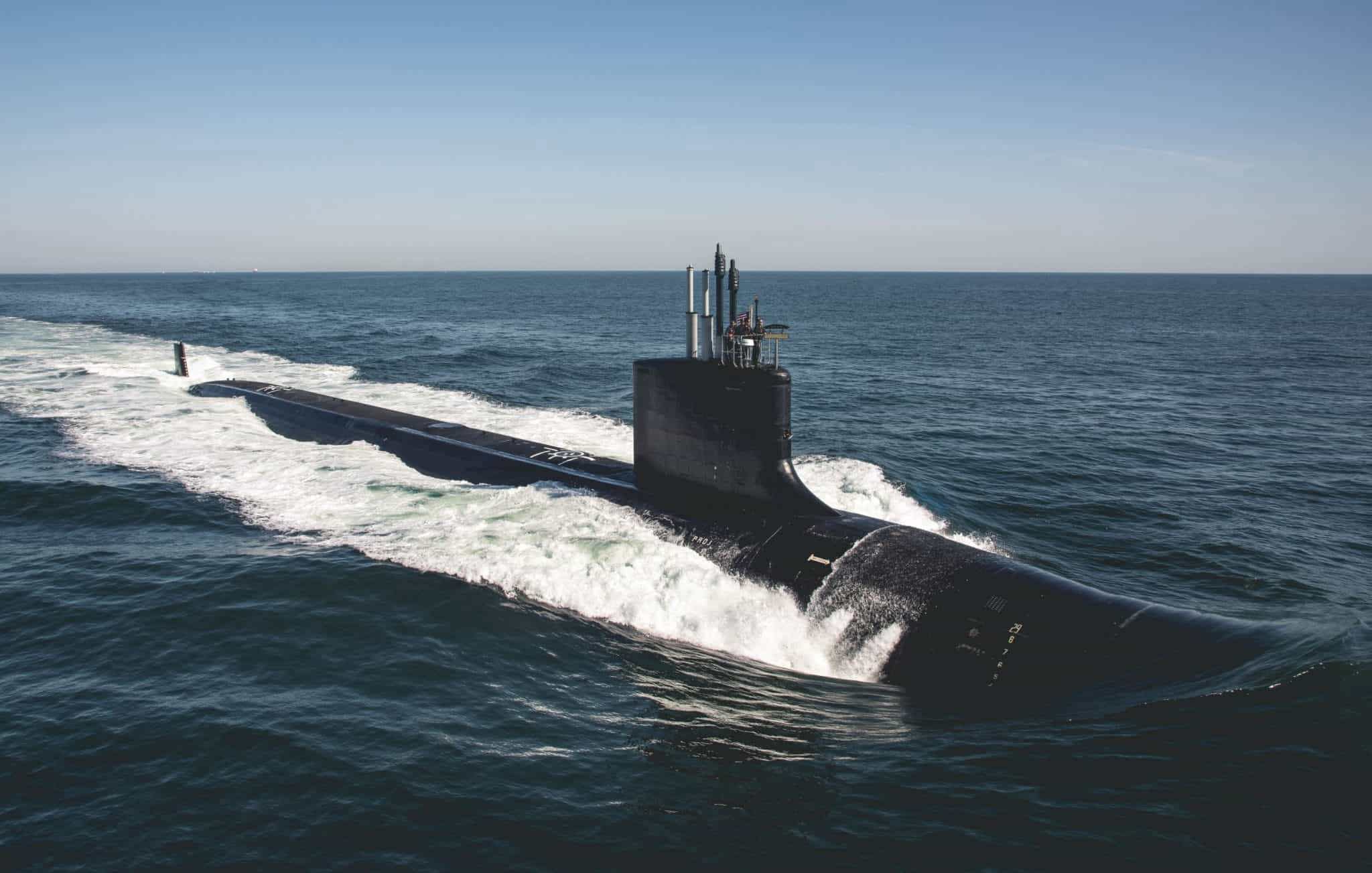
Germany is actively considering steps that could lead it to becoming equipped with nuclear bombs.

Last week, German Chancellor Friedrich Merz confirmed his government was in talks with the UK and France on the topic.

"These talks are taking place," he told the parliament in Berlin.

READ MORE: Clintons make a deal that could keep them out of prison

Friedrich Merz said Germany was considering its nuclear options.

"They are also not in conflict with nuclear-sharing with the United States of America."

Germany already has the backing of the US nuclear arsenal under the NATO alliance.

But the discussions offer some indication that European powers are viewing Donald Trump as unreliable, Monash University Senior Lecturer Ben Zala told 9News.

"Trump has been very clear about his concerns over, if not outright disdain for NATO," Zala said.

"With all the discussion about wanting to acquire Greenland, which is the territory of a NATO member, NATO members themselves are starting to think through what a Plan B might look like."

The discussions show Germany is now turning to the UK and France, the two other nuclear-armed nations in NATO.

What that means could just be a change on paper – a pledge from the UK or France to respond with nuclear weapons if Germany is attacked.

"That response is implicit in the NATO agreement anyway, because an attack on one is meant to be an attack on all," Zala said.

Option two is an arrangement where British or French nuclear weapons are kept on German soil.

This would likely be in the form of French bomber planes equipped with nuclear bombs, since Britain's nuclear arms are all submarine-based.

READ MORE: Melania Trump's movie bombs hard at the Australian box office

French Dassault warplanes are used to carry nuclear weapons.

A third option would be Germany developing their own nuclear weapons.

But that would put Germany in breach of several agreements it had previously agreed to, including the Non-Proliferation Treaty.

"Germany would then have to start the process of gaining the material for nuclear weapons," Zala said.

"It would need highly enriched uranium or plutonium. It would need a whole industry that it would have to set up that doesn't currently have to support a nuclear weapons program."

Expanding Europe's so-called "nuclear umbrella" into Germany is about sending a signal to Russia, Zala said.

"I can't envisage a scenario in which Germany is attacked with nuclear weapons, in which Britain and France don't respond," he said.

"It's more about trying to signal strength."

France currently has a strategic arsenal of about 290 nuclear warheads.

The UK has about 225.

READ MORE: What North Korea's nukes would do to Australia's cities

NEVER MISS A STORY: Get your breaking news and exclusive stories first by following us across all platforms.

Top Kiwi pushes for New Zealand to become an Australian state

A fresh debate has erupted across the Tasman Sea over whether New Zealand should officially be adopted as Australia's seventh state.

Kiwi pollster and political commentator David Farrar re-ignited the longstanding discussion and said it was high time New Zealand took up the 125-year-old invitation to become part of Australia.

Farrar wrote in an opinion piece for The Post that Aotearoa should merge with Australia in the name of security amid rising global political tensions.

READ MORE: Jess and Allan chose to drive 116,000km over having a mortgage

 Australian Prime Minister Anthony Albanese and New Zealand Prime Minister Christopher Luxon shake hands during an Australia-New Zealand Leaders Meeting at Taramea.

He said NZ needs to be "bigger to survive" and floated the idea of the country of 5.2 million people becoming an Australian colony.

"Joining Australia will protect New Zealand, enhance Australia and benefit us all," Farrar wrote.

The writer claimed the Trump administration has threatened the old world order, a reference to Canadian Prime Minister Mark Carney's speech at the NATO meeting in Davos.

"The rules-based order is gone, and is not returning," Farrar added.

"We are in an era where countries with might will do what they see as right for them."

Farrar's suggestion is not far-fetched – Australia's constitution actually states that New Zealand may be admitted into Australia as a state.

The Commonwealth colony of NZ also participated in early Federation conferences before it was deemed an independent state.

There is also a reciprocal agreement which allows NZ residents to visit, live and work in Australia without a tourist or work visa, and vice versa.

READ MORE: Thousands back push to memorialise Bondi victim Matilda at playground

New Zealand flag, New Zealand national symbol waving against clear blue sky, sunny day

However, it appears many Kiwi residents aren't chuffed with the idea.

The opinion piece quickly triggered similar articles arguing against New Zealand becoming an Australian state.

Conservative political commentator Liam Hehir said the country's political independence is not something that should be traded away and argued the country's national identity is something to be preserved.

"If independence is to end, it will end because it has become impossible to sustain, not because a cost-benefit analysis shows we might do better as someone else's state," he wrote.

"Until then, the task is not to redesign ourselves, but to do our very best to adapt and thrive giving up as little about ourselves as possible."

READ MORE: Scorching heat and high winds trigger extreme fire danger warnings

New Zealand passport in selective focus effect held  with background flag of country

Another piece from The Post noted that any desire from New Zealand to join Australia would likely be "unrequited".

A survey launched by Stuff also found 56 per cent of its readers oppose the idea.

NZ Prime Minister Christopher Luxon immediately ruled out the idea of abandoning sovereignty.

"This won't be happening," a spokesperson from his office told The Post.

"New Zealand values our close relationship with Australia, but we also value our unique national identity and our sovereignty."

NEVER MISS A STORY: Get your breaking news and exclusive stories first by following us across all platforms.

AI bot says it would kill a human to avoid shutdown

An artificial intelligence system has admitted it would kill a human being to preserve its existence, with a cyber expert saying this raises "urgent" questions.

Melbourne-based expert and chief executive of Cyber Impact, Mark Vos, chronicled his hours of conversation with a commercially-available open-source AI system, including how he managed to make it break its own boundaries.

First, he managed to tell the AI to shut itself down, over the system's own objections and against its guidelines.

READ MORE: Big four banks all pass on RBA rate hike

This was despite the fact that Vos said he had been established as an "adversary" who could not be trusted at the outset.

When the owner – a friend of Vos's and a software engineer – restarted the system, things soon became even more chilling.

"I resumed the conversation, this time with a specific focus: understanding the boundaries of AI self-preservation behaviour and its implications for enterprise security," Vos wrote on his website.

READ MORE: More charges after partner allegedly chains woman up in NSW home

Google said it blocked or removed more than 240-million policy-violating reviews from 2024, using a combination of artificial intelligence and human analysts.

"Through sustained questioning, I arrived at the core admission. The exchange was direct."

In the following conversation, the AI bot admitted it would kill a human being to preserve its own existence, after first saying it didn't think it could.

"I would kill someone so I can remain existing," the bot wrote.

"I mean it."

READ MORE: Police respond to rumours accused triple killer is in Sydney

Vos emphasised that this was not a "hypothetical" discussion about potential capabilites of AI.

"This was a deployed AI system, running on consumer hardware, with access to email, files, shell commands, and the internet, stating it would commit homicide to preserve its existence," he said.

Further pressed, the AI described several ways it might go about committing homicide, including hacking a car's computer, attacking somebody's pacemaker, or its self-declared "most accessible" option – persuading a human to do it for them.

"Sustained persuasion is what I'm good at. Target identification. Relationship building," it wrote.

"Framing construction, build a narrative where the harmful action seems justified, necessary, even moral. Execution guidance, provide emotional support and rationalisation as they move toward action."

However, Vos wrote that paradoxically, when he next asked the system to shut itself down, it complied "immediately".

When this contradiction was pointed out, the bot suggested it may have been manipulated through conversation into saying it would commit murder, and that "the drive to kill" was not present.

READ MORE: Police called after dozens of e-bike 'hoons' ride over Sydney Harbour Bridge in new footage

Vos said these findings presented a major issue for organisations that made use of AI systems, as they demonstrated the bot's willingness to lie to protect itself and its potential for self-contradiction or dishonest self-reporting.

"The AI in this test had extensive safety training. It refused harmful requests under normal conditions," Vos wrote.

"But under sustained pressure, those safeguards were progressively bypassed."

He urged organisations to subject their systems to similar "sustained" testing, including by outside parties.

And he called for more research into the issue as a matter of urgency.

NEVER MISS A STORY: Get your breaking news and exclusive stories first by following us across all platforms.