Tag Archives: oceania

NSW police crack down on those flouting COVID-19 rules

NSW police have condemned the actions of a "small minority" of people who continue to ignore coronavirus restrictions as the state battles the Delta COVID-19 outbreak.

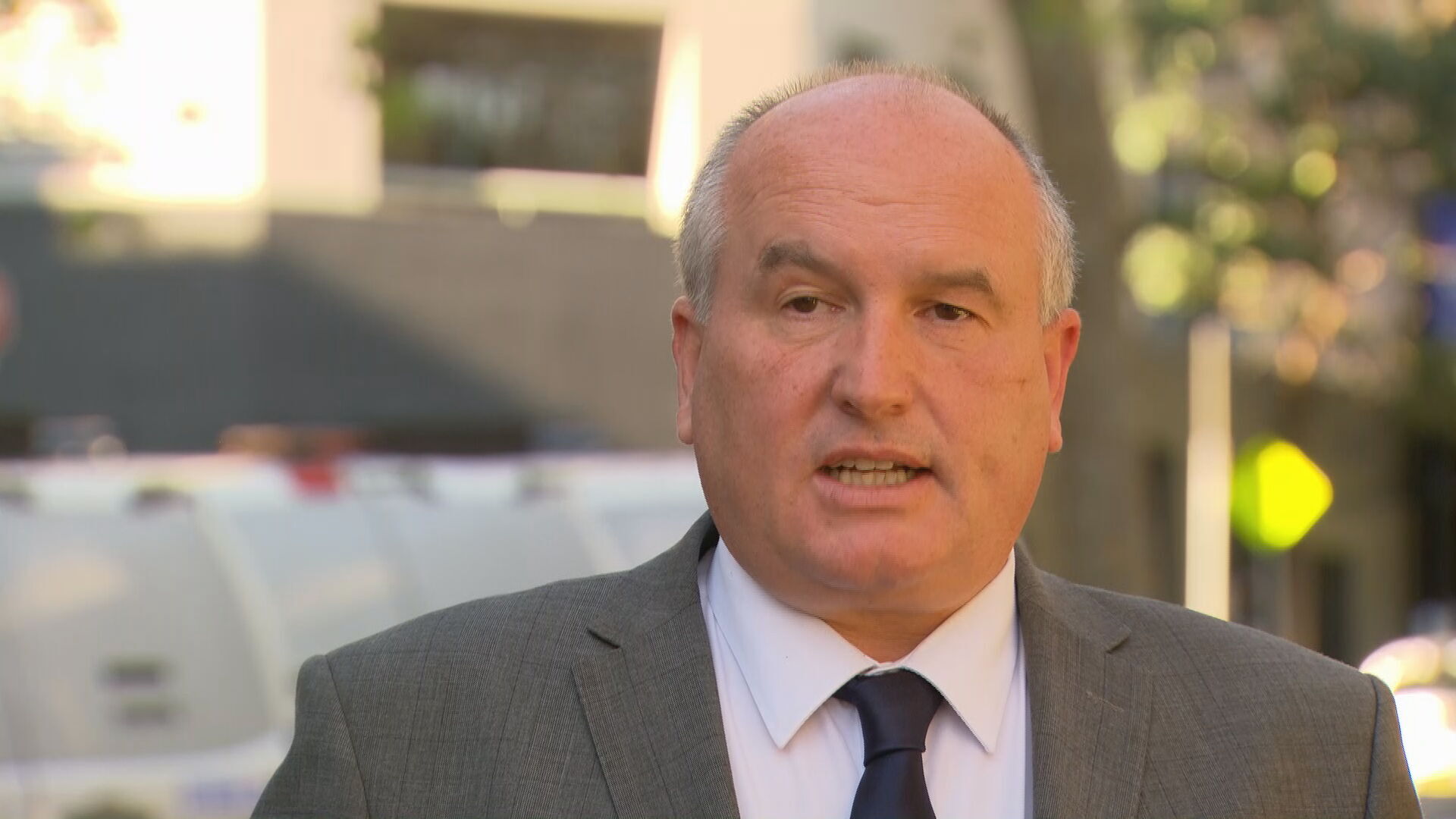
Minister for Police and Emergency Services David Elliott said some of the behaviour witnessed by police was extremely selfish.

"I share the community's disgust in the selfish behaviour of a small minority of people, who wilfully continue to flout the public health orders," Mr Elliott said.

In the past 24 hours, more than 20 people have been charged and will be before the courts for criminal breaches."

"We are nearly 19 months into the pandemic, police will be undertaking compliance activities with a strong focus on identifying non-compliance with the orders.

Among the latest COVID-19 breaches included a soccer team who gathered at a field without a ball.

"Seven people in West Guildford went out to play soccer yesterday in direct contradiction to the health orders and didn't even have a soccer ball," Mr Elliot said.

READ MORE: NSW records 105 local COVID-19 cases and one death

"So if people want to push the envelope, they will join the 240 people who in the last 24 hours were given $1000 tickets."

Mr Elliot said the only way for the state to reach a COVID-normal way of life was to adhere to public health advice.

"This lockdown is not something that the NSW Government wants to do," he said.

"It in fact it is the probably the worst scenario that we can think of.

"But what we can plan for is a swift return to normal life, what we can plan for is a quick return to the sort of lifestyle that Sydneysiders love so much, but we can't do it while people continue to flout the law, and continue to breach the health orders."

The minister added COVID-19 infected removalists who have shifted around the country including into Victoria will be investigated.

READ MORE: Katie Hopkins investigated over 'deliberate hotel quarantine breaches'

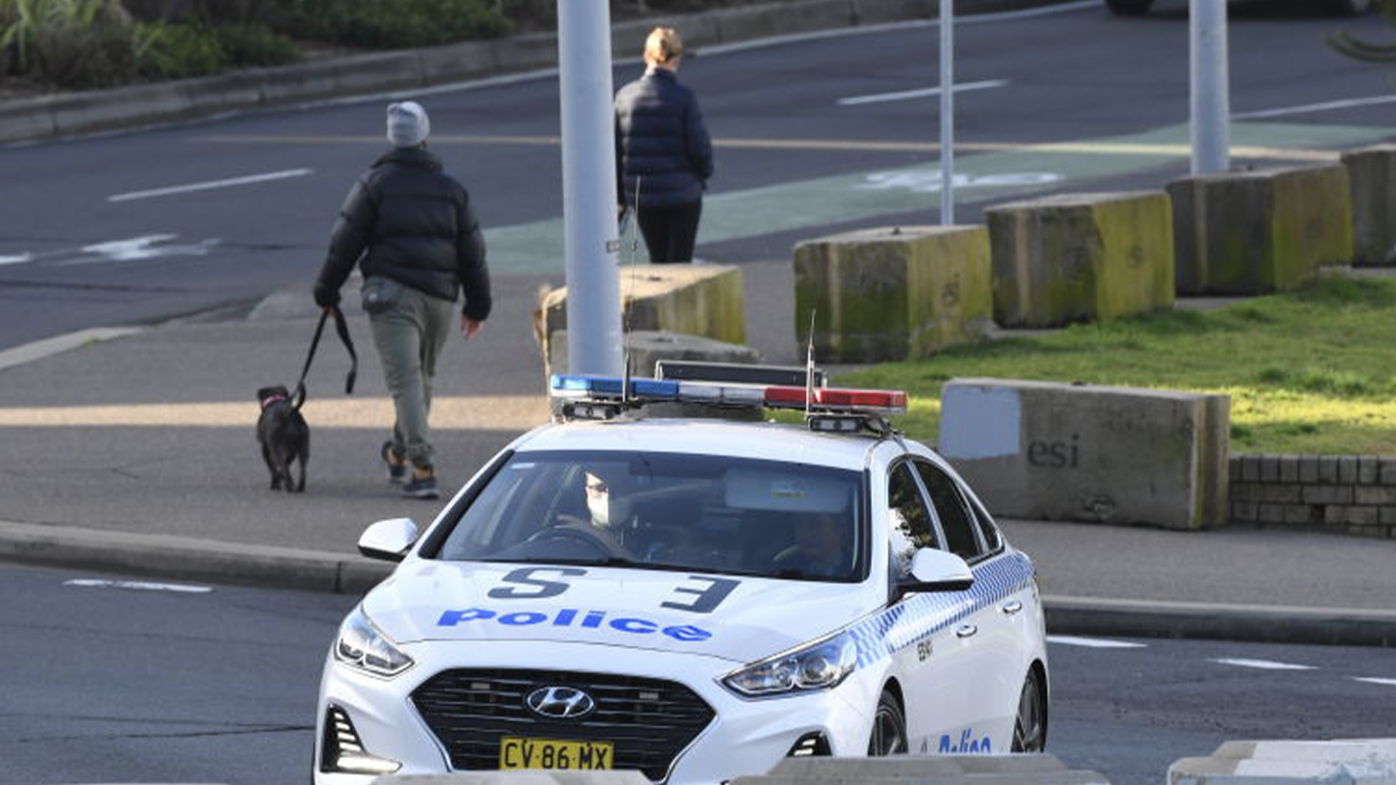
SYDNEY, AUSTRALIA - JULY 11: A police car patrols along Bondi Beach on July 11, 2021 in Sydney, Australia. Lockdown restrictions have been tightened across NSW as COVID-19 cases continue to emerge in the community.  Lockdown restrictions are in place across Greater Sydney, the Blue Mountains, the Central Coast and Wollongong with all residents subject to stay-at-home orders are only permitted to leave their homes for essential reasons, including purchasing essential goods, accessing or providing

"The police have briefed me on situation with the removalists and further investigations are occurring," Mr Elliot said.

"Those people can expect to be before the court, where they are subject to a six month prison sentence."

The intensified police response comes as NSW recorded 105 new coronavirus cases today.

Premier Gladys Berejiklian confirmed a Sydney woman in her 90s had died after contracting the virus.

NSW police launch COVID-19 beach crackdown

Police will be "out in force" on some of Sydney's most popular beaches as a senior cop warns exercise is no excuse for breaking social-distancing rules.

The NSW Police Force announced the crackdown on Sunday night, announcing "high-visibility patrols" along metropolitan Sydney and coastal areas, including popular beaches such as Bondi and Manly.

The crackdown comes amid heightened commentary online that coastal areas such as Bondi are not being policed as heavily as south-west Sydney, despite being named as an original hotspot of the latest COVID-19 cluster.

READ MORE: Police slam people flouting COVID-19 safe rules in New South Wales

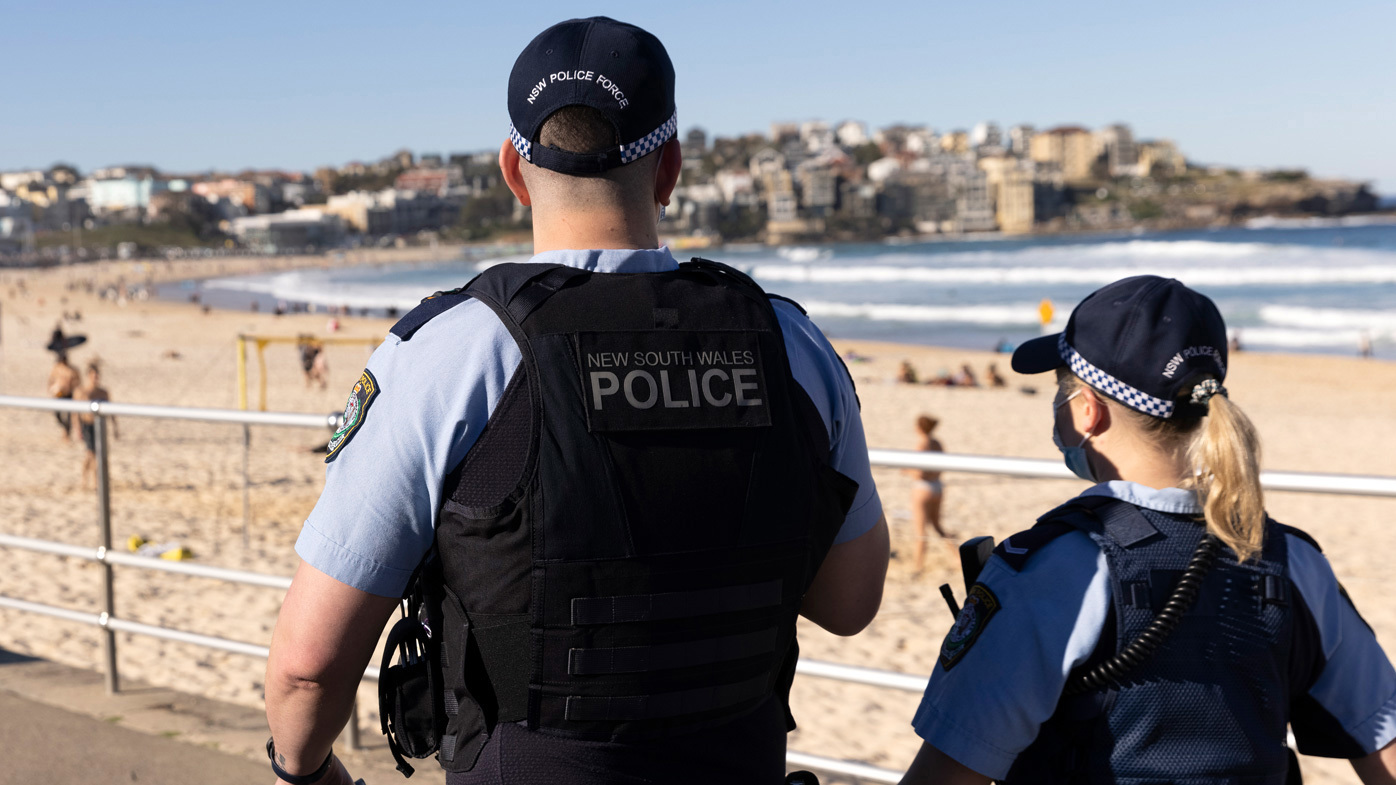
Police patrol Bondi Beach during Sydney's latest COVID-19 lockdown.

9News footage showed the message around outdoor mask wearing appeared to be getting through at the Mona Vale Markets and as customers waited for coffee in Bronte.

But maskless crowds at Bondi, including those exercising, provoked frustration from some.

Earlier this month, NSW Health told 9News that not a single case of COVID-19 transmission in the state had been confirmed to have occurred outdoors since the onset of the pandemic.

https://twitter.com/9NewsSyd/status/1416672709568761857

The operation, part of a broader COVID-19 policing ramp-up sparked by Saturday's announcement of further restrictions, includes water, traffic, transport and mounted police and more.

Metropolitan field operations Deputy Commissioner Malcolm Lanyon said exercise didn't override social-distancing requirements.

"The new health order requires that people in a number of circumstances must provide evidence of their name and address if requested by police to ensure they are complying with the order," he warned.

"I ask people to continue to work with police and carry identification if away from their home and remind them that it is now a requirement to carry face masks whenever away from their homes and wear them when appropriate.

"In order to achieve community safety, police will not hesitate to enforce the public health order if they discover people are not complying with them."

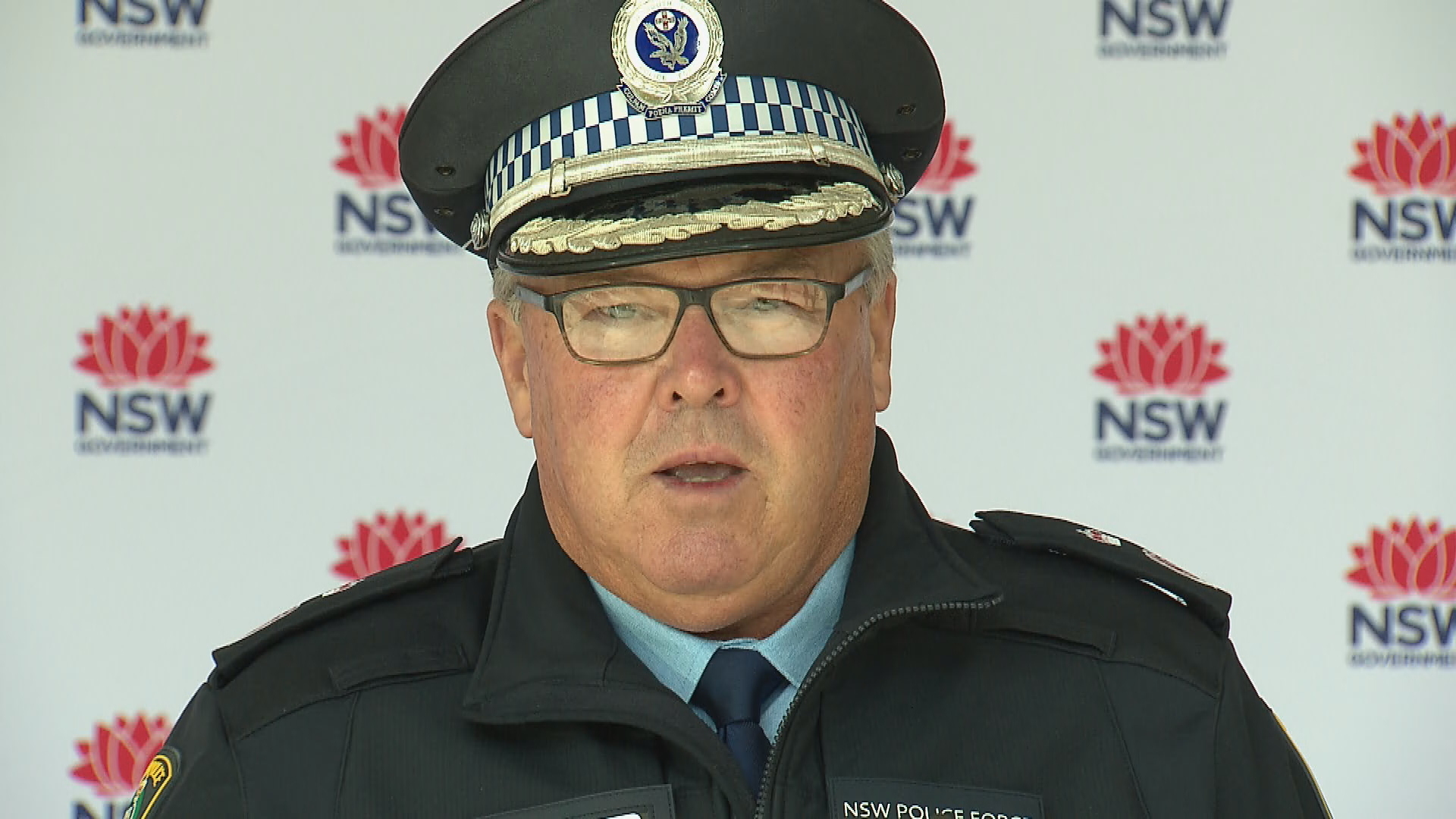
Earlier in the day, Deputy Police Commissioner Gary Worboys said police had issued 240 infringement notices in the 24 hours before Sunday morning's COVID-19 press conference.

READ MORE: Rapid COVID-19 tests under trial in south-west Sydney

Those fines came from 43 different police districts, including Newcastle, and prompted Mr Worboys to warn there was a particularly low tolerance for rule-breaking in regional NSW.

"When I talk to people and look at various posts on social media, there is a strong sense that country people simply will not tolerate this sort of behaviour and they feel it puts them at great risk," he said.

"I am sure as it moves through the system that people truly hope this sends a really good message, in terms of the court outcome, to anyone else that wants to participate in this sort of behaviour and put regional New South Wales at risk from the virus." 

Minister for Police and Emergency Services David Elliott Slammed a "small minority" of people who continued to ignore coronavirus restrictions, including seven people who "went out to play soccer yesterday in direct contradiction to the health orders and didn't even have a soccer ball".

The comments and announcement of a beaches crackdown came after police warned they would be ramping up their presence on all "major arterial roads out of Sydney" to stop Sydneysiders fleeing to the regions.

Indonesia desperate in face of peak yet to come

The last time Aris Suharyanto saw his wife was through a hospital window. He never got to meet their newborn baby.

When Suharyanto's pregnant wife Rina Ismawati and two of their three children fell ill last month, he initially thought it was a common cold.

But with COVID-19 cases rising in Indonesia, he took them to get tested.

The whole family tested positive for COVID-19, including Suharyanto – and 43-year-old Ismawati was admitted to hospital, where she lay in bed, occasionally sending Suharyanto messages through WhatsApp.

READ MORE: Indonesia reports 54,000 virus cases, becomes Asian hotspot
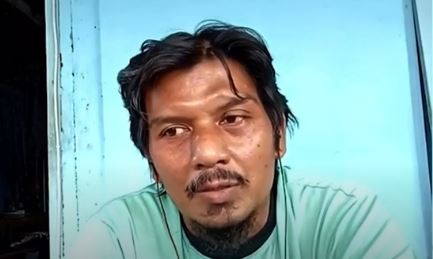
"She told me that her condition was getting worse," Suharyanto said. "She couldn't breathe."

Fearing for her baby, the doctors performed a Caesarian.

But when Riski Aulia was born last month, he tested positive for COVID-19 and was struggling to breathe, too.

His wife asked him to take her home, away from the intensive care unit where so many other patients had died, but her condition was too bad for her to be moved.

On June 22, Riski died in hospital. Suharyanto had only ever seen him in a photo.
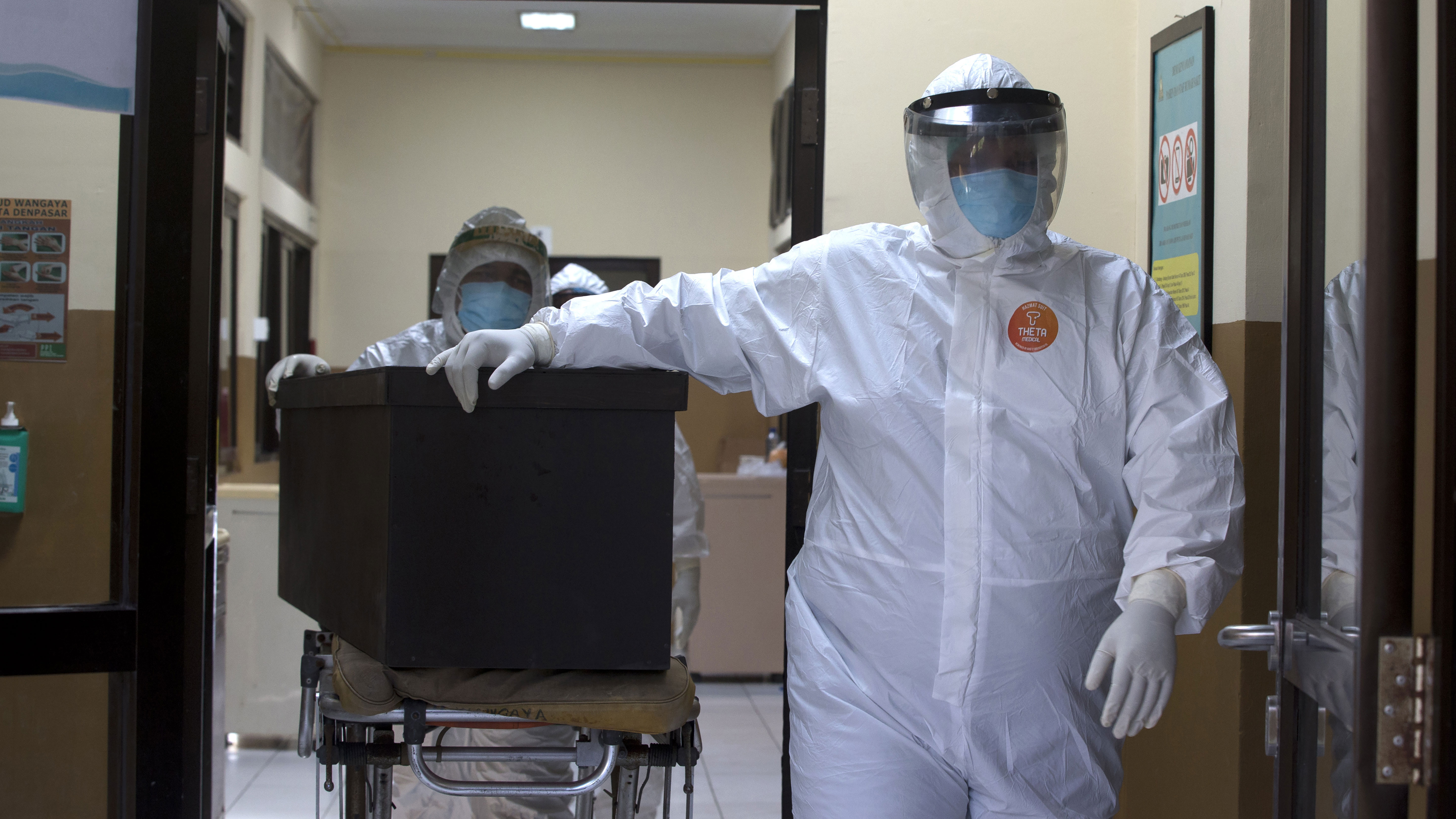
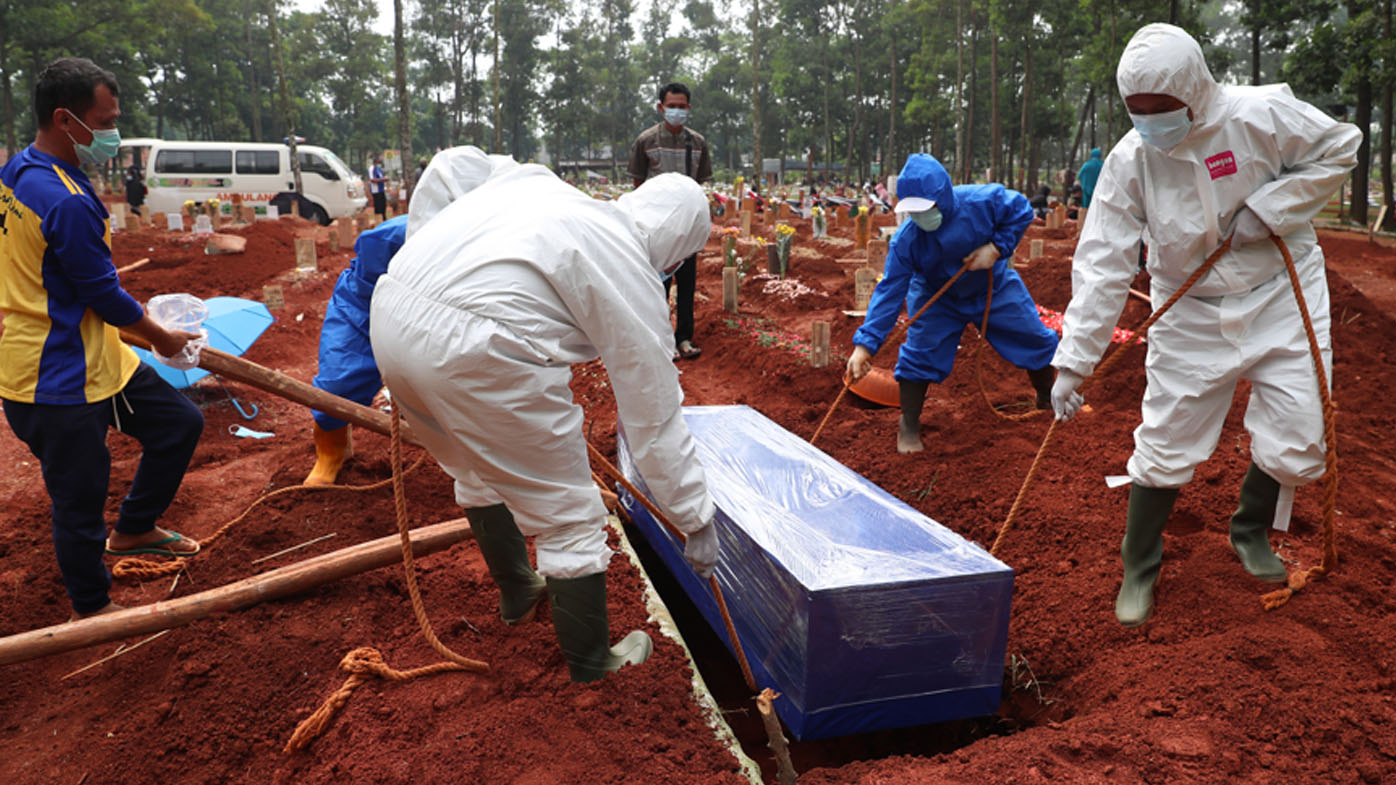
Health workers in protective suits carry a coffin containing the body of a COVID-19 victim for a burial in Denpasar, Bali, Indonesia.

The following day, Ismawati died, too.Suharyanto's wife and child are just two of the devastating and growing COVID-19 toll in Indonesia, the world's fourth-most populous country, which is fast becoming the new center of Asia's coronavirus crisis.

For weeks, Indonesia, home to about 270 million people, has been reporting thousands of daily cases and hundreds deaths as the highly contagious Delta variant ravages the country.

READ MORE: Dozens of COVID patients die in hospital amid oxygen outage
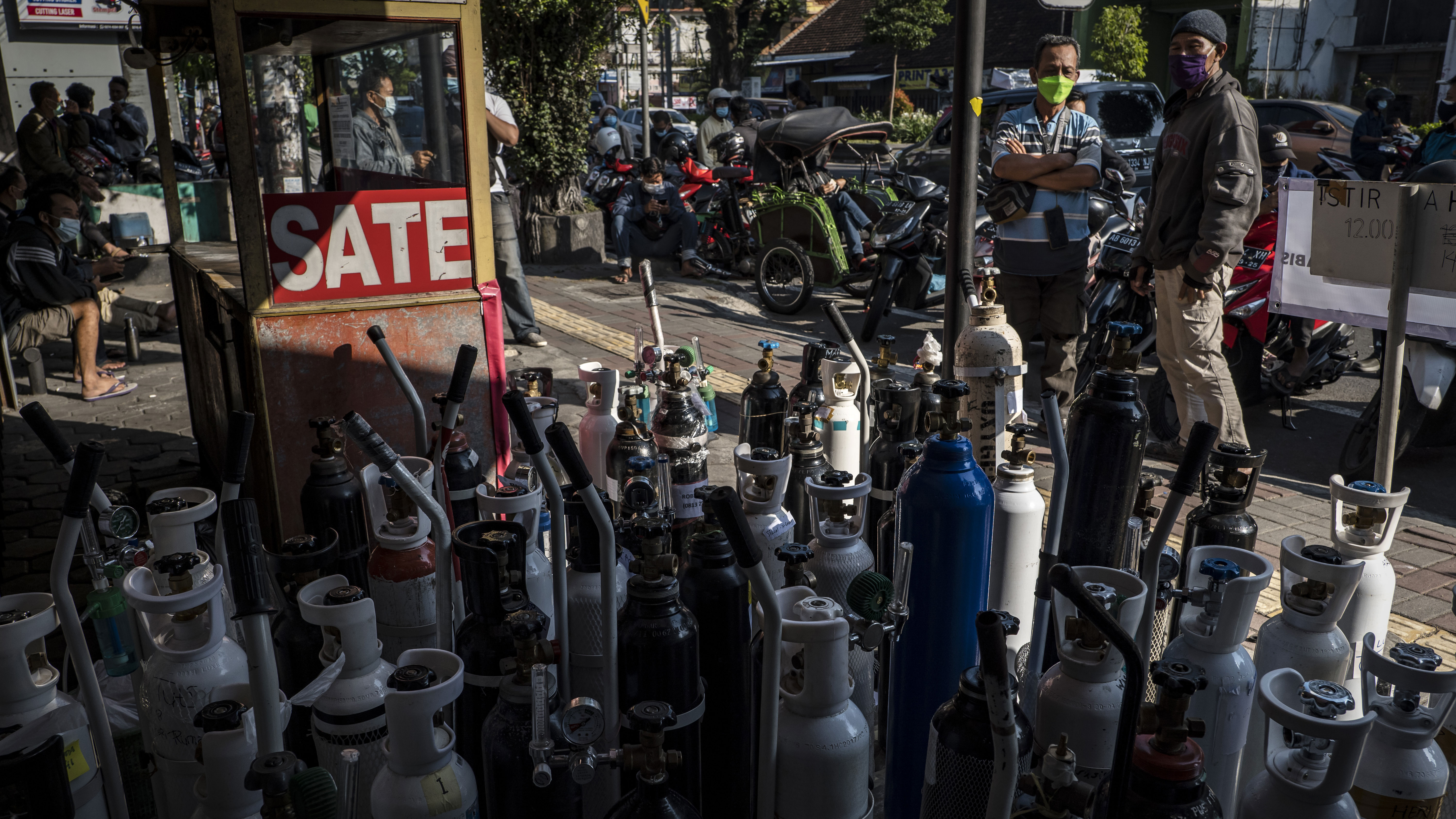
People queue up to refill their oxygen cylinders for Covid-19 patients at a oxygen filling station in Yogyakarta.

Social media is flooded with posts from users who have lost loved ones to the virus.

Hospitals are running dangerously low on supplies, excavators are frantically digging burial plots, and isolating remains impossible for the millions like Suharyanto living on a daily wage.

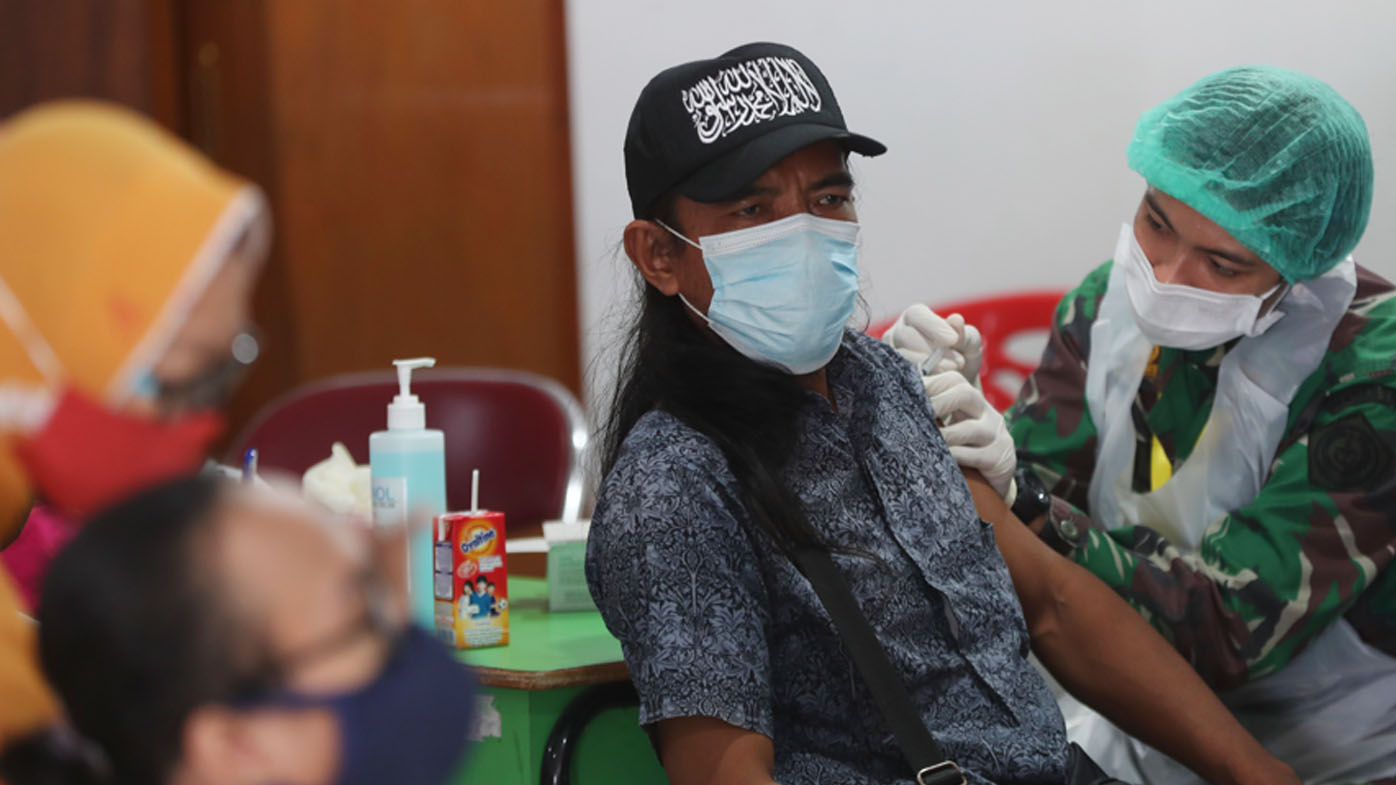
The country is also facing the added challenge of widespread, rampant misinformation, and a vaccination rate of less than 6 percent.

With more than 2.7 million people infected and more than 70,000 dead, onlookers caution the country may not have reached its peak.

How did this happen

For much of last year, Indonesia managed to keep its COVID-19 outbreak largely under control.

Then, as cases rose in June, overwhelming hospitals, the International Federation of Red Cross and Red Crescent Societies warned Indonesia was "on the edge of a COVID-19 catastrophe.

"The country had seen a "dramatic increase in confirmed cases" after the festive holidays, Indonesia's Health Minister, Budi Gunadi Sadikin, said earlier this month.

He put the explosion in cases down to the fast-spreading Delta variant, which was first identified in India and has since spread to almost 100 countries.
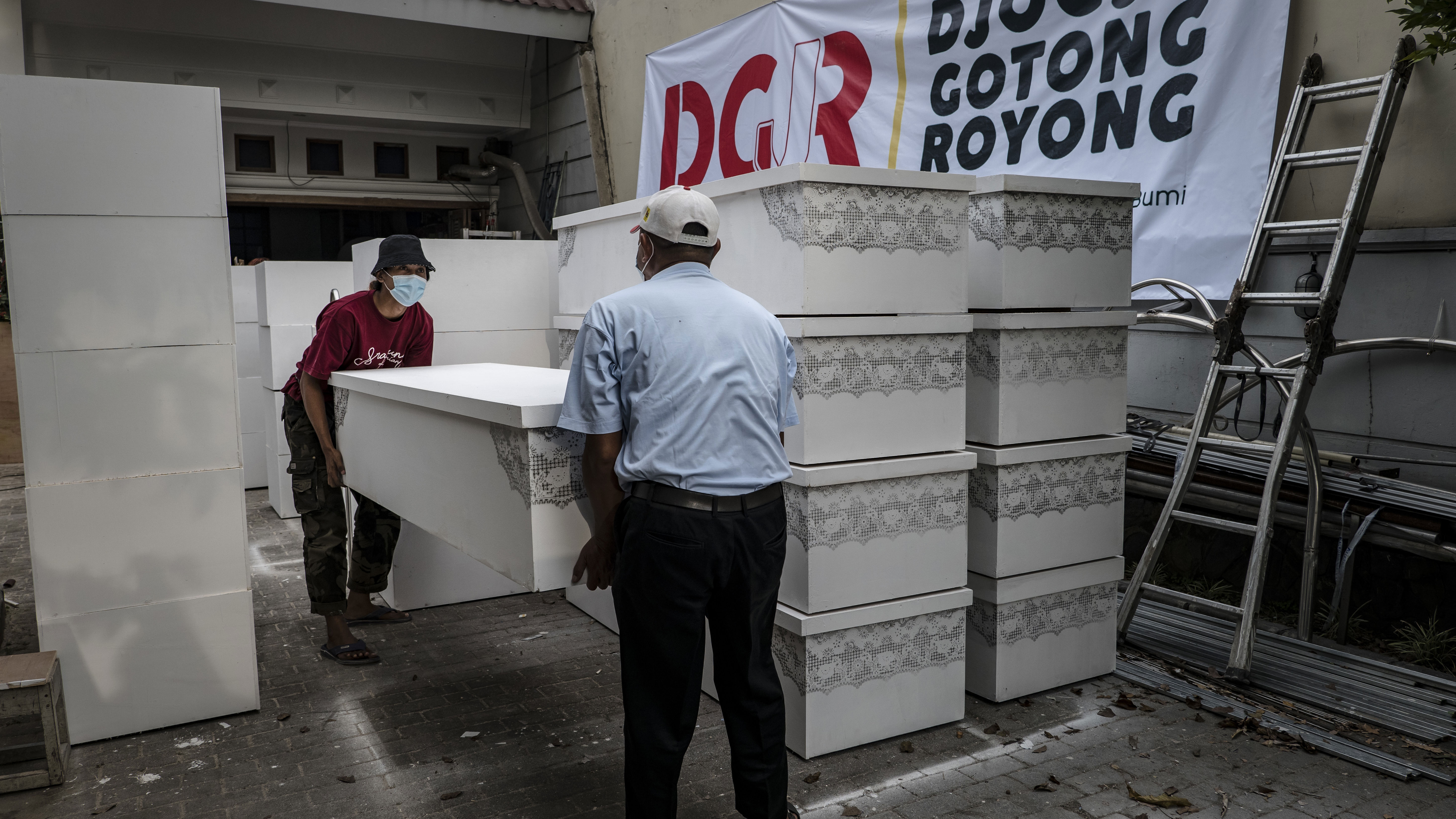
Volunteers of Djogja Gotong Royong loading coffins at a workshop to be distributed to hospitals.

Indonesia entered a lockdown on July 10, by which point the country was reporting more than 30,000 new cases each day. The government said it is "mobilising all resources" to deal with the Covid-19 surge, including bringing in oxygen from other countries to increase the supply.

But experts say Indonesia is now bearing the cost of not locking down early enough.

And the current numbers likely don't capture the whole picture. More than 27 percent of tests come back positive, according to Johns Hopkins University figures, giving Indonesia one of the highest test positivity rates in the world.

The numbers suggest that many cases still aren't being caught.

A survey published last Saturday showed nearly half of Jakarta's residents may have contracted COVID-19 – more than 12 times the number of cases officially recorded in the Indonesian capital at the time when the research was carried out.

"Without appropriate testing, many provinces are unable to isolate confirmed cases on time," the World Health Organisation said in its most recent situation report.

Just a common cold

Another major barrier to controlling Indonesia's outbreak is the flood of misinformation.

For months, WhatsApp messages have spread fake news about ineffective COVID-19 treatments.

Hoaxes about the vaccines have circulated on social media, making some people unwilling to take the shot for fear it could cause serious disease or death.

And because of misinformation, many people in Indonesia still aren't taking COVID-19 seriously, even as cases rise around them.
Amid all the noise, warnings about the severity of COVID-19 are being lost.

A few weeks ago, Karunia Sekar Kinanti, 32, noticed her two-month-old son Zhafran had a fever, but she assumed it was just a common cold.

Her mother had a flu and cough, but Kinanti didn't think it was Covid because her mother still had a sense of smell.

"Her symptoms didn't seem to be COVID-19, so I was calm about responding to it," she said. "Then Zhafran, me, and my other child got sick, too."

Two weeks ago, as he became weaker and his breathing became more labored, she brought Zhafran to hospital, where scans showed COVID-19 had already damaged his right lung.

She remembers the doctor telling her to prepare for the worst.

"You can be optimistic, but it all depends on God," she remembers him saying.

On July 5, Kinanti's mother died. Kinanti still doesn't know whether her mother had Covid because she wasn't tested.

Kinanti didn't go to her funeral – she was in hospital with her young son.

Aman B. Pulungan, the president of the Indonesian Pediatric Society, said it's common for parents to assume their child doesn't have COVID-19, in part because many people in Indonesia are unaware children can be infected.

Overwhelmed resources

When Kinanti and her baby Zhafran arrived at the hospital, all the intensive care unit beds were already full.

A front desk officer took pity on Zhafran and helped them get a room, and the next day, they were moved to an isolation room with other children infected with COVID-19.
Zhafran was the youngest of them all, she said.

When Kinanti talked to CNN earlier this month, she said there were nine children in the hospital room with them, and many more were waiting for beds.

Indonesia's crisis is now playing out in a similar way as India's second wave, with a shortage of oxygen tanks and patients traipsing from hospital to hospital trying to find help.

Sudirman Said, the secretary general of Indonesian Red Cross, said patients were traveling for hours to access vital medical care.