Alice Angeloni, Local Democracy Reporter About 50 border workers in Gisborne still need to be vaccinated against Covid-19.A new Government health order announced on Monday requires workers at ports and airports to be vaccinated…
Tag Archives: oceania
Two campervans hit by winds on Napier-Taupo highway, rider blown off bike
Police and highway authorities were early this afternoon warning motorists to delay trips on State Highway 5 between Napier and Taupo after a series of incidents caused by high winds.Two campervans or caravans had been reported…
Queensland records zero new COVID cases just days after Delta outbreak
Queensland has recorded one new case of COVID-19 today, with the case being a traveller detected in hotel quarantine.
The doughnut day for the state comes just days after an initial COVID Delta variant scare from a teenager in Sydney hotel quarantine before travelling positive to Queensland.
Queensland's borders to Victoria were also closed at 1am Saturday morning amid its growing COVID outbreak from two Sydney removalists.
https://twitter.com/AnnastaciaMP/status/1416171030444314628
"Anyone returning after that time … will have to do the 14 days mandatory quarantine," Queensland Premier Annastacia Palaszczuk said yesterday.
"I just think the clear message to Queenslanders is definitely do not go to NSW and do not go to Victoria during this period of time."
Professor Paul Griffin from the University of Queensland told Today yesterday that if the state keeps its case numbers low it could avoid another lockdown.
"If we don't see any cases in its next few days we might escape one," Dr Griffin said.
"We are on a knife-edge."
9News understands that Queensland Premier Annastacia Palaszczuk will not be holding a COVID update press conference today.
US wildfire forms dangerous 'fire clouds'
Smoke and heat from a massive wildfire in southeastern Oregon in the US are creating giant "fire clouds" over the blaze — dangerous columns of smoke and ash that can reach up to 10km in the sky and are visible from more than 160km away.
Authorities have put these clouds at the top of the list of the extreme fire behaviour they are seeing on the Bootleg Fire, the largest wildfire burning in the US.
The inferno has grown to about 194 square kilometres, larger than the size of New York City, and was raging through a part of the US that is enduring a historic drought.
READ MORE: 'Whole town is on fire': Hottest village in Canada evacuated
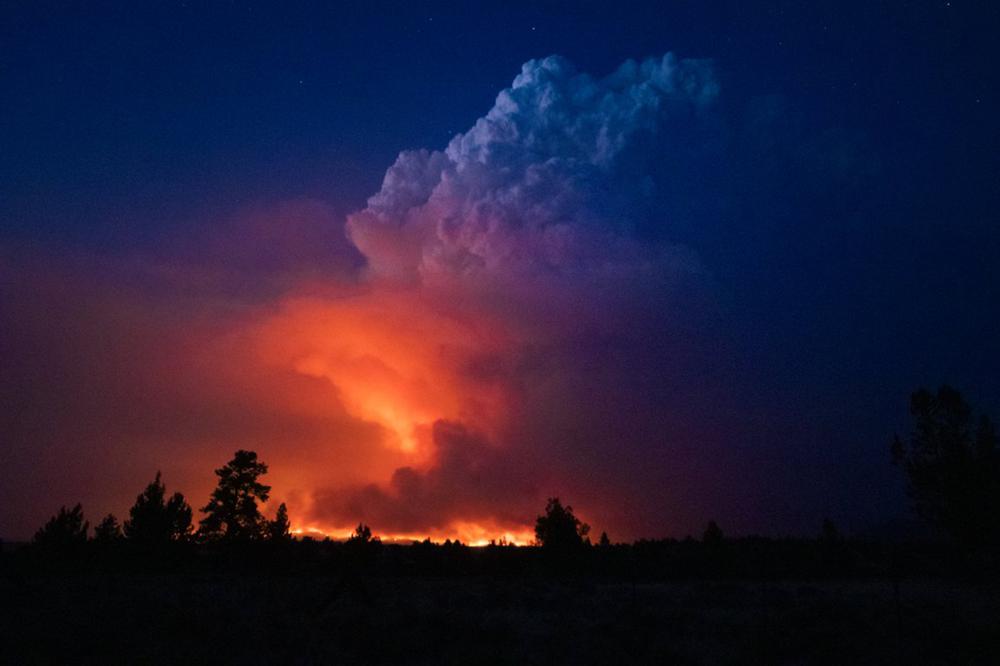
The fire was so dangerous overnight that authorities pulled out crews. Meteorologists this week also spotted a bigger, more extreme form of fire clouds — ones that can create their own weather, including "fire tornadoes."
Extreme fire behaviour, including the formation of more fire clouds, was expected to persist today and worsen over the weekend.
READ MORE: Firefighters make progress against devastating blazes on US west coast
What are fire clouds?
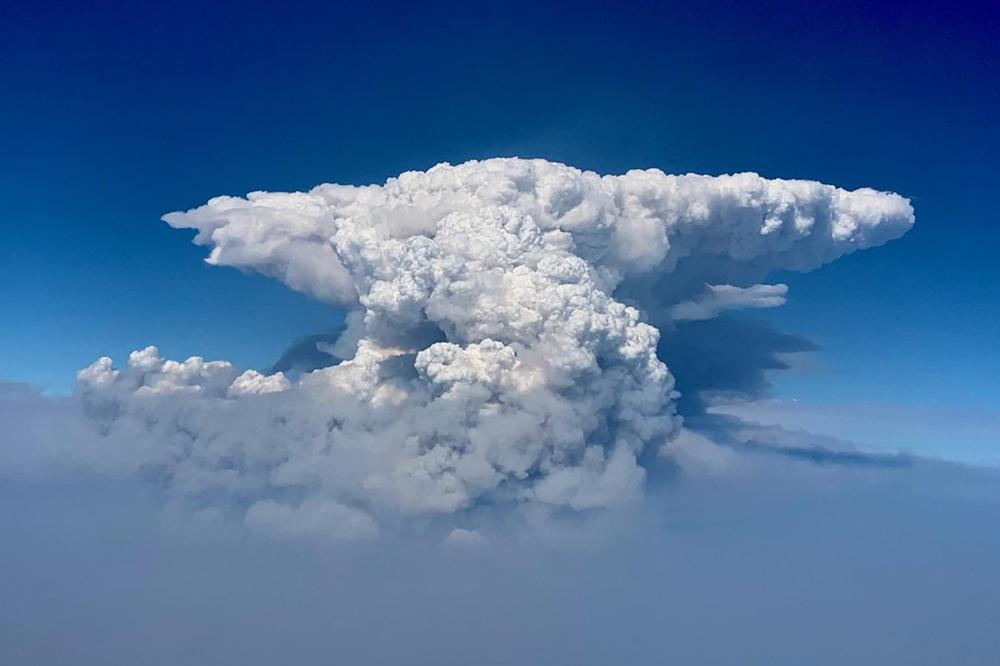
Pyrocumulus or "fire" clouds look like giant, dirty-colored thunderheads that sit atop a massive column of smoke coming up from a wildfire. Often the top of the smoke column flattens out to take the shape of an anvil.
In Oregon, fire authorities say the clouds are forming between 3pm-5pm each day as the sun penetrates the smoke layer and heats the ground below, creating an updraft of hot air. On this fire, crews are seeing the biggest and most dangerous clouds over a section of wilderness that's made up mostly of dead trees, which burn instantly and with a lot of heat.
For four days in a row, the Bootleg Fire has generated multiple fire clouds that rise nearly 10km into the atmosphere and are "easily visible from 160km to 193km away", authorities said Friday.
The conditions that create the clouds were expected to worsen over the weekend.
READ MORE: Giant sequoia still smouldering from 2020 California wildfire
What's the science behind these clouds?
When air over the fire becomes super-heated, it rises in a large column. As the air with more moisture rises, it rushes up the smoke column into the atmosphere, and the moisture condenses into droplets. That's what creates the "fire clouds" that look much like the thunderheads seen before a big thunderstorm.
These clouds, however, hold more than just water. Ash and particles from the fire also get swept into them, giving them a dark gray, ominous look.
Is there something even more dangerous than a fire cloud?
Yes. When a pyrocumulus cloud forms over a fire, meteorologists begin to watch carefully for its big brother, the pyrocumulonimbus cloud.
NASA has called the latter the "fire-breathing dragon of clouds" because they are so hot and big that they create their own weather.
In a worst-case scenario, fire crews on the ground could see one of the monster clouds spawn a "fire tornado," generate its own dry lightning and create dangerous hot winds below. They can also send particulate matter from the smoke column up to 16km above Earth's surface.
https://twitter.com/NOAASatellites/status/1415716059529859079?ref_src=twsrc%5Etfw
So far, most of the clouds on the Bootleg Fire have been the less-intense fire clouds, but the National Weather Service on Wednesday spotted a pyrocumulonimbus cloud forming on what it called "terrifying" satellite imagery.
"Please send positive thoughts and well wishes to the firefighters … It's a tough time for them right now," the weather service said in a tweet.
How dangerous are these clouds?
Both types of fire clouds pose serious risks for firefighters.
Multiple pyrocumulus clouds have been spotted for four consecutive days, and one of them on the southern flank of the fire partially collapsed Thursday, causing dangerous winds and embers to fall on crews.
That prompted the emergency evacuation of all firefighters and dirt-moving equipment from that part of the fire line. Authorities say there have been no reported injuries.
"We're expecting those exact same conditions to develop today and even worsen into the weekend," fire spokeswoman Holly Krake said today.
Where else have these clouds formed?
These types of fire-induced clouds are becoming more common as climate change lengthens and intensifies the wildfire season across the US and in other places, including Australia.
A wildfire in British Columbia last month that levelled an entire town also generated a pyrocumulonimbus cloud.
Blazes in California in 2020 and in the years before have created multiple pyrocumulus clouds, with the Creek Fire in the Fresno area generating a mighty pyrocumulonimbus cloud last fall.
Australia's Black Summer bushfires in January 2020 also produced pyrocumulonimbus clouds that threatened to produce a fire tornado.
Police called after reports of gun presented at member of public at Hamilton gas station
Police were called to a Hamilton service station early this morning after an incident involving a firearm.A police spokesperson said officers received a report at 3.30am from a member of the public who said they had been approached…
Duped finance companies issue $20,000 in loans under pensioner's name without her knowledge
A widowed pensioner was terrified she would lose her house after three separate finance companies were duped into issuing loans under her name totalling $20,000. The oblivious 78-year-old only learned she was liable for the fraudulent…
Covid-19 coronavirus: Why Customs isn't checking all Covid tests at the border
Staff availability, passenger numbers and airport scheduling are the reasons why border staff can’t check if all Australian travellers have tested negative for Covid-19 before entering the country. And previous Government estimates…
UK records more new cases in one day than Australia's entire pandemic
The UK has just recorded more new coronavirus cases in a single day than Australia has had the entire pandemic — and yet the country is just days away from ditching the last of its lockdown measures.
On Friday, Britain reported more than 51,000 new coronavirus cases, the highest daily total since January.
Australia has had 31,632 cases since the pandemic began, 107 of those in the last 24-hour reporting period during which Sydney and Melbourne are in lockdown.
READ MORE: England to lift last virus restrictions on July 19
Globally, the World Health Organisation says cases and deaths are climbing after a period of decline, spurred by the more contagious Delta variant. Last week there were nearly three million new infections and more than 55,000 lives lost around the world.
Against that backdrop, millions in the UK eagerly await Monday — dubbed by some as "Freedom Day" — when the last of the nation's long-lasting lockdown restrictions are finally eased.
But British politicians' talk of freedom in the months leading up to Monday has been replaced with words of caution.
RELATED: Johnson says restrictions to ease, UK must live with virus
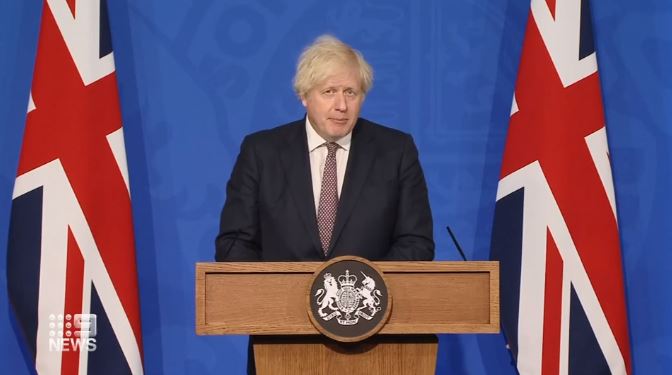
"This pandemic is not over," Prime Minister Boris Johnson said this week.
"We cannot simply revert instantly from Monday the 19th of July to life as it was before COVID."
Hospital numbers could get 'quite scary'
The British government's top medical adviser warned on Friday that the number of people hospitalised with COVID-19 could hit "quite scary" levels within weeks.
Infections have surged in recent weeks, mainly among unvaccinated younger people, as a result of the far more contagious Delta variant and the continued easing of lockdown restrictions.
Despite the increase, the British government plans Monday to lift all remaining legal restrictions on social contact in England and to ditch social distancing guidelines as well as the legal requirement for people to wear masks in most indoor settings, including shops, trains, buses and subways.
The government is hoping that the rapid rollout of vaccines will keep a lid on the number of people becoming seriously ill — a stance that some leading international scientists at an "emergency international summit" critiqued as "reckless".
The group, which includes advisers to the governments of Italy, New Zealand and Taiwan, said they joined forces through a "sense of urgency" to warn of the global consequences of allowing the delta variant to spread rapidly through the British population.
The scientists warned that the combination of high infection prevalence and high levels of vaccination "create the conditions in which an immune escape variant is most likely to emerge."
One of the co-signatories to Friday's statement, Dr. William A. Haseltine of the New York-based think tank Access Health International, went further, describing the strategy as "murderous" and "unconscionable."
Families representing many of those who have died from COVID-19 in the UK also joined in the criticism of the Conservative government's plan.
"The overwhelming scientific consensus is that lifting restrictions on Monday will be disastrous, and bereaved families know firsthand how tragic the consequences of unlocking too early can be," said Jo Goodman, co-founder of COVID-19 Bereaved Families for Justice. "There is a real fear that once again the government's thinking is being driven by what's popular rather than the interests of the country."
Other parts of the UK — Scotland, Wales and Northern Ireland — are taking more cautious steps out of lockdown.
So far, the number of people in hospitals with virus-related illnesses and subsequently dying remains relatively low, certainly when compared with the peak of the second wave of the pandemic earlier this year.
But with the government putting the country on notice that daily case numbers could rise to over 100,000 sometime this summer, concerns are clearly growing. Prime Minister Boris Johnson has sought to rein in any euphoria around Monday's lifting of restrictions, an occasion tagged "Freedom Day" on social media.
Johnson is urging people to remain vigilant when meeting with others and to carry on wearing masks in enclosed and crowded places.
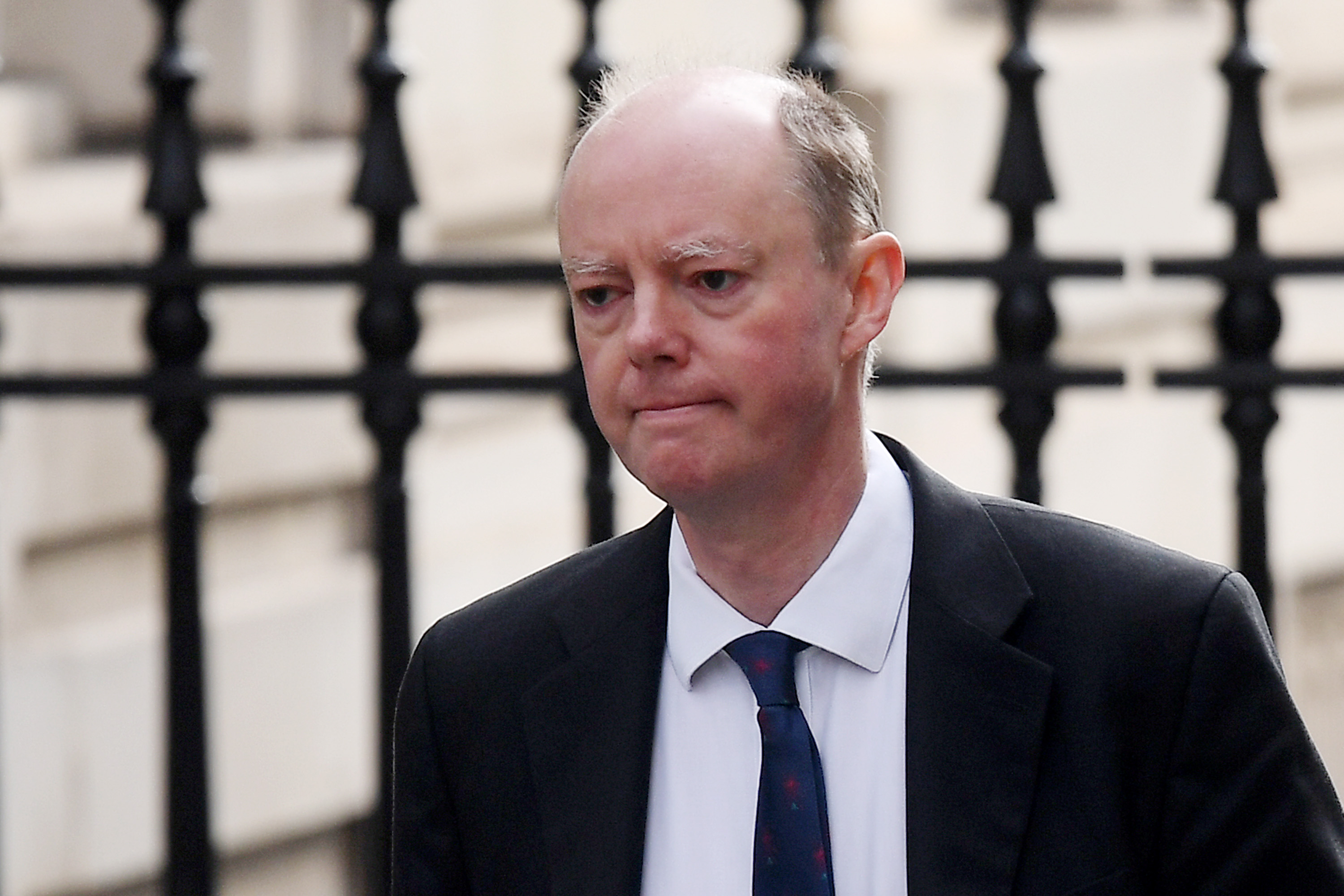
His chief medical officer, Chris Whitty, told a webinar hosted by London's Science Museum late Thursday that the UK is "not out of the woods yet".
"I don't think we should underestimate the fact that we could get into trouble again surprisingly fast," Whitty said.
More cases will inevitably lead to more people requiring hospital attention even though the vaccine rollout has helped build a wall of immunity around those deemed to be the most vulnerable to disease. More than two-thirds of British adults have received both doses of a vaccine, and almost 88 per cent have had one dose.
Friday's government data showed 3964 people hospitalised with COVID-19, the most since late March. Though the number has gone up steadily in recent weeks, it remains far lower than at the height of the second wave in January, when hospitals had around 40,000 COVID-19 patients admitted.
https://twitter.com/PHE_uk/status/1416051516692209669?ref_src=twsrc%5Etfw
Alongside the increase in hospitalisations, daily virus-related deaths have risen to levels not seen since March. Another 49 virus-related deaths were recorded Friday, taking the UK's total to 128,642, the seventh-highest in the world.
Government medical adviser Whitty warned that the number of people in hospitals with COVID-19 is doubling about every three weeks and could reach "quite scary numbers" if the current trend continues.
"We are not by any means out of the woods yet on this. We are in much better shape due to the vaccine program, and drugs and a variety of other things," he said.
"But this has got a long way to run in the UK, and it's got even further to run globally," he added.
Lunch in schools: National says 'poorly targeted', schools missing out
National is questioning priorities of the school lunches programme after a school that had nearly half its students in need turned it down because every student was required to take part.Another school requested lunches for more…
Auckland's winter festival, Elemental AKL, underway with music, food, art
It’s time to emerge from your winter hibernation, Auckland.Elemental AKL has returned for a third year, bringing a mixture of more than 50 free and paid events and experiences across the city.The mid-winter festival began on Wednesday…