Tag Archives: oceania

'Stop murdering our children': Pop-up testing site vandalised

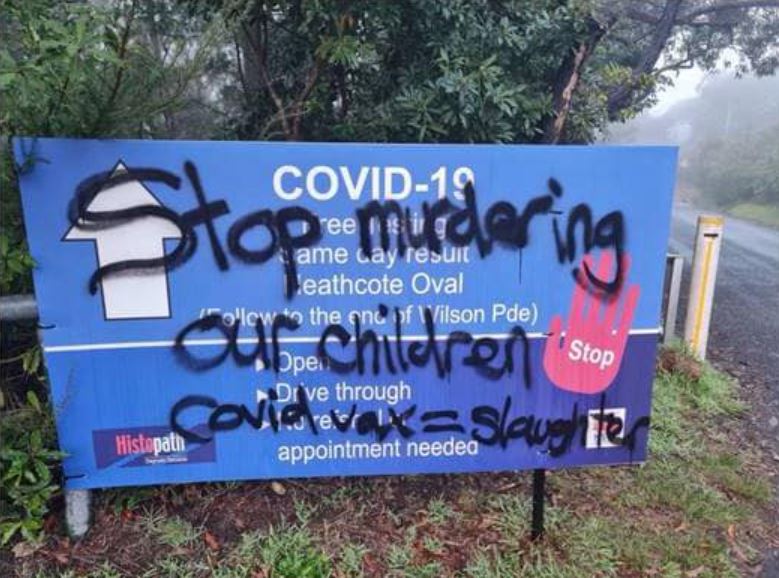
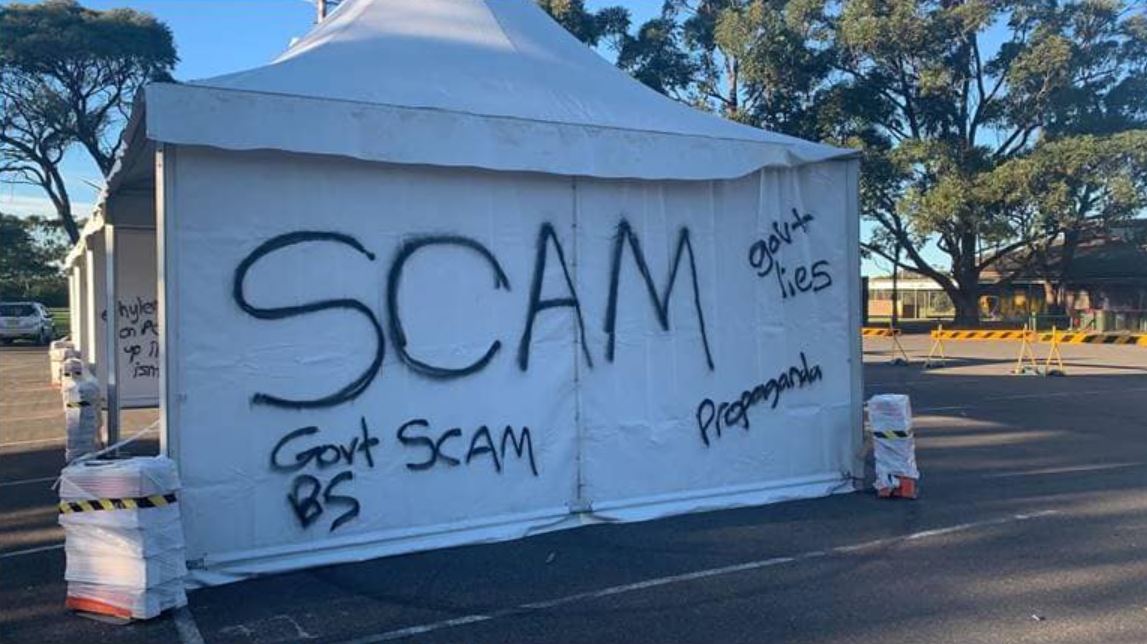
A pop-up COVID-19 testing site in Sydney's south has been targeted by vandals, calling the pandemic a "government scam".

This is the second time the drive-through testing site at Heathcote Oval, Heathcote has been attacked, with police launching an investigation to find the culprits.

Things like "government scam", "government lies" and "stop murdering our children" were sprayed across the tents and front signage on Sunday night

Local council said the continued vandalism was disappointing.

LIVE UPDATES: All the latest breaking coronavirus news from Australia and the world

Heathcote COVID testing site vandalism

"I care about my local community, and it is always disappointing to see vandalism in a public place, especially in a COVID-19 testing clinic on two separate occasions," Sutherland Shire Councillor Diedree Steinwall told nine.com.au. 

Ms Steinwall said residents of the Shire were just trying to get by and do the right thing during lockdown and hopes the police are able to locate the offender or offenders soon.

"Like everyone in Sydney, residents in the Shire are concerned and cautious at this stage. Sutherland Shire Council is doing its very best to support the community and help small businesses during the lockdown," she said.

Heathcote COVID testing site vandalism

READ MORE: Crucial days ahead for Sydney lockdown

While this is the second time the Heathcote pop-up testing site has been vandalised, other locations across Sydney have also been targeted.

In January, a testing site in Warriewood, north Sydney was targeted at least three times by teen vandals who knocked down and ripped up tents and gazebos set up by NSW Health.

Concern new Lambda variant could be resistant to vaccines

World health experts are concerned a new variant of the coronavirus could be resistant to vaccines.

The Lambda variant, formally known as C.37, was first reported in Peru, and accounts for more than 80 per cent of the nation's cases.

It has been detected in at least 26 countries, including the UK, the Independent reports.

READ MORE: Pfizer jab now offered by GPs in next phase of vaccine rollout

On June 14, the World Health Organisation (WHO) listed the Lambda strain as a variant of interest.

Just a few days later Public Health England (PHE) declared it was a "variant under investigation". PHE scientists said they were concerned the strain could spread quicker and be more resistant to vaccines or antibody treatments.

But PHE stressed that there is no evidence the Lambda variant causes more severe disease or reduces the effectiveness of current vaccines.

What is the research on Lambda?

Concerns are based around a study in Chile based on tests of health workers who had received two doses of China's CoronaVac Vaccine.

Results suggested the Lambda variant was more infectious than the Alpha (UK) or the Gamma (Brazil) variants.

READ MORE: The highly contagious Delta strain explained

The Lambda variant also had a higher "immune escape" of antibodies produced by vaccines compared with Alpha and Gamma.

"Our data show for the first time that mutations present in the spike protein of the Lambda variant confer increased infectivity and escape to neutralising antibodies elicited by the inactivated virus vaccine CoronaVac," the paper said.

The study, published on July 1, did not look at other vaccines and the effects of the Lambda variant.

'Unusual' mutations

The Lambda variant had "unusual' mutations, Jeff Barrett, director of the COVID-19 Genomics Initiative at the Wellcome Sanger Institute in the UK, said.

It has a unique pattern of seven mutations in the spike protein that the virus uses to infect human cells, Dr Barrett told the Financial Times.

"One reason why it is hard to make sense of the threat from Lambda, using computational and lab data, is that it has rather an unusual set of mutations, compared with other variants," he said.

You can find out more details about how to book your vaccine through the Federal Government health site here.

Should JobKeeper be reinstated for areas under lockdown?

We want to know what our 9News.com.au audience thinks about the big issues, from coronavirus lockdowns to budget measures and big sporting clashes and everything in between.

Let us know by voting in the poll below.

July 8, 2020: Time to bring back JobKeeper?

July 6, 2020: Anxious wait over Sydney lockdown

Note: These reader polls are not scientific and reflect the opinion only of visitors who have chosen to participate.

'We can't continue this chorus of heartbreak'

A Current Affair reporter Pippa Bradshaw lost her father and sister last year – with the double tragedy made all the more heartbreaking by issues she faced with border restrictions and quarantine as she made desperate efforts to say goodbye. Twelve months on, Bradshaw remains frustrated families around Australia continue to face the same pain.

OPINION: In a year where we've all grown, adapted and changed, COVID-19 has taught us how precious life and family is.

But I fear our politicians have been so quick to score points in a race to eliminate the virus and they've learnt nothing at all. 

For anyone who has lost a loved one over the past 18 months, they know the trauma that we're seeing all too often in the media – families desperate to say their final goodbyes in a country broken by lockdowns and border closures.
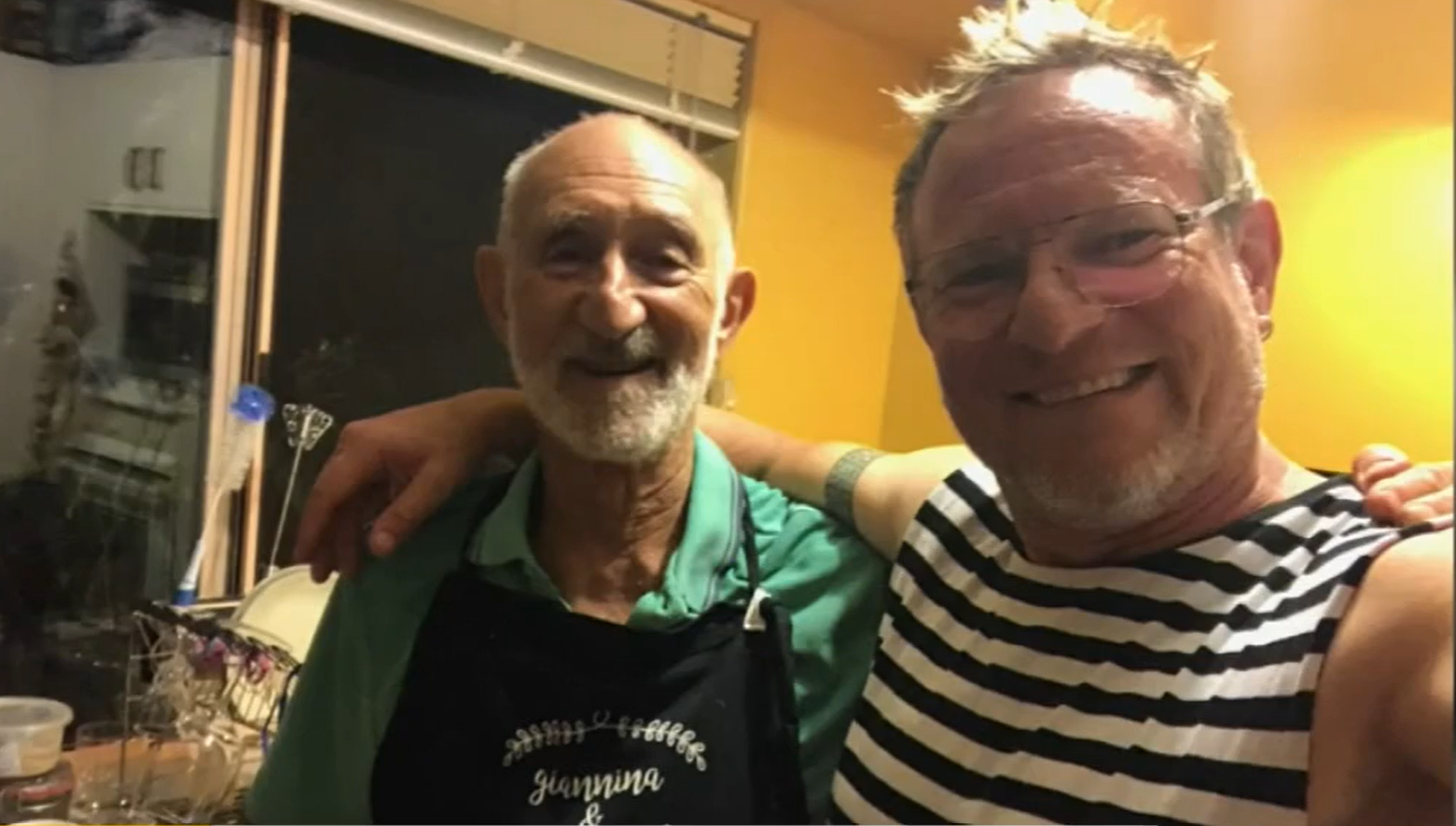
Mark Kilian has been refused entry into Queensland as Mark's father dies from pancreatic cancer.

Mark Kilian was desperate to see his father one last time in Queensland, but was treated as a political hot potato until sanity prevailed, just in time.

It is a fate you wouldn't wish on your worst enemy. But, for many, border closures and bureaucracy has kept us from our loved ones in their final hours.

'When someone passes, everyone is willing to offer their help, thoughts and prayers. I can tell you, the only thing people want is their loved one back. Our leaders can't give us that, but they can give some of our returning travellers those precious last moments'

As the world began to shut down in March 2020, my father was terminally ill with a brain tumor in Canberra. 

When Queensland Premier Annastacia Palaszczuk tweeted: "Cabinet has decided to close Queensland's borders" on March 23, with no other information, I was already south of Grafton, making the 13-hour drive to Canberra for fear I would get stuck away from my family. 

I counted myself lucky, that I was able to be with my family in my father's final days. 
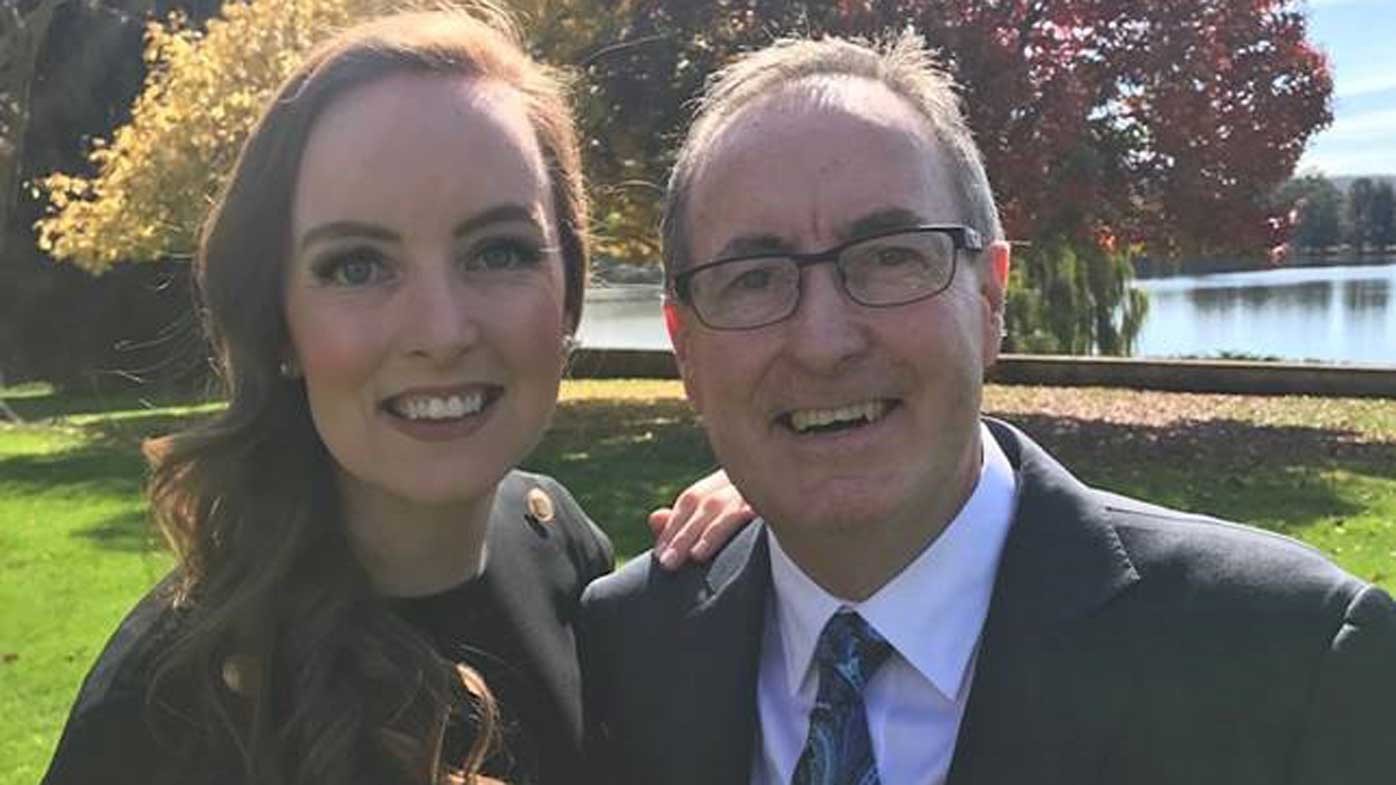
Pippa Bradshaw's father died earlier this year after a battle with brain cancer.

Then again in July last year, a nightmare far beyond any conception unfolded. 

A phone call in the middle of the night would change my life forever. 

My older sister, Penelope, who was living in New York, had been taken to hospital by ambulance after collapsing minutes after calling 911 complaining of a headache. 

She had a massive bleed in her brain and surgery was needed immediately.
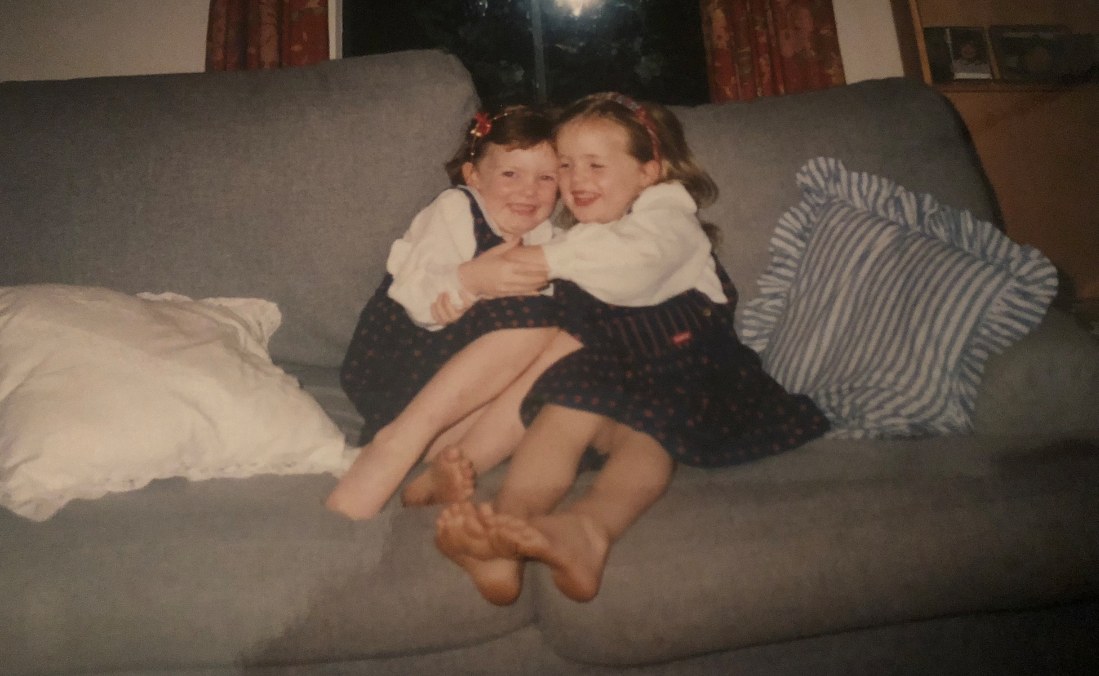
Pippa, pictured with her sister Pen, as children.

I had to give verbal permission over the phone, as the American doctor told me I should really try and get there as soon as I could because "this is as bad as it gets".

Easier said than done in a pandemic, when the international borders are closed. 

As I sat at my dining room table in the middle of the night, waiting to hear if my sister had survived the surgery, I navigated the Australian Border Force's website to apply for an exemption to leave the country. 

Of course, I needed supporting documentation from my sister's treating doctor, as to why, I should be allowed to leave.

'We're a country that prides itself on mateship, yet we can't help our own in the most dire of circumstances'

I knew there was a 10am flight the next day from Sydney I could be on but, I needed the exemption before I could book the flight. 

The next few hours felt like a lifetime. The surgeon finally called back around 3am. It was bad news, Pen too had a brain tumor, which was undiagnosed, which had led to the bleed. The damage was "catastrophic". There was no chance my sister would ever wake up. 

I had to ask if they could please try their best to keep Pen alive until I got there – not knowing when that might be. 

My exemption to travel was approved, but not soon enough to get the flight the next morning. A gruelling 24 hours later I was able to board my flight to New York. 

Unfortunately, it wasn't soon enough. My beautiful sister passed away while I was in the air between Sydney and San Francisco. 

My step-mother, who had been texting me updates throughout the flight, then had the monumental task of messaging me the heartbreaking news, Pen couldn't hold on any longer.

Not a day goes by that I don't think, if I had been able to fly just 24 hours earlier, I would have been there to hold my sister's hand, like I was for dad, when she took her final breaths.
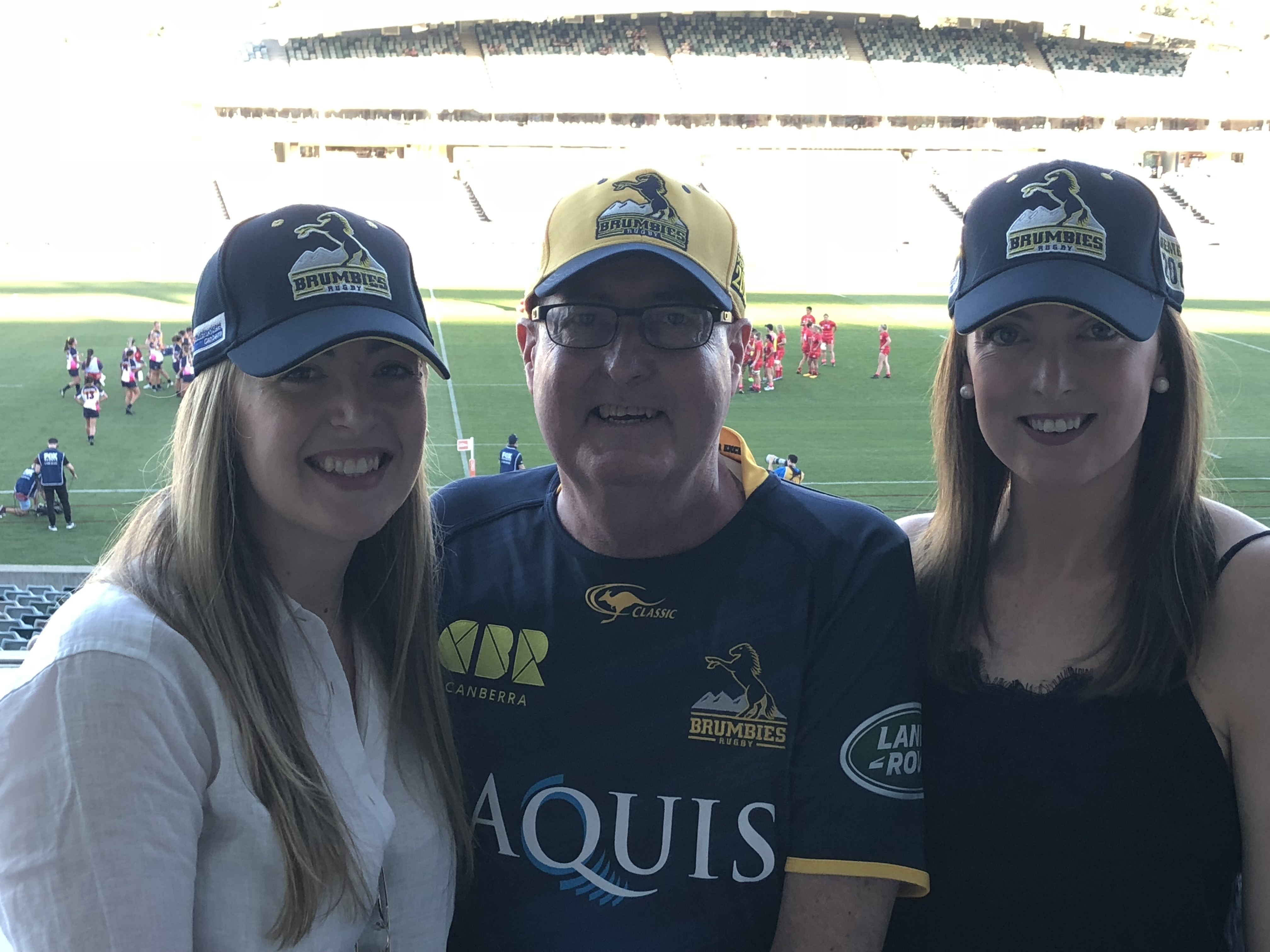
Pippa, right, with her dad and her sister, Pen. Pippa was denied the chance to say goodbye to her sister, and remains frustrated families around Australia are enduring the same heartbreak.

Now nearly 12 months on, I feel the wounds of that trauma re-opening every time we see a case of someone not able to say goodbye on the news. 

Don't get me wrong, we should be hearing these stories. It's outrageous that 18 months into this pandemic a solution has not been found.

It shouldn't take the media to jump up and down every time for our governments to do the right thing.

Why is it when we have Australian citizens returning, fully vaccinated and posting negative covid tests, we won't help them?
Pippa Bradshaw has called for politicians across states and parties to come together to find a solution.

We're a country that prides itself on mateship, yet we can't help our own in the most dire of circumstances. 

If we can currently allow unvaccinated staff to work in our hospitals, surely we can allow families, most even vaccinated, to say goodbye. 

When someone passes, everyone is willing to offer their help, thoughts and prayers. I can tell you, the only thing people want is their loved one back. Our leaders can't give us that, but they can give some of our returning travellers those precious last moments.

It's about time our politicians show some heart and imagined for just one second, if it were them, and what they would want their leaders to do. 

We can't continue this chorus of heartbreak when surely there are solutions. 

Allowing people to see their dying relatives should be the rule, not the exception.
Severe weather continues in WA

A series of aggressive cold fronts crossing western and southern WA are generating blustery winds and showers today and tomorrow.

A severe weather warning is in place with the front forecast to move southwest later this afternoon and extend east across the South West Land Division Tuesday night and Wednesday morning.

Thunderstorms and showers associated with the front may produce damaging winds averaging 60 to 70 kilometres per hour with peak gusts to around 100 km per hour.

https://twitter.com/BOM_WA/status/1411920121573040128

Winds are expected to develop southwest of a line from Harvey to Collie to Denmark from 2pm WST Tuesday.

Damaging surf conditions are likely which could cause significant beach erosion between Lancelin and Cape Leeuwin.

Tides may be higher than expected particularly on Wednesday morning between Lancelin and Albany, including the Perth Metropolitan area.

Locations which may be affected include Bunbury, Busselton, Manjimup, Margaret River, Harvey and Walpole.

A cold front crossing Tasmania is causing strong winds and rain with a strong wind warnings for the Lower East Coast and South East Coast.

Onshore winds are bringing a few showers to northeast Queensland with the Peninsula Coast and Cooktown Coast also being warned of particularly strong winds today.

https://twitter.com/BOM_NSW/status/1412159877045235713

A broad high is leading to a chilly morning in the east with temperatures in Sydney dropping to 6C this morning.

Other areas along the coast are also in for a cold start to the day with minimums of 4C in Newcastle and 3C in Port Macqaurie.

Canberra was even colder with a minimum of -3C.

Bodies of Australian-linked couple found in Florida tower rubble

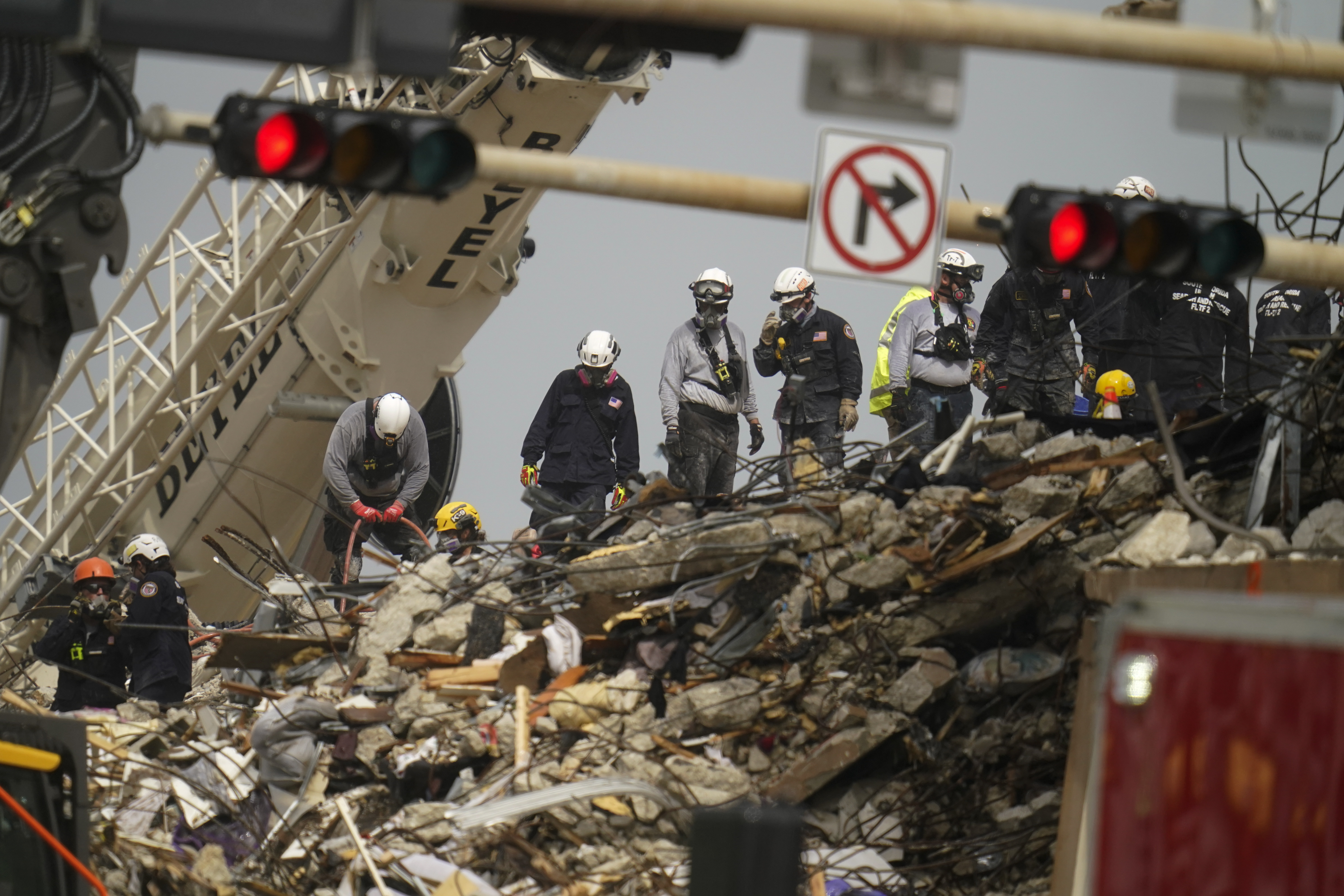
Rescuers have discovered three more victims – including two Americans with links to Australia – while searching through rubble after the last of a collapsed Florida condo building was demolished, raising the death toll to 27.

The bodies of Tzvi Ainsworth, 68, and his wife Itty Ainsworth, 66, who have family in Australia, were found on Monday (US time), the Miami-Herald reports.

The couple was renting an 11th-floor apartment in the Champlain Towers when it collapsed last month.

READ MORE: Search for bodies paused ahead of Miami condo demolition

Miami Florida building collapse

The couple had seven children and moved to South Florida four years ago from Australia. Many of the seven live in Florida, including a son who had a baby in recent days. Another son in South Africa also just had a baby.

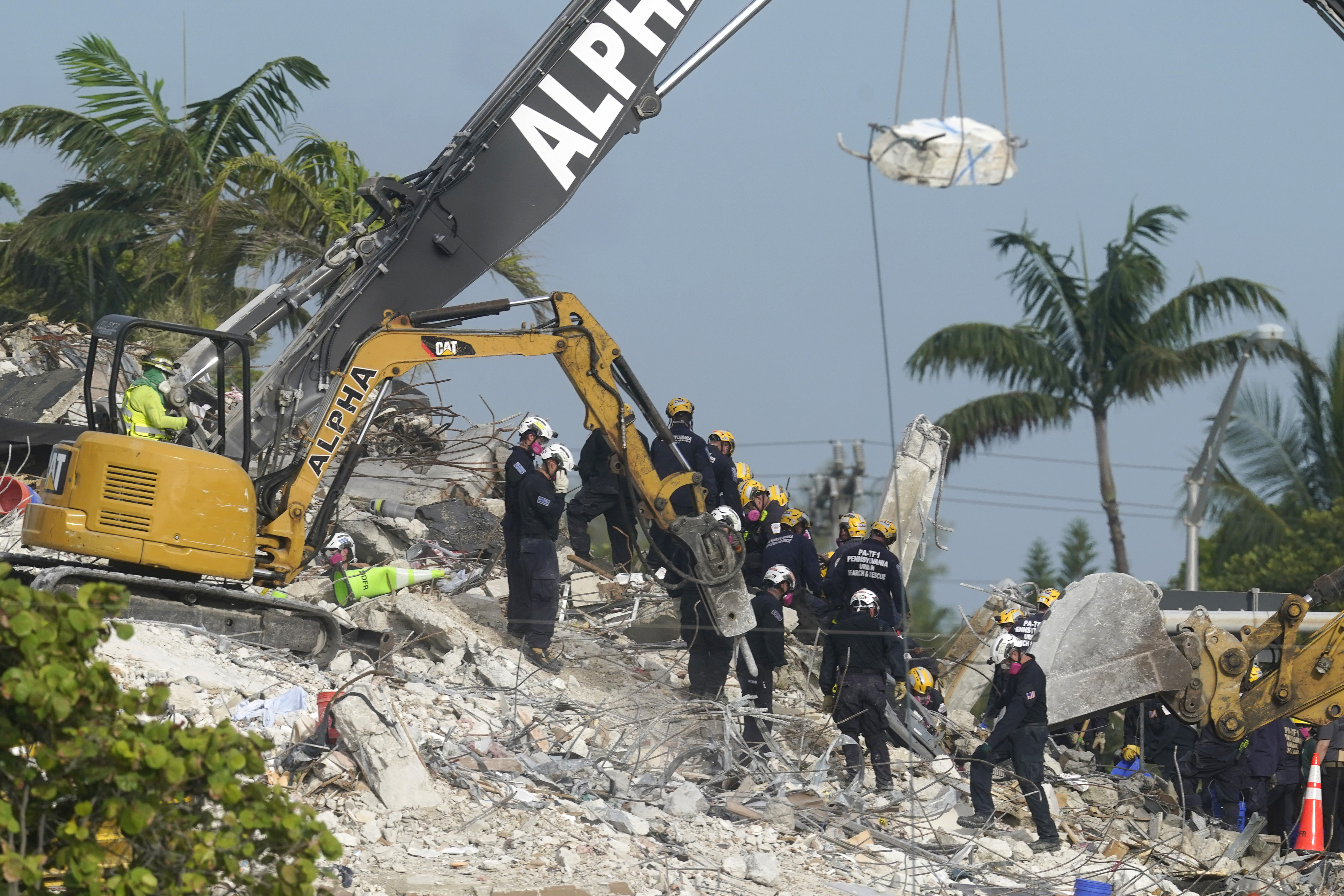
The demolition allowed crews into previously inaccessible places, including bedrooms where people were believed to be sleeping at the time of the disaster, officials said.

https://twitter.com/apiotrowski9/status/1412141257556578336?ref_src=twsrc%5Etfw

Another 118 people remain unaccounted for.

The demolition late on Sunday was crucial to the search-and-rescue effort, officials said, and raised the prospect crews could increase both the pace of their work and the number of searchers at the site, although the chance of finding survivors 12 days after the June 24 collapse had diminished.

Teams had been unable to access areas closest to the remaining structure because of its instability, Miami-Dade County mayor Daniella Levine Cava said.

"Truly we could not continue without bringing this building down," she said at a news conference.

Florida Governor Ron DeSantis said the newly accessible area included master bedrooms where people were believed to be sleeping when the building collapsed.

"We will be able to access every part of that pile, which they hadn't been able to do up to this point," he said. 

"I think it's going to move the pace. I think the momentum is very strong."

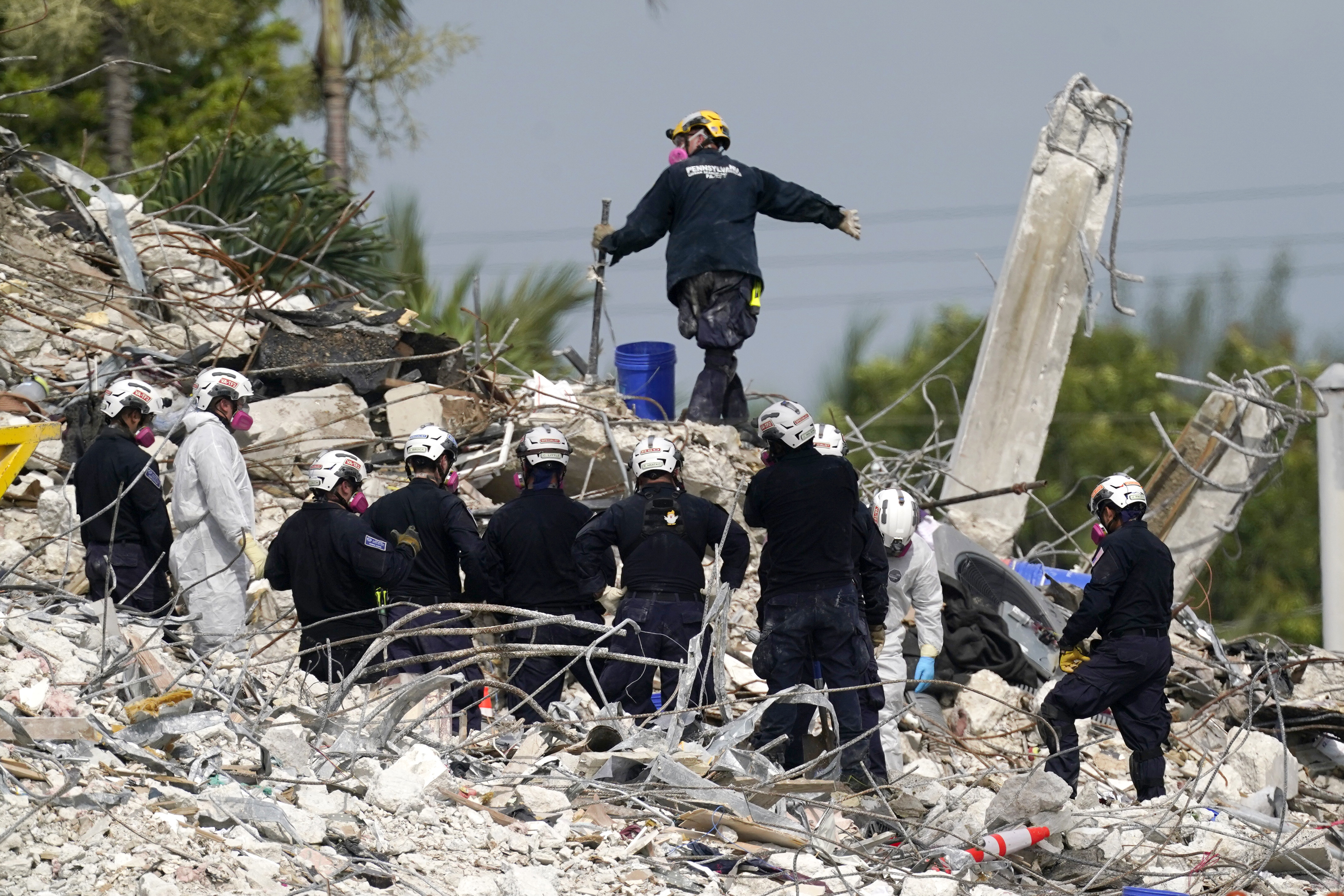
Crews could be seen climbing a mound of debris at the site on Monday (early Tuesday AEST) alongside a piece of heavy equipment that was picking up rubble.

Workers immediately began clearing some of the new debris after the demolition so rescuers could start making their way into parts of the underground garage, which is of particular interest. 

READ MORE: Two more bodies found in collapsed Miami apartments as 128 still missing

Miami building collapse loss 'too great to bear' as rescuers find children

The search had been called off Saturday to allow specialists to drill holes for explosives needed for the demolition.

"As a result of the contractor who brought it down, he did it in such a way that literally we actually were back on the original pile in less than 20 minutes," Miami-Dade Assistant Fire Chief Raide Jadallah told family members of those missing, drawing applause in a rare upbeat moment for the twice-daily meetings.

Rescuers hoped to get a clearer picture of voids that may exist in the rubble as they search for those believed to be trapped under the fallen wing of the Champlain Towers South.

No one has been rescued alive since the first hours after the collapse.

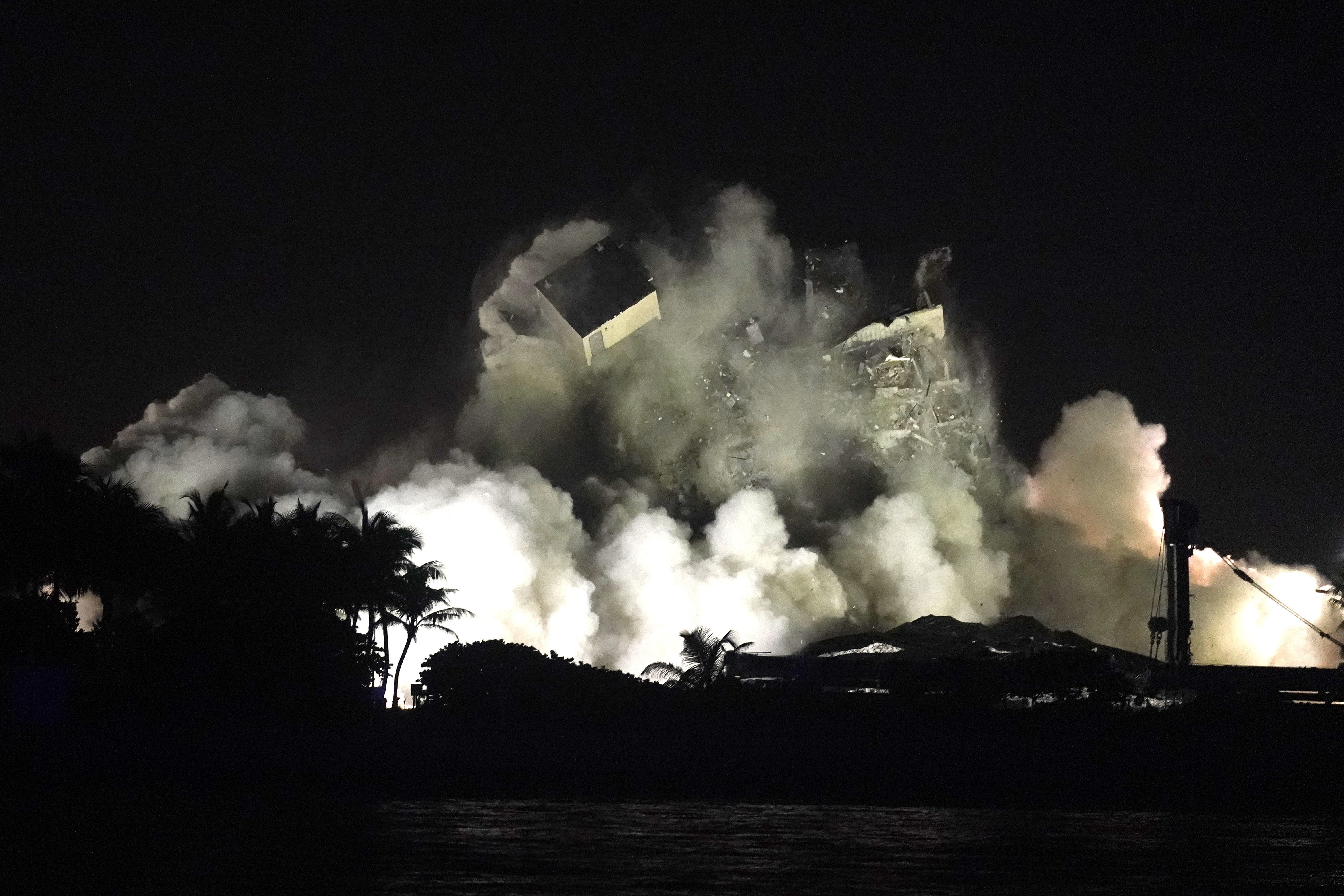
During the demolition, a loud rat-a-tat of explosions echoed from the structure. Then the building began to fall, one floor after another, cascading into an explosion of dust. Plumes billowed into the air as crowds watched the scene from afar.

Cr Levine Cava told the Associated Press that the demolition went "exactly as planned."

"It was picture-perfect. Exactly what we were told would happen," she said in an interview.

READ MORE: 'Waiting is unbearable': Biden consoles Florida families

Florida building collapse Miami

Some residents had pleaded to return to their homes one last time before the demolition to retrieve belongings, but they were denied. Others wondered about the pets left behind. Officials said they found no signs of animals after making three final sweeps, including the use of drones to peer into the abandoned structure.

Cr Levine Cava said teams are working to save personal items and had asked residents to catalog what they're missing to match with items as soon as they were recovered.

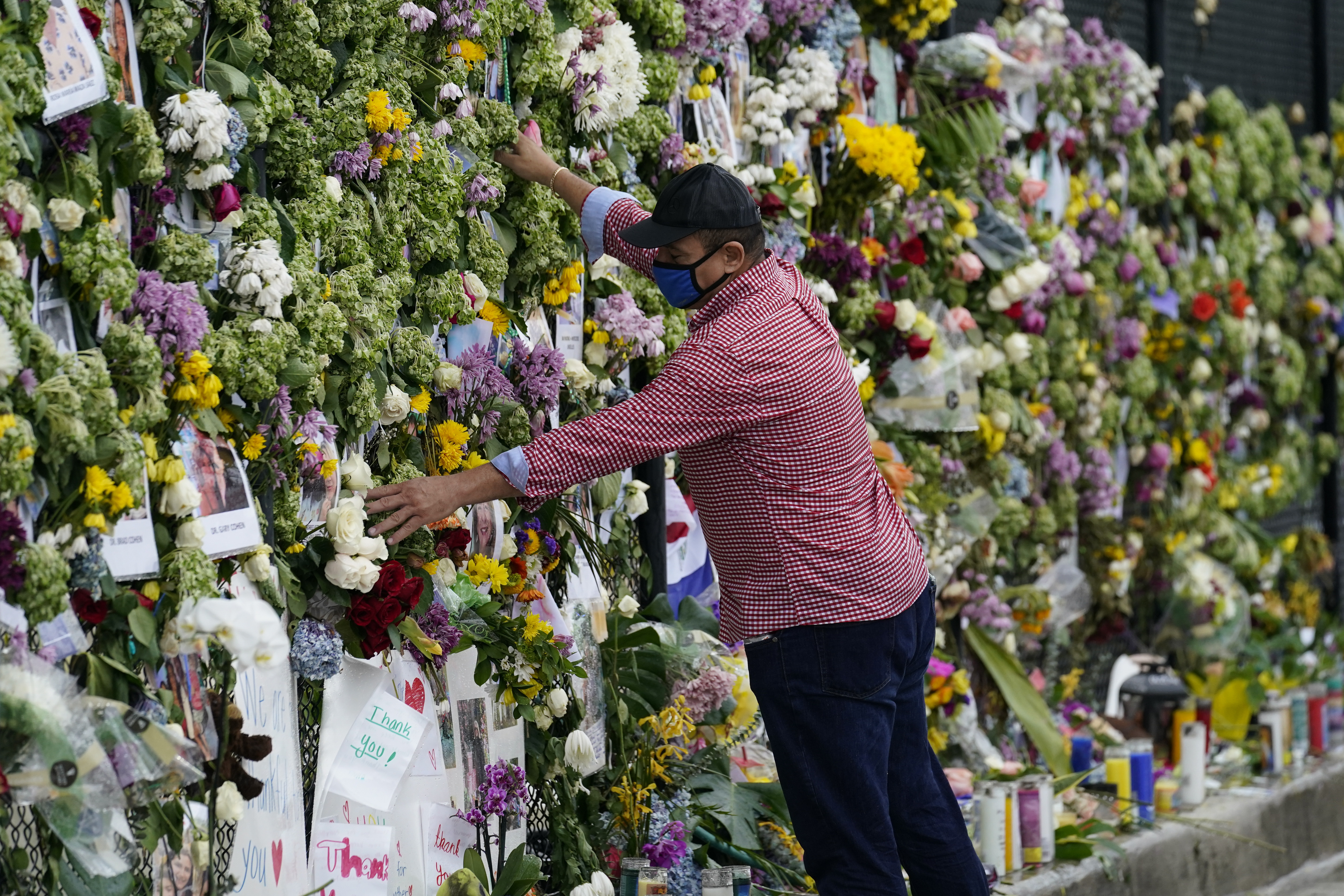
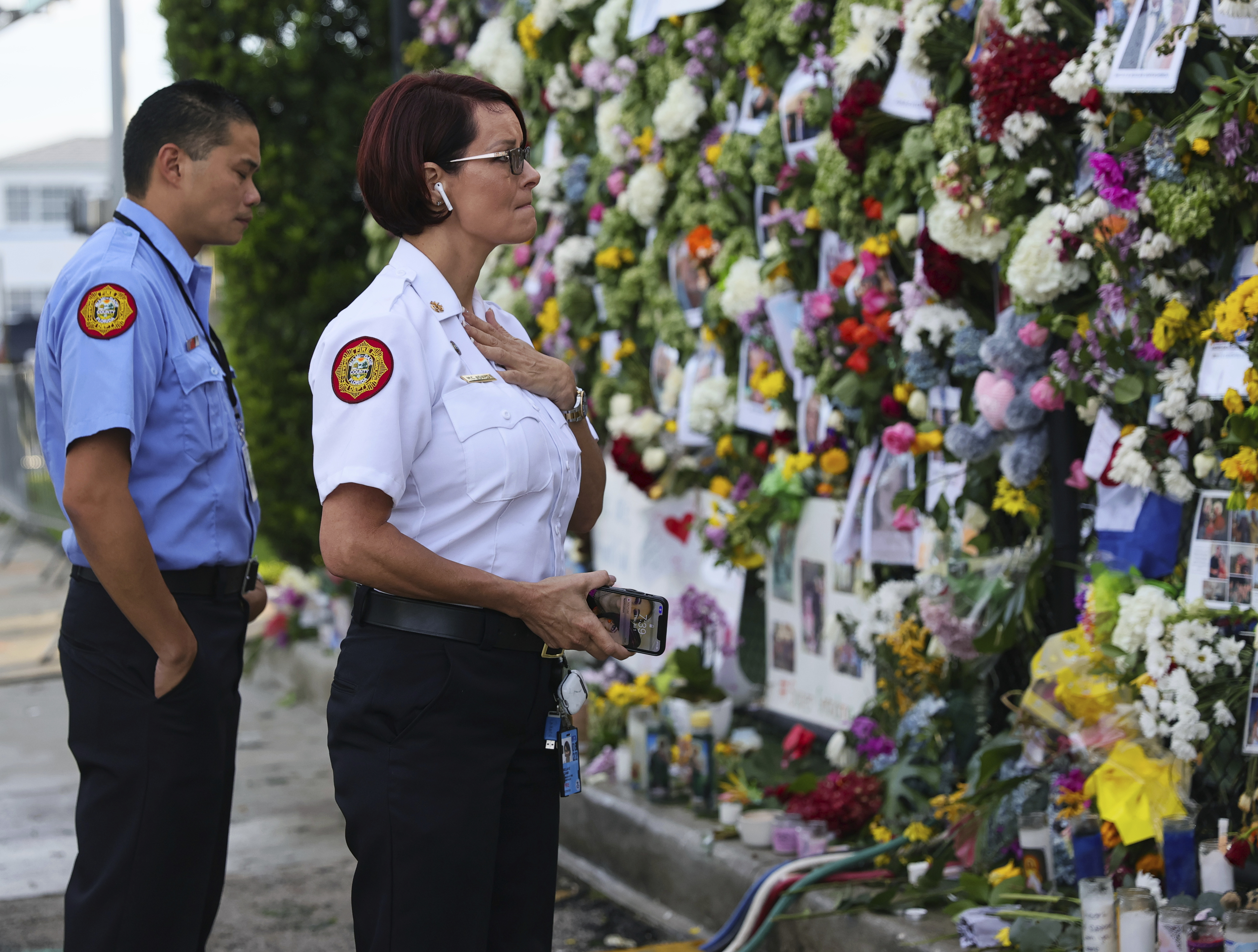
"The world is mourning for those who lost their loved ones and for those who are waiting for news from the collapse," she said at the news conference. 

"To lose your home and all your belongings in this manner is a great loss as well."

The decision to demolish the remnants of the building came after concerns mounted that the damaged structure was at risk of falling, endangering the crews below. Parts of the remaining building shifted on Thursday, prompting a 15-hour suspension in the work.

Approaching Tropical Storm Elsa added urgency to the demolition plans. US President Joe Biden declared a state of emergency in Florida because of the storm, making federal aid possible.

The latest forecasts showed the storm moving westward, mostly sparing South Florida, but the area could still experience heavy rains and winds. Mr Jadallah said that weather was not expected to affect the search efforts.

"Now that we don't have an issue with the building, the only time that we're stopping is lightning," he said.

Johnson says restrictions to ease, UK must live with virus

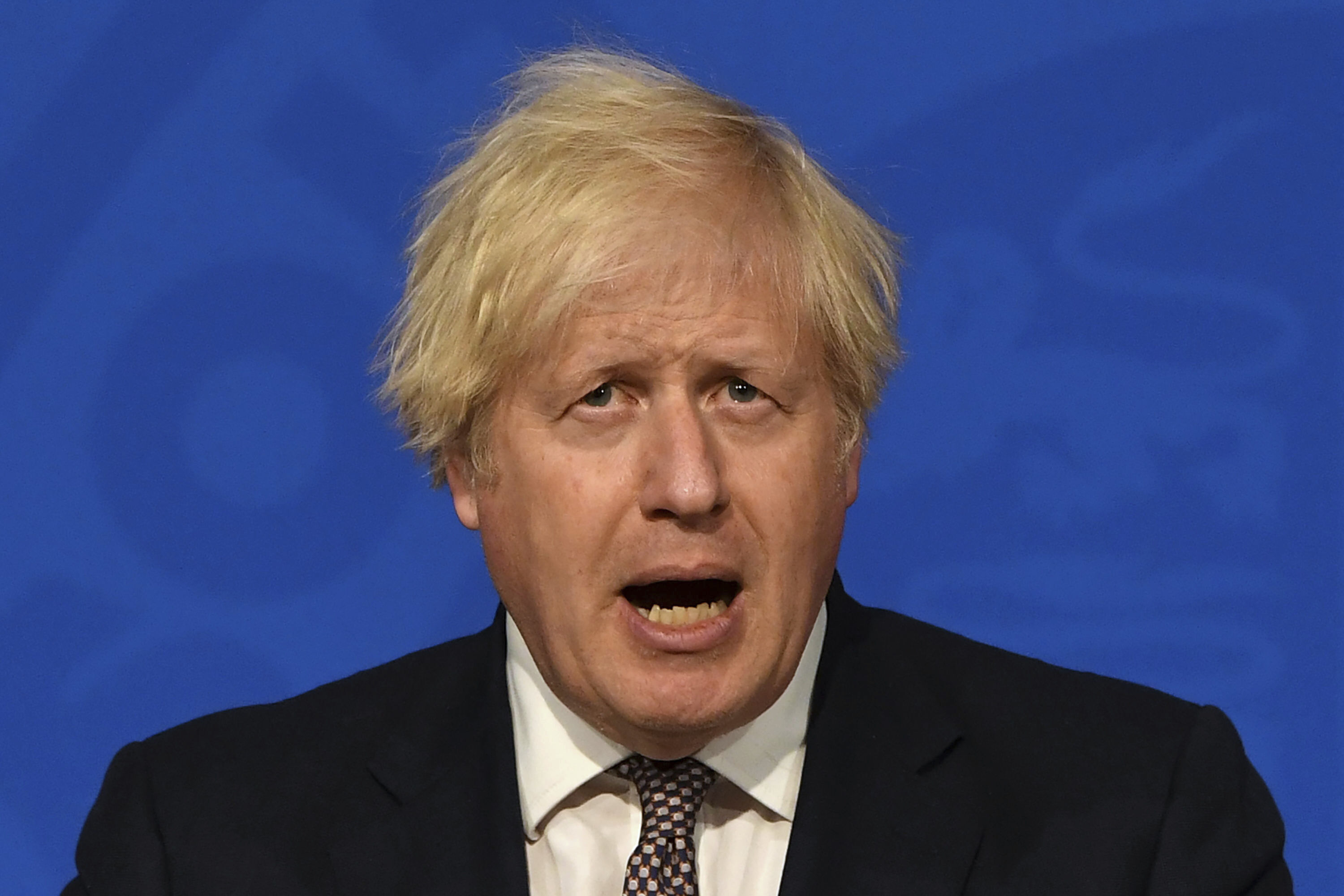
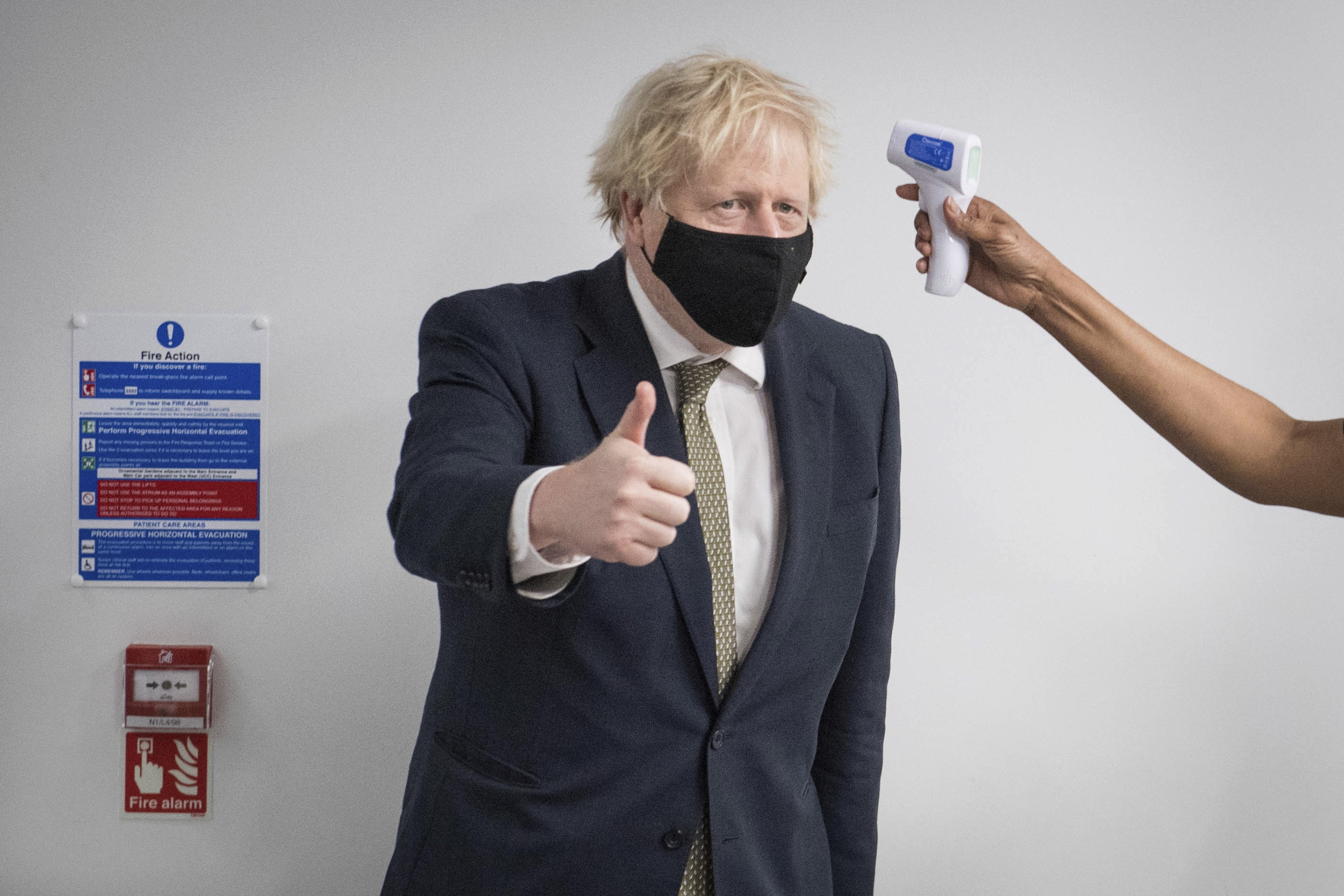
British Prime Minister Boris Johnson confirmed Monday that his government plans to scrap laws requiring face masks and social distancing later this month, though he acknowledged that lifting the restrictions will drive surging coronavirus cases even higher.

Johnson said legal controls will be replaced by "personal responsibility" when the country moves to the final stage of its lockdown-lifting roadmap. That is scheduled to happen on July 19, though Johnson said a final decision would come on July 12.

The change will mean people can throw away masks after months of enforced face-covering, though businesses and transit operators may still require them, and they will still be recommended in some enclosed spaces.

The removal of social distancing rules will allow nightclubs to reopen after 16 months of enforced shutdown, and patrons to once again order drinks at the bar in a pub. No longer will customers have to scan a phone app to provide their contact details when entering a restaurant or bar.

The government will also stop instructing people to work from home if they can, leaving employers free to bring staff back to offices.

The changes apply in England. Other parts of the UK — Scotland, Wales and Northern Ireland — are following their own, broadly similar, road maps out of lockdown.

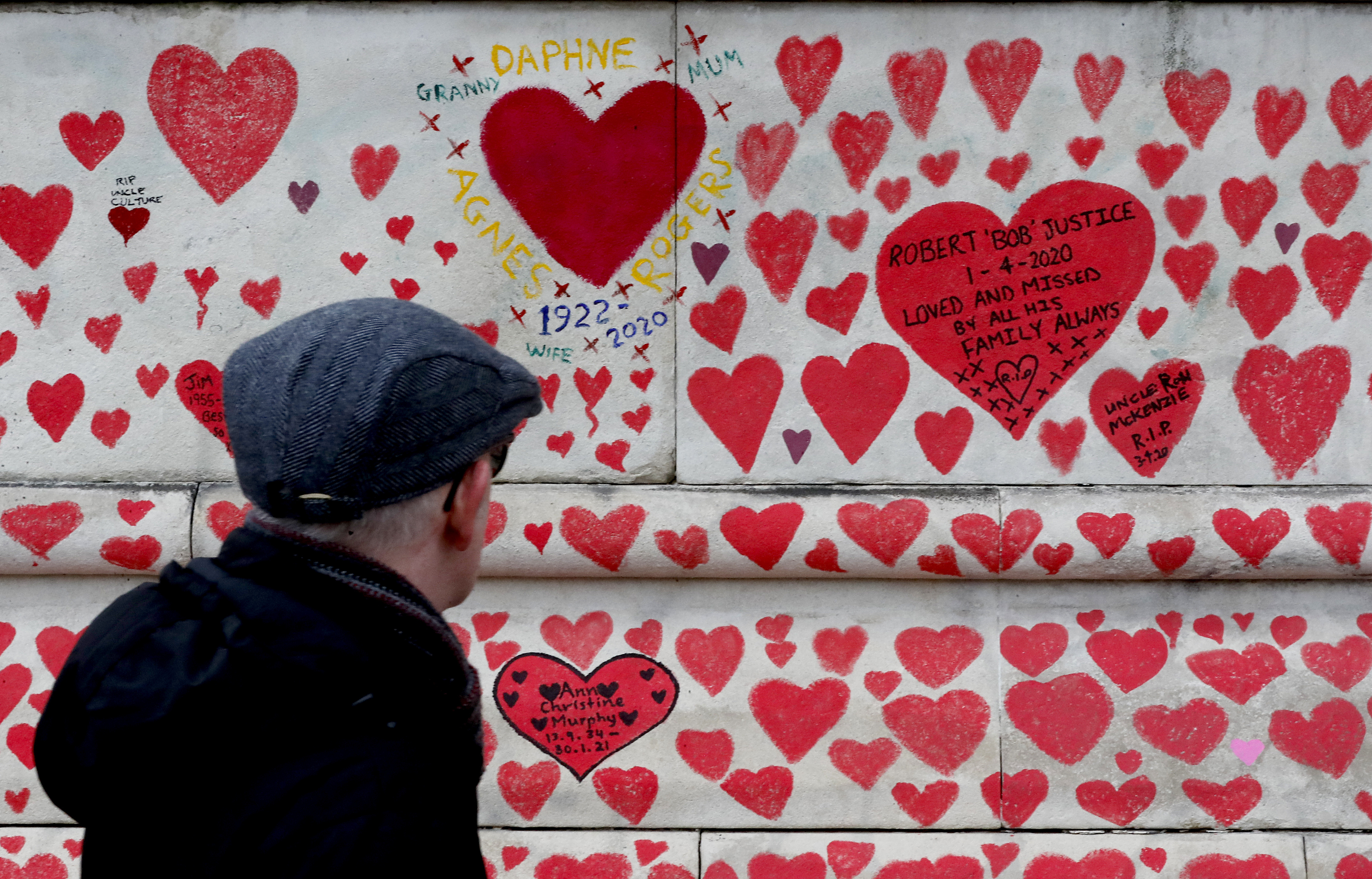
Britain has recorded more than 128,000 coronavirus deaths, the highest toll in Western Europe, and infections are rising due to the highly transmissible delta variant of the virus. Confirmed cases have shot up from about 2000 a day earlier this year to 25,000 a day in the past week. But the number of deaths is broadly stable, at fewer than 20 a day.

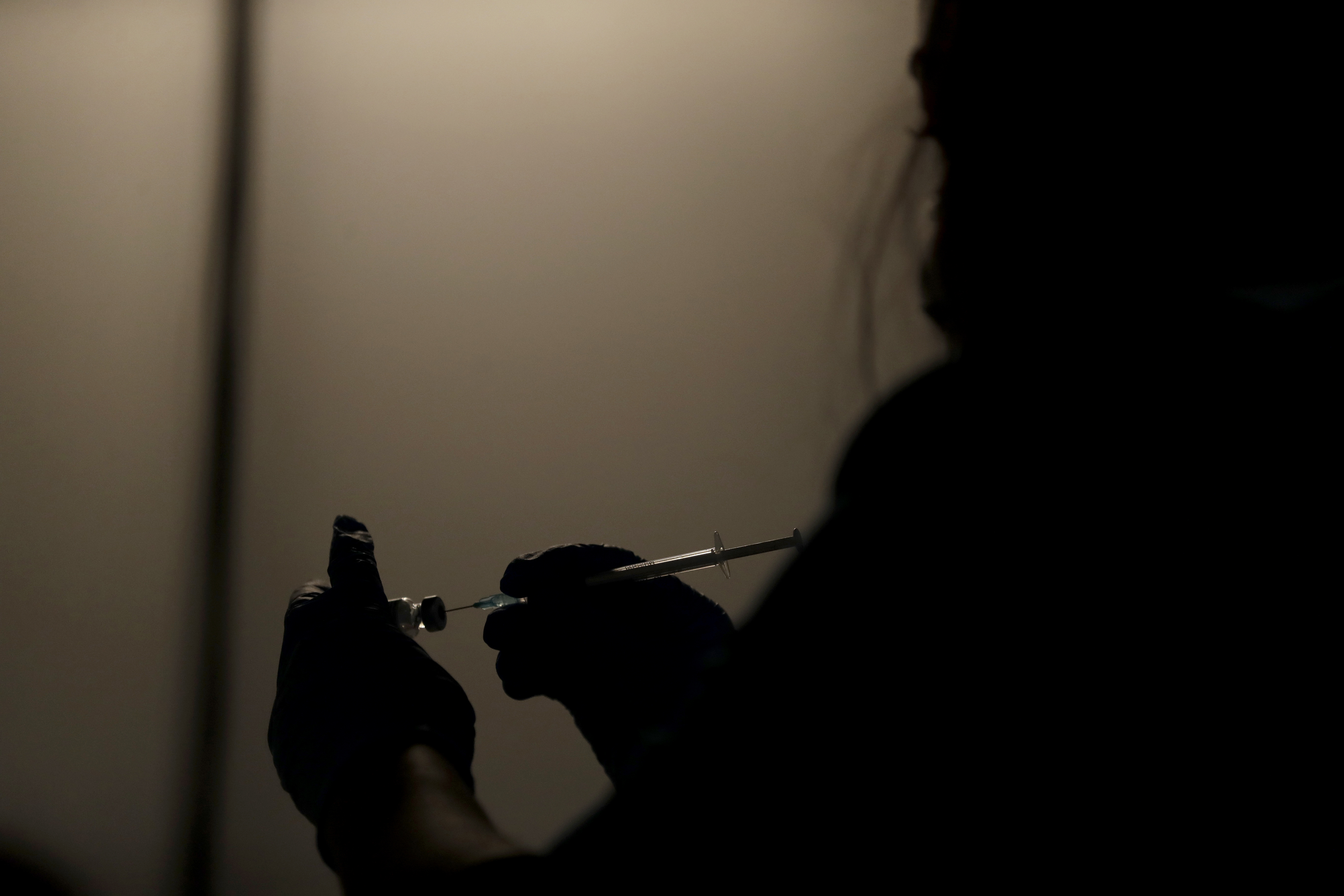
Public health officials say Britain's vaccination program has weakened the link between infections and deaths, though not severed it. So far, 86 per cent of UK adults have received at least one vaccine dose and 64 per cent are fully vaccinated. The government aims to give everyone over 18 both shots by mid-September.

Johnson acknowledged that infections, hospitalisations and deaths will all rise once remaining restrictions are lifted.

"I want to stress from the outset that this pandemic is far from over," he said, predicting that cases could hit 50,000 a day by July 19. "We must reconcile ourselves, sadly, to more deaths from COVID."

Johnson said Britain would have to "learn to live with this virus" — a major shift in tone from a leader who has previously painted COVID-19 as an enemy to be vanquished.

That message will be welcomed by lockdown-skeptic lawmakers in Johnson's governing Conservative Party, who say the economic and social damage of restrictions outweighs the public health benefits, and Britain's populist press, which have dubbed July 19 "freedom day."

But public health officials and scientists have urged caution, saying ditching masks and social distancing altogether could be dangerous. Psychologist Stephen Reicher, a member of the government's scientific advisory committee, said "proportionate mitigations" against the spread of the virus should stay in place.

"I think we need very clear messaging and I think in certain spaces — crowded, badly ventilated spaces — masks are crucial mitigation," he told the BBC.

The British government, which enforced one of the longest lockdowns in the world, has lifted restrictions for England in a series of steps that began with reopening schools in March. The fourth and final stage was delayed last month to provide time for more people to be vaccinated amid the rapid spread of the delta variant, which was first discovered in India.

Jonathan Ashworth, health spokesman for the opposition Labour Party, said the government should exercise more caution.

"We're not out of the woods," he said. "We want to see the lockdown end but we need lifesaving mitigation in place. We still need sick pay, local contact tracing, continued mask wearing, ventilation and support for children to prevent serious illness."

Paul Hunter, professor in medicine at the University of East Anglia, said it made sense to ease restrictions in summer, when schools are closed, people spend more time outdoors and other respiratory infections are at a low level.

"The disease burden associated with a larger peak during the summer would likely be less than one during the winter," Hunter said.

But Richard Tedder, a virologist at Imperial College London, said easing up while infections are still rampant "comes with the very real risk of facilitating the escape of variants which will be even more resistant to vaccines and potentially more infectious.

"Failing to recognise this is playing with fire," he said.