Switching to greener diets can help cut emissions – but may also spell higher food bills for families who can afford it least, a first-of-its-kind Kiwi study finds.The University of Auckland researchers behind the analysis say their…
Tag Archives: oceania
Travel company fined for taking busloads of tourists to NSW zoo
A travel company has been fined thousands of dollars after three busloads of tourists turned up at a zoo in regional NSW, in breach of health orders.
When the buses – with 128 guests and staff onboard – arrived at Taronga Western Plains Zoo in Dubbo yesterday, staff called NSW Police.
Police said at least 76 people on board were not supposed to leave Greater Sydney under the current health orders.
LIVE UPDATES: Lockdowns in four states and territories
READ MORE: NSW records 19 new COVID-19 cases amid record testing numbers
The group had left Sydney last Friday, hours before the initial lockdown of four LGAs in the city and east, and continued to travel through regional NSW after the Public Health Orders were updated on Saturday.
When the guests started to check-in at the zoo, staff realised some had been in the Greater Sydney area on or after June 21.
"In discussions prior to their arrival, Taronga had received assurances from the group that they were compliant with NSW Public Health Orders, however at the point of check-in it was revealed that the group had in fact visited the Greater Sydney area," a statement from Taronga said.
The guests were told to go home immediately, and the tour company was fined $5000.
The company owner told police he was aware of the public health orders but decided to continue the tour as planned anyway, NSW Police Deputy Commissioner Gary Worboys said today.
"But the staff at the zoo did exactly the right thing – they isolated the risk and alerted police. They did a great job to protect the local community," Mr Worboys said.
You can find out more details about how to book your vaccine through the Federal Government health site here.
Russia tests giant nuclear submarine packed with secret weapons
Russia has unveiled a nuclear submarine armed with advanced weapons that's believed to be the largest built anywhere in the world over the last 30 years.
The Belgorod started sea trials on the weekend amid rising tensions between Russia and NATO navies, reports Naval News.
The 184 metre-long nuclear-powered submarine is armed with six intercontinental Poseidon torpedoes but can also act as a mothership for smaller submarines.
READ MORE: Russia 'building first fully stealth warship'
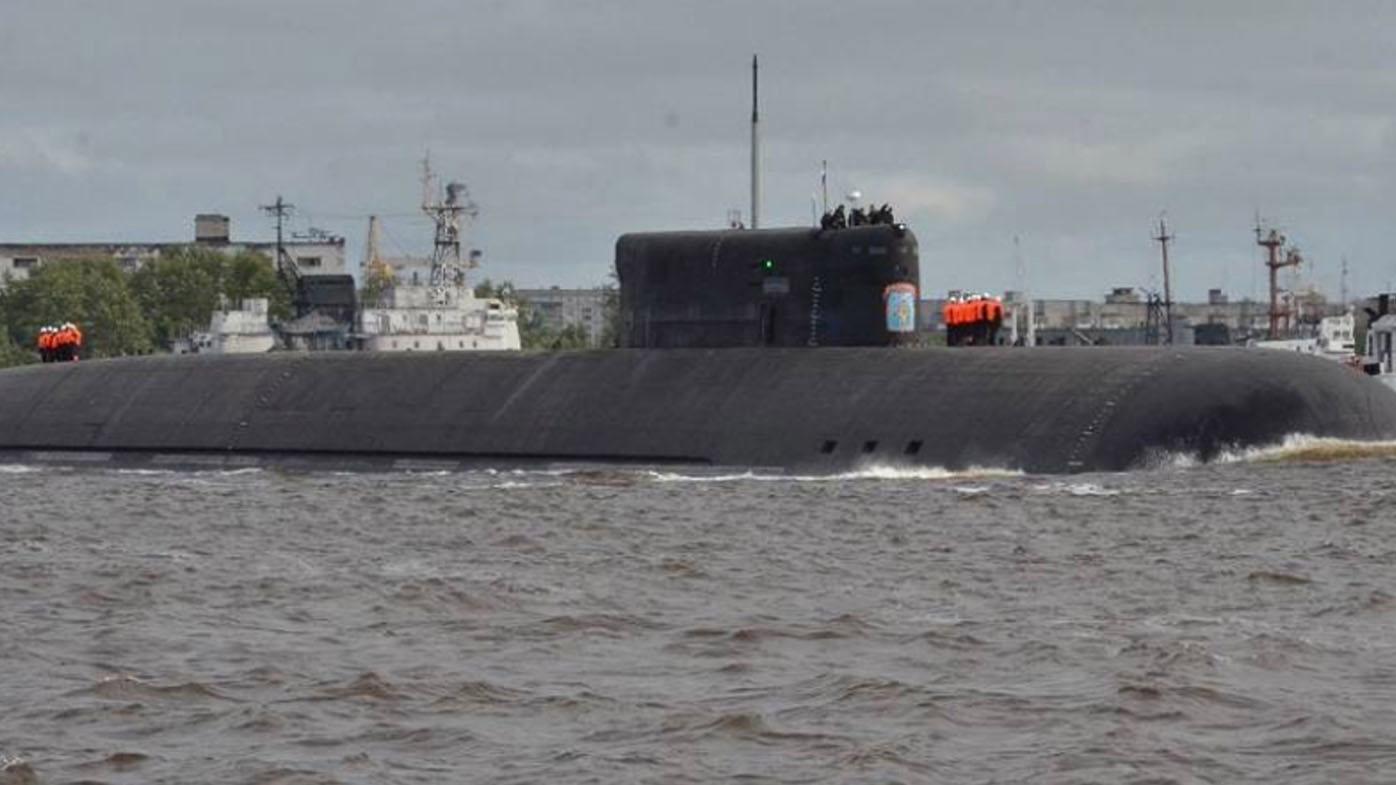
The torpedoes can carry nuclear warheads and have an unlimited range.
With a speed of about 70 knots and capable of reaching depths of 1000 metres, they cannot be countered with current weapons, reports say.
The Belgorod is also planned to become a mothership for potential clandestine Russian strikes against key western underwater internet cables.
It will act as a host vessel or for its deep diving mini submarines equipped with robotic arms that could tamper with or cut vital cabling.
The Russian navy has been carrying out sea trials on the Belgorod in the White Sea over past days.
https://twitter.com/K560s/status/1408787117568897030?ref_src=twsrc%5Etfw
Russian military chiefs said the submarine will be part of the navy's Pacific fleet but it could be deployed in other regions of the world.
Launched in 2019, the Belgorod will be handed over to Russia's secretive Main Directorate of Deep-Sea Research, when sea trials end.
Advanced testing of the submarine comes after Russia said it fired warning shots when a British warship entered the disputed Crimean waters last week.
Russia said the UK's HMS Defender went three kilometres inside what it described as its territory off Cape Fiolent in Crimea, last week.
READ MORE: Concern at Australian 'submarine gap' amid rising China tensions
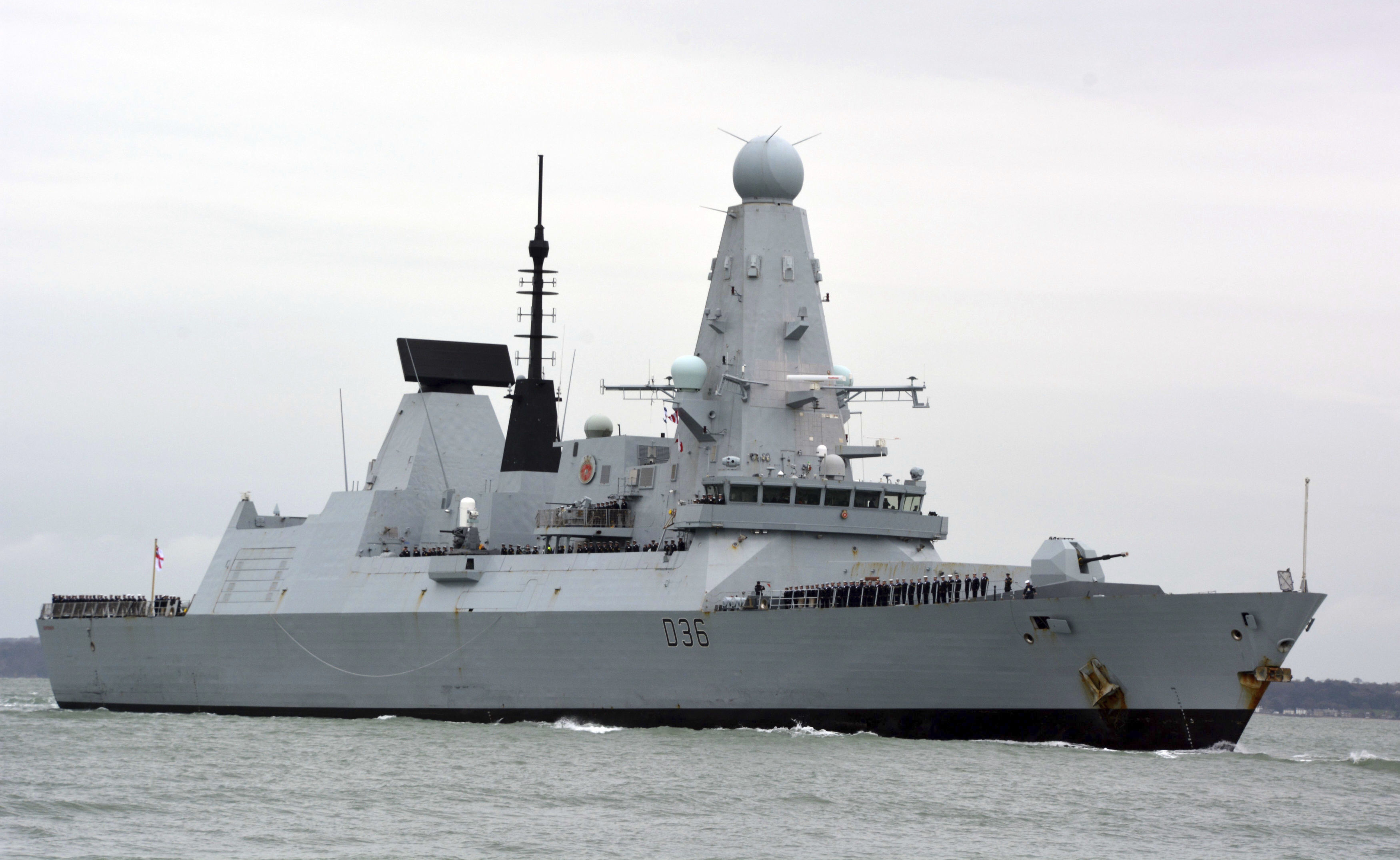
But the UK Ministry of Defence denied Kremlin claims that shots were fired at the Royal Navy vessel.
A BBC reporter on the ship said he witnessed Russian warplanes and naval vessels buzzing the destroyer during the flare-up on Wednesday.
Shortly after the British ship crossed the territorial boundary, an Su-24M attack jet dropped bombs and a coastal patrol ship fired warning shots in front of the British destroyer, the Russian defence ministry said in a report from Russian state media TASS.
But the UK government has denied the claims.
– With CNN, AP
The tragedy behind Canada's unmarked graves of Indigenous children
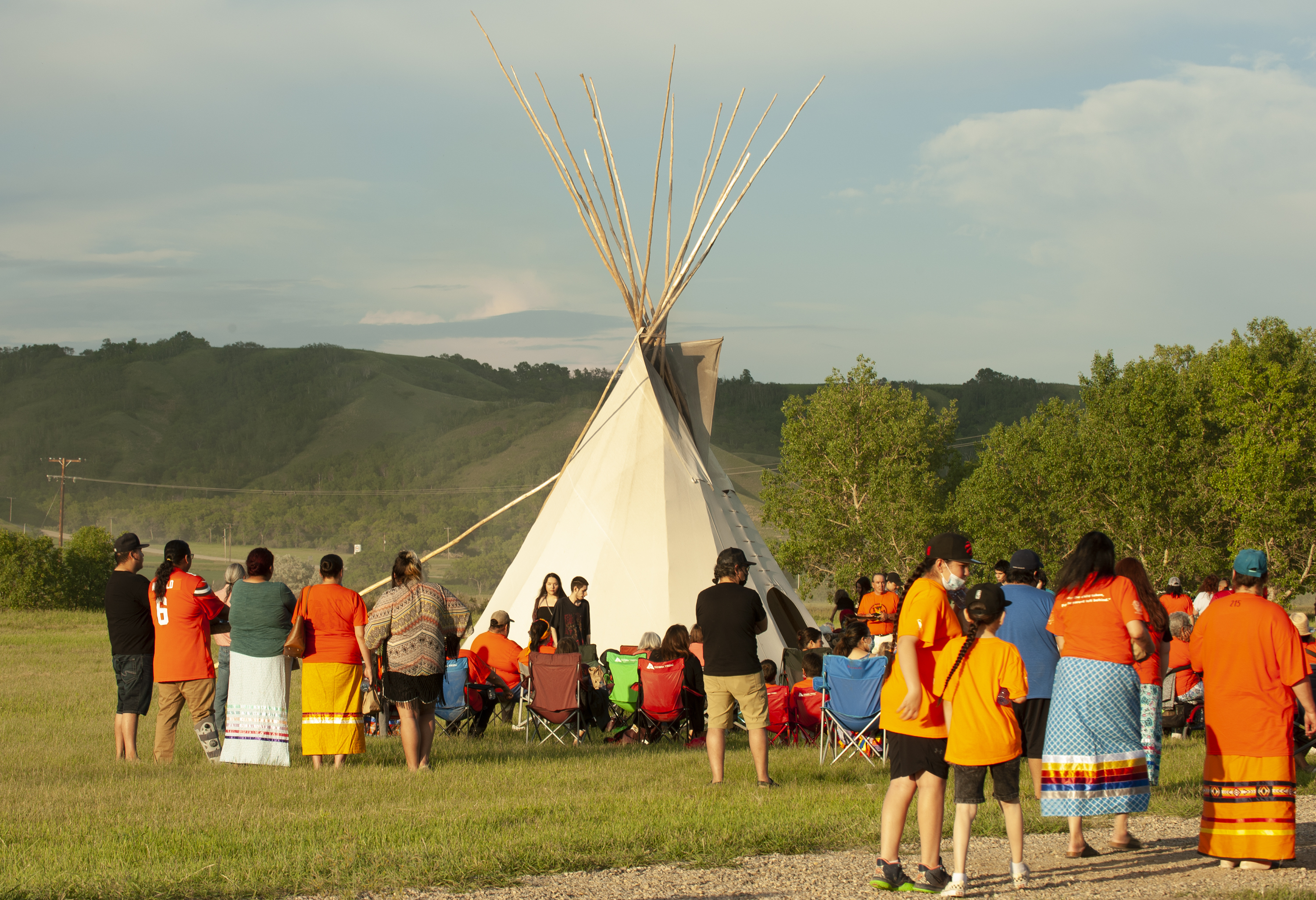
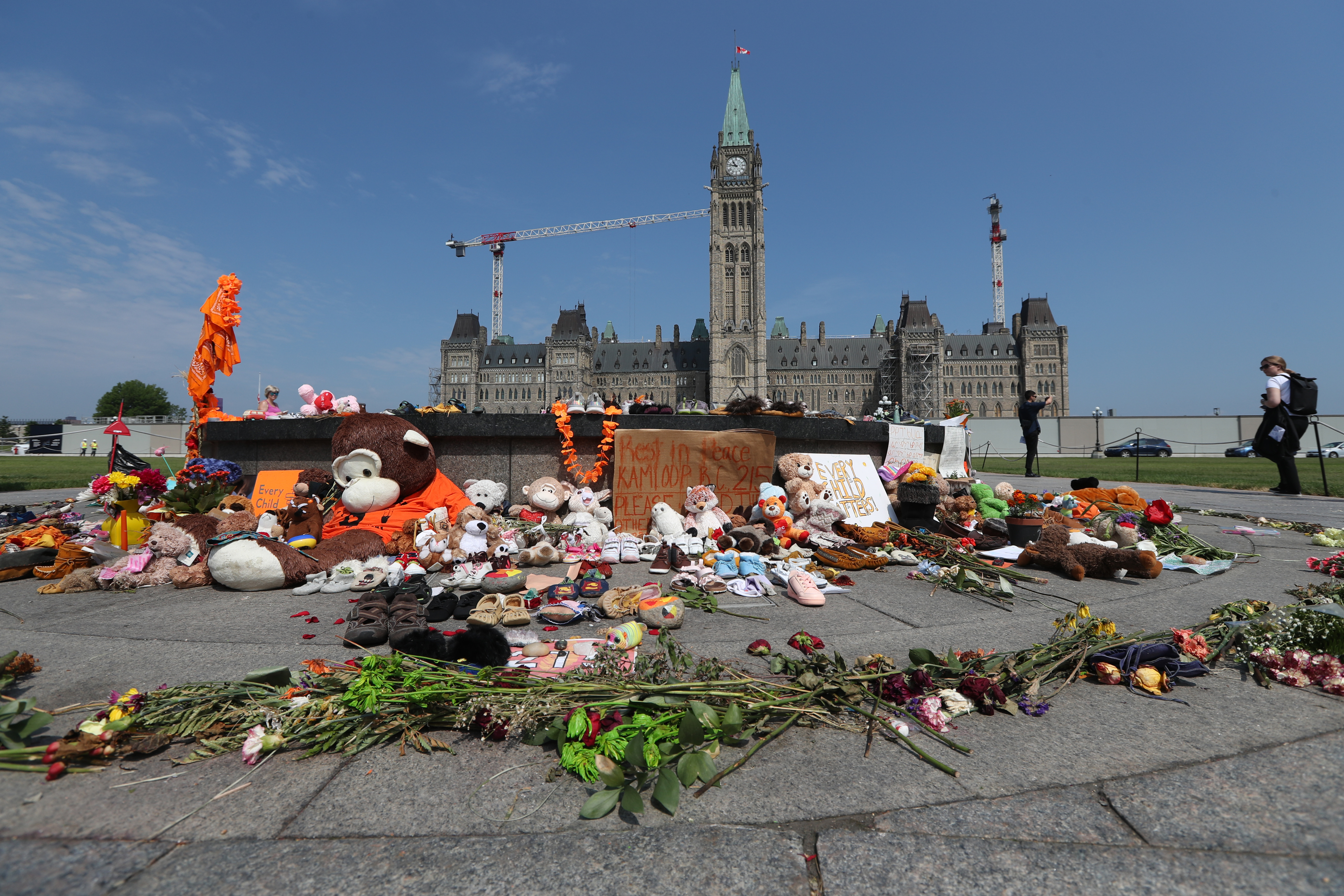
Leaders of Indigenous groups in Canada say investigators have found more than 600 unmarked graves at the site of a former residential school for Indigenous children, which follows the discovery of 215 bodies at another school last month.
The new discovery was at the Marieval Indian Residential School, which operated from 1899 to 1997 where the Cowessess First Nation is now located, about 135 kilometres east of Regina, the capital of the province of Saskatchewan.
Ground-penetrating radar registered 751 ''hits,″ indicating at least 600 bodies were buried, said Chief Cadmus Delorme of the Cowessess. Some and perhaps most are from over a century ago.
The gravesite is believed to hold the bodies of children and adults, and even people from outside the community who attended church there.
LIVE UPDATES: 'Harder' lockdown call for NSW
READ MORE: More than 700 unmarked graves found at school in Canada
Perry Bellegarde, chief of the Assembly of First Nations, said it is not unusual to find such graves at former residential schools but it is always a devastating discovery that reopens old wounds about the forced assimilation of native children at those often-abusive institutions.
Many non-Indigenous Canadians were not aware of the extent of the problems at the schools until the remains of 215 children were found last month at what was once the country's largest such school in British Columbia.
What are residential schools?
From the 19th century until the 1970s, more than 150,000 Indigenous children were forced to attend state-funded Christian boarding schools in an effort to assimilate them into Canadian society. Thousands of children died there of disease and other causes, with many never returned to their families.
Nearly three-quarters of the 130 residential schools were run by Roman Catholic missionary congregations, with others operated by the Presbyterian, Anglican and the United Church of Canada, which today is the largest Protestant denomination in the country.
The Canadian government has admitted its role in a century of isolating native children from their homes, families and cultures, and that physical and sexual abuse was rampant in the schools, where students were beaten for speaking their native language.
That legacy of abuse and isolation has been cited by native leaders as a cause of alcoholism and drug addiction widely seen on reservations today.
READ MORE: Indigenous reconciliation inquiry established in Victoria
Indigenous leaders have called it a form of cultural genocide.
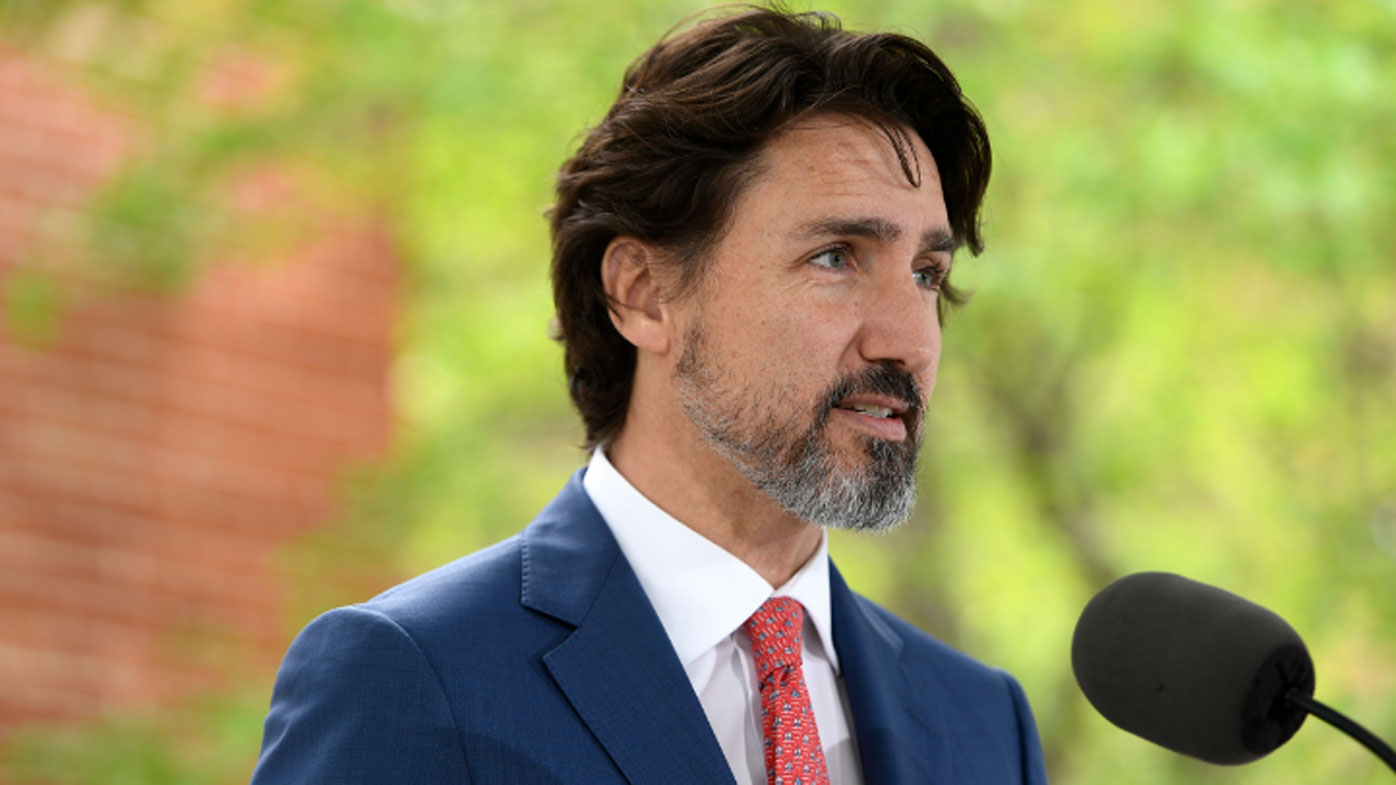
Prime Minister Justin Trudeau on Friday called it "an incredibly harmful government policy that was Canada's reality for many, many decades and Canadians today are horrified and ashamed of how our country behaved."
He said the policy "forced assimilation" on the children.
What's behind the discovery of the remains?
A National Truth and Reconciliation Commission, which was set up as part of a government apology and settlement, issued a report in 2015 that identified about 3200 confirmed deaths at schools. While some died of diseases like tuberculosis amid the often deplorable conditions, it noted that a cause of death for about half of them often was not recorded.
The government wanted to keep costs down at the schools, so adequate regulations were never established, the reconciliation commission said..
It said the practice at the schools was to not send the bodies home to their communities. Chief Delorme said the graves at the Saskatchewan school were marked at one time, but that the Catholic operators of the facility had removed them.
What apologies have been made?
Former Prime Minister Stephen Harper apologised in Parliament in 2008 for the government's role. Among the Christian denominations, the Presbyterian, Anglican and United churches also apologised for their roles in the abuse.
A papal apology was one of 94 recommendations from the reconciliation commission, but the Canadian Conference of Catholic Bishops said in 2018 that the pope could not personally apologize for the residential schools.
Former Pope Benedict XVI met with some former students and victims in 2009 and told them of his "personal anguish" over their suffering.
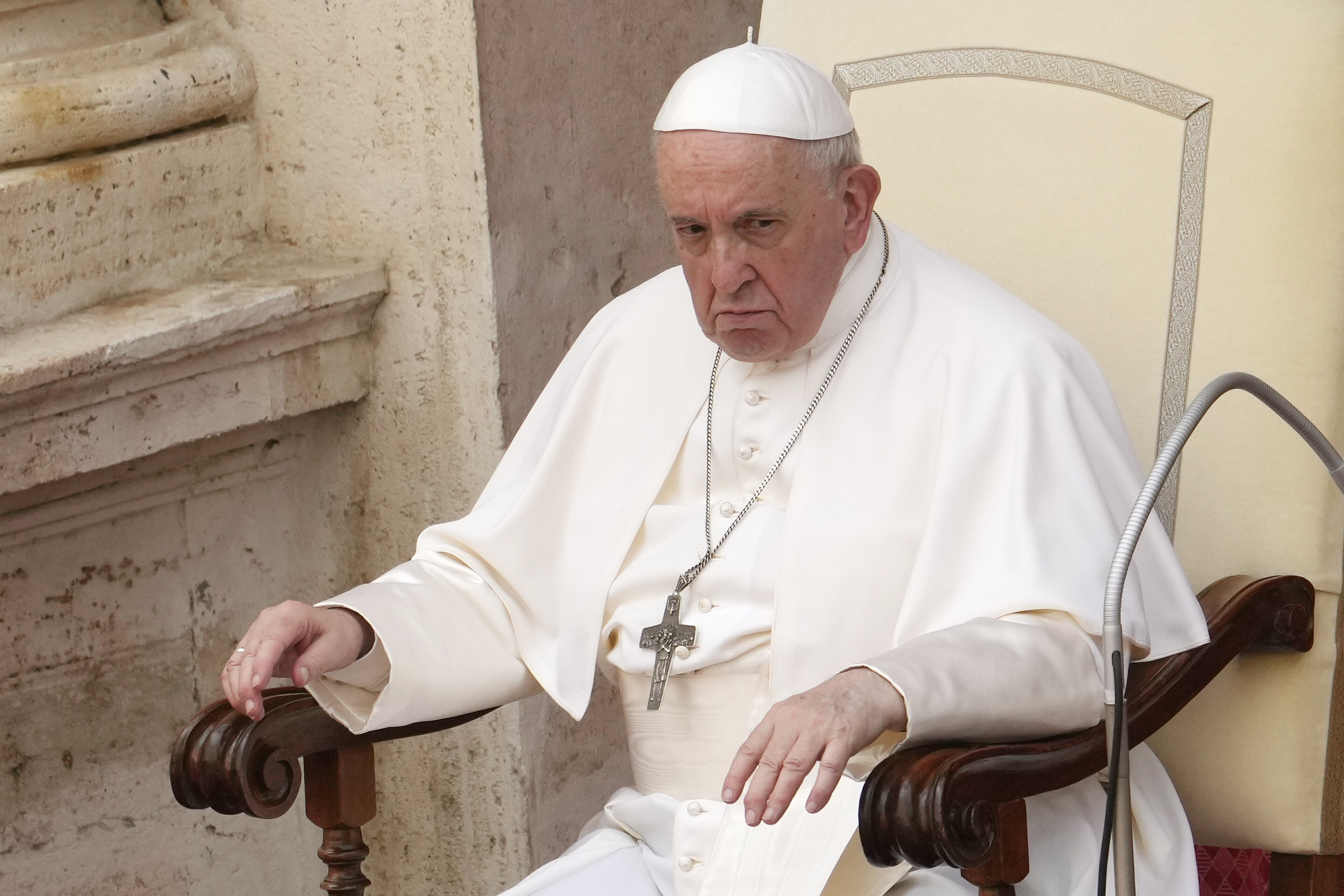
After last month's discovery, Pope Francis expressed his pain and pressed religious and political authorities to shed light on "this sad affair," but didn't offer an apology.
Mr Trudeau said Friday he has spoken to Francis personally "to impress upon him how important it is not just that he makes an apology but that he makes an apology to indigenous Canadians on Canadian soil."
Archbishop Don Bolen of the Regina Archdiocese posted a letter on its website this week to the Cowessess First Nation in which he repeated an apology he said he made two years ago.
What compensation has been offered?
The reconciliation commission was created as part of a $CA5 billion ($5.36 billion) class action settlement in 2005, the largest in Canadian history.
Under the settlement, students who attended the schools were eligible to receive $CA10,000 ($10,718) for the first school year and $CA3000 Canadian ($3215) for every year thereafter. Victims of physical and sexual abuse were eligible for further compensation.
Mr Trudeau has said the government will help preserve gravesites and search for unmarked burial grounds at other schools, but he and his ministers have stressed the need for Indigenous communities to decide for themselves how they want to proceed.
The government previously announced $CA27 million Canadian ($28.94 million) for the effort in what it called a first step.
You can find out more details about how to book your vaccine through the Federal Government health site here.
Not a race? The graphs that rank Australia dead last
In words that may have already come back to haunt him, Scott Morrison said the vaccine rollout wasn't a race.
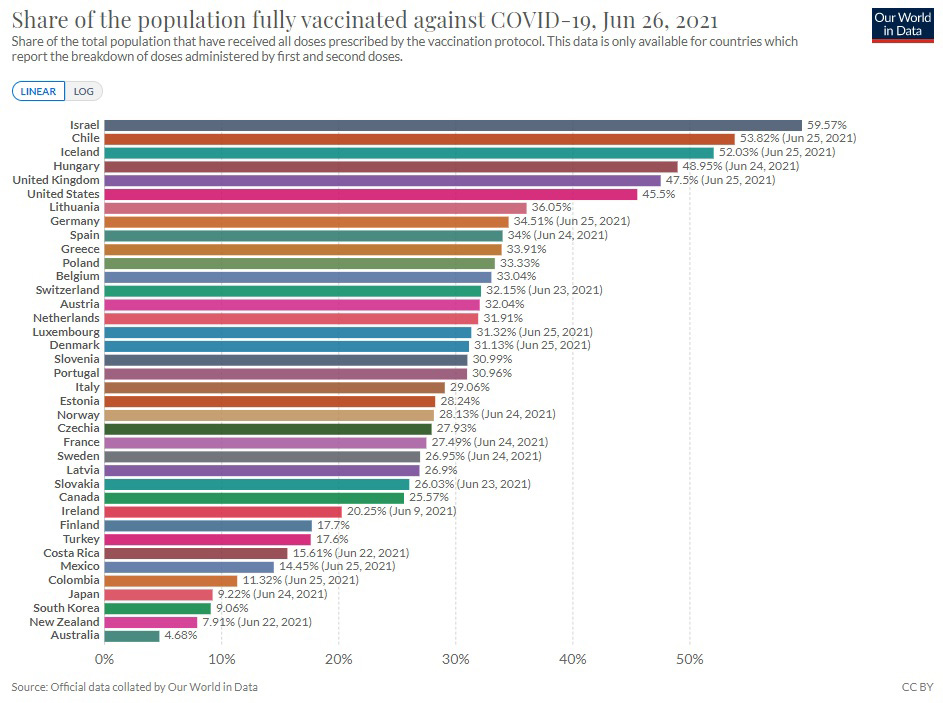
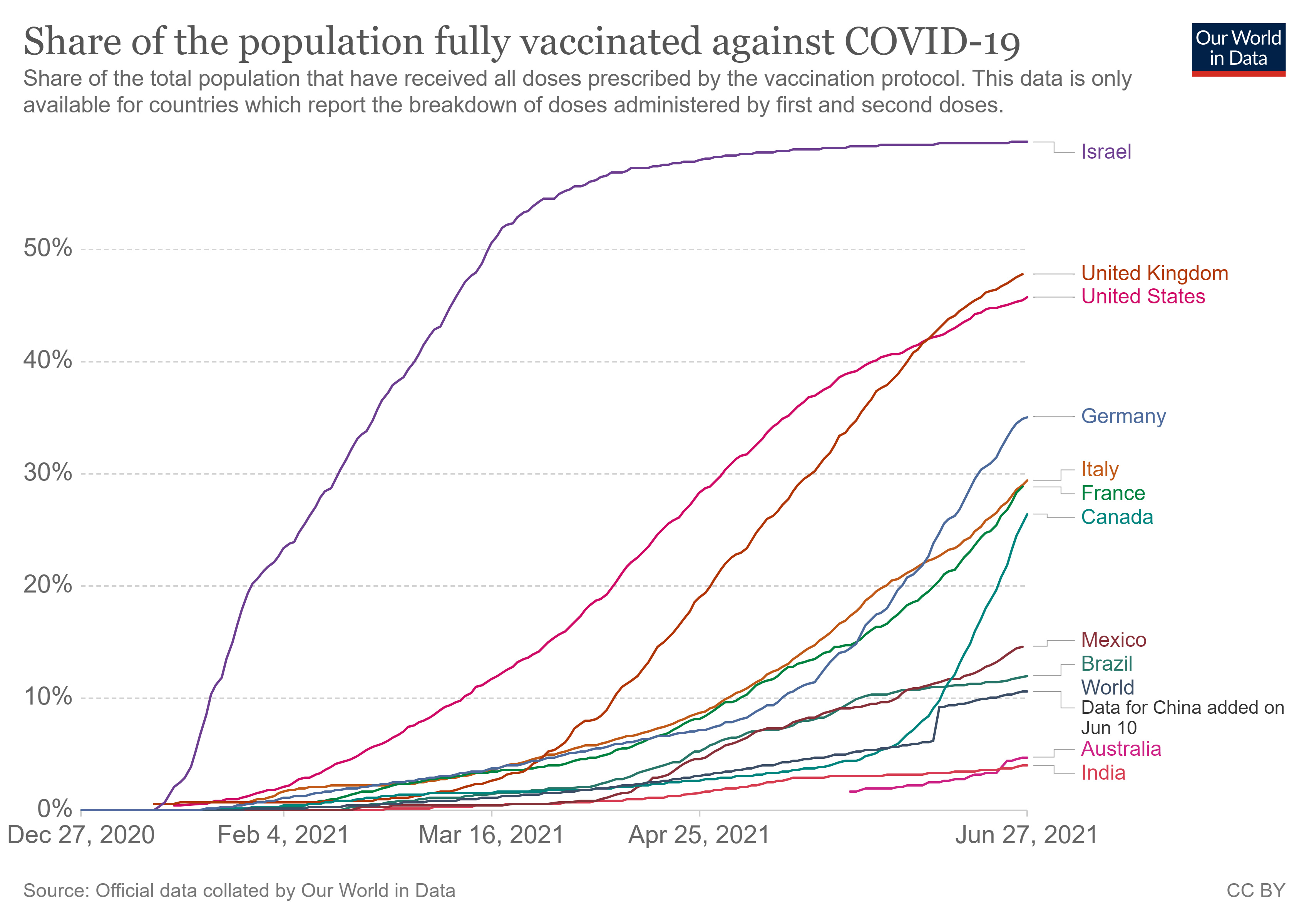
Now, with fewer than five per cent of the population fully vaccinated, Australia is ranked dead-last in the OECD, a lowly position which two experts have described as unacceptable and a direct result of flawed government COVID-19 vaccine strategy.
"It's a sad indictment on the situation we're in where our vaccine rollout is patently one of the worst in the world," former secretary of the Department of Health Stephen Duckett told nine.com.au.
READ MORE: How the world is reacting to Australian COVID-19 'complacency'
With 60 per cent of its adult population vaccinated, Israel sits atop the OECD list, with Chile at 53.8 per cent and Iceland on 52 per cent rounding out a top-three.
The United Kingdom and US are ranked fifth and sixth, with vaccination rates of 47.5 per cent and 45.5 per cent, according to their latest government data.
Costa Rica, ranked 22 of 28 OECD countries, has vaccinated 15.6 per cent of the population – more than three times Australia's rate.
Australia is one of just nine OECD nations which has less than 20 per cent of its population fully vaccinated.
New Zealand, with 7.9 per cent, is second-last.
READ MORE: Growing concerns over spread of Delta strain in schools
Misguided Federal Government strategy last year, including the crucial mistake of hitching Australia's wagon to just two vaccines then under development, had come back to bite hard in 2021, Mr Duckett claimed.
Last July, most countries had put bets on a "broad range" of vaccines, Mr Duckett said, lining up deals in as many as eight vaccines to see which ones worked out.
"Australia had a very narrow range of vaccines," he said, pointing to the Federal Government backing the failed University of Queensland vaccine and the Oxford-AstraZeneca vaccine.
"On top of that, of course, we had the failures in the logistics."
He said there were a "whole lot of other failures" which had contributed to Australia's problem-plagued rollout and "all of them are decisions of government".
Infectious disease expert Bill Bowtell, adjunct professor at UNSW, also said the blame should lie at the feet of the Federal Government.
He said both horses Australia backed – AstraZeneca and UQ – had "fallen over".
"We are last because, unlike almost every other OECD country a year ago, we decided not to back every horse in the race (to ensure we) procured adequate supplies of vaccine by the beginning of 2021."
'Too late'
In contrast, Mr Bowtell said, the United Kingdom had last year backed every coronavirus vaccine which passed the first two trials, with an eye towards final approvals and securing crucial supply agreements.
"It's up to the (Federal) Government to explain why, when that was what was going on, everywhere else in the world, they decided not to do it."
Mr Bowtell claimed the government's decision to bet on UQ and AstraZeneca had been based on "commercial and political considerations", pointing to the eventual deal for the local manufacture of the AstraZeneca vaccine by CSL in Melbourne.
"It's very good to manufacture vaccines in Australia, that's excellent," Mr Bowtell said.
"But the supply of AstraZeneca to the people who needed it was held up for months, because they couldn't produce it," he said, noting it took some time for CSL to get operational.
"Now the facts speak for themselves. Fewer than five per cent of people are totally vaccinated in Australia today and we have the Delta variant running rampant around the country."
Mr Bowtell said Australia, with a population of just 25 million, should be right up alongside OECD leaders, the UK, US, Germany and Finland, with vaccination rates nudging 50 per cent.
"We were too late," he said.
READ MORE: Big change to AstraZeneca vaccine explained
Last year, as the pandemic raged, Australia was one of the world's success stories.
But now, after problems securing AstraZeneca supplies, mixed and muddled government messaging on vaccines and worrying levels of vaccine hesitancy around the country, Australia is one of the developed world's worst performers for vaccinating the population.
"It was always a race," Mr Duckett claimed, criticising earlier government messaging that going slow with vaccines was okay.
"The reason it was always a race was that we wanted to open the borders, and we can't open the borders until we've got a high proportion of the population vaccinated.
"And secondly, we always knew there were new variants coming around.
"And we wanted to be vaccinated before we had the new variants coming around. And as it turned out, they did come around before we vaccinated."
At the time, the government defended the pace of its rollout by stating Australia was not like the US or UK, where many people were hospitalised and dying.
The Delta variant suddenly has Australia on a knife-edge, after a spiralling breakout in Sydney.
Mr Bowtell pointed to a Sydney birthday party, which NSW Health officials have described as a super-spreader event, as an example of how better vaccination rates could have helped prevent the current predicament.
Of the 30 people who attended the West Hoxton party, 24 people tested positive, as did many of their close contacts once they left the celebration.
The six people who didn't catch Delta had been vaccinated.
"The figures speak for themselves," he said.
Contact: ms******@******om.au
FOLLOW: Mark Saunokonoko on Twitter
How the world is reacting to Australian COVID-19 'complacency'
Australia's fresh wave of COVID-19 outbreaks and lockdowns has drawn eyes around the world, with many international observers claiming "complacency" and the ragged vaccine rollout as prime causes.
Australia's international reputation rose in the early stages of the pandemic, as swift lockdowns and then-controversial declarations of emergency helped the country limit its initial exposure to the virus.
However, the ongoing issues with Australia's delivery of the COVID-19 vaccine, a perceived carelessness about the impact of the virus, and Australia's ongoing strict border closures, appear to be beginning to turn world opinion around.
LIVE UPDATES: 'Harder' lockdown call for NSW
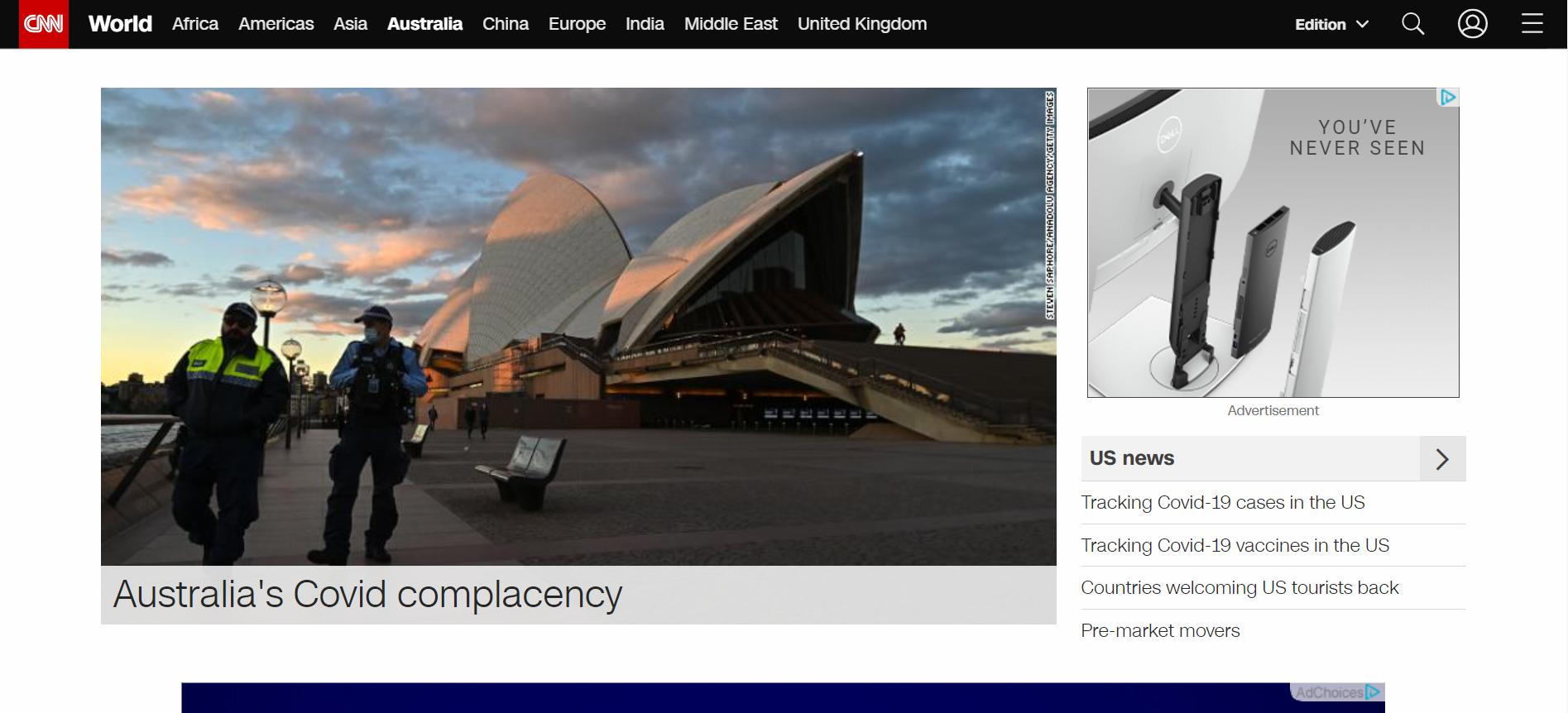
"Australia's COVID complacency" was one headline emblazoned on the CNN website.
Reporter Angela Dewan said Australians were beginning to wonder how long this could go on.
"Already there are signs that Australians are getting weary of these sporadic disruptions to their lives," she wrote.
"On Sunday, large crowds were seen on Bondi Beach, despite the stay-at-home orders. While outdoor exercise is allowed, images from Bondi showed people bathing in the winter sun and sitting on benches with drinks."
READ MORE: Big change to AstraZeneca vaccine explained
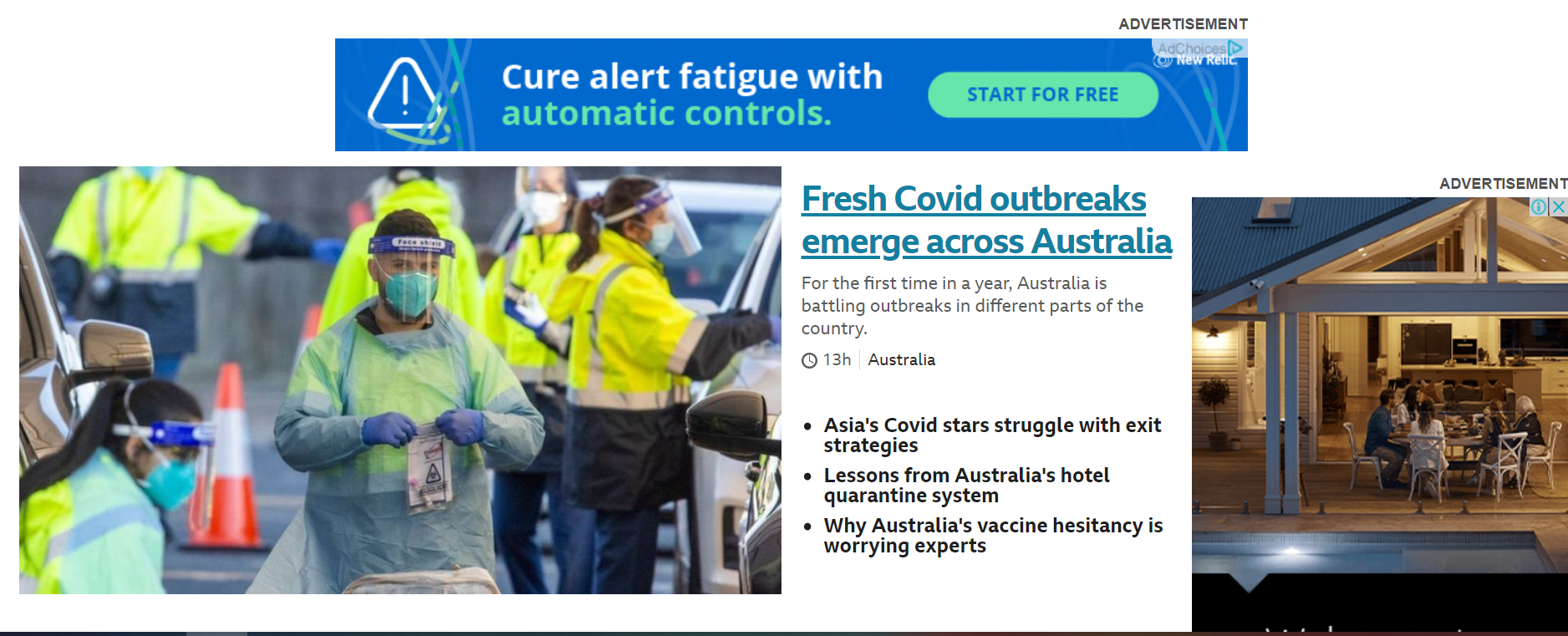
Meanwhile the BBC reported on Australia's "vaccine hesitancy", quoting a survey which showed that up to a third of Australians were worried about getting the jab.
The British broadcaster said Australia had one of the slowest vaccine rollouts among all the world's developed countries.
"The caution mostly centres around side effects and a lack of urgency given Australia's low infection rates," reporters wrote.
READ MORE: State-by-state guide to restrictions and border rules
"But hesitancy threatens to frustrate plans to open its borders, which are slated to remain shut until mid-2022."
Writing for BBC online, Frances Mao said: "Experts say the nation's defences have been beaten, multiple times, by the powerful variant. It's breached hotel quarantine several times, raising concerns about air transmission.
"It's also managed to break through relaxed distancing rules in society, latching onto unprotected workers. Mask-wearing is now back in almost every state in Australia."
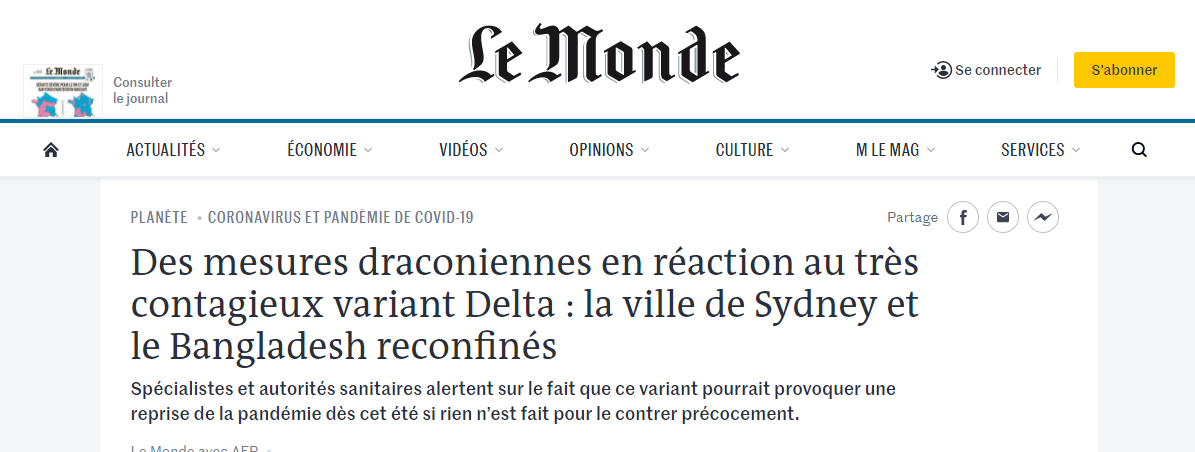
While Le Monde, in France, wrote: 'Draconian measures in reaction to the very contagious Delta variant: the city of Sydney and Bangladesh [back in lockdown]'
Continuing: "Health experts and authorities warn that this variant could provoke a resurgence of the pandemic as soon as this summer if nothing is done to counter it."
The fragility of the "travel bubble" between Australia and New Zealand was a focus for Kiwi outlet Stuff.co.nz, which reported on a New Zealand pensioner stranded in Sydney.
The 79-year-old crossed the Tasman to support her older sister during a serious illness, only to be left trapped when the Bondi Junction cluster spread.
Radio New Zealand reported on the panic buying in Darwin as the city entered its first lockdown, with expats telling the broadcaster it was the worst they had seen.
The economic impact of repeated lockdowns was highlighted by the Times of India, which quoted a government report that showed Australia faced stunted population growth and budget deficits until 2060 as a result of the emergency measures.
Amid all the serious warnings, however, one recent COVID-19 news item from Australia appeared irresistible to overseas outlets.
The report of two naked sunbathers startled by a deer who were fined for breaking lockdown on the NSW South Coast was reported on by everybody from the Guardian to the Washington Post.
You can find out more details about how to book your vaccine through the Federal Government health site here.
How a Sydney nurse spent her record-breaking $107m lotto prize
A Sydney nurse has revealed how her record-breaking $107 million Powerball prize has changed her life more than two years after becoming Australia's biggest individual lottery winner.
In January 2019, the humble and hardworking mum in her 40s received a life-changing phone call informing her she had become an overnight multi-millionaire.
The mum shocked the nation when she declared she would still show up to work, both her and her husband keeping their jobs despite the mega win.
READ MORE: Lottery winners about to lose millions because of unclaimed prizes
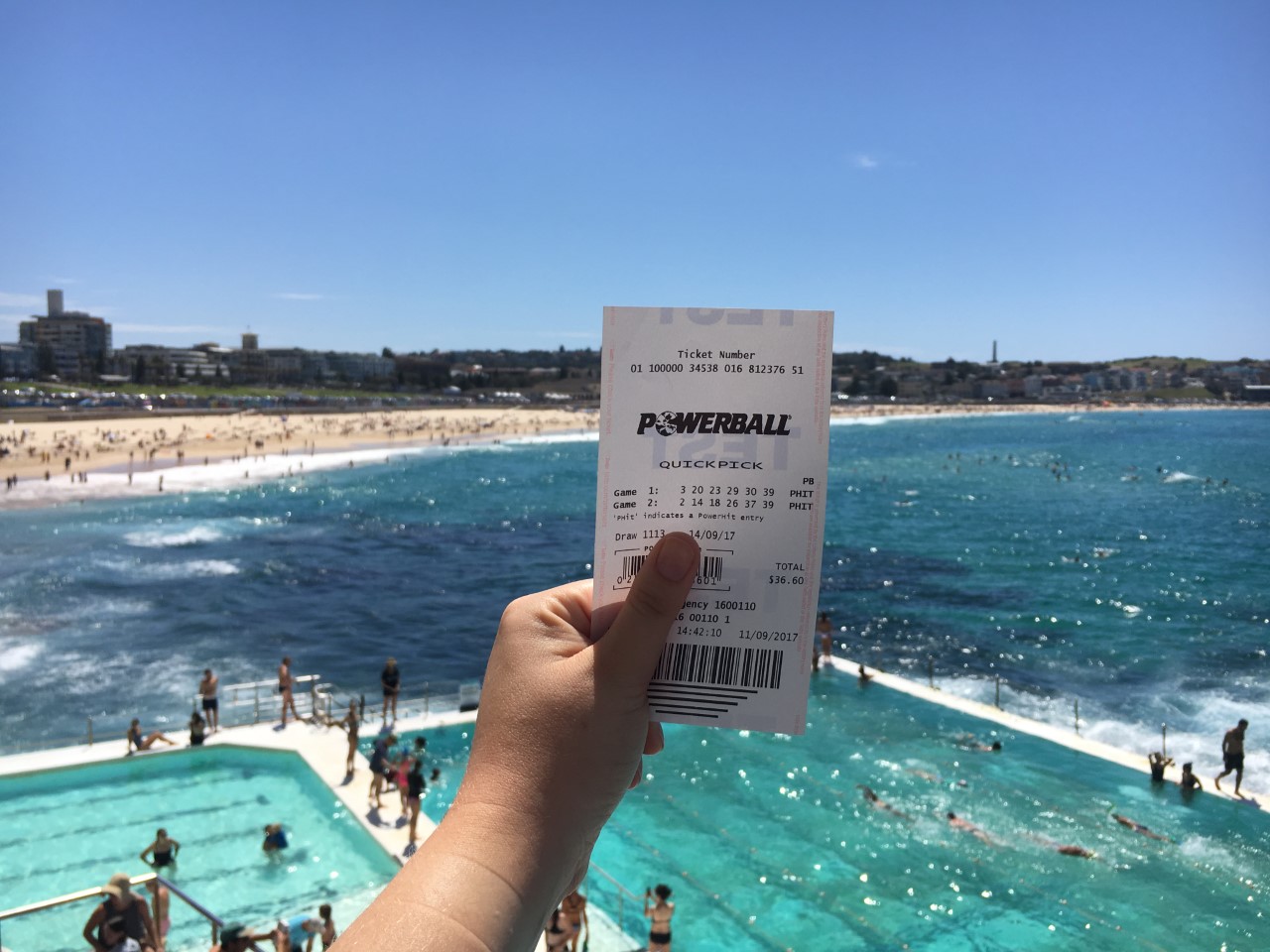
"I don't know why people were so shocked," she told an official from The Lott.
"I'm still working and my husband is also still working. We both love our jobs."
Since winning the incredible prize, which smashed lottery records and catapulted her into the history books, the nurse said it's the small luxuries that have brightened her everyday life.
From fresh flowers and upgrading from cheap chardonnay, to paying it forward and never ironing again, the woman said being able to afford the finer things in life without having to worry about the price tag had been a nice change.
"I love books and to be able to go into a bookshop and buy whatever book I want is amazing. It's things like that that I don't take for granted," she said.
"Being able to buy fresh flowers is a luxury. That's a lovely thing to do.
"I can buy a nicer bottle of wine now, after celebrating with a cheap bottle of chardonnay.
"And having the ability to travel with the children is incredible. We never thought we'd be able to afford to do that. It was always out of reach for us, so to have those memories is priceless."
READ MORE: Adelaide couple hope to become 'grey nomads' after Lotto win
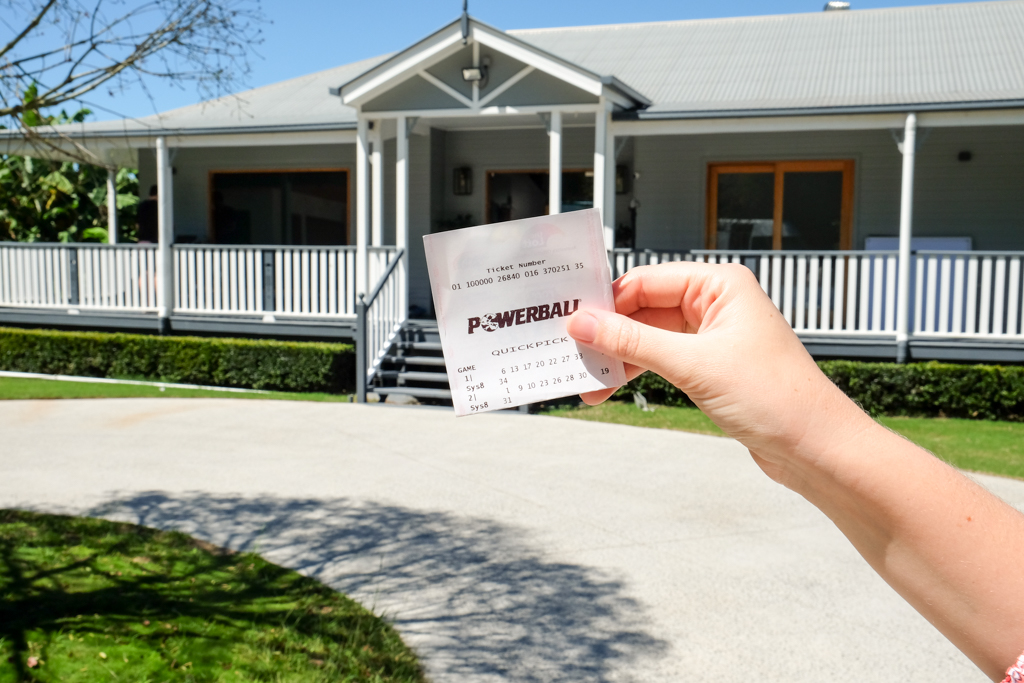
The woman said "seeing the relief" on her husband's face had also been priceless.
"We've both worked so hard for so long, and to never have that financial stress, to be able to take that away from him, that is just priceless," she said.
The mum said they have both been passionate about giving back to the community, and their prize had allowed them to create a legacy that would continue far beyond their lifetimes.
"Paying it forward is really important to us because if you change one person's life, you have the potential to change the whole community," she said.
"We have already made some really important donations, and we're always thinking a lot about what we want to support next.
We watch the news and we read the papers, and we literally keep a notebook of causes we know we want to help on a grassroots level.
"It makes you feel incredibly privileged, and it is what we've always done anyway, but now we can just do so much more."
READ MORE: Lotto winner in Melbourne lockdown hung up on officials
A "pinch me" moment since her record-breaking windfall included buying a beautiful Sydney house.
"We were able to buy a lovely house, and it's going to be a family home for generations to come," she said.
"That's something that I've always dreamt of and every time I walk into my beautiful home is a pinch-me moment.
"Every time I come home and I remember that this is my house and I never have to move my family is something that I will never take for granted."
While the down-to-earth mum is still happily cleaning the house and doing the grocery shopping, she confessed there was one chore she didn't think twice about ditching.
"I've never been one for ironing. Now I do have someone who does the ironing for me and that's been invaluable," she said.
"I'll clean and cook, but I'm more than happy to never pick up an iron ever again."
Polar blast: Wellington hammered by freak hail storm
Wellingtonians were woken last night by an “intense” hail storm that hammered areas of the capital in the early hours. The icy blast came as the vanguard of a polar blast sweeping up the country from the south.With snow blanketing…
Motorway mayhem: Truck crash blocks highway into Auckland, Spaghetti Junction down to one lane
A busy central Auckland motorway link is down to one lane while further south a truck crash continues to block a lane on the Southern Motorway.Motorists are being warned to expect disruptions travelling through Spaghetti Junction…
Chinese embassy dismisses claims of spies in universities
By RNZ The Chinese embassy has hit back at claims spies are infiltrating universities in New Zealand, calling the accusations groundless and “pure hearsay”.Three university lecturers in Chinese politics and history have spoken…