From RNZ Nearly all non-urgent surgery and outpatient clinics have been cancelled today, as thousands of nurses go on strike.At 11am, nurses will down tools to join marches and pickets across the country as they highlight their…
Tag Archives: oceania
Internet outage: New Zealand websites back up and running after global issues
Several New Zealand websites caught up in a global internet outage late last night are back up and running this morning. Trade Me, TVNZ On Demand and Radio New Zealand were among those affected by the outage where some of the world’s…
Comancheros gang's 'mother ship' drug trafficking plan scuppered by global police sting
Senior members of the Comancheros gang purchased a catamaran and allegedly planned to rendezvous at sea with a “mothership” bringing large shipments of illicit drugs into New Zealand. But thanks to a major international police operation…
Sharon Margaret Bradley: Te Kuiti's $2m fraudster loses name suppression appeal
A former Te Kuiti woman who stole $2 million from her employer over a 12-year period has lost her bid for permanent name suppression.She can finally be named as Sharon Margaret Bradley, 61, now of Te Awamutu.Judge Tini Clark jailed…
Wellington Jazz Festival welcomes more than 300 artists, over 100 shows this week
Around 300 artists will perform across 35 venues in the capital this week, as the five-day Wellington Jazz Festival kicks off today. Wellington-based performer Ruby Solly (Kāi Tahu, Waitaha, Kāti Māmoe) has been coming…
Herald morning quiz: June 9
Test your brains with the Herald’s morning quiz. Be sure to check back on nzherald.co.nz at 3pm for the afternoon quiz. To challenge yourself with more quizzes, CLICK HERE.
Guy Body's cartoons: June 1 – 30
Our cartoonist Guy Body shares his view on current events.
What caused last night's 'mass web outage'?
A number of high-profile websites including the BBC, the New York Times, Reddit, The Sydney Morning Herald and Twitch went offline on Tuesday evening during a mass web outage.
The outage was connected to a San Francisco-based website service provider named Fastly and lasted for about an hour.
At 8.44pm AEST, Fastly reported it had identified the issue and a fix was being implemented.
READ MORE: Suspected Chinese hackers spied on US, European targets
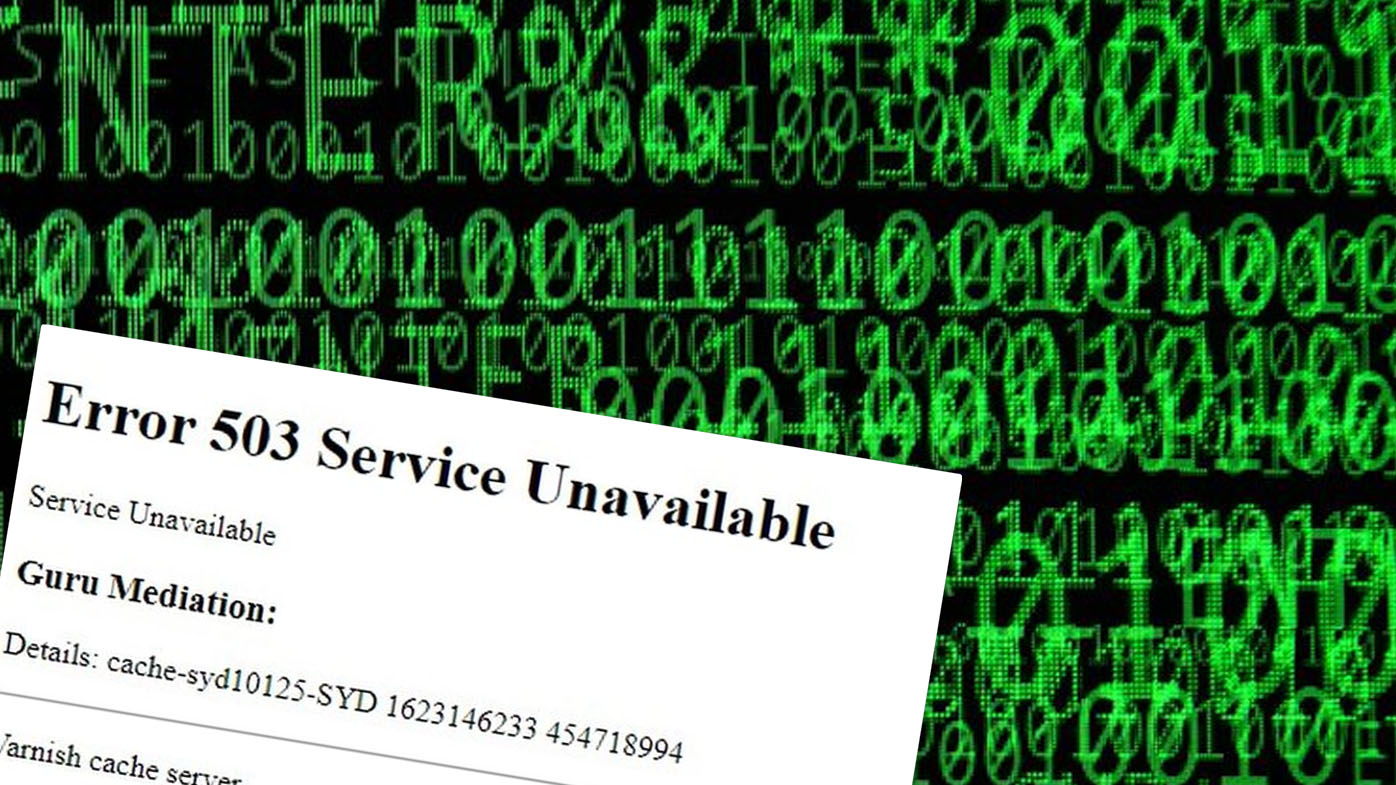
Users had reported receiving "Error 503 Service Unavailable" pages when attempting to log on to a number of websites.
Others received a "fastly error" saying the domain of a significant website such as the BBC was "unknown".
The outage also impacted a number of Australian websites, including 9Now, The Sydney Morning Herald and The Age.
https://twitter.com/Channel9/status/1402211766679990278
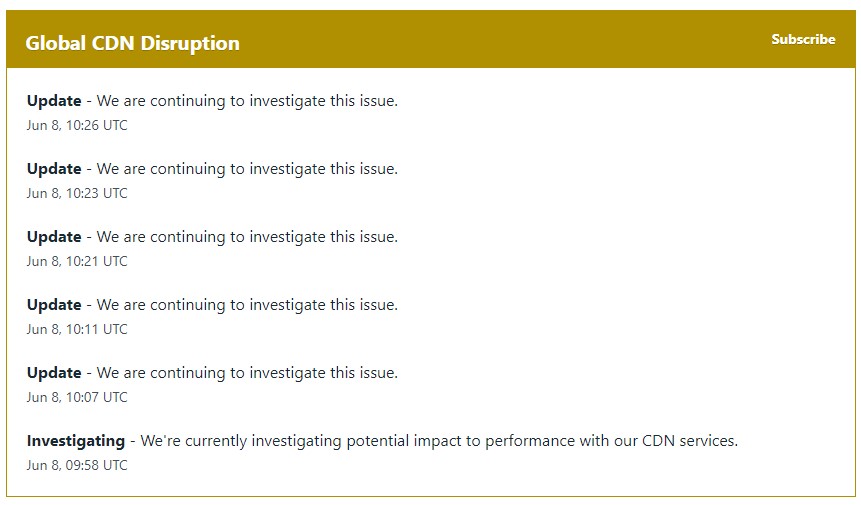
Fastly is one of four companies that provide CDN (Content Delivery Network) services to some of the internet's biggest sites.
Because of the nature of CDNs, which involve servers located in multiple locations, not every website that was impacted came back online immediately.
Fastly said it had identified a service configuration that triggered disruptions, meaning the outage appeared to be caused internally.
Brief internet service outages are not uncommon and are only rarely the result of hacking or other mischief.
Still, major futures markets in the US dipped sharply minutes after the outage, which came in wake of cyberattacks hitting Nine, the publisher of this website, and major meat processor JBS, whose operations were impacted in Australia and the US.
Some of the websites hit by major web outage
- 9Now
- SMH
- CNN
- Age
- Gov.uk
- NY Times
- Twitch
- The Guardian
- AFR
- BBC
- Financial Times
What is Fastly?
Fastly describes itself as an "edge cloud platform." It provides vital behind-the-scenes cloud computing services to many of the web's high-profile sites, by helping them to store, or "cache," content in servers around the world so that it's closer to users.
The company says its services mean a European user going to an American website can get the content 200 to 500 milliseconds faster.
"It is serious because Fastly is one of the world's biggest CDNs and this was a global outage," said Doug Madory, an internet infrastructure expert at Kentik.
READ MORE: US has recovered ransom payment made after pipeline hack
Fastly stock jumped more than 6 per cent after the outage as investors shrugged off the problem.
The impact highlights the relative fragility of the internet's architecture given its heavy reliance on big tech companies — such as Amazon's AWS cloud services — as opposed to a more decentralised array of companies.
"Even the biggest and most sophisticated companies experience outages. But they can also recover fairly quickly," Mr Madory said.
– wIth Associated Press
French President slapped in the face by stranger
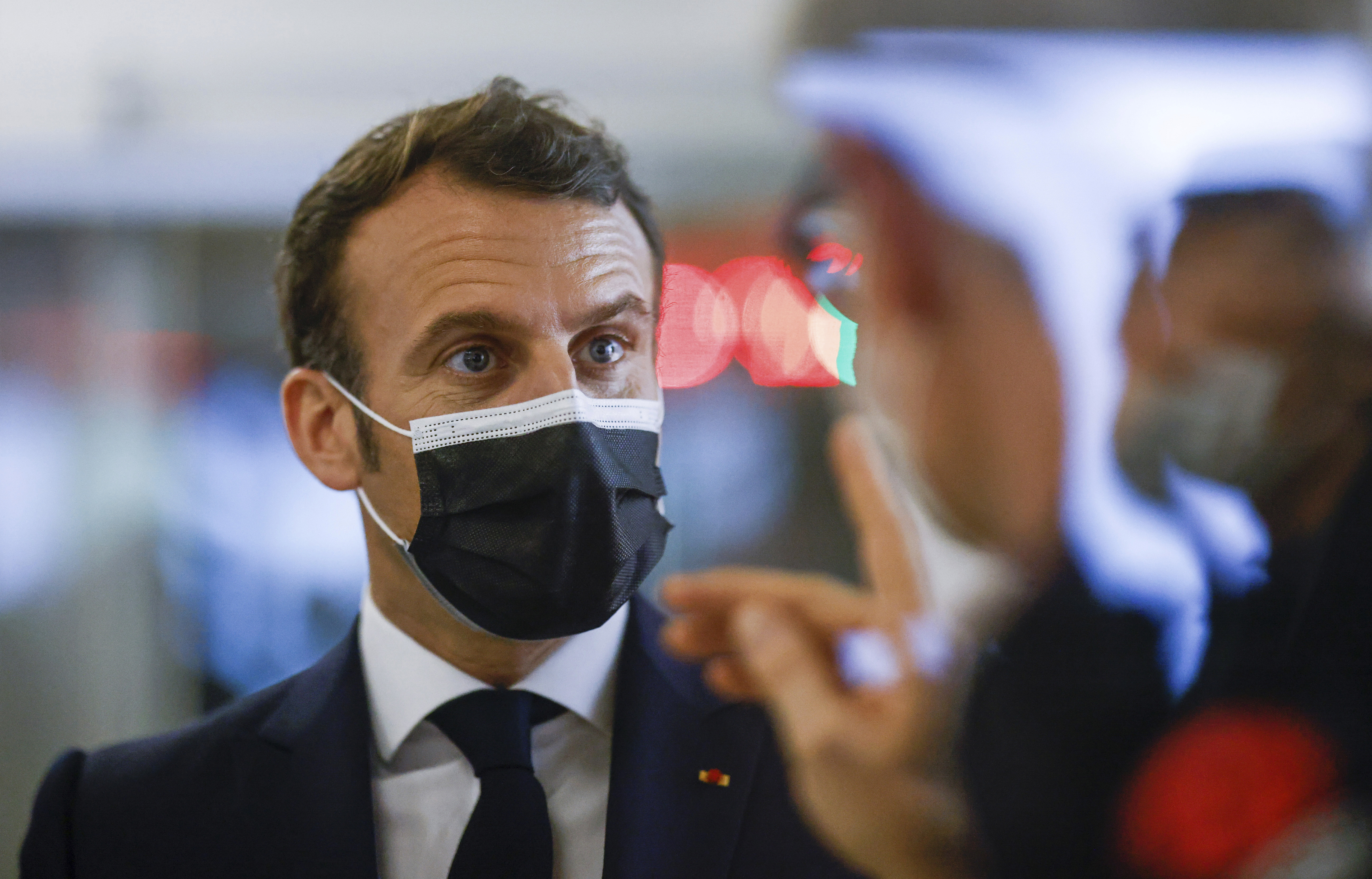
French President Emmanuel Macron has been slapped in the face by a man in a crowd while speaking to the public during a visit to south-east France, video of the incident posted on social media shows.
The footage showed Macron walking up to a metal fence and clasping the arm of a man in the crowd as he began to greet onlookers in the village of Tain-l'Hermitage, in the Drôme region of France.
The man, while gripping Macron's arm, then slapped the President across his left cheek while yelling for the end of "Macronie" — a pejorative term used in the French press for Macron's presidency.
READ MORE: What Notre Dame looks like two years after devastating fire
https://twitter.com/AlexpLille/status/1402237903376367627
The President's security detail quickly intervened, tackling the man while pulling the Mr Macron away from the metal barrier.
"A man indeed tried to hit the President of the Republic," the Elysee said in a statement to CNN.
"We have no further comments at this point. Exchanges with the crowd and handshakes resumed. The trip continues."
Moments before slapping Mr Macron, the perpetrator also shouted, "Montjoie! Saint-Denis!", a medieval battle cry used by the Capetian royal dynasty, which ruled France from the 10th to the 18th century.
The motto is also widely known in France for being a line from 1993 fantasy comedy film Les Visiteurs, in which a 12th-century knight and his squire magically travel in time to the 90s and find themselves adrift in modern society.
Two 28-year-old men, including the man who slapped Macron and another accompanying him, were placed in police custody at 1.45pm (9.45pm AEST) for alleged violence against a person holding public authority, the prosecutor's office of the city of Valence told CNN.
Far-right leader Marine Le Pen, who is Macron's biggest political opponent, said physically attacking the President was "unacceptable."
"We can attack him politically" but any violence against him should be condemned in a democracy, she added, during a Tuesday press conference.
Mr Macron was in the area to meet restaurant owners, ahead of Wednesday's easing of Covid-19 restrictions in France.
He is currently on a charm offensive, with France's presidential elections less than a year away and the country just weeks from regional elections on June 20 and June 27.
At the end of April, the President told regional press he wanted to "go to the regions to take the pulse of the country, to get in contact with people."
His political opponents say these presidential outings are actually campaign trips.
Mr Macron is not the first French politician to be slapped in the face while shaking hands.
In January 2017, former Prime Minister Manuel Valls, who was at the time the left-wing candidate in the presidential primary, was visiting Lamballe in Brittany when a young man struck him before being overpowered by the security services.
Mr Valls was Prime Minister between 2014 and 2016 under President François Hollande.
'There will be reprisals': Police warning after global crime ring smashed
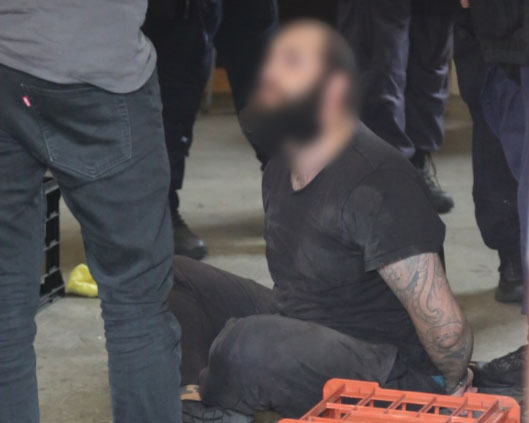
Police have warned of reprisals and conflict following a major operation that led to the arrest of more than 100 leading crime figures.
Operation Ironside was part of a global policing operation and involved the use of a secret encrypted app to catch criminals.
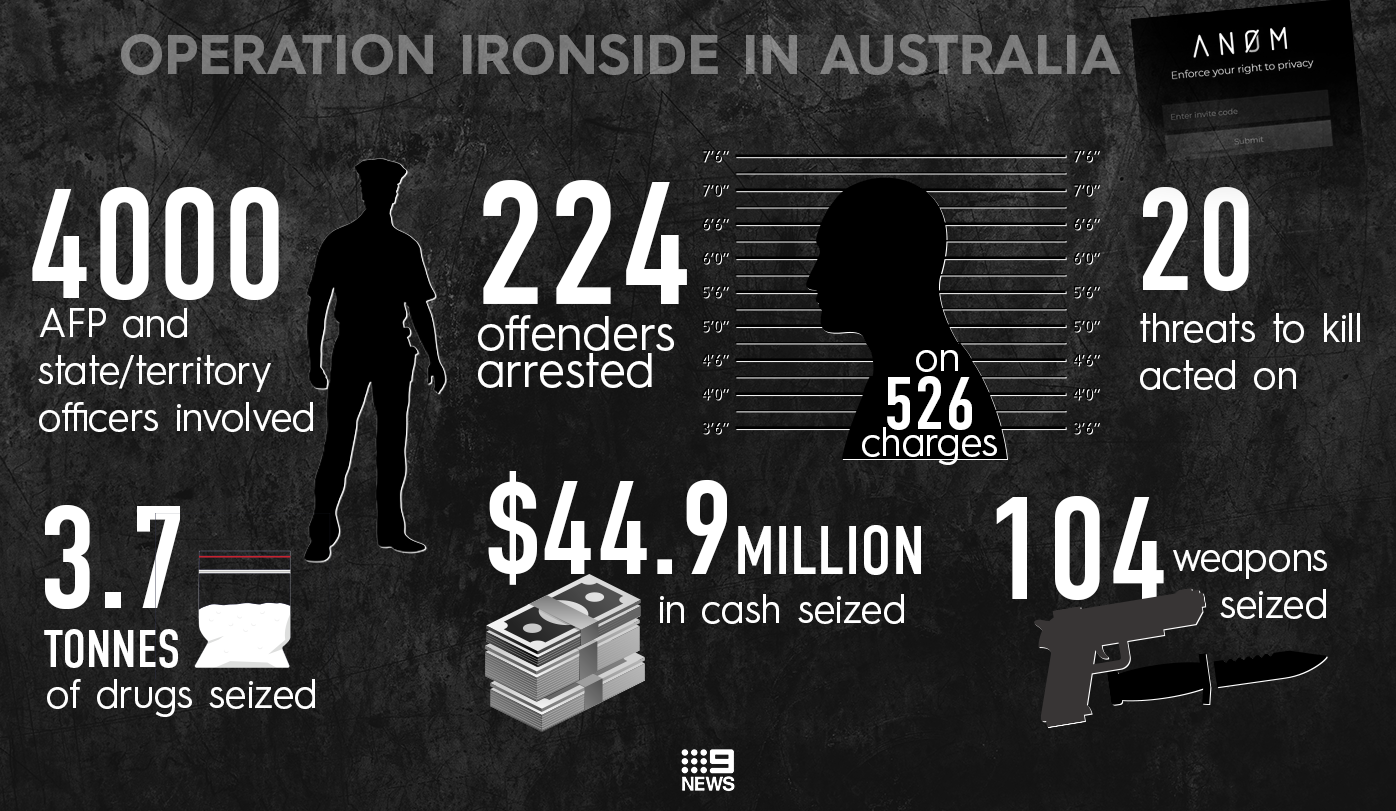
More than 4000 officers from the Australian Federal Police, state and territories forces were involved in the operation, which secretly began three years ago.
READ MORE: Police uncover nearly $87m worth of ice in major NSW drug bust
"Today, the Australian Government, as part of a global operation, has struck a heavy blow against organised crime – not just in this country, but one that will echo around organised crime around the world," Prime Minister Scott Morrison said.
"This is a watershed moment in Australian law enforcement history."
Operation Ironside led to the arrest of 224 offenders on 526 charges in every mainland Australian state.
Those facing charges include members of outlaw motorcycle gangs, Australian Mafia, Asian crime syndicates and serious and organised crime groups.
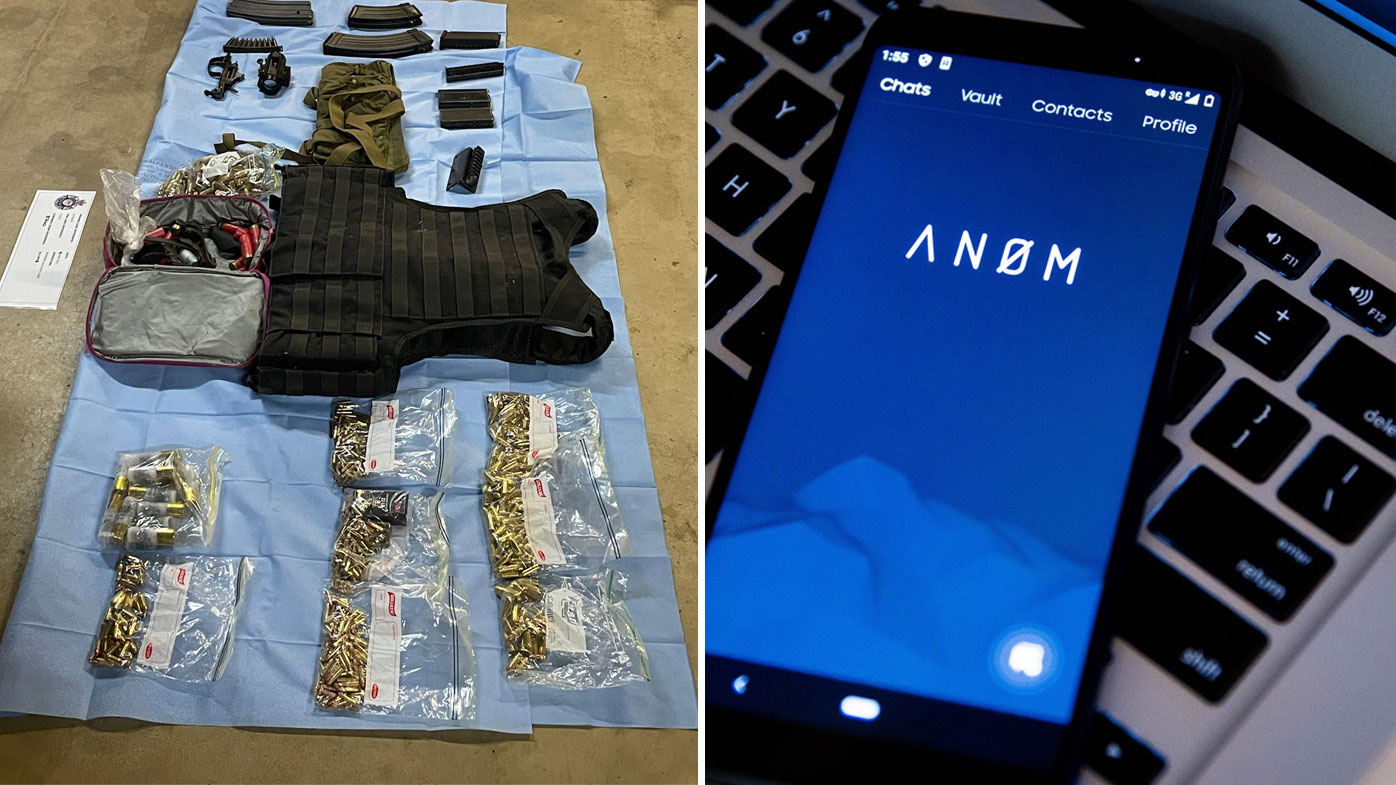
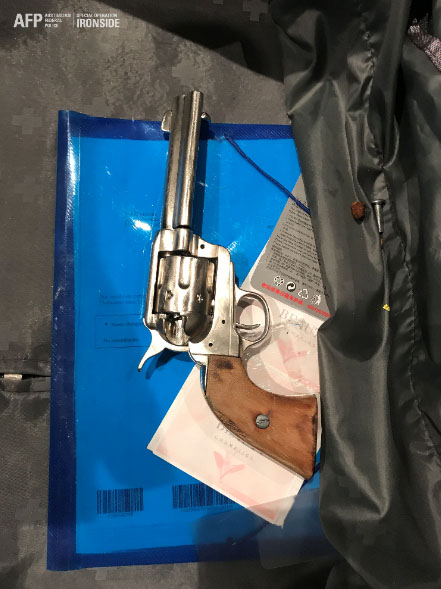
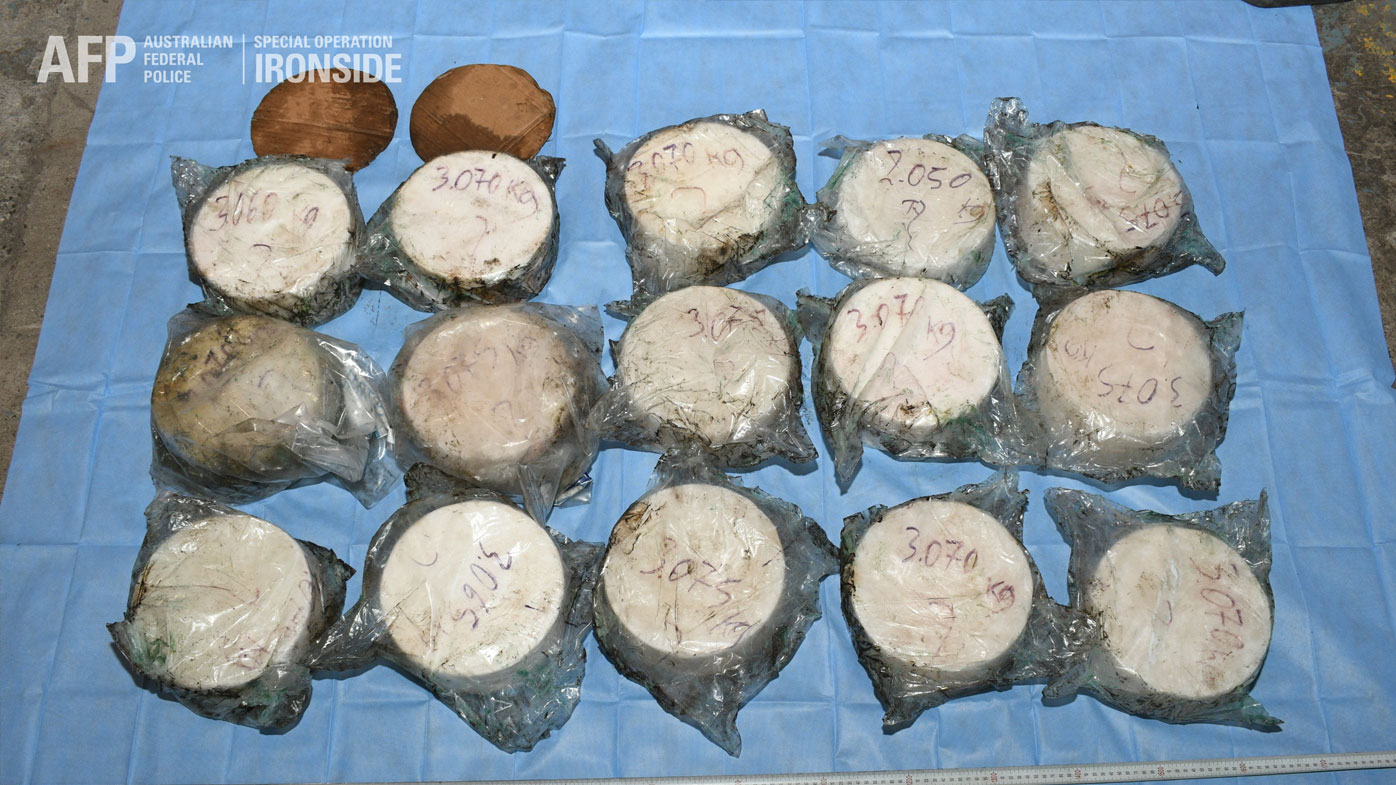
Property seized included 3.7 tonnes of drugs, 104 weapons, $44,934,457 million in cash and assets expected to run into millions of dollars.
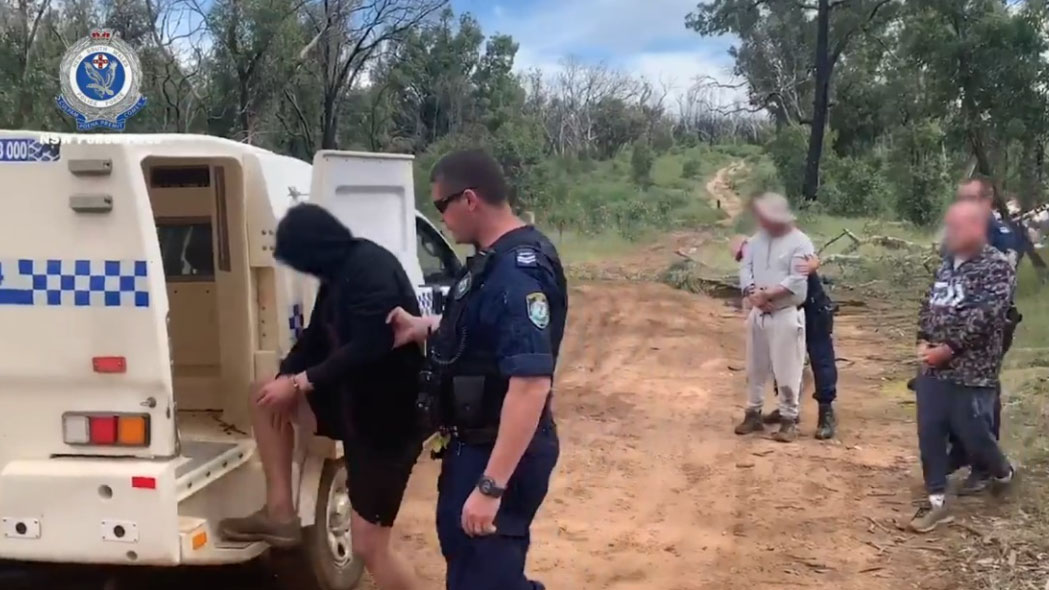
The AFP said it also acted on 20 threats to kill, potentially saving the lives of a significant number of innocent bystanders, with intelligence handed to state police agencies which took immediate action.
Mr Morrison said further arrests were expected.
AFP Commissioner Reece Kershaw said Operation Ironside had left organised crime in Australia reeling.
"Operation Ironside has allowed the AFP to inflict maximum damage to serious organised crime with devastating consequences to those who seek to do harm to Australians and Australia's interests, and today, Australia is a safer country," he said.
Mr Kershaw described those arrested as among the most dangerous criminals in Australia.
"We allege they are members of outlaw motorcycle gangs, Australian Mafia, Asian crime syndicates and serious and organised crime groups," he said.
"We allege they've been trafficking illicit drugs into Australia at an industrial scale."
Mr Kershaw said the AFP and FBI secretly used an encrypted platform known as AN0M during the operation.
The encrypted communications – which allegedly included plots to kill, mass drug trafficking and gun distribution – were decrypted from a platform covertly run by the FBI.
The app AN0M was installed on mobile phones that were stripped of other capabilities.
The mobile phones, which were bought on the black market, could not make calls or send emails.
It could only send messages to another device that had the organised crime app.
Criminals needed to know a criminal to get a device.
The devices organically circulated and grew in popularity among criminals, who were confident of the legitimacy of the app because high-profile organised crime figures vouched for its integrity.
"These criminal influencers put the AFP in the back pocket of hundreds of alleged offenders," Mr Kershaw said.
Speaking alongside Mr Kershaw, FBI representative Anthony Russo said the operation was an example of how global cooperation between police forces could smash organised crime.
"The criminals should be on notice that law enforcement and partnerships all over the world are resolute in their dedication to collaboration and to continue to evolve our capabilities," Mr Russo said.
NSW Police Deputy Commissioner David Hudson said the expansion of strike forces had been carried out in anticipation of what would follow Ironside.
"There will be reprisals, there will be debts owed, there will be conflict, there will be somebody trying to step up," he said.
Since Sunday, with 1000 officers in the field, NSW Police carried out 33 search warrants across the state and arrested 35 people.
About $10 million in cash has been seized in the past week and a half, including $7 million from a floor safe in the Sydney suburb of Marrickville.
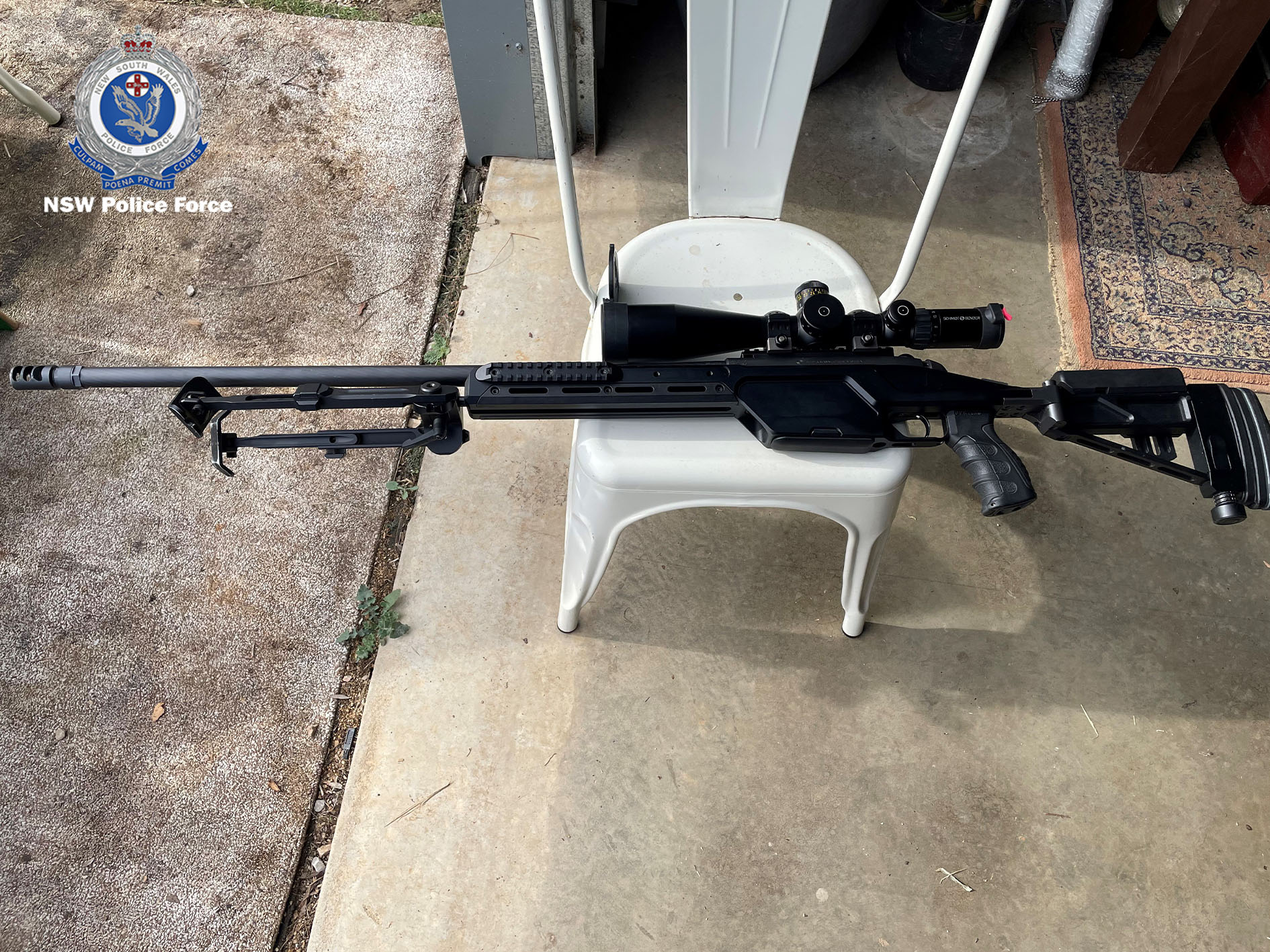
There were also 27 high-end firearms seized, including a .50 calibre "military-grade" sniper rifle from the regional town of Mudgee.
Home Affairs Minister Karen Andrews said the operation had been carefully planned with international law enforcement bodies.
"Our Australian Federal Police has worked hand-in-glove with US FBI to bring down some of the most significant criminals – not just here in Australia, but right around the world."
"The relationship we've been able to draw on, particularly with the FBI but other agencies across the world, has led to the most significant operation in policing history here in Australia.
"It is an ongoing operation. The operation puts Australia at the forefront of the fight against criminals who peddle in misery."
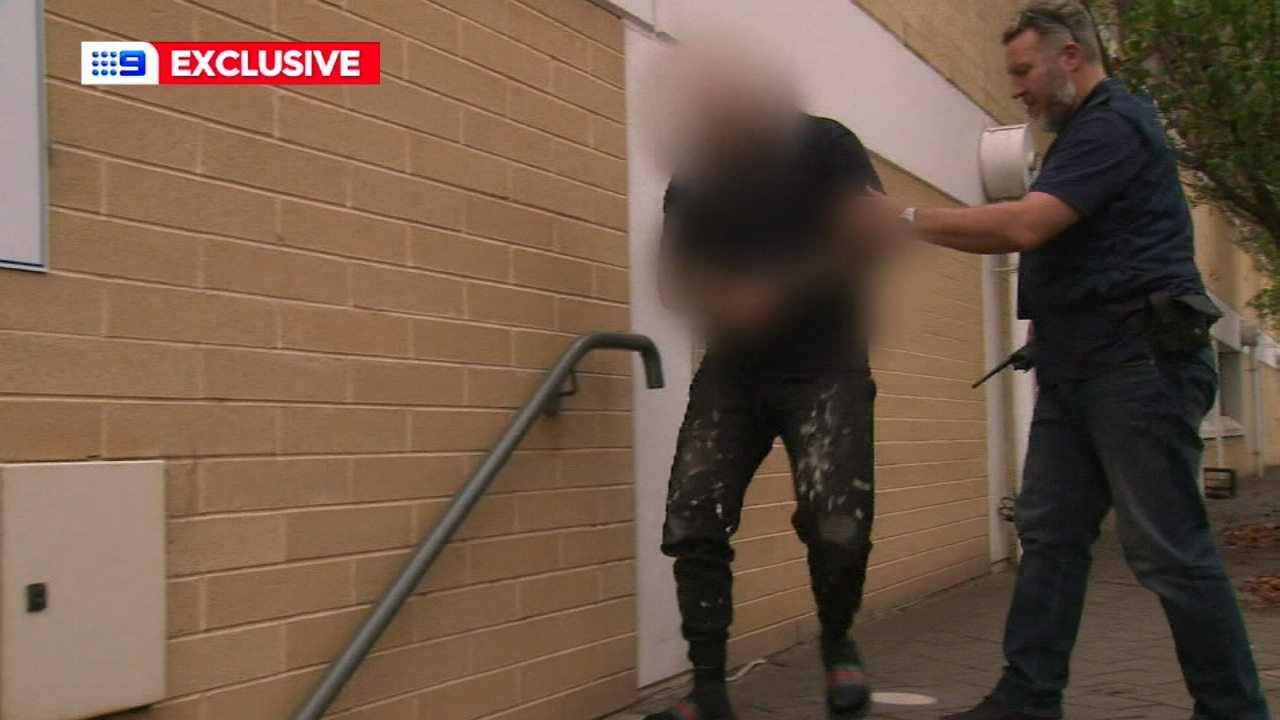
Across Victoria, hundreds of officers carried out 37 search warrants and conducted 32 arrests.
Assistant Commissioner Robert Hill said he was confident the data collected by Operation Ironside could help solve unsolved homicides.
He said many of the arrests had targeted people associated with the Comancheros outlaw motorcycle gang, with nine patched members in cuffs, including the group's sergeant-at-arms.
Drugs, millions of dollars in cash, weapons and cars were all seized.
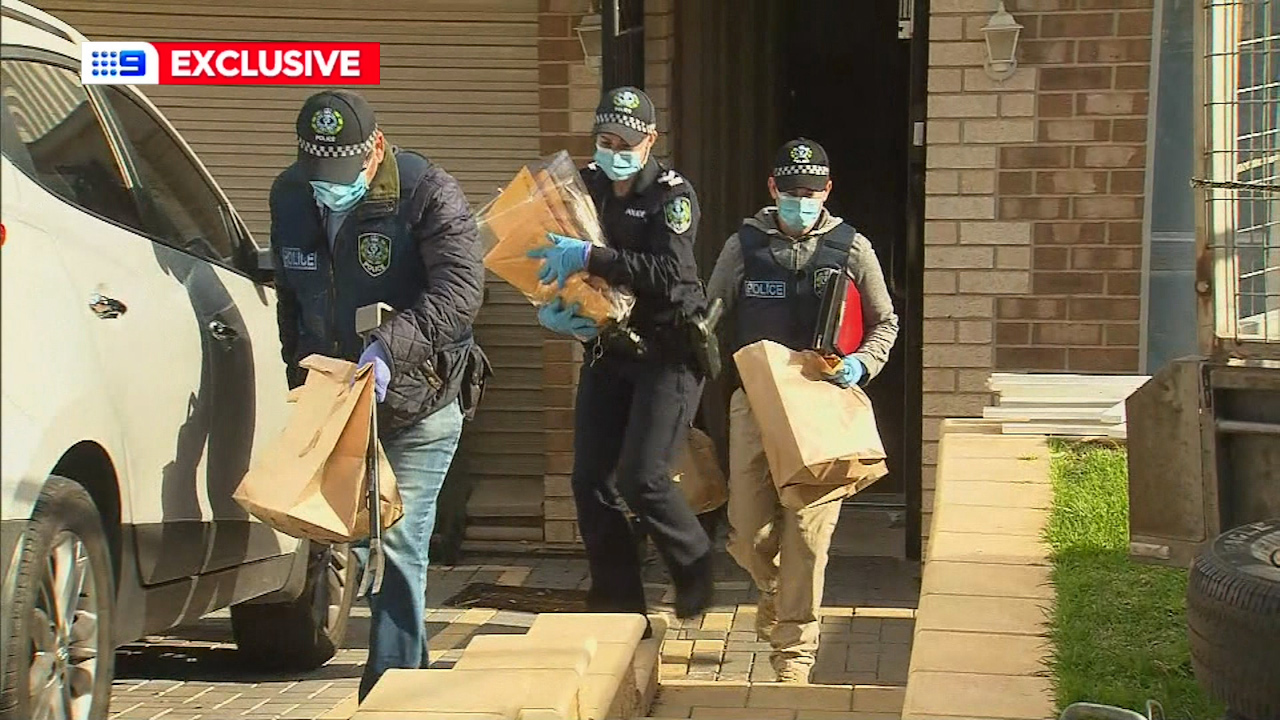
Across South Australia, 40 arrests were made yesterday as more than 460 police searched 80 residential and business premises.
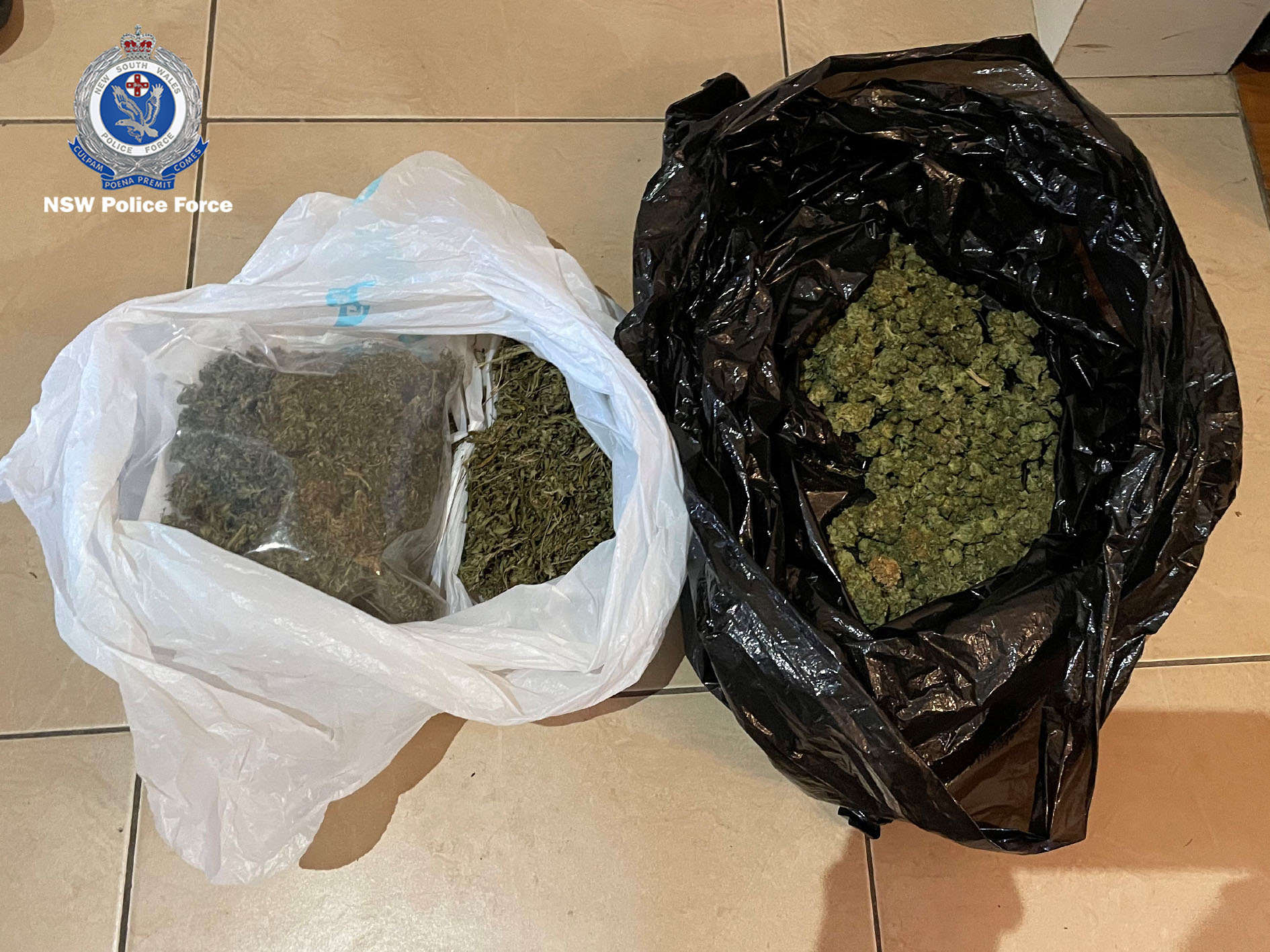
Among the seizures carried out were $1.9 million in cash, 90kg of high-grade methamphetamines with a street value of $45 million and 350kg of cannabis.
Police also seized luxury goods incluing Louis Vuitton accessories and wine collections worth hundreds of thousands of dollars.
A number of those arrested were office-bearers in bikie gangs, particularly the Comancheros.
As part of the global investigation, New Zealand police also arrested 35 people after raids across the North Island today.
They will appear in court today on charges of drug dealing, money laundering and other conspiracy charges.
The arrests were part of a New Zealand police operation into the importation of cocaine into the country before it was forwarded to Australia.