Tag Archives: oceania

Icy winds to blast several states this weekend

Several states are bracing for a cold and windy start to the weekend with weather warnings in place for six of the eight states and territories.

Brisk winds in the wake of a front are bringing showers to coastal northeast NSW, eastern Victoria and western Tasmania.

There is a strong wind warning in place for the NSW north coast with Byron Bay and Coffs Harbour residents warned of potentially dangerous conditions.

Sydney residents should rug up today with another chilly day following a particularly cold week with many locations across the city recording the coldest day in five years.

The highest temperature at Sydney's Observatory Hill weather station on Thursday was 13.4C at 2:23pm. This is the lowest daily maximum temperature since June 2016.

It was also the coldest day in five years for Bankstown which dropped to 12.9C, Horsely Park (12.4C), Canterbury (13.4C) and Olympic Park (13.4ºC).

Impressively, Richmond registered its equal lowest maximum temperature in a decade, reaching 11.8C.

Today, Sydney is only expected to reach 17C with a low of 9C.

Canberra is also off to an icy start to the weekend, with temperatures dropping to -4C this morning and a daytime maximum of just 11C.

There are also wind warnings in place for Queensland and the Northern Territory today as well as gale force winds for Tasmania and South Australia.

A weak trough over northern WA is causing the odd light shower.

High pressure is dominant elsewhere, with light winds and clear skies leading to morning frost in some parts.
Facebook says Trump now suspended until at least January 2023

Facebook announced Friday that former President Donald Trump would be suspended from its platform until at least January 7th, 2023 — two years from when he was initially suspended.

Facebook said it will then assess the circumstances to see if he should be allowed back on.

The company said in a post Friday that once the two years is up, it "will look to experts to assess whether the risk to public safety has receded. We will evaluate external factors, including instances of violence, restrictions on peaceful assembly and other markers of civil unrest. If we determine that there is still a serious risk to public safety, we will extend the restriction for a set period of time and continue to re-evaluate until that risk has receded."

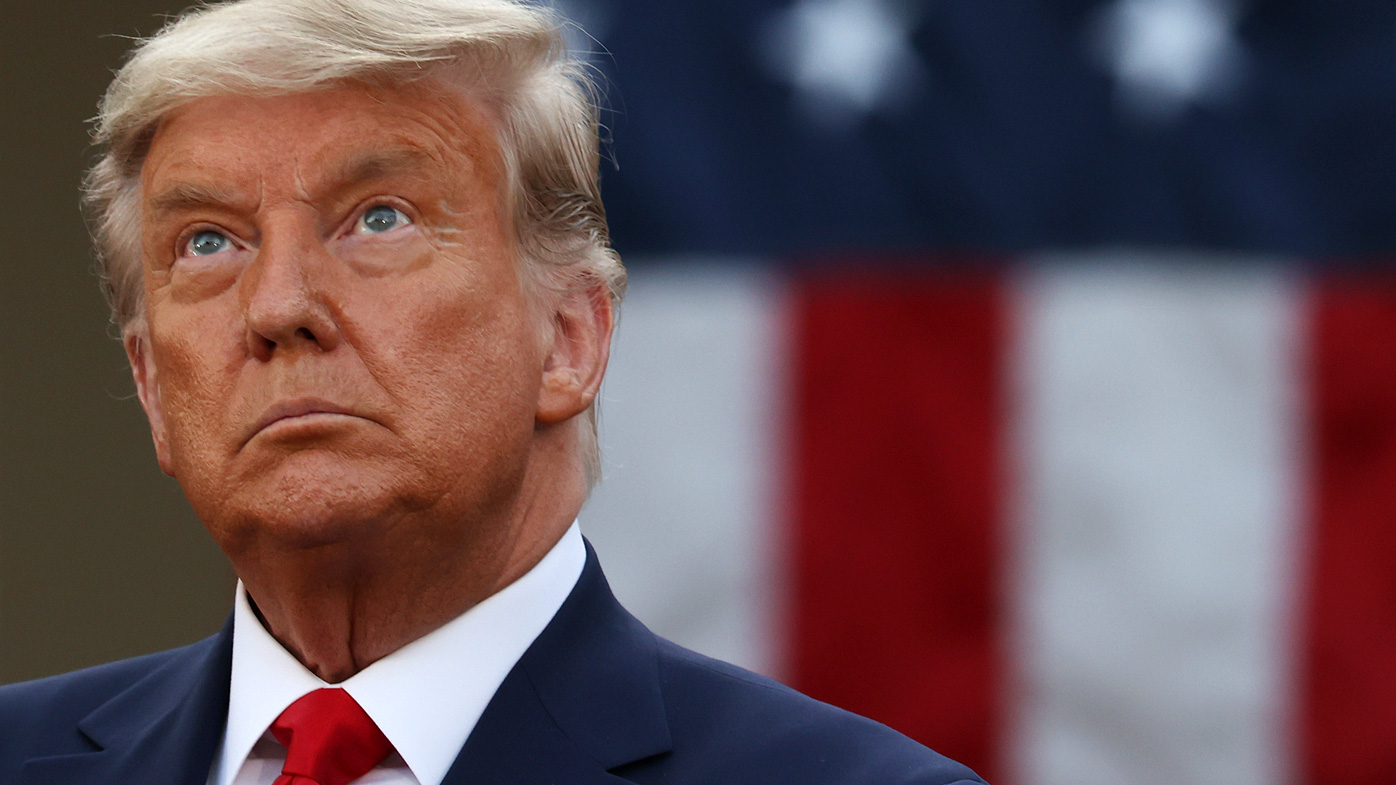
Then US President Donald Trump speaks about Operation Warp Speed in the Rose Garden at the White House on November 13, 2020.

In the post, written by Nick Clegg, the company's vice president for global affairs, also announced new rules for "enforcement protocols to be applied in exceptional cases such as this."

The change comes in the wake of the unprecedented step the company took of indefinitely suspending Trump in January — and the way its independent oversight board rebuked it for the arbitrary nature of that suspension.

Facebook also plans to end a contentious policy championed by CEO Mark Zuckerberg that automatically exempted politicians from rules that banned hate speech and abuse. The company has said it has never applied this policy to Trump.

https://twitter.com/fbnewsroom/status/1400852636644085768

The social media giant said on Friday that while it will still apply this "newsworthiness" exemption to certain posts it deems to be in the public interest even if they violate Facebook rules, it will no longer treat material posted by politicians any differently from that posted by anyone else. In addition, Facebook said it will make public whenever it does apply the exemption to a post.

The announcements are in response to recommendations from the company's quasi-independent oversight board. Last month that panel upheld a decision by Facebook to keep former Trump indefinitely suspended but said the company could not merely suspend him "indefinitely" and gave it six months to decide what to do with his accounts.

Facebook has had a general "newsworthiness exemption" since 2016. But it garnered attention in 2019 when Nick Clegg, vice president of global affairs and communications, announced that speech from politicians will be treated as "newsworthy content that should, as a general rule, be seen and heard."

Putin signs law banning 'extremists' from running in elections

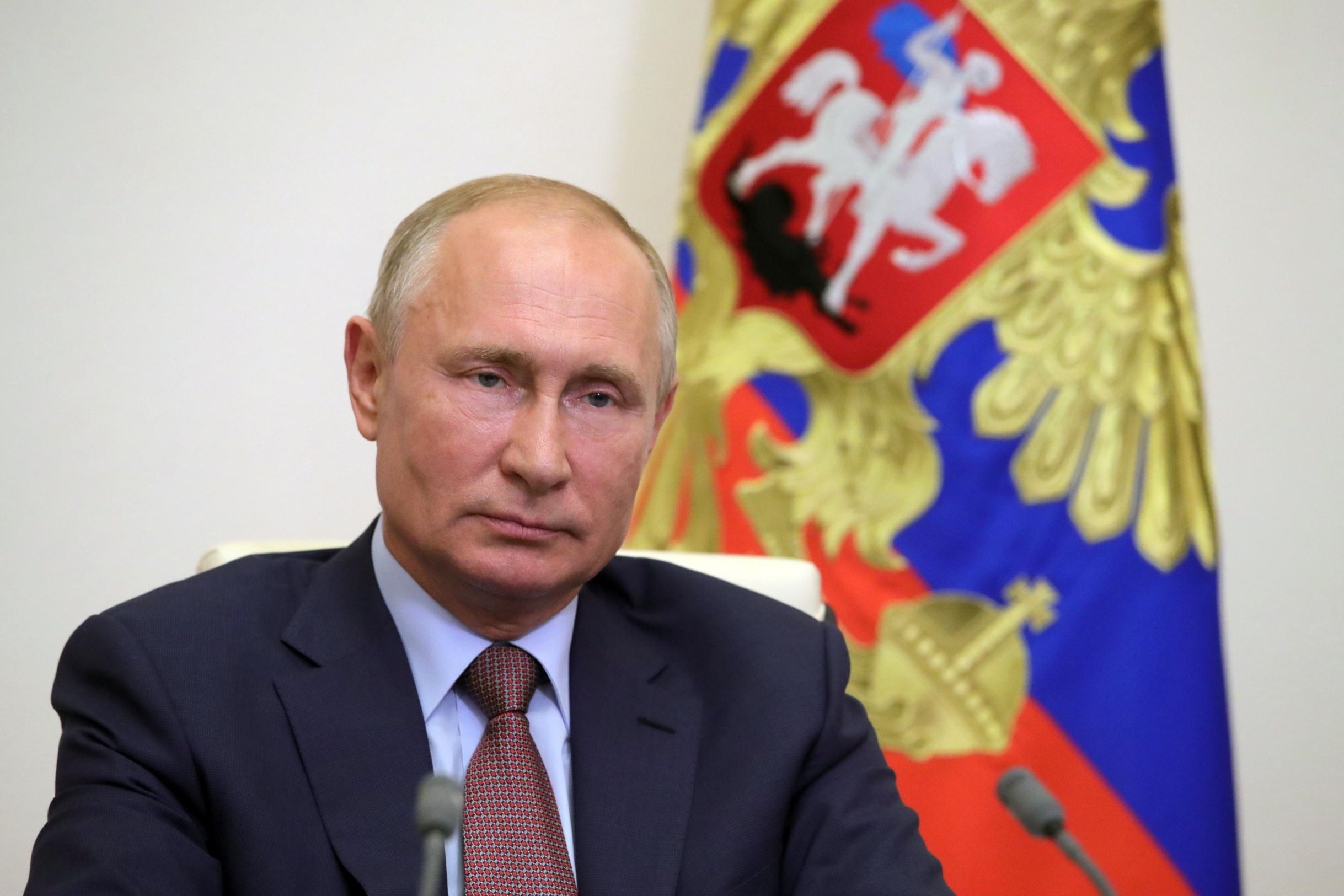
Russian President Vladimir Putin signed a new law Friday banning individuals designated as "extremists" from running for public offices, a move condemned by the opposition as an effort to further limit political competition.

The new legislation was signed and posted on a government website on Friday, the day which also marks the birthday of jailed Kremlin critic Alexey Navalny.

The law prevents members of "extremist" or "terrorist" organisations from standing in elections for a period of three to five years, depending on the person's position.

READ MORE: Imprisoned Putin foe Navalny to end his hunger strike

Founders and leaders of designated groups will not be able to run for elected office for five years after a court's decision to ban the group. Employees or financial supporters of court-ruled extremist and terrorist organisations will be banned from running for office for three years.

Navalny was imprisoned earlier this year by a Moscow court for allegedly violating the probation terms of a 2014 case in which he received a suspended sentence of three and a half years. Navalny's chief of staff Leonid Volkov tweeted on Friday he didn't believe Putin "accidentally" signed the law today.

The new legislation comes ahead of a court decision on whether to designate both Navalny's political and anti-corruption organisations as extremist groups following a lawsuit filed in April by the Moscow Prosecutor's Office.

If approved, the move by prosecutors could have serious consequences for Navalny's team, already under serious pressure from police raids and arrests. Russia already has sweeping anti-extremism laws on the books that critics say effectively curtail freedom of speech and rights to public assembly.

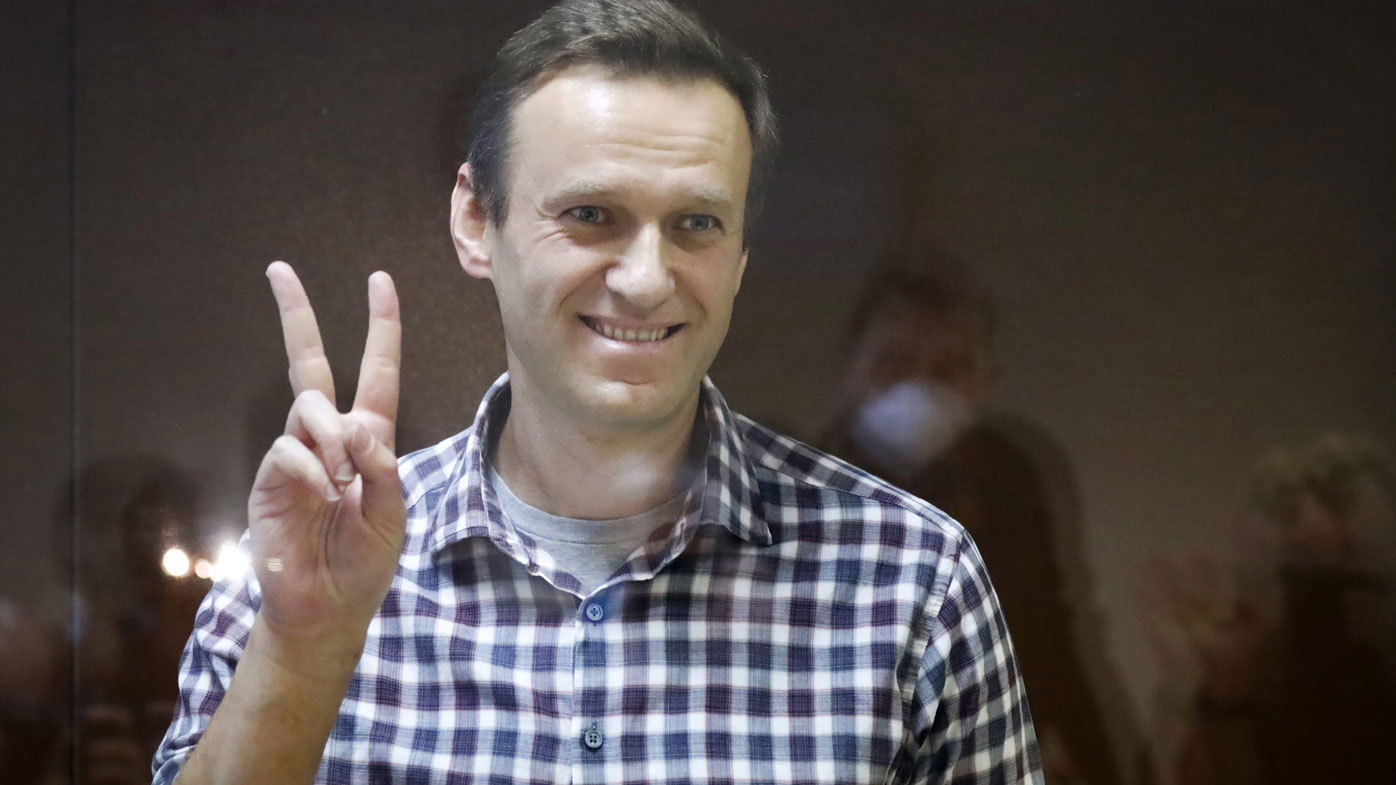
Russian opposition leader Alexei Navalny stands in a cage in the Babuskinsky District Court in Moscow, Russia, Saturday, Feb. 20, 2021.

Tatiana Stanovaya, political analyst of Carnegie Moscow and founder of R.Politik told CNN the law threatens not only opposition politicians but ordinary Russian citizens.

"The law is part of a larger campaign against anti-regime behaviour in Russia," she said. "The battlefield has become much larger, now even a Russian citizen who participates in protests, retweets an opposition post or donates to opposition groups, face the risk of prosecution."

The new legislation signed by Putin means Navalny supporters face the possibility of being barred from running in Russia's upcoming parliamentary elections in September.

Navalny was already barred from running in Russia's last presidential election in 2018 because of his conviction. Russia's next presidential election is scheduled for 2024.

While Putin was originally set to step down at that time because of term limits, last year's constitutional reform has effectively reset the clock for him, allowing him to seek two more six-year terms when his presidency ends. He has already hinted he is planning to run again.