Tag Archives: oceania

Ontario resuming use of AstraZeneca, but only as second dose

Canada's most populous province is resuming use of the Oxford-AstraZeneca COVID-19 vaccine, but only as a second dose for those who'd received it initially, officials said Friday.

Ontario and several other provinces stopped giving out first doses of Oxford-AstraZeneca earlier this month on concerns over reported links to rare blood clots, which previously led some European countries to restrict its use.

The Ontario government said that decision was also based on the increased supply of alternative vaccines from Pfizer and Moderna and a downward trend in cases.

AstraZeneca COVID-19 vaccine vials (Getty)

The province also has delayed giving second vaccine doses in order to get as many people covered by a first shot as possible. While protocols initially called for a three-week interval, studies found a longer gap often was more effective.

Ontario's chief medical officer for health, Dr. David Williams, said "informed consent" is needed to get the second dose of AstraZeneca. Those who got the first dose between March 10 and March 19 will be eligible as soon as next week for the second shot.

RELATED: Locally manufactured COVID-19 vaccines 'will help enormously'

The government said data from the UK strongly suggests a much-reduced risk of the rare blood cots in second doses of AstraZeneca. Williams said it is one in 600,000.

Ontario has more than 50,000 doses of the vaccine set to expire at the end of the month and officials don't want to waste them.

The province said nearly a million Ontarians aged 40 and over received the AstraZeneca vaccine as their first dose between March 10 and May 11.

Canada has overtaken the US in the percentage of people with at least one dose, but Canada has only fully vaccinated about three per cent of the population. Second doses are expected to be administered for most adults in June and July in Canada.

Canada has relied largely on the Pfizer and Moderna vaccines. Plans to distribute the first 300,000 doses of the Johnson & Johnson COVID-19 vaccine in Canada remain on hold after Health Canada learned part of them were manufactured at a Maryland facility where the US Food and Drug Administration had uncovered manufacturing violations.

Meanwhile, federal Transport Minister Omar Alghabra said Canada is extending the ban on direct passenger flights from India and Pakistan for another 30 days until June 21. There had been a disproportionately higher number of positive cases among those travelling on flights from India and Pakistan.

Shackled Black man ordered facedown in deadly arrest

Beaten and shackled by Louisiana state troopers, Black motorist Ronald Greene desperately tried to roll over in what may have been a struggle to breathe but was ordered to stay on his belly, according to body-camera video newly obtained by The Associated Press.

And the long-secret autopsy report, also newly secured, cited Greene's head injuries and the way he was restrained as factors in his 2019 death. It also noted he had high levels of cocaine and alcohol in his system as well as a broken breastbone and a torn aorta.

"I beat the ever-living f— out of him, choked him and everything else trying to get him under control," Trooper Chris Hollingsworth can be heard telling a fellow officer in the newly obtained batch of video. "All of a sudden he just went limp. … I thought he was dead."

"You all got that on bodycam?" the other officer asks over the phone, at which point Hollingsworth switches his camera off.

The footage and the autopsy report add to the growing wealth of details about Greene's death, which has long been surrounded by allegations of a cover-up and is now the subject of a federal civil rights investigation. Louisiana State Police initially blamed his death on a car crash and made no mention of use of force by officers.

AP earlier this week published previously unreleased body-camera footage that showed troopers converging on Greene's car outside Monroe, Louisiana, after a high-speed chase, repeatedly jolting the 49-year-old unarmed man with stun guns, putting him in a chokehold, punching him in the head and dragging him by his ankle shackles.

Use-of-force experts say the most dangerous and troubling parts of the arrest came after the struggle, when officers left the heavyset Greene facedown on the ground with his hands and feet restrained for more than nine minutes.

At one point in a new 30-minute video, Greene can be seen struggling to prop himself up on his side.

"Don't you turn over! Lay on your belly! Lay on your belly!" Trooper Kory York yells before briefly dragging Greene by the chain that connects his ankle shackles.

York then kneels on Greene's back and tells him again, "You better lay on your f—— belly like I told you to! You understand?"

"Yes, sir," Greene replies.

"The trooper's wrong and what he did is excessive," said Charles Key, a use-of-force expert and former Baltimore police lieutenant. "It's a mistake because he can't breathe. You see Greene drawing his legs up, and that may be because he can't freaking breathe."

Police are highly discouraged from leaving handcuffed suspects in a prone position, particularly when they aren't resisting, because it can greatly hinder their breathing — a point made repeatedly at the trial this spring of the former Minneapolis officer convicted of murder in the death of George Floyd.

Louisiana State Police said federal authorities have barred them from commenting on the Greene case. The US Justice Department did not immediately respond to a request for comment.

While the autopsy on Greene listed his cause of death as "cocaine induced agitated delirium complicated by motor vehicle collision, physical struggle, inflicted head injury and restraint," it did not specify the manner of death — a highly unusual move that did not make it clear whether Greene's death could be deemed a homicide, an accident or undetermined.

Arkansas State Crime Lab pathologists Jennifer Forsyth and Frank J. Paretti, who conducted the autopsy in May 2019 for the Union Parish Coroner's Office, found Greene had a "significant" level of cocaine in his system — 1,700 nanograms per millilitre — and a blood-alcohol content of 0.106, just above the 0.08 level that amounts to drunken driving in Louisiana.

They said it "cannot be stated with certainty" whether many of Greene's injuries — including a fracture of the sternum, or breastbone, and a laceration of his aorta — were attributable to the car crash or the struggle with troopers.

"There were lacerations of the head inconsistent with motor vehicle collision injury," they wrote. "These injuries are most consistent with multiple impact sites from a blunt object."

In the latest video, Greene, his legs shackled and his hands cuffed behind his back, is prone on the ground, and two troopers can be seen hovering over him before he suddenly cries out. One of the officers tells him, "Yeah, yeah, that s—— hurts, doesn't it?"

"OK! Oh, Lord Jesus. Oh, Lord!" Greene screams out. "OK, OK. Lord Jesus! OK, I'm sorry. I'm sorry."

It's not clear from the video what the officer is describing, but several law enforcement officials who reviewed the footage indicated this might be the moment when one of them sprays Greene with pepper spray. A use-of-force document not previously made public shows pepper spray was used in the arrest.

"If they pepper-sprayed him at that point, that's excessive," Key said. "There has to be some threat. He's handcuffed."

Minutes after Greene's outburst, he begins to moan and make gurgling noises as two troopers keep holding him down.

The new video, recorded on Lt. John Clary's body camera, remained under wraps for months even within State Police but was recently turned over to the FBI as part of its investigation, according to three law enforcement officials. They were not authorised to discuss the investigation and spoke on the condition of anonymity.

At one point, after medical help arrives, a paramedic is heard saying, "He's not getting enough air" and appears to put his blood oxygen level at 86, which Key described as critically low. Yet nobody appears to be giving Greene oxygen.

Louisiana officials had for two years rebuffed repeated calls to release footage and details about what caused Greene's death after the chase, which began over an unspecified traffic violation. Troopers initially told his family he died on impact after crashing into a tree. State Police later released a brief statement acknowledging only that Greene struggled with troopers and died on his way to the hospital.

That secrecy extended to the autopsy, which pathologists said was hindered by the State Police's failure to provide even the most routine documents relating to Greene's arrest, including police reports, collision details or emergency medical records.

Andrew Scott, a former Boca Raton, Florida, police chief who testifies as an expert use-of-force witness, said Greene's case is an example of how "stonewalling is the Achilles' heel of law enforcement."

"The only reason I can even conjecture that this information would not be provided to the medical examiner's office is because they didn't want them to see it," Scott said. "They intentionally thwarted the facts of this case to be truly revealed."

Netanyahu warns against further 'drizzle of rockets' after cease-fire

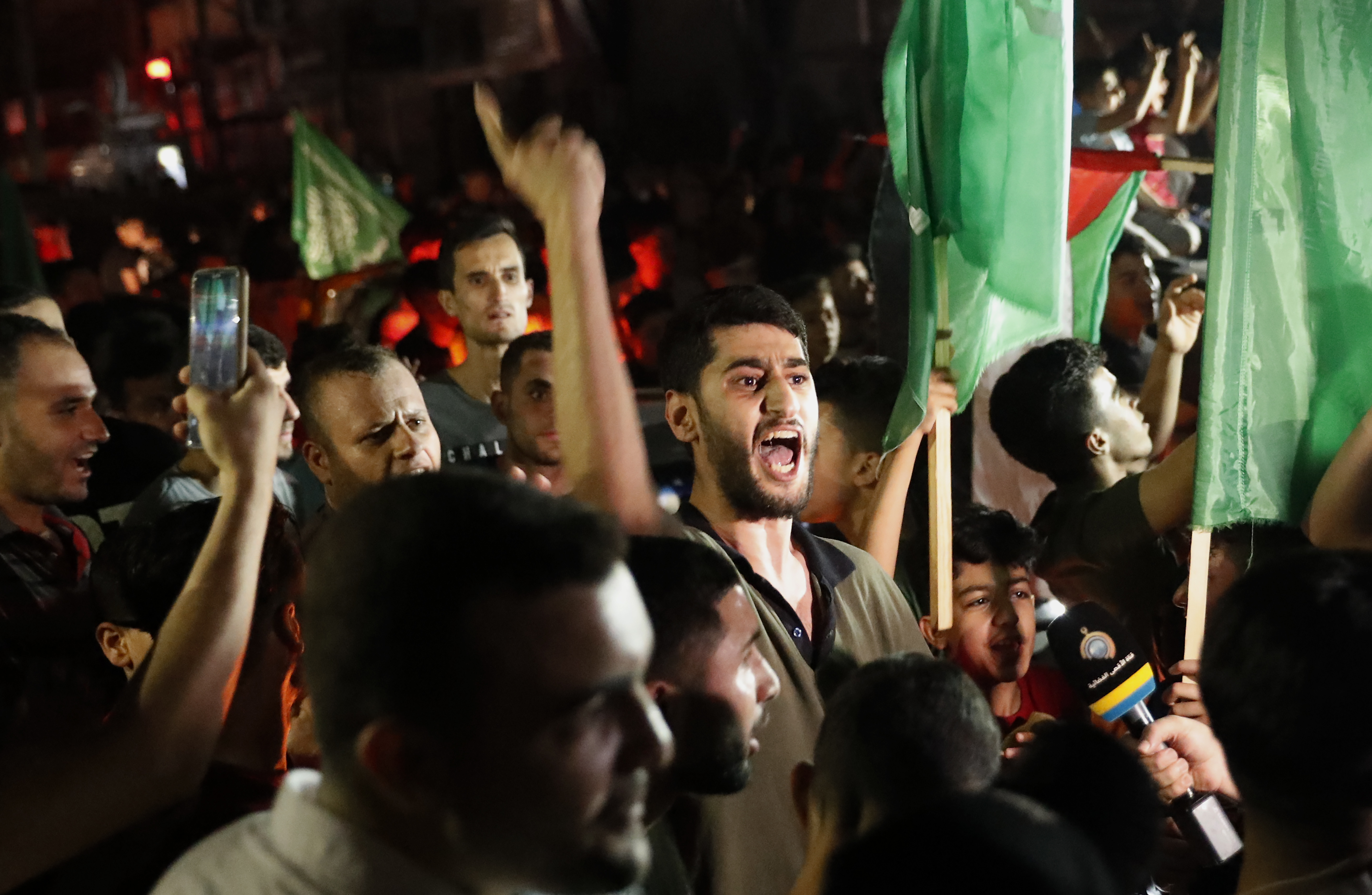
Palestinians rallied by the thousands Friday after a cease-fire took effect in the latest Gaza war, with many viewing it as costly but clear victory for the Islamic militant group Hamas. Israel vowed to respond with a "new level of force" to any further hostilities.

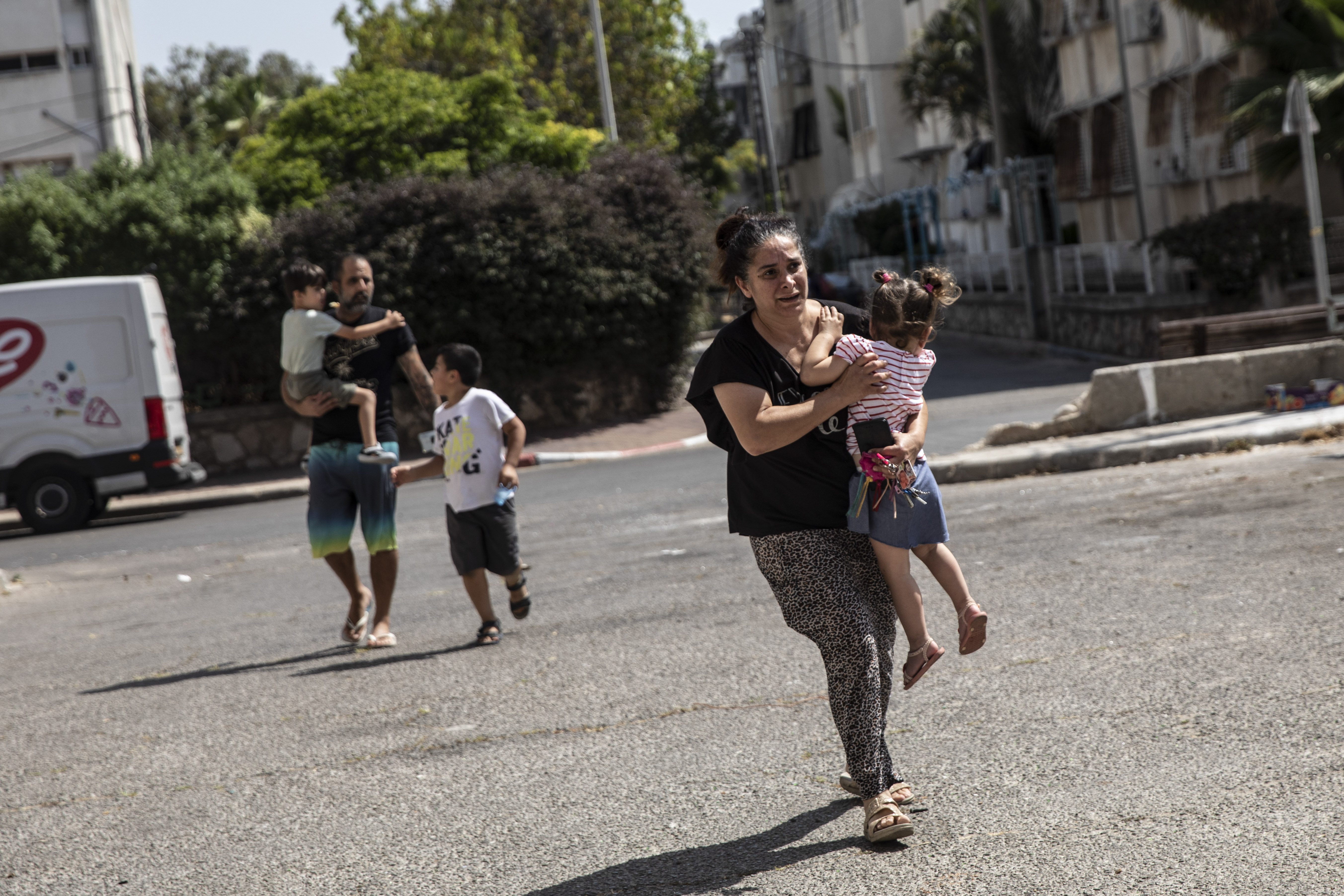
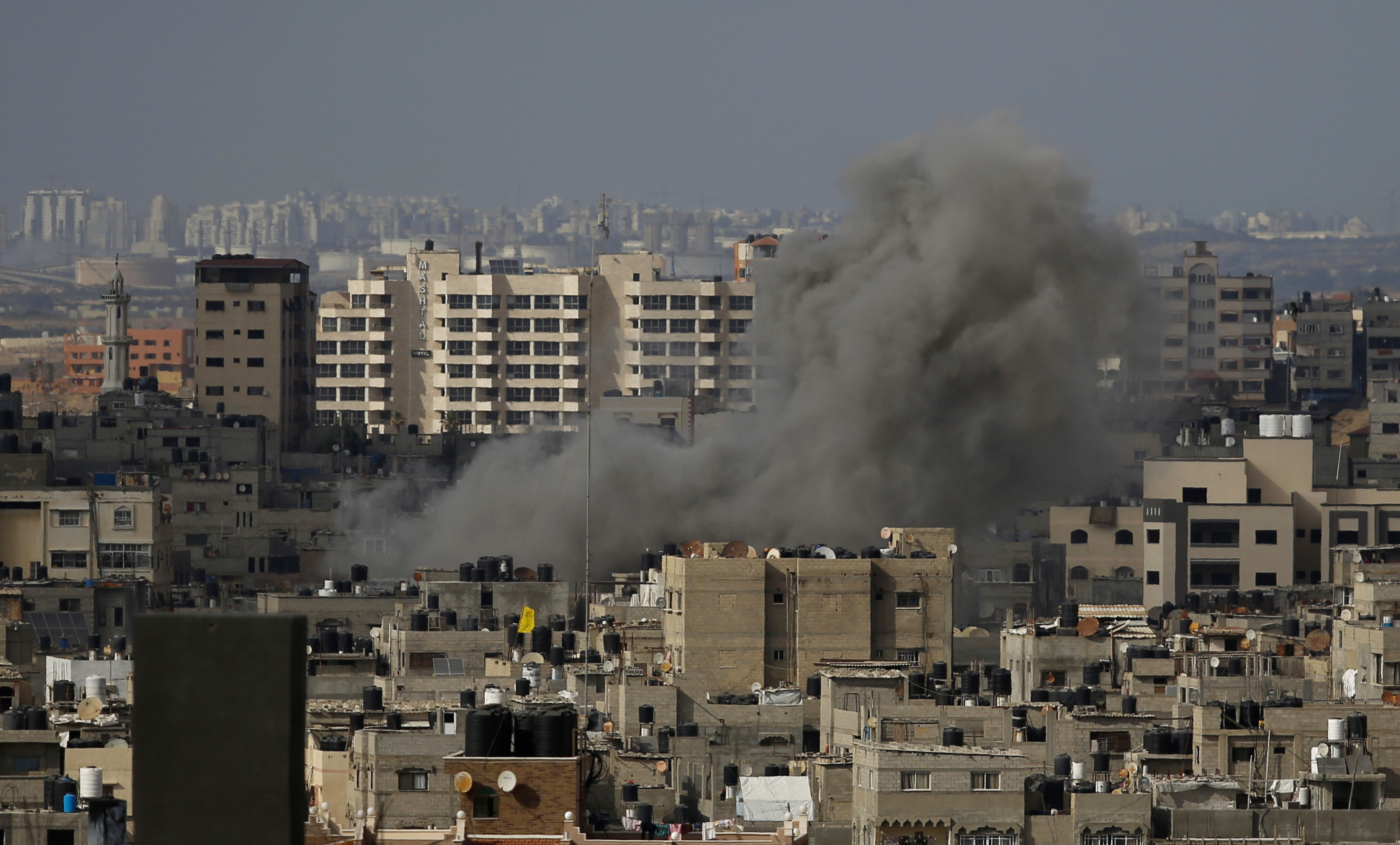
The 11-day war left more than 200 dead — the vast majority Palestinians — and brought widespread devastation to the already impoverished Hamas-ruled Gaza Strip. But the rocket barrages that brought life to a standstill in much of Israel were seen by many Palestinians as a bold response to perceived Israeli abuses in Jerusalem, the emotional heart of the conflict.

Israeli Prime Minister Benjamin Netanyahu warned against further attacks, saying, "If Hamas thinks we will tolerate a drizzle of rockets, it is wrong." He vowed to respond with "a new level of force" against aggression anywhere in Israel.

READ MORE: Biden hails 'genuine opportunity for peace' as Gaza ceasefire begins
The Israeli leader, who has faced criticism from his hawkish base for ending the offensive prematurely, said Israel had done "daring and new things, and this without being dragged into unnecessary adventures." He added that Israeli forces had caused "maximum damage to Hamas with a minimum of casualties in Israel."

Israeli strikes killed more than 200 militants, including 25 senior commanders, and hit more than 100 kilometres of militant tunnels, Netanyahu said.

The truce faced an early test when clashes broke out between Palestinian protesters and Israeli police following Friday prayers at the Al-Aqsa Mosque compound, a flashpoint holy site in Jerusalem that is sacred to Jews and Muslims. It was unclear what sparked the violence.

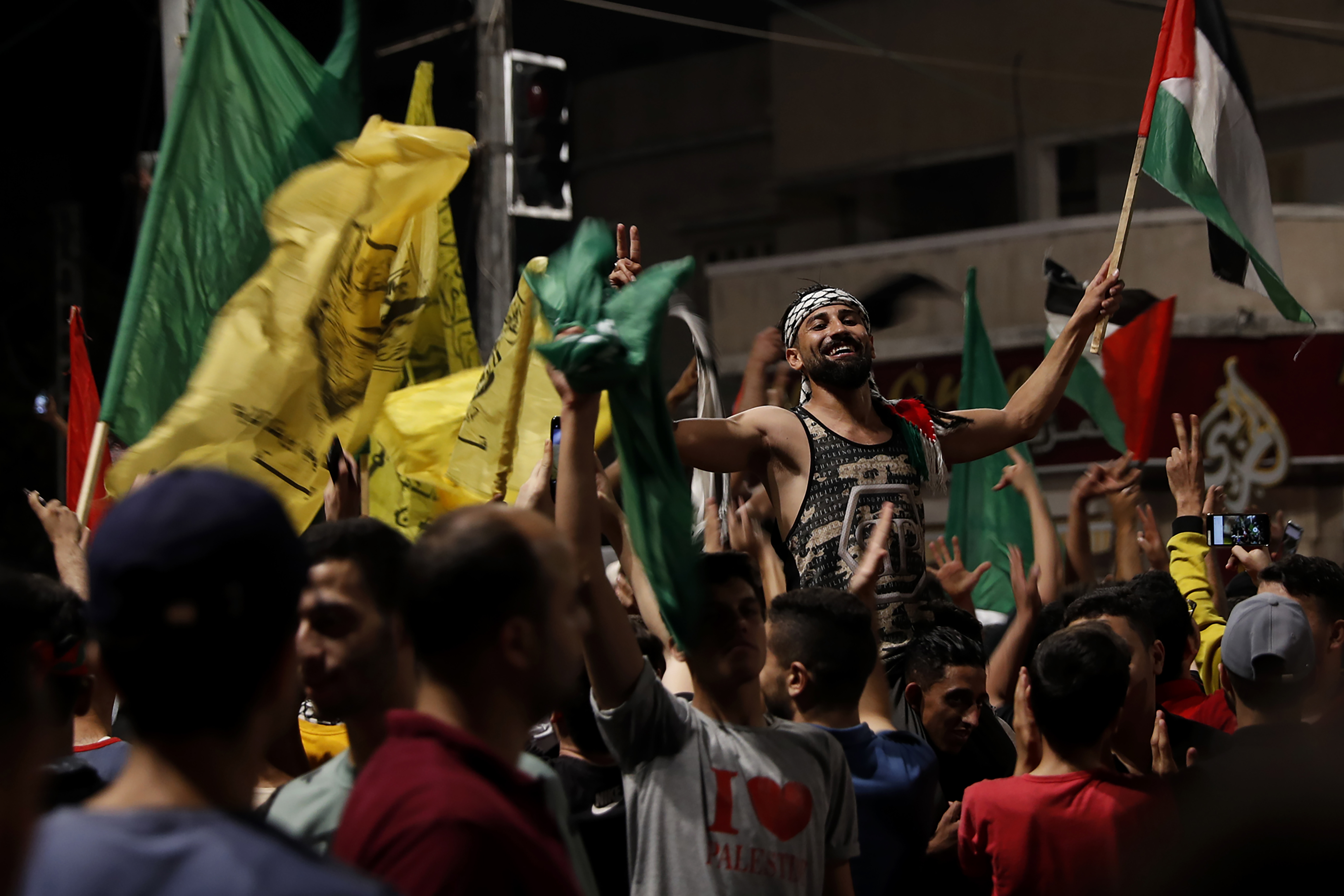
Police fired stun grenades and tear gas, and Palestinians hurled rocks and at least one firebomb after hundreds took part in a celebratory demonstration in which they waved Palestinian and Hamas flags and cheered the militant group. Clashes between protesters and police there earlier this month were one of the main triggers for the war.

Protesters also clashed with Israeli troops in parts of the occupied West Bank, which has seen violent demonstrations in recent days linked to Jerusalem and Gaza.
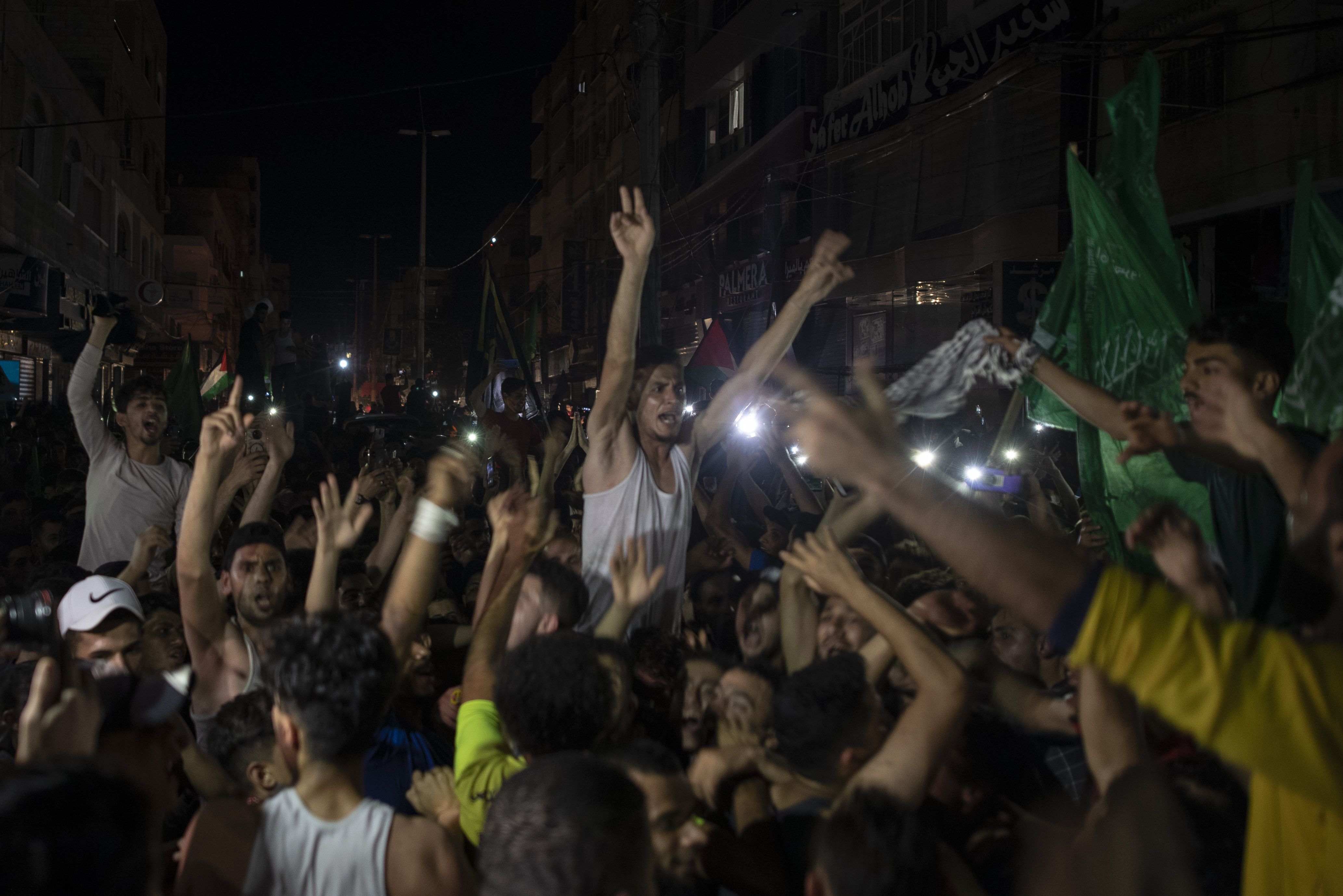
Thousands took to the streets of Gaza as the cease-fire took hold at 2am. Young men waved Palestinian and Hamas flags, passed out sweets, honked horns and set off fireworks. Celebrations also broke out overnight in east Jerusalem and across the occupied West Bank. Israel captured all three territories in the 1967 war and the Palestinians want them for their future state.

An open-air market in Gaza City that was closed throughout the war reopened and shoppers could be seen stocking up on fresh tomatoes, cabbage and watermelons. Workers in orange traffic vests swept up rubble from surrounding roads.

"Life will return, because this is not the first war, and it will not be the last war," said shop owner Ashraf Abu Mohammad. "The heart is in pain, there have been disasters, families wiped from the civil registry, and this saddens us. But this is our fate in this land, to remain patient."

There was little to celebrate in the hard-hit northern town of Beit Hanoun, where residents, many of whom had lost loved ones, surveyed wrecked homes.

"We see such huge destruction here, it's the first time in history we've seen this," said Azhar Nsair. "The cease-fire is for people who didn't suffer, who didn't lose their loved ones, whose homes were not bombed."
Like the three previous wars, the latest round of fighting ended inconclusively. Israel claimed it inflicted heavy damage on Hamas with hundreds of bruising airstrikes but once again was unable to halt the rockets.

Hamas also claimed victory but faces the daunting challenge of rebuilding in a territory already suffering from high unemployment and a coronavirus outbreak.

At least 243 Palestinians were killed, including 66 children, with 1,910 people wounded, according to the Gaza Health Ministry, which does not list the numbers of fighters and civilians. Twelve people were killed in Israel, including a 5-year-old boy and 16-year-old girl.

In Gaza, rescue workers were still recovering bodies from areas that had been too dangerous to enter. Five were collected Friday in the southern town of Khan Younis, including that of a 3-year-old, the Red Crescent emergency service said.
The fighting began May 10, when Hamas militants in Gaza fired long-range rockets toward Jerusalem. The barrage came after days of clashes between Palestinian protesters and Israeli police at Al-Aqsa. Heavy-handed police tactics at the compound, and the threatened eviction of dozens of Palestinian families by Jewish settlers had inflamed tensions.

The competing claims to Jerusalem lie at the heart of the conflict and have repeatedly triggered bouts of violence.

The cease-fire was brokered by neighbouring Egypt after the US pressed Israel to wind down the offensive. US Secretary of State Antony Blinken plans to visit the region "to discuss recovery efforts and working together to build better futures for Israelis and Palestinians." the State Department said.

Hamas and other militant groups fired over 4,000 rockets at Israeli cities, launching them from civilian areas. Dozens landed as far north as the bustling commercial capital of Tel Aviv.

Israel, meanwhile, carried out hundreds of airstrikes, targeting what it said was Hamas' military infrastructure.
The United States, Israel's closest and most important ally, initially backed what it said was Israel's right to self-defence against indiscriminate rocket fire. But as the fighting dragged on and deaths mounted, the Americans increasingly pressured Israel to stop the offensive.

President Joe Biden welcomed the cease-fire. He said the U.S. was committed to helping Israel replenish its supply of interceptor missiles and to working with the internationally recognised Palestinian Authority — not Hamas — to provide humanitarian aid to Gaza.

Netanyahu faced heavy criticism from members of his hawkish, nationalist base. Gideon Saar, a former ally who leads a small party opposed to the prime minister, called the cease-fire "embarrassing." Itamar Ben Gvir, head of the far-right Jewish Power party, tweeted that the cease-fire was "a grave surrender to terrorism and the dictates of Hamas."

In a potentially damaging development for the Israeli leader, the Palestinian militants claimed Netanyahu had agreed to halt further Israeli actions at the Al Aqsa Mosque and to call off the planned evictions of Palestinians in the nearby Sheikh Jarrah neighbourhood. An Egyptian official said only that tensions in Jerusalem "will be addressed."
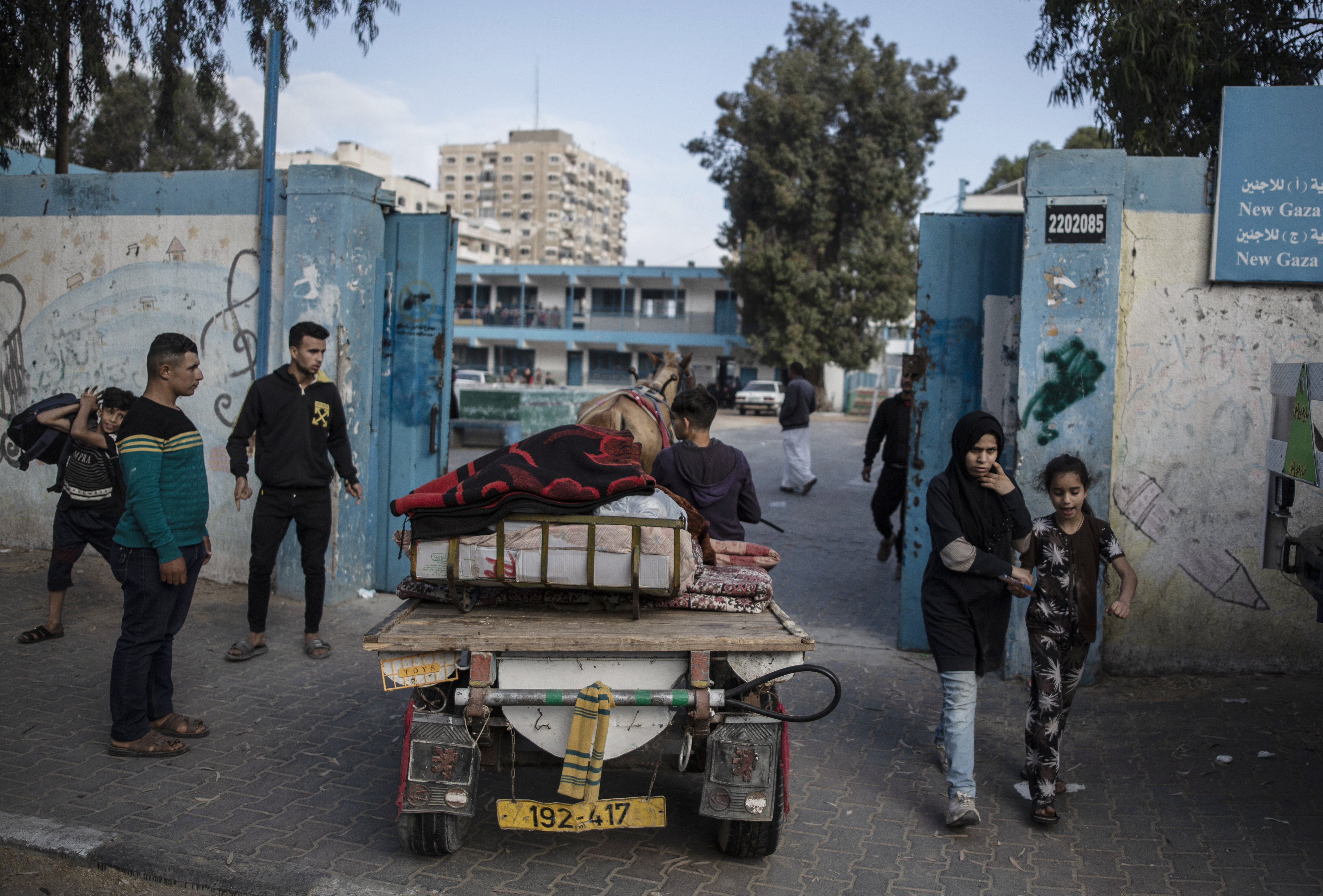
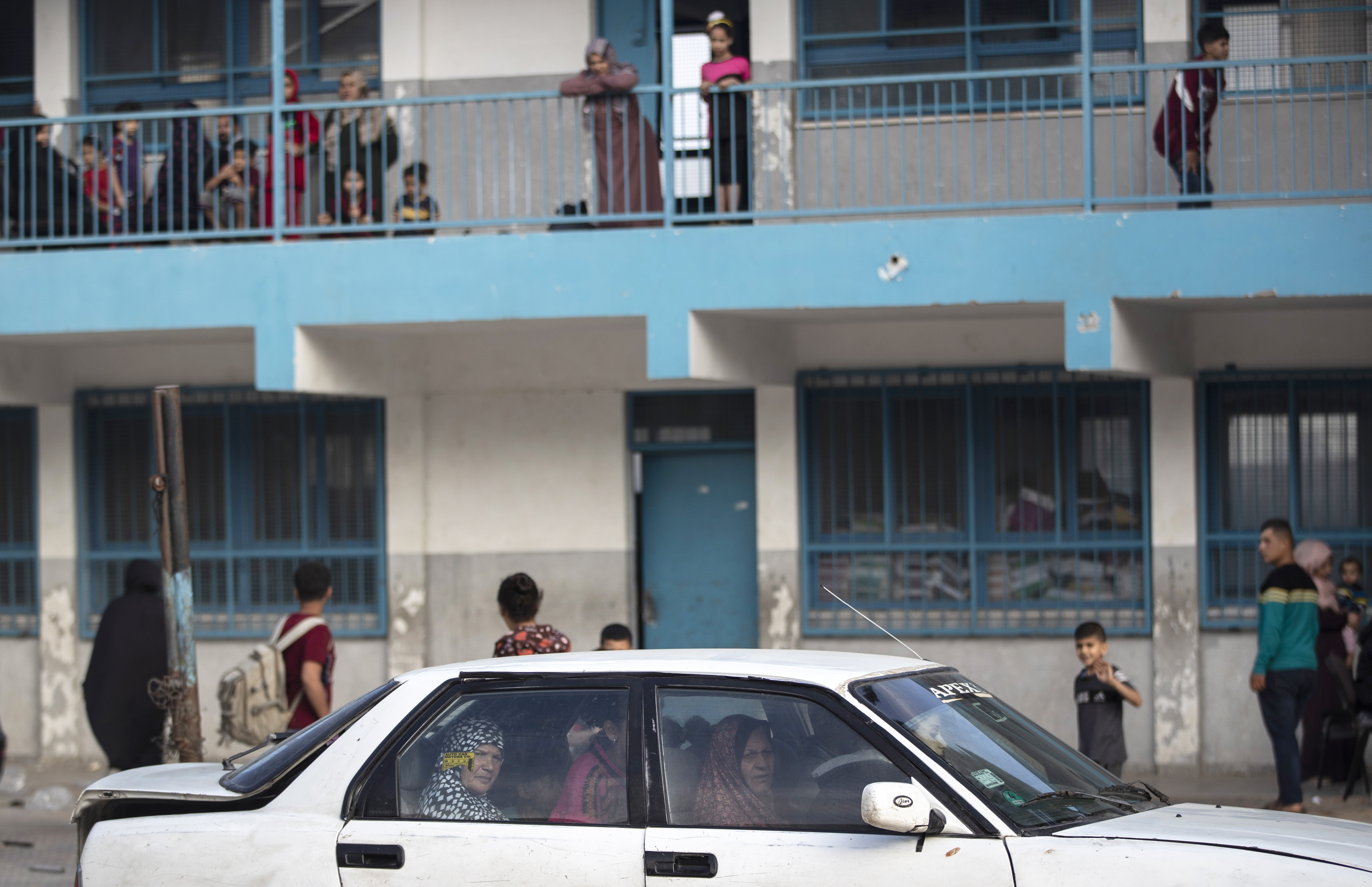
Some 58,000 Palestinians sought shelter in crowded UN schools amid a coronavirus outbreak. Thousands returned to their homes as the truce took hold.

The fighting dealt another blow to the already decrepit infrastructure in Gaza. The small coastal territory, home to more than 2 million Palestinians, has been under an Israeli-Egyptian blockade since Hamas seized power from forces loyal to Palestinian President Mahmoud Abbas in 2007, confining his authority to parts of the occupied West Bank.

The World Health Organisation says 30 health facilities in Gaza were damaged, with one clinic destroyed and another with significant damage. An airstrike damaged the only facility in Gaza processing coronavirus tests, forcing a halt to testing in the territory.

Fabrizio Carboni, regional director for the Near and Middle East at the International Committee of the Red Cross, estimated there were "several hundred" pieces of unexploded ordnance strewn in Gaza, adding that medical supplies were a pressing need.

Diver bitten by three-metre tiger shark off WA beach

A 40-year-old man has been bitten on the hand and forearm in a shark attack north of Broome today.

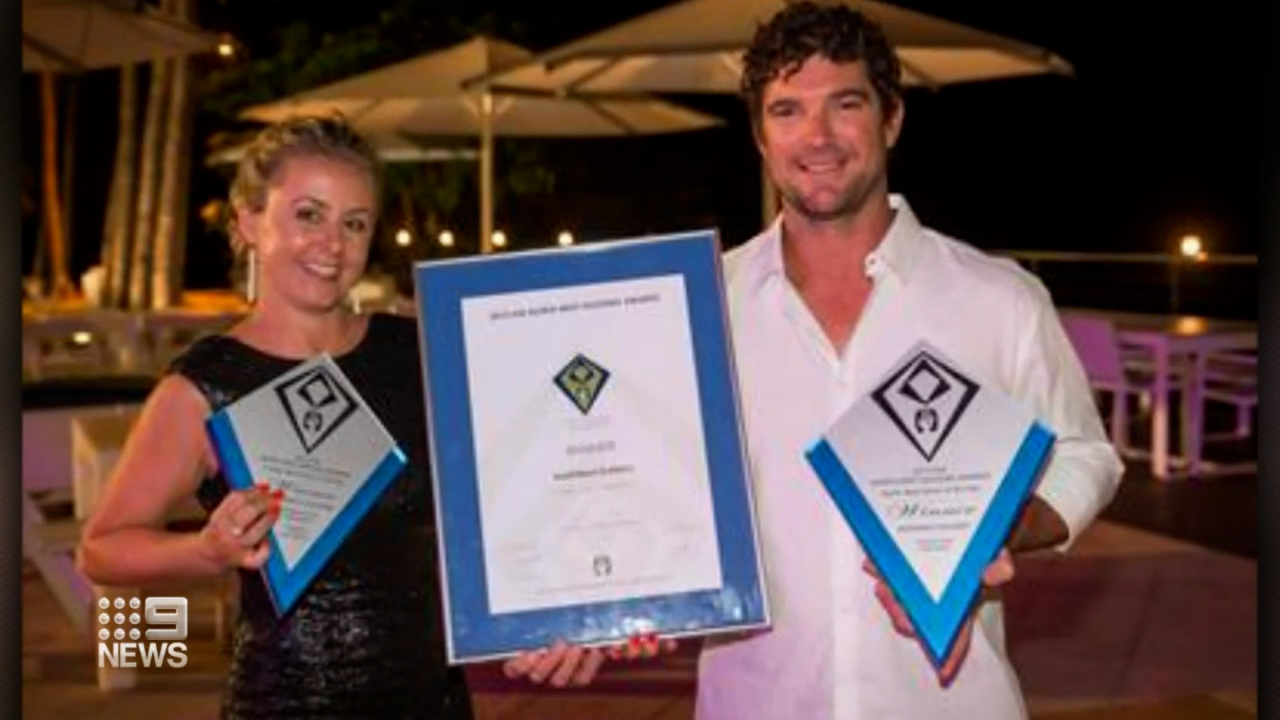
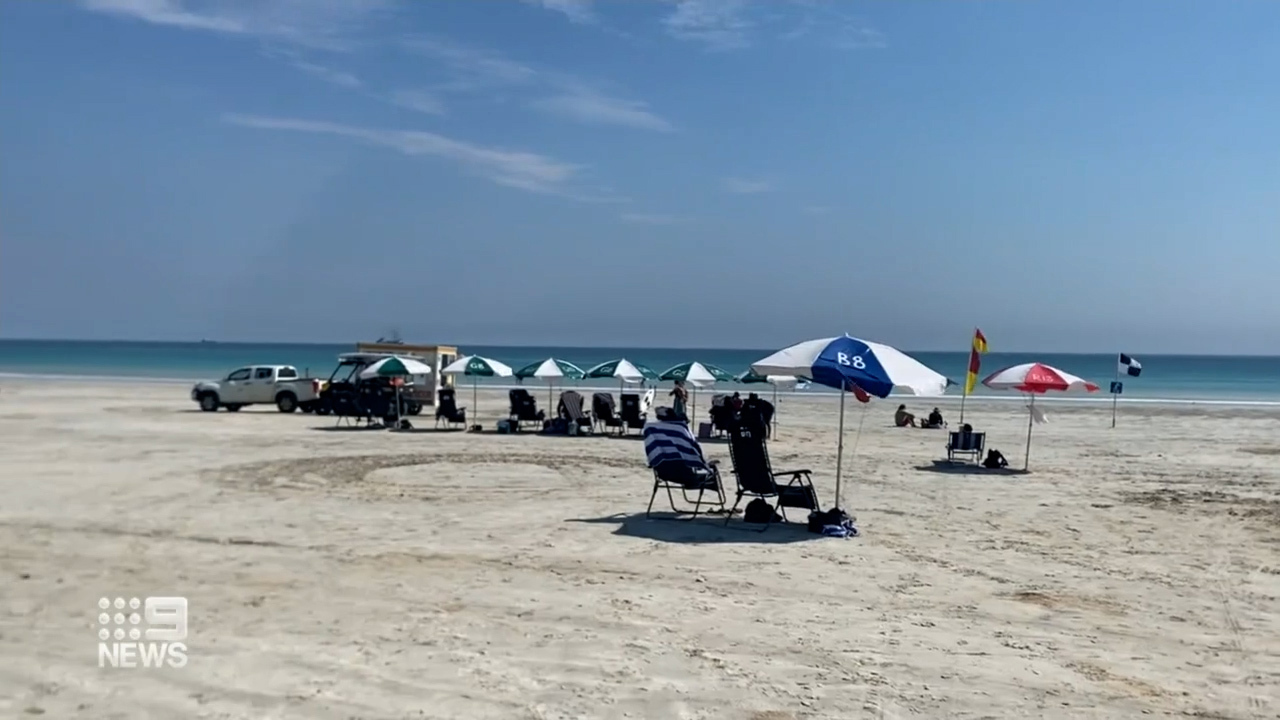
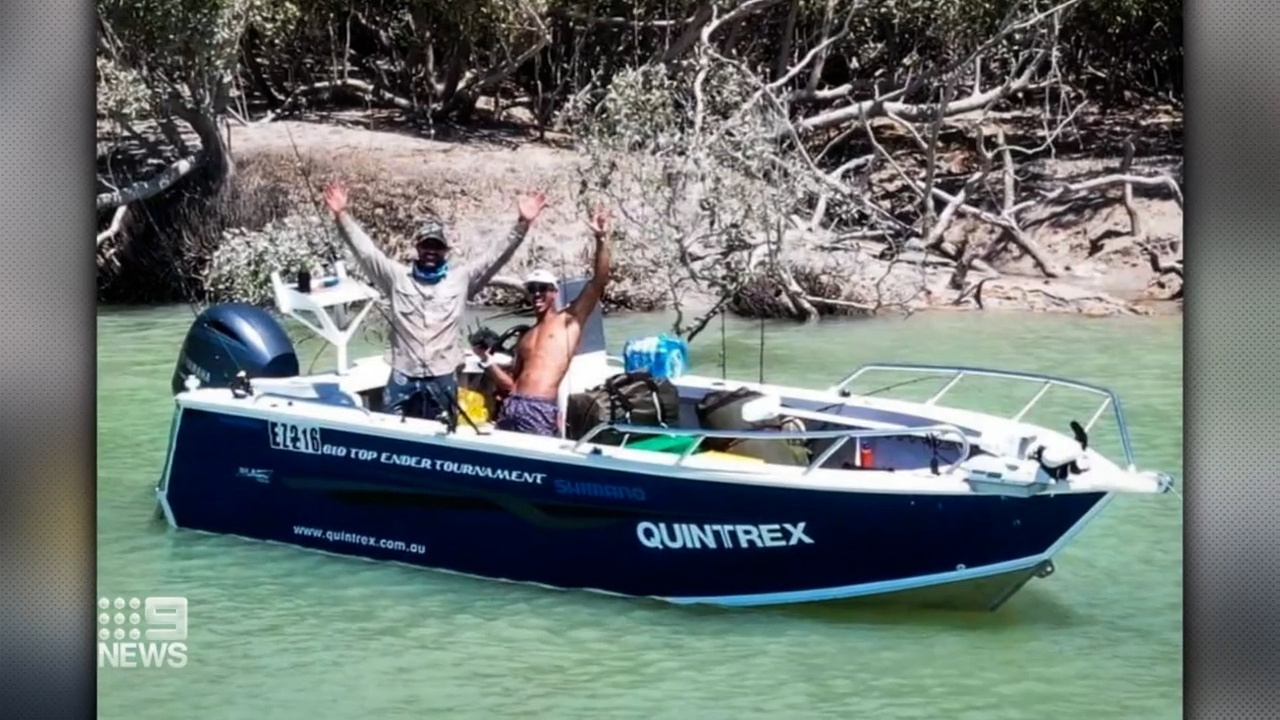
Brett Highlands, an avid fisherman, was diving in waters just off Quondong Beach about 11.20am (1.20pm AEST) when he was bitten by what the Fisheries Department believe to be a three-metre tiger shark.

After clearing the water, lifeguards brought the local Broome builder into shore on a boat. Witnesses say the wounded diver was able to walk and appeared to have suffer minor injuries.

"He was pretty chilled honestly — he walked to the car himself and was just holding his arm," Rebecca Voysey told 9News.

Another witness told 6PR radio that the victim had seemed "pretty chill".

"There was probably every cop in Broome just racing down the beach with the lifeguards," he said.

"It was all pretty cool, calm and collected really. They just got him in the ambulance and drove off."

The Broome local was taken to hospital and is in a stable condition.

Both Quondong Beach and Cable Beach remained open across the afternoon but swimmers have been urged to take extra care.

It's the third shark attack near Broome in the past six months.

Last November, a shark fatally mauled a man bodyboarding at Cable Beach.

Charles Cernobori, 59, had been bodyboarding 30 metres off the iconic tourist beach when he was attacked and suffered fatal injuries.

A month later a shark took a bite out of surfer Sam Heseltine's board but he escaped unharmed.