A south Taranaki iwi says continuing sewage spills into coastal waters are intolerable.Ngāti Ruanui has told a hearing on South Taranaki District Council’s proposed long term plan that the best options to improve Hāwera’s…
Tag Archives: oceania
Discount debacle: Customers overcharged at 70 North Island supermarkets
Shoppers have been overcharged for their groceries at 70 North Island supermarkets today.Foodstuffs confirmed a technical issue led to about one quarter of “new special prices” at Pak’nSave, New World and Four Square supermarkets…
'Cascade of missed opportunities' before Aishwarya Aswath's death
Exclusive: The litany of mistakes and errors in treating seven-year-old Aishwarya Aswath at Perth's Children Hospital on Easter Saturday are laid bare in a comprehensive report into her death.
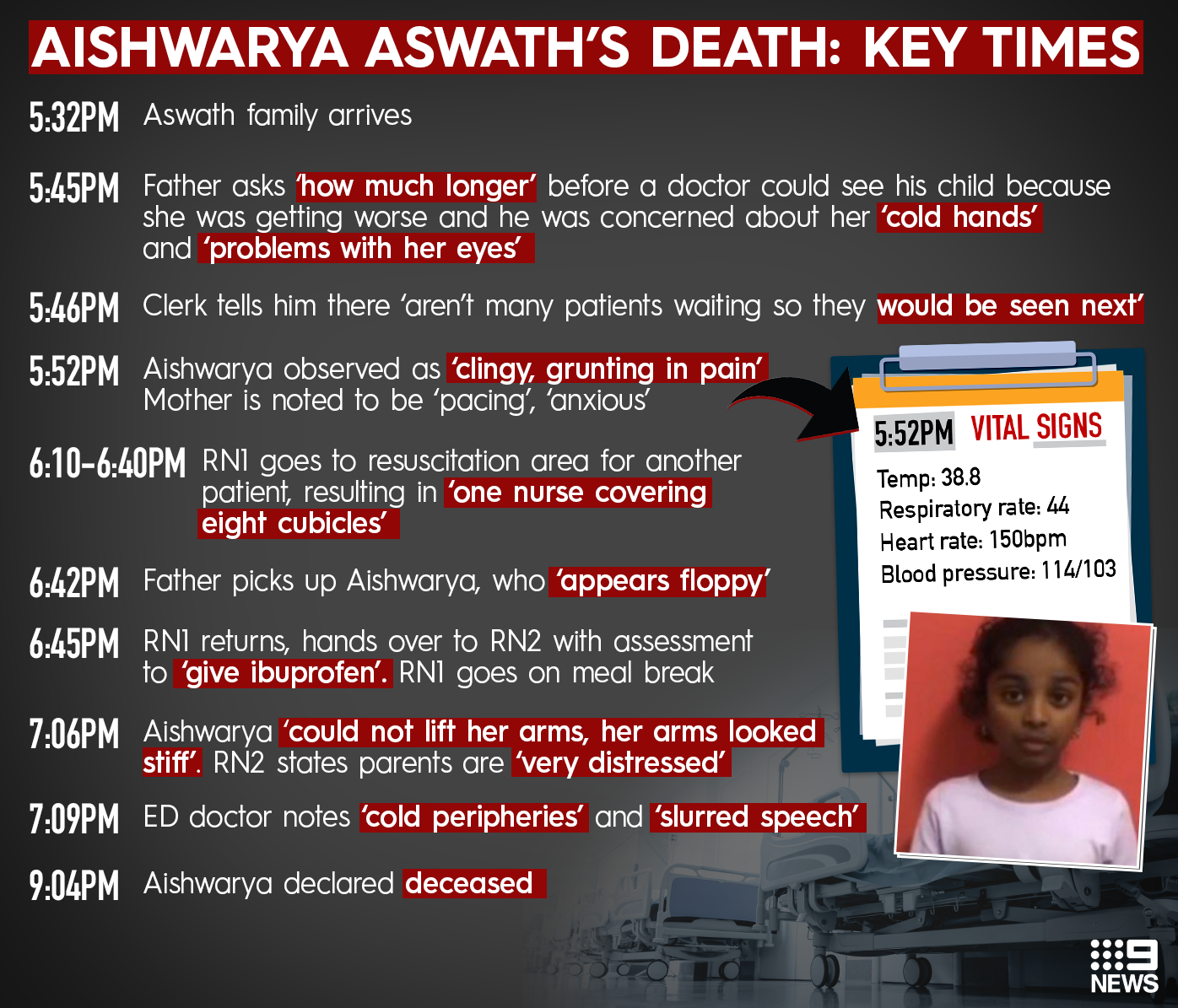
Within 20 minutes of arriving at Perth Children's Hospital, Aishwarya's temperature had climbed dangerously to 38.8 degrees.

Her eyes were "discoloured".
Her respiratory rate was too high at 44 breaths per minute and her heart – 150 beats per minute – was racing.
She had a blood pressure reading of 114/103, indicating hypertension stage two.
The seven-year-old became "quiet", "clingy", "floppy" and was "grunting in pain".
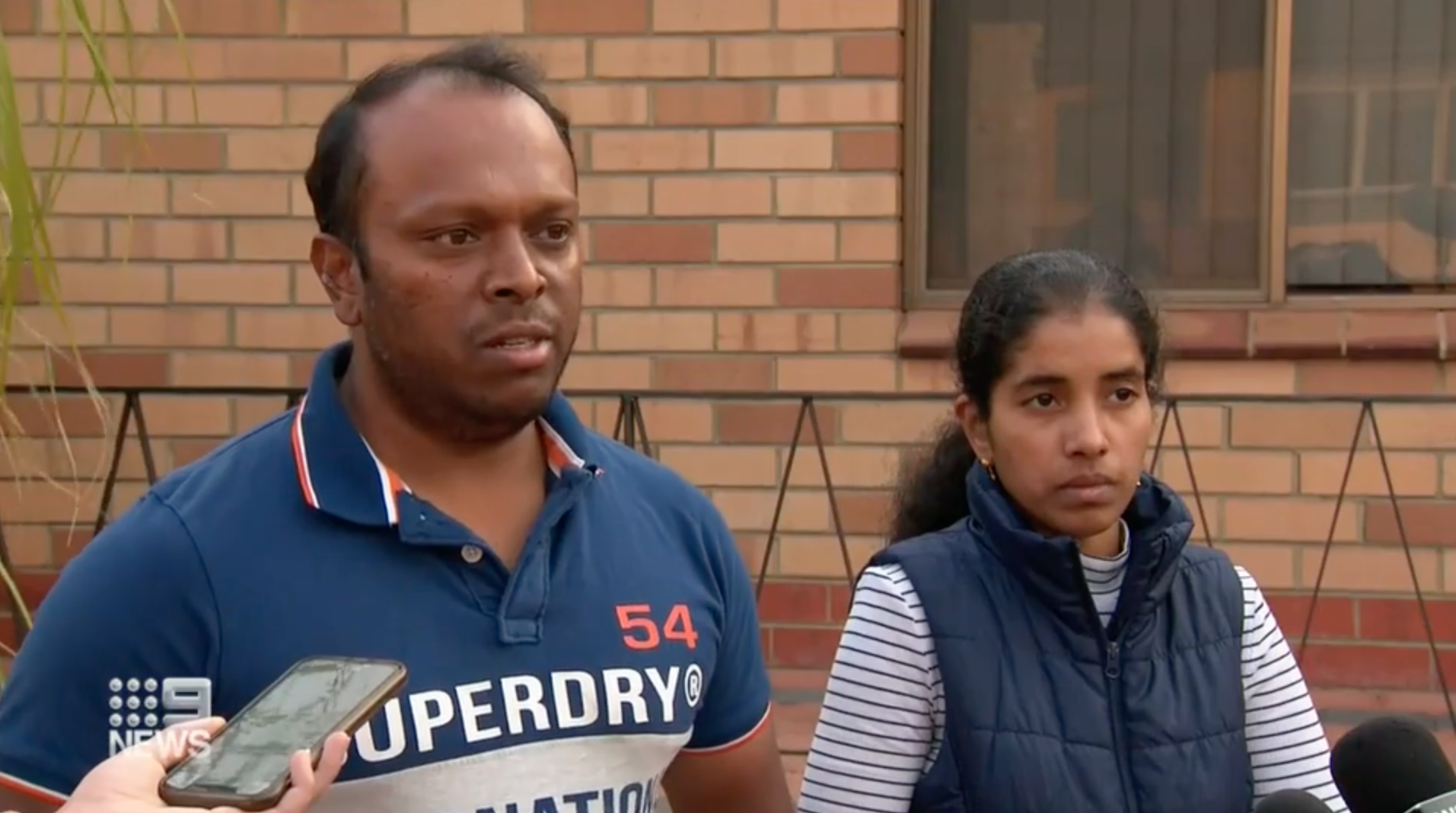
At about 5.45pm, Aishwarya's father, Aswath Chavittupara, asked an emergency department clerk "how much longer it would be before a doctor could see his child because she was getting worse".
Soon after, the girl's mother, Prasitha Sasidharan, asked clinical staff standing near the clerk the same question and was told "there weren't many patients waiting so the parents would have been seen next".
READ MORE: Aishwarya's parents demand hospital reform
READ MORE: Schoolgirl 'should have had more help'
Despite that assurance, it would be another full one hour and 17 minutes before this critically ill girl's condition was noticed and responded to urgently by the emergency department's staff.
By then it was too late.
"The panel noted five separate parental escalations to the ED clerk and clinical staff," the full report reveals.
"They were never aggressive."
"Mother is noted to be pacing," the panel commented after watching CCTV from inside the emergency department.
A nurse made a note at about 5.52pm, which read "mother anxious ++".
But on Aishwarya's official medical record the level of parental concern was ticked by a nurse, referred to as RN1 by the panel, as being "absent" and the paediatric treatment guide scored the parents' concerns at "zero".
"RN1 stated this is due to the perception that the parental escalation is for inpatient use only," the report said.
The panel also pointed out in its report that Aishwarya's temperature of 38.8 degrees "did not prompt consideration of sepsis", as documented in what's known as the Paediatric Acute Recognition and Response Tool (PARROT Chart).
"There were a cascade of missed opportunities to address the parental concerns and incomplete assessments, with a delay in escalation, which may have contributed to the patient's outcome," the investigation concluded.
READ MORE: Aishwarya Aswath farewelled at funeral

There was "an uncoordinated plan of care for this patient" and "an appropriate level" of clinical supervision "was not evident".
When asked by the panel why Aishwarya's temperature of 38.8 degrees "was not escalated", RN1 said a high temperature was not "something to be escalated alone".
Between 6.10pm and 6.40pm, Aishwarya received little, if any attention while she waited because RN1 had to help with a resuscitation of a different patient.
That left one nurse to cover eight waiting room "pods".
"Having the waiting room nurse as a member of the resuscitation team resulting in the waiting room being effectively unattended during resuscitations, led to fragmented care, a delay in reassessment and may have contributed to the outcome," the panel concluded.

Under the heading of "background", the panel went into detail about previous staff concerns for the emergency department's operational model.
Staff fears about "the safety of children in the waiting room" were being aired last year.
"Workforce shortages, acuity and increasing patient presentation numbers had been formally and specifically communicated to the medical and nursing stream leadership group and members of the executive team on a number of occasions from October 2020," the report found.
"Meetings had occurred between the ED staff and the executive – and data was presented to illustrate the concerns, specifically concerns around the safety of children in the waiting room."
According to the report, during the transition from Princess Margaret Hospital to Perth Children's Hospital in 2018, a "triage support nurse" was supposed to be added.
"To conduct vital signs, complete an initial assessment and initiate care at the commencement of the patient's journey," the panel concluded.
"Due to the establishment numbers this was not progressed. There have been ongoing concerns about resource capacity, about education and clinical supervision of nursing staff."
By 7.06pm, Aishwarya could not lift her arms and "her arms looked stiff".
"RN2 stated the parents looked very distressed," the report said.
CCTV shows RN2 walking towards a senior doctor to "escalate the care of the patient".
At 7.09pm, "ED Consultant 1 noted the patient had cold peripheries and slurred speech".
And so began desperate efforts to save Aishwarya because the severity of her condition was finally recognised and acted on.
She was declared deceased at 9.04pm.
The next day Group A Streptococcus – a serious bacterial infection – was "noted" in Aishwarya's "blood picture".
Health Minister Roger Cook has said on several occasions he does not know if Aishwarya's life could have been saved if her medical assessment and treatment were much better when she arrived at 5.32pm.
Mr Cook today said there will be a detailed independent review into the incident, which was recommended in the report.
He said a full coronial inquest will also be undertaken as well as changes to how the emergency department operates.
"From the beginning, I have tried not to engage on any commentary on the clinical decisions made by nurses, doctors and administrative staff in the ED (emergency department) on that night," he said.
"I realise now that the report has been made public … and they will be scrutinised. I fully understand this.
"But can I add a note of caution to anyone who was not in that ED on 3rd April. It is not our role to be judge and jury. Let the experts do that. Let the people who made those decisions be given a chance to be heard in an appropriate forum."
Two tragic deaths at Auckland Council bring a call to improve staff mental wellbeing
The tragic deaths of two Auckland Council employees have contributed to calls for deep-seated culture changes to support the mental wellbeing of staff.Jenny Gargiulo, a principal environment specialist, died on December 1 amid claims…
Prime Minister Jacinda Ardern to host Scott Morrison later this month
How the region will open up to the rest of the world will be a key topic when Jacinda Ardern hosts Australian counterpart Scott Morrison in Queenstown at the end of the month. It will be a “milestone and a pleasure” to resume discussions…
The Spinoff: Collins' Orewa politics aren't just deplorable, they're unpopular. Can National afford to wait?
Originally published by The Spinoff OPINION: The ‘segregationist’ rhetoric was a desperate tactic by the National leader and last night’s Newshub poll issued a thundering fail grade. Before, MPs were inclined to hold off on…
Māori girl in the gallery: How reporter Rukuwai Tipene-Allen copes with racism in the Beehive
Originally published by Māori Television OPINION: “Welfare dependent,” “inferior,” “savages,” “natives”.Walking through Parliament, I head to my office in the press gallery, passing gilded portraits of reporters who came…
The death of Allen Ball: Hāwera police officers' trial begins in New Plymouth
Three Hāwera police officers had more than two hours to provide medical assistance to a man who would later die in their custody, a court heard today.It’s that timeline that forms one of many issues a jury of five men and seven…
Trillions of red-eyed cicadas about to emerge after 17 years underground
Sifting through a shovel load of dirt in a suburban backyard, US couple Michael Raupp and Paula Shrewsbury find their quarry: a cicada nymph.
And then another. And another. And four more.
In maybe a third of a square foot of dirt, the University of Maryland entomologists find at least seven cicadas, a rate just shy of a million per acre.
READ MORE: Swarm of killer bees kills US man mowing his lawn
A nearby yard yielded a rate closer to 1.5 million.
And there's much more afoot.
Trillions of the red-eyed black insects are coming, scientists say.
Within days, a couple of weeks at most, the cicadas of Brood X (the X is the Roman numeral for 10) will emerge after 17 years underground.
There are many broods of periodic cicadas that appear on rigid schedules in different years, but this is one of the largest and most noticeable.
They’ll be in 15 states from Indiana to Georgia to New York; they’re coming out now in mass numbers in Tennessee and North Carolina.
When the entire brood emerges, backyards can look like undulating waves, and the bug chorus is lawnmower loud.
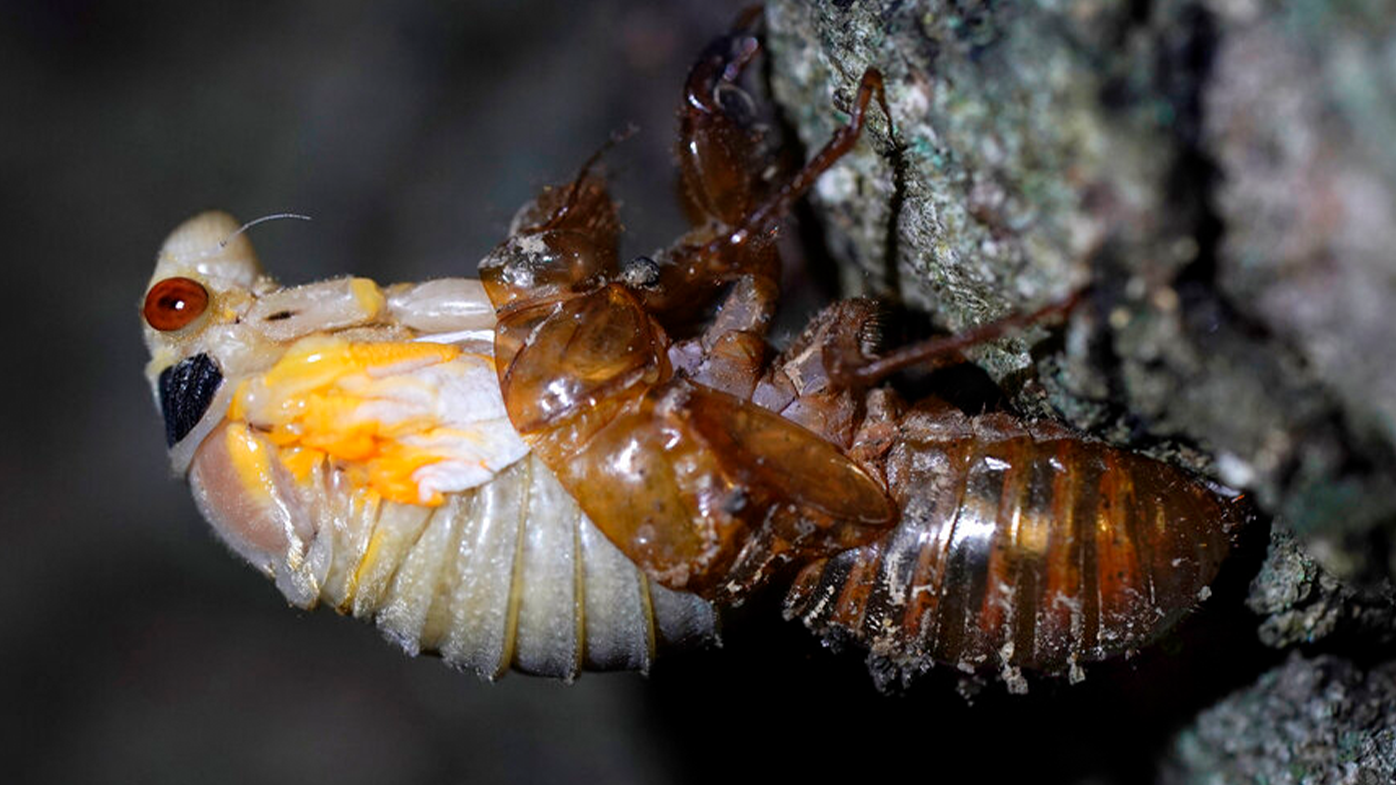
The cicadas will mostly come out at dusk to try to avoid everything that wants to eat them, squiggling out of holes in the ground.
They’ll try to climb up trees or anything vertical, including Mr Raupp and Ms Shrewsbury.
Once off the ground, they shed their skins and try to survive that vulnerable stage before they become dinner to a host of critters including ants, birds, dogs, cats and Mr Raupp.
It’s one of nature’s weirdest events, featuring sex, a race against death, evolution and what can sound like a bad science fiction movie soundtrack.
READ MORE: Tradies find giant moth at Queensland school worksite
Some people may be repulsed.
Psychiatrists are calling entomologists worrying about their patients, Ms Shrewsbury said.
But scientists say the arrival of Brood X is a sign that despite pollution, climate change and dramatic biodiversity loss, something is still right with nature.
And it’s quite a show.
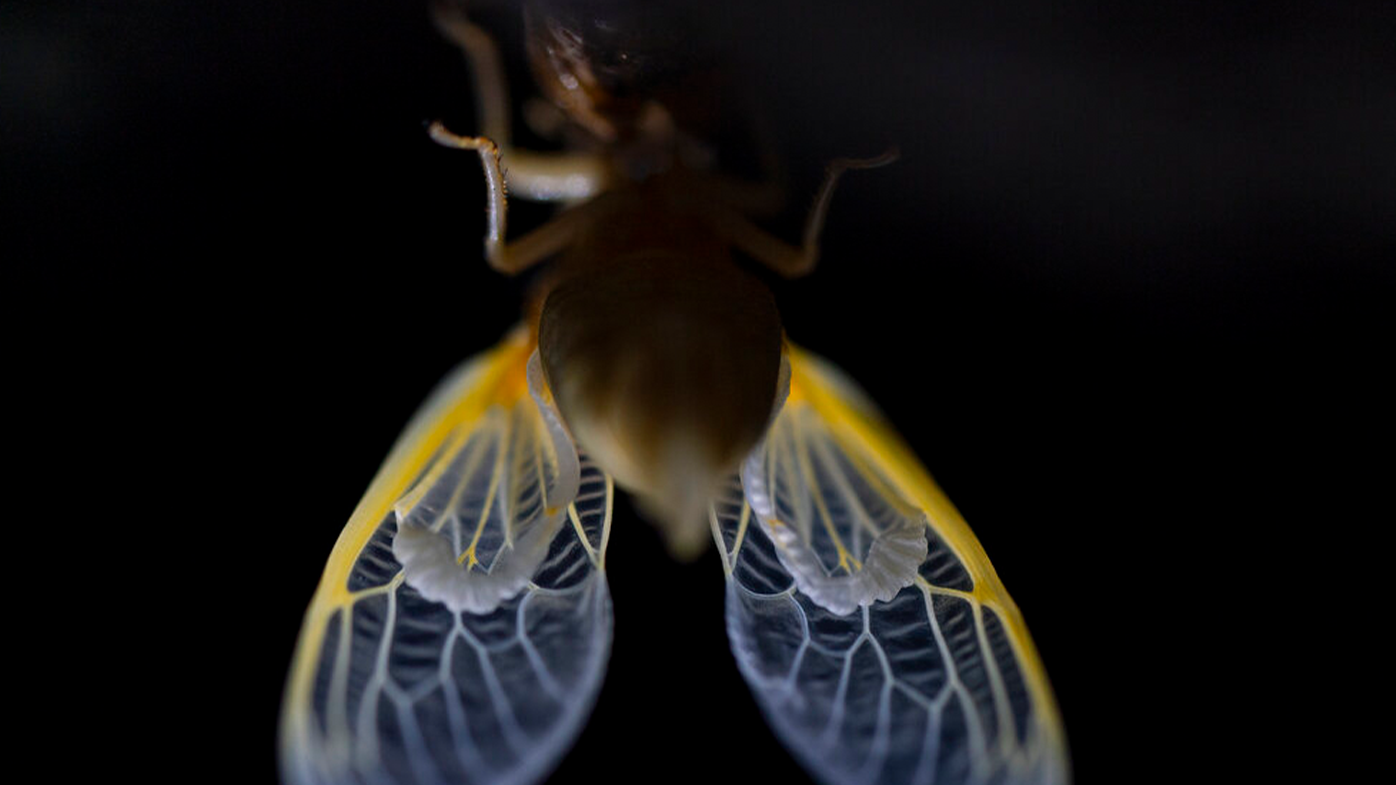
Mr Raupp presents the narrative of cicada’s lifespan with all the verve of a Hollywood blockbuster:
“You’ve got a creature that spends 17 years in a COVID-like existence, isolated underground sucking on plant sap, right?" he says.
"In the 17th year these teenagers are going to come out of the earth by the billions if not trillions.
"They’re going to try to best everything on the planet that wants to eat them during this critical period of the nighttime when they’re just trying to grow up, they’re just trying to be adults, shed that skin, get their wings, go up into the treetops, escape their predators.
“Once in the treetops, hey, it’s all going to be about romance.
"It’s only the males that sing. It’s going to be a big boy band up there as the males try to woo those females, try to convince that special someone that she should be the mother of his nymphs.
"He’s going to perform, sing songs.
"If she likes it, she’s going to click her wings. They’re going to have some wild sex in the treetop.
“Then she’s going to move out to the small branches, lay their eggs.
"Then it’s all going to be over in a matter of weeks.
"They’re going to tumble down. They’re going to basically fertilise the very plants from which they were spawned.
"Six weeks later the tiny nymphs are going to tumble 80 feet (24 metres) from the treetops, bounce twice, burrow down into the soil, go back underground for another 17 years.”
“This,” Mr Raupp says, “is one of the craziest life cycles of any creature on the planet.”
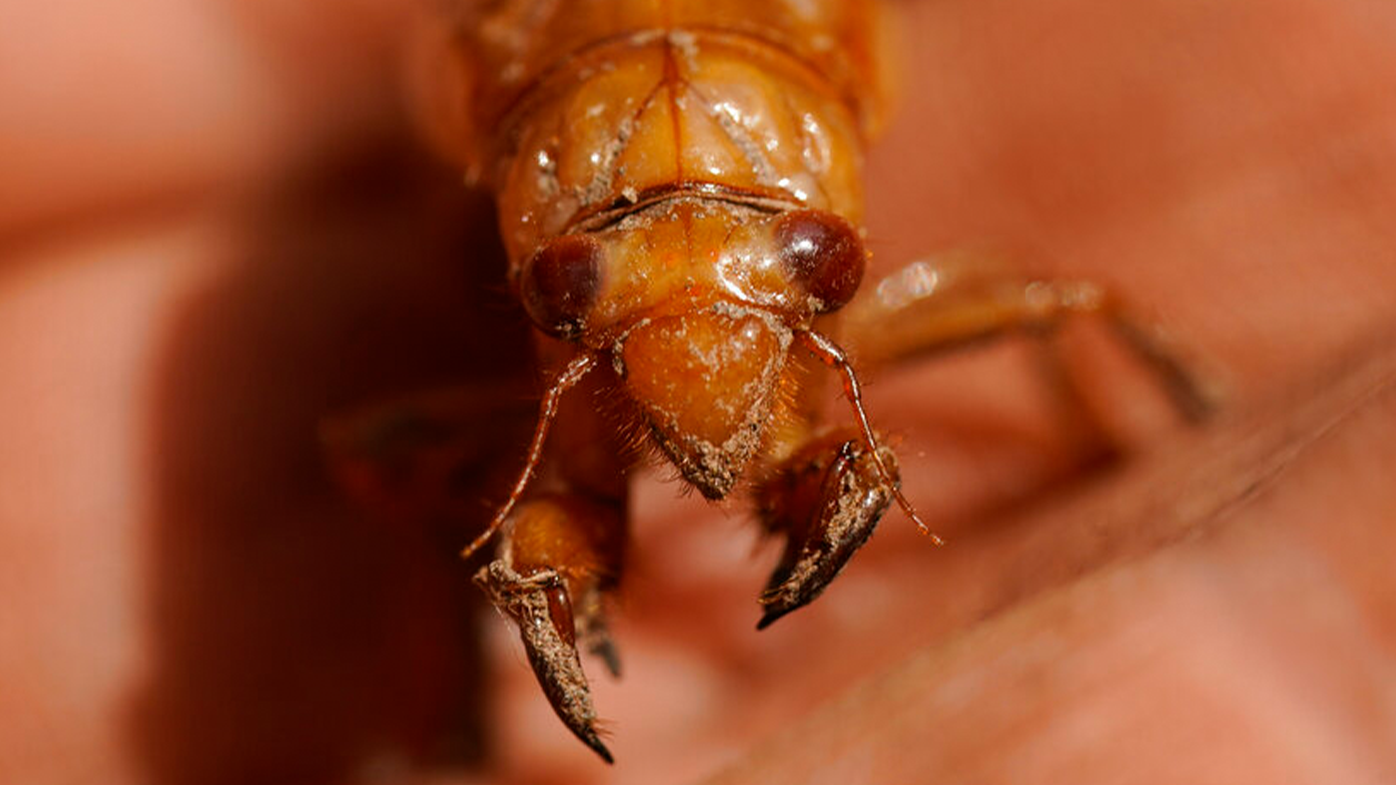
America is the only place in the world that has periodic cicadas that stay underground for either 13 or 17 years, says entomologist John Cooley of the University of Connecticut.
The bugs only emerge in large numbers when the ground temperature reaches 18 degrees.
That’s happening earlier in the calendar in recent years because of climate change, says entomologist Gene Kritsky. Before 1950 they used to emerge at the end of May; now they’re coming out weeks earlier.
Cicadas who come out early don’t survive. They’re quickly eaten by predators.
Cicadas evolved a key survival technique: overwhelming numbers.
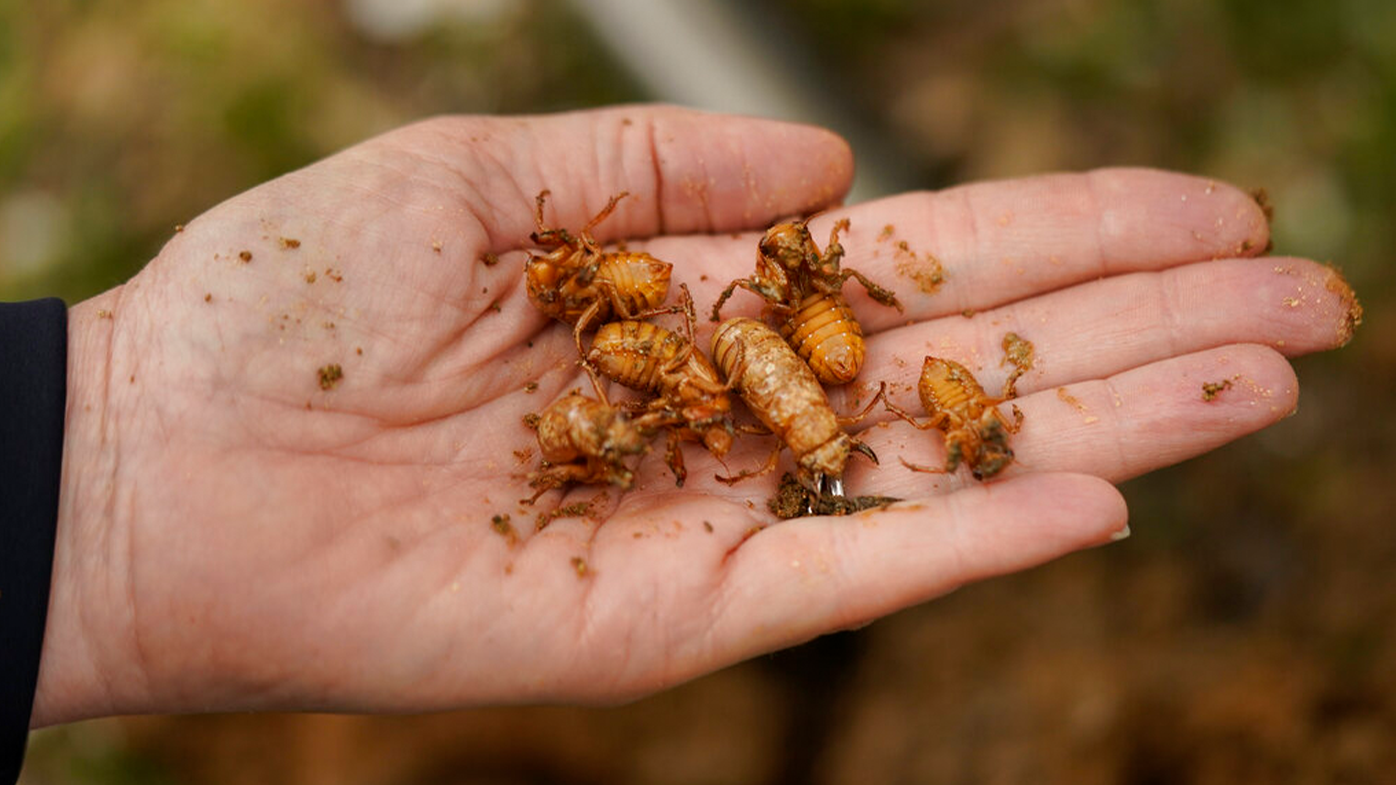
There’s just too many of them to all get eaten when they all emerge at once, so some will survive and reproduce, Mr Raupp says.
This is not an invasion.
The cicadas have been here the entire time, quietly feeding off tree roots underground, not asleep, just moving slowly waiting for their body clocks tell them it is time to come out and breed.
They’ve been in America for millions of years, far longer than people.
When they emerge, it gets noisy – 105 decibels noisy, like “a singles bar gone horribly, horribly wrong,” Mr Cooley says.
There are three distinct cicada species and each has its own mating song.
They aren’t locusts and the only plants they damage are young trees, which can be netted.
The year after a big batch of cicadas, trees actually do better because dead bugs serve as fertiliser, Mr Kritsky says.
People tend to be scared of the wrong insects, says University of Illinois entomologist May Berenbaum.
The mosquito kills more people than any other animals because of malaria and other diseases.
Yet some people really dread the cicada emergence, she said.
“I think it’s the fact that they’re an inconvenience. Also, when they die in mass numbers they smell bad,” Ms Berenbaum says.
“They really disrupt our sense of order.”
But others are fond of cicadas – and even munch on them, using recipes like those in a University of Maryland cookbook.
And for scientists like Mr Cooley, there is a real beauty in their life cycle.
“This is a feel-good story, folks. It really is and it’s in a year we need more,” he says.
“When they come out, it’s a great sign that forests are in good shape.
"All is as it is supposed to be.”
More airstrikes hammer Gaza after war's deadliest day so far
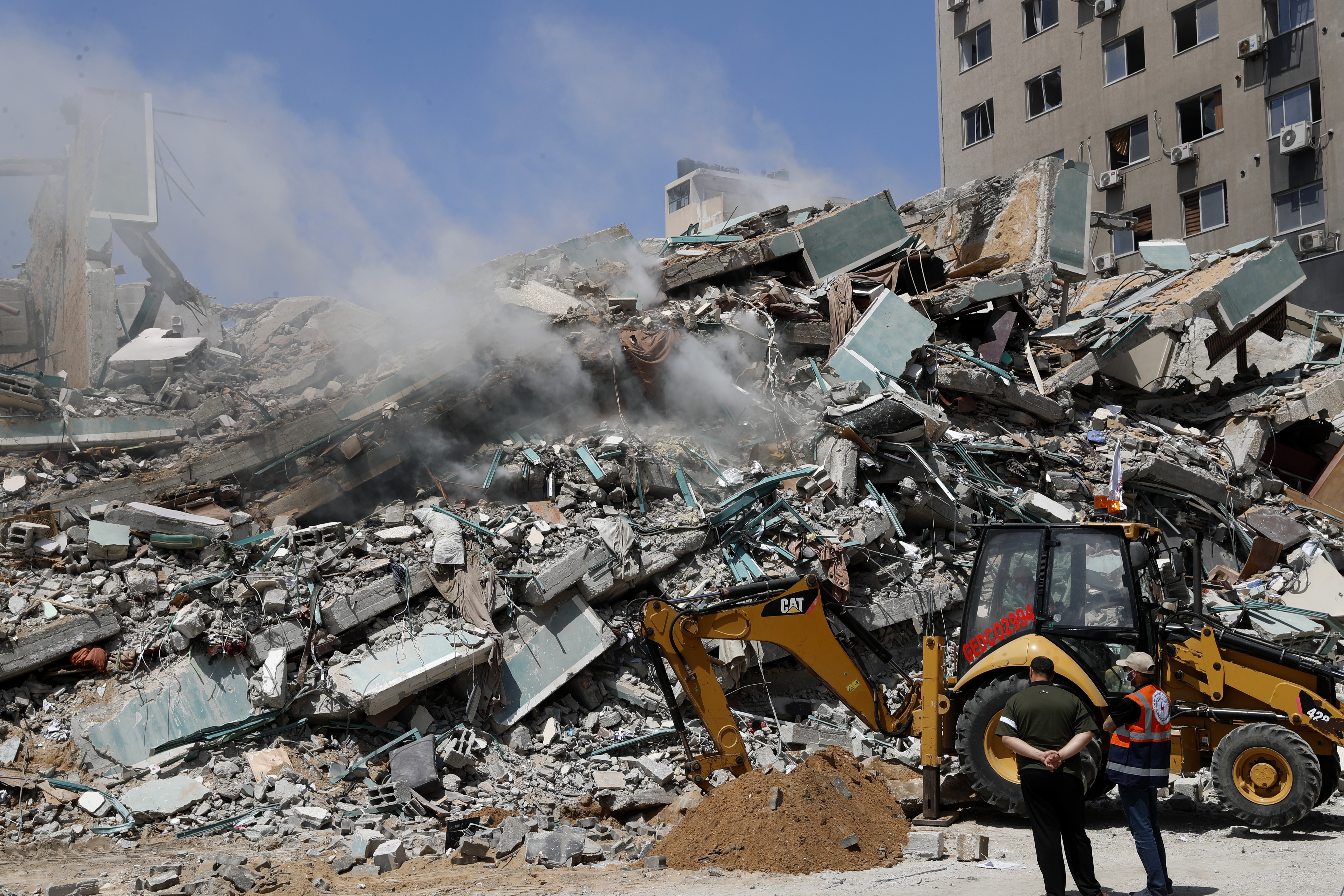
Israeli warplanes have unleashed a series of heavy airstrikes at several locations of Gaza City.
Explosions rocked the city from north to south for 10 minutes early on Monday.
The airstrikes were heavier, on a wider area and lasted longer than a series of air raids 24 hours earlier in which 42 Palestinians were killed.
READ MORE: Netanyahu warns war will go on, after dozens died in deadliest attack yet
That attack was the deadliest single attack in the latest round of violence between Israel and the Hamas militant group that rules Gaza.
In a brief statement, the Israeli Defence Force says only that "IDF fighter jets are striking terror targets in the Gaza Strip."
Overnight, Israeli Prime Minister Benjamin Netanyahu indicated that the fourth war between Israel and Palestinians in Gaza would rage on despite international efforts to broker a ceasefire.

READ MORE: Deaths rise as Palestinians flee heavy Israeli fire in Gaza
In a televised address, Mr Netanyahu said on Sunday evening (early Monday morning AEST) the attacks were continuing at "full-force" and would "take time."
Israel "wants to levy a heavy price" from Gaza's militant Hamas rulers, he said, flanked by Defence Minister and political rival, Benny Gantz, in a show of unity.