Tag Archives: oceania

Fiscal repair left for future Budgets, or at least until after election

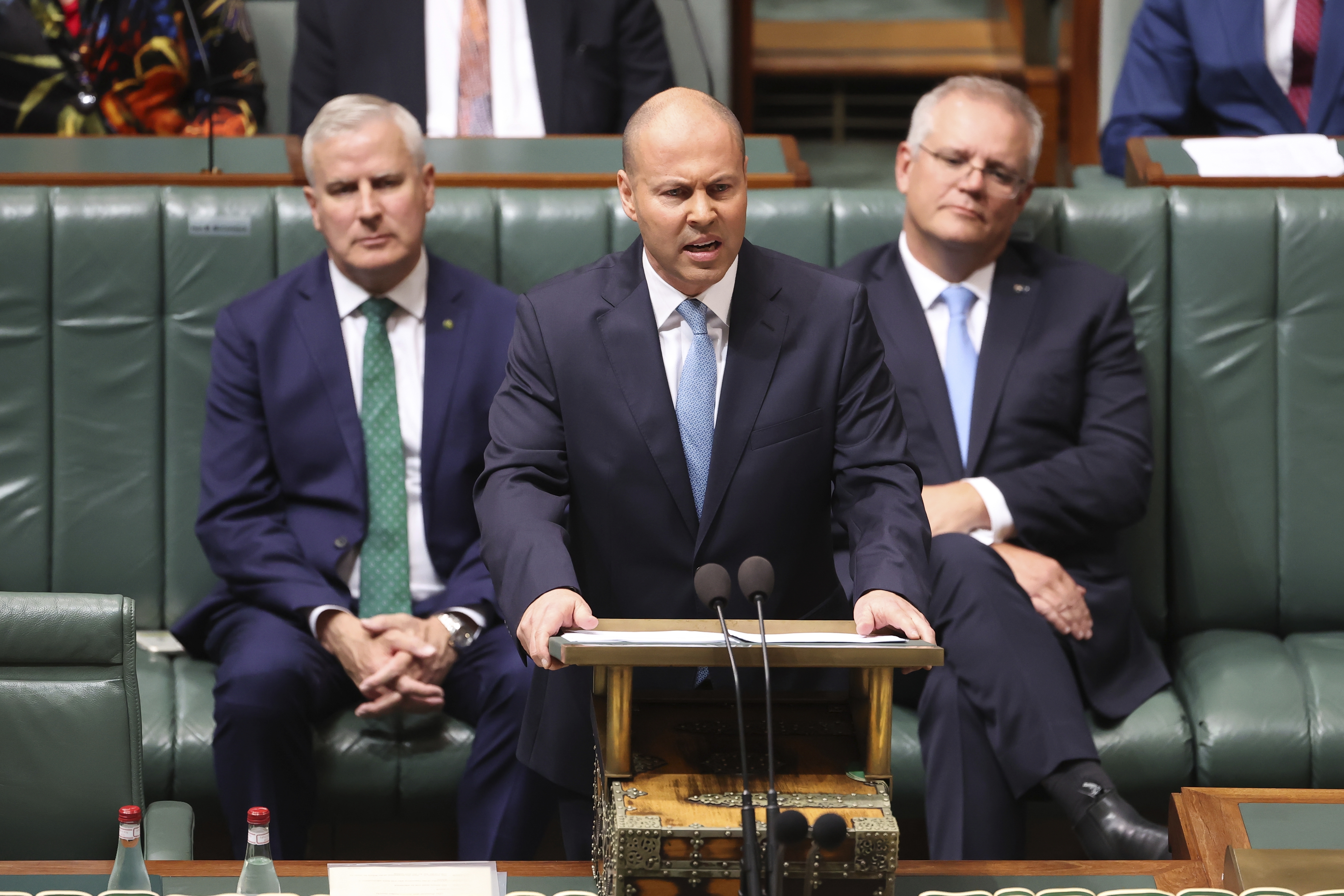
Facing an election within a year, Treasurer Josh Frydenberg has delivered a big-spending, high-debt budget with plenty of winners.

There are spending commitments for mental health, the NDIS, small business, infrastructure, skills and training and the vaccine rollout.

Some 10 million workers will pocket another tax offset of up to $1080, and the government is hopeful they'll return the favour by spending that money to fire up the pandemic recovery.

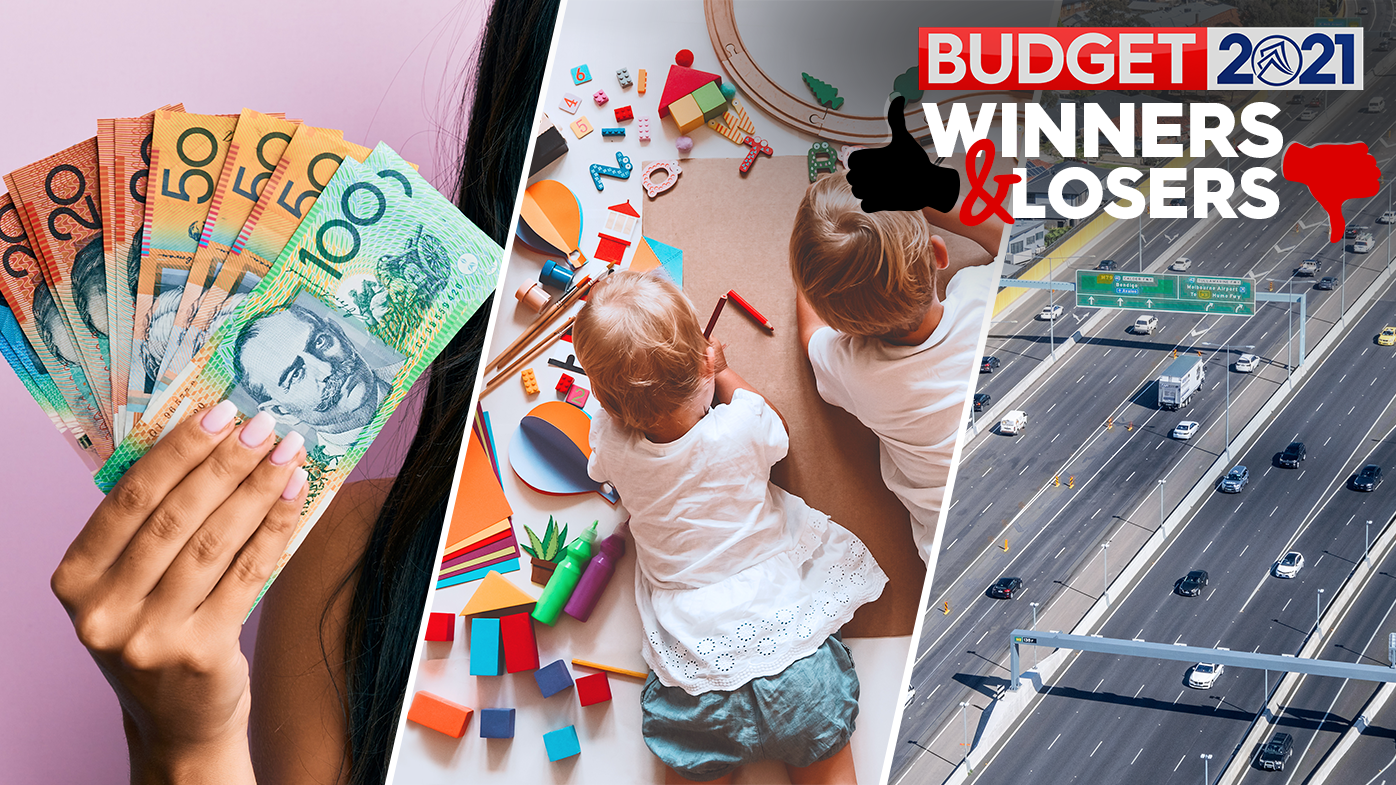
WINNERS AND LOSERS: Who benefits the most from the Budget?

READ MORE: Will you get a tax cut?

READ MORE: The new projects in the $15.2b infrastructure spend

The Treasurer declared "Australia's economic engine is roaring back to life", but while he noted it's not all down to luck, he has been blessed with record iron ore prices boosting the Budget balance sheets.

Even so, propping up the economy during the worst of the COVID-19 crisis has not come cheap. The Budget is $161 billion in the red this financial year, and net debt has soared to $729 billion.

The task of fiscal repair has been left for future financial blueprints, or at least until the next election is run and won.

Two problems in particular have been causing the government political pain: the broken aged care system, and criticism over its treatment of women's issues.

The Coalition has thrown billions at both, hoping to neutralise them and improve its standing with voters.

Mr Frydenberg is hoping the accelerating vaccine rollout is back on track for good, because the Budget assumes all Aussies who want a jab will have received their two doses by the end of the year.

But the government isn't taking any chances in protecting against the COVID threat, assuming international borders will stay shut for at least another year, meaning more heartache for industries like tourism, agriculture and higher education.

So Fortress Australia remains, but at some point, there will need to be a long-term strategy for living with the virus.

Read all of 9News.com.au's Federal Budget 2021 coverage here:

WINNERS AND LOSERS: Who benefits the most from the Budget?

READ MORE: Will you get a tax cut?

READ MORE: The new projects in the $15.2b infrastructure spend

BUDGET EXPLAINED: Your two-minute guide

LIVE UPDATES: Josh Frydenberg unveils his third Budget

READ MORE: Major spend to overhaul aged care, mental health sectors

BORDER UNCERTAINTY: Budget admits doubts over travel restart

READ MORE: How an ordinary Australian family is affected by the Budget

READ MORE: Incentives to help first home buyers

READ MORE: Billions to be spent fighting COVID-19

Where $15.2b of infrastructure spending will go – state-by-state

A new $15.2 billion infrastructure spend was added in this year's Federal Budget to the government's ongoing $110 billion, 10-year building program.

The government claimed the extra billions would support more than 30,000 jobs during the next 10 years, across road, rail and community building projects across the country.

Here's how the spend breaks down on new commitments state-by-state.

WINNERS AND LOSERS: Who benefits the most from the Budget?

LIVE UPDATES: Josh Frydenberg unveils his third Budget

New South Wales

  • $2 billion for a Great Western Highway upgrade, constructing east and west sections from Katoomba to Lithgow
  • $229.4 million on the M12 Motorway
  • $87.5 million to upgrade the M5 Motorway at the Moorebank Avenue and Hume Highway intersection
  • $500 million for the Princes Highway Corridor at Jervis Bay
  • $52.8 million for intersection upgrades on Manns Road with Narara Creek Road and Stockyard Place
  • $270 million for road safety projects, and $287.5 million for local road and community infrastructure projects

Total – $3.8 billion

Victoria

  • $2 billion for Melbourne Intermodal Terminal
  • $380 million for the Pakenham Roads upgrade
  • $250 million for the Monash Roads upgrade
  • $30.4 million for the Western Port Highway upgrade
  • $51.1 million for Princes Highway East, between Rosedale and the NSW border
  • $56.8 million for the Hall Road Upgrade
  • $203.5 million for local road and community infrastructure project, and $170 million for road safety projects

Total – $3.4 billion

ANALYSIS: Fiscal repair left for future financial blueprints, or at least until next election is run and won

INTERACTIVE: The key figures in the Federal Budget

Queensland

  • $400 million additional funding for the Bruce Highway
  • $178.1 million for line capacity improvement on the Gold Coast Rail Line from Kuraby to Beenleigh
  • $126.6 million for stage three of the Gold Coast Light Rail
  • $240 million for the Cairns Western Arterial Road duplication
  • $400 million for upgrades to the inland freight route from Mungindi to Charters Towers
  • $160 million for the Mooloolah River interchange upgrade
  • $203.4 million for local road and community infrastructure projects, and $261 million for road safety projects

Total – $2 billion

BUDGET EXPLAINED: Your two-minute guide

Western Australia

  • $237.5 million for Metronet Hamilton Street/Wharf Street works
  • $110 million for Metronet Byford extension
  • $200 million for Great Eastern Highway upgrades
  • $64 million for the Toodyay Road upgrade from Dryandra to Toodyay
  • $85 million for Perth Airport Precinct northern access
  • $55 million for duplication of the Mandurah Estuary Bridge
  • $112.5 million for Reid Highway – Altone Road and Daviot Road/Drumpellier Drive works
  • $160 million for WA agricultural supply chain improvements
  • $146.1 million for local road and community infrastructure projects, and $142 million for road safety projects

Total – $1.6 billion

South Australia

  • $2.6 billion on the North-South Corridor from Darlington to the Anzac Highway
  • $60 million for the Gawler Rail Line electrification
  • $161.6 million for the Truro Bypass
  • $64 million for the Strzelecki Track update
  • $148 million for stage two of the Augusta Highway duplication
  • $48 million for stage two of the Heysen Tunnel refit and upgrade
  • $32 million for the Kangaroo Island road safety and bushfire resilience package
  • $89.9 million for local road and community infrastructure projects, and $84 million for road safety projects

Total – $3.4 billion

READ MORE: How an ordinary Australian family is affected by the Budget

Tasmania

  • $48 million for the Algona Road separated interchange and duplication of the Kingston Bypass
  • $80 million for the Tasmanian roads package, including Bass Highway safety and freight efficiency
  • $113.4 million for Midland Highway upgrades
  • $24 million for Tasmanian freight rail revitalisation tranche three, the Port of Burnie shiploader upgrade
  • $44 million for Rokeby Road – South Arm Road upgrades
  • $32.6 million for local road and community infrastructure projects, and $22 million for road safety projects

Total – $377.2 million

Australian Capital Territory

  • $132.5 million for Canberra Light Rail stage 2A
  • $26.5 million for William Hovell Drive duplication
  • $15.9 million for local road and community infrastructure projects, and $3 million for road safety projects

Total – $186.2 million

Northern Territory

  • $173.6 million for gas industry roads upgrades
  • $150 million for national highway upgrades
  • $29.1 million for local road and community infrastructure projects, and $48 million for road safety projects

Total – $401 million

READ MORE: Incentives to help first home buyers

Billion-dollar boost for embattled vaccine rollout

Australia's much-touted resilience in the face of COVID-19 was a central theme the Federal Budget unveiled tonight, as health spending to combat the pandemic continues to mount.

Having committed $25 billion since the start of the outbreak last year, the Federal Government has announced more than $3 billion in additional health measures in tonight's Budget.

Treasurer Josh Frydenberg said COVID-19 safety measures were the "first priority" of the government.

READ MORE: A two-minute guide to the Budget

INTERACTIVE: The key figures in the Federal Budget

The largest chunk of this, $1.9 billion, will be invested over five years into Australia's delay-plagued vaccination rollout.

The funding injection will help Australian health authorities distribute and administer vaccines, record and monitor data, and support the states and territories.

The Budget also provided for the purchase of extra vaccine doses, which the government said would bring Australia's total stockpile to 170 million.

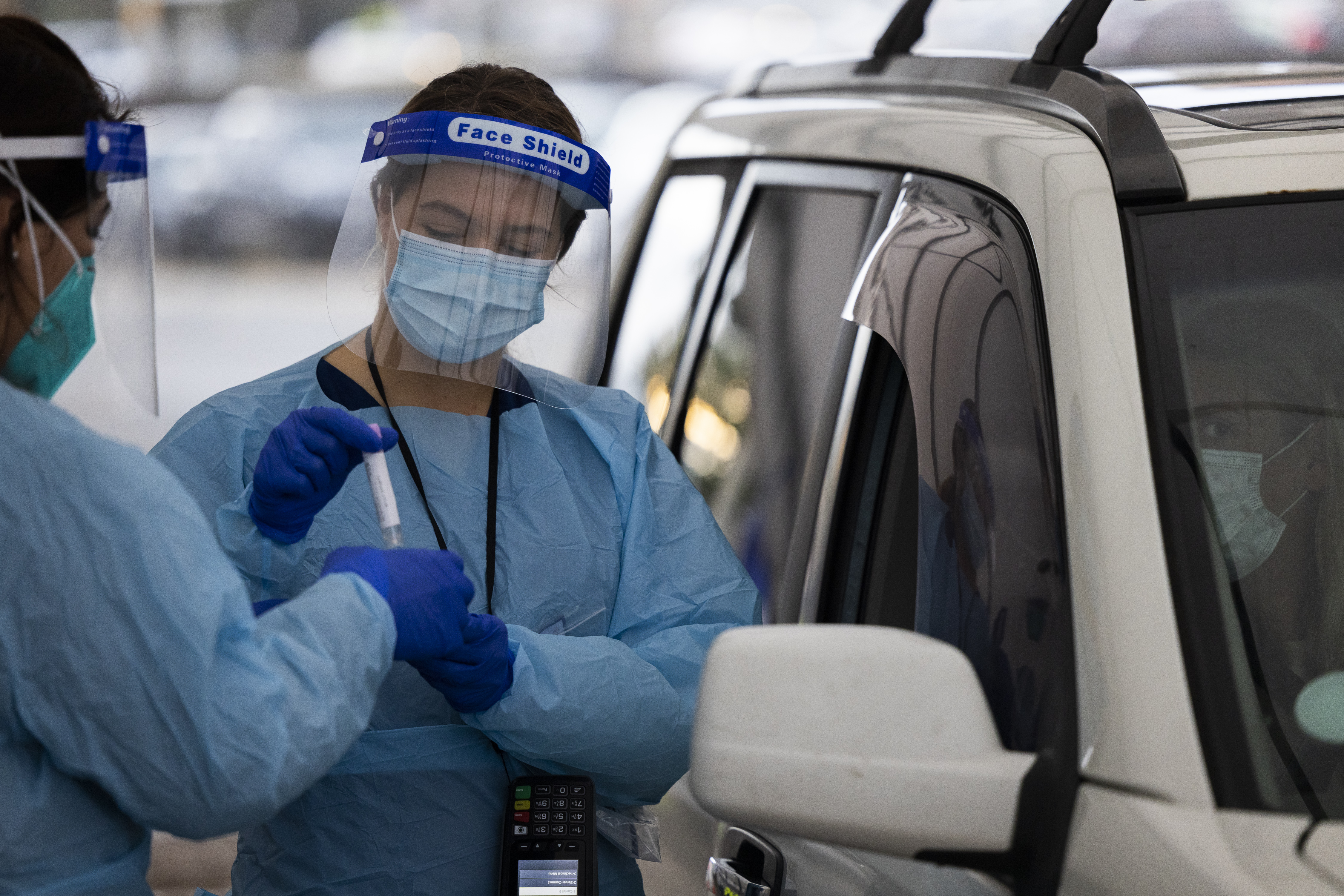
A further $1.5 billion will be provided for other COVID-19 measures, including funding for telehealth, coronavirus testing, and support for remote communities.

This will include $7.1 million for the Beyond Blue COVID-19 Mental Wellbeing Support Service, and $11.2 million to support Indigenous communities in regional and remote Australia.

WINNERS AND LOSERS: Who benefits the most from the Budget?

READ MORE: Will you get a tax cut?

READ MORE: Major spend to overhaul aged care, mental health sectors

Telehealth services will be extended until December this year with a further $204.6 million investment.

A hefty $487 million over two years will be invested expanding quarantine services at Howard Springs in the Northern Territory, which the government has previously held up as the ideal such facility.

Another $557.1 million will go towards ongoing COVID-19 testing, including funding for Medicare Benefits Schedule pathology items.

And healthcare workers will be bolstered by a $29.9 million investment in the National Medical Stockpile, which provides access to personal protective equipment.

"This pandemic is far from over … but, Australia is now well on the road to recovery," Mr Frydenberg said.

Your two-minute guide to the Budget

Treasurer Josh Frydenberg has said "Australia is coming back" as he unveiled a Federal Budget aimed at steering Australia out of the COVID-19-induced recession amid massive spending on essential services.

The deficit of $161 billion for 2020-21 is $52.7 billion better than forecast in last year's October 6 Budget.

The forward estimates have the deficit falling to $106.6 billion next year and down to $57 billion in 2024-25, but the deficits are predicted to continue for at least the next decade – a far cry from the "back in black" celebrations of just two years ago.

WINNERS AND LOSERS: Who benefits the most from the Budget?
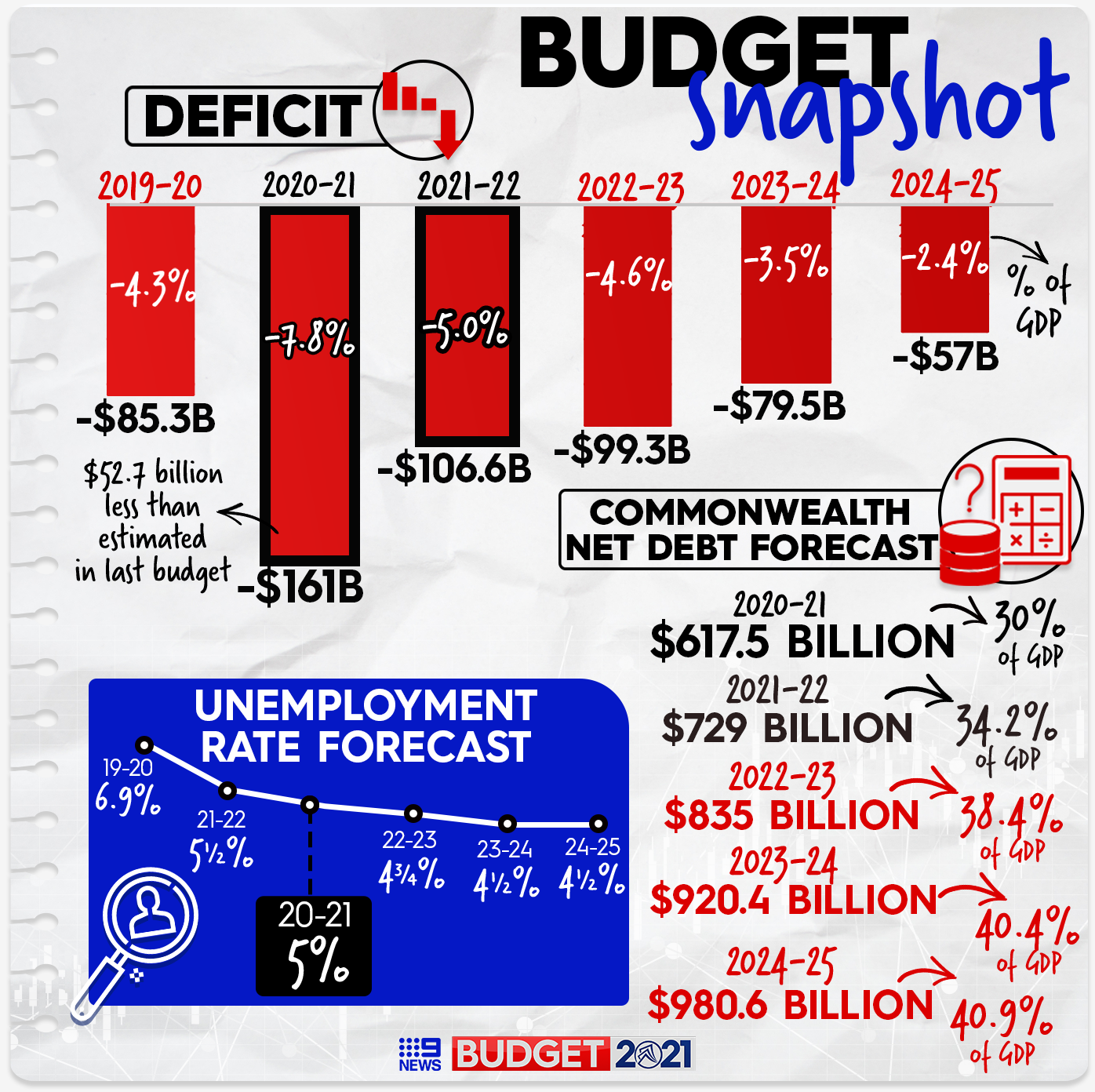
Net debt is predicted to remain under the daunting $1 trillion mark to peak at $980.6 billion at the end of the forecasting period in June 2025.

Major spending was outlined for the aged care, mental health and childcare sectors, while the National Disability Insurance Scheme (NDIS) will be fully funded to the tune of $13.2 billion over four years.

As expected, the coronavirus pandemic and Australia's long path back into economic prosperity dominates the Budget.

Another $1.9 billion is being committed to the troubled rollout of COVID-19 vaccines and $1.5 billion for COVID-related health services, such as testing, contact tracing, telehealth and respiratory clinics.

As part of the Morrison government's economic plan, more than 10 million Australians on low and middle incomes will receive another tax cut in an extension of last year's offset scheme.

Under the plan, which was announced in the lead-up to tonight's Budget, those earning up to $90,000 will benefit by up to $1080 for individuals and $2160 for couples.

Australia's unemployment rate, currently 5.6 per cent, is forecast to drop to 4.75 per cent by the June quarter of 2023 – below the 5 per cent milestone identified by Mr Frydenberg as a key goal.

The Treasurer said his third Budget would create 250,000 jobs by the end of 2022-23.

"Jobs are coming back," Mr Frydenberg said.

"The economy is coming back.

"Australia is coming back.

"And this Budget will ensure we come back even stronger, securing Australia's recovery."

A mammoth $17.7 billion will be spent over five years on the aged care sector in the wake of a damning royal commission report, including funding for another 80,000 home care packages and an additional supplement of $10 per resident per day.

A record $2.3 billion will be also spent on mental health initiatives.

"Tragically, over 65,000 of our fellow Australians attempt to take their own lives each year," Mr Frydenberg said.

"These are not just statistics on a page but family, friends and colleagues."

Meanwhile, an additional $15.2 billion in infrastructure spending was announced as part of the government's 10-year project pipeline.

BORDER UNCERTAINTY: Budget admits doubts over travel restart

Notably, the Budget does not name a date for international borders to reopen but notes significant impacts on the economy will be felt until they do.

"The continued economic recovery will rely on the effective containment of COVID-19 outbreaks both here and abroad and will be a key factor in the timing of the reopening of international borders, which could weigh on the outlook for the tourism and education sectors," the Budget papers state.

Tax cuts extended

More than 10 million Australians are set to receive a bumper tax return after the Federal Government confirmed an additional $7.8 billion in tax cuts for the 2021-22 financial year.

Extending the same measure announced last year, the government once again committed to retaining the low- and middle-income tax offset which will directly impact 10.2 million Australians.

The offset is worth as much as $1080 for individuals and $2160 for dual-income couples.

READ MORE: Will you get a tax cut?
"This is more money to spend in local businesses, giving them the confidence to take on an extra worker, offer an extra shift or buy a new piece of equipment," Mr Frydenberg said.

"Our economic recovery has beaten even the most optimistic of our expectations with more people in work than ever before."

Treasury estimates show the tax cuts will boost Australia's GDP by around $4.5 billion in 2022-23 and will create an additional 20,000 jobs by the end of 2022-23.

Billions to be spent on COVID-19 measures

Mr Frydenberg said COVID-19 safety measures were the "first priority" of the government.

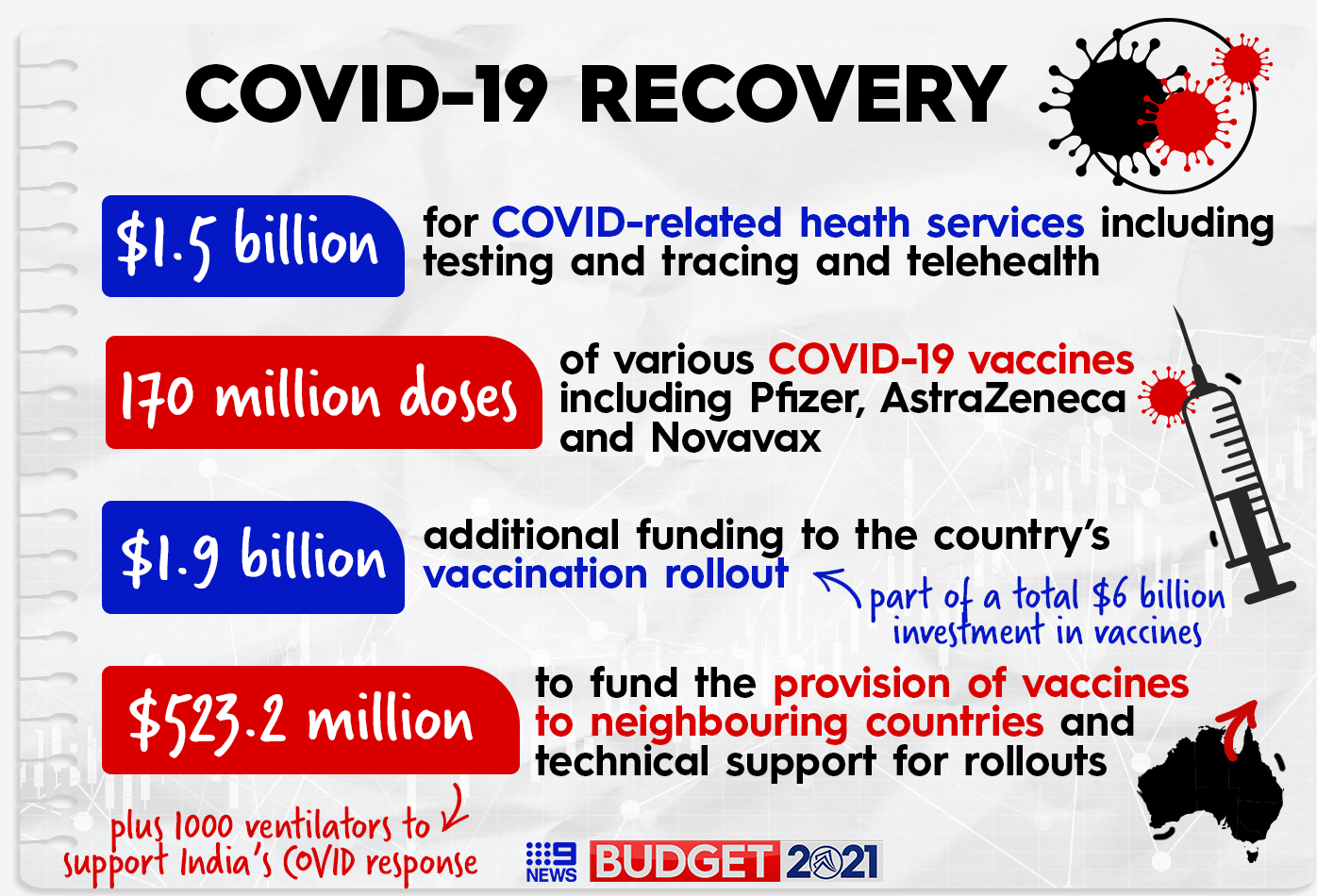
The largest chunk of this, $1.9 billion, will be invested over five years into Australia's delay-plagued vaccination rollout.

The funding injection will help Australian health authorities distribute and administer vaccines, record and monitor data, and support the states and territories.

The Budget also provided for the purchase of extra vaccine doses, which the government said would bring Australia's total stockpile to 170 million.
READ MORE: Billions to be spent fighting COVID-19

A further $1.5 billion will be provided for other COVID-19 measures, including funding for telehealth, coronavirus testing, and support for remote communities.

This will include $7.1 million for the Beyond Blue COVID-19 Mental Wellbeing Support Service, and $11.2 million to support Indigenous communities in regional and remote Australia.

Telehealth services will be extended until December this year with a further $204.6 million investment.

Aged care overhaul

The Federal Budget revealed an additional $17.7 billion will be invested in aged care in response to the Royal Commission into Aged Care Safety and Quality.

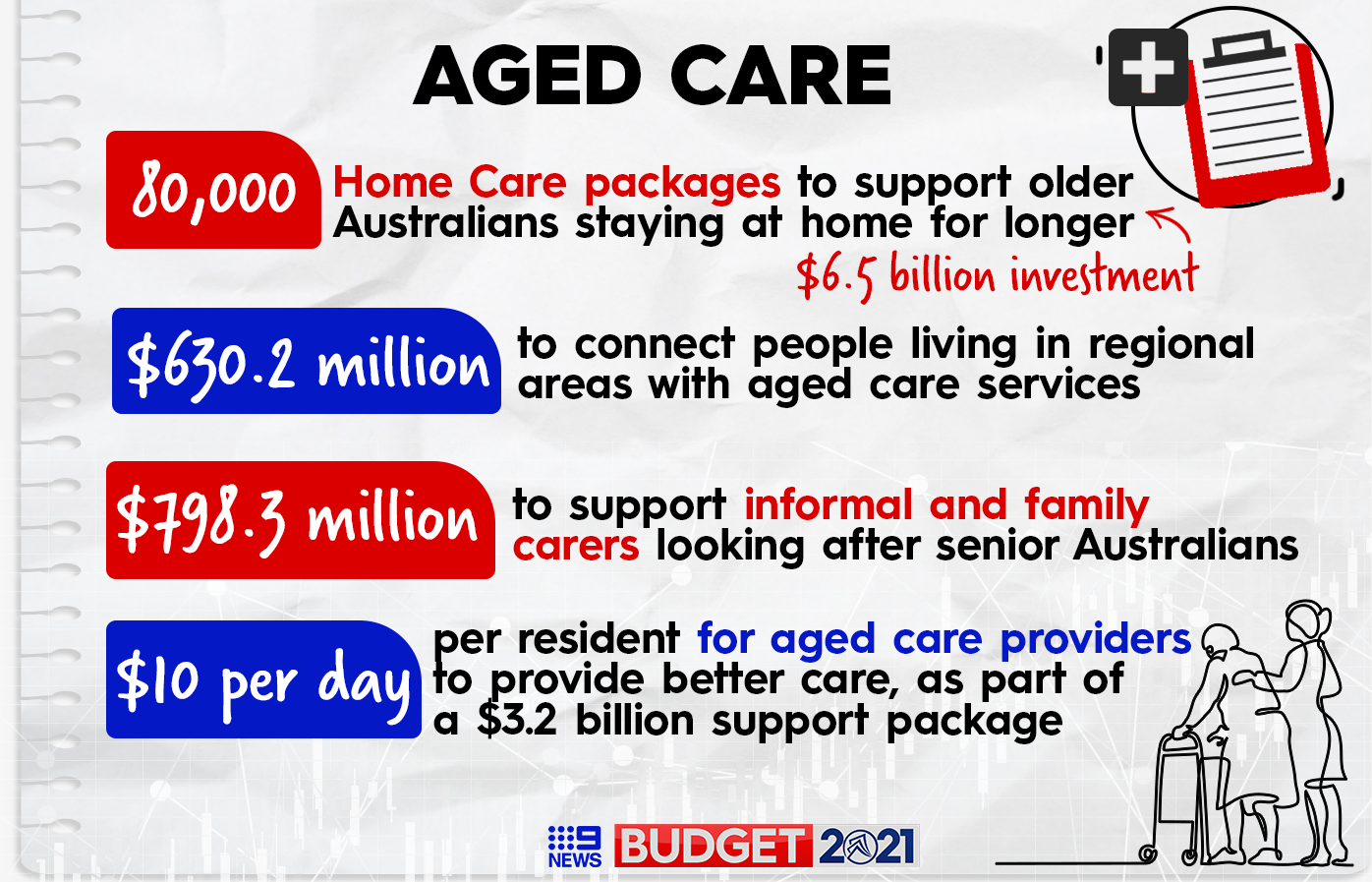
A total of $7.5 billion will be spent on expanding home care, including $6.5 billion for an additional 80,000 home care packages in the next couple of years, bringing the total of available packages to 375,598 by June 2023.

More than $8 billion will be invested in residential aged care, focusing on sustainability, quality and safety.
READ MORE: Major spend to overhaul aged care, mental health sectors

Another $3.2 billion will be directed to aged care providers in the form of a new Basic Daily Fee Supplement of $10 per resident per day.

This supplement is, at least in theory, earmarked for providing better quality of care for residents, including improved meals.

An estimated $3.9 billion will be spent on increasing the amount of "care minutes" for residents, which will be set at 200 minutes a day, including 40 minutes with a registered nurse.

Mental health support boost

Landmark investments mental health are set to improve the lives of some of Australia's most vulnerable.

"Tragically, over 65,000 of our fellow Australians attempt to take their own lives each year," Mr Frydenberg said.

"These are not just statistics on a page but family, friends and colleagues."

Last year, the Productivity Commission put the cost to the Australian economy of mental illness or suicide at a conservative estimate of $70 billion a year.

Among the government's commitments was an aftercare service, to support Australians discharged from a hospital after a suicide attempt.

A total of $1.4 billion will be invested in treatment services, including up to 57 additional mental health support centres and satellites for all ages, including a new Head to Health national network for older Australians.

"It goes to the heart of who we are as Australians, helping those who need it most," Mr Frydenberg said.

Ease on cost of childcare pressures

Under the previously announced $1.7 billion investment, more than 250,000 families are set to benefit by an average of $2200 with reduced childcare costs.

The government will reduce the $10,560 cap on the childcare subsidy from July 1, 2022 and increase the subsidy for second and subsequent children.

Mr Frydenberg said the changes would add up to 300,000 hours of work per week or an equivalent to 40,000 people working an extra day per week.

New infrastructure projects

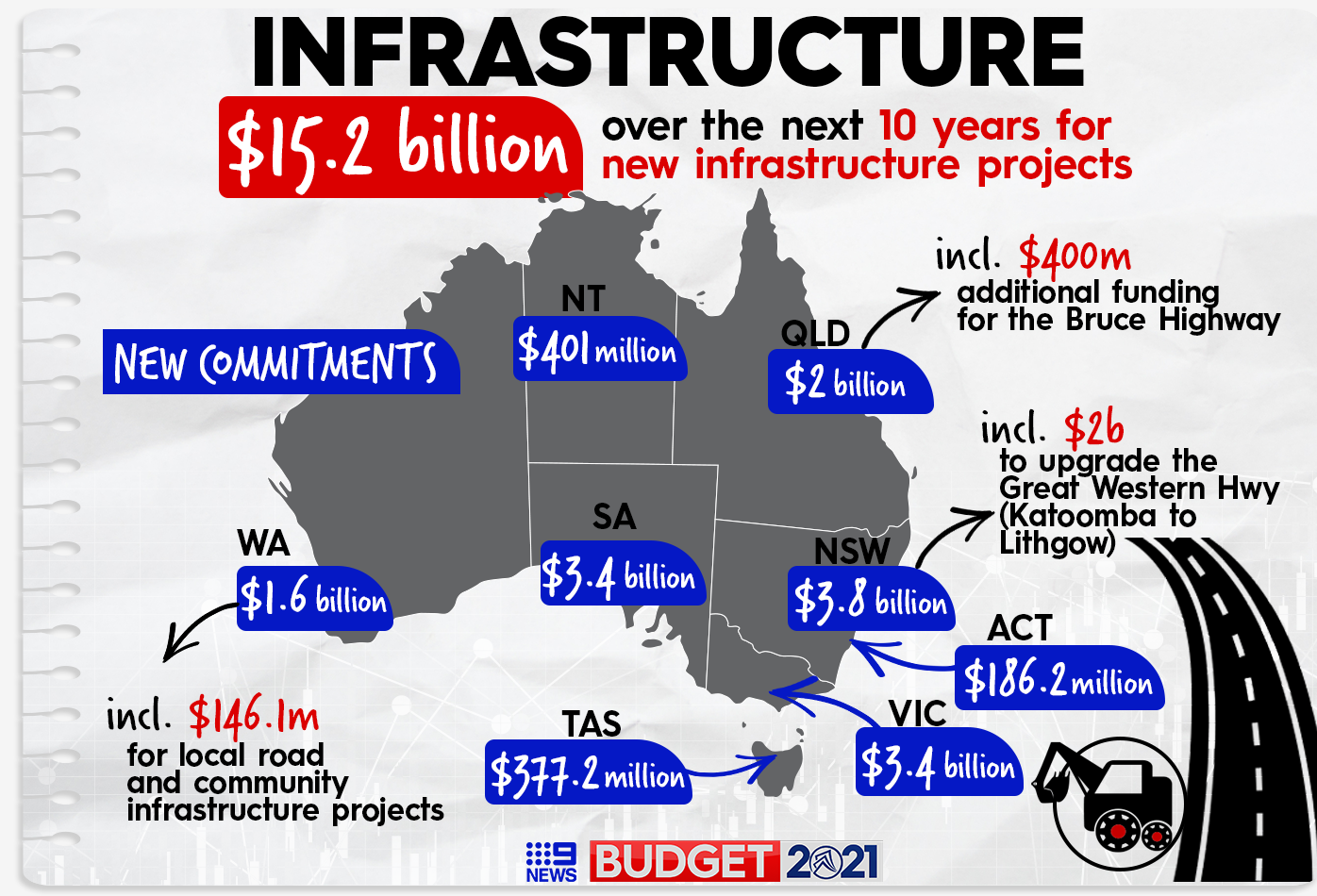
A new $15.2 billion infrastructure spend was added in this year's Federal Budget to the government's ongoing $110 billion, 10-year building program.

The government claimed the extra billions would support more than 30,000 jobs during the next 10 years, across road, rail and community building projects across the country.

READ MORE: The new projects in the $15.2b infrastructure spend
Some of the projects include:

  • $500 million for the Princes Highway Corridor in Jervis Bay in NSW
  • $400 million in funding for Bruce Highway upgrades in Queensland
  • $148 million for stage two of the Augusta Highway duplication in South Australia
  • $237.5 million for Metronet Hamilton Street/Wharf Street works in Western Australia
  • $2 billion for Melbourne Intermodal Terminal in Victoria
  • $113.4 million for Midland Highway upgrades in Tasmania
  • $132.5 million for Canberra Light Rail stage 2A in the ACT
  • $173.6 million for gas industry roads upgrades in the Northern Territory

Help for first home buyers

First home buyers trying to enter Australia's red-hot property market are set to be offered some relief under a number of new initiatives announced in this year's Federal Budget.

Despite property prices rising at the fastest month-on-month rate in 33 years, Treasurer Josh Frydenberg told the parliament that "under the Coalition, home ownership will always be supported".

He announced three key measures aimed at helping first home buyers enter the market without having to save for decades to acquire a sizable deposit.

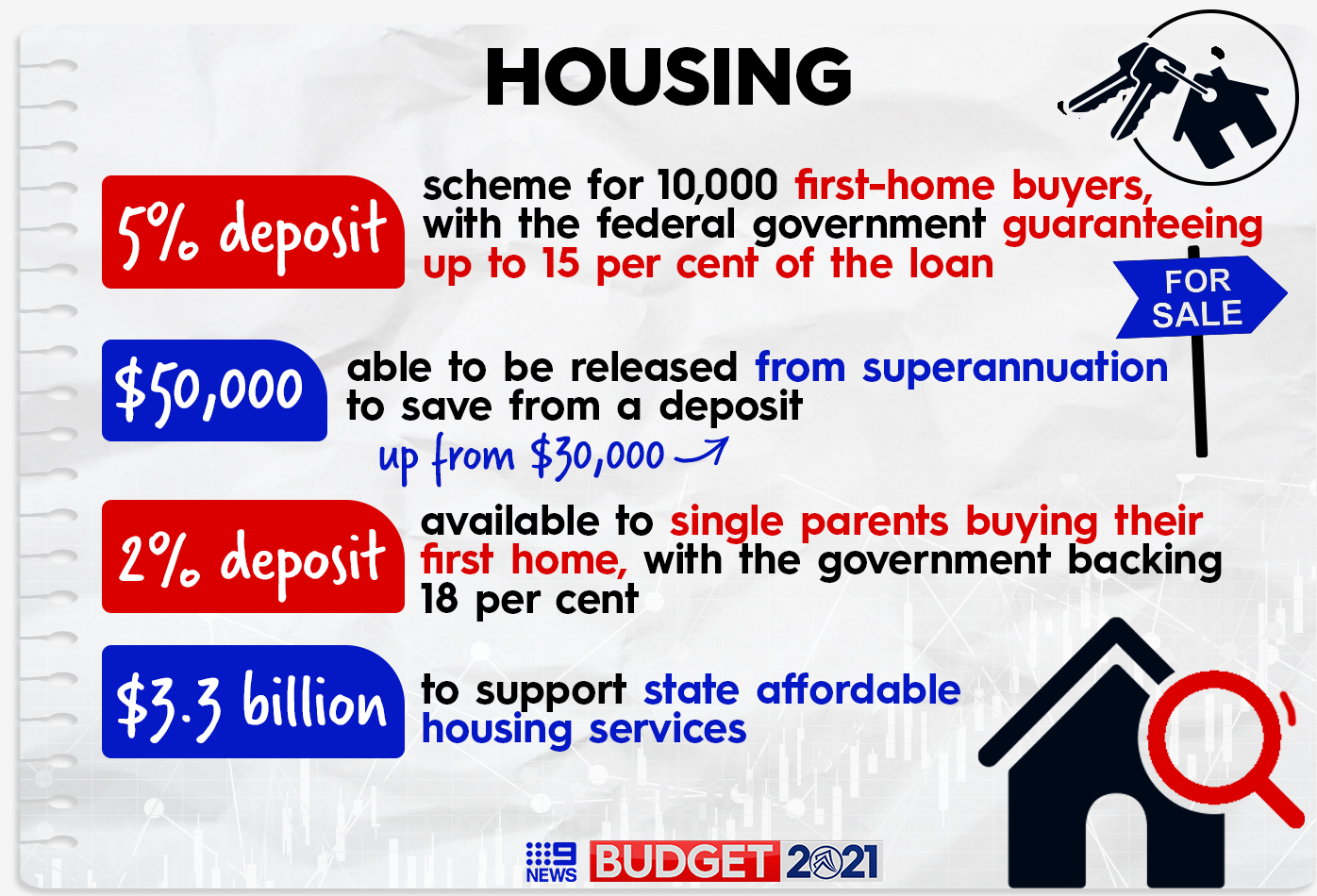
The government's first home buyer's scheme will be boosted by another 10,000 places, where buyers will only need a five per cent deposit to secure a home.

A new initiative will see single parents able to purchase a home with just a two per cent deposit.

And the First Home Super Save Scheme will allow first timers to access as much as $50,000 from their superannuation to purchase a house.

READ MORE: Incentives to help first home buyers
Focus on women

Following recent high-profile allegations of a misogynist and dangerous workplace culture in Parliament, the government has attempted to emphasise its funding for women's safety and support.

A $1.1 billion package will build on previous commitments, including financial support for women and their children who leave a violent relationship, increased emergency accommodation, and extra support for women navigating the legal system.

There will be increased funding for support for Indigenous, migrant and refugee women.

The government is also providing $20.5 million to implement its response the Respect@Work Report to combat sexual harassment in the workplace.

Funding for these initiatives was overtaken by the government's $1.7 billion in childcare support, which it said would support women in the workplace.

Programs for women's health and promoting women's leadership at work also received funding as part of the government's overall spending on health and employment.

Science, technology and research

A new "patent box" will see income earned on new patents taxed at just 17 percent, almost half the usual rate for large companies.

Starting on July 1, 2022, the scheme will apply to the medical and biotech sectors and could be expanded to the clean energy industry.
How the Budget affects an ordinary Aussie family

For many, poring over the details of the Federal Budget every year is a torturous exercise best left to economists and media pundits.

The real impacts of the government's biggest one-day policy announcement aren't felt until they reach the suburbs, where real Australians are struggling with the struggles and costs of living and working.

Little care is given to the political implications of supporting gas exploration, with the cost of nappies far more pressing than the national debt.

With that in mind, here's how the 2021 Federal Budget could help or hinder an average Aussie family.

WINNERS AND LOSERS: Who benefits the most from the Budget?

READ MORE: Will you get a tax cut?

READ MORE: The new projects in the $15.2b infrastructure spend

The hypothetical family

The Walkers are a typical Australian family living in Sydney's south-west.

Dad Jaime is a personal trainer earning around $80,000 a year and mum Lauren is a teacher who is currently working in a casual role. She earns around $35,000 a year.

The Walkers have two children under the age of five, and are renting.

They are interested in buying their own home but cannot save for a deposit while covering household costs.

To make things harder, Jaime's father is currently living with them after a series of falls made it too dangerous for him to stay in his own home.

How the Budget helps

The most immediate benefit for the Walkers will be the low- to middle-income tax offset.

As a dual-income couple, the Walkers earn approximately $115,000 a year.

When they submit their 2021-22 tax returns, they will benefit from a combined offset of $2160 that can go straight to their pocket.

The cost of childcare for the Walkers will be even more immediate.

With two children under the age of five, the Walkers will be eligible for an increased childcare subsidy as the $10,560 cap will be removed.

With this in place, the government hopes the initiative will allow Lauren to work an extra day.

The Walkers are also eligible first home buyers who could take advantage of the First Home Loan Deposit scheme.

If awarded one of 10,000 places, they would only need a deposit of around $30,000 (or five per cent) to buy a property in south-west Sydney.

Things are looking better for Grandpa, too.

Under the government's $17.7 billion aged care spending, he could become eligible for one of the government's 80,000 Home Care packages, which would see his needs supported at home with the help of a carer.

With this in place, it would delay Grandpa's move to an aged care facility and decrease living costs for the Walkers.

Read all of 9News.com.au's Federal Budget 2021 coverage here:

WINNERS AND LOSERS: Who benefits the most from the Budget?

READ MORE: Will you get a tax cut?

READ MORE: The new projects in the $15.2b infrastructure spend

BUDGET EXPLAINED: Your two-minute guide

LIVE UPDATES: Josh Frydenberg unveils his third Budget

READ MORE: Major spend to overhaul aged care, mental health sectors

BORDER UNCERTAINTY: Budget admits doubts over travel restart

READ MORE: How an ordinary Australian family is affected by the Budget

READ MORE: Incentives to help first home buyers

READ MORE: Billions to be spent fighting COVID-19

Tourism, education left hanging as Budget dodges border date

The tourism and education sectors have been left on tenterhooks after the release of tonight's Federal Budget, with extra support funding announced but no specific commitment to a re-opening of international borders.

Deputy Prime Minister Michael McCormack told Today this morning the government's outlook was built in part on a presumed resumption of overseas travel in 2022.

However, the Budget steered clear of prescribing a date, mentioning only that the risks posed by the international scale of the COVID-19 pandemic could continue to delay Australia's border reopening.

LIVE UPDATES: Josh Frydenberg unveils his third Budget

WINNERS AND LOSERS: Who benefits the most from the Budget?

"The continued economic recovery will rely on the effective containment of COVID-19 outbreaks both here and abroad and will be a key factor in the timing of the reopening of international borders, which could weigh on the outlook for the tourism and education sectors," the Budget papers state.

"Downside risks to the outlook for the global economy from ongoing outbreaks of the virus in major economies, including India, could have implications for Australia's domestic economy."

In the meantime, the government has said it is continuing to maintain an international airline capability through a new $200 million investment, supporting up to 8000 jobs and enabling international flights to resume "when borders open".

ANALYSIS: Fiscal repair left for future financial blueprints, or at least until next election is run and won

BUDGET EXPLAINED: Your two-minute guide

The government is delivering a $1.2 billion package for aviation and tourism businesses, including 800,000 half-price airfares to domestic destinations, of which more than 660,000 have been sold already.

An allocation of $274.6 million will expand and extend current programs that are supporting businesses hard-hit by border shutdowns, including travel agents, zoos and aquariums.

Treasurer Josh Frydenberg announced the introduction of the Global Talent visa and Temporary Activity visa, to provide a pathway for "highly skilled individuals" to do business down under.

INTERACTIVE: The key figures in the Federal Budget

"Australia's effective management of COVID-19 makes us an even more attractive place for the best and brightest from around the world," he said.

"To take advantage of this, we are streamlining visas to target highly skilled individuals when circumstances allow."

READ MORE: Will you get a tax cut?

Back to school

A $53.6 million package has been allocated towards the international education sector.

A Budget media release from Education Minister Alan Tudge declared universities and "many other higher education providers" had benefited from an influx of domestic students, but other English language providers and higher private educators had been hit hard by the absence of overseas students.

The package will fund an extra 5000 short courses for domestic students in 2021-22 at non-university higher-education providers.

READ MORE: Major spend to overhaul aged care, mental health sectors

A fund of $150,000 grants will also be available for independent English language and higher education providers to adapt to the impact of the pandemic.

"Keeping our borders closed has been our best defence against COVID-19, but we realise the impact this has had on private providers," Mr Tudge said.

"Our package of support will help keep these businesses viable until international students can return in larger numbers."

Budget property ownership loopholes explained

First home buyers trying to enter Australia's red-hot property market are set to be offered some relief under a number of new initiatives announced in this year's Federal Budget.

Despite property prices rising at the fastest month-on-month rate in 33 years, Treasurer Josh Frydenberg told the parliament that "under the Coalition, home ownership will always be supported".

He announced three key measures aimed at helping first home buyers enter the market without having to save for decades to acquire a sizable deposit.

WINNERS AND LOSERS: Who benefits the most from the Budget?

READ MORE: Will you get a tax cut?

READ MORE: The new projects in the $15.2b infrastructure spend

The government's first home buyer's scheme will be boosted by another 10,000 places, where buyers will only need a five per cent deposit to secure a home.

A new initiative will see single parents able to purchase a home with just a two per cent deposit.

And the First Home Super Save Scheme will allow first timers to access as much as $50,000 from their superannuation to purchase a house.

First Home Loan Deposit Scheme

The Federal Government is expanding the First Home Loan Deposit Scheme by another 10,000 places in 2021-2022.

Under the scheme, a first home buyer who secures one of the 10,000 places will only need a five per cent deposit with the government acting as guarantor for the remaining 15 per cent.

The scheme will see first home buyers avoid paying lender's mortgage insurance (LMI), but they will have to eventually repay the 15 per cent the government covered at the time of purchase.

The idea is to help young people enter the market sooner as rising house prices rapidly eclipse a person's ability to save for a deposit.

First introduced in last year's Budget, the First Home Loan Deposit Scheme has proved to be enormously popular with almost all spots secured soon after becoming available.

First Home Super Saver Scheme

The First Home Super Saver Scheme has been expanded to allow eligible first home buyers to release up to $50,000 of their superannuation to purchase a home, up from $30,000.

The scheme will begin from July 1, 2022.

Family Home Guarantee

Riding off the back of the First Home Loan Deposit Scheme, the government has committed to a "Family Home Guarantee" aimed at helping single parents into home ownership.

Under the guarantee, eligible single parents will be able to build a new home or purchase an existing home with a deposit of as little as two per cent.

The guarantee will be open for applications from July 1, 2021 and will offer 10,000 places over four years.

Only individuals who are deemed to be able to service a loan will be granted a place.

Read all of 9News.com.au's Federal Budget 2021 coverage here:

WINNERS AND LOSERS: Who benefits the most from the Budget?

READ MORE: Will you get a tax cut?

READ MORE: The new projects in the $15.2b infrastructure spend

BUDGET EXPLAINED: Your two-minute guide

LIVE UPDATES: Josh Frydenberg unveils his third Budget

READ MORE: Major spend to overhaul aged care, mental health sectors

BORDER UNCERTAINTY: Budget admits doubts over travel restart

READ MORE: How an ordinary Australian family is affected by the Budget

READ MORE: Incentives to help first home buyers

READ MORE: Billions to be spent fighting COVID-19

Will you get a tax cut? Federal Budget explained

More than 10 million Australians are set to receive a bumper tax return after the Federal Government announced an additional $7.8 billion in tax cuts for the 2021-22 financial year.

Extending the same measure announced last year, the government once again committed to retaining the low- and middle-income tax offset which will directly impact 10.2 million Australians.

The offset is worth as much as $1080 for individuals and $2160 for dual-income couples.

WINNERS AND LOSERS: Who benefits the most from the Budget?

BUDGET EXPLAINED: Your two-minute guide

LIVE UPDATES: Josh Frydenberg unveils his third Budget

"This is more money to spend in local businesses, giving them the confidence to take on an extra worker, offer an extra shift or buy a new piece of equipment," Treasurer Josh Frydenberg said.

"Our economic recovery has beaten even the most optimistic of our expectations with more people in work than ever before."

Treasury estimates show the tax cuts will boost Australia's GDP by around $4.5 billion in 2022-23 and will create an additional 20,000 jobs by the end of 2022-23.

Tax cuts explained: How to know if you will be receiving extra cash

Paycheque to paycheque, most Australians will not realise the benefits of these tax cuts.

The way this tax relief will be delivered will be as part of a taxpayer's annual tax return, where the taxpayer will essentially be given more cash back.

You're still paying the same percentage of tax on your income, but you're receiving a little sweetener come the end of the financial year.

How much you receive depends on how much you earn, as people who earn more pay more income tax as a percentage.

The following estimates are for taxpayers in 2021-2022 compared to the way tax was handled in 2017-2018.

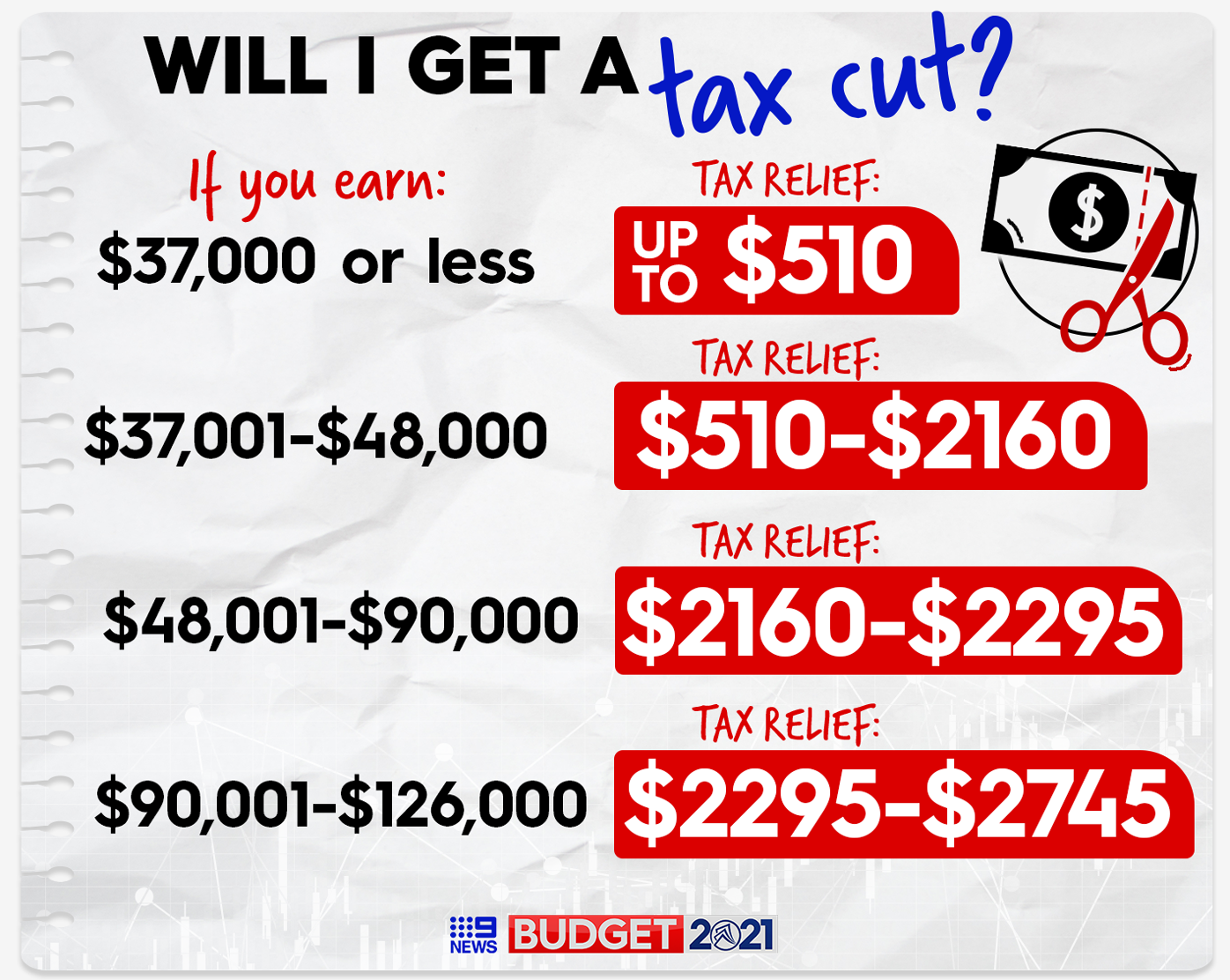
  • If you earn up to $37,000, you'll receive tax relief of up to $510.
  • If you earn between $37,001 up to $48,000, you'll receive tax relief of between $510 and $2160.
  • If you earn between $48,001 up to $90,000, you'll receive tax relief of between $2160 and $2295.
  • If you earn between $90,001 up to $126,000, you'll receive tax relief of between $2295 and $2745.

Almost 4.8 million Australians fall into the middle-income bracket of earning between $48,001 up to $90,000.

The government estimates that by the time 2024-25 rolls around, as much as 95 per cent of all taxpayers will face a marginal tax rate of 30 per cent or less.

Income tax is the government's greatest source of revenue, contributing more than $224.9 billion to the bottom line in 2021-22.

CASE STUDY: Steve the maths teacher

Steve is a mathematics teacher earning a taxable income of $60,000 a year.

Because Steve falls in the middle-income tax bracket of between $48,001 and $90,000, he'll receive the maximum benefit tax relief of $1080 when he lodges his 2021-2022 tax return.

Compared to the tax settings of 2017-2018, Steve is more than $6000 better off from 2018-19 through to 2021-22.

Read all of 9News.com.au's Federal Budget 2021 coverage here:

WINNERS AND LOSERS: Who benefits the most from the Budget?

READ MORE: Will you get a tax cut?

READ MORE: The new projects in the $15.2b infrastructure spend

BUDGET EXPLAINED: Your two-minute guide

LIVE UPDATES: Josh Frydenberg unveils his third Budget

READ MORE: Major spend to overhaul aged care, mental health sectors

BORDER UNCERTAINTY: Budget admits doubts over travel restart

READ MORE: How an ordinary Australian family is affected by the Budget

READ MORE: Incentives to help first home buyers

READ MORE: Billions to be spent fighting COVID-19

Budget 2021 winners and losers

It's the cash splash almost none of us expected after the sheer expense of battling COVID-19.

After staving off the worst of the pandemic and defying economic estimates that more than 15 per cent of working Aussies would be without a job, the government is in a $53 billion better position than it thought it would be.

Combine that with a looming federal election, a jump in income tax revenue and soaring iron ore prices and you have the perfect recipe for a Budget that aims to please many.

Here's a full breakdown of the 2021 Budget's winners and losers:

READ MORE: Will you get a tax cut?

READ MORE: The new projects in the $15.2b infrastructure spend

BUDGET EXPLAINED: Your two-minute guide

WINNERS

Low- and middle-income earners

Do you earn less than $126,000 a year? If you do, you're a winner in this Budget after government announced it was extending its low- and middle-income tax offset for another year.

In simple terms, you'll receive a fatter tax return when you lodge your tax later this year, with the maximum "cashback" rate of $1080 for individuals.

How much you receive back depends on how much you earn, but the initiative will cost the government $7.8 billion and will impact around 10.2 million Australians.

Apprentices and tradies

Thinking about getting a trade? You're in luck, because this Budget will fund an additional 170,000 new apprenticeships and traineeships, as well as 163,000 new training places to help employed people upskill.

If you're already in a trade and worried about getting the work, the government has continued its eye-watering 10-year, $110 billion spend on infrastructure.

In tonight's Budget alone $15.2 billion was named for rail and road upgrades – each of which are massive projects requiring hundreds of labourers, engineers, skilled trades and more.

Working families

Aussie families who are choosing to keep one parent at home because the cost of childcare is so expensive are set to be big winners of tonight's Budget.

To cut living costs, the government will spend $1.7 billion by increasing child care subsidies available to families who have more than one child under five in childcare, and they'll remove the $10,650 cap on the Child Care Subsidy.

This will impact around 250,000 families and will make it possible for around 40,000 individuals to pick up an extra day at work.

First home buyers

The government has committed to an extra 10,000 places for the First Home Loan Deposit scheme, which will see first home buyers only having to stump up a five per cent deposit to secure a property.

If you're an eligible single parent, that could drop as low as two per cent.

There is a catch though – you will eventually have to pay that back over the course of your loan.

Senior Australians

It's been a labelled a "once in a generation" spend on aged care, and Australia's aging population is set to benefit from a huge $17.7 billion, five-year spend on improving care.

The particulars of this spending package are vast and complex, but on a broad scale it will improve living conditions in aged care facilities, enable older Australians to stay at home for longer and will boost the training and number of care workers.

Aside from aged care, Australians seniors are set to benefit from a reduction of the downsizer superannuation contribution.

From July 1, 2022, Aussies as young as 60 will be allowed maximum post-tax contributions of up $300,000 per person when they sell their homes.

Women

After being lashed last year for failing to recognise the economic factors weighing on Australian women, this year's Budget included for the first time a separate "Women's Budget Statement".

In it the government pledged $3.4 billion towards protecting women from domestic violence, boosting economic opportunities for women and reducing the gender pay gap.

Of that, $1.1 billion will be spent on improving women's safety (such as cash payments to help domestic violence victims pay for costs of living) and $1.9 billion to support economic security (such as more female places in STEM qualifications and childcare expenditure).

Medical inventors

Okay, medical inventors is pretty niche.

But from July 1 next year, Aussie companies that create medical or biotech products and patent them will be taxed at the very low rate of 17 per cent.

Called a "patent box", the initiative is designed to inspire Aussie inventors to come up with the next bionic ear (the Cochlear implant is an Aussie invention) or cervical cancer vaccine (also Australian).

Normally these companies are taxed at the rate of 30 per cent.

Migraine sufferers

Sufferers of chronic migraines – a debilitating condition that overwhelmingly affects women, has no known cure and contributes to thousands of sick days – are set to benefit after the government announced it will be listing the drug Emgality on the PBS.

Instead of costing $6800 per year for treatment it will now cost $41.30 a script or $6.60 for concession card holders.

The Matildas

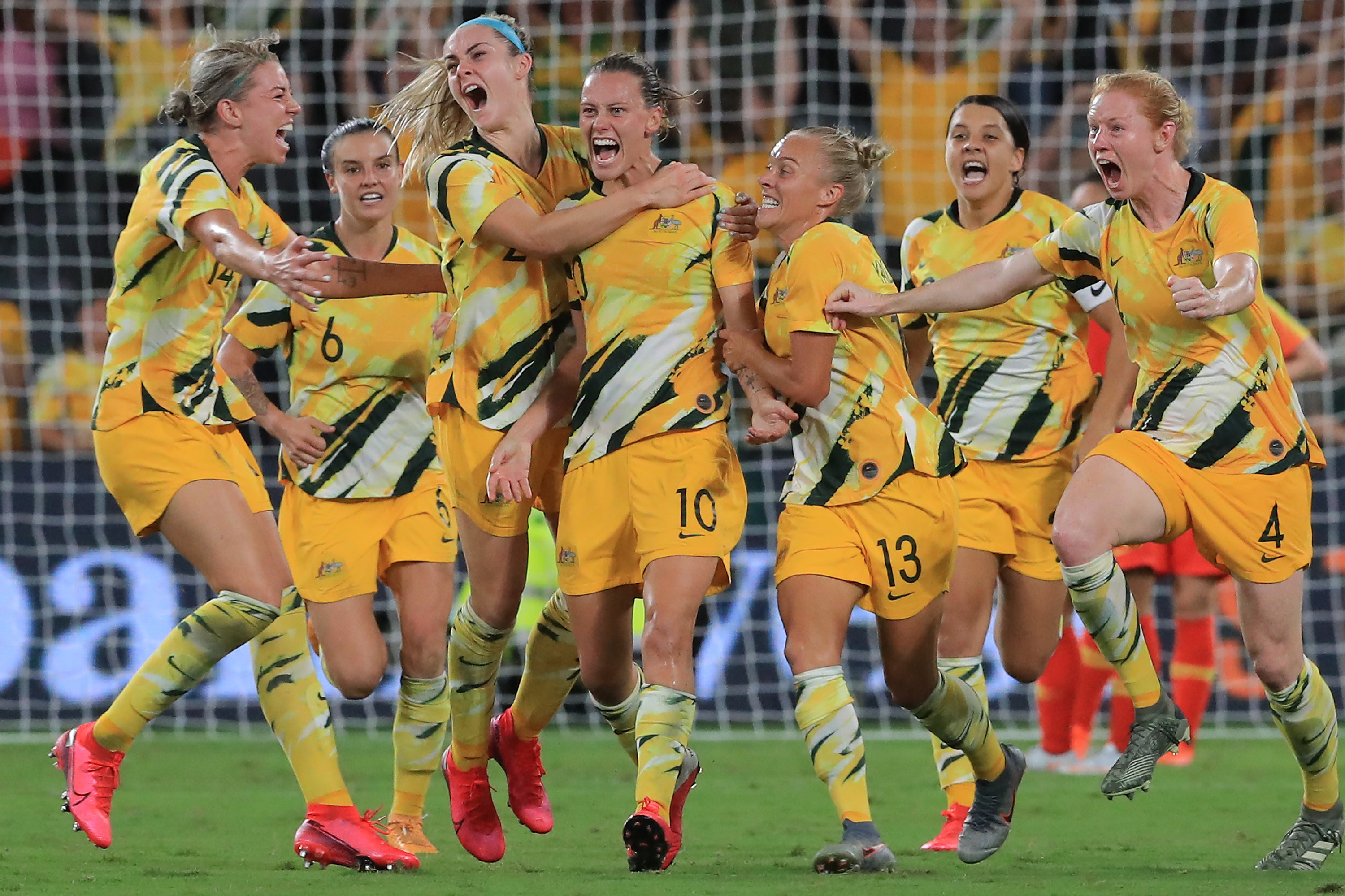
The Australian women's football team was specifically mentioned in tonight's Budget, with the government pledging $17 million to support a number of world class women's sporting events including the FIBA Women's World Cup for basketball and the Women's FIFA World Cup.

Part of that $17 million spend will go towards eight additional international matches for the Matildas.

The Matilda's celebrate a goal against China in Olympic qualifier

Game developers

Aussie game developers are set to benefit from a Digital Games Tax Offset that will see production houses receive a 30 per cent refundable tax offset for expenditure from July 1, 2022.

The government has said it wants to help Australians to take their slice of the $250 billion global video game market.

Microbreweries

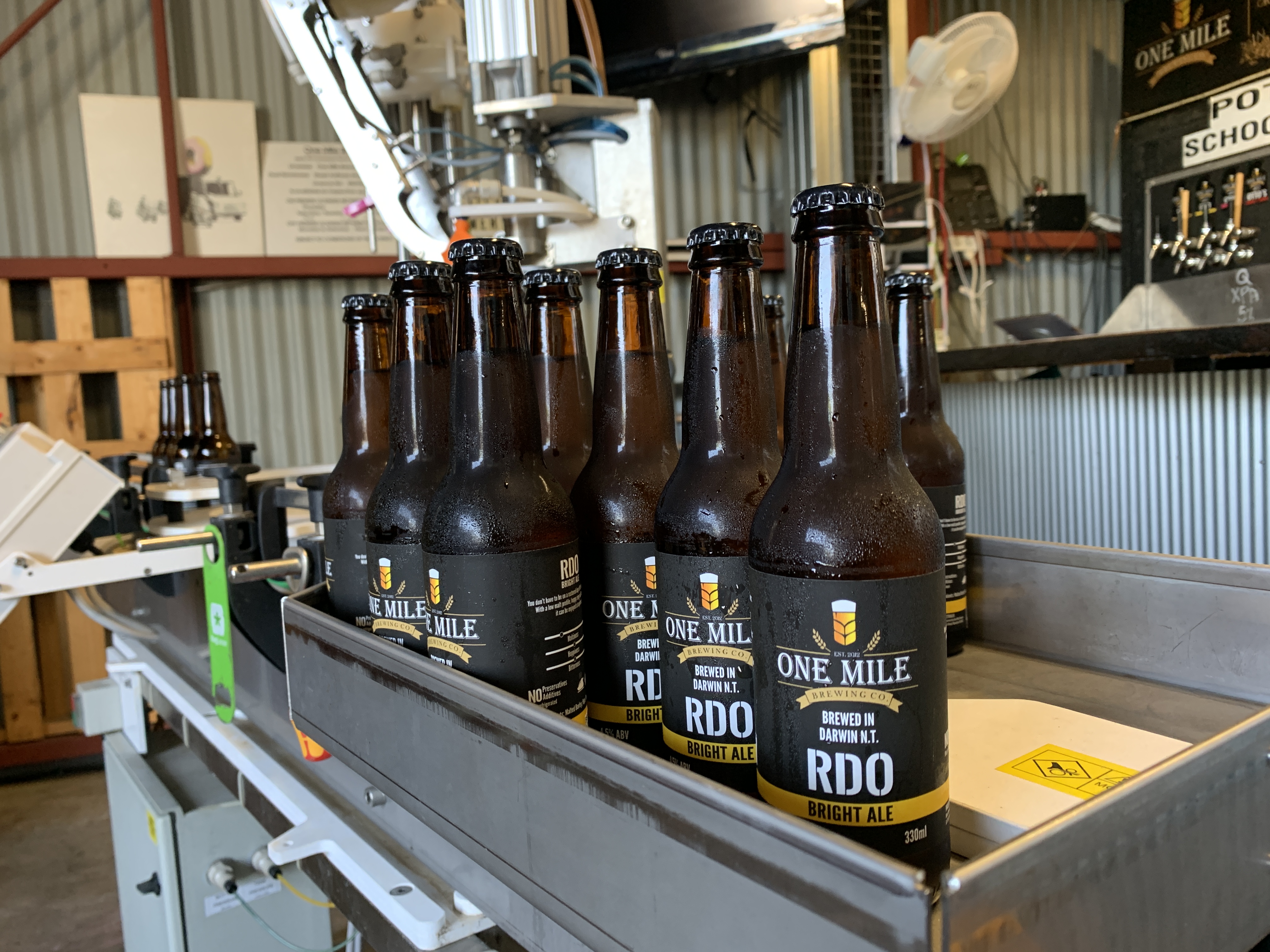
Microbreweries and trendy small-scale distilleries are winners from the Budget, with the government pledging a massive cash-back scheme for every $350,000 worth of alcohol they ship out of local warehouses.

Under the program, eligible brewers and distillers will receive full remission of any excise they pay on alcohol up to a cap of $350,000 every financial year.

The move will primarily benefit small, locally run operations.

Zoos and aquariums

Heavily impacted by the lack of international tourism, the government's $94.6 million Zoos and Aquariums program will be extended by six months to maintain animal populations where tourism revenue has been affected.

Robot overlords

That's right, even our impending robotic masters were winners in tonight's Budget with the government announcing a $117.8 million spend over the next four years into artificial intelligence, or AI.

Under the package, Australia's first Artificial Intelligence Action Plan will be created, which will see the development of world-leading AI projects.

LOSERS

International travellers

Keen globetrotters who had their hearts pinned on finding the government's plan for opening our international borders were disappointed by tonight's estimates, with only an underlying assumption of some spending that borders will open some time in 2022.

Treasury did not lay out a rough timeline of when it expected international borders to open, only that containing COVID-19 outbreaks will be a "key factor" in the timing of opening borders.

The tourism industry

Much of the spending listed in tonight's Budget – including the $1.2 billion tourism package – was already known and has already been initiated, such as the government's half-price airfares offer on 800,000 tickets.

Sadly, the spending in tonight's Budget is nowhere near enough to cover the losses felt by tourism operators and airlines alike for having closed international borders.

The Australian taxpayer (eventually)

The 2021 Budget delivered extremely positive news – Australia escaped the brunt of COVID far better than the economists predicted – but we are still in debt.

In 2021-22, the underlying cash balance is expected to be a deficit of $106.6 billion.

In a decade's time, Treasury estimates we will still be in a deficit to the tune of 1.3 per cent of GDP in 2031-32.

By 2023-24, Treasury estimates that Australia's net debt will be just shy of a trillion dollars at $920 billion.

Eventually, the taxpayer will foot the bill for government expenditure.

Read all of 9News.com.au's Federal Budget 2021 coverage here:

WINNERS AND LOSERS: Who benefits the most from the Budget?

READ MORE: Will you get a tax cut?

READ MORE: The new projects in the $15.2b infrastructure spend

BUDGET EXPLAINED: Your two-minute guide

LIVE UPDATES: Josh Frydenberg unveils his third Budget

READ MORE: Major spend to overhaul aged care, mental health sectors

BORDER UNCERTAINTY: Budget admits doubts over travel restart

READ MORE: How an ordinary Australian family is affected by the Budget

READ MORE: Incentives to help first home buyers

READ MORE: Billions to be spent fighting COVID-19