Tag Archives: oceania

Indian government faces lockdown calls, contempt charges

India's government faced calls for a strict lockdown to slow a devastating surge in new coronavirus cases, and a court in New Delhi will decide whether to punish officials for failing to end a two-week-old erratic supply of oxygen to overstretched hospitals.

With 382,315 new confirmed cases, India's tally has risen to more than 20.6 million since the pandemic began.

The Health Ministry on Wednesday also reported 3780 deaths in the last 24 hours, bringing the total to 226,188.

READ MORE: Thunderstorms still a threat after 400km supercell hits
Indian government faces lockdown calls, contempt charges

Experts believe both figures are an undercount.

Rahul Gandhi, a leader of the opposition Congress party, said this week "a lockdown is now the only option because of a complete lack of strategy by the Indian government".

The New Delhi High Court will decide whether to press contempt charges against officials for defying its order to meet oxygen requirements of more than 40 hospitals in the capital.

Those found guilty face six months in prison or a fine.

READ MORE: Aussie stuck in India sues to overturn travel suspension

The court summoned two Home Ministry officials for Wednesday's hearing.

"You can put your head in the sand like an ostrich, we will not. We are not going to take no for an answer," Justices Vipin Sanghi and Rekha Palli said.

The grim reality is that hospitals are reducing the number of beds and asking patients to move elsewhere, the judges said.

The court is hearing petitions filed by several hospitals and nursing homes struggling with irregular oxygen supplies.

Raghav Chaddha, a spokesman for the Aam Aadmi Party governing New Delhi, said hospitals were getting only 40 per cent of their 700 tonnes requirements through the federal government, and the local government was arranging additional supplies to meet the shortfall and setting up new oxygen plants.

READ MORE: Man charged after allegedly posing as Order of Australia recipient
Indian government faces lockdown calls, contempt charges

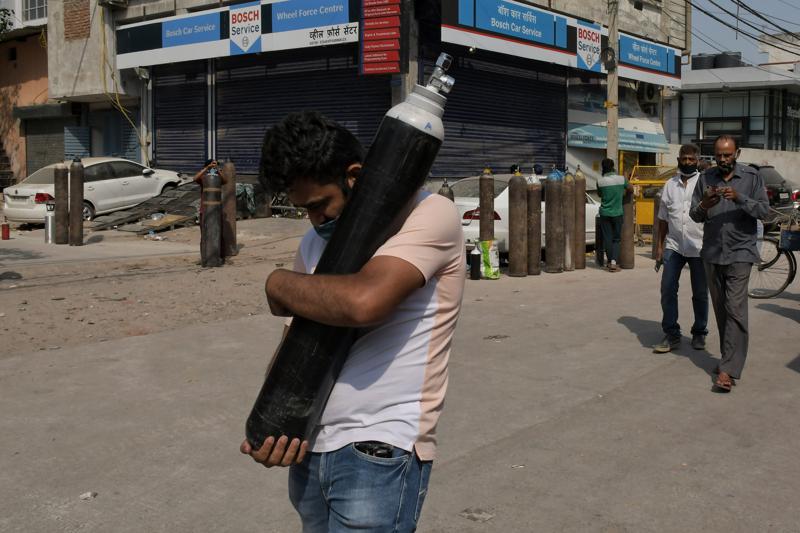
The latest wave of infections since April has pushed India's health care to the brink with people begging for oxygen cylinders and hospital beds on social media and news channels.

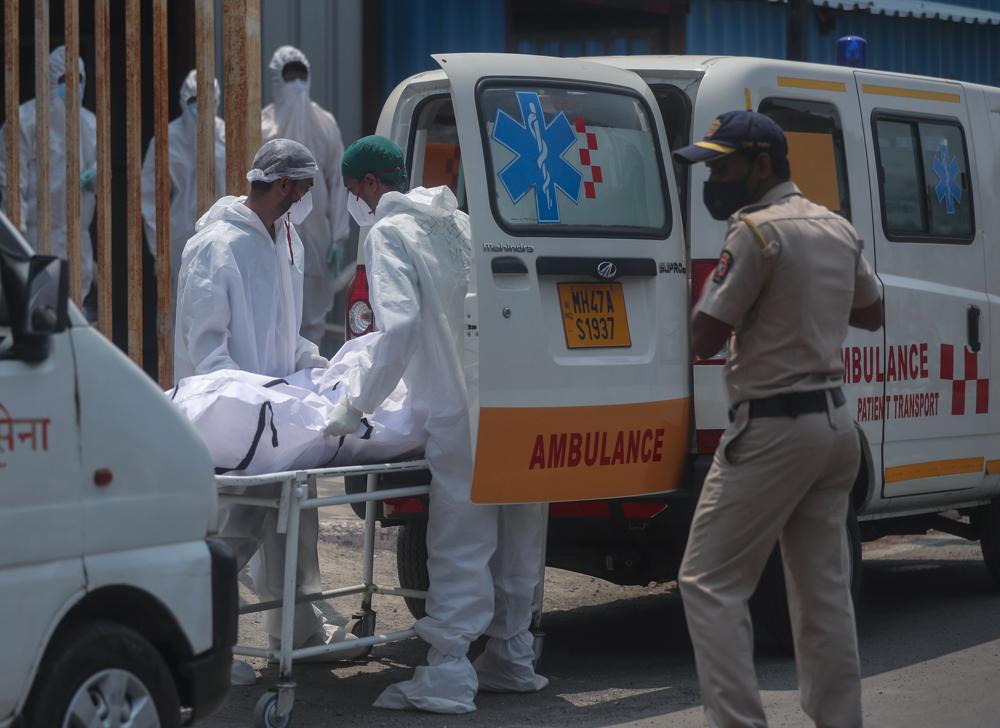
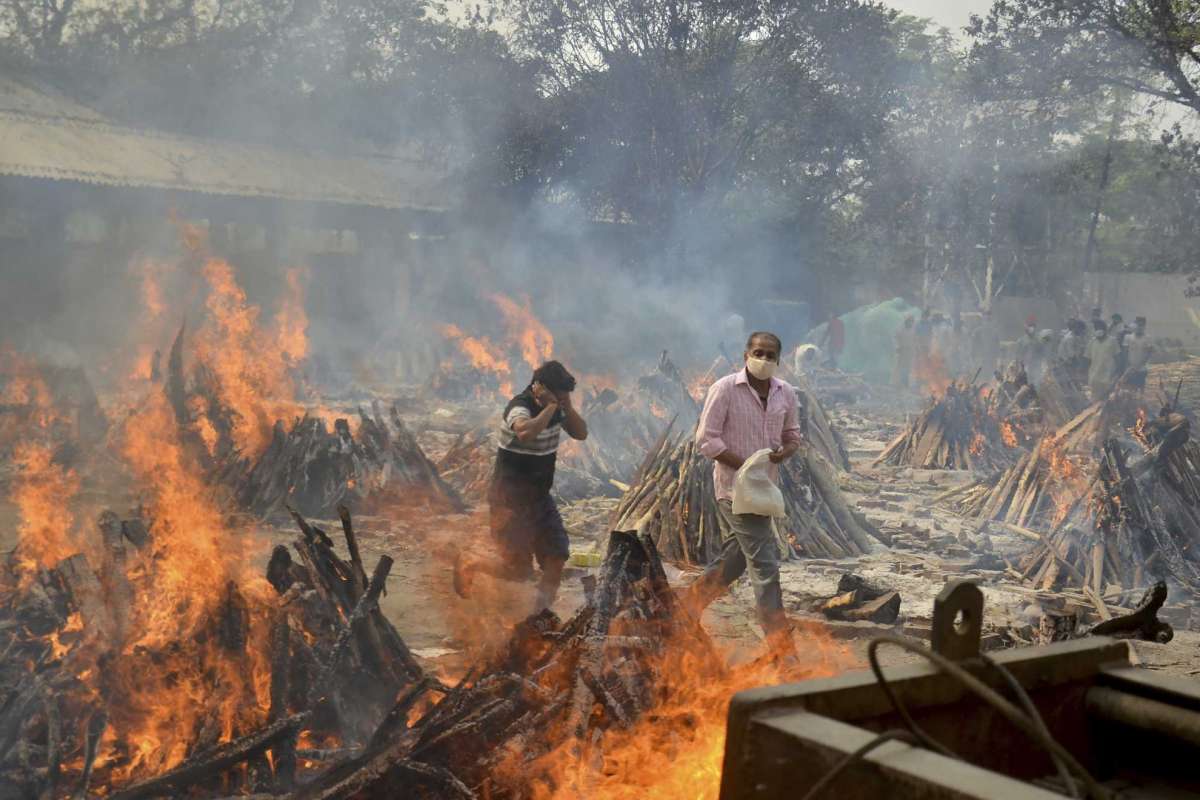
Bodies have been piling up at cremation grounds and in graveyards with relatives waiting for hours for the last rites.

Dileep Kumar, a student, said he was asked by hospital authorities to shift his father to another hospital in Ghaziabad, a town on the outskirts of New Delhi, after it ran out of oxygen on Tuesday.

Authorities are scrambling to add more beds, sending oxygen from one corner of the country to another, and scaling up manufacturing of the few drugs effective against COVID-19.

Prime Minister Narendra Modi's government is reluctant to impose a national lockdown for fear of the economic fallout.

Modi said last month that it should be the last resort.

READ MORE: 'Fiasco' in Parliament shows why Australians disdain their leaders
Indian government faces lockdown calls, contempt charges

But nearly a dozen states have imposed curbs on their own.

The most populous state of Uttar Pradesh, with 200 million people, implemented a five-day lockdown this week.

The country's second and third most populated states of Maharashtra and Bihar are also under lockdown with varying curbs.

Efforts to scale up the vaccination drive are hampered by the shortage of doses.

India, a country of 1.4 billion, has so far administered 160 million doses.

The global community is extending a helping hand.

The United States, Britain, Germany and several other nations are rushing therapeutics, rapid virus tests and oxygen to India, along with some materials needed for India to boost its domestic production of COVID-19 vaccines.
Aussie stuck in India sues to overturn travel suspension

An Australian man who has been stuck in India for more than a year is suing the federal government over its suspension of arrivals from that country.

Gary Newman travelled to India to visit friends in March last year and has been unable to return.

The urgent application filed in federal court in Sydney will be held this afternoon.

READ MORE: New coronavirus case 'active' in Sydney before diagnosis

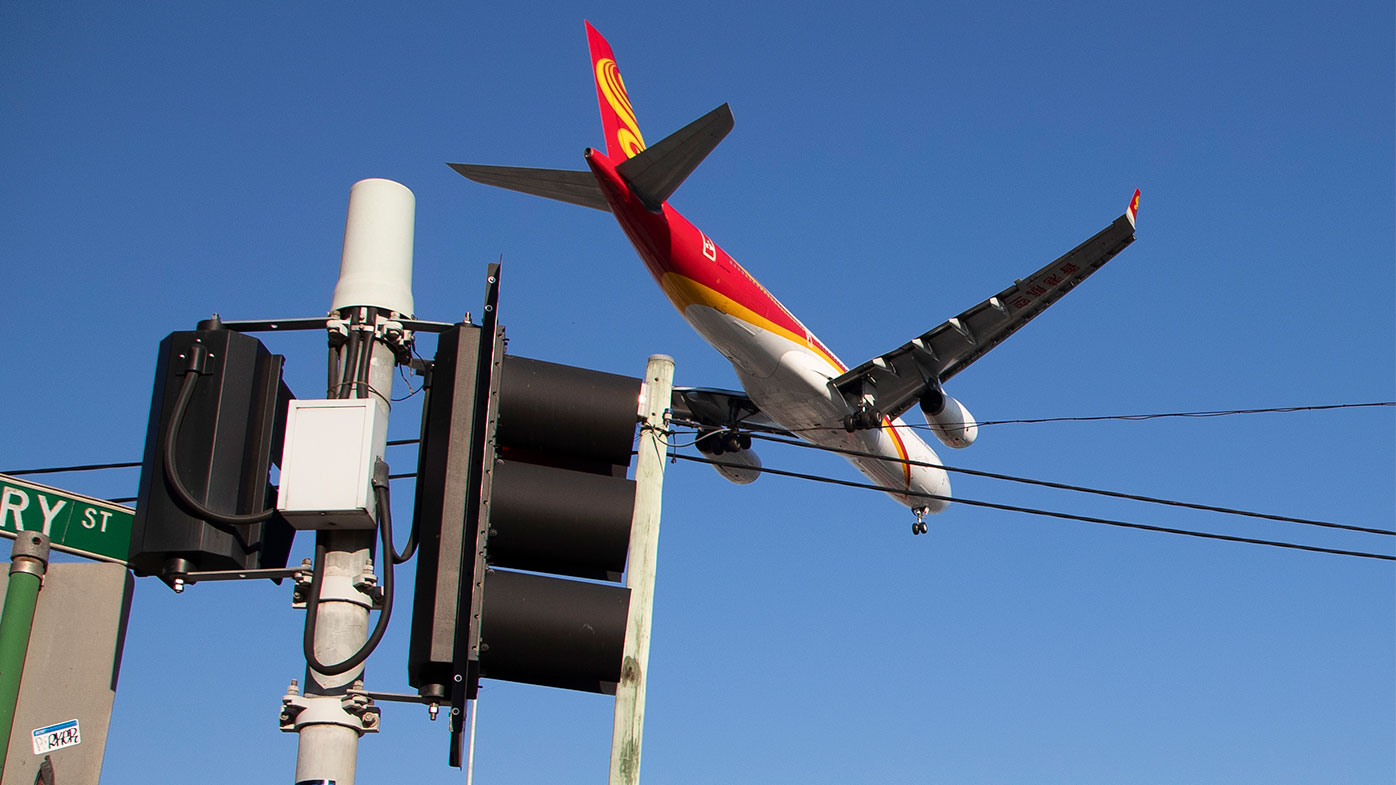
A passenger jet makes its final approach for landing into Sydney Airport.

Mr Newman is being represented by Michael Bradley and Chris Ward SC, who are working pro bono to overturn the travel suspension.

"The constitutionality of a proposed law criminalising return of Australian citizens from particular specified countries is deeply questionable," Dr Ward tweeted earlier this week.

The lawyers will argue the emergency declaration is invalid because of an implied freedom to be able to return home.

READ MORE: Over 50s now able to get coronavirus jab

Health Minister Greg Hunt declined to comment on the case when holding a press conference in Melbourne earlier this afternoon.

He said the "pause" in arrivals from India was working.

"More than one in eight passengers on the most recent flights were testing positive," he said.

"That's the level beyond anything that we had seen before.

"Our job is to protect Australia against a third wave, our job is to protect our health system."

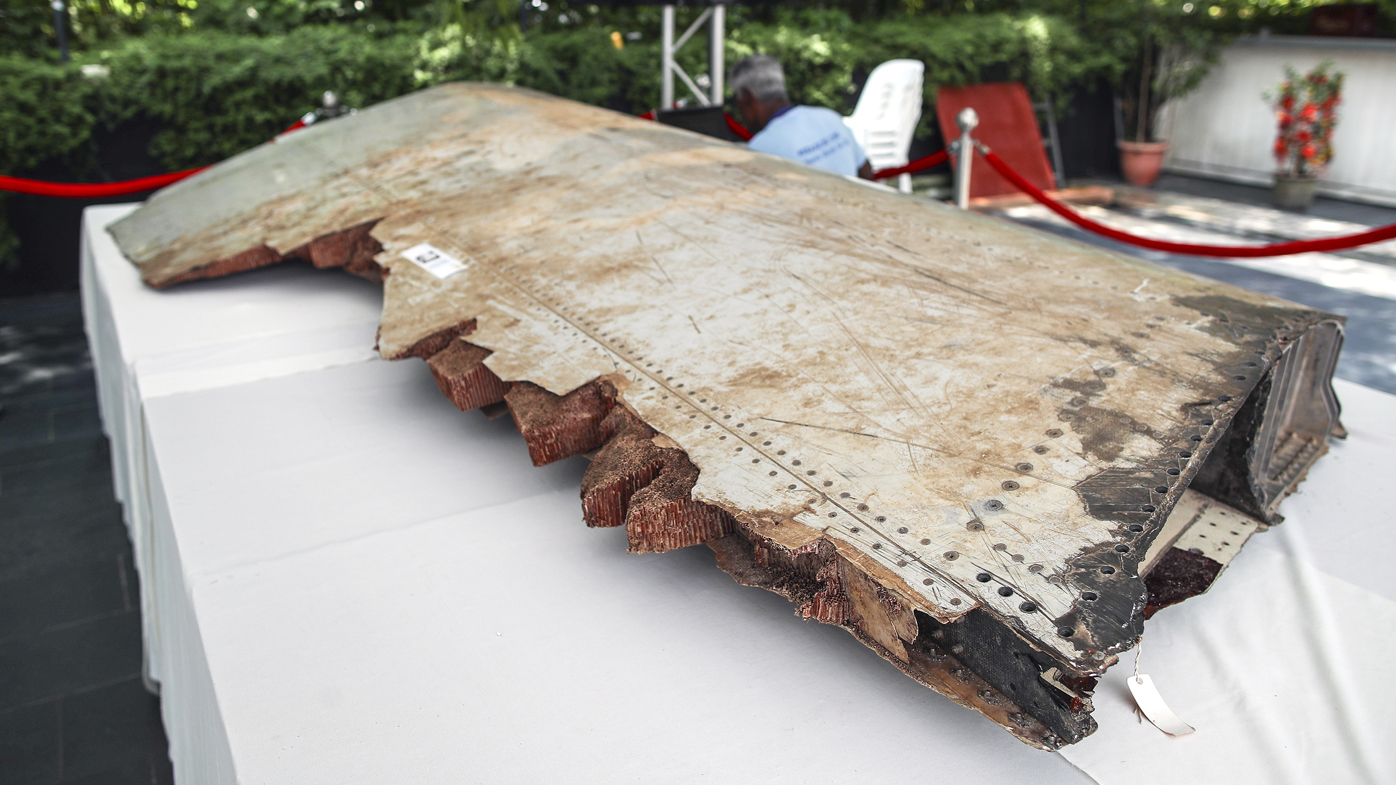
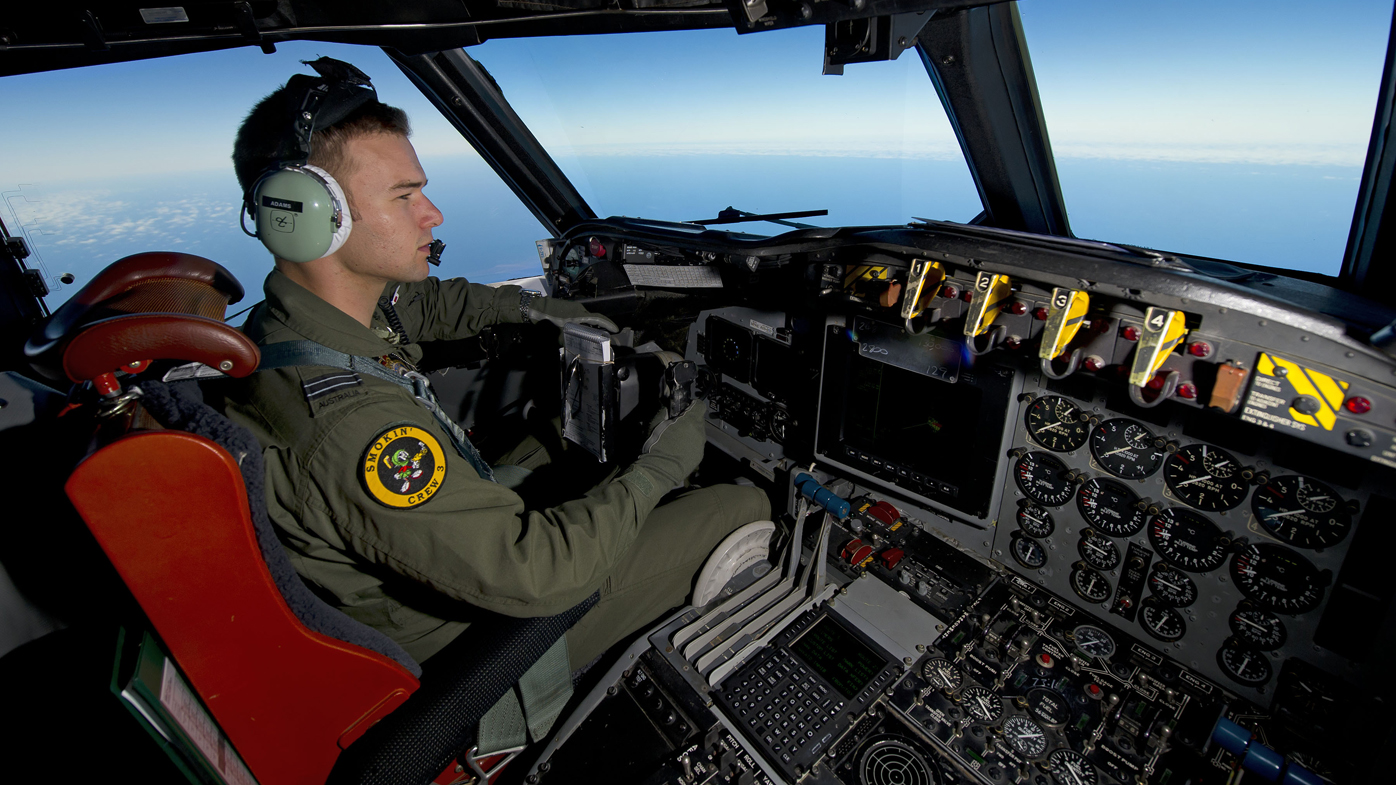
MH370 'made many turns to avoid detection' before vanishing

The pilot of flight MH370 that disappeared seven years ago made numerous turns to avoid detection before the passenger jet took its final, fatal course, a new study found.

MH370 vanished in March, 2014, with Malaysian Airlines Captain Zaharie Ahmad Shah dying alongside 238 passengers and crew, including six Australians.

The research by aerospace engineer Richard Godfrey, of the Independent Group of Scientists, set up to solve the MH370 mystery – found that the flight path of the Boeing 777 jet was "significantly different" from earlier modelling based on satellite data.

READ MORE: Mystery and tragedy: How MH370 and MH17 changed the way we think about air travel

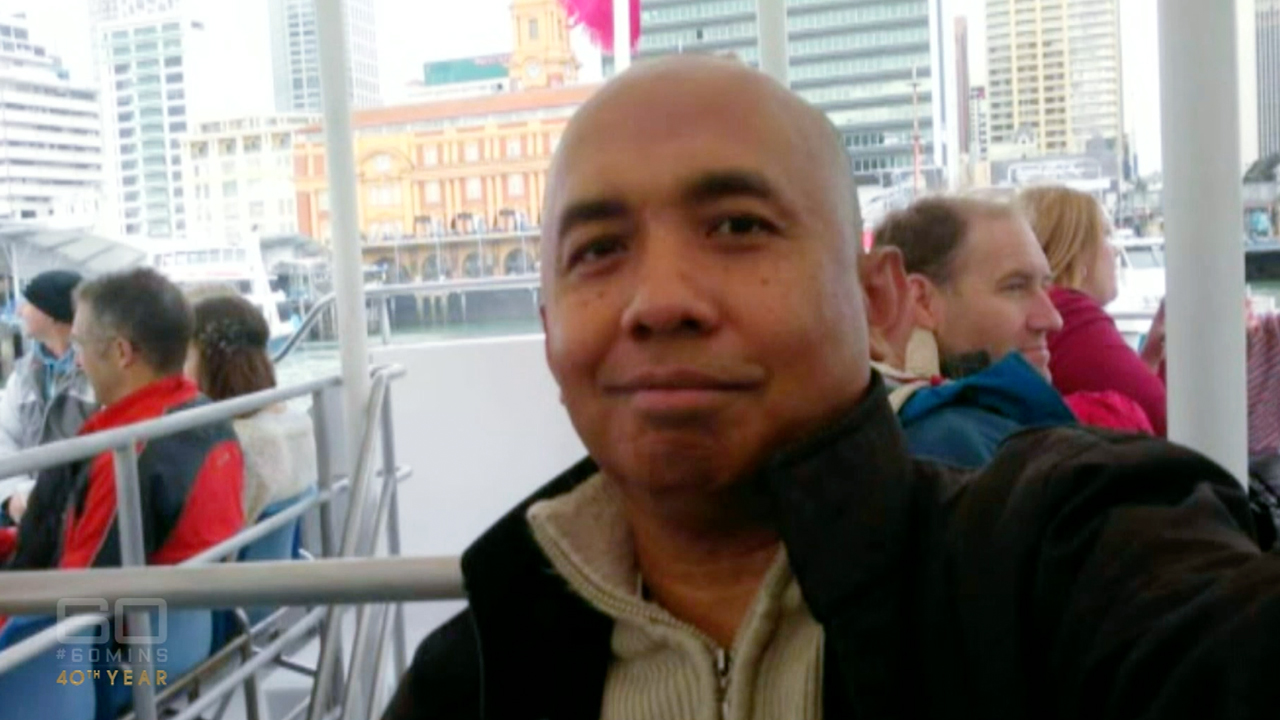
Did Captain Zaharie Ahmad Shah deliberately fly MH370 into the ocean? Picture: 60 Minutes

Mr Godfrey based his findings on weak radio signals that cover the earth, known as the "weak signal propagation report" network, or WSPR.

He said they were like "electronic tripwires" that triggered invisible signals when aircraft crossed them. The signals could then be used to trace the aircraft.

Mr Godfrey's latest study agreed with the broad flight path of MH370 from satellite data, and its suspected crash site at 34.5 degrees south, south-west of Western Australia.

But his research suggests the pilot had changed direction and speed multiple times to avoid giving any clear idea where he was heading.

"The pilot of MH370 generally avoided official flight routes from 18:00 UTC (2am Australian Western Standard Time) onwards but used waypoints to navigate on unofficial flight paths in the Malacca Strait, around Sumatra and across the Southern Indian Ocean," Mr Godfrey said.

"The flight path follows the coast of Sumatra and flies close to Banda Aceh Airport.

READ MORE: Secret vault could be key to MH370 mystery

"The pilot appears to have had knowledge of the operating hours of Sabang and Lhokseumawe radar and that on a weekend night, in times of little international tension the radar systems would not be up and running."

And Mr Godfrey also said in the case the plane was detected, "the pilot also avoided giving a clear idea where he was heading by using a fight path with a number of changes of direction."

The many changes of direction and speed also suggest that there was an active pilot during the flight, Mr Godfrey said.

"Speed changes were beyond the level of changes expected if the aircraft was following a speed schedule such as the long range cruise (LRC) or maximum range cruise (MRC) mode," he said.

"The level of detail in the planning implies a mindset that would want to see this complex plan properly executed through to the end."

On the morning of March 8, 227 passengers boarded the Boeing 777-200ER aircraft in Kuala Lumpur, Malaysia, and expected to step off in Beijing, China.

READ MORE: Tony Abbott urges new MH370 hunt amid mass murder-suicide revelations

The plane never arrived, and the search for the missing jet became the most costly in aviation history.

The most likely scenario involved someone in the cockpit of Flight 370, probably Captain Zaharie, re-programming the aircraft's autopilot to travel south across the Indian Ocean.