A Canterbury father who says he’s effectively been forced to watch his daughter die from anorexia is pleading for the Government to step in urgently, saying there is nowhere near enough help for patients in New Zealand. The number…
Tag Archives: oceania
Kelston Boys' High School mourns loss of beloved teacher after lockdown accident
An Auckland school is mourning the loss of a beloved teacher considered a father figure to his students who died in a freak accident during lockdown.Kelston Boys’ High School’s Chris Daly was admitted to hospital on his first wedding…
Wellington short of 50 bus drivers, service cancellations continue
Wellington’s bus network is short of up to 50 drivers, which is fuelling a spate of recent cancellations. Last Wednesday there were as many as 70 last-minute cancellations, leaving some passengers with a familiar feeling of the…
Herald morning quiz: April 8
Test your brains with the Herald’s morning quiz. Be sure to check back on nzherald.co.nz at 3pm for the afternoon quiz. To challenge yourself with more quizzes, CLICK HERE.
UK under-30s offered alternative to AstraZeneca due to rare blood clot risk
The European Union drug regulator says it has found a "possible link" between the AstraZeneca coronavirus vaccine and a rare clotting disorder but has declined to impose any new age restrictions, saying the benefits of the shot still outweigh risks. Its UK counterpart, however, says it will offer people under 30 the choice of another product.
The European Medicines Agency described the clots as "very rare" side effects. It said most of the cases reported have occurred in women under 60 within two weeks of vaccination — but based on the currently available evidence, it was not able to identify specific risk factors. Experts reviewed several dozen cases that came mainly from Europe and the United Kingdom, where around 25 million people have received the AstraZeneca vaccine.
"The reported cases of unusual blood clotting following vaccination with the AstraZeneca vaccine should be listed as possible side effects of the vaccine," said Emer Cooke, the agency's executive director.
READ MORE: Autralian authorities to probe nursing home death after vaccine
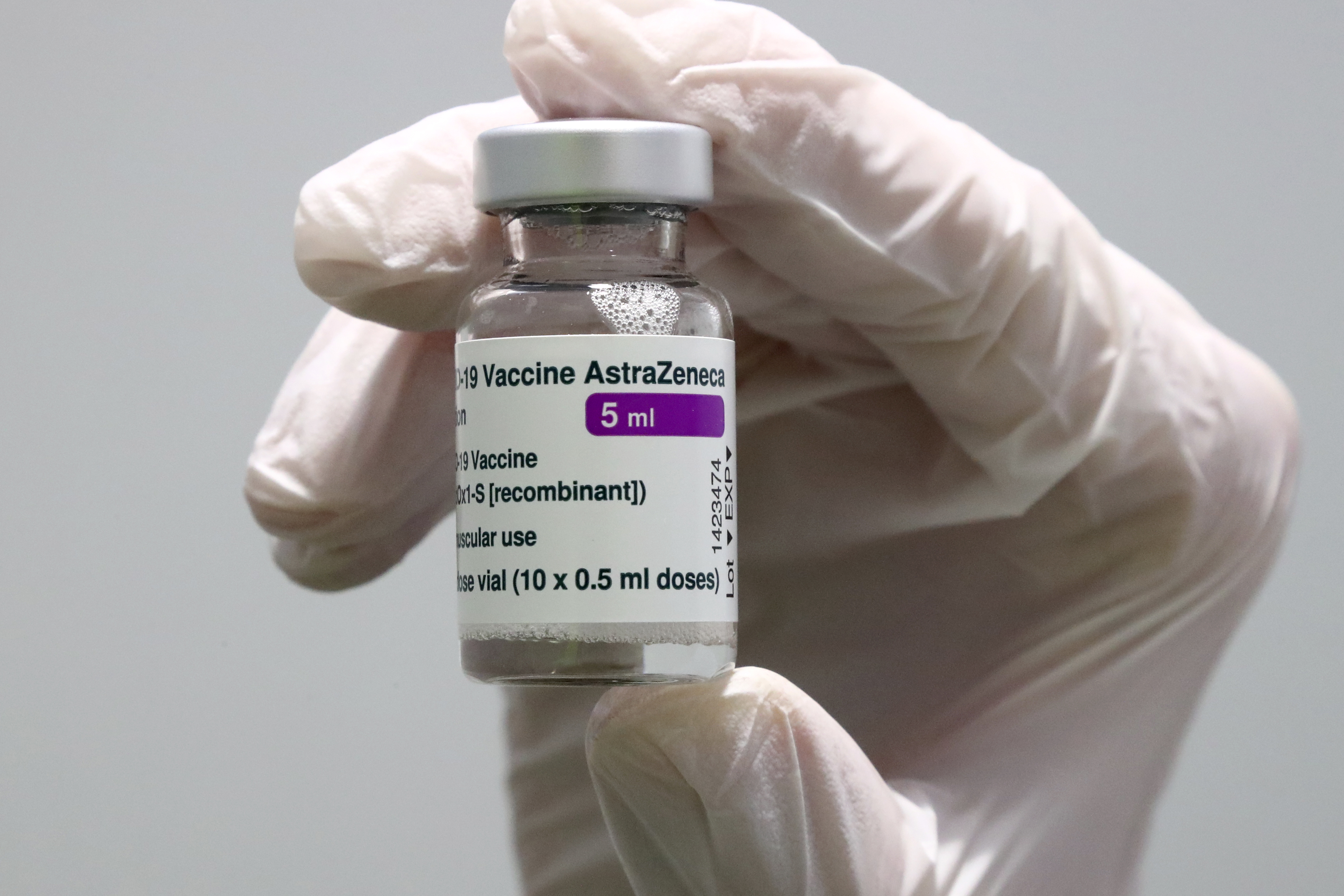
But it placed no new age restrictions on using the vaccine in people 18 and over, as some countries have done.
"The risk of mortality from COVID is much greater than the risk of mortality from these side effects.," Cooke said.
Dr June Raine, the head of Britain's Medicines and Healthcare Products Regulatory Agency, echoed that sentiment, saying that the benefits "continue to outweigh the risks for the vast majority of people."
She called the unusual clots a "potential side effect" of the vaccine and said the evidence was "firming up," but more study was needed to be sure.
The EMA, the World Health Organisation and numerous other health authorities have said repeatedly that the AstraZeneca vaccine is safe and effective and that the protection it offers against COVID-19 outweighs the small risks of rare blood clots.
READ MORE: War of words: Why has Australia's vaccine rollout been delayed?
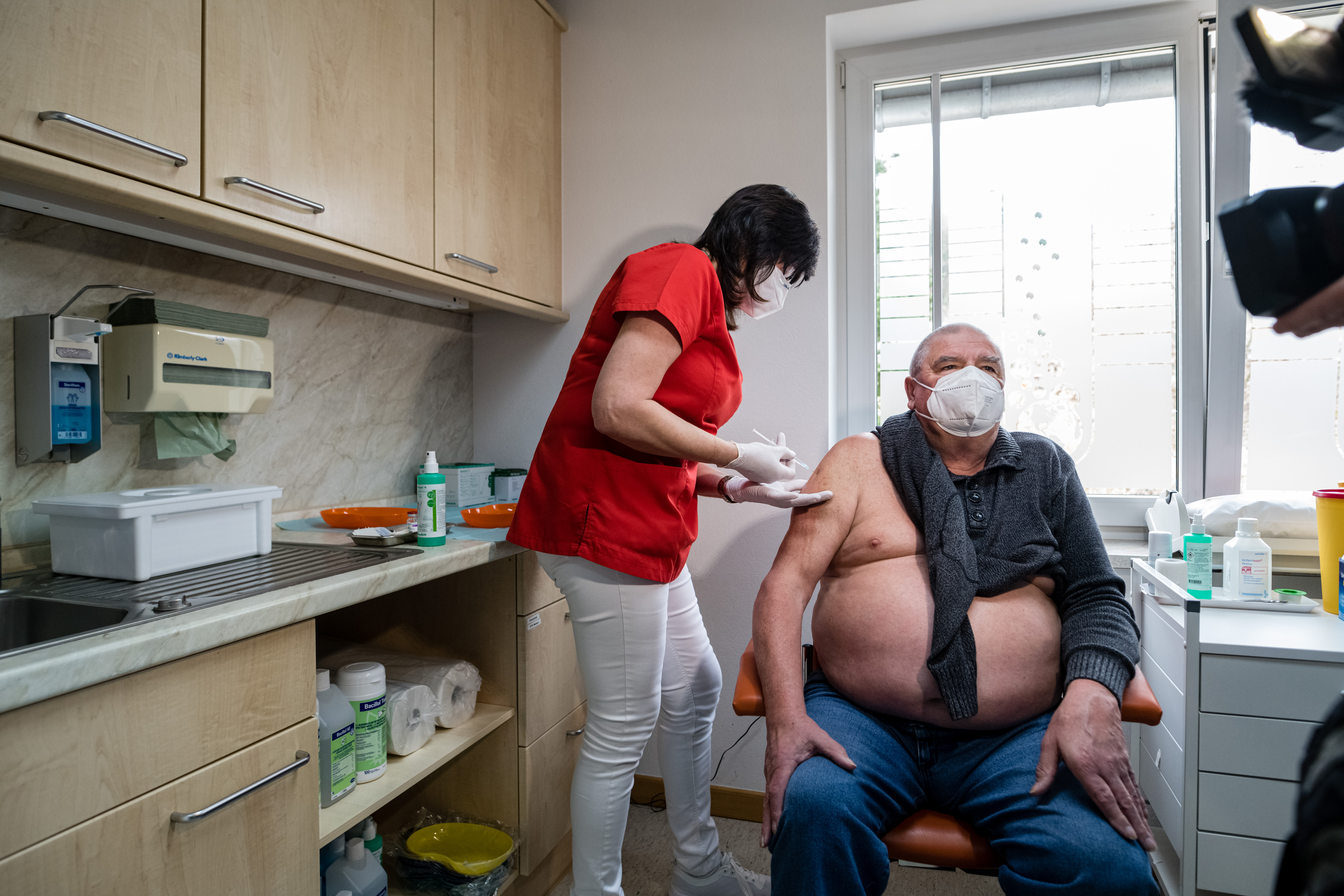
In a statement issued shortly after the EMA and MHRA decisions, the World Health Organisation said a causal relationship was considered "plausible but is not confirmed".
"It is important to note that whilst concerning, the events under assessment are very rare, with low numbers reported among the almost 200 million individuals who have received the AstraZeneca COVID-19 vaccine around the world," the WHO said.
"Rare adverse events following immunisations should be assessed against the risk of deaths from COVID-19 disease and the potential of the vaccines to prevent infections and reduce deaths due to diseases.
"In this context, it should be noted that as of today, at least 2.6 million people have died of COVID-19 disease worldwide."
The announcements could have far-reaching effects on the use of the shot that is key to global efforts to end the pandemic.
Probe focused on two types of clots
The EMA's investigation was particularly focused on two types of rare blood clots: one that appears in multiple blood vessels and another that occurs in a vein that drains blood from the brain. It also evaluated reports of people who had low levels of blood platelets, which puts them at risk of severe bleeding.
As recently as last week, the EMA said "there is no evidence that would support restricting the use of this vaccine in any population" — a response to several countries doing just that — though an expert said more brain clots were being reported than would be expected.
In March, more than a dozen countries, mostly in Europe, suspended their use of AstraZeneca over the blood clot issue. Most restarted — some with age restrictions — after the EMA said countries should continue using the potentially life-saving vaccine.
Meanwhile, Britain, which relies heavily on AstraZeneca, never suspended use of the vaccine.
READ MORE: PM says he never criticised European Union over vaccine supply
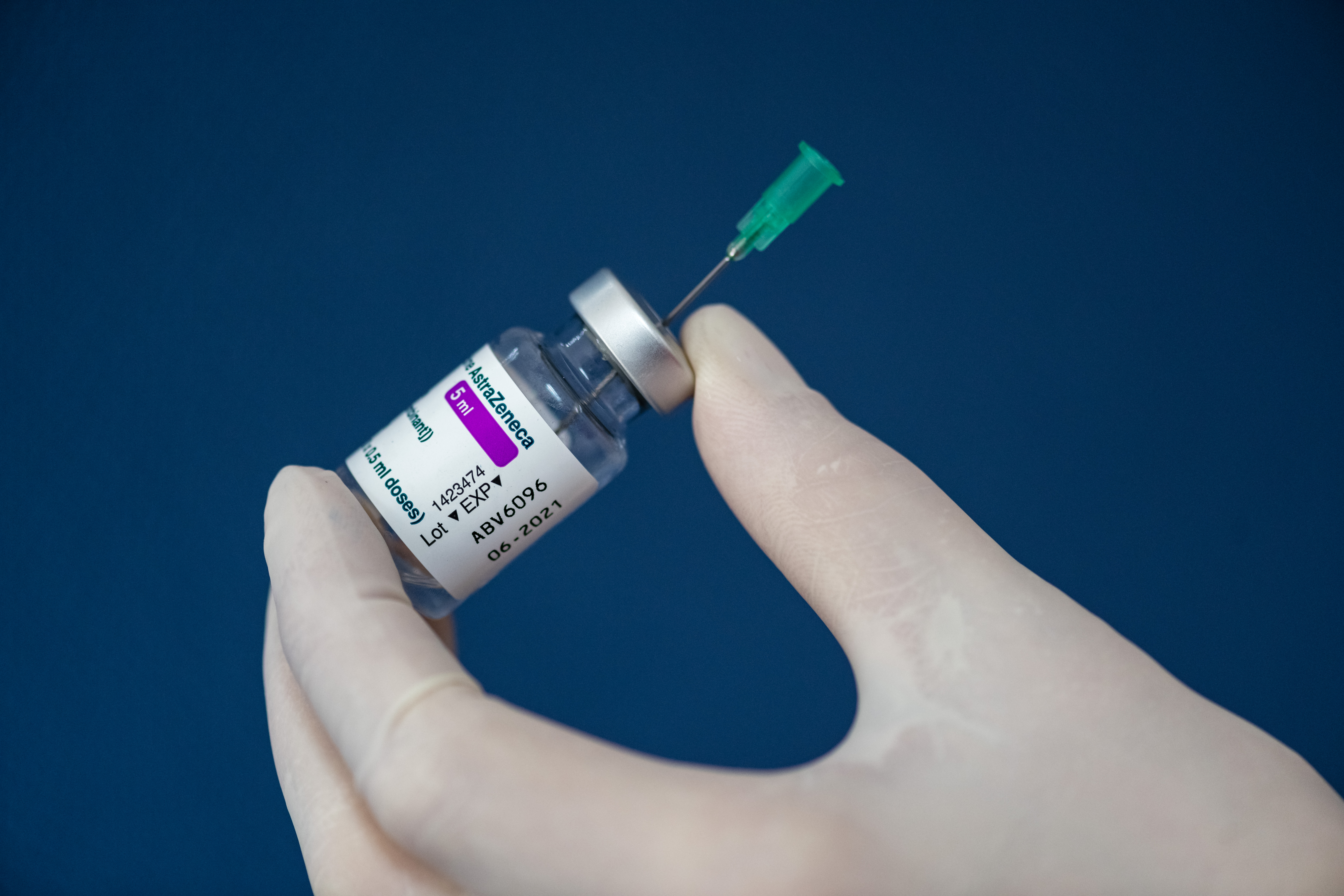
The suspensions were seen as particularly damaging for AstraZeneca because they came after repeated missteps in how the company reported data on the vaccine's effectiveness and concerns over how well its shot worked in older people. That has led to frequently changing advice in some countries on who can take the vaccine, raising worries that AstraZeneca's credibility could be permanently damaged, spurring more vaccine hesitancy and prolonging the pandemic.
Dr Peter English, who formerly chaired the British Medical Association's Public Health Medicine Committee, said the back-and-forth over the AstraZeneca vaccine globally could have serious consequences.
"We can't afford not to use this vaccine if we are going to end the pandemic," he said.
That's because the vaccine is cheaper and easier to store than many others, is critical to Europe's immunisation campaign and a pillar of the UN-backed program known as COVAX that aims to get vaccines to some of the world's poorest countries. It has been endorsed for use in more than 50 countries, including by the 27-nation EU and WHO. US authorities are still evaluating the vaccine.
The governor of Italy's northern Veneto region had said earlier Wednesday that any decision to change the guidance on AstraZeneca would cause major disruptions to immunisations — at a time when Europe is already struggling to ramp them up — and could create more confusion about the shot.
READ MORE: India's daily virus cases soar past 100,000 for first time
"If they do like Germany, and allow Astra Zeneca only to people over 65, that would be absurd. Before it was only for people under 55. Put yourself in the place of citizens, it is hard to understand anything," Luca Zaia told reporters on Wednesday.
The latest suspension of AstraZeneca came in Spain's Castilla y León region, where health chief Verónica Casado said Wednesday that "the principle of prudence" drove her to put a temporary hold on the vaccine that she still backed as being both effective and necessary.
"If there are in fact individuals of a certain age group that could have a higher risk (of clotting) then we need to adjust its use," Casado told Spanish public radio. "We are not questioning AstraZeneca. We need all the vaccines possible to reach the goal of 70 per cent of the adult population."
French health authorities said they, too, were awaiting EMA's conclusions and would follow the agency's recommendations, especially for the 500,000 people who have received a first dose of AstraZeneca.
Even officials in Asia said they were keen to hear the EMA's decision. On Wednesday, South Korea said it would temporarily suspend the use of AstraZeneca's vaccine in people 60 and younger. In that age group, the country is only currently vaccinating health workers and people in long-term care settings.
The Korea Disease Control and Prevention Agency said it would also pause a vaccine rollout to school nurses and teachers that was to begin on Thursday, while awaiting the outcome of the EMA's review.
English, the former chair of a British Medical Association committee, said that even rare, serious side effects are seen with established vaccines and that policymakers often decide that bigger public health goals warrants their use, citing the polio vaccine as an example. For every million doses that are given of the oral polio vaccine, about one child is paralysed from the live virus contained in the vaccine.
On Tuesday, AstraZeneca and Oxford University, which developed the vaccine, paused a study of the shot in children while the UK regulator evaluates the link between the shot and rare blood clots in adults.
'No signs of any causal link' between vaccine and nursing home death
Australian authorities will investigate the death of a Queensland nursing home resident but say there doesn't appear to be any causal link to the COVID-19 vaccine she had recently received.
Police were called to the Blue Care Springwood Yurana Aged Care Facility south of Brisbane about 1.30am on Friday after an 82-year-old woman passed away.
They have classed her death as non-suspicious and will prepare a report for the coroner.
Australia's Chief Medical Officer, Paul Kelly, issued a statement on Wednesday evening pointing out more than 1000 people died in aged care every week and it was inevitable that would include some who had been recently vaccinated.
"It can be expected that older and more frail people in an aged care setting may pass away due to progression of underlying disease or natural causes. This does not mean the vaccine has contributed to this," he said.
"The TGA (Therapeutic Goods Administration) is monitoring COVID-19 vaccination in elderly patients across the world and is in regular contact with global regulators."
Professor Kelly said the TGA would continue to monitor the safety of vaccines rolled out in Australia and internationally.
"As with any other reported case it is investigated although at this stage there are no signs of any causal link," he said.
The TGA in January investigated about 30 deaths among more than 40,000 older people, including frail patients and those expected to live only a few weeks, who had received the Pfizer vaccine in Norway.
The European Medicines Agency concluded no causal link between the vaccination and deaths could be established and the TGA found there was no specific risk of vaccinating "elderly" patients with the jab.
"Elderly patients can receive this vaccine and there is no cap on the upper age limit," the TGA said at the time.
"The product information for health care professionals contains the following advice: 'The data for use in the frail elderly (>85 years) is limited…the potential benefits of vaccination versus the potential risk and clinical impact of even relatively mild systemic adverse events in the frail elderly should be carefully assessed on a case-by-case basis'."
Both COVID-19 vaccines in use in Australia can cause minor side effects, including headache, fever, muscle pain and fatigue, but have been declared safe to use.
Authorities do monitor for anaphylaxis, a severe allergic reaction, something the TGA says can occur with any vaccine but is very rare.
The EMA has found a possible link between the AstraZeneca vaccine and "very rare cases of unusual blood clots" but says the "overall benefits of the vaccine in preventing COVID-19 outweigh the risks of side effects".
Treasurer Josh Frydenberg on Wednesday confirmed the government would continue to roll out the AstraZeneca jab unless it heard otherwise from the TGA.
Two charged after bomb, extremist material allegedly found in Adelaide raids
Two Adelaide men have been charged after police raids linked to an investigation into "ideologically motivated violent extremism" allegedly uncovered a bomb and extremist material.
The charges came after the leader of a prominent Australian neo-Nazi group said about 15 of its Adelaide members were raided early on Wednesday morning.
Police charged a 28-year-old man from Surrey Downs with possession of extremist material and a 32-year-old man from Munno Para with possession of an improvised explosive device and instructions for manufacturing explosives or dangerous weapons.
Both men were granted bail ahead of Magistrates Court hearings in the coming months.
In a video posted to social messaging app Telegram and seen by 9News on Wednesday, the neo-Nazi group's leader said police seized devices and "tried to take any sort of political material that they could" in what he described as a "full harassment operation".
He said the raids would not "slow us down" and that there were "a lot of fun activities being planned in Adelaide in the coming weeks".
In a statement provided to Business Insider in response to questions about the neo-Nazi's comments, SA Police said officers searched "a number of domestic residences" across Adelaide in an investigation related to "people associated with ideologically motivated violent extremism".
"The investigation remains ongoing and there has been no known threat to any person or the public," police said.
Australia's domestic spy agency, the Australian Security Intelligence Organisation, recently shifted away from using terms such as "right-wing extremism" in favour of "ideologically motivated violent extremism".
The 28-year-old is due to face Adelaide Magistrates Court on June 22 and the 32-year-old is set to face the Elizabeth Magistrates Court on May 26.
What countries could Australians be allowed to travel to next?
The much-hyped travel bubble between Australia and New Zealand is due to kick off within weeks, opening up overseas travel for the first time since our international borders were slammed shut last March.
With New Zealand now locked in, your thoughts may be turning to what other countries we could be allowed to travel to next.
Prime Minister Scott Morrison was asked this very question yesterday during his press conference about the New Zealand travel bubble.
READ MORE: Trans-Tasman travel bubble ends dry spell
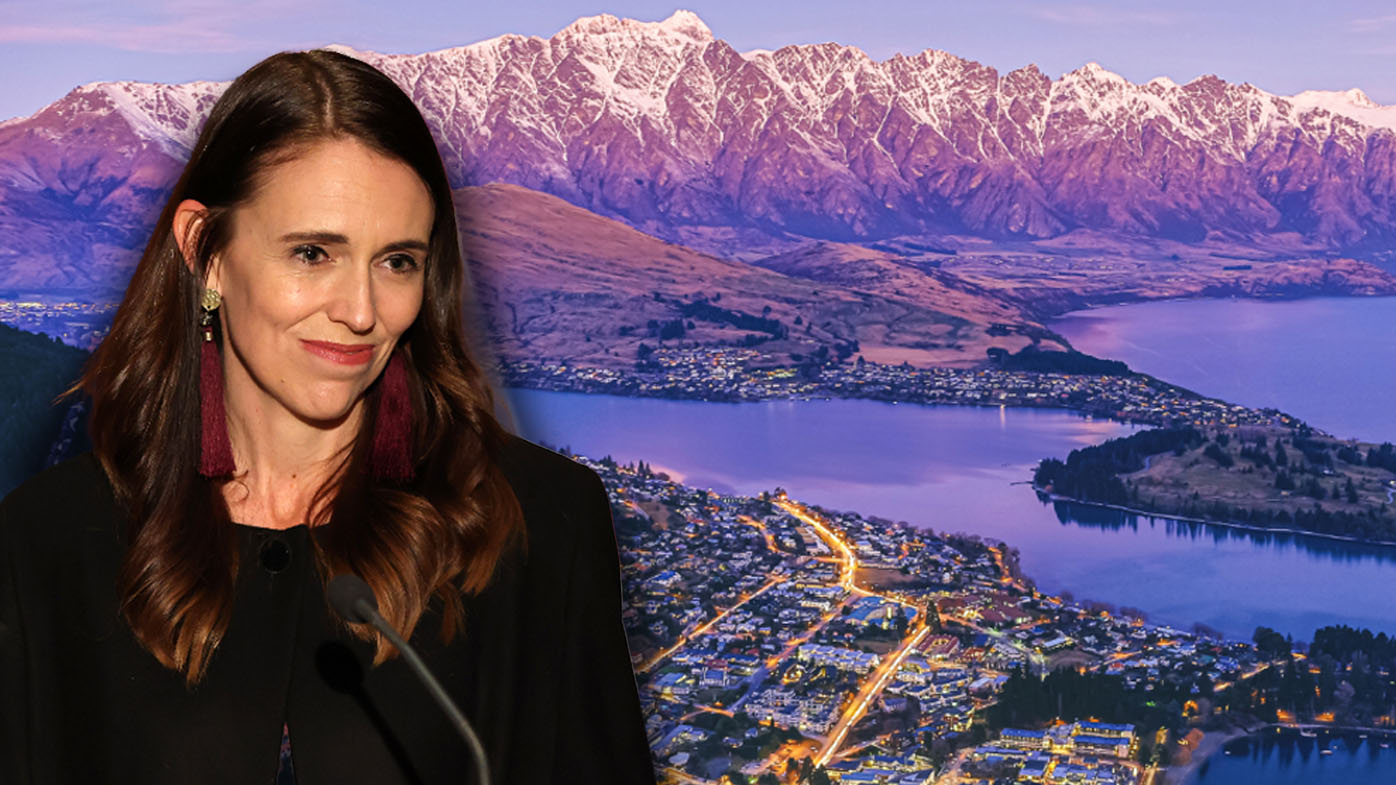
Although he mentioned several Asian countries, he was careful not to raise expectations of anything happening soon.
"We have looked at places like Singapore and Japan and South Korea and countries like this, but at this stage we are not in a position to move forward on any of those," Mr Morrison said.
However, multiple government sources told the Sydney Morning Herald that immigration and health authorities were exploring plans to open up a travel bubble with Singapore within months.
This could be followed by other countries with low COVID-19 numbers such as Fiji, Vietnam and Thailand, as well as Japan and South Korea.
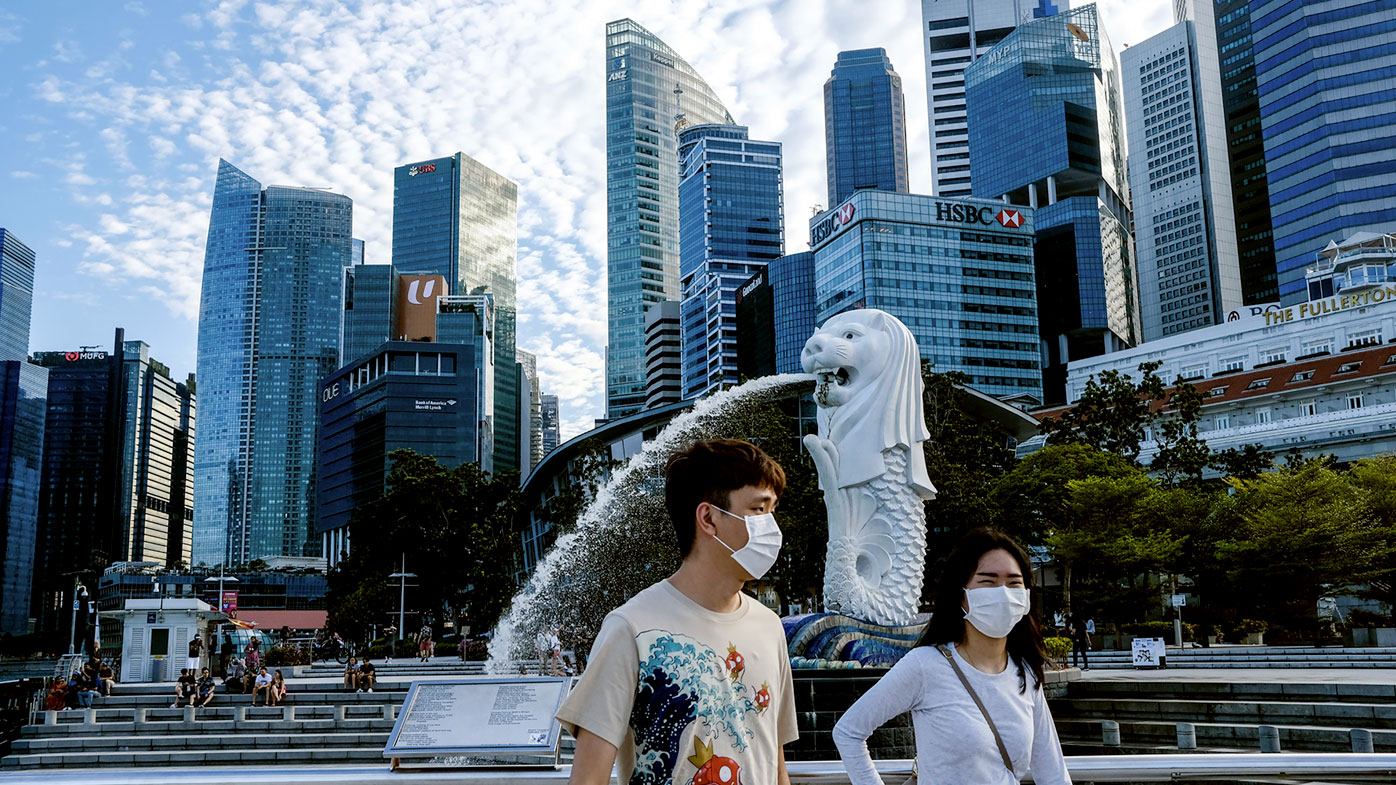
Singapore has been averaging about 25 COVID-19 cases a day for the past week, numbers it hasn't typically surpassed since September.
Fiji has only recorded 67 cases of COVID-19 during the entire pandemic, with long stretches of no daily infections.
Vietnam is currently averaging less than a handful of COVID-19 cases per day, while Thailand's daily average is slightly higher at 78.
The number of coronavirus cases in Japan and South Korea are both significantly higher again, with the former averaging around 500 cases a day and the latter 2400.
Whether those numbers will be prohibitively high remains to be seen.
Singapore Transport Minister Ong Ye Kung was questioned in Singapore Parliament on Monday about which nations the country was considering establishing a travel bubble with.
He mentioned Australia among the list of candidates, however said the potential bubble would be reliant on vaccination certificates.
"We are exploring with several countries and regions, including Australia, on the mutual recognition of vaccination certificates. The certificates can be physical or digital, and we will need them to be secure, tamper-proof and verifiable," he said.
"However, vaccinations are only one aspect of pandemic control.
"Social distancing, contact tracing, quarantine and testing are also very important aspects which countries and regions have used to control the spread of [the] COVID-19 virus even as vaccines become available."
Mr Morrison said the bubble "is the first of many more steps to come".
"This is an important first step," he said.
"But as more of the world, and particularly more of our own country, is vaccinated, then obviously we can start moving to managing this virus a lot more like other viruses that we deal with in a more standard way.
"That's our objective, but we'll let the evidence lead us on that.
"And at this point, the evidence is not strong enough to give us a good pointer about when we will arrive at that point."
Manslaughter accused claims Melbourne mum shot in struggle
A man on trial for the manslaughter of a Melbourne mother claims the victim died of her own hand.
Qasim House said he never pointed a gun at Yen Ngo as he faced manslaughter charges at the Supreme Court of Victoria today.
The 36-year-old told the court the shot that killed her in 2017 was an accident.
READ MORE: Victoria's hotel quarantine program relaunching tomorrow as 'safe as can be'
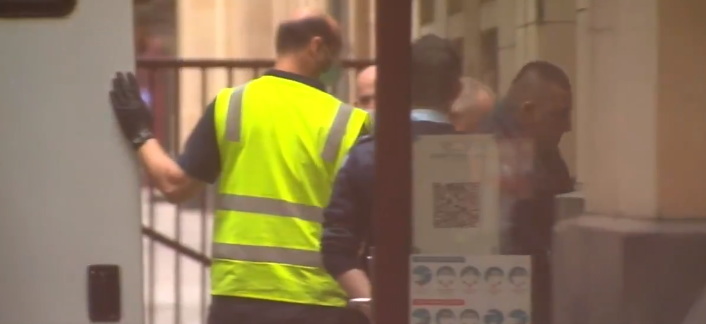
Prosecutors alleged Mr House could not handle the fact his love interest had left him.
He allegedly shot the mother-of-two in the chest, but he says it was self-inflicted.
Ms Ngo used to sell Mr House drugs from her Sunshine North property.
But when the 42-year-old told Mr House they couldn't be together romantically, he allegedly responded with a series of messages, including one stating "I want war".
"You've pushed me over the f—ing edge," he allegedly wrote.
"I'm coming down right now with a couple of Molotov's and a semi-automatic," another message allegedly read.
READ MORE: Victoria's hotel quarantine program relaunching tomorrow as 'safe as can be'
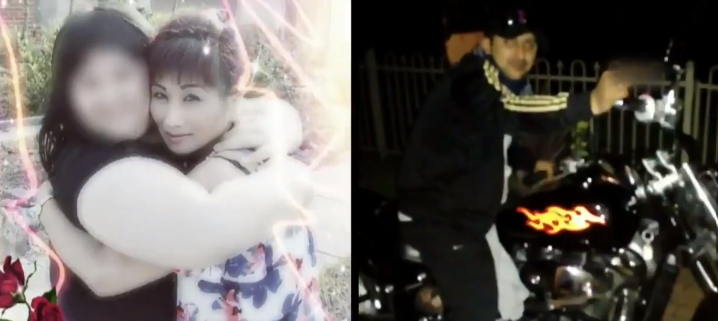
Mr House also allegedly messaged the mother-of-two: "Just remember you being stupid is why it happened."
Days later, the pair were alone in her bedroom.
Mr House was allegedly threatening Ms Ngo when the gun went off.
He then left her at Sunshine Hospital where she died in the emergency department.
READ MORE: Man's death inside Melbourne home 'not suspicious'
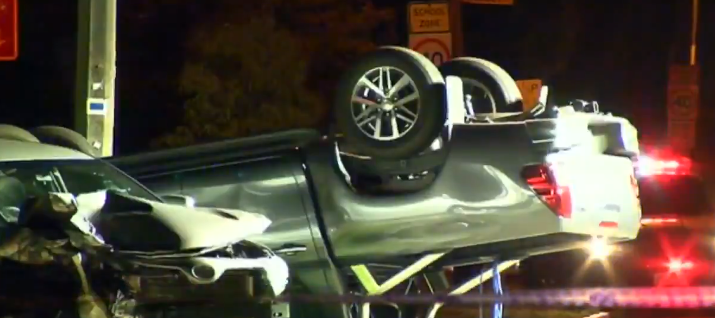
Afterwards, he drove off in her car and allegedly tried to steal another vehicle before crashing.
Defence lawyers said Mr House was the one who was actually trying to break up with Ms Ngo, and there are handwritten letters to prove it.
They also argued Ms Ngo grabbed his gun and pulled the trigger in a struggle.
His lawyer Barrister Richard Edney told the jury what happened was nothing more than a tragic accident.
The trial will continue tomorrow.
Why small business owners are frustrated with Dine & Discover program
The NSW government's $500 million Dine & Discover program was supposed to give struggling local businesses a boost in the wake of the pandemic.
But 9News can reveal the $25 vouchers are being used to fatten up the profits of multinational fast-food giants like McDonald's, Oporto and KFC.
Small business owners whose profits plummeted during the pandemic claim the system is unfair.
READ MORE: How to get your Dine & Discover vouchers

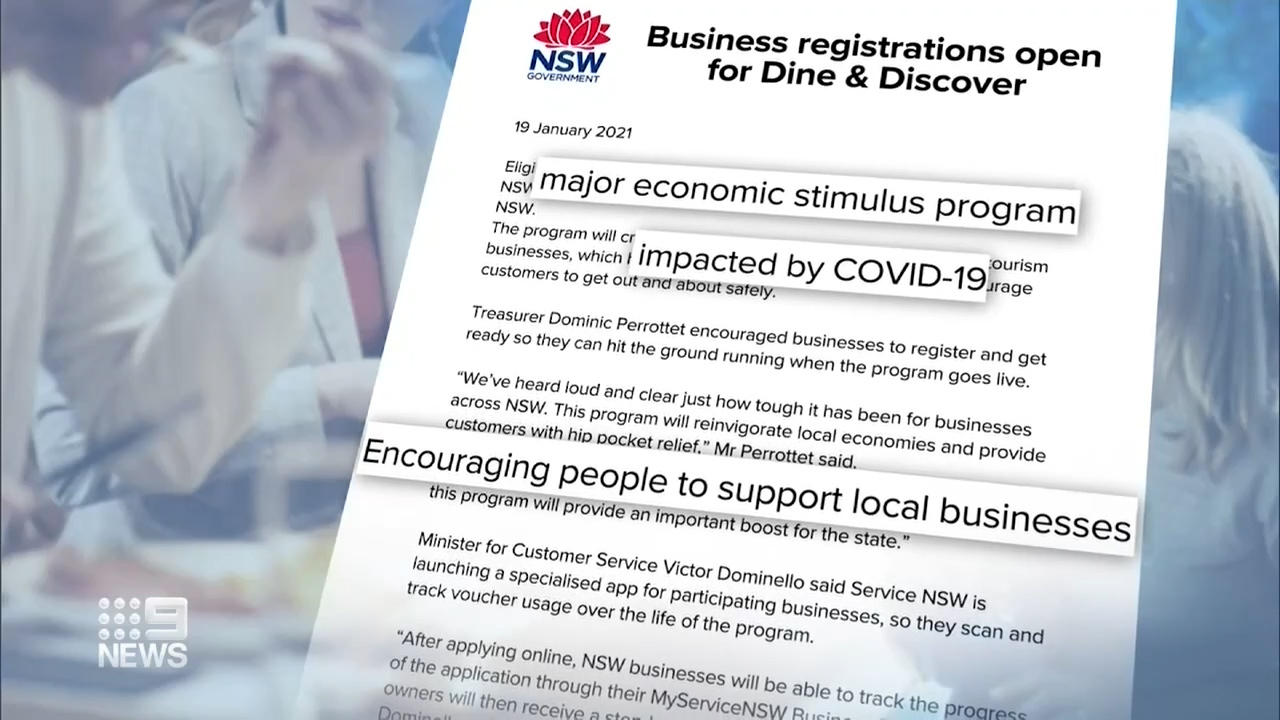
The program was touted as a "major economic stimulus program" to encourage people to supposed local businesses impacted by coronavirus.
The four $25 vouchers can be used on entertainment such as going to the movies or dining out.
However, the decision to include fast-food restaurants such as McDonald's, which recorded large spikes in profits in 2020 has upset small operators.
City cafe owner Philip Barbaro saw business plunge 80 per cent last year, as office workers stayed at home.
NSW Customer Service Minister Victor Dominello has defended the decision to include larger multinationals, saying: "we don't want to dictate to families what they can spend their money on."
So far, 2.1 million people have downloaded their vouchers and nearly 900,000 have been redeemed.
The state government is happy with the uptake with an average customer spend of $42 – $17 more than the government chips in.
The area with the biggest uptake is the Central Coast, followed by Blacktown, the Northern Beaches and Parramatta.
Those aged 30 to 45 are most likely to have participated.