The Government has tried to point the finger back at Australia over delays in setting up a two-way transtasman bubble as it faces increasing criticism over the issue.In Parliament, Covid-19 Minister Chris Hipkins and Deputy Prime…
Tag Archives: oceania
Family deported over food voucher scam
A Cromwell family has been ordered to return to the Philippines after the father used false addresses to claim Queenstown-issued food vouchers during level 4 lockdown.The Santos family — Jeffrey Pinlac Santos, 31, wife Marjorie…
Auckland libraries poised to ditch fines entirely in bid to increase patronage
As part of an effort to entice readers back to libraries, Auckland Council is planning to forgo up to $1 million a year by abolishing late fees. As Justin Latif reports, many think the change is well overdue. Sarah* describes reading…
Covid-19 coronavirus: Air New Zealand crew who caught virus settle employment action
Two Air New Zealand flight attendants who caught Covid-19 last year took employment action against a manager at the national carrier, the Herald understands. Two regional Air New Zealand crew members who operated out of the company’s…
Substitute teacher living in his car given $34,000 by former student
Seeing a beloved substitute teacher living in his car inspired a former student to step up and help a man who had made a difference in his life.
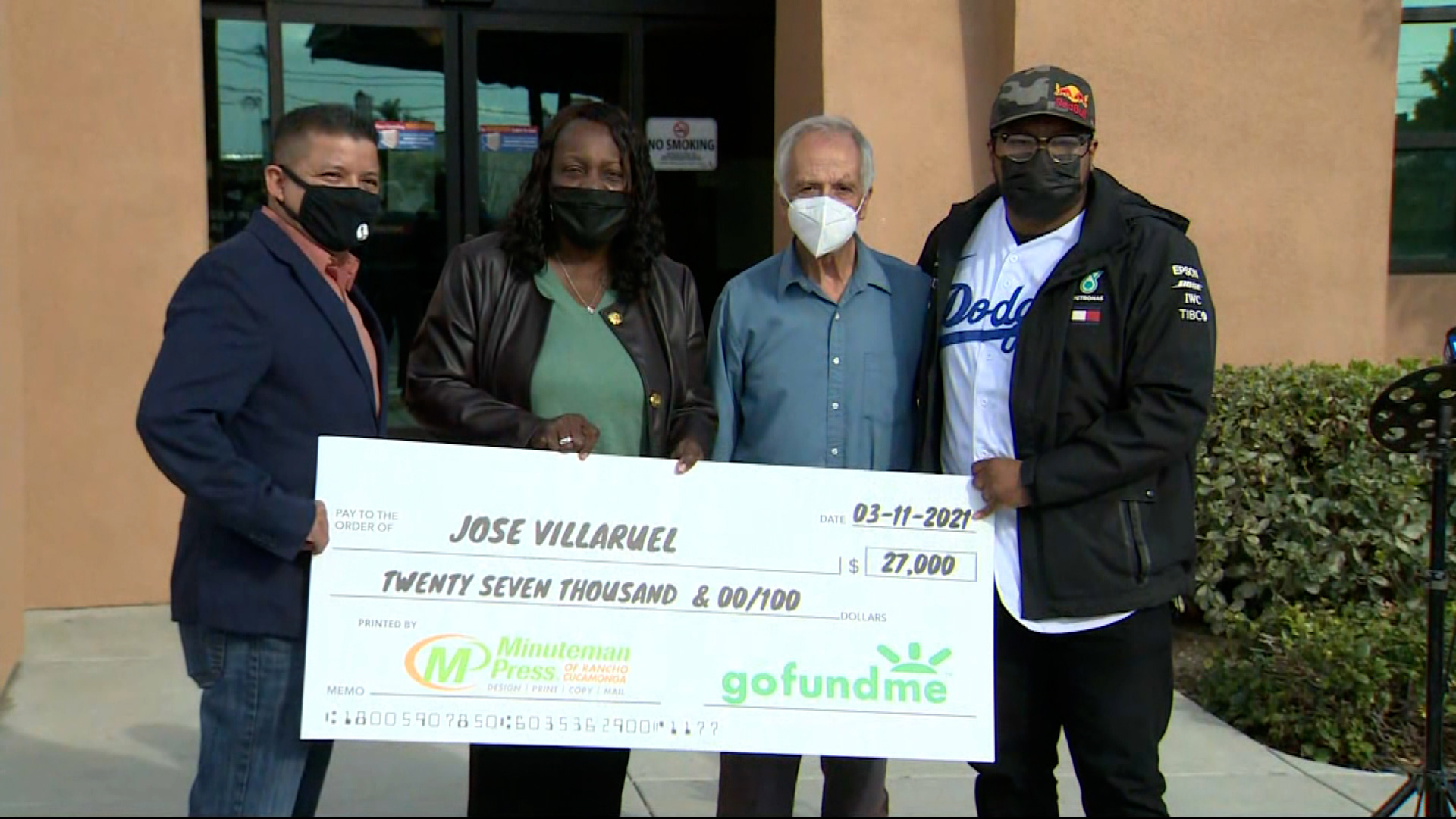
The help came in the form of a cheque for $US27,000 ($34,000), money that former student Steven Nava helped raise through a GoFundMe campaign last week in the USA.
It was money that the former substitute teacher, Jose Villarruel from Fontana, California, said he never expected.
READ MORE: 'Amityville Horror' murderer dies
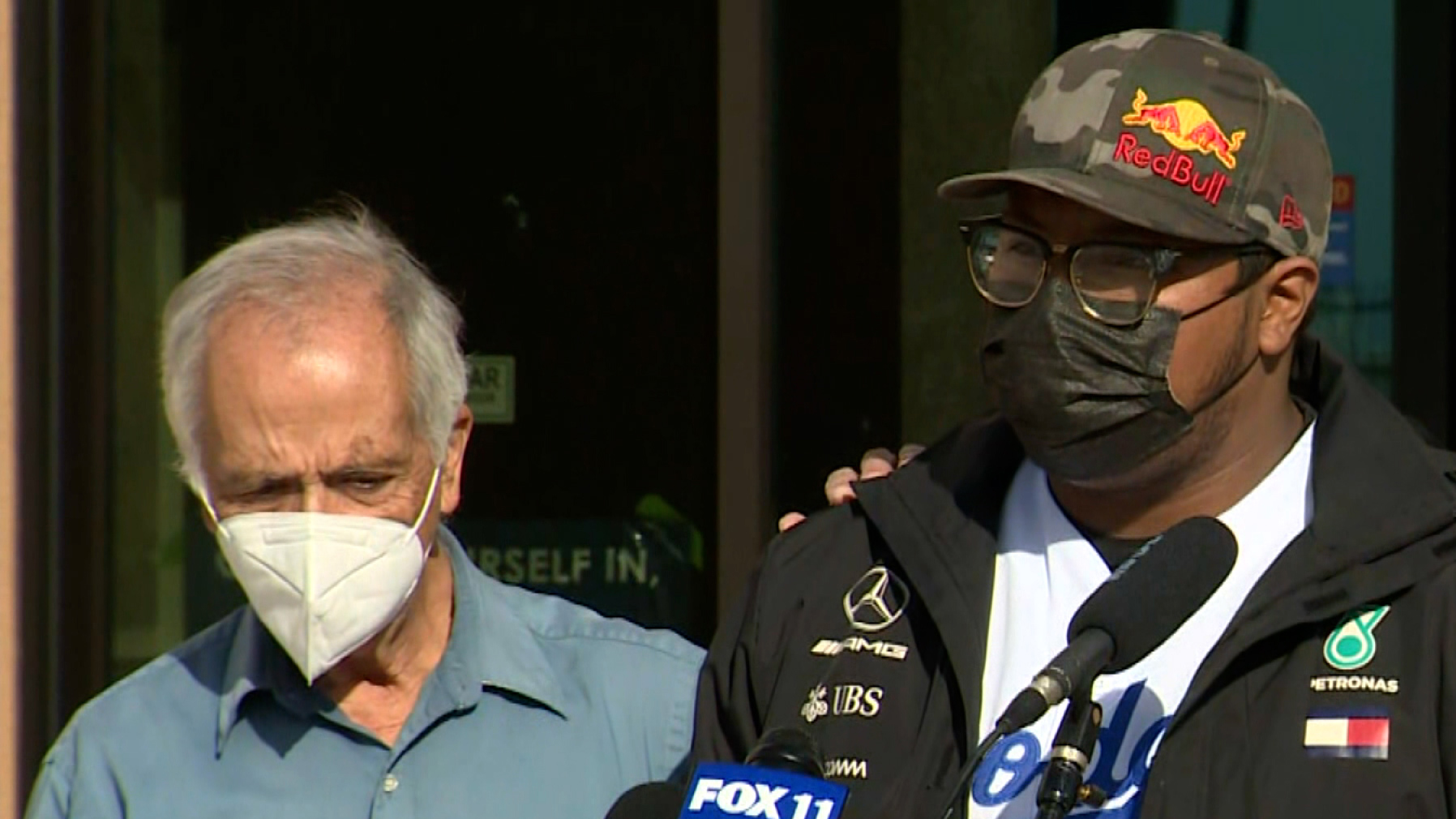
"From the bottom of my heart, I just had to resort to all of my self-control not to become sentimental about the whole thing and not to become nervous," Mr Villarruel told CNN.
"It was extremely exciting, totally unexpected and great."
Mr V, as his students call him, turned 77 on March 11.
Mr Nava, 21, presented the check to Mr V on his birthday, at a surprise party with other former students who came to celebrate.
The celebration and the gift came during a time that Mr Villarruel had been struggling.
Mr Villarruel has lived in his car for the past eight years, all while working as a substitute teacher for Los Angeles Unified School District.
When the pandemic started and classes went to remote learning, the need for substitute teachers went away, he said.
Mr Villarruel applied to get his retirement funds so he could have some income.
He made the decision years ago to live in his car because he was sending most of his income to his wife, children and extended family in Mexico, he said.
Early this month, Mr Nava was getting ready for his job as a welder and heading to work around 5am.
He noticed a man in the parking lot of the nearby senior centre going through the trunk of his car.
Mr Nava said he thought it was strange and he kept glancing at the man, thinking he looked familiar.
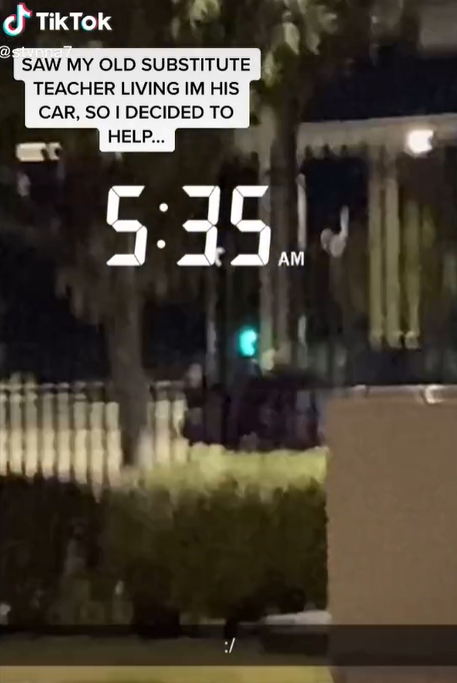
"Throughout the day, I was just thinking, 'Wait, wait, wait, I think that's my substitute teacher,'" he said, eventually realizing it was Mr V, who taught him at Fontana High School.
Mr Nava said he had always remembered Mr Villarruel.
"He really stuck to me just because of the way he was so nice around his students. He'd ask how your day would go, did you eat, just small little details like that.
"He'd be really, really funny when he took attendance."
It took him a few days to work up the courage, but Mr Nava returned to the parking lot and found Mr Villarruel again.
He asked him about his day and what his situation was, he said.
When Mr Nava learned how Mr Villarruel had been living, he insisted on giving his former teacher the money he had on him, which happened to be $US300 ($380).
"He gave me this big old smile and said, 'Thank you so much,'" Mr Nava said.
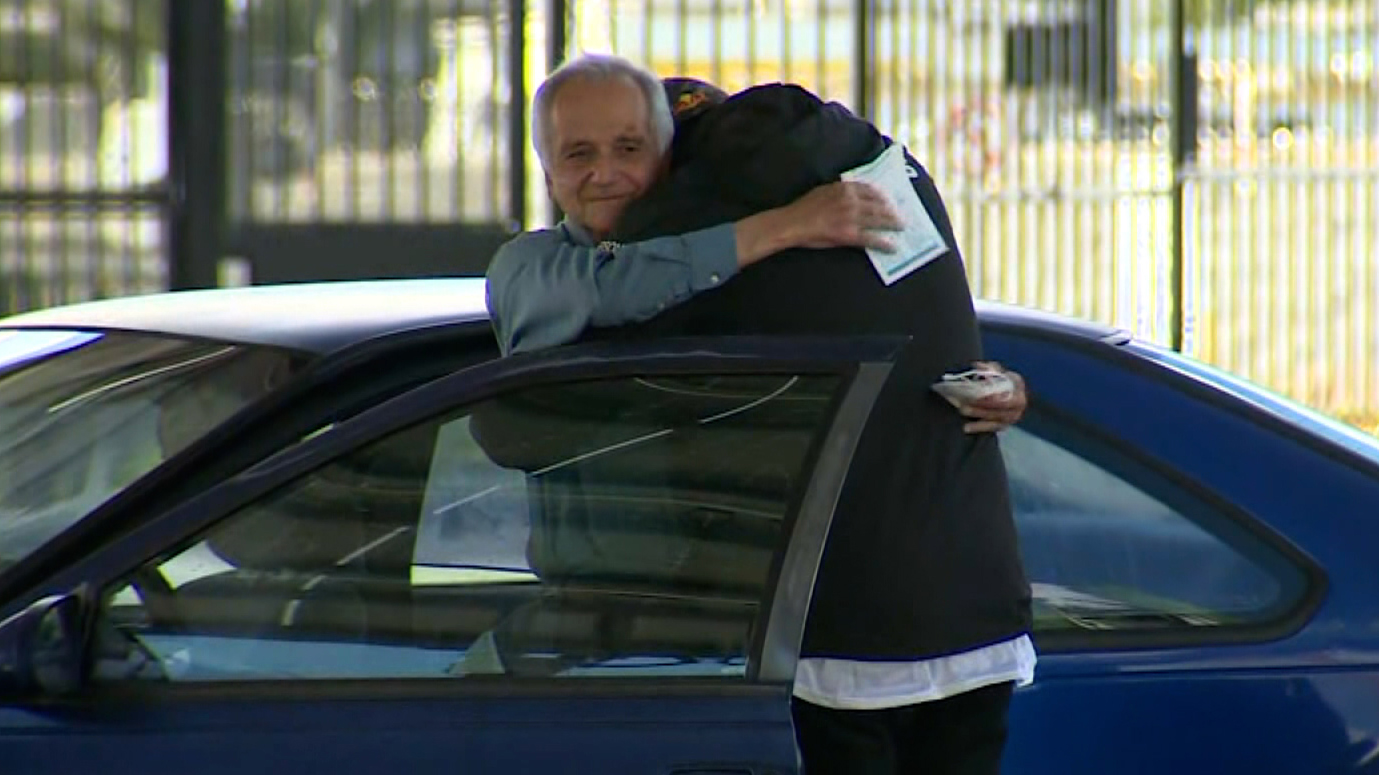
"He came over to give me a hug and as he was hugging me, I saw a little tear run down his face."
It was then that Nava told him, "I'm going to get you out of this situation, one way or another. I'm going to find a way," he said.
That day, Mr Nava created the GoFundMe campaign for Mr V, which earned thousands of dollars in a matter of hours, he said.
The next day, a TikTok video he made about Mr Villarruel, which has now been viewed 1.7 million times, helped bring the donations up to $US27,000 ($34,800).
"Teachers play a huge part in our lives," Mr Nava said.
"I felt like I needed to repay the favour."
Seeing all of the former students come to Mr V's surprise party showed how much the teacher has done for the community.
The outpouring also motivated Mr Nava to do better for his community.
"You're sort of just baffled when you find out that one of your teachers is just homeless," Mr Nava said.
"Seeing him living and going through that struggle pretty much made me want to do this.
"He helped us with our futures and being the person we are today, so I wanted to help him and make sure he's in a situation where he doesn't have to worry anymore."
Mr Nava and Mr Villarruel are now in touch daily and Mr Nava said he's enjoyed their conversations and helping his teacher get back on his feet.
The San Bernardino County Sheriffs Department heard about Mr Villarruel and assisted him in getting a motel voucher on March 10, said Mike Jones, deputy sheriff of Homeless Outreach and Proactive Enforcement (HOPE) with the county.
This will give Mr Villarruel a place to stay for a month while longer-term housing is arranged, he said.
"Our team works collaboratively across the county with service providers and county agencies to help people like Mr Villarruel on a daily basis," Mr Jones said in the statement.
"It's these efforts that help the most vulnerable population of our community move beyond homeless."
For Mr Villarruel, he's trying to come to terms with his new reality and plans to take an extended trip to Mexico so he can see his family.
"It's a great feeling to have this change and I still have to adapt to it so I can make the best of it," Mr Villarruel said.
"It was unexpected but I accept it with an open heart and I'm ready for whatever comes next. I know good things will come."
'Unwanted': Split migrant families react to border opening for The Lion King
Migrant workers split from their families overseas are livid at the border opening for foreign workers for the stage production of The Lion King.And a Government Minister is being accused of a lack of respect after he growled like…
Amazon's mammoth Sydney robotics warehouse nears completion
The biggest warehouse in Australia won't hold iron ore, steel or coal – it'll be filled with 11 million shopping products on the back of the country's e-commerce boom.
Amazon Australia today revealed the latest step in its mammoth robotics fulfillment centre at Western Sydney, as the building's shell is now complete and ready for internal fit-out.
The scale of the production is nothing short of grand.
READ MORE: Jeff Bezos plans to spend $13 billion by 2030 on climate change
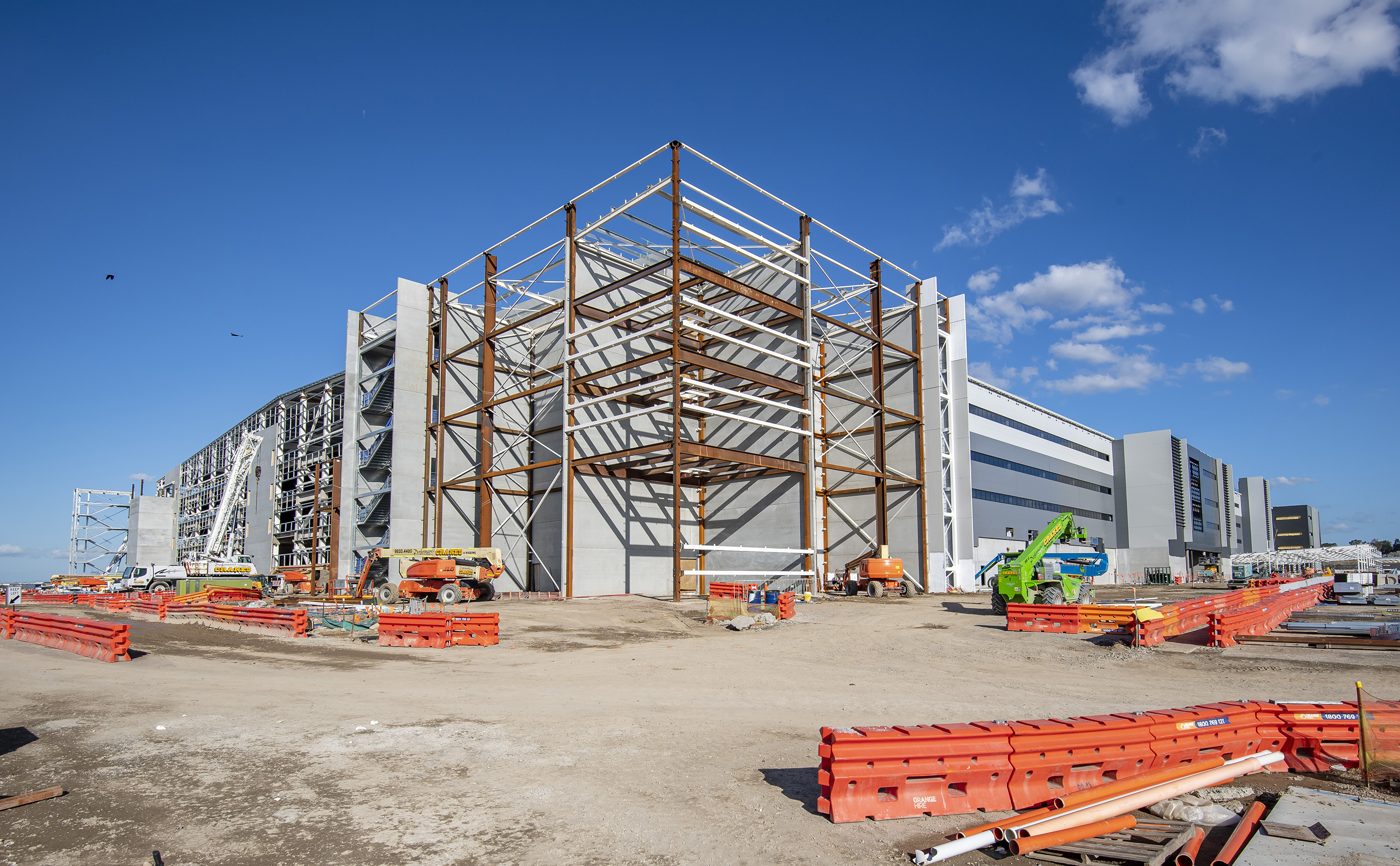
Spanning 200,000 square metres, the warehouse is the same size as 24 rugby league fields or double the size of Bondi Beach.
It was built with more than 13,500 tonnes of Australian steel – more than used in the making of the Eiffel Tower and some 3,000 tonnes more than was used to build Sydney's Olympic Park Stadium.
If the robotics centre carries on according to schedule, it will be complete by the end of the year and will represent a landmark investment by Amazon to conquer Australia's online shopping market.
READ MORE: Amazon's Sydney warehouse revealed
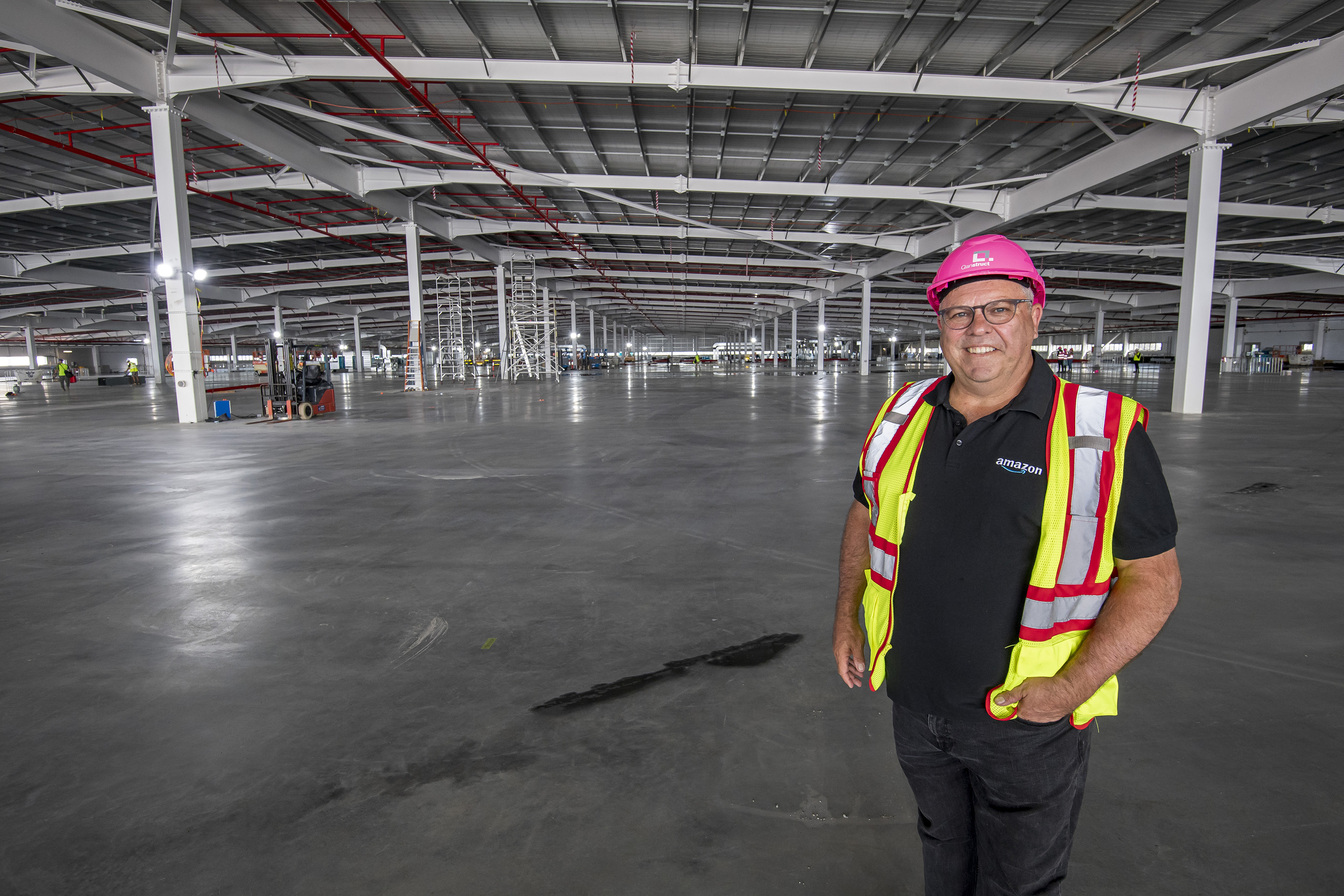
9News.com.au was given a sneak peek of the warehouse, which consists of several floors of finely polished concrete ready to store millions of products for sale.
Craig Fuller, Director of Operations at Amazon Australia, said once complete the centre could theoretically deliver products to 85 per cent of the population in 12 hours.
"This will be our fifth FC and will effectively double our operational footprint in Australia, providing our customers with wider selection and faster delivery when ordering via Amazon.com.au," Mr Fuller said.
"Utilising advanced technology, the robotics will enhance the efficiency of our operations as well as the safety of our associates, helping to support our Amazonians as they pick, pack and ship the millions of items housed within the fulfillment centre to customers around the country."
READ MORE: Dozens of abandoned, damaged Amazon packages found in woods
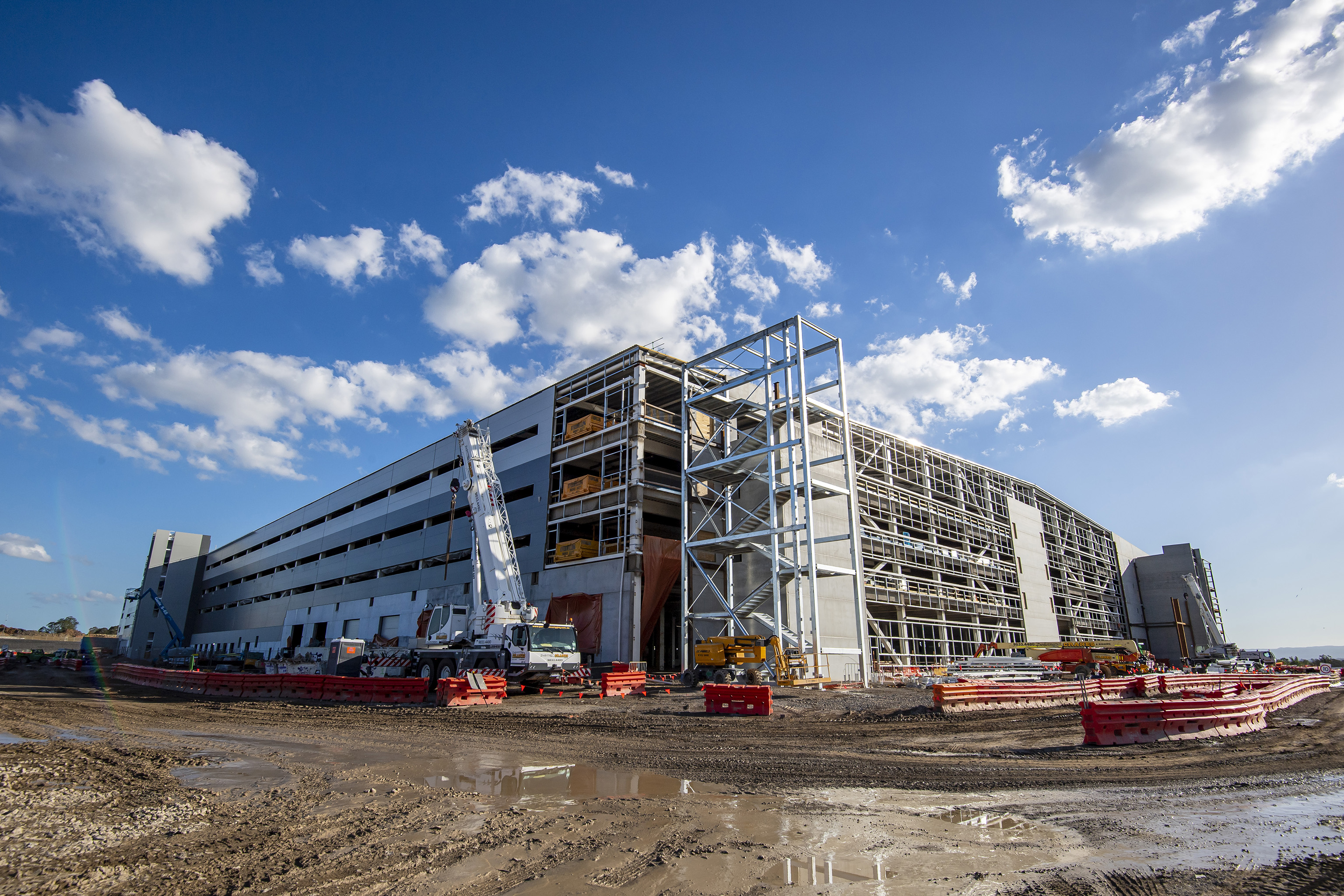
Once complete the warehouse will house "robots" that will sort and pick products after they are selected online.
Once the items are picked, they will be packed by humans before they are shipped out to the recipient.
Use of artificial intelligence means Amazon can store up to 50 per cent more items per square metre, which should translate into greater product selection and potentially faster shipping times for customers.
It's anticipated the warehouse will create more than 1,500 jobs to work alongside the robots, performing a broad range of tasks including engineering, packing, logistics and IT.
READ MORE: Amazon boss Jeff Bezos to step down as CEO
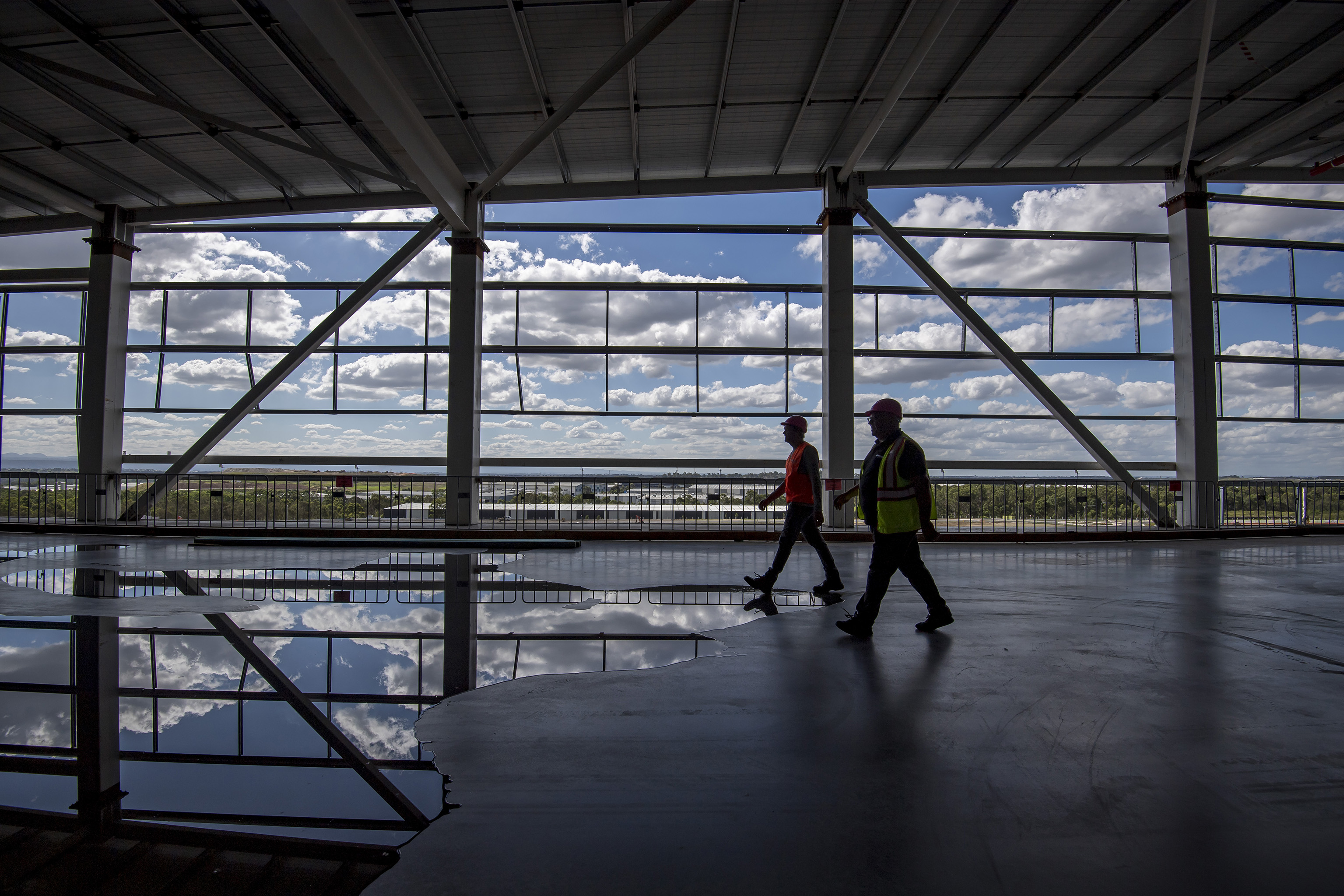
Building a home for robots presented an array of challenges for the builders.
Due to the fine tolerances of the robotic wheels – and to stop products falling out of packed cradles en-route to delivery – every square metre must be more or less completely flat
The result is acres of finely polished concrete, so accurately graded that any hill or depression is imperceptible to the human eye.
The warehouse has been built by Goodman, who erected the building in less than 10 months – no mean feat considering the estimated 200,000 nuts and bolts used just to build the massive cavern's external steel frame.
READ MORE: Amazon Web Services plans to open new tech region in Melbourne

By the time it is complete, more than 1,700 Australians will have contributed to the largest warehouse in the country and Australia's first-ever robotic online shopping hub.
"Development of this fulfillment centre sees Goodman continue to deliver our global strategy of providing essential infrastructure to support the digital economy, and to meet the increasing demand for strategically located logistics space with easy access to large consumer markets," said Jason Little, General Manager Australia at Goodman.
"Our $150 million investment in roads and infrastructure will create road capacity and better access to services, building on Outer-Western Sydney as a key area for logistics and transportation."
Brazil's COVID-19 resurgence is pushing hospitals to overflowing
Brazil is pulling ahead in the race that no one wants to win.
Over the past month, the South American nation has blown past a series of grisly milestones, repeatedly setting new records for most COVID-19 deaths per day. In the past week, it set another record: 12,818 new deaths and more than 464,000 new cases, according to Johns Hopkins University figures — signs of a viral spread outpacing even that of the United States, the only country in the world harder hit by the pandemic in absolute numbers.
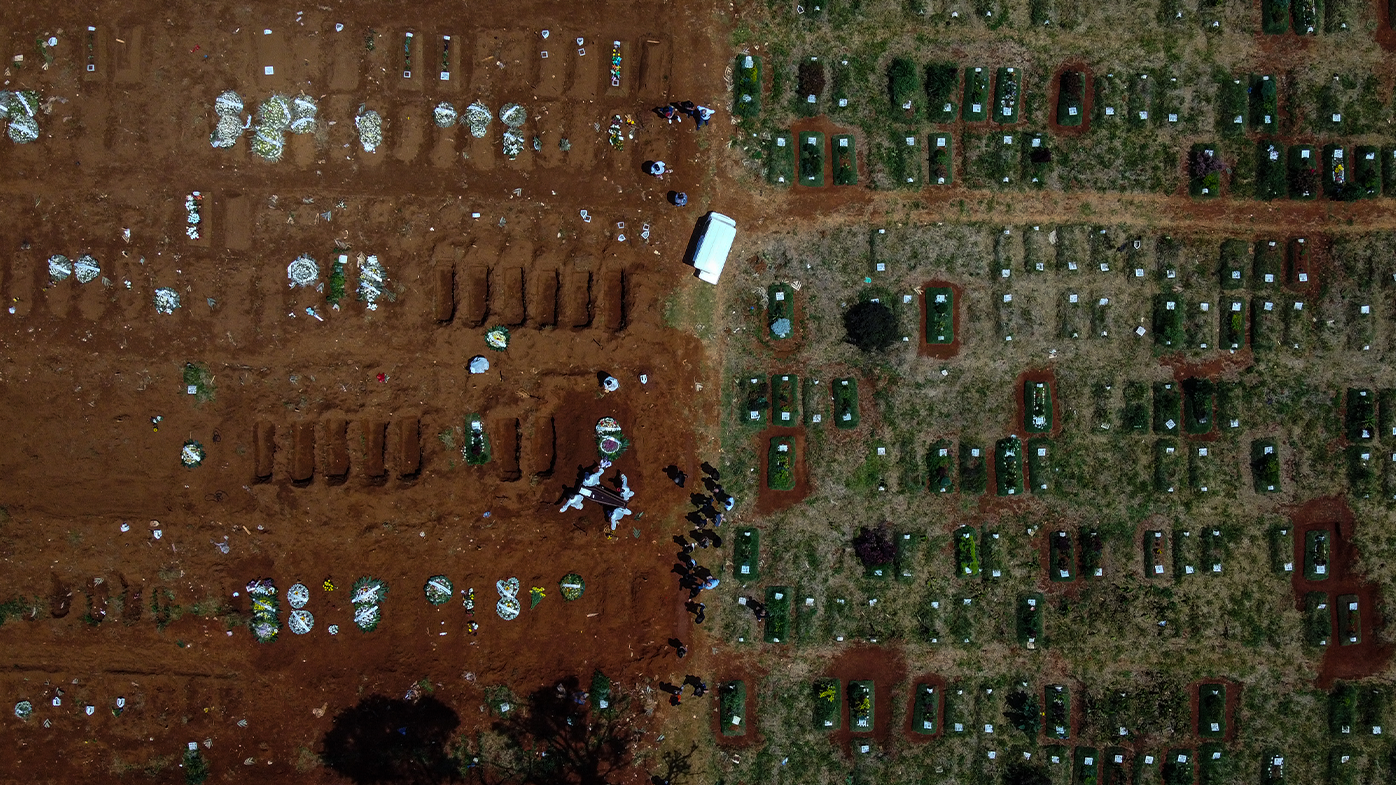
On the outskirts of São Paulo, the crisis is turning things upside down for the small Dr Akira Tada Emergency Hospital. In normal times, doctors there would stabilise critically ill patients and then send them on to bigger and better-equipped hospitals with intensive care units (ICUs).
READ MORE: Second COVID wave overwhelming hospitals in Brazil
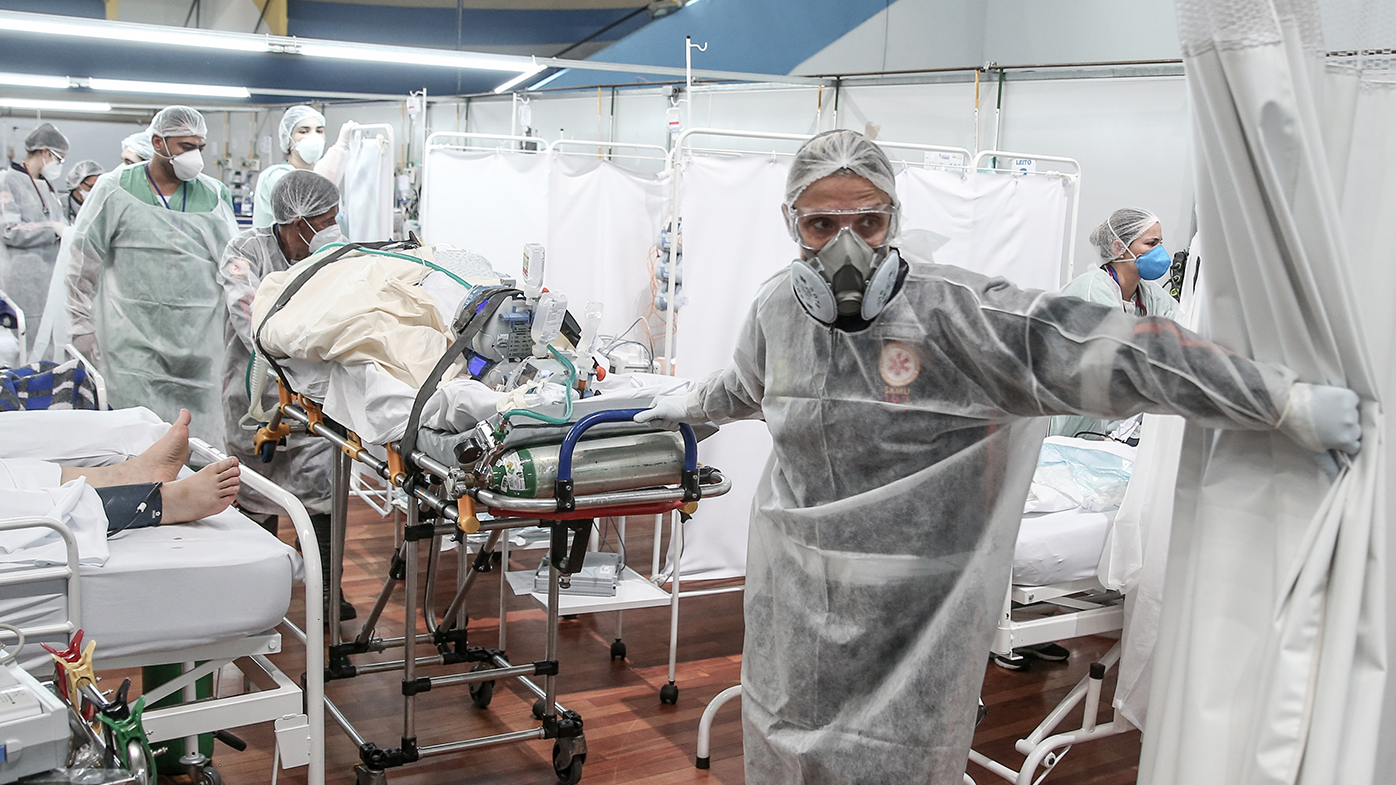
But these are not normal times. Few hospitals today have space to take in new patients, even in Brazil's richest and most populous state.
When Dineia Martins Firmino entered the hospital at the beginning of March, doctors incubated the 74-year-old, and told her family that she desperately needed to be moved to an ICU for more sophisticated treatment, according to her granddaughter Pamela Rivitti, 30.
She never made it off the official, government-run list for transfer.
"No vacancy appeared at the time she needed it and she ended up dying on Saturday," said Ms Rivitti. "We did the funeral on Sunday."
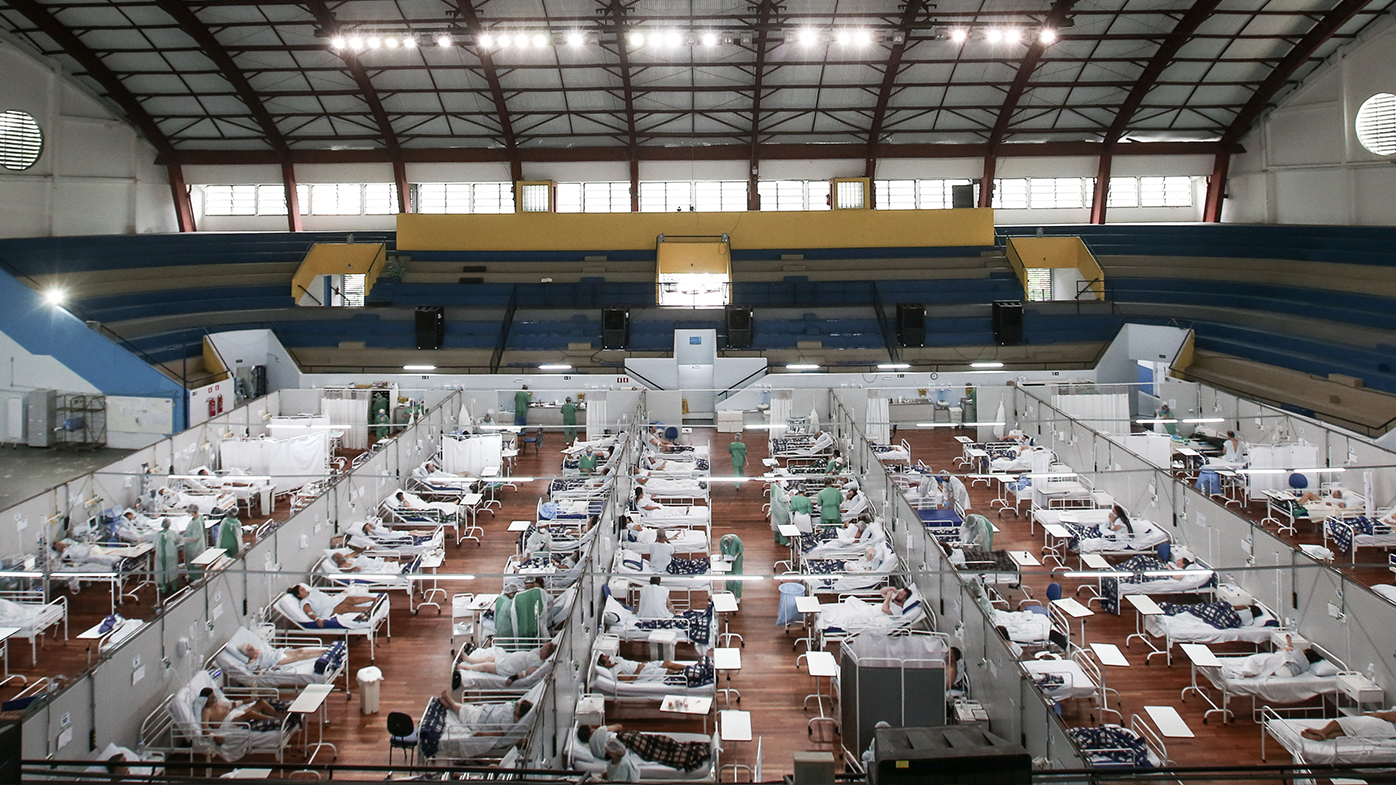
The ferocious new wave of the coronavirus that claimed Ms Firmino's life is inundating intensive care beds in São Paulo and across the country.
As of Sunday, 21 Brazilian states and the Federal District had an ICU occupancy rate of over 80 per cent. Of those, 14 were on the verge of collapsing with an occupation above 90 per cent.
In the southern state of Rio Grande do Sul, ICUs are so overloaded that the largest public hospital treating COVID-19 cases in state capital Porto Alegre said Sunday it was forced to close its doors to new patients.
"The hospital's ICU COVID ward already serves at 132 per cent occupancy," hospital management at Porto Alegre Hospital das Clinicas said in a statement.
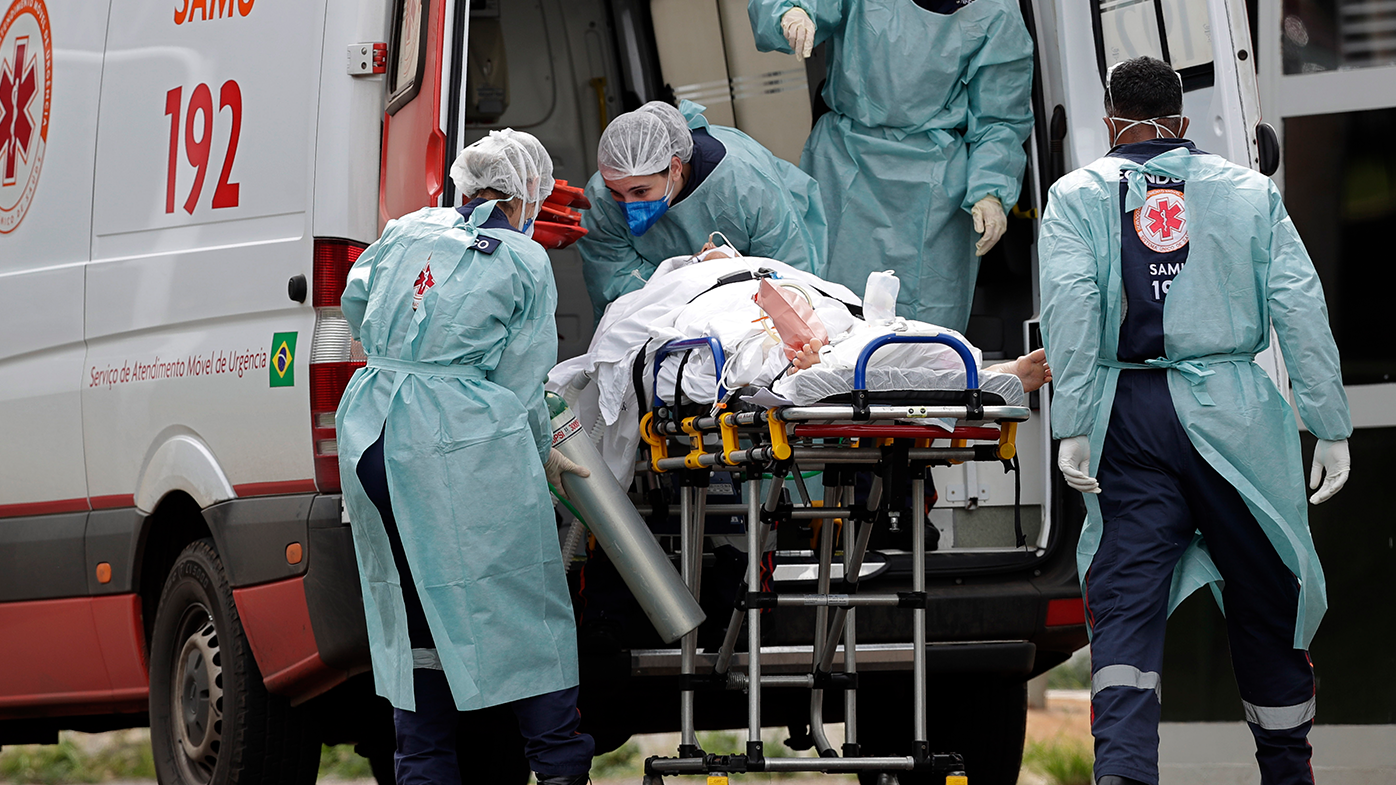
With packed wards comes surging demand for oxygen and other basic necessities.
To the north, Rondonia state is at 97.6 per cent ICU occupancy and the Attorney General's Office has warned that local oxygen supplies could run out in just two weeks.
The state is facing an "imminent risk of oxygen shortage," the letter read — a reminder of an earlier crisis in the city of Manaus, the Amazonas state capital, where hospitals ran out of oxygen in January with lethal consequences.
Faced with criticism of its pandemic management, including from former President Lula da Silva, Brazil's federal government has pointed to a new and possibly more contagious local coronavirus variant, which is currently spreading through the country and even abroad.
READ MORE: All the different strains of coronavirus explained
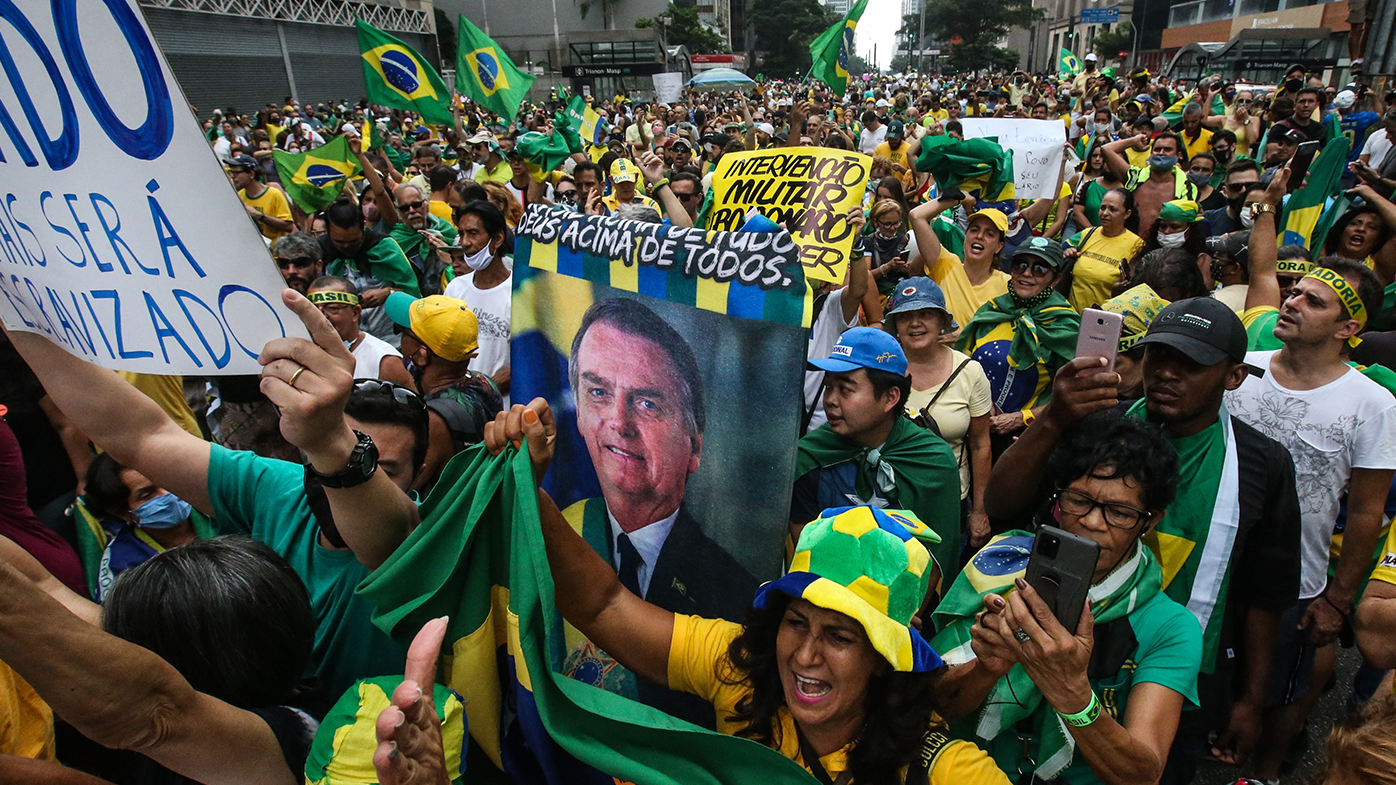
But experts also blame the spread on Brazilians' failure to follow mask and social distancing guidelines, encouraged by President Jair Bolsonaro, who derides precautionary measures as dangerous for the economy and social stability.
In São Paulo, officials have resorted to the whack-a-mole tactic of raiding nightlife hotspots to disperse gatherings of hundreds, Reuters reported.
Meanwhile, despite a robust historic vaccination track record, Brazil's national rollout of COVID-19 vaccines been slow.
Just 1.4 per cent of the population has been fully vaccinated.
Brazilian Health Minister Pazuello, himself currently under investigation for his handling of the Manaus crisis, recently estimated that 22 to 25 million doses would be available in March — a sharp drop from earlier predictions that up to 46 million vaccine doses would be available this month.
The federal government is negotiating new vaccine deals, including a purchase order for the Russian-made Sputnik V. But shortages persist for now. In the coastal city of Rio de Janeiro, officials have already been forced to suspend administration of first doses. The campaign will restart once more vaccines become available through Brazil's health ministry, Rio Mayor Eduardo Paes said.
With the daily death toll in the thousands, every hour that passes means lives lost.
In one grim five-day stretch this month, a dozen COVID-19 patients died at Dr Akira Tada Hospital, according to hospital officials. All were on a waitlist to be transferred to an ICU.
Dr Maria Dolores da Silva, an emergency medicine physician at the hospital, has never seen anything like it. A 42-year veteran of Brazil's public health system, she doesn't usually break down talking about her work, but in an interview with CNN, she bowed her head and cried, thinking about the loss.
"Psychologically, it affects us," said Dr da Silva. "As much as we want to be strong, the feelings come to the surface because of so much suffering that we see."
A local court recently stepped in, ordering that at least 17 ICU beds be made available those to waiting to be transferred, pointing to the State of São Paulo's public statistics, which claim that roughly 10 per cent of the region's ICU beds are still available. The state faces a $6,000 (AUD$7745) penalty for each day it does not provide beds to those patients.
But dozens more Dr. Akira Tada patients continue to wait to be moved for treatment. On Sunday morning, a 13th waiting patient died.
As of Sunday night, none of the remaining patients had been transferred.
Devastated loved ones mourn skydiver who plunged to his death
Devastated loved ones have paid tribute to a renowned skydiver who plunged to his death after his parachute failed to deploy correctly at a popular Western Australian tourist spot.
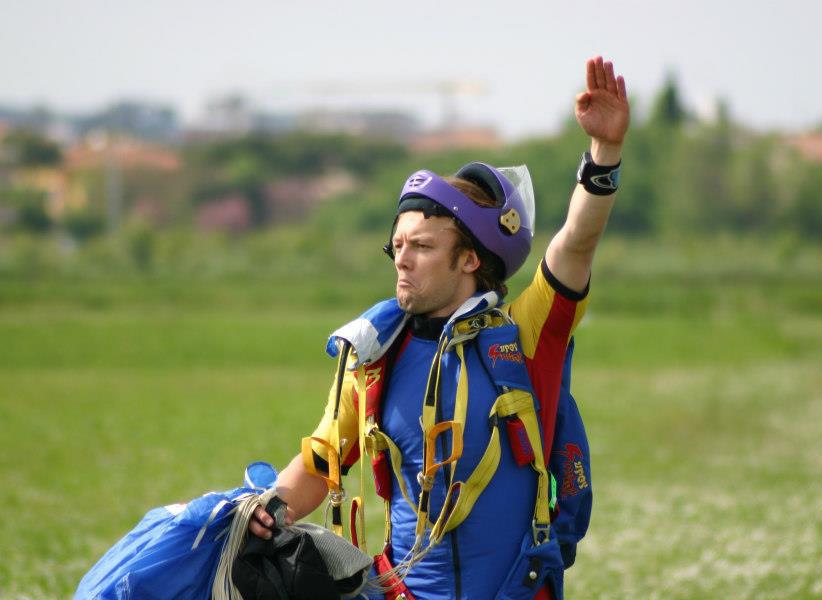
Dimitri Didenko, 30, has been remembered by heartbroken family and friends as an "absolute legend", passionate about adventure and thrill-seeking.
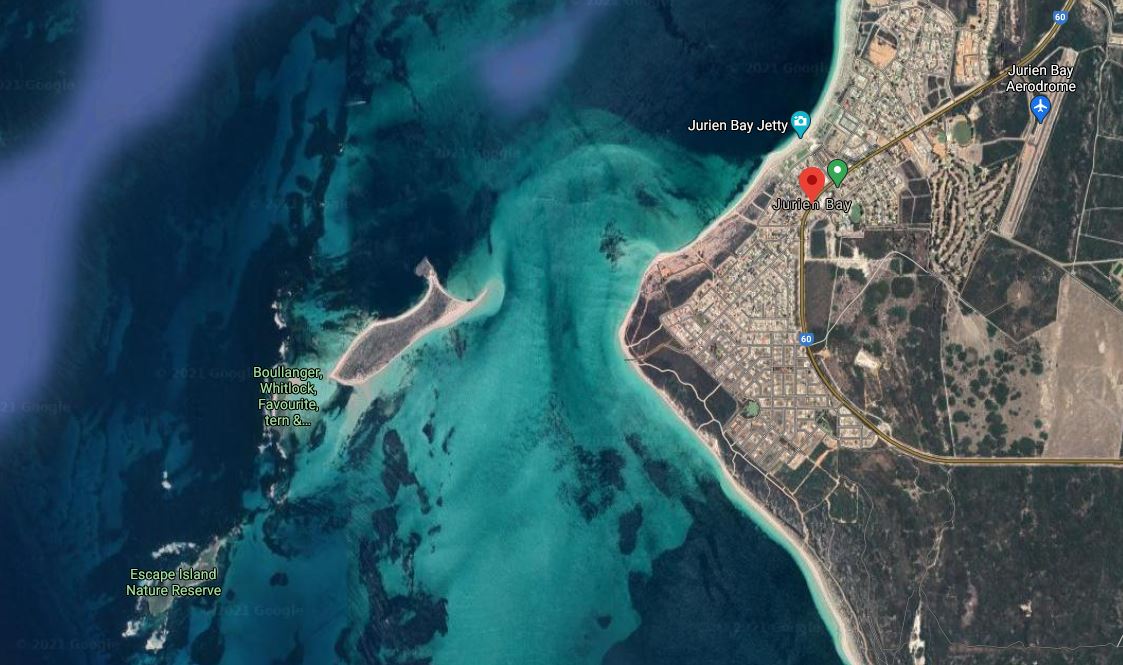
The 30-year-old was competing in the Virtual Nationals Skydiving Championships in the coastal town of Jurien Bay, north of Perth, on Sunday, when his parachute deployed incorrectly just after 1pm, sending him plummeting to the ground as friends watched on in horror.
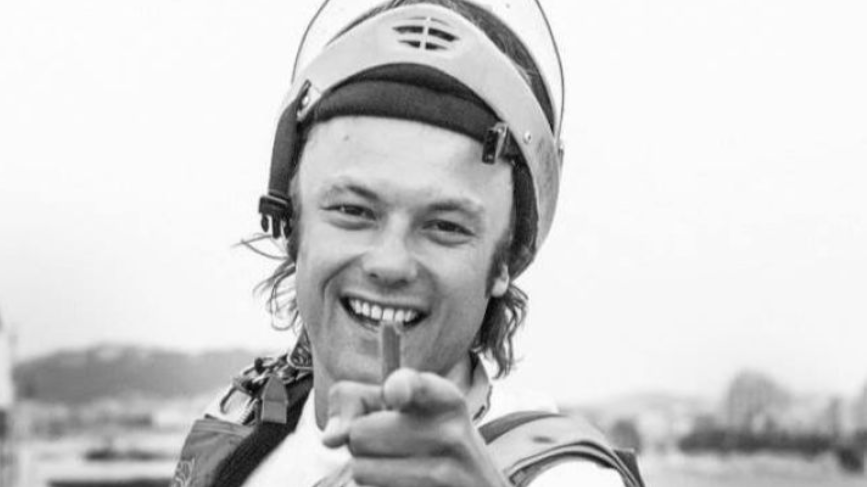
WA Police confirmed Mr Didenko received critical injuries from the fall and died at the scene.
Tributes have flooded social media as loved ones mourn the loss of the thrill-seeker.
"Dimitri Didenko the world won't be the same without you," one woman wrote on Facebook.
READ MORE: Skydiver seriously injured after parachute fails to open
"I met you what feels like a life time ago…and we shared so many fun adventures and memories crossing oceans and continents to meet up for skydiving related activities.
"Records were made and most importantly fun was had. It's been a while since we were in touch, thank you for being a friend – keep an eye on all of us."
"Fly free … I am speechless," another friend wrote.
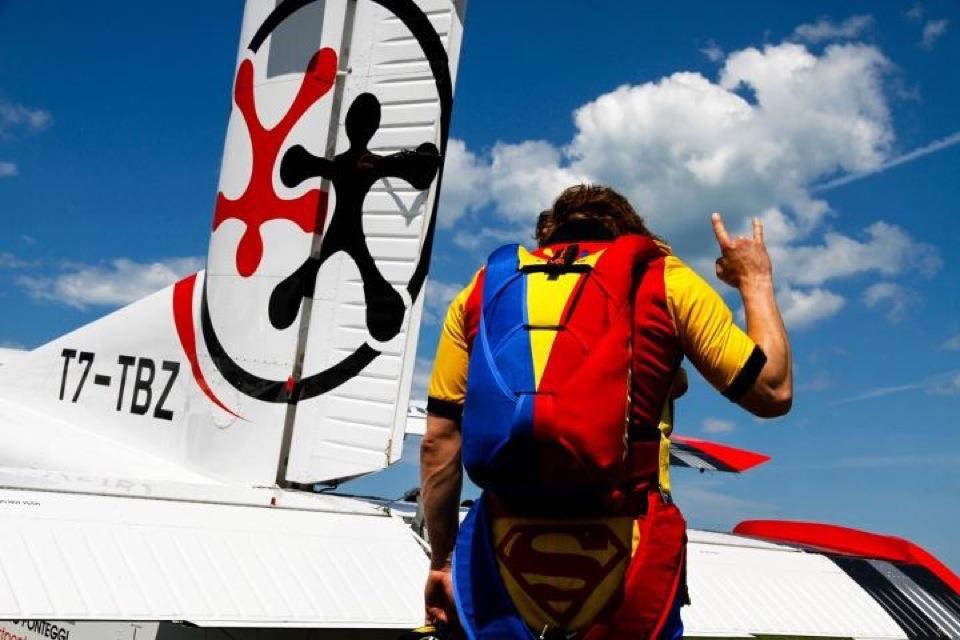
Mr Didenko had travelled the world to compete in skydiving competitions and was a much-loved figure within the sporting community.
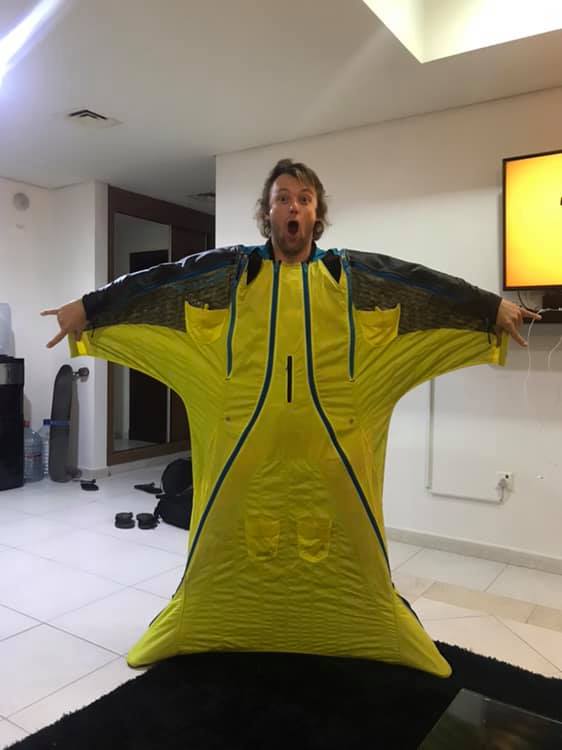
He recently moved to Perth from the Gold Coast and was competing solo in the wingsuit category, which is understood to be an extreme version of skydiving.
Loved one Erica Zanei on a fundraiser called for donations so his body could be repatriated to his family in Italy.
"It is with a heavy heart that we let you know that Dimitri passed away doing what he loved the most," she said.
"Know that your kindness is much appreciated as we navigate this heartbreaking moment.
"We are trying to organise to get him home to his family in Italy and we kindly ask, if you are able to, to donate funds towards the repatriation of his body/ashes."
An investigation will be undertaken by both CASA (Civil Aviation Safety Authority) and the Australian Parachute Federation.
Police have confirmed a report will be prepared for the Coroner.
Supermassive black hole wanders through space
Supermassive black holes usually sit like stationary engines at the centres of galaxies, sucking in everything around them.
Now astronomers have detected a highly unusual case of one wandering through space.
Astronomers previously believed it was possible for supermassive black holes to be actively on the move, but it has been difficult to gather evidence for that theory – until now.
READ MORE: NASA releases first sounds from surface of Mars

The study was published on Friday in The Astrophysical Journal.
Dominic Pesce, astronomer at The Centre for Astrophysics | Harvard & Smithsonian, has worked with collaborating scientists to observe 10 distant galaxies and the supermassive black hole at the centre of each system over the last five years.
The Centre for Astrophysics is a collaborative research effort that combines the Harvard College Observatory and the Smithsonian Astrophysical Observatory.
"We don't expect the majority of supermassive black holes to be moving; they're usually content to just sit around," said Mr Pesce, who is also the lead study author, in a statement.
"They're just so heavy that it's tough to get them going.
"Consider how much more difficult it is to kick a bowling ball into motion than it is to kick a soccer ball – realising that in this case, the 'bowling ball' is several million times the mass of our Sun.
"That's going to require a pretty mighty kick."
The researchers compared the velocities of both galaxies and supermassive black holes during their observation campaign to understand if they were the same.
"We expect them to have the same velocity. If they don't, that implies the black hole has been disturbed," Mr Pesce said.
The researchers focused on black holes that included water as a component in their accretion disks, disks full of material that is pulled toward the black hole.
READ MORE: Supermassive black hole 2000 light years closer than we thought
When water is part of the material orbiting the black hole inside this disk, it creates a radio light signature known as a maser, which looks a bit like a laser.
This signal can be used to measure the velocity of the black hole through a radio antenna network used by astronomers.
While nine of the supermassive black holes were stationary, one appeared to be on the move.
READ MORE: New images released of NASA's Mars mission
It's 230 million light-years away from Earth and can be found at the centre of a galaxy known as J0437+2456.
This supermassive black hole is a heavy one, with a mass that is three million times that of the sun.
Possibility of two black holes
The study team used follow-up observations from the Arecibo Observatory in Puerto Rico before its collapse and the Gemini Observatory in Hawaii to determine that the supermassive black hole is actually moving at 177, 027km an hour within the galaxy.
The scientists don't know why the black hole is moving, but they have narrowed in on two ideas.
"We may be observing the aftermath of two supermassive black holes merging," said study co-author Jim Condon, a radio astronomer at the National Radio Astronomy Observatory in Virginia, in a statement.
"The result of such a merger can cause the newborn black hole to recoil, and we may be watching it in the act of recoiling or as it settles down again."
It's also possible that the black hole is one of a pair within the galaxy.
"Despite every expectation that they really ought to be out there in some abundance, scientists have had a hard time identifying clear examples of binary supermassive black holes," Mr Pesce said.
"What we could be seeing in the galaxy J0437+2456 is one of the black holes in such a pair, with the other remaining hidden to our radio observations because of its lack of maser emission."
Only future observations will tell the tale and reveal the cause behind this black hole's journey through space, according to the researchers.
Part of Arecibo's legacy
This research on supermassive black holes is just one of many studies that have relied on follow-up observations by the Arecibo Observatory.
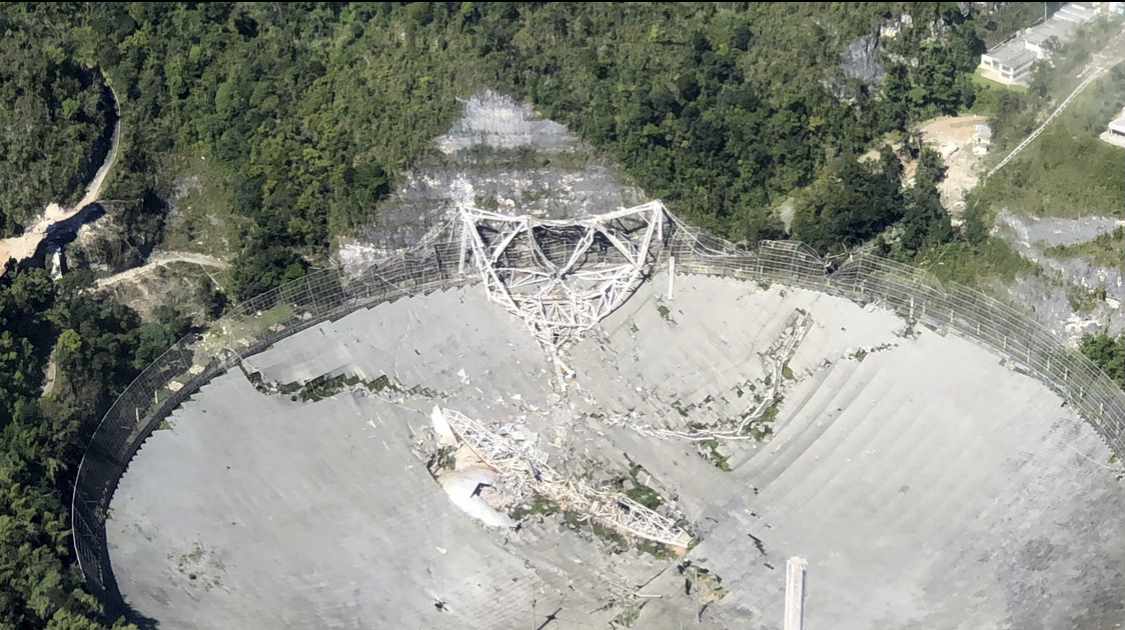
The instrument platform of the 305-metre telescope, one of the most powerful on Earth, collapsed in December.
The collapse occurred just weeks after the National Science Foundation announced the telescope would be decommissioned and disassembled through a controlled demolition after sustaining irreparable damage earlier last year.