Tag Archives: oceania

Indonesian volcano unleashes gas, smoke and ash in eruption

A rumbling volcano on Sumatra island, Indonesia unleashed an avalanche of searing gas clouds down its slopes during an eruption yesterday.

No casualties were reported.

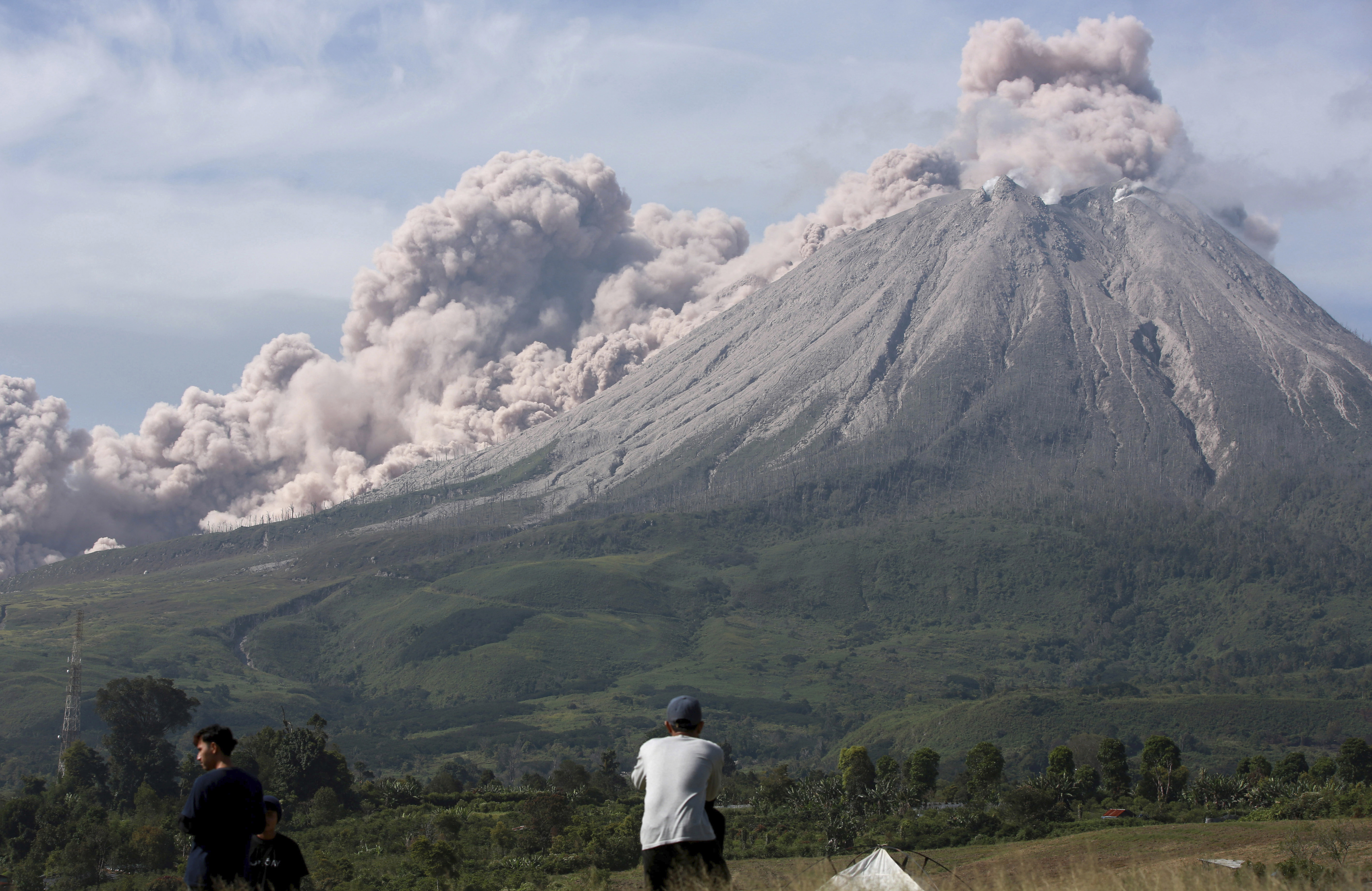
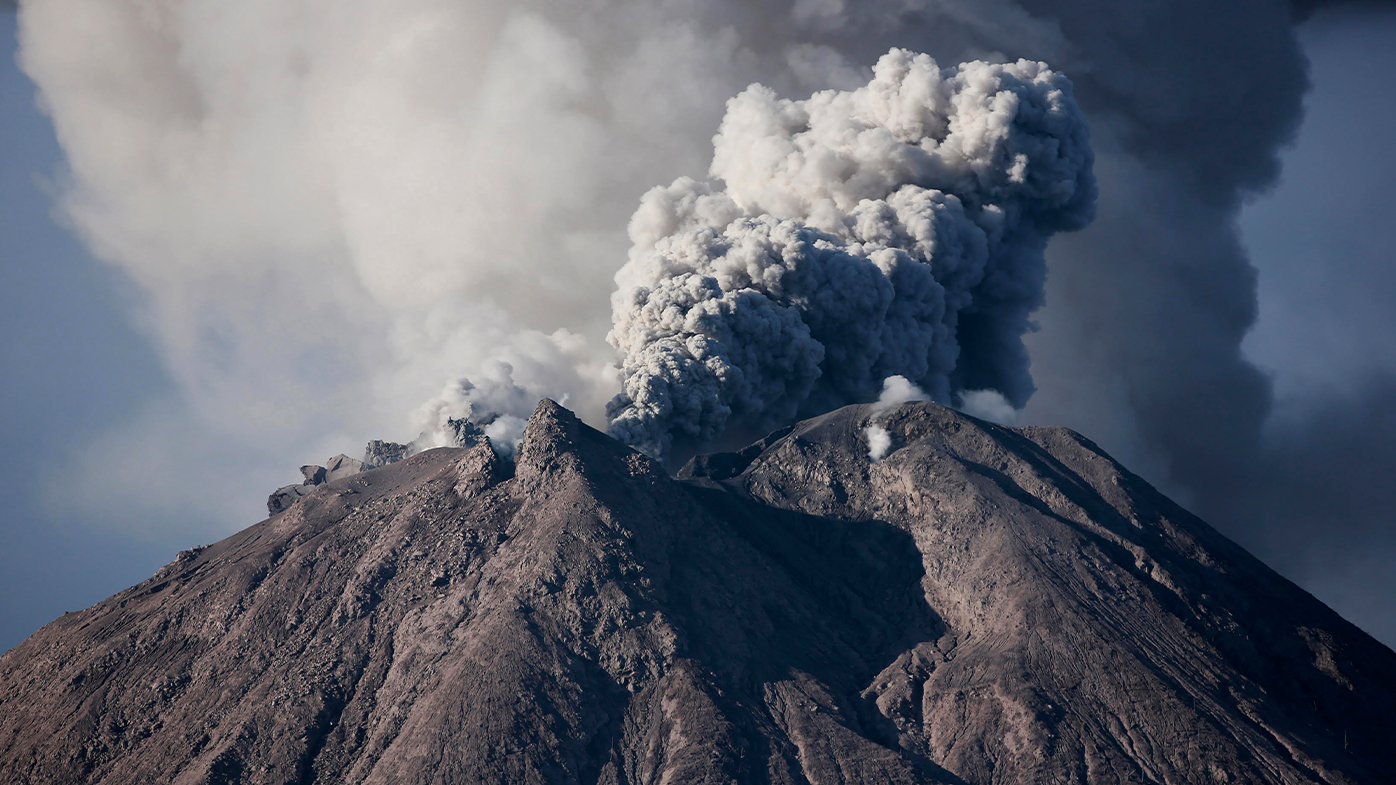
Mount Sinabung in North Sumatra province was shooting smoke and ash as high as 1000 metres into the air and hot ash clouds were blowing three kilometres to the southeast, Indonesia’s Volcanology and Geological Hazard Mitigation Centre said.

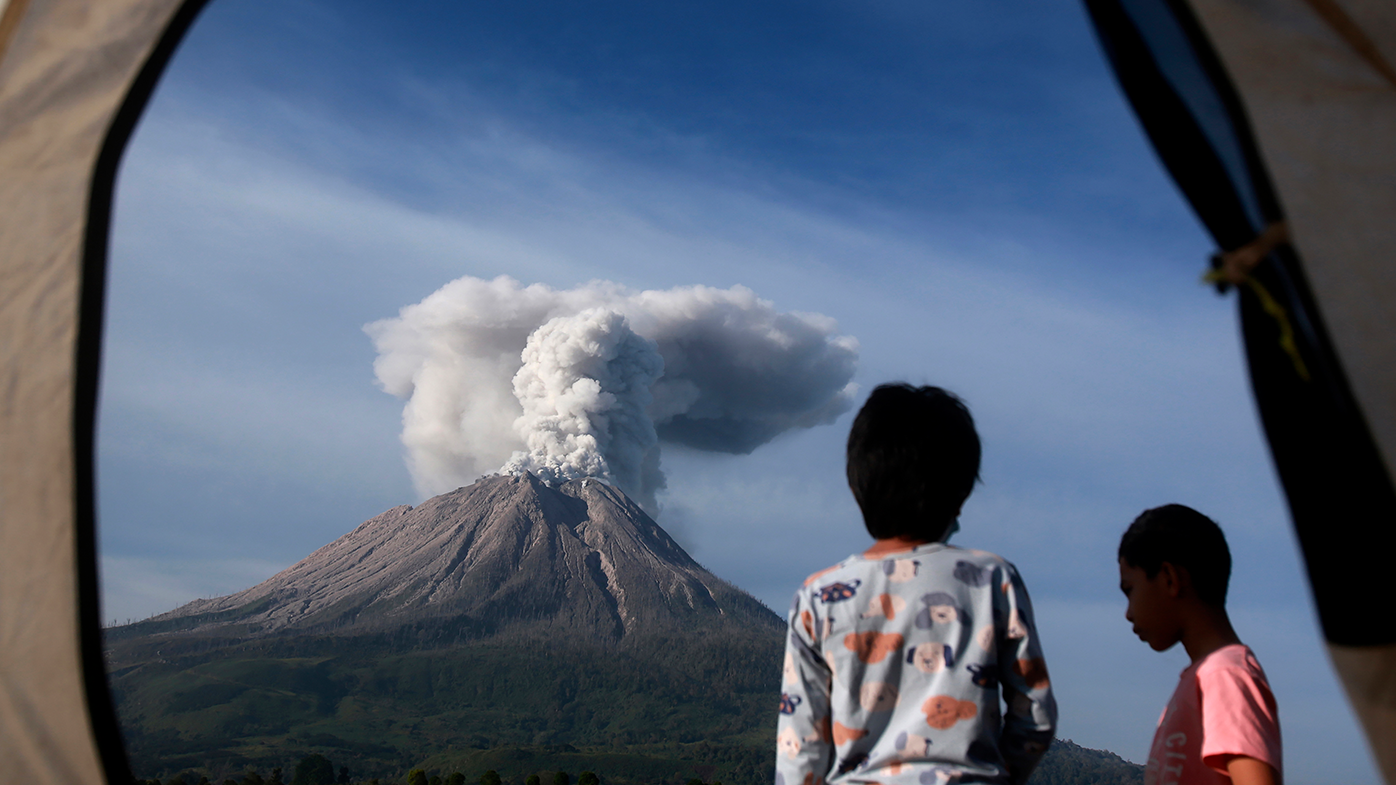
Indonesian youths are seen from the opening of a tent as they watch Mount Sinabung erupting in Karo, North Sumatra, Indonesia, Thursday, March 11, 2021. (AP Photo/Binsar Bakkara)

READ MORE: Sharks found living in active volcano

There were no casualties from the eruption, said Armen Putra, an official at the Sinabung monitoring post.

He said villagers were advised to stay five kilometres from the crater’s mouth and should be aware of the peril of lava.

An alert has been maintained at the second-highest level while authorities closely monitor the volcano after sensors picked up increasing activity in recent weeks.

The large ash cloud reached heights of 1000 metres and three kilometres wide.(AP Photo/Binsar Bakkara)

The 2600-metre mountain has been rumbling since last year.

It sent volcanic materials more than 5000 metres into the sky and deposited ash on nearby villages when it erupted early this month.

About 30,000 people have been forced to leave their homes around Sinabung in the past few years.

READ MORE: Iceland volcanic eruption 'imminent' after thousands of earthquakes

Sinabung is among more than 120 active volcanoes in Indonesia

Sinabung was dormant for four centuries before erupting in 2010, killing two people.

Another eruption in 2014 killed 17 people, while seven died in a 2016 eruption.

The volcano, one of two currently erupting in Indonesia, has sporadically come to life since then.

Sinabung is among more than 120 active volcanoes in Indonesia, which is prone to seismic upheaval due to its location on the Pacific “Ring of Fire,” an arc of volcanoes and fault lines encircling the Pacific Basin.

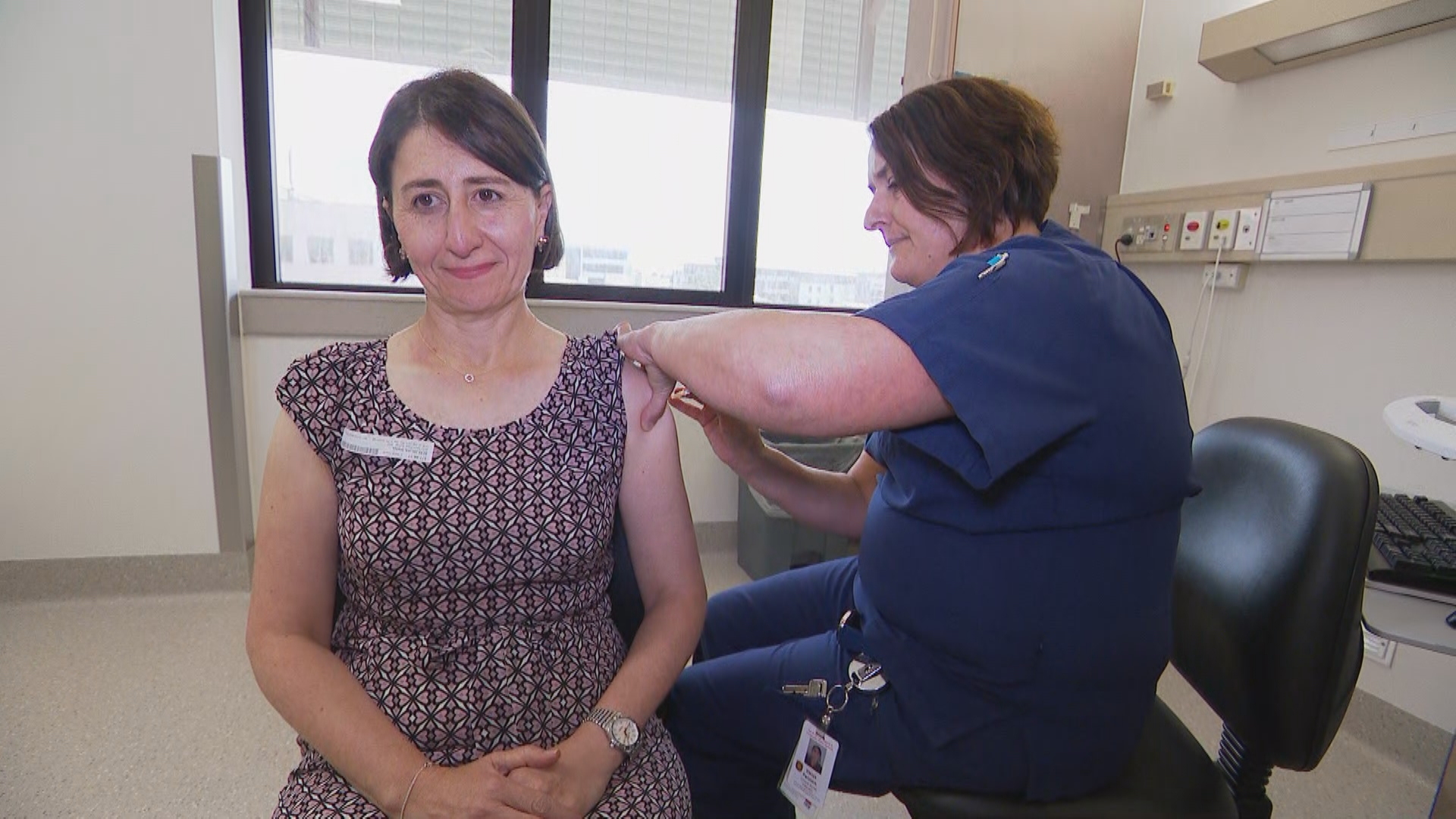
Early vaccine supplies 'a lot less than anticipated', concedes PM

Prime Minister Scott Morrison has conceded Australia's early COVID-19 vaccine supplies from overseas were "a lot less than we had anticipated" as he defended delays to the national rollout.

Mr Morrison said Australia had originally expected to receive 3.8 million AstraZeneca doses from the European Union, but had so far received just 700,000.

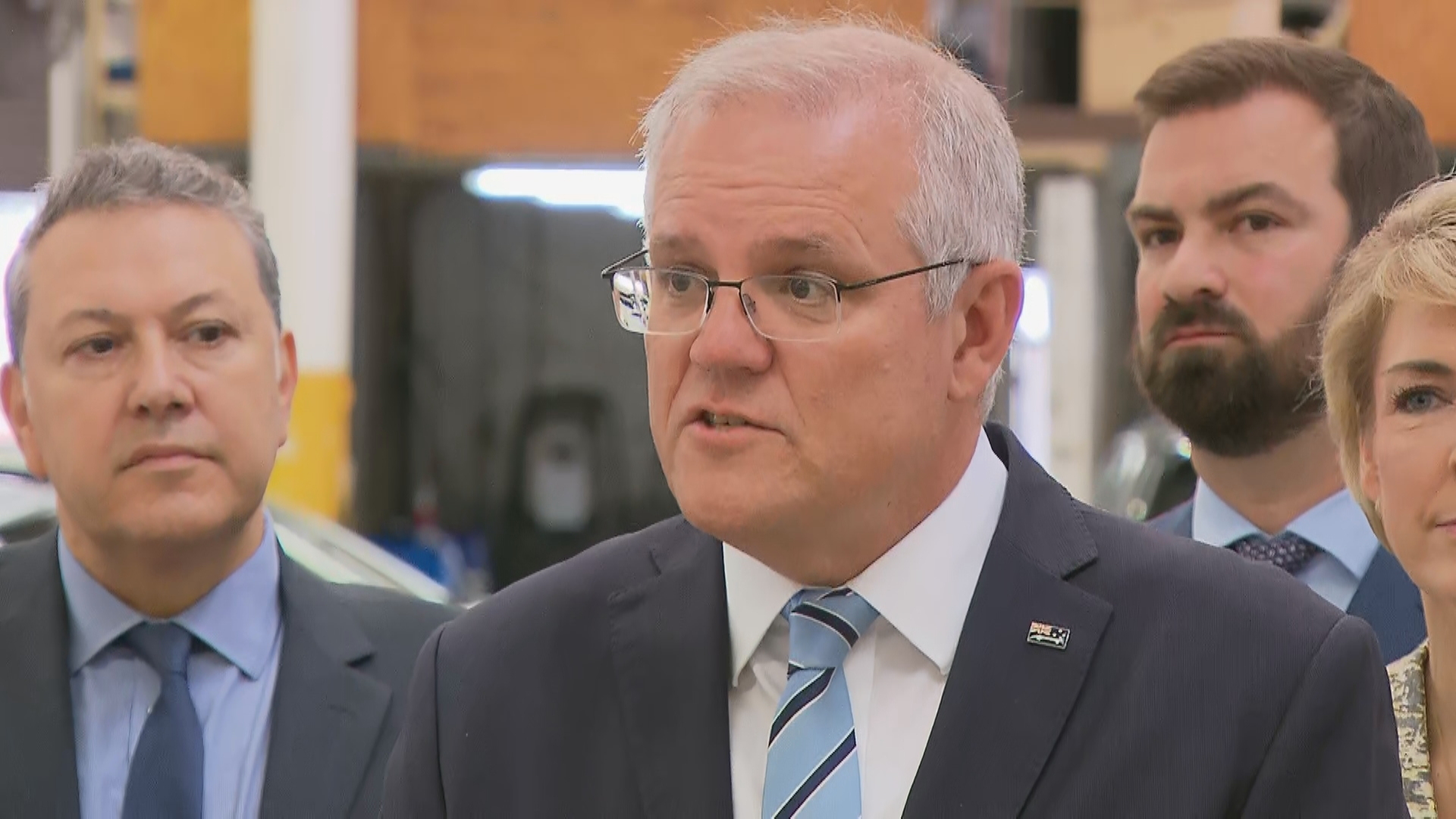
"There are some 300,000 doses that are already out and being distributed from AstraZeneca, and there is another 400,000 that's about to go out," he said, speaking from a press conference at a western Sydney car dealership.

LIVE UPDATES: PM 'very much looking forward to' first-ever Quad leaders' meeting

READ MORE: More nations suspend AstraZeneca vaccine after reports of blood clots

"That of course is a lot less than we had anticipated of international supply in this early phase – we anticipated that to be around 3.8 million.

"That obviously has an impact on the amount of doses available in the early stages of the rollout."

The concession comes after Italy invoked European Union powers to block the export of 250,000 AstraZeneca vaccine doses to Australia last week.

France has threatened to follow suit, as a dispute between the bloc and the drug giant escalates.

In late January, a public and acrimonious fight erupted between the EU and AstraZeneca over vaccine delays, after the company advised the bloc that it would deliver tens of millions fewer doses than agreed by the end of March.

Mr Morrison said Australia was nevertheless on track to reach 150,000 first-dose vaccinations by the end of this week and would soon be on track to reach its target of vaccinating 80,000 people per week.

He said Australia was fortunate not to be in the dire situation of many European nations, many of which were still seeing around 300 COVID-19-related deaths each day.

"The fact we have been able to get 700,000 out of Europe – given what they are going through in Europe – has been a Herculean effort by our agencies to achieve that," he said.

Mr Morrison said Australia's COVID-19 vaccination strategy during the early stages of the rollout remains focused on vulnerable groups – namely health care workers, aged care facilities and Indigenous communities.

"The vaccine strategy worked up, particularly for these early phases, we are not talking about the balance of the population," he said.

He noted that around a quarter of Australia's nursing homes – or roughly 380 facilities – have already received their COVID-19 vaccinations.

The arrival of 400,000 additional AstraZeneca vaccines would allow more doses to reach aged care facilities and Indigenous communities compared to the Pfizer shots, which have stricter storage criteria.

"We're not going to pick people up out of aged care homes, put them on buses and take to stadiums – that's not the right thing to do," Mr Morrison said.

"We are also going to be going out to Indigenous communities very soon.

"Those 400,000 AstraZeneca – which obviously don't have to be stored at sub-71 degrees – that gives us the opportunity to be reaching out into those Indigenous communities.

"We need to go there, rather than bring them to where we are."

Ex-cop given third degree murder charge over George Floyd death

A judge has granted prosecutors’ request to add a third-degree murder count against a former US police officer charged in George Floyd’s death, offering jurors an additional option for conviction and resolving an issue that might have delayed his trial for months.

Hennepin County Judge Peter Cahill reinstated the charge after the former officer, Derek Chauvin, failed to get appellate courts to block it. Mr Cahill had earlier rejected the charge as not warranted by the circumstances of Mr Floyd’s death, but an appellate court ruling in an unrelated case established new grounds.

Read more: Pandemic shapes trial of Minneapolis ex-cop in George Floyd's death
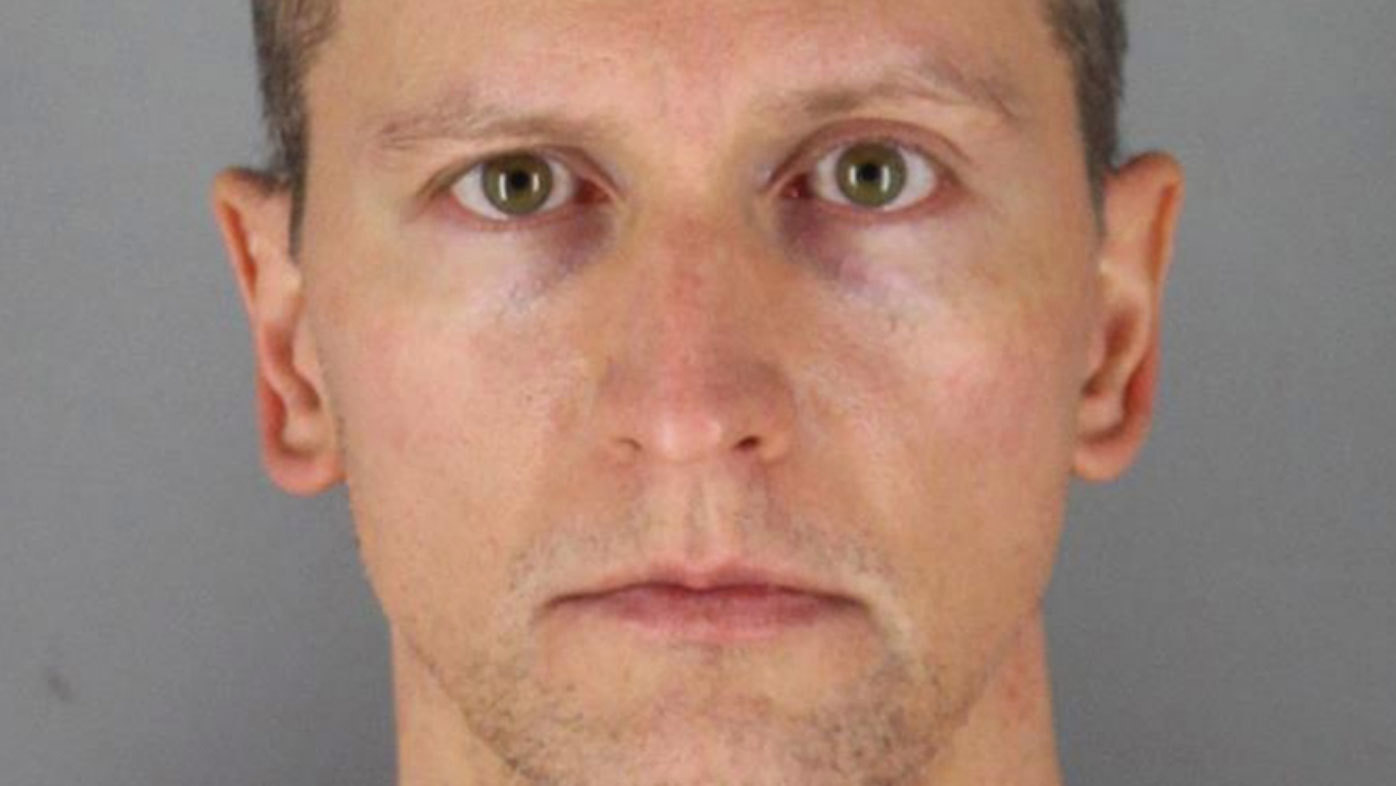
Chauvin already faced second-degree murder and manslaughter charges. Legal experts say the additional charge helps prosecutors by giving jurors another option to find Chauvin guilty of murder. Mr Cahill told potential jurors after the ruling that he still expects opening statements on March 29.

The dispute over the third-degree murder charge revolved around wording in the law that references an act “eminently dangerous to others.” Mr Cahill's initial decision to dismiss the charge noted that Chauvin’s conduct might be construed as not dangerous to anyone but Mr Floyd.

But prosecutors sought to revive the charge after the state’s Court of Appeals recently upheld the third-degree murder conviction of another former Minneapolis police officer in the 2017 killing of an Australian woman Justine Ruszczyk. They argued that the ruling established precedent that the charge could be brought even in a case where only a single person is endangered.
Arguments over when the precedent from former officer Mohamed Noor's case took effect went swiftly to the state’s Supreme Court, which on Wednesday said it would not consider Chauvin’s appeal. Mr Cahill said on Thursday that he accepts that precedent has been clearly established.

READ MORE: NSW jabs Queensland Premier over travel package claims

“I feel bound by that and I feel it would be an abuse of discretion not to grant the motion," he said.

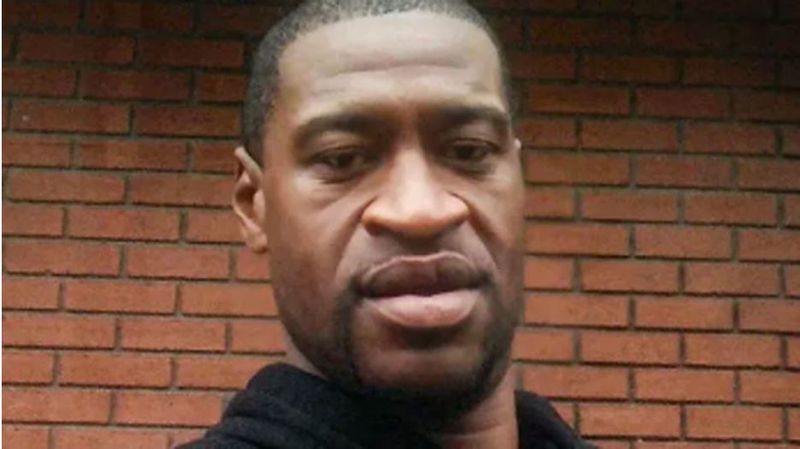
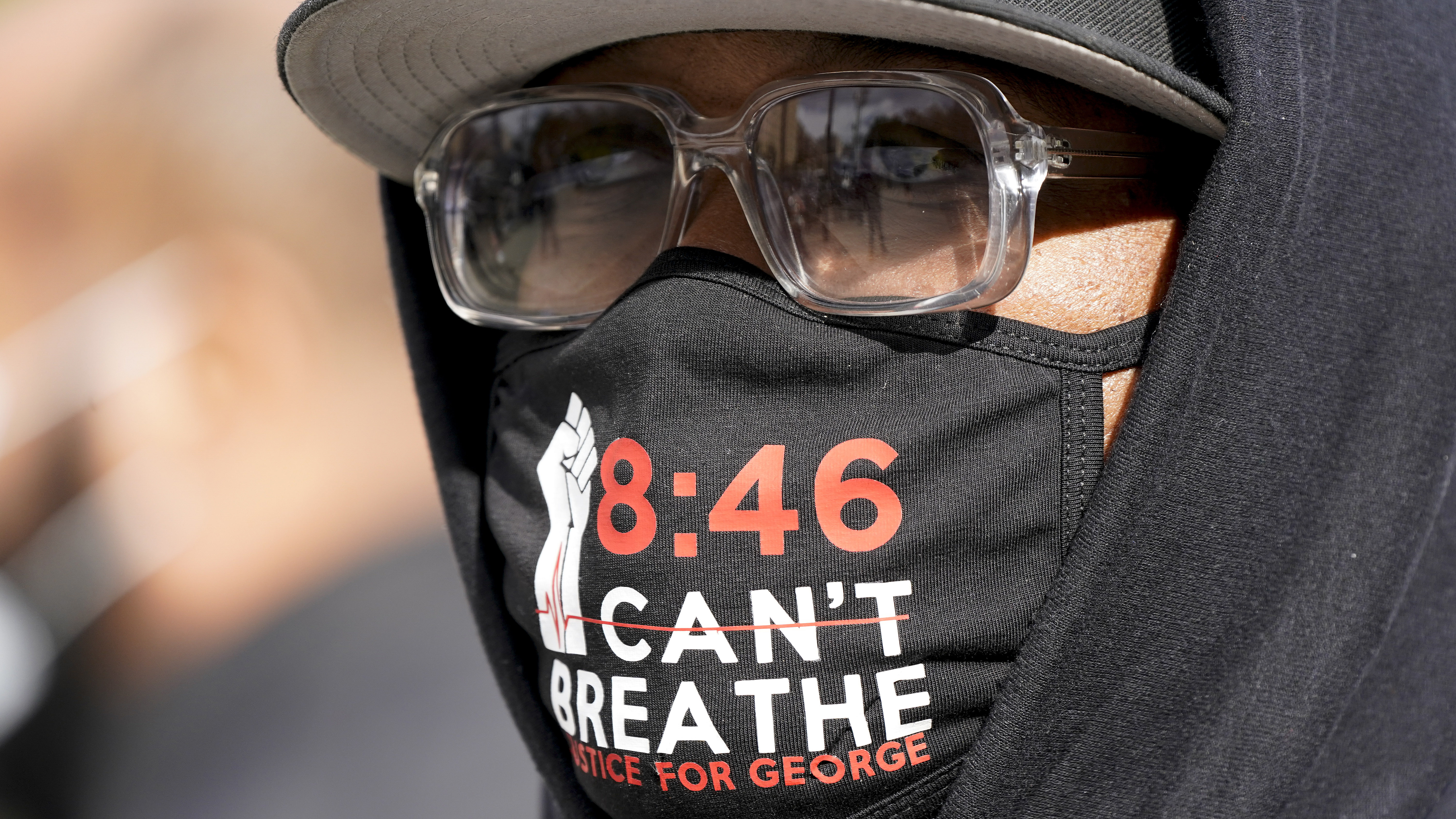
Mr Floyd was declared dead on May 25 after Chauvin, who is white, pressed his knee against the Black man’s neck for about nine minutes. Floyd’s death sparked sometimes violent protests in Minneapolis and beyond, leading to a nationwide reckoning on race.

Jury selection resumed Thursday for the third day as attorneys grappled further with the challenges of seating an impartial and diverse jury in such a high-profile case. The jury by mid-afternoon Thursday included five men and one woman. Mr Cahill said three are white, one is multiracial, one is Hispanic and one is Black.
The sole juror picked on Thursday morning described himself as an outgoing, family-oriented soccer fan, for whom the prospect of the trial was “kind of exciting.”

The man, who said his favourite team is the Spanish powerhouse Real Madrid, said he's also a fan of true crime podcasts and TV shows. He acknowledged under questioning from defence attorney Eric Nelson that he had a “very negative” impression of Chauvin. The man wrote on his questionnaire that he had seen the widely viewed bystander video of Mr Floyd "desperately screaming that he couldn’t breathe” even as other officers stood by and bystanders shouted that Chauvin was killing Mr Floyd.

Yet asked whether he could set his opinions aside and stick to the evidence presented in court, he replied: “I’m willing to see all the evidence and everything, hear witnesses.”

Several other candidates were dismissed, including a woman who said she “can’t un-see the video” of Chauvin pinning Mr Floyd, and a man who said he has doubts about Black Lives Matter and the way the group pursues its goals.

Mr Nelson pressed the woman hard on her ability to be fair despite her strong opinions.

Asked how the events of last summer had affected the community, she replied: “Negatively affected because a life was taken. Positively because a movement has come from it and the whole world knows.” Asked about the property damage during the unrest, she said, ”I felt that was what needed to happen to bring this to the world's attention.”

“Looking in your heart and looking in your mind can you assure us you can set all of that aside, all of that, and focus only on the evidence that is presented in this courtroom?” Mr Nelson asked.

“I can assure you, but like you mentioned earlier, the video is going to be a big part of the evidence and there’s no changing my mind about that,” she replied.

Mr Cahill dismissed her for cause, sparing Mr Nelson from having to use one of his peremptory strikes. Prosecutor Steve Schleicher objected, saying she might have been subjected to harder questioning than other potential jurors.

At least three weeks have been set aside to complete a jury of 12 plus two alternates. Potential jurors' identities are being protected and they are not shown on livestreamed video of the proceedings.

Chauvin and three other officers were fired. The others face an August trial on aiding and abetting charges. The defence hasn't said whether Chauvin will testify in his own defence.