It’s cruel, deadly and doesn’t discriminate, but no one wants to talk about dementia.Lisa Burns, national spokesperson for Dementia New Zealand, says it’s crucial we confront dementia.”My grandmother died from it. “So many people…
Tag Archives: oceania
Wellington left without a seat at Three Waters Steering Committee
Wellington’s water leaders say it’s problematic and strange they have been left without a seat at a committee that’s described as a key reference point for incoming water reforms.The Government is in the middle of reforming local…
Women in science: Tackling gender diversity in top jobs
Women are underrepresented in the top jobs of science and tech. A new programme is trying to fix that. Maria Jose Alvarez was pitching her agritech start-up to a group of investors when they cut her off with questions. Not for…
Dementia: The Brains Trust – photographer Mike Scott's inside view
Herald photographer and videographer Mike Scott spent more than a year getting to know the subjects of the Herald’s new online video series The Brains Trust: Confronting Dementia.He and reporter Carolyne Meng-Yee talked to a wide…
Dementia: The Brains Trust, Episode 6: Mike Scott's MRI scan
Herald video journalist Mike Scott is not used to having the lens zoom in on his personal and painful story.As a little boy, he and his siblings, Chris and Angus, feared their father, who was violent and an alcoholic.”I knew dad…
Covid 19 coronavirus: Aucklanders enjoy level 2 freedom, businesses sigh with relief
The Government is poised to announce new details about the arrival of Covid-19 vaccines and some likely refinement to its sequencing plans. Cabinet is likely to be briefed today and announcements can be expected today or tomorrow….
Cartoons: March 1-31
Our cartoonist Guy Body shares his view on current events.
Dementia: The Brains Trust, Episode 2 – Warwick and Pummy Hickling
He fell for her as a lusty 13-year-old.Now Warwick Hickling, 83, is his wife’s full-time carer.”All the boys were dead keen on the girls who were fully developed,” Warwick told the Herald cheekily.”The girls who were flat-chested…
Australia suspends defence program with Myanmar over coup, violence
Australia is suspending its defence cooperation with Myanmar's military in the wake of the February 1 coup and deadly violence against protesters that has sparked global condmenation.
Foreign Affairs Minister Marise Payne said in a statement last night that Australia had been weighing up its diplomatic response as calls for stronger sanctions against Myanmar grow in the face of escalating violence against protesters.
Ms Payne said Australia had raised "our grave concerns about the military coup in Myanmar and the escalating violence and rising death toll" and she condemned the lethal force used "against civilians exercising their univesral rights".
READ MORE: YouTube pulls Myanmar military channels, UN to meet on crisis
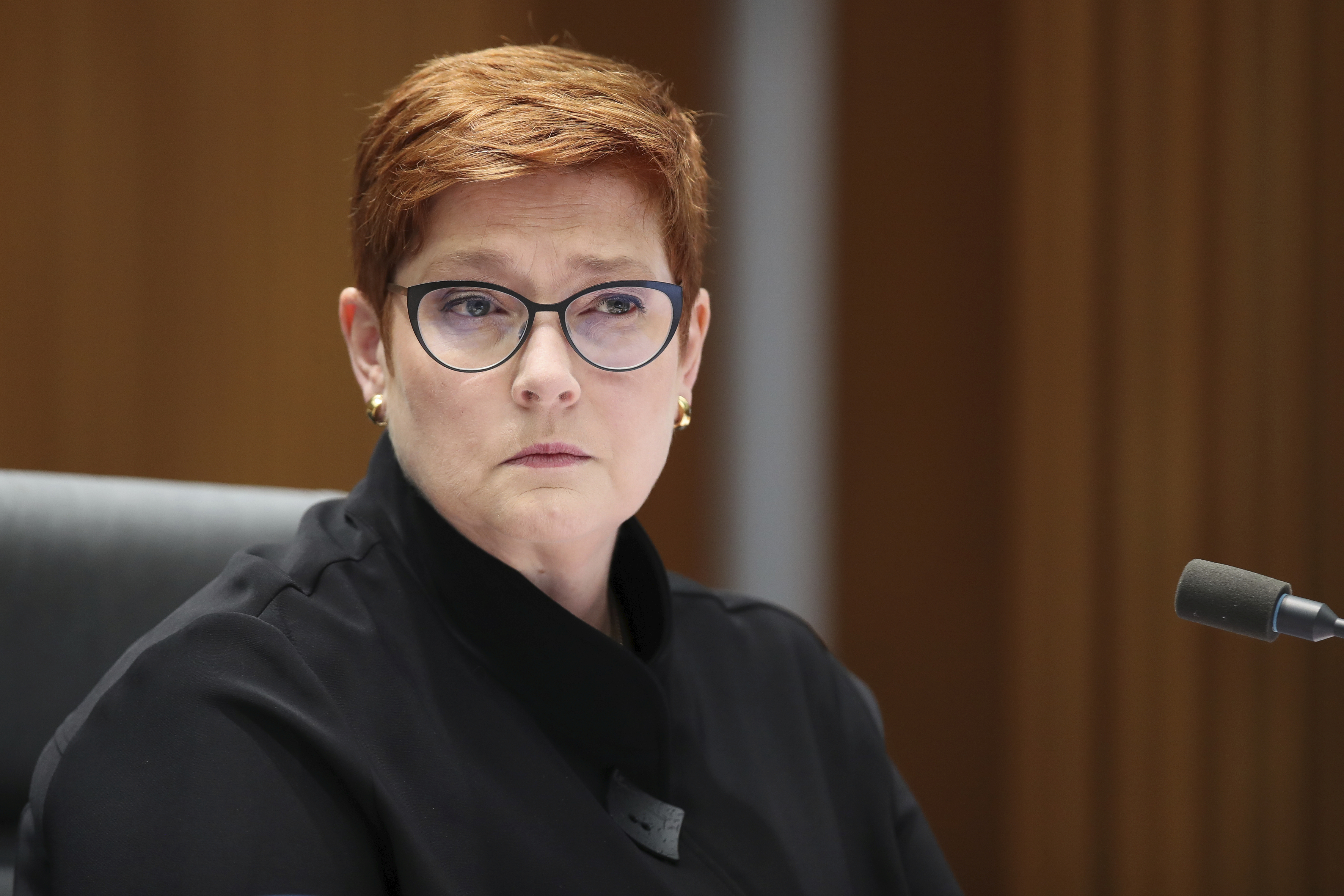
"Australia has had a limited bilateral Defence Cooperation Program with Myanmar's military, restricted to non-combat areas such as English language training. This program will be suspended," Ms Payne said.
"Australia's development program is also being re-directed to the immediate humanitarian needs of the most vulnerable and poor including the Rohingyas and other ethnic minorities. We will prioritise the most pressing humanitarian and emerging needs and seek to ensure our humanitarian engagement is with and through non-government organisations, not with government or government-related entities, as is currently the case in some parts of the program."
Ms Payne said the decision was after "extensive consultations with our international partners particularly our ASEAN neighbours, Japan and India".
Australian Professor Sean Turnell has been detained with limited consular access for more than30 days. Ms Payne said Australia continued to call for the release of Professor Turnell as well as of State Counsellor Aung San Suu Kyi, President Win Myint and others who have been arbitrarily detained since 1 February.
READ MORE: Myanmar crackdown on protests sparks outrage

Ms Payne said Australia would continue to review existing sanctions that include an arms embargo.
"We call on the Myanmar regime to engage in dialogue. Australia will continue to play a constructive role, including in consultation with international partners, particularly ASEAN, in support of the Myanmar people."
Global condemnation grows
There is growing pressure for countries to impose more sanctions against the junta, despite the struggle over how to best sway military leaders inured to global condemnation.
READ MORE: Myanmar security forces kill at least 34 protesters
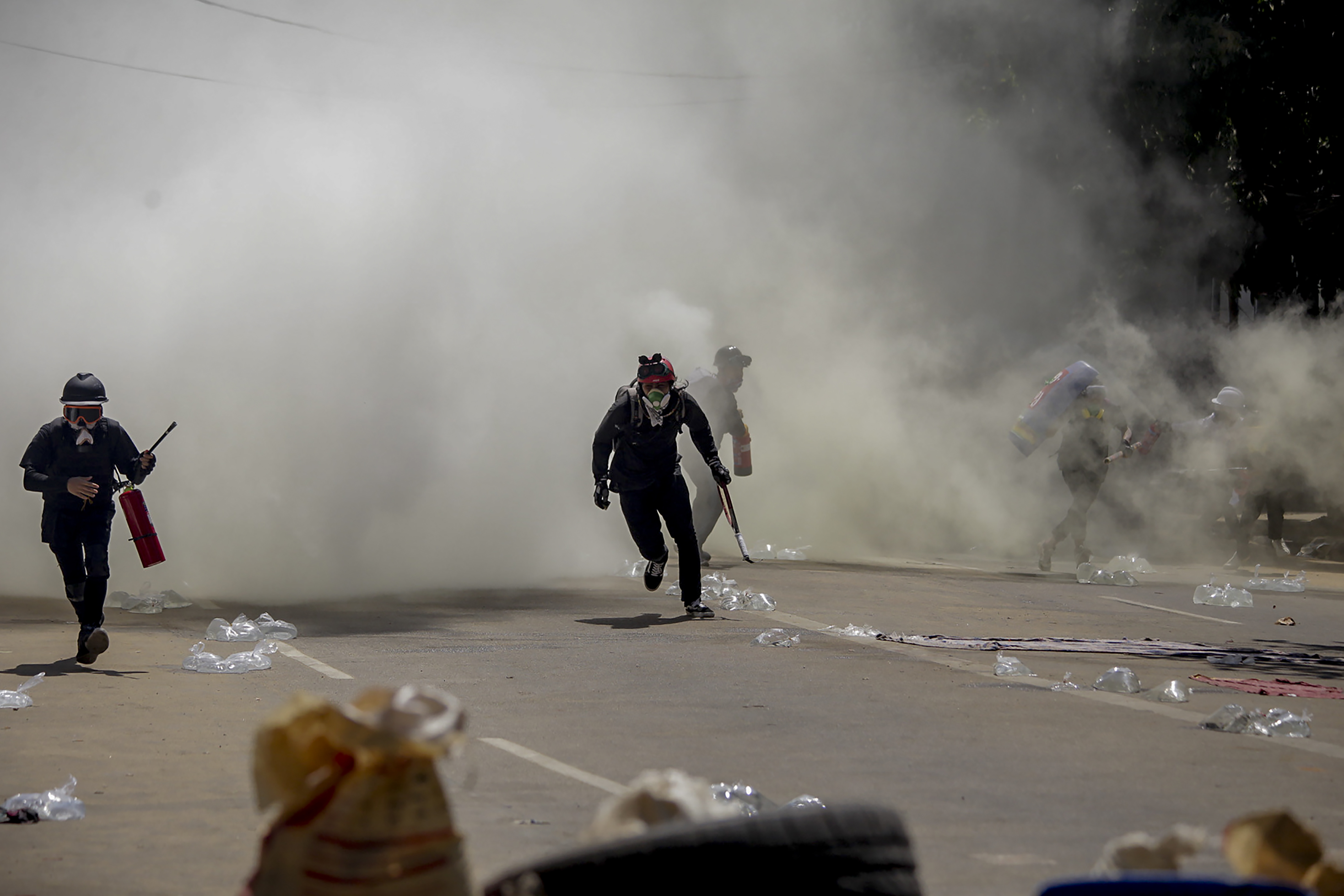
The challenge is made doubly difficult by fears of harming ordinary citizens who were already suffering from an economic slump worsened by the pandemic but are braving risks of arrest and injury to voice outrage over the military takeover. Still, activists and experts say there are ways to ramp up pressure on the regime, especially by cutting off sources of funding and access to the tools of repression.
The UN special envoy on Friday urged the Security Council to act to quell junta violence that this week killed about 50 demonstrators and injured scores more.
"There is an urgency for collective action," Christine Schraner Burgener told the meeting. "How much more can we allow the Myanmar military to get away with?"
Coordinated UN action is difficult, however, since permanent Security Council members China and Russia would almost certainly veto it. Myanmar's neighbours, its biggest trading partners and sources of investment, are likewise reluctant to resort to sanctions.
READ MORE: 'Deep concern' after Australian detained in Myanmar
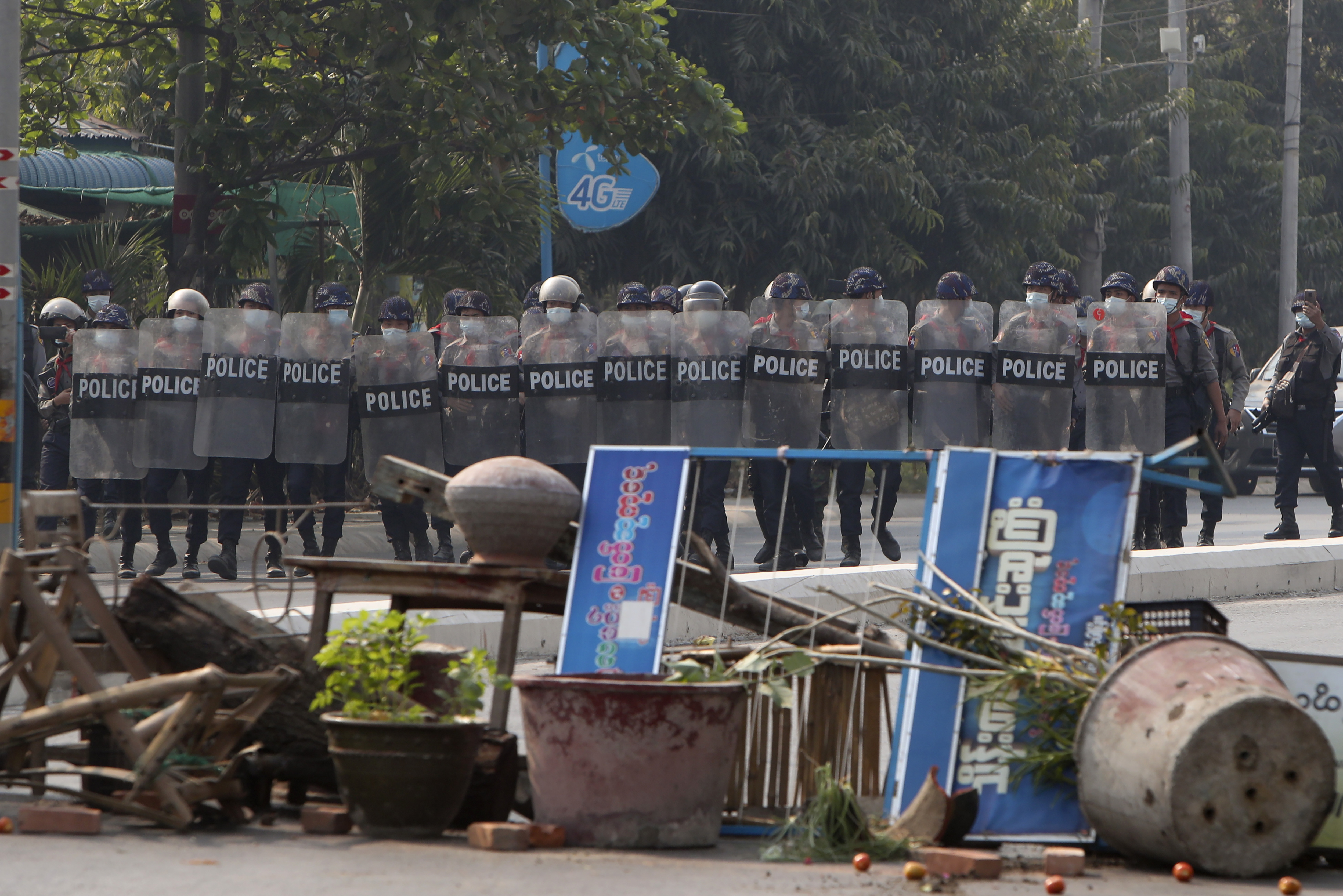
Some piecemeal actions have already been taken. The US, Britain and Canada have tightened various restrictions on Myanmar's army, their family members and other top leaders of the junta. The US blocked an attempt by the military to access more than $1 billion in Myanmar central bank funds being held in the US, the State Department confirmed Friday.
But most economic interests of the military remain "largely unchallenged," Thomas Andrews, the UN special rapporteur on the rights situation in Myanmar, said in a report issued last week. Some governments have halted aid and the World Bank said it suspended funding and was reviewing its programs.
It's unclear whether the sanctions imposed so far, although symbolically important, will have much impact. Schraner Burgener told UN correspondents that the army shrugged off a warning of possible "huge strong measures" against the coup with the reply that, "We are used to sanctions and we survived those sanctions in the past."
Andrews and other experts and human rights activists are calling for a ban on dealings with the many Myanmar companies associated with the military and an embargo on arms and technology, products and services that can be used by the authorities for surveillance and violence.
— Reported with Associated Press
US Senate passes Biden's $1.9 trillion COVID-19 relief plan
The US Senate passed President Joe Biden's $1.9 trillion COVID-19 relief plan on Saturday, after an all-night "vote-a-rama" and a 12-hour struggle to get one Democrat to support the party's plan on a critical issue.
The vote was 50 to 49 on a party-line vote.
The House will vote on Tuesday on the bill to approve changes made in the Senate, House Majority Leader Steny Hoyer announced, and then it will go to Biden to be signed into law.
READ MORE: Law enforcement on alert after plot warning at US Capitol
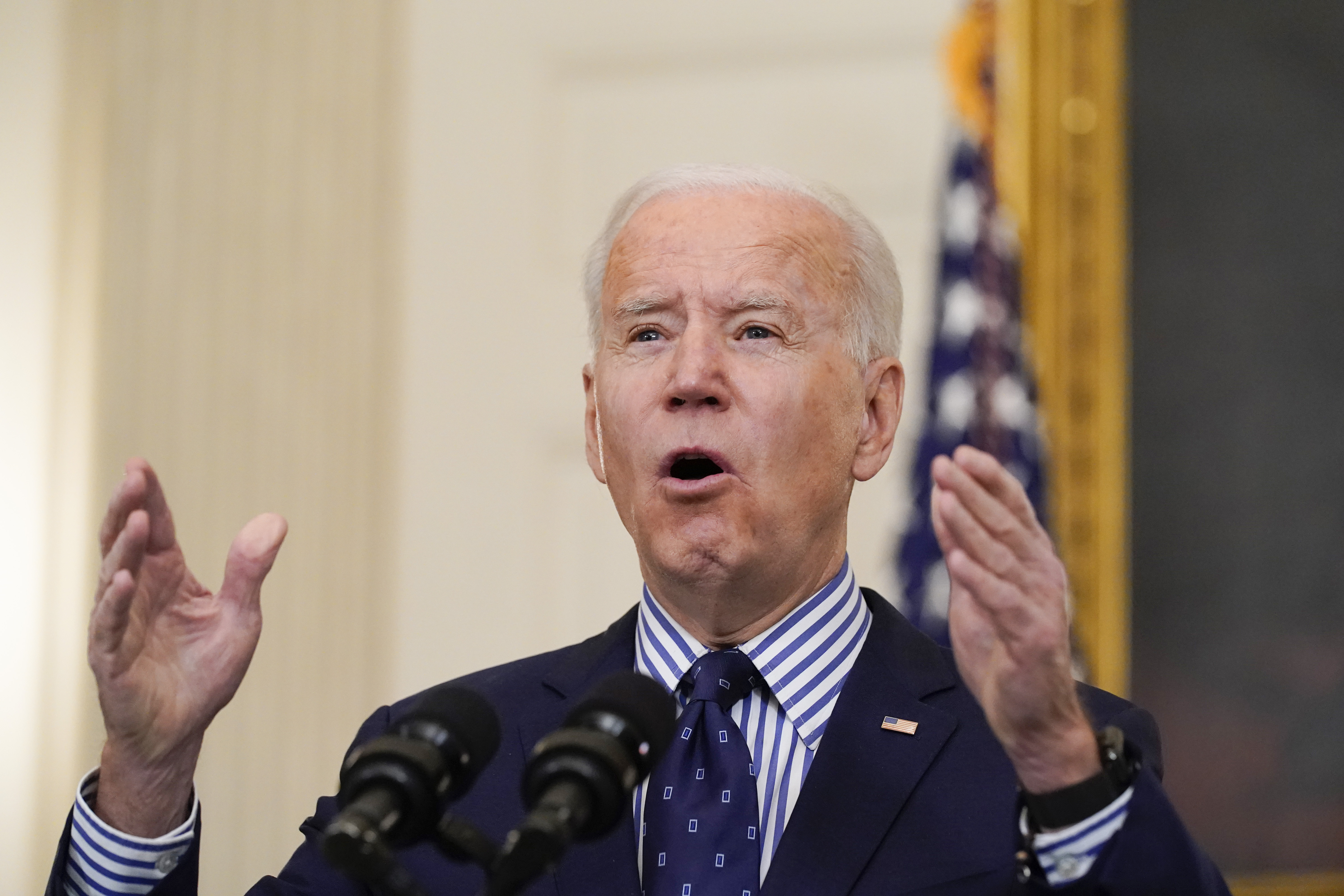
Biden hailed the Senate passage in remarks from the White House on Saturday afternoon, touting his plan's widespread public support even if it didn't earn any Republican votes.
"By passing this plan, we'll have proved that this government, this democracy, can still work. It has to be done. It will improve people's lives," Biden said.
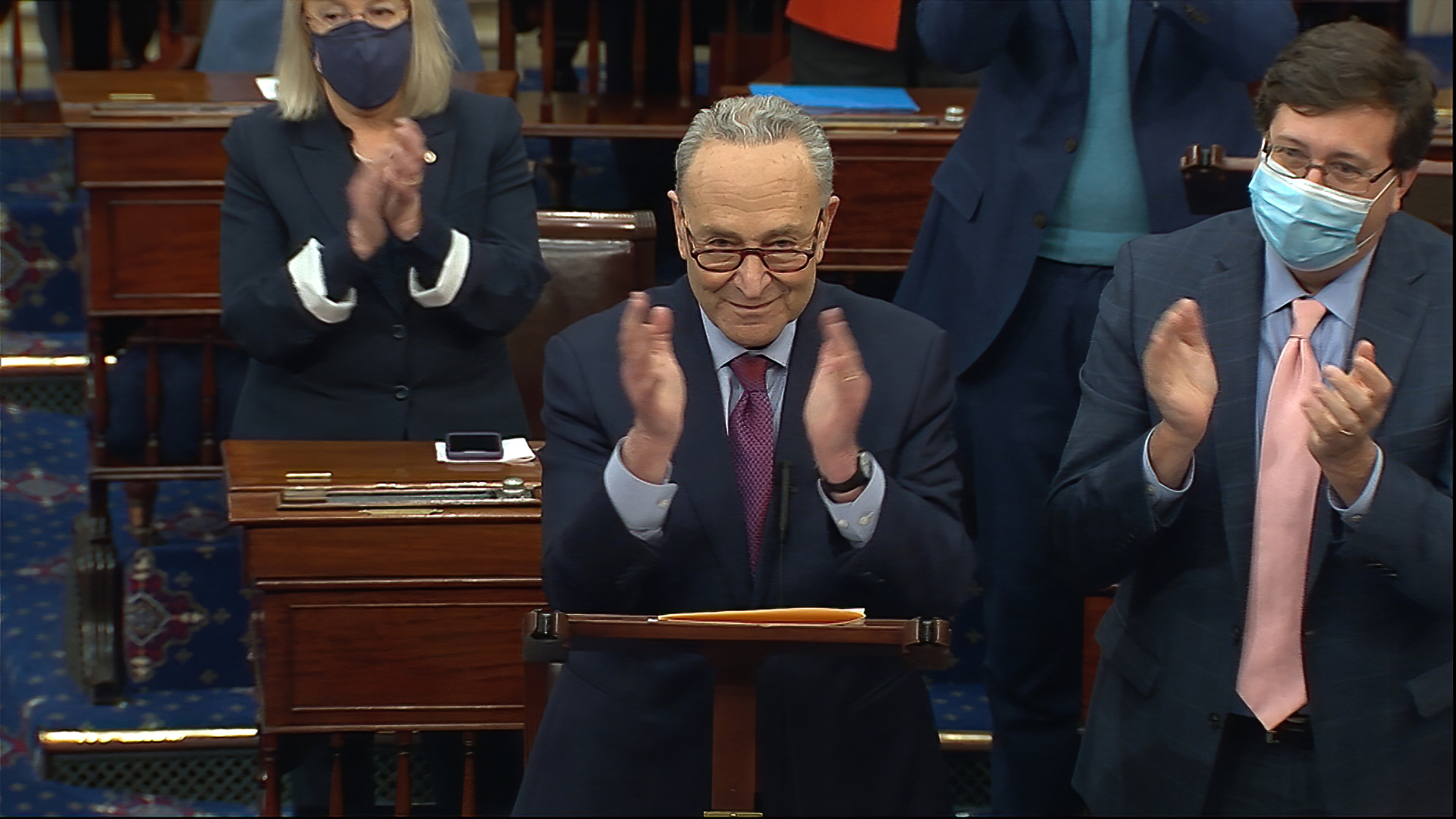
And Senate Majority Leader Chuck Schumer defended the relief bill's passage along party lines, saying it showed the Republicans that they could do it alone.
But Democrats have faced fierce pressure to stay united to pass the administration's top legislative priority before March 14, when jobless benefits are set to expire for millions of Americans.
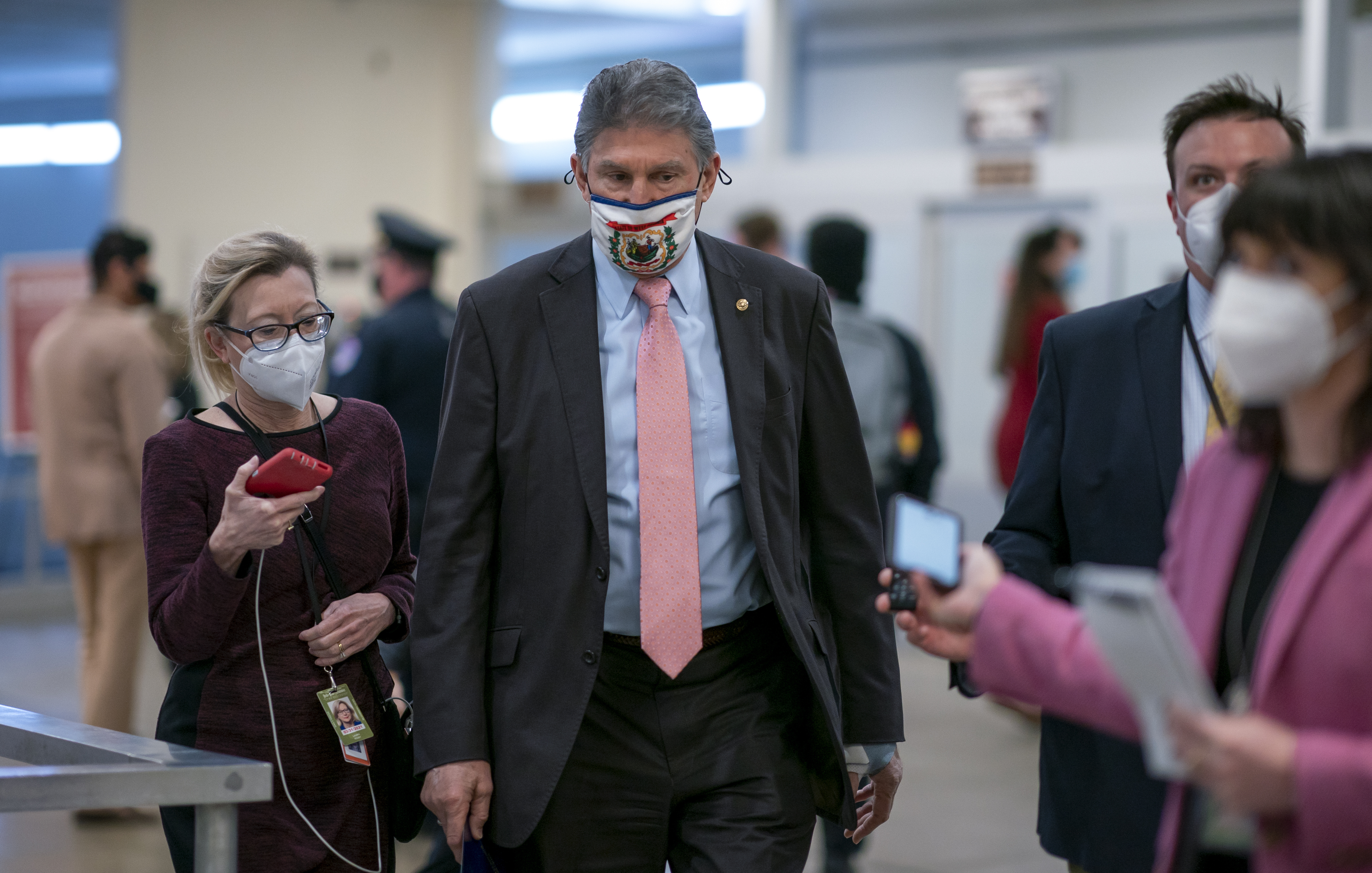
West Virginia Senator Joe Manchin's unexpected opposition on Friday to a Democratic deal boosting unemployment benefits ground the Senate to a halt, prompting a furious lobbying effort between the two parties.
EARLIER: US Congress passes $2.47 trillion COVID relief package
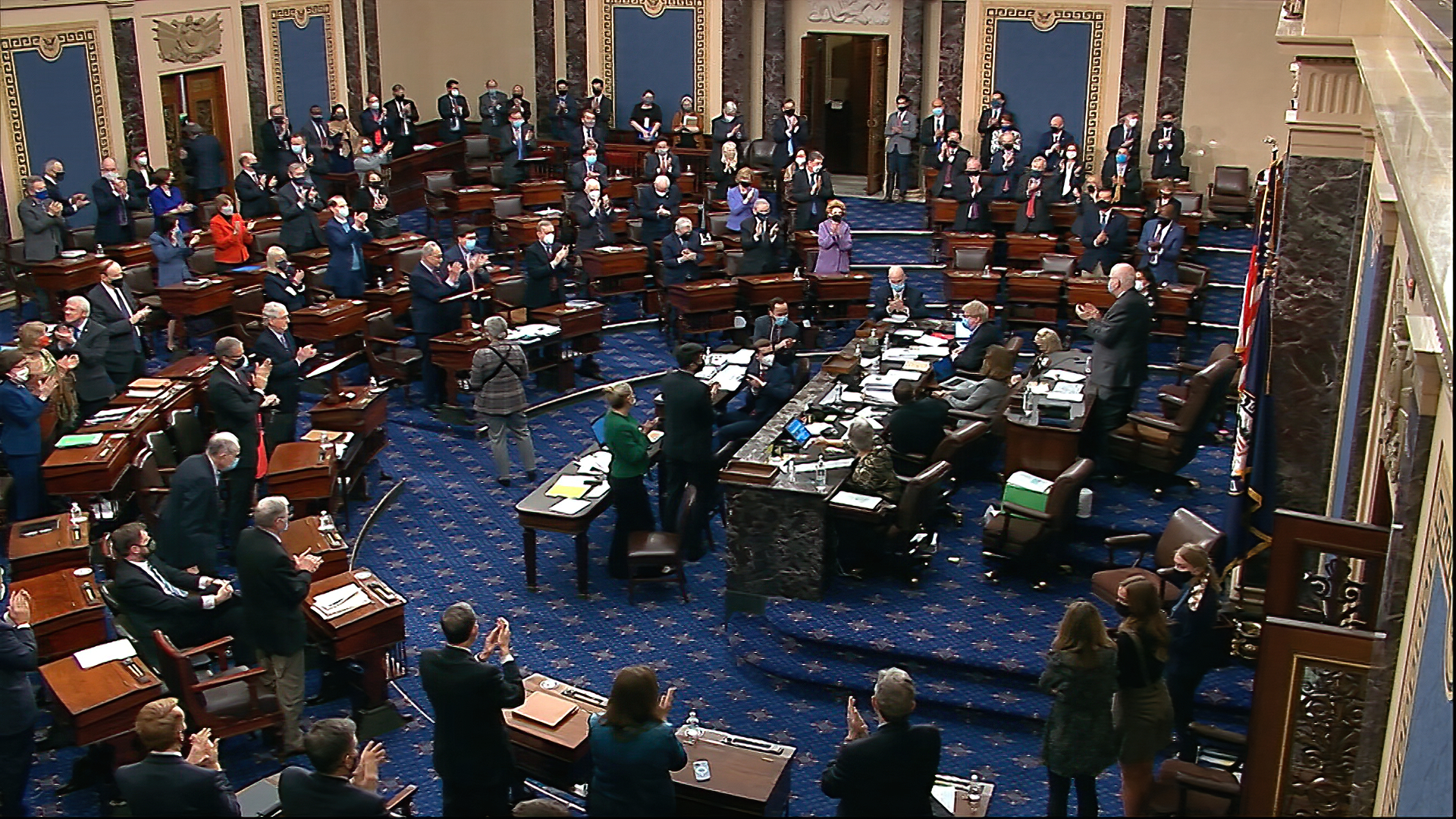
Democrats kept a Senate roll call vote open for 11 hours and 50 minutes – the longest in recent history – as Manchin signaled he would accept the Republicans' less generous proposal.
The dispute was a sign of the centrist Democrat's power in the 50-50 Senate, where Democrats control the narrowest possible majority, and an example of how a single senator can derail the President's agenda.
After a long negotiation on Friday evening, and with a flurry of other amendments to consider, Manchin finally agreed to extend $300 weekly unemployment benefits through September 6, about a month earlier than what Democrats had envisioned.
The West Virginia Democrat also limited a provision to make the first $10,200 in benefits nontaxable apply only to households making less than $150,000.
"We have reached a compromise that enables the economy to rebound quickly while also protecting those receiving unemployment benefits from being hit with unexpected tax bills next year," said Manchin in a statement.
White House press secretary Jen Psaki said on Friday evening that Biden "supports the compromise agreement, and is grateful to all the Senators who worked so hard to reach this outcome."
The nearly $2 trillion package includes up to $1,400 stimulus checks to many Americans, and billions of dollars for states and municipalities, schools, small businesses and vaccine distribution.
It also extends a 15 per cent increase in food stamp benefits from June to September, helps low-income households cover rent, makes federal premium subsidies for Affordable Care Act policies more generous and gives $8.5 billion for struggling rural hospitals and health care providers.
The Senate passed the bill after a vote-a-rama, a Senate tradition that the minority party uses to put members of the majority on the record on controversial issues in an effort to make changes to a bill that they oppose.
Senate Republicans introduced a number of amendments overnight that were narrowly defeated by the Democratic majority.
Senator Susan Collins of Maine pushed to replace Biden's bill with a $650 billion version.
Senator Marco Rubio of Florida wanted to tie school funding to reopening requirements.
Senator Tim Scott of South Carolina advocated for greater transparency for state nursing home investigations following the scandal in New York.
And Senator Mitt Romney of Utah proposed cutting billions of dollars from the bill to states that had better-than-expected revenues despite the pandemic, noting that California actually ran a big surplus last year.
But the vast majority of the GOP amendments failed, along with one by Montana Democratic Senator Jon Tester to require Biden to approve the Keystone XL pipeline, which the President blocked in January by executive order.
Only a few amendments were adopted, including Oregon Senator Ron Wyden's compromise with Manchin on unemployment benefits, New Hampshire Senator Maggie Hassan's measure incentivising schools to reopen in-person learning and Kansas Senator Jerry Moran's effort to strike a bipartisan deal protecting veterans' educational benefits for legitimate institutions.
The first, extraordinarily long amendment vote – on a measure to raise the minimum wage to $15 a hour, introduced by Vermont Senator Bernie Sanders – was an early test of Democratic party unity.

Eight senators in the Democratic conference – Manchin, Tester, Hassan, Kyrsten Sinema of Arizona, Angus King of Maine, Jeanne Shaheen of New Hampshire and Chris Coons and Tom Carper of Delaware – opposed the minimum wage amendment, along with every Republican senator.
Democrats then rejected a Republican motion to adjourn late Friday, banking that Republicans will grow weary and won't offer as many amendments.
Early Saturday, the Senate adopted Ohio Republican Senator Rob Portman's plan to extend weekly jobless benefits at $300 through July 18.
Manchin also voted for the GOP proposal, but the Democrats' alternative plan, which was adopted early Saturday morning, will superseded the Portman amendment.
The Senate's effort to pass the $1.9 trillion legislation kicked into high gear on Thursday when Democratic senators and Vice President Kamala Harris voted to open debate.
Republicans then forced the 628-page bill to be read aloud.
Schumer, a New York Democrat, criticised Republican tactics to slow down the process and on Friday thanked the Senate floor staff for the nearly 11 hours of reading the bill, calling them "the unsung heroes of this place".
The Democratic-controlled House passed the legislation at the end of last month, along with an increase in the minimum wage to $15 a hour.
But the Senate parliamentarian ruled that the wage hike could not be included in the Senate's version of the bill under reconciliation.
That change and others, including the alterations to jobless benefits, will force the House to vote again on the legislation, which is expected to happen next week.