One in 10 adult New Zealanders say they have sent harmful messages online – but more than a quarter say they do it for a laugh, according to a new survey.The study by Netsafe surveyed 1161 adults to determine if they had sent harmful…
Tag Archives: oceania
Australia's uncomfortable truth about home-grown terror starts small
At a fruit and vegetable market in Melbourne’s southeast, a pony-tailed man brazenly strolled through the stalls wearing an armband featuring the unmistakable hate symbol of Nazi Germany – the swastika.The man, whose image has been…
Herald morning quiz: February 9
Test your brains with the Herald’s morning quiz. Be sure to check back on nzherald.co.nz at 3pm for the afternoon quiz.
$45m superyacht linked to Google co-founder Larry Page in Whangārei
A $45 million superyacht formerly owned by a Google co-founder is in Whangārei, undergoing a refit. Senses, a 59-metre vessel weighing almost 1000 tonnes, is currently sitting in a slipway (boat ramp) at Ship Repair NZ’s Port…
Water fired at crowd as anti-coup protests swell in Myanmar
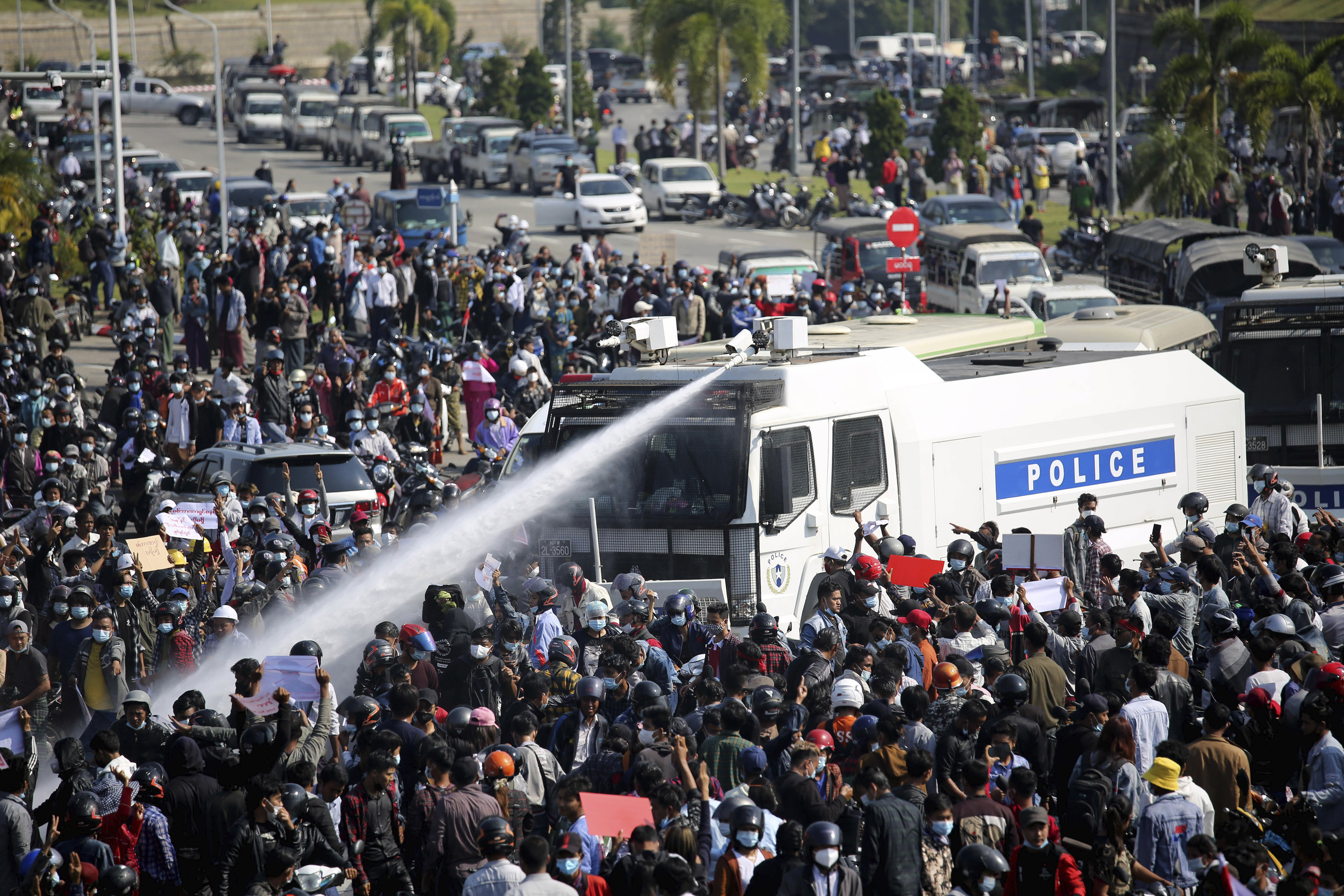
Police fired a water cannon at hundreds of protesters in Myanmar's capital on Monday who are demanding the military hand power back to elected officials, as demonstrations against last week's coup intensified and spread to more parts of the country.
The demonstrations in Naypyitaw, ongoing for several days, are especially significant since the city, whose population includes many civil servants and their families, has no tradition of protest and has a heavy military presence.
READ MORE: 'Deep concern' after Australian detained in Myanmar
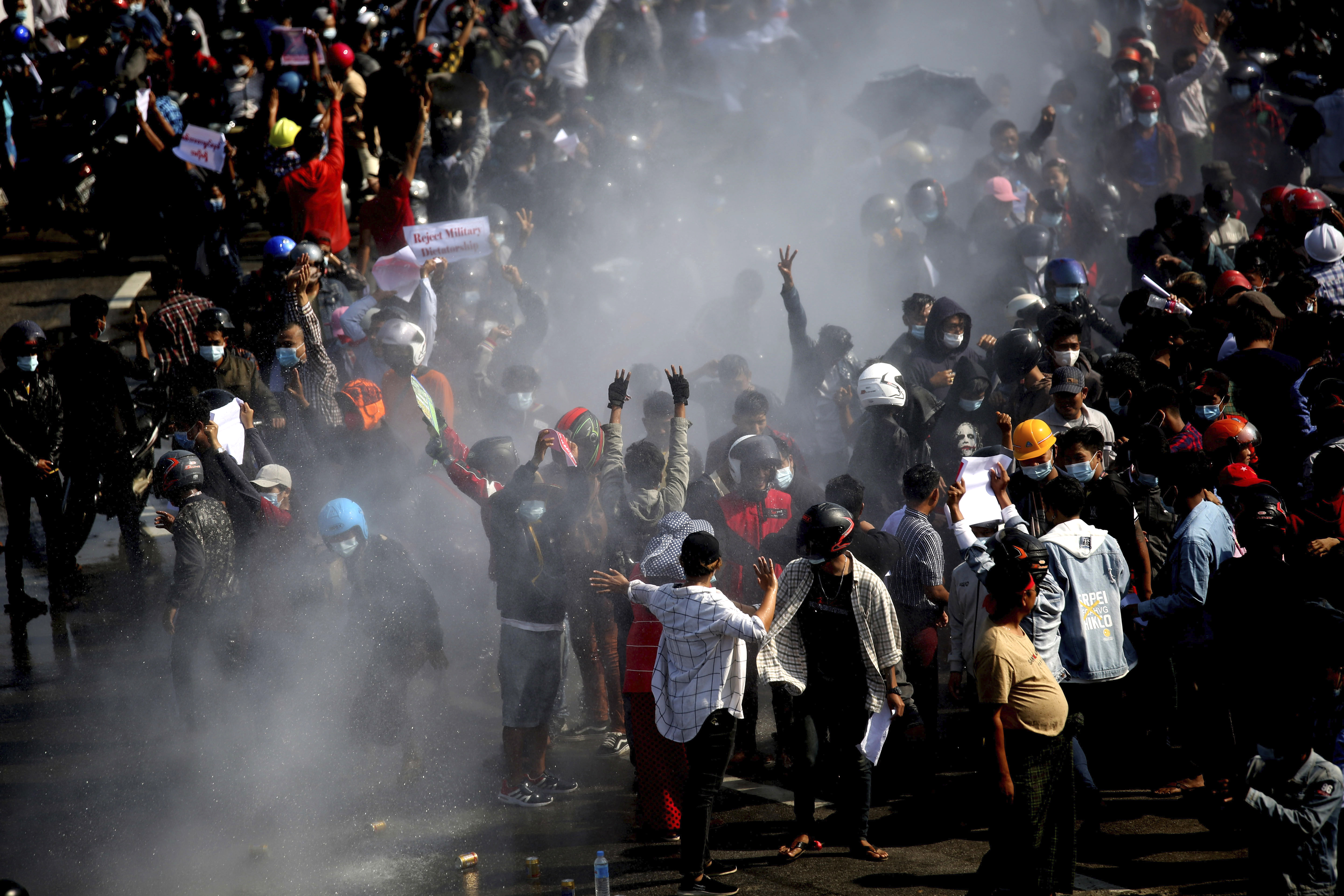
A protest also swelled at a major downtown intersection in the country's largest city, Yangon, with people chanting slogans, raising a three-finger salute that is a symbol of resistance and carrying placards saying, "Reject the military coup" and "Justice for Myanmar."
There were also reports of new demonstrations in towns in the north, southeast and east of the country, as well as in the city of Mandalay, where there was a procession of marchers and motorbikes.
"We do not want the military junta," Daw Moe, a protester in Yangon, said.
"We never ever wanted this junta. Nobody wants it. All the people are ready to fight them."
State media for the first time on Monday made reference to the protests, claiming they were endangering the country's stability.
"Democracy can be destroyed if there is no discipline," a statement from the Ministry of Information said, read on state television station MRTV.
"We will have to take legal actions to prevent acts that are violating state stability, public safety and the rule of law."
READ MORE: Myanmar blocks Facebook as resistance grows to coup
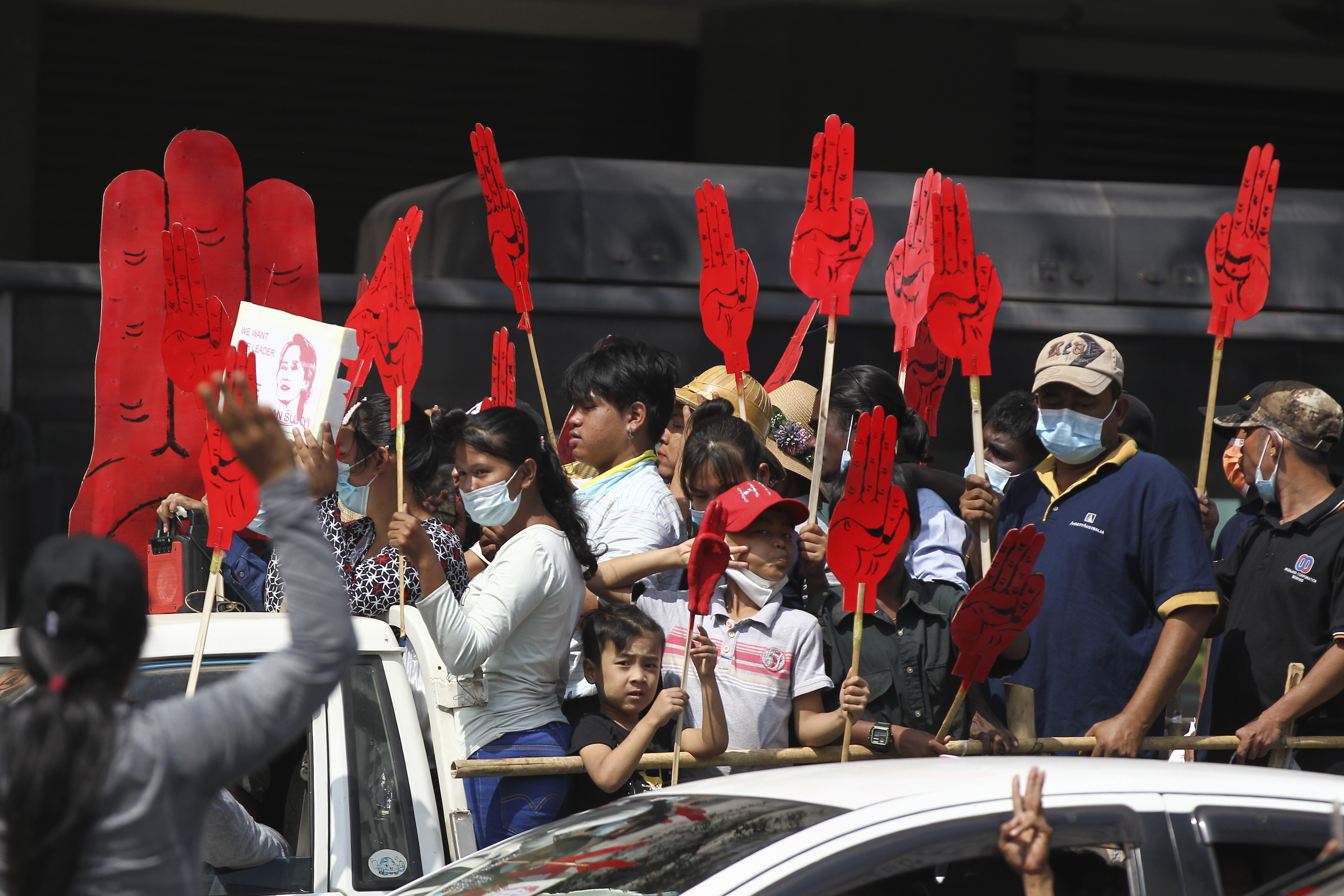
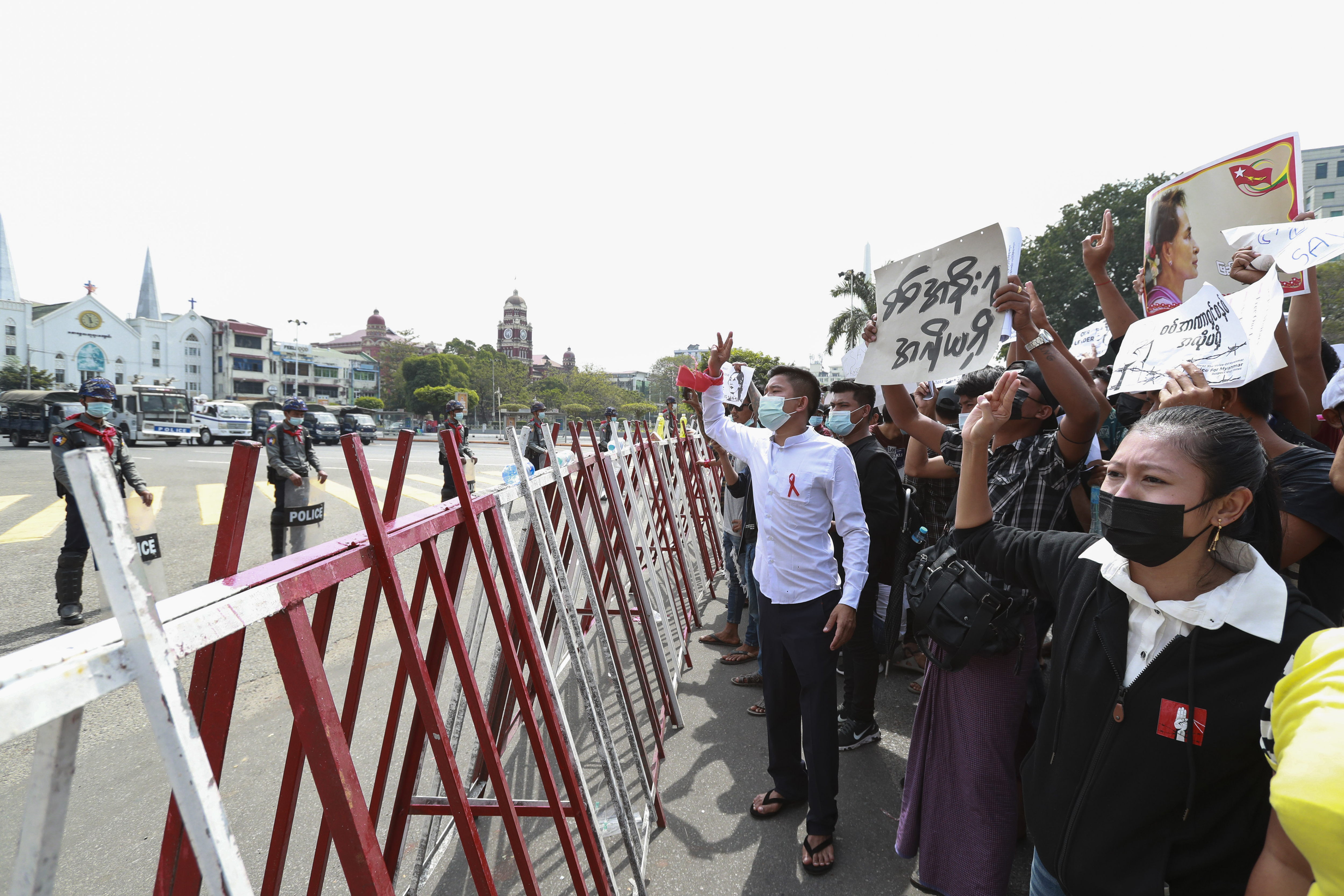
The coup was seen internationally as a shocking setback for Myanmar, which had been making progress toward democracy in recent years after five decades of military rule.
The takeover came the day newly elected lawmakers were supposed to take their seats in Parliament after November elections.
The generals have said that vote was marred by fraud, though the country's election commission has dismissed that claim.
The growing protests recall previous movements in the Southeast Asian country's long and bloody struggle for democracy.
On Sunday, tens of thousands of protesters rallied at the city's Sule Pagoda, which was a focal point of demonstrations against military rule during a massive 1988 uprising and again during a 2007 revolt led by Buddhist monks.
The military used deadly force to end both of those uprisings.
Aside from a few officers, soldiers have not been in the streets at protests this past week.
Photos of the standoff in Naypyitaw on Monday showed a vast crowd of protesters hemmed in on several sides by large numbers of police and police vehicles.
Officers there trained a water cannon on the crowd, which was gathered near a giant statue of Aung San, who led the country's 1940s fight for independence from Britain and is the father of Aung San Suu Kyi, the elected leader who was deposed by last week's takeover.
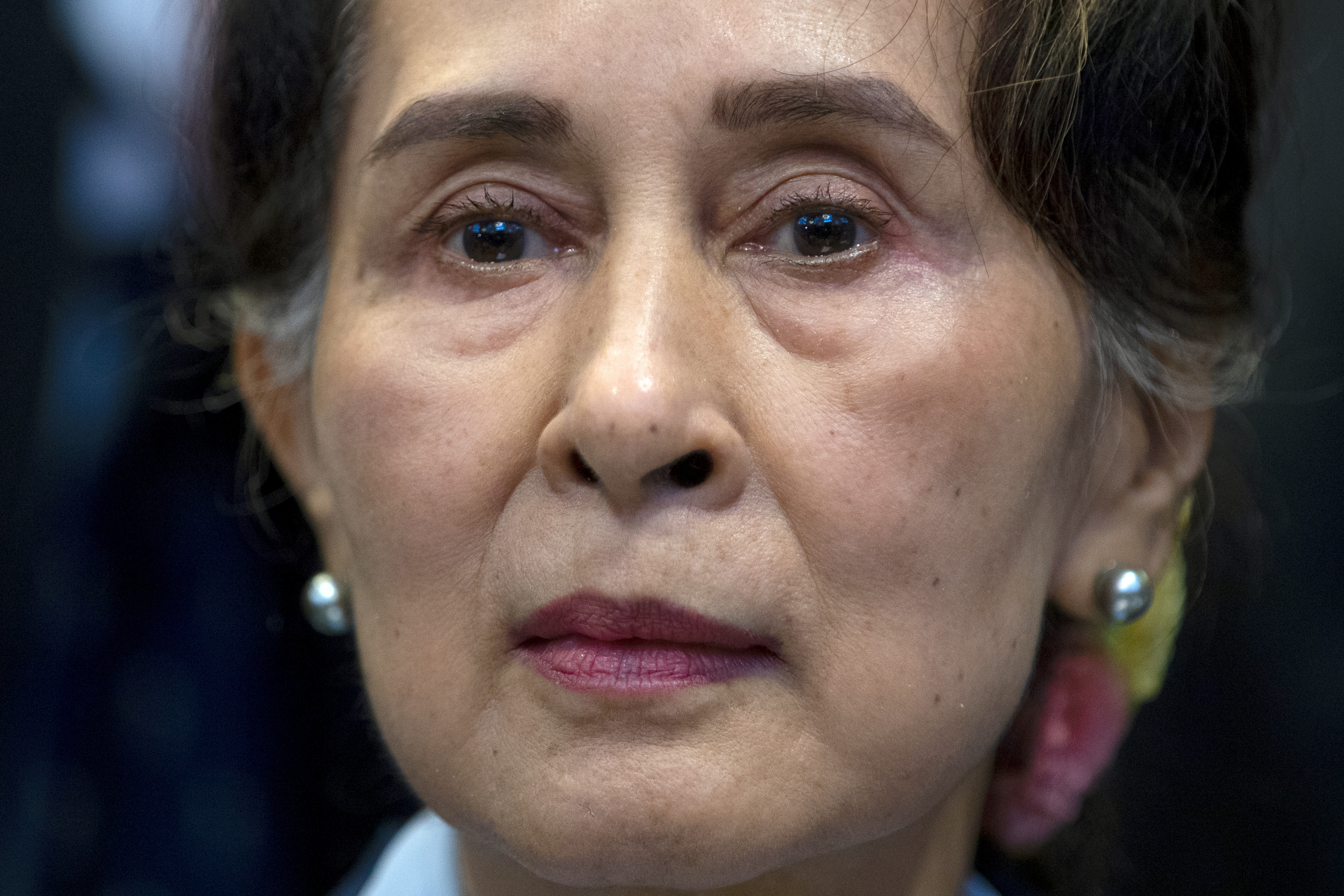
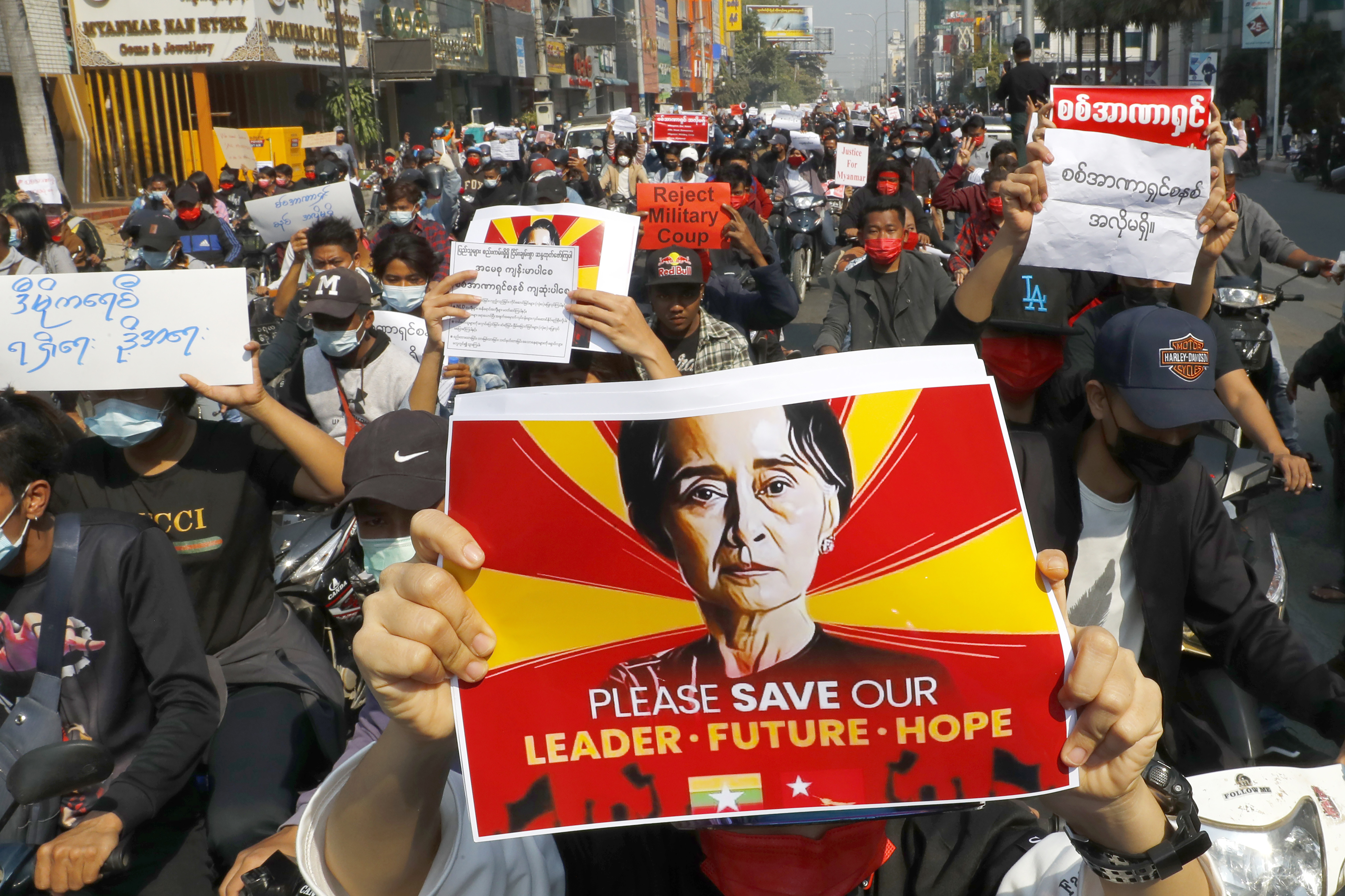
Suu Kyi, who became an international symbol of the country's fight for freedom while detained in her home for 15 years and earned the Nobel Peace Prize for her efforts, is now back under house arrest.
The risks of such confrontations were highlighted on Sunday in the town of Myawaddy, on Myanmar's eastern border with Thailand, when police shot into the air in an effort to disperse a crowd.
The Assistance Association for Political Prisoners, an independent watchdog group, said one woman had been shot, without providing details about her condition.
There have been no signs that either the protesters or the military will back down in their fight over who is the country's legitimate government: the politicians from Suu Kyi's National League for Democracy party, which won the recent elections in a landslide, or the junta.
Suu Kyi's party has asked for international recognition as the legitimate representatives of the people.
A call for a general strike was issued late on Sunday by several activist groups in Yangon, but it was not clear if it had been widely circulated or adopted by the informally organised civil disobedience movement at the forefront of the protests.
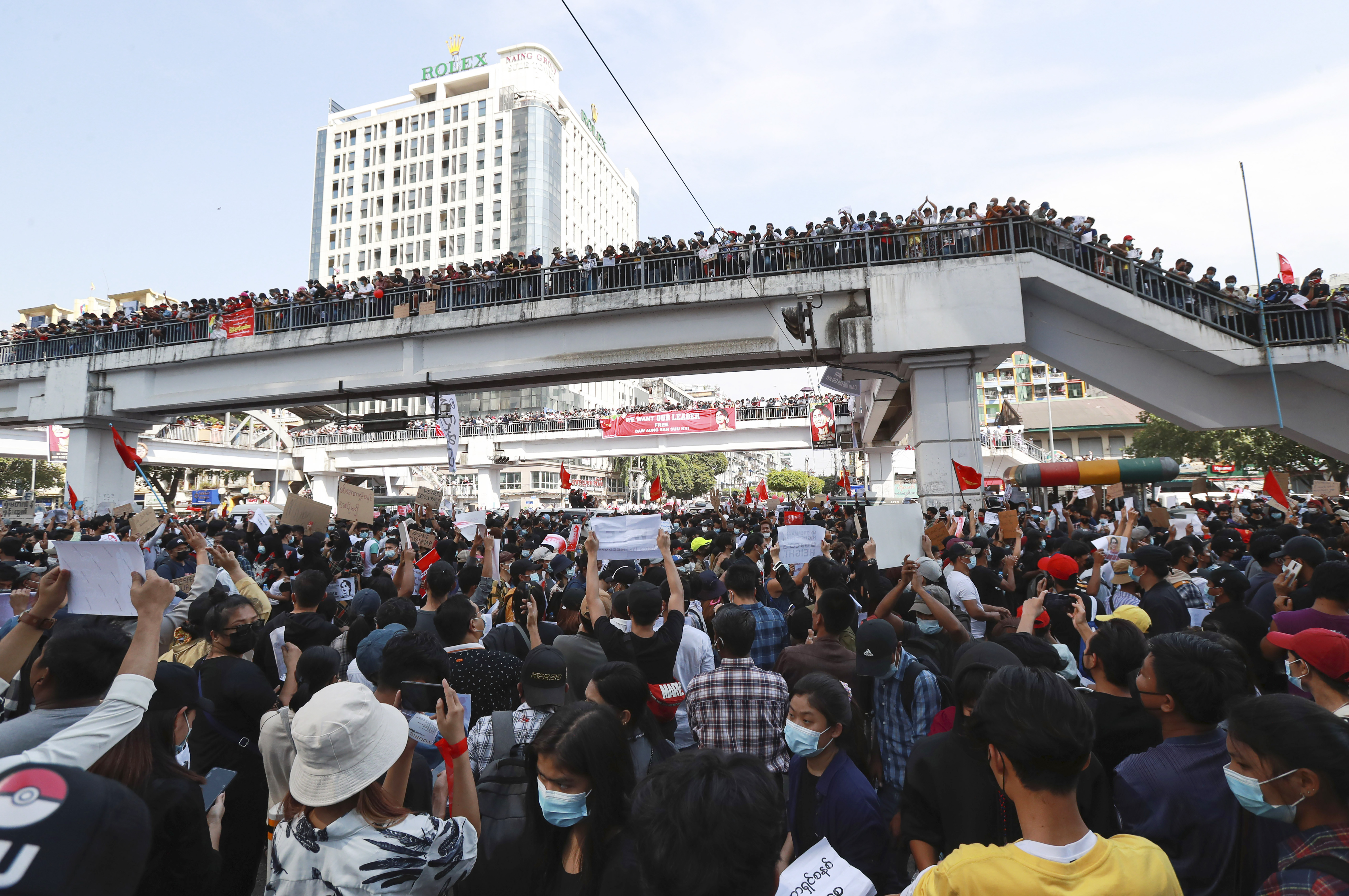
The Assistance Association for Political Prisoners says 165 people, mostly politicians, had been detained since the February 1 coup, with just 13 released.
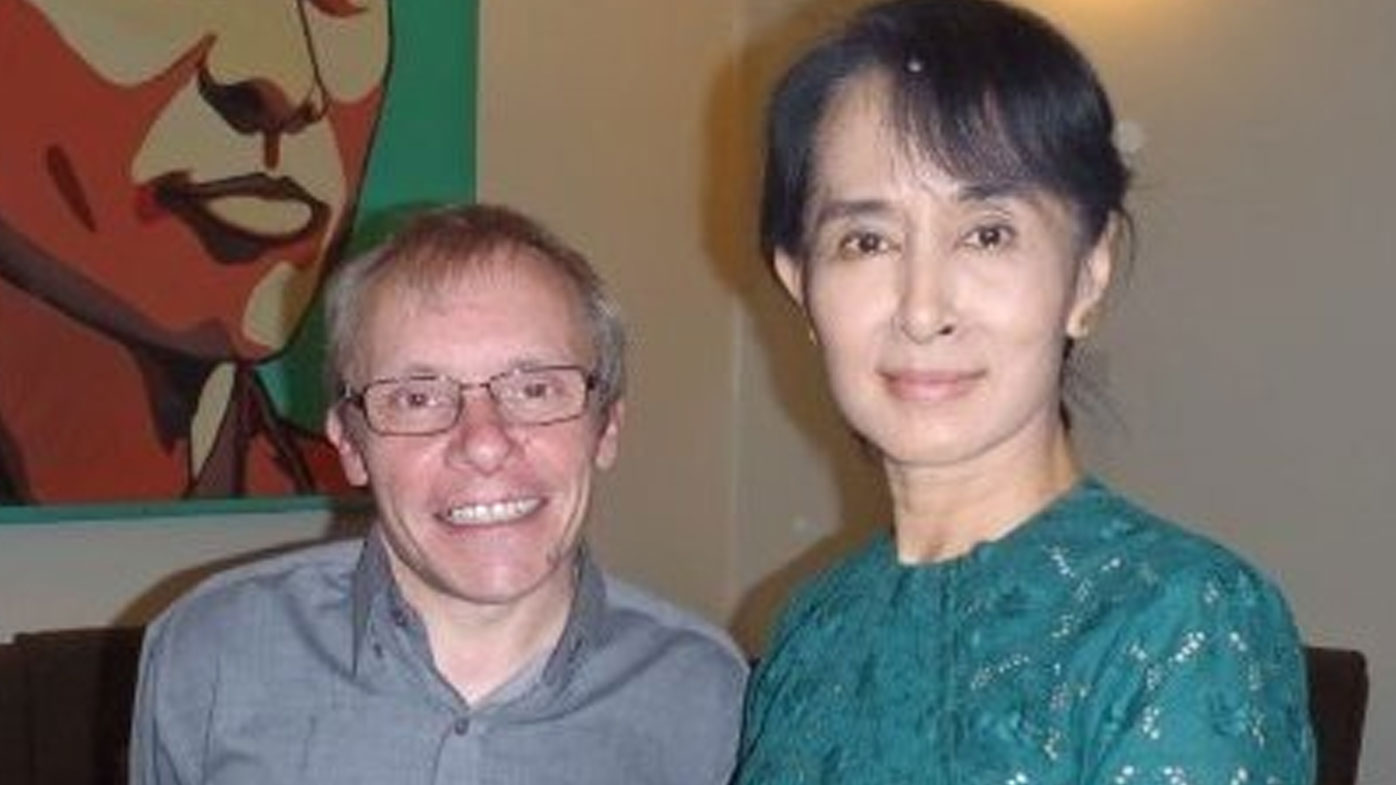
One foreigner has been confirmed held by the authorities, Sean Turnell, an economist at Australia's Macquarie University who was an adviser to Suu Kyi's government.
He was detained Saturday under unclear circumstances.
A statement issued on Monday by the office of Australian Foreign Minister Marise Payne said he was being provided with consular support and described him as "a highly regarded advisor, member of the academic community."
"We certainly believe he should be immediately released," the statement read.
The military has accused Suu Kyi's government of failing to act on its complaints that last November's election was marred by fraud, though the election commission said it had found no evidence to support the claims.
Kyrgios, Djokovic through in big first day of Australian Open 2021
The COVID-19 pandemic has not stopped a steady stream of spectators from flooding Melbourne Park for the 2021 Australian Open. But the tennis tournament we know and love looks very different this year.
More deaths from Himalayan glacier confirmed
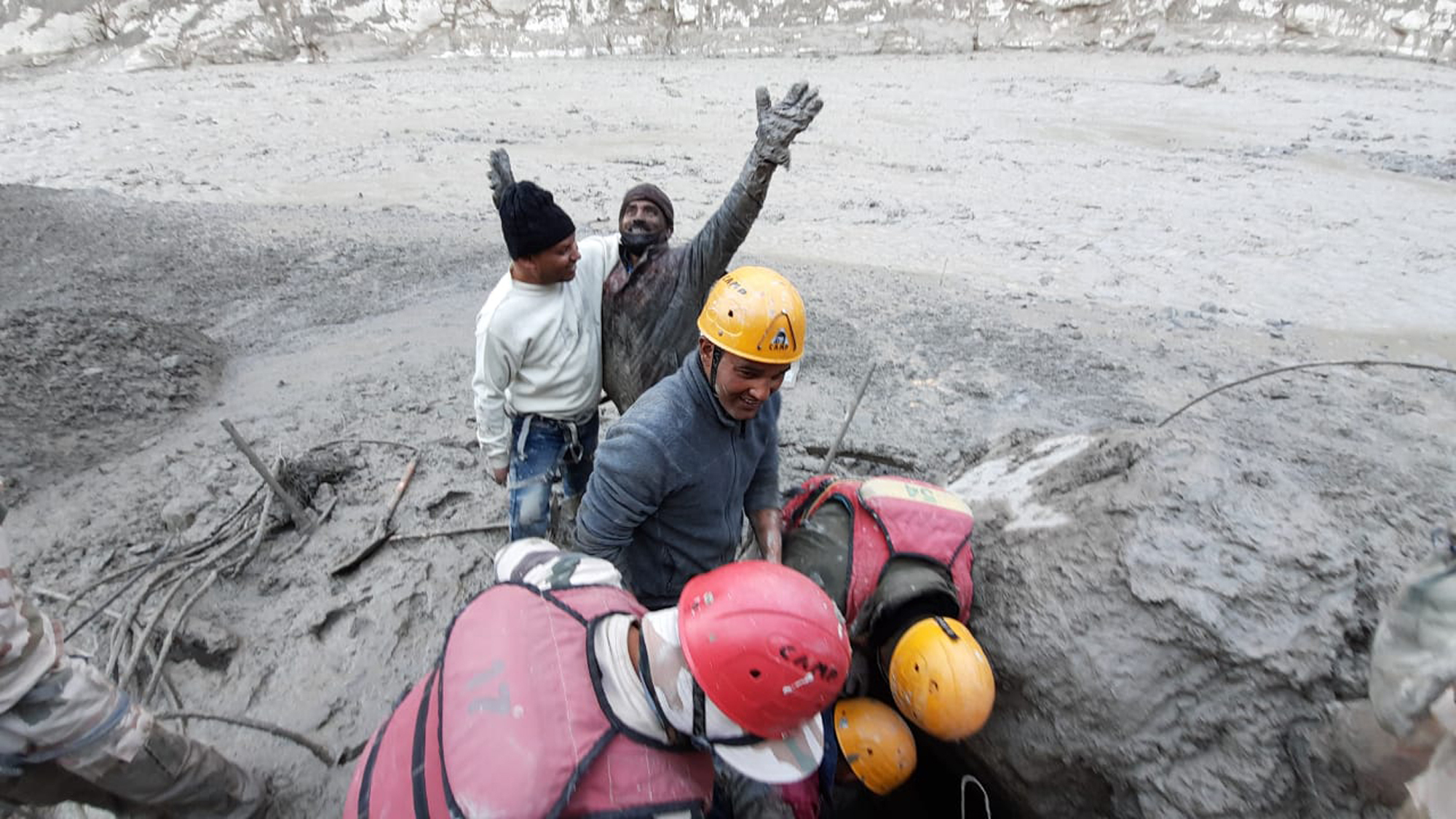
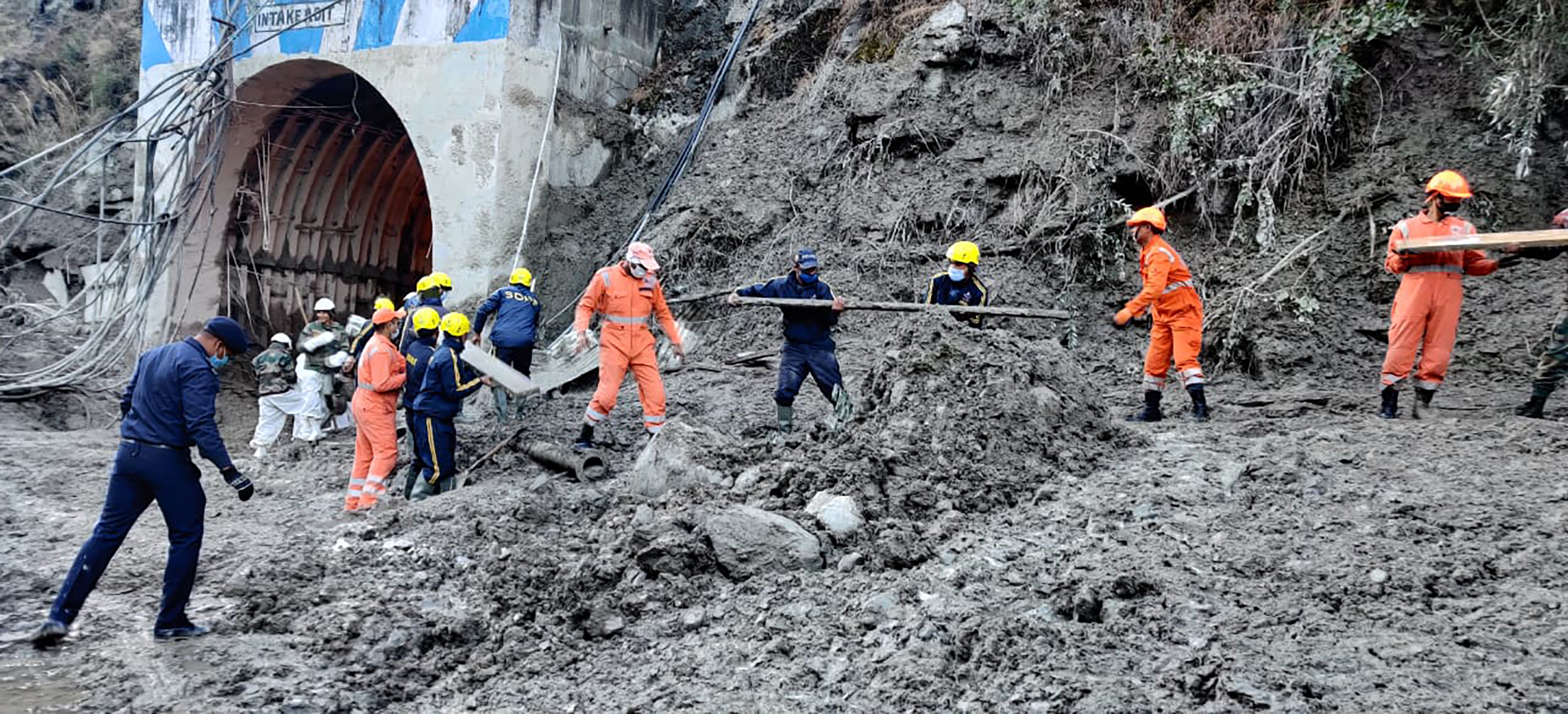
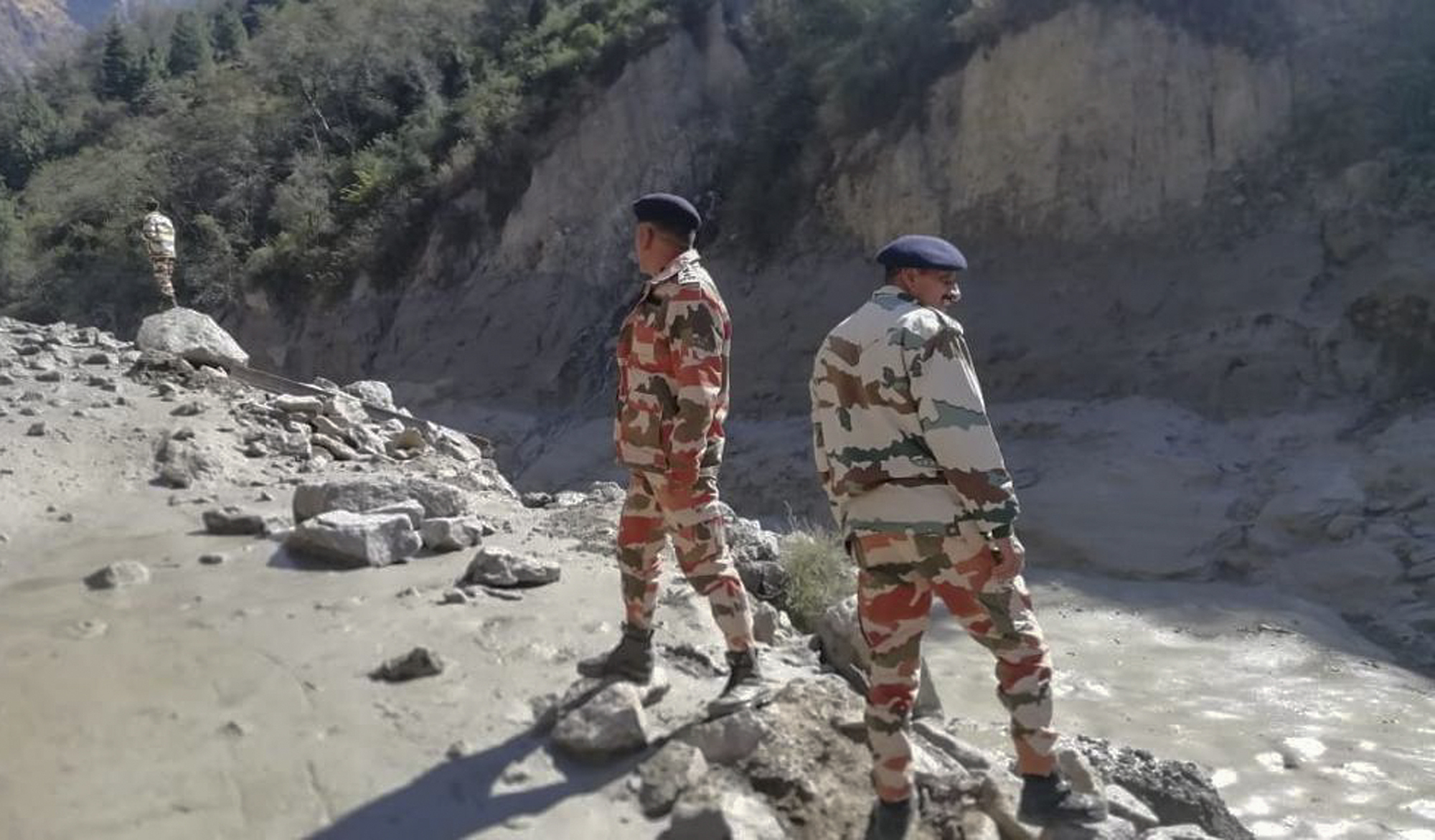
Rescuers in northern India have continued working to rescue more than three dozen power plant workers trapped in a tunnel after part of a Himalayan glacier broke off and sent a wall of water and debris rushing down the mountain in a disaster that has left 18 people dead and 165 missing.
More than 2,000 members of the military, paramilitary groups and police have been taking part in search-and-rescue operations in the northern state of Uttarakhand after yesterday's flood, which destroyed one dam, damaged another and washed away homes downstream.
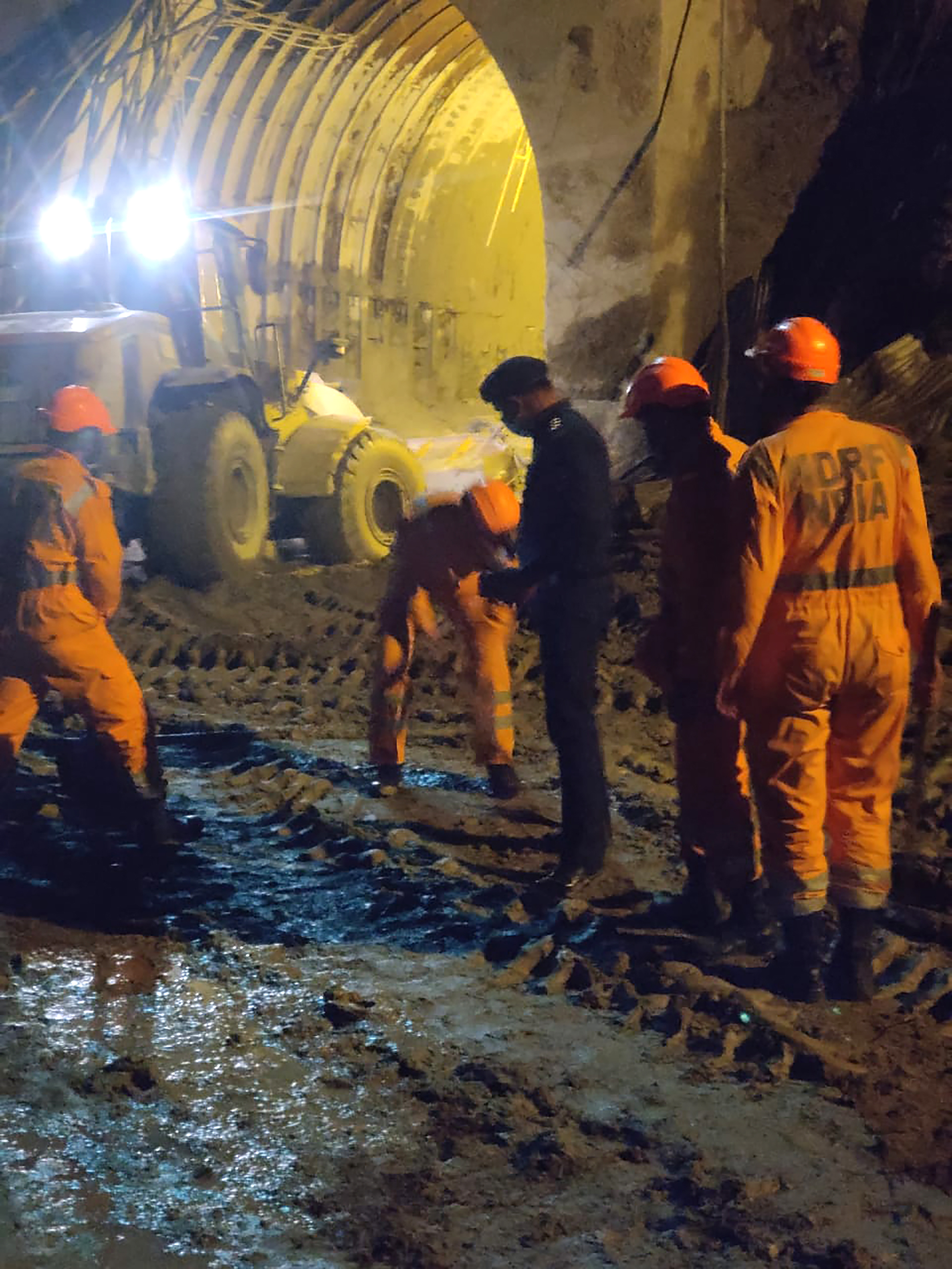
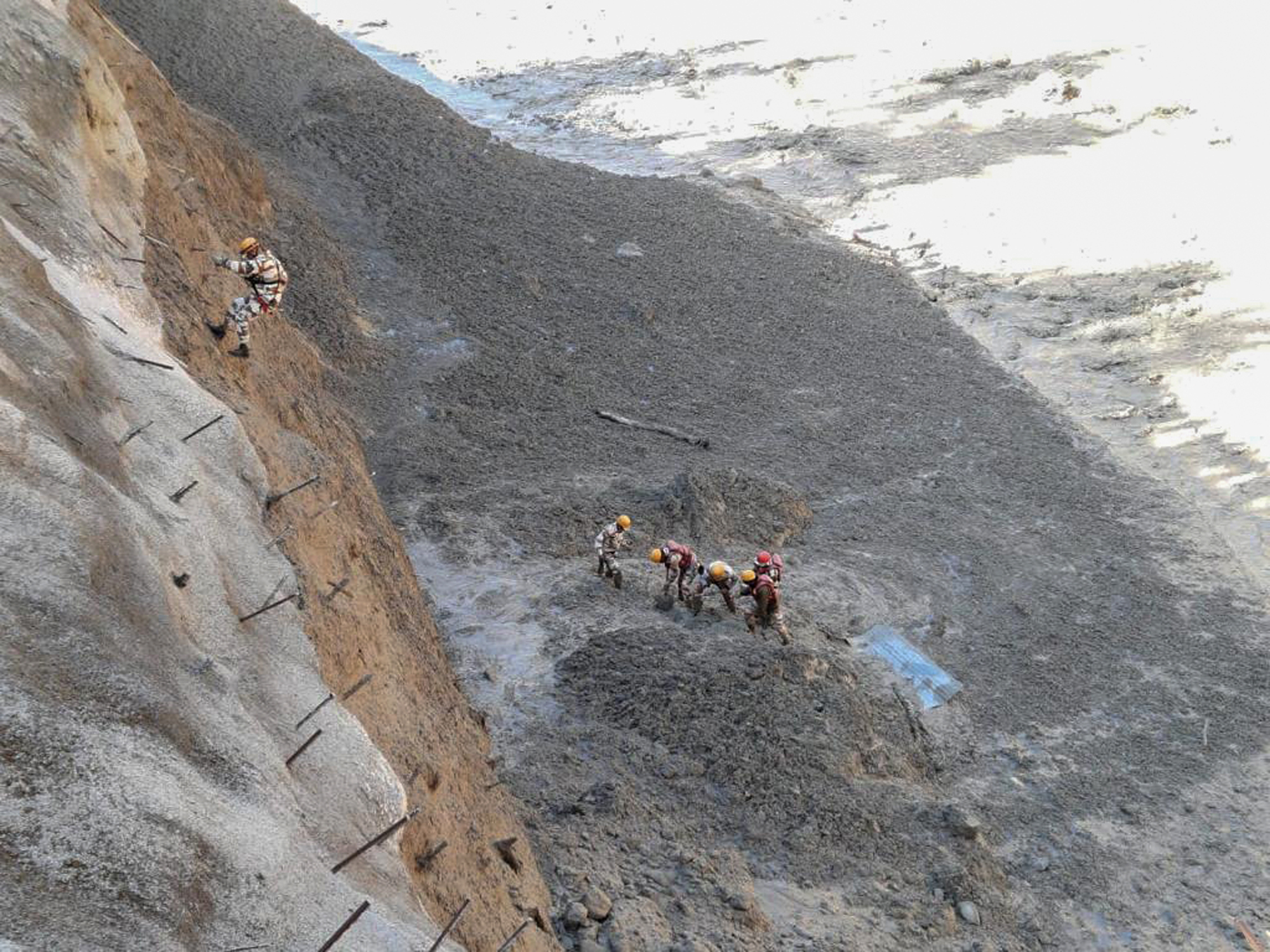
Officials said the focus was on saving 37 workers who are stuck inside a tunnel at one of the affected hydropower plants. Excavators had been brought in the help with the efforts to reach the workers, who have been out of contact since the flood.
READ MORE: India clamps down on free speech to fight farmer protests
"The tunnel is filled with debris, which has come from the river. We are using machines to clear the way," said H. Gurung, a senior official of the paramilitary Indo Tibetan Border Police.
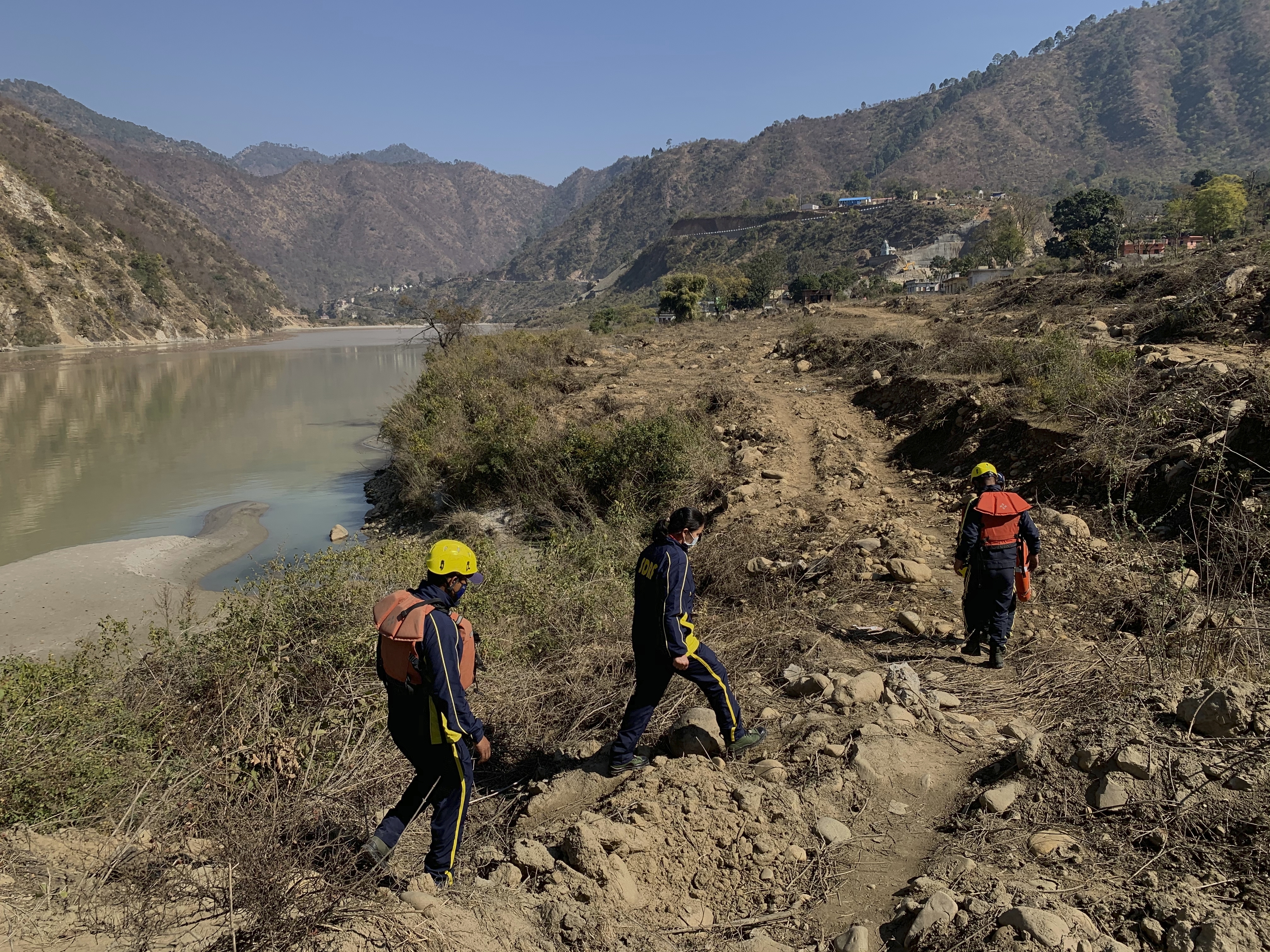
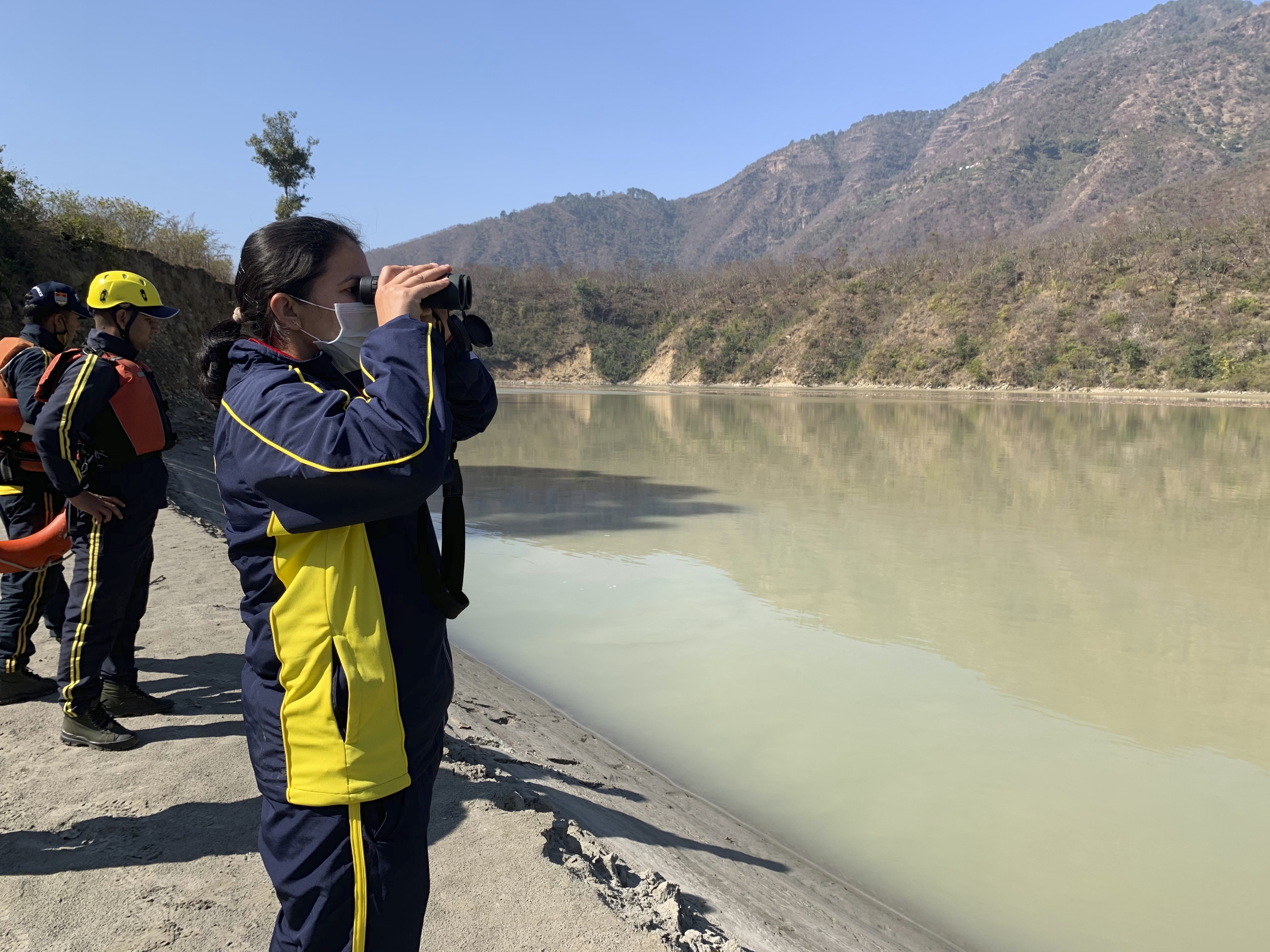
Authorities fear many more are dead and were searching for bodies downstream using boats. They also walked along river banks and used binoculars to scan for bodies that might have been washed downstream.
The flood was caused when a portion of Nanda Devi glacier snapped off yesterday morning, releasing water trapped behind it. Experts said the disaster could be linked to global warming and a team of scientists was flown to the site today to investigate exactly what happened.
The floodwater rushed down the mountain and into other bodies of water, forcing the evacuation of many villages along the banks of the Alaknanda and Dhauliganga rivers.
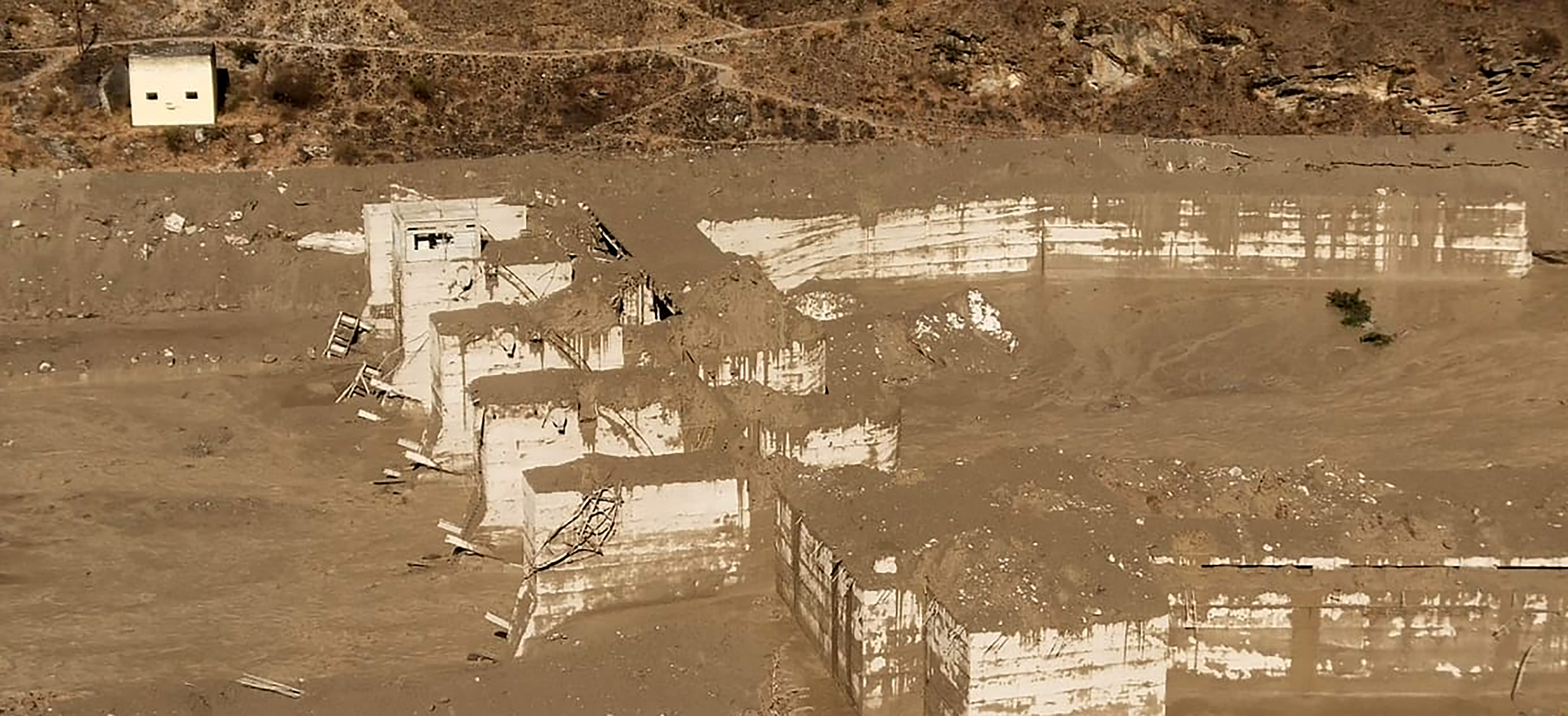
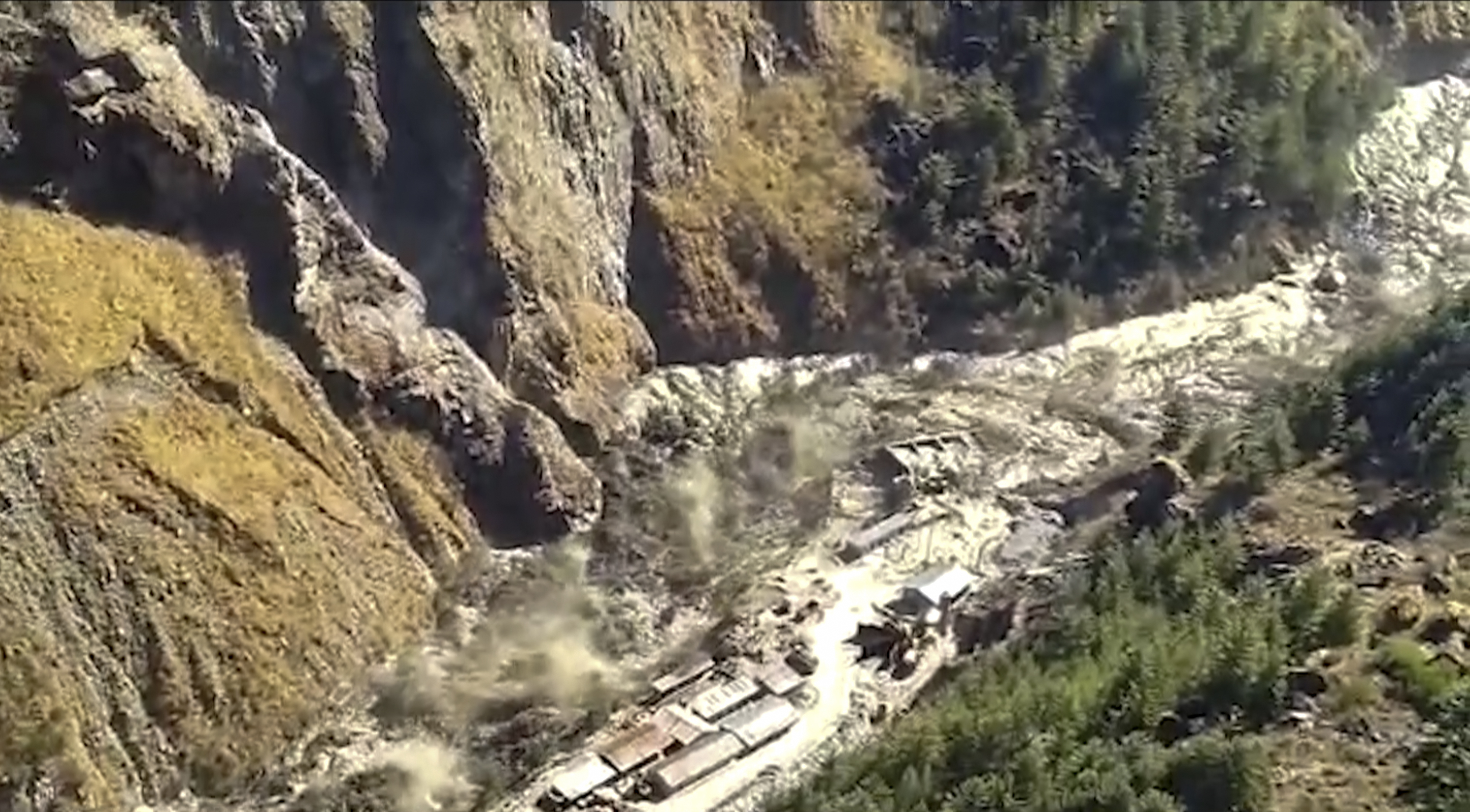
Video showed the muddy, concrete-grey floodwaters tumbling through a valley and surging into a dam, breaking it into pieces with little resistance before roaring on downstream. It turned the countryside into what looked like an ash-colored moonscape.
A hydroelectric plant on the Alaknanda was destroyed and a plant under construction on the Dhauliganga was damaged, said Vivek Pandey, an Indo Tibetan Border Police spokesman.
Flowing out of the Himalayan mountains, the two rivers meet before merging with the Ganges River.
The trapped workers were at the Dhauliganga plant, where on yesterday 12 workers were rescued from a separate tunnel.
A senior government official told The Associated Press that they don't know the total number of people who were working in the Dhauliganga project.
"The number of missing people can go up or come down," S A Murugesan said.
Mr Pandey said today that 165 workers at the two plants, not including those trapped in the tunnel, were missing and at least 18 bodies were recovered.
Those rescued yesterday were taken to a hospital, where they were recovering.
One of the rescued workers, Rakesh Bhatt, told The Associated Press said they were working in the tunnel when water rushed in.
READ MORE: Indian court rules groping child without removing clothes is not sexual assault
"We thought it might be rain and that the water will recede. But when we saw mud and debris enter with great speed, we realised something big had happened," he said.
Mr Bhatt said one of the workers was able to contact officials via his mobile phone.
"We waited for almost six hours — praying to God and joking with each other to keep our spirits high. I was the first to be rescued and it was a great relief," he said.
The Himalayan area where yesterday's flood struck has a chain of hydropower projects on several rivers and their tributaries. Authorities said they were able to save other power units downstream because of timely action taken to release water by opening gates.
The floodwaters also damaged homes, but details on the number and whether any residents were injured, missing or dead remained unclear. Officials said they were trying to track whether anyone was missing from villages along the two rivers.
Government officials airdropped food packets and medicine to at least two flood-hit villages.
Many people in nearby villages work at the Dhauliganga plant, Mr Murugesan said, but as it was a Sunday fewer people were at work than on a weekday,
"The only solace for us is that the casualty from the nearby villages is much less," he said.
Some have already started pointing at climate change as a contributing factor given the known melting and breakup of the world's glaciers, though other factors such as erosion, earthquakes, a buildup of water pressure and volcanic eruptions have also been known to cause glaciers to collapse.
Anjal Prakash, research director and adjunct professor at the Indian School of Business who has contributed to UN-sponsored research on global warming, said that while data on the cause of the disaster was not yet available, "this looks very much like a climate change event as the glaciers are melting due to global warming."
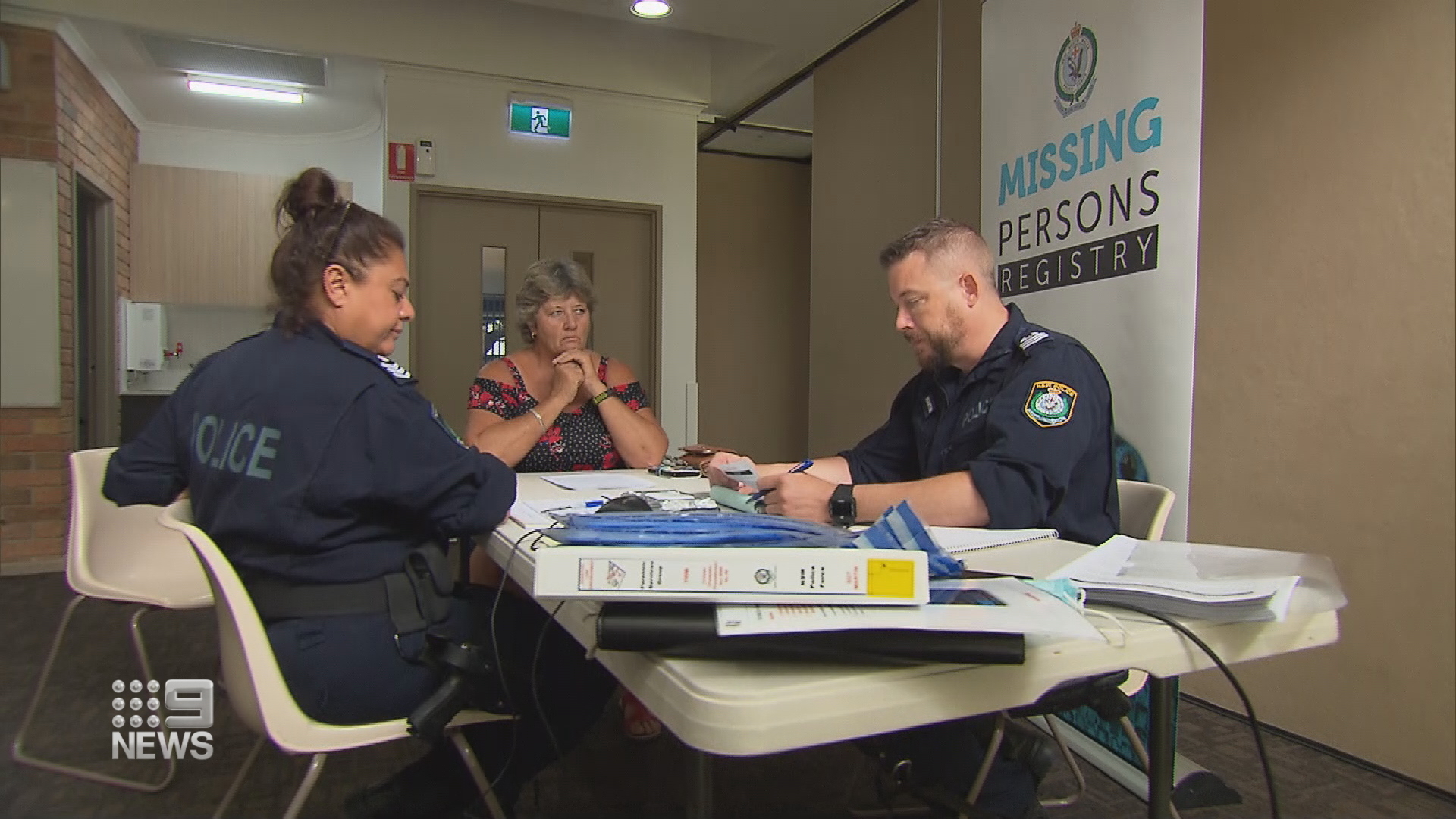
Pop-up DNA centre draws hundreds searching for missing relatives
A world-first pop-up DNA collection centre has been inundated by the families of missing people wanting to volunteer their samples.
The NSW Police Missing Persons Registry is hoping familial DNA may help to identify more than 300 unidentified bones and bodies found in NSW since 1964.
Susan Boxsell was the first person through the doors on the centre in Coffs Harbour today.
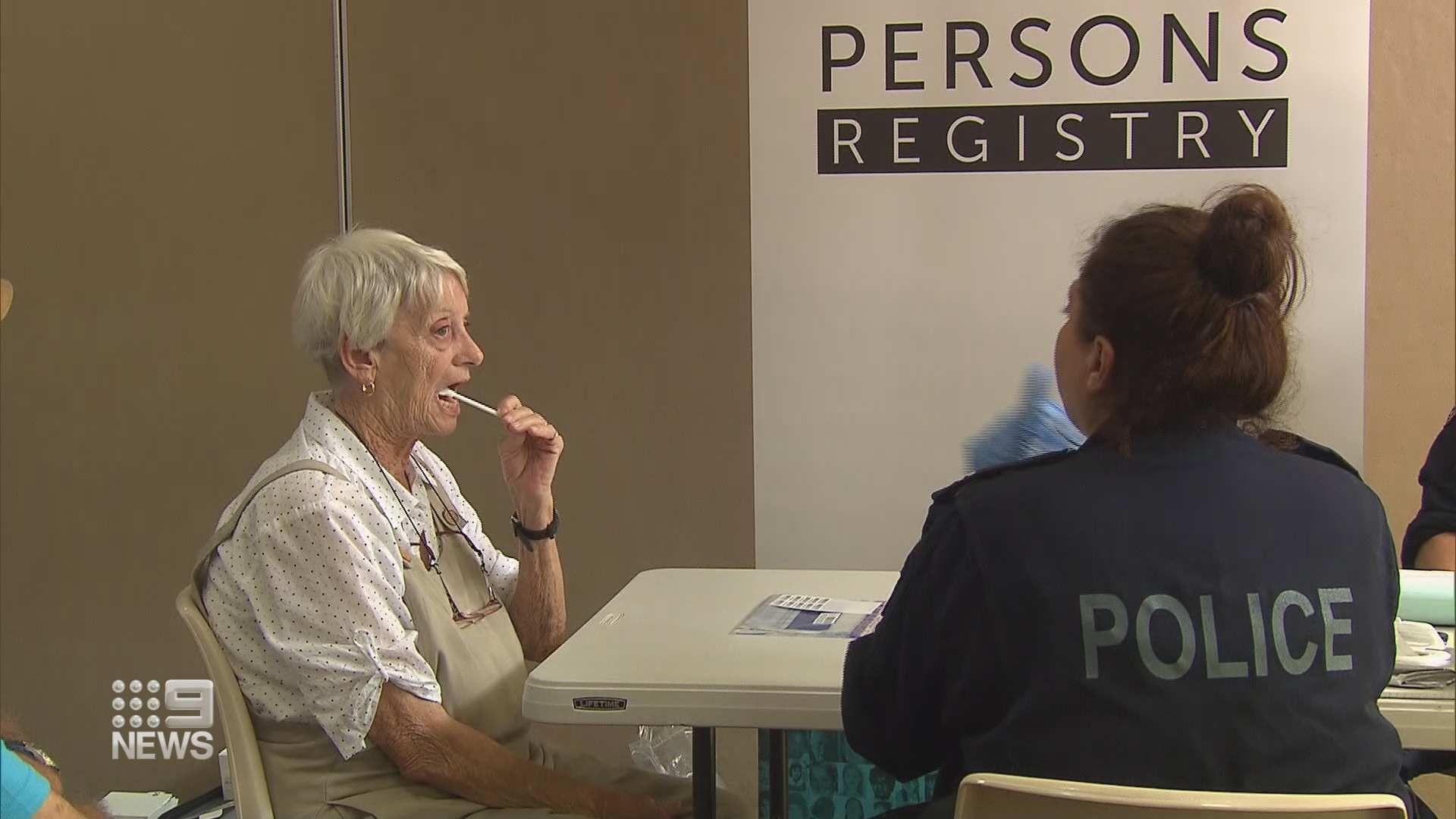
READ MORE: New DNA links mystery jawbone to mariner lost in 1979 boating tragedy
Her brother Ronald "Ronny" Pye went missing in Hervey Bay in 1967, never returning to his Arncliffe home in Sydney.
"This is my last opportunity to do what I can do," she said.
Missing Persons Registry boss Detective Inspector Glen Browne welcomed families at the door before guiding them through to a room where they were interviewed before providing a buccal swab.
"It is our last chance, probably the only chance we have left to link up long-term missing persons with unidentified remains," he said.
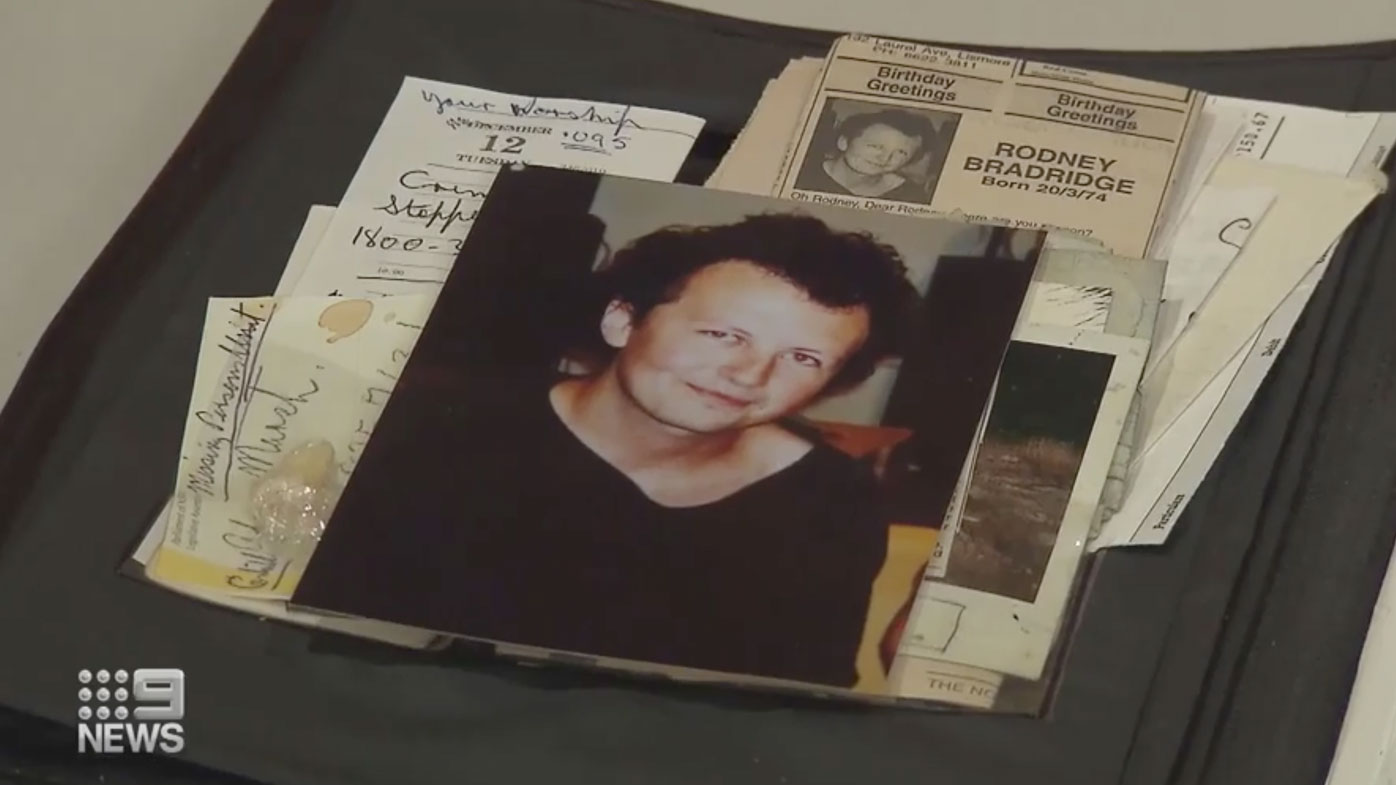
Father and son Craig and Peter Bradridge provided samples but also came with a lock of hair and the wisdom teeth of Rodney Bradridge.
READ MORE: $250,000 reward to help solve cold case murder 21 years on
Rodney, a musician who had lived in Dee Why on Sydney's Northern Beaches, was due to meet his mother at the end of a camping trip at Mullumbimby in 1997.
He vanished without a trace, and police and his family fear he met with foul play.
His brother Craig said he felt mixed emotions being at the centre but was hopeful.
"Mixed feelings but at the same time closure would be beneficial to not knowing," he told 9News.
"To be able to pay our final respect would be fantastic."
His father Peter said it was hard to hope too much.
"You get to a stage where it's overwhelming," he said.
"You don't want to hope too much because you get your hopes up and then they are dashed again."
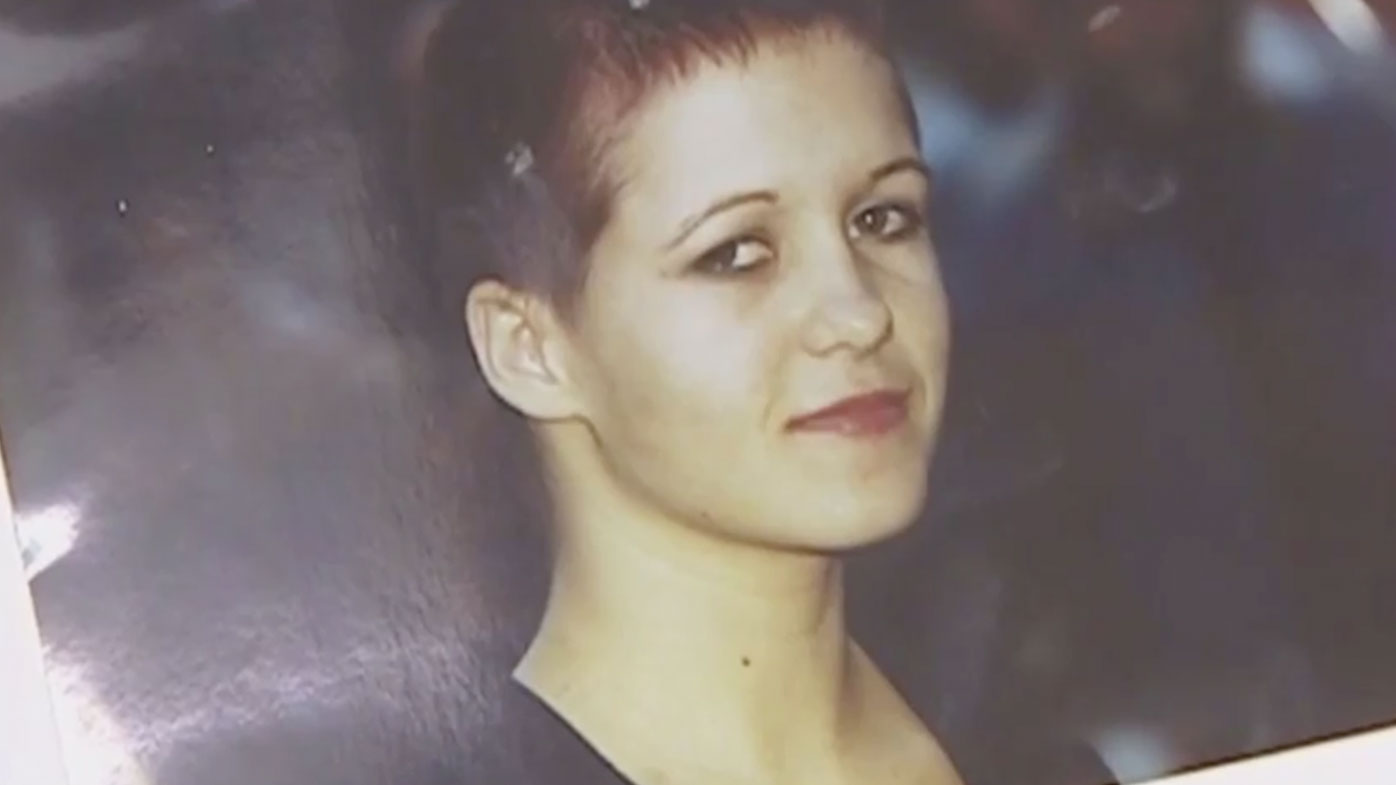
Malila Howell's daughter Rose went missing near Bellingen in 2003 after she was last seen hitchhiking. A coroner found it was likely she was killed by someone.
Ms Howell attended the pop-up centre and said she was comforted police were still looking at ways to find missing people.
"(Rose) went to Bellingen to give out birthday invitations and never came back," she said.
Police have likened the coastal area between Newcastle and Byron to the Bermuda triangle, with almost 200 unsolved missing persons cases — 50 per cent more than any other region in NSW.
The number of missing people made Coffs Harbour and Port Macquarie the natural choice for the pilot program.
There are nearly 800 long-term missing person cases in NSW but many lack DNA samples from close relatives.
Detective Inspector Browne was adamant the swabs taken would be only used to help find missing people.
"There is no chance we can match their DNA against crime scenes, legally we can't," he said.
"The sole objective of this program is to try and get a match and try to bring closure to those families with long term missing family members."
Collection of familial DNA is the latest tool being used to help investigate missing people but won't provide all answers.
Police say there is still detective work required to put all the pieces together in identifying remains and understanding the circumstances behind their deaths.
Any relatives are welcome to attend the Coffs Harbour community centre on February 9 or to volunteer samples at the Historic Courthouse in Port Macquarie on February 10 and 11.
Mum contracts deadly disease by inhaling crystalline silica
Joanna McNeill just wishes someone had told her.
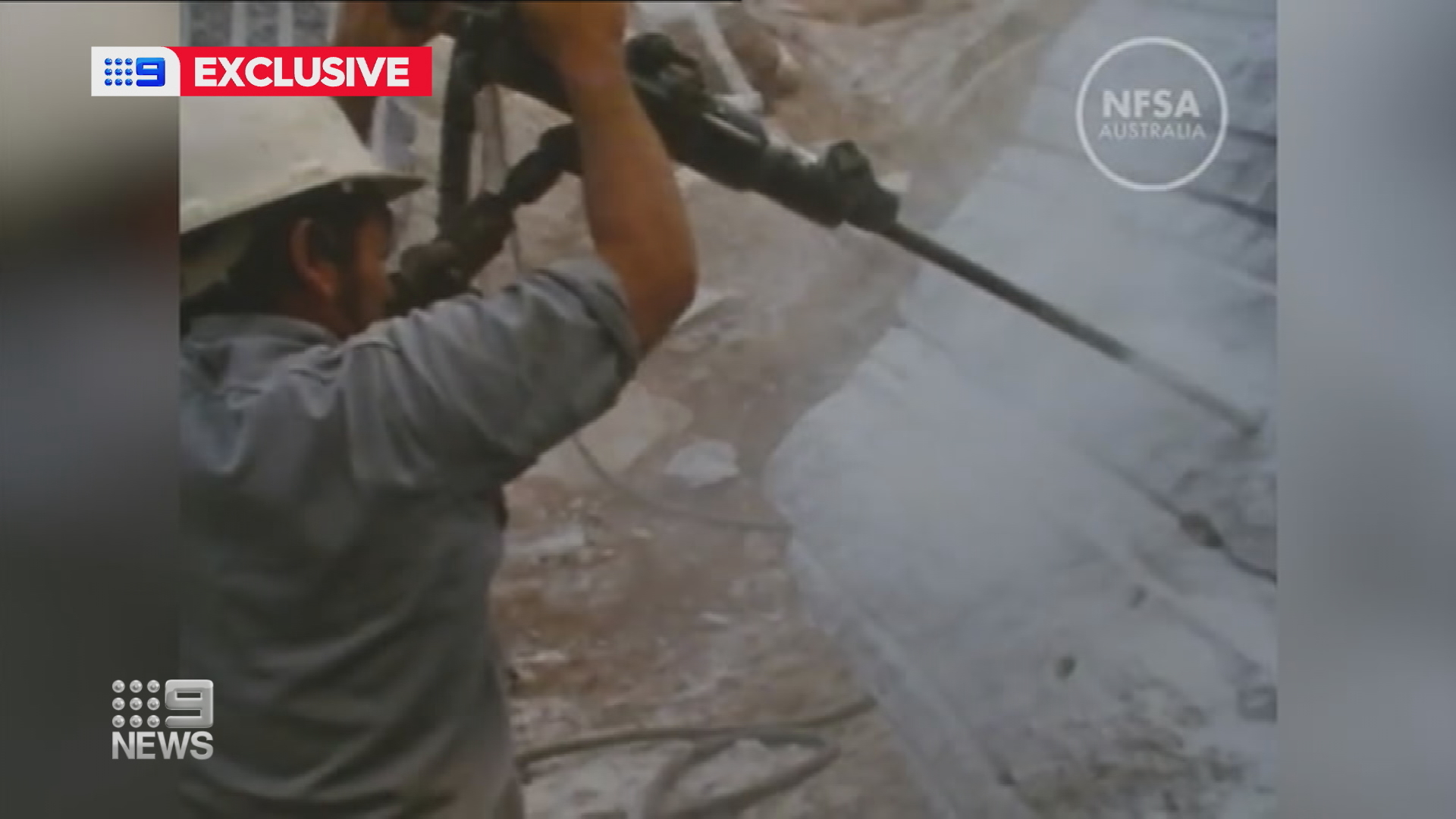
Told her that even though she worked in administration, the dust she would inhale from the nearby quarry would leave her lungs scarred.
Told her that as the years progressed, her lung capacity would diminish and she would one day struggle to breathe.
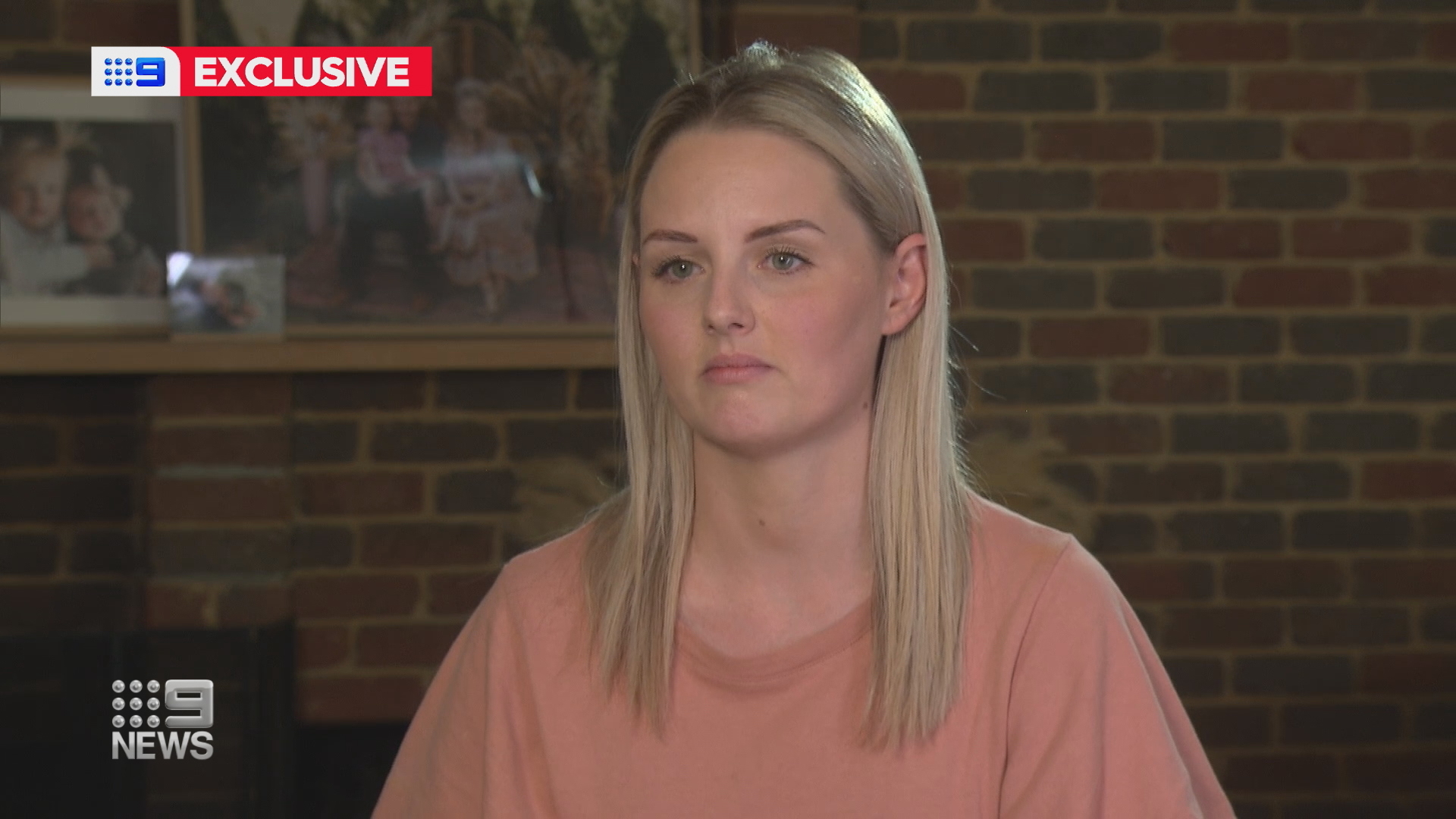
"This is a life sentence for me and I don't know when my time is up," she told 9News.
When Mrs McNeill returned to her admin position after maternity leave, she underwent a health assessment.
Tests, X-rays, CT scans and a lung biopsy later, Mrs McNeill was diagnosed last year with silicosis – a lung disease caused by inhaling crystalline silica.
She never thought she'd be at risk.
Her office was in an admin building but she would go home and could feel the dust on her face, on her lips, in her hair.
"I was very shocked," she says.
"I had no idea what that meant for me. I thought 'oh my gosh, do I have cancer?'
"I'm still a little bit in denial."
Mrs McNeill has two daughters aged two and four and the 34-year-old mother said her biggest fear is not being there for them.
"My greatest fear with my kids is I just want to be around for them. I don't want to die early. I just want to be there for them."
Now she's playing a waiting game; her lung capacity is tested every four months.
"This whole process has given me so much anxiety… not knowing what the future holds," she says.
Husband Matthew says the diagnosis came from left field and was a shock to the family, particularly as she didn't work in the actual quarry.
"The big issue for us is the unknown," he says.
For now, Mrs McNeill is exercising daily to increase her lung capacity and doing as much as she can with her daughters while she is still able.
She's also supporting a national campaign launching tomorrow by the Australian Workers Union calling for tougher regulations with minimum benchmarks that protect all workers exposed to deadly silica dust.
The AWU also wants a compensation fund put in place to avoid a repeat of the decades long battle with James Hardie over asbestos.
"It took two decades to make James Hardie pay for what they did and for the truth to come out about asbestos," AWU national secretary Daniel Walton said.
"It would be a disgrace if we allowed history to repeat itself."
Preliminary reforms recommended by the Federal Government's National Dust Disease Taskforce provides extra protection for stonemasons but not for other workers in construction, mining, quarries and tunnels, Mr Walton said.
"Around six per cent of all Australians are exposed to silica dust each year," he said.
"Yet this is a substance even more deadly than asbestos.
"The lives of tens of thousands of workers … are being put at risk by companies who are placing profits ahead of worker safety and being allowed to get away with it."
Silicosis has been around for decades but there has been a resurgence in workers in recent years.
Mrs McNeill says she wants people to know that you don't have to be in the industry for 20 years before it affects you or that it takes decades to develop like asbestosis.
She had been at her workplace for just seven years.
Koala causes peak hour chaos at Adelaide freeway
A curious koala has been rescued after causing peak hour chaos on an Adelaide freeway.
The furry local sparked a five-car pile-up while crossing the road at Crafers West, bringing this morning's peak-hour traffic to a stand-still.
Lucky for the koala, one motorist managed to scoop it up and take it to safety about 8am.
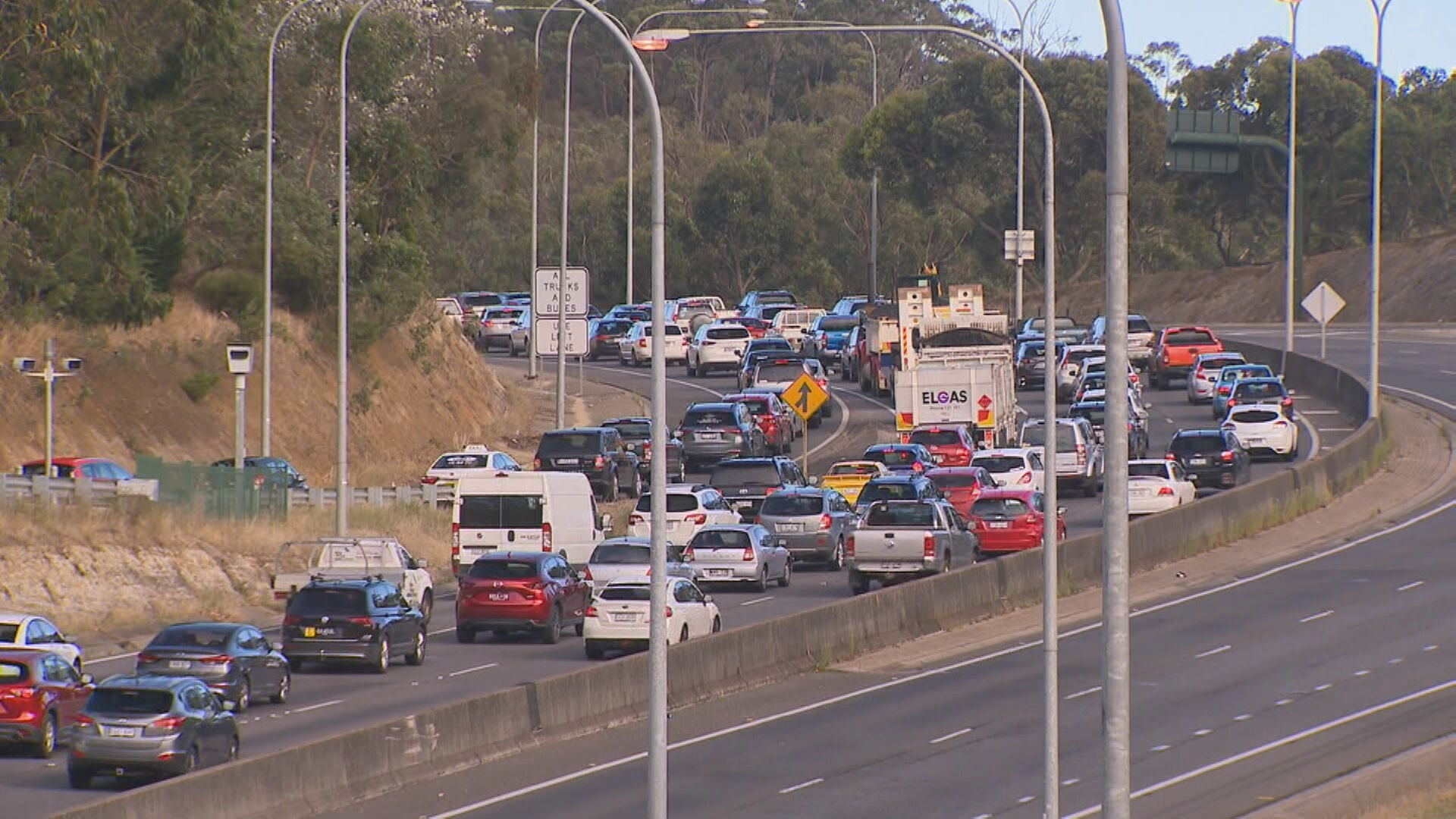
"I thought okay, if we don't catch this koala now and the traffic starts moving, they will stop suddenly and there will be another pile-up of cars," Nadia said as she found herself staring at the cause of the chaos.
"I saw to my right to the front there was a little cute koala running towards me."
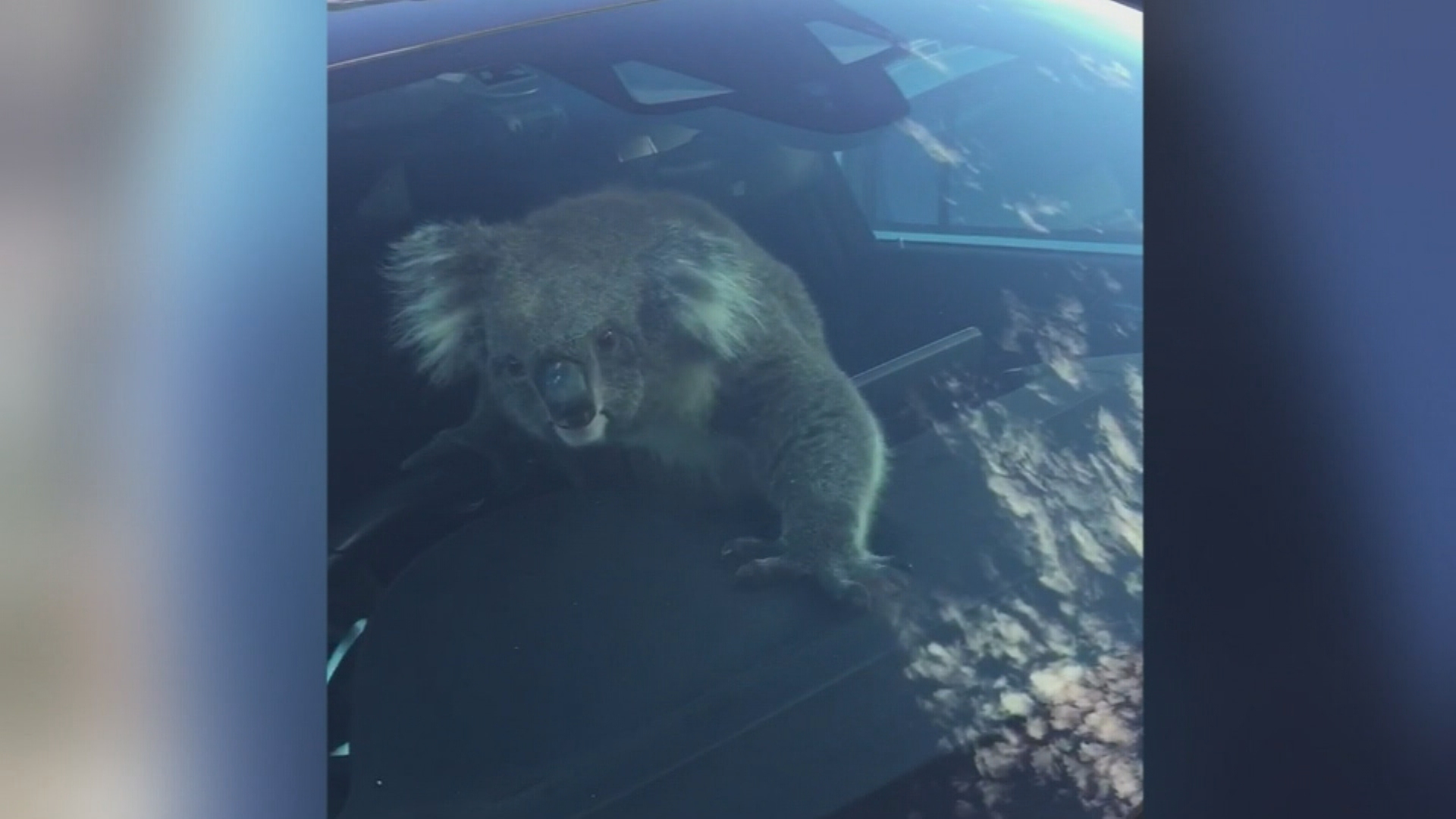
Nadia said she was able to catch the koala with the help of other drivers and put it in her boot until animal rescue teams arrived.
READ MORE: Queensland woman injured in kangaroo attack
"I grabbed my jacket out of the back seat and I went to the koala on this side like a toreador would do to a bull," Nadia said.
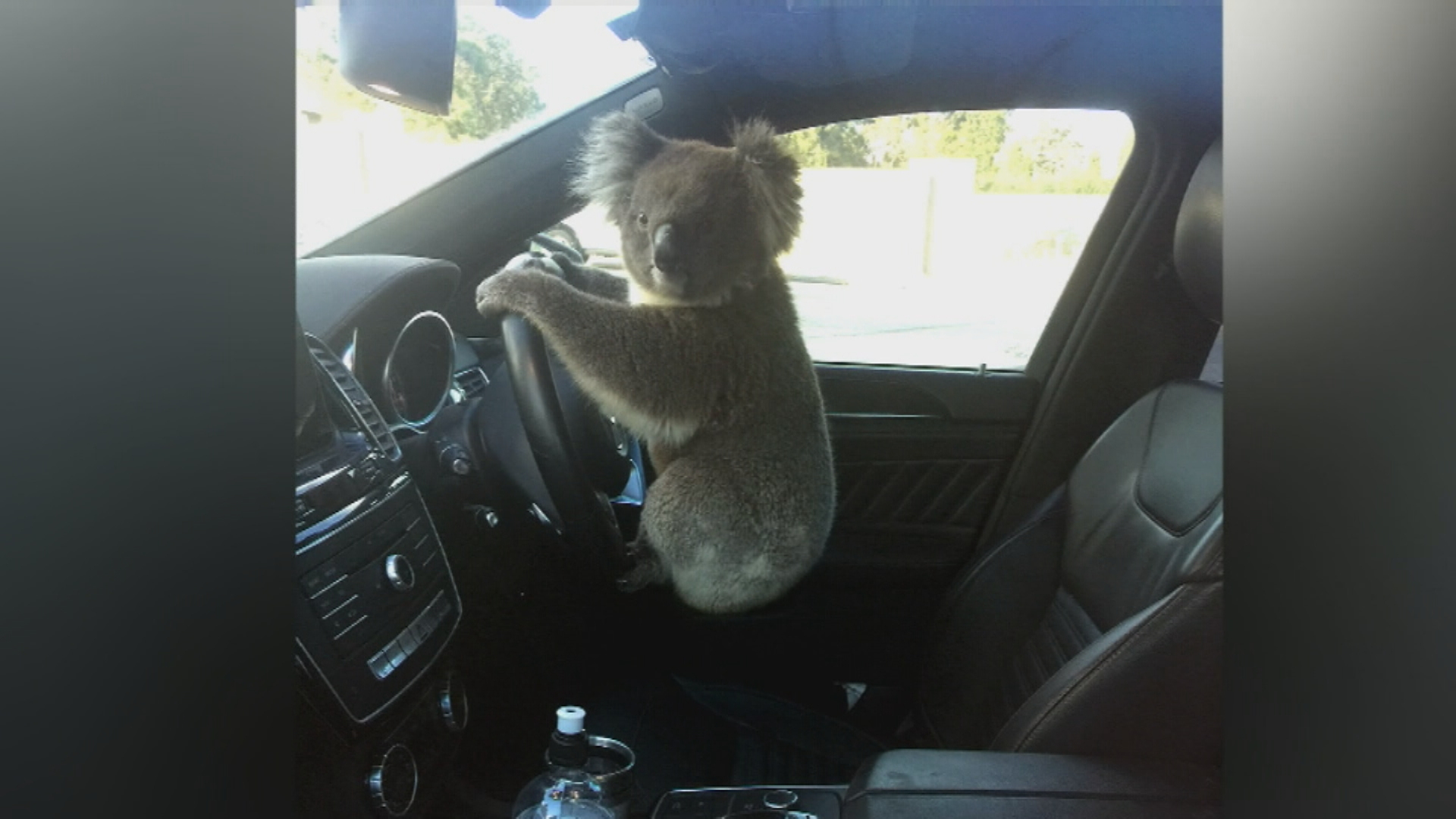
But the cheeky koala decided its adventures weren't over as it took to the wheel.
"It was poking its nose through the headrest and I thought, okay that's too close for comfort – I'd better get out and you have the car," she said.
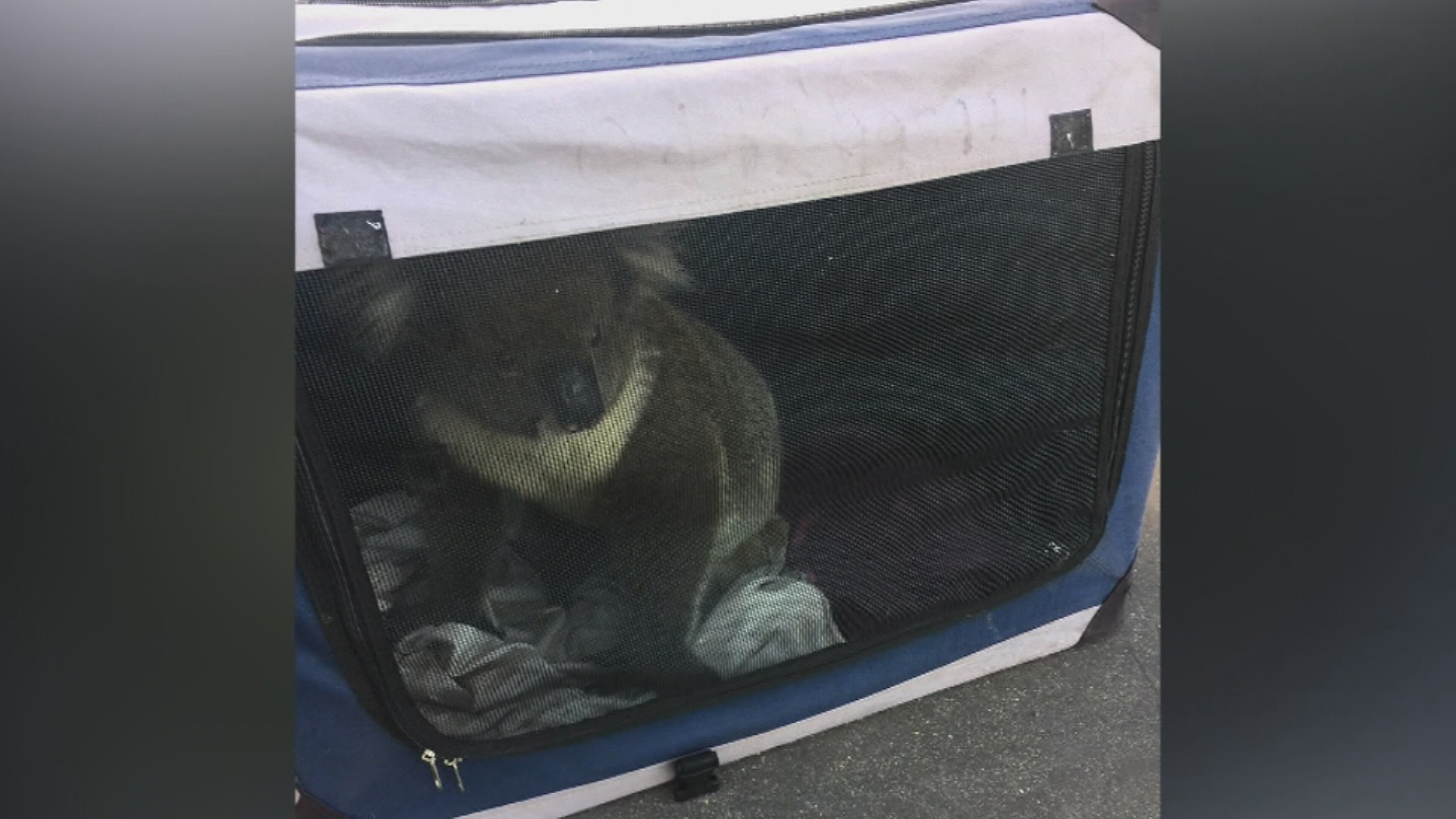
The koala stayed calm until animal rescuers arrived and returned it to the wild, although not before leaving its mark on Nadia's car – a deep scratch clawed into the dash.
No animals or people were injured in the crash.