A body is believed to have been found on a Wellington beach.Police have not confirmed whether a body washed up, was discovered by someone or left there as a result of some sort of incident, only that they were notified of a “sudden…
Tag Archives: oceania
Police to Hawke's Bay's burnout kings: We won't let up
Police won’t be letting up on illegal racers and burnout kings despite impounding 35 vehicles in Hawke’s Bay in two weeks.Hawke’s Bay-based police Eastern District road policing manager Matt Broderick says that rather than there…
Govt set to abolish local veto on councils' Māori wards
The Government will abolish a law that allows local referendums to veto decisions by councils to establish Māori wards.The move will be made in time for the 2022 local body elections, and means decisions made by nine councils…
Greek gods and ancient mortals 'resurrected' in terracotta figurines
From ancient cities, to fallen empires, to mass burials, researchers have made some amazing archaeological discoveries over the years.
Family of children killed in Oatlands crash focused on forgiveness
One year since a drink and drug affected driver killed three siblings and their cousin as they walked to get icecream on a hot summer day, their family's focus is forgiveness.
In February last year the Abdallah siblings, Sienna, 8, Angelina, 12, and Antony, 13, and their cousin Veronique Sakr, 11, died on a footpath in Oatlands, in Sydney's northwest.
Last night, on the eve of the anniversary of their death, their family held a memorial service, and today launched i4Give Day to help others through their grief.
READ MORE: Last photo of four children killed in Oatlands crash
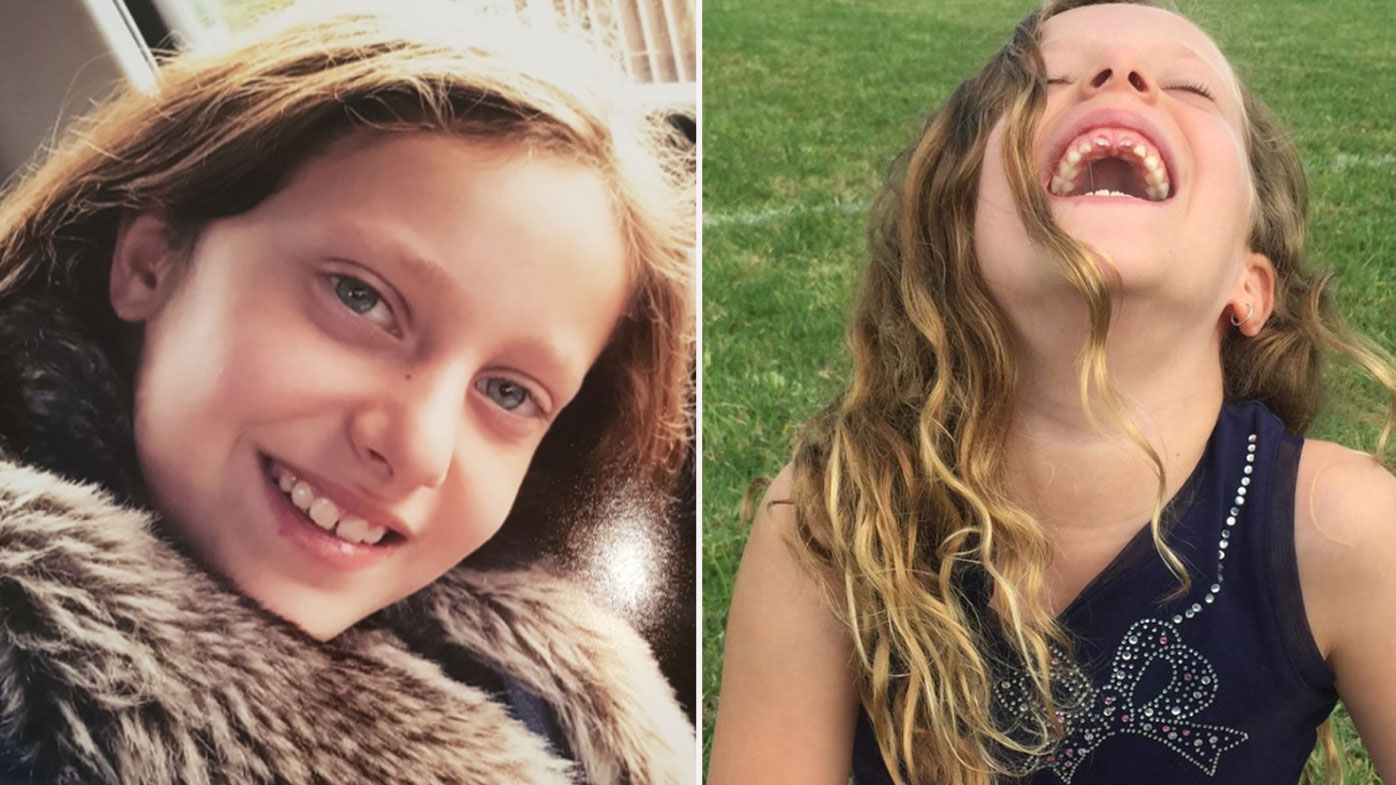
"Forgiveness allows us to move forward with our lives and takes away that bitterness and anger and really focuses on us healing," Veronique's mother Bridget Sakr told Deb Knight on 2GB.
She said the family's deep Christian faith has helped them forgive the driver, who "must have had trauma in his life" to get behind the wheel intoxicated.
Mrs Sakr's compassion is also underpinned by her love for her son Michael, Veronique's brother.
This morning Danny Abdullah, father of Sienna, Angelina, and Antony, spoke to Ben Fordham saying he is still in pain, but has let go of his anger.
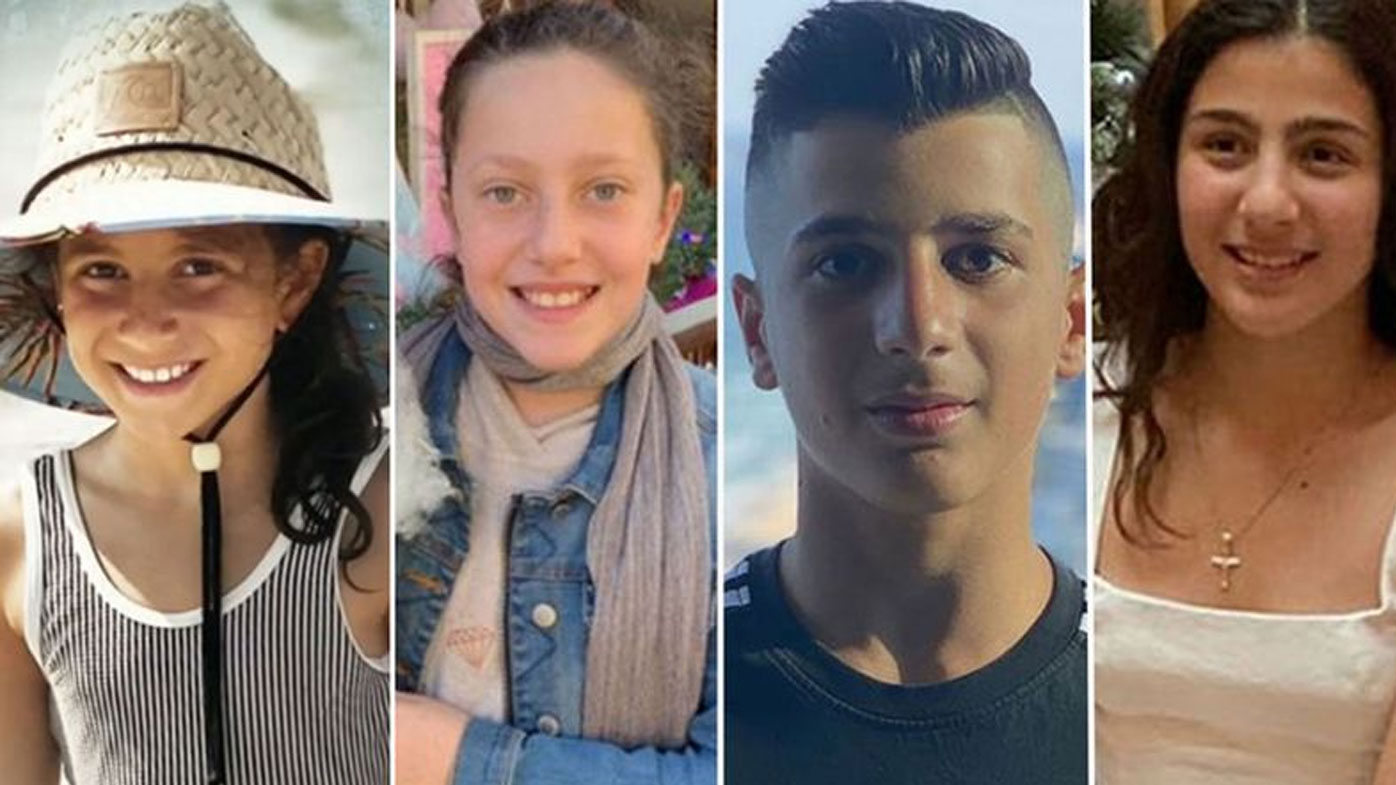
"I didn't want my kids … to be angry, to feel that they lost their dad through anger, revenge and bitterness.
"Forgiveness is for yourself more than the driver.
"I'm still in pain, I still cry, I still miss my children but my soul isn't imprisoned anymore."
Prime Minister Scott Morrison also acknowledged the day at the beginning of his address to the National Press Club today.
"Can I also acknowledge today the beautiful Abdullah and Sakr families on this first national I4Give Day, as we remember their four beautiful angels, Anthony, Veronique who were taken from us this day last year."
Sydney man with terminal bowel cancer granted flight home from UK
An Australian man with terminal cancer has been able to secure a trip home after he was bumped from an earlier flight due to travel caps.
Brendan Suggate, 34, and his partner Alison Bishop have been living in London for the past few years and in October, he was diagnosed with stage four bowel cancer.
They booked a flight home to Sydney before Christmas when Mr Suggate's condition worsened and he was told he had just months to live.
LIVE UPDATES: Coles brings in buying limits in WA; Warning WA lockdown could be 'significantly longer'
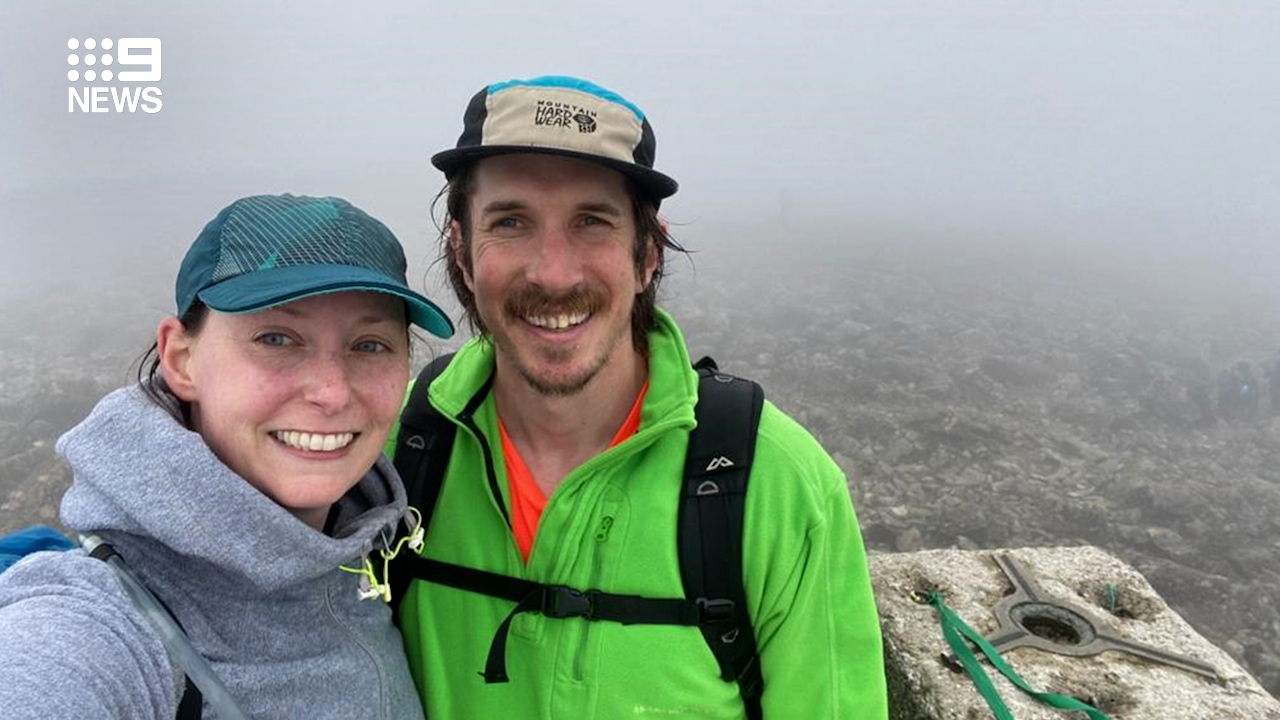
The Qatar Airlines flight was booked for February 3 and was timed so that with hotel quarantine Mr Suggate would not go without treatment for an extended period of time.
However last week the couple were bumped off the flight due to new caps on the number of returned travellers allowed into Australia.
"It was pretty frustrating, especially hearing the news that 1200 tennis players had flown into Melbourne for the Australian Open," he told 9News.
"To hear that, being an Australian abroad, that has cancer, that has so many months to live, can't get home… that was a bit disheartening."
Mr Suggate said he contacted health authorities and the airline to no avail, and in his experience the disconnect was between state and federal governments in Australia.
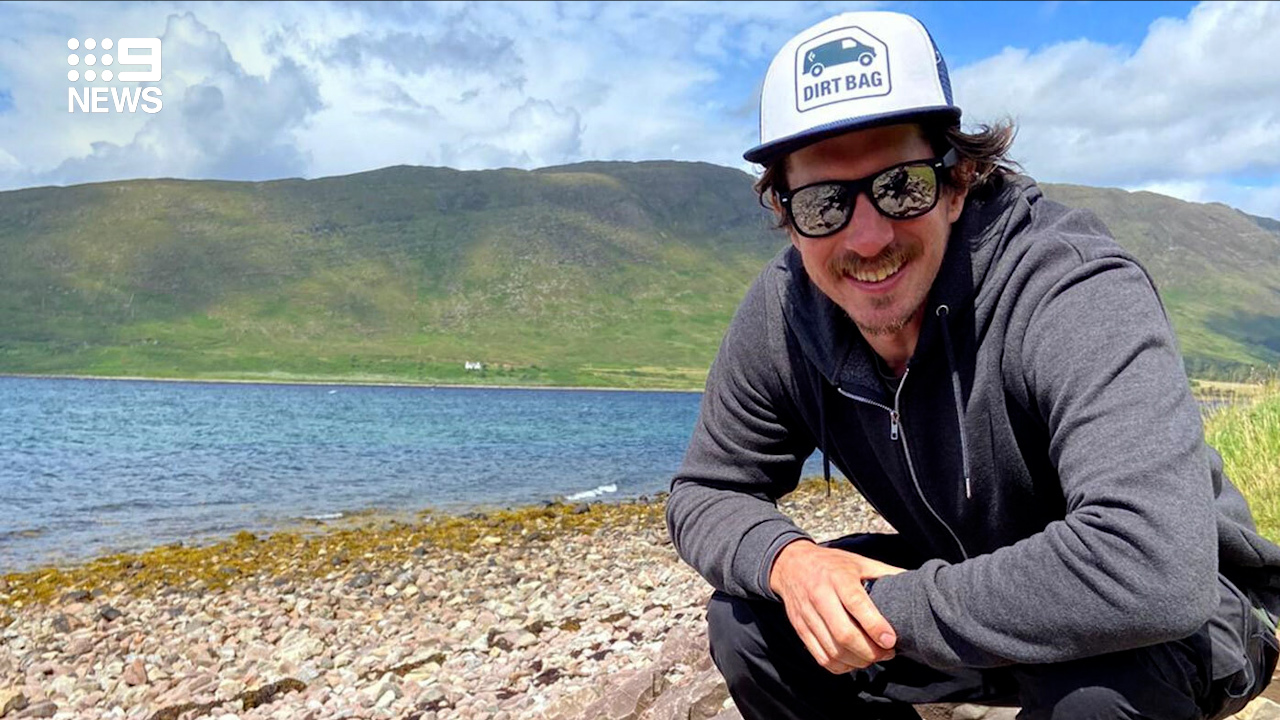
He said Department of Foreign Affairs and Trade and the Australian embassy have been incredibly helpful, but he had been unable to get in contact with the NSW government.
Last night, after a compassionate campaign from friends who contacted politicians, NSW Health, the DFAT and media, Mr Suggate and Ms Bishop were delivered some good news.
They were able to get on another Qatar flight from London to Sydney on February 4.
"I'm super excited and I am very grateful to Qatar Airways and the High Commission for getting me on a flight on the 4th because it means the world to me," Mr Suggate said.
"I cant wait to get to Bondi beach, and to go swimming, and drive up the NSW coast to Byron Bay it's going to be absolutely stunning."
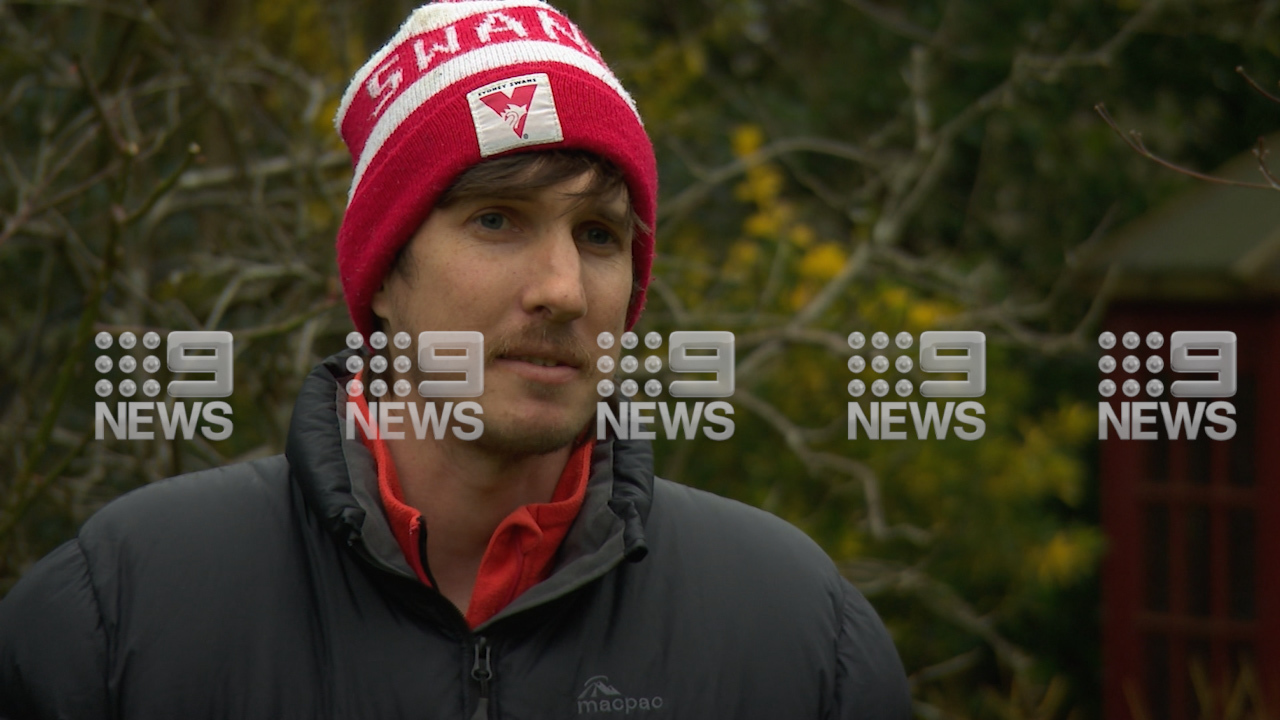
Today NSW Premier Gladys Berejiklian was asked why Mr Suggate had not received a response from health authorities.
She said NSW Health are trying to get back to everyone who contacts them "in a timely manner".
"We appreciate how difficult it's been the uncertainty with border closures the uncertainty with our caps on the number of Australians coming back home has meant that it's caused a lot of stress for people," Ms Berejiklian said.
Mr Suggate was diagnosed with bowel cancer after developing bad stomach cramps following a hike in Scotland.
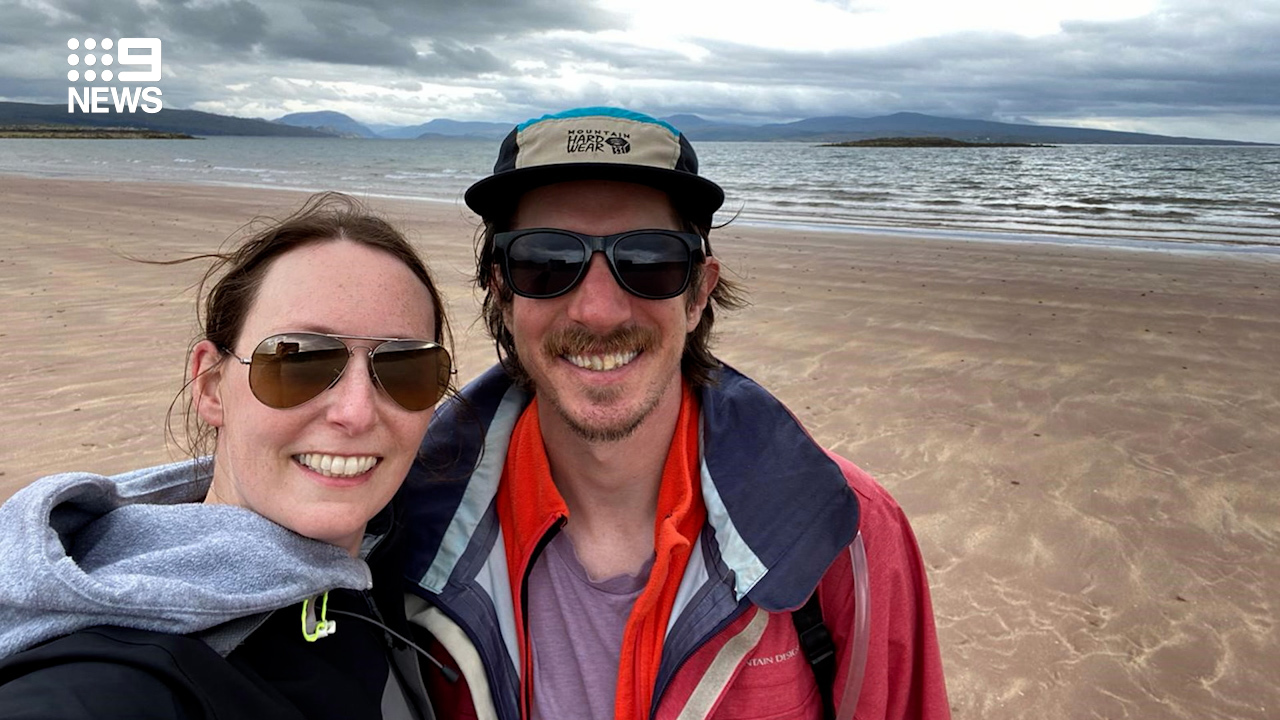
"On the evening when I was driving home I had really bad stomach cramps after dinner and I just thought it was food poisoning or over-exertion."
He said the pain and cramps continued on and off for the next few weeks, and in October a colonoscopy found a tumor blocking his colon.
In November he was told the cancer was more aggressive than first thought, and doctors told him he has about 12 months to live.
The 34-year-old plans to spend this time back in Sydney with family, friends, and ticking items off his bucket list.
"I've got a list of about 50 cafes I want to visit.
"We're looking to buy a campervan and get back to exploring NSW because it's been eight years since I lived there."
Dog tumbles out of moving car window
Dashcam footage has captured the heart-stopping moment when a dog tumbled out of a moving car window in Melbourne's outer-southeast.
Video posted on Dash Cam Owners Australia shows the brown and white pup poking its head out of the back window of the silver Toyota Yaris last Thursday evening in Berwick, as the car drives through a roundabout.
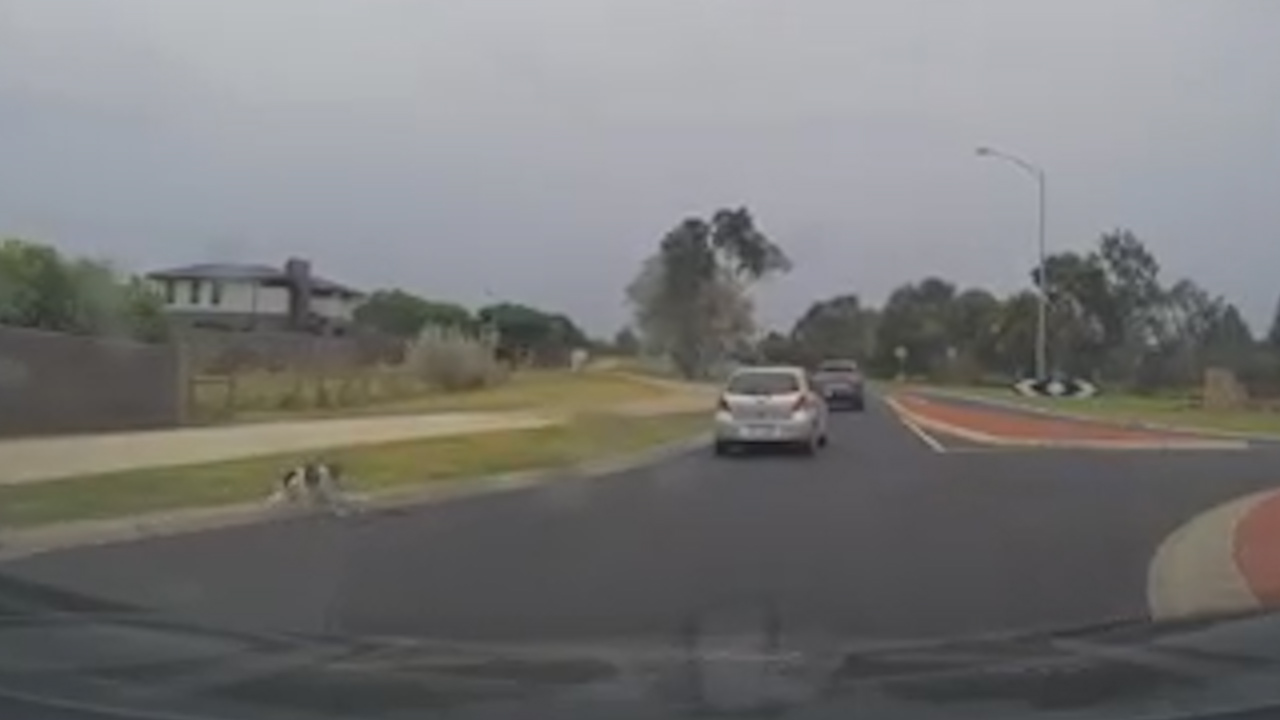
The pooch then leaned a little too far over, falling out of the car and rolling out onto the road before jumping onto the grass.
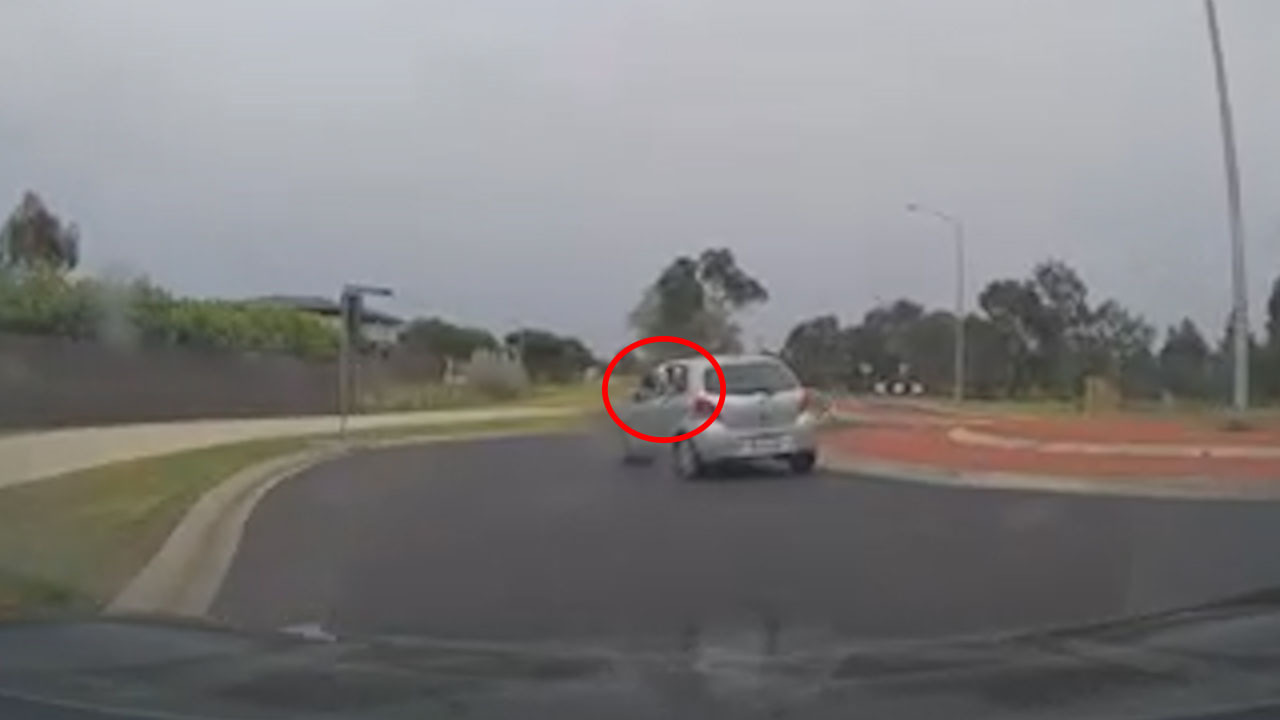
The owners of the dog quickly realised their furry friend had tumbled out, pulling over and running back to retrieve their pet.
The dog appeared uninjured and walked back to its owner while wagging its tail.
While the tumble seemed to be an accident, the post stated the dog should have been properly "tethered" inside the vehicle.
According to Agriculture Victoria guidelines, dogs "need to be adequately restrained" when travelling inside a vehicle.
"Unrestrained dogs can cause accidents and should never be allowed in the vicinity of the driver," website guidelines state.
"Dogs should not be allowed to travel with their head out of the car window. Particles of dirt can enter a dog's eyes, ears and nose — causing injury or infection."
However, the RACV website states Victorian road rules do not require animals to be restrained inside a vehicle by law.
Tradie's campaign to save lives after surviving terminal melanoma
Brisbane tradie Lucas Ridgway was 36 when he was told his melanoma was terminal.
What started as a small lump underneath his cheek 18 months earlier had metastasised to his lungs.
Without treatment, the father-of-two was given a 22 per cent chance of surviving another three years.
"When it becomes stage four and they say words like terminal, that's when you think, 'I'm up against it,'" Mr Ridgway said.
READ MORE: Peter Overton 'bruised and battered' after melanoma surgery
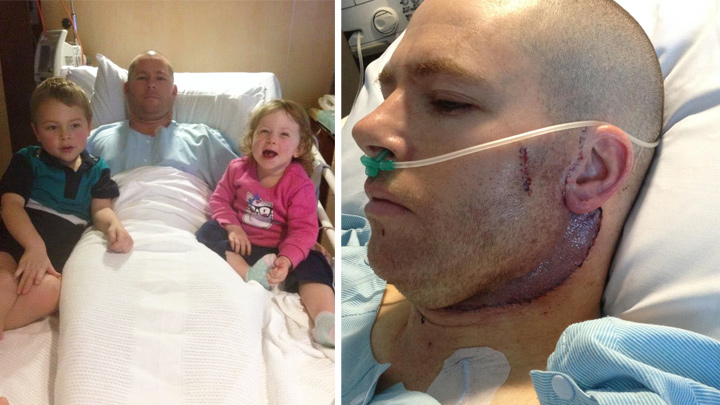
But an immunotherapy drug, Keytruda, shrank the tumours down to almost nothing and Mr Ridgway is beating the odds, racking up three-and-a-half years cancer-free.
Now, he wants to help save the lives of other Australians.
The tradie has started a campaign calling on the Federal Government to implement a national screening program for melanomas.
With one Australian dying every five hours from a melanoma, families who have lost loved ones to the deadly skin cancer also say such a program is long overdue.
"We have bowel cancer and breast cancer screening, I don't understand why there hasn't been something implemented like this for melanomas – we are the skin cancer capital of the world," Mr Ridgway said.
"I think early detection could save a lot of lives and save people going down the path that I had to go down."
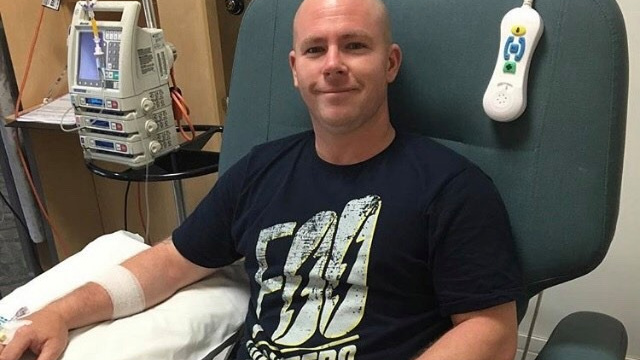
An online petition set up by Mr Ridgway – which has so far attracted more than 2500 signatures – suggests Year 11 and 12 students could be given a skin check before they finish high school and then sent a yearly reminder notice.
Brisbane mum Tamra Betts lost her 25-year-old daughter Emma to melanoma in April 2017.
"Melanoma is a hideous cancer and the impact it has had on our family has been life changing," Ms Betts said.
"Emma's melanoma was only a stage one when it was diagnosed. Twelve months later it went to stage three and then within a month it went to stage four, which is terminal."
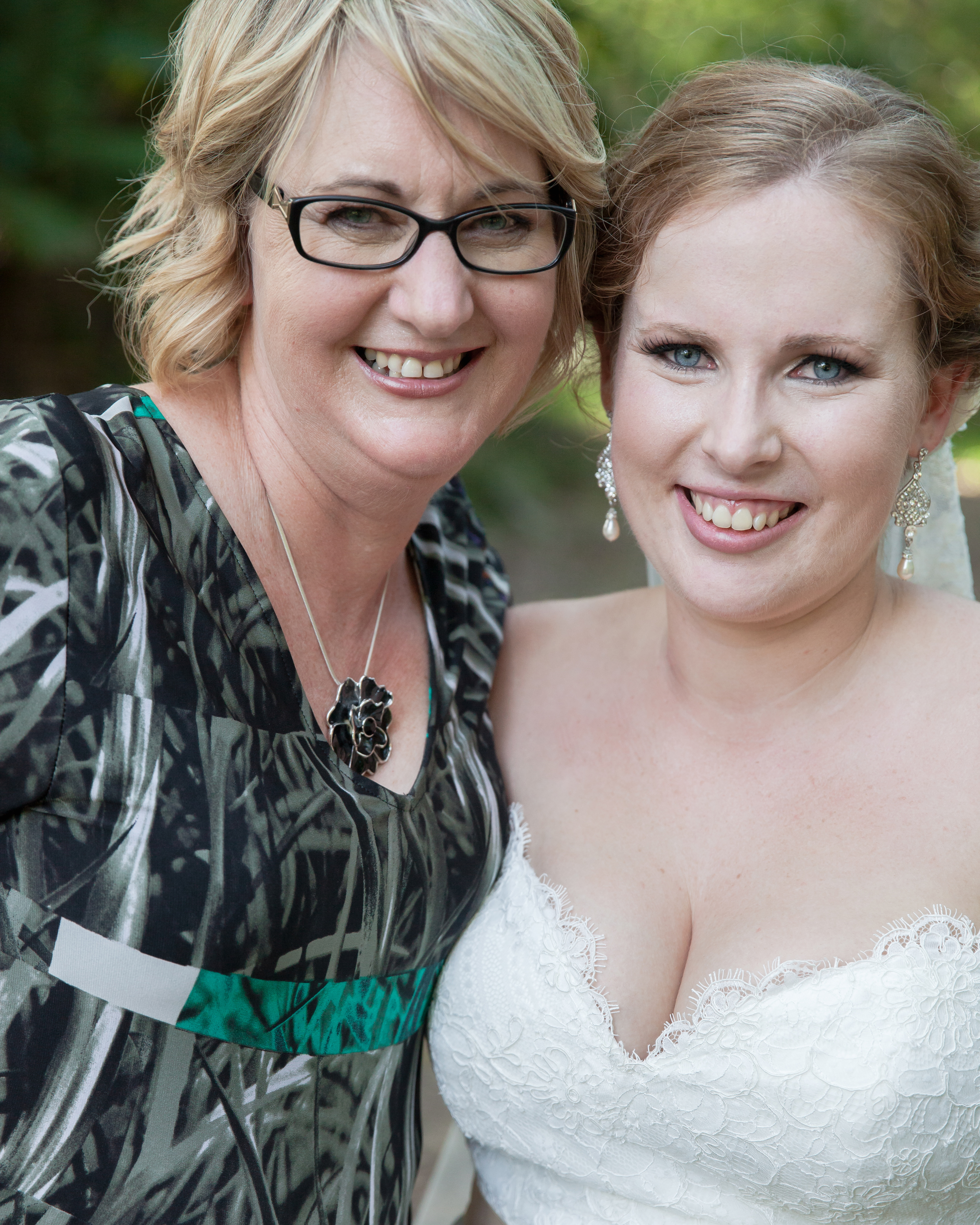
Mrs Betts said while there were already programs to educate school students about sun safety, a melanoma check offered for school leavers would help increase awareness and potentially form a life-long habit of getting regular check-ups.
"If there was a screening program where Year 11 and 12 students could get their skin checked it would put into their minds the importance of it. Then hopefully going forward they will actually do that every 12 months," she said.
However, such a program would need to be funded through a Medicare rebate to make it affordable for families, she said.
Each year, about 15,000 people are diagnosed with a melanoma and about 1500 will die, according to data from the Australian Institute of Health and Welfare.
It's Australia's third most common cancer, and the most common for cancer for 15 to 39-year-olds.
However, both the Federal Government and Cancer Council Australia have so far rejected calls for a melanoma screening program, citing a lack of evidence about whether it would reduce mortality rates.
"The Population Based Screening Framework guides the planning of any new cancer screening programs by the Commonwealth, states and territories," a Department of Health spokesperson said.
"The framework identifies the need for a strong evidence base on the safety and accuracy of screening tests and the efficacy of treatment. It also includes a requirement that screening programs offer more benefit than harm to the target population."
Cancer Council Australia released a position statement about melanoma screening in 2014, and still holds the same viewpoint seven years on.
"Observational studies have shown the benefit of screening for melanoma, however due to lack of high-level evidence showing a reduction in mortality from melanoma, population screening programs for melanoma are not recommended," Cancer Council Australia says on its website.
A Federal Government inquiry into skin cancer in Australia was held in 2015. It concluded a screening program for melanomas would be prohibitively expensive and possibly not reduce mortality rates.
However, it noted there had only been one Australian trial on the effectiveness of screening, which was never completed.
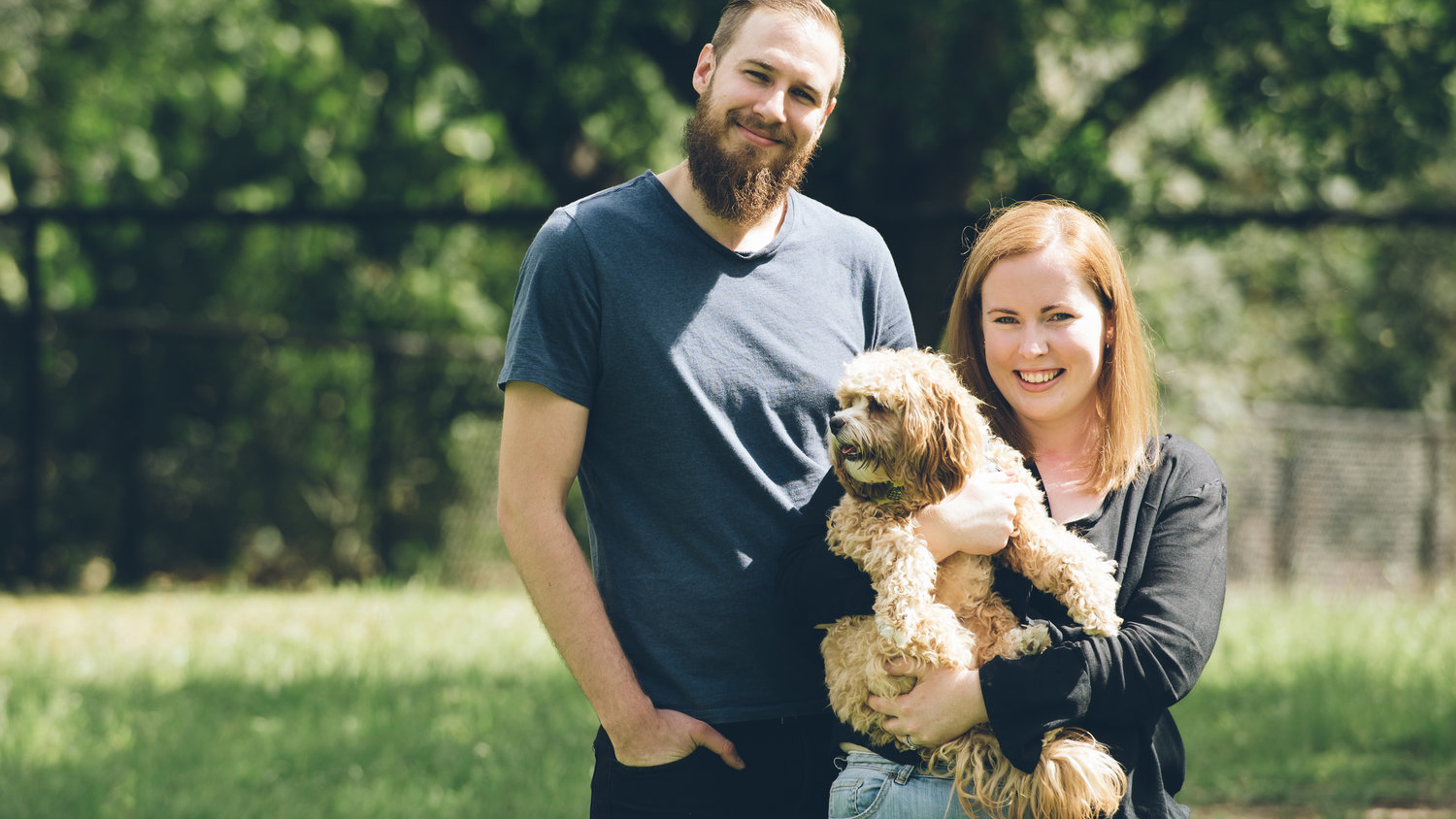
Queensland GP Michael Stapelberg, who has a special interest in skin cancer, told nine.com.au the research which found screening programs did not reduce morbidity or mortality for melanomas was now "quite dated", adding further studies were possibly needed.
While a screening program was a good idea in theory, it could be difficult to implement because of a shortage of doctors who are specially trained to detect skins cancers and use the equipment needed to diagnose melanomas, Dr Stapelberg said.
"In Australia, there are less than 1000 dermatologists who work on skin-related issues. However, most of them work in private practice and they generally have a waiting time to see them," he said.
In recent years, more GPs had been able to get training to sub-specialise in skin cancer medicine and detection, however not all had the training necessary to detect skin cancers properly.
"Some GPs are excellent at picking up skin cancers because they have had adequate training but others aren't," he said.
The most important thing when it came to getting a skin cancer check was to go to a doctor with the right training, Dr Stapelberg said.
People should look for a doctor accredited by the Skin Cancer College of Australasia or who had completed a University of Queensland skin cancer medicine master's degree, or see a dermatologist if they can, he said.
Mr Ridgway said if there were not enough doctors qualified to conduct skin checks then this needed to be urgently addressed.
"Given how many melanomas are diagnosed in Australia every year it doesn't make sense, how can we not have enough clinicians trained up," he said.
Contact reporter Emily McPherson at em********@******om.au.
Thousands join in Jerusalem funeral, flout pandemic rules
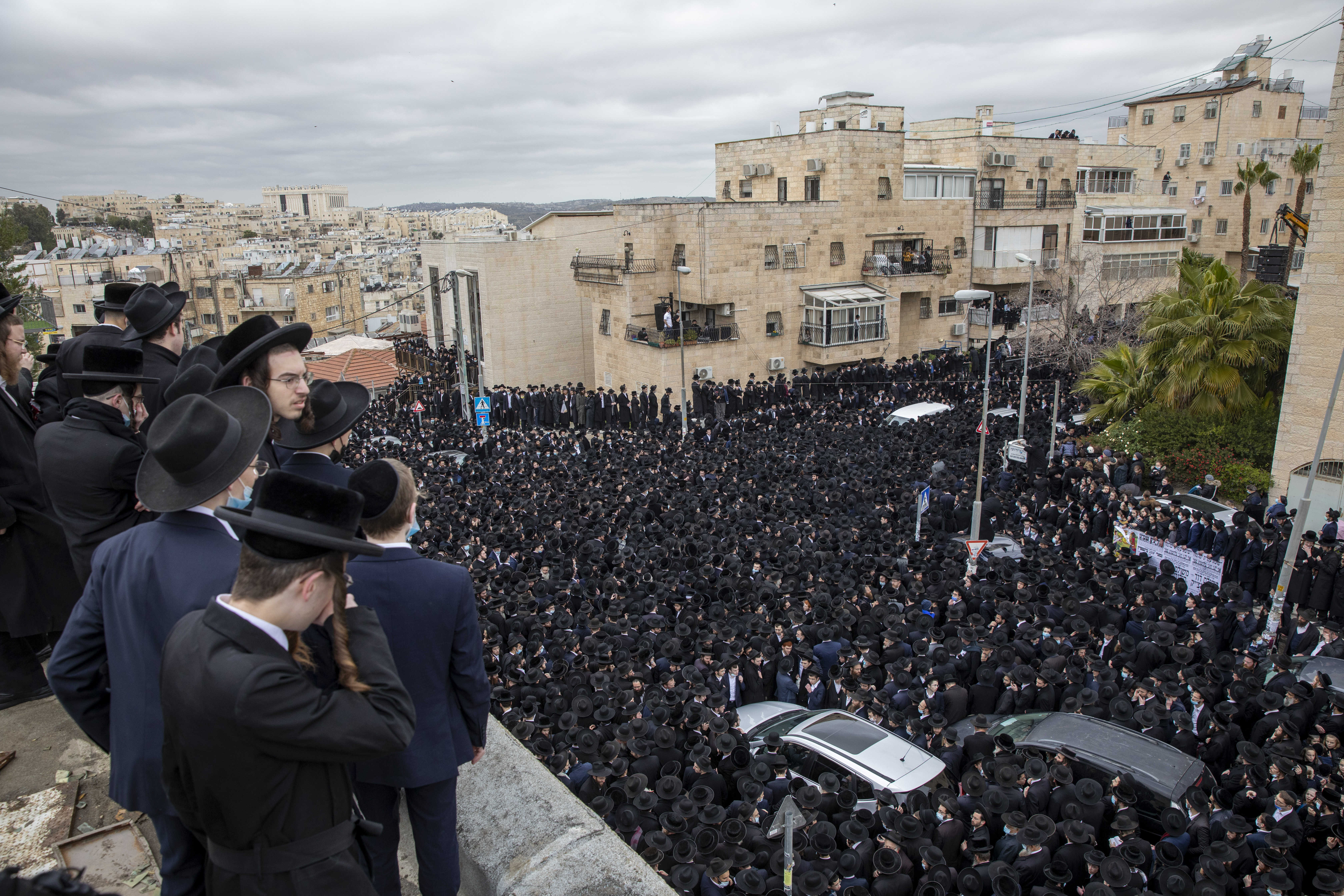
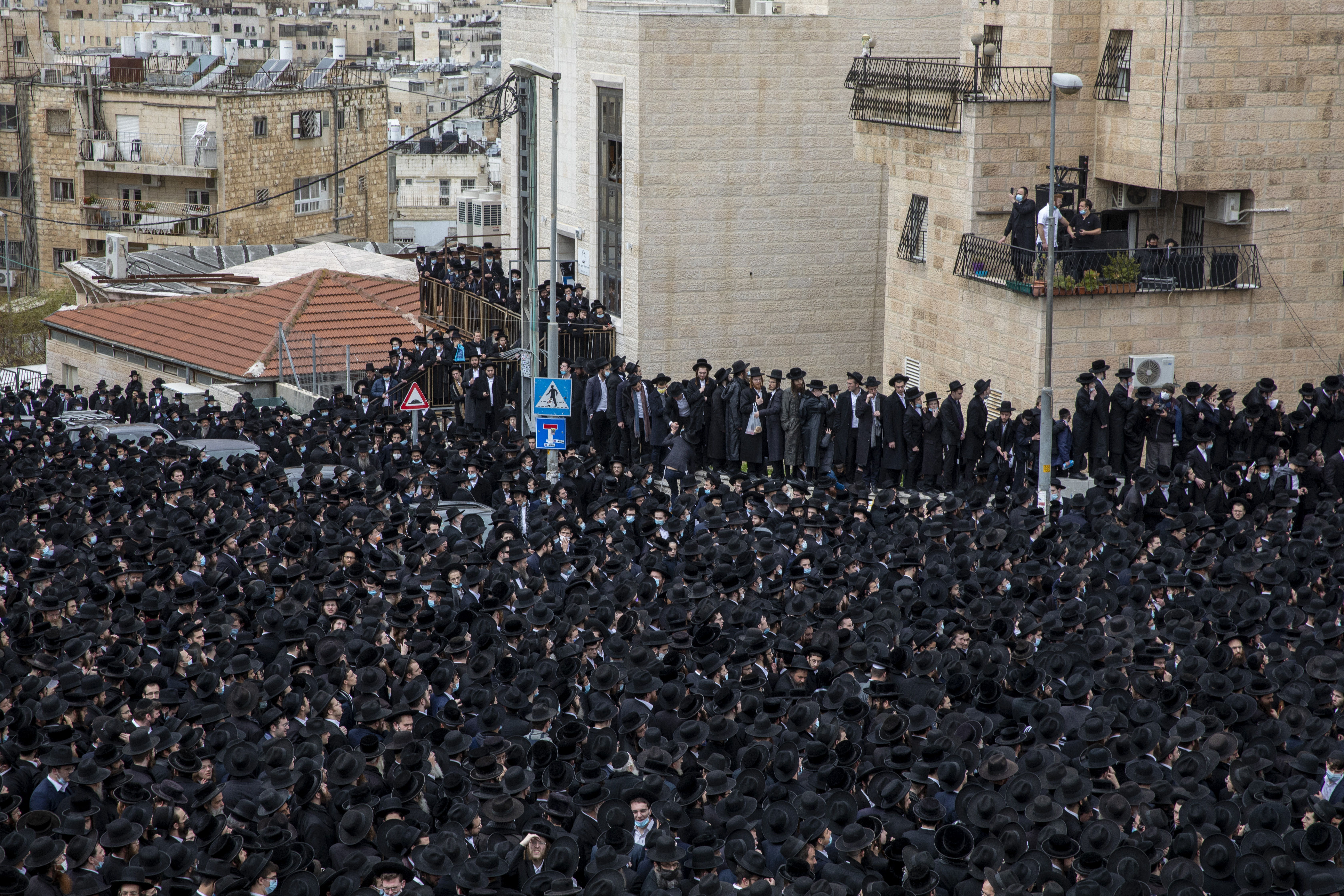
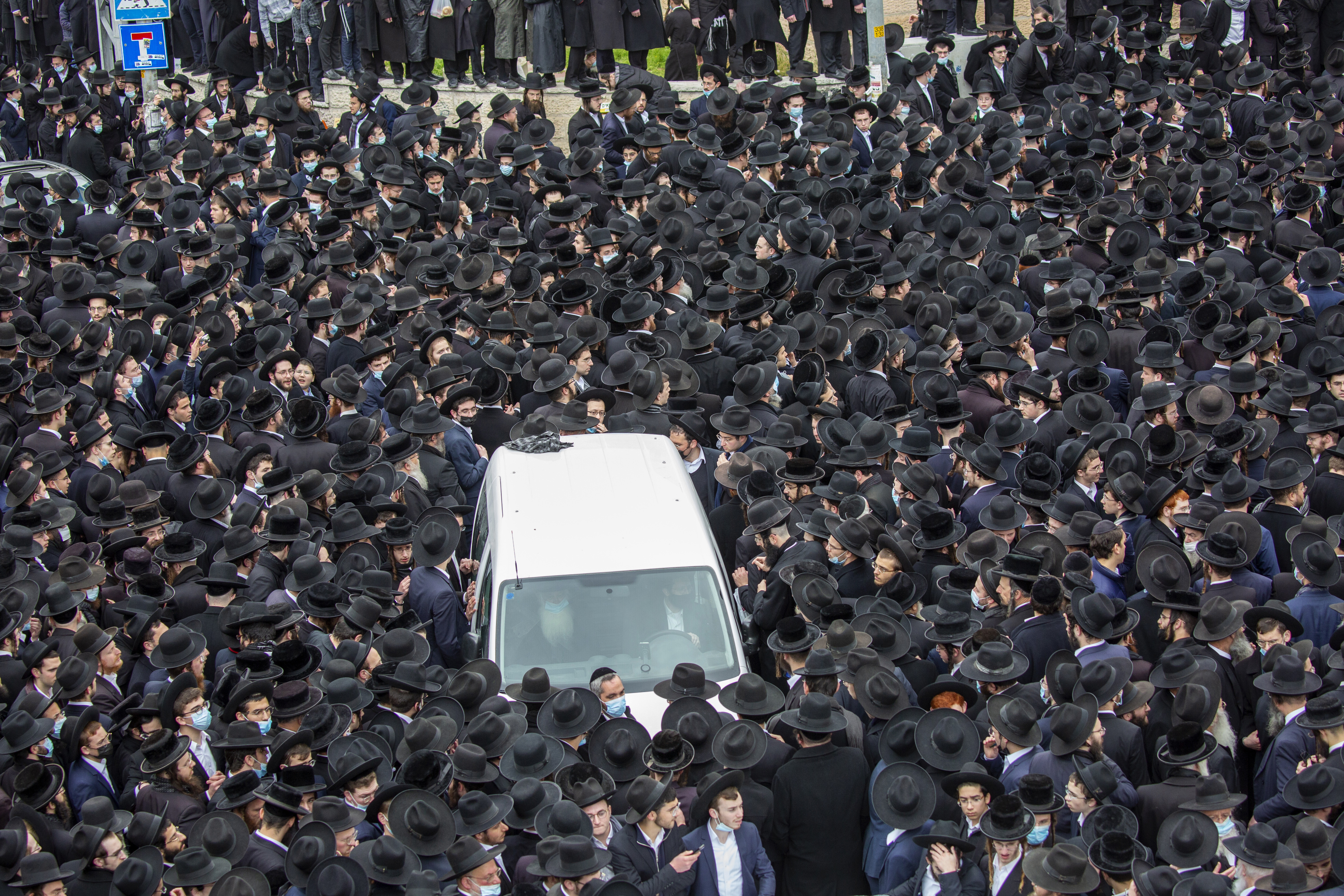
Thousands of ultra-Orthodox Israelis have packed the funeral of a prominent rabbi in Jerusalem, flouting the country's ban on large public gatherings during the pandemic.
The funeral procession for Rabbi Meshulam Soloveitchik, who died at age 99, wound its way through the streets of Jerusalem yesterday in the latest display of ultra-Orthodox Israelis' refusal to honor coronavirus restrictions.
LIVE UPDATES: Sir Captain Tom Moore has coronavirus
The phenomenon has undermined the country's aggressive vaccination campaign to bring a raging outbreak under control and threatened to hurt Prime Minister Benjamin Netanyahu in March elections.
Two challengers accused Mr Netanyahu of failing to enforce the law due to political pressure from his ultra-Orthodox political allies.
Densely packed throngs of people gathered outside the rabbi’s home, ignoring restrictions on outdoor gatherings of more than 10 people. Many did not wear masks.
Thousands of black-garbed ultra-Orthodox funeral-goers coursed past the city's main entrance toward the cemetery where Rabbi Soloveitchik was to be buried.
A handful of police officers blocked intersections to traffic to allow participants to pass, but appeared to take no action to prevent the illegal assembly.
Israeli media said Rabbi Soloveitchik, a leading religious scholar who headed a number of well-known seminaries, had recently suffered from COVID-19.
READ MORE: Ancient mosque ruins discovered in Israel
Alon Halfon, a Jerusalem police official, told Channel 13 TV that police had little choice but to allow the massive procession to proceed.
He said police action had helped reduce the crowd size and that some 100 tickets were issued for health violations.
But in such a densely packed environment, with children among the crowd, attempting to disperse the crowd would have been “unwise and dangerous”.
Israel’s Health Ministry has recorded over 640,000 confirmed cases of the coronavirus and at least 4745 deaths since the start of the pandemic.
Israel has recently been averaging over 6000 confirmed cases of the coronavirus each day, one of the highest infection rates in the developing world.
READ MORE: Emirates to resume UK flights after 'indefinite' suspension
At the same time, Israel has vaccinated over three million of its citizens, also one of the highest rates per capita in the world.
Health experts say it could take several weeks for the vaccination campaign to have an effect on infection and hospitalisation rates.
The Israeli Cabinet is expected to extend a nationwide lockdown for another week.
The government imposed the movement restrictions and closure of schools and non-essential businesses last month in an effort to clamp down on Israel’s runaway pandemic.
A disproportionate number of Israel’s coronavirus cases are within the country’s ultra-Orthodox minority.
The strictly religious community, which makes up around 11 per cent of Israel’s 9.2 million people, has been accounting for about 40 per cent of the new cases.
Many ultra-Orthodox sects have kept schools, seminaries and synagogues open, and held mass weddings and funerals in violation of lockdown restrictions that have closed schools and many businesses in other parts of the country.
Recent weeks have seen violent clashes between members of the ultra-Orthodox community flouting the rules and police officers trying to enforce them.
Ultra-Orthodox leaders say they have been unfairly singled out and argue the country's secular public does not understand the importance of public prayers and religious studies in their community.
They claim those who flout the laws as part of their diverse community, and blame crowded living conditions for the outbreak.
Mr Netanyahu has long relied on ultra-Orthodox parties for support, and critics say he has refused to antagonise his allies ahead of critical elections.
Without ultra-Orthodox support, it will be extremely difficult for Mr Netanyahu to cobble together a governing coalition — especially as he seeks immunity from an ongoing corruption trial.
But there are signs that this alliance could become a liability due to widespread public anger over ultra-Orthodox behavior during the pandemic.
A poll last week indicated that over 60 per cent of Israelis do not want ultra-Orthodox parties to serve in the next coalition.
READ MORE: UK fundraising hero Captain Sir Tom Moore in hospital with coronavirus
The funeral came a day after police used a water cannon to disperse anti-Netanyahu protesters near the prime minister's residence.
And Israeli media showed police aggressively handing out fines to people violating the lockdown in Tel Aviv, drawing accusations that police were following double standards.
Gideon Saar, a right-wing Israeli politician challenging Mr Netanyahu in the elections, criticised the prime minister on Twitter, saying “the pictures from Jerusalem prove that Mr Netanyahu has given up on enforcing the law for political reasons".
"This won’t happen in a government headed by me," he wrote.
"There will be one law for all and it will be enforced.”
Another challenger, Yair Lapid, leader of a centrist party appealing to middle class secular voters, said in a speech in parliament that he had nothing against the ultra-Orthodox or their parties.
“I have a big problem with someone who thinks the law doesn't apply to him,” he said.
“The law is for everyone.”
'Putin, resign!': More than 5000 arrested at Russian protests
Chanting slogans against President Vladimir Putin, tens of thousands took to the streets on Sunday across Russia to demand the release of jailed opposition leader Alexei Navalny, keeping up nationwide protests that have rattled the Kremlin.
More than 5000 people were detained by police, according to a monitoring group, and some were beaten.
The massive protests came despite efforts by Russian authorities to stem the tide of demonstrations after tens of thousands rallied across the country last weekend in the largest, most widespread show of discontent that Russia had seen in years.
READ MORE: Alexei Navalny defiant as Russian court rejects his arrest appeal
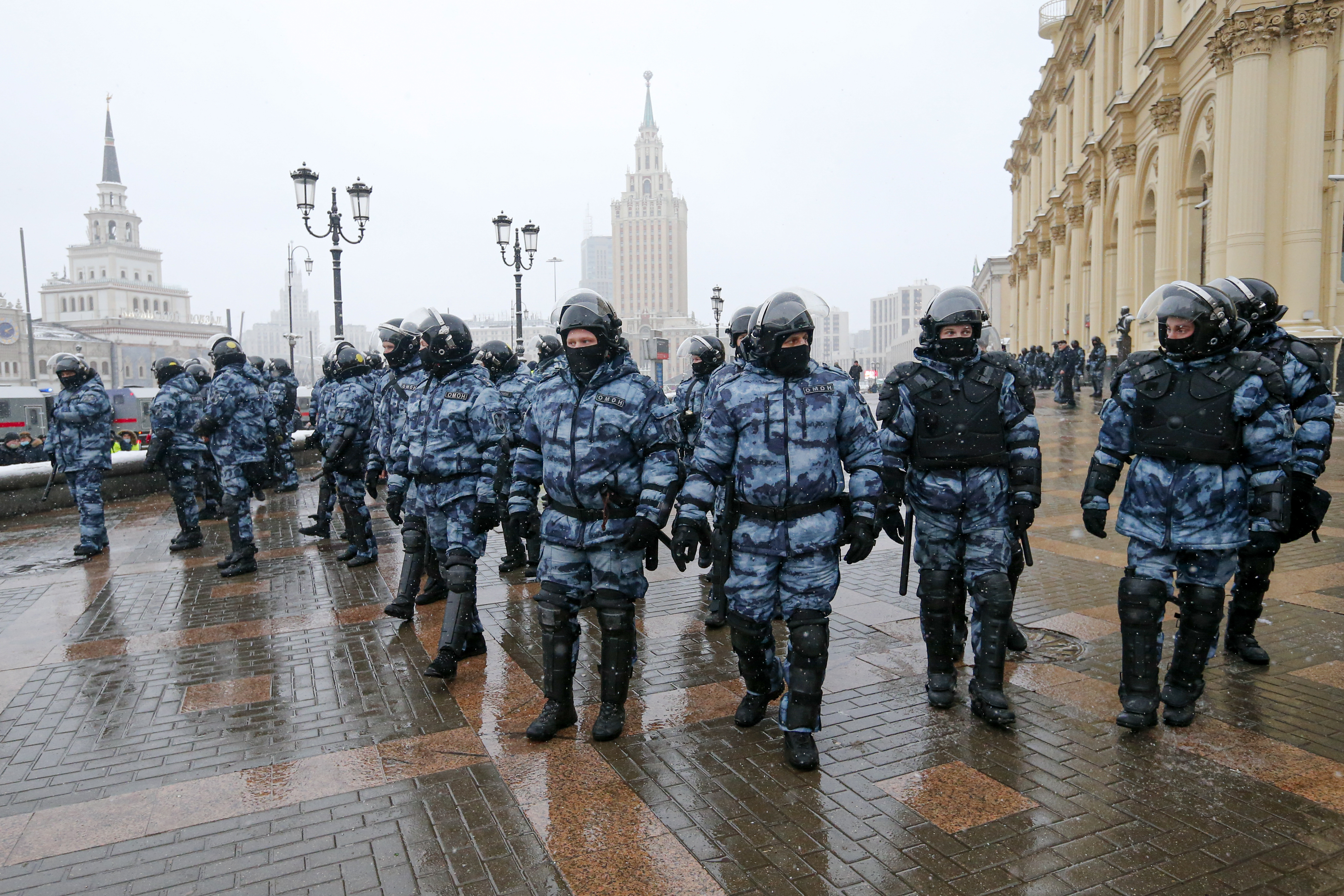
Despite threats of jail terms, warnings to social media groups and tight police cordons, the protests again engulfed cities across Russia's 11 time zones on Sunday.
Navalny's team quickly called another protest in Moscow for Tuesday, when he is set to face a court hearing that could send him to prison for years.
The 44-year-old Navalny, an anti-corruption investigator who is Putin's best-known critic, was arrested on Jan. 17 upon returning from Germany, where he spent five months recovering from nerve-agent poisoning that he blames on the Kremlin.
Russian authorities have rejected the accusations. He was arrested for allegedly violating his parole conditions by not reporting for meetings with law enforcement when he was recuperating in Germany.
READ MORE: Biden calls Putin and presses Russia on election hacking
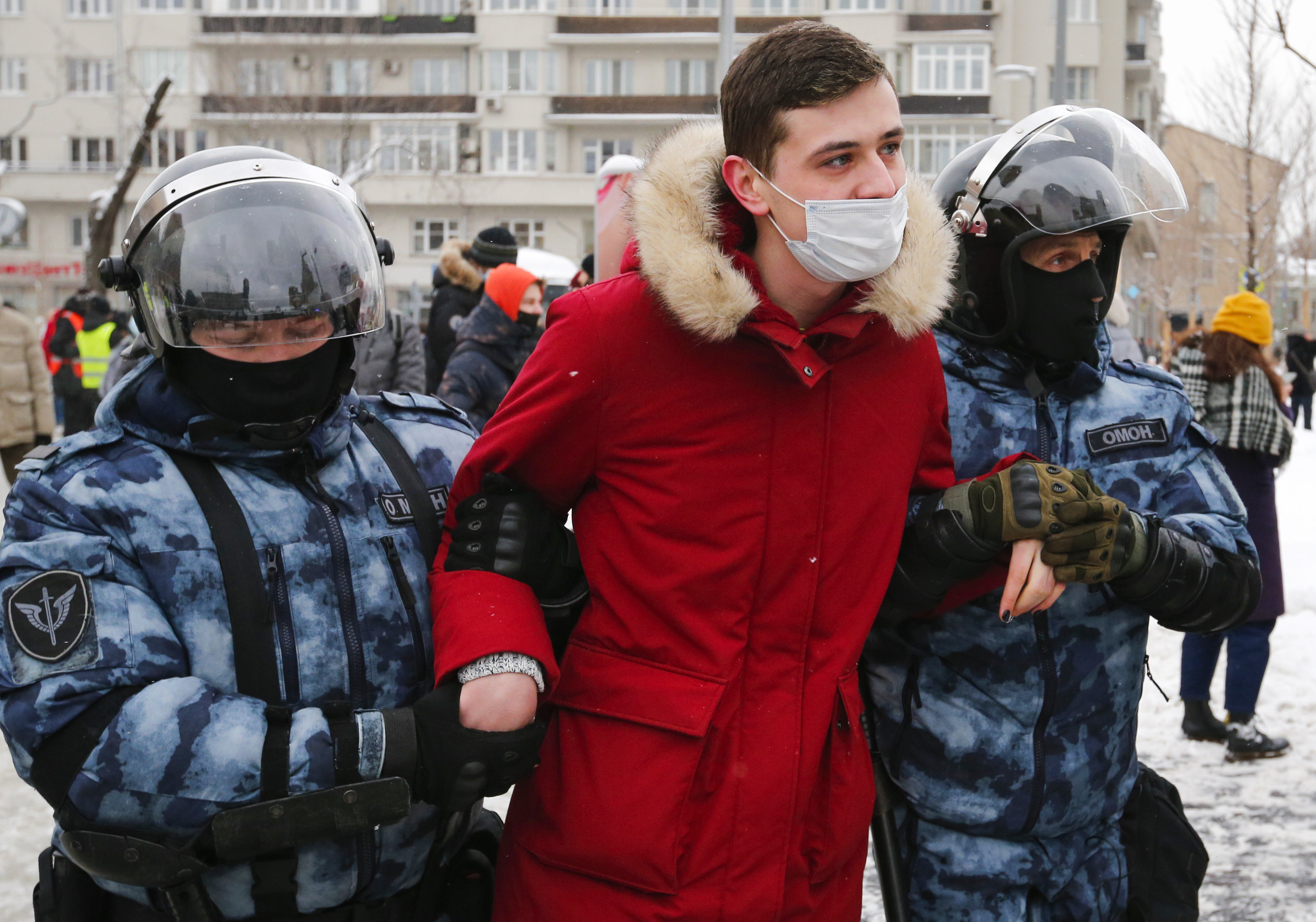
The United States urged Russia to release Navalny and criticised the crackdown on protests.
"The U.S. condemns the persistent use of harsh tactics against peaceful protesters and journalists by Russian authorities for a second week straight," U.S. Secretary of State Antony Blinken said on Twitter.
The Russian Foreign Ministry rejected Blinken's call as "crude interference in Russia's internal affairs" and accused Washington of trying to destabilise the situation in the country by backing the protests.
On Sunday, police detained more than 5000 people in cities nationwide, according to OVD-Info, a group that monitors political arrests, surpassing some 4000 detentions at the demonstrations across Russia on January 23.
READ MORE: Putin denies owning $1.8b 'palace' after protests over rival's jailing
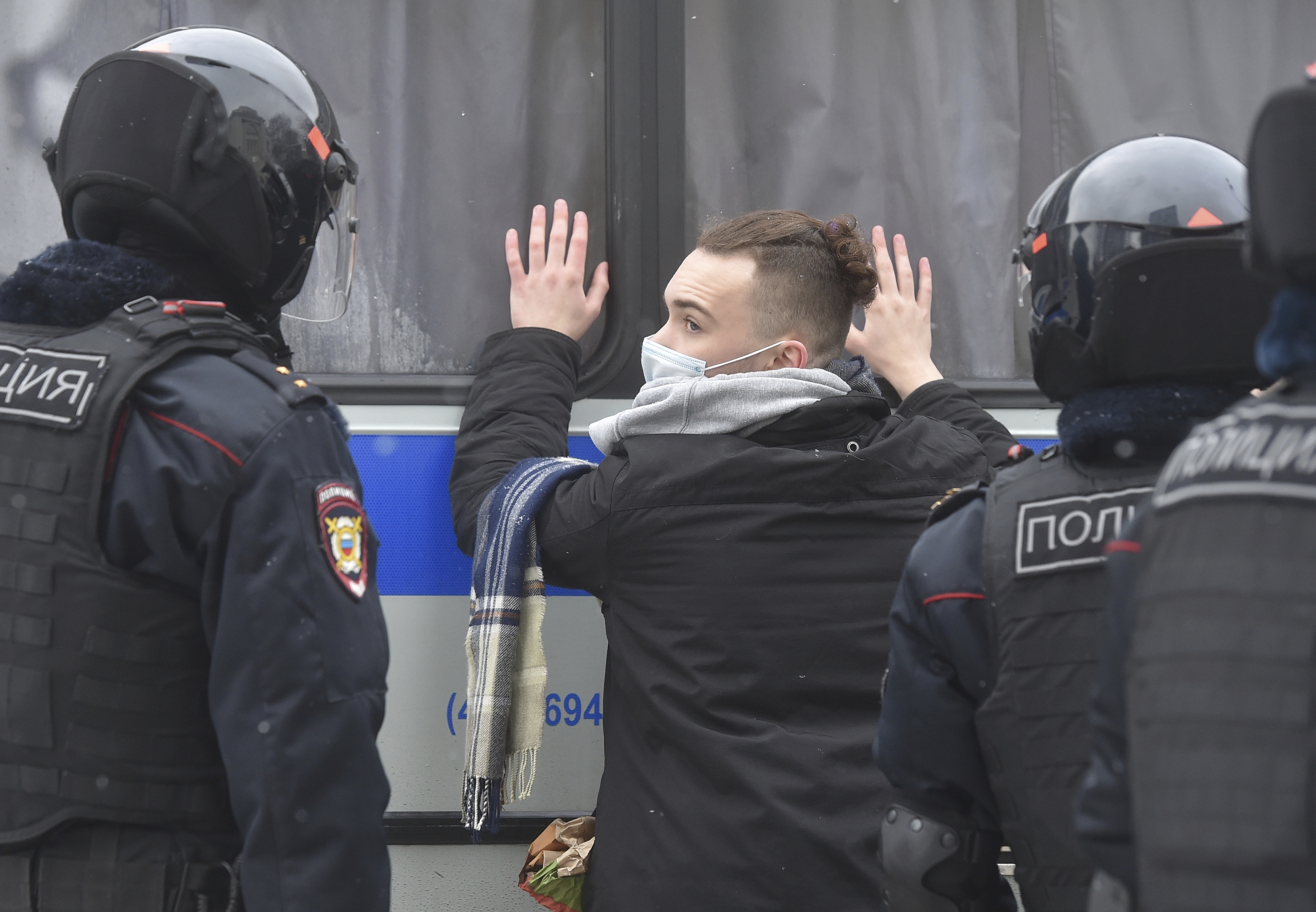
In Moscow, authorities introduced unprecedented security measures in the city centre, closing subway stations near the Kremlin, cutting bus traffic and ordering restaurants and stores to stay closed.
Navalny's team initially called for Sunday's protest to be held on Moscow's Lubyanka Square, home to the main headquarters of the Federal Security Service, which Navalny contends was responsible for his poisoning.
Facing police cordons around the square, the protest shifted to other central squares and streets.
Police were randomly picking up people and putting them into police buses, but thousands of protesters marched across the city centre for hours, chanting "Putin, resign!" and "Putin, thief!" — a reference to an opulent Black Sea estate reportedly built for the Russian leader that was featured in a widely popular video released by Navalny's team.
READ MORE: Russia arrests 350 protesters demanding Navalny's release
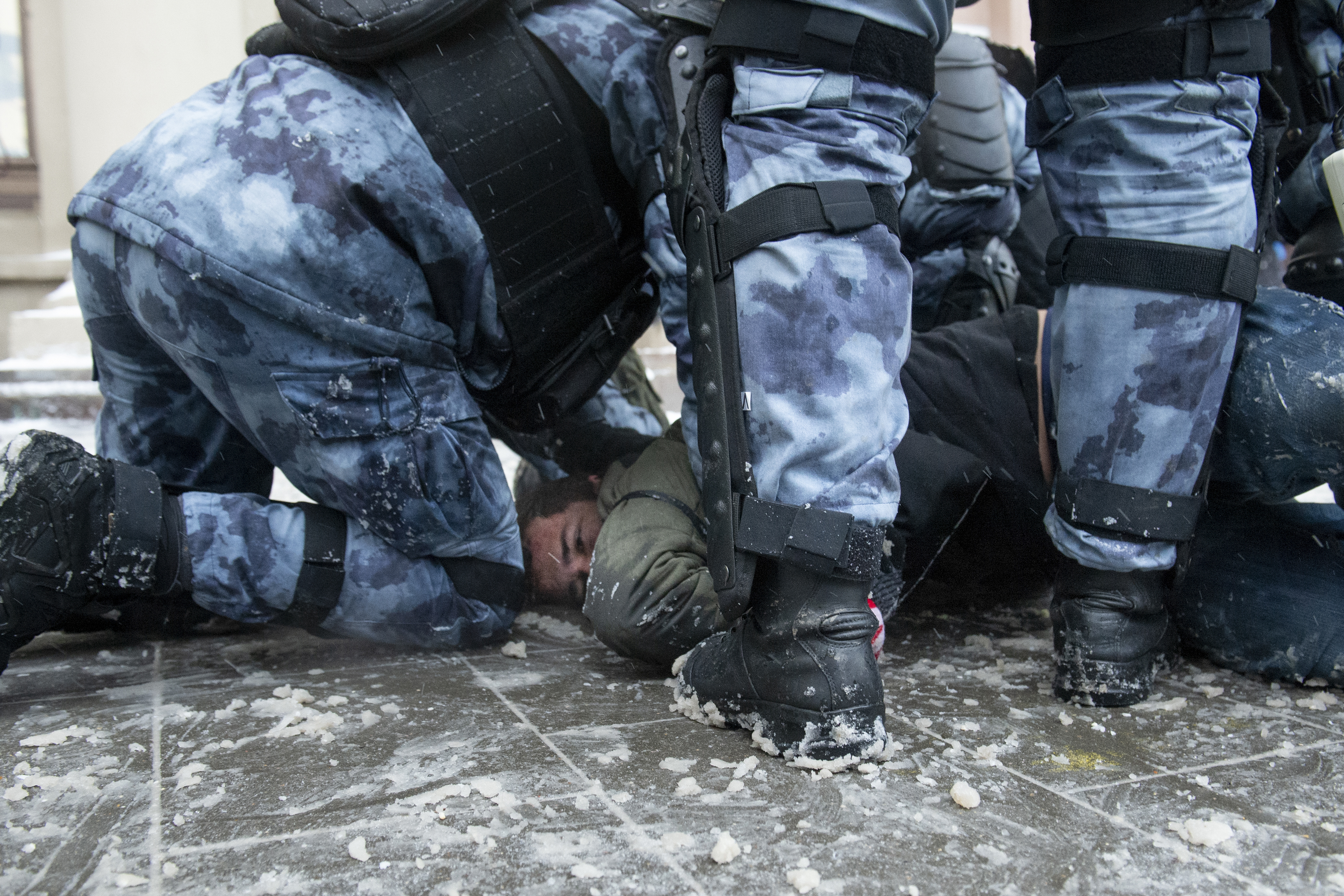
"I'm not afraid, because we are the majority," said protester Leonid Martynov.
"We mustn't be scared by clubs because the truth is on our side."
At one point, crowds of demonstrators walked toward the Matrosskaya Tishina prison where Navalny is being held.
They were met by phalanxes of riot police who pushed the march back and chased protesters through courtyards.
Demonstrators continued to march around the Russian capital, zigzagging around police cordons.
READ MORE: Kremlin critic alleges Vladimir Putin owns 'billion-dollar palace'
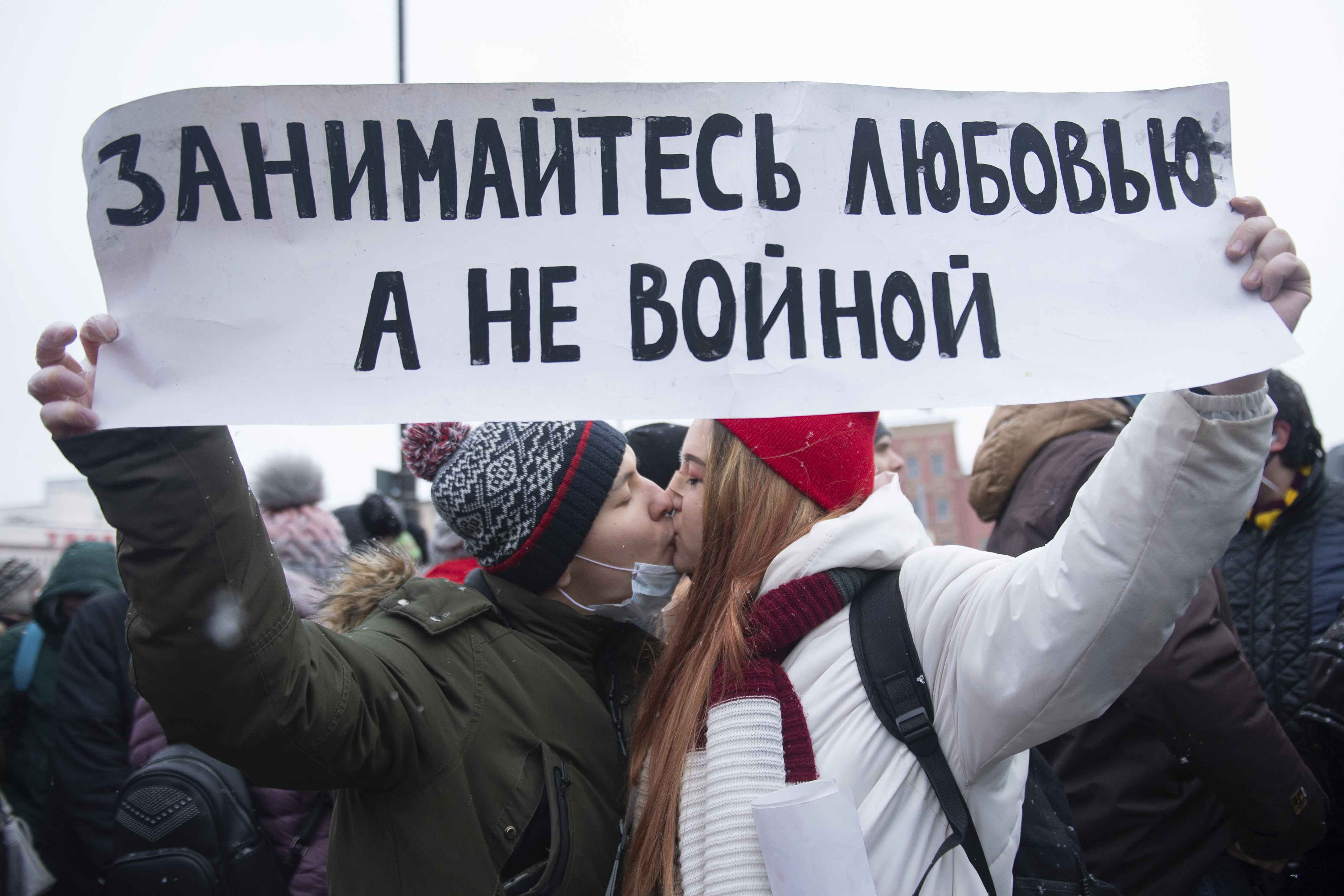
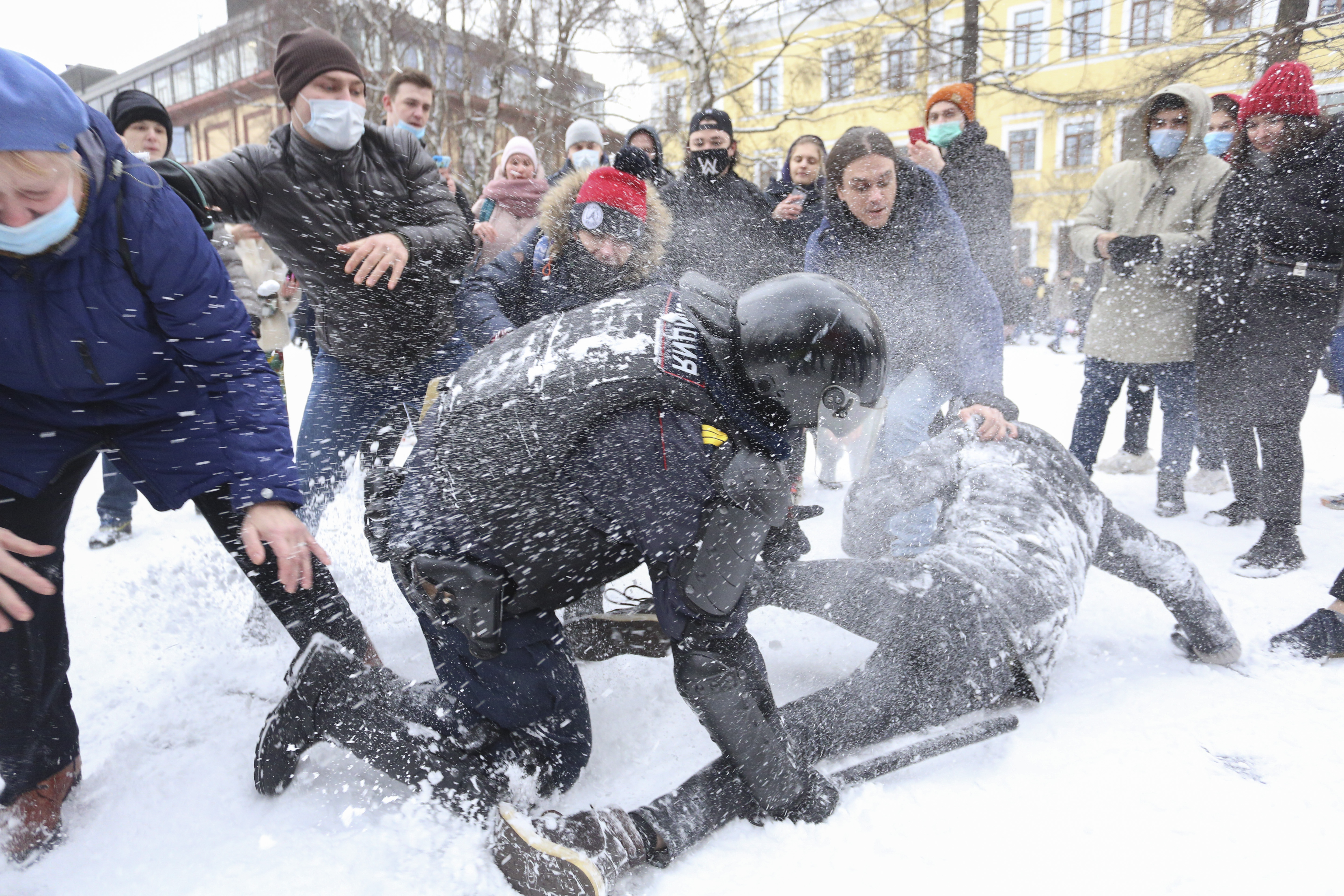
Officers broke them into smaller groups and detained scores, beating some with clubs and occasionally using tasers.
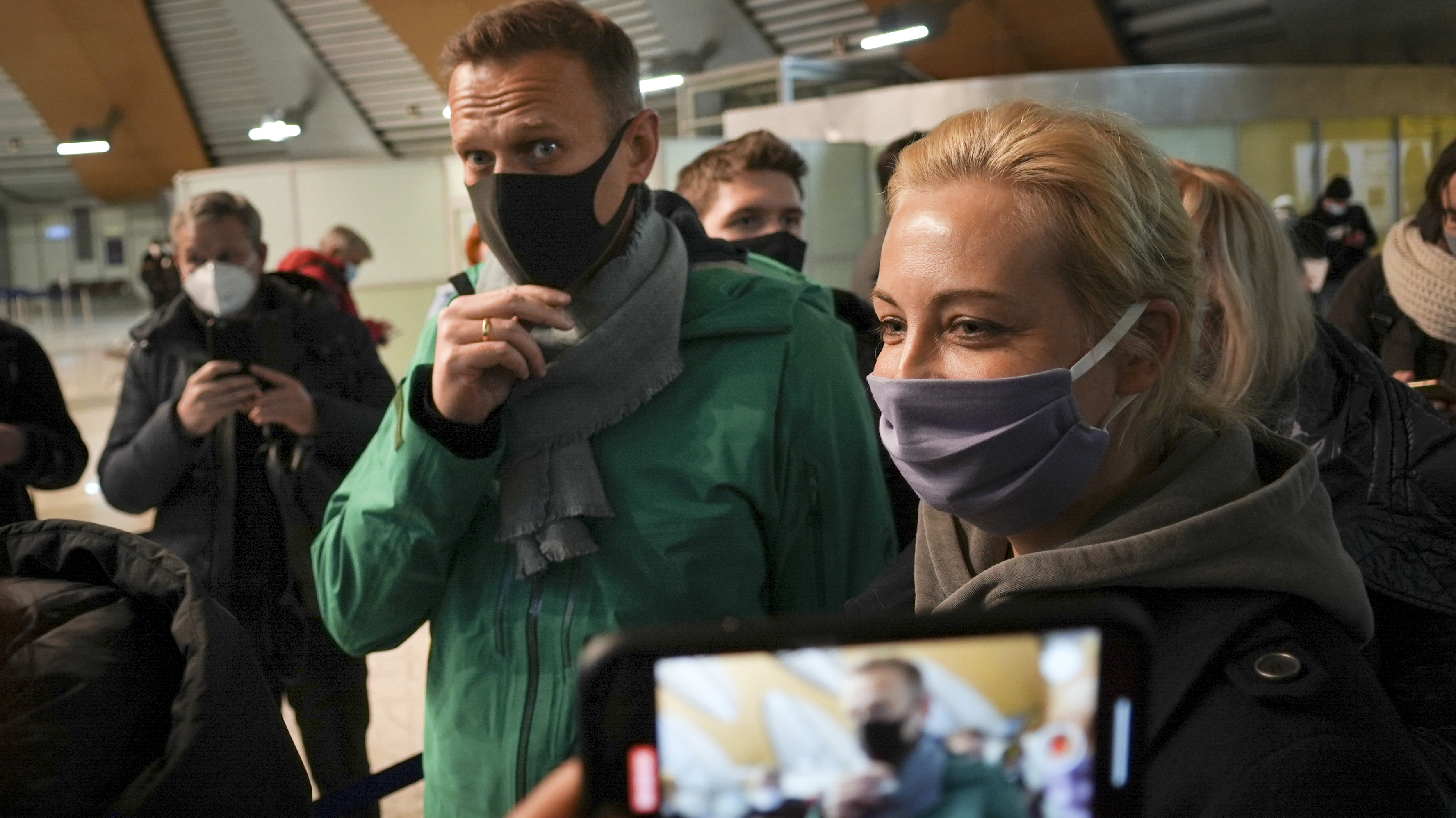
Over 1600 people were detained in Moscow, including Navalny's wife, Yulia, who was released after several hours pending a court hearing Monday on charges of taking part in an unsanctioned protest.
"If we keep silent, they will come after any of us tomorrow," she said on Instagram before turning out to protest.
Amnesty International said that authorities in Moscow have arrested so many people that the city's detention facilities have run out of space.
"The Kremlin is waging a war on the human rights of people in Russia, stifling protesters' calls for freedom and change," Natalia Zviagina, the group's Moscow office head, said in a statement.
READ MORE: Navalny faces surprise hearing in Russia
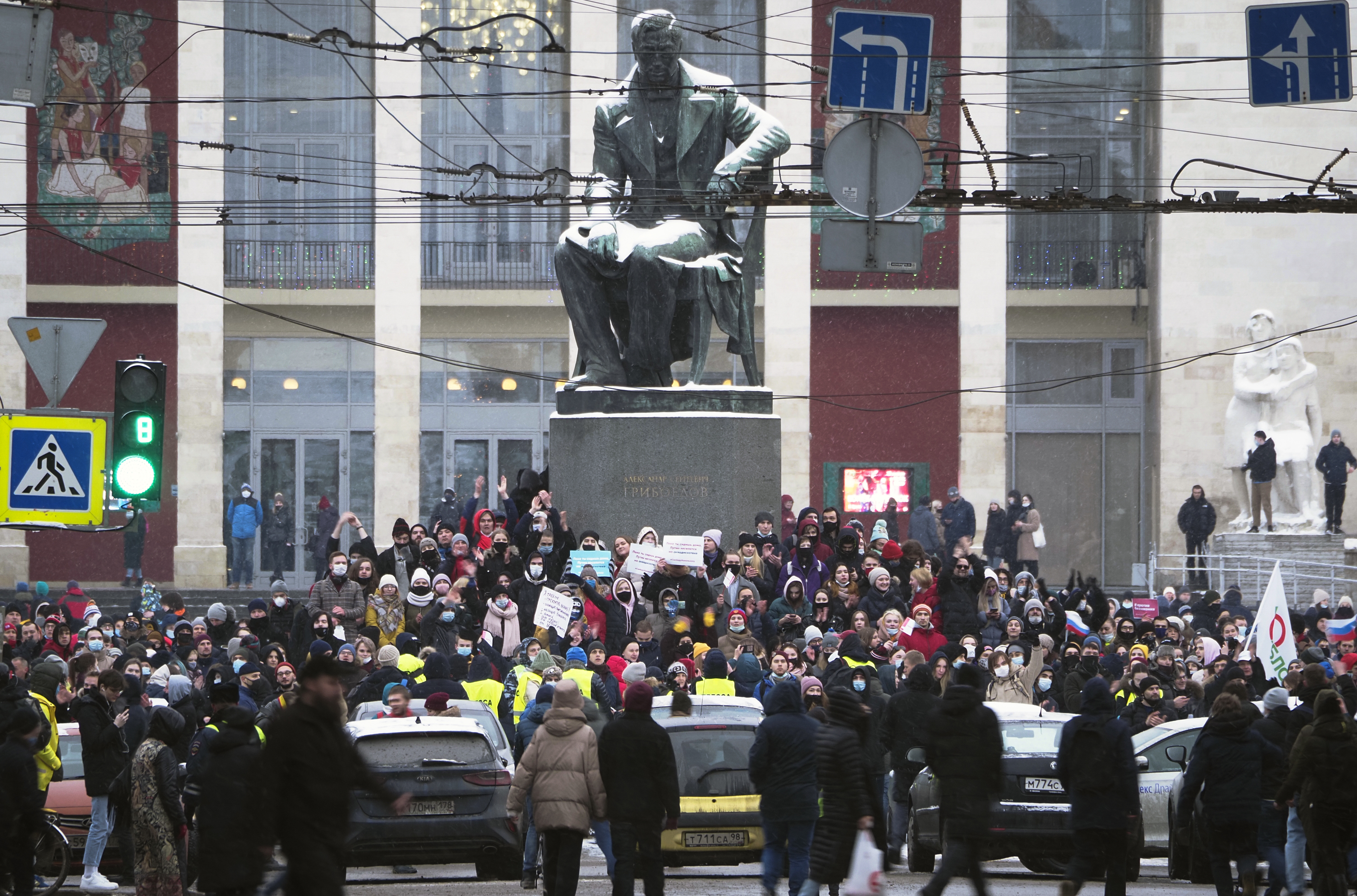
Several thousand people marched across Russia's second-largest city of St Petersburg, chanting "Down with the czar!" and occasional scuffles erupted as some demonstrators pushed back police who tried to make detentions.
Over 1100 were arrested.
Some of the biggest rallies were held in Novosibirsk and Krasnoyarsk in eastern Siberia and Yekaterinburg in the Urals.
"I do not want my grandchildren to live in such a country," said 55-year-old Vyacheslav Vorobyov, who turned out for a rally in Yekaterinburg. "I want them to live in a free country."
Swedish Foreign Minister Ann Linde, who currently chairs the Organization for Security and Cooperation in Europe, condemned "the excessive use of force by authorities and mass detention of peaceful protesters and journalists" and urged Russia "to release all those unjustly detained, including Navalny."
As part of a multipronged effort by authorities to block the protests, courts have jailed Navalny's associates and activists across the country over the past week.
READ MORE: Russia's leading critic detained on return to Moscow after poisoning
His brother Oleg, top aide Lyubov Sobol and three other people were put under a two-month house arrest Friday on charges of allegedly violating coronavirus restrictions during last weekend's protests.
Prosecutors also demanded that social media platforms block calls to join the protests.
The Interior Ministry issued stern warnings to the public, saying protesters could be charged with taking part in mass riots, which carries a prison sentence of up to eight years.
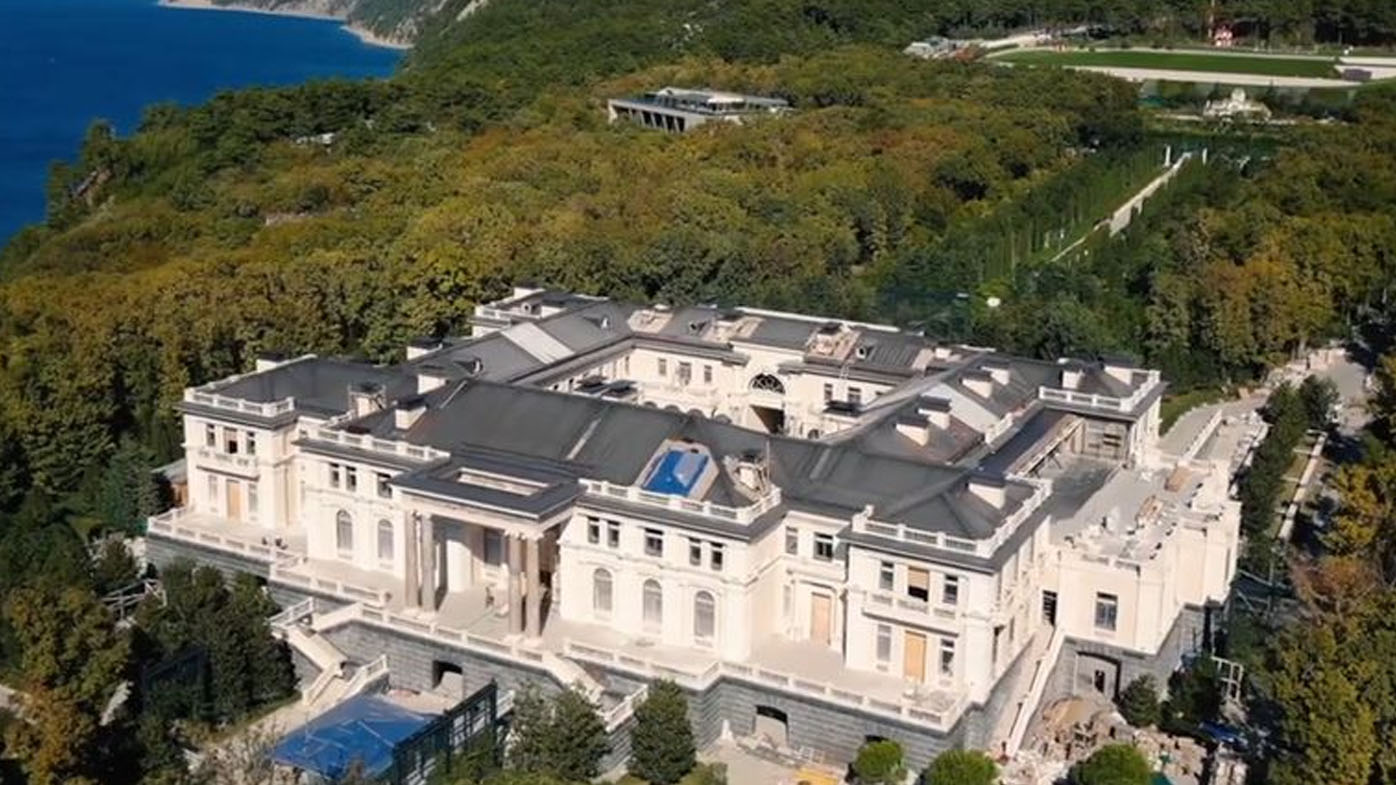
Protests were fuelled by a two-hour YouTube video released by Navalny's team after his arrest about the Black Sea residence purportedly built for Putin.
The video has been viewed over 100 million times, inspiring a stream of sarcastic jokes on the internet amid an economic downturn.
READ MORE: British double agent George Blake dies in Russia at 98
Russia has seen extensive corruption during Putin's time in office while poverty has remained widespread.
"All of us feel pinched financially, so people who take to the streets today feel angry," said Vladimir Perminov who protested in Moscow.
"The government's rotation is necessary."
Demonstrators in Moscow chanted "Aqua discotheque!" — a reference to one of the fancy amenities at the residence that also features a casino and a hookah lounge equipped for watching pole dances.
Putin says neither he nor any of his close relatives own the property. On Saturday, construction magnate Arkady Rotenberg, a longtime Putin confidant and his occasional judo sparring partner, claimed that he himself owned the property.
Navalny fell into a coma on Aug. 20 while on a flight from Siberia to Moscow and the pilot diverted the plane so he could be treated in the city of Omsk.
He was transferred to a Berlin hospital two days later. Labs in Germany, France and Sweden, and tests by the Organisation for the Prohibition of Chemical Weapons, established that he was exposed to the Novichok nerve agent.
READ MORE: Putin grants ex-presidents lifetime immunity
Russian authorities have refused to open a full-fledged criminal inquiry, claiming lack of evidence that he was poisoned.
Navalny was arrested immediately upon his return to Russia earlier this month and jailed for 30 days on the request of Russia's prison service, which alleged he had violated the probation of his suspended sentence from a 2014 money-laundering conviction that he has rejected as political revenge.
On Thursday, a Moscow court rejected Navalny's appeal to be released, and the hearing Tuesday could turn his three and a half year suspended sentence into one he must serve in prison.