Tag Archives: oceania

US top doctor makes dramatic switch as Biden takes charge

President Joe Biden's top medical adviser on COVID-19, Dr Anthony Fauci, has announced renewed US support for the World Health Organisation after it faced blistering criticism from the Trump administration, laying out new commitments to tackle the coronavirus and other global health issues.

Dr Fauci, speaking by videoconference from pre-dawn United States to WHO's executive board, said the US will join the UN health agency's efforts to bring vaccines, therapeutics and diagnostics to people in need, whether in rich or poor countries.

He said the US will also resume full funding and staffing support for WHO.

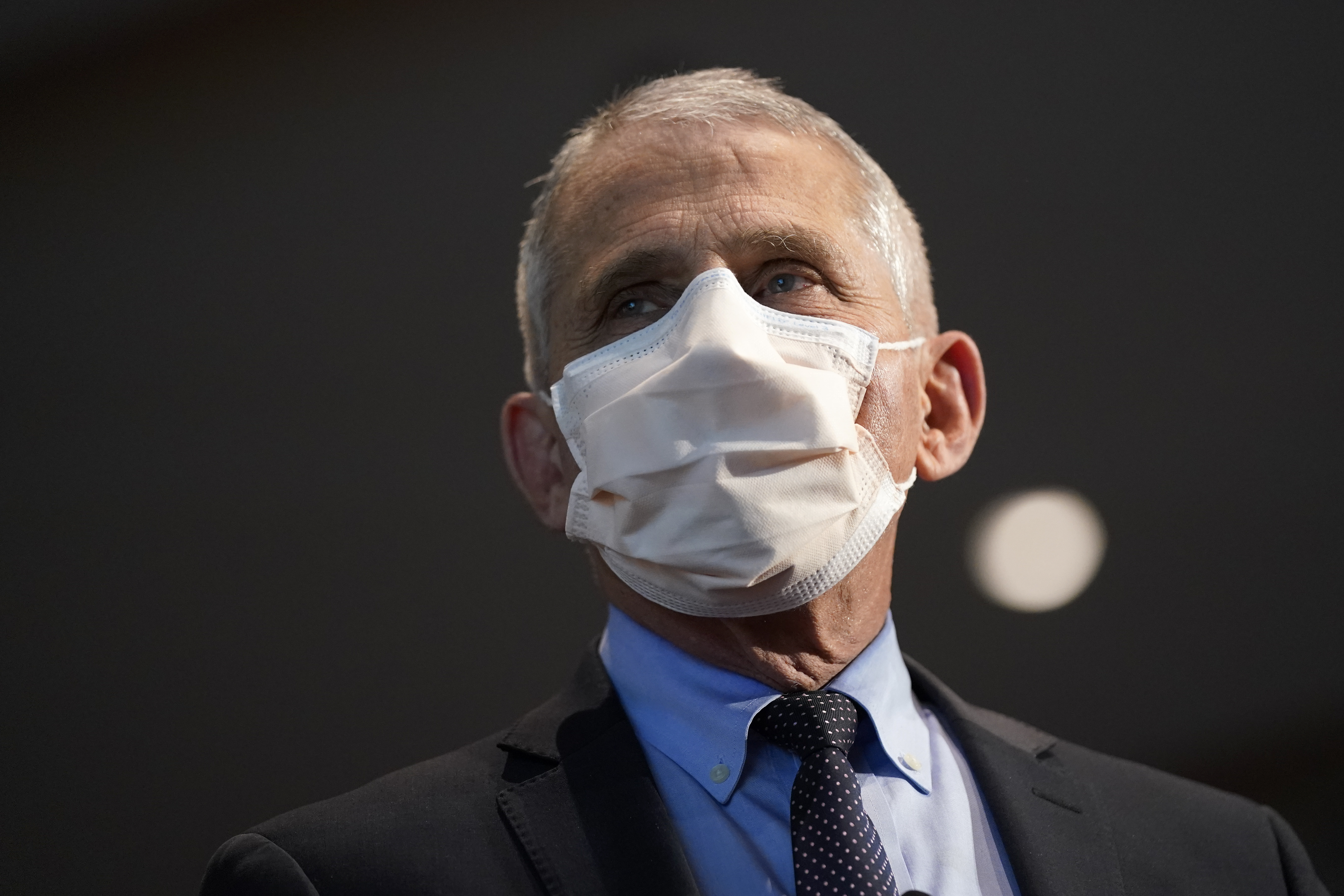
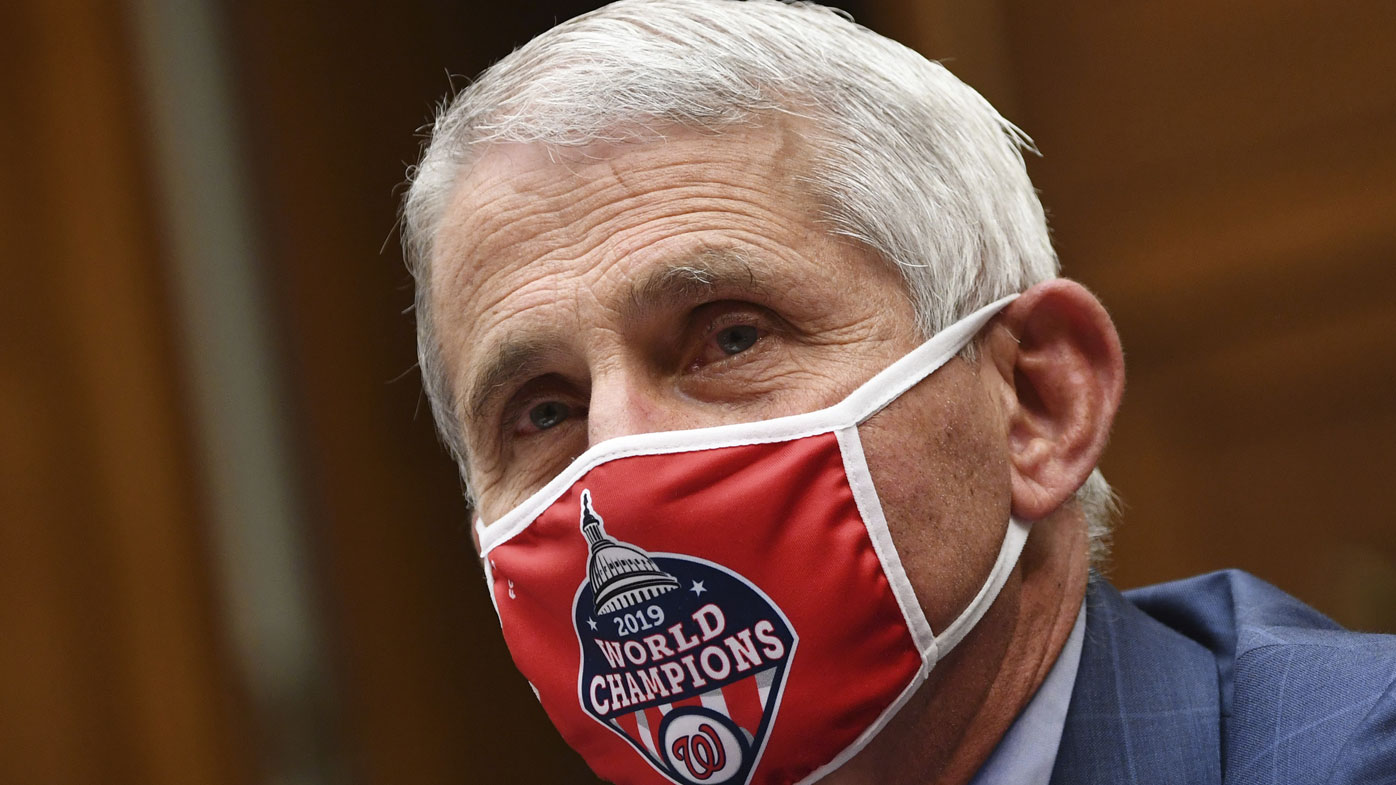
Dr. Anthony Fauci, director of the National Institute for Allergy and Infectious Diseases, testifies during a House Subcommittee hearing on the Coronavirus crisis, Friday, July 31, 2020 on Capitol Hill in WashingtonPresident Joe Biden pauses as he signs his first executive orders in the Oval Office of the White House on Wednesday, Jan. 20, 2021, in Washington. (AP Photo/Evan Vucci)

READ MORE: World hopes for renewed cooperation with US under Biden

Dr Fauci's quick commitment to WHO — whose response to the coronavirus outbreak was repeatedly berated by the Trump administration — marks a dramatic and vocal shift toward a multilateral approach to fighting the pandemic.

"I am honoured to announce that the United States will remain a member of the World Health Organisation," Dr Fauci said.

Just hours after Biden's inauguration on Wednesday, his administration announced the US will revoke a planned pullout from the WHO in July that had been announced by the Trump administration.

Dr Fauci said the Biden administration "will cease the drawdown of US staff seconded to the WHO" and resume "regular engagement" with WHO.

"The United States also intends to fulfil its financial obligations to the organisation," he said.

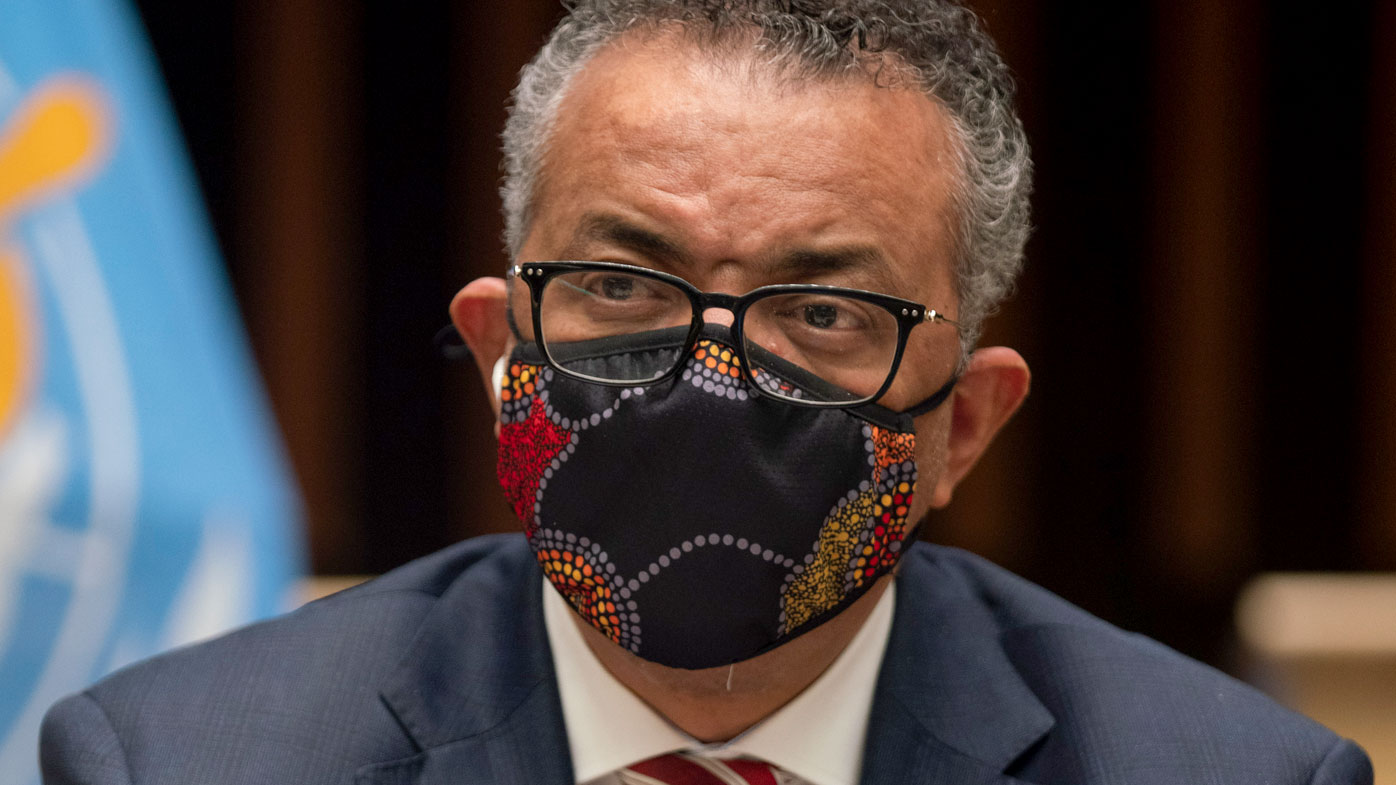
He referred to Tedros Adhanom Ghebreyesus, the WHO director-general, as "my dear friend".

Other countries and the WHO chief jumped in to welcome the US announcements, and pledged to work with the Biden administration.

"This is a good day for WHO and a good day for global health," Mr Ghebreyesus said, referring to "my brother Tony" in reference to Dr Fauci, while congratulating Biden and Vice-President Kamala Harris.

"The role of the United States, its role, global role is very, very crucial."

The United States under Trump had been the highest-profile — and most deep-pocketed — holdout from the COVAX Facility, which has faced financial hurdles and contractual challenges with vaccine manufacturers as well as vast logistical issues.

Both the European Union and China have given their support to the program.

Biden to sign coronavirus executive orders and push for mask wearing

Deep in the deadliest coronavirus wave and facing worrisome new mutations, President Joe Biden will kick off his national COVID-19 strategy to ramp up vaccinations and testing, reopen schools and businesses and increase the use of masks — including a requirement that Americans mask up for travel.

Biden also will address inequities in hard-hit minority communities as he signs 10 pandemic-related executive orders on Thursday. Those orders are a first step, and specific details of many administration actions are still being spelled out.

The new president has vowed to take far more aggressive measures to contain the virus than his predecessor, starting with stringent adherence to public health guidance.

READ MORE: World hopes for renewed cooperation with US under Biden
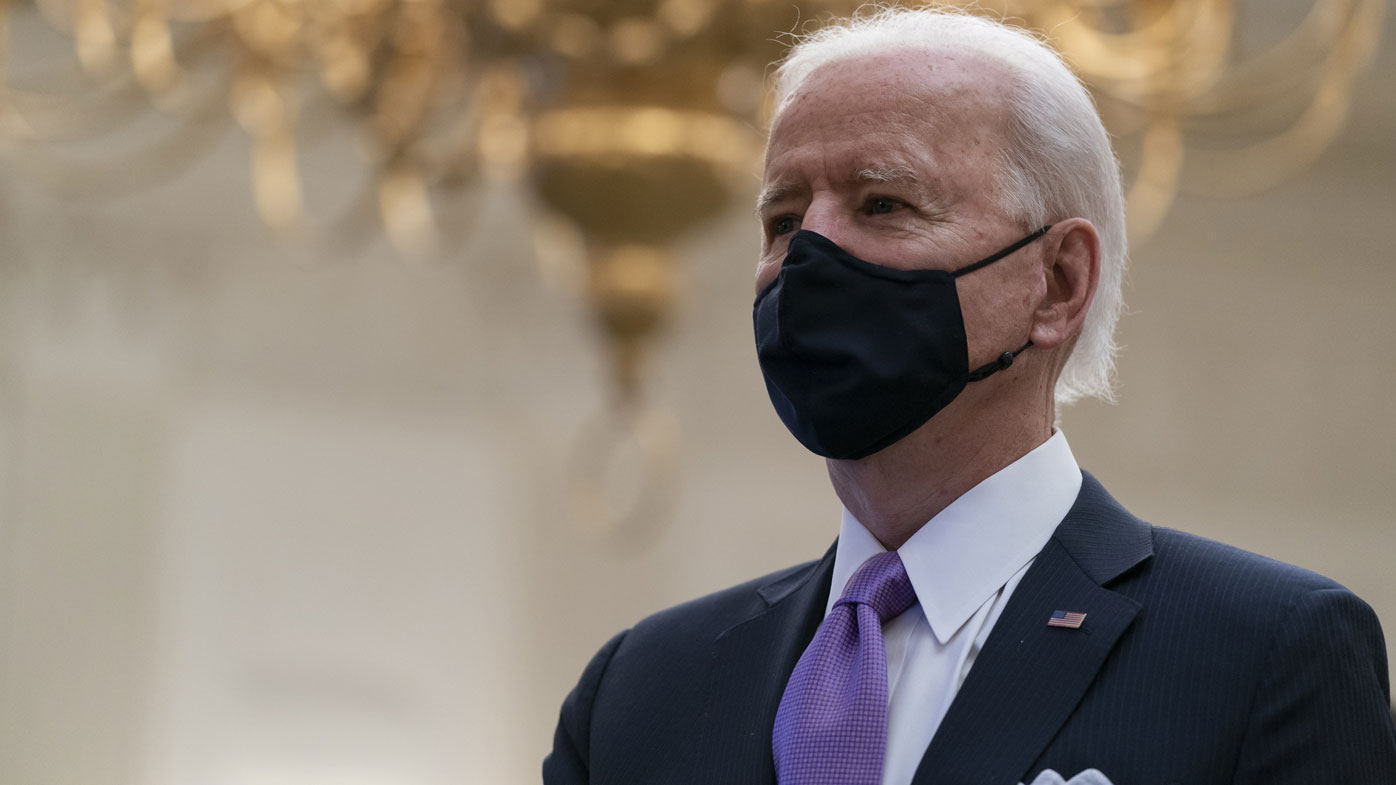
President Joe Biden stands during a performance of the national anthem, during a virtual Presidential Inaugural Prayer Service in the State Dinning Room of the White House, Thursday, Jan. 21, 2021, in Washington

He faces steep obstacles, with the virus actively spreading in most states, slow progress on the vaccine roll-out and political uncertainty over whether congressional Republicans will help him pass a US$1.9 trillion ($2.45t) economic relief and COVID response package.

"We need to ask average Americans to do their part," said Jeff Zients, the White House official directing the national response. "Defeating the virus requires a coordinated nationwide effort."

https://twitter.com/WhiteHouse/status/1352105389899325440?ref_src=twsrc%5Etfw

Biden officials say they're hampered by lack of cooperation from the Trump administration during the transition. They say they don't have a complete understanding of their predecessors' actions on vaccine distribution. And they face a litany of complaints from states that say they are not getting enough vaccine even as they are being asked to vaccinate more categories of people.
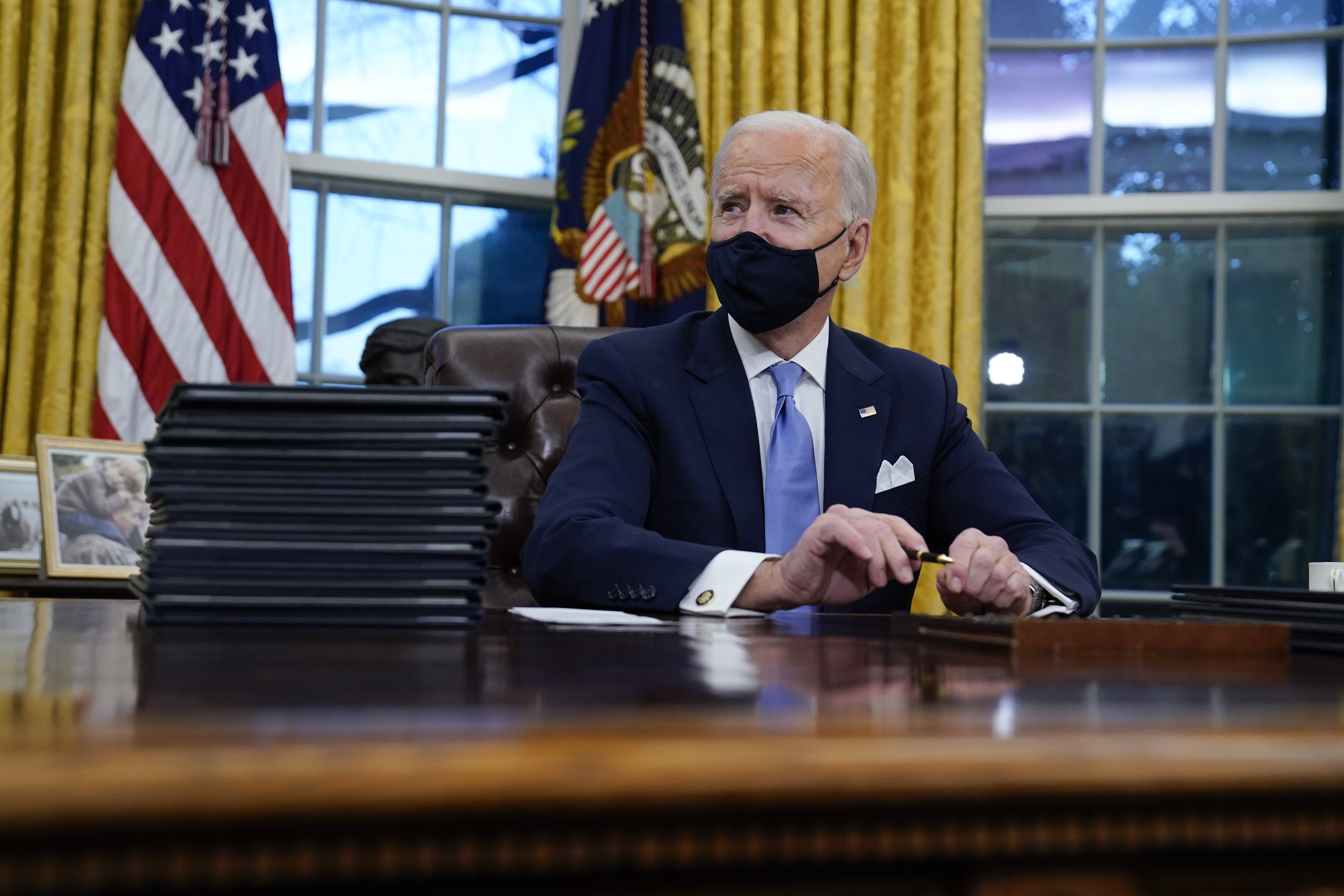
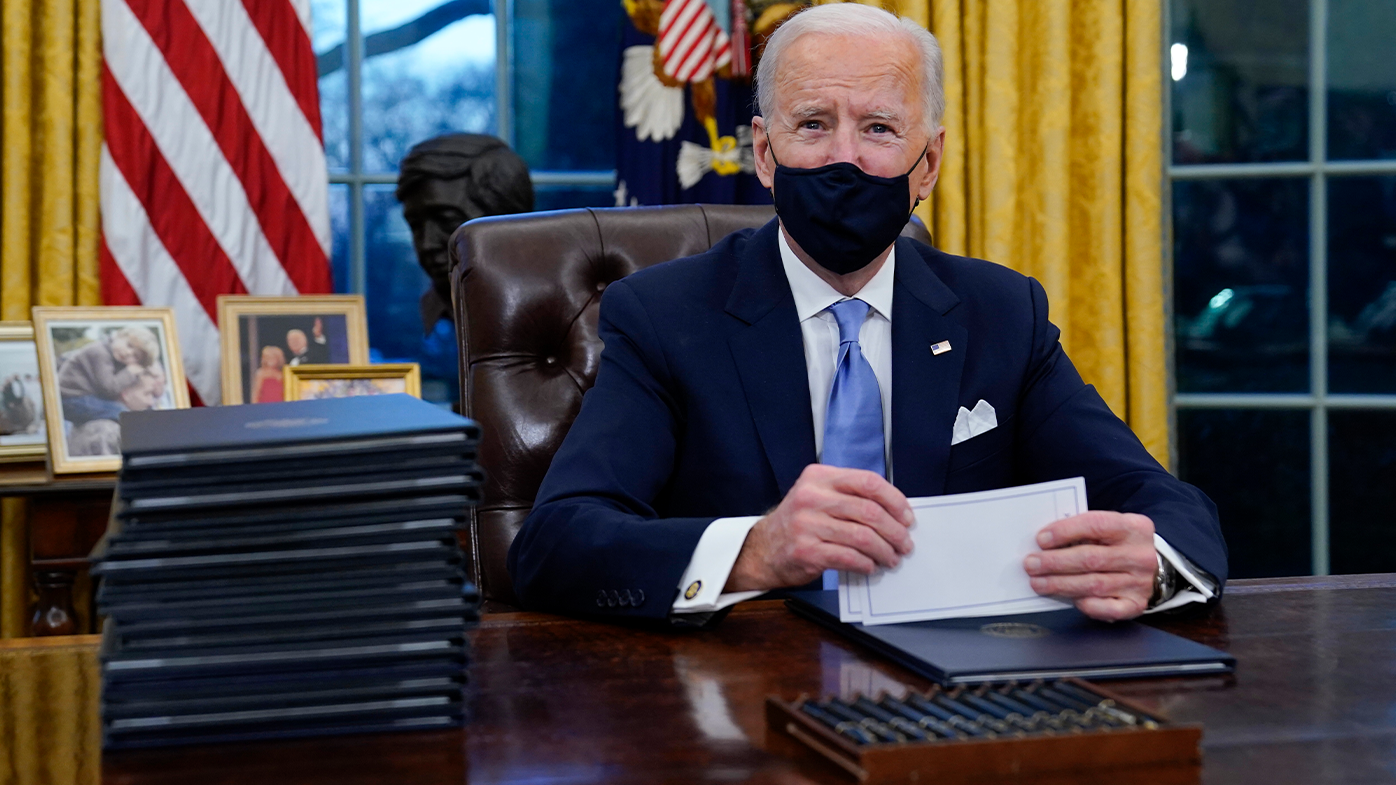
President Joe Biden pauses as he signs his first executive orders in the Oval Office of the White House on Wednesday, Jan. 20, 2021, in Washington. (AP Photo/Evan Vucci)

Biden acknowledged the urgency of the mission in his inaugural address.

"We are entering what may well be the toughest and deadliest period of the virus," he said before asking Americans to join him in a moment of silence in memory of the more than 400,000 people in the US who have died from COVID-19.

Biden's top medical adviser on COVID-19, Dr. Anthony Fauci, also announced renewed US support for the World Health Organisation after the Trump administration had pulled out of the global body.

Fauci said early on Thursday that the US will join the UN health agency's efforts to bring vaccines, therapeutics and diagnostics to people in need, whether in rich or poor countries and will resume full funding and staffing support for WHO.
The US mask order for travel being implemented by Biden will apply to airports and planes, ships, intercity buses, trains and public transportation. Travellers from abroad must furnish a negative COVID-19 test before departing for the US and quarantine upon arrival. Biden has already mandated masks on federal property.

Although airlines, Amtrak and other transport providers now require masks, Biden's order makes it a federal mandate, leaving little wiggle room for passengers tempted to argue about their rights.

It marks a sharp break with the culture of President Donald Trump's administration, under which masks were optional, and Trump made a point of going maskless and hosting big gatherings of like-minded supporters. Science has shown that masks, properly worn, cut down on coronavirus transmission.

Biden also is seeking to expand testing and vaccine availability, with the goal of 100 million shots in his first 100 days in office. Zients called Biden's goal "ambitious and achievable."
The Democratic president has directed the Federal Emergency Management Agency to begin setting up vaccination centres, aiming to have 100 up and running in a month. He's ordering the Centres for Disease Control and Prevention to begin a program to make vaccines available through local pharmacies starting next month. And he's mobilising the Public Health Service to deploy to assist localities in vaccinations.

There's also support for states. Biden is ordering FEMA to reimburse states for the full cost of using their National Guards to set up vaccination centres. That includes the use of supplies and protective gear as well as personnel.

But some independent experts say the administration should be setting a higher bar for itself than 100 million shots. During flu season, the US is able to vaccinate about 3 million people a day, said Dr. Christopher Murray of the Institute for Health Metrics and Evaluation in Seattle. "Given the number of people dying from COVID, we could and should do more — like what we're able to do on seasonal flu," he said.
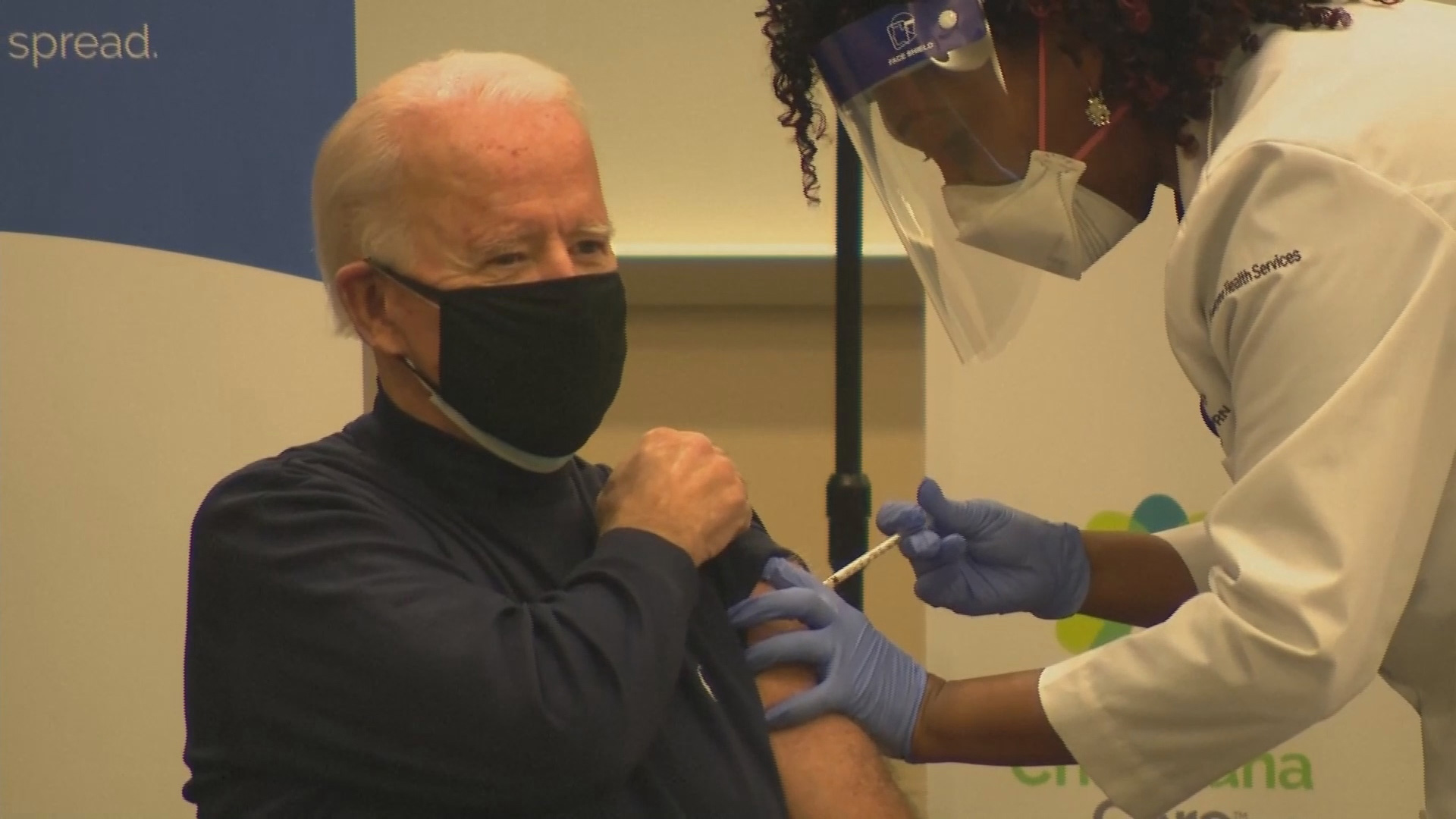
The president-elect took a dose of Pfizer vaccine at a hospital not far from his Delaware home, hours after his wife, Jill Biden, did the same.

Zients said Biden will not follow through on a Trump administration plan to penalise states lagging in vaccination by shifting some of their allocation to more efficient states. "We are not looking to pit one state against another," he said.

Biden has set a goal of having most K-8 schools reopen in his first 100 days, and he's ordering the departments of Education and Health and Human Services to provide clear guidance for reopening schools safely. States would also be able to tap FEMA's Disaster Relief Fund to help them get schools back open.

Getting schools and child care going will help to ease the drag on the US economy, making it easier for parents to return to their jobs and restaurants to find lunch-time customers.

But administration officials stressed that reopening schools safely depends on increased testing.

To ramp up supplies, Biden is giving government agencies a green light to use a Cold War-era law called the Defense Production Act to direct manufacturing.

"We do not have nearly enough testing capacity in this country," Zients said. "We need the money in order to really ramp up testing, which is so important to reopen schools and businesses."

This means that efforts to reopen the economy will hinge on how quickly lawmakers act on the $1.9 trillion ($2.45t) package proposed by Biden, which includes separate planks such as $1,400 ($1800) in direct payments to people, a $15 ($19.36) minimum wage and aid to state and local governments that some Republican legislators see as unnecessary for addressing the medical emergency.

The Biden plan estimates that a national vaccination strategy with expanded testing requires $160 billion ($206b), and he wants another $170 billion ($219b) to aid the reopening of schools and universities. The proposal also calls for major investment in scientific research to track new strains of the virus, amid concern that some mutations may spread more easily and also prove harder to treat.
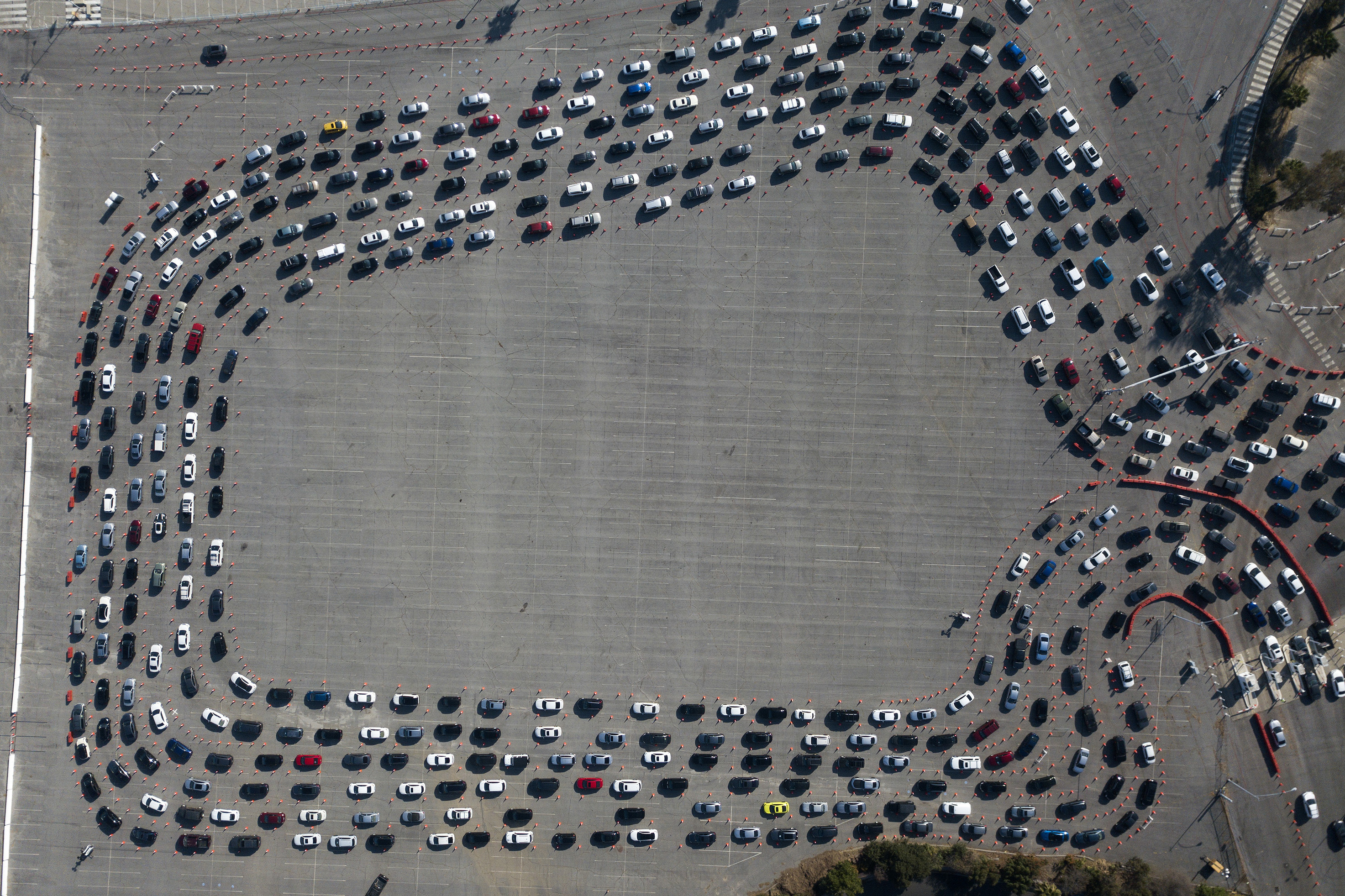
Motorists line up to take a coronavirus test in a parking lot at Dodger Stadium on Monday in Los Angeles.

As part of his COVID-19 strategy, Biden will order the establishment of a COVID-19 Health Equity Task Force to ensure that minority and under-served communities are not left out of the government's response. Blacks, Latinos and Native Americans have borne a heavy burden of death and disease from the virus. Surveys have shown vaccine hesitancy is high among African Americans, a problem the administration plans to address through an education campaign.

But Dr. Marcella Nunez-Smith, the top White House health adviser on minority communities, said she's not convinced that race should be a factor in vaccination. Disparities seem to have more to do with risky jobs and other life circumstances.

"It's not inherent to race," she said. "It's from the exposures."
Emirates to resume flights to Brisbane, Sydney, Melbourne

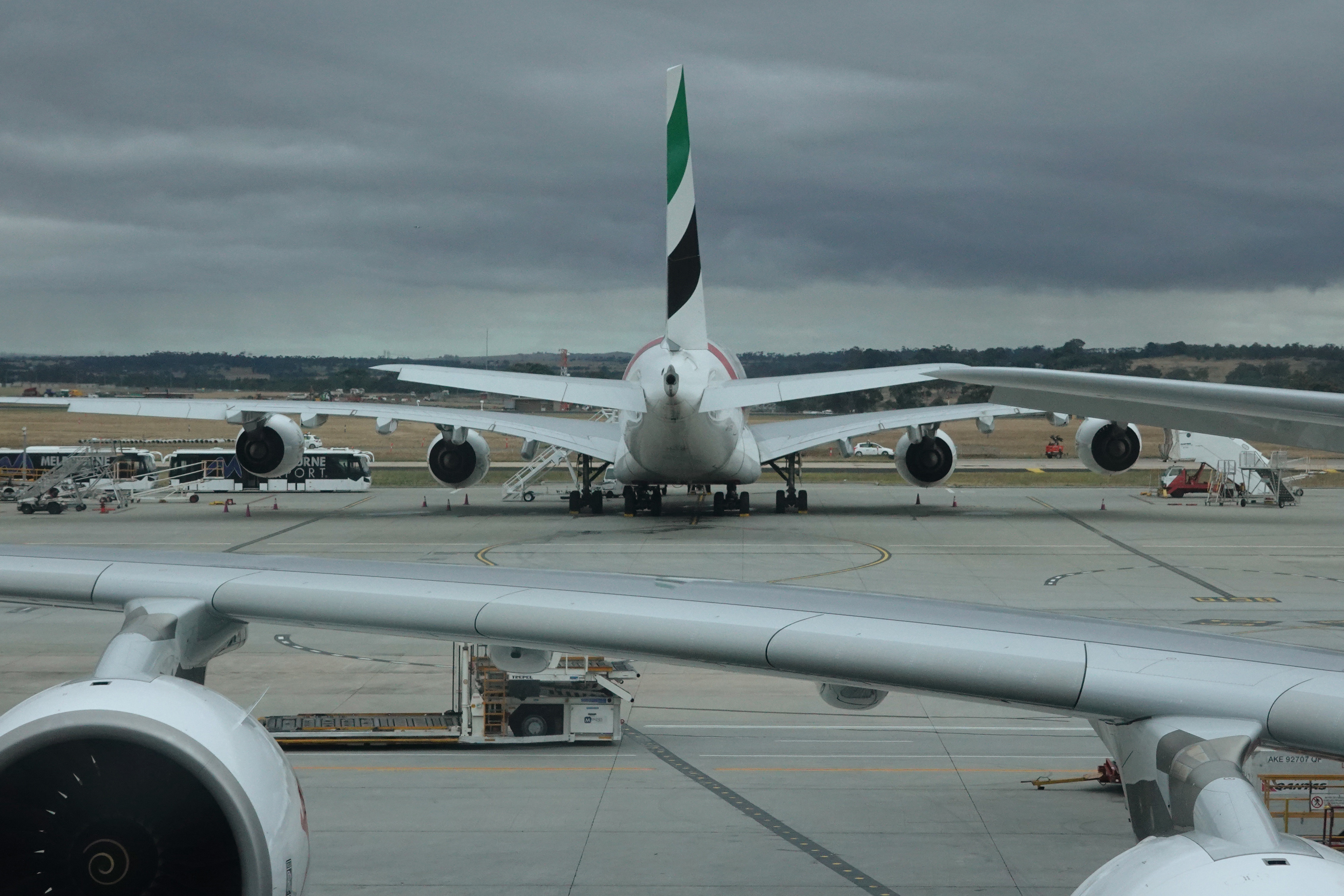
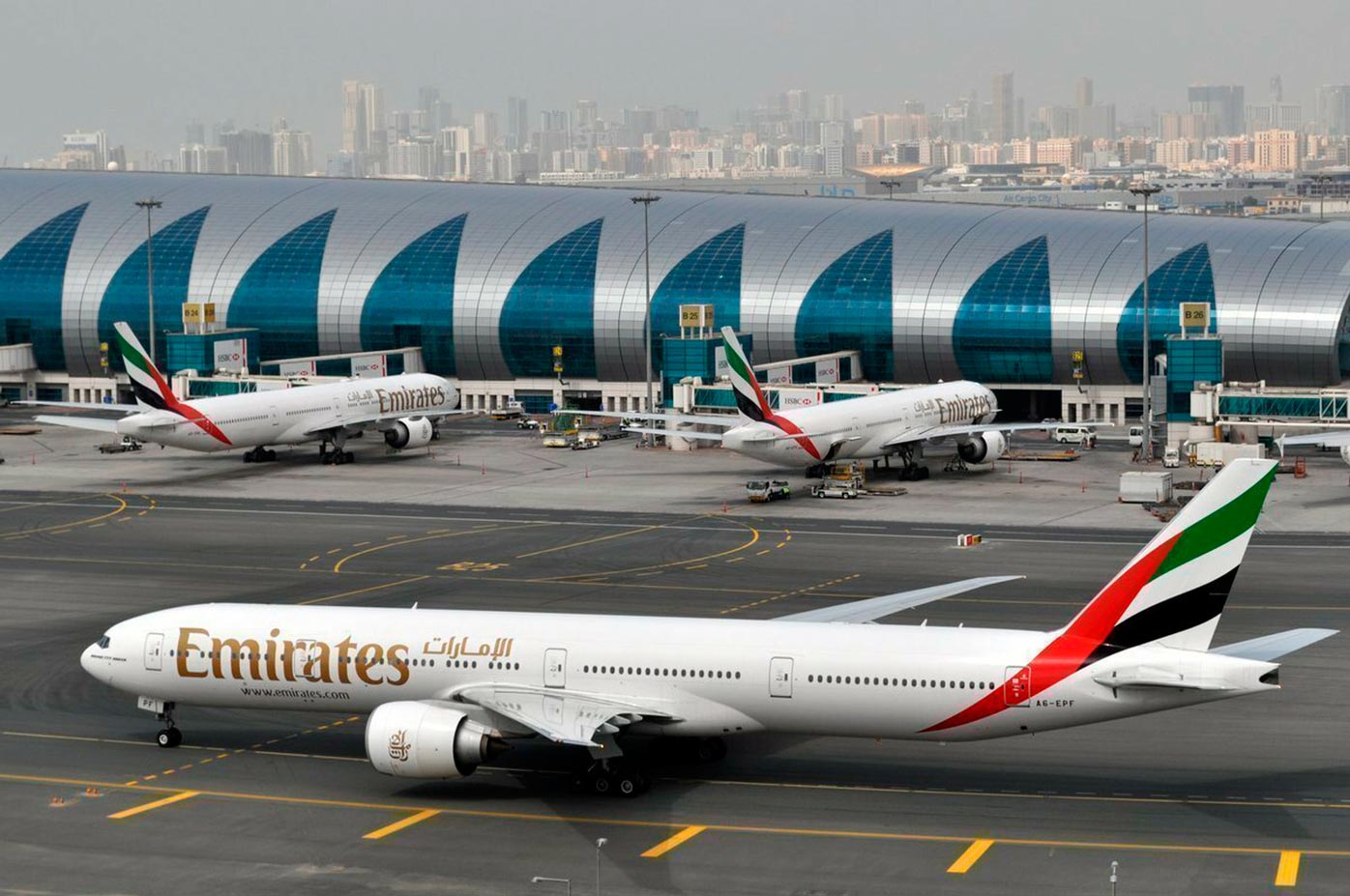
Emirates has announced it will resume a number of flights in and out of Australia, reversing a decision it made only a week earlier.

The Dubai-based airline made a shock announcement on Saturday that it would suspend services "until further notice" to Brisbane, Sydney and Melbourne.

Overnight, Emirates said passenger flights to Sydney would resume from January 25, with Melbourne flights to follow from January 26 and Brisbane flights from January 28. The airline's Perth flights had remained in place, with their twice-a-week services unaffected.

READ MORE: China's new travel restrictions ahead of Luna New Year

While the initial suspension of flights from Australia's east coast only cited "operational reasons", today's announcement shed further light on the matter.

"The pandemic has made international flying incredibly challenging, and the dynamic restrictions and requirements implemented by the different state authorities in Australia had added complexity and burden to our operations," the airline said in a statement.

"This led us to temporarily suspend passenger services while we engaged with various stakeholders regarding crew protocols and other operational details."

The airline also pointed to the government's heightened restrictions coming into effect today.

New mask regulations mean travellers on domestic flights and inside airports will need to wear a mask at all times, while travellers will be required to show a negative COVID-19 test from no more than the 72 hours prior to boarding.

READ MORE: Dire warning on future of tourism industry

International air crews must undergo a COVID-19 test in Australia every seven days, will have their own specialist quarantine location, and are not allowed to move around.

Emirates says the ramped up testing and quarantine situation will be "an added burden for our crew".

"All our crew (cabin crew and pilots) operating on Australian flights were already mandated to take a PCR test 48 hours prior to the scheduled flight departure from Dubai. With the latest adjustments, these tests will be administered in their homes, and our crew will also observe self-quarantine in their homes from the moment of testing until their flight.

"Combined with the hotel quarantine and tests on arrival in Australia, this effectively means that our crew are in a 'bubble' from 48 hours before their flight, until they return to Dubai. This is an added burden for our crew as individuals, for our rostering, and operating costs, and therefore this decision was made after careful review and consideration.

"We are grateful that our wonderful crew teams are very understanding and supportive, which has enabled us to quickly restart passenger services."

The news of the services resuming will be a welcome relief for some of the 38,000 Aussies still stranded overseas, hoping to get home shortly as international arrival caps are almost halved.

Prime Minister Scott Morrison announced the changes to arrival numbers following the most recent National Cabinet meeting earlier this month.

Mr Morrison said there will be reduced caps on international travellers entering Australia. These are as follows:

  • NSW – 1505 travellers a week
  • Western Australia – 512 travellers a week
  • Queensland – 500 travellers a week
  • Victoria – no change
  • South Australia – no change (currently 490)

These cap numbers are set to be reviewed by February 15.

Joe Biden redecorates Oval Office for first day on the job

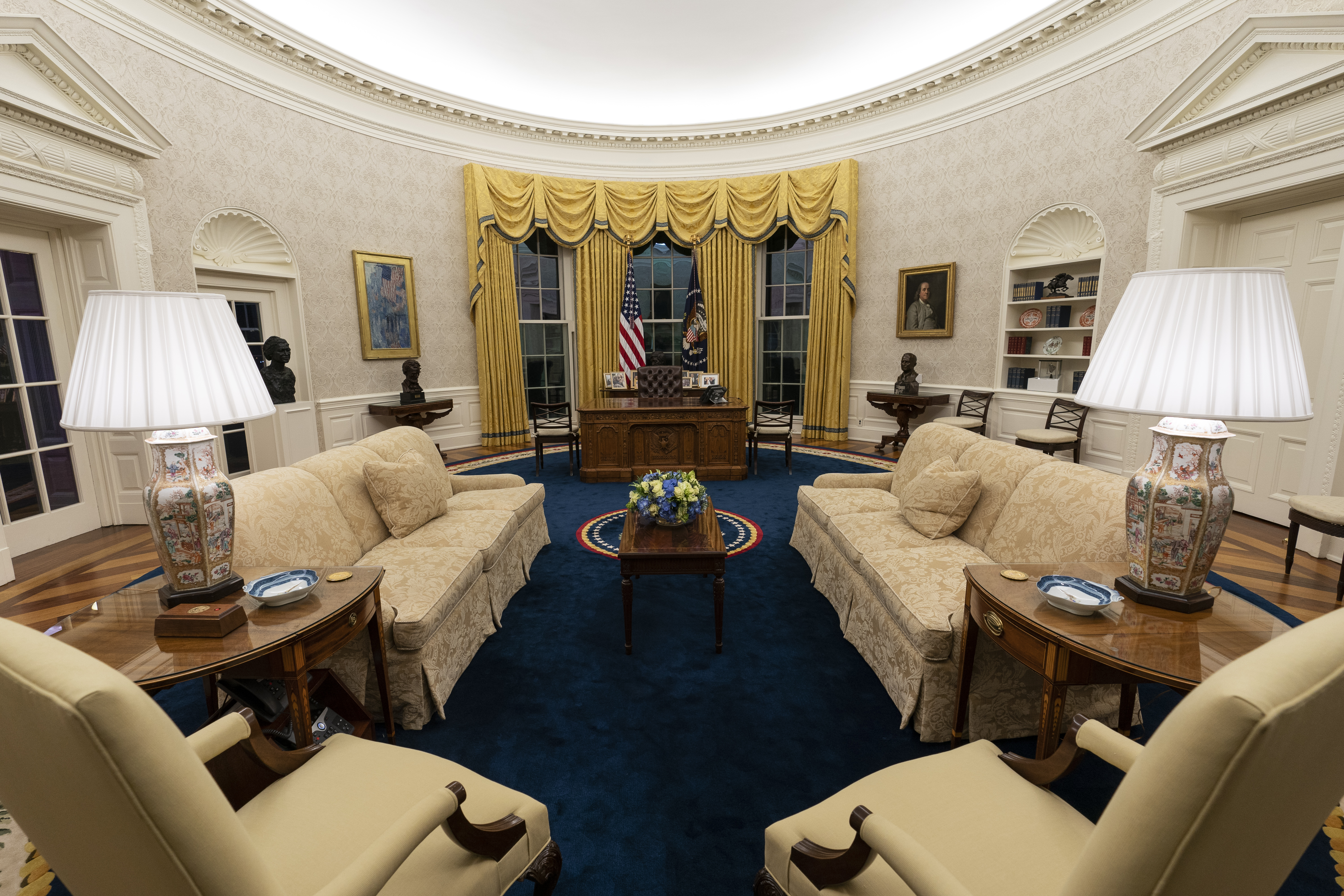
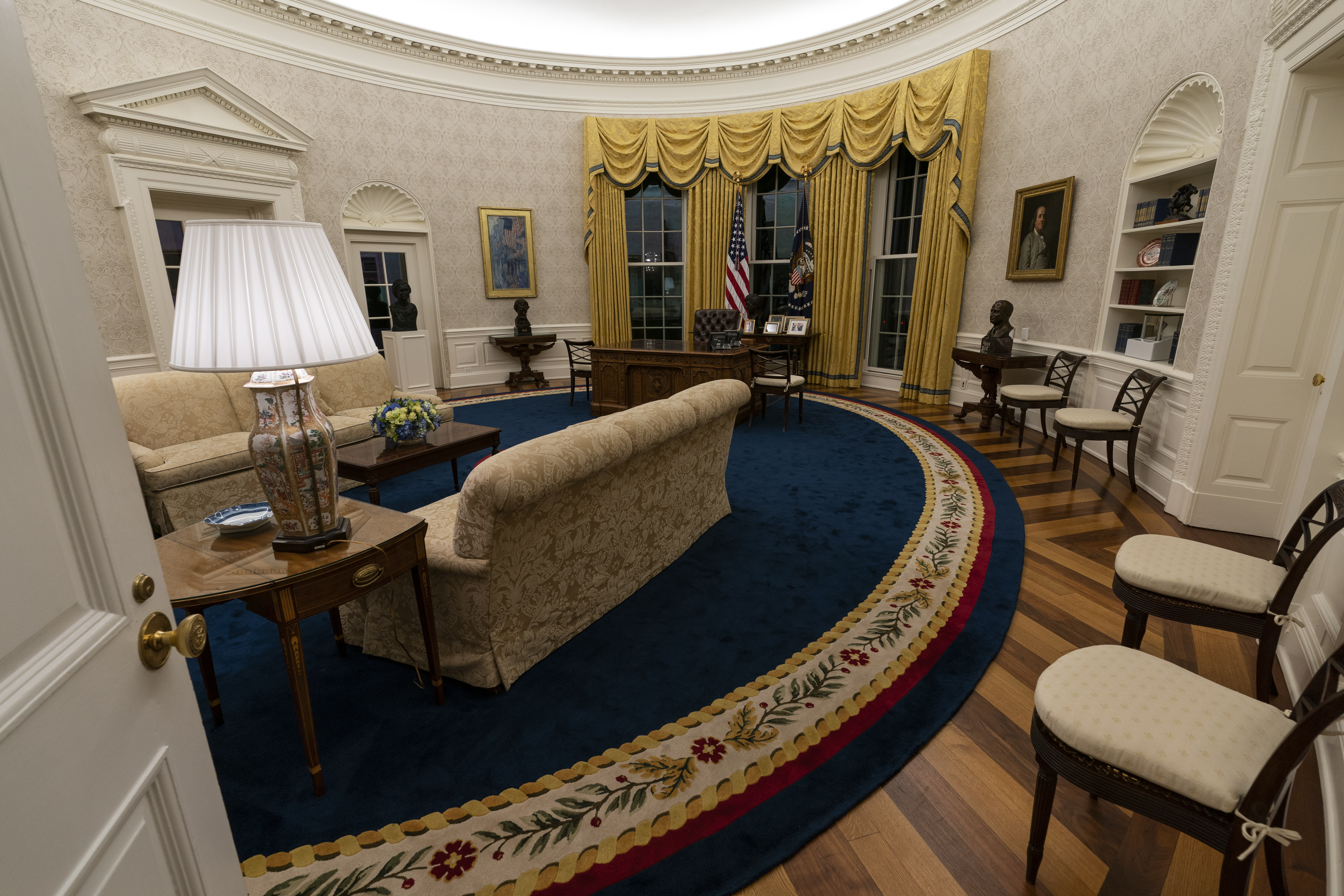
The press has gotten its first glimpse of US President Joe Biden's Oval Office, showing how in a matter of hours the office has visibly transformed in both dramatic and subtle ways to reflect the taste and politics of the officeholder.

Most keep an eye on what's happening inside the office — what agreements are made, what policies are announced and which foreign dignitaries stop by. But with every inch of the space on display, US presidents, their families and their staffs also meticulously choose which pieces of art are installed, what furniture is hauled in, and even which tchotchkes are placed on shelves.

Here's how Biden has chosen to change the Oval Office.

READ MORE: Trump issues one last pardon in 11th hour as president

Artwork

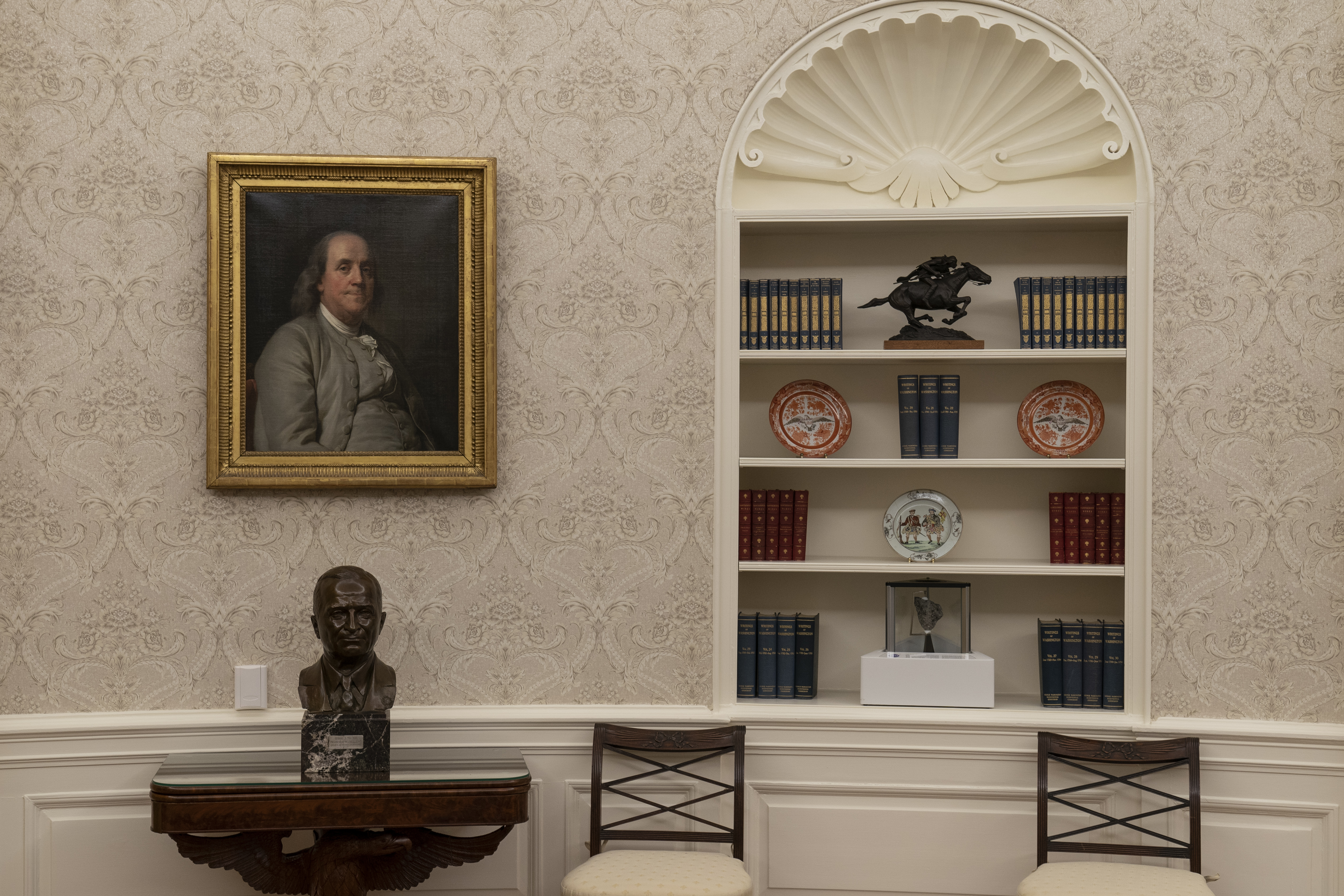
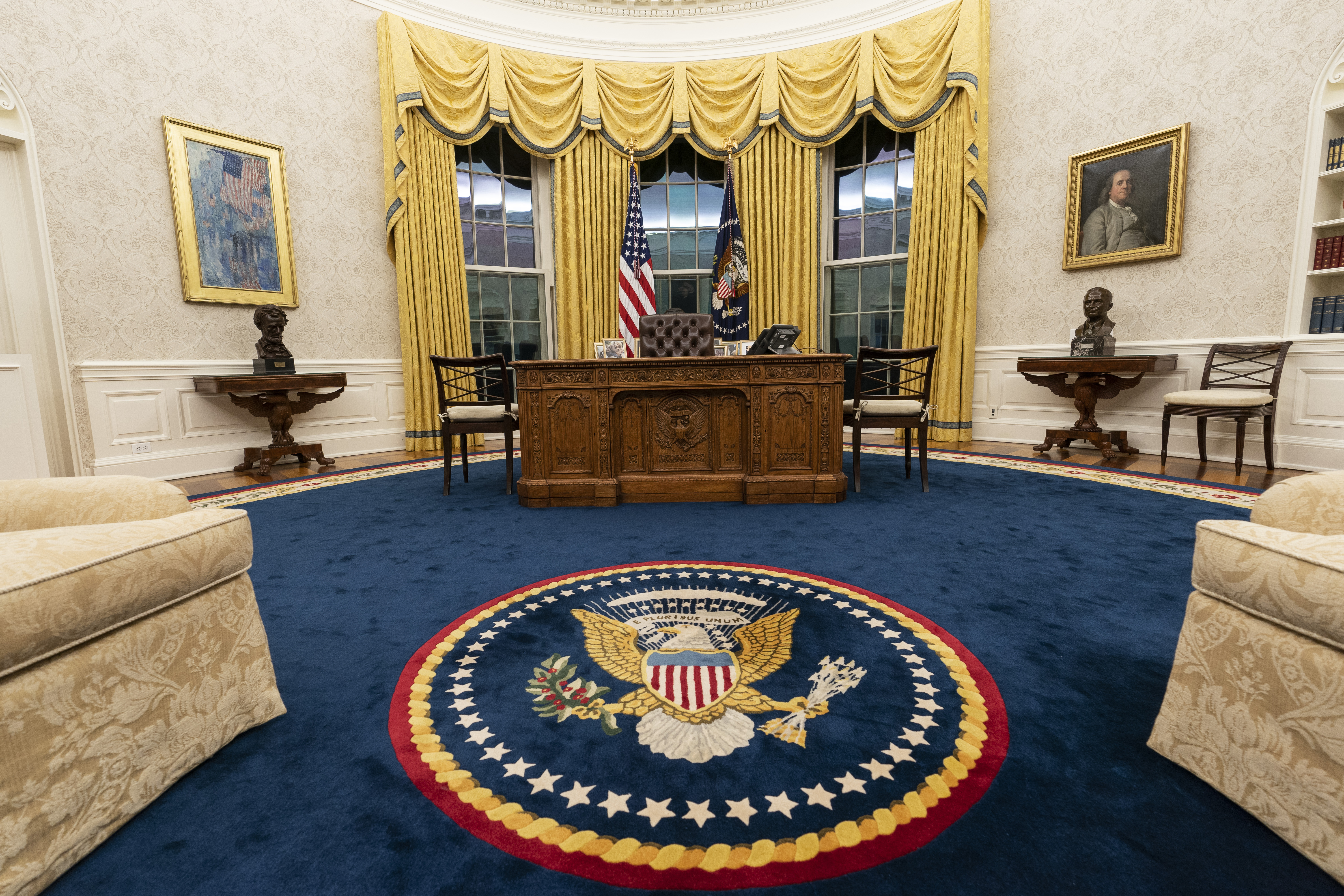
A portrait of Andrew Jackson, to the left of the seat at the Resolute Desk, has been replaced with a portrait of Benjamin Franklin by Joseph Duplessis. Like other works routinely lent to the White House, the portrait appears to be on loan from the Smithsonian Institution's National Gallery of Art.

Trump drew criticism in 2017 after holding an event in the Oval Office honouring Navajo veterans while standing in front of the portrait of Jackson — the President who signed legislation that eventually led to the "Trail of Tears."

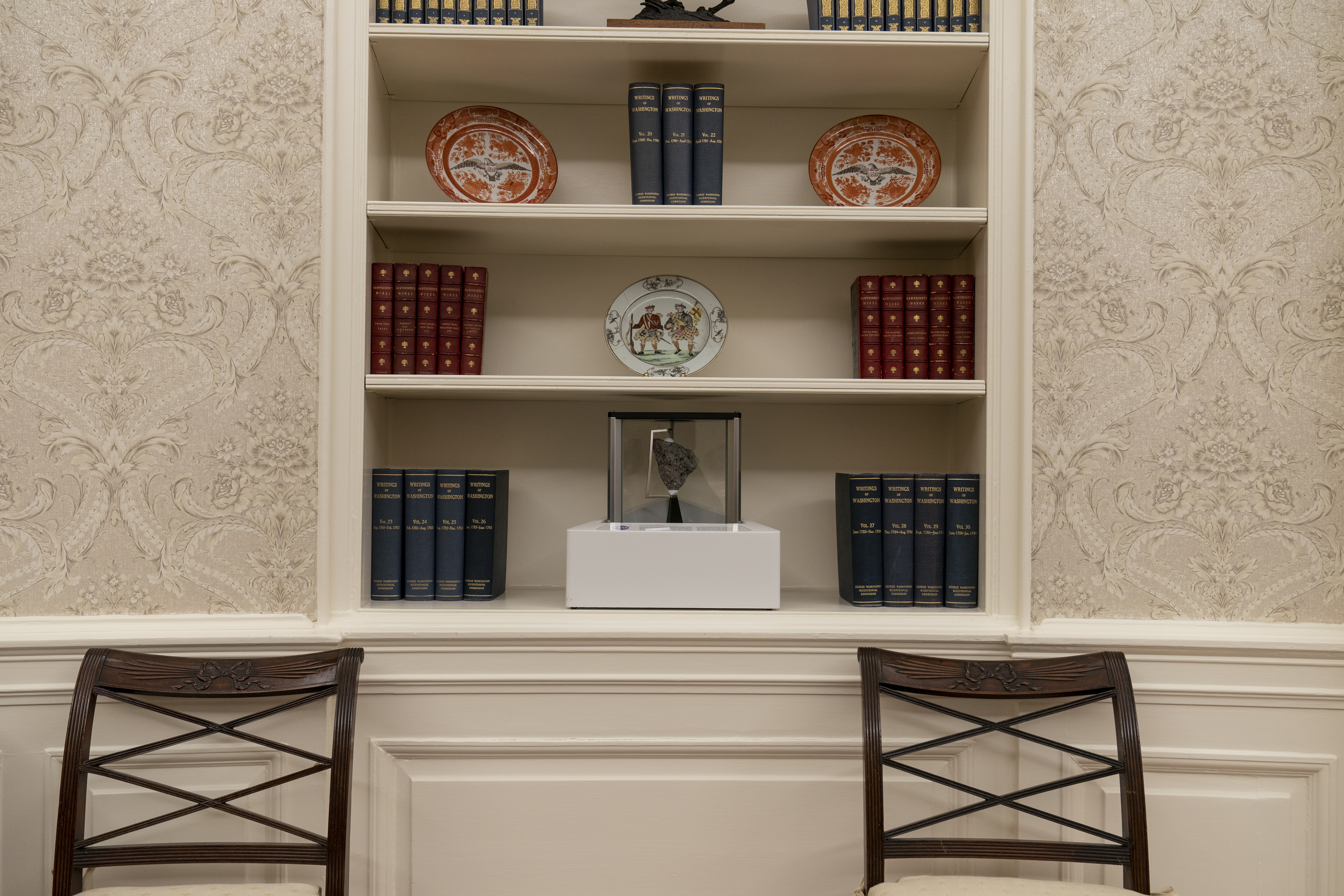
The Washington Post, which got a first look at the Oval's new interior decorations, reported that the Franklin portrait and a nearby moon rock set are meant to represent Biden's interest in science.

MORE: In pictures: How the world's newspapers hailed the new President

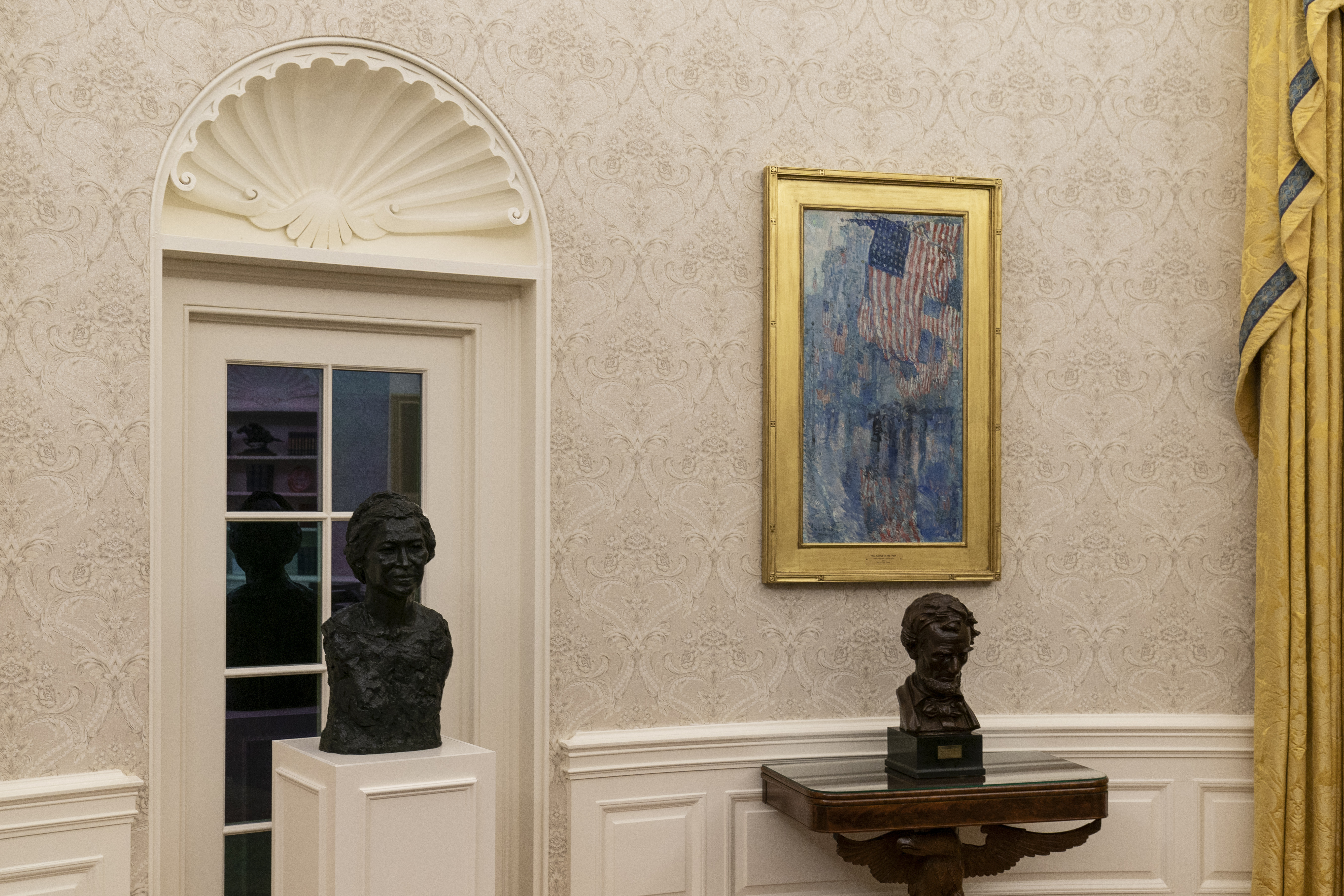
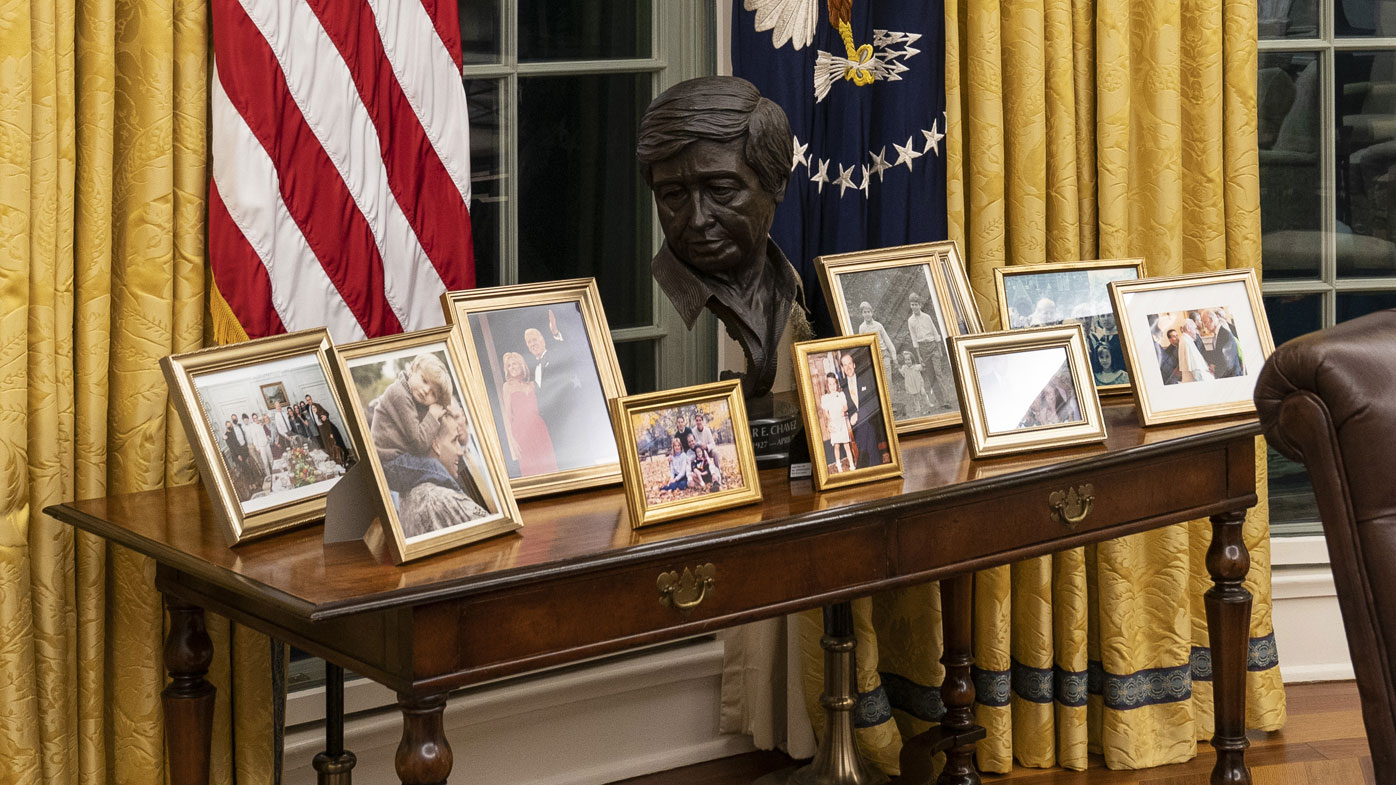
A bronze bust of Latino civil rights leader Cesar Chavez, created by artist Paul Suarez, was also placed on the credenza behind his desk.

Chavez sought to bring awareness to the harsh conditions of farmworkers in the US and fight for better wages. The prominent inclusion of his bust in the West Wing came the same day that Biden proposed immigration legislation that would allow undocumented farmworkers to qualify to apply for green cards immediately.

Julie Chavez Rodriguez, the labor leader's granddaughter, is Biden's director of the White House Office of Intergovernmental Affairs.

Elizabeth Strater, spokeswoman for the United Farm Workers — a labor group Chavez helped found — told the Fresno Bee that the bust was previously on display in the Visitor Centre of the Cesar E. Chavez National Monument in California. Strater told the publication that Biden's transition team worked with the Cesar Chavez Foundation to ship the piece.

Biden also prominently placed the White House collection painting "Avenue in the Rain" to the right of the seat at the Resolute Desk.

The artwork, rife for metaphors, was on display in the Oval under Trump, but switched out during his term.

The oil painting, created in 1917, was also in the Oval Office during the Obama and Clinton administrations.

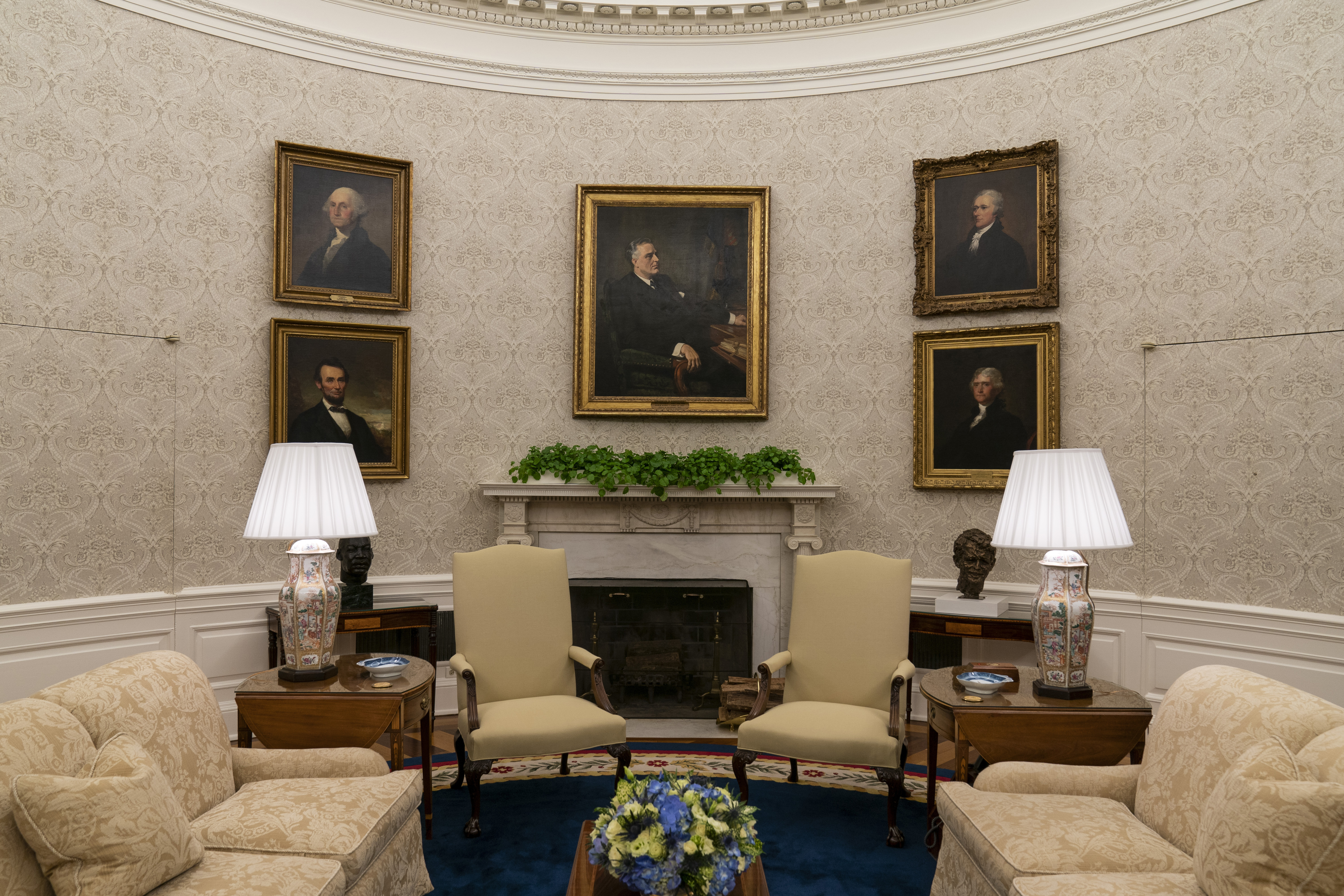
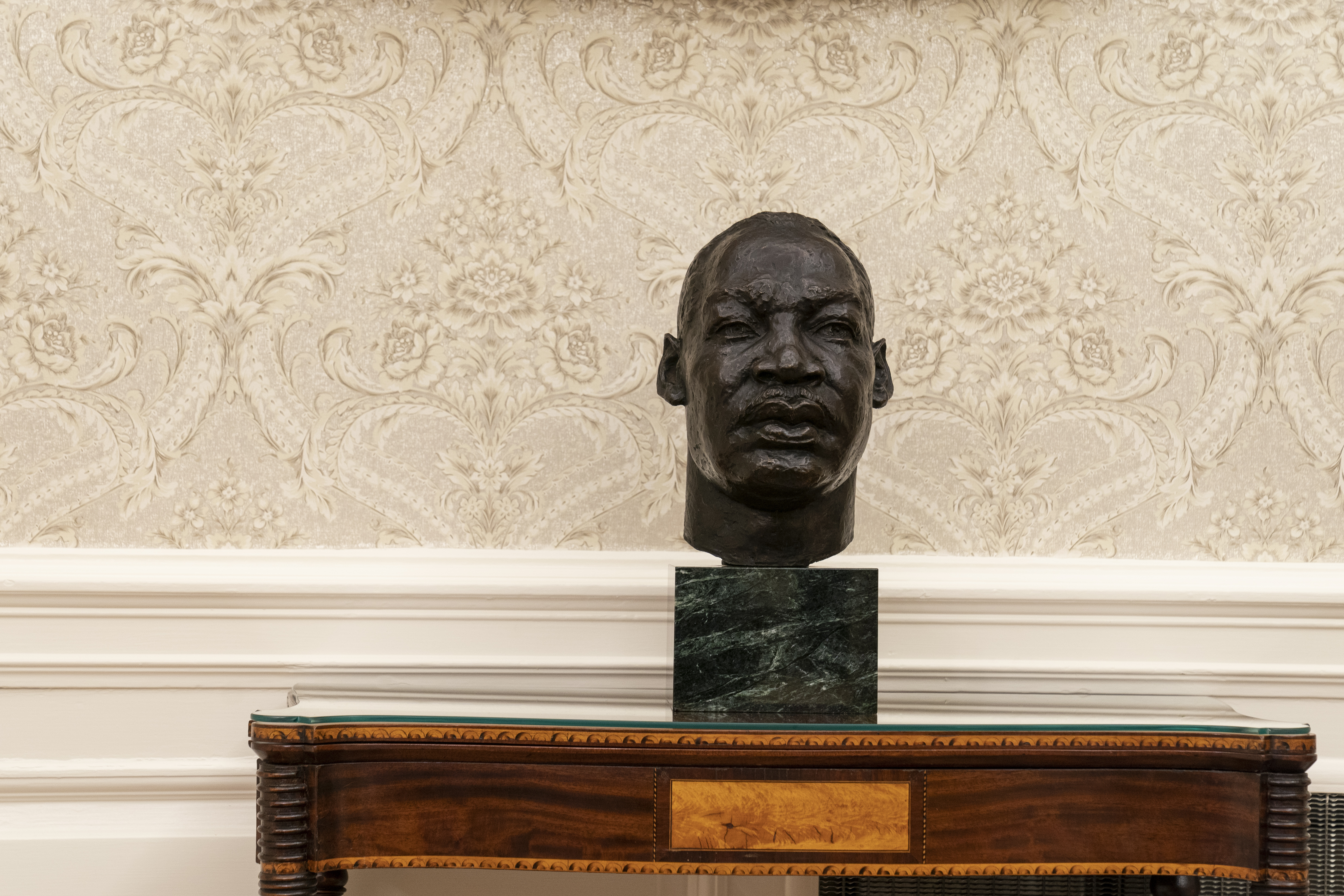
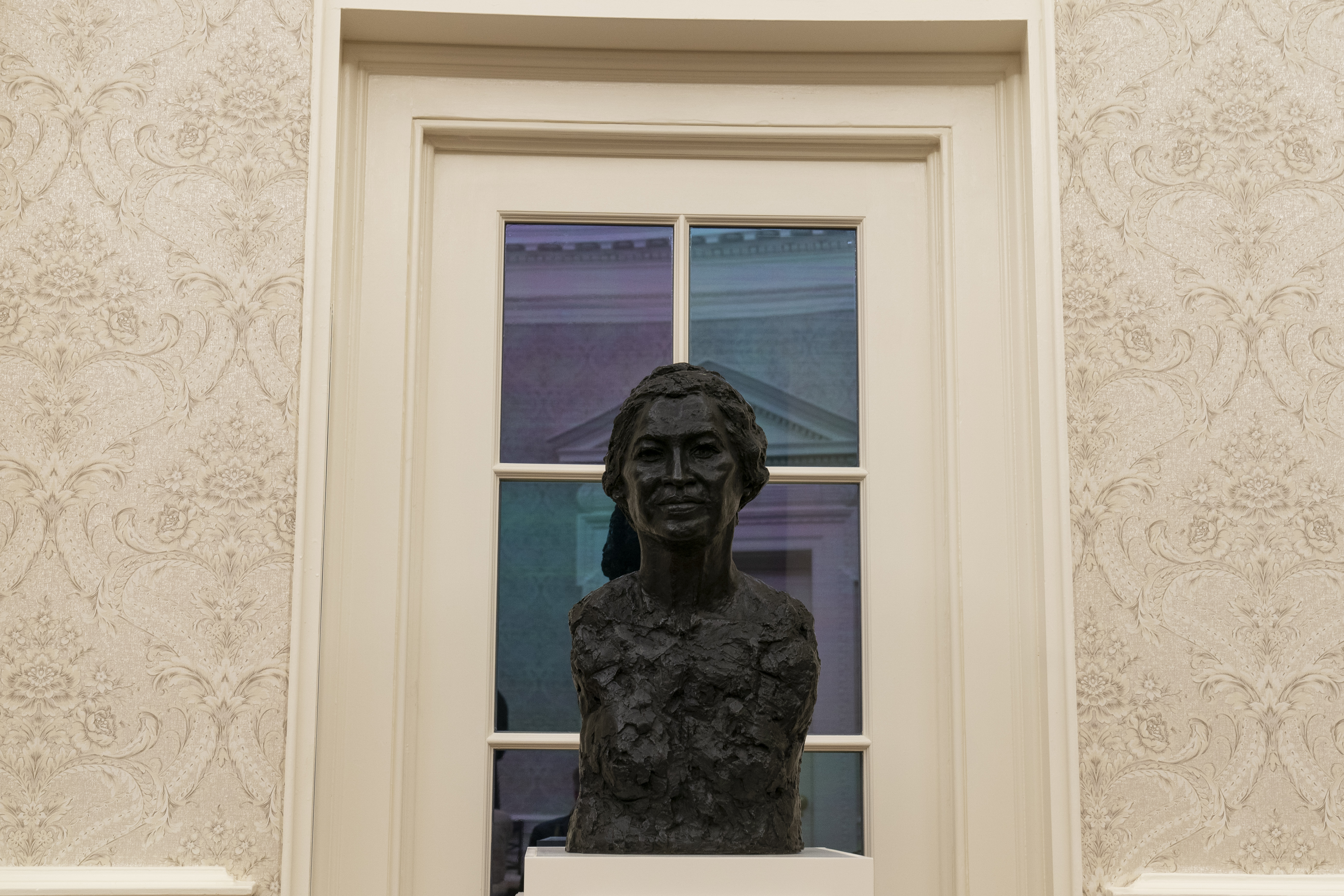
Though not entirely visible to television cameras, the Post reported that "busts of the Rev. Martin Luther King Jr. and Robert F. Kennedy flank a fireplace in the office" — in an apparent nod to their efforts in the civil rights movement. There are also busts of Rosa Parks, Eleanor Roosevelt and an Allan Houser sculpture depicting a horse and Chiricahua Apache rider. The sculpture, the Post said, once belonged to the late Sen. Daniel Inouye, a Democrat representing Hawaii.

The Post report says other parts of the office now feature paintings of George Washington, Abraham Lincoln, Franklin D. Roosevelt, Thomas Jefferson and Alexander Hamilton and a bust of Daniel Webster, a former senator who defended the Union. A bust of Winston Churchill has been removed from display.

On the Resolute Desk

There were two sets of objects spotted on the Resolute Desk when Biden took office that definitely reflect a transition of power: a cup and saucer set, as well as a box of pens to sign the orders.

Trump was a Diet Coke drinker, who reportedly had a button in the Oval to summon someone to bring him soda. He was rarely photographed with a tea or coffee cup at his side.

Trump has also long loved using thick, black markers to sign his name on official government documents — celebrity autograph style. He originally stuck to the traditional pens used by other presidents, but at some point, switched to the Sharpie-style markers, with his golden signature printed onto its barrel.

The Oval Office of the White House is newly redecorated for the first day of President Joe Biden's administration, Wednesday, Jan. 20, 2021, in Washington, including a table with family photos.

Interior decorating

During the executive order signing on Wednesday, Biden was seated in a tufted, dark brown leather chair — a switch from the thick, reddish brown executive seat Trump was last photographed sitting on inside the Oval Office. It was extremely similar, if not identical to the seat Trump used in his private office before becoming president.

The Bidens selected at least two Clinton-era furnishings to replace Trump's selections — a blue Oval Office rug with a floral trim and darker gold curtains, according to the Post. Other items, which may look familiar, were chosen from the White House collection, the Post says.

Subtle changes

Flags of the US military branches, which Trump originally added to the decor of the room, have been removed.

Photographs behind the President typically displayed on the credenza were switched out to feature Biden's family. Many of the images show just how large the President's family is, and the images include many of the family members who accompanied him in Washington on Inauguration Day. At least one photograph features his late son, Beau.

Trump's Challenge Coin collection, often placed on the credenza, is gone as well.

Fire hits building at world's largest vaccine maker in India

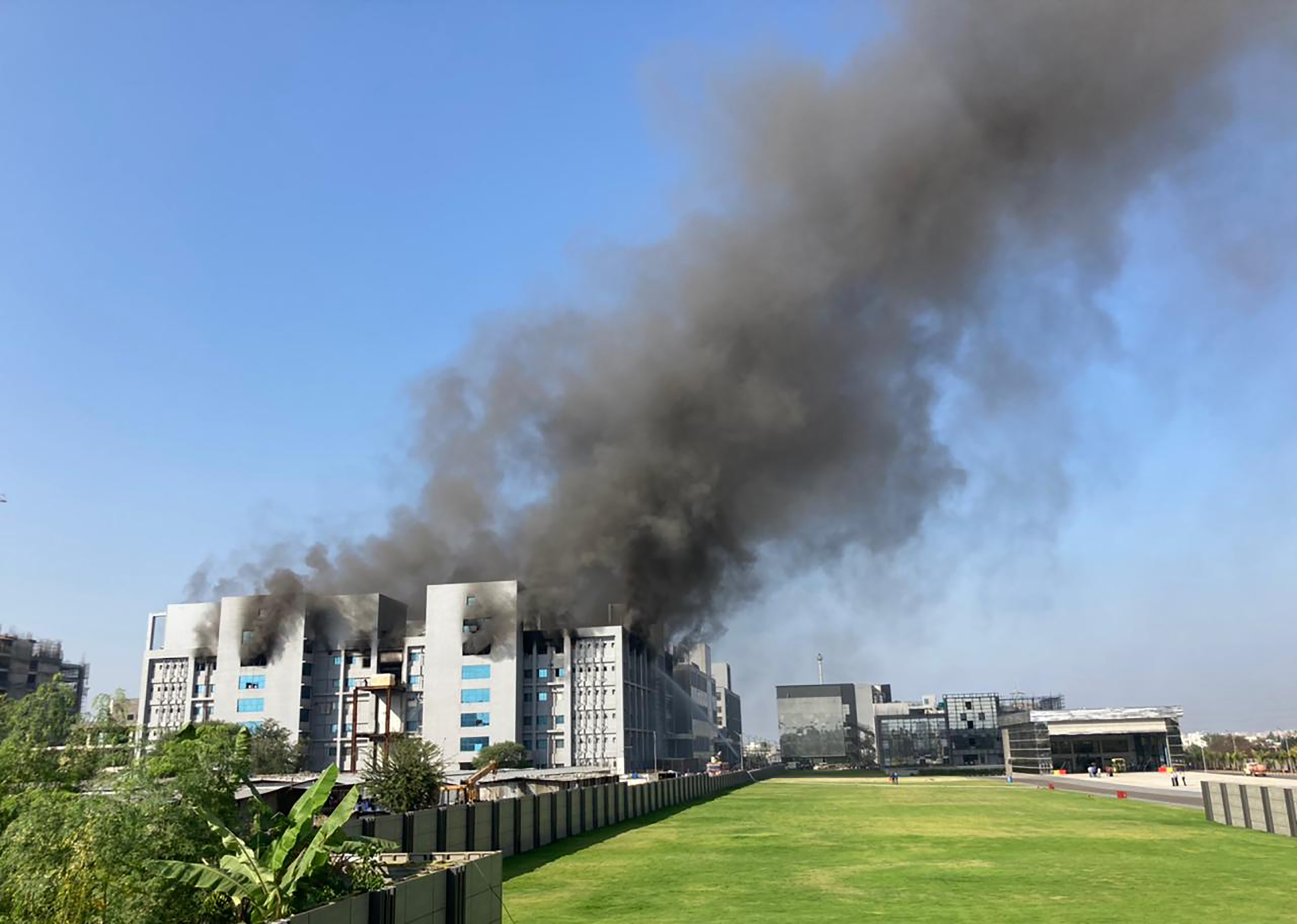
A fire broke out Thursday at a building under construction at Serum Institute of India, the world's largest vaccine manufacturer, possibly affecting its future expansion of COVID-19 vaccine production.

Firefighters were extinguishing the flames, the fire office in Pune city in southern Maharashtra state said. The cause of the fire and extent of damage were not immediately clear.

The company said the fire was restricted to a new facility it is constructing to increase production of COVID-19 vaccines and ensure it is better prepared for future pandemics.

READ MORE: Australia has enough doses to treat population three times

It said the fire did not affect existing facilities making COVID-19 vaccines or a stockpile of around 50 million doses. No injuries were reported, it said.

Images showed huge plumes of smoke billowing from the building as firefighters worked to extinguish the blaze.

Serum Institute of India is the world's largest maker of vaccines and has been contracted to manufacture a billion doses of the AstraZeneca/Oxford University vaccine.

READ MORE: Italy ponders suing Pfizer for COVID-19 vaccine delays

Its CEO, Adar Poonawalla, said in an interview with The Associated Press last month that it hopes to increase production capacity from 1.5 billion doses to 2.5 billion doses per year by the end of 2021. The new facility is key to the expansion.

Of the more than 12 billion coronavirus vaccine doses expected to be produced this year, rich countries have already bought about 9 billion, and many have options to buy even more. As a result, Serum Institute is likely to make most of the vaccines that will be used by developing nations.