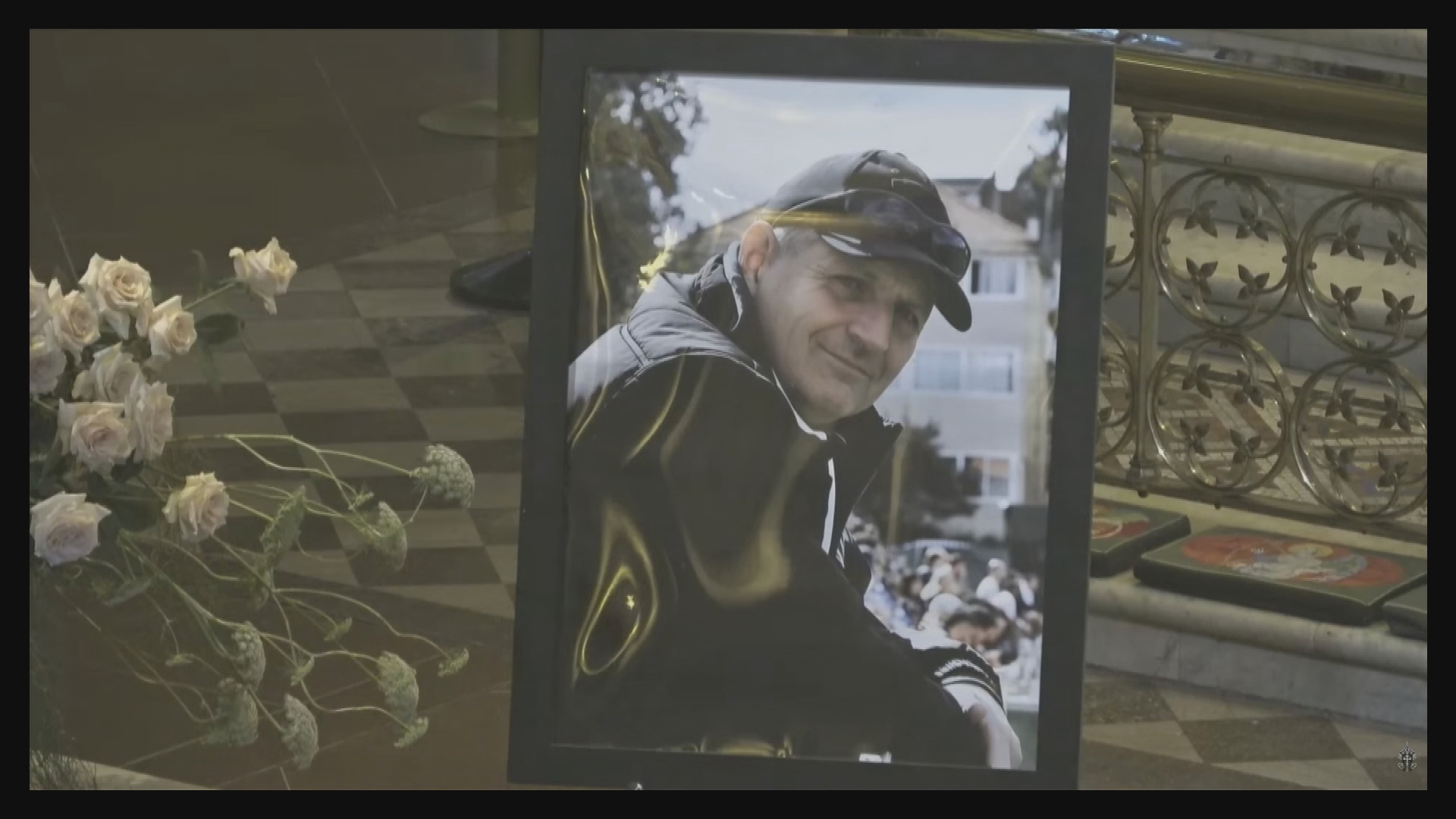
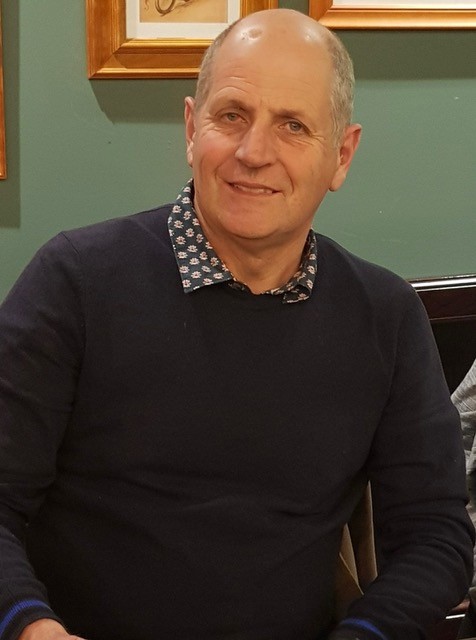
The 66-year-old died in his sleep after completing a 19km stretch of the trail.
Tag Archives: oceania
Sydney train station removes ‘AI slop’ mural after backlash
A mural at a Sydney train station has been removed after being labelled "AI slop".
At first glance, the scene at Redfern train station depicting an Aussie Christmas appears to be done by an artist, speckled with icons of Australia, such as thongs, Santa and beach umbrellas.
However, upon closer inspection, people noticed the art appeared to have been created by artificial intelligence, with telltale signs including a kangaroo with the head of a koala and an Australian flag floating mid-air.
READ MORE: Four more charged, guns seized after Sydney public shooting
A bandicoot-type rodent with its limbs disconnected from its body was also spotted on the mural.
The mural garnered attention online after being slammed as "AI slop" on Reddit's r/sydney board.
The term refers to low-quality content created by generative AI, which often contains errors.
"Sydney Trains' Redfern Station staff have displayed artwork for several years to help create a positive end-of-year atmosphere for our customers," a Transport for NSW spokesperson said in a statement.
"We received feedback about this year's display and, in response, have decided to remove the artwork," the spokesperson said.
DOWNLOAD THE 9NEWS APP: Stay across all the latest in breaking news, sport, politics and the weather via our news app and get notifications sent straight to your smartphone. Available on the Apple App Store and Google Play.
Man on parole provides non-human urine sample for compulsory drug tests
“He provided a sample, but it was not human urine.”
La Niña has just been declared days out from summer. Here’s what it means
The Bureau of Meteorology has declared that La Niña is under way off Australia just days ahead of summer, but a counteracting weather event means it will not be as impactful as other La Niñas.
Conditions consistent with the weather phenomenon have been observed in the Pacific Ocean since early October, with meteorologists today saying all signs point to La Niña.
"There are clear signs the tropical Pacific ocean and atmosphere are now coupled, meaning they are acting to reinforce and sustain the La Niña pattern," the Bureau of Meteorology said.
READ MORE: Noah learnt about the social media ban on social media. Now, he's fighting it in court
"Atmospheric indicators, such as trade winds, pressure and cloud patterns over the equatorial central Pacific, also show consistent signs of La Niña."
The last La Niña was in 2023.
The Bureau of Meteorology's La Niña declarations are mostly retrospective, meaning conditions need to be present in the ocean and atmosphere for some time before it can be determined that the event is occurring.
The La Niña declaration comes after warmer-than-average waters were observed across much of the Australian region, with sea surface temperatures the second warmest on record for October.
Meteorologists forecast that the unusually warm conditions are likely to continue from December through to February, particularly for the east coast.
This could worsen the severity of rainfall, storms and cyclones.
But this year's La Niña appears to be quite weak and forecast to be short-lived, with levels returning to neutral by early 2026.
READ MORE: Turn 20 days off into 53 with this simple annual leave trick
"Our rainfall forecast currently suggests there will be little overall influence from this event," the Bureau of Meteorology said.
The Bureau of Meteorology's latest long-range outlooks predict near or below average rainfall and abnormally warm days for much of the country this summer.
Weatherzone said one of the reasons why La Niña is not having too much of an influence on the weather is because of the ongoing negative southern annular mode in the Southern Hemisphere, which has been in place since early October.
The southern annular mode is a shift in strong westerly winds over Australia, which can counteract the influence of La Niña's easterly winds.
"The current negative southern annular mode phase has indeed been hindering La Nina's influence on Australian weather in recent months, and this influence may linger into early summer," Weatherzone said.
READ MORE: No one could escape these two words for weeks. Now Aussies are opting out
What is La Niña?
La Niña is one of the phases of a Pacific Ocean phenomenon called the El Niño–Southern Oscillation, which affects weather patterns roughly every two to seven years.
The event occurs when equatorial winds become stronger, changing the ocean currents.
In Australia, it is synonymous with increased rainfall, storms, and tropical cyclones in the northern and eastern parts of the country.
El Niño and neutral are the other phases of the El Niño–Southern Oscillation.
El Niño typically leads to drier conditions, higher temperatures and a greater risk of heatwaves and bushfires in northern and eastern parts of the country.
The phenomenon is considered one of the most important climate drivers in our region.
It has a large impact on Australia, as well as every other continent in the world, particularly South America, Asia and Africa.
DOWNLOAD THE 9NEWS APP: Stay across all the latest in breaking news, sport, politics and the weather via our news app and get notifications sent straight to your smartphone. Available on the Apple App Store and Google Play.
Bondi Junction killer’s psychiatrist ‘can’t be blamed’ for fatal attack
A psychiatrist was put in a "grossly unfair" position when asked about whether her long-time client was experiencing psychosis when he stabbed 16 people, her lawyer says.
Joel Cauchi, 40, was experiencing psychotic symptoms and armed with a knife on April 13, 2024, when he killed six people and injured 10 others, including a nine-month-old baby.
Dawn Singleton, 25, Ashlee Good, 38, Jade Young, 47, Pikria Darchia, 55, Yixuan Cheng, 27, and security guard Faraz Tahir, 30, died before Cauchi was fatally shot by Inspector Amy Scott.
READ MORE: Couple filmed dolphins on GoPro before deadly shark attack
Contrary to expert evidence Cauchi was "floridly psychotic" at the time of the attack, his long-time psychiatrist Andrea Boros-Lavack initially suggested he was motivated by frustration and hatred of women.
"That was nothing to do with psychosis," she told an inquest.
She later withdrew the speculation but it was deemed "shocking, genuinely shocking" by counsel assisting Peggy Dwyer SC in her closing address.
Dwyer noted the psychiatrist had shown an "exceptional … level of belligerence and confrontation" in the witness box, but Boros-Lavack's lawyer took issue with the criticism.
His client had been in pain, on medication and "clearly felt she was under attack" during the questioning, Mark Lynch said today.
Boros-Lavack was unqualified to answer the question because she had been called as a treating psychiatrist instead of an expert and hadn't read the expert reports, Lynch said.
"It was grossly unfair to be forced to give an answer to that question," he said.
READ MORE: Hong Kong fire death toll hits 83, flames still burn in buildings
Suggestions she had been attempting to justify her decision to wean Cauchi off antipsychotic medication or her statement that he didn't have chronic schizophrenia were "perverse", he argued.
"It's deeply regrettable that the families felt further traumatised by those remarks, but in one sense they never should have been asked," Lynch told the inquest.
An audible scoff was heard in the courtroom and Dr Dwyer was seen shaking her head.
Cauchi had been successfully treated for schizophrenia since he was a teenager before he decided with Dr Boros-Lavack to wean off antipsychotic medication.
"He decided for himself 'I'm not going to take those anymore'. Dr Boros-Lavack cannot be blamed for that," Lynch told the inquest.
The psychiatrist's "largely exemplary care" for eight years could not be said to be a material cause for his rampage on the Bondi Junction Westfield centre four years later, he said.
Although she had admitted there were deficiencies in her discharge of Cauchi into the care of his general practitioner, Lynch said there was no warrant to refer Dr Boros-Lavack for referral to a regulatory body as suggested by the victims' families.
READ MORE: 'Crime against our entire nation': National Guard ambush victims named
Cauchi fell through the cracks of mental health care after moving from Queensland to NSW and becoming homeless, the inquest has been told.
Dr Dwyer suggested the coroner recommend psychiatry regulatory bodies develop guidelines for the management of patients with chronic schizophrenia.
She proposed a focus on professional guidelines for de-prescribing antipsychotic medication when patients decline to continue.
They should include strict requirements for a discharge letter for a patient with treatment-resistent schizophrenia, such as the probability of relapse and early warning signs.
Readers seeking support can contact Lifeline on 13 11 14 or beyond blue on 1300 22 4636.
Assault victim Steven Gardiner sentenced after unlawful citizen’s arrest plan backfires
He called police as he entered the man’s property saying he was making a citizen’s arrest.
The Fall of the House of Du Val: Inside the saga behind the new podcast – The Front Page
A deep dive into the raid, the investigations and the complex collapse of the Du Val group
Surfers and survivors call for life-saving Shark Bite Kits on all Aussie beaches
Surfers and shark attack survivors are calling for government or corporate funding to roll out life-saving emergency response kits across all Australian beaches.
The Community Shark Bite Kits, designed to help control life-threatening bleeding, were designed by Danny Schouten, after his friend Kai McKenzie almost died from being bitten by a shark while surfing in Port Macquarie in 2024.
"It was by the grace of a man… walking his dog on the beach that day, who was trained in trauma control and used his dog lead to save Kai's life," Schouten said.
READ MORE: Couple filmed dolphins on GoPro before deadly shark attack
"And I thought, we need to have one of these kits on every one of our beaches so it's not left up to chance next time."
Ten kits were initially rolled out in northern NSW last year and now there's 150 on beaches across NSW, Queensland, South Australia and Western Australia.
The inexpensive kits contain a tourniquet, two conforming bandages, two large dressings, an emergency thermal blanket, gloves, a whistle and step-by-step instructions on how to treat a shark bite.
READ MORE: Calls to remove 'walls of death' after young whale found dead in shark nets
Schouten said his local community, which has seen multiple shark attacks, immediately jumped behind the project but interest was now also coming from further afield.
"The wider community, the surfing community is right behind this," he said.
"We know we're entering the unknown.
"There's a lot of people who will say 'we don't want to cull', 'we don't want nets'.
"There's no right mitigation strategy, only preparation."
He said a tourniquet applied within seconds could be the difference between someone surviving or succumbing to a shark attack.
"We live in a community where our mums, our dads, our friends, our brothers, they surf and if it's your friend, it's your brother, I pray that the place that they're surfing has one of these kits.
"Someone's life, after being attacked by a shark, has minutes… at most before you bleed out."
READ MORE: Hong Kong fire death toll rises as firefighters continue to fight burning buildings
McKenzie said he was fortunate to have had someone on the beach with trauma experience on the day he was bitten – but not everyone would be so lucky.
"I was lucky to have someone with such experience to save me, but there will come a day where that won't be the case and a Shark Bite Kit would help the chances of surviving dramatically," he said.
Schouten is currently fundraising on GoFundMe to expand the project, with the goal to see a kit on every single beach across the country.
"Ideally, we'd have the government's support… funding from businesses or other ventures to be able to get behind it and put one everywhere," Schouten said.
"It's about Australian beaches being well prepared for when these attacks happen and making our coastline a safer place for everyone.
"We're not going to stop doing what we love, so we just have to be better prepared."
DOWNLOAD THE 9NEWS APP: Stay across all the latest in breaking news, sport, politics and the weather via our news app and get notifications sent straight to your smartphone. Available on the Apple App Store and Google Play.
No one could escape these two words for weeks. Now Aussies are opting out
Exclusive: They're the two words that have been clogging up email inboxes and plastered across storefronts for weeks: Black Friday.
But a nine.com.au reader poll has now revealed that almost half of Australians are opting out of the massive Black Friday sales.
Of the 416* respondents, nearly 50 per cent said that they didn't plan to spend a single cent in the sales.
READ MORE: Couple filmed dolphins on GoPro before deadly shark attack
"If you have enough disposable income then yes, you could get bargains," one said.
"But it's easy to get caught and buy things you don't really need."
About 47 per cent of readers had already bought something or planned to buy something in the Black Friday sales.
Fewer than 10 per cent were on the fence.
Many said they would only shop in the Black Friday sales if the discount was high and the item was something they actually needed.
"If I am after something specific and I have tracked the prices for it during the year, and there is a definite discount, then maybe," one said.
READ MORE: 'Crime against our entire nation': National Guard ambush victims named
Some respondents voiced distrust in Black Friday sales, stating that it's hard to tell if you're actually getting a bargain or not.
Others admitted they were wary of retailers that may have inflated prices before the Black Friday sales to make discounts seem better than they are.
That isn't surprising, given Australian retailers' track record with Black Friday sales.
The ACCC put retailers on notice for misleading or deceptive sales advertising last week and companies caught breaking the rules can face investigations and fines.
Michael Hill, My House and Hairhouse online paid penalties earlier this year for allegedly making false and misleading representations about their Black Friday sales in 2024.
READ MORE: Hong Kong fire death toll hits 83, flames still burn in buildings
"Retailers and marketers want people to buy more than they need," University of Melbourne law professor Jeannie Marie Paterson previously told nine.com.au.
"People who run marketing campaigns have studied psychology [and] we need to realise that they know more about us than we know about ourselves, so just beware."
But the warnings haven't deterred everyone.
Of those planning to shop the sales, just one in 10 planned to keep their spending under $100.
Almost one in five planned to spend between $101 and $250.
About 12 per cent were budgeting $251 to $500 for their Black Friday purchases, and 16 per cent were planning to spend over $500.
But is all the spending really worth it?
Just over two in five readers said the Black Friday sales are worth the money, while just under two in five said they're not.
That left about one in five undecided, at least this year.
"If you really need the item or it's a gift for Christmas, you can save some money, but I don't buy things just for the sake of it," one person wrote.
*The nine.com.au poll, which runs once a fortnight, canvases the views of the Nine audience on 9Nation, which is an online community of our readers and viewers.
Have you got a story? Contact reporter Maddison Leach at Google Play.
Mystery buried for 170 years in the remote outback uncovered
Researchers believe they have unravelled the mystery behind a cache of stone tools that were buried by a waterhole in the remote outback, up to 170 years ago.
Archaeologists from Griffith University, who discovered the hoard, believe they are evidence of planning and trade by those that stashed them.
The research team spotted a handful of stones poking out of the soil in an area just north of the town of Boulia, Central West Queensland.
READ MORE: Couple filmed dolphins on GoPro before deadly shark attack
After investigating further, they discovered a pile of 60 large Aboriginal stone "tulas", special flaked stone tools that were hafted onto a handle and used for woodworking.
They were important tools, used across most of the continent to make objects such as boomerangs, wooden coolamon dishes, shields and clapsticks.
Dr Yinika Perston from the Griffith School of Social and Cultural Research said the retrieval process was arduous.
READ MORE: Putin's chilling response that could detonate bid for peace
"Even while we were excavating, bushfires raged to the north, preventing some of the team from joining us," she said.
"Once we found the cache, we knew were in a race against time to recover the tools before they were washed away in the next flood."
The researchers used scientific methods to analyse the tools, working closely with the Pitta Pitta, who hold Native Title for the area where the collection was found.
READ MORE: Hong Kong fire death toll rises as firefighters continue to fight burning buildings
"Innovation and connection helped the Pitta Pitta people survive the region's harsh climates," Perston said.
"If they could not find resources locally, they bartered along vast trade routes.
"It's possible this cache was a bundle of specially made artefacts that were intended for trading."
Dating revealed a 95 per cent probability the tulas were buried sometime between 1793 and 1913.
The nearby town of Boulia was established around 1879, and the Burke River police camp operated from 1878 to 1886.
"We think the Pitta Pitta ancestors were likely planning to trade the tools in these caches when the time came, but for some reason never retrieved them," Perston said.
"One possible reason for this may be due to disruption caused by European arrival – but the dates aren't precise enough to be sure.
"What we can say, is that this cache reveals how planning, resource management and collective cooperation allowed Aboriginal people to not only survive, but thrive, in this harsh environment."
The study 'Under the shade of a coolabah tree: A second cache of tulas from the Boulia district, Western Queensland' has been published in Archaeology in Oceania.
DOWNLOAD THE 9NEWS APP: Stay across all the latest in breaking news, sport, politics and the weather via our news app and get notifications sent straight to your smartphone. Available on the Apple App Store and Google Play.