Tag Archives: oceania

‘Anything’s possible’: RBA delivers pre-Christmas message no one wants

The Reserve Bank of Australia (RBA) has delivered on one of the most widely tipped Melbourne Cup Day wagers, keeping interest rates on hold while also hinting there may be no further cuts to come.

Delivering its decision half an hour before the running of the famous race – in what has become a traditional but unconnected event – the RBA board said it was prudent to keep the cash rate target at 3.6 per cent.

And while some economists still believe the central bank will pass on a further cut or two next year, RBA Governor Michele Bullock hinted that interest rates may already be as low as they get this cycle.

READ MORE: Aussie skincare products pulled from shelves over banned ingredient

"It's possible there are no more rate cuts, it's possible there are some more," she said, before adding that "it's an interesting question about whether there's many more rate cuts to come".

However, as Bullock has frequently done, she also stressed that her bank would react to inflation and unemployment data as needed.

"Anything is possible," she said.

"At the moment all I would say is that I think we're at the right spot we need to be at the moment and we can respond where the risks arise."

That decision came after inflation data last week showed the consumer price index rose 1.3 per cent in the September quarter, the largest quarterly increase since March 2023, while the trimmed mean – the RBA's preferred measure of underlying inflation – was up 1 per cent.

READ MORE: Bruce Lehrmann's cost woes in anti-corruption submarine probe
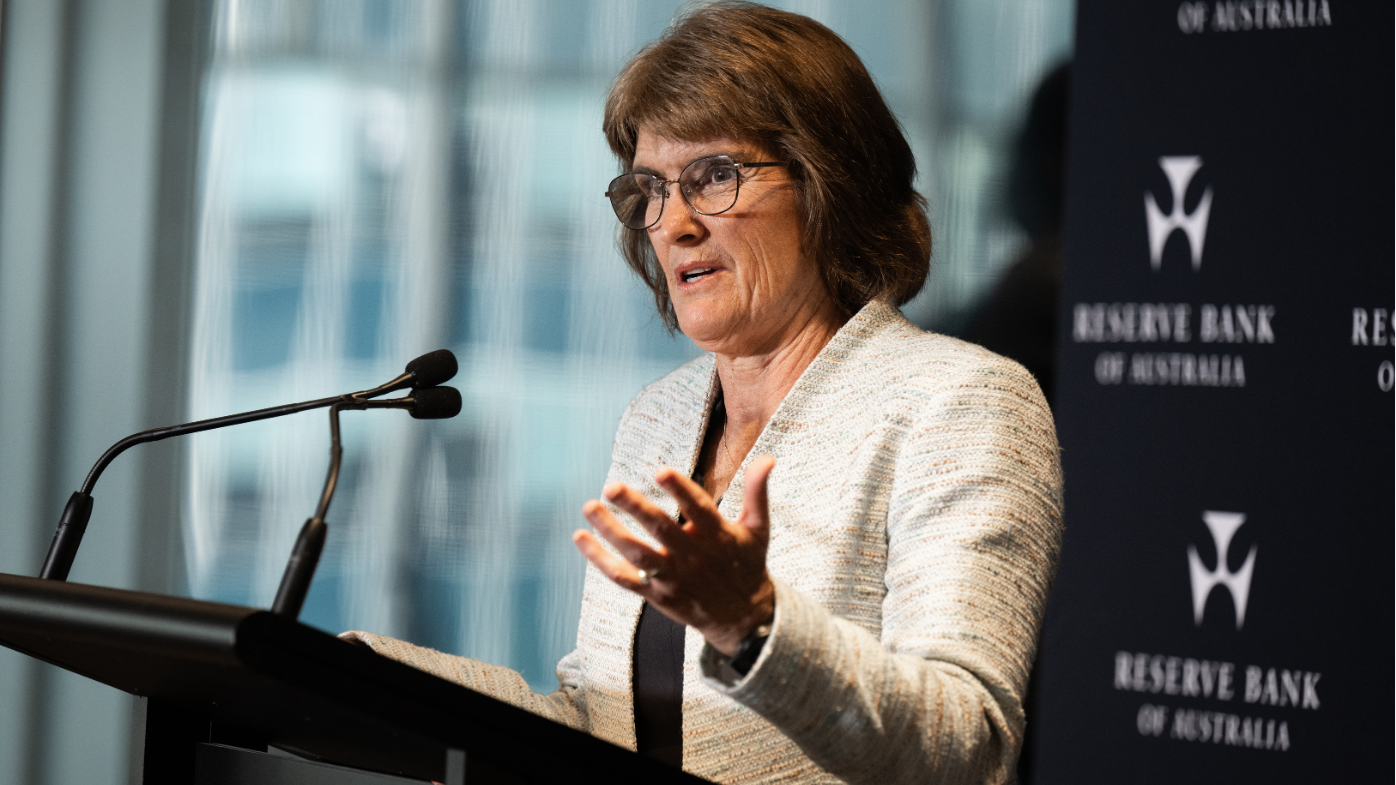
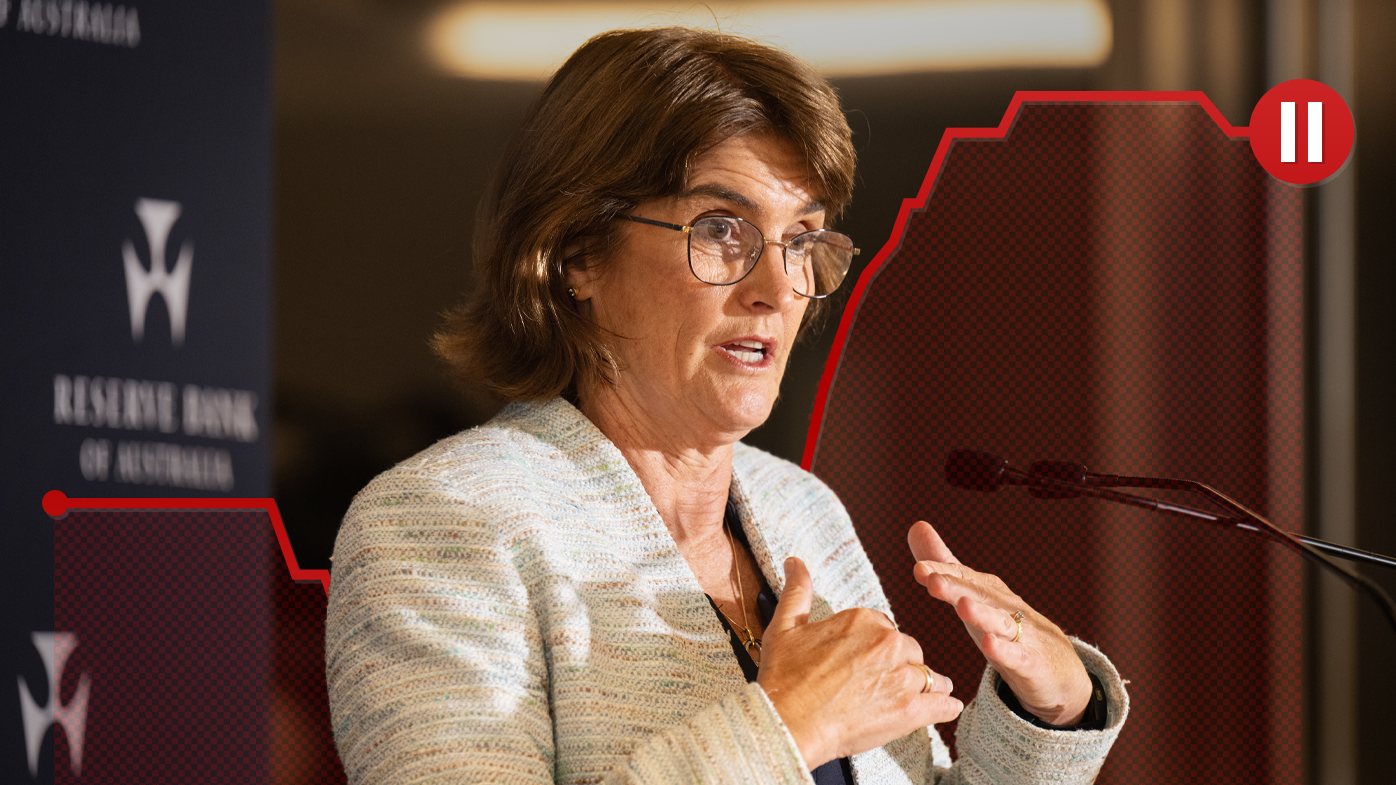
Michele Bullock gives a press conference, November 4, 2025.

In its monetary statement, the RBA board said it believes the recent surge in inflation is only temporary.

But at the same time, it significantly increased its own inflation forecasts for the coming year, now predicting the trimmed mean will hit 3.2 per cent – beyond its target range of 2-3 per cent – from the December to June quarters, before easing back to 2.7 per cent next December.

It had previously forecast core inflation would ease from 2.6 per cent next quarter to 2.5 per cent next December.

Today's decision, which was unanimous – Bullock said the possibility of a cut wasn't even discussed – was reflective of the board's "cautious" approach.

"Financial conditions have eased since the beginning of the year, but it will take some time to see the full effects of earlier cash rate reductions," they said.

"Given this, and the recent evidence of more persistent inflation, the Board judged that it was appropriate to remain cautious, updating its view of the outlook as the data evolve.

"The Board remains alert to the heightened level of uncertainty about the outlook in both directions."

READ MORE: Macca's to serve up uni credits

Line goes through any hope of pre-Christmas cut

With just one meeting left in the 2025 calendar year, many experts now believe that struggling borrowers won't see any movement on interest rates until at least next year.

"We've seen rising inflation and this has been accompanied by a rise in unemployment – but perhaps not a big enough rise to make a dent in inflation," Peter White, managing director of the Finance Brokers Association of Australia, said.

"This is why we expect it won't be until the new year before we see any potential for a rate reduction."

READ MORE: The chilling discovery that should have the world on notice
CHECK BEFORE USE - RBA INTEREST RATES APRIL 1

Graham Cooke, head of consumer research at Finder, said the RBA's decision offers little comfort to households already feeling the pinch.

"Many Australians were hoping for some breathing room before Christmas, but inflation has returned, and the board is waiting for clearer signs of progress before moving on rates.

"Unless something unprecedented happens, we're now looking at 2026 for the next rate adjustment.

"If inflation eases, we could see a cut early next year. Until then, homeowners will need to look to other lenders for a better deal."

The outlook was backed by Saul Eslake, from Corinna Economic Advisory, who said mortgage holders would probably have to wait until February for any respite.

"The 'materially' higher-than-expected September quarter CPI has dealt a fatal blow to hopes of a rate cut in November, and reduced – although in my honest opinion not fatally – the chances of a rate cut in February next year," Eslake said.

DOWNLOAD THE 9NEWS APP: Stay across all the latest in breaking news, sport, politics and the weather via our news app and get notifications sent straight to your smartphone. Available on the Apple App Store and Google Play.

One of the few dissenting voices was Micaela Fuchila, of Jarden, who said economic conditions still gave the RBA room to make a reduction.

"At this point in the cycle focus is expected to shift to the labour market. Employment growth has slowed and the unemployment rate is on the rise while inflation pressures remain contained," she said.

Analysis by Finder's Consumer Sentiment Tracker showed more than one-in-three homeowners said they struggled to pay their mortgage in October.

Cooke said it pays to shop around and consider switching mortgage lenders.

"A number of lenders are also offering cashback – up to $4000 – for refinancing, which could be worthwhile for some borrowers looking for a cash injection," he said.

The information provided on this website is general in nature only and does not constitute personal financial advice. The information has been prepared without taking into account your personal objectives, financial situation or needs. Before acting on any information on this website you should consider the appropriateness of the information having regard to your objectives, financial situation and needs.
Aussie skincare products pulled from shelves over banned ingredient

Some of Australia's leading skincare brands have been forced to pull popular products from shelves in one state after they were found to contain banned plastic microbeads. 

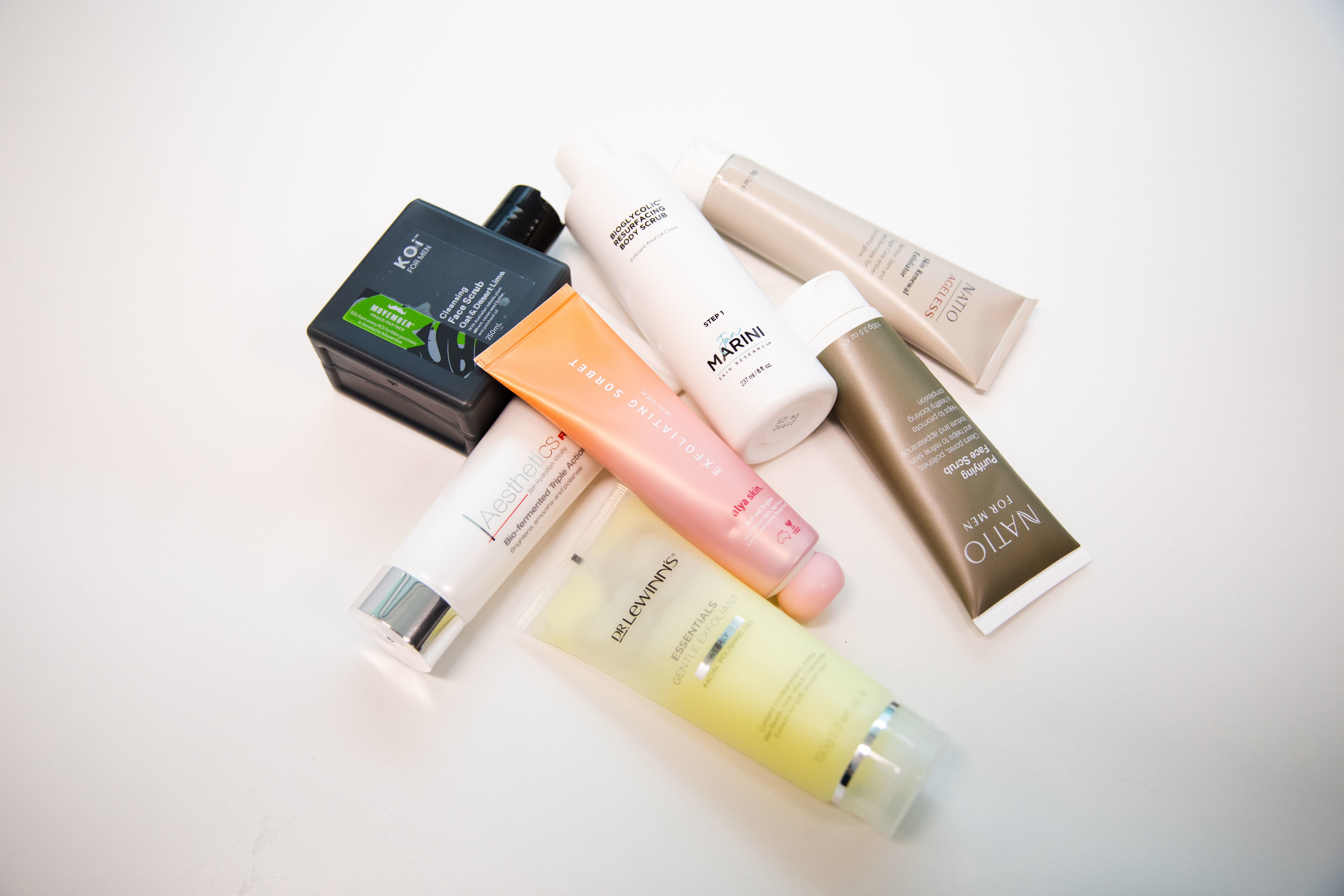
The NSW Environment Protection Authority (EPA) has issued compliance notices to six businesses – Natio, Coles Group, McPherson's Consumer Products, Aesthetics Skincare, Frostbland and JMSR Australia – to withdraw nine different items.

Most of the products were exfoliators, and include the popular Alya Skin pomegranate exfoliator facial scrub, the Dr LeWinn's essentials gentle exfoliant weekly facial polishing gel and the Natio ageless skin renewal exfoliator.

LIVE UPDATES: Melbourne Cup results as they happen

Some of Australia's leading skincare brands have been forced to pull popular products from shelves in one state for containing banned plastic microbeads. 

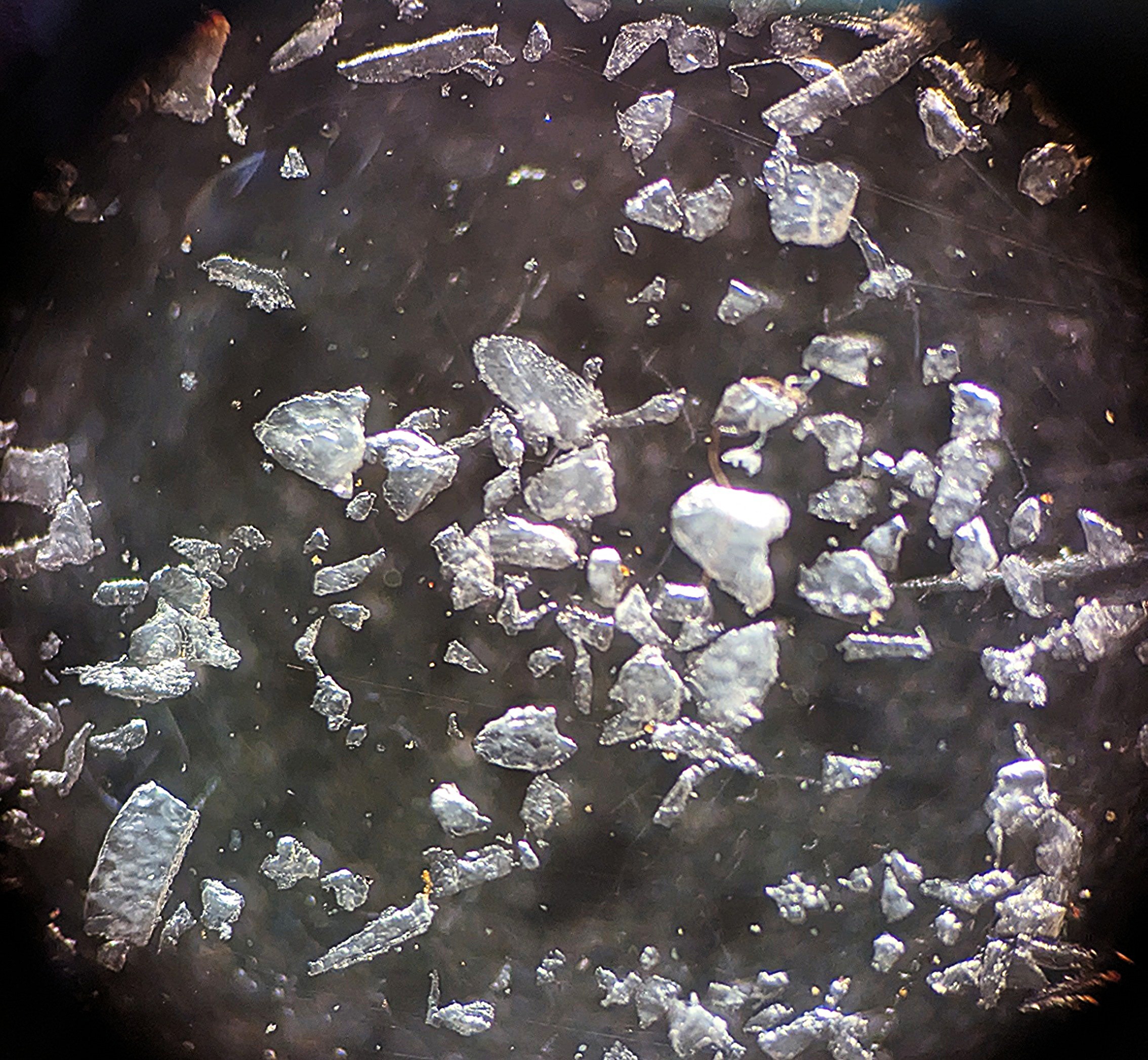
The EPA alleged the skincare items contain microbeads, which are tiny solid plastic particles that began to be phased out a decade ago.

They are often microscopic in size and cannot be filtered out during sewage and treatment works, leaving them to wash up in rivers, lakes and oceans. 

Once in the water, they can attract toxins and work their way back up to humans via the food chain.

While some of the products had particles made of bioplastics like polylactic acid and cellulose acetate, the EPA argues they do not readily break down and are still defined as plastic under legislation.

"Microbeads don't belong in skincare or our waterways – they can threaten marine life and people's health," EPA chief executive Tony Chappel said.

Since receiving the compliance notices, the six brands have removed all of the stock.

READ MORE: Australian households to get free electricity for three hours a day

Some of Australia's leading skincare brands have been forced to pull popular products from shelves in one state for containing banned plastic microbeads. 

Coles said it removed the KOi product from all stores nationwide and has updated its policies to ensure the ingredient was not included in any Coles Own Brand products in the future.

The EPA also worked with major retailers, such as Chemist Warehouse and Priceline, to get the products out of stores quickly. 

It is one of a few regulators in the world to take enforcement action against the use of plastic microbeads in personal care products. 

Further investigations are underway as the authority works to enforce the state plastics ban. 

Plastic microbeads were once a common item in cosmetic and skincare products to add texture, exfoliate and extend shelf life.

NSW banned their use in rinse-off skincare products from November 1, 2022, with a failure to comply with a notice carrying a maximum penalty of up to $550,000, plus an extra $55,000 for each day the products are supplied. 

Plastic microbeads are also banned in the ACT, Western Australia and Queensland.

The Northern Territory is looking at banning them, while the remaining states have no ban in place. 

READ MORE: Police announce $1 million reward to help find NSW mother's killer

NSW EPA chief executive Tony Chappel.

Full list of the products withdrawn from shelves

  • Aesthetics Skincare Pty Ltd – Aesthetics Bio Fermented Triple Action Scrub
  • Coles Group Ltd – KOi For Men Cleansing Face Scrub Oat and Desert Lime
  • Frostbland Pty Ltd – Alya Skin Pomegranate Exfoliator Facial Scrub and Exfoliating Sorbet
  • JMSR Australia Pty Ltd – Jan Marini Bioglycolic Resurfacing Body Scrub and Jan Marini Cranberry Orange Exfoliator
  • McPherson's Consumer Products Pty Ltd – Dr LeWinn's Essentials Gentle Exfoliant Weekly Facial Polishing Gel
  • Natio Pty Ltd – Natio Men's Purifying Face Scrub and Natio Ageless Skin Renewal Exfoliator

DOWNLOAD THE 9NEWS APP: Stay across all the latest in breaking news, sport, politics and the weather via our news app and get notifications sent straight to your smartphone. Available on the Apple App Store and Google Play.

Worker dies shortly after being freed from collapsed medieval tower

A worker who was alive when rescue crews pulled him from the rubble of a partially collapsed medieval tower in Rome has died.

Authorities in the Italian capital said the man didn't withstand the trauma he suffered and died soon after he was extracted.

"I express deep sorrow and condolences, on behalf of myself and the government, for the tragic loss of Octay Stroici, the worker who was killed in the collapse of the Torre dei Conti in Rome," Italy's Premier Giorgia Meloni said in a statement after midnight local time.

MELBOURNE CUP LIVE BLOG: A century-old piece of history in one man's hand

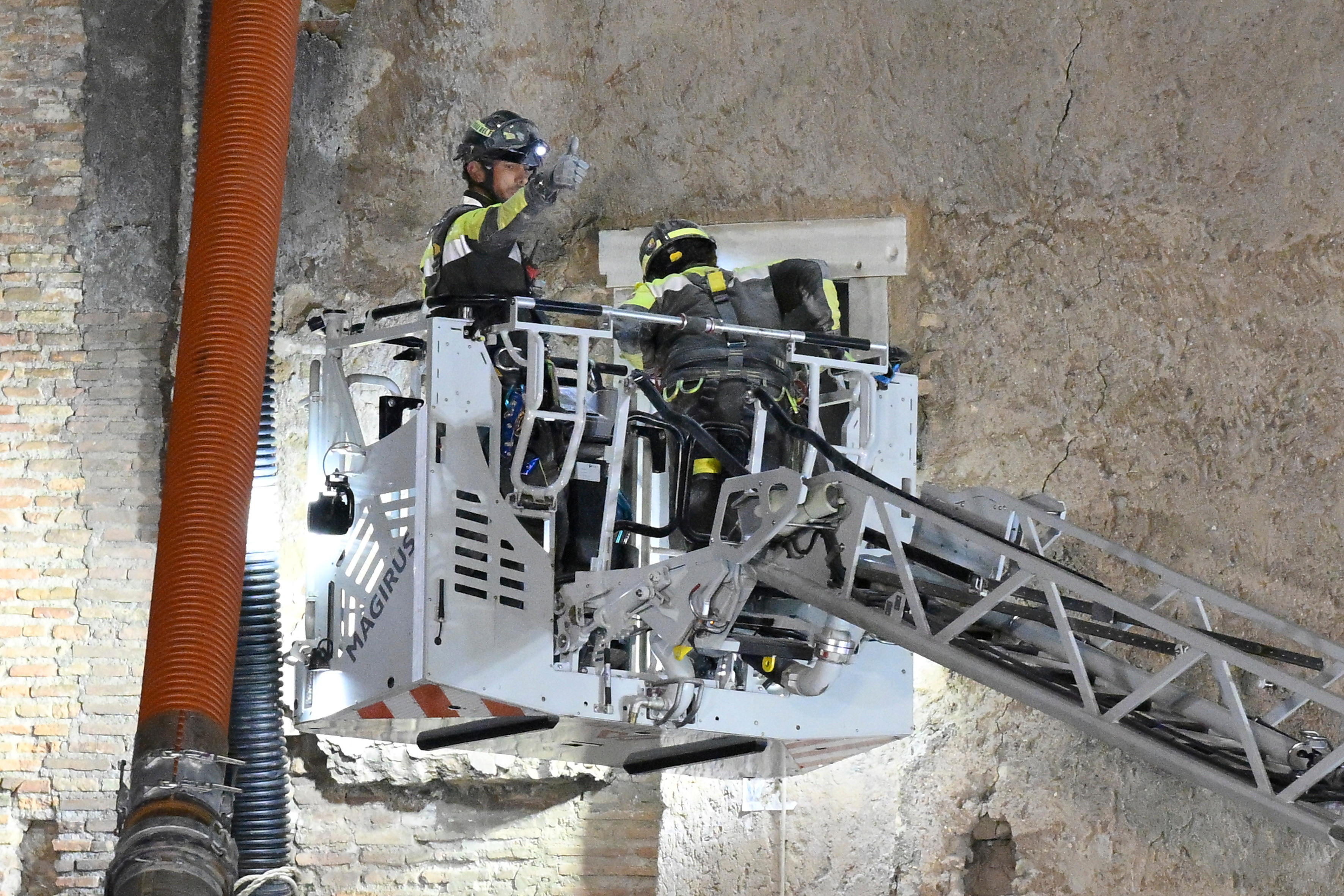
A firefighter gives a thumbs-up as rescuers pull a construction worker from under the debris of a medieval tower that was under renovation near the Roman Forum in Rome, Monday, Nov. 3, 2025, after it partially collapsed earlier in the morning. (Fabrizio Corradetti/LaPresse via AP)

"We are close to his family and colleagues at this time of unspeakable suffering."

Images broadcast on local television showed three rescuers loading the man onto a telescopic aerial ladder, then descending and wheeling him on to a stretcher and into an ambulance.

His state wasn't immediately clear, but Adriano De Acutis, chief commander of Rome's firefighters, said on state television channel RAI that he was conscious.

"Since the conditions seem serious, they will now evaluate him and he was immediately taken to the hospital," Lamberto Giannini, prefect of Rome, told reporters at the time.

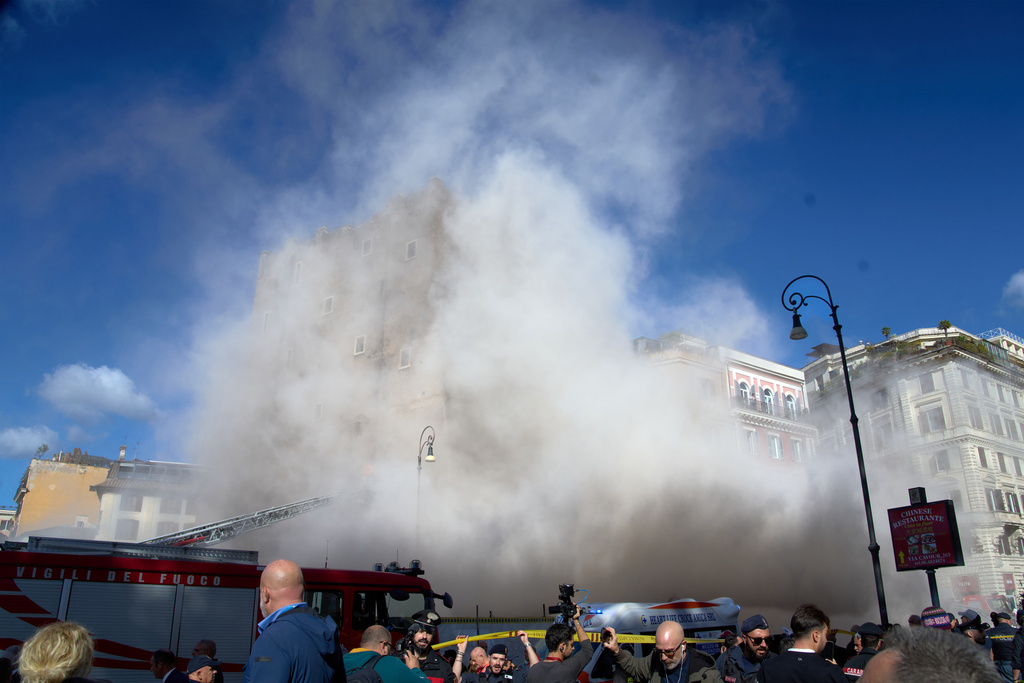
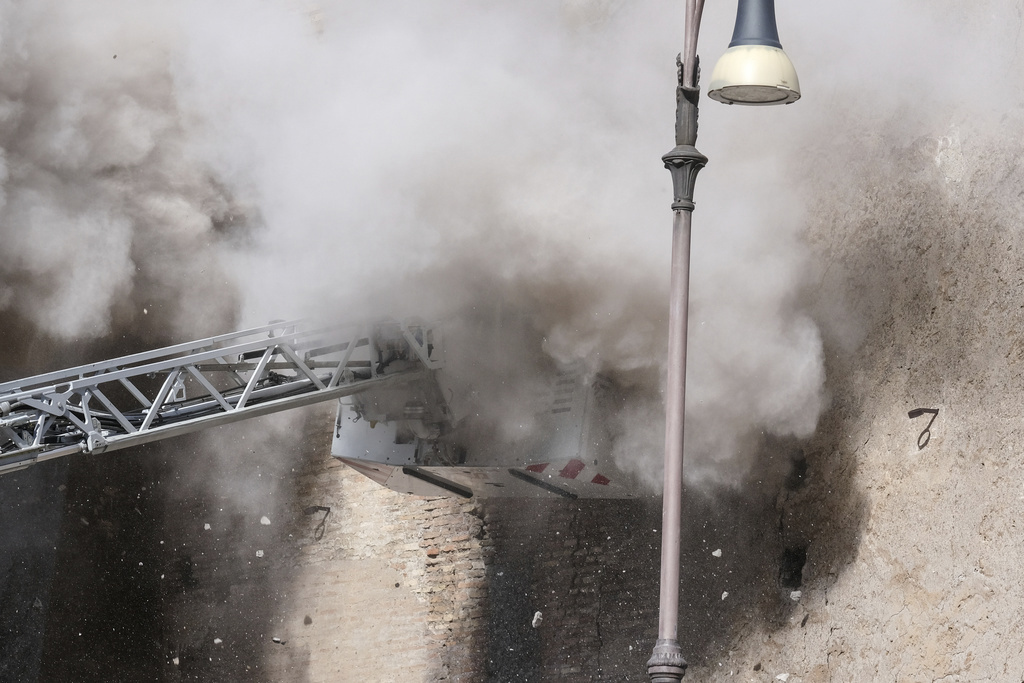
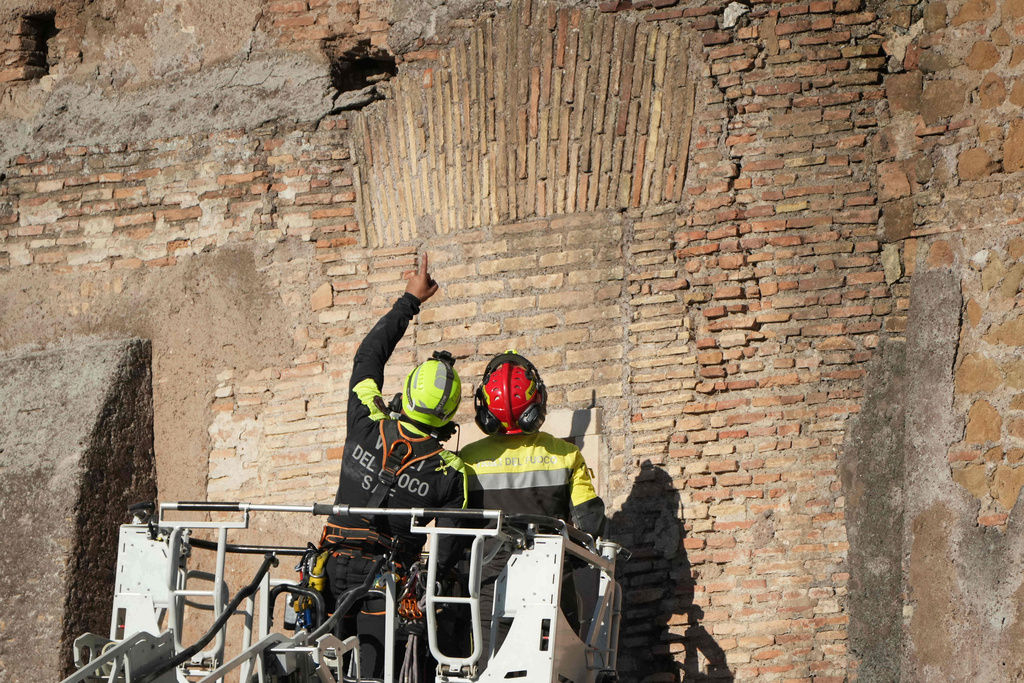
Rescuers faced a complex task as they tried to use a first-floor window to get near the trapped worker. But they were forced to retreat in a cloud of debris as the structure continued to give way. Another approach on two ladders was also aborted, and a drone sent up in their stead.

As dusk approached, firefighters lifted on a crane used giant tubes to suck rubble out of the second-floor window. They kept working late into the night.

"The operation lasted a long time because every time a part of the body was freed, there was additional rubble that covered it," Giannini said.

READ MORE: Warning for Aussies as destructive storm cell looms

Rome Mayor Roberto Gualtieri told reporters earlier that the worker was speaking to rescuers and using an oxygen mask. He added that rescuers were working with extreme caution in "a very delicate extraction operation" to avoid further collapses.

Three workers were rescued unharmed after the initial midday incident, firefighter spokesperson Luca Cari said. Another worker, age 64, was taken to hospital in critical condition; RAI reported he was conscious and had suffered a broken nose.

No firefighters were injured in the ensuing operation.

The Torre dei Conti was built in the 13th century by Pope Innocent III as a residence for his family. The tower was damaged in a 1349 earthquake and suffered subsequent collapses in the 17th century.

Hundreds of tourists had gathered to watch as firefighters used a mobile ladder to bring a stretcher to the upper level of the Torre dei Conti during the first rescue attempt. Suddenly, another part of the structure crumbled, sending up a cloud of debris and forcing firefighters to quickly descend.

The first collapse struck the central buttress of the structure's southern side, and caused an underlying sloped base to fall. The second damaged part of the stairwell and roof, cultural heritage officials said in a statement.

READ MORE: The chilling change that should have the world on notice

Queen Paglinawan, 27, was attending to a client in a gelato parlour next door when the tower first started coming apart.

"I was working and then I heard something falling, and then I saw the tower collapse in a diagonal way,″ Paglinawan, 27, told The Associated Press as yet more rubble crashed down.

The tower, which has been closed since 2007, is undergoing a 6.9 million euro ($12.1 million) restoration that includes conservations work, the installation of electrical, lighting and water systems and a new museum installation dedicated to the most recent phases of the Roman Imperial Forum, officials said.

Before the latest phase was started in June, structural surveys and load tests were carried out "to verify the stability of the structure, which confirmed the safety conditions necessary" to proceed with work, including asbestos removal, officials said. The current work, carried out at a cost of 400,000 euros, was just about complete.

Italian prosecutors arrived at the scene as the rescue operation was underway, and were investigating possible charges for negligent disaster and negligent injuries, Italian media reported. It is common in Italy for investigations to begin while an event is ongoing and before possible suspects are identified.

READ MORE: Aussie skincare products pulled from shelves over banned ingredient

German student Viktoria Braeu had just finished a tour at the nearby Colosseum and was passing by the scene during the firefighters' initial rescue attempt.

"And then we were like, 'It's probably not long until it's going to go down,' and then it just started erupting,'' said Braeu, 18.

Earlier on Monday, Prime Minister Meloni had shared her hopes for a successful rescue.

"My thoughts and deepest sympathies go out to the person currently fighting for his life under the rubble and to his family, for whom I sincerely hope that this tragedy will have a positive outcome," Meloni said in a statement.

"I would like to thank all the law enforcement officers, firefighters, and rescue workers who are intervening with courage, professionalism, and dedication in this extremely difficult situation."

DOWNLOAD THE 9NEWS APP: Stay across all the latest in breaking news, sport, politics and the weather via our news app and get notifications sent straight to your smartphone. Available on the Apple App Store and Google Play.

The chilling discovery that should have the world on notice

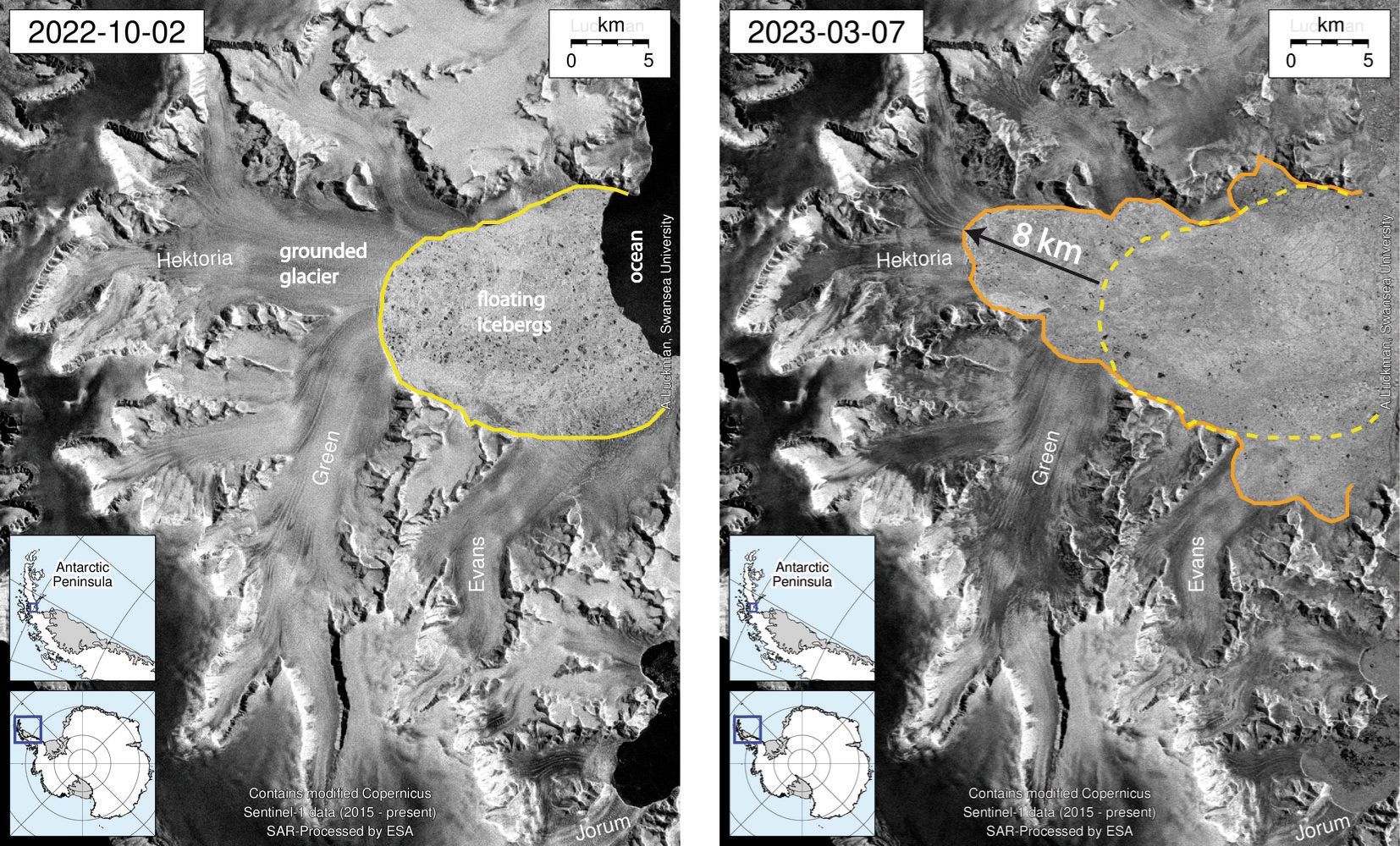
An Antarctic glacier shrunk by nearly 50 per cent in just two months to mark the fastest retreat recorded in modern history – and the way it happened could have big implications for global sea level rise.

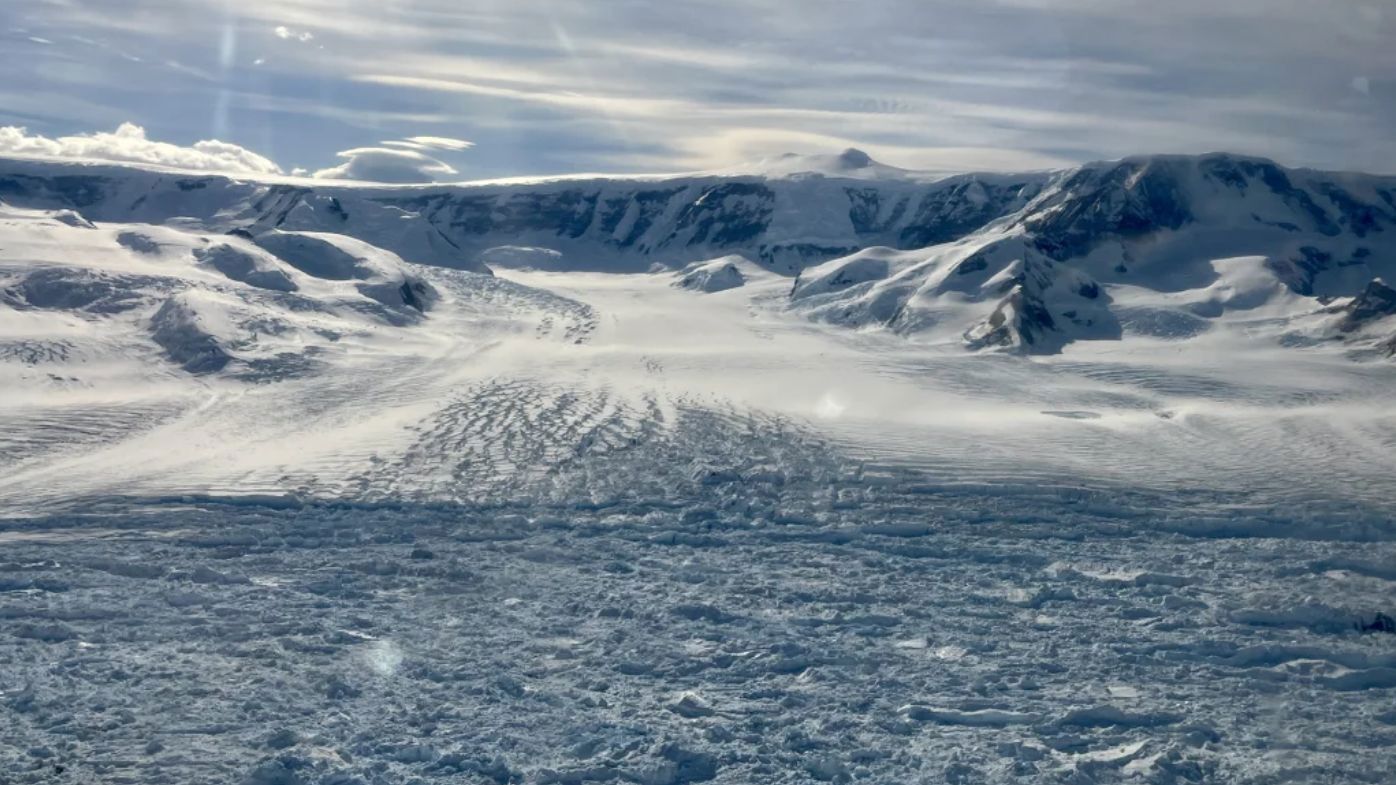
The Hektoria Glacier, slightly larger in size than the NSW city of Newcastle, is on the Antarctic Peninsula, a spindly chain of mountains sticking off the continent like a thumb pointing toward South America. It is one of the fastest warming regions on the planet.

Grounded glaciers such as Hektoria, which rest on the seabed and don't float, generally retreat no more than a few hundred metres a year. But between November and December 2022, Hektoria retreated by 8 kilometres, according to a study published in the journal Nature Geoscience.

READ MORE: Hundreds of jobs have just opened in Antarctica – and the pay is almost double what it would be in Australia

"This is astonishing; the rate of retreat is just crazy," said Ted Scambos, a study author and senior research scientist at the University of Colorado Boulder in the western US.

Understanding more about why this happened is vital; if larger glaciers retreat at similar rates, it could have "catastrophic implications for sea level rise," the authors wrote in a statement accompanying the report.

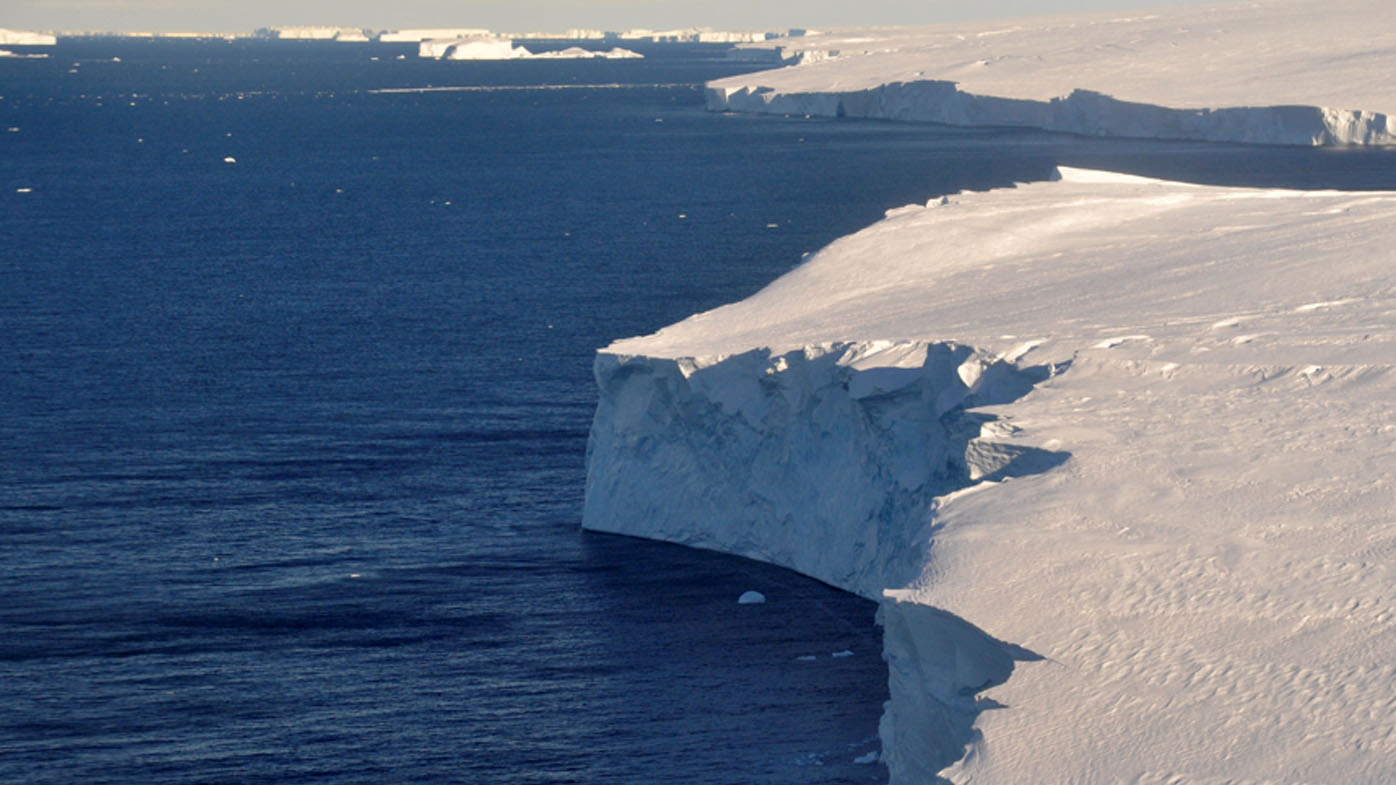
Antarctica holds enough ice to raise the global sea level by about 60 metres.

Hektoria's near demise was discovered by chance. Researchers had been surveying the bay where it is located for a separate study. They were keeping a close eye on the area's "fast ice" – sea ice fastened to land that doesn't move with the wind or tides – believing it was about to break off and float out to sea.

As Naomi Ochwat, a study co-author, studied the data, she noticed Hektoria had lost an enormous amount of ice over a very short period.

READ MORE: Trump plummets to a stunning new low

She and her co-authors started to dig into what was happening, looking at satellite images and data from flyovers.

They identified several steps that led to Hektoria's rapid retreat. In 2011, the bay filled with fast ice, stabilising the glaciers around it, allowing them to advance into the bay and form thick, floating ice tongues. In 2022, this fast ice broke out of the bay, destabilising the glaciers, causing them to lose their ice tongues and retreat.

The reason Hektoria fell apart much faster than its neighbouring glaciers was due to what lay beneath it, the scientists found.

Hektoria rests on an ice plain, where sliding ice glides over flat sediment on the seabed. Ice plains can prompt fast retreat because as the glacier thins, the ice starts to rise up and water pushes underneath into its crevasses, exerting pressure and causing large slabs to break off – in a process called calving.

As one iceberg calves, it exposes the glacier behind it to the same pressures and calving happens again. Scambos likens the process to "dominoes toppling backwards, their feet slipping out from under them, one after the other."

READ MORE: Medieval tower collapses in the heart of Rome

This kind of ice plain melting has happened before. Models show that between about 15,000 and 19,000 years ago, during a period of warming that ended the last Ice Age, glaciers with ice plains retreated hundreds of metres a day.

But "we hadn't seen it play out live before, certainly not at this rate," Ochwat said.

Hektoria's retreat was heavily influenced by climate change, she added. The loss of sea ice in the ocean next to Hektoria, believed to have been driven by ocean warmth, allowed wave swells to reach the fast ice and break it up, leaving the glacier exposed to ocean forces.

As climate change accelerates, "we are likely to see more reductions of sea ice in this region," said Bethan Davies, a glacial geologist at Newcastle University in the UK who was not involved in the study. This could result in other glaciers losing the sea ice that currently buttresses them, she told CNN.

Hektoria is a relatively small glacier by Antarctic standards, and its partial demise would not cost the planet much in terms of sea level rise, Scambos said.

However, "it's a smaller cousin to some truly gigantic – I mean size of the island of Britain – glaciers in Antarctica that could conceivably go through the same process, as this whole evolution of the ice sheets on earth evolves with global warming," he said.

The next stage is to better establish which areas in Antarctica are vulnerable to the same process. If a huge glacier were to disintegrate quickly, "it means that we might have a step change in sea level rise," Ochwat said.

DOWNLOAD THE 9NEWS APP: Stay across all the latest in breaking news, sport, politics and the weather via our news app and get notifications sent straight to your smartphone. Available on the Apple App Store and Google Play.