Tag Archives: oceania

Why the Australia-US rare earths deal matters so much for Trump

Prime Minister Anthony Albanese and US President Donald Trump have signed an $US8.5 billion ($13 billion) critical minerals and rare earths agreement in a move to break China's stranglehold on the market.

The US–Australia Critical Minerals Framework puts rare earths squarely at the forefront of the Australian-US relationship, with Albanese saying there is a "pipeline that we have ready to go".

The deal will kick off with both countries paying $US1 billion over the next six months for new projects.

READ MORE: 'I don't like you': Trump blasts Rudd during Albo meeting

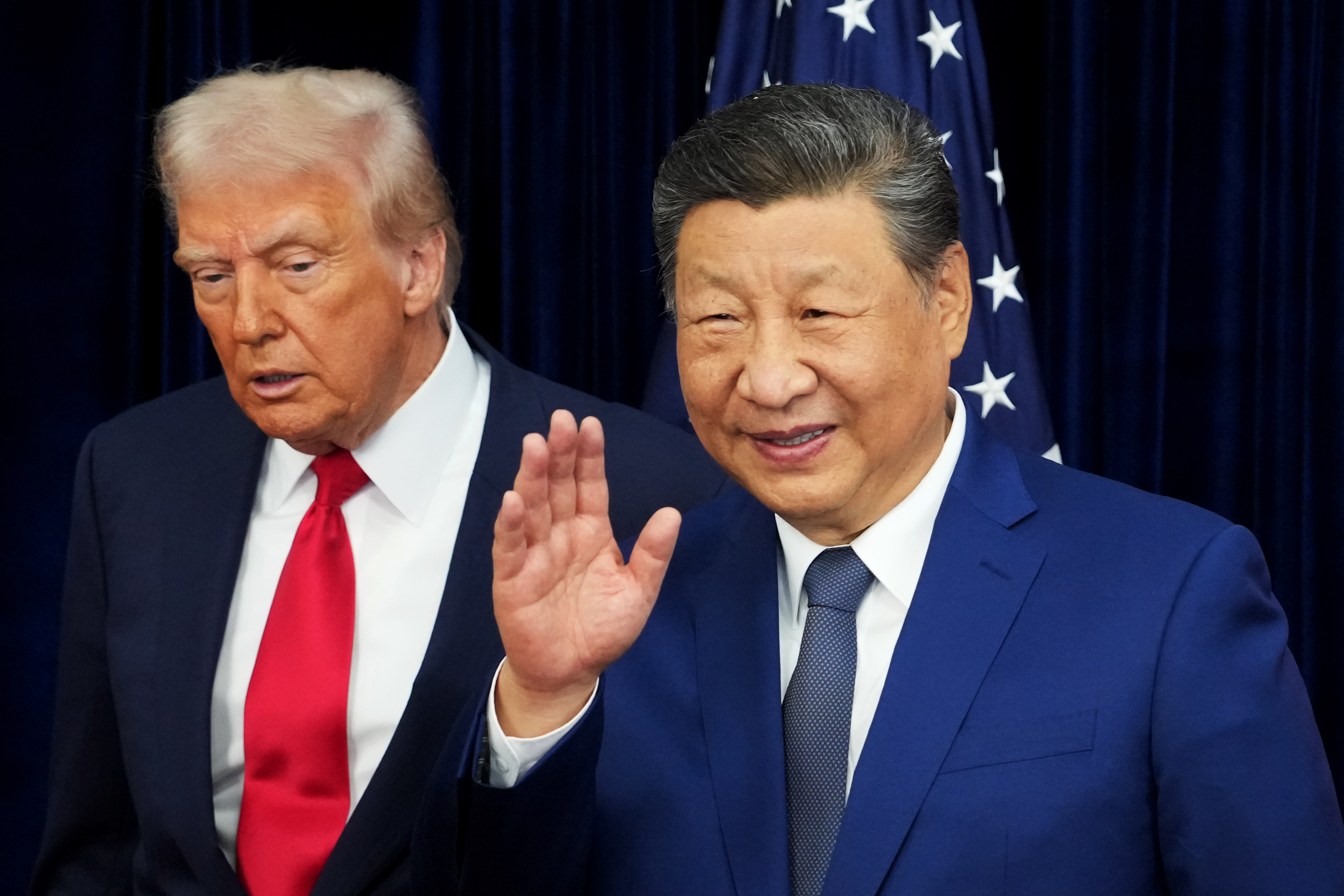
Trump was delighted in securing the agreement with Australia. China earlier this month ramped up restrictions on its rare earth exports. That didn't sit well with the US president, who threatened to call off an upcoming meeting with his Chinese counterpart, Xi Jinping.

"We work together very much on rare earths, critical minerals and lots of other things, and we've had a very good relationship," Trump said as he sat beside Albanese at the White House.

"We've been working on that for quite a while.

"In about a year from now, we'll have so much critical mineral and rare earths, and you won't know what to do with them."

READ MORE: World's biggest apps and websites hit by global outage

What are rare earths?

Rare earths include 17 metallic elements in the periodic table made up of scandium, yttrium and the lanthanides.

The name "rare earths" is a bit of a misnomer, because the materials are found throughout the Earth's crust.

They are more abundant than gold, but they are difficult and costly to extract and process and are also environmentally damaging.

The minerals are used to make everyday technologies, from smartphones to wind turbines to LED lights and flat-screen TVs.

They're crucial for batteries in electric vehicles, as well as MRI scanners and cancer treatments.

Rare earths are also essential for the arms industry and the US armed forces, the world's biggest.

They're used in F-35 fighter jets, submarines, lasers, satellites, Tomahawk missiles and more, according to the Centre for Strategic and International Studies (CSIS), a US think tank.

READ MORE: Chilling warning over 3D-printed guns flooding Australia amid crackdown

Why is Australia so crucial?

The US sees Australia, a long-standing ally, as an alternative source for rare earths as the critical minerals shape up to become a major hurdle in Washington-Beijing relations.

China is the world's largest producer of rare earth elements, with 61 per cent of mined rare earth production, according to the International Energy Agency, and 92 per cent of the global output in the processing stage.

Trump hopes the Australia deal will help break that monopoly.

Australia offers three major attractions: it has some of the world's biggest geological reserves: a share market with a record of successfully investing in mining; and a skilled labour force.

Are there any hurdles ahead?

Economic geographer Lian Sinclair, of the University of Sydney, says vast sums of money are pouring into the Australian rare earths industry: $3.2 billion by Australian government agencies; $2.9 billion from foreign allied governments, including the US, Japan, South Korea and Canada.

"This is a large amount for an industry with a total global trade of less than US$4 billion ($6 billion) every year," he said.

It means without investment in refineries and magnet production in allied countries, Australian miners will continue to either sell into or be outcompeted by Chinese domestic industry.

Sinclair says apart from Australian rare-earths mining company Lynas, which sells into the Japanese market, miners are struggling to find potential international buyers.

To wean themselves off Chinese rare earths for wind turbines and electric vehicles, the US, Europe and South Korea need to heavily invest in magnet and advanced metal processing industries.

Sinclair also points to the environmental cost of Australia becoming a big player in rare earths, with more work needed to be done in planning for managing radioactive waste and building partnerships with First Nations people.

– With CNN

DOWNLOAD THE 9NEWS APP: Stay across all the latest in breaking news, sport, politics and the weather via our news app and get notifications sent straight to your smartphone. Available on the Apple App Store and Google Play.

Chilling warning over 3D-printed guns flooding Australia amid crackdown

Law enforcement have warned "the threat is real" as increasing numbers of high quality, high-power home-made and 3D printed guns flood into Australia.

A multi-agency operation led by the Australian Border Force and spanning every state and territory in Australia as well as New Zealand, saw police engage in a week-long crackdown on illegal guns around the country.

ABF Commander Graeme Campbell said around the country, police had made 184 arrests and laid 854 charges.

READ MORE: World's biggest apps and websites hit by global outage

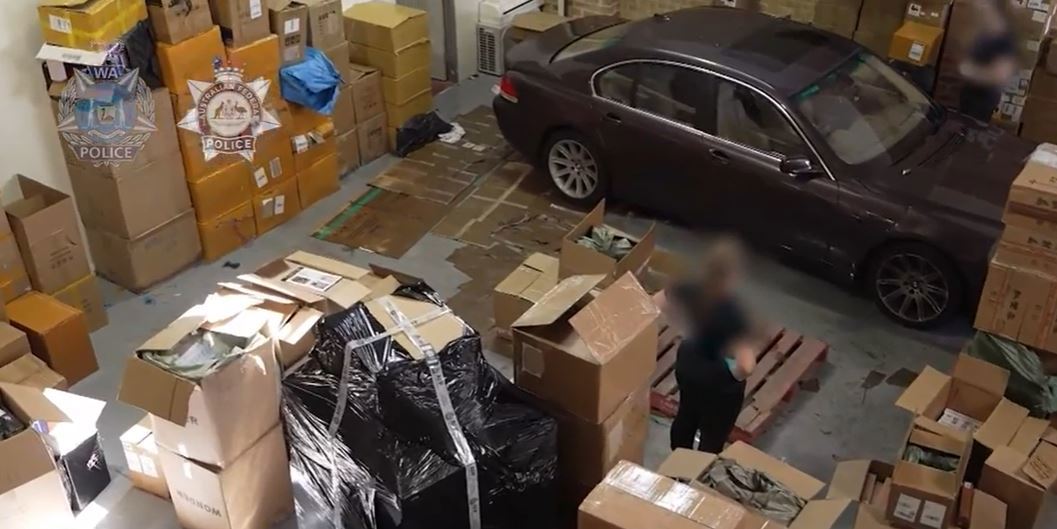
They seized 719 whole guns, 489 firearm parts, 64 imitation firearms, and 281 3D-printed or privately made firearms and parts.

Campbell said many of home-made and 3D-printed guns and parts were intercepted at the border from a broad range of overseas sources.

In NSW alone, police executed 20 warrants between October 13 and October 19.

In total, 45 people were arrested, 206 charges laid, and 270 guns seized.

READ MORE: Awkward Trump and Rudd moment in historic meeting

Police also collected 89 gun parts, 19 imitation guns, 10 home-made or 3D-printed guns and 130 home-made or 3D-printed gun parts.

The home-made firearms were a major focus of the operation, and were involved in some of the biggest busts.

Just before 7am on Monday, October 13, police carried out a search warrant in Hinchinbrook, Sydney, where they allegedly found a 3D printer attempting to print a gun part.

READ MORE: Records tumble across Australia after scorching Monday

Officers also allegedly seized numerous other firearm parts, electronics, and crypto-currency wallets.

A 41-year-old man was arrested at the scene and charged with multiple firearm-related offences.

The next day, on Tuesday, October 14, in a search warrant in Gosford north of Sydney, police seized another 3D printer and three home-made Glock-style pistols, magazines, holsters, and other items.

READ MORE: Major changes coming to Myer One loyalty program

A 52-year-old man was arrested and charged with 14 gun-related offences.

NSW Police Detective Superintendent John Watson said the quality of the guns was increasing and newer models had displayed semi-automatic and high-powered capabilities.

"Privately manufactured firearms present a fast-evolving challenge, but this operation shows what's possible when agencies collaborate effectively," he said.

Watson said many people who were involved in 3D-printing guns and gun parts may not even be aware they were breaking the law, and that they were more interested in the technology.

Others may be licensed firearm holders with an interest in the guns.

Watson said a public education campaign was needed to warn such people away from printing or privately manufacturing guns, which is highly illegal, even if the weapon is non-functioning.

He said police wanted to focus on "the real threat" of the guns in the hands of organised crime and outlaw motorcycle gang elements.

And he said there was "no question" so-called sovereign citizens and "doomsday preppers" were making use of the technology.

"The threat is real. The threat is right across Australia," he said.

DOWNLOAD THE 9NEWS APP: Stay across all the latest in breaking news, sport, politics and the weather via our news app and get notifications sent straight to your smartphone. Available on the Apple App Store and Google Play.

Rudd approached Trump after tense exchange. Here’s what happened

Donald Trump has reportedly "forgiven" Australian ambassador Kevin Rudd over the latter's old remarks labelling the US president a "traitor to the West".

Rudd, a former prime minister and now Australia's ambassador to the US, was present this morning at the landmark meeting between Trump and Prime Minister Anthony Albanese.

The meeting saw Trump and Albanese sign off on an $8.5 billion critical minerals deal, while warm behaviour was on show between the two leaders.

READ MORE: Awkward Trump and Rudd moment in historic meeting

But there was an awkward moment when one reporter asked Trump why it had taken him nine months into his term as president to meet with Albanese – and whether Rudd's since-deleted remarks had anything to do with it.

Trump said he didn't "know anything about" who the reporter was referring to and asked Albanese where Rudd was and if he still worked for him.

When Albanese pointed out the former Labor leader sitting across from Trump at the cabinet table, Trump asked Rudd if he "said bad", to which Rudd replied, "before I took this position, Mr President".

READ MORE: Looted Louvre treasures may never be found, experts say

"I don't like you either and I probably never will," Trump replied.

The comments prompted laughter in the room.

The Sydney Morning Herald has since reported that after the cameras were turned off, Rudd approached Trump to apologise for his comments.

READ MORE: Why your social media feeds are being overrun by AI videos

"All is forgiven," Trump said, according to sources in the room.

Prior to being appointed ambassador in 2022, Rudd had posted remarks online labelling Trump "the most destructive president in history" and "a traitor to the West".

Those have long since been deleted but they have prompted ongoing calls from the Coalition for Rudd to be recalled from Washington.

READ MORE: Why the Australia-US rare earths deal matters so much for Trump

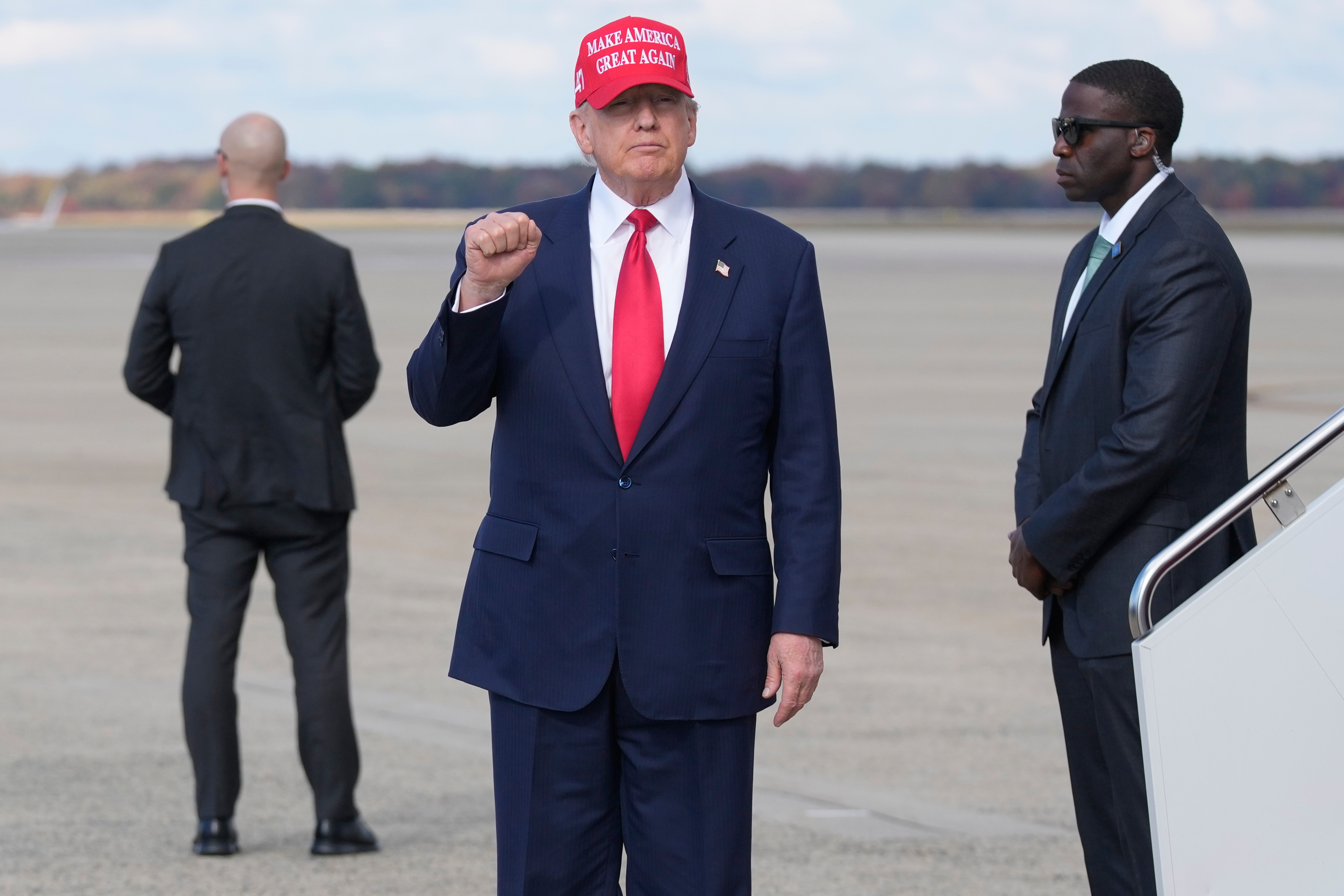
President Donald Trump speaks to reporters after arriving on Air Force One, Friday, Oct. 17, 2025, at Palm Beach International Airport in West Palm Beach, Fla.

Foreign Minister Penny Wong brushed off the exchange this morning, telling Today it was "tongue in cheek".

"Full credit to Kevin, ambassador Rudd has worked so hard on, firstly getting this agreement," she said.

"He's worked so hard on assuring AUKUS and the delivery of the submarines in our national interest.

"And he's worked so hard on the critical minerals deal."

She said Rudd had been instrumental to the "success" of Albanese's meeting with Trump.

Rudd would be far from the first fierce critic the president has "forgiven".

Vice President JD Vance once referred to Trump as "America's Hitler", while current Secretary of State Marco Rubio, with whom Trump sparred in his first election campaign for the Republican presidential nomination, described him as a "con artist".

DOWNLOAD THE 9NEWS APP: Stay across all the latest in breaking news, sport, politics and the weather via our news app and get notifications sent straight to your smartphone. Available on the Apple App Store and Google Play.

Looted Louvre treasures may never be found, experts say

The Louvre Museum in Paris announced it would remain closed as investigations continue into Sunday's extraordinary theft of historic jewellery – and experts say the prospects of recovering the treasures are slim.

In a post on X, the museum said it regretted Monday's closure, as France begins to digest the implications of the brazen heist in which robbers made off with artefacts from the French crown jewels, dating from the Napoleonic era.

There are also concerns they will be cut down and sold by the gang, or have already been shipped outside France.

READ MORE: Donald Trump and Anthony Albanese sign critical minerals deal in chummy first White House meeting

How did the heist happen?

The thieves used a truck-mounted ladder to gain access to the Apollo Gallery, one of the most ornate rooms in the Louvre, through a window.

Armed with tools including an angle grinder and a blowtorch, they targeted two high-security display cases.

The entire operation lasted just seven minutes, authorities said, with the suspects fleeing on motorcyles.

What was stolen?

Among the items taken from the Louvre was a diamond and sapphire jewellery set including a tiara and necklace worn by Queen Marie-Amélie and Queen Hortense.

The diadem – a jewelled headpiece worn by royalty – features 24 Ceylon sapphires and 1083 diamonds that can be detached and worn as brooches, according to the Louvre.

Also stolen was an emerald necklace and earrings set that was a wedding gift from Napoleon to his second wife, Marie-Louise of Austria, in March 1810, containing 32 intricately cut emeralds and 1138 diamonds.

Eight of the nine items taken remain unaccounted for.

Empress Eugenie s diadem of pearls exhibited in the Apollo s Galery housing the royal collection of gems and diamonds from the French crown in Paris on May 20, 2021.Necklace and earrings from the emerald set of Napoleon's second wife Empress Marie-Louise shown at the Louvre Museum on May 20, 2021.

READ MORE: Records tumble across Australia after scorching Monday

Wider implications for France

French Justice Minister Gérald Darmanin admitted that the Louvre heist exposed security failings at the museum.

"One can wonder about the fact that, for example, the windows hadn't been secured, about the fact that a basket lift was on a public road," he said on France Inter radio. "What is certain is that we have failed."

"The French people all feel like they've been robbed," he said.

Elaine Sciolino, author of Adventures in the Louvre: How to Fall in Love with the World's Greatest Museum, emphasised the significance of a robbery at the Louvre, which was originally built as a fortress before becoming a palace for the French royal family.

"This attack really is a dagger into the heart of France and French history," she said.

READ MORE: Which apps and websites were affected by the Amazon Web Services outage?

Empress Eugénie's crown is displayed at the Apollo Gallery in the Louvre museum in Paris on January 14, 2020.

Will the jewellery be recovered?

Natalie Goulet, a Centrist member of the French senate, told CNN on Monday that she believes the jewellery has probably already been taken out of the country.

"I think that the pieces are already abroad," she said. "I think it's lost forever."

Goulet also appeared on BBC Radio about the prospects of recovering the jewellery, replying: "None."

"The jewellery will be cut up and sold and used as a money-laundering system," she said. "It's the easiest way to clean dirty money."

The robbery was probably linked to organised crime, Goulet said.

Christopher Marinello, the founder of Art Recovery International, said that if the thieves are just looking to get cash out as quickly as possible, they might melt down the precious metals or recut the stones with no regard for the piece's integrity.

"We need to break up these gangs and find another approach, or we're going to lose things that we are never going to see again," Marinello said.

READ MORE: Cancelling a gym membership? These are your consumer rights in Australia

The Empress Eugénie Brooch exhibited during a media preview for a Christie's sale in New York, on April 11, 2008.A set of jewelry worn by Queen Marie-Amélie and Queen Hortense is displayed at the Louvre's Apollo Gallery on January 14, 2020.

Past heists

The most well-known robbery at the Louvre took place in August 1911, when Leonardo da Vinci's Mona Lisa painting was stolen off the museum's walls by handyman Vincenzo Peruggia.

It was 24 hours before anyone even noticed the Mona Lisa was missing, with artworks often removed to be photographed or cleaned.

A bungling police investigation then dragged on for two years before the painting was recovered in December 1913, making it the most famous artwork in the world.

More recently, a work by French painter Camille Corot was stolen from its frame in 1998 and has never been found.

More recent heists at other European museums include the theft of four ancient gold artefacts from a museum in the Netherlands in January.

DOWNLOAD THE 9NEWS APP: Stay across all the latest in breaking news, sport, politics and the weather via our news app and get notifications sent straight to your smartphone. Available on the Apple App Store and Google Play.

Awkward Trump and Rudd moment in historic meeting

Australian Prime Minister Anthony Albanese has walked away from his long-awaited White House meeting with an $8.5 billion critical minerals deal and some effusive praise from US President Donald Trump.

In a 35-minute sitdown, Trump referred to his visitor repeatedly as a friend and seemed to throw his support behind the AUKUS deal but declined to budge on Australia's tariff levels and took a swipe at former prime minister Kevin Rudd, who was also in the room.

After multiple attempts to meet in person over the past months, Albanese and Trump shook hands outside the White House on Monday morning (early Tuesday AEDT) and sat down in the cabinet room surrounded by Trump's top secretaries.

READ MORE: Cop probed over concerns of what she did after road rage incident

Even given the close relationship between the two countries, there had been minor fears of a Zelenskyy-style ambush on Albanese's first White House meeting with Trump, which was shifted from the Oval Office to the cabinet room at late notice.

But any fears melted almost immediately as Trump declared his love for Australia before calling Albanese "highly respected" and "very popular".

"I think he's doing a really good job, and we've had a very good relationship," Trump said, when asked to compare his relationships with Albanese's predecessors Scott Morrison and Malcolm Turnbull.

"I don't want to compare one with the other, but I'll tell you this, they've got a great, they really have a great prime minister."

Albanese quipped that he'd use the line in his re-election ads in 2028.

"We are great friends and we're great allies, and this is a relationship that's been forged in the battlefields of the world," Albanese said. 

"We have stood side by side for freedom and democracy."

READ MORE: World's biggest apps and websites hit by global outage

Trump sprays Rudd

There was an awkward moment when Trump was asked by a reporter whether ambassador to Washington Kevin Rudd's criticisms of him in the past had played into the long wait for an in-person meeting with Albanese.

When the former prime minister took the job of ambassador, he deleted some old social media posts, including one in which he called Trump "the most destructive president in history".

Trump said he didn't "know anything about" who the reporter was referring to and asked Albanese where he was and if he still worked for him.

When Albanese pointed out the former Labor leader sitting across from Trump at the cabinet table, Trump asked Rudd if he "said bad", to which Rudd replied, "before I took this position, Mr President".

"I don't like you either and I probably never will," Trump replied.

It's understood Rudd apologised to Trump after the cameras left the room.

READ MORE: Major changes coming to Myer One loyalty program

AUKUS fears eased

One of Canberra's leading concerns heading into the meeting was the status of AUKUS, a defence agreement with the US and UK under which Australia will acquire nuclear-powered submarines.

There were concerns the Pentagon would torpedo the pact when a review headed by known AUKUS sceptic Elbridge Colby, Trump's undersecretary for war policy, was launched in June. 

When Trump was asked about the pact earlier this year in a meeting with British Prime Minister Keir Starmer, he responded with, "What does that mean?"

On Monday, he said the process was moving along "very rapidly, very well".

Asked if he could guarantee Australia would be getting the submarines, amid concerns about manufacturing delays in the US, he said, "oh it's getting them, no they're getting them".

Secretary of the Navy John Phelan said all three parties were working to "clarify some of the ambiguity" that was in the original AUKUS deal, in what he said "should be a win-win for everybody".

Asked if he would consider expediting the delivery of the submarines, Trump said, "we are doing that".

No movement on tariffs

Australian officials didn't make any serious noises about winning a tariff reduction out of this meeting  and Trump didn't give any reason to raise those low expectations.

"I will say this, Australia pays very low tariffs. Very, very low tariffs," he said, when asked if he would consider dropping the 10 per cent tax on Australian imports.

"Australia pays among the lowest tariffs."

Critical minerals deal signed

While the meeting was ostensibly about a critical and rare earths minerals supply agreement the leaders signed in front of the camera, they didn't spend a lot of time talking about it beyond Albanese describing it as an $8.5 billion pipeline, with the US and Australia to chip in $1 billion in the next six months.

The deal itself says that money is for financing projects both in Australia and the US and outlines extremely broad plans to accelerate free and fair markets to develop "resilience and security of critical minerals and rare earths supply chains".

China is the world's largest producer of rare earth elements, with 61 per cent of mined rare earth production, according to the International Energy Agency, and 92 per cent of the global output in the processing stage.

Both the US and Europe have sought to reduce their dependence on Beijing. According to Geoscience Australia, Australia has among the largest deposits in the world of several of the 17 critical elements, but they can be difficult and costly to mine and process.

Trump threatened Beijing with even more tariffs if it manipulated the global market for rare earths, while also saying China had treated the US with "great respect" and boasting of a good relationship with President Xi Jinping.

Trump also confirmed that Albanese had invited him to Australia and that he considered the trip a "real possibility".

DOWNLOAD THE 9NEWS APP: Stay across all the latest in breaking news, sport, politics and the weather via our news app and get notifications sent straight to your smartphone. Available on the Apple App Store and Google Play.

Records tumble across Australia after scorching Monday

Spring is settling in as an absolute scorcher, with temperature records for October tumbling around the country.

Weatherzone reports multiple states around the country recorded unprecedented October heat yesterday – though official confirmation will only come later this morning, as maximums are calculated in a 24-hour 9am to 9am period.

But the weather reporting site said Birdsville in Queensland reached 44.9 degrees, just 0.2 degrees short of the statewide October weather record.

READ MORE: Trump and Albanese sign critical minerals deal in chummy White House meeting

In other parts of the state, new regional records were set, including 44.2 degrees at Ballera, and 43.1 degrees at Thargomindah.

And the scorchers weren't limited to the Sunshine State.

In South Australia, Moomba Airport reached 44.1 degrees, breaking the previous record of 43.5 degrees.

READ MORE: World's biggest websites, apps affected as AWS reports major issues

And Oodnadatta registered 44 degrees just after 3.30 pm, Weatherzone said – though that was shy of South Australia's overall October record high of 45.4 degrees.

Regional New South Wales also copped it, with Tibooburra in the far north-west breaking records to reach 42.6 degrees.

White Cliffs, in the same region, hit 42.3 degrees.

READ MORE: Chinese aircraft makes 'unsafe' flare drop in front of Australian plane

Drought

"The pool of unseasonably warm air in Australia's interior will begin to dissipate in South Australia on Tuesday, however the (south-west) corner of Queensland and the (north-west) corner of New South Wales can expect another scorcher on Tuesday," Weatherzone said.

"Tuesday's temperatures at some locations could even potentially exceed Monday's, which obviously means that more records could tumble."

Temperatures in Sydney today are expected to reach a mild 23 – but will soar tomorrow with a forecast maximum of 38 degrees, according to the Bureau of Meteorology.

Brisbane will reach 30 degrees today and tomorrow before rising to 35 on Thursday.

Adelaide, meanwhile, is going in the other direction, with temperatures plummeting to below 20 after today and storms and rain forecast.

DOWNLOAD THE 9NEWS APP: Stay across all the latest in breaking news, sport, politics and the weather via our news app and get notifications sent straight to your smartphone. Available on the Apple App Store and Google Play.

Which apps and websites were affected by the Amazon Web Services outage?

An issue with Amazon Web Services has impacted some of the world's biggest apps and websites.

Users on Down Detector, a website which measures outages, reported difficulties accessing a range of popular services including Snapchat, Roblox, Fortnite, Canva and Duolingo.

The problems appeared to stem from Amazon Web Services (AWS), which provides infrastructure for many major websites and apps.

The technology giant confirmed the underlying issued had been "fully mitigated" by 9.35pm today, with services expected to return to normal despite a backlog.

Which websites went down?

Down Detector showed users reporting errors for a huge list of sites and apps.

Some services confirmed their issue was linked with Amazon Web Services, while Down Detector reported others were likely to be impacted by the issue.

Websites experiencing difficulties included:

  • Snapchat
  • My Fitness Pal
  • Epic Games Store
  • Fortnite
  • Canva
  • Roblox
  • Hinge
  • Tinder
  • Signal
  • Duolingo
  • PlayStation Network
  • XBox
  • Steam
  • Ubisoft Connect
  • Pokemon Go
  • Video service Zoom
  • Xero
  • EA Games
  • Strava
  • 9Now
  • Disney+
  • Music service Tidal
  • Ring doorbells
  • Online game Among US
  • Lloyds Bank
  • Halifax (UK bank)
  • Slack
  • Reddit
  • Amazon Alexa
  • Life360
  • Signal
  • BT (British Telecom)
  • Bank of Scotland
  • Virgin Media
  • Vodafone
  • EE
  • 3 (British telco)
  • Blink Security
  • HM Revenue and Customs
  • Microsoft 365
  • Microsoft Outlook
  • Microsoft Teams
  • Just Eat
  • Whatsapp

What has Amazon Web Services said?

Just after 8pm, Amazon Web Services said its engineers had "identified a potential root cause" of the outage and services were being restored.

"We continue to observe recovery across most of the affected AWS Services," the company said in a statement.

"We can confirm global services and features that rely on US-EAST-1 have also recovered.

"We continue to work towards full resolution and will provide updates as we have more information to share."

By 9.35pm, AWS said the "underlying DNS issue has been fully mitigated" and that most requests were succeeding normally.

Is Snapchat down right now?

One of the biggest websites affected by the outage was Snapchat, a social media platform with about 900 million active monthly users.

Users reported difficulty logging into Snapchat after being met with error messages.

The company told users on X its team was looking into the issue.

What is Amazon Web Services?

Amazon Web Services provides cloud computing.

AWS is a subsidiary of Amazon, the mega company owned by billionaire Jeff Bezos, one of the world's richest people.

"Instead of buying, owning, and maintaining physical data centres and servers, you can access technology services, such as computing power, storage, and databases, on an as-needed basis," AWS says.

It says its customers are companies "of every type, size and industry".

It provides infrastructure that is used for data backup, disaster recovery, email, virtual desktops, software development and testing, big data analytics, and customer-facing web applications.

DOWNLOAD THE 9NEWS APP: Stay across all the latest in breaking news, sport, politics and the weather via our news app and get notifications sent straight to your smartphone. Available on the Apple App Store and Google Play.

Major websites down as tech company investigates ‘increased error rates’

Some of the world's biggest apps and websites appear to have stopped working.

Roblox, Snapchat, Fortnite, Canva and Duolingo are among the services that are down, according to website DownDetector.

The problems appear to stem from an issue at Amazon Web Services (AWS), which provides infrastructure for many major websites and apps.

"We can confirm increased error rates and latencies for multiple AWS services in the US-East-1 region," the company said in a statement.

"We are actively engaged and working to both mitigate the issue and understood the root cause.

"We will provide an update in 45 minutes, or sooner if we have additional information to share."

Amazon Web Services is one of the most popular providers of cloud services in the world.

Popular encrypted messaging service Signal has reports of its service being down.

"We are aware that Signal is down for some people," president Meredith Whittaker said on X.

"This appears to be related to a major AWS outage."

The currency trading app Coinbase confirmed "many" of its users were unable to access its service.

"Our team is working on the issue and we'll provide updates here," the company said.

Graphic design platform Canva said it was experiencing "significantly increased error rates which are impacting functionality".

The software company has about 220 million active monthly users.

"Our team is actively investigating the issue and working to restore full access as quickly as possible," the company said in an update on its website.

More to come…

What is AWS?

Amazon Web Services provides cloud computing.

AWS is a subsidiary of Amazon, the mega company owned by billionaire Jeff Bezos, one of the world's richest people.

"Instead of buying, owning, and maintaining physical data centres and servers, you can access technology services, such as computing power, storage, and databases, on an as-needed basis," AWS says.

It says its customers are companies "of every type, size and industry".

It provides infrastructure that is used for data backup, disaster recovery, email, virtual desktops, software development and testing, big data analytics, and customer-facing web applications.

DOWNLOAD THE 9NEWS APP: Stay across all the latest in breaking news, sport, politics and the weather via our news app and get notifications sent straight to your smartphone. Available on the Apple App Store and Google Play.

Afterpay back online after massive global outage hits millions

Popular buy now, pay later platform Afterpay says it has largely restored services after a global, platform-wide outage left millions of users unable to make payments.

An issue affected the app, consumer and merchant portal, online and in-store services, and shop directory from about 2pm until about 4pm (AEDT) today.

It affected users in Australia, New Zealand, the US and Canada. 

READ MORE: Government to table laws to combat supermarket price gouging

Afterpay

"We are experiencing an outage at the moment that is affecting services," an Afterpay spokesperson said at the time.

"Our team is working hard to resolve this ASAP and we'll provide another update shortly."

More than two hours later, services were restored in Australia, New Zealand and the US. They went down again about an hour later, but have since been restored for Australia and New Zealand.

Afterpay is still working to restore services in North America. 

It said a third-party vendor was responsible for the tech issues.

Afterpay is a popular buy now, pay later service that lets customers purchase items immediately and pay them off in four interest-free instalments. 

It has about 3.5 million customers in Australia and more than 24 million users worldwide.

DOWNLOAD THE 9NEWS APP: Stay across all the latest in breaking news, sport, politics and the weather via our news app and get notifications sent straight to your smartphone. Available on the Apple App Store and Google Play.