Tag Archives: oceania

Teen allegedly threatens women with machete, leads police on 100km chase

A 17-year-old boy has been refused bail after allegedly threatening a woman and two children before leading police on a 100km chase in western NSW.

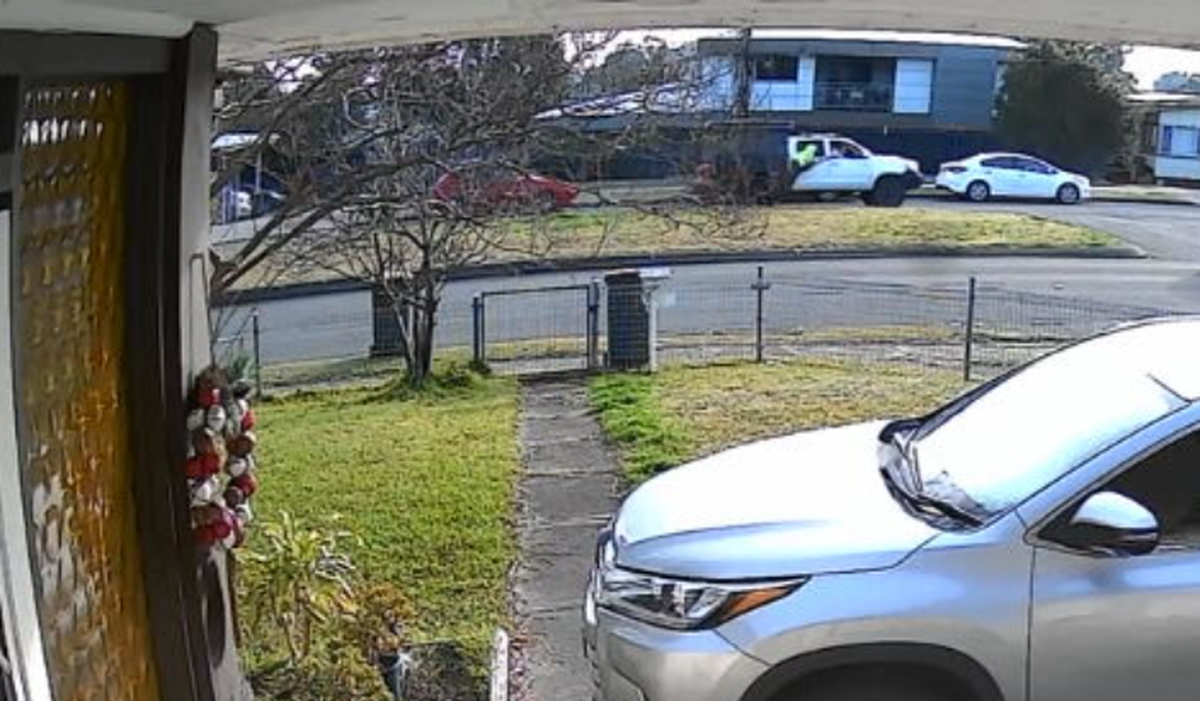
Police were called to a carpark on Montkeila Road, Walgett, around 691km from Sydney, yesterday afternoon.

A 35-year-old woman had her car allegedly stolen by the teenage boy.

READ MORE: Millions of Aussies about to get a text giving them $5520

The tiny town of Walgett in north-west NSW is the latest region to be plunged into lockdown.

She told police she and her two children, aged two and four, were threatened by the boy, who was allegedly armed with a machete and demanded she hand him the keys to her car.

Police then saw the car travelling south on the Castlereagh Highway towards Coonamble, where police attempted to stop the vehicle.

The teenage boy refused to stop, so a pursuit was initiated that lasted 100km.

NRL GRAND FINAL LIVE: Slater backs Mam's bench role to work wonders

It ended when the police deployed road spikes around 20km north of Coonamble, and the 17-year-old was subsequently arrested.

He was taken to Walgett Police Station and charged with multiple offences, including armed robbery, aggravated assault with intent to take and drive a motor vehicle with a weapon, hinder or resisting police.

He appeared before a Children's Court today.

DOWNLOAD THE 9NEWS APP: Stay across all the latest in breaking news, sport, politics and the weather via our news app and get notifications sent straight to your smartphone. Available on the Apple App Store and Google Play.

New technology that could help predict deadly thunderstorm asthma

Six new automated pollen counters are being rolled out in Victoria to help improve forecasting for thunderstorm asthma.

Thunderstorm asthma refers to episodes of asthma symptoms that occur when high pollen levels are combined with a thunderstorm.

The pollen particles are broken down in even smaller levels than normal, allowing them to get deeper in the lungs and potentially triggering serious asthma attacks.

NRL GRAND FINAL LIVE: Slater backs Mam's bench role to work wonders

Severe storms swept western NSW on Tuesday bringing heavy rain , strong winds and hail as well as thousands of lightning strikes. Taken near Nyngan Photo Nick Moir 24 Nov 2023

"You can get really grass pollens being really sent for long distances and exposed to the environmental triggers," Australian Medical Association President Dr Tony Bartone said on Weekend Today.

"And they can get very get really deep into the lungs of asthma sufferers in particular, and bring on fairly serious asthma episodes."

Significant events can even cause serious attacks in people who do not regularly have asthma; one such event in Victoria in 2016 led to 10 deaths as emergency services were overwhelmed with the number of calls for people suffering asthma attacks.

Bartone said the new pollen counters are an aid for asthma sufferers, but stressed they also needed to have their own plans in place.

"It's about being prepared for those days and understanding what are your triggers," he said.

READ MORE: Aussies around the country are welcoming hundreds of snakes into their homes

"How to use your puffers or your other reliever medication or your preventer medication regularly and appropriately if you're susceptible. And having an understanding of the action plan that you put into place.

"Understanding the signs and acting early if you are feeling tight, if you're feeling short of breath, if you've got that cough, if you've got that wheeze, they're the signs that you're experiencing an asthma episode."

Bartone also warned sufferers of hayfever to be aware of their symptoms, saying the crossover between asthma and hayfever is high.

"This is the time of year where we have a lots of people complaining [about] the streaming eyes, the runny nose, the sneezing, it's the high pollen counts," he said. 

"But there are other triggers for hay fever as well that sufferers suffer from."

DOWNLOAD THE 9NEWS APP: Stay across all the latest in breaking news, sport, politics and the weather via our news app and get notifications sent straight to your smartphone. Available on the Apple App Store and Google Play.

Planet Y? Astronomers find fresh clues of hidden world in our solar system

The search for an unknown planet in our solar system has inspired astronomers for more than a century. Now, a recent study suggests a potential new candidate, which the paper's authors have dubbed Planet Y.

The planet has not been detected but merely inferred by the tilted orbits of some distant objects in the Kuiper Belt — a large ring of icy bodies beyond Neptune's orbit. Something, the researchers said, must be disturbing these orbits and tilting them.

"One explanation is the presence of an unseen planet, probably smaller than the Earth and probably bigger than Mercury, orbiting in the deep outer solar system," said lead author Amir Siraj, an astrophysicist and a doctoral candidate in the department of astrophysical sciences at Princeton University.

NRL GRAND FINAL LIVE: Slater backs Mam's bench role to work wonders

An illustration showing Planet Nine, a hypothetical, undiscovered planet in our solar system. New research now suggests the possibility of Planet Y, which would be smaller and orbiting closer to the sun than Planet Nine.

"This paper is not a discovery of a planet, but it's certainly the discovery of a puzzle for which a planet is a likely solution," Siraj and his coauthors reported their findings in the journal Monthly Notices of the Royal Astronomical Society: Letters.

Planet Y is the latest in a series of hypothetical solar system planets that scientists have proposed in recent years, all with slightly different characteristics but collectively believed to be lurking in the Kuiper Belt — also home to Pluto, the former ninth planet that was demoted and reclassified as a dwarf planet in 2006.

The reason so many "ninth planet" candidates have emerged is that the Kuiper Belt is a dark, faraway region of the solar system and observations are difficult and incomplete. But such obstacles are likely to change, as a new telescope called the Vera C. Rubin Observatory is gearing up to start its 10-year survey of the night sky.

"I think within the first two to three years, it'll become definitive," Siraj said. "If Planet Y is in the field of view of the telescope, it will be able to find it directly."

A heated debate

After the discovery of Neptune in 1846, astronomers kept searching for another solar system planet, which in the early 20th century became known as Planet X, a name populariSed by astronomer Percival Lowell. He suspected that anomalies in the orbits of Neptune and Uranus were due to an undiscovered, distant body.

When Pluto was discovered in 1930, astronomers proclaimed it the ninth planet, initially thinking it to be Planet X. But in the following decades, Pluto was deemed too small to account for the irregularities, and by the early 1990s, data from the Voyager 2 probe revealed that Neptune had less mass than previously thought, which explained the orbital disturbances without the need for a Planet X.

The search was revived in 2005 when three astronomers, including Mike Brown, a professor of planetary astronomy at the California Institute of Technology, discovered Eris — an icy body slightly larger than Pluto that is also orbiting the sun from the Kuiper Belt.

This discovery eventually led to Pluto's much-maligned demotion from planet to dwarf planet, and in 2016 Brown and his colleague Konstantin Batygin first published research about their own hypothesis for an additional solar system planet, which they dubbed Planet Nine.

Planet Nine is believed to be between five and 10 times the mass of Earth and would be orbiting the sun far beyond Pluto, at around 550 times the distance between Earth and the sun. Scientists have hypothesised about hidden planets of different dimensions over the years, ranging from a Mars-sized body to a "super Pluto."

Siraj said that the search for Planet Nine or Y is a heated debate in astronomy. "I think it's a very exciting discussion, and actually that was the motivation for us to investigate the issue, because of all of this debate in the literature," he said. "I think we're so lucky to be living at a time when these discoveries might be made."

READ MORE: Aussies around the country are welcoming hundreds of snakes into their homes

An artist's concept of the dwarf planet Eris and its moon Dysnomia. The sun is the small star in the distance.

Planet Nine and Planet Y aren't mutually exclusive, and they could both exist, he said.

Siraj's Planet Y search started about a year ago when he was trying to find out whether the shape of the Kuiper Belt is flat. "The planets of the solar system have slight tilts up and down, but overall, they kind of almost etch out grooves on a record," he said, referring to the orbits of the solar system's planets being on nearly the same plane.

The expectation, he added, is that the icy bodies beyond Neptune should exhibit a similar orientation — "the tabletop should be parallel to the record," as Siraj puts it — but they don't.

"It was quite a surprise to find that beyond about 80 times the Earth-sun distance, the solar system suddenly appears to be tilted by about 15 degrees, and this is what sparked the Planet Y hypothesis," Siraj said.

"We started trying to come up with explanations other than a planet that could explain the tilt, but what we found is that you actually need a planet there, because if this was some feature of how the solar system formed, or if it was due to a star flying by, the warp would have gone away by now."

Siraj and his coauthors ran computer simulations, which included all the known planets plus a hypothetical one. They kept changing the parameters for the latter and found that previous hypotheses such as Planet Nine didn't work for their model, and they needed a new one. "Planet Y is most likely a Mercury to Earth-mass body, approximately 100 to 200 times the Earth-sun distance, tilted at least 10 degrees relative to the other planets," he said.

Clarity in sight

Because the Kuiper Belt is difficult to observe, astronomers rely on studying the orbits of a limited number of objects to infer the presence of a planet. In the case of Siraj's study, that number is roughly 50, which makes the existence of Planet Y uncertain.

"With these roughly 50 objects, the statistical significance is in the 96 per cent to 98 per cent range," he said. "It's strong, but it's not definitive yet."

Many more such objects will be discovered once Vera Rubin starts its main mission this fall. Sitting atop a 2682-meter-tall mountain in Chile, the telescope houses the world's largest digital camera and will image the entire sky every three days.

READ MORE: Why experts don't think Donald Trump will win Nobel Prize

The Vera C. Rubin Observatory in Cerro Pachon, Chile.

"It's really quite a feat of engineering," Siraj said. "Basically, it will allow us to view a movie of the universe, with each frame existing at a three-day cadence. This is the ideal survey for taking a census of the solar system, because we have to search the entire sky to be able to find distant objects, including additional and yet unseen planets."

The study is an intriguing approach to probing the subtle warping of the outer solar system, said Batygin, a professor of planetary science at Caltech who has written numerous studies on Planet Nine but did not participate in the Planet Y research.

"Over the coming years, the Vera Rubin Observatory will reveal the dynamical structure of the outer solar system with unprecedented clarity," he said in an email.

Once Rubin's data comes in, astronomers should gain a much sharper picture of whether the Kuiper Belt's tilt points to additional planets lurking far beyond Neptune.

READ MORE: US strikes another boat off Venezuela coast, killing four, Defence Secretary announces

Pluto as seen by NASA's New Horizons spacecraft, which captured this view in 2015.

Siraj's work is a careful analysis of known Kuiper Belt object orbits, looking for patterns in a slightly different way than previous studies, said Samantha Lawler, an associate professor of astronomy at the University of Regina in Saskatchewan. She also was not involved with the recent paper.

The results are interesting but certainly not definitive, Lawler said. "I don't think that there is good evidence for a fairly large, distant planet that is supposed to be causing the clustering of distant Kuiper Belt orbits," she said in an email, referring to the Planet Nine theory.

"But I think there is promising evidence that there is a smaller body out there that is subtly warping the orbits of some very distant objects." She agrees that the Rubin telescope will soon discover thousands of new Kuiper Belt objects and test some of these predictions.

The new study is a fascinating look at the distant Kuiper Belt, a region that remains largely unexplored, said Patryk Sofia Lykawka, an associate professor of planetary sciences at Kindai University in Japan. He also didn't contribute to the Planet Y paper.

"The idea that a Mercury-to-Earth-class planet could be the cause of the said warping is plausible," he said in an email.

"It adds weight to the hypothesis that there is currently an undiscovered planet lurking in the far outer solar system," Lykawka added.

"Finally, the study demonstrates that it is crucial to conduct surveys of trans-Neptunian objects, particularly in the distant Kuiper Belt, as they hold the key to a deeper understanding of how our entire solar system formed billions of years ago."

DOWNLOAD THE 9NEWS APP: Stay across all the latest in breaking news, sport, politics and the weather via our news app and get notifications sent straight to your smartphone. Available on the Apple App Store and Google Play.

Major bank gives update no one wants to hear

ANZ has become the third of the big four banks to strike down predictions of another cut to interest rates in 2025.

The bank now expects the next cut to come in February 2026, in a blow for mortgage-holders.

In the past eight days, three of the major banks have changed their economic forecasts on the cash rate, shifting the next anticipated RBA cut from November to next year.

LIVE UPDATES: Storm chairman reveals 'dramatic change' in Munster

An ANZ logo on one of the bank's offices in Sydney.

ANZ and Commonwealth both expect the cut to come in February, while the NAB anticipates a wait until May.

All three banks expect just one more cut in the cycle.

Westpac is still forecasting cuts in November, February, and May, but its economics team said a November cut was "far from assured".

READ MORE: Texts about to go out giving millions of Aussies cash boost

The growing uncertainty around a further cut this year has prompted a warning to borrowers to be on the lookout for a competitive rate.

"Households waiting for the RBA to swoop in with a cut could be waiting a while. If you want to get ahead on your mortgage, take matters into your own hands by shopping around for a sharper rate," Canstar data insights director Sally Tindall said.

"Owner-occupiers paying down their debt might be able to pick up a deal under 5.25 per cent, while investors can aim for under 5.5 per cent, particularly if they're willing to pay both principal and interest. If you're paying significantly more, it's time to take action."

READ MORE: Aussie hotelier and race car driver sells iconic penthouse for $30m

She said cashback deals, while not as "abundant" as they were at their 2023 peak, were still available from multiple lenders.

And frequent flyer points were also being offered with loans from multiple banks.

"However, with any upfront sweetener, borrowers should remember, free flights and cold hard cash might sound appealing, but the real savings typically come from securing a low interest rate, particularly on larger loans and especially if you're unlikely to refinance regularly," Tindall said.

DOWNLOAD THE 9NEWS APP: Stay across all the latest in breaking news, sport, politics and the weather via our news app and get notifications sent straight to your smartphone. Available on the Apple App Store and Google Play.

‘Stay tuned’: Trump promises ‘immediate’ ceasefire in Gaza

When word reached the White House on Friday afternoon that Hamas had, after nearly five days, responded to US President Donald Trump's 20-point proposal to end the war in Gaza, officials were so quick to embrace the group's statement, they posted it in full on social media, at one point mistakenly attributing it to Trump himself.

Hamas' response stopped well short of fully endorsing each of Trump's twenty points, including critical ones like demanding Hamas disarm and destroy their weapons, and that it play no role in governing Gaza in the future.

Yet Trump chose to focus on what Hamas did agree to rather than what it didn't.

LIVE UPDATES: Slater backs Mam's bench role to work wonders

For him, the group's declaration it was ready to release all the remaining hostages held since the October 7, 2023, terror attacks was enough. And after months of frustratingly slow progress, Trump appeared ready to proceed as if peace was finally at hand – even if the finer details remained uncertain.

His reaction, posted only an hour or so after Hamas released its six-paragraph reply, had the effect of preempting any response from Israel itself, including from Prime Minister Benjamin Netanyahu, who Trump and his team had pushed to accept the peace plan earlier in the week.

"Based on the Statement just issued by Hamas, I believe they are ready for a lasting PEACE," Trump wrote on Truth Social.

READ MORE: Where double demerit points are set to come into effect this weekend

"Israel must immediately stop the bombing of Gaza, so that we can get the Hostages out safely and quickly!"

In a statement from his office early Saturday, Netanyahu said that "Israel is preparing to immediately implement the first phase of Trump's plan for the immediate release of all hostages."

"We will continue to work in full cooperation with the president and his team to end the war in accordance with the principles set forth by Israel that are consistent with President Trump's vision," Netanyahu's office said.

READ MORE: Trump wants a new dollar coin so rare it's probably illegal

In a video posted to Truth Social Friday night, the president called it a "big day," adding: "In many ways, it is unprecedented."

"Everybody was unified in wanting this war to end and seeing peace in the Middle East, and we're very close to achieving that," he said.

It wasn't clear how coordinated Trump's response was with the Israelis; the White House did not announce a phone call between the men.

READ MORE: The woman who is set to be Japan's next leader

And while Trump, in his video statement, personally thanked Qatar, Turkey, Saudi Arabia, Egypt and Jordan for their efforts to broker peace, he made no mention of Netanyahu.

Even without a call, Trump's message was clear. After publicly heaping pressure on Hamas to accept the plan, including by issuing a Sunday night ultimatum to agree or else face "all hell" in Gaza, Trump was essentially shifting the onus back to Israel to end its bombardment. It was the first time Trump has explicitly told Israel to halt its relentless assault on Gaza.

An Israeli source told CNN that Trump's celebration of Hamas' response to the proposal surprised Netanyahu twice – including when Trump ordered that Israel immediately stop bombing Gaza, the source said, which forced Israel to halt its assault on Gaza City.

Israel was preparing to hold any renewed negotiations only under fire, as the Israeli military continued bombarding the battered territory. But Trump left Israel with little choice.

Neither the prime minister's office nor the Israel Defence Forces addressed Trump's demand that Israel "immediately stop the bombing of Gaza," or gave any indication of a timeline for the hostages' release. Israel is now preparing a negotiating team for talks to finalise the ceasefire proposal, according to an Israeli official.

Trump's special envoy, Steve Witkoff, and Jared Kushner, Trump's son-in-law, will travel to Egypt this weekend for negotiations on details of the hostage release agreed to by Hamas and other aspects of peace plan, according to two US officials.

Trump on Saturday afternoon (Sunday morning AEDT) announced that following negotiations, Israel has agreed to an "initial withdrawal line" that he said has also been shared with Hamas.

"When Hamas confirms, the Ceasefire will be IMMEDIATELY effective, the Hostages and Prisoner Exchange will begin, and we will create the conditions for the next phase of withdrawal, which will bring us close to the end of this 3,000 YEAR CATASTROPHE," the president said on Truth Social.

Gaza City

Hamas's response drew a far more lukewarm response from even some of Trump's staunchest allies.

"Hamas' recent response to President Trump's plan to end the war – which Israel had accepted – is unfortunately predictable. A classic 'Yes, but,'" Senator Lindsey Graham wrote on X.

"No disarmament, keeping Gaza under Palestinian control, and tying hostage release to negotiations, along with other problems. This is, in essence, a rejection by Hamas of President Trump's 'take it or leave it' proposal."

Trump, however, was more willing to accept the statement as a positive development, even as he acknowledged there was still work to be done on finalising the details of the arrangement.

"We'll see how it all turns out. We have to get the final word down in concrete," he said in his video, taped from the Oval Office.

Trump had been waiting anxiously for Hamas to respond to his proposal over the last several days. In a call with Qatar's emir on Wednesday, Trump inquired about progress, but was told it may take longer for the group to respond.

Communication problems with Hamas' military leaders in Gaza contributed to the time it took to receive a response, as did divisions among Hamas leadership over elements of the plan, according to US officials, who were advised of the difficulties by regional partners this week.

Still, Trump was growing impatient, and issued the Sunday night ultimatum on Friday morning hoping it would spur Hamas into responding.

Ultimately, the response that arrived could have provided Trump an opening to declare Hamas intransigent, and green-light Israel escalating its assault – as he said he would do if Hamas rejected the plan. But Trump, in looking past the areas where Hamas appeared to differ with the plan, put Netanyahu in the difficult position of either accepting the response positively, or risking angering his top international ally.

Trump has been increasingly at odds with Netanyahu since reentering office in January, frequently engaging in tense phone calls with his counterpart over the unending nature of the war in Gaza and Israel's expansion of the conflict beyond its borders – all moves that could imperil Trump's chances of winning a Nobel Peace Prize.

So, too, have members of Trump's base become more and more disillusioned with Israel's war in Gaza as it nears its two-year mark, with some – including Representative Marjorie Taylor Greene – labelling Israel's actions a "genocide."

Most galling for Trump was the Israeli strikes in Qatar last month aimed at Hamas leaders, which Trump and US officials viewed as destabilising and harmful to ongoing efforts to negotiate a peace. Trump complained publicly the US wasn't given time to intervene.–

The strikes, which drew universal condemnation from Arab countries, eventually prompted Trump's team to begin work on the multipoint plan that became the proposal unveiled earlier this week, officials said.

In meetings in New York last week, top Trump aides – Witkoff and Kushner, reprising the Middle East adviser role he held in Trump's first term – worked to get Netanyahu's buy-in to the proposal, even as the prime minister appeared reluctant to sign on.

Trump's aides, and Trump himself, were explicit in their conversations with Netanyahu that the plan was the best – and last – chance for a negotiated end to the war. They warned Trump's mostly stalwart public support for Netanyahu and Israel could be at risk, according to US officials.

It was only after hours of discussion, and changing to some of the plan's wording, that Netanyahu eventually agreed to get on board, according to US officials. Some of the changes alarmed Arab nations that had been briefed on the plan the week prior. But as Trump and Netanyahu were meeting in the Oval Office on Monday, the White House published the text – cementing the changes and putting Hamas on notice to agree.

As part of their meeting, Trump held a telephone on his lap while Netanyahu telephoned Qatar's prime minister to apologise for strikes on Hamas leaders in Doha last month. The move was viewed as essential in advancing the negotiations, given the important role Qatar has played in mediating with Hamas.

DOWNLOAD THE 9NEWS APP: Stay across all the latest in breaking news, sport, politics and the weather via our news app and get notifications sent straight to your smartphone. Available on the Apple App Store and Google Play.