Tag Archives: oceania

Australia’s largest bank raises hopes of another interest rate cut

Mortgage holders are heading for one further interest rate cut this year, but it could be the last for a while.

That is the prediction from the Commonwealth Bank of Australia (CBA), the country's biggest, as consumers continue to spend with confidence.

It says recent figures showing the Australian economy picking up momentum more than forecast, backs the Reserve Bank of Australia (RBA) making another rates cut.

LIVE UPDATES: Manhunt continues for Charlie Kirk's killer

"With the broader economy showing signs of resilience and the consumer returning to a more solid footing, we don't see the need for the RBA to go much further," CommBank head of Australian economics Belinda Allen said.

"We continue to expect just one more cut in November, but no change at the RBA's September meeting."

The move would reduce interest rates to 3.35 per cent from 3.60 per cent.

The CBA's household spending intentions index revealed consumer spending last month rose 0.3 per cent.

This followed a 0.7 per cent lift in July and 0.5 per cent rises in May and June.

Australians last month splurged more in nine of the 12 categories, headed by utilities, communication, recreation and education.

In contrast, spending on insurance, household goods and food and beverage dipped.

"We've now seen six months of solid growth, reinforcing our view that a consumer recovery is underway after a series of false starts last year and early into 2025," Allen said.

"The combination of growing incomes, a solid labour market and lower interest rates is helping improve household sentiment as consumers are able to both spend and save again."

DOWNLOAD THE 9NEWS APP: Stay across all the latest in breaking news, sport, politics and the weather via our news app and get notifications sent straight to your smartphone. Available on the Apple App Store and Google Play.
What we know about the shot that killed Charlie Kirk

One shot turned a day into chaos, grief, and mounting political outrage when an unknown shooter killed controversial right-wing influencer and Trump ally Charlie Kirk onstage during an event at a university in Utah.

The shooter remains on the run, as law enforcement try to piece together what took place on the day.

A range of experts have also chipped in on everything from the kind of bullet used to where the shooter was likely standing.

LIVE UPDATES: Manhunt continues for Charlie Kirk's killer

So far, much is speculation, but a picture is beginning to come together, even if it remains a sketch so far.

Here's what we know.

Where was the shooter?

Authorities believe the killer was on top of the roof of one of the university buildings.

After firing the fatal shot, they jumped down and fled into a nearby neighbourhood.

CNN believes the shooter pulled the trigger atop the building of the Losee Centre, about 135 metres from where Kirk was onstage.

An audio forensics expert, analysing the sound of the bullet, told CNN it was probably fired from about 150 metres away.

READ MORE: 'Either skilful or lucky': Everything we know about Charlie Kirk's suspected shooter so far

What was the weapon used?

Authorities have recovered a rifle they believe is the murder weapon.

Its details have not officially been released, but CNN quoted a law enforcement official saying the gun is a Mauser bolt action .30-06 calibre rifle with a long-distance scope.

The official also said a single shell casing remained inside the bolt mechanism.

READ MORE: Accused Australian drug smuggler on trial in Bali could face death penalty

The aforementioned audio forensics expert, Rob Maher, said the bullet had been faster than the speed of sound, travelling at an estimated 800m/s.

That bullet could only have come from a high-powered rifle, he said, not a handgun.

READ MORE: Joe Rogan reacts to Charlie Kirk's death as he is told live on air

How difficult was the shot?

Theories have emerged online about the killer being a "professional" marksman of some sort.

However, firearms experts have played down that angle.

"He didn't have to be highly trained as a sniper to make that shot from 200 yards (180 metres), because 200 yards with the right rifle and the right optics is not that far," former FBI supervisory special agent Dennis Franks told The Independent.

But he also said hitting a target of that distance outside a shooting range was vastly different to a crowded public setting, requiring a level of skill or plain luck.

"To do it under the stress of a live situation, he was either skilful or lucky," said Franks.

DOWNLOAD THE 9NEWS APP: Stay across all the latest in breaking news, sport, politics and the weather via our news app and get notifications sent straight to your smartphone. Available on the Apple App Store and Google Play.
Australia heading for another La Nina spell

Large parts of Australia are now more likely to end the year with a moisture-laden La Nina weather pattern after forecasters changed their modelling.

Climate change and the rapid warming of oceans has forced the Bureau of Meteorology to revise its analysis for the two major weather patterns: El Nino and La Nina.

The former brings warmer conditions while La Nina leads to increased cloud and rain.

LIVE UPDATES: Manhunt continues for Charlie Kirk's killer

Both weather patterns are influenced by sea temperatures in the tropical Pacific Ocean.

But the bureau has now overhauled the way it calculates how unusually warm or cool the ocean is, reports Weatherzone.

The bureau's forecasters now use a new method, called the relative Niño index, for their analysis, to take into account the rapidly rising sea temperatures.

It says without the shake-up, El Nino may seem more frequent and La Nina may appear less common.

Aside from weather forecasting afficionados, most Australians will be more interested in what it means for our approaching summer weather.

The answer is La Nina is more likely based on the relative index, which is in line with current seasonal outlooks.

They forecast above average over large areas of Australia's north and east during the last three months of this year.

Daytime temperatures may also dip across these regions during late spring into early summer because of the increased cloud cover.

DOWNLOAD THE 9NEWS APP: Stay across all the latest in breaking news, sport, politics and the weather via our news app and get notifications sent straight to your smartphone. Available on the Apple App Store and Google Play.

Joe Rogan reacts to Charlie Kirk’s death as he is told live on air

US podcaster Joe Rogan was filming the latest episode of his show with actor Charlie Sheen when news broke that conservative activist Charlie Kirk had been shot dead.

The pair's shocked reaction was caught live on camera as they were told of the shooting by a producer.

"This has just happened. We just got word that Charlie Kirk got shot," the podcast host said, looking stunned and clutching at his head.

LIVE UPDATES: Fresh images released of suspect in Charlie Kirk's murder

Podcaster Joe Rogan looked stunned as he heard the news about Charlie Kirk's death.

"That's f—ing awful," Sheen, 60, said in the video.

"Murdered for having a different opinion from somebody else. A different ideology from somebody else."

Rogan responded by saying they didn't know who had killed the 31-year-old Turning Point USA creator and Donald Trump ally, or what their motivation was.

The podcaster never interviewed Kirk on his show, but said he had met him once at a gun range.

"He's not a violent guy," Rogan said. 

"He was talking to people on college campuses."

READ MORE: Who was Charlie Kirk?

He added that Kirk "wasn't even particularly rude. He tried to be pretty reasonable with people."

Rogan lamented that the US was a country where people were deeply at odds with each other.

"People are so divided in this country… and there's so many people that love it and they profit off that division."

"One of two things is going to happen,  people are going to realise how f—ing insane this is…. or it's going to get a lot worse."

Kirk, a married father-of-two, was killed on Wednesday afternoon local time as he was speaking on stage to a crowd at Utah Valley University campus.

The killer, who fired the fatal shot from atop a nearby building, is still on the run.

Sign up here to receive our daily newsletters and breaking news alerts, sent straight to your inbox.

New images of NZ fugitive dad’s camp shed light on how they were living

A 24-pack of Jack Daniels premixed whiskey and cola sits on top of a pelican case, inside a trench.

On the dirt floor lies part of another, crushed pack of alcohol – a 12-pack of Gordon's premixed gin and tonic.

Six bottles of Mammoth iced coffee and chocolate lie scattered, next to a gas bottle and camping stove, all sheltered by a tent and tarp.

READ MORE: What's next for children on the run for years with slain fugitive?

A second batch of photos of Tom Phillips' campsite have been released.

These are among the items seen in the second batch of photos of fugitive dad Tom Phillips' campsite released by New Zealand police on Wednesday.

The images show a campsite approximately 200 metres away from where Tuesday's pictures were taken, across some difficult terrain.

It was in this area where two of Phillips' children – Maverick and Ember – were found on Monday afternoon after the fugitive father was killed in a shootout with police on a remote country road south of Auckland.

Phillips went into hiding with his three children in December 2021 and had been hunted by police ever since.

Detective Senior Sergeant Andrew Saunders said police staff were working in steep and uneven terrain to document evidence from the camp scene.

"It's a very grim, dimly-lit area, surrounded by dense bush," he said.

The images, released on Wednesday, show a campsite approximately 200 metres away from where Tuesdays pictures were taken, across some difficult terrain.

The Phillips tent was well covered and dry.

"We are currently looking at a number of items at the site. Aside from the burglaries we are now able to link to Tom, it is apparent that he had outside help," Saunders said.

Police removed the vehicles from the scene of the shootout on Tuesday night and were due to continue their examination of the area on Wednesday and Thursday.

Speaking to reporters on Wednesday, Saunders said sleeping bags were found at the scene.

"Sleeping bags there, a tent, appear to be in the same sleeping area," he said.

He added he didn't believe the site was their main hideout.

On seeing the latest photos, experienced bushman Ngahiraka Te Riini described the campsite as "pretty average".

"It looks pretty temporary. It doesn't look like somewhere you would spend a long period of time," he told Stuff.

Riini said that although the site looked better than the one seen in pictures on Tuesday, it was "nothing special".

"I mean, it's dug into the bank, they've got shelter from one side, and then the roof looks alright. But honestly, it looks pretty average."

Detective Senior Sergeant Andrew Saunders said police staff were working in steep and uneven terrain to document evidence from the scene.

"That was probably one of the first things I thought when I saw that campsite is that it probably wasn't one of his better ones; he must have had other areas where they were better established than that," he said.

Despite this, Riini said Phillips could have survived there for a while.

"I've seen people living in less than that. I've met a few guys that live in the forest and they get by with less."

The first images of the campsite, released to media and the public on Tuesday, showed an incredibly rugged and remote camp.

At the time, Riini said, it looked more like a makeshift garage of sorts, where the vehicles were stored.

Police Commissioner Richard Chambers told reporters on Tuesday that officers were able to locate the campsite, but were prewarned about firearms on the scene when they were getting the two remaining children out safely.

Before going to the site, Chambers said police teams were told they would find at least one firearm and ammunition at the campsite.

This has since been recovered.

This article was originally published on Stuff.co.nz and has been reproduced here with permission.

Kirsten’s husband set her on fire. Now she’s speaking out

Kirsten Moiler says she's finally excited to live her life again, more than two years on from being set on fire by her husband.

Speaking exclusively to 9News, the mother of three recounted the years of abuse she suffered, hoping others can leave before it's too late.

Moiler, from Perth, wears her story on her skin.

READ MORE: Married at First Sight star Lachlan Rofe dies suddenly aged 47

Kirsten Moiler says she's finally excited to live her life again more than two years on from being set on fire by her husband.

But her traumatic scars are also a mark of strength.

"I refuse to lay down and die and suffer significantly for the rest of my life. I just won't do it," she said.

Her husband, Peter Moiler, set her on fire outside their Mt Helena home more than two years ago as she was sitting in her car.

On Wednesday, a jury found the 44-year-old guilty of grievous bodily harm with intent.

"I don't know if relief is the right word, just that good justice has been done after all this time," Moiler said.

The mother-of-three suffered more than a decade of mental and physical abuse, heightened by the pair's drug use.

READ MORE: 'Shredded trees like they were in a blender': NSW tornadoes wreak havoc

Kirsten Moiler says she's finally excited to live her life again more than two years on from being set on fire by her husband.

"I felt like I couldn't leave him," she said.

"It comes down to self-esteem and what you believe you are worth and when you're so conditioned and so broken down over so many years."

Moiler finally worked up the courage to apply for a violence restraining order (VRO) against her husband on June 2, 2023.

Just hours later, she was being rushed to hospital for emergency surgery for burns to 38 per cent of her body.

"I will forever regret going back there, but I wanted him to believe we were going to be friends and even co-parent," she said.

She'd driven to their family home to invite her estranged husband to do burnouts.

She arrived at the driveway of the Honey Street home when her husband doused her in accelerant and set her on fire.

"It did literally feel like I had a thousand needles ripping my skin off," she said.

"The heat and the pain was something I've never ever felt before, ever in my entire life."

She was put into an induced coma for nearly a month, needed multiple surgeries and even learned how to walk again.

The 35-year-old is still recovering.

But with the trial over, she's now ready to embrace the future with loved ones.

"I'm so excited than I've ever been in my life to actually live my life," she said.

While Moiler works to move on, her husband will remain behind bars.

He's due to be sentenced and is facing up to 20 years behind bars for his crime.

Moiler is hoping her story will encourage others to speak up and leave.

"You don't deserve this, and you need to go, you need to go because it's your life at the end of the day, and it's, you know, your life isn't worth theirs," she said.

Support is available from the National Sexual Assault, Domestic and Family Violence Counselling Service at 1800RESPECT (1800 737 732).

Aimee desperately wants this law change after two boys were brutally killed

Exclusive: Victorian mum Aimee Henderson's life has been touched, like many, by the knife crime crisis gripping the state.

Her daughter attended daycare in Melton with 12-year-old Chol Achiek, who was killed alongside Dau Akueng, 15, in a brutal machete attack in Melbourne's west on Saturday.

Chol and Dau's deaths broke Henderson's heart as she watched her daughter, also 12, innocently dance around in the kitchen at home.

READ MORE: Danielle was given just months to live. Then came a glimmer of hope

Aimee Henderson, Jack's Law petition starter

"I thought, 'Oh my God, this could happen to her," Henderson told 9news.com.au.

"What kind of threat would a 12-year-old be to eight men? Chol was just a little boy."

Chol, Dau and a third friend were set upon by a group of up to eight men in Cobblebank while walking from a bus stop.

They both died at the scene.

Nobody has been charged over Chol and Dau's deaths.

READ MORE: Perth woman's nightmare after discovering $147k super had been drained

Dau Akueng, 15, (left) and 12-year-old Chol Achiek.

Several other teenagers in Henderson's community have been hurt or killed by knives, including 16-year-old Oscar Hamilton who was allegedly fatally stabbed by a teenage boy at a shopping centre in 2024.

She has attended two funerals, including Oscar's, over the past year for young people who have been victims of knife crime.

A devastated Henderson said she wants to help bring an important piece of legislation to Victoria to stop other families from experiencing this tragedy.

She has led the charge in petitioning the Victorian government to enshrine Jack's Law on Change.org.

The law would give police the power to conduct random wanding searches for knives and other weapons in high-risk public places, like shopping centres.

Jack's Law is named after 17-year-old Jack Beasley, who was fatally stabbed in 2019 during a night out with friends in Surfers Paradise.

It was made law in Queensland this year after a trial beginning in 2023 removed over 900 weapons off the streets.

Since his death, his parents, Brett and Belinda Beasley, have advocated for the new laws.

"Every day we live with the pain of losing Jack," Mr Beasley said in June.

"But knowing that his legacy is helping save lives and spare other families from that pain gives us strength."

Do you have a story? Contact reporter April Glover at Google Play.

Banks keep cutting jobs – and everyday Aussies are going to pay

Thousands of jobs across two of Australia's big four banks have been slashed this week, following a concerning trend of redundancies across the sector.

Now, experts are warning that everyday Australian customers will pay the price.

Several banks have announced mass job cuts over the last 12 months in a bid to boost earnings, combat operating costs, manage workforce changes and embrace digitisation.

READ MORE: FBI releases photos of person of interest in Kirk assassination

A composite image of signage of Australia's 'big four' banks ANZ, Westpac, the Commonwealth Bank (CBA) and the National Australia Bank (NAB) signage in Sydney, Saturday, May 5, 2018.

Bank of Queensland (BOQ) axed 400 roles late last year, then announced plans to shut 14 branches across Australia less than six months later.

Westpac has reportedly cut around 1000 jobs already and is considering axing more than 1500 more positions.

July saw Bendigo Bank announce 10 branch closures across three states and Commonwealth Bank (CBA) cut 45 call centre jobs after rolling out an AI chatbot to deal with customer inquiries.

Now ANZ has announced it's cutting 3500 full-time roles and 1000 contractor jobs, while NAB shed 410 jobs and moved 127 more overseas.

READ MORE: Married at First Sight star Lachlan Rofe dies suddenly aged 47

"I think we should be concerned," Today money expert Joel Gibson told 9news.com.au.

"If you've found it difficult already to get good customer service from your bank, imagine what it will be like without hundreds or thousands of the humans who currently work at the bank."

CBA's AI chatbot rollout sparked concern among customers, who worry it won't be as effective as speaking to a real person.

But Gibson predicted that Aussies will have to increasingly rely on chatbots, AI agents and digital banking tools if banks keep culling human workers.

"And yet I don't expect we'll see the lower cost base passed onto us in the form of lower fees," he said.

READ MORE: Twenty dead, roads to airport blocked as deadly floods grip Indonesia

Joel Gibson baby boomers spending kids' inheritance

Finance Sector Union (FSU) national president Wendy Streets said AI is changing the banking industry landscape in some "concerning" ways.

But she and innovation and technology expert from The University of Queensland Dr Evan Shellshear agreed that AI alone isn't to blame for mass layoffs.

"Out of all the banks, only CBA has explicitly stated that AI was used as a justification and it's not clear whether AI was a scapegoat here or not," Shellshear said.

"So I don't think AI is the major driving factor."

While some tasks within the banking sector could be automated using AI tools, other skills – like communication, collaboration, creativity and management – can't be.

That's why some banks have chosen to send jobs offshore, but Streets warned it could raise data privacy concerns.

READ MORE: South Australian premier discusses key issues with King Charles in London

NAB will soon ask new customers for a selfie

"Customers need to be asking their bank where their data actually sits," she said.

"Where does it go, if it's going offshore?

"We believe customers should be made aware of that, and should have a choice about whether their data actually goes offshore.

"We have privacy legislation in Australia, but lots of the countries where our banks set up other centres, they don't have the same level of privacy legislation."

Thought must also be given to the thousands of Australians who have been put out of jobs by some of the most profitable businesses in the country.

Banking was already a competitive industry and layoffs across multiple banks will only make it harder for recently unemployed staff to find new roles in the cost-of-living crisis.

READ MORE: UK PM fires Britain's ambassador to US over links to Jeffrey Epstein

National Australia Bank in Sydney.

Instead of cutting jobs to cut costs, Streets wants to see Australian banks invest in their employees.

That means upskilling existing staff to work alongside AI tools and helping them adapt to industry changes rather than sending their roles offshore.

"Our big four banks are in the top 10 of the ASX, they are globally successful companies that make in excess of $30 billion in profit year in and year out," Streets said.

"There is no excuse for them to put good, experienced workers on the unemployment line. It's just not good enough."

DOWNLOAD THE 9NEWS APP: Stay across all the latest in breaking news, sport, politics and the weather via our news app and get notifications sent straight to your smartphone. Available on the Apple App Store and Google Play.

‘Ringing’ black hole backs Einstein and Hawking theories

Astronomers have detected a collision between two black holes in unprecedented detail, offering the clearest view yet into the nature of these cosmic oddities and confirming long-held predictions made by legendary physicists Albert Einstein and Stephen Hawking.

The event, dubbed GW250114, became known in January when researchers spotted it with the Laser Interferometer Gravitational-Wave Observatory (LIGO) — a set of two identical instruments located in Livingston, Louisiana, and Hanford, Washington.

The instruments detected gravitational waves, faint ripples in space-time produced by the two black holes slamming into each other.

READ MORE: Charlie Kirk's killer blended in on Utah university campus, and a high-powered rifle is recovered

Albert Einstein (Getty)

Searching for gravitational waves, phenomena predicted in 1915 as part of Einstein's theory of relativity, is the only way to identify black hole collisions from Earth.

Einstein believed that the waves would be too weak to ever be picked up by human technology, but in September 2015, LIGO recorded them for the very first time, later netting a Nobel Prize for three scientists who made key contributions to the development of this "black hole telescope."

The newly detected black holes were each around 30 to 35 times the mass of the sun, and they were spinning very slowly, said Maximiliano Isi, an assistant professor of astronomy at Columbia University and an astrophysicist at the Flatiron Institute's Center for Computational Astrophysics in New York City.

Isi led a new study for the LIGO-Virgo-KAGRA Collaboration on the GW250114 data, which published Wednesday in the journal Physical Review Letters.

"The black holes were about 1 billion light years away, and they were orbiting around each other in almost a perfect circle," Isi said.

"The resulting black hole was around 63 times the mass of the sun, and it was spinning at 100 revolutions per second."

These characteristics make the merger an almost exact replica of that first, groundbreaking detection from 10 years ago, according to Isi.

"But now, because the instruments have improved so much since then, we can see these two black holes with much greater clarity, as they approached each other and merged into a single one," he added.

Isi said the observation gives scientists a totally new view into "the dynamics of space and time."

Einstein and a two-toned ring

LIGO, which also has two smaller sister instruments — Virgo in Italy and KAGRA in Japan — is managed by a global scientific community of about 1600 researchers.

It works by detecting tiny stretches in space caused by the gravitational waves that amount to "a change in distance that is 1000 times smaller than the radius of the nucleus of an atom," as Isi puts it.

Scientists have used it to observe over 300 black hole mergers so far.

Earlier this year, the instrument detected the most massive black hole collision to date between two black holes approximately 100 and 140 times the mass of the sun.

 British physicist Professor Stephen Hawking speaks during the Opening Ceremony for the 2012 Paralympics in London.

Since it debuted, some of LIGO's key components — including its lasers and mirrors — have been upgraded to increase accuracy and reduce background noise.

This improved performance made its new observation over three times more precise than the inaugural one a decade ago.

That unprecedented clarity allowed astronomers to use GW250114 to confirm predictions about black holes made decades ago by prominent physicists.

The first prediction, devised by New Zealand mathematician Roy Kerr in 1963, builds upon Einstein's theory of general relativity, and states that black holes should be paradoxically simple objects, described by a single equation.

"Yes, black holes are very mysterious, complex and have important implications to the evolution of the universe," Isi said, "but mathematically we think they should be fully described by just two numbers. Everything there is to know about them should come from how big the black hole is — or what its mass is — and how fast it's rotating."

To test this theory, the researchers used a unique feature of black hole collisions: a "ringing" or vibration — like a bell that's been struck — that the final black hole produces.

"If you have a bell and you strike it with a hammer, it will ring," Isi noted. "The pitch and duration of the sound, the characteristics of the sound, tell you something about what the bell is made of. With black holes something similar happens — they ring in gravitational waves."

This ringing includes information about the structure of the black hole and the space around it, Isi added.

Although the phenomenon was faintly observed before, GW250114 returned a signal with "two modes … a fundamental mode and an overtone" with much more clarity.

"We identified two components of this ringing, and that allowed us to test that this black hole really is consistent with being described by just two numbers, mass and rotation," he said.

"And this is fundamental to our understanding of how space and time works — that these black holes should be featureless, in some way. It's the first time we are able to see this so compellingly."

Hawking's surface area theorem

The second prediction confirmed by GW250114 is one made in 1971 by British physicist Stephen Hawking, which states that when two black holes merge, the resulting surface area must be equal to or greater than that of the original black holes.

"It's a profound, but very simple theorem that says the total surface area of a black hole can never decrease — it can only get bigger or stay the same," Isi said.

Although previous LIGO observations offered tentative confirmations of the theorem, the clarity of this new signal gives researchers unparalleled confidence, Isi said.

"Because we're able to identify the portion of the signal that comes from the black holes early on, as they are separated from each other, we can infer their areas from that," he explained.

Then we can look at the very final portion of the signal that comes from the final black hole, and measure its own area."

Just like Kerr's equation, Hawking's theorem also uses Einstein's work as its foundation: "Einstein's theories are like the operating system for all of this," Isi explained.

Kip Thorne, one of the three recipients of the Nobel Prize for LIGO contributions, said Hawking called him as soon as he learned of the 2015 gravitational wave detection to ask if LIGO would be able to test his theorem.

"If Hawking were alive, he would have revelled in seeing the area of the merged black holes increase," Thorne said of the esteemed physicist, who died in 2018, in a statement about the new findings.

It's remarkable how this seminal, theoretical work is being confirmed decades later with advanced instruments, Isi said.

And confirming Hawking's equation, he added, could have implications for a very sought-after goal in physics — combining the seemingly incompatible theory of general relativity, which describes gravity, with quantum mechanics, which relates to the subatomic world.

"LIGO has created an entire new branch of astronomy. It has revolutionized what we think about compact objects, black holes in particular," he said.

"Before LIGO turned on, people weren't even sure that black holes could merge and crash and form in this way."

A long-awaited milestone

Gravitational waves are very weak, and the titanic task of detecting them is often described as looking for a needle in a haystack, according to Emanuele Berti, a professor of physics and astronomy at Johns Hopkins University who was not involved with the study.

He described the LIGO detectors as "hearing aids" that help with this process.

"A large group of scientists spent the last ten years improving those hearing aids, and now we can 'hear' the signals with much higher clarity," he said in an email.

"We can now test fundamental principles of gravity that we could not test ten years ago."

Among these principles, he added, is the idea that black holes are the simplest macroscopic objects in the universe.

The level of detail in the "ringing" produced by the GW250114 collision means scientists can say with confidence that the final object is consistent with the black holes predicted by Einstein's general relativity, which Berti says is "terribly exciting."

Leor Barack, a professor of mathematical physics at the University of Southampton in England who was also not part of the study, noted that among the more than 300 black-hole merger events recorded by LIGO, the latest one stands out as "particularly spectacular," and calls the new study a long-awaited analysis.

Scientists were able to extract two of the "pure tones" of the remnant black hole as it settled into its final form, Barack added.

"This included, for the first time, a clear extraction of the first 'overtone,' a fainter harmonious sound of the ringing hole, in addition to the primary tone," he said.

"This kind of test is the most precise to date, by a long margin."

The study represents a significant milestone in gravitational wave astronomy, said Macarena Lagos, an assistant professor at the Institute of Astrophysics of the Universidad Andrés Bello in Chile. Lagos also was not involved with the work.

She agreed that the detection of a second tone in the "ringing" black hole is particularly significant, adding that GW250114 demonstrates the success of LIGO's ongoing improvements and shows that gravitational wave detections can test fundamental physics in ways never before possible.

"While current tests of gravity still have broad uncertainties, this work lays the groundwork for future detections" of even better quality expected in the coming years, Lagos said in an email.

"These future observations promise to provide more precise tests of our understanding of spacetime and gravity."

Musk loses crown as the world’s richest person then snatches it back

The battle among billionaires for bragging rights as the world's richest person got heated on Wednesday with the surprising surge of an old contender: Larry Ellison.

In a stunning few minutes after markets opened, stock in Ellison's Oracle Corporation rocketed more than a third, enough for him to temporarily wrest the title from its longtime holder Elon Musk and hand it to the software giant's co-founder.

But the stock market is fickle, and Musk was back on top by the end of the day, at least according to Bloomberg, as Oracle gave up a bit of its earlier gains.

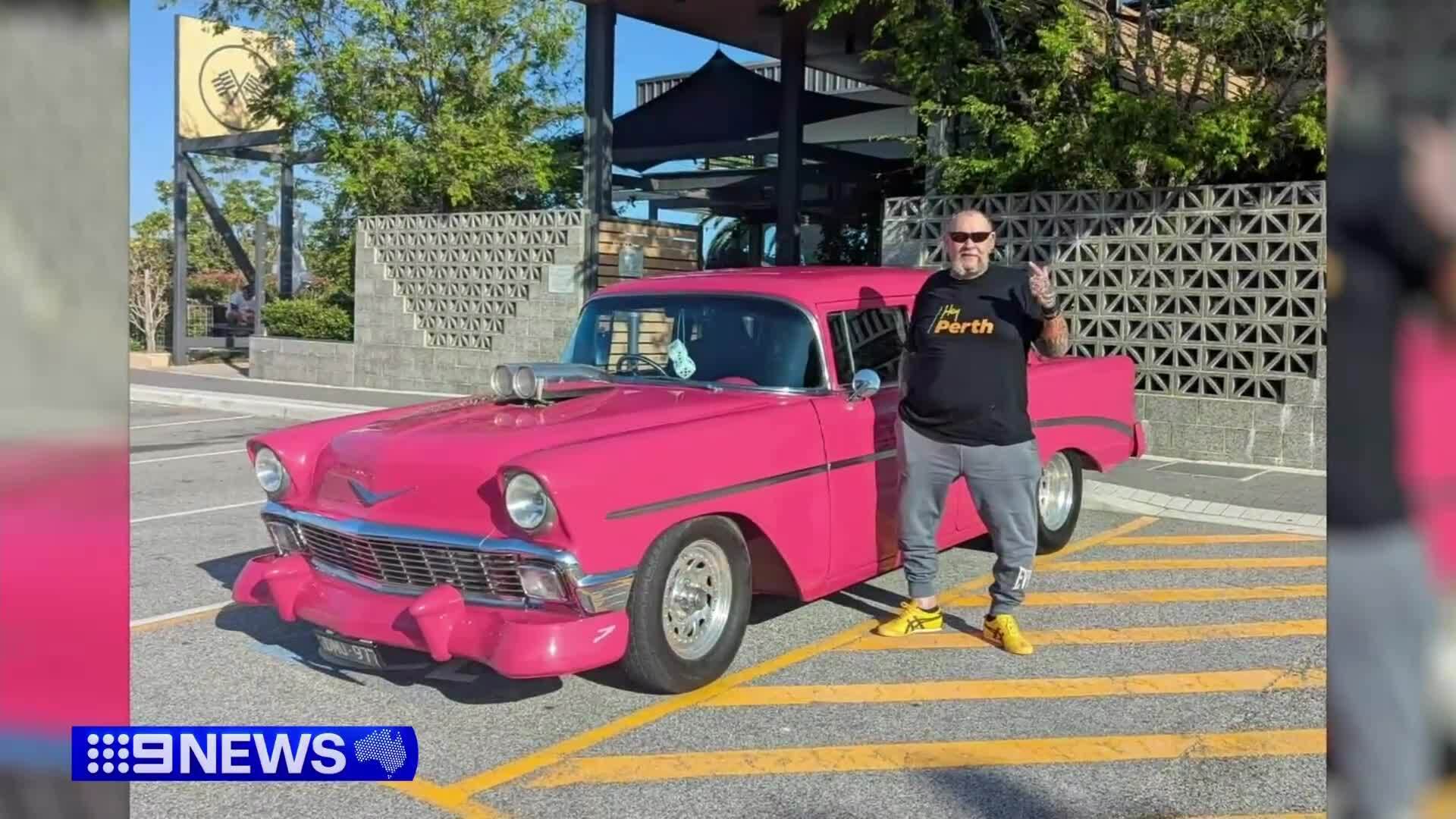
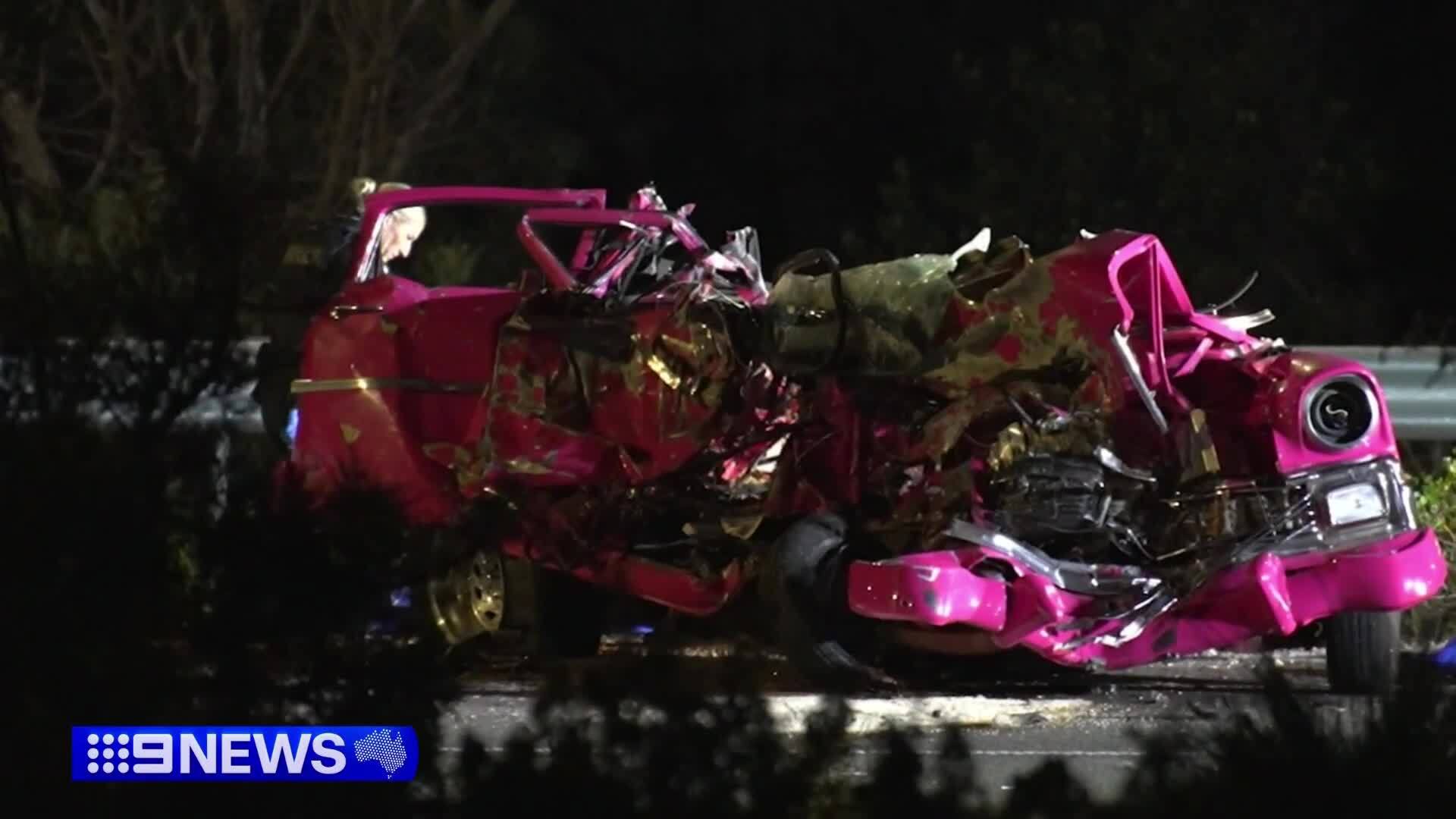
READ MORE: 'Will miss you forever': Tributes to pair killed in crash as driver charged

For those keeping score, the difference now is a billion, which isn't much given the size of the figures: Musk's $US384.2 billion ($578.4 billion) versus $US383.2 billion ($576.9 billion) for Ellison.

The duelling fortunes are so big each could fund the lifestyles of 5 million typical American families for a year, about the entire population of Florida, allowing them to all quit their jobs.

Or they could just tell all of South Africa to take a vacation for year and produce nothing, based on its gross domestic product.

The brief switch in the ranking came after a blockbuster earnings report from Oracle powered by multibillion dollar orders from customers as the artificial-intelligence race heats up.

Musk became the world’s richest person for the first time four years ago.

READ MORE: Married at First Sight star Lachlan Rofe dies suddenly aged 47

A big reason is his stake in a hot, but now cooling, electric car maker, Tesla.

Stock in the company has been moving in the opposite direction of Oracle’s, dropping 14 per cent so far this year.

Musk also controls several private companies, including rocket maker SpaceX, his artificial intelligence company xAI and the former Twitter, now called X.

Ellison owns about 40 per cent of Oracle, which means its surging stock added $150 billion to his net worth in little over a half-hour after the stock market opened.

The night before, after trading had closed, the company announced in an earnings report that it had struck more than $451 billion worth of new deals, including contracts with the OpenAI, Meta, Nvidia and Musk's xAI.

READ MORE: Twenty dead, roads to airport blocked as deadly floods grip Indonesia

It said that it now expects revenue from its cloud infrastructure business to jump 77 per cent to $27 billion this fiscal year then rise to $216 billion in four years after that.

Ellison said in an earnings call that Oracle would not just be making money from its computing centres that help build the next chatbots, but from the day-to-day running of those AI systems to run robots in factories, design drugs in laboratories, place bets in financial markets and automate legal and sales work at companies.

In other words, Ellison's surge in wealth Wednesday morning reflected investor expectations that computers will take over many jobs now done by humans — and Oracle will benefit.

Or as the 81-year-old said on the call, “AI Changes Everything".

Musk is hoping the same for Tesla and his own net worth, but he's been struggling to convince investors.

The company had been promising a big turnaround in electric car sales after they fell sharply earlier this year, but the bounce back hasn't happened.

READ MORE: Woman charged with murder over death of man in Perth

Musk has been downplaying the bad numbers by trying to shift investors' focus to Tesla's other business of making robots and advances in the artificial intelligence behind its cars and robotaxis.

While he keeps talking up the Tesla future, though, the bad news keeps coming.

Tesla sales in the European Union plunged 40 per cent earlier this summer, the seventh month in row of drops, as customers balked at buying his cars after he took to X to support extreme right-wing politicians there.

The company has been losing market share in the US, too, as buyers angry with his embrace of Donald Trump have stayed away from Tesla showrooms.

Oracle stock closed Wednesday at $US328.33, a 36 per cent jump. Tesla was up less than one per cent at $US347.79.

DOWNLOAD THE 9NEWS APP: Stay across all the latest in breaking news, sport, politics and the weather via our news app and get notifications sent straight to your smartphone. Available on the Apple App Store and Google Play.