Tag Archives: oceania

Researchers find oldest written claim that the Shroud of Turin was faked

The Shroud of Turin — a 4.25-metre linen cloth bearing an image of a crucified man — has captivated people for centuries, stirring debate over whether the relic once wrapped the body of Jesus Christ.

For some, the cloth serves as visual proof of Jesus' resurrection; for others, it is merely a medieval relic made by an artist in the 14th century.

Now, researchers have found new evidence that the authenticity of the cloth was disputed in writing earlier than once thought: medieval texts from a respected and influential French philosopher, Nicole Oresme, who alleged around 1370 that the Shroud was faked for the purpose of the church.

READ MORE: Albanese and Trump hold 'warm and constructive' call ahead of US visit

The Shroud of Turin — a 5.25 metre long linen cloth bearing an image of a crucified man — has captivated people for centuries.

These claims appeared in Oresme's collection of writings known as his "Problemata," which are dated between 1355 and 1382, according to the new study published on August 28 in the Journal of Medieval History.

Oresme's Problemata has been well researched — much of the text is even available online —but the philosopher's claims about the Shroud had been overlooked for centuries. It wasn't until lead study author Nicolas Sarzeaud, a researcher in history at the Catholic University Louvain, in Belgium, received the text from a colleague editing an unpublished treatise that he realised the significance of the writing.

"The fact that we have this new testimony on this object is very, very valuable," said Sarzeaud, who is also a fellow of the Villa Medici, a French Academy in Rome. Oresme was an interesting figure, not only for his merit as a scholar and philosopher, but because of his unbiased approach to topics, particularly those involving the church. "In his debates, he tried to be sure that a phenomenon was real before he (discussed it). … he wrote a lot about believing. 'What is believing? And why do we believe in something?'"

Prior to the discovery of Oresme's claims, the oldest known documentation of the Shroud was in a series of documents from 1389 to 1390 written by notable figures such as the former bishop of Troyes, Pierre d'Arcis, who stated that the Shroud was created by an artist.

While researchers like Sarzeaud claim Oresme's text adds to the already plentiful scientific and historical evidence that the Shroud is fake, some remain unconvinced.

Oresme and the Shroud of Turin

According to the 1389 documents, including a letter written by Bishop d'Arcis to the pope, the Shroud of Turin appeared in the Champagne region of France around 1355. The cloth, bearing an image of a naked man with long hair and a beard, as well as reddish-brown stains resembling wounds from crucifixion, quickly became popular. News spread that the fabric was believed to have once wrapped the body of Christ, and the Shroud was said to cause miracles.

Bishops and priests prayed in front of the Shroud of Turin in 2010 in the Cathedral in Turin.

Shortly after, the documents noted, the bishop of Troyes, Henri de Poitiers, announced that the cloth was fraudulent, adding he had met the artist who created the image. About 30 years later, when the cloth began to attract popular attention once more, the following bishop, Pierre d'Arcis, also stated in his letter that the cloth was artwork, and the pope decided soon after that it could continue being on display only as a representation of the true Shroud of Christ.

The cloth moved around several times after that, until it was relocated to Turin, Italy, in 1578. It can still be found there today, at the Cathedral of St. John the Baptist.

Radiocarbon dating, conducted in 1988 by three separate laboratories, dated the fabric between 1260 and 1390, said Andrea Nicolotti, a professor of the history of Christianity and churches at the University of Turin who was not involved with the study but had worked with Sarzeaud previously.

The Shroud shows evidence of being a relic from medieval times, as its patterns are complex and would have required a sufficient loom likely not introduced until the 13th century, added Nicolotti, who is also the author of the 2019 book "The Shroud of Turin: The History and Legends of the World's Most Famous Relic."

"In my opinion, we already have enough information to have settled the debate a long time ago," he said.

"Since no human body can leave that kind of image on the cloth, only two possibilities seem to remain: either it was artificially created by an artist, or it is a miracle," Nicolotti said in an email. "Being able to say that the shroud is the result of a miracle, and that it is proof of the resurrection, is very tempting for some Christians: they think this way they can demonstrate Christ's divinity to the world."

In his Problemata, Oresme recommended caution when assessing alleged miracles, "because many clergy men thus deceive others, in order to elicit offerings for their churches." He cited the Shroud as an example: "There is manifest experience of that in a church in Champagne, where it was said that there was the shroud of the Lord Jesus Christ." Oresme died in 1382, seven years prior to the claims from the bishop of Troyes in the 1389 letter.

Ongoing debate

More than 600 years after its documented discovery, the Shroud of Turin is still being researched and debated. In July, a study from a researcher in Brazil using 3D-modeling software concluded that the image on the cloth is more likely the result of an imprint from a statue rather than from a human body.

Those who believe the Shroud to be authentic, however, argued that the 3D-modeling study was incomplete. Skeptics claimed that the researcher did not factor in findings from the 1978 Shroud of Turin Research Project (STURP) that could disprove the theory of the cloth being artwork, such as a lack of pigment and the details of the blood stains, which are detectable with UV technology.

Cheryl White, the Hubert Humphreys Endowed Professor of History at Louisiana State University at Shreveport, said that the newly examined texts from Oresme do not add much to our understanding of the Shroud and its debated authenticity. White was not involved in the new study.

"This reference points only to something I think historians have always known — that skepticism about the Shroud existed early on," White, who also served as the historical consultant for the original Shroud of Turin exhibition at the Museum of the Bible in Washington, DC, said in an email. "There is no question (Oresme) was one of the leading intellectuals of 14th-century France, a bishop and royal advisor. His skepticism might carry more weight given his standing, but it actually reflects his broader fight against false relics more than drawing upon any direct knowledge he had of the Shroud itself."

"My position is that the Shroud of Turin has defied explanation for centuries. … It is neither falsifiable nor is it reproducible, making it an ongoing mystery," White added. "We need both more historical documents and the most advanced scientific testing; however, the Shroud may never be 'put to rest' — its enduring mystery is what makes it so compelling."

Sarzeaud believes the document is significant because it shows how the Shroud was perceived in the 14th century. But like many other researchers, he acknowledges that additional research would be beneficial to understand more about the Shroud and how it was made: "I think the problem is that everything and its opposite has been written about the Shroud of Turin, so that it has become possible to pick and choose what we like and what we don't like."

‘Could have been us’: City reels from funicular tragedy

Investigators have sifted through the wreckage of a streetcar in downtown Lisbon, trying to determine why the popular tourist attraction derailed during the busy summer season, killing 16 people and injuring 21, five of them seriously.

Portugal's attorney-general's office said on Thursday that eight victims had been identified so far: five Portuguese, two South Koreans and a Swiss person. The identities of the other eight were still to be determined, it said in a statement.

The Elevador da Gloria came off its rails during the evening rush hour on Wednesday when it was packed with locals and international tourists. Lisbon hosted about 8.5 million tourists last year, and long lines of people typically form for the short and picturesque trip a few hundred metres up and down a city street.

READ MORE: Four winners split $80 million Powerball jackpot

"This tragedy … goes beyond our borders," Prime Minister Luis Montenegro said at his official residence, calling it "one of the biggest tragedies of our recent past". Portugal observed a national day of mourning on Thursday.

The electric streetcar, also known as a funicular, is harnessed by steel cables and can carry more than 40 people. On Thursday, officials took photographs and pulled up cable from beneath the rails that climb one of the Portuguese capital's steep hills.

Officials declined to comment on whether a faulty brake or a snapped cable may have prompted the descending streetcar to careen into a building where the steep road bends.

"The city needs answers," Lisbon Mayor Carlos Moedas said in a televised statement, adding that talk of possible causes is "mere speculation".

READ MORE: Tributes for student after tragic ski resort death

Operator says the streetcar was inspected daily

Police, public prosecutors and government transport experts are investigating the crash, Montenegro told reporters. The government's Office for Air and Rail Accident Investigations said it had concluded its analysis of the wreckage and would issue a preliminary report on Friday.

The company that operates Lisbon's streetcars and buses, Carris, said it has opened its own internal investigation.

The streetcar, which has been in service since 1914, underwent a scheduled full maintenance program last year and also underwent 30-minute visual inspections every day, Carris' CEO Pedro de Brito Bogas said during a news conference on Thursday.

The streetcar was last inspected nine hours before the derailment, he said, but he didn't detail the visual inspection nor specify when questioned whether all the cables were tested.

The mayor said he would also ask for an investigation from an outside independent body, but didn't elaborate.

READ MORE: How a council overcharged ratepayers almost $1 million

Tourists and locals ride the 19th century streetcar

Lisbon's Civil Protection Agency said earlier on Thursday that the death toll had risen to 17. It later corrected that to 16, citing a duplication of available information.

All the dead were adults, Margarida Castro Martins, head of Lisbon's Civil Protection Agency, told reporters. She didn't provide their identities, saying their families would be informed first.

The transport workers' trade union SITRA said that the streetcar's brakeman, André Marques, was among the dead.

The injured include men and women between the ages of 24 and 65, and a three-year-old child, Castro Martins said. Among them are Portuguese people, as well as two Germans, two Spaniards and one person each from France, Italy, Switzerland, Canada, Morocco, South Korea and Cape Verde, she said.

The range of nationalities reflects how big a draw the renowned 19th-century streetcar is for tourists and locals alike.

The Australian government was making "urgent enquiries" and assisting one citizen following the crash, the Department of Foreign Affairs told 9news.com.au on Wednesday.

'It could have been us'

Felicity Ferriter, a 70-year-old British tourist, had just arrived with her husband at a hotel near the crash site and was unpacking her suitcase when she heard "a horrendous crash".

"We heard it, we heard the bang," she told The Associated Press outside her hotel.

The couple had seen the streetcar when they arrived and intended to ride on it the next day.

"It was to be one of the highlights of our holiday," she said, adding: "It could have been us."

Witness Teresa d'Avó told Portuguese television channel SIC that it looked like the streetcar had no brakes.

"It hit the building with brutal force and fell apart like a cardboard box," she said, describing how passersby scattered into the middle of the nearby Avenida da Liberdade, or Freedom Avenue, the city's main thoroughfare.

Francesca di Bello, a 23-year-old Italian tourist on a family vacation, had been on the Elevador da Gloria just hours before the derailment.

They walked by the crash site on Thursday, expressing shock at the wreckage. Asked if she would ride a funicular again in Portugal or elsewhere, Di Bello was emphatic: "Definitely not."

Service halted as inspections ordered

The service, inaugurated in 1885, runs between Restauradores Square and the Bairro Alto neighbourhood renowned for its nightlife. The Elevador da Gloria is classified as a national monument.

Lisbon's City Council halted operations of three other famous funicular streetcars in the city while immediate inspections were carried out.

European Union flags at the European Parliament and European Commission in Brussels flew at half-staff. Multiple EU leaders expressed their condolences on social media.

DOWNLOAD THE 9NEWS APP: Stay across all the latest in breaking news, sport, politics and the weather via our news app and get notifications sent straight to your smartphone. Available on the Apple App Store and Google Play.

Four winners split $80 million Powerball jackpot

Four entries have split the $80 million Powerball jackpot.

The winning numbers for draw 1529 tonight were 9, 22, 23, 3, 13, 28 and 32 with a Powerball of 5.

Lottery organisers were yet to reveal if the winners were individuals or syndicates.

Another 43 winning entries claimed a slice of the $1.3 million division two prize pool.

More to come.

Four more men charged over alleged neo-Nazi attack on sacred Indigenous site

Police have charged four more men after neo-Nazis allegedly stormed a sacred Indigenous encampment site in Melbourne on Sunday.

A group was filmed charging towards Camp Sovereignty in Kings Domain about 5pm, after thousands marched in anti-immigration protests in the CBD.

The neo-Nazis allegedly attacked the Indigenous group, including young women, snatched flags, and damaged property.

READ MORE: 'If we go missing': Moment pilot discovered Chinese navy drills revealed

Camp Sovereignty in Kings Domain where people who had just finished performing and observing a weekly ceremony and celebration of culture were attacked by Neo-Nazi's after the March for Australia event.

Prominent neo-Nazi and white nationalist Thomas Sewell, who has since been charged, was seen in the crowd during the charge.

Police today charged four more men, who are alleged to have assaulted people at Camp Sovereignty.

A 29-year-old man from Rye has been charged with violent disorder, affray, unlawful assault and discharging a missile.

He was remanded in custody and faced the Melbourne Magistrates Court today. 

Another 29-year-old man, who is homeless, has been charged with violent disorder, affray, unlawful assault and discharging a missile and will appear at the same court tomorrow.

READ MORE: Australian retailers selling cots that fail basic safety tests, consumer watchdog finds

A 31-year-old man from Mitcham has been charged with violent disorder, affray and assault with a weapon and was bailed to front court on Tuesday.

A 34-year-old man from Werribee has been charged with violent disorder, affray, assault by kicking and committing an indictable offence on bail.

He was bailed to appear in court also on Tuesday.

Three other men, aged 20, 23 and 32, were charged earlier this week in relation to the alleged attack.

Camp Sovereignty and Black Peoples Union said four people were injured in the incident on Sunday.

The incident was labelled as "appalling" by Deputy Premier Ben Carroll and "gutless" by Police Minister Andrew Carbines.

Detectives are continuing to investigate and identify everyone involved. Anyone with information is urged to contact Crime Stoppers on 1800 333 000.

DOWNLOAD THE 9NEWS APP: Stay across all the latest in breaking news, sport, politics and the weather via our news app and get notifications sent straight to your smartphone. Available on the Apple App Store and Google Play.
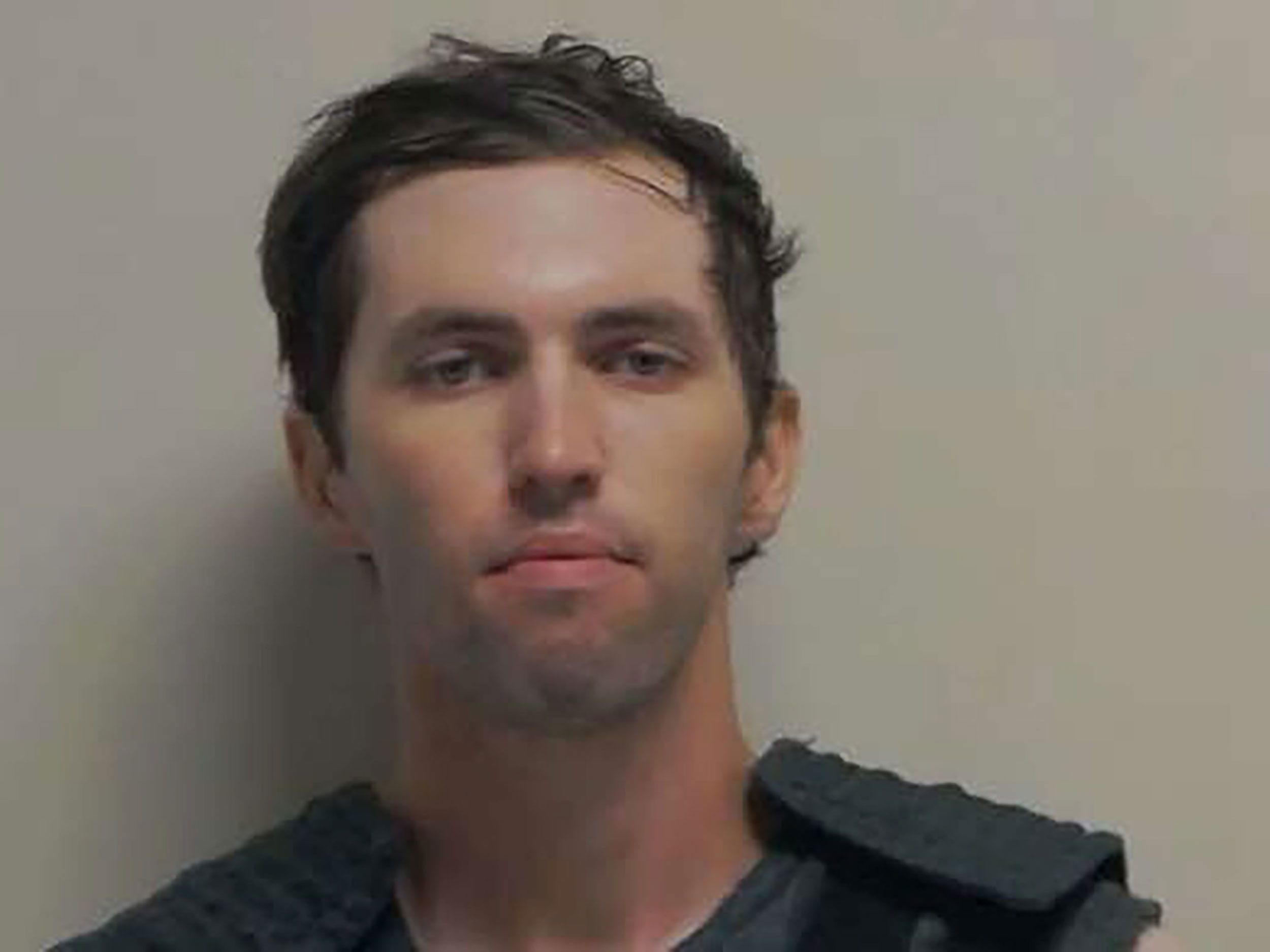
More officers deployed to search for accused gunman ahead of slain cop’s funeral

Victoria Police are deploying more officers to search for accused gunman Dezi Freeman in the Porepunkah area as colleagues of the slain constable prepare for his funeral.

Heavily armed police have been scouring through the 56-year-old's home and the surrounding bushland for the past 10 days.

Colleagues of Senior Constable Vadim De Waart-Hottart, who was allegedly gunned down by Freeman, will be able to attend his funeral at the police academy in Glen Waverley tomorrow.

READ MORE: Multiple dead, dozens injured after funicular crash in Portugal

Porepunkah police during manhunt for Dezi Freeman

The search for Freeman will not be affected as extra officers will be brought in to Porepunkah to help.

A funeral is being organised for the second officer killed, Neal Thompson.

Police asked travellers heading to Bright, Falls Creek or Mount Hotham in Victoria's high country earlier today to avoid the area and take different routes.

Crews from the Specialist Operations Group, Fugitive Squad and VIPER taskforce make up the "intense" police presence across Porepunkah and beyond.

"The advice for the local community remains the same – stay vigilant around your surroundings, report anything suspicious, and if you see Desmond, call triple zero immediately," Victoria Police said.

Defence Minister Richard Marles confirmed earlier this week that military assets, including a planning specialist and aerial surveillance, would join the police manhunt.

A retired Australian Defence Force general today said the military's experience in operating in "jungle country" could prove helpful in the ongoing bushland search for Freeman.

READ MORE: Road worker fighting for life after hit and run in Queensland

Former major general Mick Ryan told Today such situations happened "reasonably frequently".

"Normally the Australian Defence Force comes in when there's disaster relief, whether it's the aftermath of floods, fires – and these kind of events, it's less frequent to come in under this, defence aid to the civil power arrangements, to police," he said.

"But it's certainly not unprecedented. And the Australian Constitution and federal law allows for such support to take place."

READ MORE: 'Lisbon is in mourning': At least 15 killed in Portugal streetcar crash

Police search a plantation at Porepunkah.

He said the ADF's assistance was in support and planning, rather than taking the lead.

"I mean, we have a lot of people experienced in operating this kind of close, almost jungle country," he said.

"The minister also mentioned this aerial surveillance that might be provided.

"So, you know, this is very much a support role. It's not about troops on the ground."

READ MORE: 'Ketamine Queen' pleads guilty to selling fatal dose to Matthew Perry

Porepunkah shooting

But he warned that military assets wouldn't necessarily be decisive.

"Well, it looks like pretty tough country there. I think it also shows that, you know, we've got this expectation from the war in Ukraine that drones allow us to see everything," he said.

"Well, in this kind of country, that's not quite the case. It's a pretty tough operation ahead for the police, I think."

Freeman's wife was at property

Freeman's wife Amalia, who has previously called on her husband to turn himself in, was at the property when officers Neal Thompson and Vadim De Waart-Hottart were shot dead and a third police officer was injured while executing a search warrant related to historical sex offences.

Crime Command Detective Superintendent Jason Kelly said yesterday Ms Freeman could face charges of obstructing police "in due course".

"She has been interviewed by Victoria Police for obstructing police at the time of the incident the crime that occurred, and a brief of evidence will be compiled, and she may be charged in due course," Kelly said.

Ms Freeman, in a statement through her lawyer, spoke of her "deep sorrow" at the deaths of the two police officers and said she did not hold anti-authority views.

DOWNLOAD THE 9NEWS APP: Stay across all the latest in breaking news, sport, politics and the weather via our news app and get notifications sent straight to your smartphone. Available on the Apple App Store and Google Play.
Using your phone on the toilet could bring a very painful result

We can now add "sitting on the dunny" to the growing list of things smartphones and social media are helping to ruin.

A new study out of the US found that people who used their phone while sitting on the toilet had a significantly higher risk of developing haemorrhoids.

Cethan Ramprasad and colleagues, from Beth Israel Deaconess Medical Centre, reported that out of their survey participants, 66 per cent reported using smartphones on the toilet, and they tended to be younger than non-users.

READ MORE: Multiple dead, dozens injured after funicular crash in Portugal

After statistically accounting for other factors thought to possibly be linked with hemorrhoid risk – such as exercise habits, age, and fibre intake – the researchers found that participants who used a smartphone on the toilet had a 46 per cent higher risk of hemorrhoids than non-users.

Strictly speaking, it's not the phone itself that's the issue, but the increased amount of time users spend on the porcelain throne while staring at the screen.

"It's incredibly easy to lose track of time when we're scrolling on our smartphones—popular apps are designed entirely for that purpose," study senior author Trisha Pasricha said.

READ MORE: Danielle was given just months to live. Then came a glimmer of hope

"But it's possible that constantly sitting longer on the toilet than you intended because you're distracted by your smartphone could increase your risk of hemorrhoids.

"We need to study this further, but it's a safe suggestion to leave the smartphone outside the bathroom when you need to have a bowel movement."

Dr Jarrah Dowrick, research fellow with the Gastrointestinal Research Group at the Auckland Bioengineering Institute at the University of Auckland, was sceptical of the direct phone link but said the result was an "important finding".

READ MORE: Nukes, lasers and 'robot wolves' on show as China flexes military might

"While the reality of modern screen addiction does make the smartphone narrative more compelling, the real story here is that spending longer on a seated toilet appears to be linked with haemorrhoid presentation," he said.

"Phone or no, this study suggests limiting each visit to the toilet to five minutes when possible."

Victoria University digital wellness expert Dr Alex Beattie said the study provided another example of how smartphones had infiltrated every corner of people's lives.

"It's quite telling that the study found men were more likely than women to use their phones on the toilet, though this difference wasn't statistically significant," Beattie said.

"Still, it reflects a broader truth of this digitally saturated era – that smartphones are often used as a form of escape: from parenting, from domestic routines, and sometimes from other people."

DOWNLOAD THE 9NEWS APP: Stay across all the latest in breaking news, sport, politics and the weather via our news app and get notifications sent straight to your smartphone. Available on the Apple App Store and Google Play.
Kiwi-born neo-Nazi an ‘awful human’ but Australia’s problem: NZ PM

New Zealand Prime Minister Christopher Luxon has labelled neo-Nazi Thomas Sewell an awful human being but has stopped short of commenting on a push to deport him from Australia to his native country.

More than 100,000 people have signed an online petition calling on the Australian government to strip Sewell of his citizenship and send him to New Zealand, where he was born, after he allegedly led an attack on Camp Sovereignty, a sacred Indigenous site in Melbourne, following Sunday's anti-immigration protests.

When asked about the petition today, Luxon said it was a matter for Australia.

READ MORE: 'If we go missing': Moment pilot discovered Chinese navy drills revealed

Thomas Sewell

"Well, he sounds like a pretty awful human being," Luxon said.

"He's an Australian citizen, so I'll let that run its course."

Sewell, the leader of neo-Nazi group the National Socialist Network, was born in New Zealand but served in the Australian Army from 2012-2014 and has been a prominent figure in far-right, white supremacist movements in Australia for about a decade.

Under the Citizenship Act, the immigration minister can apply for a court order to revoke someone's Australian citizenship if they have been convicted of a serious offence, been sentenced to at least three years in jail, and their conduct is "so serious … that it demonstrates that the person has repudiated their allegiance to Australia".

The 32-year-old Sewell is currently facing 25 charges over the Camp Sovereignty incident – which occurred while he was already on bail – including violent disorder and affray.

READ MORE: Daniel Andrews calls himself 'old friend' of China in resurfaced state media interview

AUCKLAND, NEW ZEALAND - MAY 08: New Zealand Prime Minister Christopher Luxon makes a pre-budget speech to BusinessNZ  at the Pullman Hotel on May 08, 2025 in Auckland, New Zealand. Luxon spoke to the business community ahead to the government delivering its budget. (Photo by Phil Walter/Getty Images)

Police are seeking to keep him in custody while he faces those charges, arguing at a court hearing that Sewell's behaviour "in recent times has been escalating in violence".

"He is their (the National Socialist Network's) leader and has complete control. He has shown he has a large group of followers who will attack on instruction," Detective Senior Constable Saer Pascoe told a court on Wednesday.

Sewell had also been arrested and interviewed over an incident on August 9, for which he has been charged with assault and committing an offence while on bail, the court heard.

Sewell will fight all charges against him and his lawyer has claimed he is the subject of a "political attack".

A decision on Sewell's bail will be handed down tomorrow.

9News.com.au has contacted Immigration Minister Tony Burke's office for comment about the petition to deport Sewell.

DOWNLOAD THE 9NEWS APP: Stay across all the latest in breaking news, sport, politics and the weather via our news app and get notifications sent straight to your smartphone. Available on the Apple App Store and Google Play.

Skier who died at Thredbo named as university student

A university student has been identified as the skier who died at a popular NSW ski resort early this week.

Sean Forrest died at Thredbo in a skiing accident after his event at the UniSport Snow Nationals on Tuesday.

The 22-year-old's former high school, Brisbane Grammar School, offered its condolences to Forrest's family and friends in a statement.

READ MORE: Footy icon attacked with crowbar, screwdriver in Melbourne home invasion

Sean Forrest with his parents Michael Forrest and Angie Ryan.

"Sean's grit and have-a-go spirit saw him achieve a long list of academic and cocurricular accomplishments," a school spokesperson said.

"As a talented and versatile sportsman, he excelled in rowing, chess, fencing, debating, rugby and cross country.

"He performed in many concert bands and percussions ensembles, and in the senior dramatic production.

READ MORE: Hot mic captures bizarre conversation between Xi and Putin

A Thredbo spokesperson said resort staff were "deeply saddened by the tragic passing".

"In his final year, he was a form senior and was much-admired by the junior boys he cared for.

"His big heart, ability to light up a room and passion to help others made him a wonderful teammate and an even better friend.

"The school shares its deepest condolences with Sean's parents Michael Forrest and Angie Ryan, his two brothers Jude and Dominic, and their extended family and friends."

A Thredbo spokesperson said resort staff were "deeply saddened by the tragic passing".

"Emergency services were engaged with Thredbo Ski Patrol and a Thredbo medical centre doctor promptly attending the scene," the spokesperson said.

"The Thredbo community extends its heartfelt condolences to family and friends during this incredibly difficult time."

The death comes just three weeks after snowboarder Drew Youngquist was killed in a crash at Perisher Ski Resort on August 12.

The 22-year-old died after falling on advanced terrain at the Front Valley terrain park.

Police will prepare a report for the coroner.

DOWNLOAD THE 9NEWS APP: Stay across all the latest in breaking news, sport, politics and the weather via our news app and get notifications sent straight to your smartphone. Available on the Apple App Store and Google Play.