Tag Archives: oceania

The world’s most important currency is suddenly sliding backwards

The Australian dollar is enjoying a resurgence as of late, but it's not down to anything special about our local currency.

In fact, plenty of currencies are performing strongly in 2025, thanks to one surprising laggard: the US dollar.

This week, the greenback chalked up its worst opening half of a year in more than half a century, dropping 10.7 per cent over the six months to June 30.

READ MORE: Trump trade war blamed for surprise shrinking of US economy

US dollars.

Not since 1973, when it fell 15 per cent, has it had a weaker start to the year.

The US dollar has been the dominant currency across the globe since the end of World War II, currently used for about 90 per cent of all foreign exchange transactions.

So what's causing it to go backwards?

In part, it's a bit of a correction.

"Given the strength in the US dollar in recent years, it has looked overvalued (based on purchasing power parity), especially since the pandemic," AMP deputy chief economist Diana Mousina wrote early this week.

"So the recent depreciation is probably… a normalisation closer to fair value."

But there are concerns the slide could continue, and in a year when the dominant finance story has been the tariffs thrown around by the White House, it will come as little surprise that Donald Trump is playing a key role.

READ MORE: The 'grown-up conversation' we need to have about the GST

A hit to US GDP from those tariffs is weighing on investors, as are concerns about debt levels linked to the president's "Big Beautiful Act", and his more America-first approach to foreign policy.

There are also longer-term factors at play – in a more polarised world, the proportion of US dollars in foreign exchange reserves has shrunk from about 70 per cent two decades ago to a tick under 60 per cent today.

All are contributing to concerns that it's no longer the reliable, safe-haven currency it once was.

"If you cannot with certainty take a view on the position of the US administration, it's hard to commit capital," Arun Sai, a strategist at Pictet Asset Management, said.

"What we've seen with the current administration in the last few months is that this notion of the US being a default destination for global capital is being challenged."

But another significant issue for the greenback is what Trump's been saying about US Federal Reserve Chairman Jerome Powell, who on Thursday (Australian time) admitted he would likely have cut interest rates were it not for the White House's tariffs.

READ MORE: Retirement crisis coming for millions of Aussies

Republican presidential nominee former President Donald Trump speaks at a campaign rally at Van Andel Arena, Tuesday, Nov. 5, 2024, in Grand Rapids, Mich.

In Australia, you'll pretty much never hear Treasurer Jim Chalmers say "Reserve Bank" without uttering "the independent" first.

Trump has no such qualms about trying to influence his central bank, having constantly belittled Powell in an attempt to get him to lower interest rates, and therefore make borrowing cheaper for the government.

The president has variously labelled Powell "a total and complete moron", "stupid", "a dumb guy", "average mentally", "a very stupid person", and "low IQ for what he does" – and that's just in the last two weeks.

He's also sent a handwritten note to the Fed demanding ultra-low interest rates, saying the US's cash rate should be "1 per cent… or better".

It's currently above 4 per cent.

Trump has threatened to fire Powell – who he actually appointed during his first term before an extension by Joe Biden – and called for him to resign, and said last week that he already has a shortlist of replacements, fuelling speculation he could announce a successor well before Powell's term expires next year.

READ MORE: Urgent warnings as deepfake videos used to peddle "snake oil" to consumers

A trader works on the floor of the New York Stock Exchange (NYSE) in New York City, on April 4.

That would be a "terrible idea", AGF Investments chief US policy strategist Greg Valliere said, as it would be "sure to annoy and confuse the financial markets if there are two Fed chairs".

"The damage to the Fed's independence would be considerable if Trump becomes a monetary back-seat driver, second-guessing Fed policies," he said.

It's those independence concerns that are proving detrimental to the US dollar. 

"One of the key foundations of the strong dollar, of the dollar as a dominant currency globally, is to have an independent central bank," ING foreign exchange strategist Francesco Pesole said.

"So, if [global investors] feel there is greater influence of politics into the Fed's decisions, then they are pricing in a greater risk for the dollar."

That said, there's no obvious replacement for the greenback as the world's international currency, despite a host of countries including China, Russia, India, Brazil, Indonesia and South Africa wanting one.

"There has been talk about these countries using a new currency called 'The Unit', which would be… a digital currency on the blockchain," Mousina wrote.

READ MORE: Some Aussies charge $850 a month for side hustle that may be illegal

"But setting up a potential new currency faces many hurdles, particularly from the Western world that dominates the financial markets and global payments system."

There could be a little more good news for Australian travellers to the US, with AMP forecasting the Aussie dollar will buy just under 70 cents by mid-to-late next year.

But against other currencies, it's likely to remain fairly stable, and the greenback's slide – if it continues – could have complex and far-reaching consequences.

"If the US dollar loses its safe-haven status, then the Australian dollar may fall less in times of uncertainty," Mousina said.

"[This] will impact its role as a shock absorber for the Australian economy (like when it fell in the GFC and pandemic, which boosted our exports and supported the economy).

"This may put more pressure on the RBA to support growth in time of global shocks."

– With CNN

DOWNLOAD THE 9NEWS APP: Stay across all the latest in breaking news, sport, politics and the weather via our news app and get notifications sent straight to your smartphone. Available on the Apple App Store and Google Play.
What we know about the rare bat virus that has claimed a fourth life

Australia has recorded its fourth death of the bat lyssavirus — a very rare and fatal virus that can lay dormant for years.

Health authorities yesterday confirmed a man, aged in his 50s, from northern New South Wales had died several months after being hospitalised with a bite. 

It is the fourth case in Australia and the first in New South Wales. Here's everything we know about the virus.

READ MORE: The email six million Australians should expect from Qantas

What is Australian bat lyssavirus?

Australian bat lyssavirus (ABLV) is a very rare virus that circulates in bats and is closely related to rabies.

It can spread to humans if they are bitten or scratched, or if bat saliva comes in contact with the eyes, nose, mouth or any broken skin.

"To infect a human, the virus needs to pass from the bat's saliva into a wound in the skin," University of Sydney's wildlife disease ecologist Dr Alison Peel said.

There is no risk if you live or walk near a bat roosting area. 

ABLV was first identified in 1996 and there has only been four cases since; three in Queensland and one in New South Wales.

It has not been found in bats outside of Australia but overseas bats can carry other forms of lyssaviruses, including rabies.

Do all Australian bats carry lyssavirus?

Any bat in Australia, including flying foxes, fruit bats and insect-eating ​microbats, can potentially carry ABLV.

But, according to Peel, the number of bats infected by the virus is typically very low. 

"Studies have looked for the virus in thousands of healthy bats and failed to find it," she said.

READ MORE: Police believe men found dead in Sydney home died at different times

How to tell if a bat has lyssavirus?

It is hard to tell whether a bat is carrying the virus, as they do not appear or behave any differently than an uninfected bat.

"Like humans and other animals, infected bats may become sick and die, however, some bats may appear unaffected," Peel said.

"So, you can't always tell just by looking at a bat whether it's infected or not."

What are the symptoms of Australian bat lyssavirus? 

Symptoms are similar to those caused by rabies and can start off like the flu.

This may include a headache, fever and fatigue.

The illness can rapidly progress to paralysis, delirium, seizures and death typically within one to two weeks.

It is also hard to tell when you contracted the virus as symptoms can start anytime from a few days to several years after infection. 

READ MORE: Stinky town notices an improvement after expert sniffs out source of odour

How soon after a bat bite do you need treatment?

ABLV can be fatal if it is not treated immediately.

Health Direct advises anyone who is scratched or bitten by a bat to wash the wound with soap and water for at least 15 minutes, apply an antiseptic with an anti-virus action and get medical help as soon as possible.

ABLV does not have its own vaccine but can be treated with a combination of rabies immunoglobulin and rabies vaccinations.

There is no treatment for the virus once symptoms have started.

"It is incredibly rare for the virus to transmit to humans, but once symptoms of lyssavirus start in people who are scratched or bitten by an infected bat, sadly there is no effective treatment," NSW Health Director in Health Protection Keira Glasgow said.

How do you prevent Australian bat lyssavirus? 

The simple answer is to avoid touching any bats.

Only trained, protected and vaccinated wildlife handlers should be interacting with bats.

DOWNLOAD THE 9NEWS APP: Stay across all the latest in breaking news, sport, politics and the weather via our news app and get notifications sent straight to your smartphone. Available on the Apple App Store and Google Play.
Kyiv hammered in largest missile and drone barrage since war began

Waves of drone and missile attacks targeted Kyiv overnight into Friday in the largest aerial assault since Russia's invasion of Ukraine began more than three years ago, officials said, amid a renewed Russian push to capture more of its neighbour's land.

The barrage killed one person and wounded at least 26 others, including a child, and inflicted severe damage across multiple districts of the capital in a seven-hour onslaught, authorities said.

Blasts lit up the night sky and echoed across the city as air raid sirens wailed.

READ MORE: Putin and Trump discuss Iran and Ukraine in phone call, Kremlin says

Kyiv, Ukraine

The blue lights of emergency vehicles reflected off high-rise buildings, and debris blocked city streets.

"It was a harsh, sleepless night," Ukrainian President Volodymyr Zelenskyy said.

Russia has been stepping up its long-range attacks on Ukrainian cities. Less than a week ago, Russia launched what was then the largest aerial assault of the war.

That strategy has coincided with a concerted Russian effort to break through parts of the roughly 1000-kilometre front line, where Ukrainian troops are under severe pressure.

Russia launched 550 drones and missiles across Ukraine during the night, the country's air force said. The majority were Shahed drones, but Russia also launched 11 missiles in the attack.

Alya Shahlai, a 23-year-old Kyiv wedding photographer, said that her home was destroyed in the attack.

"We were all in the [basement] shelter because it was so loud, staying home would have been suicidal," she told The Associated Press.

Kyiv, Ukraine

"We went down 10 minutes before and then there was a loud explosion and the lights went out in the shelter, people were panicking."

Five ambulances were damaged while responding to calls, officials said, and emergency services removed more than 300 tons of rubble.

Trump 'not happy' with Russia's attacks

The attack on Kyiv began the same day a phone call took place between US President Donald Trump and Russian President Vladimir Putin.

On Friday, Trump and Zelenskyy had a "very important and meaningful" conversation by phone, said Andriy Yermak, the head of Ukraine's presidential office. He said that details of the talks would be provided later.

US-led international peace efforts have been fruitless so far. Recent direct peace talks have led only to sporadic exchanges of prisoners of war, wounded troops and the bodies of fallen soldiers. No date has been set for further negotiations.

Kyiv, Ukraine

Ukrainian officials and the Russian Defence Ministry said another prisoner swap took place on Friday, though neither side said how many soldiers were involved.

Zelenskyy said most of the Ukrainians had been in Russian captivity since 2022. The Ukrainian soldiers were classified as "wounded and seriously ill".

When asked if he made any progress during his call with Putin on a deal to end the fighting in Ukraine, Trump said: "No, I didn't make any progress with him today at all."

"I'm very disappointed with the conversation I had today with President Putin because I don't think he's there. I don't think he's looking to stop [the fighting], and that's too bad," Trump said.

According to Yuri Ushakov, Putin's foreign affairs adviser, the Russian leader emphasised that Moscow will seek to achieve its goals in Ukraine and remove the "root causes" of the conflict.

"Russia will not back down from these goals," Ushakov told reporters after the call.

Russia's army crossed the border on February 24, 2022, in an all-out invasion that Putin sought to justify by falsely saying it was needed to protect Russian-speaking civilians in eastern Ukraine and prevent the country from joining NATO. Zelenskyy has repeatedly called out Russian disinformation efforts.

Pentagon halts deliveries of air defence missiles

The US has paused some shipments of military aid to Ukraine, including crucial air defense missiles. Ukraine's main European backers are considering how they can help pick up the slack. Zelenskyy says plans are afoot to build up Ukraine's domestic arms industry, but scaling up will take time.

The Ukrainian response needs to be speedy as Russia escalates its aerial attacks. Russia launched 5438 drones at Ukraine in June, a new monthly record, according to official data collated by The Associated Press.

Kyiv, Ukraine

Ukrainian Foreign Minister Andrii Sybiha said earlier this week that Russia also launched more than 330 missiles, including nearly 80 ballistic missiles, at Ukrainian towns and cities that month.

Throughout the night, AP journalists in Kyiv heard the constant buzzing of drones overhead and the sound of explosions and intense machine gun fire as Ukrainian forces tried to intercept the aerial assault.

"Absolutely horrible and sleepless night in Kyiv," Sybiha wrote on social media platform X.

"One of the worst so far."

Ukraine's Economy Minister Yuliia Svyrydenko described "families running into metro stations, basements, underground parking garages, mass destruction in the heart of our capital".

Kyiv, Ukraine

"What Kyiv endured last night, cannot be called anything but a deliberate act of terror," she wrote on X.

Kyiv was the primary target of the countrywide attack. At least 14 people were hospitalised, according to Kyiv Mayor Vitali Klitschko.

Zelenskyy called the Kyiv attack "cynical." In Moscow, the Defence Ministry claimed its forces targeted factories producing drones and other military equipment in Kyiv.

Russia strikes 5 Ukrainian regions

Ukrainian air defenses shot down 270 targets, including two cruise missiles. Another 208 targets were lost from radar and presumed jammed.

Russia successfully hit eight locations with nine missiles and 63 drones. Debris from intercepted drones fell across at least 33 sites.

In addition to the capital, the Dnipropetrovsk, Sumy, Kharkiv, Chernihiv and Kyiv regions also sustained damage, Zelenskyy said.

Emergency services reported damage in at least five of Kyiv's 10 districts.

DOWNLOAD THE 9NEWS APP: Stay across all the latest in breaking news, sport, politics and the weather via our news app and get notifications sent straight to your smartphone. Available on the Apple App Store and Google Play.
Teenagers allegedly behind wheel of stolen car at 180km/h on M1

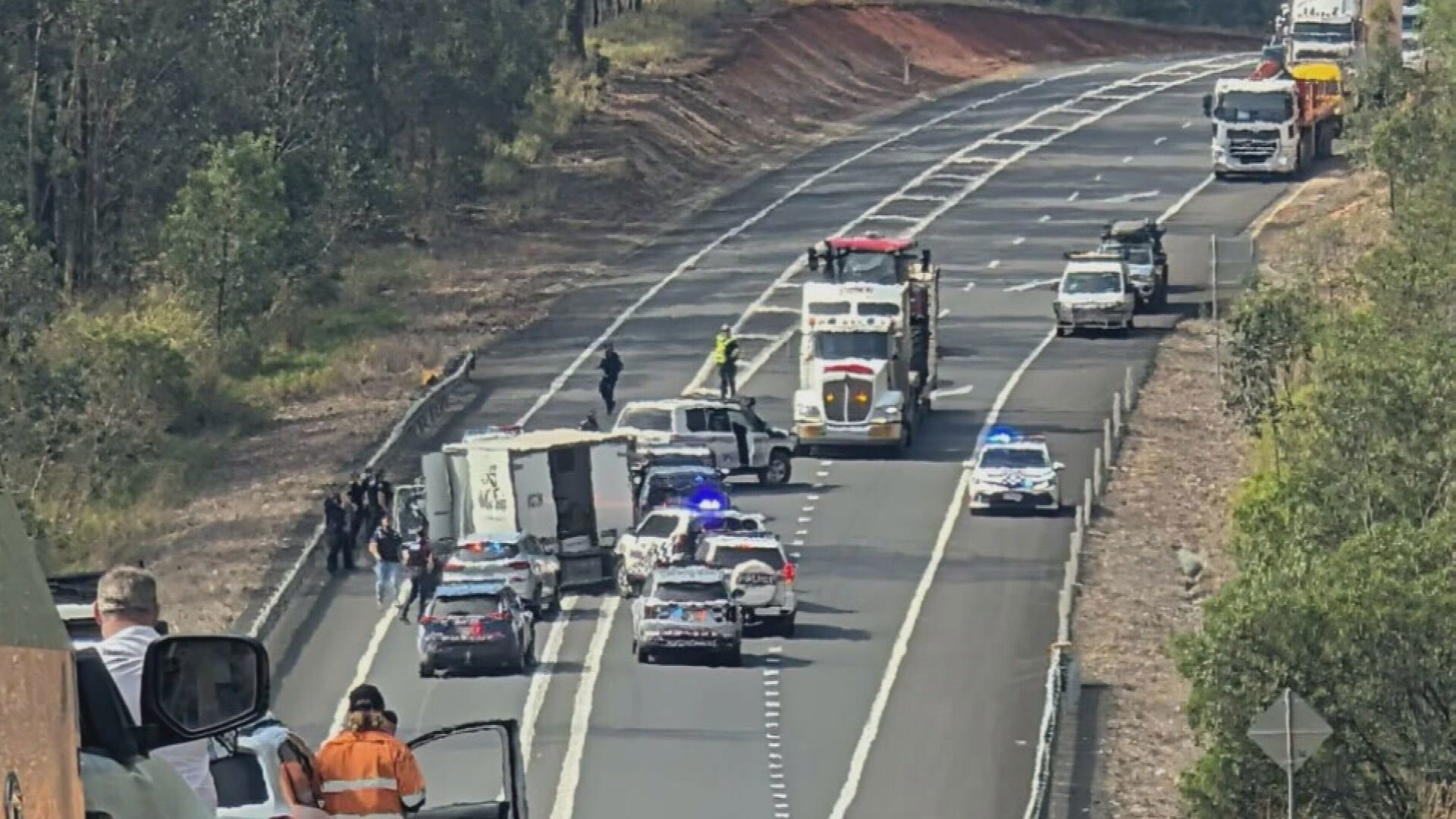
Two teenagers have been arrested after allegedly stealing a car from a shopping centre car park and leading police on a chase from Logan to Pimpama on the Gold Coast.

The Mazda 3 was allegedly stolen from Logan Central in Browns Plains between 7pm and 8pm yesterday.

It was later allegedly spotted driving dangerously along the Pacific Motorway southbound, at speeds of up to 180 km/h before taking the exit at Yatala.

READ MORE: Trump wants to celebrate 250 years of independence with UFC fight at White House

Pimpama crash

Police deployed spikes at Pimpama just before 10pm but the car continued, before eventually coming to a stop at Mimbeena Drive at Ormeau, where police say a young boy and a young man began running from officers.

A 14-year-old and an 18-year-old were arrested a short time later with the help of the dog squad.

A 14-year-old Logan Central boy has been charged with unlawful use of a motor vehicle, dangerous operation of a vehicle and driving unlicensed and was expected to appear before Southport Children's Court today.

Pimpama crash

An 18-year-old Alberton man has been charged with unlawful use of a motor vehicle and possession of dangerous drugs and is due to appear at Southport Magistrates Court on July 17.

DOWNLOAD THE 9NEWS APP: Stay across all the latest in breaking news, sport, politics and the weather via our news app and get notifications sent straight to your smartphone. Available on the Apple App Store and Google Play.
Calls for national disaster declaration as seafood industry ‘ripped to pieces’

South Australian fishers are grappling with a severe economic downturn as the state's toxic algal bloom threatens the local seafood industry. 

Declining sales, fuelled by consumer concerns over contamination, have prompted calls for the algal bloom to be declared a national disaster by the federal government.

Rod Ness, a commercial fisherman in Victor Harbor for three decades, expressed deep concern about the devastation facing the industry. 

READ MORE: Stinky town notices an improvement after expert sniffs out source of odour

SA toxic algal bloom

"It's a massive part of the foundation of the state. And it's being ripped to pieces," Ness said.

The crisis was a central topic at an urgent meeting hosted by the state government. 

"The public is scared of… eating fish. And our sales at our fresh fish shop have dropped 70 per cent in the last three weeks," Ness said. 

The algal bloom, which has been spreading for months, is showing no signs of abating. 

"Now that it's here, it's going to be hard to get rid of," Ness said. 

"And while we've seen a lot of weather changes, a lot of that has just pushed the bloom around, instead of getting rid of it."

READ MORE: The email six million Australians should expect from Qantas

SA toxic algal bloom

There are reports scientists wrote to the federal government seeking funding to deal with the worsening problem but were knocked back.

"If we had dead fish and marine life washing up day after day on Bondi Beach or on the North Shore of Sydney, there'd be a national outcry," Greens senator Sarah Hanson-Young said.

The federal government has so far resisted calls to declare the situation a national disaster.

"Well I'd have to look at the request because it hasn't come to me but we'll obviously work with governments across the board increasingly to deal with the impacts of climate change," Climate Change Minister Chris Bowen said.

SA toxic algal bloom

The state government says it may increase pressure on the Commonwealth to reconsider its position if the bloom continues to spread. 

Ness voiced his frustration with the federal response. 

"I'm questioning them not jumping at the chance to call it a national disaster," he said. 

"I know a lot of fishermen from a lot of various areas that are very stressed out and doing it pretty hard."

This article was produced with the assistance of 9ExPress.

‘My heart sank’: Father learns of son’s crossover with alleged childcare paedophile

Exclusive: A Melbourne father has spoken out learning his toddler may have attended a childcare centre where alleged paedophile Joshua Brown worked, as the former childcare worker's employment history is revisited.

A major police investigation saw Joshua Brown charged with 70 offences, including sexual assault, earlier this year.

The charges relate to eight alleged victims at a Point Cook early education centre.

READ MORE: All the places the childcare worker accused of 70 offences in Melbourne has worked

Joshua Brown, 26, was arrested on May 12.

Earlier this week the state government established a dedicated website relating to the ongoing investigation, which publicly lists Brown's places of employment between 2017 and 2025 "out of an abundance of caution".

About 1200 families were also contacted to send their children for precautionary testing for sexually transmitted diseases.

Revelations emerged yesterday that Brown may have worked on more occasions than those listed on the government website.

Melbourne father Daniel* did not initially think his family had been impacted, until an updated timeline revealed a crossover between his two-year-old son's attendance and Brown's employment at a centre in the city's west.

"We didn't expect it, for us to be involved in it, and when we did find out my heart sank," Daniel said. 

"These are dates that the government weren't aware of, and yeah, it's just unfortunate that we had to find out that way," he told 9News.

Premier Jacinta Allan said the website was being "constantly updated".

READ MORE: All the places the childcare worker accused of 70 offences in Melbourne has worked

Because they were not initially contacted by the health department, Daniel claims his son was turned away from the test site and had to scramble to prove his toddler needed the test.

"To make such big mistakes in this, with young children involved between, you know, five months to two years and, you know, to be cutting corners and, …. the communication breakdown has been poor…it's very disappointing," Daniel told 9News.

Police are investigating if any alleged abuse occurred at the 19 other facilities he worked at.

Allan has assured parents the government is taking immediate action, yesterday appointing Jay Weatherill to review Victoria's childcare sector.

"Jay Weatherill is the best person for this work, he is the best person to lead this work," she said. 

But critics have argued the former South Australian premier, who oversaw the worst child protection failure in the state's history, is not the right fit.

"How on earth can we have confidence that this review will deliver the outcomes that Victorian families need?" shadow education minister Jess Wilson asked.

*Name has been changed for privacy

DOWNLOAD THE 9NEWS APP: Stay across all the latest in breaking news, sport, politics and the weather via our news app and get notifications sent straight to your smartphone. Available on the Apple App Store and Google Play.

Millions of Australians relying on an inheritance to achieve major financial goals

Millions of Australians are relying on an inheritance to achieve major financial goals such as purchasing a home or retiring, but experts are warning the expectation of a windfall is creating a "false sense of security".

A survey by comparison website Finder found 8.8 million Australians were expecting family money over the coming years, with 43 per cent of men in line for an inheritance compared to 41 per cent of women.

The research comes as many Australians find themselves in the middle of a perfect storm, with property prices climbing for a fifth consecutive month and new research revealing a lack of superannuation among the country's smallest business owners.

READ MORE: Retirement crisis coming for millions of Aussies

Millions of Australians are expecting an inheritance and feel dependent on the windfall to achieve major financial goals such as buying a house or retiring.

With the current cost of living, one in 10 respondents to the Finder survey said they were dependent on an inheritance to achieve their financial goals.

Almost one in five Australians said an inheritance would significantly improve their finances but they were not dependent on the money.

The survey also found that while 12 per cent of respondents expect to receive an inheritance, the financial boost would not have a major impact on their financial plans.

READ MORE: Restaurants reaping the benefits of food delivery surge

Almost one in 10 respondents did not expect to get an inheritance due to family circumstances such as a lack of family or strained relationships.

Meanwhile, half of Australians said their family was not in a position to leave an inheritance.

Finder personal finance expert Sarah Megginson said the family money was increasingly viewed as a lifeline for many Australians navigating rising costs.

READ MORE: Millions of Aussies unaware of big boost to their financial future

One in 10 respondents to the Finder survey said they were dependent on an inheritance to achieve their financial goals such as home ownership.

"With the cost of living sky-high, it's not surprising that some Aussies are hinging their future financial security on an inheritance, but it's a risky strategy," Megginson said.

"Relying on money that hasn't hit your bank account yet can delay important financial decisions and create a false sense of security.

"Not everyone can count on a family payout, nearly half of Aussies say their family won't be in a position to leave anything behind."

Megginson urged Australians who expect to receive an inheritance to use this time to educate themselves on topics such as investing, tax implications and budgeting.

"A sudden windfall can disappear fast without a solid financial plan in place," Megginson said.

The information provided on this website is general in nature only and does not constitute personal financial advice. The information has been prepared without taking into account your personal objectives, financial situation or needs. Before acting on any information on this website you should consider the appropriateness of the information having regard to your objectives, financial situation and needs.

Elephant kills two female tourists from the UK and New Zealand

Two elderly female tourists in Zambia have been killed by an elephant while on a walking safari in a national park, police said.

Eastern Province Police Commissioner Robertson Mweemba said the victims — 68-year-old Easton Janet Taylor from the UK and 67-year-old Alison Jean Taylor from New Zealand — were attacked by a female elephant that was with a calf.

Safari guides who were with the group attempted to stop the elephant from charging at the women by firing shots at it, police said.

READ MORE: How a meme could land you in hot water at the US border

An elephant at South Luangwa National Park, Zambia.

The elephant was hit and wounded by the gunshots.

The guides were unable to prevent the elephant's attack and both women died at the scene, police said.

It happened at the South Luangwa National Park in eastern Zambia, around 600 km from the capital, Lusaka.

Female elephants are very protective of their calves and can respond aggressively to what they perceive as threats.

READ MORE: 'It's going to snowball': How Olivia unmasked her own anonymous troll

Safari animals at South Luangwa National Park in Zambia.

Last year, two American tourists were killed in separate encounters with elephants in different parts of Zambia.

In both cases, the tourists were also elderly women and were on a safari vehicle when they were attacked.

DOWNLOAD THE 9NEWS APP: Stay across all the latest in breaking news, sport, politics and the weather via our news app and get notifications sent straight to your smartphone. Available on the Apple App Store and Google Play.
‘Animals treated better’ than Indigenous teen, family says

Warning: This story contains the name and images of a deceased Indigenous person.

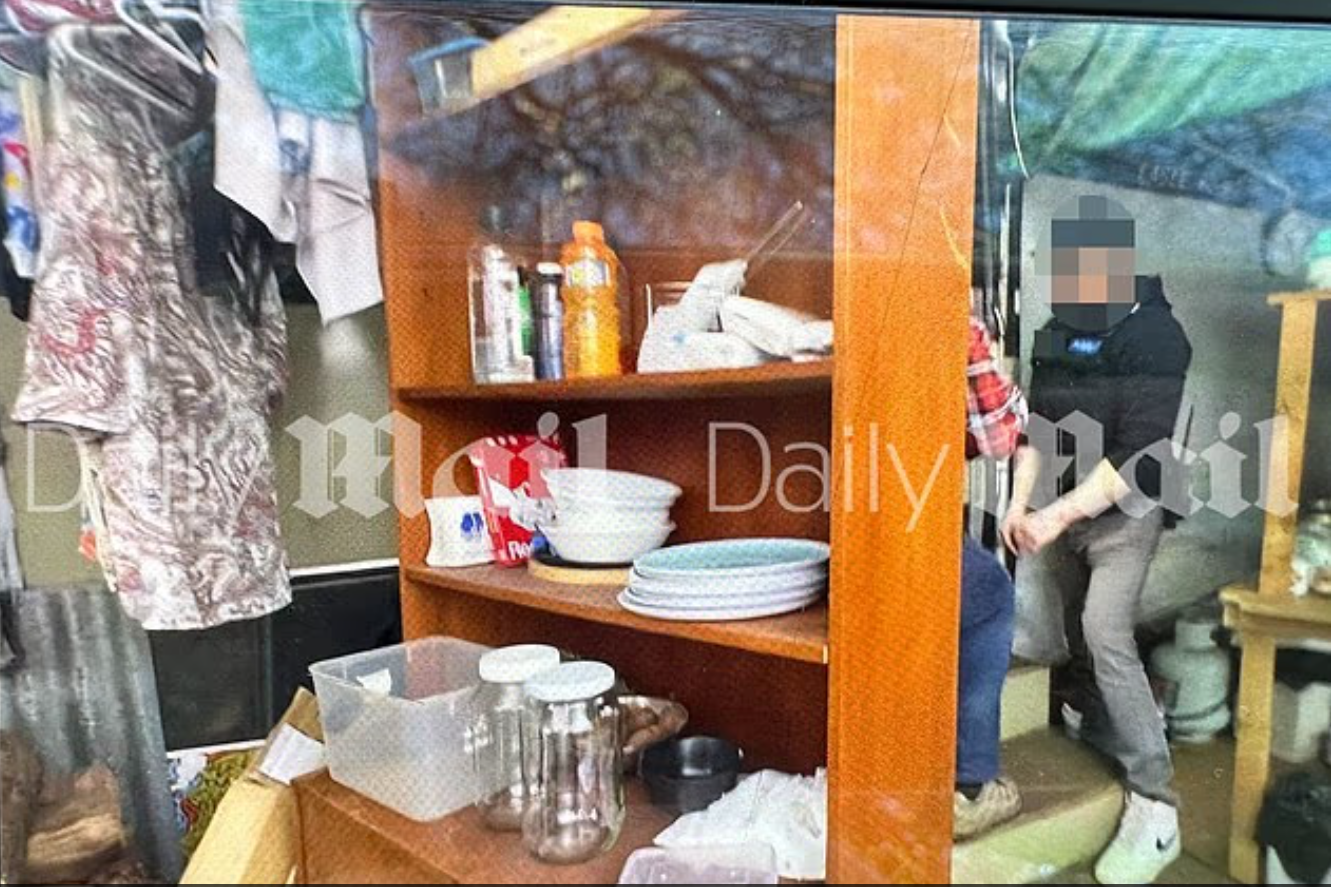
Zoo animals are treated better than an Indigenous teenager held in a cell for 22 hours a day in a troubled wing of an adult prison without water before he fatally self-harmed, his outraged family says.

Cleveland Dodd was found unresponsive inside a cell in Unit 18, a youth wing of the high-security Casuarina Prison facility for adults in Perth, in the early hours of October 12, 2023.

The 16-year-old was taken to hospital in a critical condition and died a week later, causing outrage and grief in the community.

READ MORE: Parents' pain as search for son comes to tragic end

A lawyer for Cleveland's mother, Nadene Dodd, was scathing of the care provided to the teenager by Justice Department staff, as he gave submissions to the Coroner's Court of Western Australia on Monday.

"Cleveland was subjected to institutional abuse, cruel and inhumane treatment," Steven Penglis told the inquest.

The teen spent more than 22 hours a day in his cell for 74 of the 86 days he was detained in Unit 18 before he self-harmed, he said.

Over that period, he had four hours of recreation time, equating to about three minutes a day.

His cell had no running water and in the hours before he was fatally injured he asked for water six times, Penglis said as he recapped evidence heard during the inquest that started in April 2024.

Cleveland's grandmother Roslyn Sullivan said animals were treated better than her son was as a Unit 18 detainee.

READ MORE: Paedophile teacher's vile attempt to blame his victims

"You get treated more better if you're in the zoo," she said outside court.

"No running water, no tap to wash his hands, no tap to wash his body.

"That place shouldn't have even been there."

Cleveland threatened to self-harm eight times and requested medical attention.

The teen's actions were the conclusion of a series of events, including being denied bail, a failed attempt to call his mother on her birthday and severe, untreated dental issues, Penglis said.

"Cleveland's death was preventable and predictable," he said.

Nadene Dodd described her son's treatment as "horrific neglect" and inhumane.

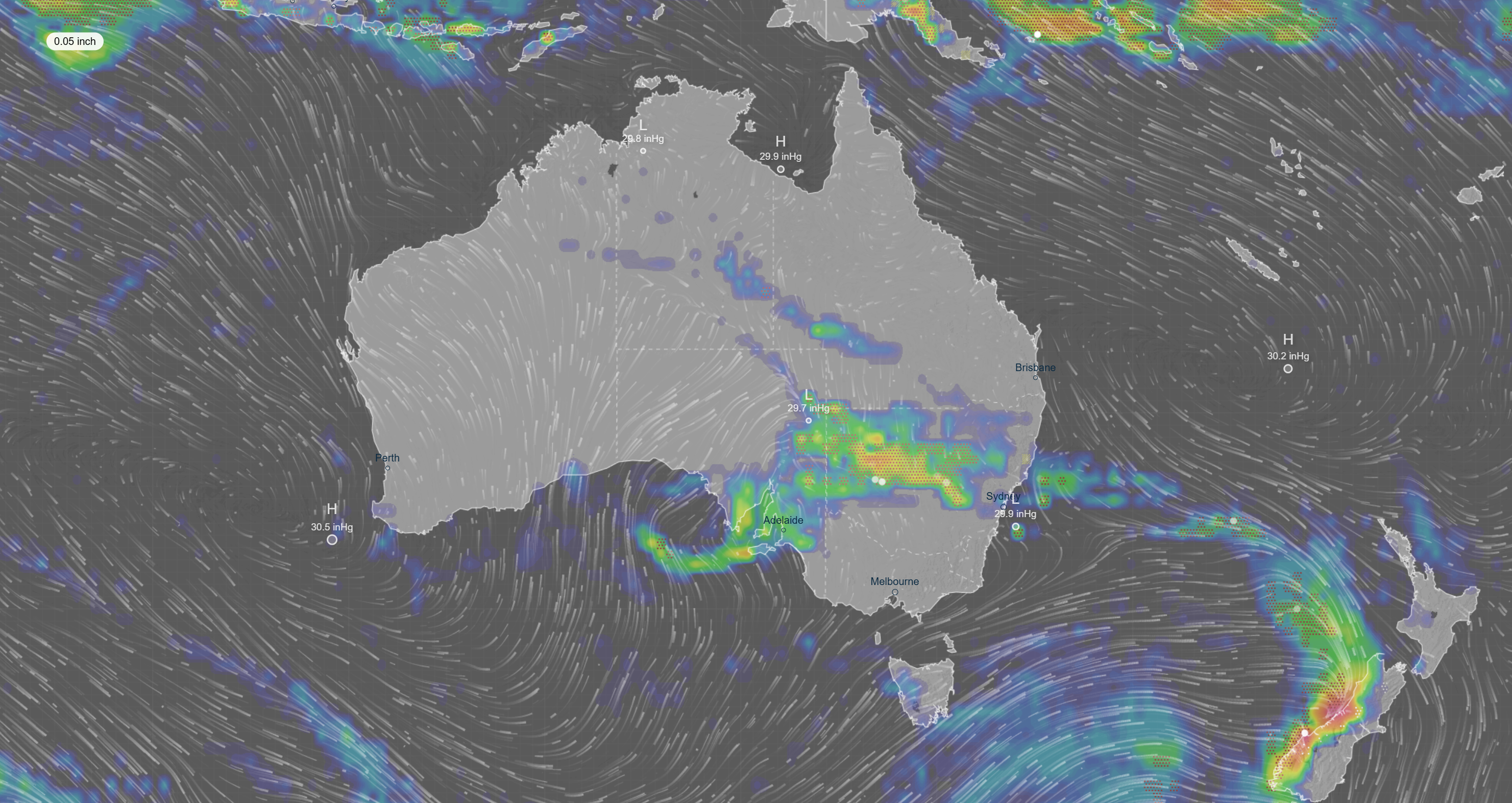
READ MORE: Why 'explosive' weather brewing off Aussie coast will be so severe

"It was both barbarous and criminal," she said outside the court.

"If people are not held to lawful account, then justice will have been denied."

Aboriginal Legal Service lawyer Julian McMahon said the inquest revealed there was a readiness across all levels of the Justice Department to accept the unacceptable.

"What happened at Unit 18 was horrific," he said in his submissions.

There was an "epidemic of self-harm" among a cohort of mostly Indigenous children, he said.

"By self-harm, I mean attempted suicide," McMahon said.

There had been at least 17 self-harm threats in the 24 hours before Cleveland fatally injured himself, he said.

Lawyers for senior Justice Department staff said their clients shouldn't be subject to adverse findings, including former director-general Dr Adam Tomison.

How the facility was run wasn't his responsibility and Corrective Services staff should have followed policy, lawyer Jerome Allan said

Tomison previously agreed children had been subject to appalling, cruel, inhumane and degrading treatment in Unit 18 under his watch.

The Justice Department apologised to Cleveland's family and said there were many issues in Unit 18 in 2023, including damaged infrastructure, excessive detainee confinement and staff shortages.

On the night Cleveland self-harmed, he was not properly supervised and should have been given more water, lawyer Tim Russell said.

"More should have been done," he said.

But the department did not accept Unit 18 was unfit for youth detainees.

The inquest previously heard Cleveland self-harmed about 1.35am and paramedics arrived at 2.06am, but did not get access to him for nine minutes.

Cleveland died, surrounded by his family, on October 19, 2023.

For 24/7 crisis support run by Aboriginal and Torres Strait Islander people, contact 13YARN (13 92 76).

Stranded dolphin rescued from shallow water on NSW coast

A bottlenose dolphin has been rescued by the team from Sea World after swimming into shallow water in the Brunswick River on the NSW Far North Coast.

The dolphin was found stranded on a bank and had to be coaxed into shallow waters before it could be relocated.

"The animal did come high and dry on a bank so it did strand," Claire Madden from the Sea World Foundation said.

READ MORE: Pay boost for millions of Australians arrives tomorrow

"We decided to use a human chain, as sort of a net, to force the animal into some shallow waters," Wayne Phillips, also from the Sea World Foundation, explained.

Once secured, the dolphin was carefully examined.

Madden said the animal showed positive signs.

"Fish in his stomach so he's been eating, good body condition, no ocular disease," she said.

The dolphin was then transported in a van, monitored throughout the journey, and carried approximately 600 metres along a trail to a suitable release point on the Brunswick River.

This article was produced with the assistance of 9ExPress.