Tag Archives: oceania

Millions slapped with rude side-effect of RBA rate cut

The Reserve Bank's interest rate cut earlier this week was widely welcomed, but millions of Australians are now starting to feel an unpleasant after-effect for their combined $1.6 trillion in savings.

Seven banks have now cut the interest rate on their savings accounts, including Macquarie, NAB and Bank of Queensland – the latter of which had been offering a best-in-market 5.10 per cent to 14-to-35-year-olds.

"The third RBA rate cut of the year is already hitting savers in the hip pocket with NAB, Macquarie and BOQ all cutting key savings rates today, alongside some smaller banks," Canstar data insights director Sally Tindall said.

READ MORE: Chris Hemsworth's fitness app lays off Aussie staff, shifts to US

A man uses an NAB ATM as pedestrians walk past.

"BOQ's rate has dropped back to 4.85 per cent, which will be disappointing for their customers who have sought out a market-leading rate to turbocharge their savings."

It leaves the vast majority of available rates now starting with a 4, and two of the three banks still offering 5 per cent – ING and Move – are yet to announce their response to the RBA's rate cut.

The one exception is Westpac, which said it will leave its savings rate for 18-to-29-year-olds on hold at 5 per cent.

Commonwealth Bank and ANZ are still yet to announce a change to their interest rate for savers, although Canstar said they were likely to be cut next Friday.

READ MORE: This could be the final nail in the coffin for working in the office

"Once the August RBA rate cut filters through, know that a competitive ongoing savings rate is estimated to be 4.75 per cent and above, however, you'll have to be able to meet monthly terms and conditions to achieve this rate," Tindall said.

"We expect more savings rates will fall victim to this latest RBA cut in the weeks ahead, however, banks aren't likely to make a song and dance about them.

"Our rate tracker shows more than 60 banks have rushed to share the good news on mortgage rates, yet many banks are leaving their savings customers guessing.

"If your bank hasn't told you what's happening with your savings yet, don't wait – call, email, or even reach out on social media.

"It's your hard-earned money, and you have every right to know where your rate is headed."

As of July, Australian households had about $1.6 trillion deposited with financial institutions, according to APRA.

DOWNLOAD THE 9NEWS APP: Stay across all the latest in breaking news, sport, politics and the weather via our news app and get notifications sent straight to your smartphone. Available on the Apple App Store and Google Play.

Man charged after allegedly trying to lure girls into his car in Sydney

A 19-year-old man has been charged after he allegedly approached two 10-year-old girls in Sydney and asked them to get into his car, and exposed himself on one occasion.

The first alleged incident occurred on August 8, when a 10-year-old girl walking in Heckenberg was approached by the man.

READ MORE: Caribbean officials warn of heavy rains and big waves as Tropical Storm Erin nears

Police tape

The man attempted to speak to the girl before getting out of his car and allegedly gesturing for her to enter the car. 

The girl was able to run away.

The second incident occurred on August 13, when a man approached a 10-year-old girl in Busby and attempted to speak to her before allegedly exposing himself.

READ MORE: Teen home invasion killer's sentence reduced on appeal

He allegedly demanded she get in the car with him, but the girl ran away.

Police arrested a 19-year-old man at Liverpool Police Station yesterday.

He was charged with intentionally inciting a child over 10 and under 16 to do a sexual act, and intentionally doing a sexual act with a child more than 10 and less than 16.

The man was refused bail and appeared before Liverpool Local Court today.

DOWNLOAD THE 9NEWS APP: Stay across all the latest in breaking news, sport, politics and the weather via our news app and get notifications sent straight to your smartphone. Available on the Apple App Store and Google Play.

Chris Hemsworth’s fitness app lays off Aussie staff, shifts to US

A fitness app founded by Chris Hemsworth has laid off more than a dozen Australian staff and closed its Melbourne office in a shift to the US.

Centr has long had headquarters in Melbourne and California, but is now moving operations almost entirely to the US, with just a handful of Australian staff to continue working remotely.

A spokesperson for the company confirmed to 9news.com.au that it will no longer have a Melbourne office, and that 15 staff have been caught up in the transition.

READ MORE: This could be the final nail in the coffin for working in the office

"As Centr continues to scale globally, we've made the strategic decision to consolidate operations in the US to improve operational and geographic efficiency," they said.

"This transition affects 15 roles, with a few team members continuing remotely as part of the US-based team.

"Centr remains focused on continued growth across its digital platform, performance-grade equipment, and global partnerships."

Do you know more? Email Google Play.

Double the babies, triple the soldiers

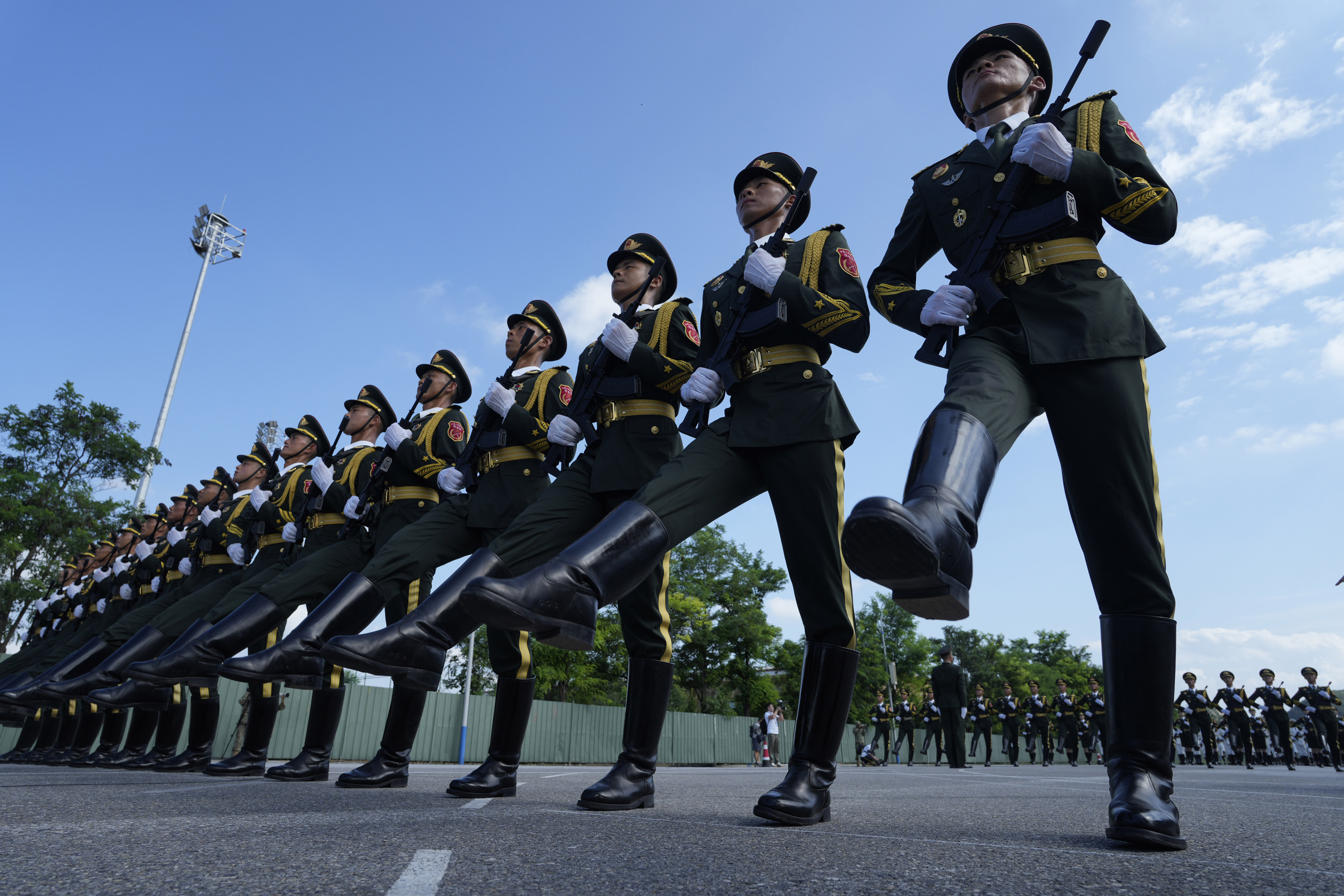
The writing has been on the wall for a long time: South Korea's birth rate has dropped throughout much of the past decade, spelling trouble for the military as regional threats and global conflicts simmer.

Now, a new report has found that the number of South Korean troops declined by 20 per cent in the past six years, in large part because of the dwindling pool of young men – reflecting the shrinking workforce and swelling elderly population in one of the world's most rapidly aging countries.

The Defence Ministry report attributed the drop to "complex factors" including population decline and fewer men wanting to become officers due to "soldier treatment." The report didn't elaborate on that treatment but studies and surveys have previously highlighted the military's notoriously harsh conditions.

READ MORE: Trump 'disappointed and disgusted' with Albanese

As of July, the military had 450,000 troops, it said – down from 563,000 in 2019.

"If the number of standing army (members) continues to decline, there can be difficulties in securing elite manpower and limits in operating equipment," warned the report, shared last week by lawmaker Choo Mi-ae.

The news comes at a bad time for South Korea, a key Western ally which hosts huge numbers of US troops and has a mutual defence treaty with Washington.

READ MORE: $10 million shoplifting syndicate smashed in sweeping raids

Just across the border, neighbouring North Korea has sent tens of thousands of soldiers to fight for Russia along the front lines with Ukraine – raising fears that Moscow may share advanced military technology with Pyongyang in exchange, violating international sanctions.

Meanwhile, North Korea's ruling Kim family has continued blasting hostile rhetoric, threatening to destroy South Korea with nuclear weapons if attacked and warning that Seoul remains "the enemy."

However, experts say, that doesn't necessarily mean North Korea's military is better off.

READ MORE: Mitchell and James are ready to start a family. Until now, one state wouldn't let them

The North is facing its own population woes and birth rate decline – and its technology lags far behind the South, which is now hoping to plug the shortfall in military recruits through innovation.

"South Korea is incomparably far ahead of North Korea in terms of conventional weapons," said Choi Byung-ook, a national security professor at Sangmyung University. "We have smaller troops now, but I like to say 'small but strong military,' that's what we need to become."

Double the babies, triple the soldiers

On the surface, North Korea has a few advantages.

It's one of the world's most heavily militarised nations, with up to 1.3 million armed forces personnel, according to the CIA World Factbook. That's nearly three times higher than South Korea's troop numbers.

Those troops also serve in the military for far longer – an average of 10 years, which allows them to have higher "unit cohesion (and) knowledge of each other's capabilities," said Sydney Seiler, senior adviser to the Korea Chair at the Centre for Strategic and International Studies.

South Korean soldiers and police officers stand near the scene where a South Korean fighter jet accidentally dropped bombs on a civilian area during training, in Pocheon, South Korea, Thursday, March 6, 2025. (AP Photo/Lee Jin-man)

By contrast, there's "really not much advanced skills that you can develop" within the year and a half that most South Korean conscripts serve, Seiler said.

North Korea's fertility rate – defined as the average number of children born to a woman in her lifetime – is also far higher, at 1.77 in 2025 compared to South Korea's rate of 0.75, UN data shows. The North has been having more babies per year than the South since 2018, said Jooyung Lee, senior economist at the Bank of Korea Economic Research Institute.

But the full picture is more complicated, experts told CNN.

For one, South Korea has a reserve force of about 3.1 million men. While their training may be basic, it would give them the numbers needed for potential warfare – and that's not including the 28,500 US troops stationed in the country.

Pyongyang is also facing its own population problems, with its fertility rate dipping in the last few years after the pandemic. The nation's authoritarian leader, Kim Jong Un, pointed to the problem at a national conference of mothers in 2023, urging them to "give birth to many children" as a patriotic duty.

That could bode ill for a highly isolated nation with an economy that relies on labour-intensive industries like agriculture and mining, said Lee.

It's hard to tell how much this has impacted the North Korean military so far. But the fact that Pyongyang has sent tens of thousands of troops to fight for Russia suggests Kim "doesn't feel concerned about not having enough soldiers on board to do the task of defending the homeland," Seiler said.

Their military has also enlisted more women to fill whatever gaps do exist. This trend began near the turn of the century after a previous dip in fertility, Lee said, with the proportion of female recruits now reaching as high as 20 per cent by some estimates.

Many are younger women serving in the military's communications, administrative and anti-aircraft artillery sectors, said Lee, who has interviewed many North Korean refugees who fled the country. Meanwhile, middle-aged and older women have been mobilised to fill gaps in other civilian sectors.

By contrast, women are not conscripted in South Korea – a controversial point that has stoked resentment among some young Korean men who argue their mandatory service puts them at a disadvantage in their studies, careers and personal lives.

As of 2023, volunteer females accounted for only 3.6 per cent of the entire military, according to the Defence Ministry.

The way forward

Some experts have suggested that conscripting more women could solve South Korea's problem, which the Defence Ministry has not ruled out. But Choi, the national security professor, argued the country needs to move away from the idea of increasing its manpower – and instead focus on advancing its technology and making the troops elite.

"I don't personally agree with opinions that we must have a large number of troops because North Korea does," he said.

"The size of our troops has decreased and there are not many options to increase it … I think we need to take this crisis as an opportunity as South Korea is in the route of becoming a science technology powerhouse."

On the battlefields of Europe, Ukraine has shown firsthand how an out-manned and out-gunned military can still hold back and inflict painful losses on a much larger opponent by embracing new and affordable technology.

Tools like drones and cyber-warfare could help decrease South Korea's reliance on infantry and artillery, Seiler said. AI-assisted and autonomous systems could further boost a shrinking military, said Leif-Eric Easley, a professor of international studies at Ewha Womans University in Seoul.

Choi pointed out that South Korea spends far more on defence than the North, and conducts many military drills including with allies like the US – making it better equipped in overall combat readiness.

However, Seiler warned, at the end of the day "you still need people. There's no robots or automation that can replace a trained soldier, airman, marine." Easley agreed, saying South Korea's military would still face shortages in manpower in the event of war.

And a broader challenge remains: how do authorities change cultural attitudes toward the military within South Korea?

While people can volunteer to become professional cadres who serve longer terms and train with more advanced weapons, the number of applicants has dropped steadily over the years.

High-profile cases of hazing, bullying and harassment within the South Korean military may have contributed to negative perceptions of the force.

In recent years, the government has loosened restrictions on conscripts – including allowing them to use cell phones at certain times of the day – and offered a longer civilian service alternative to conscription.

But that's not enough, said Choi.

"We need to improve military welfare and fighting spirits as a whole," he said – adding that supporting the current size of the military will become even harder in the coming decades as the population declines further.

"By 2040s, even maintaining 350,000 troops will be difficult, and that is why we need to establish an optimized manpower structure system … as soon as possible."

DOWNLOAD THE 9NEWS APP: Stay across all the latest in breaking news, sport, politics and the weather via our news app and get notifications sent straight to your smartphone. Available on the Apple App Store and Google Play.

Aussie state becomes the first to stamp out soy sauce fish containers

South Australia will become the first state to ban soy sauce fish containers in a matter of weeks.

The containers, as well as plastic straws and cutlery attached to food or drinks, non-compostable fruit and vegetable stickers and prepackaged cups and bowls containing meals, will be phased out from September 1.

The items will join a wide list of banned single-use plastics like grocery bags, straws, cutlery, stirrers, cups, bowls, plates, containers, cotton buds, pizza savers, confetti, balloon sticks and ties and food bag tags.

READ MORE: 'Phased' charge for EV owners on the horizon

South Australia will become the first state to ban soy sauce fish containers in a matter of weeks.

Environment Minister and Deputy Premier Susan Close said the use of soy sauce fish containers was "undeniably high" given their pervasiveness in sushi and takeaway culture.

"Each fish-shaped container is used for just seconds, yet remains in the environment for decades or centuries if littered," she said.

"Their small size means they're easily dropped, blown away, or washed into drains, making them a frequent component of beach and street litter.

"In kerbside recycling, they're too small to be captured by sorting machinery and often end up in landfill or as fugitive plastic in the environment.

"If littered, they can break into microplastics, which persist in soils, waterways, and oceans."

Close added that the soy sauce fish containers were a "convenience packaging" item that can be replaced with more sustainable solutions.

READ MORE: Popular Aussie servos set for $1 billion transformation

Nina Wootton, a marine scientist specialising in microplastics and plastic waste at the University of Adelaide

Nina Wootton, a marine scientist specialising in microplastics and plastic waste at the University of Adelaide, said the soy sauce fish containers turn up in sums on beaches.

"I do find them a lot, often the whole actual sushi soy sauce little mini fish. They're common," she said.

Wootton admitted that she struggles to minimise her own single-use plastic waste at sushi restaurants, but said it was impossible to avoid entirely.

"Even before you ask if you want the soy sauce, they've already started putting it in there," she said.

"There is still so many single-use plastics I use in my everyday life, even with being really conscious, so anything where the decision is taken out of our control, I think, is really good."

READ MORE: Aussie mums ditching 'traditional' jobs for booming side hustle

Nina Wootton, a marine ecologist specialising in microplastics and plastic waste at the University of Adelaide

South Australia is the first state to ban soy sauce fish containers, with two other states considering following suit. 

NSW is currently considering a proposal to phase out plastic sauce packages, such as soy sauce containers, and require them to be recyclable by 2030.

The government expects to make an announcement on this in the coming months. 

Tasmania is also considering phasing out the same containers, but has not yet developed any draft legislation or undertaken consultation.

Queensland has ruled out any more single-use plastic bans beyond the straws, stirrers, plates and unenclosed bowls, cutlery, takeaway food containers, cotton buds, peanut packaging and microbeads already prohibited.

Western Australia is expanding its single-use plastic ban to include non-compostable plastic barrier bags for fruit and vegetables, unpackaged meat, seafood and dairy products on September 1. 

The remaining states and territories are making no changes at this stage to their current single-use plastic bans.

READ MORE: Australians are consuming a lot more of these four drugs

Plastic bags, bottles, straws, cups and other garbage pollute the sea. Underwater photo of trash dumped into sea instead of recycling.

Australia is one of more than 175 countries attempting to finalise a legally-binding global plastics treaty in Geneva, as plastic production and consumption around the world is set to triple by 2060

"We are determined to push for an effective and meaningful global treaty to achieve our goal of ending plastic pollution by 2040," Federal Environment Minister Murray Watt said.

"These negotiations are a critical step toward preserving the world's ocean and environment for future generations, and we strongly believe in global action."

DOWNLOAD THE 9NEWS APP: Stay across all the latest in breaking news, sport, politics and the weather via our news app and get notifications sent straight to your smartphone. Available on the Apple App Store and Google Play.