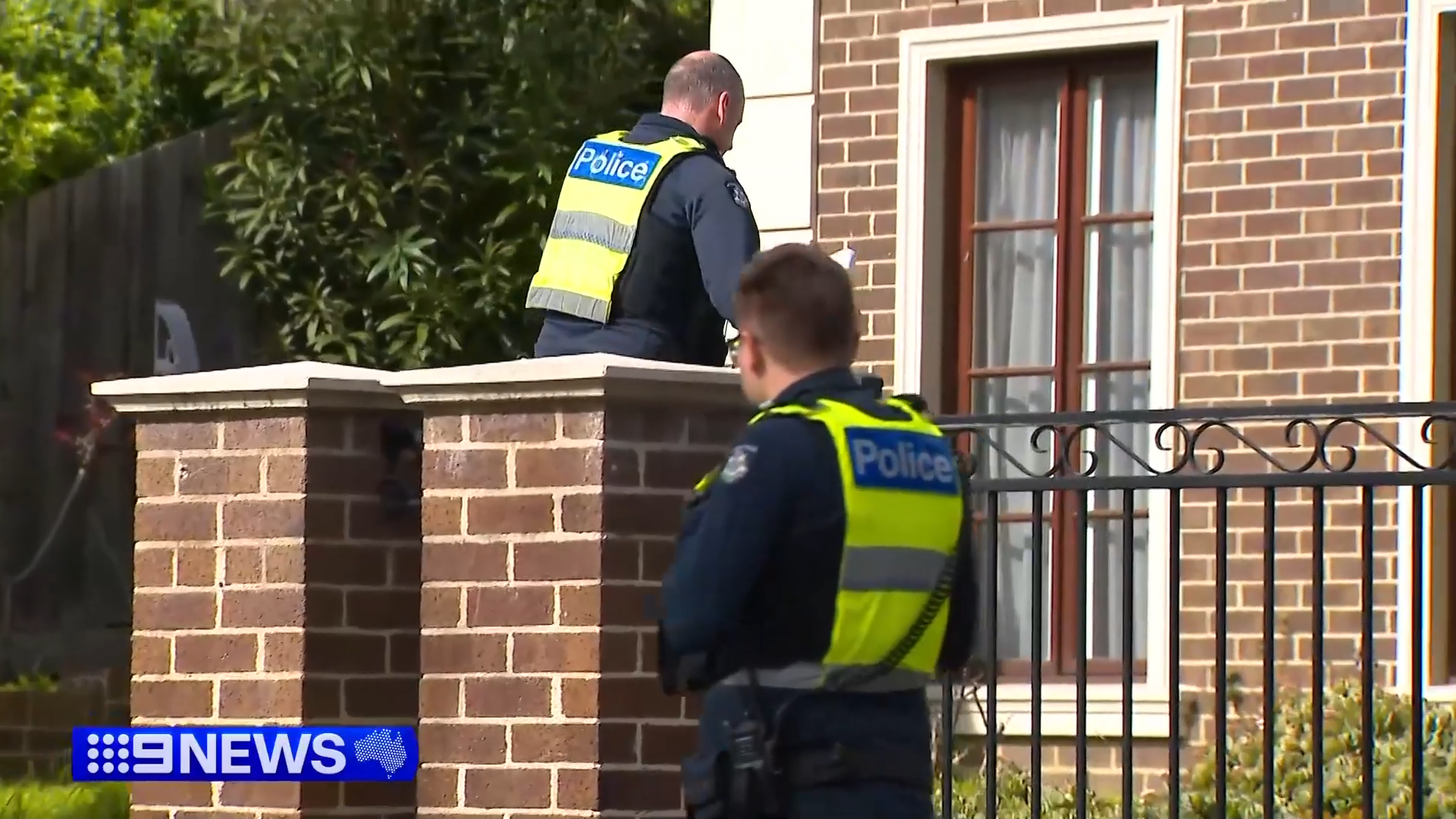
Three wings or 349 police recruits missed swim exam. They’re being sent back to the pool.
Tag Archives: oceania
NZ run for mental health: Blake Schimanski raises $40,000 in friend’s memory
Blake Schimanski ran length of NZ to raise $40,000 for mental health charity I Am Hope.
Two by Twos: Ex-church members break lifetime of silence over sex-abuse claims
Ex-members are speaking out en masse about the Two by Twos church. They explain why.
The suburbs that could make Peter Dutton prime minister
If Peter Dutton is to become prime minister tonight in the federal election, his Coalition will need to gain more than 20 seats.
Heading into the election with 54, the Liberal and National parties require an extra 22 to reach the magic number of 76 required to form majority government.
A party has not increased its presence in parliament by that much since Labor stormed to victory under Kevin Rudd in 2007, and recent polling would suggest it's a tall order for the Coalition.
LIVE UPDATES: Polls open; Albanese favourite but fighting to retain majority
Adding to the mountain to climb is the fact that no first-term federal government has been voted out since 1931.
But while publicly released national surveys have heavily favoured Labor, Dutton has repeatedly pointed towards his own internal polls that suggest the key marginal seats that will decide the election remain very much within his reach.
So how can the Coalition catapult itself from opposition and into government?
READ MORE: The key seats Labor can win back to boost its hopes of a second term in government
Step one: Win the ultra-marginals
The first and most obvious step for the Coalition is to pick up the seats Labor holds by slim margins.
Top of the list is Bennelong which, while held by Labor's Jerome Laxale, is already notionally a Liberal seat after redistribution. Once home to John Howard, this is only the second term in the seat's history that it's been held by Labor, and Scott Yung is looking to bring it back to the fold.
Gilmore on the NSW South Coast is another must-win. It was the closest seat in the country in 2022, and the Coalition has a well-known candidate in former state minister Andrew Constance – while Lyons in Tasmania and Lingiari, which covers the vast majority of the Northern Territory, are also obvious targets.
Labor has pulled in former state opposition leader Rebecca White in an attempt to shore up Lyons, but with a sub-1 per cent margin in each seat, all three will be tight races.
The likes of Tagney (2.85 per cent), Paterson (2.6 per cent) and Hunter (4.78 per cent) are among the other marginals the Coalition is eyeing off.
Win five of those seven seats and it will already have made up about a quarter of the ground it needs for majority government.
READ MORE: Federal Election 2025 Results Tracker
Destination government, via the outer suburbs
Since becoming opposition leader, Peter Dutton has made clear his intention to chart a course back to government through Australia's outer suburbs.
"All I want to do is to make sure that we don't forget about those in the suburbs, and I do think they are the forgotten people," he said in 2022.
With suburban mortgage holders having borne the brunt of interest rate hikes this term – and therefore ripe for a cost-of-living-focused campaign – they haven't been forgotten this campaign.
Despite being barren territory for the Liberals in recent times, there's a swath of such seats in Victoria which, along with a similar group in NSW, offer Dutton and the Coalition the best path back to power.
Aston was won by the Liberals in 2022 before being snatched by Labor during a historic byelection a year later, but it's considered unlikely to stay in the government's hands.
Dunkley is another seat on Melbourne's outskirts that went to a byelection – it was retained by Labor following the death of former MP Peta Murphy, but still saw a big swing to the Liberals that could put it within striking distance this time around.
READ MORE: Dutton wants a nuclear future for Australia. Here's what that might look like
Add in Bruce (5.31 per cent margin), Holt (7.11 per cent), and Hawke (7.62 per cent) as well as the more metropolitan Chisholm (3.33 per cent) and far more rural McEwen (3.82 per cent), and you have eight Victorian seats with a flippable margin for the Coalition.
Look to New South Wales and it's a similar case, particularly in western Sydney, where Parramatta (3.72 per cent), Reid (5.19 per cent) and Werriwa (5.34 per cent) are all marginal government seats.
Dutton also appeared in Whitlam (8.31 per cent) in the final week of the campaign, where the retirement of local member Stephen Jones has the Coalition in with a chance.
Just north of Sydney, on the Central Coast, and Robertson is a key contest. Held by Labor on just a 2.23 per cent margin, it has been a bellwether – a seat won by the party that forms government – at every federal election since 1983.
Shortland (6 per cent) on Newcastle's southern outskirts could also be in play for the Coalition.
South Australia is relatively safe turf for Labor given the strength of Peter Malinauskas' state government, but Boothby has been targeted by the Coalition during the campaign.
Former MP Nicolle Flint, who quit parliament ahead of the last election over sexist personal attacks and a health battle with stage four endometriosis, has made a return to politics to recontest the seat.
READ MORE: How the teals and other independents can shake up the election
The last election was the first time Labor had won Boothby since the 1940s, and at 3.28 per cent, it's a marginal contest.
Queensland offers very few options for the Liberals to win seats off the government, but the one exception is Blair.
The margin isn't particularly tight at 5.23 per cent, but swings of between 6 and 11.3 per cent to the Liberals in overlapping seats at last year's state election suggest it could be winnable for Dutton.
READ MORE: Where to get your democracy sausage this election day
The country's newest electorate has also been in his crosshairs. Bullwinkel, in Perth's eastern outskirts, has been established this election, and while it's notionally a Labor seat, the margin of 3.35 per cent is skinny.
It's also been suggested that neighbouring Hasluck and Pearce could be in play, although losing seats with margins up around 10 per cent would spell particularly dire news for Labor.
DOWNLOAD THE 9NEWS APP: Stay across all the latest in breaking news, sport, politics and the weather via our news app and get notifications sent straight to your smartphone. Available on the Apple App Store and Google Play.
The key seats that could propel Labor to a second term in government
Labor is in a position it would scarcely have believed four months ago, with just about every opinion poll suggesting it is in prime position to be re-elected tonight at the federal election.
While the government could lose some seats to the Coalition, there are others it has a genuine chance of picking up to help cement a second term, particularly with polling pointing towards a slight two-party preferred swing towards Anthony Albanese and the government.
Chief among them is Menzies. The suburban seat in Melbourne's north-west is currently held by Liberal Keith Wolahan, but redistribution has made it a notionally Labor seat, albeit on a very slender 0.42 per cent margin.
READ MORE: The seats that could make Peter Dutton prime minister
With the Coalition targeting the outer suburbs as its most likely path to victory, snatching one of those seats off the opposition would be a major boost to Labor's hopes of re-election.
Similarly, neighbouring Deakin is the tightest seat in the country heading into the election. It's currently in the hands of shadow housing minister Michael Sukkar, who suffered a 4.5 per cent swing against him in 2022.
Anything close to a repeat would spell disaster for him, as his current margin is just 0.02 per cent.
LIVE UPDATES: Polls open; Albanese favourite but fighting to retain majority
Moore in Perth's northern suburbs was one of the Liberal's few good news stories at the last election when it was retained by Ian Goodenough.
But after missing out on Liberal preselection, Goodenough will run as an independent.
His decision to run an open ticket and not direct preferences to his former party could give Labor a leg-up in a seat it only needs a swing of 0.91 per cent to flip.
Another ultra-marginal contest on the government's radar is Sturt. James Stevens saw his buffer in the eastern Adelaide seat collapse from 6.9 per cent in 2019 to 0.5 in 2022, and it's dropped again to 0.45 per cent after redistribution.
While it's only voted Liberal since 1972, a strong Labor state government and the nomination of local councillor Claire Clutterham have Sturt in play this year.
READ MORE: The 10 closest seats heading into the 2025 federal election
Anthony Albanese has previously declared the Tasmanian seat of Bass as a "must-win", although defeating local Liberal MP Bridget Archer will be a tough ask – having built a reputation for crossing the floor, she retained the electorate in 2022, even gaining a narrow two-party preferred swing.
The government is also hoping to win back neighbouring Braddon, sending senator Anne Urquhart onto the lower-house ticket, but with a margin beyond 8 per cent, it appears a tough ask.
Then there's New South Wales, where Labor would dearly love to reclaim two seats it once considered strongholds: Fowler and Banks.
Both in south-western Sydney, Banks is currently held by Liberal foreign affairs spokesperson David Coleman on a margin of 2.64 per cent.
Fowler had been won by Labor at every election since its creation in 1984 before a disastrous piece of pre-selection in 2022, when Kristina Kenneally was parachuted into the seat at the expense of local lawyer Tu Le.
The former NSW premier suffered a 15.6 per cent swing against her as independent Dai Le – the local deputy mayor – won the seat.
Tu Le has been preselected for Labor this time around, but with Dai Le now enjoying a higher profile and the benefit of incumbency, a decision made three years ago could cruel the government's chances this time around.
READ MORE: How the teals and other independents can shake up the election
The curious case of Queensland
Despite being the third-biggest state, Queensland isn't particularly important when it comes to the Coalition picking up seats, purely because Labor holds so few of them in the first place.
It only has five of the state's 30 electorates – several of which are home to high-profile MPs, including Treasurer Jim Chalmers in Rankin (9.1 per cent margin), Speaker Milton Dick in Oxley (11.6 per cent) and newly minted cabinet minister Anika Wells in Lilley (10.5 per cent).
If the government loses those, it'll likely be part of such a comprehensive nationwide swing to the Coalition that three or four seats won't really matter.
Opposition Leader Peter Dutton holds Dickson, the most marginal electorate in the Sunshine State at just 1.7 per cent.
Labor has been throwing serious resources at the seat in an attempt to topple Dutton – Anthony Albanese even began his campaign there on March 29 – although it would be a major upset for a party leader to be ousted by their own constituents.
READ MORE: Federal Election 2025 Results Tracker
The government is eyeing off the nation's northernmost seat of Leichhardt (3.44 per cent margin), where long-serving LNP MP Warren Entsch is retiring, but the Coalition may be a better chance of flipping Blair in outer Brisbane (5.23 per cent).
Bonner (3.41 per cent) has also come right into the government's calculations, with Albanese visiting the Brisbane seat during his final week of campaigning.
Where Queensland could be particularly instructive is the three inner-Brisbane seats held by the Greens: Brisbane, held by Stephen Bates on a 3.73 per cent margin, Griffith (Max Chandler-Mather; 10.46 per cent) and Ryan (Elizabeth Watson-Brown; 2.65 per cent).
READ MORE: Where to get your democracy sausage this election day
All loom three-way contests between the Greens, Labor and the Coalition where preference flows will play a crucial role.
While Chandler-Mather is the most likely to retain his seat – he alone of those three Greens MPs finished top on first preferences, and has built a high profile with his campaigning on the housing crisis – the other two could end up falling any one of three ways.
One or two gains for Labor would be a valuable buffer, with losses expected in NSW and Victoria, while if the LNP picks up the seats it used to hold, it would put the Coalition a lot closer to winning the election.
DOWNLOAD THE 9NEWS APP: Stay across all the latest in breaking news, sport, politics and the weather via our news app and get notifications sent straight to your smartphone. Available on the Apple App Store and Google Play.
Election day arrives as leaders end campaign in multi-state blitz
The federal election campaign has come to an end as Prime Minister Anthony Albanese and Opposition Leader Peter Dutton stand by for Australians to cast their votes today.
Some 7 million pre-poll votes have already been cast, while the remainder of the country has until 6pm local time to have their say.
Yesterday, the Labor and Coalition leaders spent their final day in a campaigning blitz with Albanese in Brisbane and Tasmania and Dutton in Adelaide and Perth.
LIVE UPDATES: Polls open; Albanese favourite but fighting to retain majority
A last-minute Freshwater Strategy poll for the Australian Financial Review showed Labor leading on a two-party preferred basis at 51.5 per cent, compared to the Coalition's 48.5 per cent.
The Coalition's primary vote was on 37, Labor on 33 and the Greens on 12.
The poll suggested Albanese will secure at least a minority government, but the two major party leaders were not convinced.
"I don't take the Australian people for granted. I'm working my guts out to ensure there's a majority government," Albanese said.
"I think this has really got the echoes of 2019, where the published polls are different to what we've seen," Dutton said.
Both leaders have led campaigns with cost of living crucial to almost all of their policies.
Unlike in 2022, when Albanese ran a "small target" campaign and there were relatively few significant differences between the major parties' policy offerings, there are some notable contrasts this time around.
Here are the main election promises made by Labor and the Coalition in the lead-up to the 2025 election.
READ MORE: Where Albanese and Dutton have been on the campaign trail
Housing
With Australia in the midst of a housing crisis, both parties are leaning heavily into the area as part of their pitches to voters – although economists are generally united in the assessment that policies will just increase demand and drive up prices.
Labor
Labor will allow first-home buyers to get into the property market with just a 5 per cent deposit without having to pay lenders mortgage insurance (LMI).
It has also promised $10 billion in funding to build 100,000 properties specifically for first-home buyers, and has matched the Coalition's pledge to ban foreign investors from buying existing homes for two years.
It will also continue a series of other housing policies enacted this term, including the Housing Australia Future Fund, Help to Buy scheme, and National Housing Accord target of building 1.2 million homes by mid-2029.
READ MORE: The key seats that could give Labor a second term in government
Coalition
The Coalition has promised to make the interest payments on the first $650,000 of a mortgage for a new home tax deductible for eligible buyers.
It will also allow people to withdraw $50,000 from their superannuation for a home deposit, and has allocated $5 billion for a fund to speed up essential infrastructure in a move it says will support 500,000 new homes.
It has also promised to ban foreign investors from buying existing homes for two years, scrap the $10 billion Housing Australia Future Fund, and reduce migration intake by 25 per cent.
READ MORE: House prices will skyrocket by $159k if buyers pull super, expert warns
Tax and cost of living
Contrasting tax relief has been front and centre since the first day of the campaign, with Albanese and Peter Dutton arguing they have the better plan to handle the cost of living.
Labor
Labor went into the election fresh off the federal budget, when it announced a "modest" tax cut worth about $5 a week when it's introduced in 2026-27 before doubling to $10 a week the year after.
At the party's official campaign launch, Albanese also announced an automatic $1000 deduction all workers will be able to claim instead of having to lodge individual claims and receipts for multiple deductions.
READ MORE: The suburbs that could make Peter Dutton prime minister
Coalition
The Coalition has promised to repeal Labor's tax cuts, instead promising to halve the fuel excise for a year to provide cost-of-living relief to motorists.
It has also offered up a temporary tax offset of up to $1200 for low- and middle-income earners who take home less than $144,000. This will only apply for the 2025-26 financial year.
EXPLAINED: What the two major parties' new tax proposals would mean for you
Energy and climate
Perhaps the most significant policy difference between the two major parties is on energy, thanks to the Coalition's push for Australia to embrace nuclear power.
Labor
Labor has pledged to extend the energy bill rebates rolled out in the 2024 budget for another six months, providing households with an extra $150 in savings.
It will continue to roll out renewables to meet Australia's energy needs, with the goal of solar and wind making up 82 per cent of the grid by 2030, with gas and other fossil fuels "firming" up supply.
It's also announced a $2.3 billion fund to cut the cost of installing battery storage by 30 per cent.
Labor has existing emissions reductions targets for 2030 and 2050 (a 43 per cent cut and net zero respectively), but hasn't committed to a 2035 goal.
READ MORE: The severe penalties for anyone caught voting twice
Coalition
The centrepiece of the Coalition's energy plan is its proposal to construct seven nuclear reactors around the country.
It says all of the plants would be operational sometime in the 2040s, and would cost $331 billion – although the modelling used for that figure relies on Australia needing and producing significantly less energy than Labor's plan.
It is also planning to ramp up gas production to meet the energy shortfall in the interim as coal plants shut down and the reactors are built, announcing a $1 billion fund for infrastructure expansion.
It will also introduce an east coast gas reservation, forcing local producers to keep more gas in Australia instead of selling it overseas, and fast-track approval for the North West Shelf gas expansion.
The Coalition has not set emissions reduction targets. While it has previously talked of scrapping and reviewing Labor's 2030 goal, it says it is committed to net zero by 2050 and the emissions reduction targets Australia signed up to at the Paris climate conference.
The Coalition has also pledged to repeal the New Vehicle Efficiency Standard, which encourages car makers to produce more fuel-efficient vehicles and penalises companies that exceed a set emissions cap.
EXPLAINED: Peter Dutton wants a nuclear future for Australia. Here's what that might look like
Health
Labor has leant heavily into health – particularly Medicare – during the campaign, seeking to target Dutton for his previous stint as health minister.
Labor
Many of Labor's signature health policies were announced before the election campaign began, including an $8.5 billion Medicare boost to significantly increase bulk billing rates, and reducing the cost of medicines listed on the Pharmaceutical Benefits Scheme (PBS) from $31.60 to $25.
Labor will also spend $644 million to expand the Medicare urgent care clinic network with 50 new centres, and $1 billion to build or upgrade dozens of walk-in mental health facilities and train 1200 new workers in the sector.
It has also announced plans for a $204 million, 24/7 GP hotline.
READ MORE: Explained: How Australia's preferential voting system works
Coalition
For the most part, the Coalition has matched Labor's big health policies, promising to back the $8.5 billion Medicare funding and cut to PBS medicine costs.
On mental health, it is promising $400 million for youth services, and will permanently reintroduce the pandemic-era policy for 20 subsidised mental health sessions for people with a mental health care plan, up from the current 10.
READ MORE: 'Politicians beware': Young voters eyeing these five key issues
Education
Education is another area that Labor has sought to target, particularly in relation to childcare and student debt.
Labor
Labor has promised to forgive $16 billion in student debt on June 1 – a 20 per cent cut for everyone with an outstanding HECS-HELP or other similar loan.
It will also establish a $1 billion fund to build and upgrade 160 childcare centres, in addition to its move to provide three days of subsidised childcare for all families.
Labor will also continue to provide fee-free TAFE places.
Coalition
The Coalition will set a target of having 400,000 apprentices and trainees and incentivise businesses to provide those positions.
READ MORE: Even the AEC doesn't know how many 'donkey votes' are cast at the polls
Workplace
A focus on workplace policies has somewhat faded as the campaign has progressed.
Labor
Labor will ban non-compete clauses for workers earning less than $175,000 a year to make it easier for people to change jobs. It is also promising to protect penalty rates in legislation if re-elected.
Coalition
The Coalition has promised to shrink the size of the public service by 41,000 workers over five years through a hiring freeze, natural attrition, and offering voluntary redundancies.
It is also offering up to $20,000 in tax deductions for small businesses to spend on staff meals and entertainment.
It has previously promised to repeal the right-to-disconnect laws introduced in the last parliament, although has said it would keep Labor's same job, same pay legislation.
It had been promising to force public servants back to the office, but scrapped that policy one week into the campaign.
READ MORE: The 10 closest seats heading into the election
Crime
As a largely state-controlled issue, crime hadn't been a major talking point until late in the campaign due to an Easter Monday announcement by the Coalition.
Labor
Labor largely wasn't drawn on the Coalition's crime announcement, pointing to its own policies it enacted during the last term, including introducing a child sexual offender registry and a crackdown on illegal tobacco being imported into Australia.
It also made the first domestic violence pledge of the campaign: $8.6 million in funding for "innovative " management of perpetrators, as well as a crackdown on financial abuse.
Coalition
The Coalition promised to allocate $750 million in funding for a range of crime policies, including trialling a new child sex offenders disclosure scheme, an AFP strike force to target illicit drugs, and a national antisemitism taskforce led by the AFP.
It also said it would standardise knife laws and roll out detector wands across the country in conjunction with the states and territories.
In a later announcement, it promised $90 million for domestic violence prevention and response, including setting up a notional offenders registry.
READ MORE: How independents will shape the federal election
Defence
While defence has loomed over much of the campaign due to the reported Russian request for an airbase in Indonesia, it took until 10 days before election day for a major announcement by either of the parties.
Labor
Labor has not leant heavily into defence during the campaign. Last year, it promised to increase defence spending by $50.3 billion over a decade, and later announced it would bring some of that forward.
Coalition
The Coalition announced it would boost spending by a further $21 billion by 2030 and lift total defence expenditure to 3 per cent of GDP within the next 10 years.
READ MORE: Federal Election 2025 Results Tracker
How will they pay for their promises?
Every election, each of major parties publishes its election costings, a document outlining how it will fund its election promises and what impact they will have on the budget bottom line.
Labor
Labor released its costings the Monday before the election, and says it can pay for its new promises and still have the budget in a better position.
It outlined $6.4 billion in labour cost savings plus an extra $760 million in new revenue from increased student visa application fees.
The government says, when combined with the cost of its election promises, the budget will be better off by about $1 billion over the forward estimates period, with $150.5 billion in combined deficits instead of $151.6 billion.
The bulk of Labor's policies were already costed in March's federal budget.
READ MORE: Where to get your democracy sausage this election day
Coalition
The Coalition published its costings on the Thursday before the election, mirroring the approach of Labor when it was in opposition in 2022.
The costings forecast $7.9 billion more in budget deficits in the next two financial years than what Labor is promising, before $21.7 billion in improvements over the following two budgets – a roughly $14 billion turnaround.
DOWNLOAD THE 9NEWS APP: Stay across all the latest in breaking news, sport, politics and the weather via our news app and get notifications sent straight to your smartphone. Available on the Apple App Store and Google Play.
The gruelling 100,000km journey to the election
In their efforts to sway voters this election campaign, Anthony Albanese and Peter Dutton have spent more than a month on the road, crisscrossing the country and visiting dozens of crucial seats.
In the last 36 days, the two leaders have clocked up more than a combined 102,178km in travel distance.
That's the equivalent of 2421 marathons, 2,035,720 Olympic-sized swimming pools, or 7,568,740 standard buses lined up back to back.
READ MORE: How the election may be swayed by an app most Australians never use
Of the two leaders, Dutton has covered the greater distance, travelling 54,229km to Albanese's 47,557km, while the prime minister has visited 23 different locations to the opposition leader's 17.
With Sydney and Melbourne both looming as key battlegrounds tonight, with a swath of key seats up for grabs there, it's little surprise both leaders visited the country's two largest cities more than any other part of the country.
Which electorates the leaders have appeared in is instructive, providing an insight into which seats they think they can win, and which ones they're worried about losing.
LIVE UPDATES: Polls open; Albanese favourite but fighting to retain majority
While Albanese toured Canberra and his own seat of Grayndler – both very safe Labor electorates – fairly frequently, he also made multiple visits to seats he needs to retain.
These include: Boothby in Adelaide; Parramatta, Bennelong and Reid in Sydney; Tangney, Hasluck and the newly created Bullwinkel in Perth; and Chisholm in Melbourne.
But in a possible sign of the prime minister's growing confidence as the campaign wore on, he also appeared in some seats that Labor would have considered unlikely gains before the election was called.
Top of the list here is Dutton's own seat of Dickson.
It was the first stop on Albanese's campaign way back in late April, and he also visited yesterday as part of his last-day blitz across three states.
READ MORE: The 10 closest seats heading into the 2025 federal election
Similarly, the nearby Brisbane electorates of Bonner and Griffith, held by the LNP and Greens respectively, merited a couple of visits, as did Braddon in Tasmania, Deakin in Melbourne, Fowler in south-west Sydney, Leichhardt in Far North Queensland, and Sturt in Adelaide.
Dutton, for his part, has had a very clear focus on outer-suburban seats that the Liberals hope to win off Labor.
Tangney in Perth was visited four times by the opposition leader, the likes of Aston, Hawke and McKewen in Melbourne three times, and a handful of Western Sydney seats like Werriwa and McMahon twice.
Dutton also campaigned frequently in Labor-held seats around the NSW Hunter Valley and Central Coast, including Paterson and Robertson.
READ MORE: Why an entire seat has gone missing this election
But he also spent lots of time campaigning at home in Dickson amid the strong Labor and independent challenges for the seat he's held since 2001.
Just as telling as where the leaders have been is where they haven't.
Albanese spent next to no time in the Nationals heartland of inland NSW, nor did he spend much time in the regions in Victoria or South Australia.
READ MORE: Federal Election 2025 Results Tracker
And while the Coalition took its transformative nuclear power policy to the election, Dutton didn't visit any of the seven locations his party is proposing to build power plants should it win government.
Instead, he's visited 15 petrol stations across the country, promoting a promised temporary cut to the fuel excise, while Albanese's prop of choice has been his Medicare card as Labor strives to fight the election on health.
DOWNLOAD THE 9NEWS APP: Stay across all the latest in breaking news, sport, politics and the weather via our news app and get notifications sent straight to your smartphone. Available on the Apple App Store and Google Play.
How would you react in a crisis? These people ran into the face of danger
OPINION: Fight or flight is the built-in response we all have, but it's impossible to know how you might react until you face a crisis.
One of the most terrifying situations to be confronted with was the deadly Westfield Bondi Junction stabbings of 12 months ago.
Six people were killed and 12 others injured in the rampage unleashed by 40-year-old Joel Cauchi, armed with a lethal hunting knife.
READ MORE: Coroner releases 3D recreation of hero cop taking down Bondi Junction attacker
He indiscriminately and senselessly attacked innocent people doing the most innocent of things: visiting a busy shopping centre on the first day of school holidays.
Families, teenagers, children and babies, security guards – anyone and everyone in his sights.
The coronial inquest under way into that horrific day is shining a light on the extraordinary bravery of those who went straight into fight mode, running towards the danger despite the risk to their own lives, and in the process saving countless others.
The evidence from NSW Police Officer Amy Scott, who shot dead the attacker, is as remarkable as her actions.
Arriving at the scene without backup or the vest and police equipment that might protect her, she told the inquest she'd resigned herself to the fact she was probably going to die.
She ran in anyway.
She knew she didn't have time to wait for her police colleagues, so she went into the shopping centre alone, chased the attacker down, distracted him from a mother with a pram hiding behind a pot plant, and when he ran at her, she fired her gun.
Her actions saved lives.
LIVE UPDATES: Polls open; Albanese favourite but fighting to retain majority

Running along with her were two young men, French construction workers Silas Despreaux and Damien Guerot, who also went into fight mode.
After seeing people running and knowing a man was stabbing people, the pair decided to "go catch him".
After spotting the attacker, they looked for whatever they could to protect themselves, both grabbing bollards.
They ushered a woman to safety then tried to stop the attacker in his tracks, and the pictures of what these men did – these bystanders turned heroes – will stay with me forever.
READ MORE: Paramedic denies giving cop fiery spray at stabbing scene
With the attacker just metres away on an escalator, they hurled a bollard at him, then tried to trap him as his rampage continued.
These men ran into the face of danger, then ran with the police officer who did the same.
Lives were saved because of their actions, and it gives me goosebumps thinking of what these extraordinary people did.
On a day of so much loss, Scott's words to the inquest perfectly sum up the courage and bravery that was also on display: "As tragic as that day was, it restored my faith in humanity."
Quite simply, they are heroes.
What they sell used to be ‘taboo’ but business is booming for women like Scarlett
The sky is overcast and threatening rain as women pour into Romancing The Novel in Paddington, flooding the narrow bookstore until there's barely room to move.
They're all on a 'book crawl' and they're all here for one thing: romance novels.
Romance has been the most commercially successful fiction genre for decades and is reaching new heights in the 2020s, according to Nielsen BookScan data.
LIVE UPDATES: Polls open; Albanese favourite but fighting to retain majority
More than twice as many romance novels were sold in 2024 compared to 2019 and Australians spent more than $50 million on the genre last year.
Romance has also been growing at an average annual rate of 49 per cent for the last three years, suggesting the figures could be even higher in 2025.
Annabel and Eliza, the organisers behind the Bound to Roam book crawl last weekend, made sure a romance store was their last stop for that very reason.
Have you got a story? Contact reporter Maddison Leach at Google Play.
Man who injected himself with snake venom 856 times helps create new anti-venom
A man who voluntarily injected himself with snake venom 856 times over 18 years has provided the inspiration and antibodies scientists needed to develop a new drug which protects against bites from 19 different snake species – including Australia's deadly eastern brown snakes, inland taipans and tiger snakes.
Self-described snake venom expert Tim Friede, from the US state of Wisconsin, began collecting venomous snakes around 2000. He then started self-administering diluted venom in escalating doses with the goal of achieving a high level of immunity.
In the early days of his independent self-injecting regime, Friede had a near-death experience after being bitten by an Egyptian cobra which put him in a coma for four days, the Outside magazine reported in a 2019 feature.
READ MORE: Drew's son caught the moment a snake bit him square on the face
However, over many years and hundreds of injections, Friede slowly generated antibodies in his body which could neutralise a range of snake venoms.
Stumbling upon Friede's work online, scientists realised his potential.
"The donor, for a period of nearly 18 years, had undertaken hundreds of bites and self-immunisations with escalating doses from 16 species of very lethal snakes that would normally a kill a horse," first author Jacob Glanville, CEO of Centivax, said.
After Friede agreed to participate in a study, researchers found that by exposing himself to the venom of various snakes over several years, he had generated antibodies that were effective against several snake neurotoxins at once.
"What was exciting about the donor was his once-in-a-lifetime unique immune history," Glanville said. "Not only did he potentially create these broadly neutralising antibodies, in this case, it could give rise to a broad-spectrum or universal antivenom."
Scientists created a testing panel of 19 of the world's most venomous snakes, which belong to the elapid family.
LIVE UPDATES: Polls open; Albanese favourite but fighting to retain majority
Researchers then isolated target antibodies from Friede's blood that reacted with neurotoxins found within the snake species tested.
The resulting antivenom offered an unparalleled breadth of full protection for 13 of the 19 species and partial protection for the remaining six, Glanville said.
The team is now preparing to test its antivenom cocktail in Australia, by providing the drug to dogs brought into veterinary clinics for snake bites.
The team is also investigating the development of an antivenom targeting the other major snake family, the vipers.
"The final contemplated product would be a single, pan-antivenom cocktail or we potentially would make two: one that is for the elapids and another that is for the viperids because some areas of the world only have one or the other," lead author Peter Kwong, professor of medical sciences at Columbia University Vagelos College of Physicians and Surgeons, said.