The ATO has shed light on how much, on average, someone in each profession earns. Here are the ten best-paying ones.
Tag Archives: oceania
‘It’s going to snowball’: How Olivia unmasked her own anonymous troll
The internet may be about to experience a seismic shift.
Influencer Indy Clinton, who has a combined 2.5 million followers on social media, recently announced she hired a private investigator to unmask people who "troll, defame and cyberbully" her.
Clinton proudly produced a 64-page dossier and said she was waiting patiently – and was willing to spend a lot of money – to hold them accountable.
And anonymous trolls ought to be on guard, content creator Olivia White told 9news.com.au.
READ MORE: Leisl hasn't been seen in 13 years. Her mum wants to find out the truth

White, who has 178,000 followers on Instagram, said she fought her own legal battle against anonymous internet users and applauds Clinton for her grit.
While she certainly doesn't have the funds to hire a private investigator, White said she is eagerly waiting to see those with deeper pockets follow in Clinton's footsteps.
"I've had to engage lawyers, I have engaged with a cyber forensics expert, but it's really, really expensive," White, 36, explained.
"But I think it's awesome for Indy… it's like – someone has finally done it."
In 2023, White took action to unmask one of her own online bullies after reading cruel and untrue information about herself in a public forum.
She admitted to usually ignoring mean messages and comments, but this time, it had spilled out into her real life.
"I was able to identify one of the people that was on there, because it crossed over into stalking and harassment," White said.
"It crossed over into a dangerous area, I had to take action both criminally and civilly, and that included taking out personal safety international orders."
Criminal defence lawyer and director and founder of Gallant Law Lauren Cassimatis has represented several Australian influencers who have secured criminal prosecutions in similar cases.
Nobody is ever truly anonymous on the internet, Cassimatis warned, and she expects more and more bad online behaviour will result in convictions.
"You're not protected anymore, You can't hide behind a fake handle or an image. You can be traced," Cassimatis said.
"I also think the police will now see that this is something that needs to be taken seriously."
READ MORE: A Canberra woman wanted to have her parents killed. Her plot was foiled by a podcast
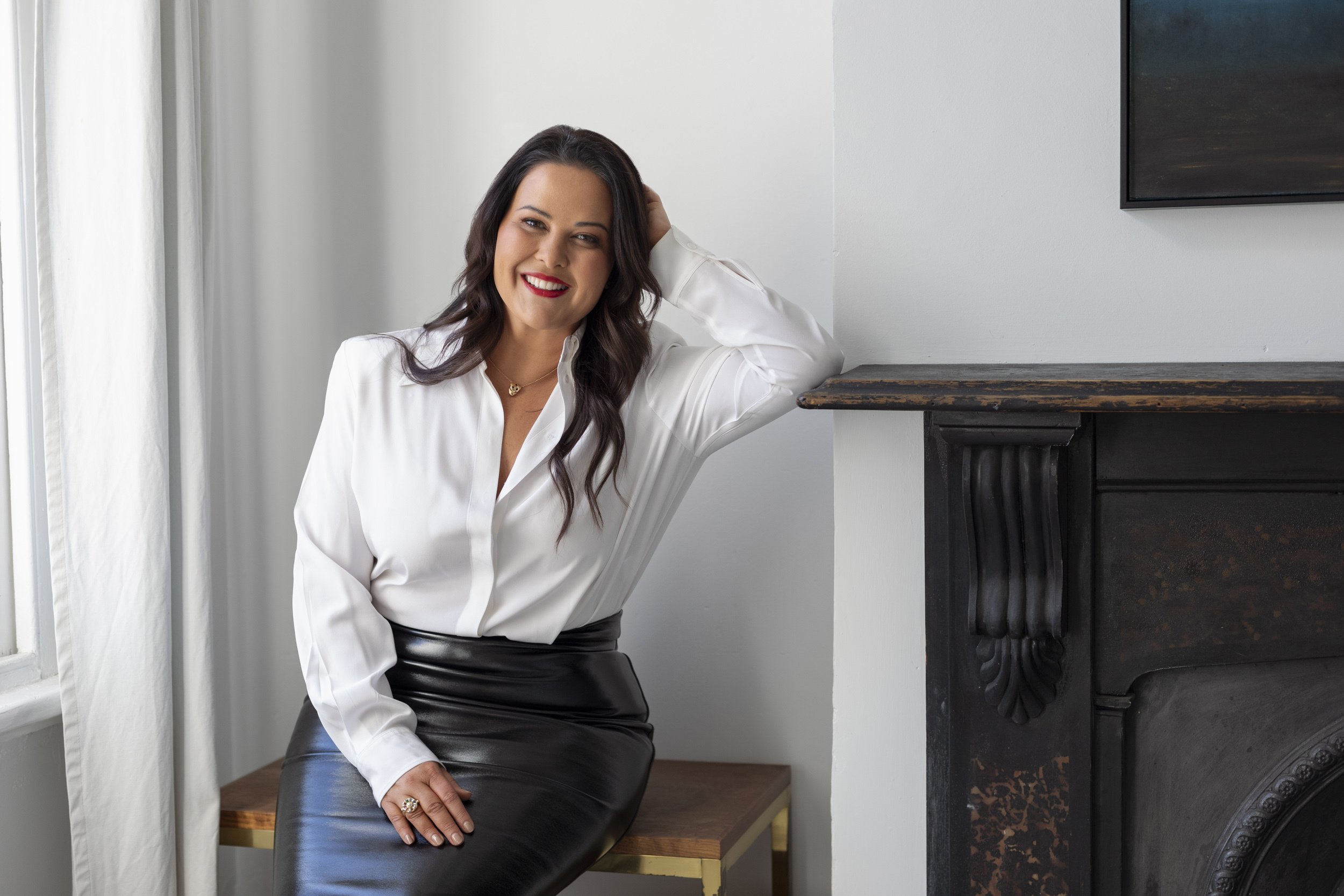
In White's case, cruel content being shared online about her was starting to impact her career and income stream.
"It was an extremely triggering experience for me. I was not in a good place mentally," she said.
I've had to engage lawyers, I have engaged with a cyber forensics expert, but it's really, really expensive.
White was able to find out who one anonymous user was by combing through digital breadcrumbs.
She then spent a lot of money, time and effort to deter this person from ever talking about her online again.
"How most of these people are actually uncovered, and I don't think they realise, is just from their own human error," she said.
"It might be uploading a picture, a screenshot, but it's still got metadata attached.
"Or they're active across multiple threads and they give up enough information across a whole period of time that begins to make them really identifiable."

Her troll's final mistake was contacting a small brand she was working with, which then passed on their information to White.
She then served the person a defamation concerns notice, which expires after 12 months.
"It did scare them off, that person in particular, but things always sort of pop up every now and again," White said.
White said she knows countless influencers and online personalities who may be emboldened to now take similar action.
Many of them are women and mothers, just like her, who have finally had enough.
"A lot of time we don't talk about it because one, there is just unfortunately a conversation towards creators, influencers, [saying] it's not a real job, or, it's not a respected job," she said.
"I've talked to people who got details from Indy, big creators who said they are going to something similar.
"People who have the means, it's only going to snowball."
Do you have a story? Contact reporter April Glover at Google Play.
‘Game changer’ could hold key to early detection for deadliest cancer
Lung cancer has the highest mortality rate in Australia but now, a groundbreaking medical machine could be the key to early detection.
It's the only one of it's kind in the country – a revolutionary robot called 'ION' – built in Brisbane and improving how biopsies are conducted, ultimately helping patients live longer.
Four years ago, 61-year-old Ruanda found a nodule on her lung but her road to a diagnosis wasn't a walk in the park.
READ MORE: All of the changes coming to your wallet from Tuesday
"My lung specialist then sent me for two normal bronchoscopies," she told 9News.
"They couldn't get enough tissue to actually make a proper diagnosis."
The Brisbane grandmother with a family history of cancer, was told to watch and wait but when it comes to cancer, early detection is key.
"It was discovered it had actually doubled in size," she said.
Months later, Ruanda found out she had non-smoking related lung cancer after it was detected by a groundbreaking robot at the Royal Brisbane and Women's Hospital (RBWH).
"It's very much a game changer," Dr David Fielding, RBWH Thoracic Physician said.
READ MORE: Beloved cobbler's business saved by community's touching gesture
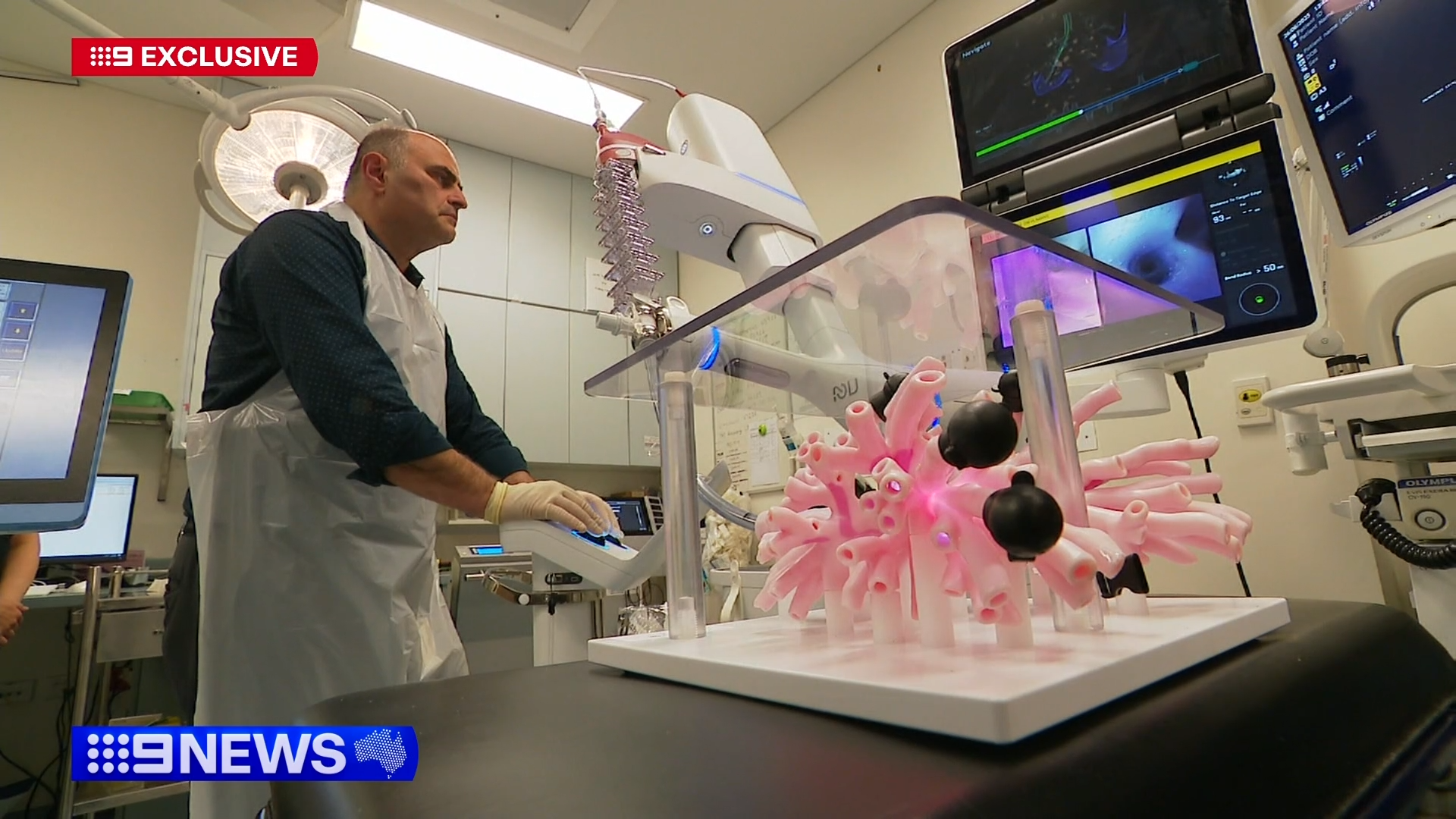
"The robot is a way of improving our precision and getting to these small spots, taking a biopsy and improving our knowledge of what it is."
The 'ION' platform from Intuitive Surgical is ushering in a new era of robotic bronchoscopy.
"[It'll] hopefully, increase the survival rate up to 60 or 70 per cent," RBWH Interventional Bronchology Director Dr Farzad Bashirzadeh told 9News.
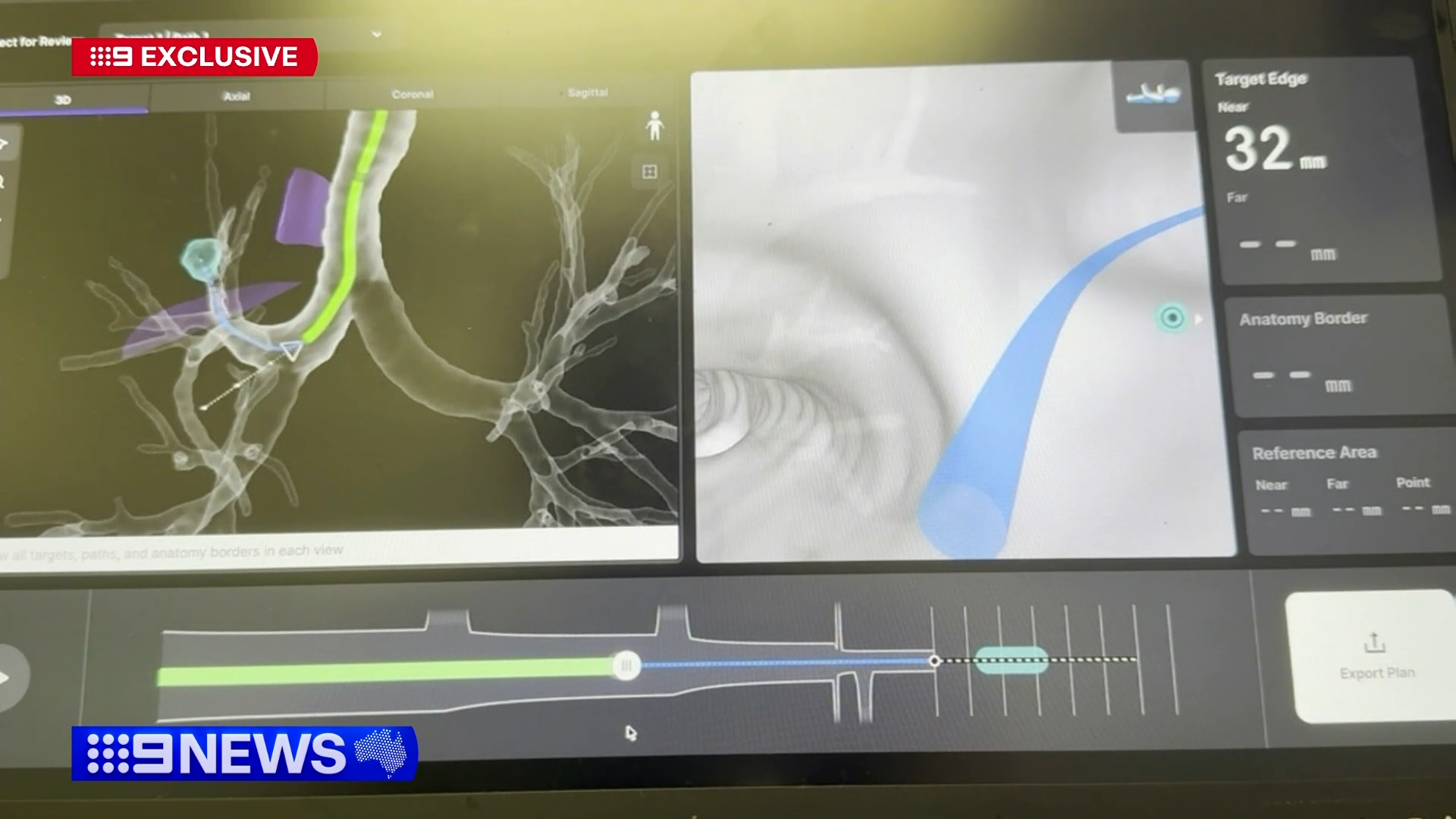
It works after a regular CAT scan is taken, then the computer maps out a virtual pathway through an individual's lungs and directs doctors through the real airway to reach the biopsy site more efficiently.
More than 170 patients have already benefited from the revolutionary technology, with preliminary results showing the robot is twice as accurate as previous biopsy methods.
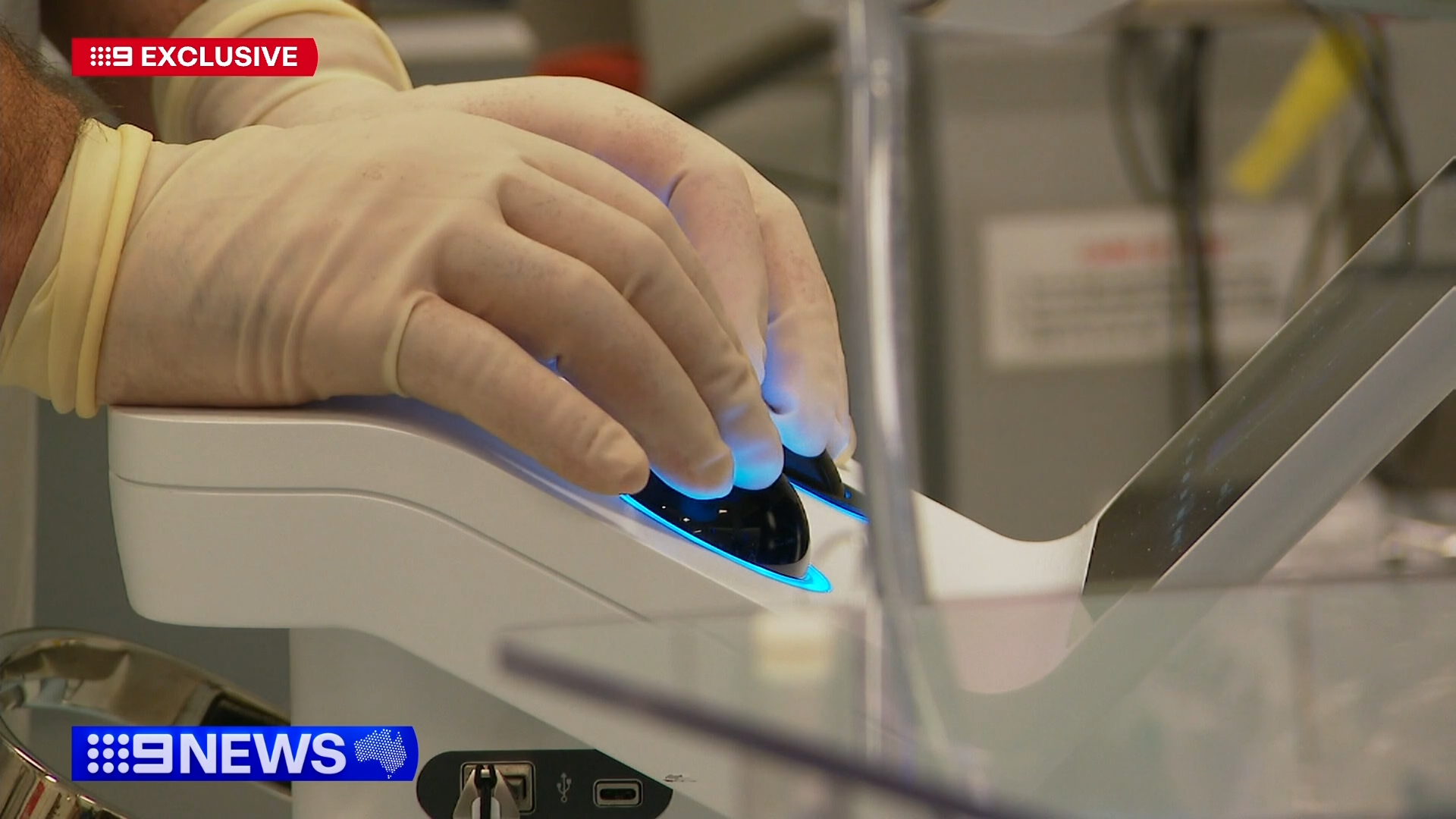
"We would do it in a similar way [previously] but with a bronchoscope that we hold with our hand," Fielding explained.
"[But with] the robot, you just drive it with a trackball, like a video game, and it stays still."
Ultimately by helping to remove human error, it reduces the risk of a lung collapse.
"On average [the old way] is about 25 per cent risk of pneumothorax, meaning collapsing lung," Bashirzadeh said.
"But in this one it's less than one per cent."
Ruanda is grateful the technology helped catch her cancer at stage one and she'll undergo surgery in the coming weeks.
"This is definitely gonna help people get the answer at the right time," she said.
DOWNLOAD THE 9NEWS APP: Stay across all the latest in breaking news, sport, politics and the weather via our news app and get notifications sent straight to your smartphone. Available on the Apple App Store and Google Play.
Melbourne cafe owner closes shop following violent attacks
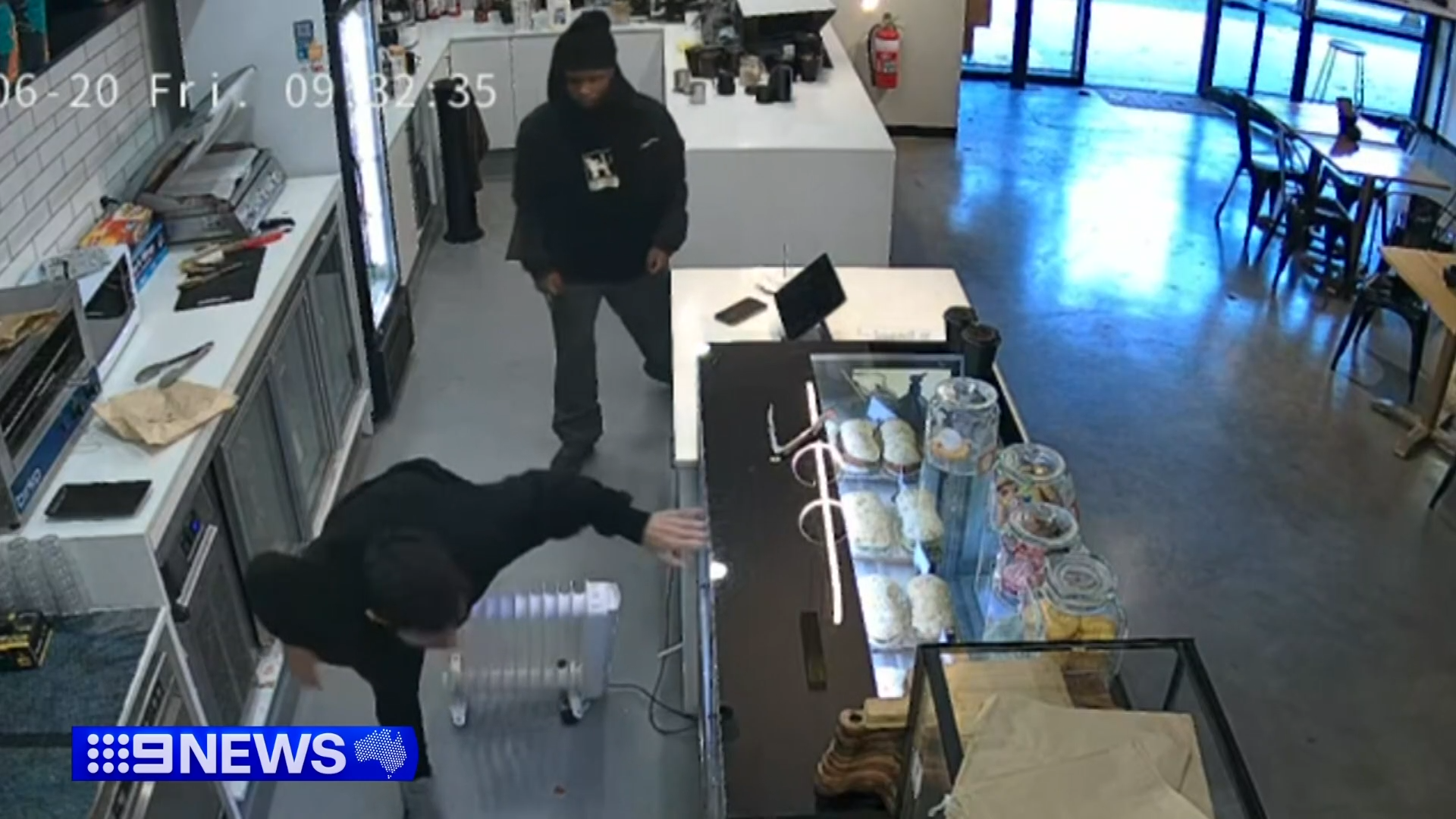
A cafe owner in Melbourne's inner city who was assaulted inside his own shop has closed his doors, saying he no longer feels safe.
Locals say they're fed up with violence and drug-use in Footscray.
Just seven months after opening Eleven: 11 cafe on Buckley Street, Moustafa Saoud is turning the lights off.
READ MORE: Human remains found in search for missing Melbourne man
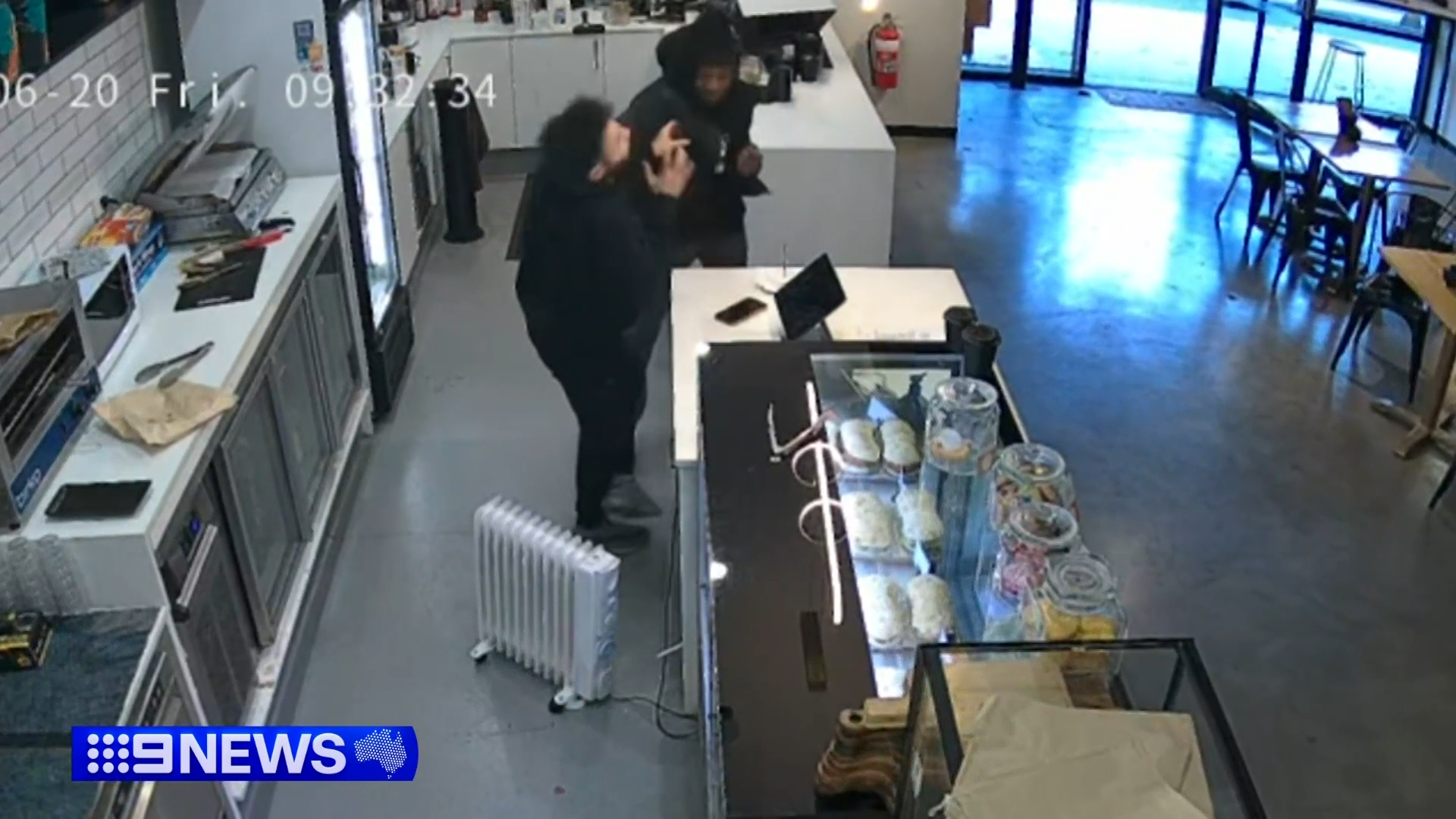
"It's not worth it, to lose my life for," he told 9News.
"I'm not gonna be safe anymore. He's been back twice already."
His brother and business partner Alex Saoud agrees.
"We're here just to open business, work, make my life easy. Make my family happy, make the people around us happy.
"I don't need to make my mum, my dad upset, him upset. It's not safe."
One loyal customer said it's a loss for the locals.
READ MORE: Police investigate after body found on one of Melbourne's busiest streets
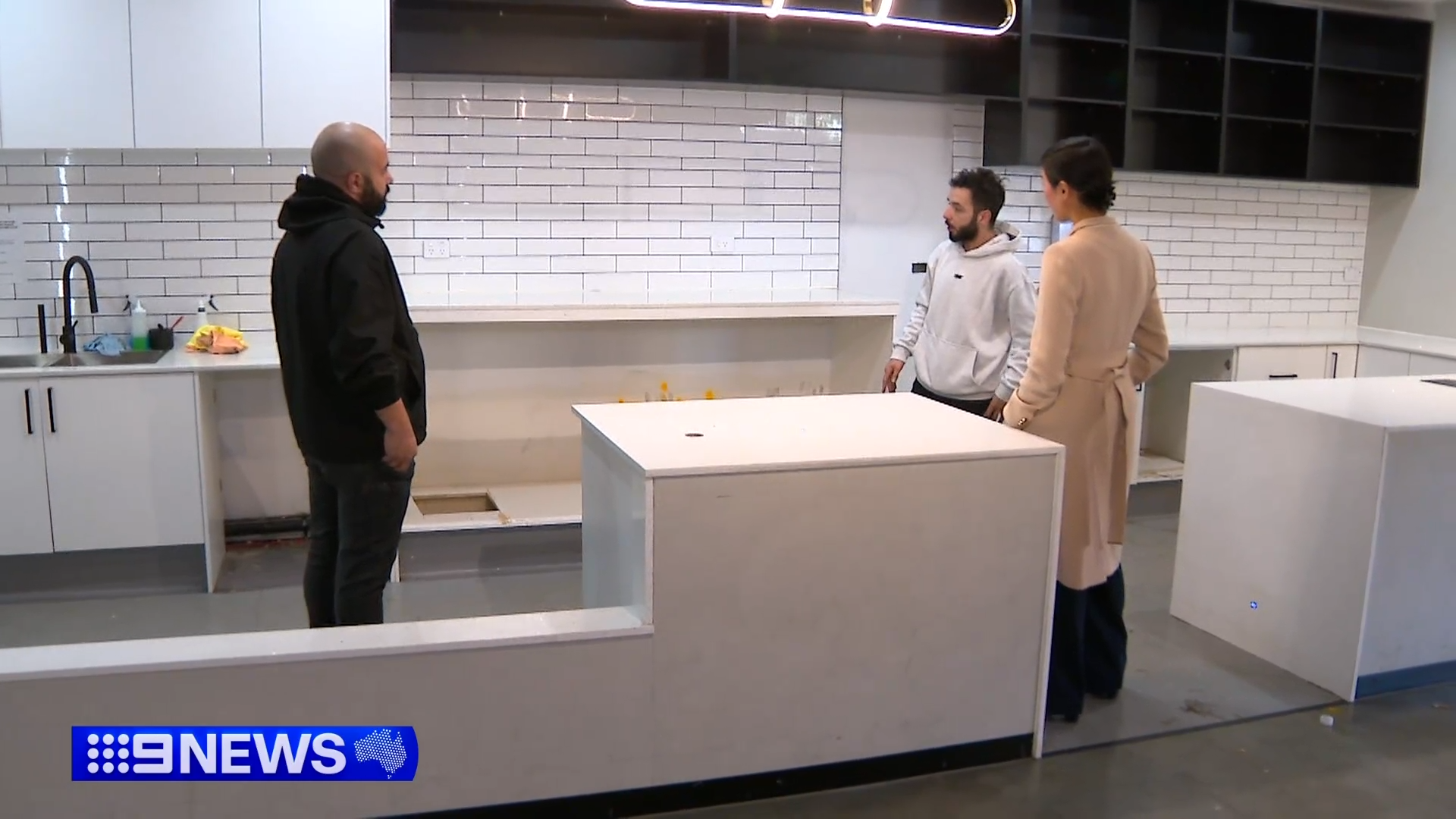
"He made the best coffee in Melbourne, and I'll stand by that," he told 9News.
"He was a pillar of the community, everyone gathered here. Now there's no place to gather."
Victoria Police says there are daily patrols around Footscray to prevent drug offending and antisocial behaviour.
It's a row of empty shops down part of Buckley Street and locals are worried the recent violence will deter new businesses from setting up here.
"It really reflects how badly people are feeling here, they're not safe," one woman told 9News.
"It's just disgusting, it shouldn't be happening."
DOWNLOAD THE 9NEWS APP: Stay across all the latest in breaking news, sport, politics and the weather via our news app and get notifications sent straight to your smartphone. Available on the Apple App Store and Google Play.
All of the changes coming to your wallet from Tuesday
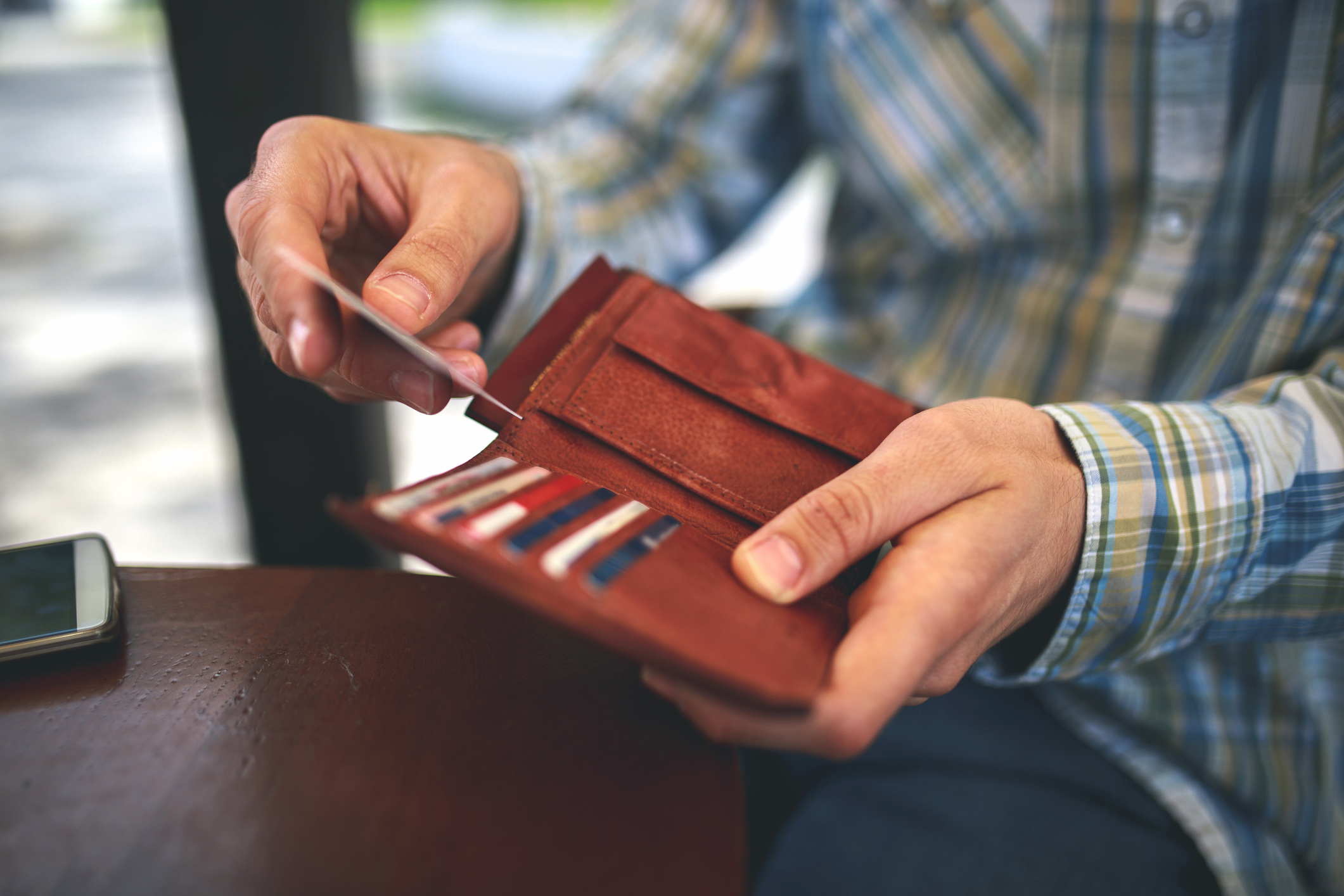
With the new financial year almost upon us, some of Australia's biggest retailers are getting ready to change their loyalty programs.
With the average Australian signed up to 10 rewards schemes, attracting and retaining customers is big business.
From mergers to complete revamps, these are the changes coming to your wallet after June 30.
READ MORE: Higher pay, better parental leave and more super: Everything that's changing on July 1
Qantas Frequent Flyer
Australia's largest loyalty program Qantas Frequent Flyer will partner with David Jones later this year to offer shoppers the opportunity to earn points
Qantas Loyalty CEO Andrew Glance said members would be able to earn points across the retailer's 40 stores and online.
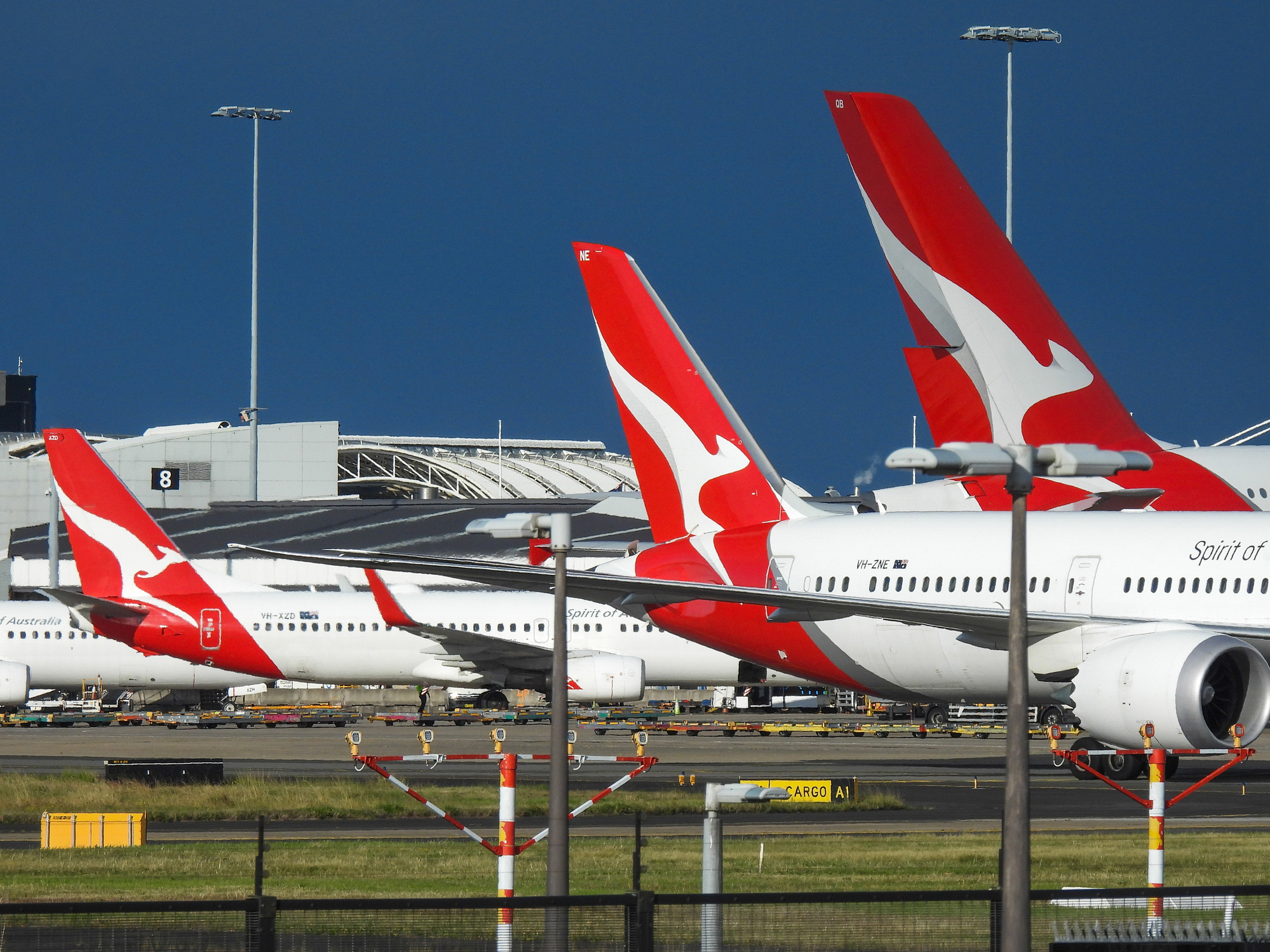
"One in two Qantas Frequent Flyers already shop regularly at David Jones," Glance said.
"The number of points members have earned through retailers has doubled in the last five years, and we anticipate it will double again by 2030, as we expand our footprint across a growing range of retail categories."
Under a change to reward fares, Qantas will increase the number of points required for a classic reward fare.
The majority of reward flights will need an additional 15 to 20 per cent of points from from August 5.
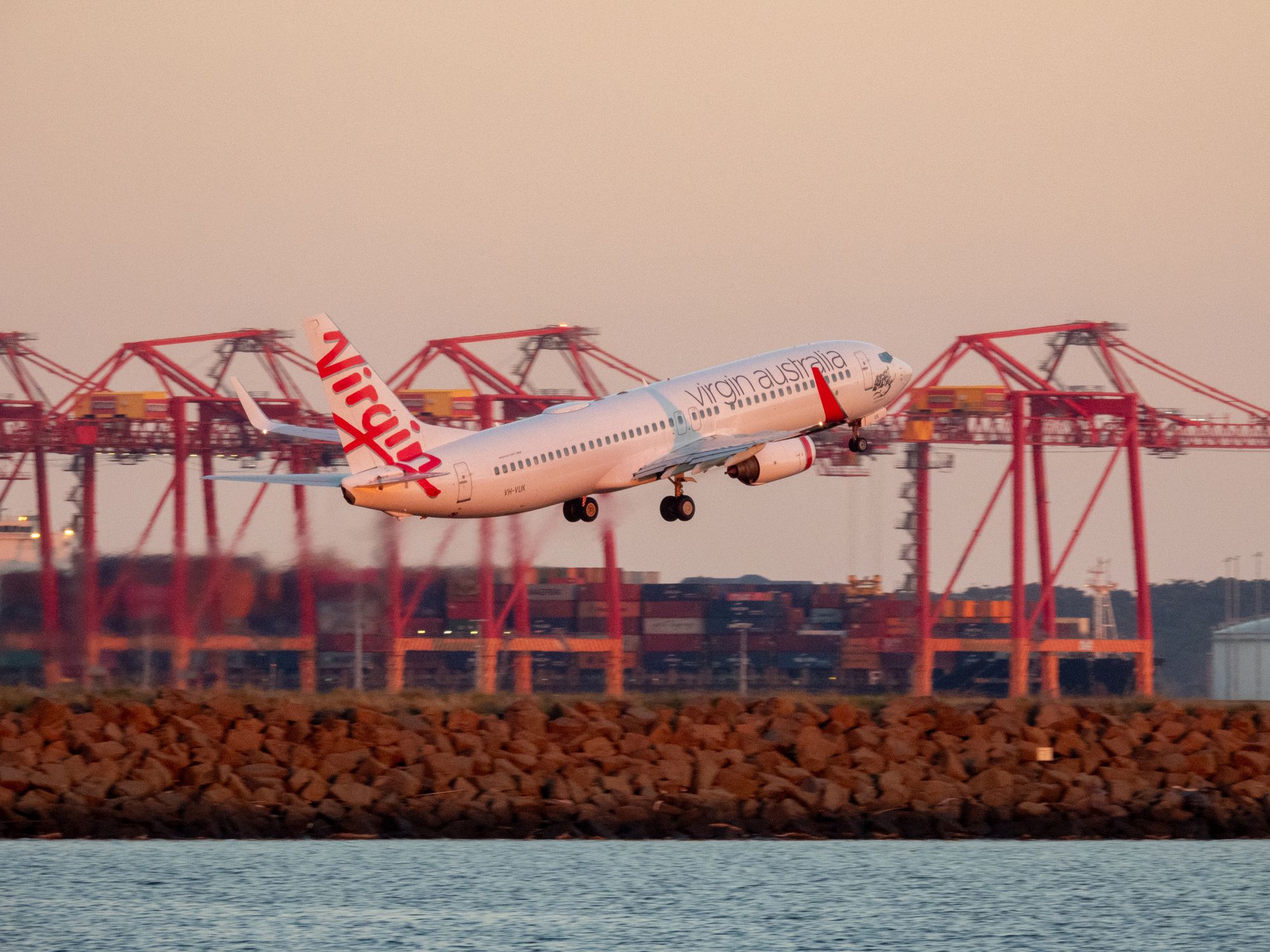
Virgin Australia's Velocity Frequent Flyer
Virgin's Velocity loyalty program will focus on keeping frequent flyers by expanding its status levels for the first time since 2011 to include Platinum Plus.
The new tier will offer perks to keep members in the program such as four complimentary business class upgrades.
The program will also continue its partnership with food delivery service DoorDash.
Just Shop Rewards
Just Group will close its customer loyalty program on June 30 as the company prepares to join department store group Myer.
Just Shop Rewards will shut down and merge with the MYER one loyalty program from August 1.
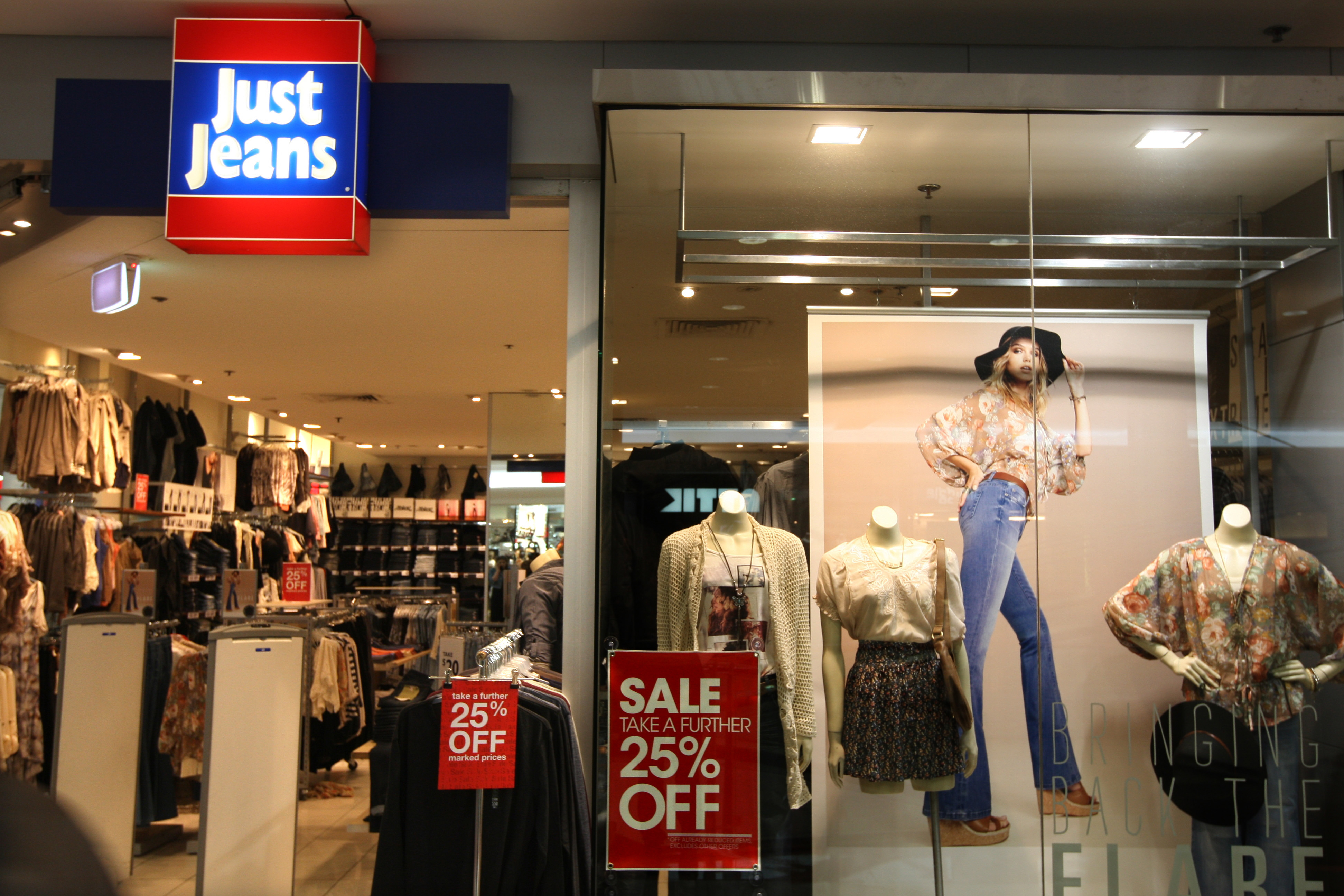
The change will apply to club members shopping at Dotti, Jacqui E, Jay Jays, Just Jeans and Portmans in-store and online.
Existing club members will be able to earn Just Shop Rewards points until June 30 and their benefits will be valid until July 26.
Supercheap Auto
Supercheap Auto will remove a popular feature of its loyalty program on June 30 "underpinned by luck".
The retailer will retire the Best Price Credit benefit from June 30 and replace it with a new Spend and Get feature.

Under the best price credit system, if a club member purchases a product that goes on sale within 14 days, the store will automatically refund the difference as credit to use within 28 days.
Under the new Spend and Get system from July 1, shoppers will receive a $5 credit to their account for every $100 spent on eligible purchases.
Target Shop+ App Rewards
Target will discontinue its customer loyalty program to focus on OnePass and Fly Buys.
The retailer's mobile phone app based program Target Shop+ App Rewards will close on Monday, July 21.
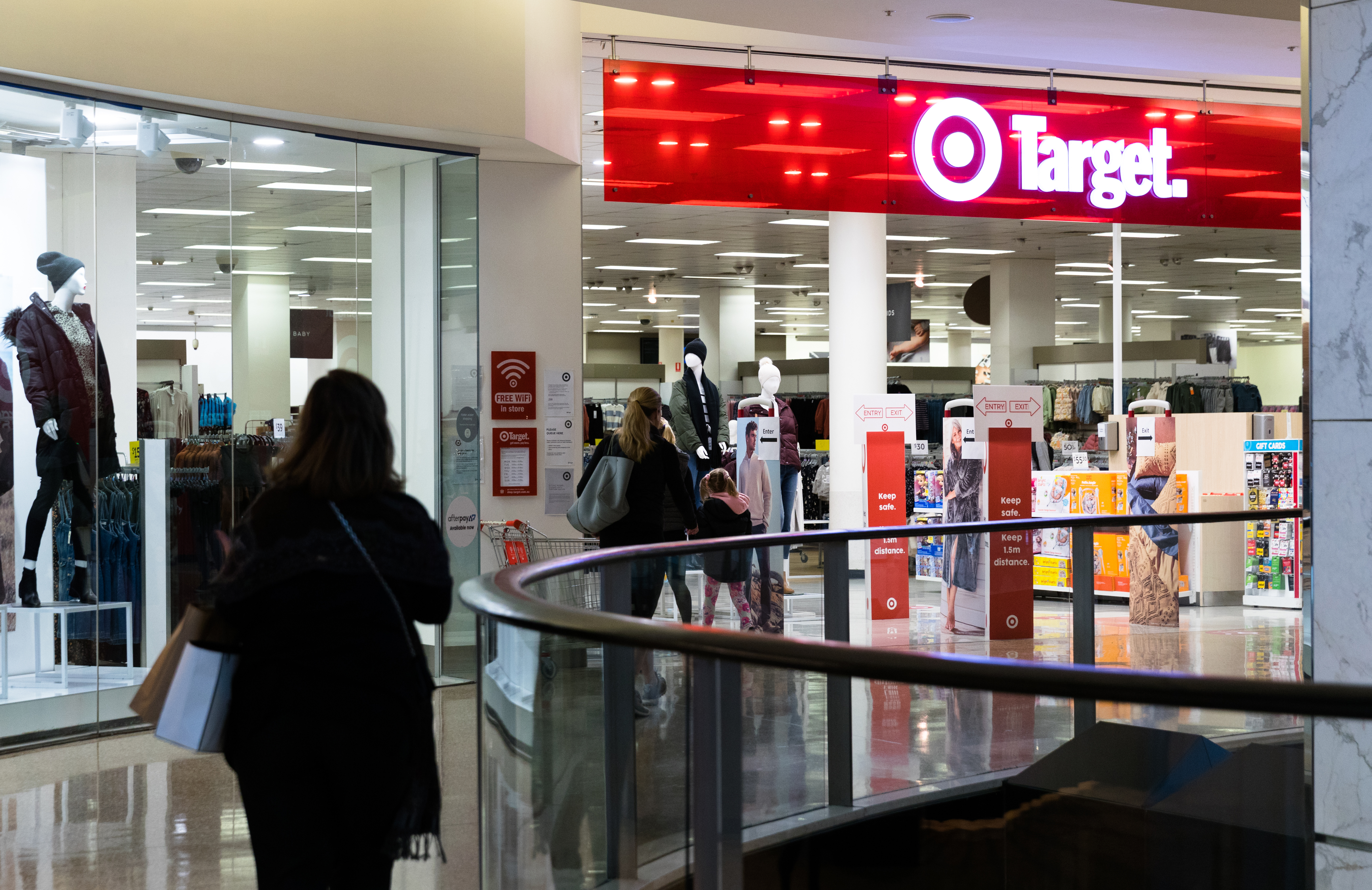
The company said in an email to customers this week that shoppers would be able to redeem their rewards until 11.59pm on the final day in the Shop+ section of the app.
The company said the program was established before the introduction of OnePass to encourage shoppers to download the Target app and create an account.
OnePass
OnePass will focus on driving customers to InstantScripts, which is one of the brands the loyalty program represents.
As an incentive, the program is offering shoppers 30 per cent off their first eligible service with the Wesfarmers-owned health service and 10 per cent off ongoing eligible services.
The loyalty program also allows shoppers to earn points across major retailers including Bunnings Warehouse, Kmart, Target, Officeworks and Priceline Pharmacy.
DOWNLOAD THE 9NEWS APP: Stay across all the latest in breaking news, sport, politics and the weather via our news app and get notifications sent straight to your smartphone. Available on the Apple App Store and Google Play.
UK singer makes emotional return to iconic festival after health struggle
UK singer Lewis Capaldi has made an emotional return to the iconic Glastonbury music festival after taking two years off due to his struggle with Tourette's syndrome.
Tears and cheers overcame the crowd at Glastonbury when Capaldi walked onto the stage for his surprise performance on the festival's Pyramid Stage.
It's the first public concert the singer has performed in two years.

He last played Glastonbury in 2023, but was overcome by tics and was unable to finish singing his songs. The crowd of over 200,000 then began echoing his lyrics back to him as he stood and watched in tears from the stage.
Upon his return today, he again held back tears as the crowd enthusiastically greeted him.
"Glastonbury. It's so good to be back," the singer said from the stage.
"I'm not going to say much up here today because if I do, I think I'll probably start crying.
"But it's just amazing to be here with you all and I can't thank you all enough for coming out and coming and seeing me."
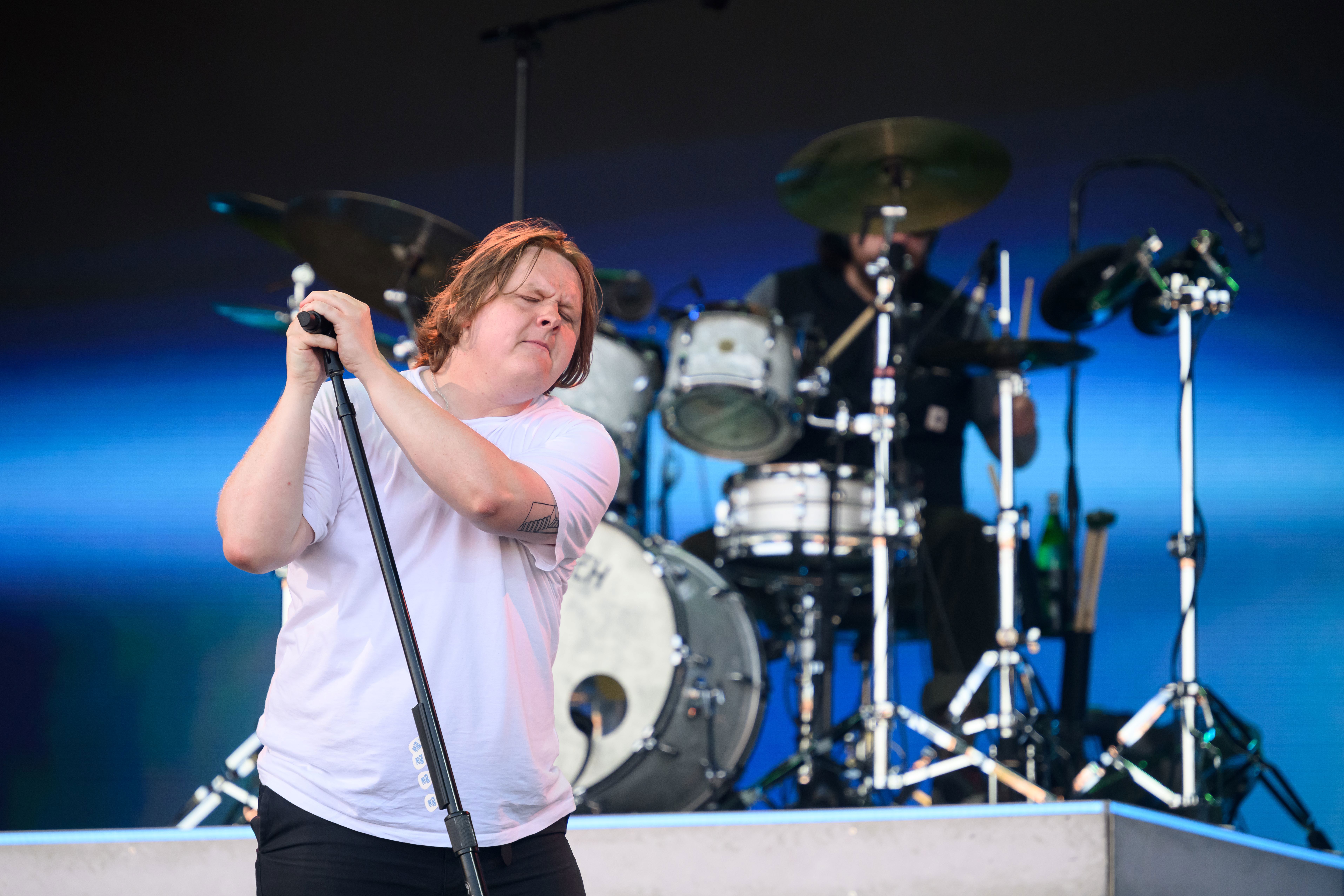
ITV reporter Rishi Davda was in the crowd when he came on stage, telling the Today Show that Capaldi made a triumphant return.
"When Lewis Capaldi's name was put up on the big screen and he walked out, it was not like anything I've ever experienced in a number of years at Glastonbury Festival," he said.
"He sang every song with so much passion, but when he said that first note, you could see he was back doing what he loved.
"That kind of radiated throughout the hundred thousand people potentially, that may have been watching. It was a really, really beautiful moment."
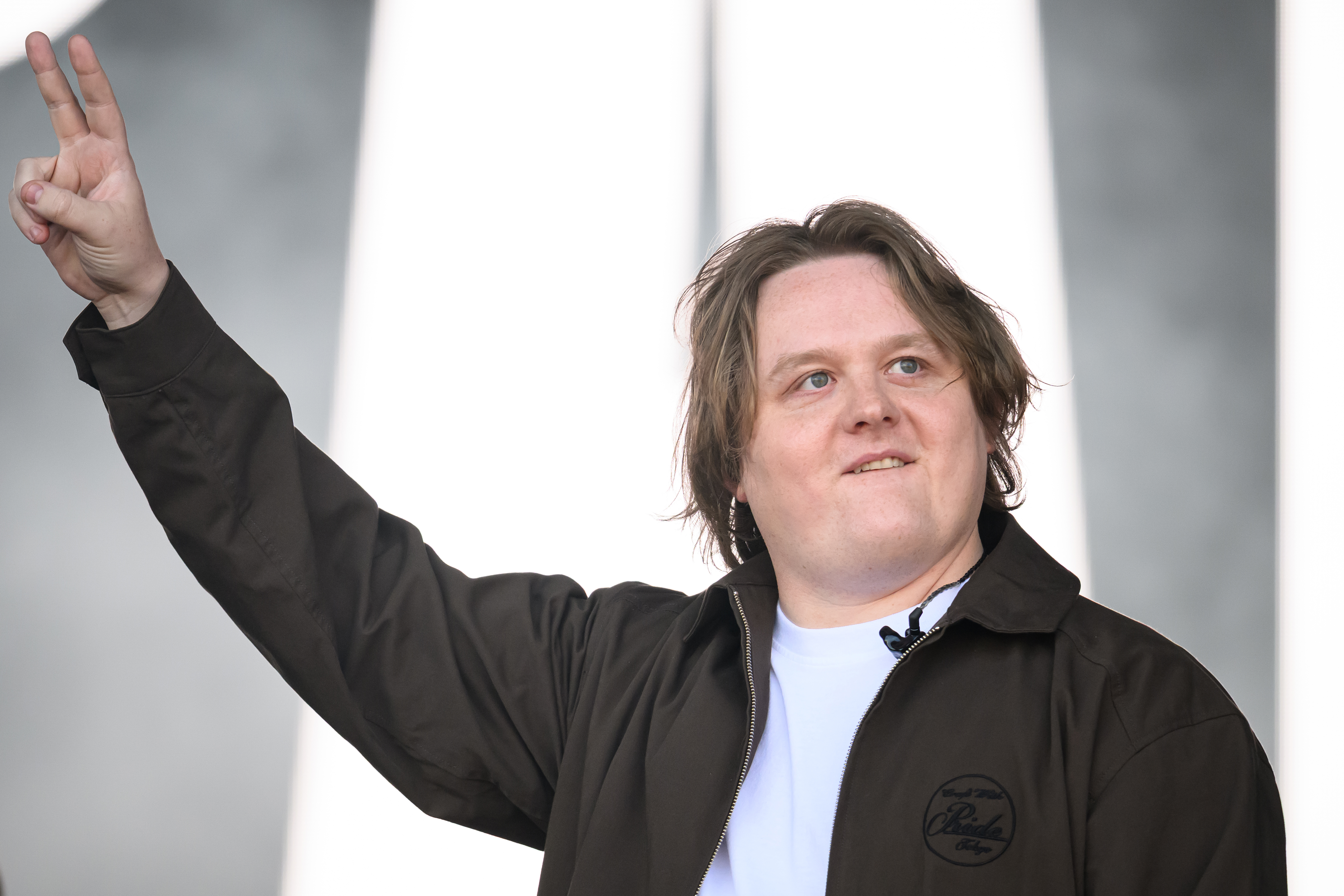
Capaldi took a two-year break from all public performances following the Glastonbury performance in 2023 to work on his physical and mental health.
His return to the stage was supposed to be a secret, but there were some hints around the festival grounds leading up to the show, including lyrics from his songs plastered on a billboard nearby.
Capaldi has always been open about his struggles with Tourette's syndrome, a neurological disorder that causes involuntary and repetitive movements and sounds, referred to as tics.
Iran’s foreign ministry says nuclear facilities ‘badly damaged’ by US strikes
Iran's Foreign Ministry spokesman Esmail Baghaei has confirmed the country's nuclear facilities were "badly damaged" in American strikes over the weekend.
Speaking to Al Jazeera on Wednesday, Baghaei refused to go into detail but conceded the Sunday strikes by American B-2 bombers using bunker buster bombs had been significant.
The fragile ceasefire between Israel and Iran appeared to be holding on Wednesday after a rocky start, giving rise to cautious hope that it could lead to a long-term peace agreement even as Tehran insists it will not give up its nuclear program.
READ MORE: Iran nuclear program only set back 'a few months' after US bombings, intelligence report finds
The ceasefire took hold on Tuesday, the 12th day of the war between Israel and Iran, with each side initially accusing the other of violating it until the missiles, drones and bombs finally stopped.
On Wednesday, US President Donald Trump, who helped negotiate the ceasefire, told reporters at a NATO summit in the Netherlands that it was going "very well".
"They're not going to have a bomb and they're not going to enrich," Trump said about Iran.
Iran has insisted, however, that it will not give up its nuclear program and in a vote underscoring the tough path ahead, Iranian parliament agreed to fast-track a proposal that would effectively stop the country's cooperation with the International Atomic Energy Agency, the Vienna-based UN watchdog that has been monitoring the Iranian nuclear program for years.
Ahead of the vote, Iranian parliament Speaker Mohammad Bagher Qalibaf criticized the IAEA for having "refused to even pretend to condemn the attack on Iran's nuclear facilities" that were carried out by the United States on Sunday.
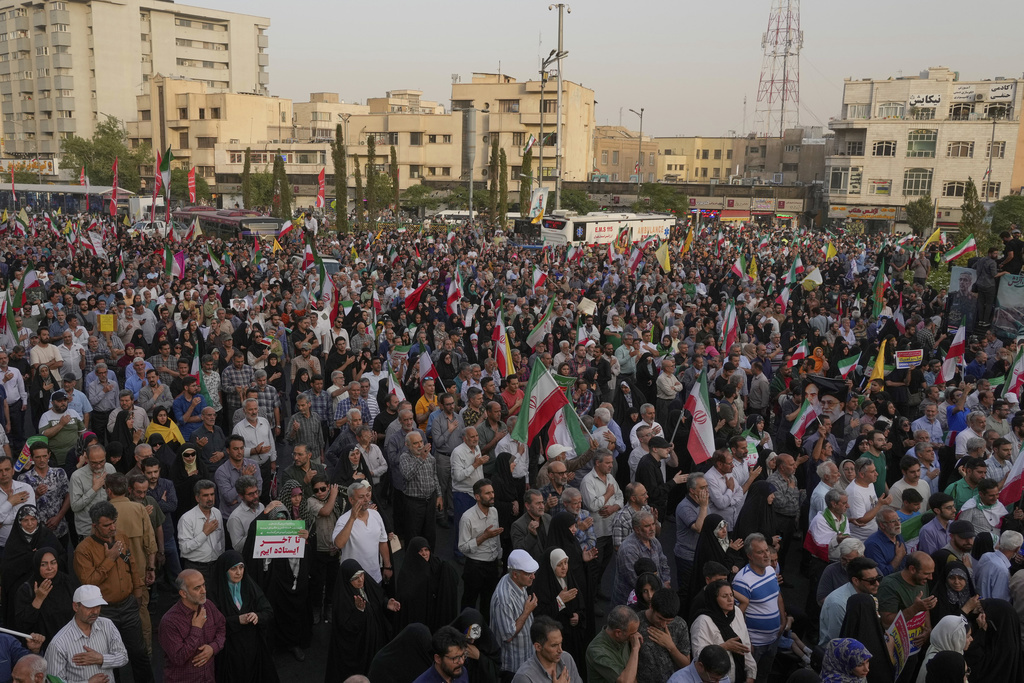
"For this reason, the Atomic Energy Organisation of Iran will suspend cooperation with the IAEA until security of nuclear facilities is ensured, and Iran's peaceful nuclear program will move forward at a faster pace," Qalibaf told lawmakers.
In Vienna, IAEA Director General Rafael Mariano Grossi said he had already written to Iran to discuss resuming inspections of their nuclear facilities.
Among other things, Iran claims to have moved its highly enriched uranium ahead of the American strikes and Grossi said his inspectors needed to re-assess the country's stockpiles.
"We need to return," he said.
"We need to engage."
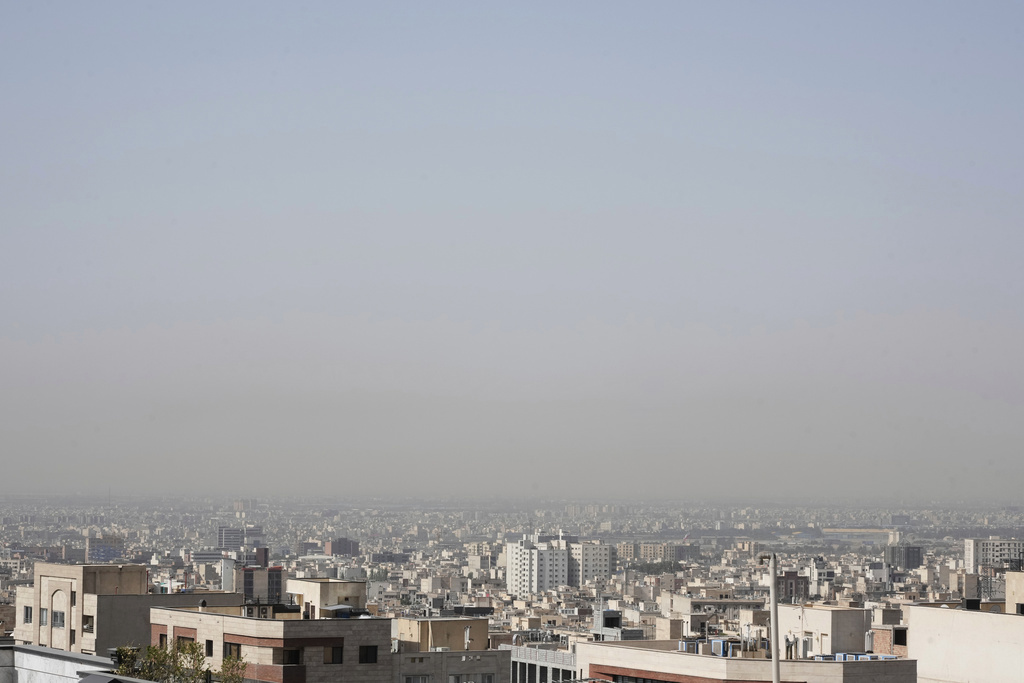
Questions over effectiveness of US strikes
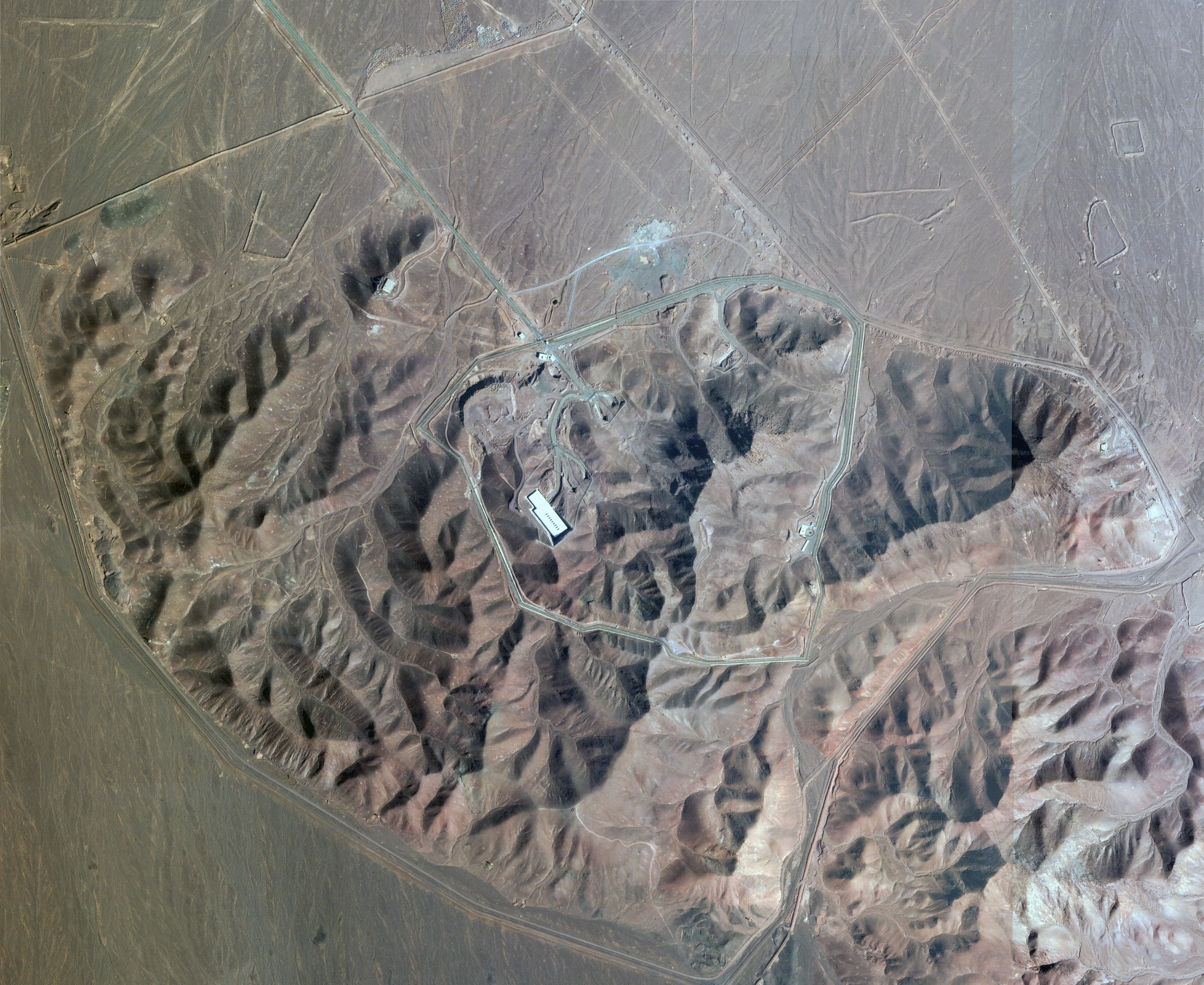
The American strikes hit three Iranian nuclear sites, which Trump said had "completely and fully obliterated" the country's nuclear program.
From Tehran Baghaei confirmed that the strikes on Sunday by American B-2 bombers using bunker-buster bombs had caused significant damage.
"Our nuclear installations have been badly damaged, that's for sure," he told Al Jazeera on Wednesday, while refusing to go into detail.
Trump's special envoy to the Middle East, Steve Witkoff, said on Fox News late on Tuesday that Israel and the U.S. had now achieved their objective of "the total destruction of the enrichment capacity" in Iran, and Iran's prerequisite for talks — that Israel end its campaign — had also been fulfilled.
"The proof is in the pudding," he said. "No one's shooting at each other. It's over."
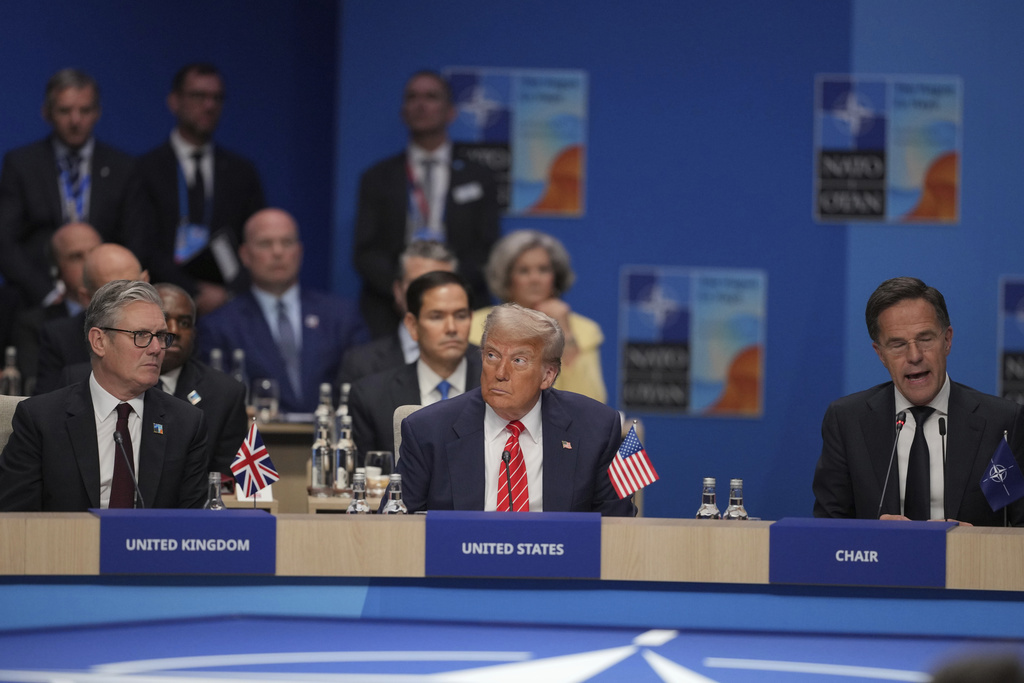
At the NATO summit, when asked about a US intelligence report that found Iran's nuclear program has been set back only a few months, Trump scoffed and said it would at least take "years" to rebuild.
Israeli military spokesman Brigadier General Effie Defrin said on Wednesday his country's assessment was also that Iran's nuclear facilities had been "significantly damaged" and its nuclear program "set back by years".
Grossi said he could not speculate on how bad the damage was but that Iran's nuclear capabilities were well known.
"The technical knowledge is there, and the industrial capacity is there," he said.
"That no one can deny, so we need to work together with them."
DOWNLOAD THE 9NEWS APP: Stay across all the latest in breaking news, sport, politics and the weather via our news app and get notifications sent straight to your smartphone. Available on the Apple App Store and Google Play.
Australians left shivering as icy polar blast sweeps through
A cold front moving across south-eastern Australia is expected to bring an icy polar blast and chilly nights across several states and territories over the next few days.
A powerful cold front and cooling showers will make the temperature feel three to seven degrees colder than the actual temperature in the coming days, Weatherzone reports.
Victoria and southern NSW are experiencing their coldest days of the spell today.
READ MORE: NATO chief hails Trump 'win' in private message to US president
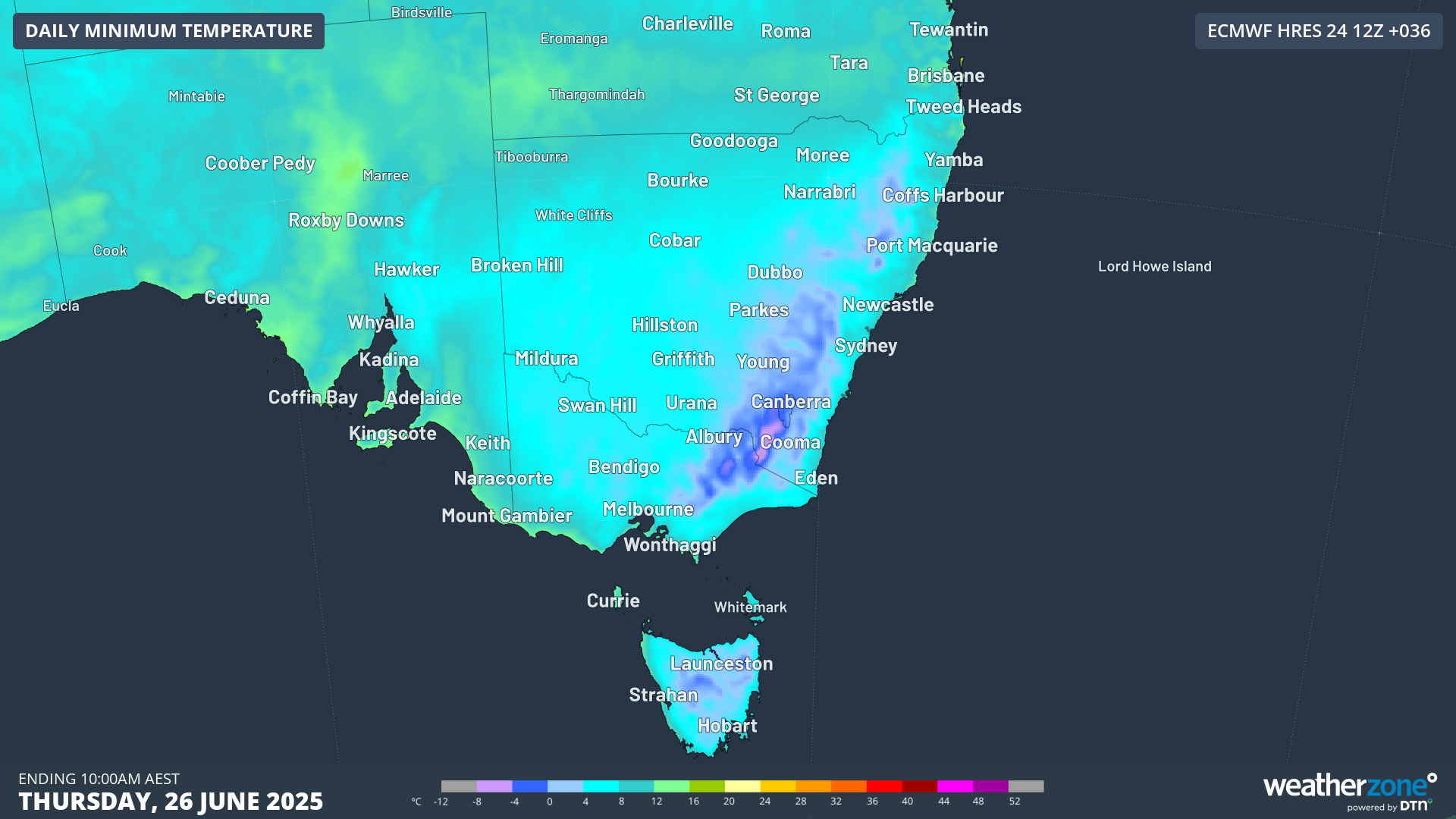
Eastern parts of the country are expected to shiver throughout tomorrow.
"Chilly mornings will take hold into the weekend as this polar airmass slowly dissipates and high pressure brings clearer skies and lighter winds," Weatherzone meteorologist Felix Levesque said.
The polar blast brought snow to some parts of Victoria today including Mount Macedon, Mount Kaye, Mount Buangor, Mount Elizabeth, Mount William and Mount Stanley.
Strong winds resulted in the cancellation of some flights this morning, while others were delayed due to the conditions.
"Due to high winds, airport operations may be affected throughout the day," a spokesperson for Sydney Airport said.
"We recommend passengers check the status of their flight with their airline before travelling to the airport and we thank passengers for their patience and understanding."
DOWNLOAD THE 9NEWS APP: Stay across all the latest in breaking news, sport, politics and the weather via our news app and get notifications sent straight to your smartphone. Available on the Apple App Store and Google Play.
Father and son duo arrested over tradie brawl, police looking for 11 more
A father-and-son duo have been arrested over a massive brawl that broke out at a construction site in Sydney's north-west yesterday morning, with police alleging they are the "ringleaders" behind the melee.
Police were called to a Meriton building site on Sexton Avenue in Castle Hill about 7am, after reports that up to 50 people had become involved in the brawl.
It is alleged that the brawl on Tuesday was the second fight involving the father and son, who police said were fired from the site last Friday.
READ MORE: Trump's press boss hammers 'low-level loser' who leaked bombshell report
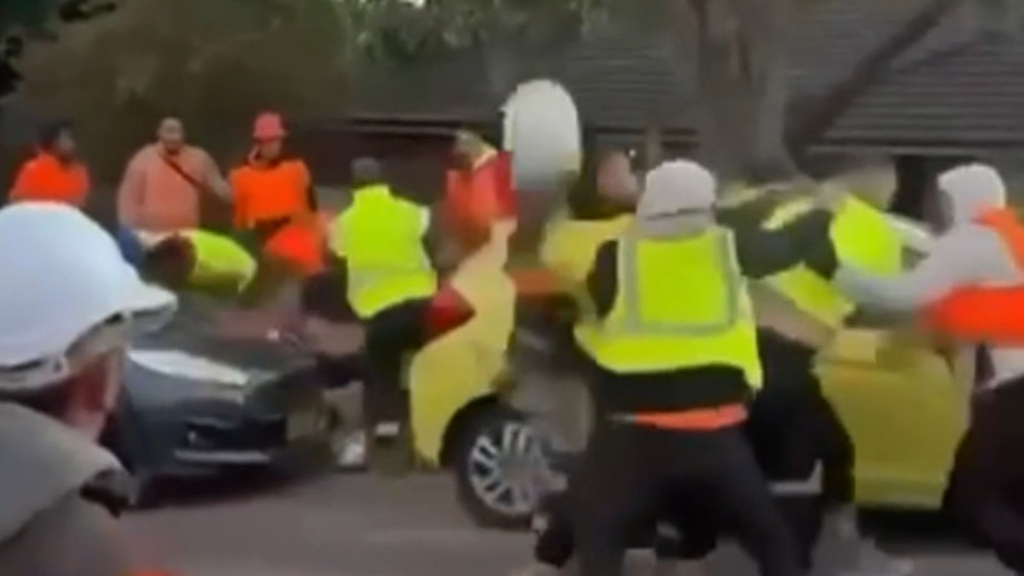
After being let go last Friday, the duo returned to the Castle Hill site on Monday morning, allegedly armed with hammers, according to Hills Police Area Commander Detective Superintendent Naomi Moore.
"Two contractors had been allegedly assaulted by subcontractors, who I believe had been terminated from the site last Friday," Moore said.
She said they were initially armed with hammers, but they put them down and "engaged in a fist fight with two of the contractors" on Monday.
They left before the police arrived, before allegedly returning yesterday with backup.
"On Tuesday, the same two male offenders returned to the site, this time with some other people who were not known to work at that site previously," Moore alleged.
Video of the struggle showed dozens of people trading blows, with one man appearing to be kicked in the head with a steel-cap boot, and another beaten on the head with a hard hat.
By the time police arrived, the fight had broken up.
Paramedics took a 43-year-old and a 55-year-old man to hospital with minor injuries, and they have both since been released.
Moore said there had been a significant investigation, with the help of the companies, to identify the men involved.
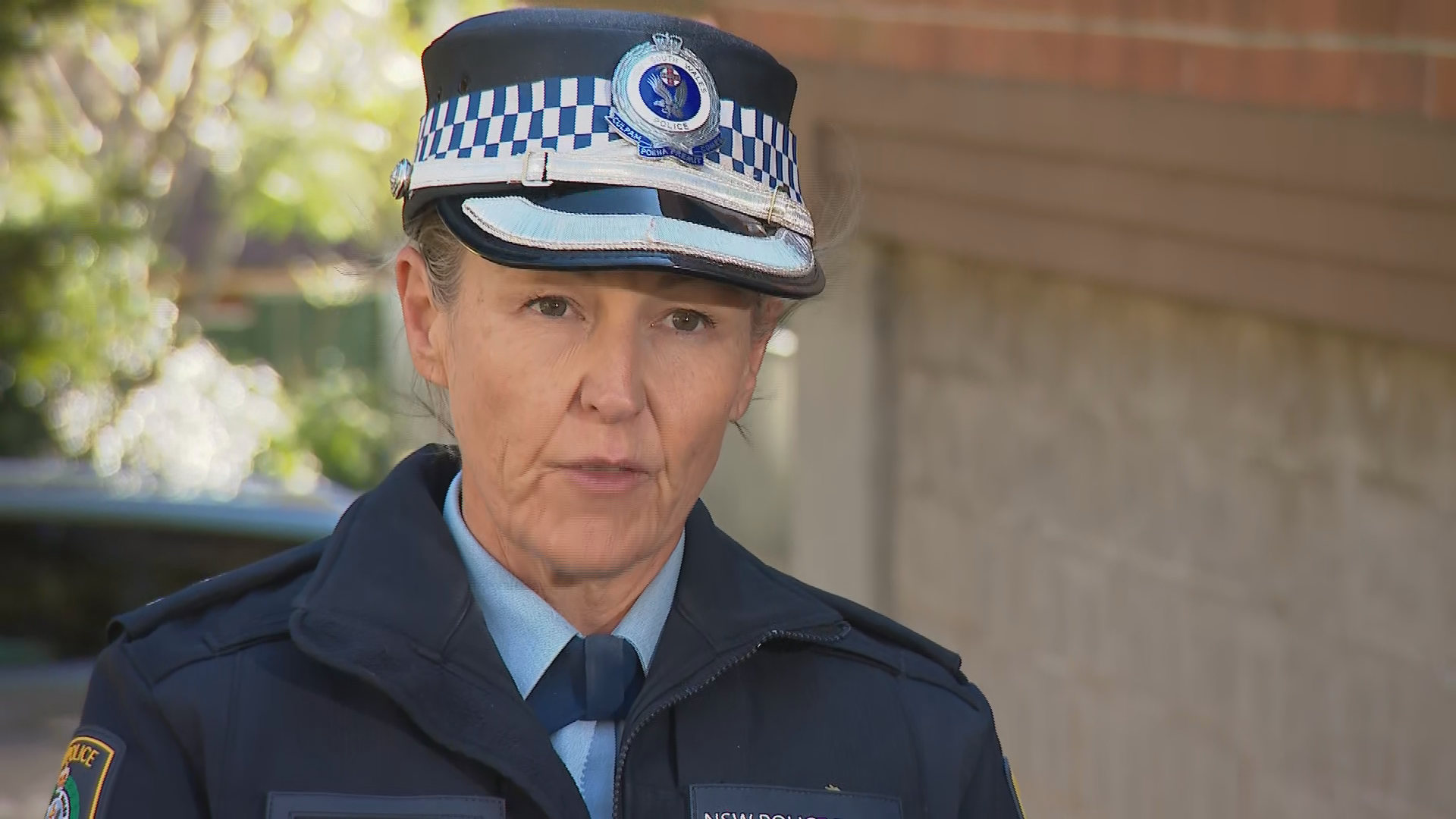
"The two main offenders, who I will allege are probably the ringleaders in this, have presented themselves to the police station," Moore said.
"On the Monday, there was some frustration and anger from their termination on the Friday, and whether they've gone there to resolve it, one would argue they haven't as they've attended with hammers."
They were arrested at Castle Hill Police Station at about 11am.
They are expected to be hit with charges of affray, assault, and intimidation over the two alleged incidents.
Police are still looking for up to 11 other people over the incident.
Moore said officers have footage, including CCTV from nearby premises, that will help to identify them.
"It blew my mind if I'm honest, I've not seen anything like that before."
She urged those people to come to police, "before we come and knock on their door".
"The behaviour is absolutely appalling, and we won't stop until they are in custody," Moore said.
In a statement yesterday, Meriton said the contractors involved in the fight had been fired.
"Meriton promotes safety and does not condone any violent or threatening behaviour on its job sites, whether employees, subcontractors or visitors," it said in a statement.
"No direct Meriton employees were involved in the incident that took place today on the street, outside of its Castle Hill construction site.
"Appropriately, the local police were called who have since intervened and we have ascertained that there were no serious injuries.
"The contractors involved in the fight have been immediately terminated."
DOWNLOAD THE 9NEWS APP: Stay across all the latest in breaking news, sport, politics and the weather via our news app and get notifications sent straight to your smartphone. Available on the Apple App Store and Google Play.
‘I need help with you’: Trump’s blunt message to Putin
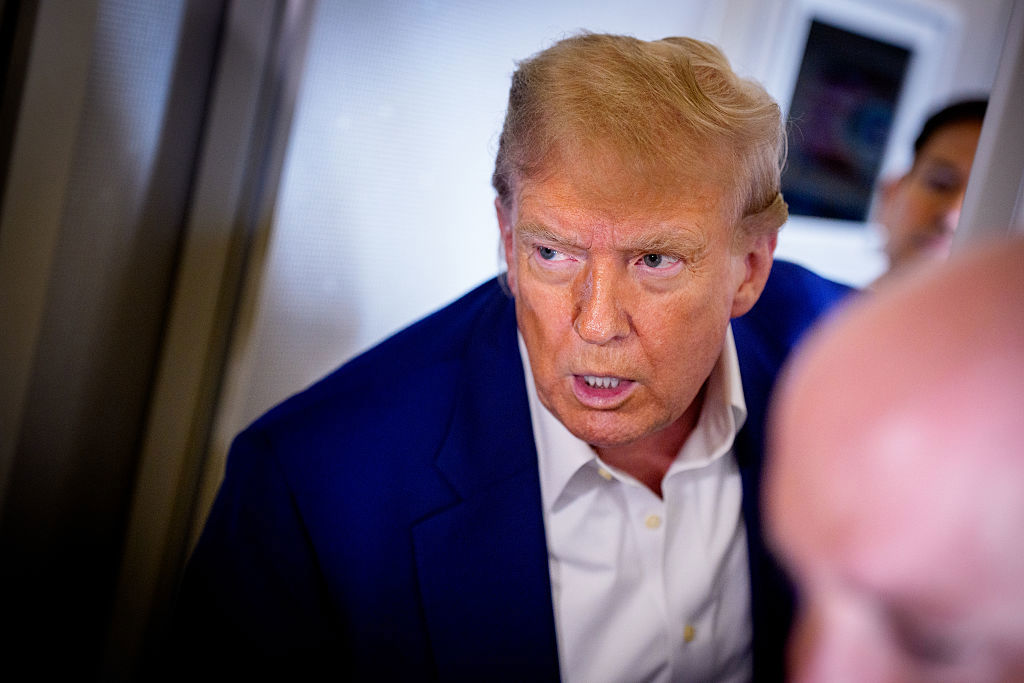
Donald Trump says he rejected Vladimir Putin's offer to help with the Iran-Israel conflict, retorting that he instead needed help dealing with the Russian president's own actions.
The US president told reporters Putin phoned him ahead of the temporary ceasefire deal between the warring nations and asked if he needed any assistance.
"I said, 'No, I don't need help with Iran, I need help with you'," Trump said before boarding Air Force One to head to the NATO summit in the Netherlands.
READ MORE: Trump explodes in tirade against warring nations
READ MORE: Man fighting for life, another injured after stabbing at western Sydney Kmart
"I hope we are going to be getting a deal done with Russia".
It's unclear if Putin's call came before or after the US strike on three nuclear facilities in Iran.
Leaders are expected to discuss continued support for Ukraine amid Russian aggression during the NATO summit this year, the first meeting of which Trump will join since beginning his second term in January.
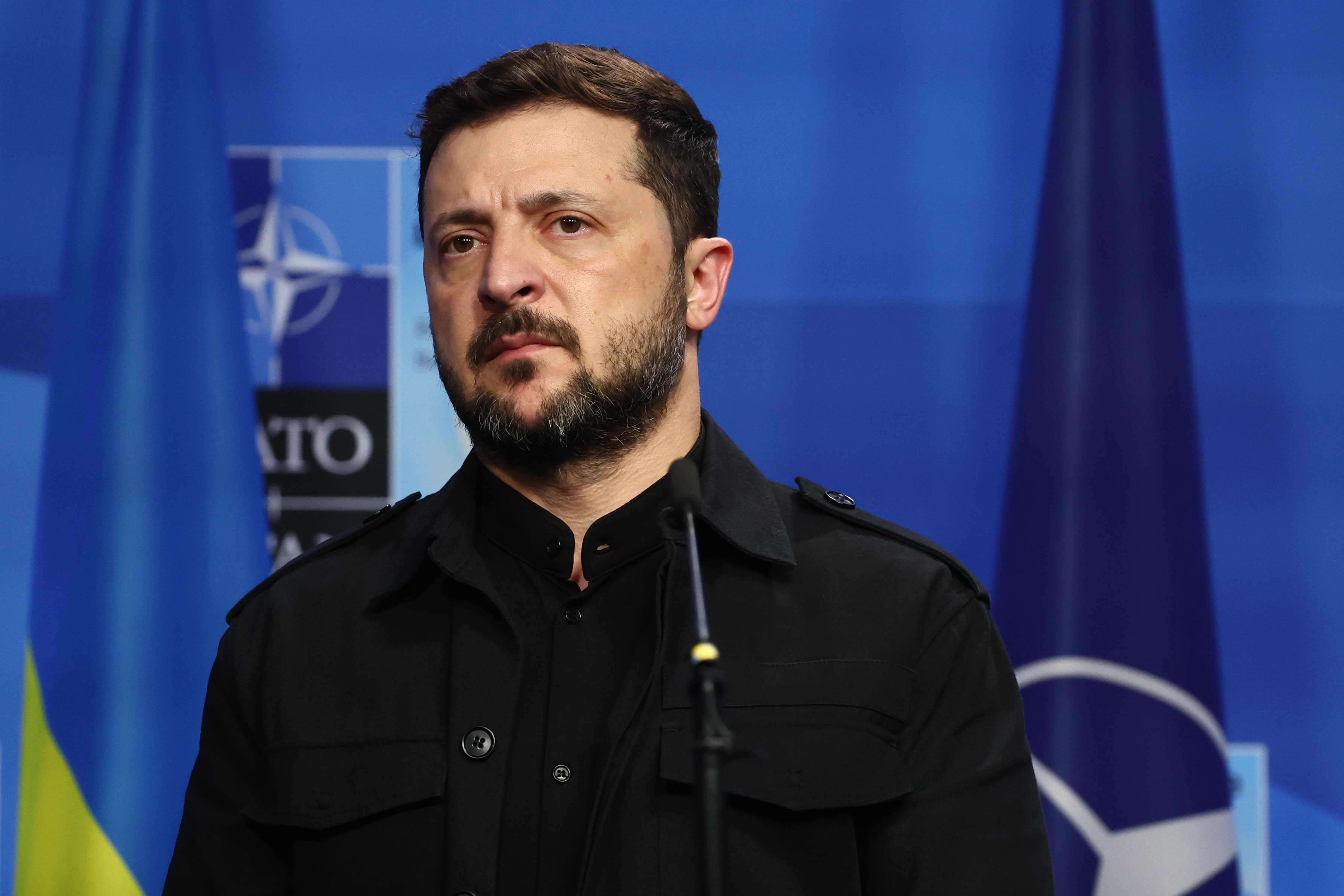
Ukrainian President Volodymyr Zelenskyy is set to meet Trump during the two-day summit in The Hague.
Trump skipped an anticipated meeting with Zelenskyy after departing the G7 summit in Canada early, leaving both the Ukrainian president and Australian Prime Minister Anthony Albanese in the lurch.
READ MORE: NATO chief hails Trump 'win' in private message to US president

At least 17 people were killed and more than 100 were injured in Russia's latest air strikes on south-east Ukraine on Tuesday.
The attack took place as Zelenskyy arrived in the Netherlands for the NATO meeting.
DOWNLOAD THE 9NEWS APP: Stay across all the latest in breaking news, sport, politics and the weather via our news app and get notifications sent straight to your smartphone. Available on the Apple App Store and Google Play.