Tag Archives: oceania

Defence minister recalls walking in footsteps of veteran grandfather

Deputy Prime Minister and Minister for Defence Richard Marles has described the moment he walked in the footsteps of his grandfather, Percy Pearce, who fought in the Battle of Pozières in 1916.

Marles told Today about a trip he took to Pozières in 2022, when a local historian took him to the site where his grandfather won his Military Cross for exemplary gallantry.

"At first I thought it was a joke… but as he started talking through the battle I thought, 'Oh my god, this is really it'," Marles said.

READ MORE: Man accused of murdering NSW teen Audrey Griffin found dead in jail cell

"By the time he finished speaking, I was in tears, the chief of the defence force was in tears…

"He was a young man who was faced with just the most terrifying moment: a retreat, as the Germans had basically pierced the line.

"There would have been mayhem as Australians were running past him and he managed to form them up and to hold his spot and in that moment, you know, in a war where literally feet and metres were counted in lives lost, he was able to maintain that line.

"It's an enormous moment of pride for me but to be there and to see it was incredible."

The Battle of Pozières, part of the Somme offensive of the First World War, was a costly and brutal campaign that saw 23,000 Australian casualties, 6800 of whom died, in just weeks of conflict.

Marles said his grandfather seldom spoke about his time at war.

"This is a man I knew, I can remember sitting with grandpa watching the cricket so I have memories with this person.

"This is not a distant figure whose name is only in history, it's a person who I share memories with in my own life.

"I never saw him in the context of someone who fought in war. He didn't like talking about it."

Marles attended this morning's Anzac Day dawn service at the Shrine of Remembrance in Melbourne, where agitators booed during the Welcome to Country acknowledgement by Indigenous elder Uncle Mark Brown.

He said he understood the outrage felt across the country but did not want to give airtime to the "appalling" act.

"I was here this morning and witnessed it and I absolutely feel that sense of outrage and I know that people in the crowd did today as well.

"It is a small number of people, and you know what, we should not be giving them airtime.

"Today was a beautiful service."

DOWNLOAD THE 9NEWS APP: Stay across all the latest in breaking news, sport, politics and the weather via our news app and get notifications sent straight to your smartphone. Available on the Apple App Store and Google Play.

Jaime’s tumour grew to 7cm before her doctors listened to her

The mother of a NSW woman who died of cervical cancer has told how her daughter spent more than a year trying to get doctors to listen to her concerns.

Amanda Ne'Roi is speaking out about her daughter Jaime's devastating case as three peak research organisations – the Australian New Zealand Gynaecological Oncology Group, Ovarian Cancer Australia and the Ovarian Cancer Research Foundation – join forces to call on the government to commit $100 million in funding towards gynaecological cancer.

Around 19 Australian women a day are diagnosed with a gynaecological cancer, according to December 2024 statistics from the Australian Institute of Health and Welfare (AIHW).

Jaime Ne'Roi, pictured with her daughter Indiana. Jaime died in 2023 when Indiana was aged one.

However, survival rates for gynaecological cancers have stagnated and fallen well behind improvements for other cancers, such as breast cancer.

In the 15 years between 1991–1995 and 2016–2020, the five-year survival rate for women with gynaecological cancers increased by just 6 per cent, compared with 13 per cent for breast cancer, the AIHW data shows.

Ne'Roi said Jaime knew something was not right a few months after she gave birth to her second child, Indiana, in May 2020.

"She was having spotting, discharge, and an upset stomach. She felt sick. She just knew something was wrong," Ne'Roi said.

Jaime went to her GP, who referred her to a gynaecologist she had seen a decade earlier, when abnormal cells were detected on her cervix.

At the time, the gynaecologist decided against a hysterectomy because she was yet to have children.

Ne'Roi said the gynecologist dismissed her daughter's symptoms because she had recently given birth.

"He said it was just because she had a baby. He didn't even give her a pap smear test," Ne'Roi said.

It took her daughter Jaime more than a year for doctors to listen to her concerns, her mother Amanda Ne'Roi said.

Jaime then went to another gynaecologist, who also attributed the symptoms to her having had a baby and put her on the contraceptive pill, Ne'Roi said.

"She kept saying to them, there's something very wrong."

Ne'Roi said she remembered having conversations with Jaime, who was very worried, and telling her to go back to the gynaecologist.

After another visit, the gynaecologist agreed to do an internal examination via a laparoscopy in August 2021, which revealed Jaime had stage 3 cervical cancer at the age of 37.

"By the time she actually got a doctor to listen, she had a seven-centimetre tumour and it was inoperable," Ne'Roi said.

Jaime underwent radiation and chemotherapy, and briefly received good news in December 2021, when a scan showed up clear.

However, by February 2022 the cancer was back and had spread to her uterus and lymph nodes.

A hysterectomy and more chemotherapy and radiation followed, but Jaime's health was deteriorating fast.

The last option presented by Jaime's doctors was immunotherapy, however, the family was told it would need to foot the bill at a cost of $6000 a fortnight.

"My husband and I were looking at selling up our property, everything – so were her brothers," Ne'Roi said.

With the money needed immediately, however, the family started an online fundraiser, which allowed Jaime to start the treatment.

The treatment was not unsuccessful and Jaime died in July 2023, just under two years after she was first diagnosed.

She left behind her partner and two children, Harrison, then aged six, and Indiana, aged one.

"The hardest thing I've had to do in my whole entire life was to tell my grandson his mum had gone," Ne'Roi said.

"He burst into tears and said, 'I just want my mommy back.'"

Jaime Ne'Roi died two years after she was diagnosed with stage three cervical cancer.

Rates of cervical cancer have been increasing in Australia, despite the national rollout of the HPV vaccine in 2007, which provides some protection against the cancer-causing virus.

Between 2000 and 2024, incidence rates of cervical cancer have climbed from 5.5 cases per 100,000 people to 8, AIHW data shows.

Ne'Roi said Jaime had been vaccinated for HPV, which showed why women should not become complacent about the disease.  

"I think the trouble is, people become very complacent about gynecological cancers, they aren't mentioned much. Breast cancer is huge," Ne'Roi said.

"I'm sharing this story to illustrate the hidden crisis impacting all Australian women, because it can hit any one of us at any time."

More money was desperately needed for research for all gynecological cancers, Ne'Roi said.

Professor Clare Scott, Australia New Zealand Gynaecological Oncology Group (ANZGOG) chair, said gynecological cancers had been left underfunded for decades and were a hidden crisis that was expected to grow.

Gynecological cancers – which include uterine, ovarian and cervical cancers – are predicted to surge by 21 per cent over the next 10 years.

"For too long, gynaecological cancers have been overlooked and underfunded, leaving women with limited treatment options and unacceptable survival rates," Scott said.

"These are not just statistics – they are our mothers, sisters, daughters, wives, and friends… we must do better."

ANZGOG, along with Ovarian Cancer Australia and the Ovarian Cancer Research Foundation, are seeking $100 million in federal government funding over four years to go towards more personalised treatments for patients, clinical education, a national research databank and drug trials.

"The survival rates for gynaecological cancers have barely changed in decades. That fact alone should be a wake-up call," Ovarian Cancer Research Foundation CEO Robin Penty said.

"We know that the answers are there – they lie in research and in better understanding of women's bodies and women's pain. To reveal them we need appropriate and proportionate investment."

A spokesperson for Health Minister Mark Butler said he would continue discussions with the ANZGOG about their proposal.

"The Albanese Labor government is doing all we can to support patients, families, loved ones and carers on the cancer journey," the spokesperson said.

"That's why we fund a range of programs to ensure Australians diagnosed with gynaecological cancer have better outcomes no matter where they live."

Expert panel reveals third leaders’ debate winner

Opposition Leader Peter Dutton has narrowly been crowned the winner of a third federal election leaders' debate marked by multiple heated clashes.

Regular accusations of lying were scattered among arguments on cost of living, energy policy, housing and how to deal with US President Donald Trump on Nine's The Great Debate tonight.

After the dust settled, the three-person expert panel handed Dutton a tight 2-1 win over Prime Minister Anthony Albanese.

AS IT HAPPENED: Albanese and Dutton clash in third leaders' debate

Opposition Leader Peter Dutton during the third leaders' debate

Nine political editor Charles Croucher and Nine radio's Deborah Knight handed narrow wins to Dutton while Australian Financial Review political editor Phil Coorey had Albanese as the slight winner.

"Very close, but I think by far Peter Dutton's best debate… in my eyes, he won by a nose," Croucher said.

Accusations of lying

Things got heated early on in the debate when the topic of Medicare came up.

Albanese said the Coalition had "ripped" $80 billion from health and education in the 2014 budget.

Dutton interjected: Prime Minister, you couldn't lie straight in bed. Honestly, this is unbelievable –

Albanese replied: "You can go to abuse –"

Dutton: "It's just the reality –"

Albanese: "You can go to personal abuse, that's a sign of desperation, Peter, frankly –"

Dutton: "As is lying –"

Albanese: "It's a sign of desperation. Go to the 2014 budget papers. People can do that online. It's all available for all to see."

READ MORE: The 10 closest seats heading into the 2025 federal election

Opposition Leader Peter Dutton and Prime Minister Anthony Albanese during the third leaders' debate, The Great Debate hosted by Nine, during the 2025 federal election campaign

An AAP FactCheck published in March found that while Dutton "planned in 2014 to cut hospital spending by $50 billion over the coming decade, his forecast spending reductions did not happen". The rest of the claimed figure comes from $30 billion in projected savings to education.

It was far from the only time Dutton accused Albanese of lying, which has been a key part of the Coalition's messaging throughout the campaign.

Other key clashes came on nuclear energy, balancing the budget and how to deal with strongman foreign leaders.

Both leaders have made big spending promises on the campaign trail, principally Labor's income tax reduction and the Coalition's temporary cut to fuel excise.

Asked about where he would make savings, Dutton didn't identify any specific cuts but promised to work with central agencies to "identify where there are problems in the budget".

READ MORE: Liberal campaign truck crashes into early voting centre

Opposition Leader Peter Dutton and Prime Minister Anthony Albanese during the third leaders' debate, The Great Debate hosted by Nine, during the 2025 federal election campaign.

Albanese argued Dutton should identify the specific areas where his government will make savings.

"There will be cuts afterwards. He's just confirmed that, but they won't tell you what they are now. That's just not being fair dinkum," he said.

Moderator, A Current Affair host Ally Langdon, wasn't impressed.

"I'm not sure that anyone at home is feeling that either of you are being fiscally responsible at the moment, and we're really concerned about the level of debt we're going to be leaving our grandkids," she said.

READ MORE: The election promises Labor and the Coalition have made to win your vote

Opposition Leader Peter Dutton and Prime Minister Anthony Albanese during the third leaders' debate, The Great Debate hosted by Nine, during the 2025 federal election campaign

Nuclear energy

On energy, Dutton said he was committed to nuclear power because it's good for the country, "not because it's politically popular".

"We're paying three times the cost of electricity in this country compared to other parts of the world that have nuclear underpinning renewables," he said.

"We can't pretend that, as the prime minister and (Climate Change and Energy Minister) Chris Bowen keep talking about, that wind is free and solar is free.

"If that were the case, why have your power bills gone up by $1300 instead of down by $275."

Albanese pointed out a string of problems with rolling out nuclear energy in Australia, principally a national moratorium and opposition from several states.

"This is a friendless policy because it doesn't stack up. That's why the business community signed up to our plan for 43 per cent reduction by 2030. Renewables, but backed by gas, backed by hydro and backed by batteries," he said.

"And that is what the Australian Energy Market Operator, what all the private sector investors want to do."

Prime Minister Anthony Albanese during the third leaders' debate

The Trump question

As always, the question of how to deal with US President Donald Trump and other powerful foreign leaders loomed large.

In the last debate, Dutton admitted he'd never met Trump, which was seen by many as a bit of a stumble. He took a different approach this time, stressing that he dealt with the Obama and Trump administrations as a senior minister and attacked Albanese's efforts to negotiate, saying he "can't even get a phone call".

Albanese said the idea Dutton could negotiate an exemption for the latest round of tariffs, which at this point apply to almost every country in the world including many US allies, was "complete nonsense".

Opposition Leader Peter Dutton and Prime Minister Anthony Albanese shake hands at the end of the third leaders' debate

Social media bipartisanship

In the post-debate analysis, Croucher suggested it was the "feistiest" but "also the friendliest" of the match-ups so far.

There was even a brief moment of bipartisanship when both men agreed big tech companies should pay for Australian news and young kids shouldn't be on social media.

Dutton said the major parties were on a "unity ticket" over the news bargaining incentives and Albanese said the social media ban for under-16s was "world leading".

They also rose to the task with aplomb when asked to list not one but three things they admired about their rival, with both men listing family as among the other's greatest achievements.

DOWNLOAD THE 9NEWS APP: Stay across all the latest in breaking news, sport, politics and the weather via our news app and get notifications sent straight to your smartphone. Available on the Apple App Store and Google Play.

Man accused of murdering ‘kindest’ teen didn’t know her, police say

Police have revealed they don't believe the man accused of killing a NSW teen "with the kindest soul" knew the 19-year-old before her death.

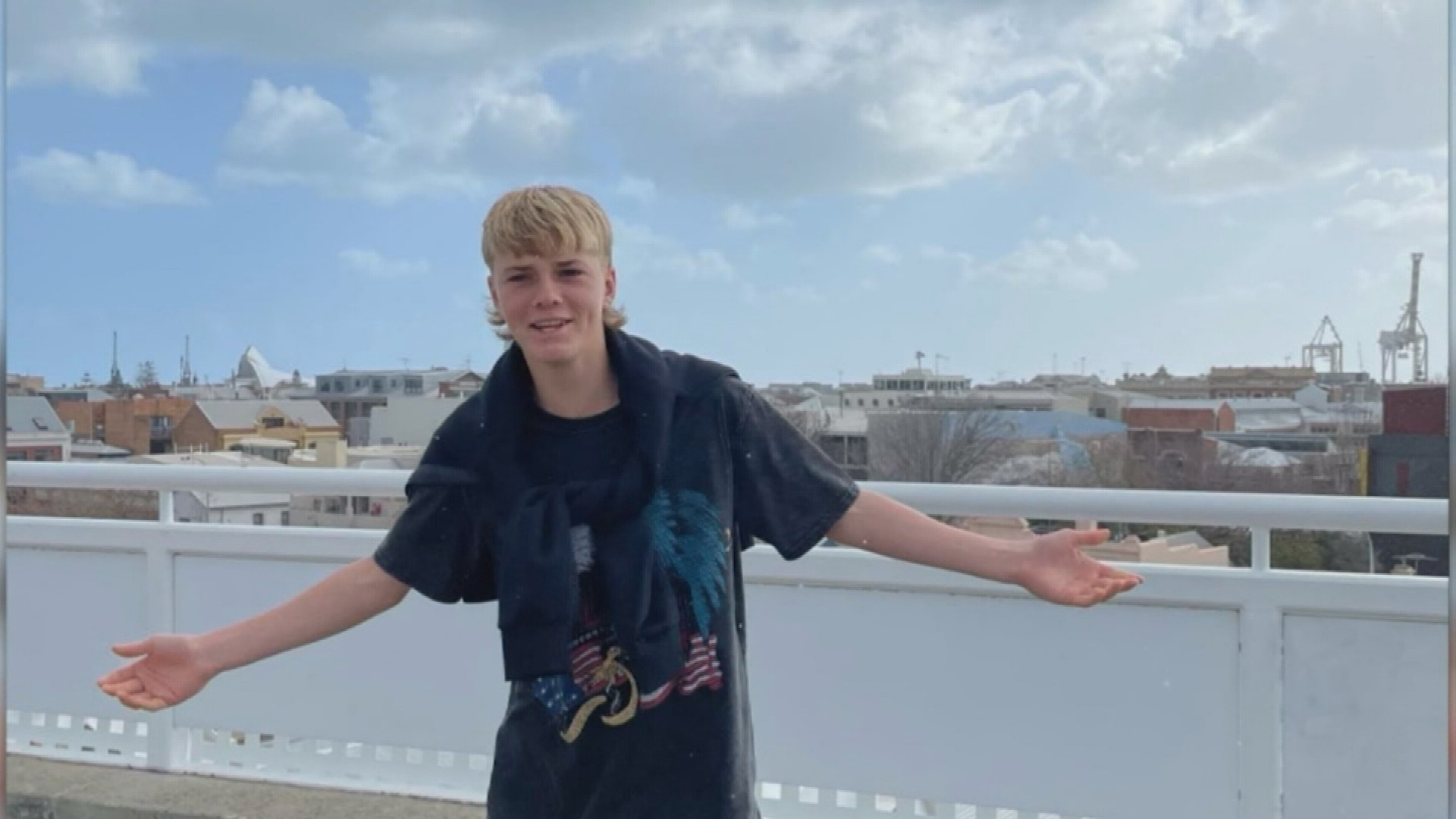
The body of Audrey Griffin was discovered partially submerged in Erina Creek on the NSW Central Coast on the afternoon of March 24.

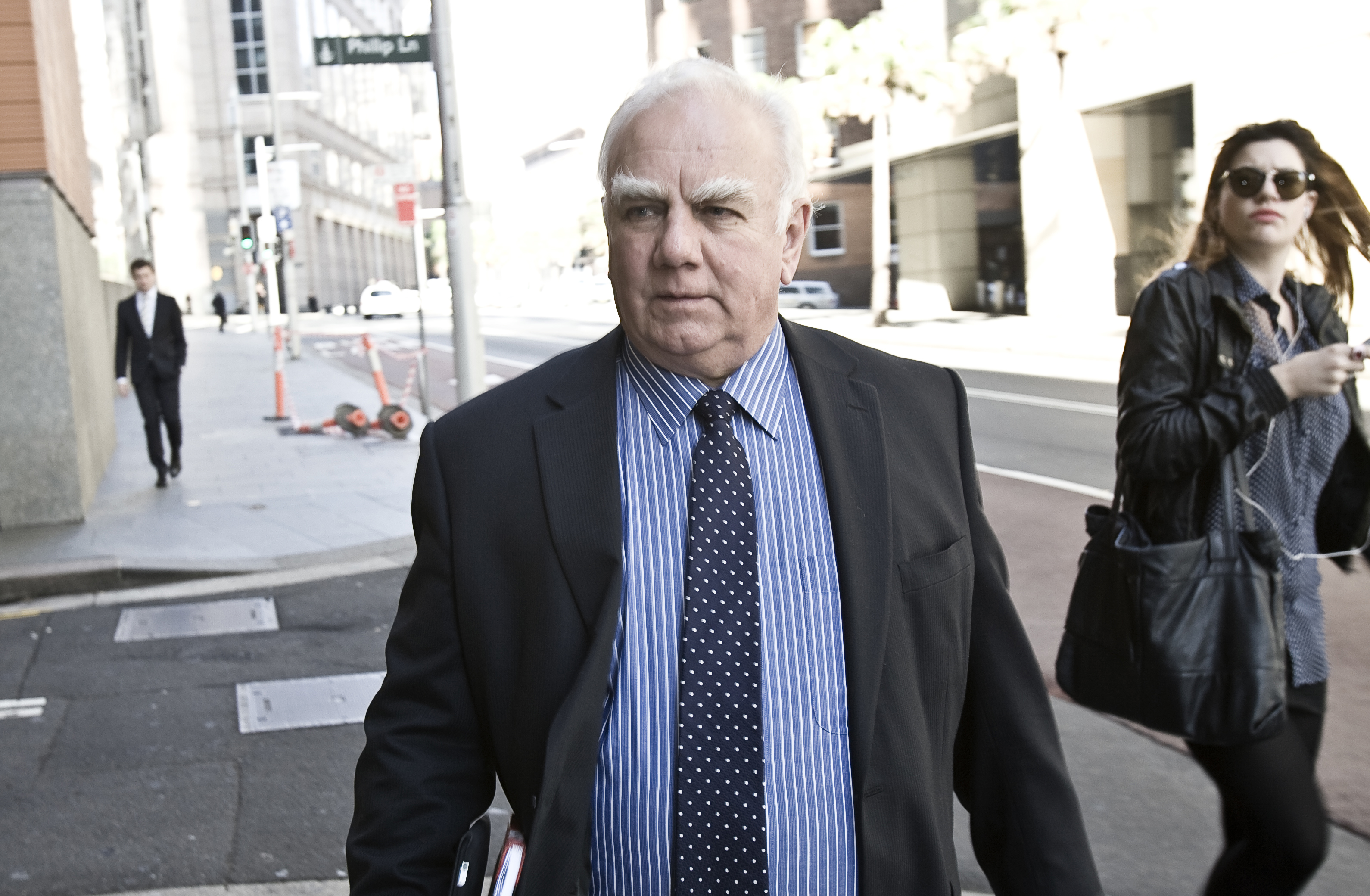
Police allege she was killed by 53-year-old Adrian Noel Torrens following a physical altercation after 3am on March 23.

READ MORE: The rites and rituals following the death of a pope, his funeral and burial, explained

Audrey Griffin, 19, was found half-submerged in Erina Creek, Erina on the Central Coast at 3.45pm on March 24.

"This is a matter that has not sat well with us from the very start," Brisbane Water Police District Commander, Superintendent Darryl Jobson, told media this afternoon.

"For a 19-year old woman to meet her death in a creek was very unsettling for us, because we want the answers.

"These are the types of cases where police want answers, because families want answers."

He said last Thursday night, a media release about police seeking two women and a man over what was then a coronial investigation, led to more information coming to light.

"We know they are potential witnesses to us and are not connected to the man in any way," Jobson said.

"We will be alleging that there's information that other people have brought forward in relation to this incident."

READ MORE: Police try to identify man in decade-old armed robbery CCTV

Audrey Griffin, 19, was found half-submerged in Erina Creek, Erina on the Central Coast at 3.45pm on March 24.

Then on Friday, "significant information" saw the case become a murder probe.

Jobson said it was a "very challenging" time for the family who are "devastated".

Torrens spent the night in custody on remand and did not ask to be released when his matter was briefly mentioned in Sydney's Downing Centre Local Court today.

The 53-year-old, from Milson's Point in Sydney, will remain behind bars until his matter returns to Gosford Local Court on June 20.

READ MORE: From Buenos Aires to Rome: Key dates in the life of Pope Francis

His lawyer Bashir El Kheir told reports that the investigation is still in the very early stages and he was still trying to determine the allegations against his client.

A fundraising page set up to help Griffin's family with funeral costs said the community was heartbroken by the loss of the beautiful teen, who was "the light in many lives".

"There is no doubt she bought (sic) endless laughter and joy to everyone," the fundraiser said.

"She was the kindest soul to walk this earth and will always be in our hearts."

The 19-year-old was remembered as a valuable member of the premiership Terrigal Wamberal Sharks rugby league team with a "larger-than-life personality" and a "happy go lucky nature".

She also played for the Gosford water polo club, which held a minute of silence for the woman who "always brought a smile to those around her".

According to the Australian Femicide Watch, 22 women have been killed by violence so far in 2025.

DOWNLOAD THE 9NEWS APP: Stay across all the latest in breaking news, sport, politics and the weather via our news app and get notifications sent straight to your smartphone. Available on the Apple App Store and Google Play.

Surfers Paradise stunt condemned amid post-cyclone beach restoration

Two daredevils have filmed themselves on board hydrofoils getting dangerously close to a sand pumping dredge at Surfers Paradise on the Gold Coast, sparking concern from authorities.

The incident, captured on video, shows the pair riding towards the dredge, with one heard saying, "I'm going victory or death," and later, "Mario don't do it," before successfully passing through the water plume.

Following the stunt, one of the individuals exclaimed, "an incredible shower, it was amazing I went through and just burst out laughing".

READ MORE: Neighbours 'shame' TV star after Nazi salute charge, court hears

Authorities have expressed their concern over the risky behaviour.

"It's when it becomes dangerous that it becomes a problem for us," police superintendent Peter Miles said.

"The people on the boat would not see them, if the boat's moving, or if they come off, they get splattered with sand, they're in the water for a long time."

Gold Coast Mayor Tom Tate has previously cautioned against the behaviour, particularly in light of ongoing beach restoration efforts.

"We've got 60 kilometres of beach," the Mayor said, emphasising the ease of maintaining a safe distance from the dredging equipment.

"If you get too close we have to turn it off and it takes a while to start it again.

"There is still 70 per cent of work to be done, in restoring our beaches, with behaviour like this only slowing the progress."

This article was produced with the assistance of 9ExPress.

Pope Francis was a source of controversy and spiritual guidance in his Argentine homeland

The faithful in Pope Francis’ hometown lit candles in the church where he found God as a teenager, packed the cathedral where he spoke as archbishop and prayed Monday in the neighbourhoods where he earned fame as the “slum bishop."

For millions of Argentines, Francis — who died on Easter Monday at 88 — was a source of controversy and a spiritual north star whose remarkable life traced their country's turbulent history.

Conservative detractors of the first Latin American pope criticised his support for social justice as an affinity for leftist leaders.

READ MORE: Vatican reveals Pope's cause of death

They pointed to his warm meetings with former President Cristina Fernández de Kirchner, a divisive left-leaning populist figure whose unbridled state spending many Argentines blame for the nation’s economic decline.

They compared their enthusiastic encounters to an unusually stern-faced Francis meeting centre-right former President Mauricio Macri for a curt 22 minutes in 2016.

“Like every Argentine, I think he was a rebel,” said 23-year-old Catalina Favaro, who had come to pay her respects at the downtown cathedral.

“He may have been contradictory, but that was nice, too.”

Kirchner paid tribute to her bond with Francis, saying he was “the face of a more humane church” and recalling their shared love of a prominent Argentine novelist who lionised the country’s populist left-leaning Peronist movement and its efforts to upend class structure in the 1940s and 50s.

Macri called Francis “a stern politician” but overall “a good pastor” whose name deserves “admiration and respect.”

Dedication to the needy

At his regular 8.30am Mass, Buenos Aires Archbishop Jorge Ignacio García Cuerva recalled Francis’ dedication to the less fortunate.

“The pope of the poor, of the marginalised, of those excluded, has passed away,” García Cuerva announced.

Alluding to Francis’ contested legacy, he added: “He was the Pope the Argentines, whom we didn’t always understand, but whom we loved.”

Vatican observers have long described Francis’ decision never to visit his homeland after becoming pontiff as an aversion to his country’s polarising politics.

Tensions reached a head under current libertarian President Milei, who insulted Francis as a “filthy leftist” and “the representative of the evil one on earth” before he took office in December 2023.

They appeared to reconcile during a meeting in Rome last year.

But when Argentine police lashed out at retirees protesting for better pensions in Buenos Aires, Francis broke his customary silence to chide Milei on the impact of his government’s austerity program: “Instead of paying for social justice, they paid for pepper spray,” he said.

Milei couched his condolences with a nod to those tensions.

“Despite differences that seem minor today, having been able to know him in his kindness and wisdom was a true honour for me,” he wrote on social media.

But in a sign of increasing political tensions, a large open-air Mass spilling outside Francis’ childhood church turned volatile late Monday when Milei’s vice president, Victoria Villarruel, made her way through the crowd to her car.

The crowd, recognising Villarruel — a conservative activist with links to Argentina’s notorious military dictatorship — stopped chanting hymns and started shouting insults.

Some shoved and pushed Villarruel but she didn't appear to be hurt and left in her car.

"Get her away from here,” the crowd shouted. “We’ll hunt you down!”

Never travelled home as pope

Francis travelled the world — and even to neighbouring Bolivia, Chile and Paraguay — but never set foot in his homeland after his election in March 2013, much to the chagrin of his compatriots.

“That’s a political decision, there’s no doubt,” Alejandra Renaldo, 64, said from Francis’ first church in the scruffy, middle-class neighbourhood of Flores, less than half a mile from his first home.

“Can you believe he never went to his own land? I much prefer John Paul II, he went to Poland, his country, right after becoming pope. He didn’t have any political ideas.”

At the cathedral where Francis, then Jorge Mario Bergoglio, became archbishop in 1998, worshippers bowed their heads in silent prayer. Some wept, ashen.

They left flowers and handwritten notes on the steps and affixed stickers for Francis’ favourite local soccer team, San Lorenzo, on the stone columns.

In Flores, where Bergoglio was born to an Italian immigrant father and a mother of Italian descent, Argentines stopped to gather around the confessional in the church where, at 16, Bergoglio had said he first heard the call to the priesthood.

“He was a father to us in Flores,” said Gabriela Lucero, 66, as she rose for morning Mass in the Basilica of San Jose de Flores.

“His primary philosophy was that those church doors remain open to everyone, immigrants, the poor, the struggling, everyone.”

Grief in poor Argentine neighbourhoods

With Milei declaring a week of mourning and lowering flags to half-staff, there was a strong sense of grief across the country.

But nowhere was it more apparent than in the hardscrabble neighbourhoods where Francis focused his outreach as archbishop.

His legacy can still be seen in the cadre of priests who have continued working, living and helping the poor in these districts long neglected by successive governments, where garbage spills onto sidewalks and the stench of sewage wafts over rutted dirt streets.

Residents of Villa 21-24, a neighbourhood in southern Buenos Aires, grew emotional as they remembered Francis visiting regularly to share yerba maté, Argentina’s traditional herbal drink, with pious mothers and recovering cocaine addicts alike.

They said he led religious processions barefoot in the streets and helped grow their ramshackle church into a place of prayer and spiritual contemplation, a vibrant community centre with a garden and a school.

‘Most humble person in Buenos Aires’

“He was the most humble person in all of Buenos Aires. We’ll never see a pope like him again," said Sara Benitez Fernandez, 57, a devout member of the congregation in the district. She choked on her tears as she recalled how he always took the subway and walked, never arriving in a car.

"I have no words, it hurts so much, so much,” she said.

The leader of the church, the Rev. Lorenzo de Vedia, a charismatic, dishevelled priest known to most simply as Padre Toto, said the death of his close friend and mentor on Monday left him with a swell of sorrow and whirlwind of other feelings.

“It's a day of pain, but we're not losing the spirit,” he said, as squealing children chased each other outside the rectory.

“We carry on and we fulfill his legacy. We're going ahead with the mission that he entrusted to us.”

Ex-cricketer Michael Slater sentenced over DV offences

Former Australian Test cricketer Michael Slater has been handed a prison term for domestic violence offences but will immediately be released from custody on a suspended sentence.

Slater, 55, was sentenced in Maroochydore District Court on Tuesday after pleading guilty to seven charges, including two counts of choking a woman.

The charges that also included stalking, assault and burglary related to offences committed on Queensland's Sunshine Coast in December 2023.

READ MORE: Four hospitalised, 30 evacuated after unit fire in Surry Hills

The former Australian cricket star and TV host also sent a woman abusive messages, with police finding some when conducting a welfare check on Slater in March 2024.

Slater has spent more than 12 months in custody and made multiple failed attempts to secure bail.

Judge Glen Cash on Tuesday sentenced Slater to four years' imprisonment to be partially suspended after time served.

The remainder of Slater's sentence is suspended for five years, during which he will risk being returned to custody if he commits another serious offence.

Supreme Court Justice Paul Freeburn last August heard Slater had a long history of mental health conditions and a number of diagnoses including alcohol use disorder.

Cricket great Michael Slater has been charged with assault.

Defence barrister Gregory McGuire at the time argued for bail conditions that included Slater moving to NSW and going into rehabilitation.

"He was clearly in the grip of a terrible alcohol addiction," McGuire previously said.

After making his debut during the 1993 Ashes tour, Slater played 74 Tests for Australia, amassing 5312 runs at an average of 42.83 with 14 centuries.

He also played 42 one-day internationals.

Slater retired from cricket in 2004, embarking on a television commentary career.

Support is available from the National Sexual Assault, Domestic and Family Violence Counselling Service at 1800RESPECT (1800 737 732).

Pope Francis’ funeral to be held on Saturday, Vatican announces

Cardinals have taken their first decisions following the death of Pope Francis, setting Saturday as the date for his funeral and allowing ordinary faithful to begin paying their final respects starting Wednesday, when his casket is brought into St Peter's Basilica.

The cardinals met for the first time today in the Vatican's synod hall to chart the next steps before a conclave begins to choose Francis' successor, as condolences poured in from around the world, grieving history's first Latin American pope.

The cardinals set the funeral for Saturday at 10 am in St Peter's Square (6pm AEST), to be celebrated by the dean of the College of Cardinals, Cardinal Giovanni Battista Re.

READ MORE: Chaos as political candidate's truck crashes into early voting centre

Pope Francis

US President Donald Trump has announced he and first lady Melania Trump plan to attend Saturday's funeral. Argentine President Javier Milei is also expected.

Francis died Monday at age 88 after suffering a stroke that put him in a coma and led his heart to fail. He had been recovering in his apartment after being hospitalised for five weeks with pneumonia.

He made his last public appearance on Sunday, delivering an Easter blessing and making what would be his final greeting to followers from his popemobile, looping around St Peter's Square.

In retrospect, his Easter appearance from the same loggia where he was introduced to the world as the first pope from the Americas on March 13, 2013, was a perfect bookend to a 12-year papacy that sought to shake up the church and return it to its Gospel-mandated mission of caring for the poorest.

"He gave himself to the end," said Cardinal Matteo Zuppi, the head of the Italian bishops' conference and considered a possible contender to be next pope.

"To go out to meet everyone, speak to everyone, teach us to speak to everyone, to bless everyone."

READ MORE: Australians flock to the Vatican, share memories of Pope Francis

The first images of Francis' body were released on Tuesday, showing him in the wooden casket, in red vestments and his bishop's miter, with the Vatican secretary of state praying over him in the chapel of the Domus Santa Marta hotel where he lived and died.

In his final will, Francis confirmed he would be buried at St Mary Major Basilica, which is outside the Vatican and home to his favourite icon of the Virgin Mary.

Before and after every foreign trip, Francis would go to the basilica to pray before the Byzantine-style painting that features an image of Mary, draped in a blue robe, holding the infant Jesus, who in turn holds a jewelled golden book.

Francis stopped by the basilica on his way home from the Gemelli hospital on March 23, after his 38-day hospital stay, to deliver flowers to be placed before the icon.

He returned on April 12 to pray before the Madonna for the last time.

DOWNLOAD THE 9NEWS APP: Stay across all the latest in breaking news, sport, politics and the weather via our news app and get notifications sent straight to your smartphone. Available on the Apple App Store and Google Play.

US Homeland Security Secretary Kristi Noem’s bag stolen with $4700

US Department of Homeland Security Secretary Kristi Noem has fallen victim to a thief while eating dinner at a downtown Washington, DC, restaurant, the secretary has confirmed.

Noem, who was asked about the Sunday night (Monday AEST) theft at the White House Easter Egg Roll, acknowledged the incident and said the matter has not been resolved.

The Secret Service, which provides security for Noem, reviewed security camera footage at the Capital Burger restaurant and saw an unknown white male wearing a medical mask steal her bag and leave the restaurant, a law enforcement source said.

The thief got away with Noem's driver licence, medication, apartment keys, passport, DHS access badge, makeup bag, blank checks, and about $US3000 (about $4700) in cash.

The Secret Service launched an investigation to trace any use of Noem's financial instruments, the person added.

"Her entire family was in town including her children and grandchildren – she was using the withdrawal to treat her family to dinner, activities, and Easter gifts," a DHS spokesperson said.

Law enforcement experts have raised concerns about whether the incident, which involved a thief getting so close to a Cabinet official and then absconding with her belongings, may have been a lapse in security.

"This is a security breach that actually has high consequences, and it needs immediate and further review by the Secret Service and DHS, and other law enforcement partners," said Jonathan Wackrow, a CNN law enforcement analyst and former Secret Service agent.

"If necessary, the Secret Service will need to make operational changes on how they deal with these types of private events moving forward," Wackrow told CNN's Kaitlan Collins on The Source.

He added that Noem remains "at higher risk for targeted threats, both by foreign and domestic actors, and just her public profile alone makes her a symbolic target".