Authorities have arrested an Orleans Parish Sheriff's Office employee following the escape of 10 inmates from a New Orleans jail, the Louisiana Attorney General's office said.
Sterling Williams, 33, a maintenance worker with the sheriff's office at the time of the escape, allegedly told investigators he had turned the water off in the cell from which the inmates escaped, according to the attorney general's office.
Williams was placed under arrest and booked into the Orleans Parish Jail but was then relocated to a different facility.
READ MORE: Too late to leave as floodwaters rise in Hunter region
The Plaquemines Parish Jail showed Williams under arrest on Tuesday morning.
He faces 10 counts related to the escapees and one count of malfeasance in office, due to the fact that he "acted under the order of an inmate," his arrest warrants states.
"This was a coordinated effort, aided by individuals inside our own agency, who made the choice to break the law," Orleans Parish Sheriff Susan Hutson said Tuesday at a meeting of the New Orleans city council's criminal justice committee.
Hutson noted the agency continues "to pursue everyone involved".
CNN is working to determine if Williams has an attorney.
The arrest comes after a fourth inmate who escaped from the jail Friday was captured Monday in the New Orleans East neighbourhood and flown to a "secure state facility," as hundreds of local, state and federal authorities scramble to find six still on the loose, according to Louisiana State Police.
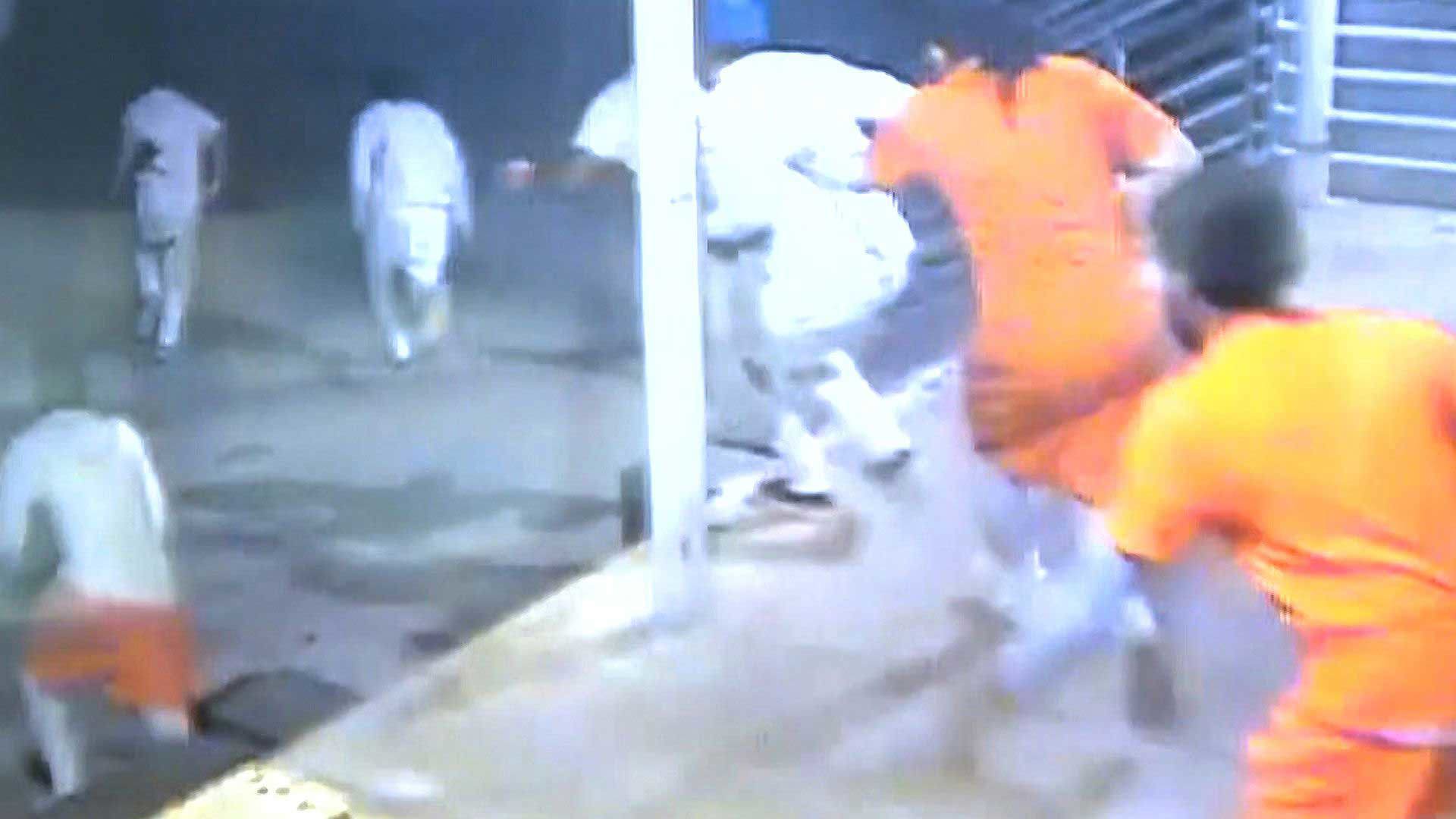
All the escapees bolted out of a hole carved in the jail wall, sprinted across an interstate and vanished.
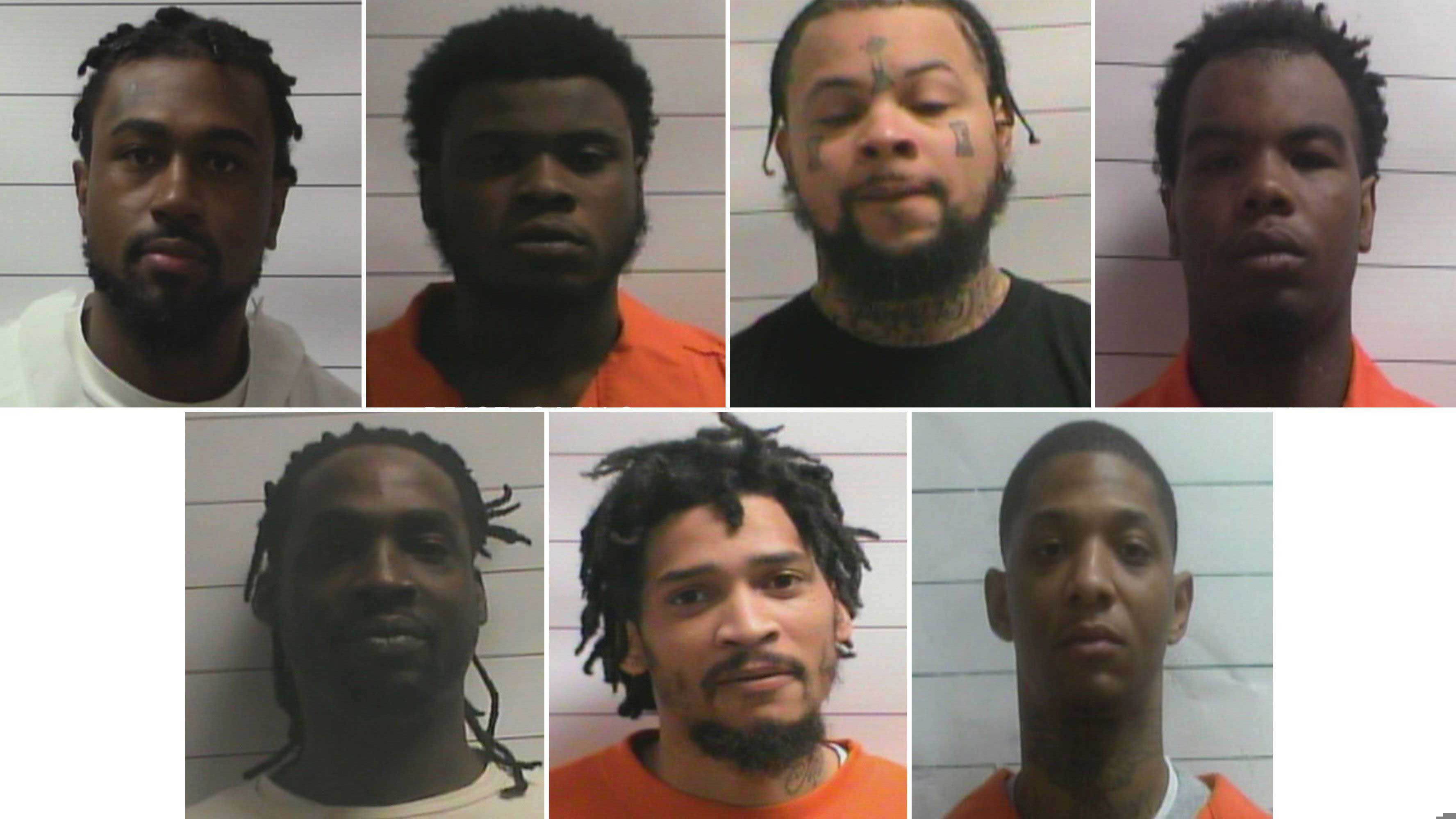
Still on the loose are: Corey Boyd, Jermaine Donald, Derrick Groves, Antoine Massey, Leo Tate and Lenton Vanburen.
The escapees face an array of charges, including aggravated assault with a firearm, false imprisonment with a weapon and murder.
"We cannot give additional details as to the supposed whereabouts of the remaining fugitives but we can say that we will follow any investigative leads no matter where they take us," Lieutenant Mindi MacHauer Keith with the Louisiana State Police told CNN.
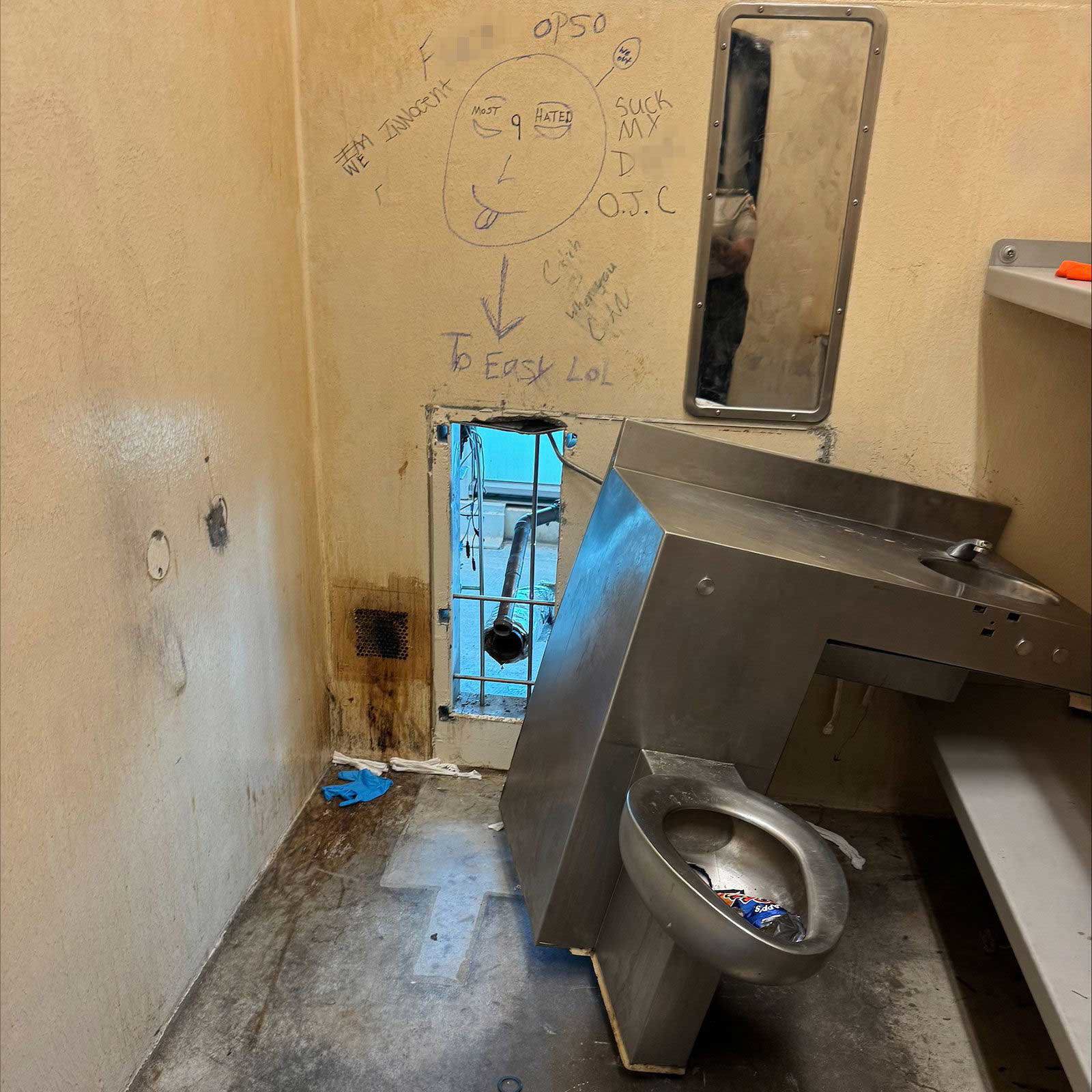
The suspects took advantage of a faulty locking system, a jail employee who had stepped away to get food and a complex escape plan that may have involved inside help, authorities said.
And even though officials described the escapees as armed and dangerous, they didn't inform the public of the security breach for several hours.
Here's what we know about the escape, the multistate manhunt and who's blaming whom for the calamity that has caused some fearful residents and lawyers with the district attorney's office to flee.
'To Easy LoL'
A cascading series of "breakdowns" contributed to the escape, Orleans Parish District Attorney Jason Williams said Monday.
The Orleans Justice Centre went into lockdown at 10.30pm on Thursday, as it does every night, meaning inmates were expected to stay in their cells.
That didn't happen.
Shortly after midnight on Friday morning, a corrections monitoring technician stepped away for food.
During his absence, several inmates started yanking on the door of Cell Delta 1006.
A staff member should have been monitoring the cameras in the facility, Jason Williams said at a Monday news conference.
"The idea that they are saying they had to go back and look at footage is ridiculous," he said.
"Those monitors are there to be observed in real time."
Eventually, the door broke open.
The men snuck into another cell. In a matter of minutes, 10 inmates manoeuvred past a metal toilet, squeezed through a small hole carved in the wall and fled into the darkness.
One of the escapees directed Sterling Williams, the arrested jail maintenance worker, to turn the water off inside that cell, threatening to "shank him if he did not," he told investigators.
Instead of reporting the inmate, he turned the water off as directed, allowing for the successful escape, the attorney general's office said.
Investigators believe Sterling Williams "had multiple days of involvement," turning off the water supply for inmates to be able to cut the pipes on "more than just that night," Louisiana Attorney General Liz Murrill told FOX News on Tuesday.
The inmates brought blankets to protect themselves from getting cut by barbed wire.
They then scaled a fence and bolted across Interstate 10.
They darted into a nearby neighbourhood, ripped off their inmate clothes and disappeared into the night.
Before they escaped, they taunted jail staff with a message scrawled above their escape hole:
"To Easy LoL," it read.
The hole itself is one sign of the continued lapses at the facility, according to Jason Williams.
"Someone should have caught the destruction of the toilet and destruction of the wall and getting out, because that doesn't happen in a day, does it?" he went on.
"So, it was missed during the entire time that that plan was being hatched."
"This is not just about one lunch break," he added.
The escape wasn't discovered until a routine head count at 8.30am, Hutson said on Friday.
DA's staff members flee the city
Another failure: several hours elapsed before authorities notified the inmates' victims and witnesses and the public of the escape, the district attorney said.
"If it happened at 1 am they should have been notified at 1.30, right, because they were in harm's way," Jason Williams said.
The sheriff said she found out about the escape around 9am – eight hours after the inmates are thought to have escaped – and the US Marshals Task Force were notified by 9.30am.
The DA himself only found out about the jailbreak from the media, he said on Monday.
"I am personally afraid, not just for myself, but for my lawyers who tried the case against the individual twice," he said, referencing the case against Groves, the escapee who was convicted of murdering two men in 2018 after his first trial ended in a mistrial and a second trial ended in a deadlocked jury.
The DA had prosecuted Groves in his second and third trials.
"These lawyers got out of town this weekend with their families out of fear of retribution and retaliation," he said.
The DA said his office immediately began working with the chief of victims and witness services, Alison Morgado, to notify victims and witnesses of the escape.
Police helped relocate some, he said.
"They're very afraid, and I think they have a right to be afraid," he said.
Manhunt spreads to other states
Authorities initially said 11 inmates had escaped but later corrected the number to 10 after discovering one man had been moved to another cell before his records were updated.
So far, four men have been caught: Dkenan Dennis, Kendell Myles, Robert Moody and Gary Price.
All were recaptured in the New Orleans area.
The search for the remaining six escapees now involves more than 200 law enforcement personnel spanning the Orleans Parish Sheriff's Office, the New Orleans Police Department, Louisiana State Police, the US Marshals Service and the FBI.
Because the escapees may have crossed state lines, Murrill, the Louisiana attorney general, asked her counterparts in Texas, Mississippi, Arkansas, Georgia, Oklahoma and Tennessee to alert their law enforcement agencies.
The FBI's New Orleans office is offering a $US10,000 ($15,550) reward for information leading to the capture of each escapee, and Crime Stoppers is offering an additional $US5000 ($7780) for information leading to each arrest.
The Bureau of Alcohol, Tobacco, Firearms and Explosives is offering an additional $5000 reward.
Sheriff's office admits lapse but blames infrastructure and staffing problems
Much of the criticism has focused on Hutson.
Louisiana state Rep. Aimee Adatto Freeman has called for the sheriff, also a Democrat, to resign, calling the escape "an alarming failure of leadership".
"Sheriff Susan Hutson's most fundamental responsibility is to keep inmates in custody – and she failed," Freeman said in a statement shared with CNN affiliate WDSU.
In response, the sheriff said she had "no plans to resign" in a statement shared with CNN.
"I remain committed to leading this office through the current crisis and continuing the long-term work of reform and public service I was elected to carry out."
Jason Williams, the district attorney, called the jailbreak "a complete failure of the most basic responsibilities entrusted to a sheriff or a jail administrator" in an interview with WDSU.
Hutson admitted a lapse in security, partially due to defective locks – and suggested prison employees may have participated.
"We do acknowledge there is no way people can get out of this facility without there being some type of lapse in security," Hutson said.
"It's almost impossible … for anybody to get out of this facility without help from the outside."
"These folks that were able to get out did so because of defective locks on the cells," the sheriff said at a Friday news conference.
She claimed she had been asking for funding to repair the locks since she started her position.
Additionally, "we have indication that these detainees received assistance in their escape from individuals inside of our department," she said.
The security breach happened on the first floor of the jail, where cells have sliding doors that "are able to be manipulated by force off the track that they're on, which allows individuals to enter and exit at will," Orleans Parish Chief of Corrections Jay Mallett said Friday.
"The primary security breach and concern is the facilities' infrastructure," Mallett said.
"We've identified that we have a large number of high-security individuals in a minimum custody facility."
The district attorney said dangerous inmates, like the men who escaped, shouldn't have had access to the first floor in the first place.
There's a "critical need" for repairs and upgrades at the jail to ensure doors and locks are fully functional, Hutson said.
"There are deficiencies in these facilities that cause public safety concerns," she said.
The sheriff's office's chief financial officer, Bianka Brown, said the budget would need to be increased from $68 million to $150 million.
The locks would cost $5.2 million.
And the jail has only about 60 per cent of the staffing it should, the sheriff said, and 150 more deputies are needed.
But if any staff members helped with the escape, they will be held accountable "both administratively and criminally," the sheriff said.