Tag Archives: oceania

World’s biggest iceberg runs aground off Antarctica

The world's biggest iceberg, which is almost four times the size of Canberra, has run aground near a remote island off Antarctica.

The trillion-tonne slab of ice, named A23a, now poses a risk to millions of marine animals.

A23a – the world's largest iceberg – is stuck 80 kilometres off the small British overseas territory of South Georgia- which is home to millions of penguins – seals and other marine life.

READ MORE: $16 billion cash boost coming for millions of Aussies

Megaberg

Even finding the iceberg can be a challenge.

"The South Georgia and South Sandwich Maritime Zone is enormous, as it's 1.2 million km² of ocean – It's a vast area," Laura Sinclair Willis, South Georgia Chief Executive said.

But A23a isn't small either.

It's almost four times the size of Canberra – at more than 3100 square kilometres.

It's nearly 300 metres tall and it weighs around one trillion tonnes.

There are concerns the melting ice could force the food for millions of marine animals deeper underwater.

The megaberg's movements, a reminder of Antarctica's rapidly melting ice are caused by global warming.

In 1986, A23a broke off from Antarctica but remained aground in the Weddell Sea until 2020 when it started moving north.

Five years on, the huge slab of ice has, for now, stopped in its tracks.

DOWNLOAD THE 9NEWS APP: Stay across all the latest in breaking news, sport, politics and the weather via our news app and get notifications sent straight to your smartphone. Available on the Apple App Store and Google Play.

Sleep-deprived with frostbite, Aaron won the world’s toughest footrace

Exclusive: With just 48 hours remaining in the world's toughest, windiest, and coldest footrace, Aaron Crook's body was in agony.

The temperature had dropped to -42 degrees, and he was sitting in third place in the grueling 620-kilometre race across the Arctic Circle.

Having slept only 11 hours over the course of seven exhausting days, he had pushed his body to the limit. At risk of hypothermia setting in, he pressed on, overtaking two competitors to claim victory in the race.

READ MORE: Chinese restaurant apologises after diners filmed urinating into hotpot broth

With just 48 hours remaining in the world's toughest, windiest, and coldest footrace, Aaron Crook's body was in agony.

The Adelaide father didn't plan on winning the race, but he was determined to finish it, competing against 15 other ultra-athletes.

He told 9News.com.au that the race was "extremely hard," but he was "pleasantly surprised" by how well his body held up.

"The plan at the beginning… I didn't want to go out too strong, especially considering that the race has a history of lots of people finishing up within the first 24 hours," Crook said.

"I gave myself a chance to get into the first checkpoint, which was about 65 kilometres. When I got there, I was feeling pretty good.

"I decided to push on and I wouldn't sleep, and that was the beginning of what made my race a very consistent one."

Skipping sleep at the first checkpoint set the pace for Crook's race, and in total he only slept about 11 hours over the seven days.

Pushing on, Crook progressed in the race at a good rate, not overly fast.

"I got to the checkpoints and made sure in and out of them. I was a lot faster at the checkpoints than all of the other competitors in the race, which meant that I slept a lot less than everyone else," he said.

"In the end that meant I was right towards the front of the race. That gave me an opportunity to win it… that seemed to pay off in the end."

READ MORE: Why the Bureau of Meteorology gives human names to tropical cyclones – and how they're picking the next one

With just 48 hours remaining in the world's toughest, windiest, and coldest footrace, Aaron Crook's body was in agony.

'Body under attack'

The Adelaide father admitted there were only a handful of times when he truly struggled, and 48 hours before finishing the race was one of those moments.

While he expressed the weather was relatively mild, the final days were tough.

"It was sitting about the -25 degrees range, but it wasn't too windy. It was manageable in terms of layering and making sure I wasn't sweating but was warm enough," Crook said.

"The last couple of days, the wind really picked up and it got closer to the -40 degrees with the wind chill and a bit over -42 degrees.

"It felt like the body was under attack in those conditions."

READ MORE: The federal election seats where just a few hundred votes could make all the difference

Crook found himself facing the very real prospect of developing hypothermia, as the wind continued to pick up.

"Those last two nights were probably the only time during the race where I actually felt like my life was probably a little bit of risk," he said.

"The wind was hammering my face and I could feel damage occurring on my nose and on my eye. Those conditions, you really can't stop, because if you stop, then, it's almost like you're putting your life at risk because hypothermia is a real issue really quickly.

"You have to keep moving. Keep that in mind, you've been moving for five days with no sleep. The body is in a lot of pain.

"You're constantly accruing more damage on your hands and on your face from the cold temperatures."

Despite the grueling conditions, Crook said there was never a point where he felt like he couldn't keep pushing ahead.

He credits mentally repeating several mantras during the race to his success.

"I kept reminding myself that I was able to be there in the first place, throughout the entire race, I felt incredibly lucky to be able to do it.

"I reminded myself of that. I would just constantly say to myself, 'I can feel my fingers and I can feel my toes, I'm warm enough in my core, therefore, I'm okay and can keep moving'."

READ MORE: How to maximise public holidays and make the most of your annual leave in 2025

Final push to the finish 

With just a day left in the race, Crook made an incredible comeback, moving from third place to claim the win.

He had left the final checkpoint about two hours behind the two competitors ahead of him.

When the pair stopped for some sleep, Crook made the most of the opportunity, charging forward and crossing the finish line with little to no rest.

"I actually was able to get past them while they were sleeping and then I just went really hard to the finish line," he said.

"The finish was quite exciting as exciting as a finish to a 620 kilometre race can be."

With just 48 hours remaining in the world's toughest, windiest, and coldest footrace, Aaron Crook's body was in agony.

Crook believes his move from the beginning to sleep as little as possible was a main factor behind his success.

"I thought that I would be moving for 18 hours and then I would get like four to six hours of sleep every day," he said.

"In reality, there was a lot more movement and there was a lot less sleep, so I probably slept a total of 11 hours over the seven days and 22 hours it took me to finish the race.

"Going into the race, I didn't think it was possible for a human being to do. It was incredible that I was able to move for that duration of time without sleep, but it was crucial to winning the race."

Crossing the line was a "huge relief", according to Crook.

"I'd been dreaming of finishing this race for five years, I was picturing touching that sign at the (end). When that did happen and knowing that I'd actually won the race, I was filled with relief and gratitude," he said.

"I was just really proud of myself for exceeding my expectations and knowing that so many people back in Australia were following my progress."

READ MORE: Your guide to Australia's skies: The lunar eclipses, meteor showers and celestial events happening in 2025

Canada's 6633 Arctic Ultra: Aaron Cook has pushed his body to extreme limits and is no stranger to endurance races.

'Proud' of fundraising total 

The father was the only Australian among 15 athletes who completed and was raising money for The Sebastian Foundation and the Adelaide Crows Foundation, which supports youth mental health.

Crook last month said he had admired the foundation's Open Parachute program, which helps equip children with the skills they need to overcome mental health challenges.

Every $15 raised for the foundation will provide a primary or secondary student access to the program for an entire school year.

He has since raised $26,000 for the foundation.

"That's been such a huge part of this. I'm really proud of it," he said.

"We were able to continue to fundraise until after the race, and we've fundraised over $26,000 which exceeded our goal. It is a really significant amount of money and is going to make a huge difference in so many children's lives.

"I'm really happy with the result of the race. I'm blown away by family and friends and small businesses that have come together to contribute to that fundraiser."

Canada's 6633 Arctic Ultra: Aaron Cook has pushed his body to extreme limits and is no stranger to endurance races.

Back home in Adelaide, Crook is happy to be reunited with his family and friends, who supported him every step of the way.

He plans to spend the next few months resting after suffering some superficial frostbite on his nose and cheek.

He still doesn't have feeling in the tips of his fingers.

"The body's just got to recover now. It's just a huge trauma, but I'm home now, so I'll have plenty of time to recover," he said.

DOWNLOAD THE 9NEWS APP: Stay across all the latest in breaking news, sport, politics and the weather via our news app and get notifications sent straight to your smartphone. Available on the Apple App Store and Google Play.

Billions in cost-of-living relief coming in matter of weeks

Australians can expect another significant boost to cost-of-living relief in the next federal budget as the government gears up for an election in May.

While it had been presumed for months that an expected early election would get in the way of the budget, Tropical Cyclone Alfred delayed the calling of the vote, meaning Treasurer Jim Chalmers will have to hand down the national accounts as scheduled on March 25.

Because of that, there have been far fewer early announcements than in previous years, and what new measures will be handed down by the government remains a bit of a mystery.

READ MORE: The cyclone blew away an April election, so when will it be held now?

Pedestrians on Bourke Street in Melbourne.

However, there have still been some hints from senior ministers about what to expect, as well as some earlier announcements that will form part of the 2025 budget.

Here's what you can expect on March 25.

Massive student debt discount

The roughly 3 million Australians who have student debt will get a welcome boost on June 1 when their outstanding balances are cut by 20 per cent.

The one-off discount represents a massive $16 billion in student debt reduction – more than five times larger than last year's move to retrospectively lower the indexation applied to those debts.

The new measure was announced by the government as an election promise in November, and will now need to be factored into this year's budget.

READ MORE: The 10 closest seats heading into the 2025 federal election

General scenes of students on Sydney University campus.

Energy bill relief

The centrepiece of last year's budget was the $3.5 billion in energy bill relief – a $300 rebate, spread over the course of the financial year, for every household in the country.

Although the government has not given a cast-iron commitment to extending that policy, there are hints something similar could be on the way this year, particularly after the national energy regulator approved price increases of up to 9 per cent from July 1.

After that decision, Energy Minister Chris Bowen was asked whether repeat rebates would be on the cards.

"As the prime minister, the treasurer and I have made clear, we will always consider what more can be done," was his reply.

READ MORE: For the first time, Gen Z and Millennials outnumber Boomers this election

Anthony Albanese and Jim Chalmers in parliament.

"There's a budget coming soon, and we'll continue that approach of considering what more we can do."

Albanese also mentioned energy subsidies when he was asked on March 9 about what cost-of-living relief could be expected in the budget.

"We will always do what we can to assist people," he said.

"That is one of the defining characteristics of my term of government, is that we were saying yes to energy bill relief, yes to tax cuts for all Australians, yes to cheaper child care, yes to free TAFE, yes to providing a range of support, including lifting rental assistance by 45 per cent over two budgets."

READ MORE: Dutton wants a nuclear future for Australia. Here's what that might look like

Power lines in Calder Park.

Subsidised childcare for everyone

That cheaper childcare Albanese mentioned will also feature heavily in the budget.

Like the student debt discount, this was an election promise unveiled in late 2024, well after the last budget: three days a week of subsidised childcare to families with a combined income of less than $530,000 a year.

The activity test will also be scrapped to make it easier for low-income parents to access cheaper childcare, a measure recommended by the Productivity Commission and long called for by economists.

The policy will come into effect on January 1, 2026, if Labor wins the federal election, and will cost $427 million over five years.

READ MORE: PM unveils 'nation-defining' $427m childcare relief election promise

Prime Minister Anthony Albanese and Minister for Education Jason Clare at a childcare centre.

Boost for Australian-made goods as tariffs hit

One of the big economic uncertainties plaguing financial markets at the moment is US President Donald Trump's explosion of tariffs.

Australia has been hit by Trump's 25 per cent tax on all steel and aluminium imported into the United States, and while we shouldn't expect a retaliatory tariff in the budget – that was ruled out by Albanese – there's set to be some kind of response.

Local manufacturers fear a flood of cheap, international produce onto the Australian market from all the other nations who have also been denied free access to American consumers, which would be a significant business challenge.

Albanese has flagged support for local industry will be handed down.

"In the March budget, we'll provide additional support for our 'Buy Australian' campaign which we'll be announcing as part of the budget process," the prime minister said in his press conference responding to the introduction of Trump's tariffs.

EXPLAINED: How hard Trump's tariffs will hit the Australian economy

As a result of the earnings jump, the company said it can now mix investment, acquisitions and shareholder returns.

Other announcements

There are a number of other policies that will form a part of the 2025 federal budget, including:

DOWNLOAD THE 9NEWS APP: Stay across all the latest in breaking news, sport, politics and the weather via our news app and get notifications sent straight to your smartphone. Available on the Apple App Store and Google Play.

Canada will ‘never, ever’ be part of US, newly sworn-in PM says

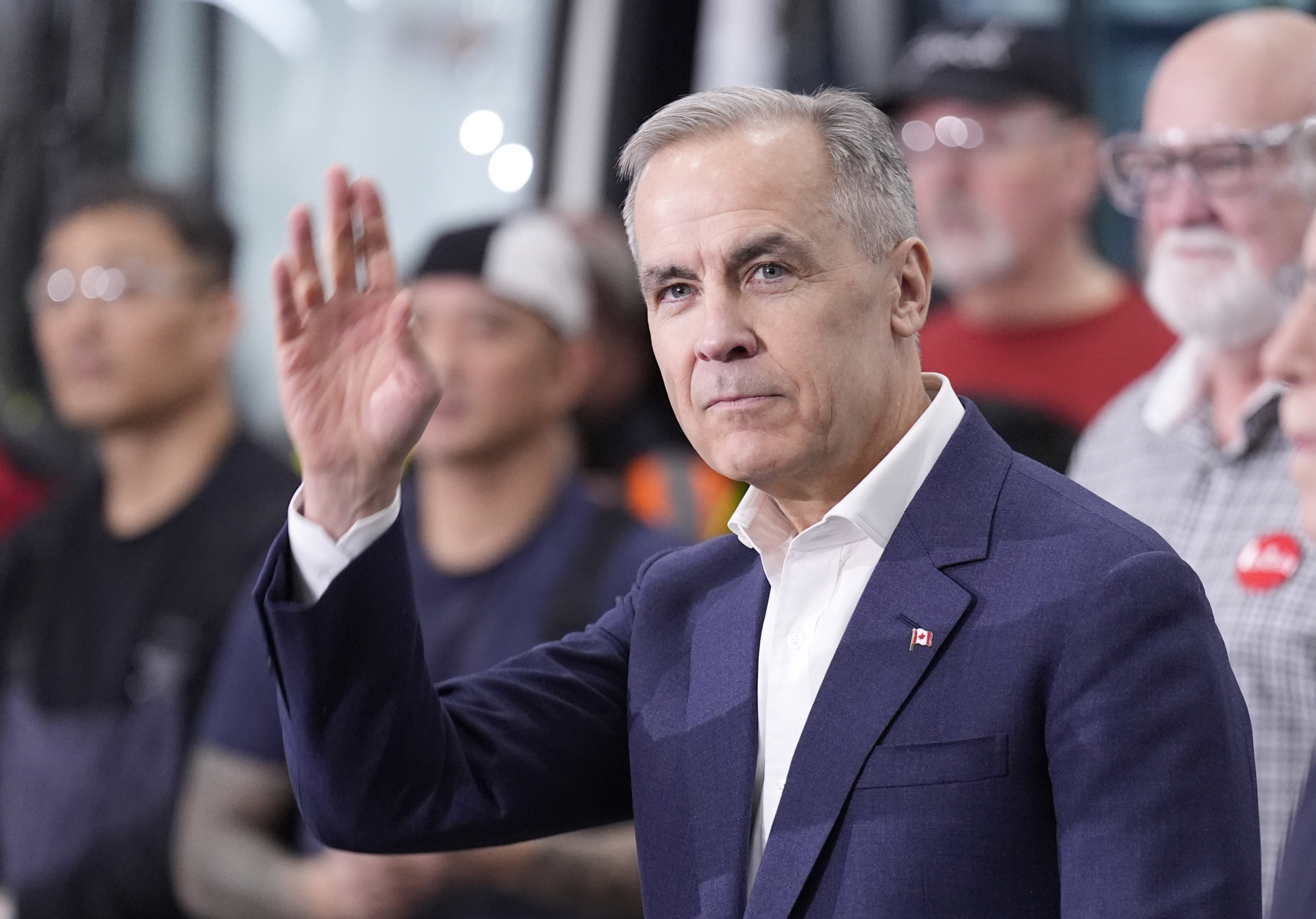
Former central banker Mark Carney was sworn in as Canada's new prime minister on Friday, and will now try to steer his country through a trade war brought by US President Donald Trump, annexation threats and an expected federal election.

Carney, 59, replaces Prime Minister Justin Trudeau, who announced his resignation in January but remained in power until the Liberal Party elected a new leader. Carney is widely expected to trigger a general election in the coming days or weeks.

"We will never, ever, in any way shape or form, be part of the United States. America is not Canada," Carney said. "We are very fundamentally a different country."

READ MORE: Fresh measles warnings could impact thousands in NSW and Victoria

The governing Liberal Party had appeared poised for a historic election defeat this year until Trump declared economic war and repeatedly has said Canada should become the 51st state. Now the party and its new leader could come out on top.

Carney has said he's ready to meet with Trump if he shows respect for Canadian sovereignty. He said he doesn't plan to visit Washington at the moment but hopes to have a phone call with the president soon.

"The president is a successful businessman and deal maker. We're his largest client in so many industries," Carney said. "Clients expect respect and working together in a proper commercial way."

Carney navigated crises when he was the head of the Bank of Canada during the 2008 financial crisis, and then in 2013 when he became the first noncitizen to run the Bank of England — helping to manage the worst impacts of Brexit in the UK. He will now try to steer Canada through the trade war brought by Trump.

Carney, a former Goldman Sachs executive with no experience in politics, becomes Canada's 24th prime minister. He said protecting Canadian workers and their families in the face of unjustified trade actions and growing the economy will be his top priorities.

Carney said he will travel to Europe to visit French President Emmanuel Macron and UK Prime Minister Keir Starmer in the coming days. He received invitations from both.

"We must diversify our trade partners and strengthen our security in so doing," Carney said.

Trump put 25 per cent tariffs on Canada's steel and aluminium and is threatening sweeping tariffs on all Canadian products on April 2. He has threatened economic coercion in his annexation threats and suggested the border is a fictional line.

Carney called the idea "crazy."

The US trade war and Trump's talk of making Canada the 51st US state have infuriated Canadians, who are booing the American anthem at NHL and NBA games. Some are cancelling trips south of the border, and many are avoiding buying American goods when they can.

The surge in Canadian nationalism has bolstered the Liberal Party's chances in a parliamentary election expected within days or weeks, and Liberal showings have been improving in opinion polls.

The opposition Conservatives hoped to make the election about Trudeau, whose popularity declined as food and housing prices rose and immigration surge.

But after decades of bilateral stability, the vote on Canada's next leader now is expected to focus on who is best equipped to deal with the United States.

"He will do very well. He's respected internationally," former Prime Minister Jean Chrétien told reporters on Friday. But, he added: "There is no magic solution. This is not a normal situation. We've never seen someone who changes his mind every five minutes as president of the United States. It creates problems everywhere, not only in Canada."

A new Cabinet of 13 men and 11 women was sworn in, smaller than Trudeau's 37-member team. François-Philippe Champagne becomes Canada's new finance minister, the government's second most powerful position. He was previously industry minister.

Dominic LeBlanc goes from finance to intergovernmental affairs.

Mélanie Joly remains foreign minister. Chrystia Freeland, a former deputy prime minister and finance minister who lost to Carney in the Liberal Party leadership race, becomes minister of transport and internal trade.

Carney met with his Cabinet on Friday afternoon. He strongly suggested he would scrap an unpopular carbon tax enacted by Trudeau by the end of the day. He called his government "Canada's new government" in an effort to distance himself from Trudeau.

Carney also took aim at opposition Conservative leader Pierre Poilievre, a career politician who Carney said is always negative.

"Negativity won't pay the rent or the mortgage. Negativity won't bring down the price of groceries. Negativity won't win a trade war," he said.

Poilievre urged Canadians not to give the Liberals a fourth mandate, saying it's the same Liberal government and that Carney is "just like Justin."

DOWNLOAD THE 9NEWS APP: Stay across all the latest in breaking news, sport, politics and the weather via our news app and get notifications sent straight to your smartphone. Available on the Apple App Store and Google Play.