Tag Archives: oceania

Australia’s link to JFK assassination revealed in declassified files

Australia's former spy boss had asked his counterpart in the United States to keep a probe into anonymous phone calls secret, according to released and unredacted files related to the 1963 assassination of President John F. Kennedy.

More than 1100 files consisting of over 31,000 pages were posted on the website of the US National Archives and Records Administration.

The vast majority of the National Archives' collection of over six million pages of records, photographs, motion pictures, sound recordings and artifacts related to the assassination had previously been released.

READ MORE: Prince Harry's immigration records to be made public amid claims about drug use

Newly-elected President Kennedy posed for first pictures at his White House desk, Jan. 21, 1961.

A file revealed that Australia's then-ASIO director-general Sir Charles Spry had written to CIA director Richard Helms in October 1968 asking that he not publicly release or declassify "CD-971 and its attachment".

His reasons were it could raise questions into the investigation of anonymous phone calls to the US embassy in Canberra before and after the time of Kennedy's assassination.

"Questions could be raised as to the investigation by the ASIO of the anonymous telephone calls, the validity of its quoted inclusion and the result of its further enquiries," Spry wrote.

Spry also added that it was never officially stated that there were CIA agents in Australia, which could enrage existing allegations that "CIA is interfering in Australian domestic affairs".

"It has never been officially stated that there is a 'CIA Canberra Station' or that there are CIA officers in Australia. This has been avoided as a point of policy," he wrote.

"Publication of these facts would invoke a spate of questions by the press and in the parliament, which would be contrary to the national security interest, for example: 'Who approved the establishment of the 'CIA Canberra Station'?"

READ MORE: More travellers can now avoid the dreaded incoming passenger card

Australia's former spy boss had asked his counterpart in the United States to keep an investigation hidden into anonymous phone calls secret, according to a released and unredacted file related to the 1963 assassination of President John F. Kennedy.

Another file showed a memo, penned by CIA Far East Division chief William Nelson, agreeing with Spry's recommendation.

"Sir Charles' letter to you recommends against declassification of the Warren Commission document CD-971, which refers to our investigation of anonymous telephone calls to the Canberra embassy before and after the assassination of President Kennedy," Nelson wrote. 

"I consider the points made by Sir Charles in his letter to be valid and accordingly recommend against the declassification of CD-971 in the foreseeable future."

The Warren Commission is former president Lyndon Johnson's commission into the assassination of Kennedy.

In a responding letter, Helms said there was no intention to release the information and if, in the future, that intention arose, Spry's letter provided "every reason to keep the document out of the public domain".

"Thank you for your letter of 15 October recommending against the declassification of Warren Commission document CD-971," Helms wrote back to Spry.

"I might mention that our inquiry to you in August (1968) was in anticipation of further pressure for the release of Warren Commission papers, a pressure which has not materialised.

"Accordingly, there is not, at the present time, any intention to release CD-971.

"Should the question be raised at some future time, the points made by you in your letter provide every reason to keep the document out of the public domain." 

READ MORE: Coalition wants migrants to be tested on antisemitism in citizenship test

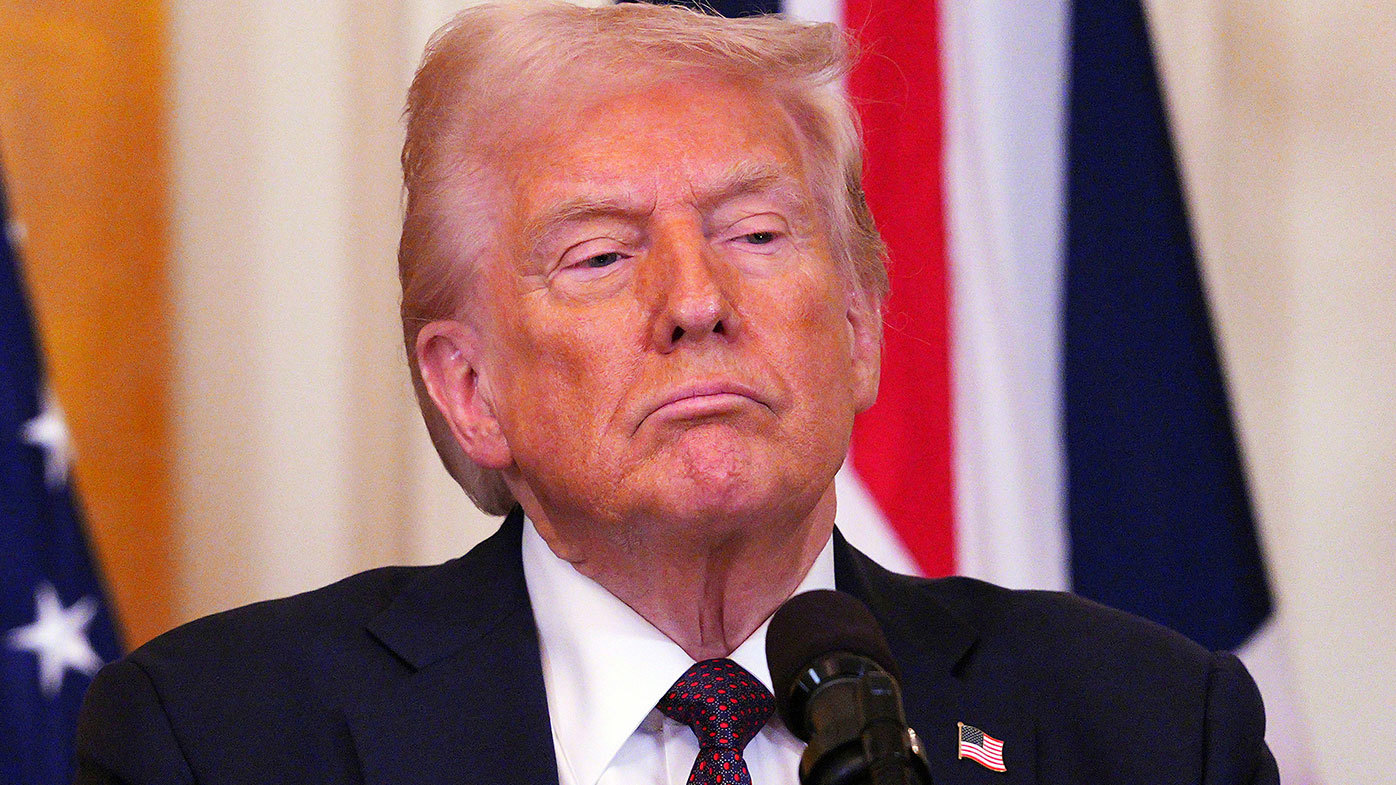
President Donald Trump told reporters on Monday that the release was coming, though he estimated it at about 80,000 pages.

"We have a tremendous amount of paper. You've got a lot of reading," Trump said while visiting the John F. Kennedy Center for the Performing Arts in Washington.

There is an intense interest in details related to the assassination, which has spawned countless conspiracy theories.

Here are some things to know.

Trump's order

Shortly after he was sworn into office, Trump ordered the release of the remaining classified files related to the assassination

He directed the national intelligence director and attorney general to develop a plan to release the records.

The order also aimed to declassify the remaining federal records related to the 1968 assassinations of Senator Robert F. Kennedy and the Reverend Martin Luther King Junior.

After signing the order, Trump handed the pen to an aide and directed that it be given to Robert F. Kennedy Junior, the Trump administration's top health official.

He's the nephew of John F. Kennedy and son of Robert F. Kennedy.

The younger Kennedy, whose anti-vaccine activism has alienated him from much of his family, has said he isn't convinced that a lone gunman was solely responsible for his uncle's assassination.

READ MORE: Former federal politician undergoes significant surgery

President Donald Trump tours the John F. Kennedy Center for the Performing Arts in Washington, DC.

November 22, 1963

When Air Force One carrying JFK and first lady Jacqueline Kennedy touched down in Dallas, they were greeted by a clear sky and enthusiastic crowds.

With a re-election campaign on the horizon the next year, they went to Texas for a political fence-mending trip.

But as the motorcade was finishing its parade route downtown, shots rang out from the Texas School Book Depository building.

Police arrested 24-year-old Lee Harvey Oswald, who had positioned himself from a sniper's perch on the sixth floor.

Two days later, nightclub owner Jack Ruby fatally shot Oswald during a jail transfer.

A year after the assassination, the Warren Commission, which President Lyndon B. Johnson established to investigate, concluded that Oswald acted alone and that there was no evidence of a conspiracy.

But that didn't quell a web of alternative theories over the decades.

READ MORE: Nurse wants alleged Israeli threat video tossed out

Secret Service Agent Clint Hill rides on the back of the presidential limousine after President John F. Kennedy was fatally shot in Dallas, Texas, on November 22, 1963. First lady Jacqueline Kennedy leans over the president.

The JFK files

In the early 1990s, the federal government mandated that all assassination-related documents be housed in a single collection in the National Archives and Records Administration.

The collection was required to be opened by 2017, barring any exemptions designated by the president.

Trump, who took office for his first term in 2017, had said that he would allow the release of all of the remaining records but ended up holding some back because of what he called the potential harm to national security.

And while files continued to be released during President Joe Biden's administration, some remain unseen.

The National Archives says that the vast majority of its collection of over six million pages of records, photographs, motion pictures, sound recordings and artifacts related to the assassination have already been released.

Researchers have estimated that 3000 files or so haven't been released, either in whole or in part.

And last month, the FBI said that it had discovered about 2400 new records related to the assassination.

The agency said then that it was working to transfer the records to the National Archives to be included in the declassification process.

Around 500 documents, including tax returns, were not subject to the 2017 disclosure requirement.

READ MORE: Stranded astronauts taste first fresh air in nine months

What's been learned from the JFK files

Some of the documents from previous releases have offered details on the way intelligence services operated at the time, including CIA cables and memos discussing visits by Oswald to the Soviet and Cuban embassies during a trip to Mexico City just weeks before the assassination.

The former Marine had previously defected to the Soviet Union before returning home to Texas.

One CIA memo describes how Oswald phoned the Soviet Embassy while in Mexico City to ask for a visa to visit the Soviet Union.

He also visited the Cuban Embassy, apparently interested in a travel visa that would permit him to visit Cuba and wait there for a Soviet visa.

On October 3, more than a month before the assassination, he drove back into the United States through a crossing point at the Texas border.

Another memo, dated the day after Kennedy's assassination, says that according to an intercepted phone call in Mexico City, Oswald communicated with a KGB officer while at the Soviet Embassy that September.

The releases have also contributed to the understanding of that time period during the Cold War, researchers said.

DOWNLOAD THE 9NEWS APP: Stay across all the latest in breaking news, sport, politics and the weather via our news app and get notifications sent straight to your smartphone. Available on the Apple App Store and Google Play.
Queensland town ups salary offer to $680,000 in second bid to find a GP

A small, outback Queensland town is on the hunt for a GP once again, two years after its campaign to recruit a doctor went viral.

The farming and mining town of Julia Creek, 600 kilometres from Townsville, made headlines in October 2022 when it offered up a lucrative salary of $500,000, plus a rent-free home, for a GP to take up residence there.

The campaign was a hit, and succeeded in attracting a GP to fill the role.

The main street of Julia Creek, which has a population of 500.

However, two years on, the doctor is moving on and Julia Creek is on the hunt for a doctor again.

This time, the town is upping its offer, putting together an eye-watering base salary package of up to $680,000, including allowances for a house and car.

The remuneration package on offer is more than double the average annual salary for GP jobs in Brisbane, which range from $260,000 to $280,000, according to employment website Seek.

Julia Creek, which describes itself as "a small town with a huge heart", is home to roughly 500 residents, with double that number living in the greater McKinlay shire.   

As well as the attractive salary, the job offers lifestyle benefits too, the advertisement for the senior medical officer states.

"No traffic jams or long commute here – simply black soil plains, blue sky and burnt orange sunsets," the ad extols. 

The town has a small, six-bed day hospital staffed by registered nurses and health workers, which can provide low-level care, as well as temporary care for patients needing to be transferred in an emergency.

Without a doctor in town, residents would need to travel 147km to Richmond.

The ugly federal election secret nobody is talking about

Analysis: This will probably be Australia's first $1 billion election, and here's the ugly secret behind it: these campaigns are not just staggeringly expensive but they are pretty much a waste of time.

Let's be realistic. It's a fortune spent on a process which will decide who runs the country but tell voters very little about what that will mean to their lives.

First, the cost, and remember this is in a country where the leaders both champion the need to reduce public spending at the same time they are throwing money around to buy votes.

Put the pork barrelling to one side. That's for another day.

https://omny.fm/shows/neil-mitchell-asks-why/opposition-leader-peter-dutton/embed?style=cover

Instead consider this: the Australian Electoral Commission reports that the 2022 election cost the public $522,390,716 ( possibly inflated a little by the pandemic).

That includes a total of $75.8 million direct funding to the parties. Labor got $27.1 million, the Liberals $26.55 million right down to Jacqui Lambie who got $160,000, all assessed as part of the public cost of running the election.

But like the steak knives, there is more and it is all about winning your ears, hearts and minds.

'It would not be so bad if the election campaign actually led to sensible debate, worthwhile information, a genuine contest of ideas rather than a wrestle for popularity'

In the year leading to the election the parties spent $418 million doing their job, which includes thrusting printed pamphlets at bleary commuters on railway stations to glitzy advertising on TV that at times will try to convince you they have found the answer to curing cancer, world peace and perpetual motion, all in thirty seconds.

READ MORE: What you can expect in next week's federal budget

But don't look for accuracy in these advertising tsunamis. Through a ridiculous loophole, the politicians are not required to provide any truth in advertising until the campaign starts. For all but the last few weeks it is legal to lie. 

Regardless, the coalition last election spent $132 million, Clive Palmer $123 million and Labor $116 million.

At a conservative estimate we are throwing $900 million at democracy, more than half of it public money.

How many hospitals could be built, how much military hardware could be bought and how many pensioners would be given a bonus if that money was used differently?

It would not be so bad if the election campaign actually led to sensible debate, worthwhile information, a genuine contest of ideas rather than a wrestle for popularity, and a chance that the whole process meant the voter was buying anything other than a pig in a poke.

https://omny.fm/shows/neil-mitchell-asks-why/prime-minister-anthony-albanese/embed?style=cover

Within two  weeks I have now spoken at length to both the Prime Minister Anthony Albanese and the Opposition leader Peter Dutton as a pre-election strategy for my podcast, Neil Mitchell Asks Why?

If you doubt my argument listen to the two interviews, linked above. Both were privately relaxed and publicly wary. Both are decent people, but they are locked into the theatre of bluster, point scoring, and minimal risk.

Take the nuclear debate. A decision on nuclear power could define the direction of Australia for the rest of the century.

We need sensible disagreement and rock solid facts rather than spin and rhetoric.

Dutton this week did go into some detail on my podcast. He admitted the benefits of any move to nuclear would not be felt until the 2040s or 50s, when we could expect a 44 per cent drop in electricity prices.

There's more than a touch of pie in the sky about that. It is not exactly a flying pig and may happen, but how many other factors could pop up to affect the prices in the next 25 to 30 years and how do households pay their bills in the meantime?

He also suggested he could use the lure of modular nuclear reactors being US made, as part of the trade war dealings with Donald Trump. God only knows where that could land. Dutton has offered to meet the PM anywhere anytime to debate but we  know how that would go.

Albanese would accuse Dutton of creating two headed kittens with nuclear waste, Dutton would accuse the PM of turning out the lights mid winter and none of us would be any the wiser on how to sensibly resolve the country's power crisis. 

The heat of an election campaign is no time to hope for sensible discussion. 

On other issues, the Opposition Leader this week gave broad brush policies, and suggests he can't give detail until he wins government and sees "the state of the books"

Albanese, meanwhile, is so careful not to say anything in case he says something that we can look at his record and not much else.

So what will happen during the campaign?

They will be asked about the price of milk, bread and petrol as supposed proof they understand the cost of living crisis. It proves nothing. They are rehearsing that already.

They will both spell out their vision which is motherhood stuff, both versions entirely sensible and if either could deliver it well worthwhile.

Albanese wants a fair go for all and "nobody left behind", same as last time.

Dutton wants a competitive and thriving country under one flag where it is again fashionable to be proud of your country.

As the campaign builds here will be televised debates which will be more about appearance than substance – believe me I have been on several panels for these debates over the years.

The ground rules are negotiated at such length and in such detail similar dedication to international affairs could bring world peace.

There will be dedicated gaffe chasers through the media and gaffes will come and go with little effect on the outcome.

Boomers will lament their loss of power as a political force and younger generations will wonder why any of these people is worth their vote.

And at the end of the $1 billion process we still will not have specific ideas on reducing cost of living, patching up the country's  defence, fixing the housing crisis or managing immigration properly.

Then, probably sometime in May, we will wake up with a new or returned government, congratulate ourselves on avoiding change by revolution, and get back to the footy or paying the bills.

It's an imperfect process and to improve it everybody needs to grow up, ban the spin, trust the people, and begin trying to convince rather than con.

That won't happen and to varying degrees never has. Here's proof from two fellows from history who knew a bit about words, argument and politics:

Sir Winston Churchill, twice British Prime Minister and 62 years a member of parliament: "Democracy is the worst form of Government except for all those other forms that have been tried."

And Plato, the Greek philosopher who died in 348 BC, which was before television was  invented: "Wise men talk because they have something to say; fools, because they have to say something."

Good luck working out which is which.

Neil Mitchell hosts the podcast "Neil Mitchell Asks Why?" He posts interviews each Tuesday and his personal news analysis each Thursday. 

Moment hot drink lands on driver’s lap, leading to $79 million Starbucks payout

CCTV video has revealed the split-second moment when a hot drink was spilled in a delivery driver's lap in the US, leading to a multimillion dollar payout. 

A jury in the US ordered Starbucks to pay US$50 million ($79 million) in damages to a delivery driver who was severely burned by an improperly secured lid on hot beverages.

Michael Garcia was picking up drinks at a drive-through in Los Angeles when he "suffered severe burns, disfigurement, and debilitating nerve damage to his genitals when hot drinks ultimately spilled" onto his lap, according to the lawsuit filed in California Superior Court in 2020.

READ MORE: Ex-lover 'carefully planned' water polo coach's murder at school

A jury in the US on Friday (local time) ordered Starbucks to pay US$50 million ($79 million) in damages to a delivery driver

The lawsuit accused Starbucks of breaching its duty of care by failing to secure the lid.

Michael Parker, Garcia's lawyer, said his client was picking up three beverages and one of the hot drinks wasn't fully pushed into the container.

When the barista handed Garcia the order, a drink fell out of the container and onto Garcia, Parker said.

READ MORE: Jury unable to reach verdict in Toyah Cordingley murder trial

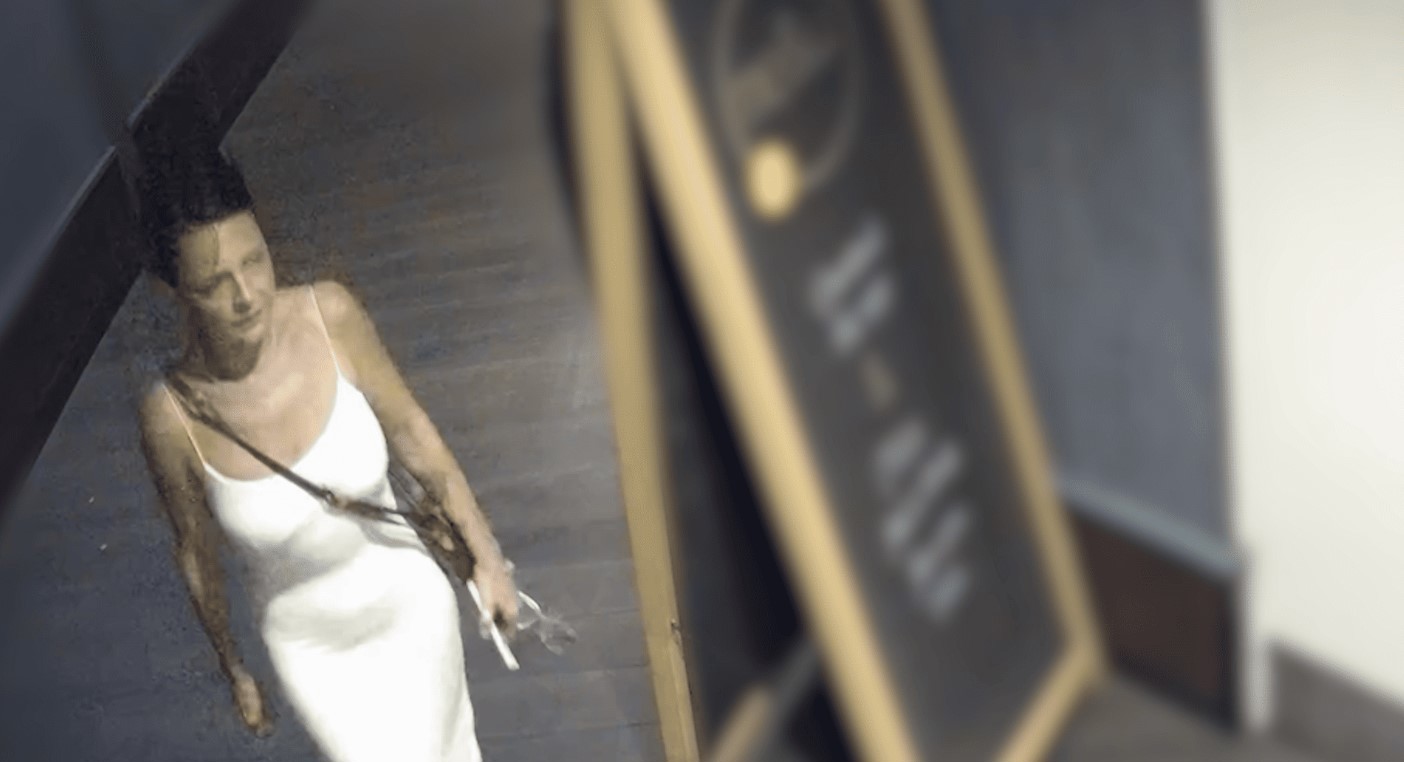
Newly released video footage of the incident appears to show the moment it happened.

Garcia's damages included physical pain, mental anguish, loss of enjoyment of life, humiliation, inconvenience, grief, disfigurement, physical impairment, anxiety and emotional distress, according to a recording of the verdict from Courtroom View Network.

Starbucks said last week that it plans to appeal the verdict.

READ MORE: 'Deadly' sea foam infects more than 100 surfers

"We sympathise with Mr Garcia, but we disagree with the jury's decision that we were at fault for this incident and believe the damages awarded to be excessive," a company spokesperson said in a statement.

"We have always been committed to the highest safety standards in our stores, including the handling of hot drinks."

The lawsuit is reminiscent of a famous 1994 lawsuit against McDonald's in which a woman spilled hot coffee on her lap and suffered third-degree burns. The plaintiff in that case, Stella Liebeck, was originally awarded nearly $4.7 million.

DOWNLOAD THE 9NEWS APP: Stay across all the latest in breaking news, sport, politics and the weather via our news app and get notifications sent straight to your smartphone. Available on the Apple App Store and Google Play.