Tag Archives: oceania

Mud-covered Carnival revellers are a strange sight in sleepy Brazilian town

Hundreds of mud-covered Carnival revellers paraded in the sleepy seaside town of Paraty in south-eastern Brazil on Saturday, a decades-old tradition that has grown ever larger since its first edition nearly 40 years ago.

Joyous partygoers threw themselves into the silty shallows in front of one Paraty beach, emerging grey from the sludge.

They danced on the beach and grunted cavemen chants – "Uga! Uga!" – before marching along the sand.

READ MORE: Cyclone Alfred edges towards direct hit on Brisbane

"It's the best bloco. It's not often that you can get muddy and go around dancing and singing. It's very gooey, it's sticky and it stinks, but it's very good," said Thais Beazussi, 20, who lives almost two hours away by car, but makes the annual trip.

Carnival in Brazil is a combination of world-famous parades by samba schools who spend all year around preparing and eccentric street parties, each with their own theme, aesthetic or musical style.

The mud party's tradition dates to 1986, according to Paraty's tourism website.

Friends were playing in the mangroves at Jabaquara Beach, and realised they weren't recognisable.

READ MORE: UK, France to work on ceasefire plan with Ukraine

They went strolling into the city's historic centre and caused a stir.

The next year, a group lathered themselves up with mud to present themselves as a prehistoric tribe for Carnival. They carried skulls, vines and bones as they uttered their chants, the site said.

And so the mud party was born. And in the years since, it has become a beloved tradition.

Its growth has forced organisers and Paraty's tourist office to promote awareness ahead of the event regarding the importance of not dirtying the city's colorful walls, cars or onlookers.

UK, France to work on ceasefire plan with Ukraine

Britain, France and Ukraine have agreed to work on a ceasefire plan to present to the US, British Prime Minister Keir Starmer said on Sunday as he prepared to host a summit of European leaders to discuss ending the war.

The summit has been overshadowed by the extraordinary scolding by US President Donald Trump of Ukrainian President Volodymyr Zelenskyy at the White House on Friday for being ungrateful for US support in Ukraine's battle against the invasion by Russia.

But Starmer said he's focused on being a bridge to restore peace talks and he used the collapse of those talks as an opportunity to re-engage with Trump and Zelenskyy and French President Emmanuel Macron rather than "ramp up the rhetoric".

READ MORE: Israel cuts off aid to Gaza in bid to pressure Hamas to accept new ceasefire deal

"We've now agreed that the United Kingdom, along with France and possibly one or two others, will work with Ukraine on a plan to stop the fighting, and then we'll discuss that plan with the United States," Starmer told the BBC. Starmer and Macron have both spoken to Trump since Friday.

Sunday's meeting is an important step

The London meeting has taken on greater importance in defending the war-torn ally and shoring up the continent's defences.

Sunday's summit is likely to include talks on establishing a European military force to be sent to Ukraine to underpin a ceasefire. Starmer said it would involve "a coalition of the willing".

Starmer said he does not trust Russian President Vladimir Putin but does trust Trump.

"Do I believe Donald Trump when he says he wants lasting peace? The answer to that is yes," he said.

Starmer said there are "intense discussions" to get a security guarantee from the US as one of three components for a lasting peace.

"If there is to be a deal, if there is to be a stopping of the fighting, then that agreement has to be defended, because the worst of all outcomes is that there is a temporary pause and then Putin comes again," Starmer said.

READ MORE: Cyclone Alfred edges towards direct hit on Brisbane

Inside the 139 minutes that upended the US-Ukraine alliance

"That has happened in the past, I think it is a real risk, and that is why we must ensure that if there's a deal, it is a lasting deal, not a temporary pause."

The meeting at Lancaster House, a 200-year-old elegant mansion near Buckingham Palace, follows a charm offensive last week to engage with Trump at the White House to put Ukraine at the center of negotiations and tilt his allegiances toward Europe.

The summit will also include leaders from France, Germany, Denmark, Italy, Netherlands, Norway, Poland, Spain, Canada, Finland, Sweden, the Czech Republic and Romania. The Turkish foreign minister, NATO secretary-general and the presidents of the European Commission and European Council will also attend.

European leaders are backing Zelenskyy

Zelenskyy received broad support from leaders across Europe after the White House fiasco, which was exceptional for featuring an attack on an ally — and because it was broadcast on live television.

Starmer embraced Zelenskyy when he arrived Saturday for a private meeting — a day before a get-together had been scheduled before the summit.

"As you heard from the cheers on the street outside, you have full backing across the United Kingdom," Starmer said.

"We stand with you, with Ukraine, for as long as it may take."

Europe has been anxious since Trump initiated direct peace talks with Putin, who had been isolated by most Western leaders since invading Ukraine three years ago. The scramble to remain relevant and protect European interests as their once stalwart ally appeared to be cozying up to Putin was even more troubling when Trump called Zelenskyy a dictator and falsely said Ukraine started the war.

Meetings in recent days had provided some hope — until Zelenskyy's visit to the White House.

Visits to the Oval Office by Macron, who had declared his visit a "turning point", and Starmer were seen as steps in the right direction. The meetings were cordial and Trump even took a gentler tone toward Ukraine, though he would not commit to providing US security guarantees and maintained Europe would need to provide peacekeeping troops.

Within 12 hours of Starmer's return from Washington, the talk of peace seemed to collapse as Vice President JD Vance berated Zelenskyy for challenging Trump's assertions that Russian President Vladimir Putin could be trusted.

"Starmer did an impressive job of asserting Europe's agency in the war on Ukraine and conveying to President Trump that Europe is willing and able to take a leading role in implementing any credible peace deal," said Rachel Ellehuus, director-general of Royal United Services Institute, a defence and security think tank. "Unfortunately, Friday's White House meeting was a major step backward."

Ukraine can no longer count on military or political support from the US after Trump declared himself neutral in negotiations, Ellehuus said. She said Europe needs to step in and could release some €200 billion ($334 billion) in seized Russian assets to help fund that effort.

"The immediate goal of the meetings in London must be to keep Ukraine in the fight so it can negotiate from a maximum position of strength," she said.

European leaders pledge to increase military spending

Starmer pledged this week to boost military spending to 2.5 per cent of gross domestic product by 2027. Other European nations may follow suit.

Czech Prime Minister Petr Fiala said Saturday that Europe faces a historic test and has to look after itself. He said European countries have to increase their arms spending to reach at least 3 per cent of GDP.

"If we don't increase our effort fast enough and let the aggressor dictate its conditions, we won't end up well," he said.

Macron, who said it was legitimate for the US to shift its focus to dealing with China and Asia, also called for more defence spending as he called for unity among his neighbors.

"We should have woken up earlier," Macron said.

"I've been saying for years that we need a more sovereign, more united, more independent Europe."

Israel cuts off aid to Gaza in bid to pressure Hamas to accept new ceasefire deal

Israel stopped the entry of all goods and supplies into the Gaza Strip on Sunday and warned of "additional consequences" if Hamas doesn't accept a new proposal to extend the first phase of a fragile ceasefire.

Hamas accused Israel of trying to derail the truce and said its decision to cut off aid was "cheap extortion, a war crime and a blatant attack" on the truce deal. Both sides stopped short of saying the ceasefire had ended.

The first phase of the ceasefire, which included a surge in humanitarian assistance, expired on Saturday. The two sides have yet to negotiate the second phase, in which Hamas was to release dozens of remaining hostages in return for an Israeli pullout and a lasting ceasefire.

READ MORE: Cyclone Alfred edges towards direct hit on Brisbane

An Israeli official, speaking on condition of anonymity in line with regulations, said the decision to suspend aid was made in coordination with the Trump administration.

Israel says the new proposal is backed by the US

Israel said on Sunday that it supports what it described as a proposal from US Mideast envoy Steve Witkoff to extend the first phase of the ceasefire through Ramadan — the Muslim holy month of dawn-to-dusk fasting that began over the weekend — and the Jewish Passover holiday, which ends on April 20.

Under that proposal, Hamas would release half the hostages on the first day and the rest when an agreement is reached on a permanent ceasefire, according to Israeli Prime Minister Benjamin Netanyahu's office.

Hamas warned that any attempt to delay or cancel the existing ceasefire agreement would have "humanitarian consequences" for the hostages and reiterated that the only way to free them was through implementing the deal and negotiating the second phase.

Hamas has said it is willing to free the remaining hostages all at once in Phase 2, but only in return for the release of more Palestinian prisoners, a permanent ceasefire and the full withdrawal of Israeli forces.

READ MORE: Pledge for 'most Aussies to be within a 20 minutes of health clinic'

An Egyptian official said Hamas and Egypt would not accept a new proposal aimed at returning the remaining hostages without ending the war. The official noted that the agreement had called on the two sides to begin negotiations over Phase 2 in early February.

The official, who was not authorised to brief the media and spoke on condition of anonymity, said mediators were trying to resolve the dispute. There was no immediate comment from the US or Qatar, which along with Egypt has served as a key mediator with Hamas.

Ceasefire has been marred by disputes

Under the first, six-week phase of the ceasefire, Hamas released 25 Israeli hostages and the bodies of eight others in exchange for the release of nearly 2000 Palestinians imprisoned by Israel. Israeli forces pulled back from most of Gaza and Israel allowed a surge of humanitarian aid to enter.

But the first phase was marred by repeated disputes, with each side accusing the other of violations.

Israeli strikes killed dozens of Palestinians who the military said had approached its forces or entered areas in violation of the truce. Hamas paraded the captives — some of whom were emaciated — before crowds in public spectacles that Israel and the United Nations said were cruel and degrading.

Hamas said Israel's aid suspension was another violation, saying deliveries were supposed to continue as the sides negotiated over the second phase of the deal.

Israel has been accused of blocking aid throughout the war

Israel imposed a complete siege on Gaza in the opening days of the war and only eased it later under US pressure.

UN agencies and aid groups accused Israel of not facilitating enough aid during 15 months of war, and the Biden administration repeatedly pressed it to do more. Experts warned on several occasions that hunger was widespread in Gaza and that there was a risk of famine.

The International Criminal Court said there was reason to believe Israel had used "starvation as a method of warfare", when it issued an arrest warrant for Netanyahu last year. The allegation is also central to South Africa's case at the International Court of Justice accusing Israel of genocide.

Israel has denied the accusations and rejected both court actions as being biased against it. Israel says it has allowed enough aid to enter and blamed shortages on what it said was the UN's inability to distribute it. It also accused Hamas of siphoning off aid.

The war began when Hamas-led militants stormed into southern Israel on October 7, 2023, killing some 1200 people, mostly civilians, and taking 251 hostage. The militants are currently holding 59 hostages, 32 of whom are believed to be dead, after releasing most of the rest in two ceasefire agreements.

Israel's offensive has killed over 48,000 Palestinians, according to Gaza's Health Ministry. It says more than half of those killed were women and children but does not specify how many of the dead were combatants.

Israeli bombardment and ground operations pounded large areas of the strip to rubble and at the height of the conflict displaced some 90% of the population of 2.3 million Palestinians. The war has left most of Gaza's population dependent on international aid for food and other essentials.

North Queensland rocked by 4.4-magnitude earthquake

North Queenslanders were rocked by a 4.4-magnitude earthquake overnight.

Residents reported their homes shaking about 9.30pm yesterday in Townsville, with small tremors felt by residents as far north as Cairns and south as Mackay.

The earthquake was recorded 17 kilometres from Townsville at a depth of 10 kilometres, according to Geoscience Australia.

READ MORE: Zelenskyy moves on after Oval Office blowout with Donald Trump

Earthquake, Townsville

More than 5000 people reported feeling the tremors.

Some reported feeling like there was an "explosion".

Townsville resident Jethro Gifford told 9news he heard the loud crack of an earthquake from inside his home.

"Sounded like an explosion at the front of the house, a loud bang, followed by a second or two more of rumbling," he said.

"The whole neighbourhood was in front of their houses trying to figure out what was going on."

"Such a strange feeling to suddenly have this weird force racing beneath you, making your home shudder, and then some kind of explosion," Townsville resident Barbara Hannay said.

CCTV footage shows homes trembling as the earthquake hit.

There were no reports of major damage and authorities warned aftershocks were a possibility.

The Joint Australian Tsunami Warning Centre confirmed there was no tsunami threat to the Australia's mainland, islands or territories.

READ MORE: Search for Beaumont children uncovers new theory as Castalloy site dig is called off

Townsville earthquake

A smaller 3.3-magnitude earthquake was also felt in Muswellbrook, NSW about 10pm.

Only 189 reported feeling tremors from the quake, which had a depth of 1 kilometre.

DOWNLOAD THE 9NEWS APP: Stay across all the latest in breaking news, sport, politics and the weather via our news app and get notifications sent straight to your smartphone. Available on the Apple App Store and Google Play.

Cyclone Alfred edges towards direct hit on Brisbane

Cyclone Alfred has whipped up wild surf and eaten away large parts of the shoreline on Queensland's coast as it edges towards a potential direct hit on Brisbane.

Lifeguards closed dozens of beaches from Agnes Water in Gladstone down to Currumbin on the Gold Coast while the category-two cyclone threatens to make landfall.

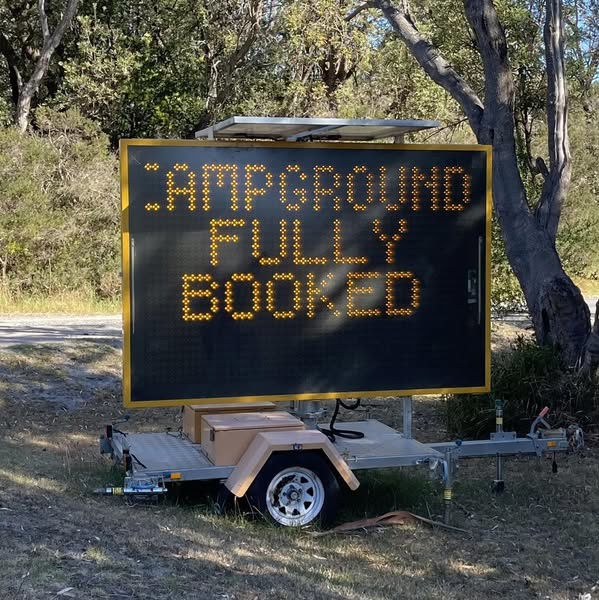
Water was seen entering a restaurant on the Sunshine Coast, and on K'Gari residents faced gale force winds and campers were warned to return to the mainland to avoid passing Alfred's force.

READ MORE: Pledge for 'most Aussies to be within a 20 minutes of health clinic'

https://x.com/BOM_au/status/1896099061641429489Coastal erosion Cyclone Alfred

Fears grow for Pumicestone Passage homes, particularly at Golden Beach, as the ocean pushes through a fragile protective sandbar on the northern tip of Bribie Island.

Modelling shows Alfred making a beeline for the country's third-biggest capital, with the south-east bracing for a potential direct hit.

A Bureau of Meteorology tracking map shows a cross through Brisbane as high as a category two.

The storm is on track to make landfall in the early hours of Thursday.

Premier David Crisafulli asked locals to prepare.

"I'm mindful that there is a big challenge there because of how severe the breakthrough has been in recent times and the prospect of those winds with big tides," he said.

"I know this is not a frequent occurrence and there may be Queenslanders who can be forgiven for thinking that this is something that doesn't occur well history shows that is does.

Cyclone Alfred coastal erosion

"We're just asking people to just be prepared and heed the warnings, do what you can to get ready, and you need to know that we've done the same."

Sandbagging stations are open at key locations across the south-east, and Queenslanders encouraged to do all they can now to prepare their homes for heavy rainfall.

That includes cleaning gutters, securing loose items and ensuring they have food, water and batteries.

READ MORE: 'Huge crash': Passenger describes moment cruise ship 'tilted'

The Bureau of Meteorology warned Monday could bring wild weather.

"Tropical Cyclone Alfred is forecast to move southwards, roughly parallel to the Queensland coast during Sunday and weaken a little further, before moving more to the southeast during Monday," the bureau said.

READ MORE: Millions to swelter through early autumn heatwave

Wild surf Cyclone Alfred

"Alfred is then expected to slow down and is likely to turn westward from Tuesday, moving back towards the southern Queensland coast."

READ MORE: Inside the 139 minutes that upended the US-Ukraine alliance

The state's south-east is forecast to be lashed with 150 millimetres of rain if Alfred makes landfall as expected.

The Gold Coast is also expected to see more than 200 millimetres over the next few days.

Locals in northern NSW are also being warned they could face flooding.

DOWNLOAD THE 9NEWS APP: Stay across all the latest in breaking news, sport, politics and the weather via our news app and get notifications sent straight to your smartphone. Available on the Apple App Store and Google Play.
Pledge for ‘most Aussies to be within a 20 minutes of health clinic’

Labor has promised it will open 50 more urgent care clinics as part of its $8.5 billion Medicare boost.

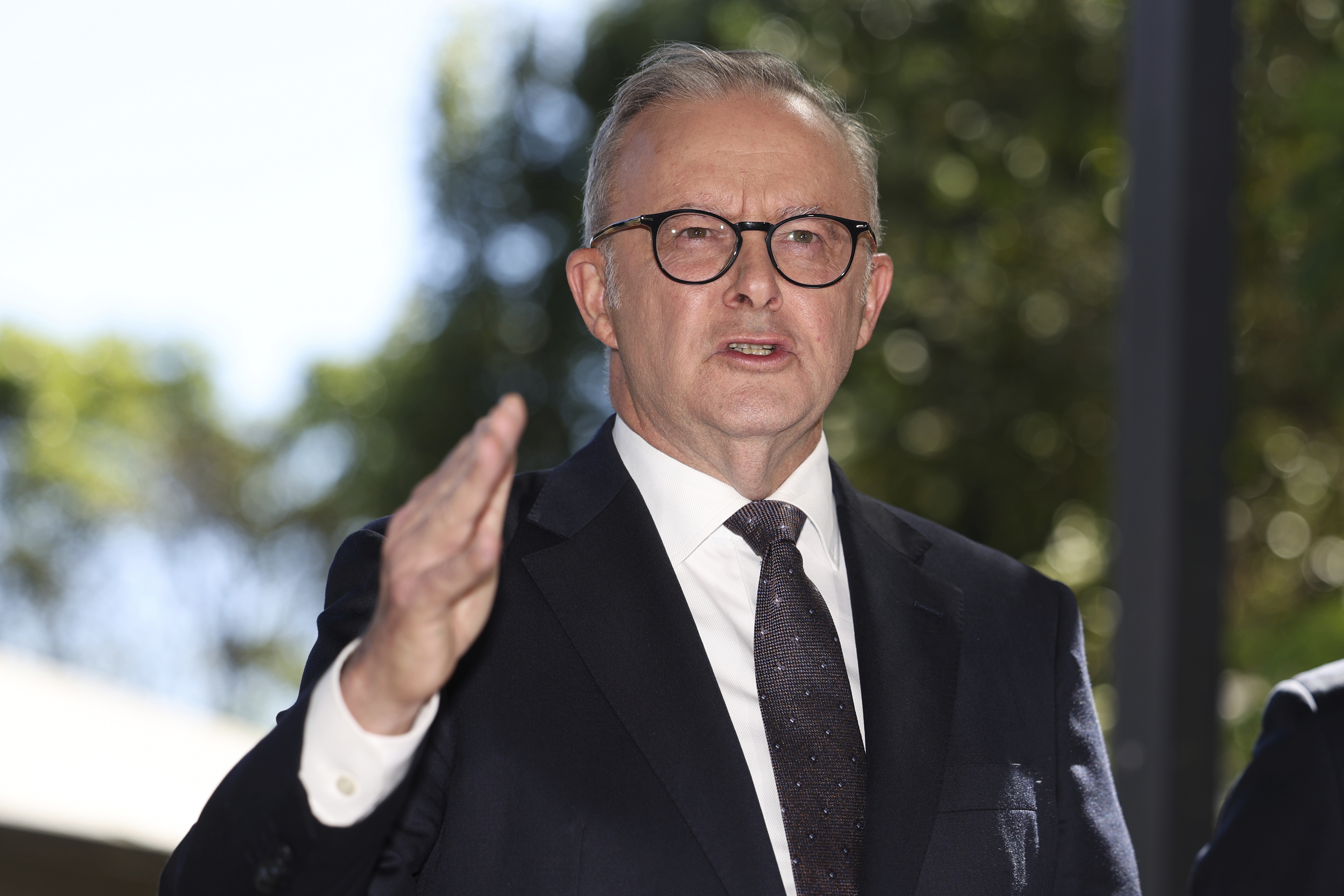
Prime Minister Anthony Albanese today said the Labor government would spend $644 million to open the clinics if elected in the 2025/2026 financial year.

Once the extra 50 are opened, Albanese said it would mean most Australians would be within a 20 minutes of a clinic.

READ MORE: Millions to swelter through early autumn heatwave

Medicare reform

It's the second healthcare pledge in two weeks, as the Coalition pitch instead on defence and national security.

"Whether your family needs urgent or ongoing health care, under Labor, Medicare will be there for all Australians, in every community," Albanese said.

"Four in five Australians will live within a 20-minute drive of a bulk-billed Medicare Urgent Care Clinic, once all Labor's clinics are open."

There will be 14 clinics opened in NSW, 12 in Victoria, 10 in Queensland, six in Western Australia, three in South Australia, three in Tasmania, one in the Northern Territory and one in the ACT.

READ MORE: Inside the 139 minutes that upended the US-Ukraine alliance

Medicare card

The federal government said it decided on locations based on an independent commissioning process.

Labor has already opened 87 Medicare urgent care clinics, Albanese said.

They provide bulk-billed care for urgent but non-life threatening issues with extended hours every day of the week, no appointment necessary.

Labor also promised free doctor visits for most Australians by 2030 as part of its multi-billion dollar Medicare vow.

READ MORE: Homes shudder, sound of 'explosion' as earthquake rocks Aussie state

Doctors say a multibillion-dollar spend on Medicare will not hit bulk-billing targets because it doesn't match the actual cost of care.

Albanese, who turned 62 today, said Labor will spend $8.5 billion across four years to commit to universal bulk-billing, which would make nine out of 10 GP visits free.

The PM estimated this would increase the number of 100 per cent bulk-billed practices to 4800 and save patients $859 million every year by 2030.

This proposal would mark the single biggest investment in Medicare since it was created in 1984.

Currently about 80 per cent of GPs do not accept bulk-billing for generic appointments.

The federal opposition pledged to spend at least $3 billion to buy an extra 28 Joint Strike Fighter jets.

"We're going to invest in defence, and we're going to rebuild the Defence Force, which has been run down under Labor," Shadow Health Minister Andrew Hastie told Sky News' Morning Agenda.

A flotilla of Chinese warships circumnavigating Australia has put defence capabilities in the political crosshairs.

Beijing gave Papua New Guinea notice of their presence, but not Australia.

"We need to demonstrate our own strength and our own resilience in this relationship in order to make it the mutually respectful relationship we want it to be," Shadow Home Affairs Minister James Paterson told Sky News.

DOWNLOAD THE 9NEWS APP: Stay across all the latest in breaking news, sport, politics and the weather via our news app and get notifications sent straight to your smartphone. Available on the Apple App Store and Google Play.