Tag Archives: oceania

Daylight saving is ending soon – here’s what to do

As the month of April approaches, so does the end of daylight saving.

Most states and territories will turn their clocks back an hour next month to make better use of daylight hours during autumn and winter.

Here's everything you need to know.

READ MORE: How to access cyclone recovery payment

It's lazy morning o'clock. Alarm clock on bedside table and woman stretching in room, selective focus

When does daylight saving time (DST) end?

Daylight saving time ends on April 6, 2025 for those in NSW, Victoria, South Australia, Tasmania and ACT.

The clocks in these states will turn back at 3am in the current time (DST), meaning the clocks will read 2am (AEST) again when it turns to 3am.

Do we lose or gain an hour of sleep?

Many people forget which way the clocks turn in April and again in October.

Daylight saving time (DST) ends in April, when the days become shorter and there is less daylight to conserve in the evenings, while the mornings become darker.

Therefore, the clocks turn back by an hour in April, allowing residents in states and territories affected to sleep in longer through the darker mornings, and to enjoy the daylight while it lasts. 

READ MORE: Which Australian state has the most public holidays?

What is the time difference between states and territories?

All Australian states and territories except for Queensland, the Northern Territory and Western Australia observe daylight saving. 

This means that NSW, Victoria, Tasmania and ACT will be running on the same time as Queensland, Australian Eastern Standard Time, when daylight saving ends. 

These areas are currently one hour ahead of Queensland, and have been since last October when daylight saving started.

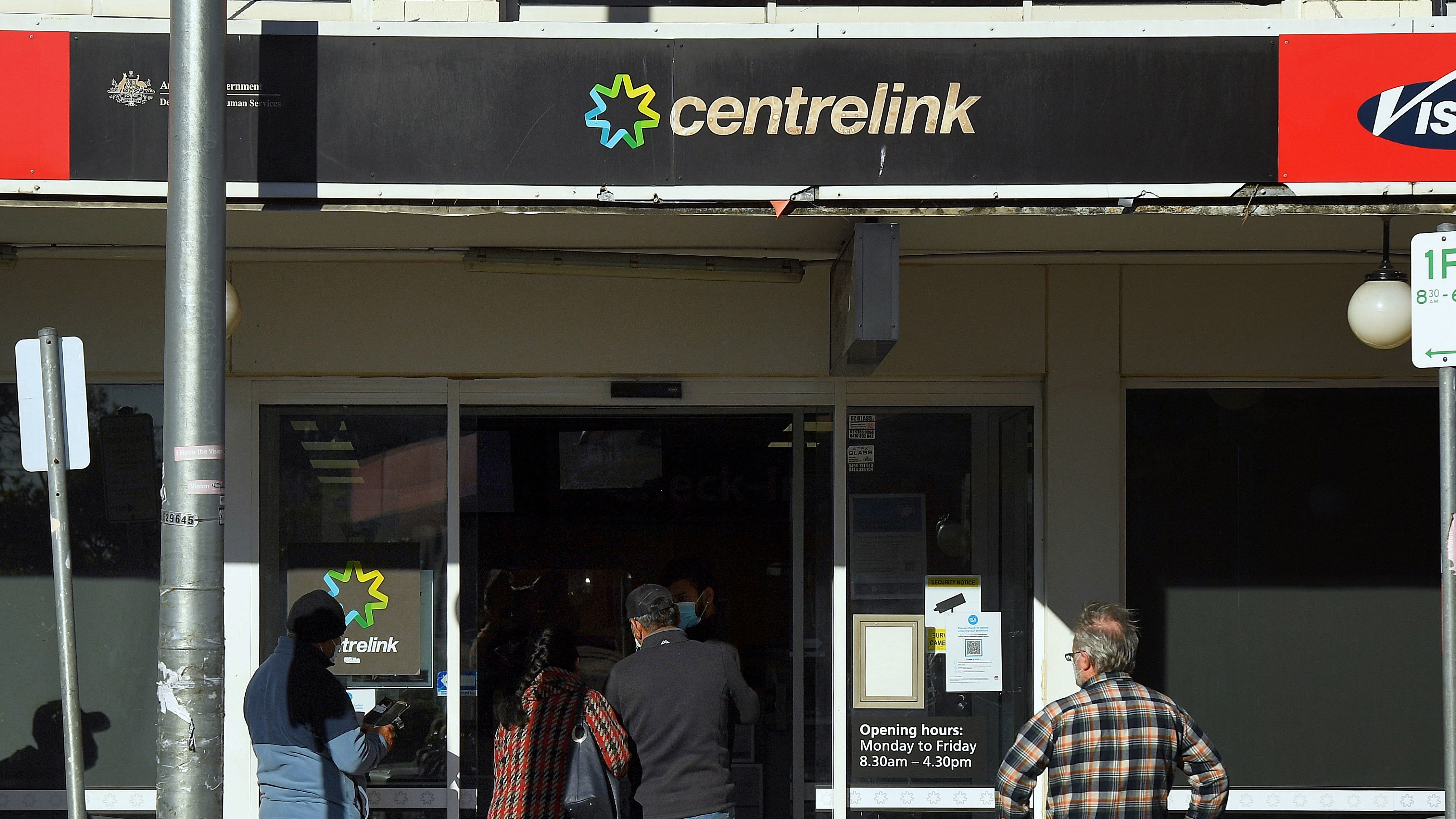
READ MORE: Millions of Australians to receive boost to Centrelink payments

South Australia is singled out – although it does observe daylight saving, it will remain, as it always is, 30 minutes behind AEST, to account for its position geographically. This means it will change from Australian central daylight time (ACDT) to Australian central standard time (ACST).

Meanwhile, Western Australia will continue to run on its two time zones – Australian western standard time (AWST) which covers Perth and the west coast, and Australian central western time (ACWT), which is 45 minutes ahead of AWST.

The Northern Territory also runs on ACWT, and will continue to use it when the clocks go back in the mentioned states and territories.

Samuel’s first full-time job left him isolated and using a freezer as a chair

Samuel Anderson never imagined his first professional job would involve sitting alone at home, not meeting his colleagues in-person for a year.

The Melbourne man, who is now 25, had a highly unusual entry into the workforce at the start of the COVID-19 pandemic in early 2020. 

After a fair chunk of his early career spent at a makeshift desk at home – and as many Aussies resist the push to return to the workplace – Anderson told 9News.com.au he now much prefers the office over remote work.

READ MORE: Alisha and Emilia both gave birth under some of the world's toughest restrictions

Samuel Anderson

Anderson was offered a job at Australian Spatial Analytics, a social enterprise and non-profit which focuses on helping neurodivergent adults build their careers, five years ago.

"I started a new job in April 2020, about a month [into the pandemic]… and it was different to any other kind of job I'd done before," Anderson explained.

"I  went full time in 2021, it was casual up until that point. I hadn't even gone into an office at all."

Anderson joined millions of other Australians having meetings on Zoom and using a dining table as a desk during the unprecedented pandemic

He didn't bond with his co-workers at the water cooler or enjoy an after work tipple like many other generations first working full-time.

"I hadn't got a chair yet, I was sitting on my freezer," he laughed.

READ MORE: Coalition government would require public servants in the office five days a week

"I was lonely at times, but we'd just sit on a call all day. If you wanted to talk, you'd talk.

"But it certainly was like living online."

According to Dr Melissa Wheeler, a senior lecturer in Business Administration at RMIT, fully remote work took away a lot of opportunities for many young people.

"People who were new to the workplace were really missing out on those mentorship opportunities, which often happen really informally," Dr Wheeler said.

"It's very hard to do those things in online or remote settings – I don't think it's impossible. 

"I just think we haven't been trained, or we can't recognise the opportunities when they pop up in remote settings."

Woman chesk social media on her phone before starting work

He was not getting the physical experiences of being in the workplace, but Anderson said he felt lucky to have a job in the first place.

His career was able to accelerate during this period despite the isolation.

"I wasn't expecting it and it came out of nowhere," he said.

"Rather than being resentful or upset that it wasn't like anyone else's [start to their career], it wasn't something I was expecting in the first place.

"For that reason, I was thankful."

READ MORE: When does Daylight Saving end in Australia and how will each state be affected?

Now, five years into his career, Anderson is going against the grain compared to millions of his peers.

If he can avoid it, he will choose working in an office over remote work.

" I felt like I was working way too long because, what else am I going to do?" Anderson said.

"Like, I'll just be on the computer anyway. It  wasn't good for work life balance. 

"You need that separation from workspace and leisure.'

Wheeler said despite its disadvantages, the rise of remote work has given plenty of Gen Z workers the taste of a healthy work-life balance.

She said younger professionals were now rejecting the traditional 9-5 workday in droves following the pandemic and are demanding flexibility.

"They express work in a different way, in a more creative way, in a more burst of productivity, kind of way that we might not be used to," Dr Wheeler said.

Dr Melissa Wheeler, RMIT

READ MORE: Mark spends hours every week trying to stop scammers targeting grieving families

"I think we're all saying, wait, hold on a second. In times of crisis, you asked us to pivot so quickly and to master it, and we did it. 

"And then you said, wait, now that you've done it, we actually want everyone to return back."

Wheeler thinks a hybrid model is here to stay for office workers.

It's a long-term pandemic impact that won't fade away and will likely benefit future generations of employees.

But as for the notorious four-day week? There's a bit of work to be done before that's universally achievable.

"There's a famous economist, John Maynard Keynes, who said in 100 years people would be working three days a week," Wheeler added.

"But our increasing consumerism has meant that that will never be possible, because when things are so easy to get… there's never a 'good enough.'

"If we were to, as a culture, as a society, as a world, decide to be more sustainable, to stop producing and wanting as much, then that would be much more realistic."

DOWNLOAD THE 9NEWS APP: Stay across all the latest in breaking news, sport, politics and the weather via our news app and get notifications sent straight to your smartphone. Available on the Apple App Store and Google Play.

‘Is that the depths you’ve sunk to?’: Former PM blows up over Trump questions

Malcolm Turnbull said Australia could not muzzle itself in an attempt to appease Donald Trump and win an unlikely exemption to incoming tariffs, during a fiery interview with the ABC in which he accused the public broadcaster of being "pusillanimous".

Turnbull, whose recent criticisms of Trump's "abusive" and "chaotic" approach to the global economy sparked a furious social media response from the US president yesterday, appeared on ABC Radio National Breakfast this morning to discuss the looming tariffs on Australian steel and aluminium.

The former prime minister, who secured an exemption from similar Trump tariffs in 2018, was questioned about whether his criticism of the US president would undermine Australia's case for another let-off this time around – a suggestion Turnbull hit back at.

READ MORE: Trump lashes out after Turnbull says China will take 'massive advantage' of him

Former Australian prime minister Malcolm Turnbull addresses the media

"Are you suggesting that we should engage in self-censorship in Australia for fear of offending the huge ego of Donald Trump?" he said.

"Is that really the state that we've got to? Surely we should be free to speak the truth. Or are we going to muzzle ourselves for fear of offending Mr Trump?"

While describing himself as a defender of the ABC during the interview, Turnbull took issue with the national broadcaster's line of questioning.

"Is the ABC becoming so pusillanimous that you're seriously suggesting that we shouldn't be free to speak the truth in Australia for fear of Donald Trump?" he said.

"Is that the depths you've sunk to?"

Pusillanimous means weak or cowardly.

READ MORE: When does Daylight Saving end in Australia and how will each state be affected?

Republican presidential nominee former President Donald Trump speaks at a campaign rally at Van Andel Arena, Tuesday, Nov. 5, 2024, in Grand Rapids, Mich.

Turnbull also told ABC host Sally Sara that "I believe in Australia and I believe in standing up for Australia and I think, I'm sorry, apparently you don't", to which she told him to not "put words in my mouth, with respect".

"It's my job to ask questions about your comments and this is at a time where there's a significant trade decision underway," the long-time radio presenter said.

Australian officials, including Treasurer Jim Chalmers and US Ambassador Kevin Rudd, have been working hard to secure an exemption to Trump's incoming 25 per cent tariffs on aluminium and steel imports into the US.

ANALYSIS: Cracks are forming in the US economy. Trump is a big reason why

Turnbull said although the Albanese government had been doing "as good a job as they can in making the case" for an exemption, it was unlikely to bear fruit.

"I hope they are successful, (but) it's just a different circumstance (to the 2018 exemption he secured).

"We have to face up to that."

"This time there will be no exemptions and they will apply right across the board," he added.

DOWNLOAD THE 9NEWS APP: Stay across all the latest in breaking news, sport, politics and the weather via our news app and get notifications sent straight to your smartphone. Available on the Apple App Store and Google Play.

Ex-cyclone Alfred exposes old shipwrecks on east coast beaches

The wild weather whipped up by ex-tropical cyclone Alfred has exposed a 180-year-old shipwreck.

High seas and shifting sands have uncovered what is thought to be an 1843 schooner named the Comet near Ballina in northern NSW.

The Comet was built in the Williams River port, according to the NSW Office of Environment and Heritage.

READ MORE: Police wade through deep floodwaters to save woman trapped in car

Ex-Cyclone Alfred has unearthed what is believed to be part of historic ship The Comet on a Ballina Beach. Photo shows Ocsar Pllo, Axel Doherty and Daisy Plooy playing by it. High seas and shifting sands have uncovered what is thought to be an 1843 schooner named the Comet near Ballina in northern NSW.

It was a wooden schooner weighing 34 gross tons and spanning 14.5 metres. It was owned by Hugh Brodie and Archibald Craig.

The vessel was wrecked on March 30, 1851, on the north side of the Tweed River entrance while attempting to cross the bar.

Everyone survived.

READ MORE: Trump lashes out after Turnbull's hit on 'rude and abusive' president

Ron Creber, curator and manager at Ballina Naval and Maritime Museum, said part of the ship's hull was what experts think has been exposed on Shelley Beach.

"That piece of wreckage was washed up on the beach in October," he told 9news.

"Part of it was freshly broken so we think the wreckage is on the point between the two beaches.

"But then it got covered up as different tides, but now it's fully exposed.

The Comet steamship

"There's another piece there now."

Other shipwrecks in the area include the Tomkey on Lighthouse Beach.

It was wrecked near the north wall of the Richmond River breakwater on September 13, 1907.

"Sometimes a little bit gets exposed from time to time which is the remains of the engine. I have not see it for years," Creber said.

The Dicky, an iron-hulled steamer, which drove ashore at Caloundra during a cyclone in 1893 is also a wreck in the area.

The museum gets an influx of interest whenever old wrecks resurface.

READ MORE: Canada slams US with 25% tax on electricity in trade war salvo

"Every time we get a storm and the beaches wash away we get people coming in, Creber said.

It's an offence to disturb or damage any part of a shipwreck or take anything away.

‘Mudbug’ risk in south-east Queensland as Alfred cleanup begins

Cases of Melioidosis, a bacterial infection found in tropical climates that is sometimes referred to as a 'mudbug', have sharply risen in Australia since the start of this year.

Queensland Health recorded 111 melioidosis cases as of March 2, more than three times the number for the same period in 2024, with the majority in Cairns and Townsville leading off the disastrous North Queensland floods in February.

Even more worryingly, 16 Aussies have reportedly died from the disease this year. 

READ MORE: How to access cyclone recovery payment

The heightened incidence of melioidosis prompts concerns for south-east Queensland as it endures flooding from ex-Cyclone Alfred.

Australian Medical Association Queensland President and Hervey Bay GP Dr Nick Yim spoke to 9News.com.au about the concern.

Is there a melioidosis outbreak risk in south-east Queensland?

Melioidosis is endemic to northern Queensland and the Northern Territory, where tropical cyclones, floods, and warm, humid weather are most frequent.

However, Yim said the disease can pop up in similar climates and conditions.

"Obviously, there is currently increased rainfall in the area," he says.

"We also know that the south-east Queensland corner is quite warm. Melioidosis can lurk in these environments."

How does melioidosis infection occur?

Melioidosis occurs in contaminated soil and water, putting people in flood zones at risk during both flooding and cleanup.

"Melioidosis enters the body through cuts and scratches, and, when it does become a little bit airborne, it can be breathed in and entered by the lungs," Yim says.

READ MORE: Police wade through deep floodwaters to save woman trapped in car

How do I keep myself safe?

"Once the disaster ends and people start to clean everything up, ensure that you are wearing personal protective equipment," Yim says.

That includes a mask, safety goggles (if using a pressure cleaner), gloves, and appropriate footwear.

"We don't want to see people cleaning up in thongs or bare feet," Yim says.

People who are elderly and/or immunocompromised or immunosuppressed – including those with diabetes, liver and kidney disease, and cancers – should be particularly careful, as they're more at risk of severe cases of melioidosis, he adds.

READ MORE: Charges laid over alleged antisemitic attack on Sydney childcare centre

What symptoms should I look for?

Those in flood and cyclone-affected areas should look out for fevers, headaches, trouble breathing, and chest and muscle pain.

Symptoms can develop in 1-4 weeks, which means now is the time to be vigilant, even though, for most places, the worst of the flooding and storms is over. 

"If symptoms do develop, it's really important to touch base with the GP, just to get assessed," Yim says.