They were pulled away from the beach by strong tides at Cape Farewell.
Tag Archives: oceania
Melbourne woman ‘in shock’ after confronting masked intruder in her home
A Melbourne woman is shocked after confronting a masked intruder in her Windsor home and posting the video on social media.
Flora Socratous was woken around 6am on January 6 by the sound of a window rod and confronted the home invader in her kitchen.
"I was in shock, I wasn't sure if I was dreaming," she told 9News.
"He could have pulled out a weapon, he could have pulled out a kitchen knife."
READ MORE: What plummeting Aussie dollar means for you
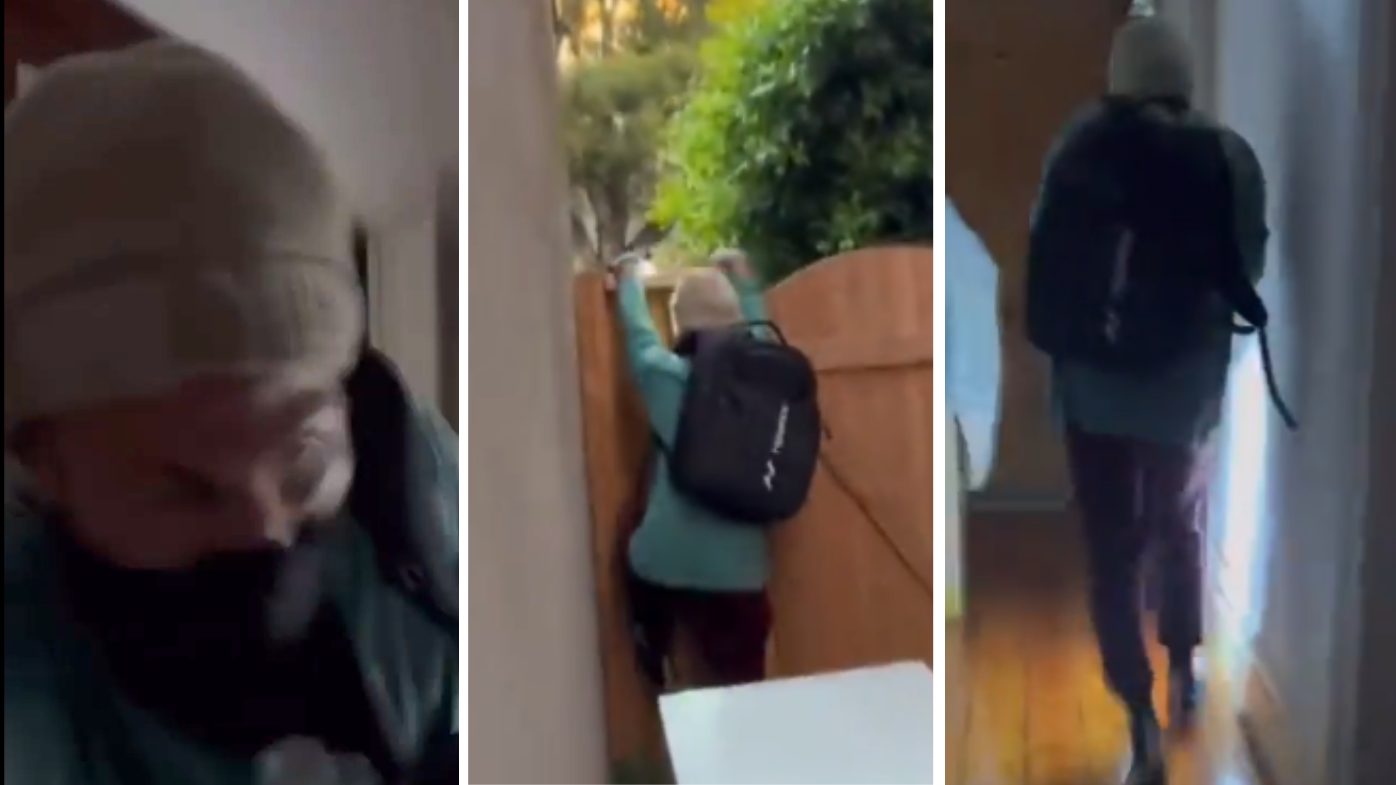
The video she posted online shows Socratous following the home invader around her house, asking "how did you get into my home?" and "what is in your bag?"
The invader, who is thought to be male, tries to exit through the front door, though it appears locked. The invader then runs into a room and jump out a window, scaling a fence and running off.
"I don't know what possessed me to take a photo or video footage of him but I'm glad I did," says Socratous.
READ MORE: New Orleans attacker used Meta glasses to plan the massacre
Police are investigating the aggravated burglary and have been told that no one was hurt and nothing was stolen during the break-in.
The intruder is believed to have broken the window latch to enter the home.
READ MORE: New Orleans attacker used Meta glasses to plan the massacre
Husband and wife pastors King’s Service Medal honour a momentous occasion
Pasifika couple honoured for dedication to youth and Pacific communities.
Dog attack in Tukituki Valley kills 95 sheep, farmer fears more losses
‘They’ve drilled them all into a creek, all into gateways, and taken them off one by one.’
Golden Globes in pictures: Glitz and glamour on the red carpet
All the glamour and action on the red carpet at the 82nd Golden Globe awards.
Lifeguards share surprising video of venomous jellyfish found at popular beach
Lifesavers in Far North Queensland have shared a video showing just how surprisingly tiny the highly-venomous Irukandji jellyfish are.
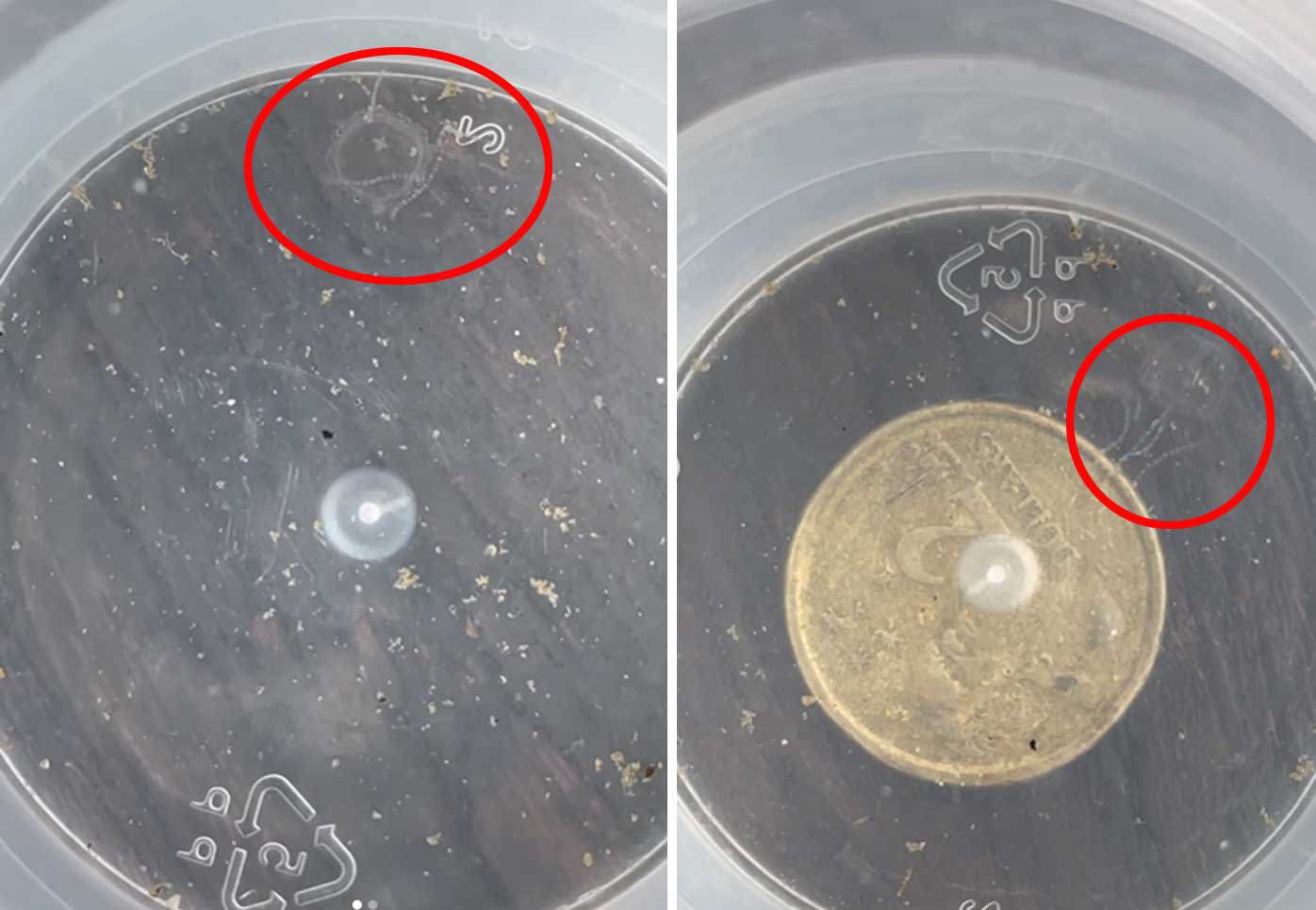
The footage was taken of an Irukandji jellyfish caught two weeks ago at the popular Palm Cove Beach north of Cairns.
It shows the potentially deadly jellyfish swimming over a $2 coin to put its size in perspective.
READ MORE: Monster fishing catch stuns onlookers
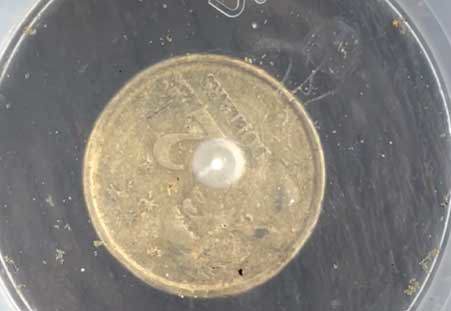
"This is what we mean when we say Irukandji really are THAT small!" the post on the Australian Lifeguard Service in North Queensland's Instagram page reads.
Cairns senior lifeguard Jon Murray told 9news.com.au that it was almost impossible to spot the Irukandji jellyfish in the water, a fact that surprised many people.
"In some of our huts we have specimens in formaldehyde jars, and a lot of the feedback we get is, I knew they were small, but I just didn't know how small," Murray said.
Murray said that, contrary to public perception, the stinger nets set up in some Far North Queensland beaches did not protect swimmers from Irukandji jellyfish.
"The stinger nets themselves are made to stop the box jellyfish, a much bigger, much more lethal type of jellyfish," he said.
"It cannot, and does not claim to stop the Irukandji.
"That's why we advise people, especially anyone with any sort of cardiovascular history, to wear a microsuit when swimming inside the net."
Researchers had predicted this singer season, which runs from November to May, would be much quieter than recent years because of ecosystem damage from floods from Cyclone Jasper.
However, this had so far proven not to be the case, Murray said.
"The researchers weren't expecting much, but we have started catching some stuff that has caught them off guard a bit."
"We just want to get the message out that the stingers are actually there, so please swim between the flags, and the stinger net for safety."
READ MORE: How to maximise public holidays and make the most of your annual leave in 2025
Murray said it was not always easy to tell straight away if a swimmer had been stung by an Irukandji jellyfish, as there was often a delay of about 20 to 40 minutes before the symptoms appeared.
"The sting is not always that giveaway, by any means, with Irukandji," he said.
"But as soon as the symptoms kick in, it's very telling and very obvious."
The first true sign of an Irukandji sting was usually a patient reporting they had a sore lower back, Murray said.
"The way that the patients have described it to us. It's like having a cricket bat slam in your back over and over and over that just starts to spread throughout the body as the poisons hit the lymph nodes," he said.
"So as soon as the patient says, I've got a sore lower back, that's when we escalate and close the beach."
Swimmers can check here to see which beaches in the Douglas Shire, Cairns Regional Council and Cassowary Coast regions may be closed due to the presence of jellyfish.
How to make the most of your annual leave in 2025
Planning holidays around Australia's public holidays can maximise your hard-earned time off.
With some careful preparation, you can spread out your annual leave to get 39 days off – by taking 18 days of annual leave.
Australia has 10 paid public holidays across the calendar.
By lining up your annual leave with public holidays and weekends in January, April, June, and December, you can significantly increase the amount of time you get to spend away from work.
Here are all the public holidays for 2025, along with some tips to make the most of leave next year.
State-by-state guide to Australia's public holidays for 2025
January
Book five days of leave for 10 days off from Saturday 18 to Monday 27 January (all states and territories)
Public holidays for the month fall on:
- Wednesday 1 January
- Monday 27 January: Australia Day Holiday (day in lieu)
February
Book four days of leave for nine days off from Saturday 8 to Sunday 16 February (TAS)
Public holidays for the month fall on:
- Monday 10 February: Royal Hobart Regatta (TAS)
- Wednesday 26 February: Launceston Cup (TAS)
March
Book four days of leave for nine days off (all states and territories except NSW, QLD and NT)
Public holidays for the month fall on:
- Monday 3 March: Labour Day (WA)
- Tuesday 4 March: King Island Show (TAS – King Island only)
- Monday 10 March: Canberra Day (ACT), Adelaide Cup Day (SA), Labour Day (VIC), Eight Hours Day (TAS)
April
Book six days of leave for 16 days off from Saturday 12 to Sunday 27 April (TAS)
Book seven days of leave for 16 days off on the same dates (all other states and territories)
Public holidays for the month fall on:
- Friday 18 April: Good Friday
- Sunday 20 April: Easter Sunday
- Monday 21 April: Easter Monday
- Tuesday 22 April: Easter Tuesday (TAS)
- Friday 25 April: ANZAC Day
May
Book four days of leave for nine days off from Saturday 3 to Sunday 11 May (QLD and NT)
Public holidays for the month fall on:
- Monday 5 May: May Day (NT), Labour Day (QLD)
June
Book four days of leave for 10 days off from Saturday 31 May to Monday 9 June (ACT)
Book five days of leave for 10 days off from Saturday 31 May to Monday 9 June (all states and territories except QLD and WA)
Public holidays for the month fall on:
- Monday 2 June: Reconciliation Day (ACT), Western Australia Day (WA)
- Monday 9 June: King's Birthday (National except QLD and WA)
August
Book four days of leave for nine days off from Saturday 2 to Sunday 10 August (NSW and NT)
Book four days of leave for nine days off from Saturday 9 to Sunday 17 August (QLD)
Public holidays for the month fall on:
- Monday 4 August: Bank Holiday (NSW), Picnic Day (NT)
- Wednesday 13 August: The Ekka (QLD – Brisbane only)
September
Book four days of leave for nine days off from Saturday 20 to Sunday 28 (VIC)
Book five days of leave for ten days off from Saturday 20 to Sunday 29 (WA)
Public holidays for the month fall on:
- Friday 26 September: Friday before AFL grand final (VIC)
- Monday 29 September: King's Birthday (WA)
October
Book four days of leave for nine days off from Saturday 4 to Sunday 12 October (ACT, NSW, SA)
Public holidays for the month fall on:
- Monday 6 October: Labour Day (ACT, NSW, and SA), King's Birthday (WA)
November
Book four days of leave for nine days of from Saturday 1 to Sunday 9 November (TAS and VIC)
Public holidays for the month fall on:
- Monday 3 November: Recreation Day (TAS)
- Tuesday 4 November: Melbourne Cup Day (VIC)
December
Book four days of leave for 13 days off from Saturday 20 December to Thursday January 1 (NT and SA)
Book five days of leave for 13 days off on the same dates (QLD)
Book six days of leave for 13 days off on the same dates (all other states and territories)
Public holidays for the month fall on:
- Wednesday 24 December: Christmas Eve (NT, QLD, SA)
- Thursday 25 December: Christmas Day
- Friday 26 December: Boxing Day (Proclamation Day in SA)
- Wednesday 31 December: New Year's Eve (NT and SA)
Nun who taught Brazil’s last dictator the world’s new oldest person
A soccer-loving nun from Brazil is believed to have become the world's oldest living person at nearly 117 following the recent death of a woman from Japan.
Sister Inah Canabarro was so skinny growing up that many didn't think she would survive childhood, Cleber Canabarro, her 84-year-old nephew, told The Associated Press.
LongeviQuest, an organisation that tracks supercentenarians around the globe, released a statement on Saturday declaring the wheelchair-bound nun the world's oldest person validated by early life records.
READ MORE: What plummeting Aussie dollar means for you

In a video shot by the organisation last February, the smiling Canabarro can be seen cracking jokes, sharing miniature paintings she used to make of wildflowers and reciting the Hail Mary prayer.
The secret to longevity? Her Catholic faith, she says.
"I'm young, pretty and friendly — all very good, positive qualities that you have too," the Teresian nun tells the visitors to her retirement home in the southern Brazilian city of Porto Alegre.
READ MORE: New Orleans attacker used Meta glasses to plan the massacre
Her nephew spends time with her every Saturday and sends her voice messages between visits to keep her spirits up following two hospitalisations that left her weak, with difficulty talking.
"The other sisters say she gets a jolt when she hears my voice," he says. "She gets excited."
Canabarro was born on June 8, 1908, to a large family in southern Brazil, according to LongeviQuest researchers. But her nephew said her birth was registered two weeks late and she was actually born on May 27. Her great-grandfather was a famed Brazilian general who took up arms during the turbulent period following Brazil's independence from Portugal in the 19th century.
READ MORE: Etihad flight aborts take-off at high speed, leaving runway blocked in Melbourne

She took up religious work still a teenager and spent two years in Montevideo, Uruguay, before moving to Rio de Janeiro and eventually settling in her home state of Rio Grande do Sul.
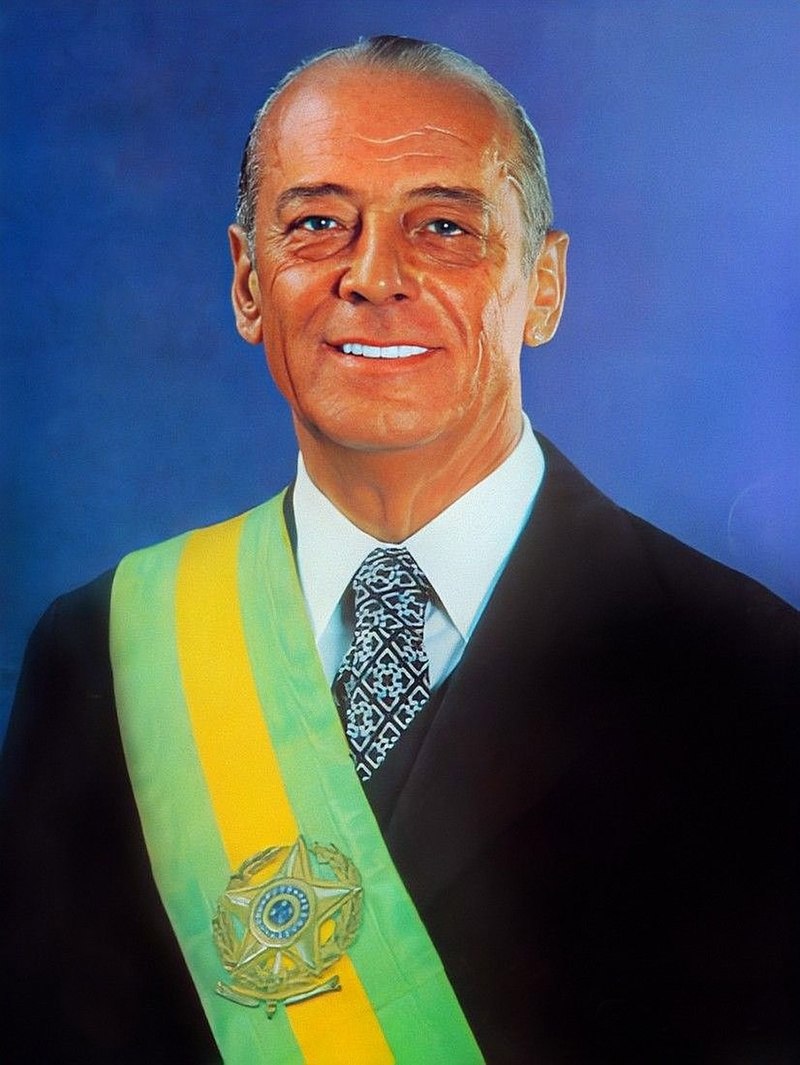
A lifelong teacher, among her former students was General Joao Figueiredo, the last of the military dictators who governed Brazil between 1964 and 1985. She was also the beloved creator of two marching bands at schools in sister cities straddling the border between Uruguay and Brazil.
For her 110th birthday, she was honoured by Pope Francis. She is the second oldest nun ever documented, after Lucile Randon, who was the world's oldest person until her death in 2023 at the age of 118.
Local soccer club Inter — which was founded after Canabarro's birth — celebrates every year the birthday of its oldest fan. Her room is decorated with gifts in the team's red and white colours, says her nephew.
"White or black, rich or poor, whoever you are, Inter is the team of the people," she says in one video posted on social media celebrating her 116th birthday with the club's president.
Canabarro took the title of the oldest living person following the death of Japan's Tomiko Itooka in December, according to LongeviQuest. She now ranks as the 20th oldest documented person to have ever lived, a list topped by Frenchwoman Jeanne Calment, who died in 1997 at the age of 122, according to LongeviQuest.
DOWNLOAD THE 9NEWS APP: Stay across all the latest in breaking news, sport, politics and the weather via our news app and get notifications sent straight to your smartphone. Available on the Apple App Store and Google Play.
RuPaul’s Drag Race star The Vivienne dies aged 32
James Lee Williams, better known has RuPaul's Drag Race UK star The Vivienne, has died at the age of 32 over the weekend.
"It is with immense sadness that we let you know our beloved James Lee Williams – The Vivienne, has passed this weekend," said Williams' publicist Simon Jones on X on Sunday.
"James was an incredibly loved, warm-hearted and amazing person," he said.
READ MORE: What plummeting Aussie dollar means for you

Born in Wales, The Vivienne rose to fame after being appointed UK Drag Ambassador in 2015 for RuPaul's Drag Race US, and later won the show in 2019.
Williams went on to appear in the seventh season of RuPaul's Drag Race All Stars and was a finalist in the UK series of Dancing on Ice in 2023, finishing in third place.
"We are deeply saddened to learn of the passing of The Vivienne," the official X account of RuPaul's Drag Race wrote on Sunday.
READ MORE: New Orleans attacker used Meta glasses to plan the massacre

"She will be dearly missed, but her legacy will live on as a beacon of creativity and authenticity – she embodied what it means to be a true champion."
The show's judge Michelle Visage also called the star "a beacon to so many".
The Vivienne's name came from the drag star's love of the fashion designer Vivienne Westwood.
Outside of RuPaul, they starred in musical theatre and TV productions including Chitty Chitty Bang Bang on tour and Absolutely Fabulous: The Movie.
No further details will be released on Williams' death, according to Jones.
"We please ask that James's family are given the time and privacy they now need to process and grieve."
Flights grounded as snow blankets UK, Europe
Heavy snow and freezing rain brought widespread disruption across Europe on Sunday, particularly in the UK and Germany, with several major airports forced to suspend flights.
With the weather set to stay inclement today in the UK, there are concerns that many rural communities, particularly in the north of England, could be cut off, with up to 40cm of snow on the ground above 300 metres.
The National Grid, which oversees the country's electricity network, said it had been working to restore power after outages across the country. Power cuts were reported in the English cities of Birmingham and Bristol, and Cardiff, Wales.
READ MORE: US Olympic medallist Fred Kerley arrested and stun-gunned
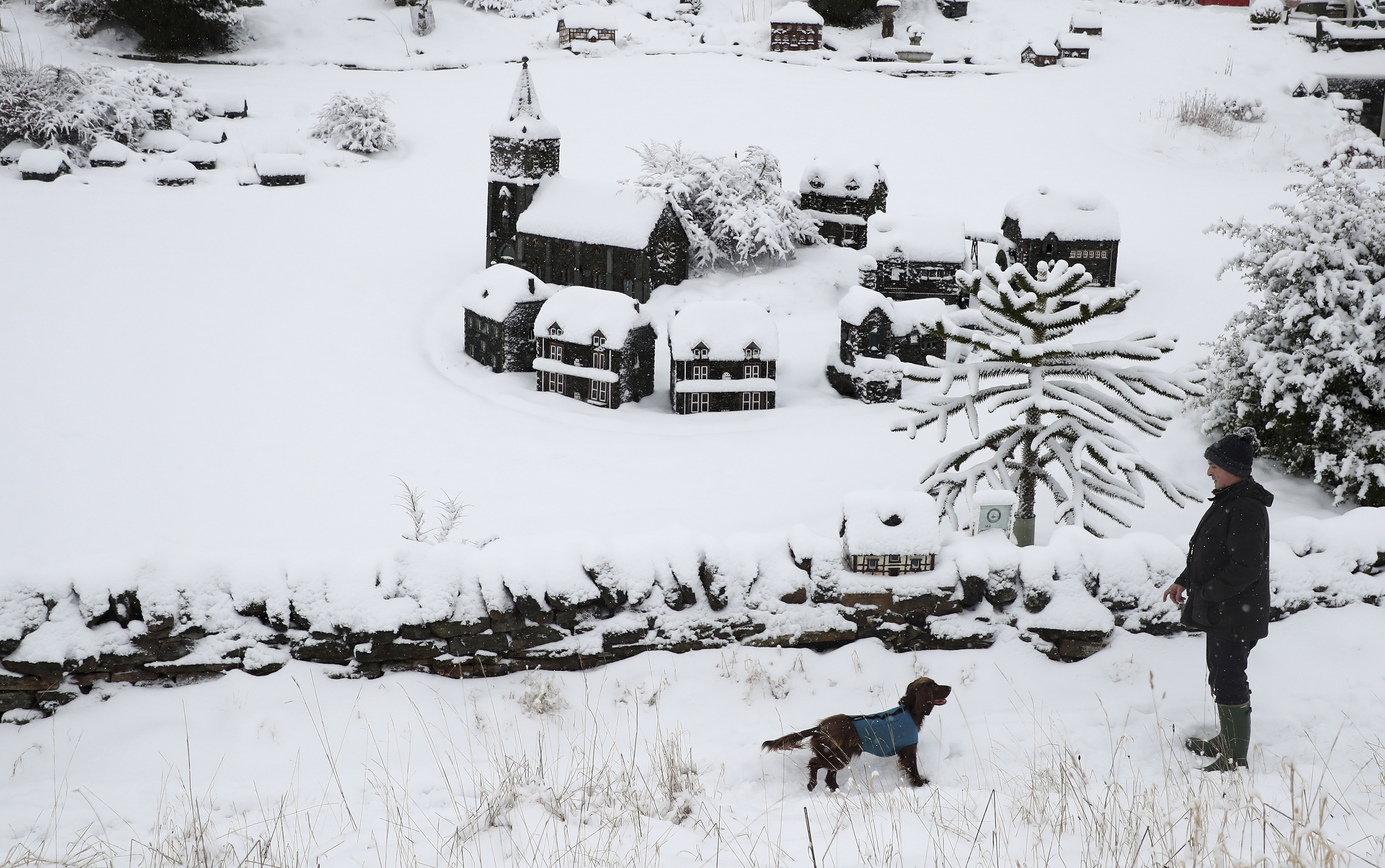
Many sporting events have already been postponed, though the heavyweight Premier League fixture between rivals Liverpool and Manchester United is on, following an inspection at Liverpool's Anfield stadium and of local conditions.
Liverpool's John Lennon Airport and Manchester Airport had to close runways overnight, but were returning back to normal on Sunday. Leeds Bradford Airport took longer to get flights back in the air.
The road network was heavily impacted too on what would have been a very busy day with many families returning home from the Christmas and New Year's break, and students heading back to universities.
READ MORE: Dangerous winter storm to deliver major threat to millions
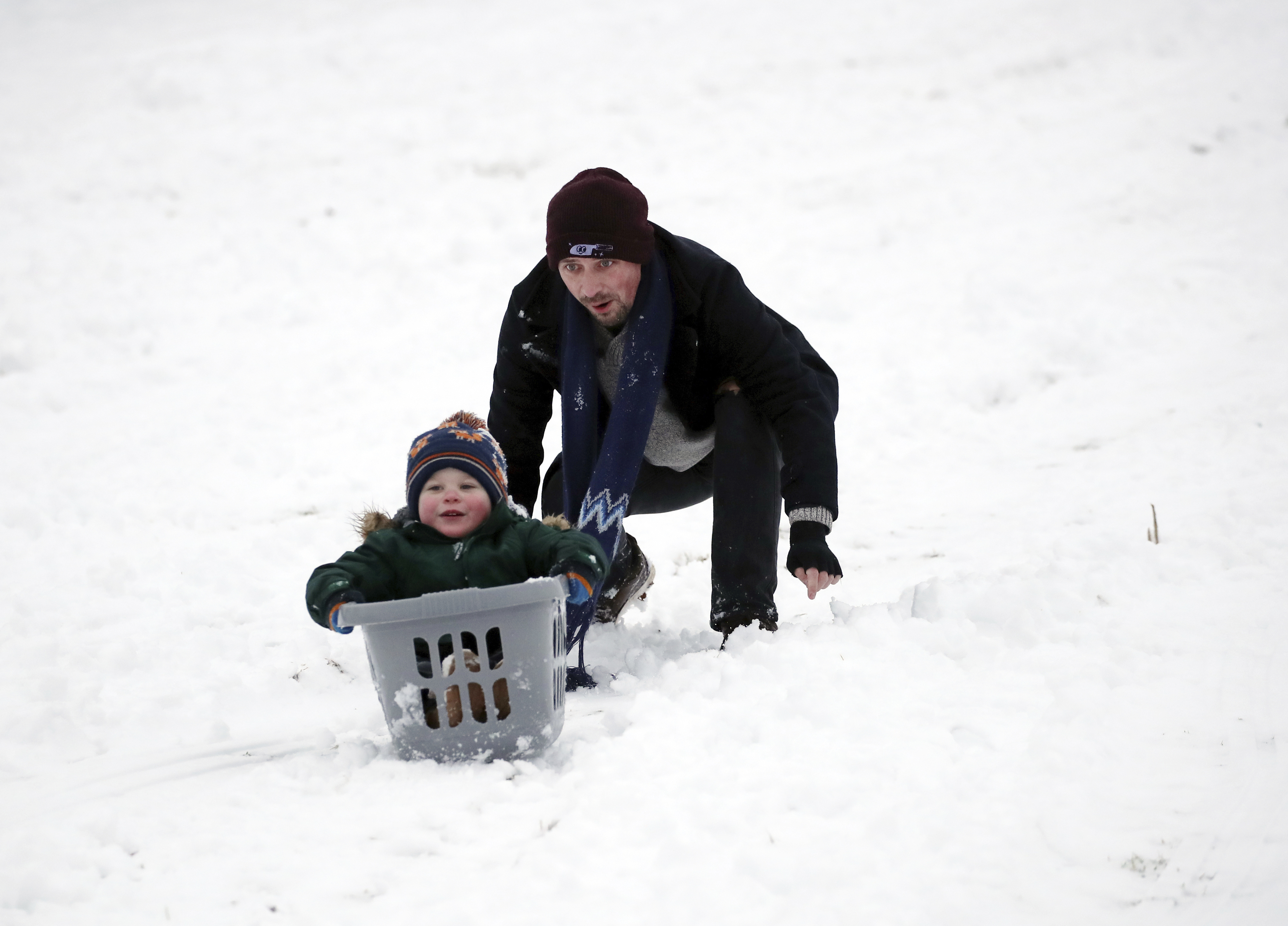
Many roads had been preemptively closed by local authorities, but stranded vehicles and collisions have caused disruption elsewhere.
A number of UK train services were cancelled, with National Rail warning of disruption continuing into the working week.
Britain's main weather forecaster, the Met Office, says sleet and snow will continue to push north on Sunday and will be heaviest in northern England and into southern Scotland.
After experiencing freezing rain, which occurs when super-cold rain freezes on impact, the south will turn milder.
The Environment Agency has also issued eight flood warnings across southern England on the Taw and Avon rivers.
READ MORE: Driver who exploded Cybertruck ranted about 'political grievances'
Snow and ice were also causing havoc in Germany, where a bout of wintry weather is spreading from the southwest.
Authorities have issued black ice warnings for drivers and pedestrians, advising people to stay home where possible.
Frankfurt airport canceled 120 of its 1090 planned takeoffs and landings on Sunday, according to the Fraport press office.
At Munich airport, only one runway was open while the other one was being cleared.
In Baden-Wuerttemberg, eight people were injured when a bus skidded off the road near the town of Hemmingen. Long-distance train connections also experienced irregularities in the Frankfurt area.
DOWNLOAD THE 9NEWS APP: Stay across all the latest in breaking news, sport, politics and the weather via our news app and get notifications sent straight to your smartphone. Available on the Apple App Store and Google Play.