An independent advisory group to the Centers for Disease Control and Prevention (CDC) on Wednesday postponed making a recommendation about the continued use of the Johnson & Johnson vaccine.
As a result, the current pause is likely to continue until the panel can gather more evidence about the risk of rare blood clots and the possibility that the shot is responsible.
During an emergency meeting, members of the CDC’s Advisory Committee on Immunization Practices said they did not feel comfortable making a decision about whether to continue vaccinations because there was not enough evidence about the patients who experienced the serious but rare side effects.
Panel members said they wanted more information about the people who may be most at risk for blood clots such as age and gender.
The panel did not set a date for when they will meet again, but it could be in the next week to 10 days. There is also a regularly scheduled meeting on May 5.
Federal health officials recommended the pause on Tuesday to allow the CDC and the Food and Drug Administration to review six cases of a rare and severe blood clot in the brain reported among the 7 million people who received the shot.
What makes the cases so rare is that the blood clots, known as cerebral venous sinus thrombosis (CVST), were accompanied by a condition known as thrombocytopenia, where the body has a low level of platelets, which help promote clotting.
During the meeting, CDC officials and Johnson & Johnson representatives described the cases as all occurring in women between the ages of 18 and 48. Three women also had large, dangerous clots in other parts of their body as well as in the brain.
They developed symptoms, most often headaches, six to 13 days after vaccination. But the symptoms were not necessarily indicative of a serious problem, and the CDC wants clinicians to be aware of the issue, especially because the traditional treatment for clotting — the blood thinner heparin — could actually make this specific condition worse.
Panel members stressed that they did not think the shot was necessarily dangerous or that the risks outweighed the benefits. But they wanted to be cautious and continue the pause until they felt comfortable with the level of evidence.
The committee’s recommendations are non-binding, but health officials have indicated they will use the panel to help inform their final decision about the shot.
Top Biden administration officials said this week they expect the pause will last days or weeks, not months. But it’s not clear what affect the lack of a vote from the committee will have on that timeline, nor is it clear what level of evidence the committee members want before making any recommendations.
While most of the committee members who spoke seemed to favor the pause and were convinced it would only reinforce confidence in the vaccine, some expressed frustration at the lack of action, as well as about the impact a continued pause will have on vulnerable communities.
“We are in a situation where not making a decision is tantamount to making a decision,” said Nirav Shah, president of the Association of State and Territorial Health Officials and director of Maine’s public health agency.
“The most at risk will remain at risk, and those who would benefit immediately from vaccination will remain unvaccinated for an unknown period of time,” Shah added.
He urged the committee to understand the equity concerns that could arise from delaying use of the vaccine any further.
Still, other members of the committee noted that the U.S. has two alternative vaccines in the Moderna and Pfizer-BioNTech products that can be used as a backstop. Those shots use mRNA technology, while Johnson & Johnson’s and the separate AstraZeneca vaccine are based on adenoviruses.
While J&J is only a small part of the U.S. vaccination campaign, making up less than 5 percent of the doses administered so far, the administration has been counting on an influx of supply in the coming months, and Johnson & Johnson is meant to play a major role i
the U.S. vaccination strategy.
Aran Maree, chief medical officer for Janssen, the J&J division that developed the vaccine, said two people who received the shot during its clinical trials developed blood clots, including one 25-year old male who exhibited symptoms similar to the women.
Maree said the company believes the overall benefit of the vaccine outweighs the risk, but doctors should be aware of the clotting concern and be prepared to treat it appropriately.
=========================================
US company illegally peddling ‘miracle cure’ bleach for new Covid variants
Florida company exploiting fears around new virus strains by selling chlorine dioxide, despite FDA warnings against fraudulent ‘cures’
Peddlers of industrial bleach who urge Americans to drink the fluid as a “miracle cure” for cancer, HIV/Aids and other diseases have begun touting the product illegally as a treatment for the latest variants of Covid-19.
Chlorine dioxide, a powerful bleaching agent used in textile and paper manufacturing, is being compounded and sold out of a makeshift laboratory in Miami, Florida. The company, Oclo Nanotechnology Science, is playing on fears of the new strain of the coronavirus discovered in the UK, which is now spreading rapidly and widely through the US.

The UK variant, B117, is thought to be more transmissible and deadly than the initial form of the virus.
The Miami company is invoking B117 to drive up sales of its bleach products, which the US Food and Drug Administration (FDA) warns are potentially dangerous and can be life-threatening.
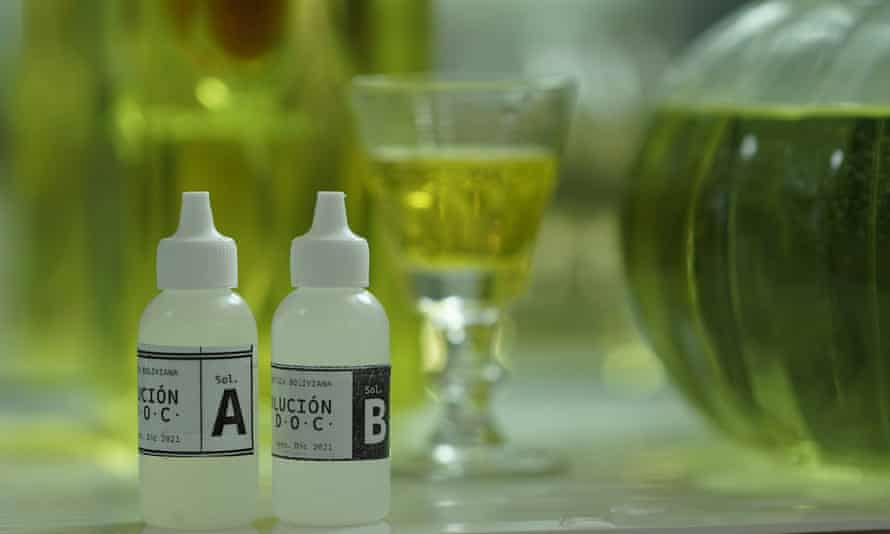
The front page of Oclo’s website is dominated by a photograph of vials of its chlorine dioxide product billed as an “antiviral” treatment.
The image is superimposed with the words: “B117 … new variant of coronavirus, the most contagious and dangerous in the United States. Rescuing chlorine dioxide and its great curative potential against pathogens.”
The appearance of a new marketing push out of Miami by peddlers of the bleach “cure”, often referred to as “miracle mineral solution”, or MMS, signals the FDA’s uphill struggle in trying to control the potentially lethal trade. Since the start of the pandemic, the federal agency has been clamping down on fraudulent products which claim to treat or cure Covid-19.
It has also been using its enforcement muscle to move against chlorine dioxide dealers. Last August, the FDA arrested Mark Grenon and his four sons, who were among the most prominent “miracle” bleach peddlers in the US.
Members of the Grenon family claimed to be “bishops” of the Florida-based Genesis II “church” that sold bleach under the guise that it was a “sacrament”. They remain in jails in Miami and Colombia awaiting extradition to the US facing charges of conspiracy to defraud the US and to introduce a misbranded drug into interstate commerce.
Having taken down Genesis II, the FDA is now facing outcrops of new MMS dealers. Oclo is run by a former Cuban living in Hallandale Beach, north of Miami.
Ricardo Garcia describes himself as a “research and development scientist” trained in chemistry at the University of Havana, though he also identifies as a real estate agent. Most of his customers in the US are Latino Americans.
He is also known to be offering to transport bleach in enema form to Europe for use on autistic children, at a cost of $680 per liter plus shipping.
In text messages between Garcia and an autism advocate based in Europe, he said that he was distributing the vials mainly in “local areas in the USA”. He added: “We have been censored several times on social media but are still producing to save lives.”
Despite Garcia’s protestations, his main trading route still appears to be through social media sites. He promotes his toxic products on Facebook, Amazon and eBay.
He clearly has some success selling through Amazon. His “immune booster against pathogens”, costing $49.99, is a bestseller ranked 105 in the “sports nutrition and hydration products” category.
The Guardian asked Garcia why he was selling bleach illegally as a treatment for the B117 strain of Covid and other diseases. He gave the reply: “We are really sorry for the loss of your loved one. Thank you for publishing the latest scientific advances with chlorine dioxide in the treatment of Covid-19. We have a great interest in saving lives – you too, right?”
The Guardian also contacted the three social media giants to ask them why they were hosting a potentially life-threatening fraudulent “cure” on their platforms. Within hours eBay responded by blocking the Oclo page.
An eBay spokesperson said: “Our first priority is to ensure the safety of our employees and customers around the world. We are taking significant measures to block or quickly remove items on our marketplace that make false health claims, including listings that promote chlorine dioxide as a cure for Covid.”
Amazon was more ambivalent. It said that third-party sellers were “independent businesses” required to follow all applicable laws and regulations.
“Those who violate our policies are subject to action including potential removal of their account,” Amazon said. It left the Oclo page up, however.
Facebook did not reply.
Fiona O’Leary, a campaigner against pseudoscience, said she was concerned about Garcia because unlike other bleach peddlers he was a practicing scientist. “It’s very worrying to me because he’s a professional, and I’ve never seen a scientist make this product before. He has more knowledge on the chemicals and he’s going to be trusted more.”
Garcia claims to follow the protocols of Andreas Kalcker, one of the leading figures in the bleach “cure” movement. Kalcker, a German citizen who lives in Switzerland, is author of an influential book, Forbidden Health.
He is reported to be under criminal investigation in Argentina following the deaths of a five-year-old boy and a man aged 50 who both drank chlorine dioxide.
On his website, Garcia claims that his product treats autism – a common and especially abusive application of bleach. He quotes a parent who says that their experience of chlorine dioxide was “truly miraculous. Our five-year-old son with autism has been able to make an extraordinary recovery.”
Garcia also quotes a New York resident who says his grandfather almost died from Covid but recovered after drinking the bleach.
His site encourages consumers to buy chlorine dioxide and give it to their dogs as well as marketing the fluid as a treatment for vaginal infections in women. “Vaginal washing with a solution of chlorine dioxide allows the treatment of some vaginal and other sexually transmitted diseases,” it claims.
==================================
Cancelling Tokyo Olympics ‘remains an option’ says top Japanese politician
Toshihiro Nikai’s comments are at odds with the united front presented by the Japanese government
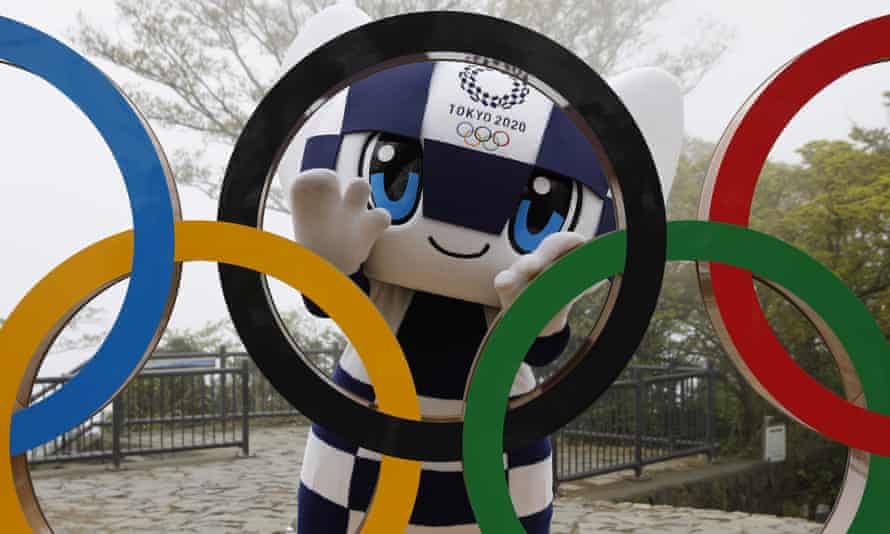
A senior member of Japan’s ruling party has said that cancelling the Tokyo Olympics “remains an option” if the coronavirus pandemic continues to worsen.
“If it seems impossible to do it any more, then we have to stop, decisively,” Toshihiro Nikai, secretary general of the Liberal Democratic party, said in a TV interview that has yet to be aired.
While Nikai did not call for the Games to be called off, his comments are at odds with the united front presented by the Japanese government, Tokyo 2020 organisers and the International Olympic Committee [IOC] – all of which insist that the delayed event will open as planned on 23 July.
The pandemic shows no signs of slowing in several parts of the world, while experts in Japan have warned that the country has entered a fourth wave of Covid-19 infections driven by mutant strains of the virus.
Nikai, a powerful party faction leader who was instrumental in electing Yoshihide Suga as prime minister last year, said cancellation was “of course” an option, telling the TBS network: “If the Olympics were to spread infections, then what are the Olympics for?”
The Nikkei business newspaper quoted a senior government official as saying in response to Nikai that it would be “impossible to cancel the Olympics”.
His intervention comes just a day after organisers marked 100 days until the opening ceremony by insisting they would hold a “safe and secure” Games that will be attended by around 14,500 Olympic and Paralympic athletes and tens of thousands of media, sponsors and officials.
“We will hold the Games in a way that’s feasible,” Taro Kono, the minister in charge of Japan’s vaccination drive, said in a separate TV interview, according to the Kyodo news agency. “That may be without spectators.”
No overseas spectators will be allowed to attend Olympic events, and a decision on whether to admit people in Japan to venues could come later this month.
Public opinion in the host nation is firmly opposed to the Games, with a recent poll showing that 39.2% thought they should be cancelled, and 32.8% calling for them to be postponed a second time – a move the IOC has said is unfeasible.
“Cancelling Olympics” was trending on Twitter in Japan on Thursday with more than 35,000 tweets. “If this person says it, Olympic cancellation looks like a reality,” one said in reference to Nikai’s comments.
Akira Koike, a Japanese Communist party MP, said holding the Games was already “impossible”, adding that a decision on cancellation should be made quickly.
Pressure on the IOC and Tokyo 2020 organisers increased after several medical experts questioned the decision to push ahead with the Olympics during the pandemic.
In an editorial in this weeks BMJ, Kazuki Shimizu, Devi Sridhar, Kiyosu Taniguchi and Kenji Shibuya said it would be a mistake to host large numbers of people from overseas in Tokyo this summer.
“The whole global community recognises the need to contain the pandemic and save lives,” they wrote. “Holding Tokyo 2020 for domestic, political and economic purposes – ignoring scientific and moral imperatives – is contradictory to Japan’s commitment to global health and human security.
“We must reconsider this summer’s Games and instead collaborate internationally to agree a set of global and domestic conditions under which international multi-sport events can be held in the years ahead.
“These conditions must embody both Olympic and Paralympic values and adhere to international principles of public health.”
The authors pointed to the slow pace of vaccinations in Japan, where less than 1% of the population been inoculated. “Even healthcare workers and other high risk populations will not have access to vaccines before Tokyo 2020, to say nothing of the general population,” they said.
=============================================
People in England waiting to start hospital treatment hits record high
============================================
Hong Kong widens vaccine scheme to include under-30s
The post Blood Clots: Johnson & Johnson Vaccine Freeze to Continue, Bleach Cure Being Sold in US, Tokyo Games, More appeared first on The St Kitts Nevis Observer.