A woman holds a small bottle labelled with a “Coronavirus COVID-19 Vaccine” sticker in this illustration taken, October 30, 2020. REUTERS/Dado Ruvic/File Photo
Venezuela’s main academy of medicine has asked the United States to add the South American nation to its international donor list for millions of doses of COVID-19 vaccines, despite a political freeze between the two countries.
Enrique Lopez-Loyo, president of the politically independent National Academy of Medicine, made the request to U.S. Ambassador to Venezuela James Story at a meeting on May 2, the academy said in a statement on Monday.
“To control the pandemic in our country, we need to vaccinate around 70% of the adult population, nearly 15 million people, in as little time as possible,” the academy said in the statement. “The amount of vaccines that have arrived to Venezuela … represents less than 10% of what Venezuela needs.”
Venezuela has received around 1.4 million vaccines from China and Russia, according to the Health Ministry, and hopes to receive doses for about 5 million people from the World Health Organization’s (WHO) COVAX program.
The academy is a member of the Venezuelan government’s round table developing a response to the coronavirus crisis for its 30 million people.
The academy’s plea, however, for U.S. supplies of AstraZeneca PLC (AZN.L) vaccines runs contrary to the government’s refusal in March to authorize the vaccine because of reports of blood clotting in some recipients.
The academy’s request also comes amid U.S. sanctions on Venezuela to protest the re-election of President Nicolas Maduro in 2018 in elections it, and many other nations, viewed as fraudulent. Venezuela blames Washington’s sanctions for its economic woes.
Story, appointed at the end of last year, is based in Bogota, Colombia, because of the rupture in relations.
The academy said Story responded to its request, saying the United States valued the independence of the academy and it looked “forward to working with all like-minded parties in the search for a solution to this crisis.”
Venezuela’s information ministry did not immediately respond to a request for comment.
Venezuela has reported a total of around 209,000 COVID-19 cases, including some 2,300 deaths.
==================================================
WHO says India Covid variant of ‘global concern’
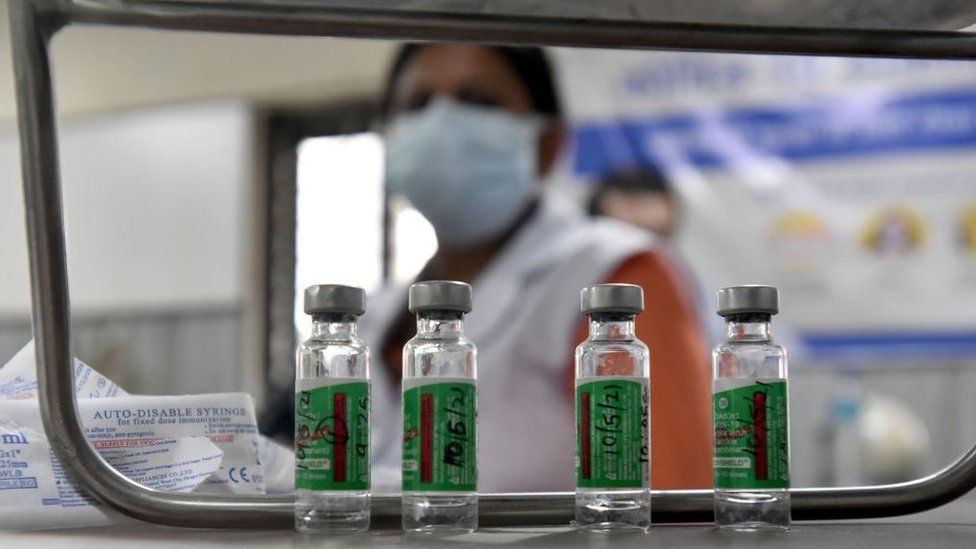 image copyrightGetty Images
The World Health Organization (WHO) has classified the coronavirus variant first found in India last year as a “variant of global concern”.
It said preliminary studies show the B.1.617 mutation spreads more easily than other variants and requires further study.
The variant has already spread to more than 30 countries, the WHO says.
Three other variants from the UK, South Africa and Brazil have been given the same designation.
A mutation is elevated from a “variant of interest” to a “variant of concern” (VOC) when it shows evidence of fulfilling at least one of several criteria, including easy transmission, more severe illness, reduced neutralisation by antibodies or reduced effectiveness of treatment and vaccines.
The variant is being studied to establish whether it is responsible for a deadly surge in India, which is currently overwhelming hospitals and crematoriums.
India reported 366,161 new infections and 3,754 deaths on Monday, down from record peaks. Experts say the actual figures could be far higher than reported.
Surging cases have meant that oxygen shortages continue to be a problem and have spread beyond the capital, Delhi.
Local media in the southern state of Andhra Pradesh reported that 11 Covid patients died overnight in the city of Tirupati after an oxygen tanker supplying the hospital was delayed.
The Indian government says there is evidence of a link between the variant and India’s deadly second wave, but that the correlation is not yet “fully established”.
Several states have imposed localised lockdowns, curfews and curbs on movement over the last month.
However, Prime Minister Narendra Modi’s government is coming under increasing pressure to announce a nationwide lockdown and stop the spread of the virus.
He is also facing criticism for allowing massive gatherings at Hindu festivals and election rallies to go ahead despite rising cases.
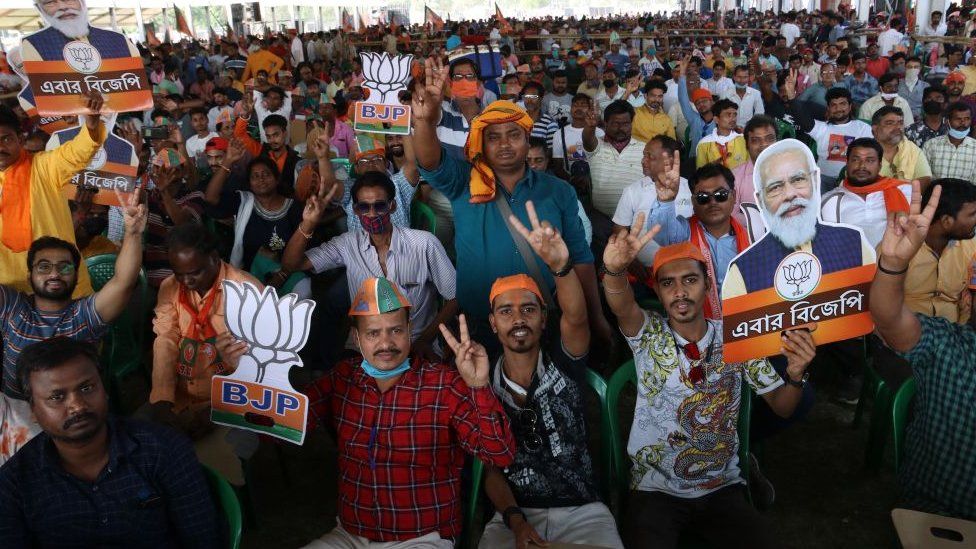 image copyrightGetty Images
On Monday, Delhi’s health minister said the capital had just three or four days of vaccine supplies left.
Shortages are further disrupting a lagging vaccination programme, with just over 34.8 million, or about 2.5% of the population receiving both doses of a vaccine so far.
The WHO says current vaccines will continue to be effective against the Indian variant, although the WHO’s technical lead did say there may be some evidence of “reduced neutralization,” at a press conference on Monday.
==================================================
FDA authorizes Pfizer vaccine for adolescents
The Food and Drug Administration on Wednesday gave the green light for the Pfizer-BioNTech coronavirus vaccine to be used in adolescents 12-15 years old, a move that will make millions more people eligible for a vaccine.
The highly anticipated decision is a key step toward ensuring middle and high schools can operate for full in-person learning next fall — and a major boon to parents concerned about the safety of summer activities.
FDA has been reviewing the amended application from Pfizer and BioNTech for more than a month. The companies cited research from their clinical trial in late March that found the vaccine was effective in the younger population, and produced strong antibody responses. The side effects were also about the same as the older population.
Following the announcement, the Centers for Disease Control and Prevention vaccine advisory committee will meet Wednesday to review the data and vote on recommendations for use of the shot in adolescents.
Pfizer’s vaccine is currently authorized for teenagers aged 16 and older. The other two vaccines on the market in the U.S., from Moderna and Johnson & Johnson, are only authorized for adults.
Kids matter: Children need to be vaccinated in order to raise the overall level of immunity in the country. While herd immunity may not be within reach, getting more people vaccinated will lower the numbers of COVID-19 infections, hospitalizations and deaths.
“Today’s action allows for a younger population to be protected from COVID-19, bringing us closer to returning to a sense of normalcy and to ending the pandemic,” Acting FDA Commissioner Janet Woodcock said in a statement.
The challenge: Officials need to convince adults to get themselves vaccinated before they’ll vaccinate their kids. A recent poll from the Kaiser Family Foundation showed limited eagerness from parents to get their children vaccinated, and that parents’ views on inoculating their children lined up with whether they planned to get vaccinated themselves.
The post Venezuela’s Academy of Medicine Asks U.S. for COVID-19 Vaccines appeared first on The St Kitts Nevis Observer.