Puerto Rico Opens-Up
As of May 24, 2021, Puerto Rico is no longer requiring a negative COVID-19 PCR molecular test result for passengers arriving on domestic (US) flights if they are fully vaccinated (two weeks after the final injection).
Flyers arriving on international flights and non-vaccinated travelers will still be required to submit a test result taken no more than 72 hours prior to arrival to Puerto Rico’s online portal, according to Discover Puerto Rico.
Overall COVID-19 restrictions have relaxed across the islands. Business capacities have increased from 30 to 50 percent, masks are no longer required at parks and beaches for those who are fully vaccinated, and alcohol consumption at pools and beaches can resume (although bars remain closed). The new executive order will also lift the island’s curfew.
Because Puerto Rico is a US territory, US citizens will not need to take a COVID-19 test or need a passport to re-enter the mainland or any US islands.
===========================================
Brazil Virus Deaths Keep Rising
#Brazil’s Healthy Ministry on Monday registered 790 new COVID-19 deaths in the past 24 hours and 37,498 new cases of coronavirus.
The country has confirmed 449,858 deaths from the virus out of more than 16 million confirmed cases since the pandemic began, according to ministry data.
==============================================
US Advises Against Japan Travel Ahead of Olympics
China rejects report of sick staff at Wuhan lab prior to Covid outbreak
Spokesperson dismisses Wall Street Journal claims based on ‘previously undisclosed’ intelligence
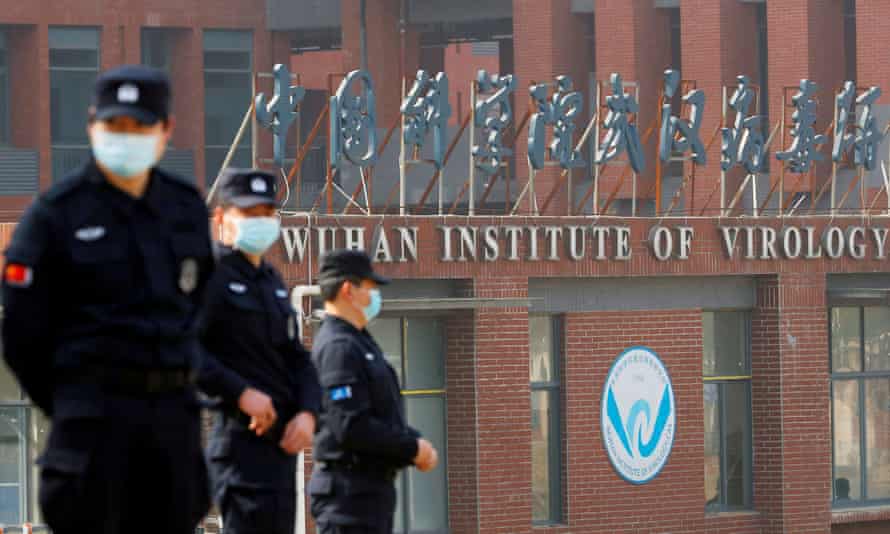
China has vehemently denied a Wall Street Journal report citing US intelligence materials that said several members of staff at a key virus laboratory in Wuhan had fallen ill shortly before the first patient with Covid-like symptoms was recorded in the city on 8 December 2019.
Foreign ministry spokesperson, Zhao Lijian, said it was “completely untrue” that three researchers at the Wuhan Institute of Virology (WIV) became sick in autumn 2019. The report, based on “previously undisclosed” US intelligence, said the lab staff had become sick “with symptoms consistent with both Covid-19 and common seasonal illness”.
“The United States continues to hype up the ‘lab-leak’ theory … Does it care about traceability or is it just trying to distract attention?” Zhao said. He also cited a March statement from WIV , in which the institute said it had “never dealt with Sars-CoV-2 before 30 December 2019”.
The Wall Street Journal report came on the eve of a key meeting of the World Health Organization’s decision-making body, which is expected to discuss in detail the next phase of an investigation into the origins of Covid-19.
Separately, CNN reported on Monday, citing people briefed on the intelligence, that the intelligence community “still does not know what the researchers were actually sick with”. “At the end of the day, there is still nothing definitive,” one of the people who has seen the intelligence told CNN.
Shi Zhengli, who directs the Centre for Emerging Infectious Diseases at WIV, said earlier this year that all staff had tested negative for Covid-19 antibodies, and there had been no turnover of staff on the coronavirus team.
International experts investigating the origins of the coronavirus said in February, following their trip to China, that it was “extremely unlikely” that the virus had spread from a lab leak in the city of Wuhan.
Peter Ben Embarek, the head of the WHO mission, said at the time that work to identify the origins of Covid-19 pointed to a “natural reservoir” in bats, but it was “unlikely” that this occurred in Wuhan.
The organisation’s director general, Tedros Adhanom Ghebreyesus, however said in March that “all hypotheses remain on the table” after 14 countries, including the US and UK, made a joint statement to express concerns over the WHO team’s conclusions.
WHO spokesman Tarik Jasarevic on Monday said that the organisation’s technical teams were now deciding on the next steps. He said further study was needed into the role of animal markets as well as the lab-leak hypothesis.
In Washington, a US national security council spokesperson said that the Biden administration continued to have “serious questions about the earliest days of the Covid-19 pandemic, including its origins within the People’s Republic of China.”
She said the US government was working with the WHO and other member states to support an expert-driven evaluation of the pandemic’s origins “that is free from interference or politicisation.”
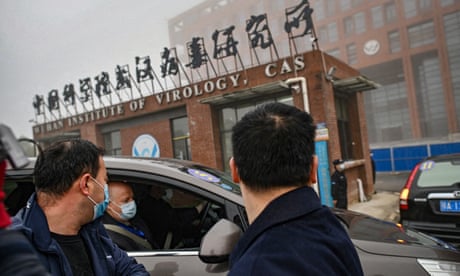
The lab-leak theory has been around since last year. In January 2020, as China attempted to contain the spread of the virus, rumours began to spread amid the scramble for answers. The conservative US website Washington Times, for example, alleged that coronavirus “may have originated in a lab linked to China’s biowarfare programme”.
But what many virus experts deemed a pure science issue was quickly turned into a diplomatic row, amid growing tensions between China and the United States. Three weeks after the Washington Times’s report, Republican senator Tom Cotton raised the lab-leak theory, while admitting he had no evidence to support it.
In March 2020, Zhao alleged on his Twitter account that the coronavirus was an “American disease” that might have been brought to China by members of the United States army who had visited Wuhan a few months earlier. He provided no evidence to support his theory, either.
Soon afterwards, several US allies began calls for an independent inquiry into the origin of Covid-19. Australia’s prime minister, Scott Morrison, for example, reiterated his country’s call in his address to the United Nations general assembly in September.
================================================
The post PR Opens-Up, Brazil Death Toll, Japan Travel Warning, Wuhan Virus Theory appeared first on The St Kitts Nevis Observer.