As Victorian health authorities race to contain a COVID-19 outbreak in Melbourne's north, states and territories around Australia have implemented restrictions to limit the spread of the virus across borders.
Queensland and South Australia have closed their borders to more than 200,000 Melburnians in the City of Whittlesea while many other states are requiring testing and self-isolation.
The changes came after four additional people tested positive to the virus on Tuesday afternoon after a fifth case, a man in his 60s, tested positive to the virus earlier in the day.
The cluster is currently nine people.
The cases are across multiple households and at least one is believed to have been highly contagious during their exposure period.
LIVE UPDATES: Long queues at Melbourne virus testing sites
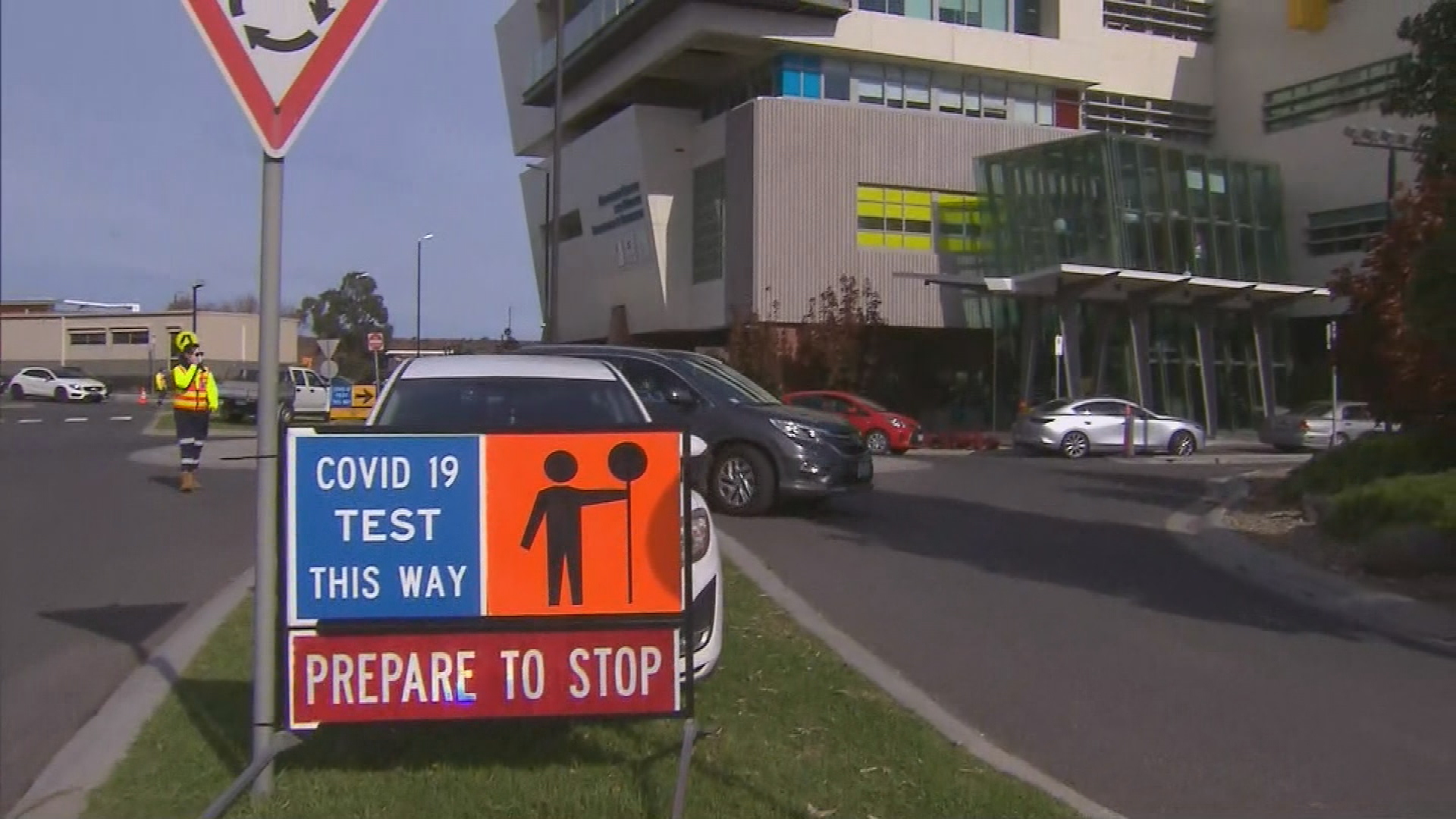
Victoria's Department of Health is continuing to update its list of exposure sites where community transmission may have occurred.
The number of Tier One locations has increased and now includes a McDonald's and a CBD restaurant outside the City of Whittlesea area where the cluster emerged.
Several states and territories now require interstate travellers who have visited any of the listed locations to get tested and self-isolate immediately.
Some states have also limited entry from Victoria.
READ MORE: New restrictions in Victoria after fifth COVID-19 case
Here is a state-by-state breakdown of how governments are reacting to the Melbourne cluster.
New South Wales and the ACT
Everyone arriving in NSW – whether by air, rail or road – who has been in the Greater Melbourne area is required to fill out a travel declaration form confirming they have not visited a venue of concern as listed on the Victorian Government website, NSW Health says.
Anyone who has visited areas of concern will be required to self-isolate for 14 days.
Anyone who has visited Melbourne since May 10 and has been to one of the listed exposure sites has also been urged to contact NSW Health to ensure they are meeting the state's isolation and testing requirements.
ACT Health said residents who are already in or entering the ACT and have been to one of the close contact exposure locations in Melbourne at the dates and times specified must:
- immediately quarantine for 14 days since last attending the venue
- call ACT Health on (02) 5124 6209
- get tested for COVID-19, regardless of whether symptoms are present, as advised by an authorised person within ACT Health
Non-ACT residents who have been to an exposure site in Melbourne must not enter the ACT unless they obtain an exemption before arriving.
Non-ACT residents who are already in the ACT must comply with the requirements for ACT residents above.
https://twitter.com/ACTHealth/status/1396757919413071872?ref_src=twsrc%5Etfw
EXPLAINED: Guest limits, mask rules – All the new rules for Melbourne
https://twitter.com/NSWHealth/status/1397128680913072129
NSW Premier Gladys Berejiklian yesterday said it is "way too early" to declare the suburbs around northern Melbourne a COVID-19 hotspot after the four cases were confirmed yesterday.
Ms Berejiklian said her team would continue to update the community with the latest information however details surrounding the cases remained "preliminary".
"We've been down this road before, we need to expect outbreaks," she said.
Queensland
After nine cases were confirmed in Victoria, Queensland declared the City of Whittlesea local government area a COVID-19 hotspot.
Queensland's Chief Health Officer Dr Jeannette Young said the latest infections meant there was a need to take action.
The following new measures are being put in place:
- From 1am on Wednesday, May 26, anyone arriving into Queensland who has been in the City of Whittlesea local government area since May 11 will go into hotel quarantine unless they have a valid exemption.
- From 1am on Thursday, May 27, everyone arriving from Victoria will be required to complete a border pass.
- Anyone of those arrivals who have been in the City of Whittlesea local government area since May 11 and are not a Queensland resident will be turned away unless they have an exemption to enter the state. Queensland residents or those given an exemption to enter the state will go into hotel quarantine.
https://twitter.com/qldhealthnews/status/1397095376180563973?ref_src=twsrc%5Etfw
Dr Young said Queensland would continue to monitor the situation.
"Acting quickly matters," she said.
"These situations are always evolving, but we know the next few days are critical in suppressing the risk of the virus spreading.
"Further restrictions may be required," Dr Young said.
The requirement to quarantine also applies to those who have been fully vaccinated.
South Australia
Almost everyone who has been been in the City of Whittlesea in the past four days is banned from entering South Australia, with significant restrictions for those from other parts of Melbourne.
Essential travellers and those the state deems to be "permitted arrivals" can enter, but they must self-isolate for two weeks and get tested three times, according to the state's cross-border travel rules.
However, even essential travellers are banned from entering the state if they've been to one of Melbourne's listed exposure sites. Those fleeing domestic violence can still enter but must quarantine as directed.
Lesser restrictions also apply for anyone who has been anywhere else in greater Melbourne during the past fortnight. They have to self-quarantine until they get a negative COVID-19 test result and get tested again five and 13 days after arrival.
The report into how the coronavirus leaked out of the Playford Hotel, seeding the Melbourne outbreak, is yet to be finalised.
https://twitter.com/RoryMcClaren9/status/1396990796541267971https://twitter.com/SAPoliceNews/status/1397143560957267972
Western Australia
From 6pm on Tuesday (May 25) all arrivals in WA from Victoria will be required to take a COVID-19 test and self-quarantine until they receive a result.
New arrivals will not be allowed to use public transport until they have received their result.
Additionally, anyone who had visited exposure sites in Victoria at the relevant times should get tested immediately for COVID-19 and quarantine for 14 days from the date of exposure.
WA's Acting Chief Health Officer Dr Paul Armstrong said he would be notified if any close or casual contacts were found to be in Western Australia for follow-up by the public health team.
"We will continue to monitor the situation in Victoria very closely and issue updated health advice as and when required," he said.
https://twitter.com/WAHealth/status/1397081757657321475
Tasmania
Tasmania has declared the City of Whittlesea a COVID-19 high-risk area, meaning anyone who has been there since May 6 "should not travel to Tasmania at this stage".
Affected travellers who get permission to enter from the deputy state controller via the G2G PASS system will need to go into hotel quarantine.
Anyone already in Tasmania having visited the council area should self-isolate until they test negative and travellers from Melbourne should monitor for symptoms, the Department of Health says.
Travellers who have visited any of Victoria's listed exposure sites will not be allowed to travel to Tasmania unless they are classed as an essential traveller.
Those who have visited an exposure site since May 20 are required to self-isolate immediately and call the Public Health Hotline on 1800 671 738 for further advice.
https://www.facebook.com/HealthTas/posts/4037522283001467
Northern Territory
The Northern Territory government had not declared Whittlesea as a hotspot on Tuesday night but did restrict travel from the exposure sites.
Anyone who visited a tier-one site must get tested and quarantine for 14 days regardless of the result while travellers who were at a tier-two site can stop quarantining once they test negative.
Those already in the NT must quarantine until they test negative while all new arrivals from greater Melbourne should monitor for symptoms and get tested immediately if they arise, the government says.