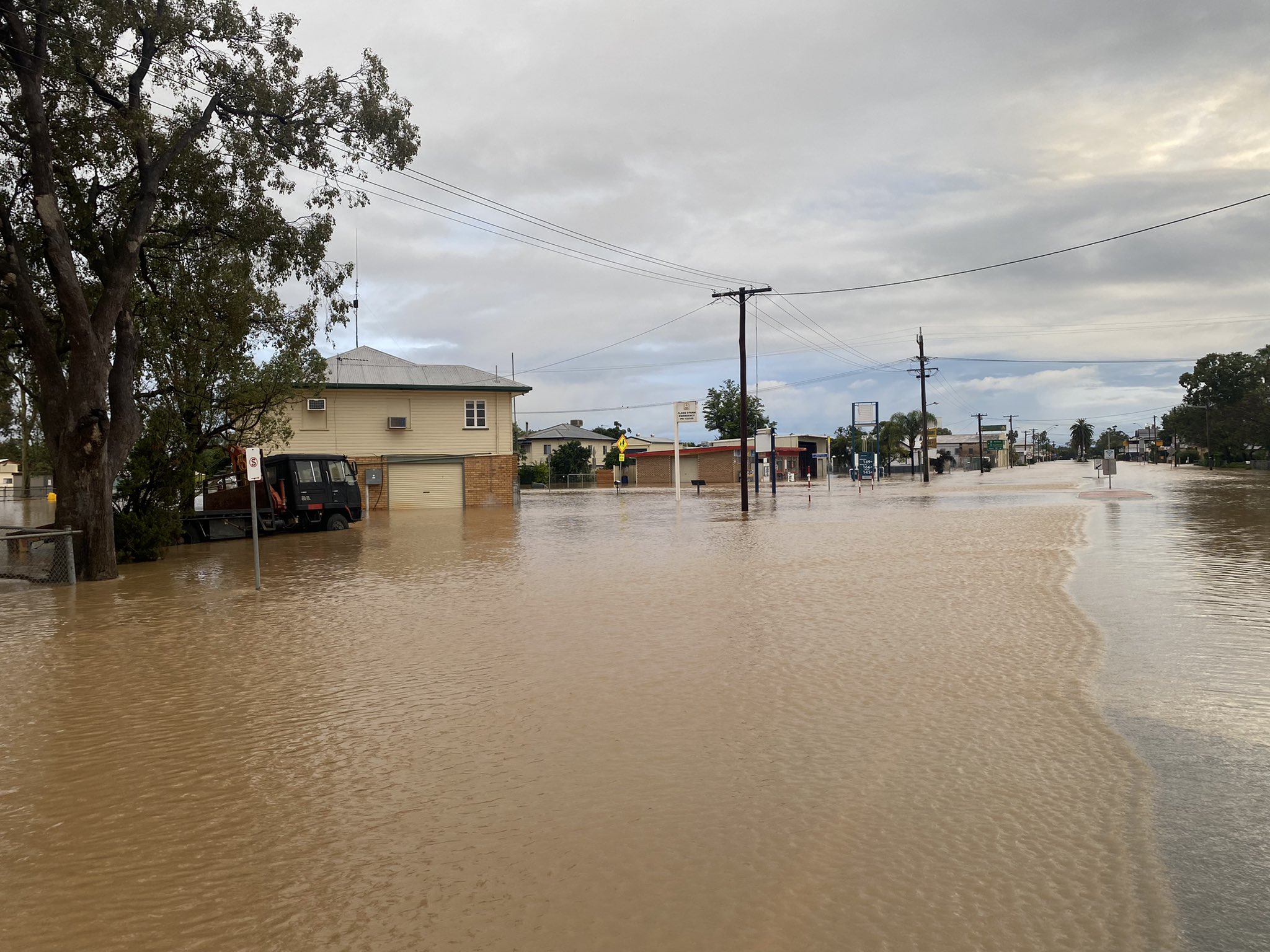
Police are preparing to evacuate a second Queensland town as floodwaters continue to rise.
Residents in Yalarbon, in the Goondiwindi region, will need to leave their homes for safety.
Queensland Fire and Emergency Services have issued an Emergency alert warning for the town, and Goondiwindi Regional Council has advised door-knocking will commence to check on residents.
Evacuees will be helped to reach the Goondiwindi Evacuation Centre at the town's Showgrounds.
LIVE UPDATES: Omicron variant 'our first real test of living with COVID-19'
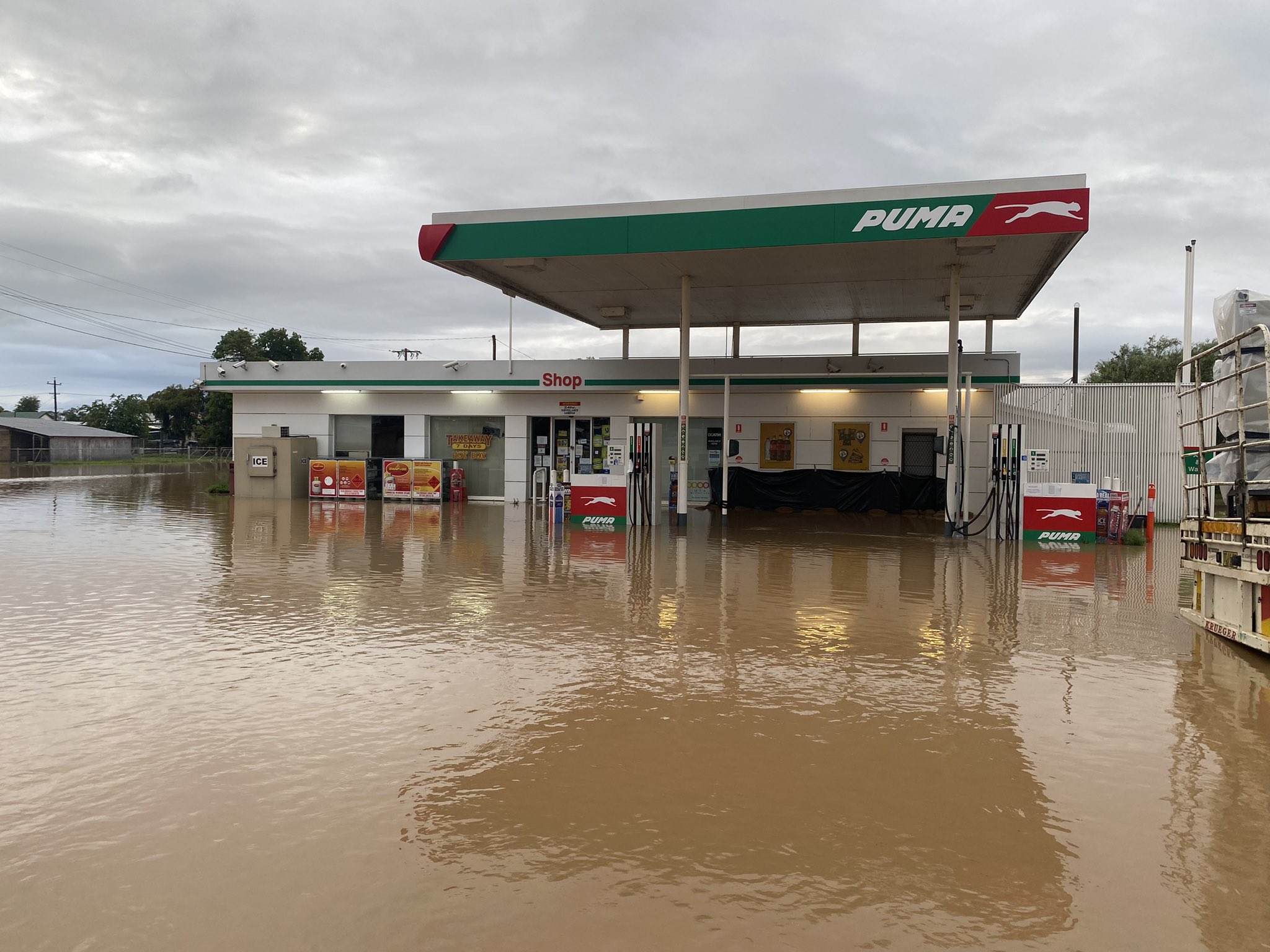
Meanwhile, residents have been allowed to return to the inundated Darling Downs township of Inglewood in Queensland after an overnight evacuation.
The main street of Inglewood, tucked in a bend of a rising Canning Creek in the Darling Downs, was underwater this morning with police going door-to-door to ensure people left their homes safely.
The Macintyre Brook burst its banks, hitting 11.15 metres this morning and shattering a previous 1988 water level record of 10.5m.
It has now settled to 10.9m, and is expected to stay at a similar level through the day.
The town's 950 residents were gathered at the local evacuation point by the cemetery, but have since been allowed back into the township, though roads are still underwater.
Some residents are still unable to get to their homes, with parts of the town inaccessible.
"It's supposed to reach the levels of 1976," resident Troy Callaghan said.
https://twitter.com/GracieRichter/status/1465854187539820550
"Here, we're just trying to save what we can."
Some areas have received more than 100mm rain in just 24 hours.
Areas like Chinchilla, in the state's Western Downs region, Yalangur near Toowoomba and Bundaberg in central Queensland have also been hit with extensive flash flooding due to heavy rains.
https://twitter.com/heinkealex/status/1465809776848224257
Queensland Fire and Emergency Services tweeted that the SES had received 320 calls for help in the past 24 hours.
QFES Commissioner Greg Leach said crews were working hard to evacuate and advise residents.
"It's been a very busy start to our severe weather season in Queensland," he said.
"There's a number of river catchments we're watching closely, and as the water moves down we'll work with local groups to get messages out.
"This is only the start of our severe weather system. We've got a long way to go yet so we'll probably face this over the next few months."
READ MORE: World slams doors shut as fear grows of Omicron variant
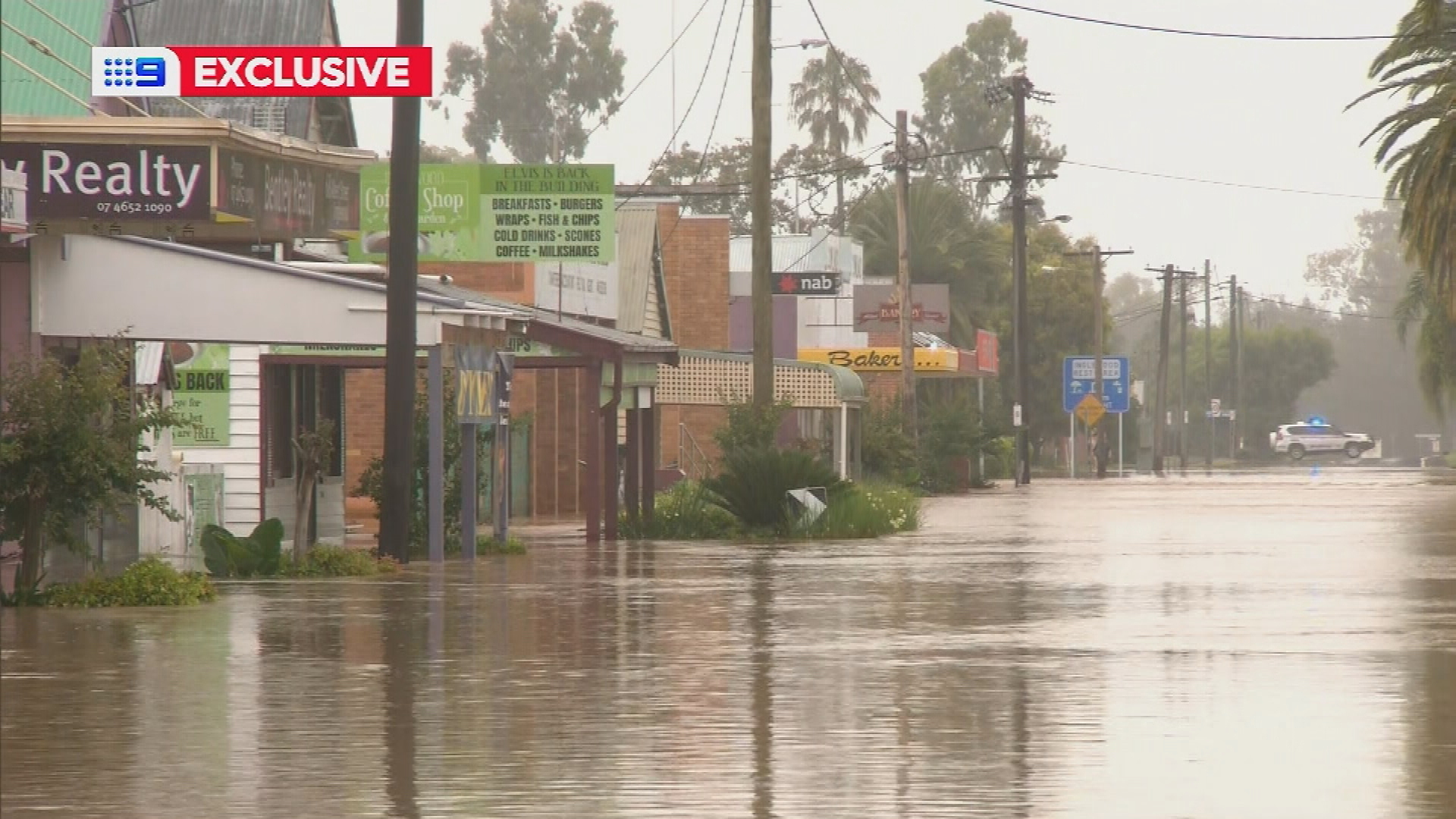
The weather system has moved off-shore, but heavy rain is still expected.
Waters won't peak around Goondiwindi until Friday.
On the Gold Coast, residents in a number of suburbs are watching major flood warnings.
More rain is expected today, with heavy falls until lunchtime along the Queensland coast north to Townsville.
More than 200 roads have been closed across the state.
Queensland Fire and Emergency Services Assistant Commissioner Stephen Smith has said flood risks are rising after heavy falls of rain.
https://twitter.com/QldFES/status/1465827155024105476?ref_src=twsrc%5Etfw
Some parts of the state received up to 180mm of rain on already wet ground.
"There's a risk across the vast majority of the state today," Mr Smith told Today.
Currently, Inglewood and the Goondiwindi region are the most affected, he said.
He urged people to stay up to date on warnings and to be very careful if they had to be out on the roads.
"Unfortunately, we continue to see people getting themselves into situations driving through swift water and floodwater," he said.
https://twitter.com/BOM_Qld/status/1465851109319352320
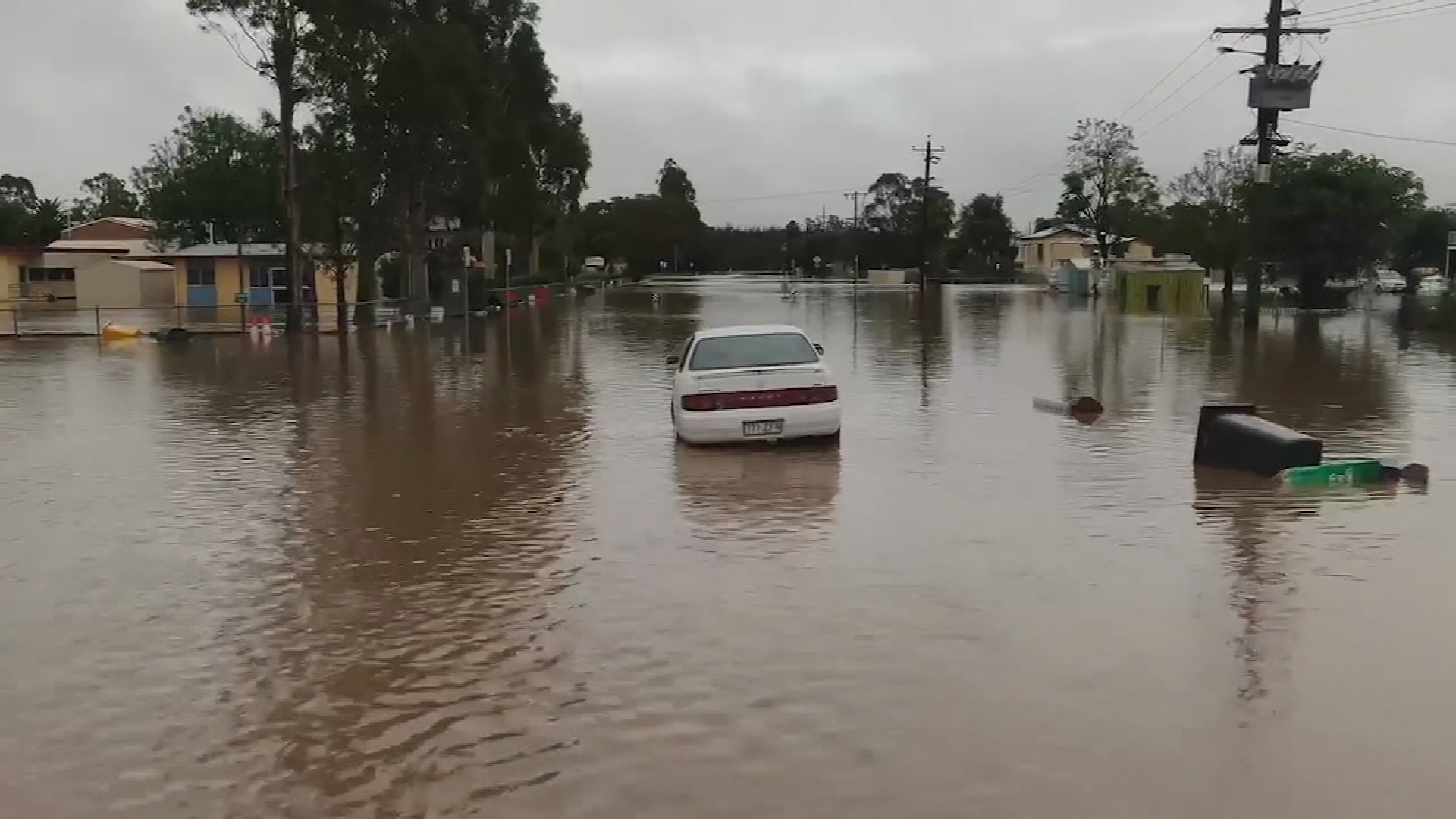
Bureau of Meteorology senior meteorologist Jackson Browne said the widespread rain in south-east Queensland and northern NSW would start to "break down" today.
"We had a band of thunderstorms that was following this band of rain, so that will be the main weather feature today," he said.
"So severe thunderstorms for those areas, unfortunately, that did see the rainfall."
However, he said, the thunderstorms were smaller in size than the rain band, meaning less rainfall would enter the catchments.